
Wuthering Heights: 19th-Century Gothic Literature and Architecture
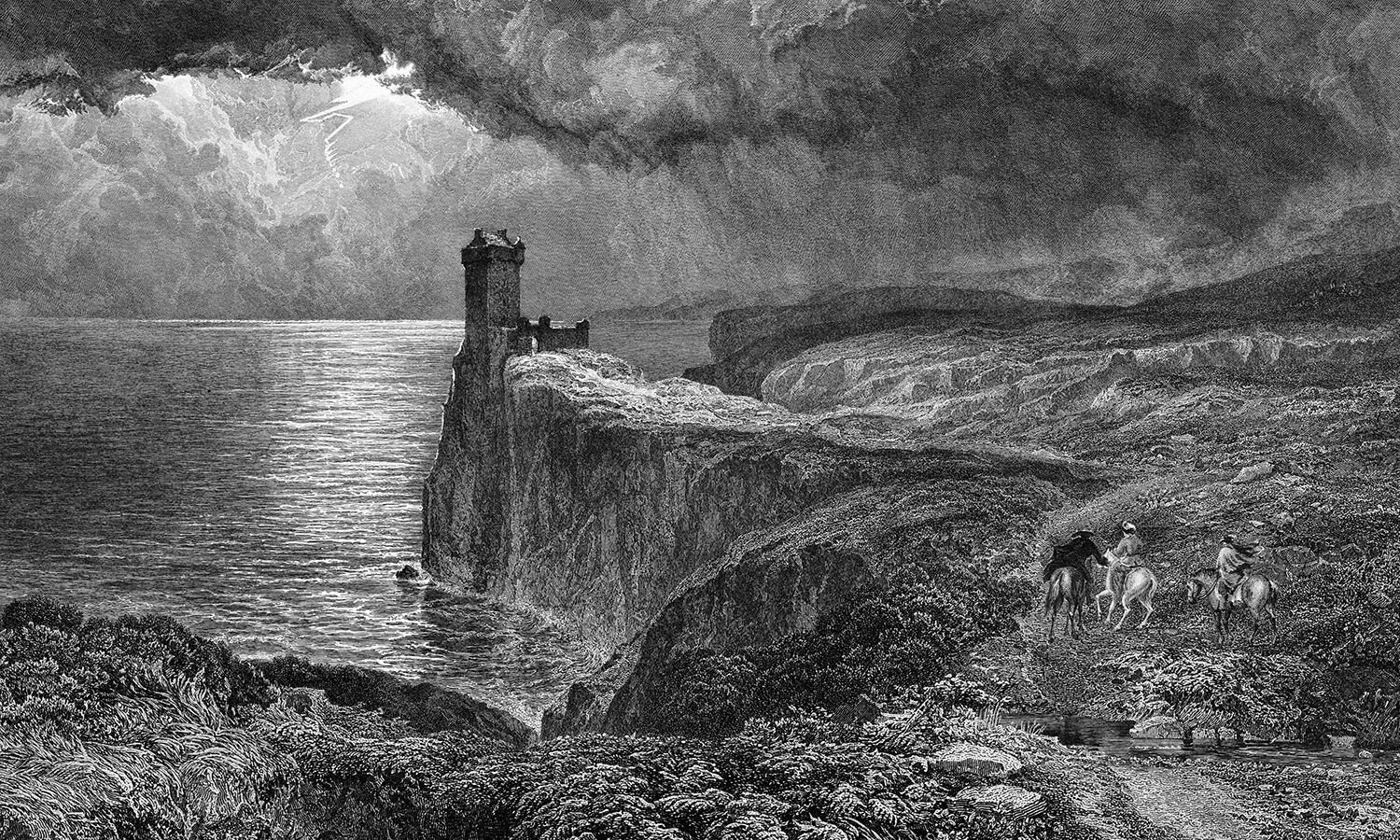
I’m taking the opportunity presented by a new film adaptation of the novel Wuthering Heights (2026) to write here about what fascinates me: 19th-century English-language horror literature and its connection to architecture.
I will explore how buildings are essential to this type of literature, either by contributing significantly to the creation of a dark and menacing atmosphere or by seeming to function as characters in their own right.
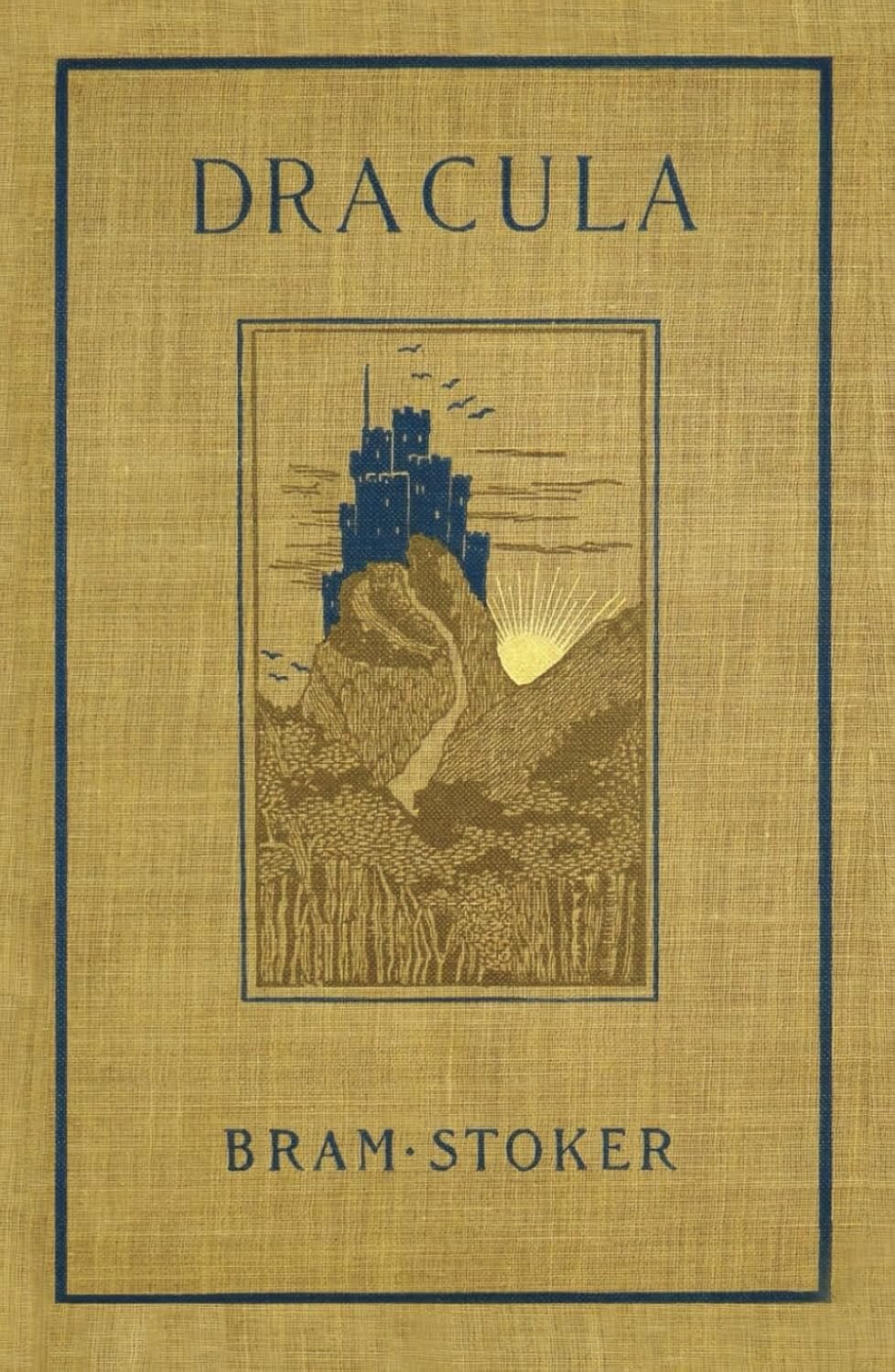
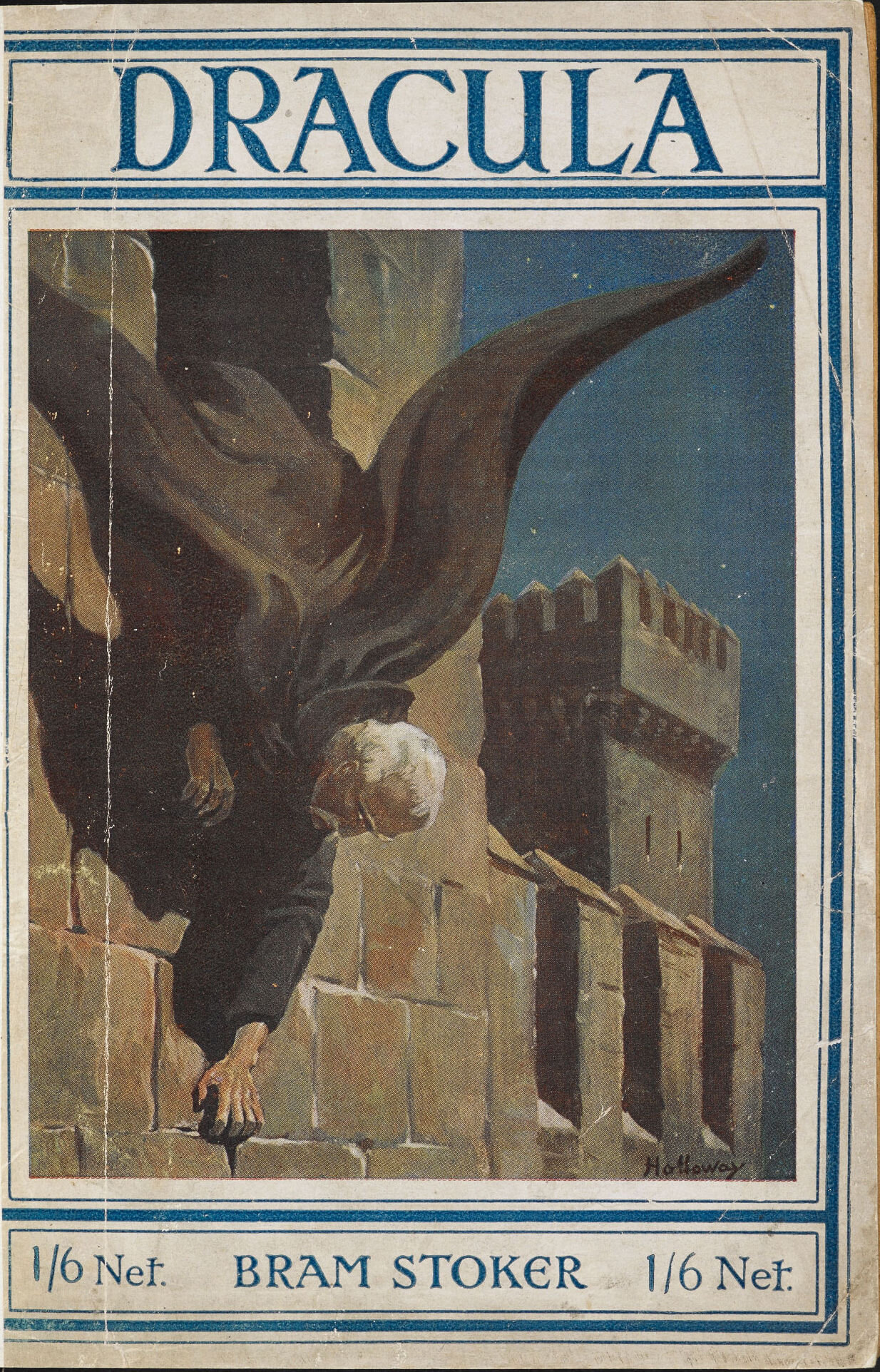
Think about it—could we imagine the novel Dracula without the Count’s castle? We can assume that the story would have a completely different atmosphere without that segment set within his lair. In Nosferatu, the 1922 film adaptation of the novel, the castle is a fascinating place, perhaps the most spectacular visual element of the film, offering a continuous interplay of light and shadow (Orava Castle in Slovakia was chosen as the filming location).
Conceptual Clarifications
Before proceeding further, I want to specify exactly what type of literature I am referring to. In the 19th century, several types of horror coexisted within the Anglo-Saxon cultural sphere, but I will limit myself to the genre known as “Gothic,” because I find it the most representative of the era and also the one whose texts continue to have a significant impact. More on the meaning of the term “Gothic” can be found here: The Art of Gothic | BBC Select
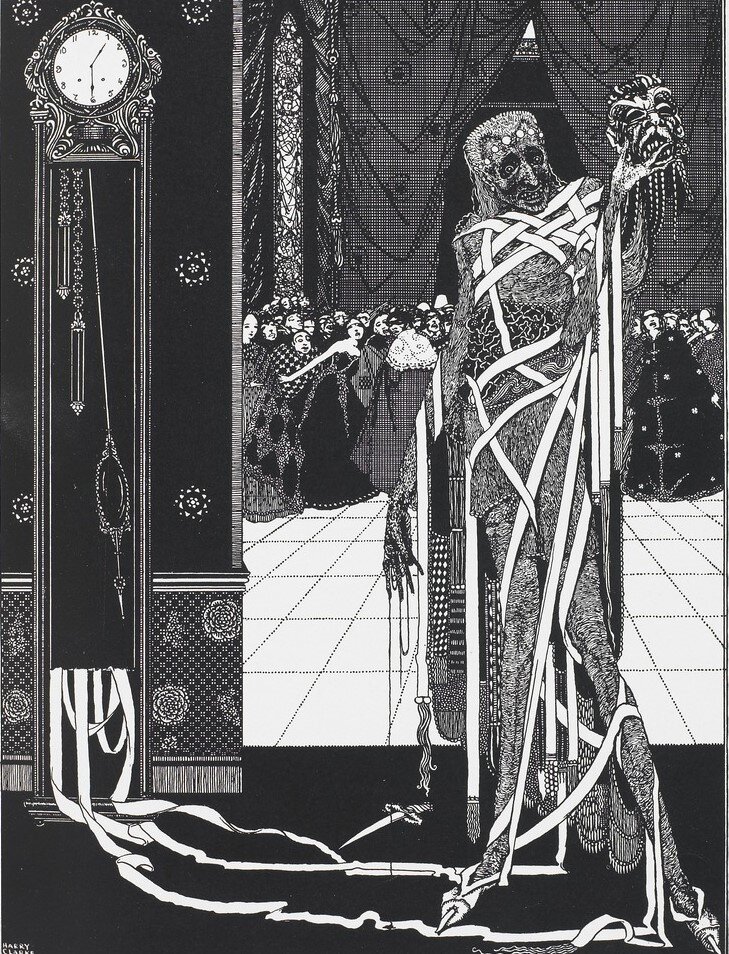
Gothic horror from the 1800s may not actually be very scary anymore—its distinctive elements have been used and reused in movies and popular culture in general, so all that remains of them are clichés. But even if it no longer sends shivers down your spine, the style remains fascinating because of the aesthetic of gloom and foreboding it creates. It’s a style saturated with atmosphere—night, a full moon, ominous storms, lightning, and dark nooks where no one has ventured for a long time. It’s an enjoyable kind of horror because it’s comforting—it’s beautiful and dramatic, you can savor it while reading in an armchair, and it doesn’t give you nightmares afterward (with rare exceptions).
The best-known Gothic novel is, of course, Dracula, written by Bram Stoker, but other important novels of the same genre include Frankenstein by Mary Shelley; Wuthering Heights by Emily Brontë; Dr. Jekyll and Mr. Hyde by Robert Louis Stevenson; and even The Hound of the Baskervilles by Arthur Conan Doyle.
These (and similar works) share a number of themes, such as the conflict between the rational and the irrational (science versus superstition and the supernatural, for example), physical, mental, and moral decay; the decline of the aristocracy; the legacy of the family’s past (generally, the past weighs heavily in any such story, literally haunting the protagonists); and the position of women in society, among other things.
All works of this type capture the dark side of human nature: obsession, revenge, madness, and murderous intent.
Building Types
Regardless of the motivations of the protagonists who populate these narratives, however, you will notice that the action always takes place in very close connection with a building. Most of the events that make up the story occur in and around it.
In the early Gothic period (the second half of the 18th century and the beginning of the next), the setting writers typically turn to is a monastery or a castle, especially if the action takes place in the Middle Ages. The castle has countless rooms or a crypt, and the monastery may have catacombs—perfect places for the main character to get lost. Later, especially in Victorian-era works, the castle is frequently replaced by a nobleman’s estate in the English countryside—a massive building surrounded by a park with tree-lined paths. Here is an eloquent example:
“Barwyke Hall was a large and picturesque house, built in the exposed-timber style known as ‘black-and-white,’ in which the beams and angles of the oak framework, black as ebony, contrasted with the white plaster covering the masonry set into the spaces between them. This Elizabethan house with a steep roof stood in the middle of park-like grounds, not very large but imposing due to the noble stature of the old trees that were now casting their ever-lengthening shadows eastward across the lawn, beneath the setting sun" — Dickon the Devil, Joseph Sheridan Le Fanu
Toward the end of the 19th century and the beginning of the 20th, the manor house was replaced by the townhouse, or even an apartment in a building in the heart of London—a form of housing more suited to the petty bourgeoisie or civil servants than to the aristocracy. The Wuthering Heights farm in Emily Brontë’s novel seems to be an exception to all of the above, but in fact it has features that still bring to mind a castle: thick walls, countless rooms, and corridors that create the sensation of a labyrinth or a space where one can get lost.
"Fortunately, the architect was far-sighted and built the house solidly. The windows are narrow, cut deep into the wall, and the corners, reinforced with large stones, protrude significantly. Before crossing the threshold, I paused to admire the multitude of grotesque sculptures scattered mainly across the facade and around the main entrance, above which, among countless griffins that had begun to crumble and immodest cupids, I discovered the date — 1500 — and the name Hareton Earnshaw" — Wuthering Heights, Emily Brontë
The House as a Narrative Device
The centrality of the building in Gothic novels and short stories is sometimes evident even from the titles of the works. I will limit myself here to just two examples, though I could easily find more: for instance, Wuthering Heights is also the name of the Earnshaw family’s farm, the place where many of the characters are born, live, and die; second, I mention “The Fall of the House of Usher” by Edgar Allan Poe (an American writer who also lived in England and who often sets his characters somewhere in Europe), to which I will return.
It may seem trivial to point out that in The Hound of the Baskervilles, the murder that sets all the events in motion takes place in the park surrounding Baskerville Manor, and subsequently, the manor is where all the characters meet and reunite. You might point out that the action of a work of fiction must take place somewhere, and since people live in houses, my observation above is unnecessary. What I can say in response is that, upon closer inspection, the house—be it a palace, a castle, or a manor—is much more than a meeting place, more than a setting: it sets the atmosphere, holds important clues to the characters’ fates, carries symbolic meaning, and ultimately merges with the characters or becomes a character in its own right—most often a monstrous or sinister one. I’ll explain exactly what I mean in a moment!
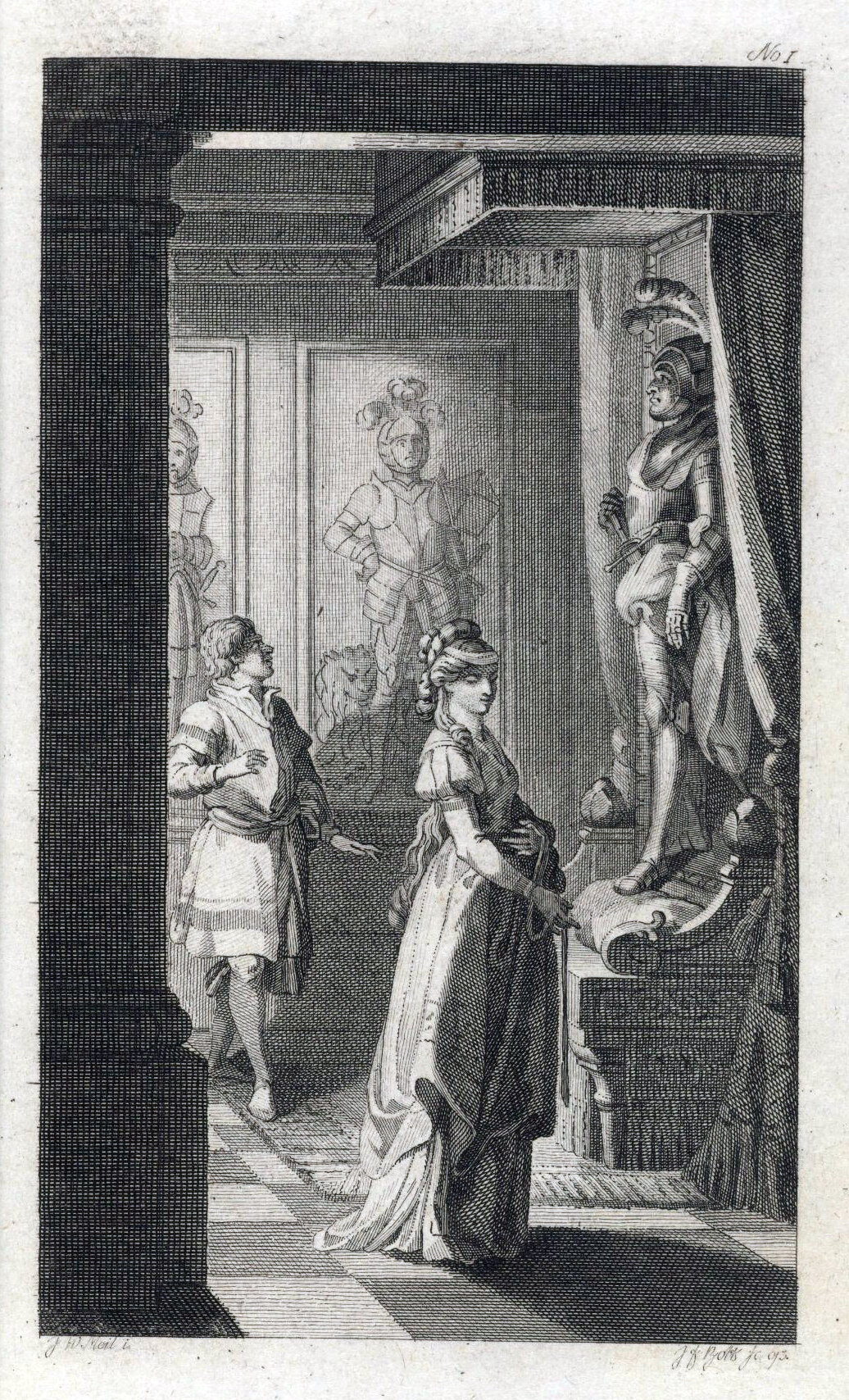
There are situations in which a house is important to the protagonists—for example, when it is the subject of an inheritance. For readers, however, the building serves primarily to create an atmosphere. This atmosphere is often gloomy, dark, and reminiscent of times long past. The imprint of the past is ever-present; it surfaces through the old walls, the stuffy rooms, the facades overgrown with plants, the armor decorating the unheated halls, the old aristocratic furniture (the four-poster bed often appears), and the ever-present paneling found in almost every room. The building thus helps create the impression that the past—whether glorious or terrifying—is still present and insists on remaining so!
Furthermore, houses are like containers, or like sponges: they hold secrets or mysteries that give each narrative its unique character. The protagonists are forced to uncover or resolve them in order to escape unscathed. All the answers they seek lie within the walls of the houses, and the key to deciphering them is sometimes found within: a hidden passage or a portrait that tells a story.
Countless secrets populate these stories, and they are most often family-related and have a moral dimension. They take shape as follows: long ago, someone broke a written or unwritten law, and the events were concealed or forgotten. An ancestor of the Baskerville family once committed a horrific crime, hunting down and killing a woman whom he had previously held captive in his manor. The seemingly supernatural hound—the monster of the story—serves to bring this crime back into the collective memory. The problem is that the family’s descendants, who are terrorized by the specter of the animal, are innocent—a dilemma often explored by writers of the era, who were fascinated by the theme of original sin passed down through generations. Arthur Conan Doyle created the story of the hound after investigating local legends and (according to a BBC documentary ) may have visited a nobleman’s residence whose façade bore a coat of arms featuring a dog or a wolf. The origin of this decorative element is said to be a story about a dog that tried to warn its master that wolves were prowling the estate. The master, annoyed by his pet’s persistence, killed it. Since then, the ghost of the loyal dog has supposedly haunted the family. Therefore, the Baskerville family secret is fictional, but it apparently has its origins on the very real wall of a building in England.
Houses are not merely “repositories” of moralizing stories; they also function as environments that allow supernatural forces to manifest, just as certain instruments facilitate communication with the spirit world during séances. In The White Villa by Ralph Adams Cram (an architect by profession!), two travelers who spend the night in an abandoned house somewhere in Italy witness a brutal scene, materializing from the spectral realm into the concrete reality of a room. The murder is “acted out,” like a play, before the two of them.
The Context of the House: Construction vs. Nature
Let’s now turn to the aspects that I find most fascinating and that I think are important to address separately, even though they are directly related to the issues mentioned above (atmosphere, secrets, etc.).
The first issue that concerns me relates to the particular relationship between architecture and the natural environment. It is a binary relationship between interior and exterior, in which one contrasts with the other or complements the other. This relationship is used both to amplify the atmosphere I mentioned at the beginning and to create tension, anticipation, and fear. The image of a building isolated in a dramatic natural setting has a powerful effect, particularly in the sense that the intensity of nature mirrors the intensity of human emotions, but also when we consider the rigidity of a structure in the face of the dynamism of natural phenomena.
Let’s take a closer look at Wuthering Heights to make things clearer! The estate in question is a farmhouse situated on a ridge, among what the English call “moors”—a kind of hilly terrain. , even if they don’t look particularly dramatic, they are a harsh environment, where you’re exposed to capricious weather and where, probably in the 19th century, you could even get lost— —if you were unlucky. At least that’s how the English perceive them. Sometimes there are even marshes among them. “Wuthering” is a regionalism meaning “battered by strong winds” (roughly translated) and helps the reader form an impression of life in that place, while also hinting at the inner turmoil that will eventually take hold of the book’s protagonists. The surrounding hills are where the children play, but they are also where people risk disappearing or being caught in sudden storms—which is probably why the people at the farm suspect Heathcliff is dead, a few days after he leaves the house in the dark and vanishes into the hills. Here is an excerpt that highlights the power of nature around the farm:
"Wuthering Heights is the name of Mr. Heathcliff’s residence. A provincial name, fitting to evoke the howling wind that rages around the house during a storm. On those peaks, of course, the air is always biting and cold; and it is not hard to guess with what force the north wind sweeps over the ridges, judging by the fierce tilt of a few dwarf firs planted near the house and some withered bushes, their branches stretched to one side, as if begging for alms from the sun" — Wuthering Heights, Emily Brontë
In contrast to the unforgiving nature outside, the (isolated) house serves as a refuge. For instance, Heathcliff and others frequently gather around the fireplace to warm themselves. For his part, the novel’s narrator is caught in a blizzard while climbing the hill, eventually taking shelter at Wuthering Heights. In some Gothic stories or novels, authors use the comfort of the home to suggest a sense of safety—one that will be threatened by an external force from beyond the walls. At other times, the sense of safety is tenuous, for even though people have taken shelter, the wind can be heard howling outside, reminding those gathered together that all that separates them from danger is a wooden door or a thin pane of glass.
In Bram Stoker’s most famous novel, nature plays a rather complementary role: that of making the castle—and, by extension, its occupant—more interesting. The natural setting here is vast, exotic, and vague: the count lives in a region on the edge of the civilized world, somewhere where even maps can no longer be trusted. Jonathan Harker’s observation is pertinent: as one travels eastward from Vienna, the trains become increasingly less punctual. The precise, rational, and industrial world is left behind, and Harker arrives in a place that seems frozen in time. Here, nature is beautiful but wild, rarely traversed by humans: majestic ridges and endless green forests make up the landscape. At night, on a forest path somewhere near the border between Transylvania and Bukovina, something inexplicable to the rational, Western mind occurs: the carriage carrying Harker seems to pass through the same places over and over again, as if circling, then suddenly arrives in front of the castle. I’ve heard someone argue that this moment suggests the carriage is leaving our world—in other words, the castle and its count exist on a plane parallel to ours. I don’t know what to say, but if that’s the case, then the Dracula brand is a bit shaky—the count is parallel to Transylvania; he’s from another world!
But if the interior can shield those inside from what lies outside, the relationship can also be reversed: the interior becomes a danger, and escape lies outside. The building becomes a prison! In Dracula, Jonathan Harker discovers at one point that the castle’s ruins are holding him prisoner. Then his fear turns to horror when the count forces him to stay with him for another month. In Dracula, we are once again faced with a labyrinthine and dangerous structure with countless rooms—dangerous either because you can get lost inside it or because you might happen to walk into a room where someone is waiting for you whom you absolutely do not want to encounter. There’s no key and no other way out; in fact, you even get the feeling that the count is somehow trapped inside too, since he chooses to climb out the window, scaling the wall like a lizard. Could it be that the castle has a will of its own and has decided to hold everyone prisoner? In any case, for Harker, the situation is complicated, because the outside is dangerous too—the forest is full of countless wolves that seem to have unusually terrifying features.
It’s hard not to compare Dracula’s castle to Wuthering Heights: the sinister Heathcliff, himself a vampiric character (in the sense that he sets out to destroy everyone around him one by one), imprisons a young woman in the farmhouse, leaving her with no way to escape. A fate likely even worse than that awaits her if she refuses to marry the young man Heathcliff has chosen for her (the terror imposed by men upon women is a recurring theme in such works).
The House with Windows
We now come to the final manifestation of the house—in which it is nearly as important as the people who populate the story and in which it, in turn, becomes a character of its own. In Dracula, we approach this issue. A roof over his head is vital for Dracula, for the vampire needs a place where he can hide during the day, just like cockroaches or rats. He needs a house to serve as his nest, his lair. However, I find “The Fall of the House of Usher” more relevant, in which the narrator visits an old friend, Roderick Usher, to help him cope with a severe mental illness. The story begins with a description of Usher’s home, a medieval residence with Gothic arches, “with windows like empty eye sockets” (a detail mentioned twice in the text), which makes a very strong impression on the narrator. From the moment he arrives in front of the old mansion, he is suddenly overcome by a feeling so oppressive and desolate that he cannot even describe it. Usher himself seems deeply affected by the house, so much so that we might even say it exerts a dark force over him. We could attribute it all to his own mental distress, but what is certain is that he feels unable to step beyond the walls and is convinced that the house, as well as the trees and the pond nearby, are endowed with consciousness. It doesn’t matter much whether this is true; what matters is that you end up wondering whether the building is animated or not, or whether it might be intentionally contributing to its master’s madness. Is the fact that, toward the end, the echoes from the far corners of the house are reflected in Usher’s state of mind the result of his extreme auditory sensitivity, or does it indicate an almost organic relationship between the house and its owner? In any case, the fates of the two are very closely linked, which is evident from the very beginning: “The House” refers both to the built space and to the Usher family. In the end, the two merge when the house collapses and buries Usher and his sister, becoming a tomb—that is, another form of built space.
I have attempted to show how, in 19th-century Gothic literature, houses do not merely serve as scenery but are part of the action, despite their material rigidity. They “participate” in events, concealing or revealing secrets, reminding us that the past never disappears, or trapping characters, just as carnivorous plants trap insects. Houses come to reflect something of their inhabitants’ personalities, and sometimes, when the lives of the latter come to an end, so does the existence of the former.
This style of literature remains appealing today because of the atmosphere it creates, and it has partially returned to the spotlight thanks to recent film adaptations (Wuthering Heights, Nosferatu, The Family of the Vourdalak, Frankenstein, Crimson Peak, a new Dracula film, a series inspired by The Fall of the House of Usher, and there are probably others as well).
I am not a literary critic; the purpose of this text is to spark your interest in the books (and films) mentioned here. There are several things I haven’t had a chance to discuss, such as the film House on Haunted Hill, which transposes the classic haunted house story to a building designed by Frank Lloyd Wright in California. You can look it up yourselves.
In closing, I’ll share the final excerpt from The Fall of the House of Usher and recommend a song: Kate Bush—“Wuthering Heights.”
"Suddenly, a wild light crept across the ground at my feet, and I turned to see where it might have come from, for behind me lay only the great house and its darkness. The light was that of the full moon, a moon as red as blood, which now shone through that breach in the front wall—that crack I thought I had seen when I first caught sight of the mansion. Then it was but a small crack; now it was widening as I watched. A strong wind swept over me—the entire face of the moon appeared. I saw the great walls crumbling. A long, stormy sound was heard—and the deep, black lake closed darkly over all that remained of the House of Usher.”
--20281-xl.jpeg)