Cultural Port

Interview by Dragoș CIOLACU

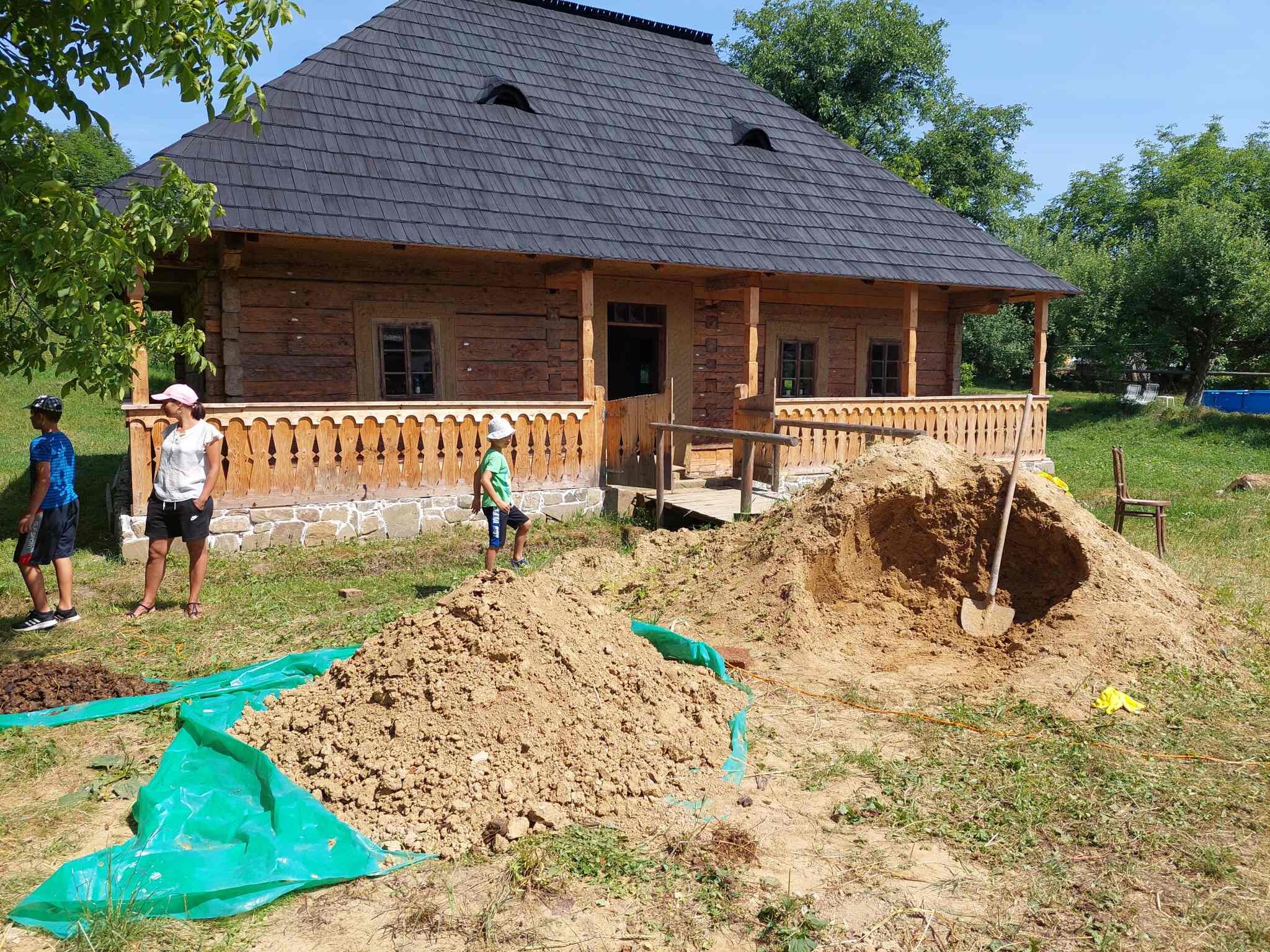
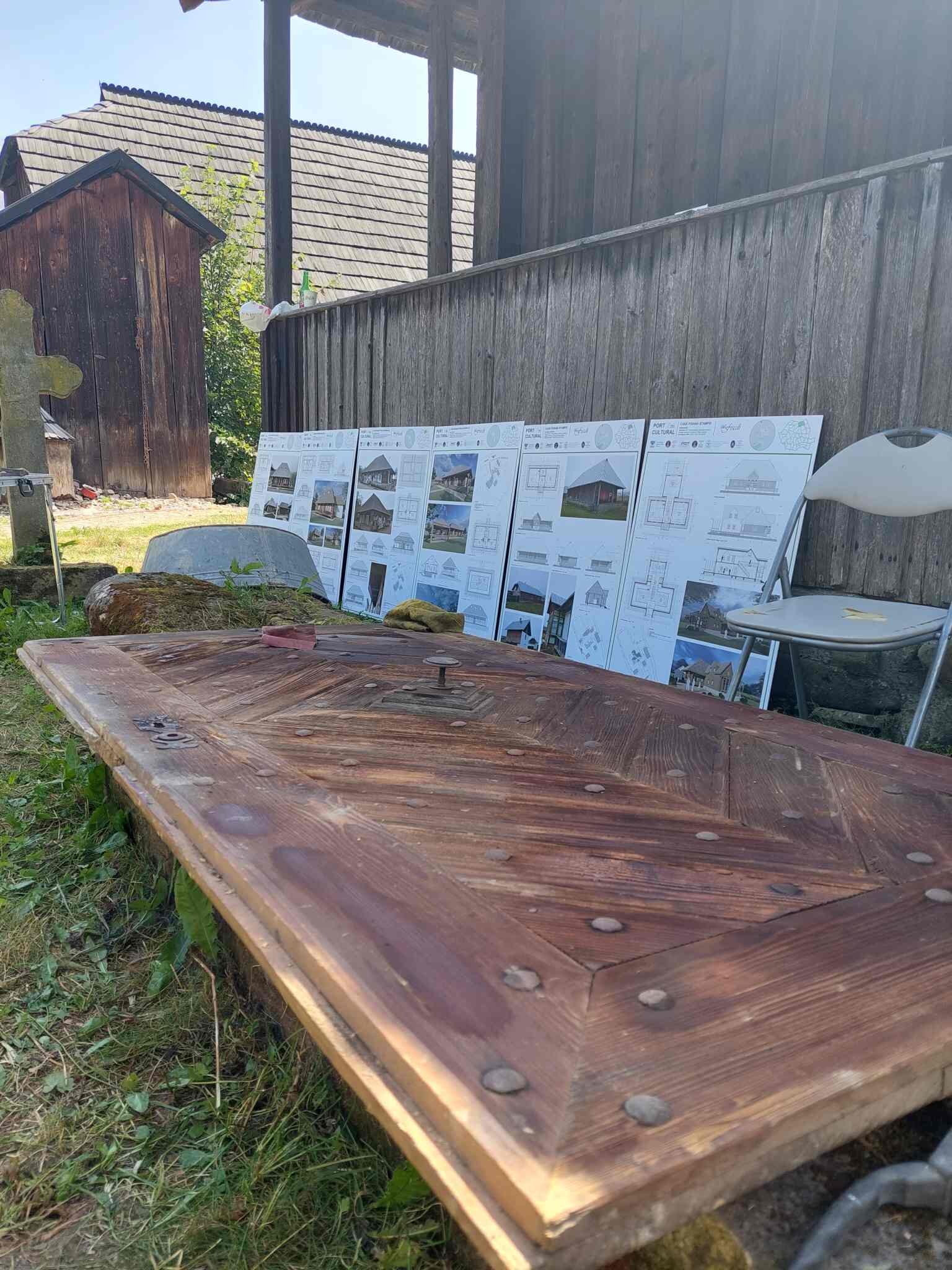
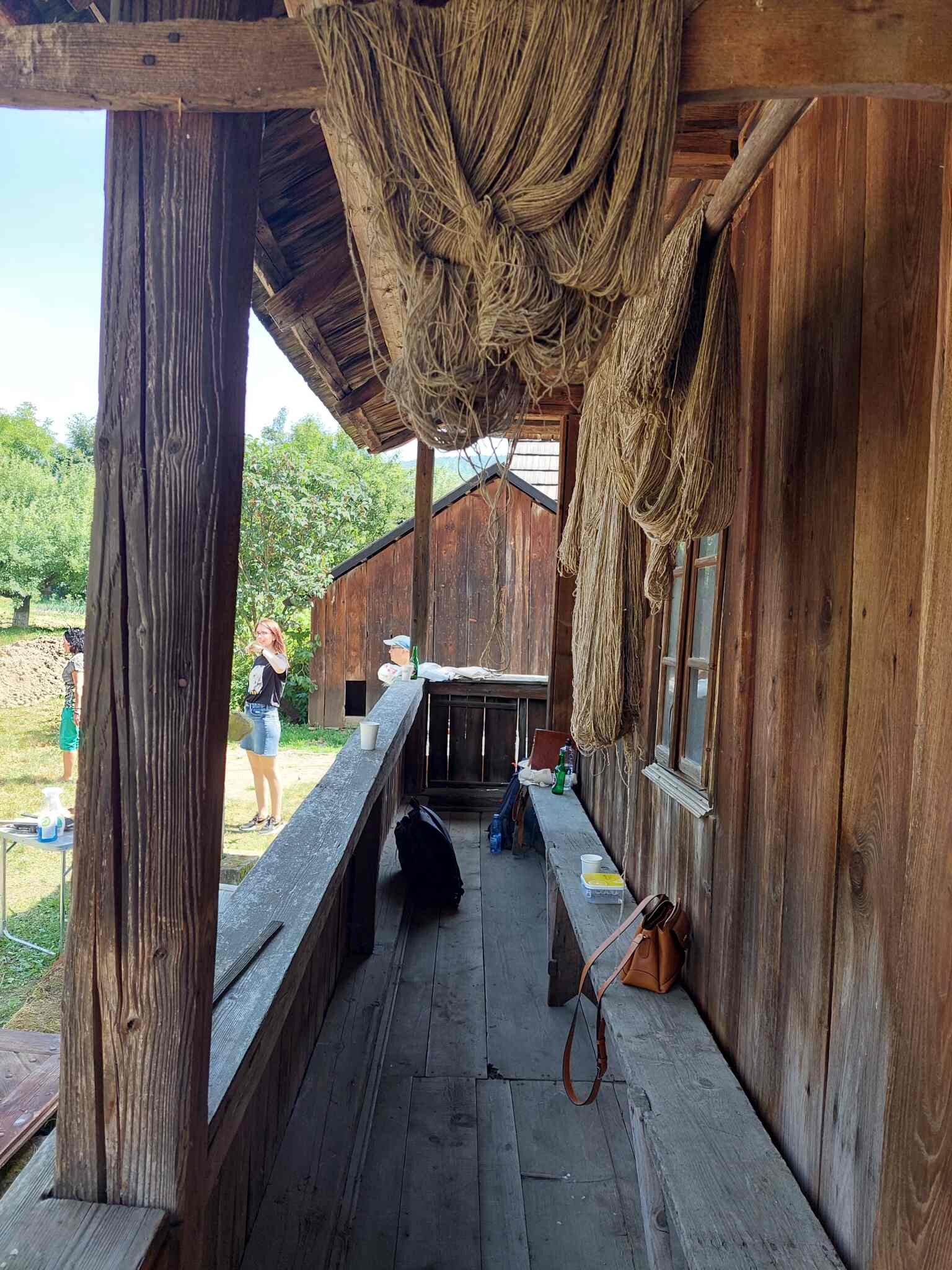
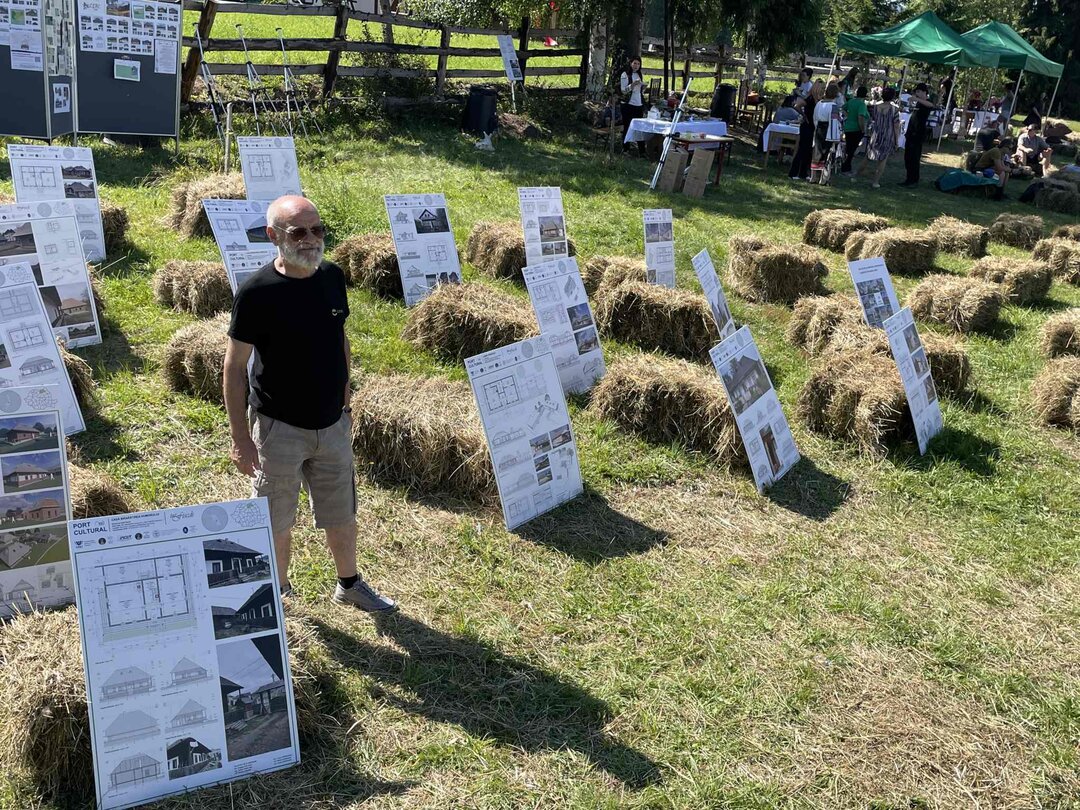
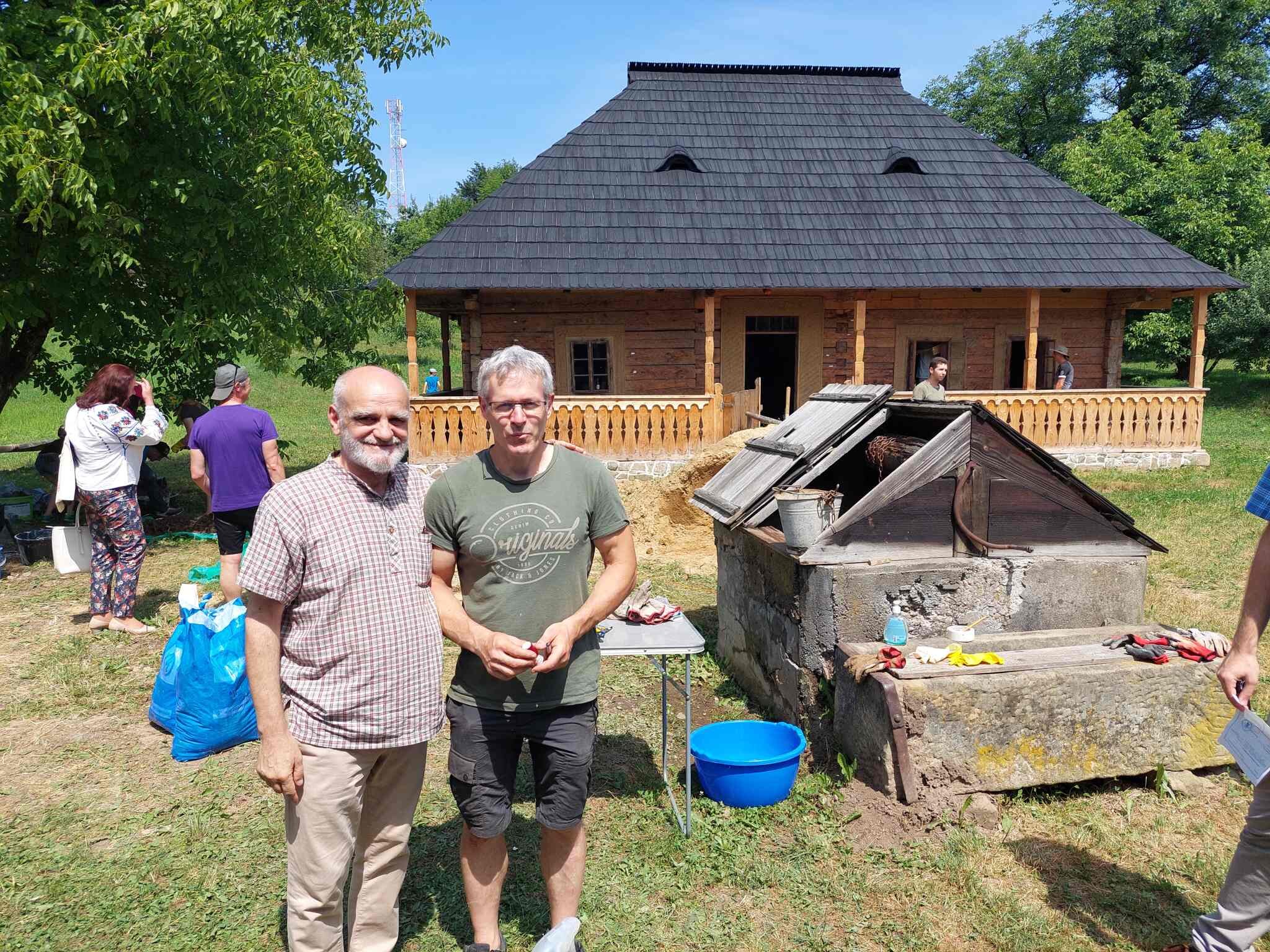
It was a beautiful summer's day in Putna, which, in Putna, becomes a breathtaking day when I met Pascal. When I found out that his name was also Garnier, my architect's reflexes kicked in and I wanted to meet him. In the common courtyard of the three buildings - the museum house, the stable and the displaced house plus Azor's henhouse, there was a great commotion. We had come with panels and brochures for the dissemination phase of the results of the Port cultural research program , taking advantage of the event prepared by the hosts, namely the "anointing with clay" of the house, as they say in the local dialect, a technical term defining the completion of the construction, as we would learn later. After the conference held in the shed, which proved to be a generous and well-equipped space for such events, the group of young volunteers gathered around a younger-than-all of them in terms of attitude, who explained to them in a very well researched way what they had to do. The character was Pascal himself, who, equipped with the materials at hand, showed the apprentices how to sort the clay, the optimal dosage and how to spread it on the wooden wall prepared in advance. I was amazed by his involvement, coupled with his energy and optimism, and I tried to find out what is driving a naturalized Frenchman in this struggle and what are his motivations.
In the evening, after a day's work, gathered around some delicious food, in the shade of the thick walnut trees in the garden, I asked him a few questions:
Dragoș CIOLACU: Pascal, did you choose Romania or did it choose you? What does Bucovina have in addition to your native place?
Pascal Garnier: I would answer that we found each other. I took the first step, visiting Romania for the first time in the summer of 1998 during a trip to Central and Eastern Europe. But Romania, and Bucovina in particular, showed all its treasures to win me over, then and in the years that followed.
I was born in the west of France, in a lowland area, 200 km from the foothills of the first mountains, a landscape much more rugged than Bucovina. Also, with the so-called rural exodus after the Second World War, rural life and peasant culture in France almost completely disappeared. At the beginning of the 2000s, I discovered the Bucovina village, full of life, with household activities closely linked to the natural and spiritual calendar, multiculturalism with rich traditions and people attached to their community. Of course, economic development has brought major changes in a very short time, and we see today the negative side of those changes in the disappearance of Bucovina's cultural identity, especially in terms of architecture, but also of specific landscapes (hay meadows with haylofts and hayracks, wooden fences, etc.), or of crafts and traditions, mainly due to the lack of involvement of the authorities and the relevant institutions.


D.C.: You studied art and you are educated in this spirit. Do you think that the ethnographic heritage of these places of adoption fits into what we call style, has an originality worth sharing?
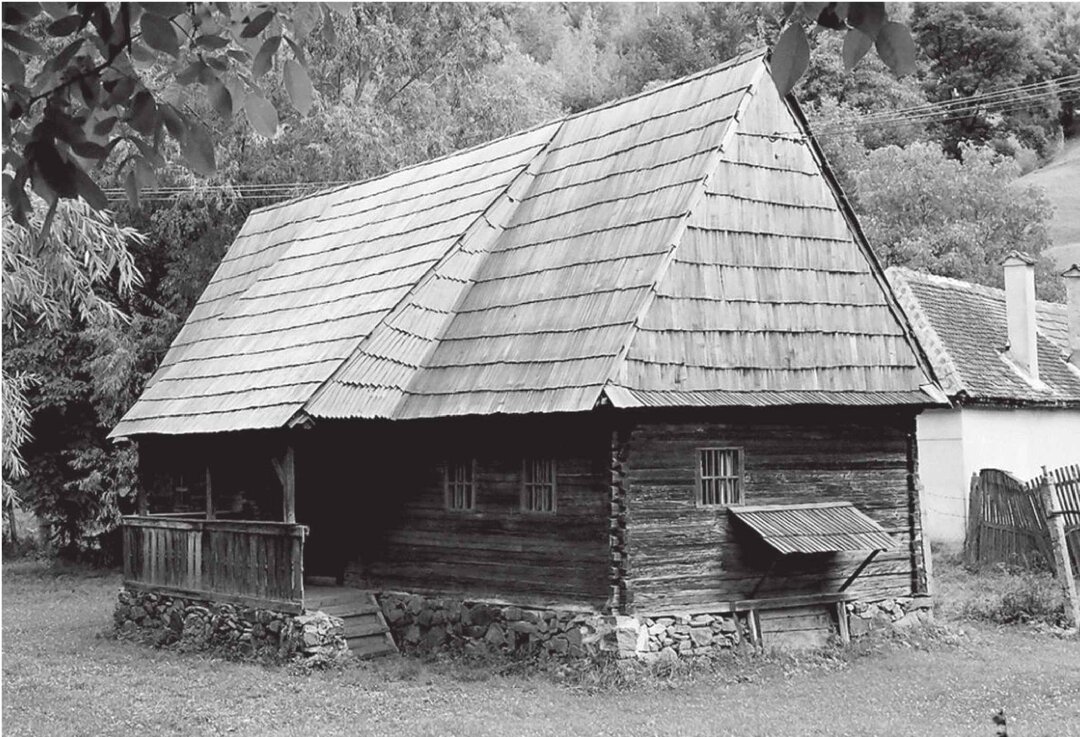
P.G.: You will say that I am not objective, but of all my travels, the rural architecture of Bucovina is perhaps the most beautiful of all that I have encountered. The aestheticism developed by the local people, influenced by the natural and cultural realities of the time, makes the Bucovina style unique and of little appreciated value. The balance of the volumes, the functionality of the architectural elements, the simplicity of the materials used and at the same time the complexity of the construction techniques, which we have experimented with through this project, the rich decorative elements that have arisen due to the multiculturalism specific to Bucovina, all contribute to the existence of architectural treasures that you rightly call ethnographic treasures (I would add of national value), which should be urgently protected.
D.C.: In this household you have already collected three buildings. Will you continue to bring other samples of traditional architecture and create an active memory zone here?
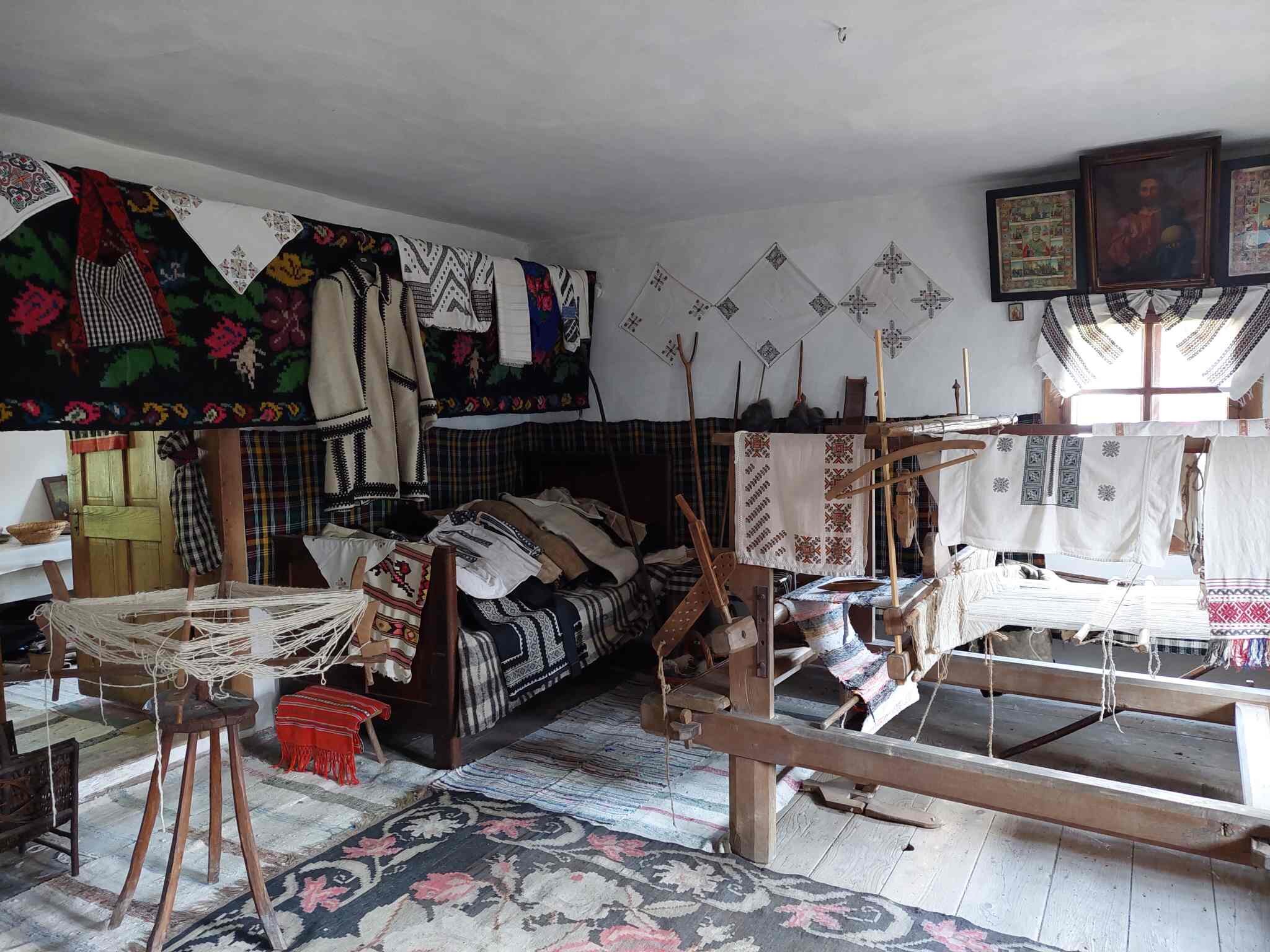
P.G.: We have chosen to rebuild the house behind a traditional homestead turned into a local museum, belonging to the Bicu family from Putna, a relative of the last owner of our house. So it was a natural sentimental decision, but also a practical one. A small commune cannot afford to share the human and financial resources that will be needed to run this museum in several places. Our aim is to preserve the memories of Putna's history through the lives of those who lived in these houses for three generations, to celebrate the rural culture of the past, and to pass on the knowledge of traditional building techniques. In the near future, we will not be bringing other buildings to this location, but we would like to propose activities for children and/or adults in the form of workshops, clay making, oiling, dranița beating, etc. Also, in partnership with the University of Suceava, with institutions and NGOs working in the heritage field, we hope to be able to support the owners of traditional homesteads to preserve or restore specific architectural elements and find a functionality for them, be it a dwelling house, a guest house for tourists, a village shop, a local gastronomic point, a traditional bakery, the list could go on and on, the only limit being our imagination.
D.C.: Bukovinian architecture is made with a set of craftsmanship well defined by the nature of the material - wood, earth, metal. Have you found similarities with the French way of working?
P.G.: I consider myself a beginner in the field of restoration and the study of building techniques. However, I had the opportunity to visit many buildings where similar materials were used in France. While the vast majority of old houses in France were built of stone and covered with tile or slate, between the 12th and 17th centuries entire neighborhoods of one-story houses were built between the 12th and 17th centuries, made of wood, clay, straw and lime, with the exterior walls covered with draniță. In French, this technique is called 'colombage' or 'pan de bois'. There is also a type of summer rearing house called a 'chalet', made of beams and roofed with spruce or larch dranch. The centuries-old crafts have been handed down to the present day, with firms specializing in the restoration of old buildings forming a veritable industry, developed by the obligation for owners, imposed by the state or local authority, to preserve the originality of the buildings. Under the guidance of architects specializing in heritage and following the requirements imposed by a strong policy of heritage protection, which began in the 19th century and accelerated after the Second World War, folk craftsmen have acquired a very clear and appreciated role in French society, being an indispensable guild for the preservation of national cultural identity. For the moment, in Romania, where the idea of national identity is often part of political discourse, we don't have serious policies to protect and rehabilitate heritage, especially in rural areas where crafts are slowly disappearing alongside historic buildings.


D.C.: What does "anointed with clay" mean and how is it done?
P.G.: In order to make wooden houses more comfortable, the walls (interior and/or exterior, and in some cases the ceiling) of the houses of yesteryear were covered with a mixture of clay, straw and water, then lime, forming a layer about 3 cm thick, which insulates against heat and protects against insects. This mixture is trod with the feet to obtain a 'paste' that is homogeneous, sticky and elastic enough to be carried into the house with a 'patașcă' (a kind of wooden stretcher) and spread on the walls, which have been covered with a row of wooden beams - or two crossed rows of beams - about 3-4 cm apart. This grid of yards serves as a net on which the clay can be held after it has been forcefully thrown and then stretched out on a smooth surface using a wooden plank called a 'leaf'. Over time the clay will dry out and crack. The cracks will be useful to allow the stretched finish coat to catch in the next stage, called 'facing'. The second, much thinner layer is made from a sandier clay, horse manure, lime and water. But we learned that this moment means much more to the local community. "The 'claca' organized for the greasing of the house, attended by more than 50 people, was an occasion for locals to help each other and celebrate, thus maintaining the community bond. Women and children treading the potter's wheel, men pounding and smoothing the clay were activities that were part of the local culture, without which, along with other activities, the rural community could not function.
D.C.: Do you miss the champagne and escargo or the sarmals with mămliguette, after a day's work are they better?
P.G.: After a day's work with your hands in the clay, snails or sarmale? Starting from a seemingly trivial question we reach a very important point: context. The culinary experience depends on factors other than taste.
What seems more natural in the courtyard of a 130-year-old Bukovinian home, a pot boiling unctuous balm or a table of delicious seafood platters? The question can also be asked the other way around: will the experience of tasting a lamb stewed in cream be better in a mountain hut or in a four-star restaurant in the center of Iasi?
What are traditions, customs, cultural identity without the right architectural framework?
D.C.: Thank you!