Unseparated Gifts. Architecture. Drawing. Painting

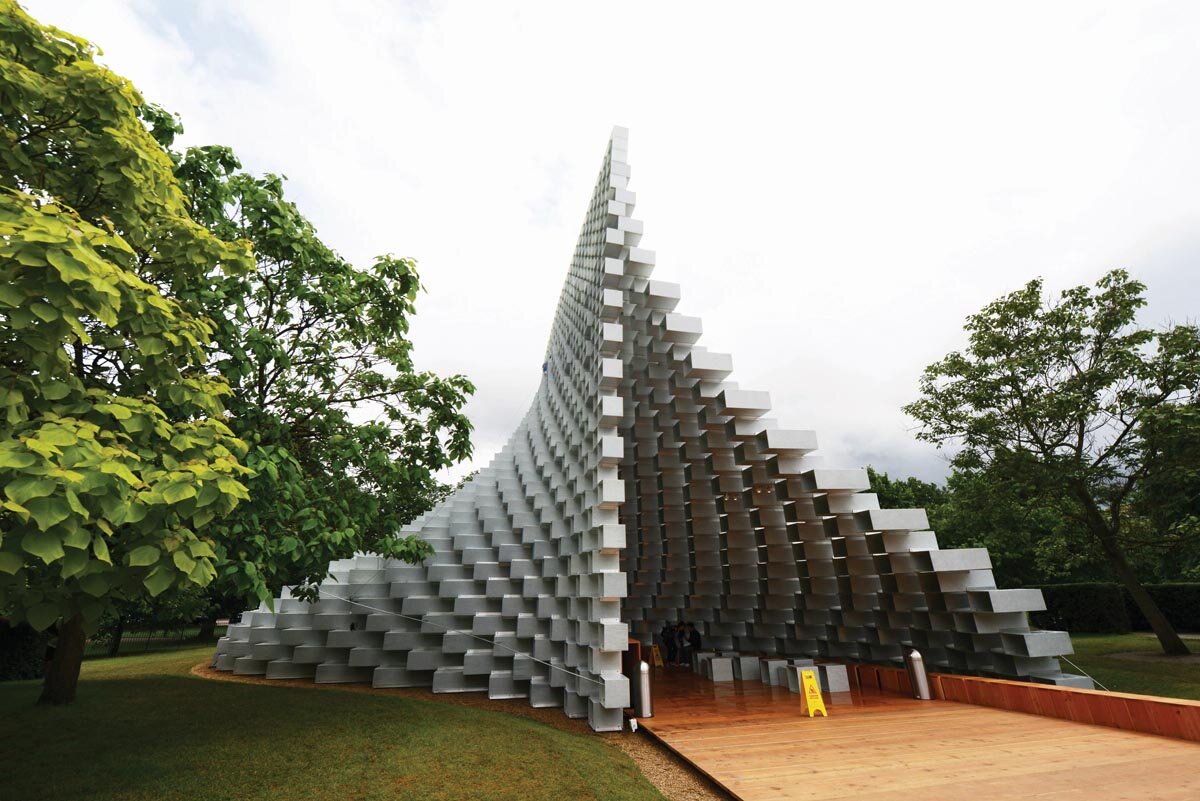
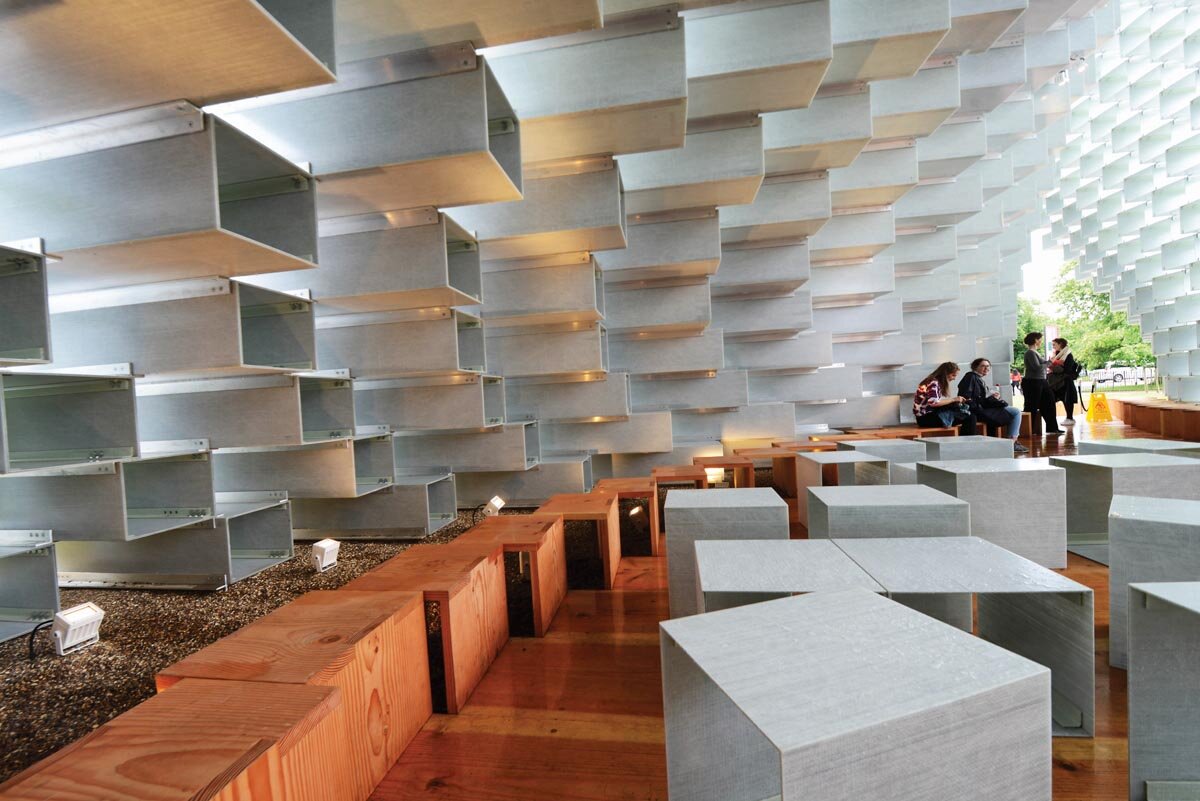
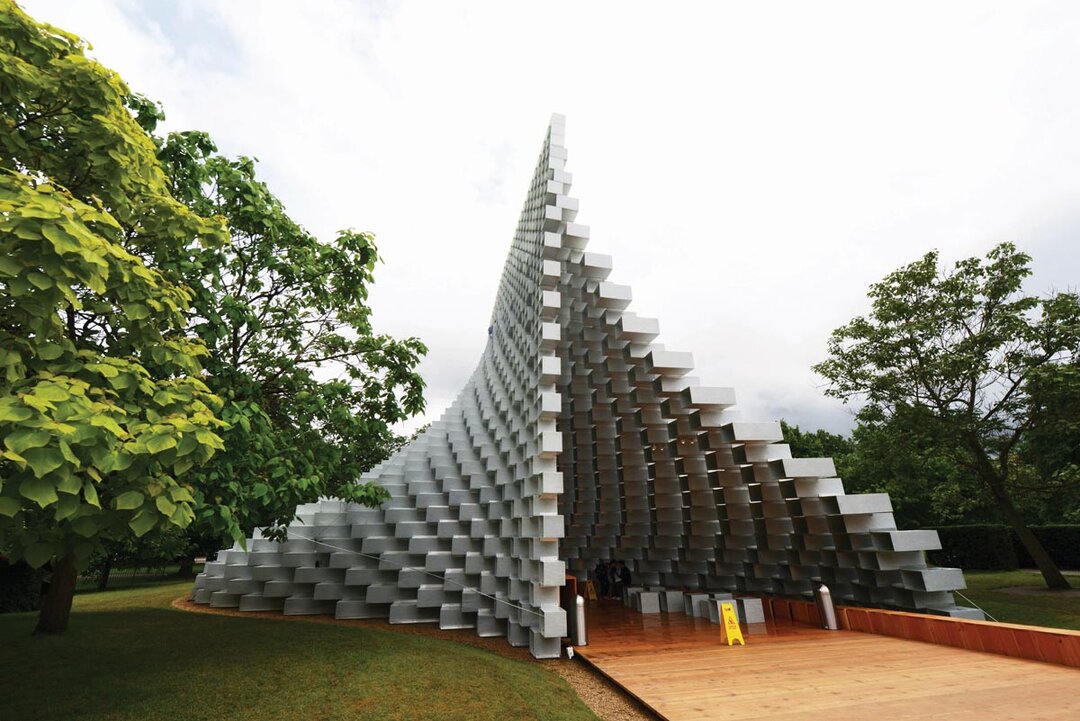
The annual, temporary structure, designed this year by architect Bjarke Ingels, is 14 m high and made of 1,800 rectangular fiberglass tubes, sinuously stacked in a seductive sequence of optical effects, the result is incredibly sculptural. The transparent pavilion seems to dissolve to become opaque and solid. It could be a church, according to BIG's philosophy: 'a wall becomes a hall', 'a door becomes a space', and 'a shelving system becomes a pavilion'.
Despite being made of a single element, its complexity is rendered by the contrast between the dematerialization of the walls when viewed directly and the resolution of the openings on the sides.
The structural simplicity is deceptive, as the pavilion was made with the help of AKT II engineers, who used fiberglass of varying thicknesses to support the different loads. It was designed to be climbable and structurally designed to cope with the weight, but Royal Parks Administration safety regulations do not allow this.
Alongside Bjarke Ingels in 2016, four other architects were invited to create 'summer houses' inspired by the Queen Caroline Temple built in 1734, to be displayed around it.
Kunlé Adeyemi created an inverted replica of Queen Caroline's Temple, a tribute to form, space and materials, recomposed into a new object.
Barkow Leibinger was inspired by another 18th-century pavilion, also designed by William Kent, which has now disappeared. The curved plywood curved vault is exposed rotating, offering 360° panoramas of the park.
The summer home of 93-year-old architect Yona Friedman takes the form of a lightweight, almost invisible, modular structure made of rusted steel hoops that can be assembled and disassembled into different formations.
Asif Khan's design is inspired by the location of Queen Caroline's Temple, which allows it to catch sunlight reflected in the lake.
photo: Bogdan IURAȘCU