The pavilions of the Biennale. Historical landmarks

text and photo by Augustin IOAN

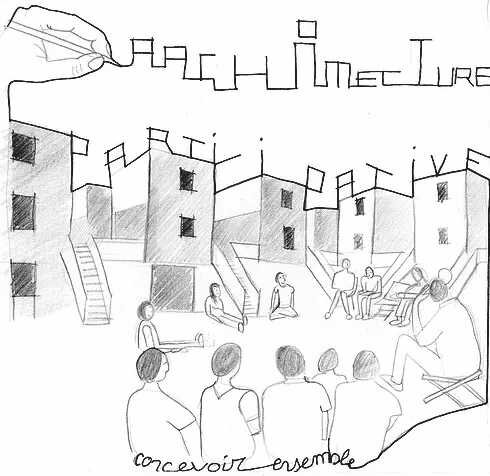
Dear younger colleagues, please forgive me for my age, forgive me for my age. But, on such a topic, I feel I have something to share, so I will here offer all sorts of perspectives on participatory architecture, immersed in the social and aided by the architect.
First and foremost, as architects, you will have a legal and contractual responsibility to the client, to whom you must be a consultant in the realization of their ideas. Those who believe that the client's role is to fund their auctorial delusions are sad creatures. They will usually tell you that they have not been understood or, better still, that they did not want to compromise or prostitute themselves. Not building, for them, becomes the highest virtue and the very proof of their morality. Don't believe them. In fact, if they have ever had real clients, they have not been capable of the slightest effort of negotiation, dialog, diplomacy. A successful house is a negotiated house and, except in the rare but very interesting case of the architect designing the house of his own dreams (or nightmares), you must remember that the final product - from the house of the lord to the house of the lord - is not yours, but theirs. It is they you have to represent as a social, economic, image desideratum and, with them, you, who have been - or not, to raise the class of the final product above the class of the client, where possible.
Because, being representatives of your client, you will have happy occasions where your client is unknown, or collectively. Whether you are doing real estate development, designing a public forum monument or even an instance of public space itself, you will be designing for a multi-faceted but unknown community. You will know, individually, only the leaders of that community (mayor, priest, funder). How will you then know how to put a face to the desirable self-image of that community? You will construct it mentally - you are, among other things, intellectuals. You will recompose it, faceted, from countless others. You will probably know how to raise the level of a community's self-representation to near the maximum: where it is the way the community itself wants to be seen, and not the way - fact or fiction - others see it, because in the latter case, as a rule, the result will be an insult. But, at the same time, you must not represent a community beyond its capacity for self-representation, because the final object will never again be accepted by the community as its own. Because of this rupture between the built object and the community, we have squatting, we have a refusal to appreciate monuments for what they are: condensers of collective memory, we have a lack of contemporary relevance. As soon as possible, a community falsely represented by its collective edifices will abandon or destroy them.
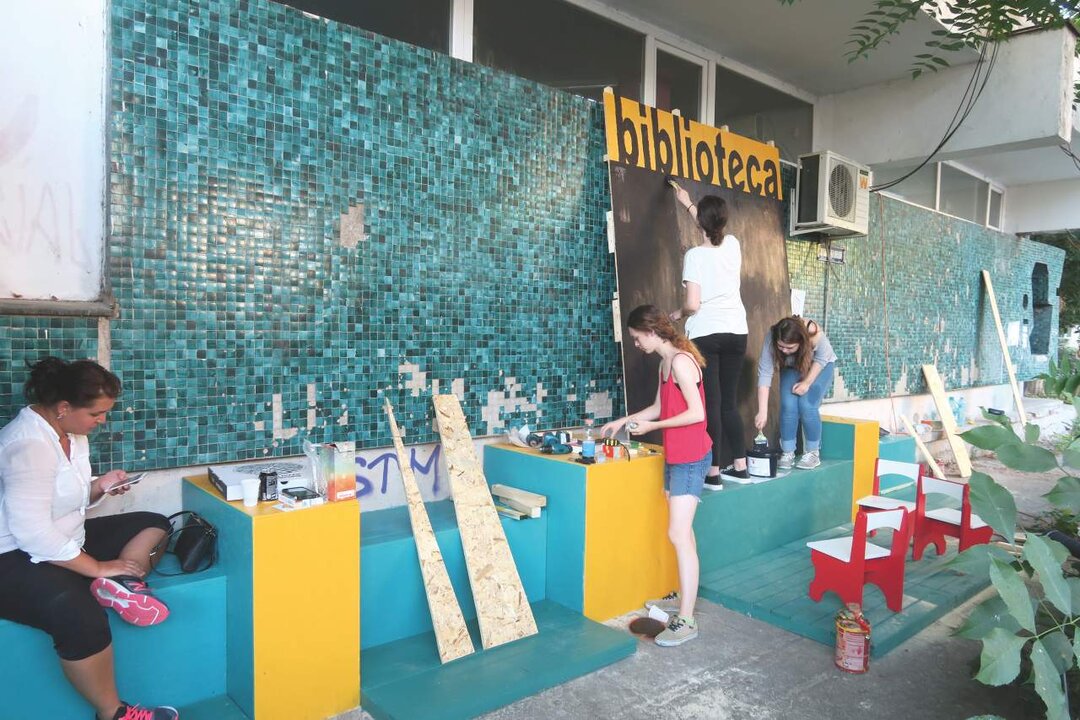
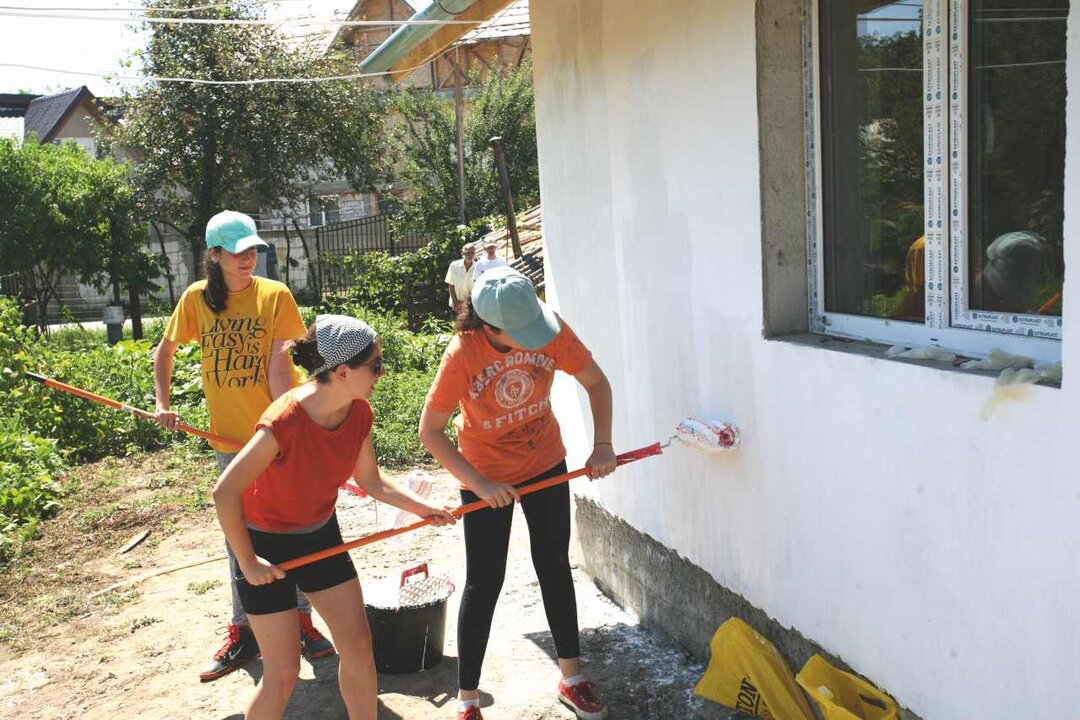
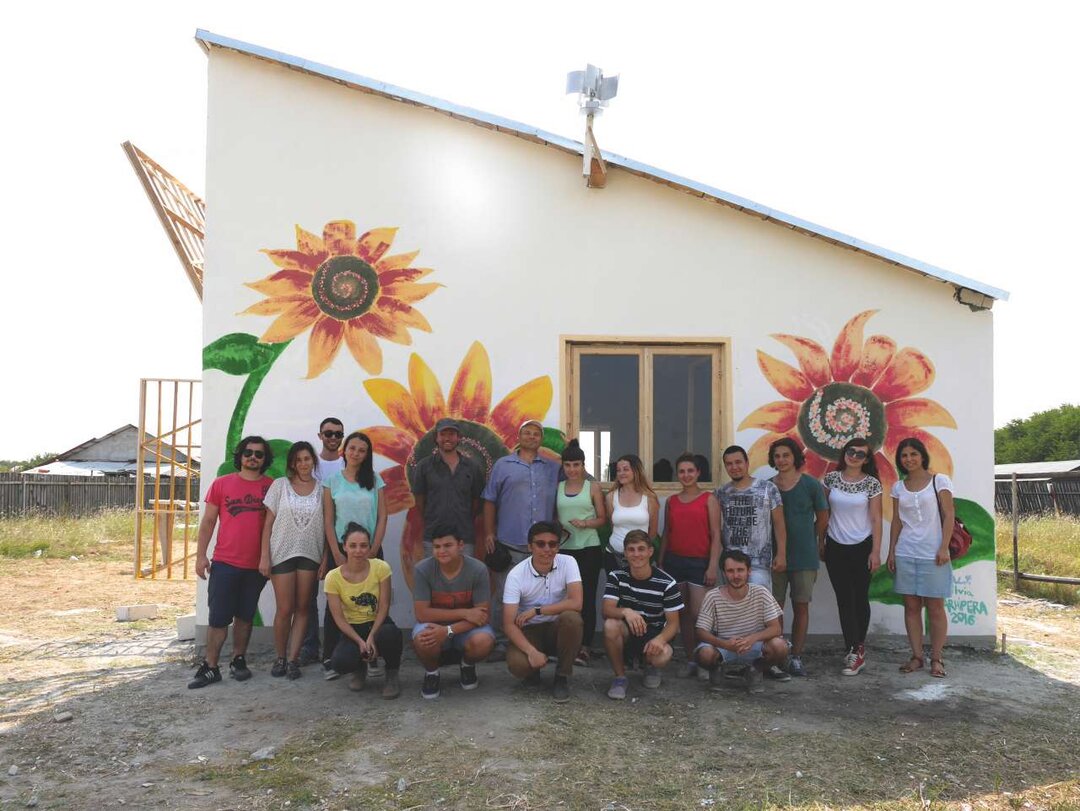
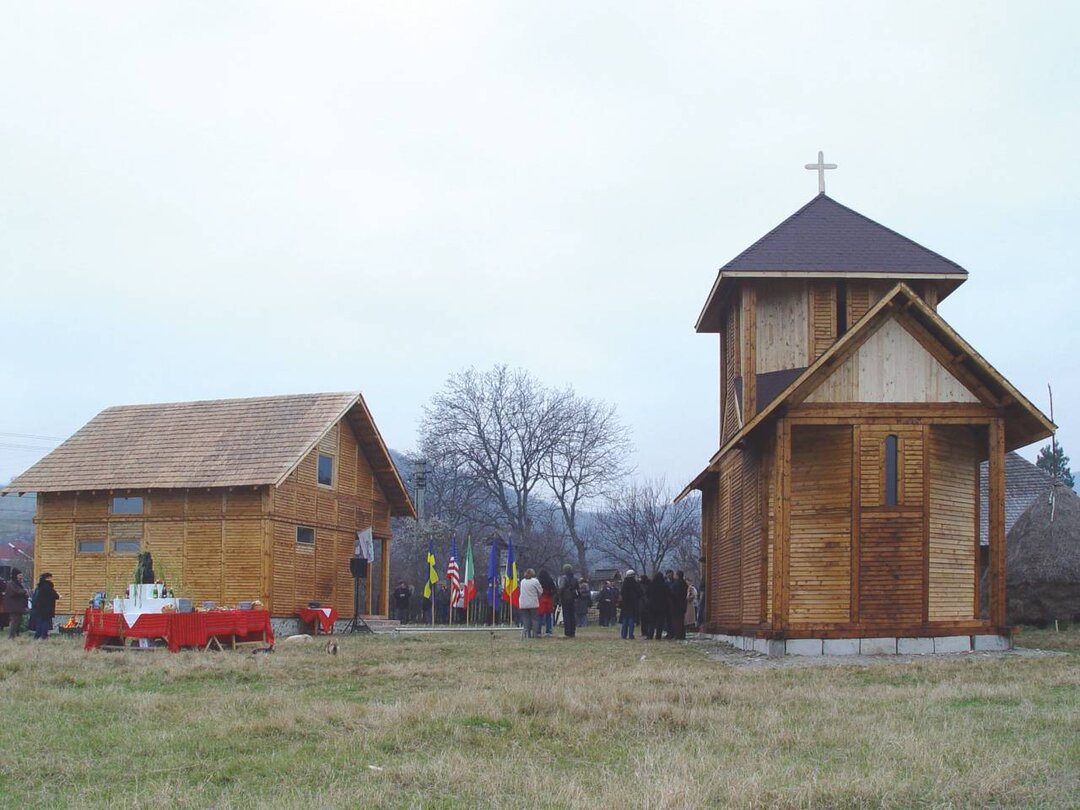
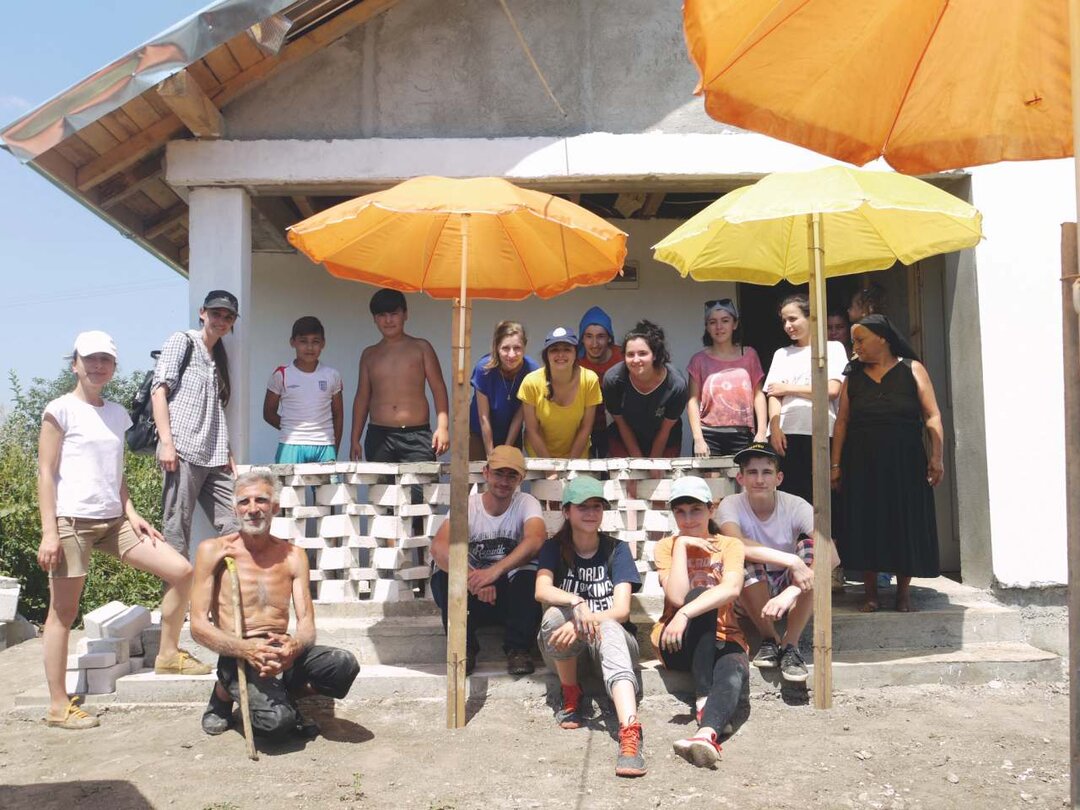
So, yes, you are indebted to the public space and to the communities you come from and/or those you work for. For example, you should be aware that in the inter-war period, the period from which we got good quality buildings and more quality books, including on architecture, than were written in the equivalent period after 1989, it was common practice for the architect, otherwise a middle-class gentleman, to work pro bono for the so-called community. So it is to this dedication of time and vocation that we owe, for example, Trajanescu's elegant stone churches in the Prahova Valley (Sinaia, Poiana Țapului, Bușteni, Azuga). The architects saw fit to create free of charge for their less fortunate fellow citizens in order to solve a social (collective housing), sanitary, cultural or, why not, religious problem. In this capacity to give you will often find masterpieces. It is not necessarily the cost of a building that determines its quality, but rather the intelligence of its design. Just look at the ingenious work of the Rural Studio (Samuel Mockbee and his students when he was alive), Architecture for Humanity or, in Romania, Habitat and Art in Romania (the HAR Foundation) to see what I mean: designing when you have no resources at hand, for a noble purpose - to help others who have as much divine spark in them as you do - can work wonders. Miracles in a professional sense, first and foremost. But such gestures also have community-building virtues, around them in the making, but also in the using and keeping. I therefore invite you to an active form of social involvement: volunteering. Apart from the fact that it is becoming increasingly fashionable for us to mention this kind of activity on our CVs, without which no one in the USA will take you for a job of any importance. But volunteering in our profession means putting your charity, your social involvement and your professional expertise into practice at the highest and most direct level: there you will really be able to do to others what you want to be done to yourself. Remember: whenever you have the opportunity, give and give yourself. As architects, it is only from there that you will truly benefit your soul.
If someone were to ask me to speak freely on the question of housing today, with particular emphasis on collective housing, I would have to touch, however briefly, at least on the following points, which I leave as a score that will perhaps generate discussion:
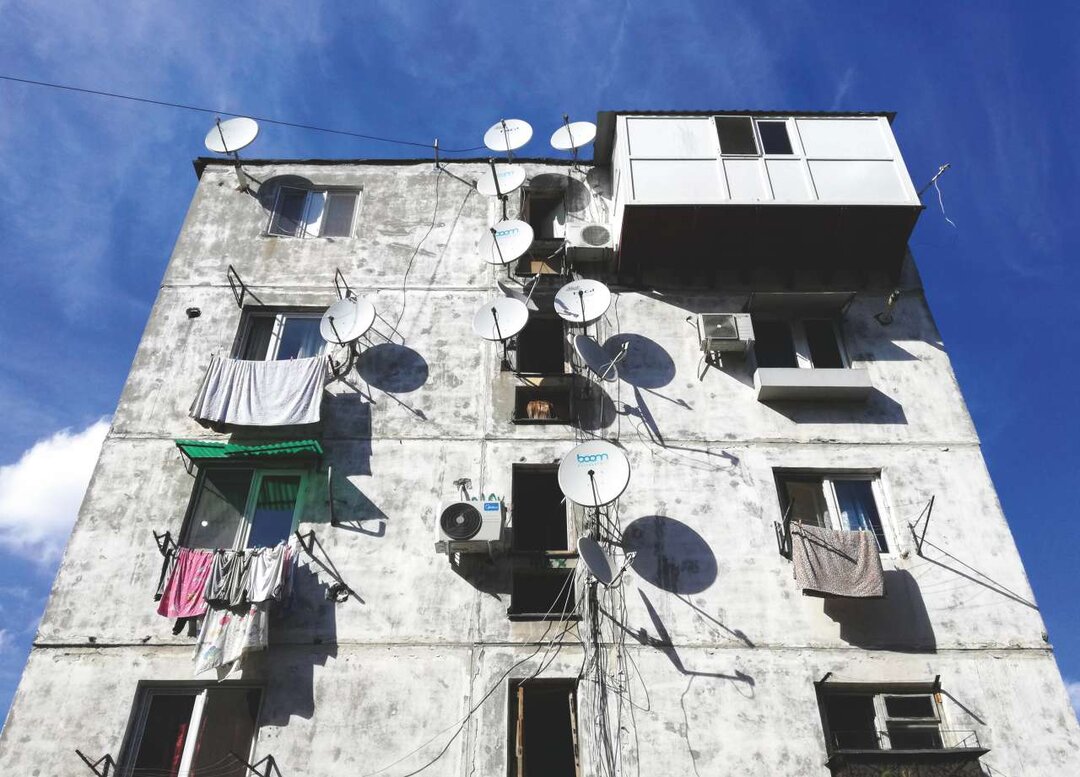
1.The conceptual crisis of collective housing (at all levels assisted, community-based housing, conditioned by high levels of urbanization, crisis of the modernist model, failure of socializing-collectivist thinking, etc.), very little critically discussed;
2.The crisis of gated communities (living protected by walls, isolation from the rest of the city of a socially "superior" community). By extension, the crisis of individual housing of the affluent suburbs in the USA (with result: the emergence of The New Urbanism. Any new form of settlement - satellite neighborhood - fractally repeats the complexity of the whole, i.e. includes all urban forms, but at a reduced scale).
3.The new post-Facebook intimacy; the dedramatization of the idea of comfort, the refusal of typification through the success of DYI (it has reached us: do it yourself, DIY; see Ikea and other home improvement chains).
4. "Democratic" architecture, the "socialism of the production of private space": the home is not a privileged domain of the architect, who is no more a specialist in inhabitation than the average client (see Christopher Alexander and his Pattern Language). Information (its production and consumption) becomes a component of dwelling and even an emblem of social status: the house-screen,
5. At the bosom of 'Mother Geea': legislated energy recovery and self-sustainability in the West transforms the house into a computerized energy saving and producing machine (the buried house, the heat pump, material efficiency, smart facades, solar/wind, household waste, etc.).
After that I would also give examples of best practices in the field of contemporary residential architecture and its environment:
(a) Rural Studio, Herzog / De Meuron, Mahti Senaksenaho, Habitat and Art Foundation in Romania (i.e. sculptor Alexandru Nancu, Augustin Ioan and friends);
b) minimalism, poverism, "as found" materials (not necessarily natural, but recyclable), "humble": revitalization of natural materials, a new return - culturally - to "nature": adobe, wood, cane, bamboo, but also massive natural stone;
c) the DIY-house (Herczeg House, Timișoara); the application of philosophical principles to architecture: the fold/fold (MVRDV, Mecanoo, Rem Koolhaas); the Möbius house and the anti-Oedipian house: a new stakes of the public-private relationship in the Foucaultian, Möbius strip sense (through a new dosage of the theme of transparency, different relations with the outside, dissipation of the dichotomy between public and private and/or day/night activities); rediscovery of intermediate spaces (courtyards, porches, cursives).
To conclude such a discourse, I would make the following bitter observation. In our country it is all to do and all the mistakes are repeated: gated communities appear, social housing is not discussed, those in the socio-human sciences are not terribly interested in investigating collective housing after 50-60 years of application, individual housing is not experimental in the sense of new housing models, but only - rarely - in the sense of the expression, and the state, through ANL, although it should no longer be in this market, is building the same blocks, only much worse.
For almost two decades in which architecture in the proximity of religion has meant primarily new churches and temples, a thirst for sacred space - justified by the atheist drought - has led to the construction of several thousand new places of worship, of all denominations. The Orthodox predominate, of course, but the explosion is perhaps even more impressive when we look (as I recently had the chance to do while researching for a text on the subject) into the neo-Protestant fold. Mosques have even sprung up in Dobrogea and Bucharest. Then, the fever died down, the church market died out before a serious, informed discussion had taken place, before my friends, the new theologians, had intervened, with their authority, in the debate. I will not go into that now.
More recently, however, a new dimension of this proximity with religion has emerged. It is about community social programs. I am not going to deal here at all with those which, for neo-Protestants, for example, are one of the inner articulations of their faith. I will simply say that the charitable dimension has begun to sprout up in the Orthodox church and that it is beginning to have architectural implications. We know where we have started from. The theological dispute about a social doctrine of the Orthodox Church in Romania is still going on. In Bistrița Vâlcii, a couple of decades ago, I myself scolded a young nun who was chiding a young nun who was chasing away from the enclosure children gathered begging (the convent was next to an orphanage), instead of feeding and welcoming them, happy that, at last, the faith of His Lordship would have found the best place for practical illustration. On the contrary, that nun replied that she was in the convent to look after the Saint (i.e. the holy relics of the spiritual patron saint of the place), and not those snotty little snot outside!
Anyway. Times change. EU accession has brought the promise of lots of money that can also be accessed through social projects. For a while, I even designed after-schools, where a priestess would work in a certain commune in the Bărăgan. I find it hard to imagine that anyone other than the community itself can take care of the poor. If it's only money at stake, the job of a lone-breadwinner can also create monsters like the woman who killed the baby placed in her arms by a failed mother. Community care tightens the warp of the social safety net, because those in need are its own, not strangers. What's more, this community care is located close to people's homes, which gives it social visibility and protects it from abandonment. That is why charity projects have sprung up here and there, dedicated to children or the elderly, or both, in need of care. Children and the elderly, if they are well looked after, can look after each other: at the Ghencea church, next to which I lived for 12 years and whose story I told in a TVR Cultural series on Orthodox architecture in Romania, a small shelter for the elderly is lit up by the daily presence of the poor children of the community, brought there to say the Our Father before lunch and then to do their homework for the next day. All this under the watchful eye of the surrogate grandmothers hosted by the small settlement, happy in their new role.
But also thanks to local church initiatives, there are now social settlements in good order which will be run by the community, under the supervision of the parish priest. They will be able to take over some of the charitable functions assigned to the state from the state in decline. Here, for example, the parish priest Stelian Băducu is doing just that in Urziceni and the surrounding villages: he is identifying the needs of these communities, which are not at all wealthy, accessing European funds and, hopefully, will soon start building. As far as I know, he is not the only one who is looking, with architects from the past, for good ways to give a local dimension to the expression community building. Because in such places, where the only social magnet is the church, collective charity, charity and caring will be built around it. The sustainability of these projects depends entirely on this concern for those left behind.
A second area of edifying concern in the shadow of the churches I see in emergency architecture. Charitable groups have long worked under this rubric, running from tsunami to tsunami, earthquake to earthquake and exile to exile, to provide shelter. Emergency shelter already has a tradition, a collection of best practices and some theory to back it up. In our country, natural disasters have highlighted the (un)wet problem. It is not the state that knows and can manage an instant crisis. It cannot do it in the United States (see the Katrina case), nor in Romania, where it does not have the authority, resources or common sense to recognize these shortcomings. But are these shortcomings entirely due to the state? We did not find any echoes among architects for a working group in this field. We could have already published a catalog of the best post-catastrophe scenarios that, in the eight years of operation, my younger colleagues have developed under the guidance of prof. dr. arh. Florin Biciușcă and myself. The architect, Alina Florea, also did it, as part of a doctorate on the subject and, it seems, in preparation for the work she is now doing with Habitat for Humanity.
Because, I repeat, it's not about projects for houses or containers, however over-designed they may be. It is rather about a scenario that is triggered instantaneously and automatically and that runs on the clock precisely because it has been tuned and over-rehearsed before. Who is the coordinating authority? Where are the temporary shelter kits stored? How temporary is temporary when in places like the environs of Istanbul, immediacy tends to become chronicized and the shelters in Split have become luxury homes over time? How are kits brought into the disaster zone? Who assembles/ inflates/deploys etc. (the processes are endless) and how quickly? Are the shelters at the end of this long and complicated chain made of evanescent and therefore disposable materials (like Shigeru Ban's cardboard houses in Nepal)? Or, on the contrary, are they made of durable materials and will they be reused in future tragedies (in which case a strategy must also be found for dismantling the camps some time after the disaster)?
We don't know. I mean the state does not know. Nor do architects see architecture for charity as a viable theme. But institutions like the Church might. The Church, like the state, has dual representation: local and national. Unlike the state, it has credibility and can mobilize aid. It is wrong for the state to reward the carelessness of local authorities who, between two disasters, do nothing to ward off the next one. It is wrong for the state to give money to those who did not insure their property out of laziness, ignorance or simply building without authorization. Village architecture is overwhelmingly simply illegal. The state had the means to punish the perpetrators and the complicit local authorities. It failed to do so. It is in cahoots with them. The state is in league with those who speculate on our tears and grief in the face of disasters, and then spend common money to perpetuate the illegality.
Help must be given by the collective itself and only to those who have already started to help themselves. Those who are already (re)building themselves should be given the missing helping hand. To those who beg for their lives and their livelihoods from the state, stop giving them electoral handouts from our tax money. Let the politicians give from their personal money to the beggars and stinkers, if they really think it's right, and stop the generosity from the purse of others. Let the army stop making levees for those who don't make them themselves. Let public money stop being wasted on televised but unclear cases. Because, alas, none of those who have been collecting money, from the budget or beyond the budget (state, television, churches), has ever tried to account for what was done with the money collected by sentimental blackmail from the poor...
Giving of your time and care to your fellow men is the most elegant way of being an architect in the city. We too have a weak tradition in this respect, an interwar one. Some of us who have worked for churches know that this was not a source of instant enrichment either. As a rule, there is not much profit in such design and architects are often asked to work pro bono. But something of the rapaciousness and ferocity with which real estate speculation architects are made today must be compensated, must be atoned for. It would be good if such an architect practiced both. It would be laudable to see how, in a collective offer, the OAR or its branches institutionally make pro bono labor offers to the institutions that are the bearers of care. Churches, for example. This, still and still, is not happening. Care is not systematic, generosity has not found a collective articulation or edifying expression. It still doesn't pay to be good to your fellow man.