Baloshin States

ALICE IONIȚĂCRISTINA TARTĂUSIMONA IOANA NĂSTĂSOIUELEANOR TALLOWINSOPHIE MISSENDUŠICA PLAZINCICMARIJA CVETKOVIĆMARIJA PROROČIĆNEVENA ŽIVANOVIĆ
| Contemporary society lives in a world dominated by civilization. This fact is described by Michel Henry as the New Barbarism, since its specific, absolute and triumphant knowledge comes at the highest price - "man's suppression of his own being". Following his example, our project brings a critique of the modern world in which civilization - the material world defined by consumerism, all interactions with what is outside us - has swallowed up culture, the inner life of each of us.
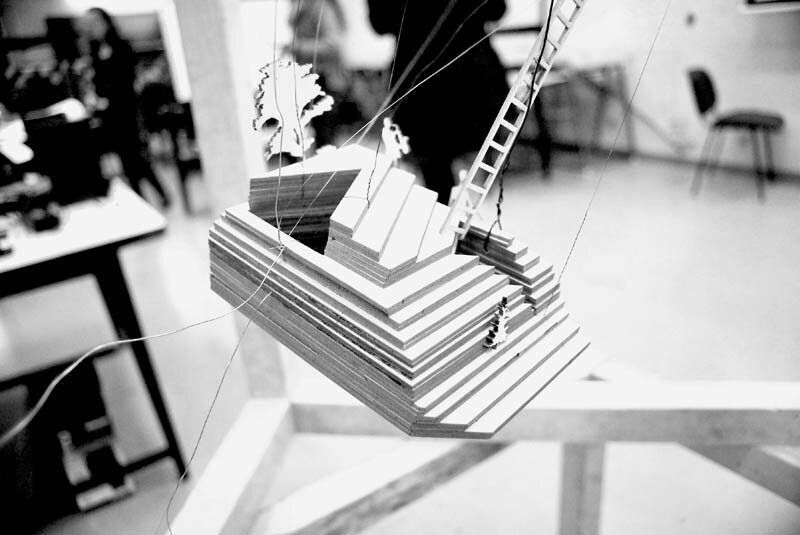
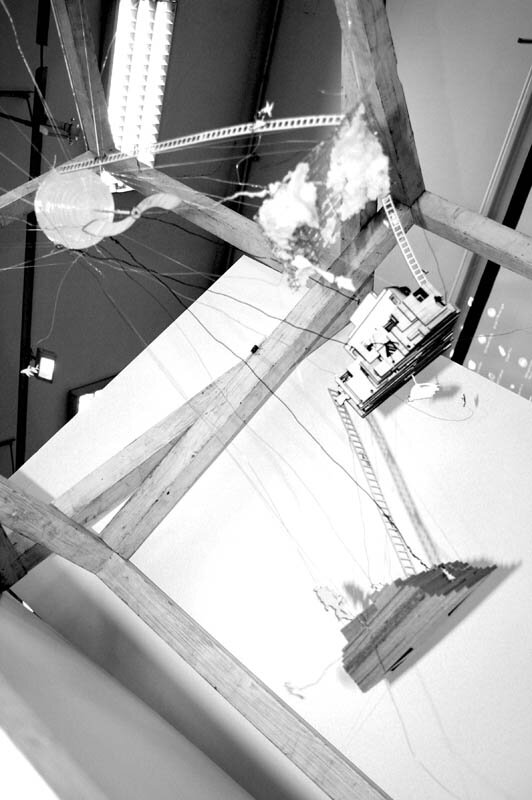
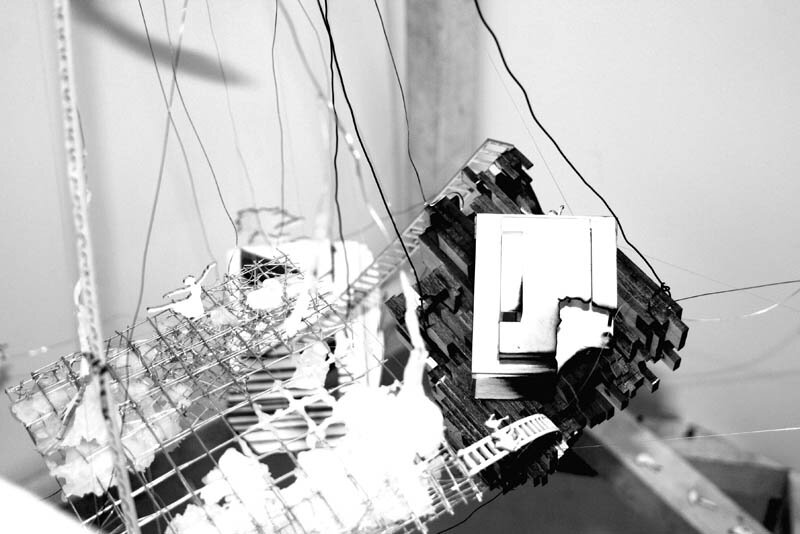
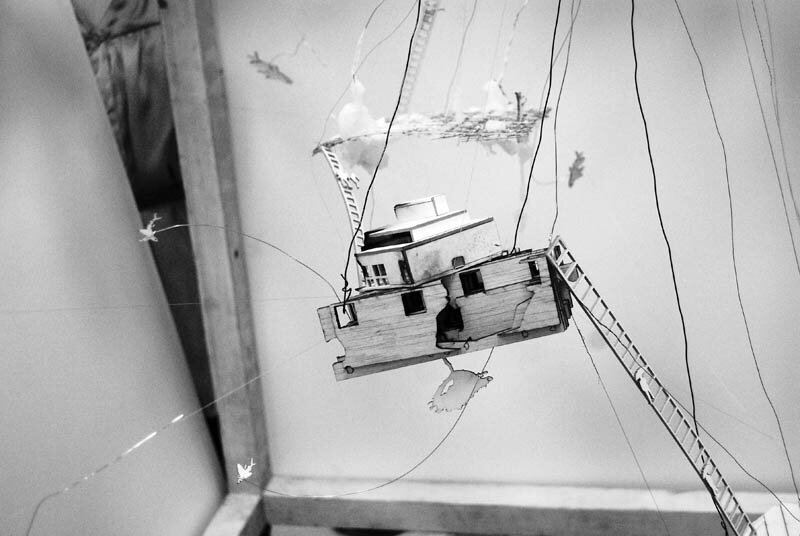
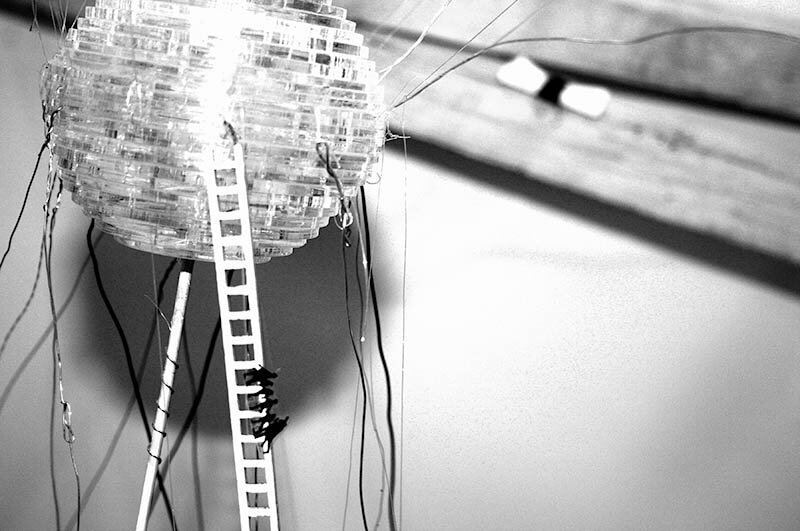
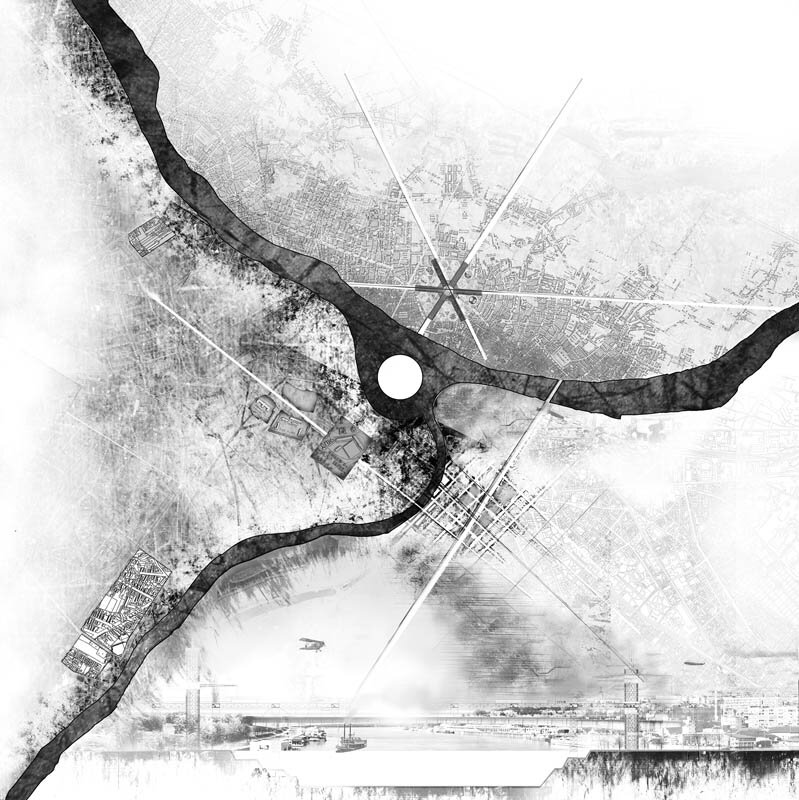
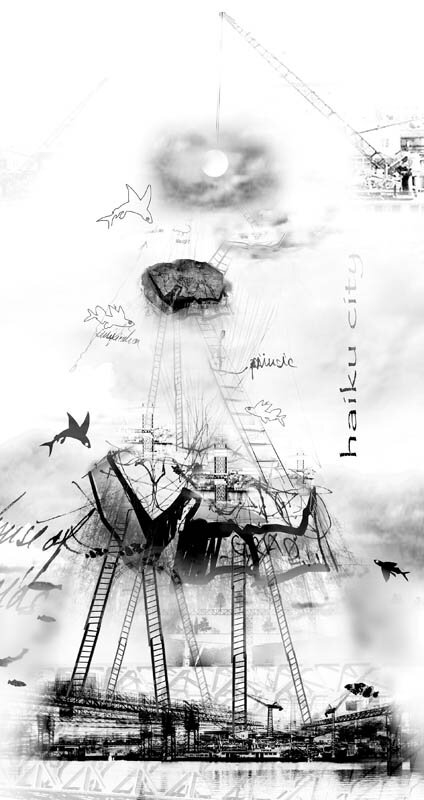
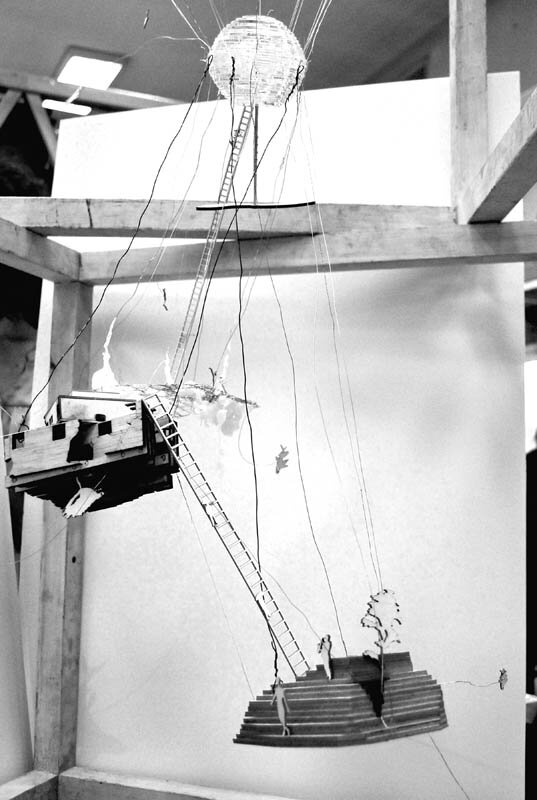
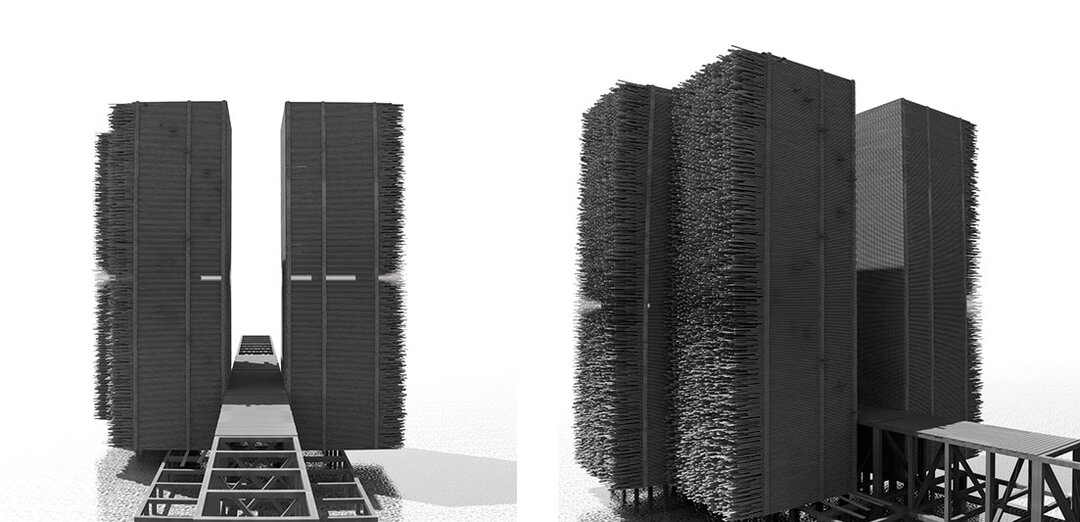
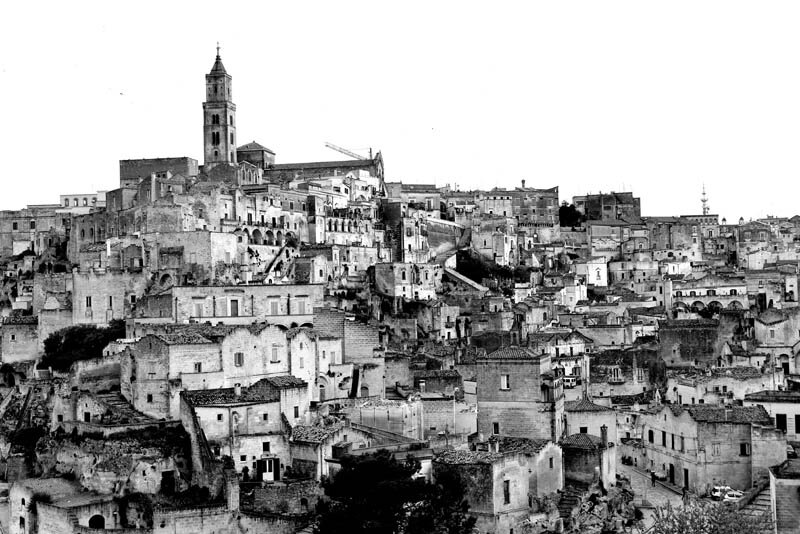
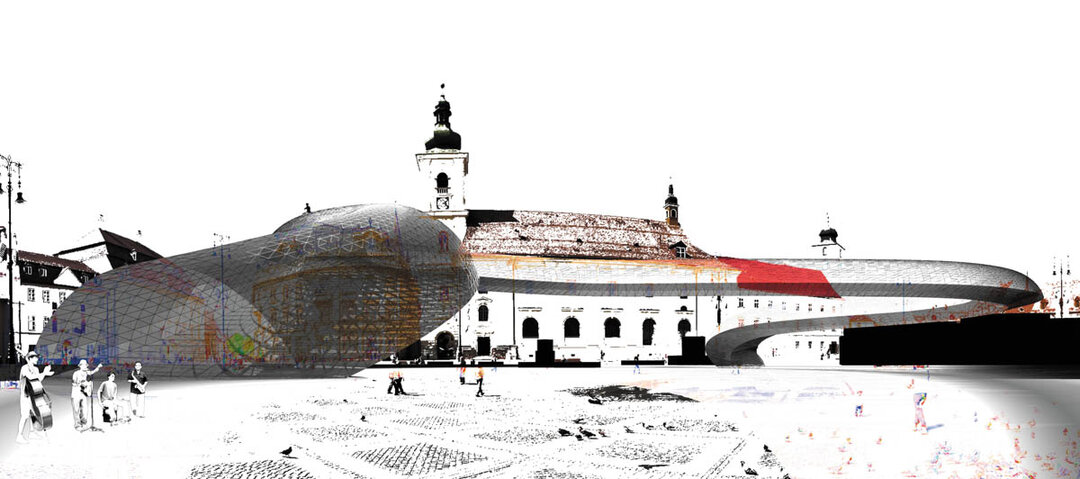
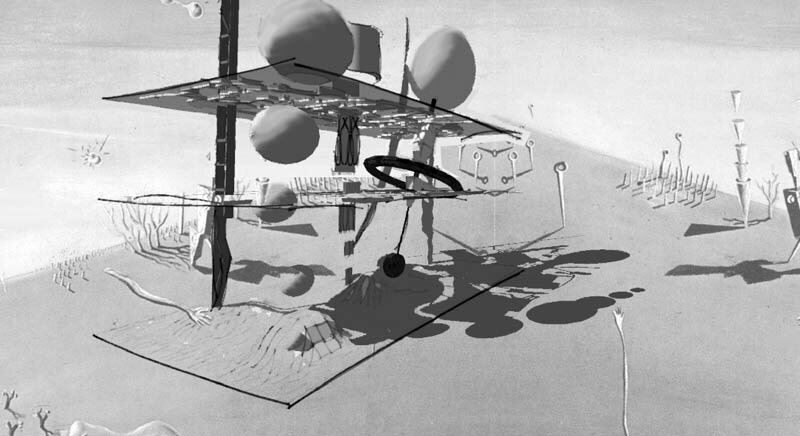
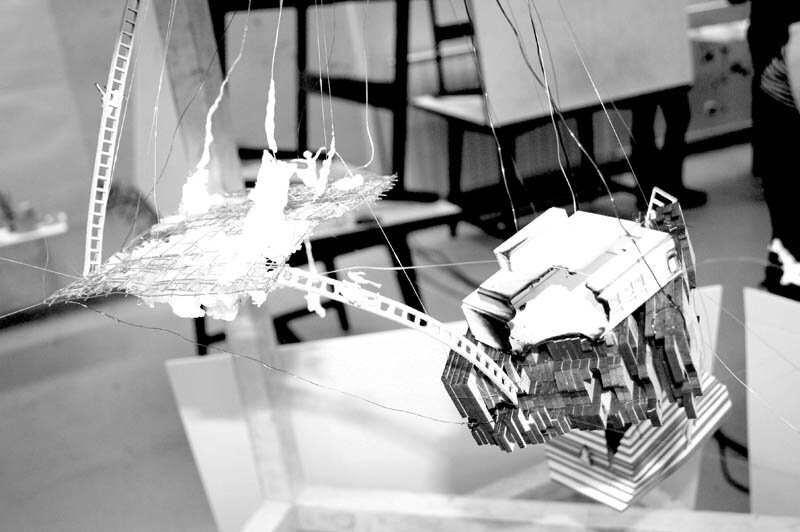
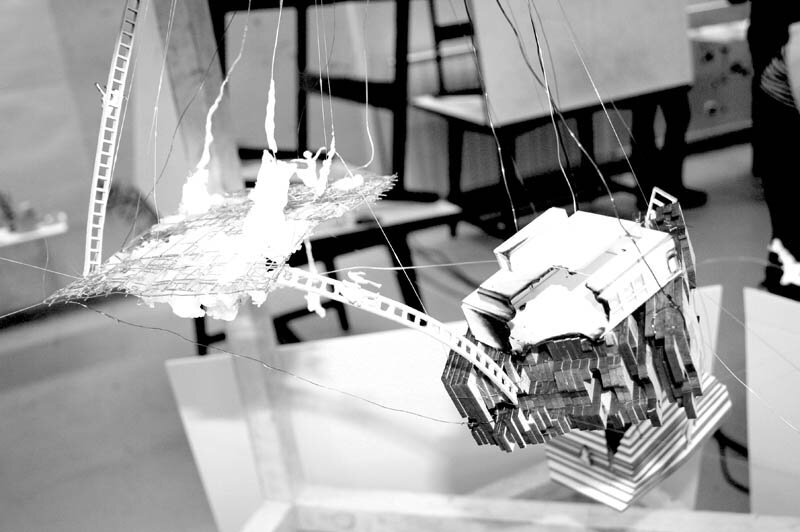
Creation is the process of human progressive self-liberation. As a solution, Haiku City proposes a return to poetry and dreaming, man becoming the spirit, the medium of culture. The Haiku poem is a traditional Japanese poem of small dimensions, in which two images or ideas are juxtaposed, their interaction generating a poetic state. By bringing together a series of concept-objects from the 3 participating cities, a cultural interweaving, full of new meanings and unexpected parallels, was created. Our project sees poetry as the key element of culture, symbolizing the spirit of a language and the emotions it provokes in us. In a future in which melting glaciers have reduced the three cities to small strips of land drifting on the surface of the ocean, a possible collision between these three would send the fragments of urban fabric on a fantastic ascent to the sky. By challenging the mundane world of the contemporary city, we have inverted all realities, breaking down the financial, political and social barriers that subjugate the creativity of the individual. The project proposes a world where traveling from the real to the imaginary is possible. Each route challenges and distorts the real, allowing the individual to gain clarity of thought, an unleashing of the imagination and a clear perspective on the world and themselves. The form that synthesizes the ultimate threshold of enlightenment is a translucent sphere. The sphere is the pure, perfect form and thus the ascending path becomes one of purification. From the sphere, wires, links - sometimes anchors - run down to the cities, as if to fish them out and keep them in a dynamic equilibrium, in their continual change. Each connection with the Earth forms a route that people can access if they dare to dream again. After all, why are we afraid to believe that fish can fly and rivers can flow upwards? Read the full text in Arhitectura 3/2013 |
| As Michel Henry reveals, the civilization of today's society is a New Barbarism, a society in which the specific, absolute and triumphant knowledge is paid with the highest price - the suppressing of your inner self, your culture. The creative process can take place only within our inner world and it represents the progressive liberation for the human being.
The Haiku City takes the individual back to poetry and dreaming as one becomes spirit, the support for culture itself. The Haiku is a short traditional Japanese poem, which juxtaposes two words or images. The interaction between these two creates a poetic moment. We look upon poetry in this project as the key element for culture, representing the essence of a language and the emotions it reveals inside us. Within a possible future, when the meltdown of the glaciers will have reduced the three cities - London, Bucharest and Belgrade - to mere strips of land floating on-top of the water, we imagined a possible moment when those three would collide. The impact of the collision forces the land up into the air, traveling towards the sky and forming a new type of city, a city that is marked by it's elevating web-like bindings. Our project challenges the mundane of contemporary city life by inverting all realities. This is in order to free the shackles of financial, political, social and legal confines, that repress the imagination and dry up dreaming. Our vision proposes a world where journeys are created, traveling from the realistic to the spiritualistic. Each journey challenges and distorts what is real, enabling the traveller to move towards clarity of mind and enlightenment. The form representing the ultimate state of enlightenment is a translucent sphere. The sphere is a pure form and thus the journey itself becomes the purification process. The sphere is concealed within the river where lines flow down to, as if fishing for the cities below. Each connection to the land forms pathways in which figures can start to climb. Read the full text in the print magazine. |