Virginia Haret. Who Has Something to Say about that?

CHERCHEZ LES FEMMES,
a fragment of the story
emancipation at Bauhaus
from a Balkan perspective
text: Anca Sandu Tomaszewski
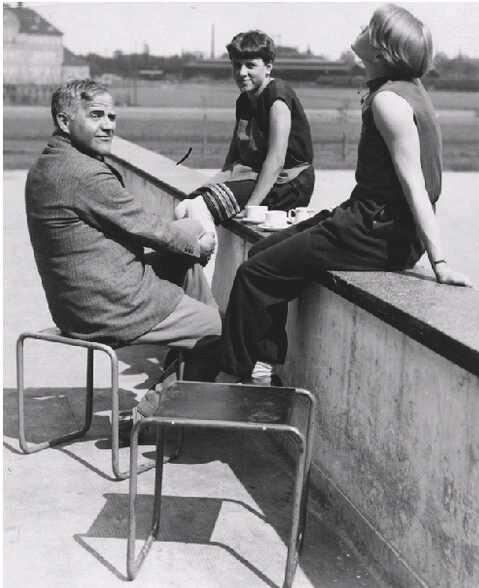
 Walter Gropius is said to have once said a silly thing which, precisely because it came from a rational and open mind, has resounded over the centuries. Even only over the centuries, because at the time it not only shocked no one, but was apparently accepted by everyone. "Men think in three dimensions, women in two", Gropius is said to have repeated (foolishly) a conclusion of Johannes Itten's after his preliminary course at the Bauhaus in 1919.
Now, when it comes to the women of the Bauhaus, one can always find someone to re-hatch such pigeons that escaped in Weimar a hundred years ago. It sounds a bit mean-spirited, but it's proudly called "critical wit". I understand that such backward-looking judgments, extremely heated in years gone by, are part of the contemporary joy of demythologizing, coming after years and years of exalted mythologizing. Tempting, too. For example, a number of statements and even decisions made by the board of the Staatliches Bauhaus Weimar in the formidable years 1919-1924 are not hard to anathematize, especially from the perspective of current political correctness. But a moral correctness also requires a contemporary look at the circumstances of the time. Because to accuse the German avant-garde of gender discrimination is like criticizing the ancient Athenian democracy for being lame, a bit one-eared and a bit hard in one ear. But why would you compare the world's first democracy with today's English democracy and not with the absolute monarchical systems of its time and before?
I can't delve too deeply into the study of mentalities of women's relationship to design and architecture in the Weimar of 1919. It would be interesting, but a systematic analysis would cover too many angles. It would start from historical observations and comparisons with other universities, go through evolutionary, anthropological, biological, sociological, philosophical, psychoanalytical and spatial-architectural theories, and would claim interpretations through contemporary feminist, constructivist or poststructuralist discourse. So, it's kind of hard. For example, only psychoanalytic studies can tell if and when it was a question of biases with scientific pretensions, of unrevised reflexes, of competitiveness, of managerial rationales, and, in the end, of good or bad intentions. But I can try to take a somewhat honest look from a distance in time and space. And forgive me if a lot of information is known.
I don't think it has any relevance, but I recall like this, one evening, that at the opening of the school, Gropius was at a moment of crisis in his private life. Not that one would think Gropius capable of meddling, but he was human. He had just experienced a disappointment in love; he was going through a divorce after his dramatic love affair with Alma Mahler. So, as early as 1918, Gropius was no longer divided between front and passion, between Berlin and Vienna, but between the Bauhaus and the courtroom. While he was setting up the most revolutionary institution of higher education, he was appearing in court and taking blow after blow.
The little girl was entrusted to her mother, and the little boy who had just died turned out not to be his.
The seductive Alma, considered "the prettiest girl in Vienna and clever to boot", courted and adored, would have been a fine artist herself if men had only taken her into account as a musician. Alma Schindler had been born and brought up in an artistic-intellectual environment and had received a select education in Vienna at the time of the Sezession movement. But her creative wings had almost atrophied by the time she was growing up. They were then brutally shattered in her marriage to Gustav Mahler, who, upon her marriage, had established the convention that she would give up a career as a musician. After Sigmund Freud scolded him for this, Mahler tried to make amends, but it was, it turns out, too late. Otherwise, Alma Mahler-Gropius-Werfel would probably have deserved to go down in history on more substantial merits, not just as the pretty and temperamental muse of famous men.
Let us turn to the more objective situation. It was only after the war that the new constitution of the Weimar Republic allowed women unrestricted access to academic studies for the first time. Gropius spontaneously aligned himself with the new thinking, noting in the program: "Any person of irreproachable morals may be admitted to the school, without any age or sex condition, once the board of masters considers their talent and previous training sufficient". He also warned the girls that they would not receive favoritism, but that equal status "between the fair sex and the fairer sex" would also entail equal responsibility. In reality, however, this status would be somewhat more equal for boys than for girls, for several reasons.
The world could not overnight shake off the prejudices that had, for millennia, established the traditional place of women. Not even the Bauhaus masters. Not even women. And then, authoritative schools of thought had philosophically grounded her status for more than a century. No one seriously opposed even Rousseau, let alone Nietzsche, under whose tutelary spirit those generations of artists grew up. According to Nietzsche, a general conception was that man is the bearer of culture, endowed with reason ("vernunftbegabter Kulturträger"), and woman is the being of nature, driven by feeling ("von Gefühl bestimmtes Naturwesen"). More precisely, the correspondences in the current male mentality were:
male - culture/female - nature (natural, if they were not allowed to systematic study!);
man - objective/female - subjective (knowing that in the thinking of the time objective = superior and subjective = inferior);
man - creative/woman - applied;
man - spirit/woman - matter;
man - genius/woman - talent (possibly a little);
man - cosmic/woman - domestic;
man - plus/woman - minus.
Only Charles Mackintosh declared of his wife: "Margaret has genius, I have only talent".

Elsewhere, a whole host of artistic personalities agreed. Theo van Doesburg, on his resounding visit to the Bauhaus in 1921-22, lectured students on Modernism, which was to abolish emotion and sentiment, decoration and vagueness, arbitrariness and caprice, the subjectivism caused by the disruptive feminine principle. They were to be replaced by a virile culture of objectivity. He was also repeating (like the fool) from Mondrian's theory of neoplasticism, a gentleman painter who was at least a cuss, if not a misogynist. Gropius had found for the genders (a few years ago I would have said sexes) a correspondence in terms of symbols: the masculine can be represented by the triangle, the color red and spirit, the feminine by the square, blue and matter. "Genius is masculine", the good-natured Paul Klee used to say, "creativity is masculine", Carl Schlemmer and Kandinsky used to say. Itten steered girls towards the surface arts, which suited their two-dimensional thinking. "A girl's talent cannot exceed the decorative and ornamental," said one publicist. And Oskar Schlemmer also created a poem:
"Where there is wool there is a woman,
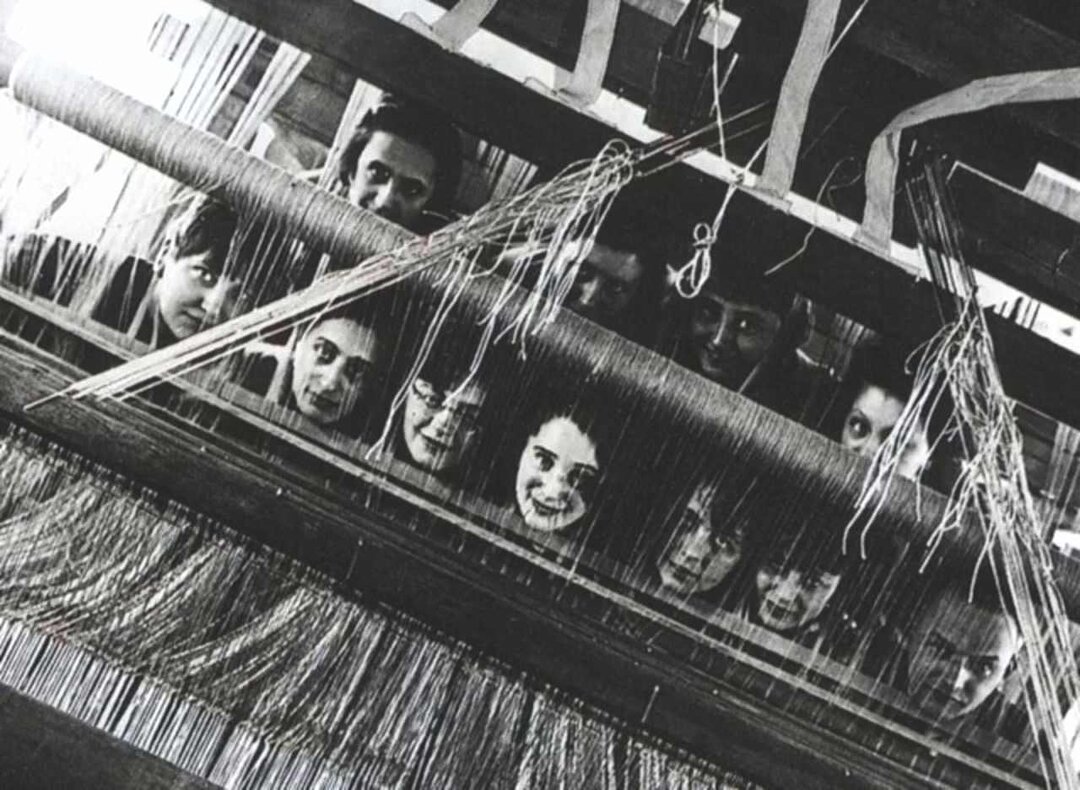
who weaves,
to give meaning to time."
(author's translation)
"Wo Wole ist, ist auch ein Weib,
das webt,
und sei es nur zum Zeitvertreib."
They called them Bauhaus-frauen, but if they had gotten it into their heads they would have called them Bau-hausfrauen (housewives in construction) - just sayin'. Otherwise they were all nice people.
The theories were offensive, but they were talk. And women didn't put their minds to contradicting the great men's beliefs. They weren't feminists. After all, they didn't even pretend to be anything like men at all. It was only the practical conclusions of these theories that were revolting and frustrating when they materialized in bans, restrictions and marginalization, i.e. officially supported abuses. This was not so severely the case at the Bauhaus, I think, although there were decisional awkwardnesses - in short, decisions that don't fit today's norms. Some excesses of severity on the part of some teachers frustrated a few girls. For the rest, jealousies, careerist attitudes, interpersonal bickering. They were human.

The serious thing is that, in all the decades that followed after 1933, it was not a man faced with a difficult decision, but the very history of architecture that acted in a discriminatory way: we were taught at school exclusively about the Bauhaus gentlemen. Nothing about the role and achievements of the girls - Gunta Stölzl, Marianne Brandt, Benita Otte, Gertrud Grunow, Otti Berger, Alma Buscher and many others - and not least the sisters of the masters: Lucia Moholy-Nagy, Gertrud Arndt, Annie Albers, Lilly Reich, Ilse Gropius, independent, capable, creative women. Some of them are still not to be found on wikipedia. And speaking of architectural history, Lucia Moholy not only contributed the most photographs to Bauhaus iconography, she was instrumental in the Bauhaus Books. The 14 volumes were published under the names Walter Gropius and László Moholy-Nagy, with Lucia not mentioned. No reparatory note was added later either.
I continue to list justifying circumstances for the fact that, although he had declared the equal rights of girls and boys, Gropius had to invent deviations from his intentions and program. Under the direct influence of Arts&Crafts and the indirect influence of Hermann Muthesius - the movement's liaison officer with Germany - the school founded by Gropius sought to synthesize arts and crafts. The Staatliches Bauhaus Weimar came into being, incidentally, through the coupling of two institutions with these specializations in Weimar: the academy of arts and the Grand Saxon ducal school of arts and crafts under the former leadership of Henry van de Velde. On the other hand, while girls were barred from art academies, they were allowed to attend schools of crafts and decorative arts because of the need in industry. (Such institutions were, by the way, highly honored in Germany, headed by such renowned personalities as Hans Poelzig, Peter Behrens, Henry van de Velde, Richard Riemerschmid, Josef Hoffmann in Austria.) Things were supposed to be done according to theory: men with intellectual creation, girls with craftsmanship. But when Gropius's school promised girls the opportunity to study a wide range of specialties at an institution of higher learning - furniture design, ceramics, mural painting, weaving, printmaking, bookbinding, metalwork, glassmaking - the influx of applicants was far beyond expectations. More girls applied than boys.
How many applications were there from girls in Romania in the 1900s? Definitely few. How many were rejected? I doubt that was the case, but it needs to be investigated. Here is a problem from which our rectors at that time were probably naturally exempt, unlike those in Germany.
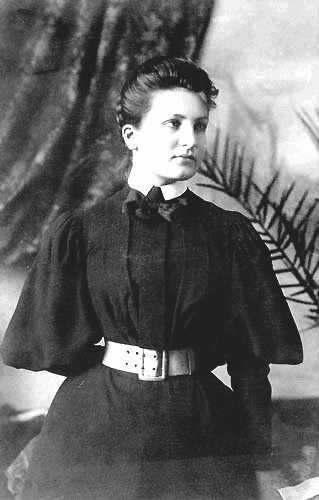
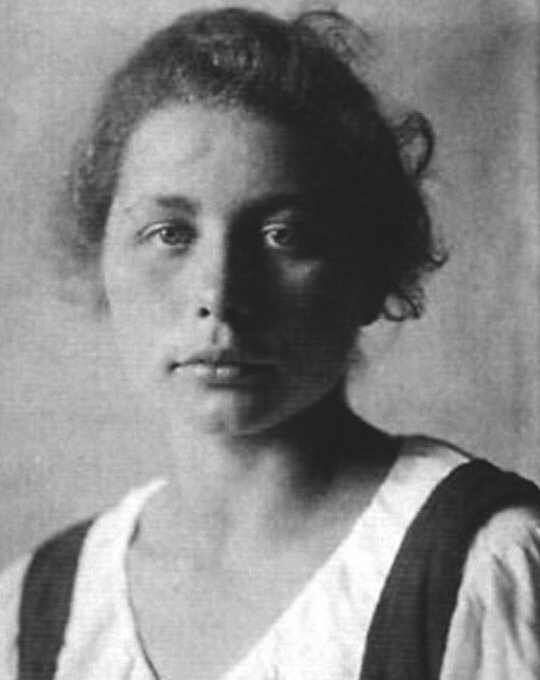
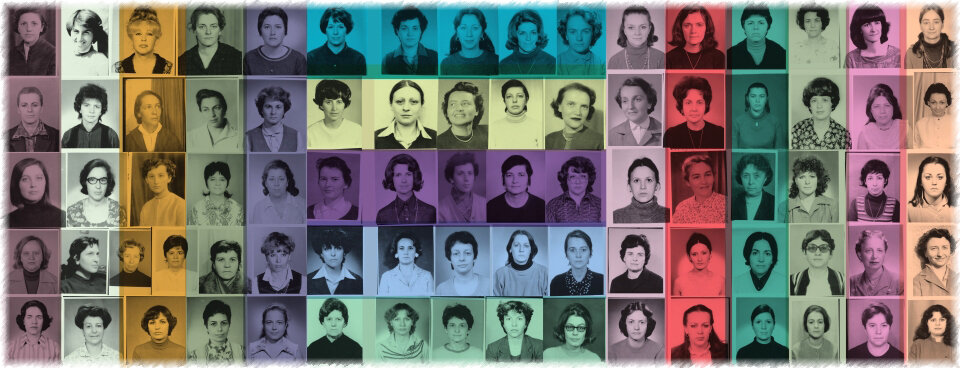
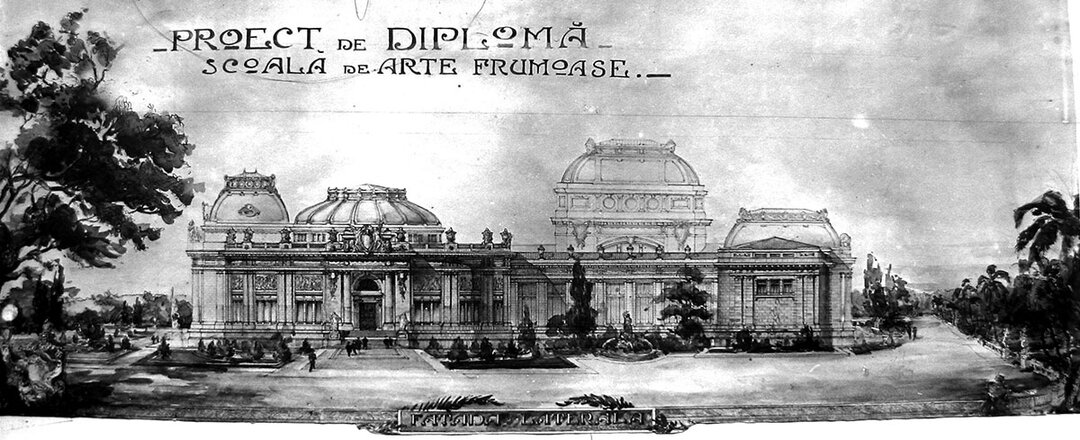
Here is also a coincidence: it was also in the famous first year of 1919, the year of free admission to the Bauhaus, that Virginia Andreescu Haret completed her architectural studies in Bucharest, with her architect's diploma. She had been admitted to the university before the war, along with three other girls - coincidence or not - all from prominent intellectual families. Was Romania more emancipated than Germany? No. Other women, rejected for law or polytechnics, in Iași or Bucharest, were forced to study in Berlin or Paris at the same time. How could this be possible, when the whole of the West claims that the doors were closed to women there too? Some went to private institutions, usually paying higher tuition fees than the boys. Other universities introduced early graduation. And, finally, in the East and West, restrictions were relaxed for notorious families or, with infinite caution, for exceptional girls who were also determined and persistent. Provided there were not too many of them - a condition that was usually fulfilled.
Romania was also the country in which Titu Maiorescu maintained that women have fewer intellectual possibilities, as their brains are smaller: 'Women are incapable of development; no matter how hard they try to develop their intelligence, they will not succeed; indeed, in time, they become stupid and tend towards idiotism'. I quote him with malice, because I am human too. A certain publicist, Sofia Nădedejde, then set her mind to contradicting him, invoking other physical qualities of the gray matter responsible for intelligence, and it seems that the bold polemicist created some excitement in the society of the time.
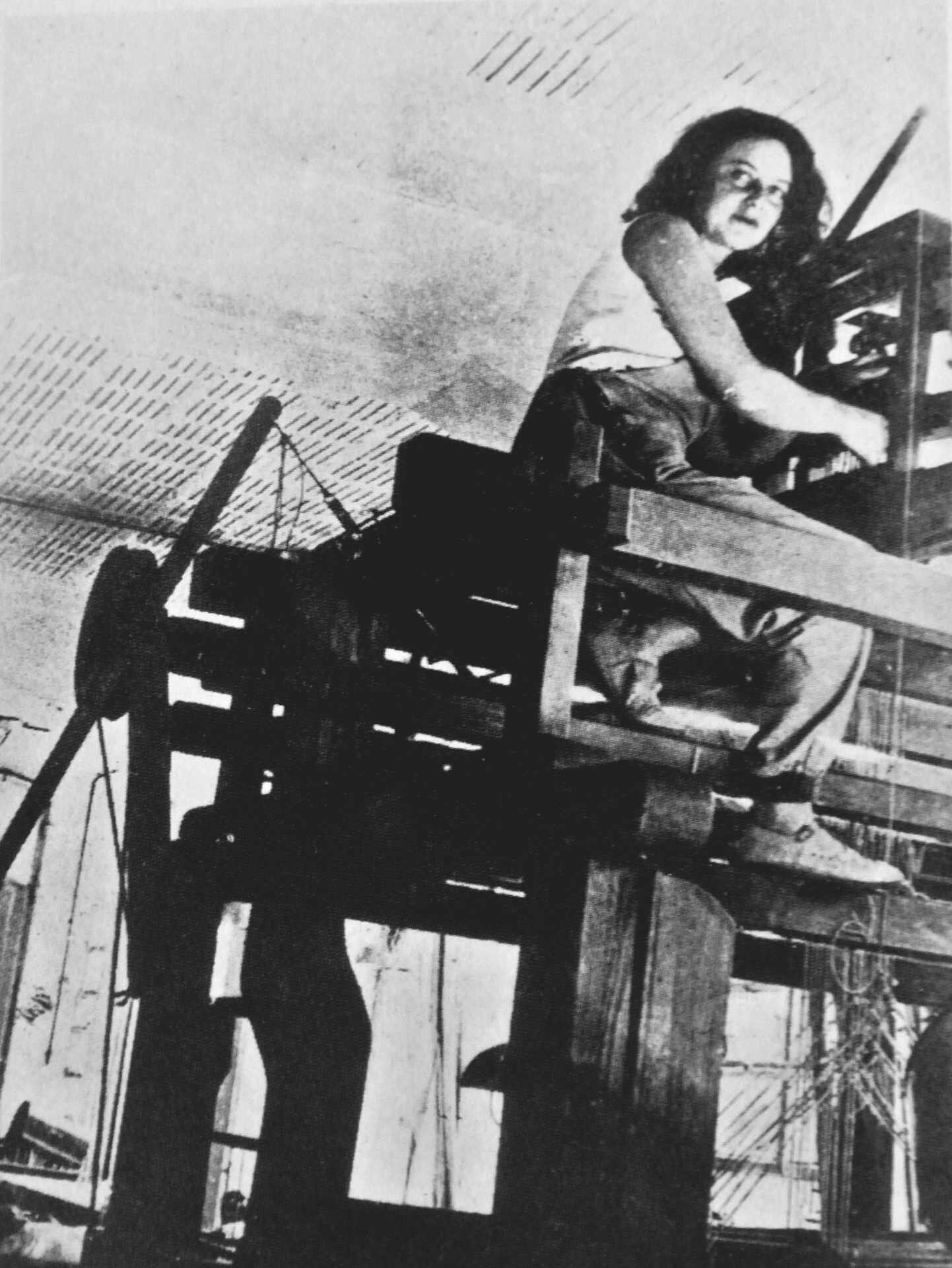
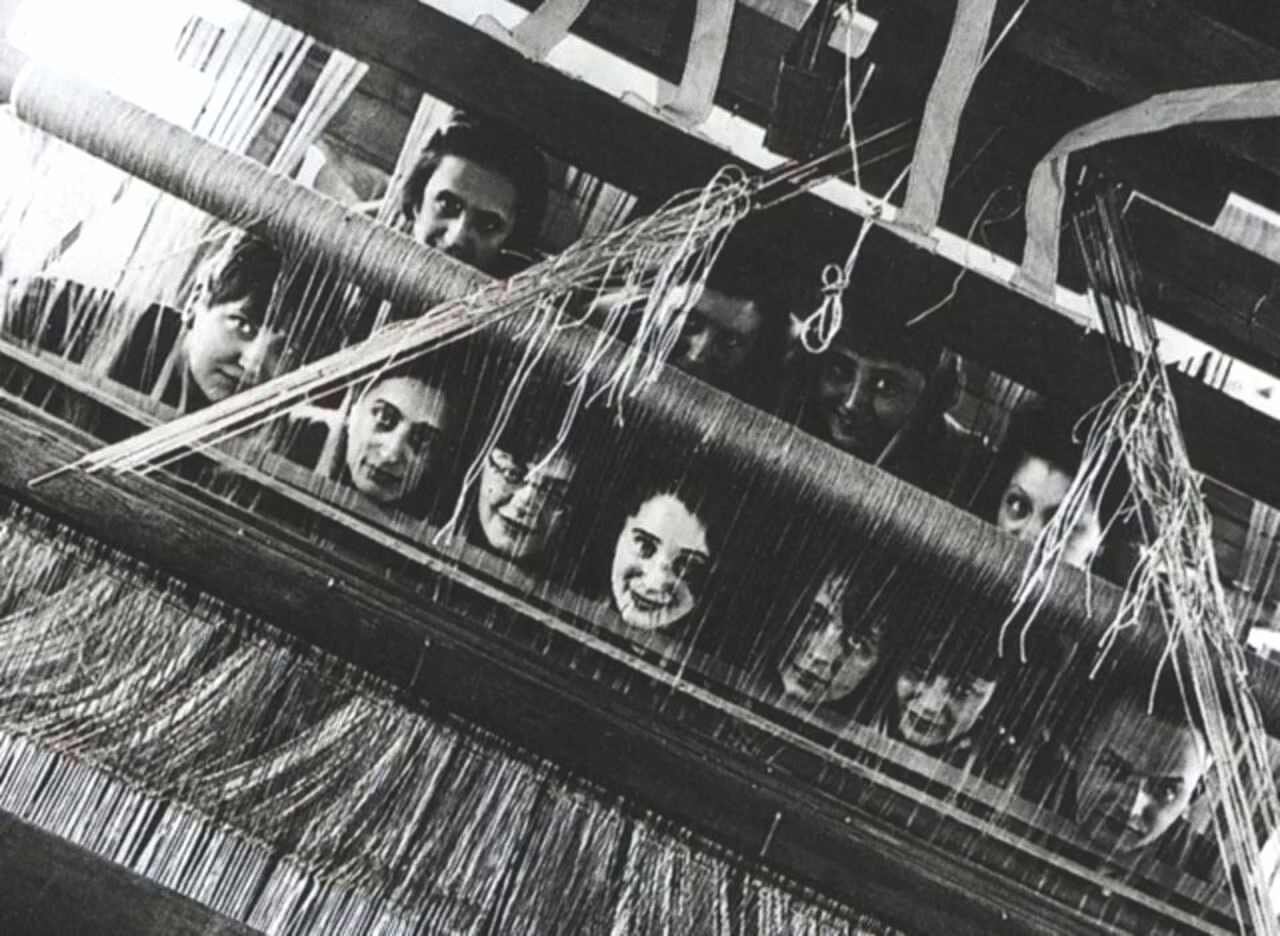
The Bauhaus leadership was then in great difficulty. In the first place, the high proportion of women - mentally associated with manufacturing work - might have cast a shadow of doubt over the school's academic standards. Gropius was also extremely circumspect about a possible 'craft dilettantism'. In fact, the medieval traditions he envisioned in the program were in part transitory, and they hinted at industrial technologies for when the time came. Then, the Bauhaus was a state institution, eternally limited in funds, with carefully docked places and high ambitions for the job market after graduation. In short, a special class was created for girls, which was assimilated to the weaving class and called the Textile Workshop. All girls were tutored there. Only with some insistence were exceptional talents admitted to other specialties, where they were subjected to severe tests and were hardly encouraged. "We can't afford useless experiments," thought manager Gropius. The boys, on the other hand, had freedom of choice, relatively independent of performance level.
 Finally, there was another justification for Gropius's decision to steer girls towards majors established as feminine. It stems from the fact that the metaphorical meaning of the name Bauhaus refers to its interpretation as 'building school'.
Following in the footsteps of Pugin, Ruskin and the whole English school later established by William Morris, the pre-modernist world of art and architecture admired medieval creation, artistically, morally and socially. The medieval cathedral, now freed of its Christian-religious connotations, was a symbol of collective work and of the inhabitants' cohesion around a community value. As an architectural object, the cathedral was a synthesis of technical craftsmanship and a strong aesthetic and social essence. Surrounding the cathedral under construction were the Dombauhütten, the dwellings and workshops of the builders, which lasted for years and years, as long as the construction lasted. And etymologically, from Dombauhütte to Bauhütte to Bauhaus was a short journey.
Yet there were no architectural design workshops in Weimar. Architectural commissions, otherwise few or severely selected by Gropius on modern criteria, were executed through his design office. But everyone knew that his goal was to develop the school into an architectural university. He saw all the arts, crafts and forward-looking technologies united under the dome of architecture. Yet the study of architecture, involving building trades such as carpentry, carpentry, metalwork, masonry, seemed categorically unsuitable for a woman - for her own good and that of the whole community. "Experience has shown us that carpentry, for example, is too hard for girls... that's why we have proposed to develop specializations such as textiles... We do not support the training of women architects." He then saw architecture as intimately linked to the building site. I don't know whether this was discrimination and misogynism or whether there was a common sense logic here, if we put things in context? Admittedly, he was helping old ladies to cross the road, whether they wanted to or not. In any case, in two or three years' time, none of this logic will be to be found at the Bauhaus.
Gropius' goal of turning the school towards architecture was achieved in 1925 at the Bauhausakademie Dessau. In the new building, architecture and design was prioritized and underpinned by the study of art and technology. But what to see? The number of girls eager to become architects gradually dwindled to a dramatic limit, even though the gates of architecture were now, de-facto, wide open to anyone; Hannes Meyer was putting up posters inviting all young people (of both genders, one understands) to enroll at the Bauhausakademie. Except that the change of program meant the abolition of Expressionism and its replacement by the New Objectivity - a highly functionalist orientation intimately allied to industrialization in construction. Gone was the romantic Weimar phase of free, experimental creation. In Dessau, design was based on systematic criteria. The new motto was "Art and technology as one". As a consequence or not, the number of girls outnumbered the boys by 25 girls to 95 boys.
Perhaps indeed, discussing in vocational terms, not all girls are exactly like boys. Looking at the big picture, nature also made some small differences between the genders. Only she didn't report them hierarchically, in terms of inferior and superior. And then, she also allowed many, many exceptions.
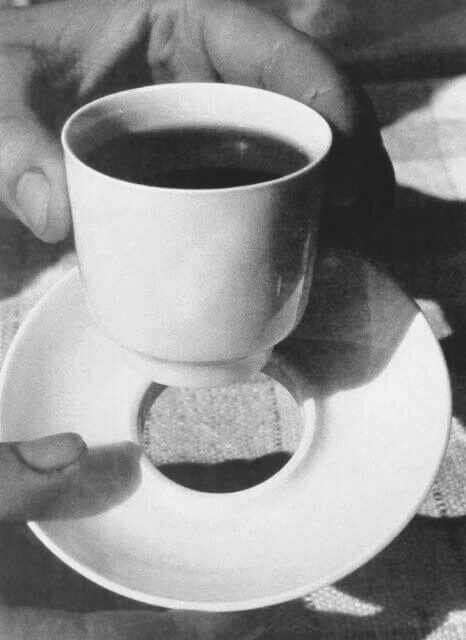
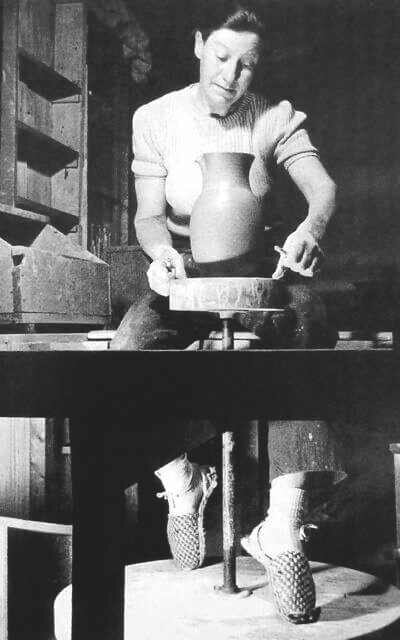
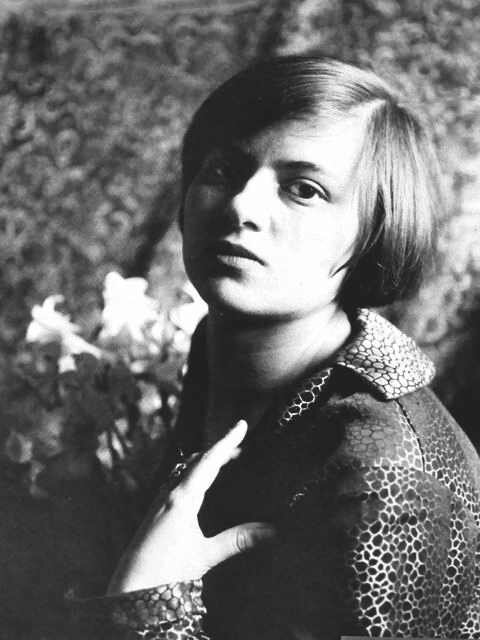
At the Bauhaus, for example, Lou Berkenkamp from the Murals was always outside on the scaffolding, even though it was formally forbidden and she was always being called on by her master. Gunta Stölzl made great technical innovations in the textile industry. Marianne Brandt, from the metal workshop, patented countless remarkable design objects in metal, porcelain and glass. Lucia Moholy and Gertrud Arndt excelled in photography, etc.
We cannot omit others such as Emilie Winkelmann, originally a carpenter, who set up her own architectural practice in Berlin in 1907. In the same year, she also won first prize in an architectural competition for a theater, which, when executed, led to the firm's continued success. Else Oppler Legband, born in 1875, architect and designer, was even Lilly Reich's mentor. Lisa Meitner, a physicist, would enter through a secret door disguised as Pope Joan and listen to Max Plank's lectures sometimes from a skylight through a ventilator until liberalization in 1909. At the same liberalization, Eliza Leonida Zamfirescu, previously rejected from the School of Bridges and Roads in Bucharest, entered, albeit with insistence, the Royal Academy of Technology in Berlin; she was an eminent student and among the first female engineers.
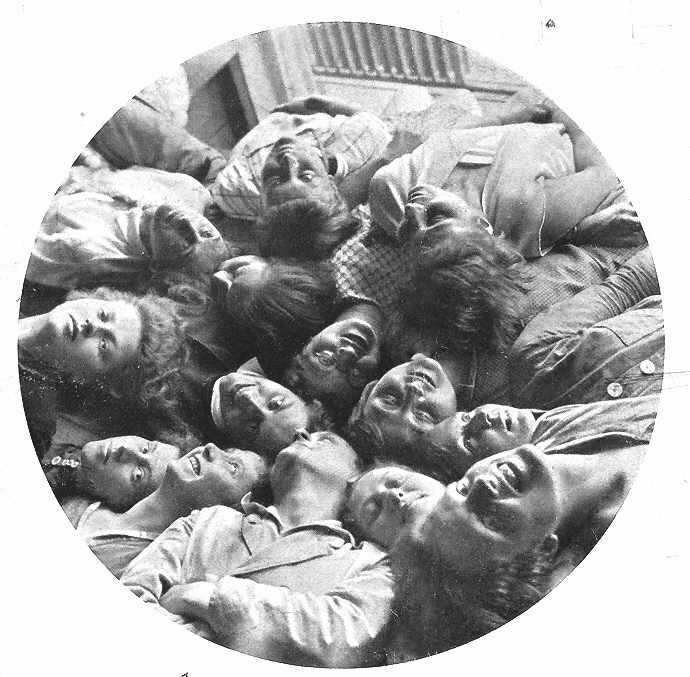
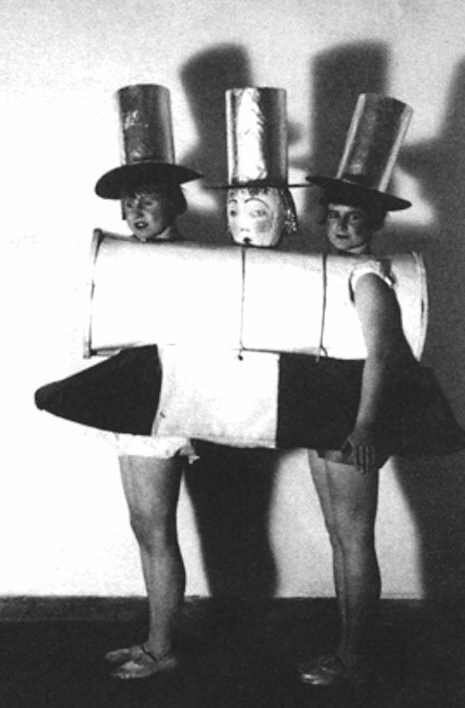
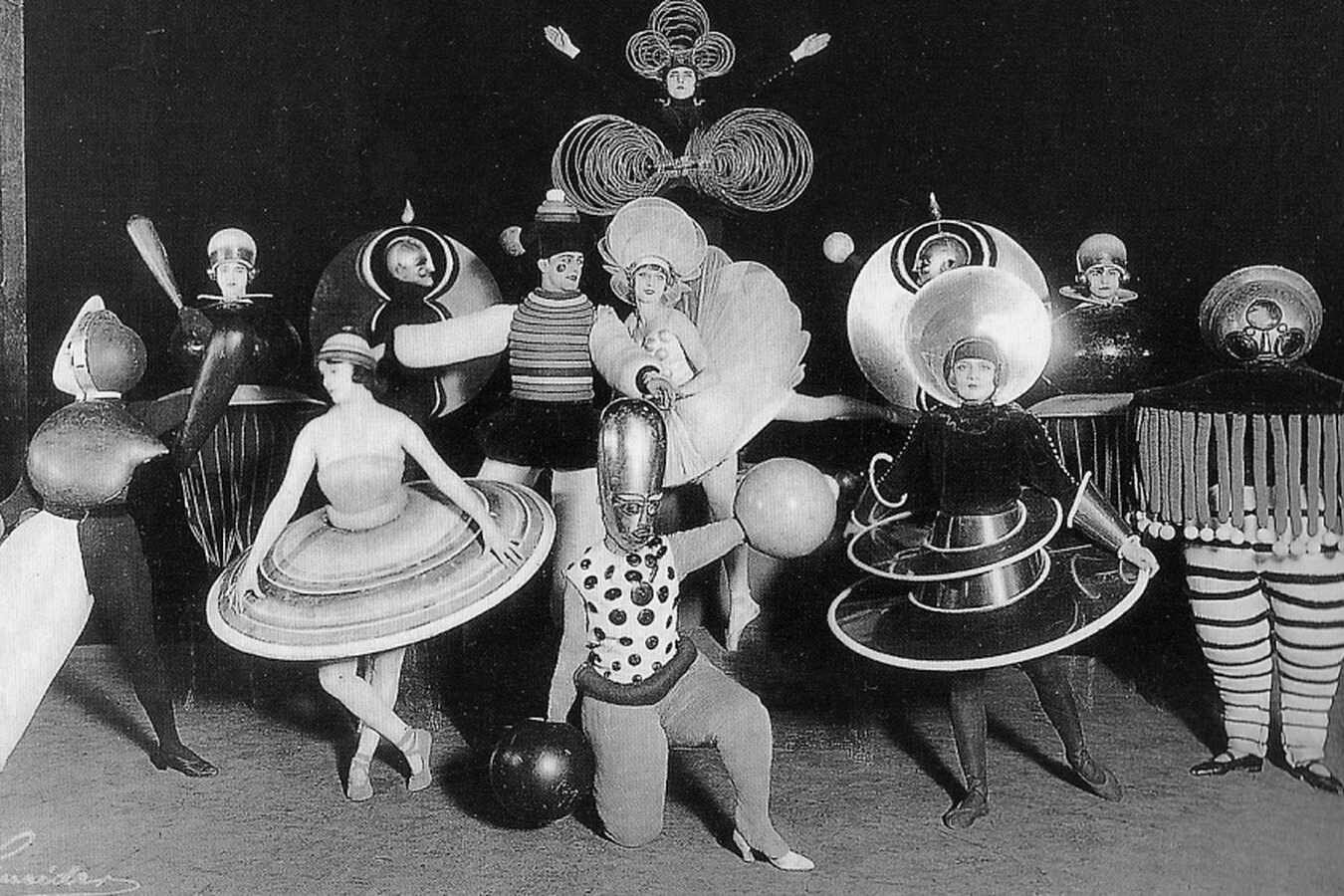
 With all the philosophical deviations of the gentlemen, with all the pigeons released in secret council meetings, the atmosphere at the Bauhaus was extraordinary, both at Dessau and especially in the rebellious Weimar years. Gropius promoted what we today call team building. Students and professors were always finding excuses to celebrate, organizing spectacular balls with set designers, stage directors and imaginative costumes, going on mountain hikes, falling in love, going hungry, tending the garden, studying and having fun. "They 'lived artistically', according to an avant-garde program of infusing art into everyday life. There was a sudden reformation of the patriarchal saccharine youth and of life in general. Jugend-und Lebensreformbewegung, it was called. Girls cut their hair bob-cut, wore knee-length skirts and see-through silk stockings, were vegetarian or played the saxophone. Marlene Dietrich was beginning to model the modern woman. They weren't prudish, and they adjusted to the intensive pace of post-war life. All young people were reinventing their bodies in space and discovering a new relationship of social freedom. They went out at sunrise naked in the park and did gymnastics. And I don't know what it has to do with it, but almost all of their generation lived past or close to 90, especially the women, with the exception of Margarete Schütte-Lihotzky who lived past 100.
And those who perished young in the concentration camps. There were six from the Bauhaus.
The relationship between students and masters was democratic, and, to cap it all, among the most influential, admired and beloved masters were precisely those responsible for the antics - Itten, Paul Klee, Kandinsky, Oskar Schlemmer and the muse-master Van Doesburg. (There was also Moholy-Nagy and Walter Peterhans.) And Nietzsche, from his verdant place, still retained his position as spiritual father.
The severe tests that the Bauhaus women had to face selected them valorously on the one hand, and on the other compelled them to perform - which proved to be the case even after graduation. Out of a need to be better than the men, they were forced to be ambitious. But they were also talented and innovative. They revolutionized design in the areas they were allowed to: photography, metalwork and, especially, textiles. They really created that unity between technique and art, on schedule. They gave an incredible boost to industrial design and an artistic valorization to textile art. Reducing them to traditional specialization sharpened their innovative power, but the innovations they brought were not only traditional and feminine.
In all fields, in fact, their creation was by no means matriarchal. In those stultifying years of modernism, no one would have wanted a matriarchal production of design and architecture. Moreover, had it not been for the bitter taste of past discriminations, I believe that women would have been the first to join a "masculinist" movement in arts and architecture.
The same today. I guess.
I have stopped, because I found myself having written so much that I can no longer address in this article individual cases of women and their creations.
Ulrike Mueller, Bauhaus-frauen. Meisterinnen in Kunst, Handwerk und Design, Elisabeth Sandmann Verlag, 2009
Magdalena Droste, Bauhaus, Taschen, 1990
Jürgen Winkler, Die Architektur am Bauhaus in Weimar, Verlag für Bauwesen, 1993
Jeanine Fiedler, Peter Freiabend, Bauhaus, Ed. Könemann, 1998
Bauhaus-online.de/atlas/personen
www.fembio.org/biographie php/frau/specials/Bauhausfrauen