Urban Thinking Festival – Brașov 2018. First Festival of Urban Reflection in Romania

Ion Mincu University of Architecture and Urbanism
Housing and work for urban nomads
Diploma project 2014-2015 session
Author: Silviu Papuc
Supervisor: Dan Dinoiu, Dorin Ștefan
 The ability of new housing constructions to meet the needs of contemporary man, in a specific context, at an urban and social level, reflects a long debated and unresolved problem. We belong to an urban setting marked by an overlapping of features from different periods, with specific values and values that are particular to the community and/or the individual.
In city centers, urban development is based on the co-presence of new insertions next to important architectural monuments or buildings that are significant for the community. Although the new interventions are related to the urban planning regulations of their respective areas, they end up not meeting the desired quality standards.
Consequently, architects have begun to intervene in favor of recapitulating the quality and dignity of existence in today's society. New projects aim to develop an optimal relationship with the social reality and the environment, an intention that is apparent in the design of the housing units and the way in which the buildings are integrated into the context of the local area and the wider city.
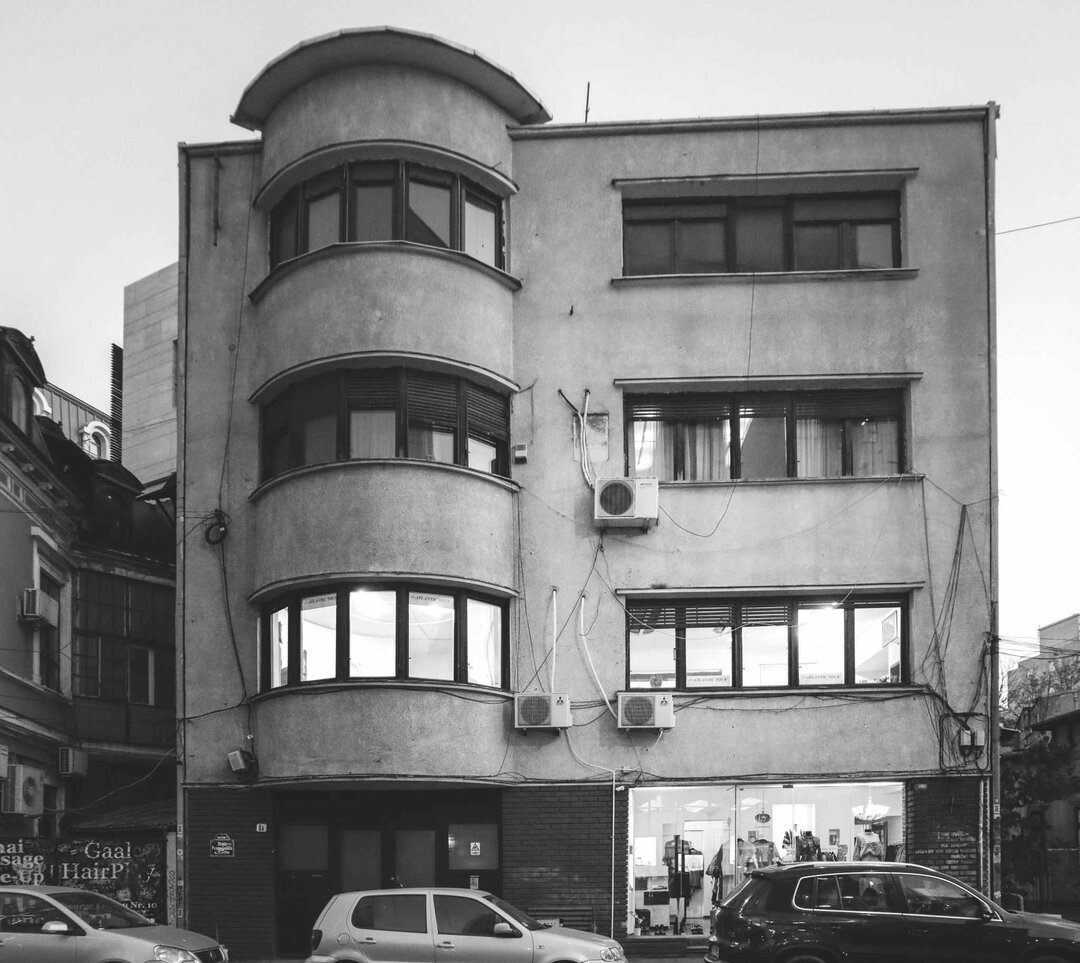
The central areas of cities are characterized by the presence of a large number of old buildings, with or without architectural value, abandoned or simply unused and left to deteriorate over time. Those that are not in an advanced state of deterioration could be reused, functionally converted into 'updated' spaces capable of reactivating the site area socially, economically, etc.
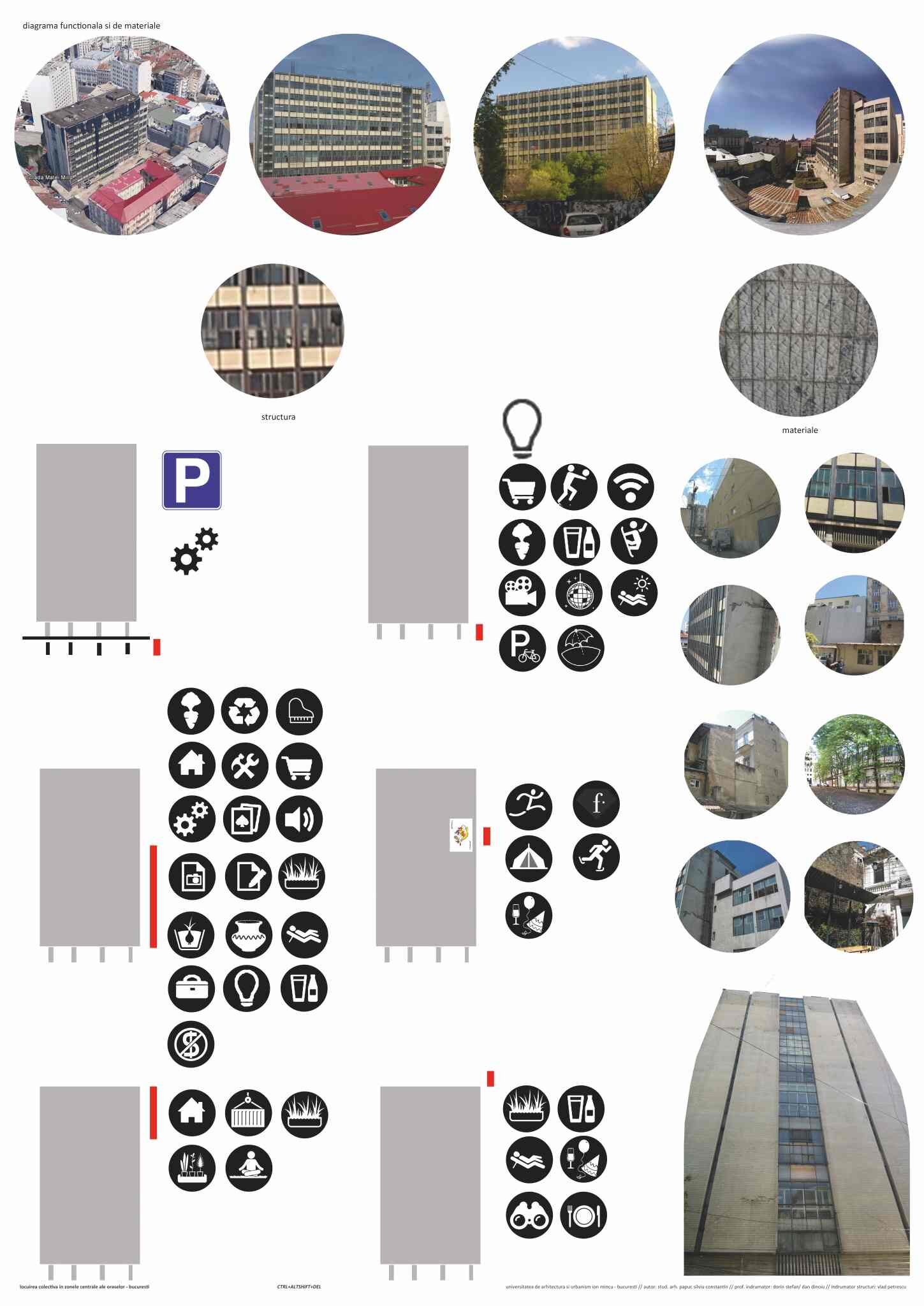
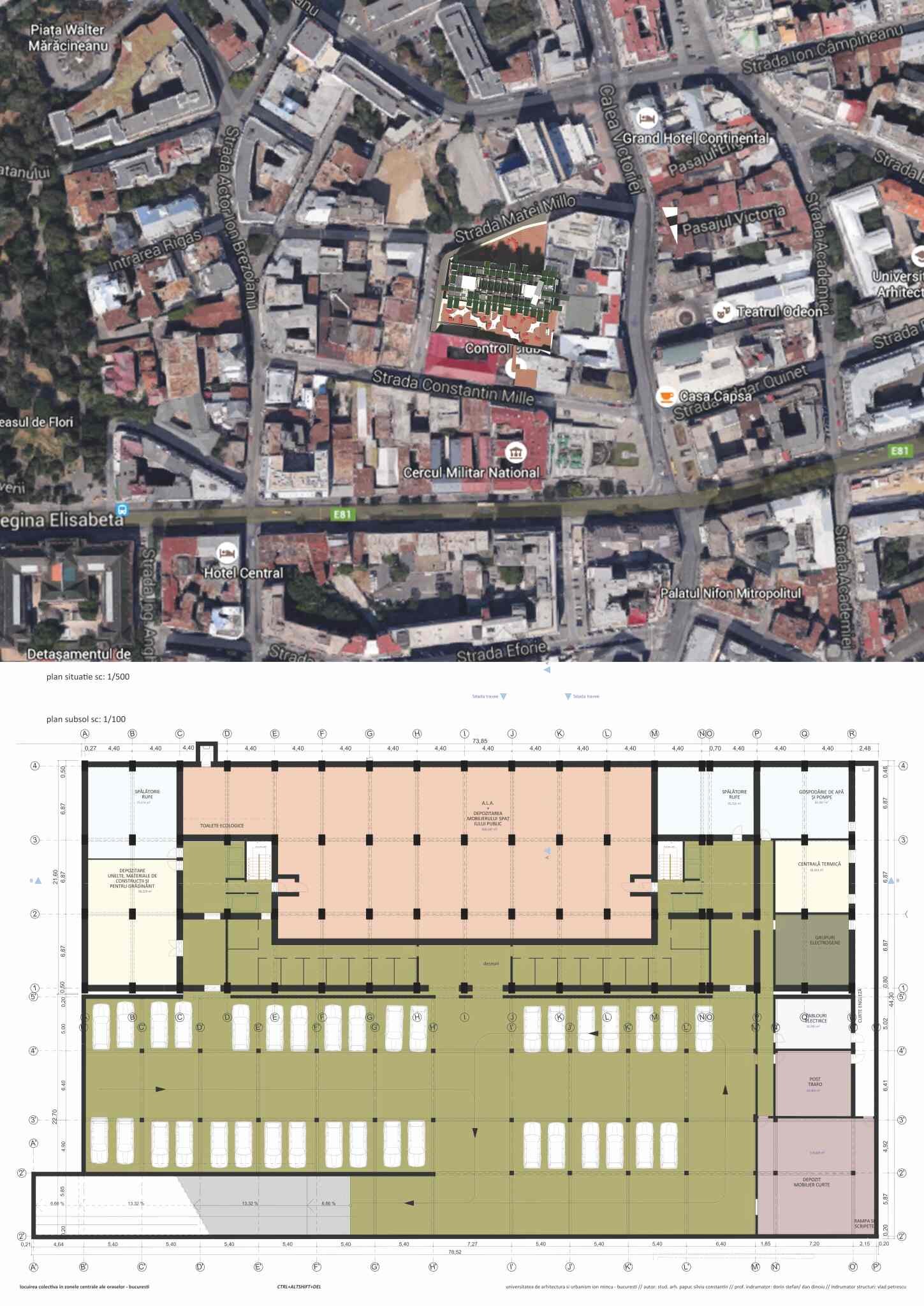
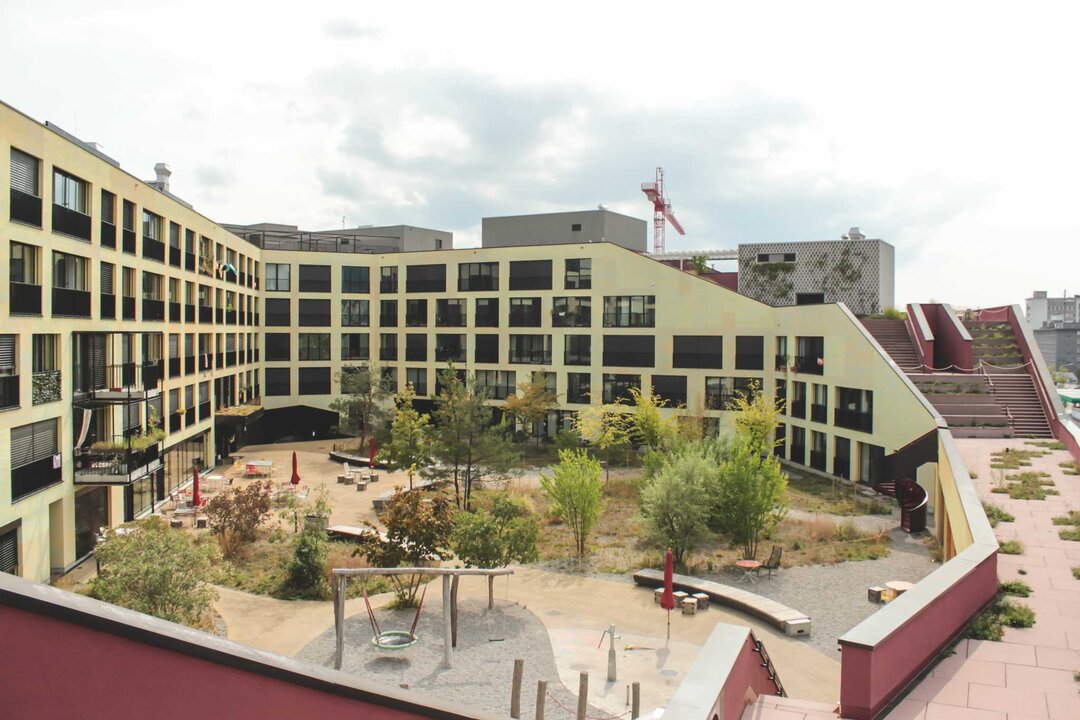
The diploma project attempts to formulate a series of principles that could underpin such an intervention in a central area of Bucharest, namely the land behind the Telephones Palace, located at the intersection of Matei Millo and Ion Oteteleșanu streets. The built island contains a mix of functions, being a central area defined by commercial, business, cultural, educational and residential spaces. The site is also close to Cișmigiu and Kretzulescu parks, the only green spaces adjacent to it. As a pattern of the site, the numerous inner courtyards delimited by blocks can be highlighted. Under the pretext of reviving this indigenous idea of the inner courtyard, during the communist period, collective housing was massively built with such courtyards, which explains the numerous enclosures delimited by sections of uncertain composition or shape, which generate monotonous and depressing, vague, anoste spaces that the inhabitant does not perceive as defining his urban identity.
On the basis of this rich platform of functional mix, two types of housing framework can be created: an adapted framework, molded on the already existing infrastructure; a new framework in which the old infrastructure can develop and integrate - the latter being the subject of the diploma project.
The concepts with which the project itself operates - dwelling, property, neighborhood, community, co-presence, co-presence, vague space, transparency, flexibility, individual mobility - are defining in all phases of the design approach of this project.
Given the ever-changing position of today's man in relation to technology and the workplace, I believe that the individual will soon become a "traveler", a modern nomad. More specifically, as technology has evolved and computer work underpins many of today's professions, it is possible to work from anywhere, without having to be present at work. So, we can also travel during the week, or work from another country in another context, or stop over for a couple of days on a business trip, without the high cost of staying in such a space. For this situation, "stopover" places should be very dynamic, flexible, mobile, newly designed and, last but not least, cheap (nomadic living).
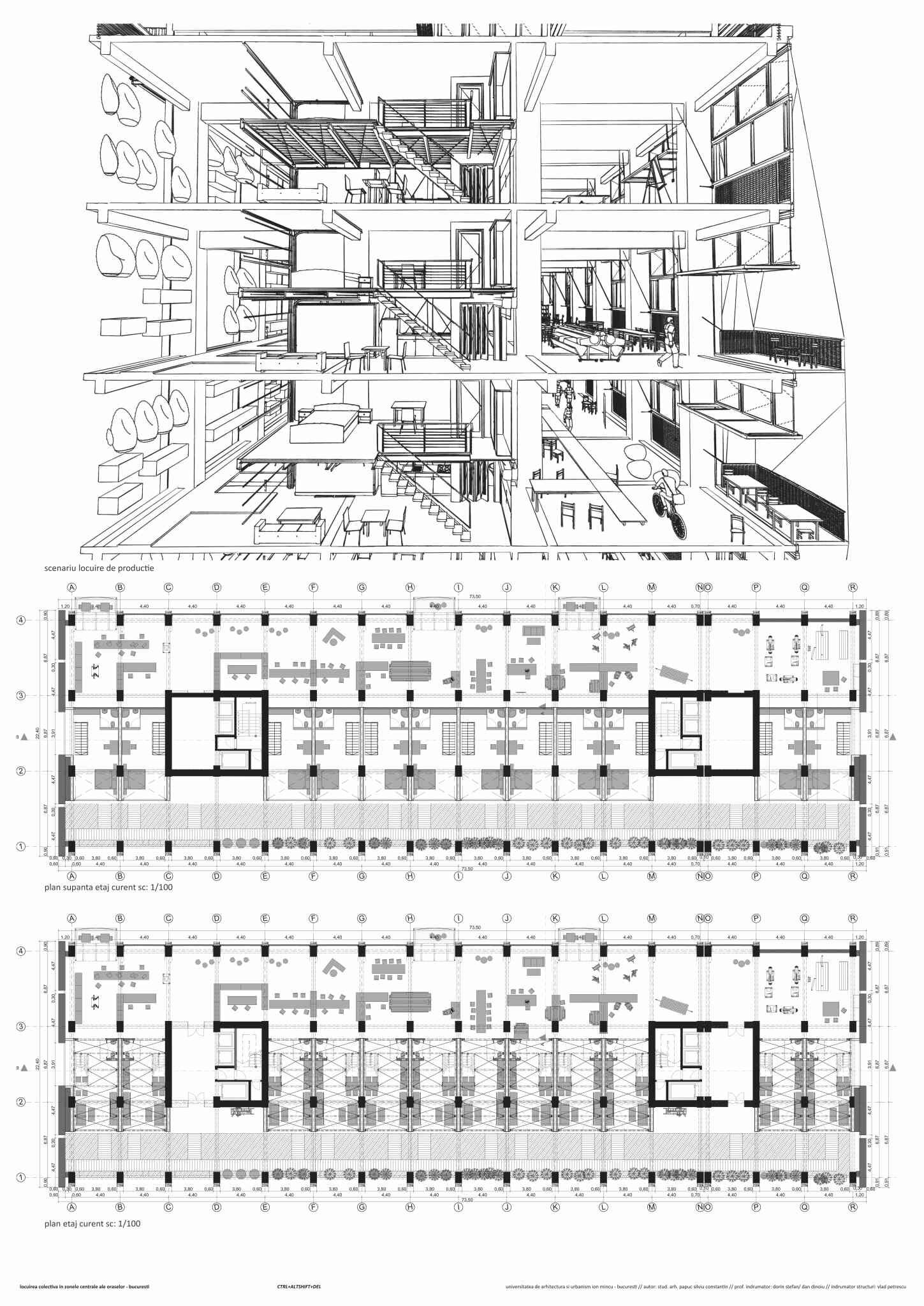
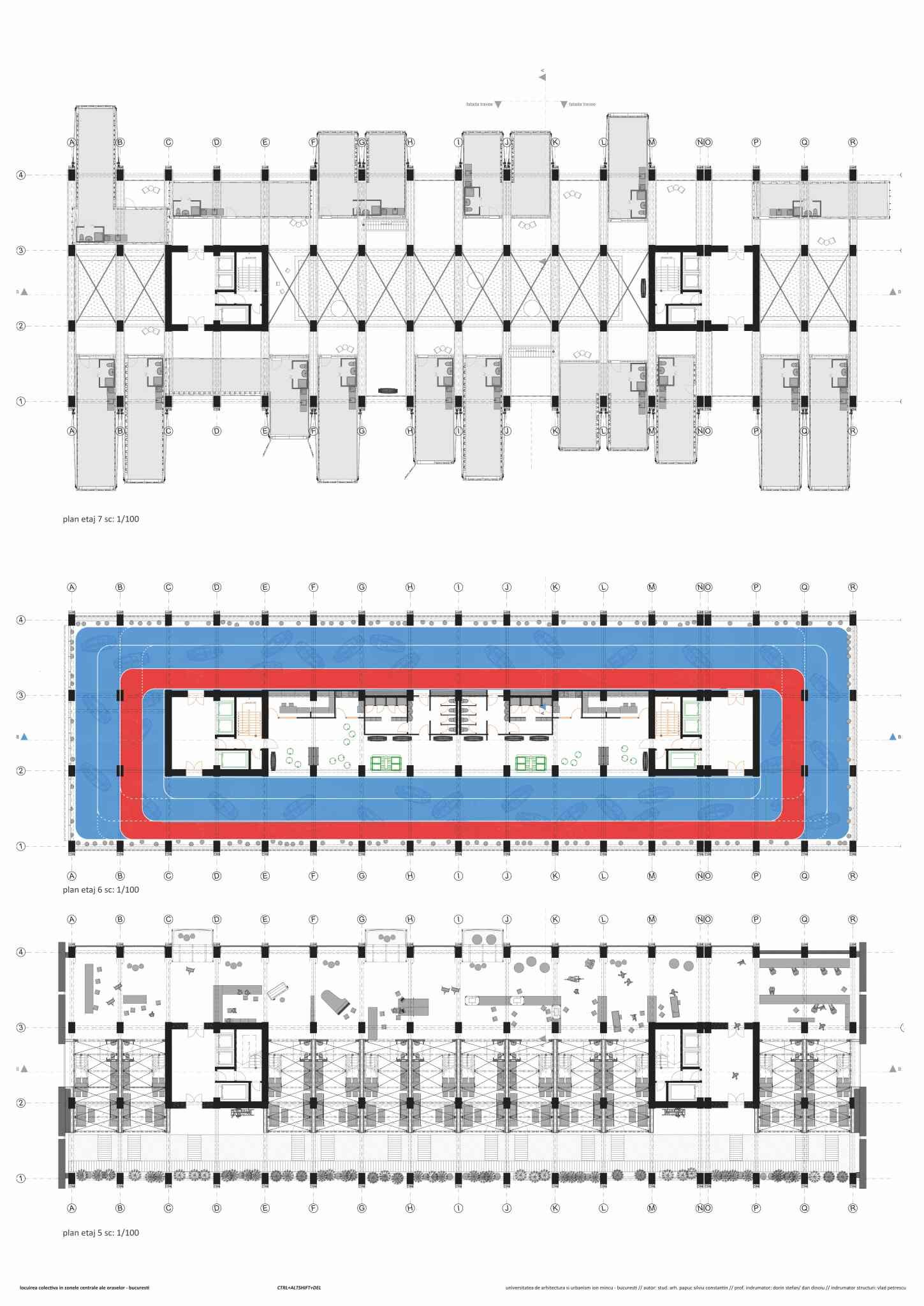
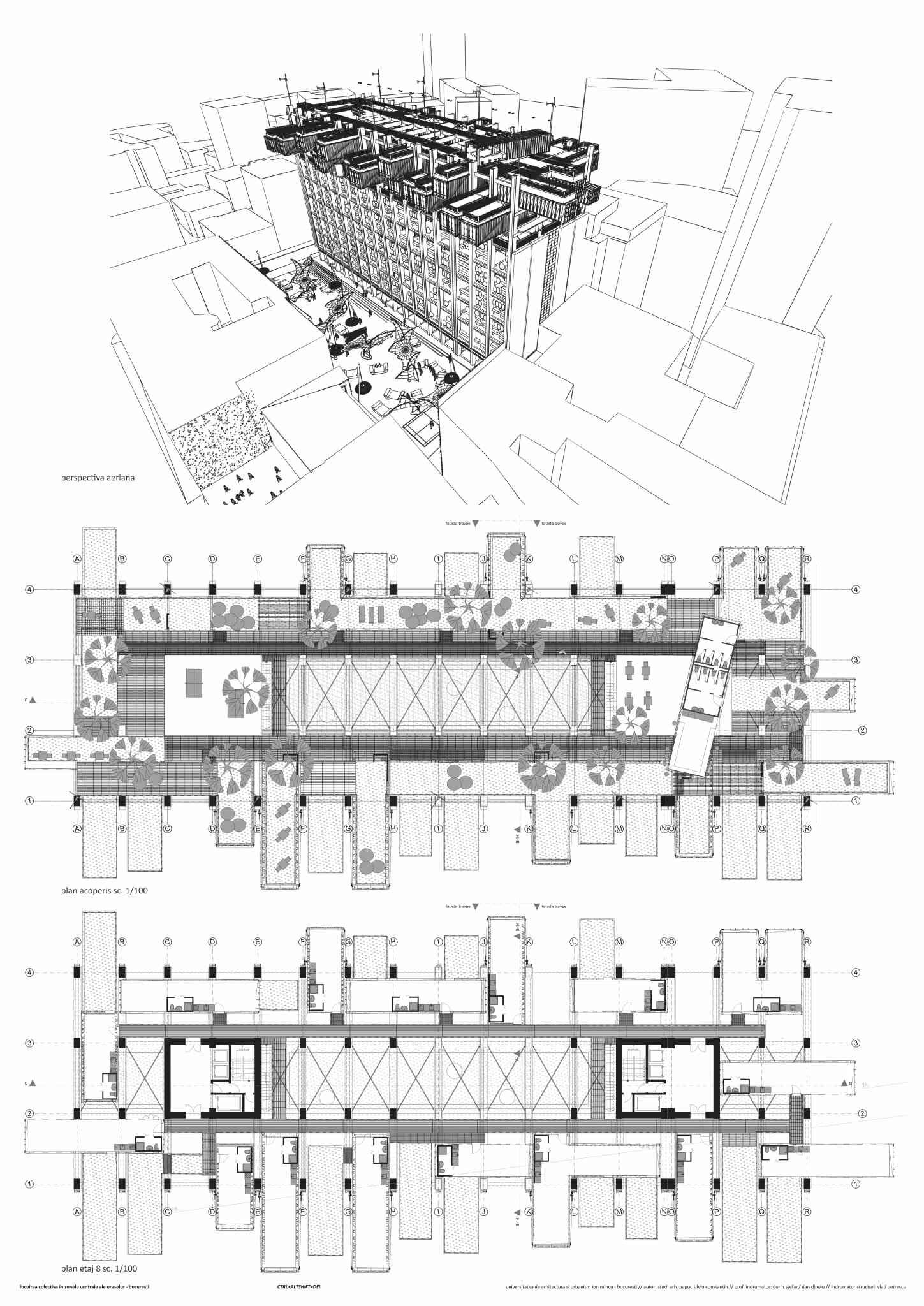
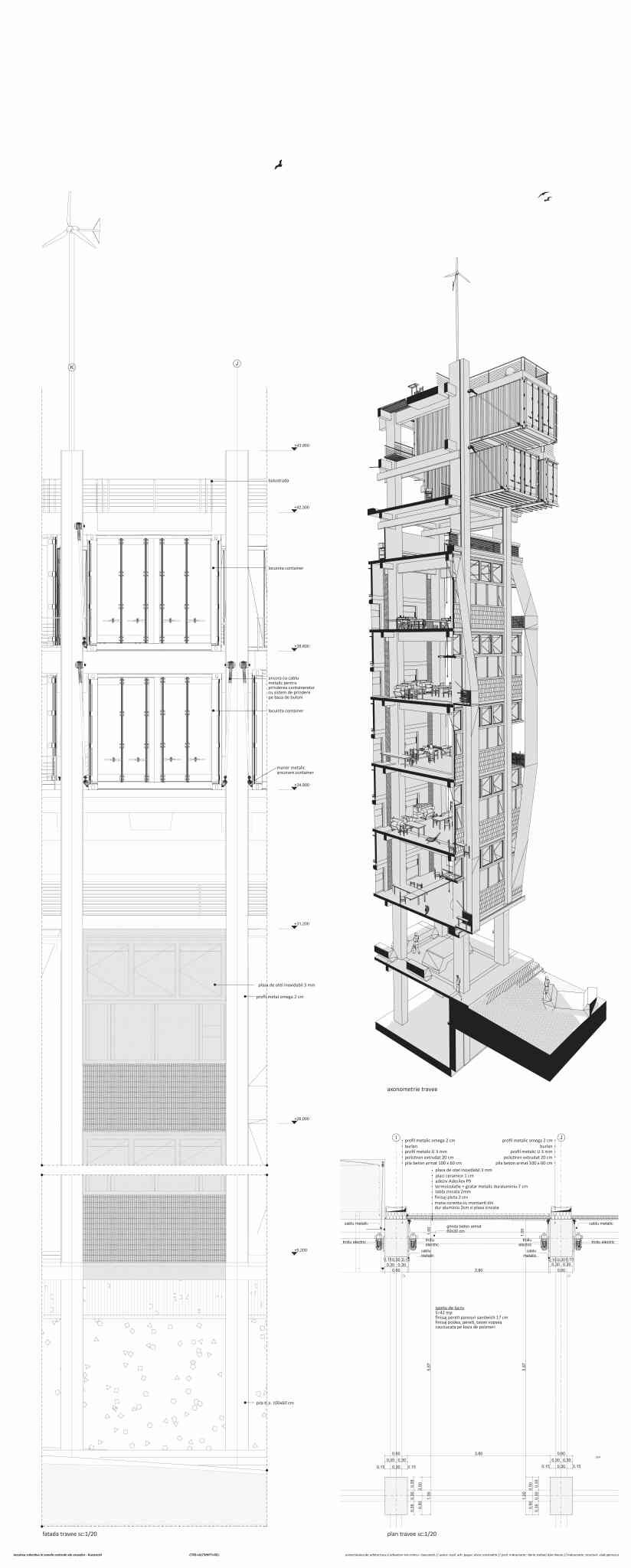
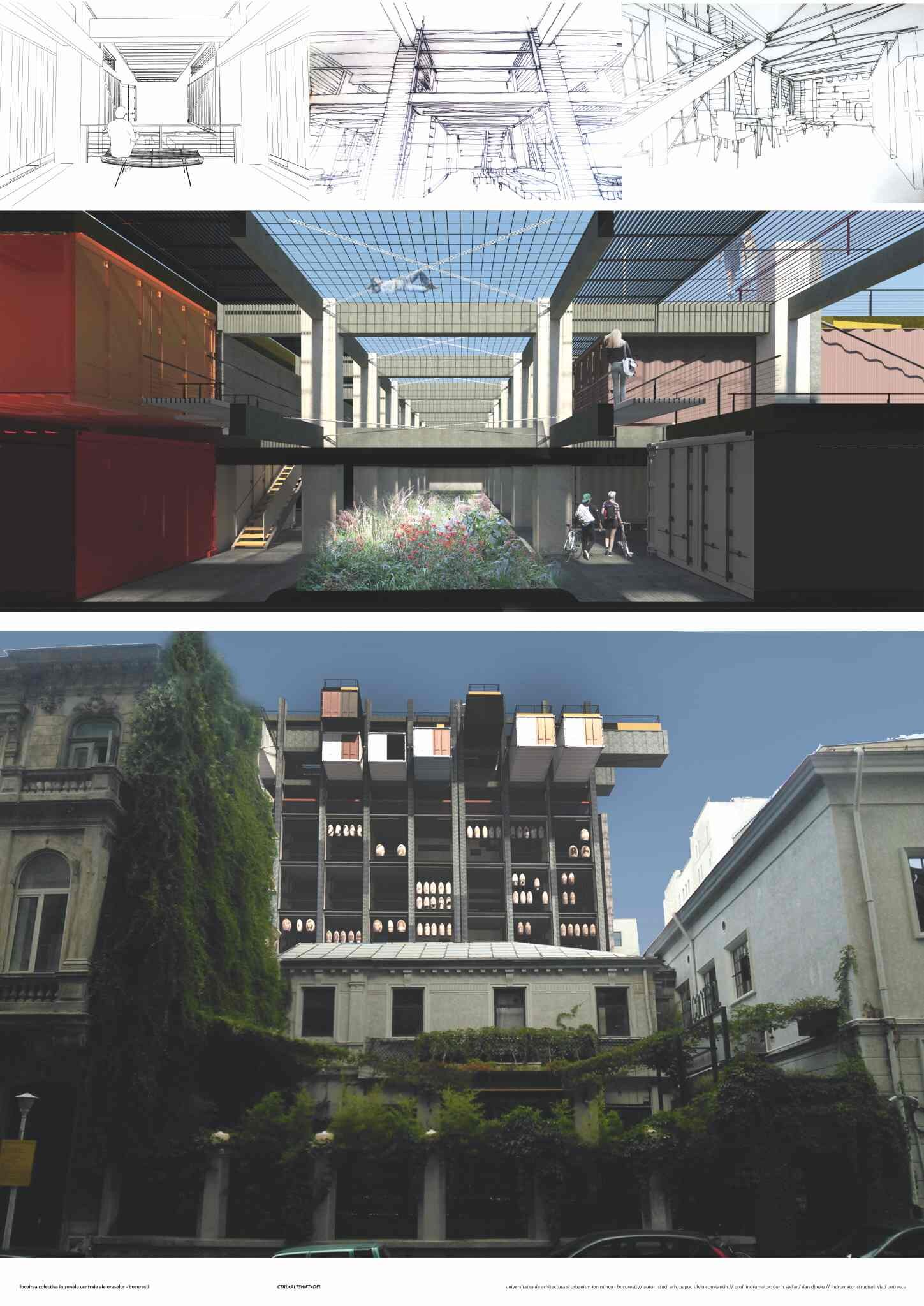
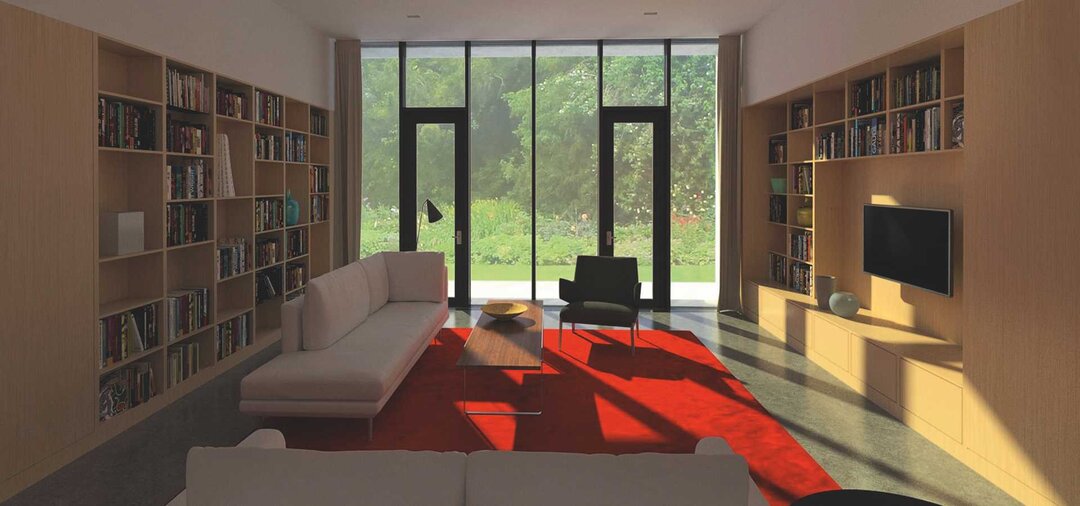
For young entrepreneurs who have to pay one rent for the apartment they occupy and another rent for the place where they run their own business, I will propose a production housing. Basically, in one of the buildings, they will be able to benefit from a small garden, a demountable dwelling (duplex) and a workspace linked to a skywalk.
 A workplace open to the public space, favoring not retreat into a creative enclave, but social interaction as the engine of activity.
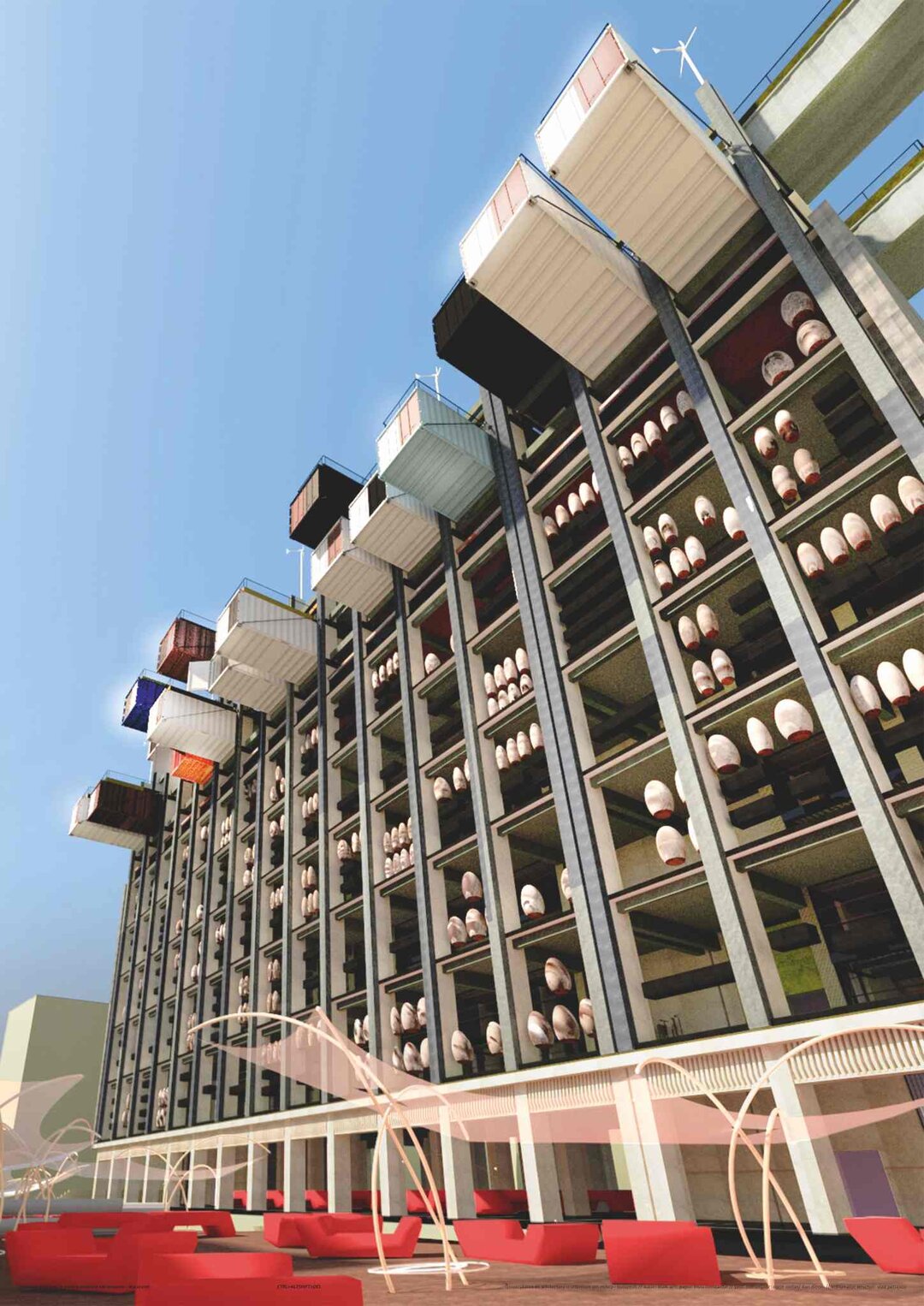
For collective living, the project envisages containers of maximum 3.2 and 2.8 meters high and 3.6 meters wide, respectively, equipped but unfurnished, with a flower garden or terrace on the containers on the lower levels.
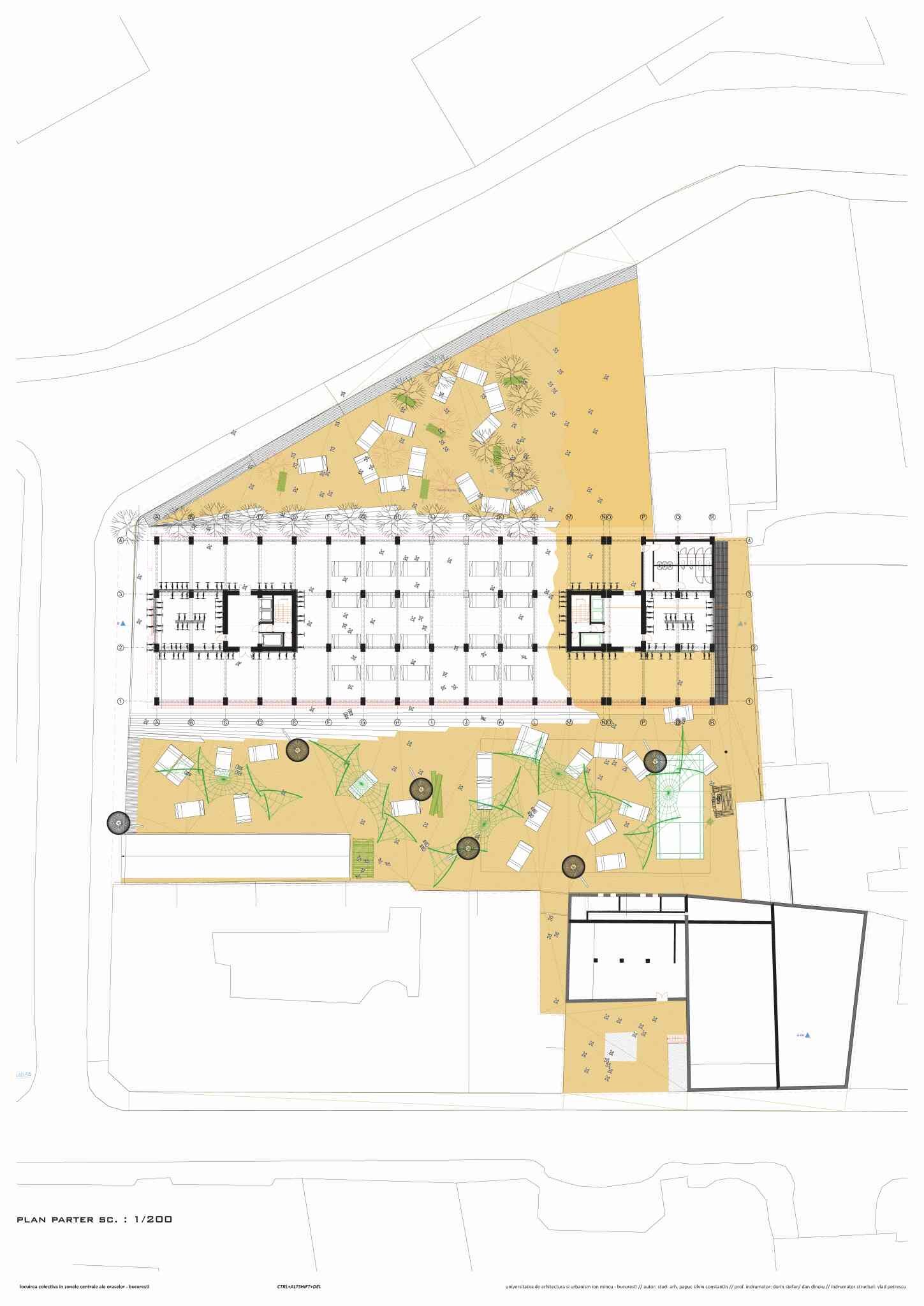
The top level of the complex is a public space (garden-terrace) with a small bar, which can be accessed by tenants and the public alike.
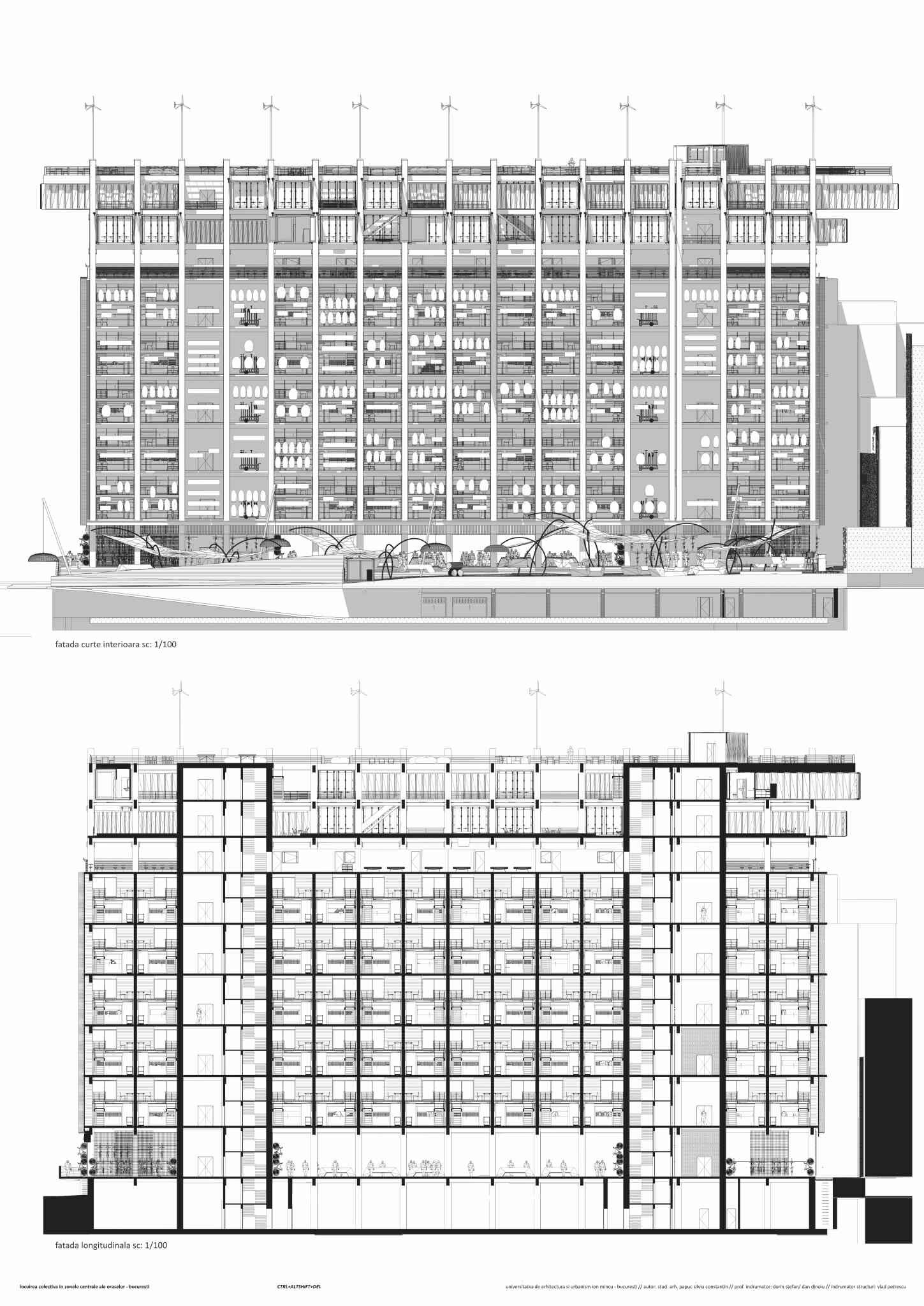
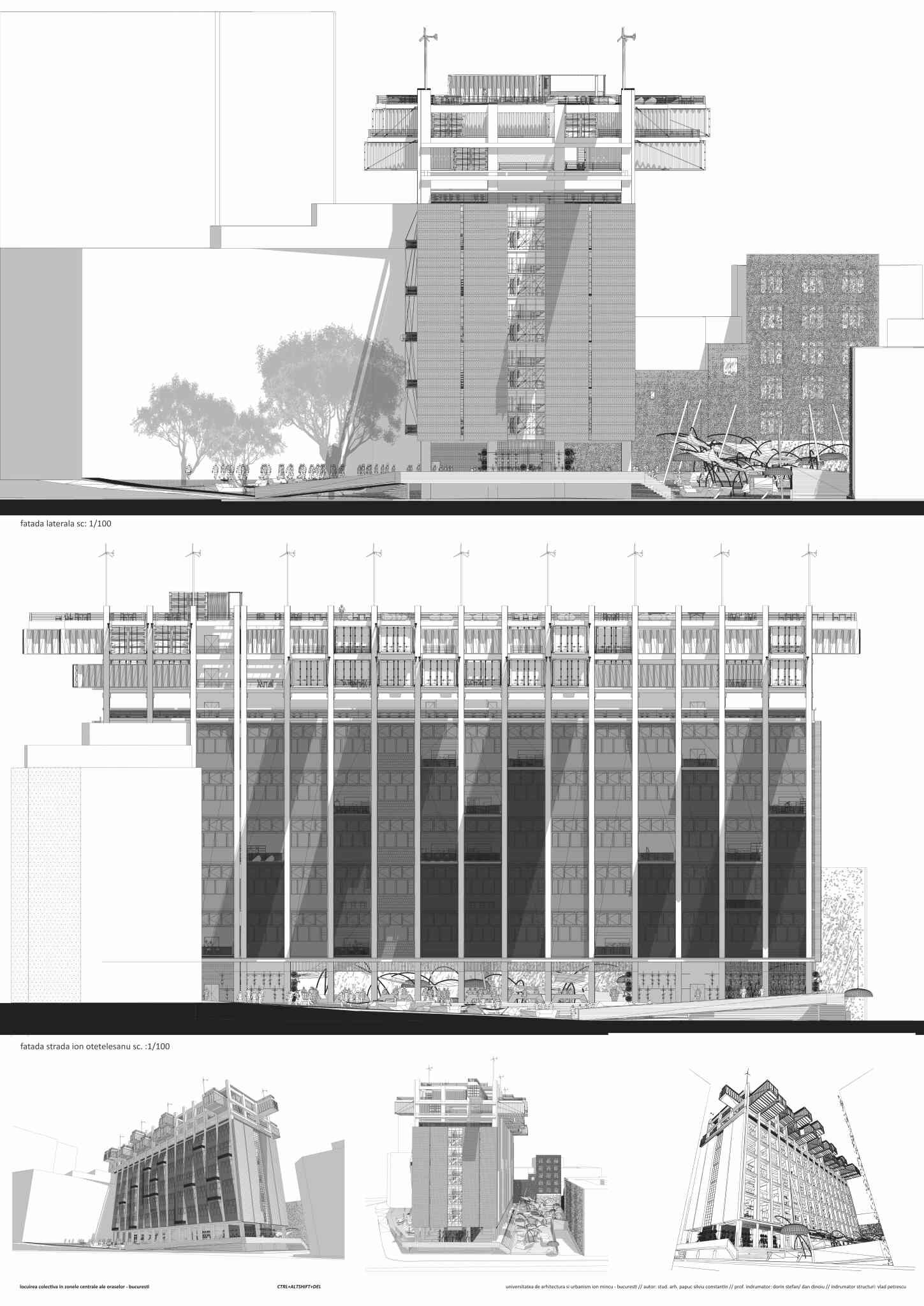
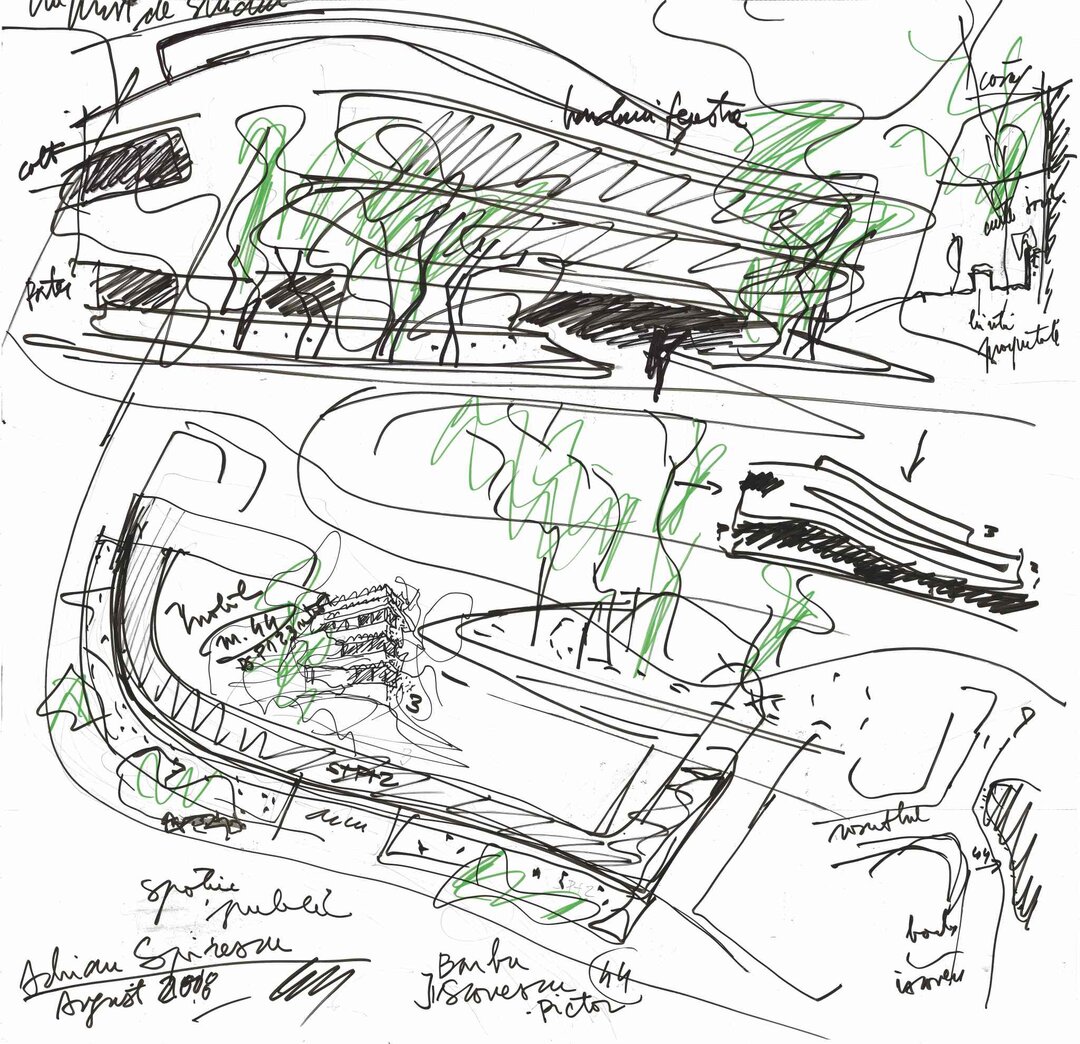
The housing typologies mentioned are inserted into the massive structure of the building - reinforced concrete beams and piers. The materials of the side facades show slight wear on small areas, but will be rehabilitated with the same material (ceramic tiles). The longitudinal facade in the inner courtyard will be dismantled and will be replaced with geometries of different shapes in ceramic and jute sackcloth, basically a vertical garden and natural parasol in which vegetables can be grown. The facade of the dwellings behind the main one will be made of garage doors or tarpaulin/lightweight materials/avionics etc., these can be modified/changed over time to the resident's liking. The facade on Ion Oteteleșanu Street will keep the same proportions and finishes as the old one, but the structure will be made of duralumin, folding. A second metal mesh facade will cover the interior, creating a covered space when the parapet wall is lowered and transformed into a balcony, as well as a backdrop for the Telephone Palace.
The ground floor of the complex will be walkable and materialized by sand, housing various types of markets (fruit and vegetable, ideas, clothes, etc.) and two leisure areas. The sandy beach can also be accessed from the courtyard of the Control bar, down a slope.
This is not a finished product. Thanks to the lightweight and recyclable materials used, the building will change in appearance, emphasizing, in fact, not an architectural object, but an architectural process.