Urban Thinking Festival – Brașov 2018. First Festival of Urban Reflection in Romania

Beer Cart Restaurant
text and foto: Daniela PUIA
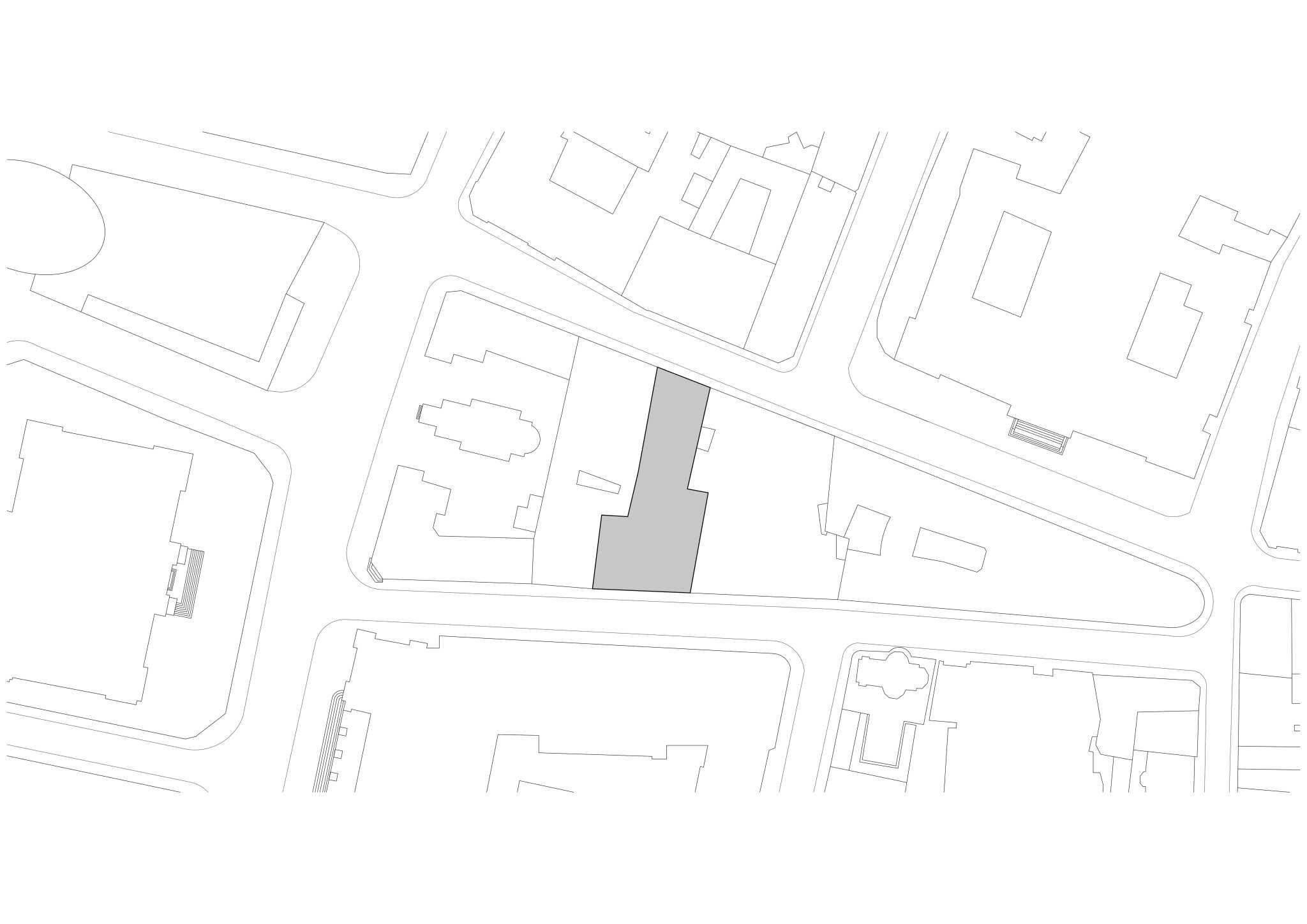
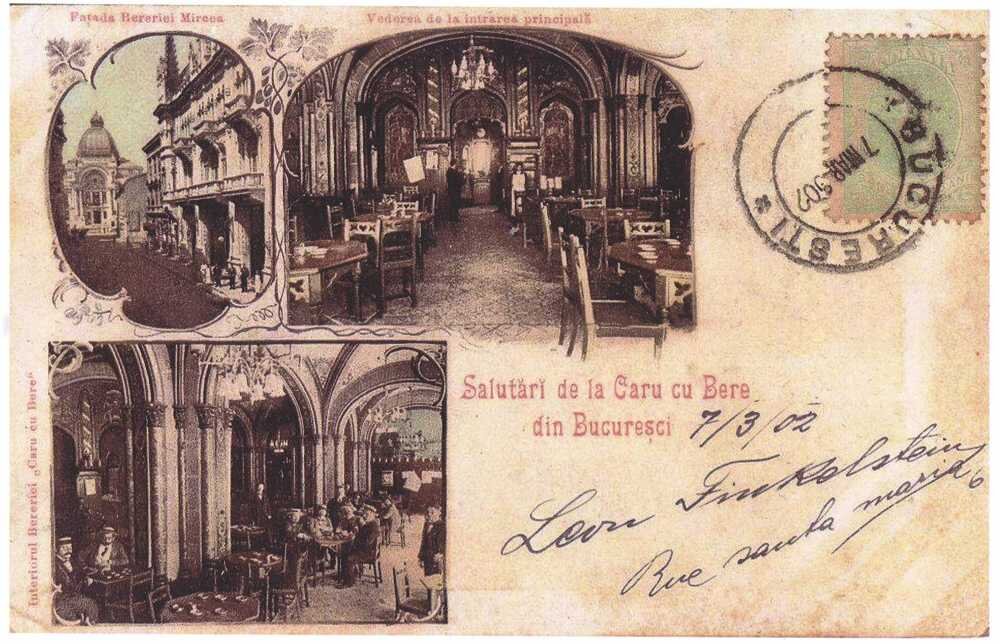
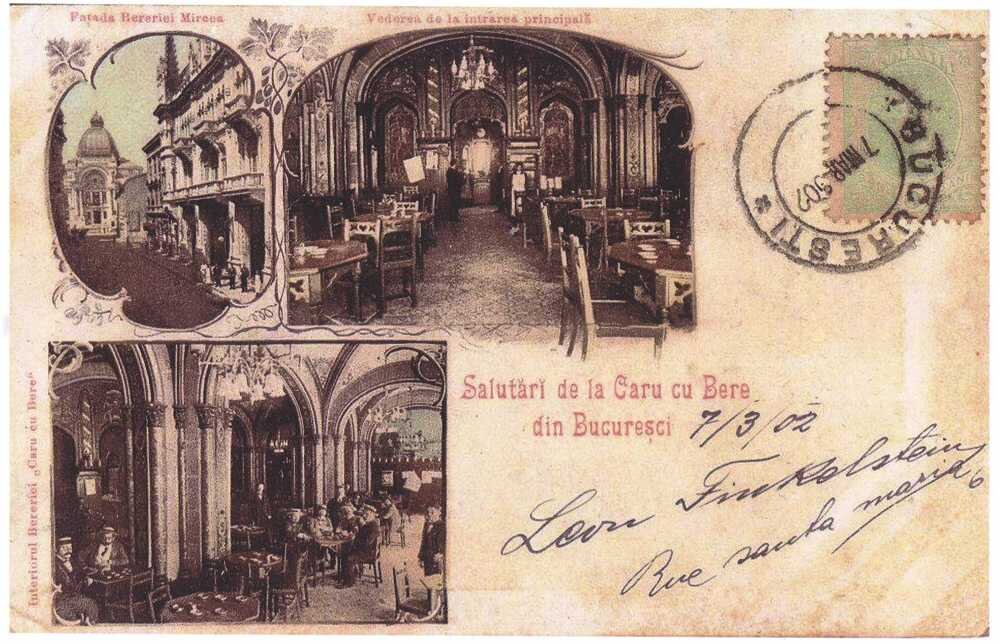
 Restaurant Caru’ cu bere (The Beer Cart), on 5 Stavropoleos Street, is one of Bucharest’s most famous landmarks. A well-known, frequently visited and highly appreciated place, not just by Bucharest inhabitants, but by people across the country and foreigners, Caru’ cu bere has been operating without interruption for almost 120 years. This continuity, beneficial to the city and the building alike, is primarily due to its owner who built and, subsequently, expanded the building hosting the restaurant. The history of Caru cu bere is therefore organically linked to the impressive history of the Mircea family, who, through its various members, ensured ongoing occupancy of the building on Stavropoleos street The same family manages the building today.
The Mircea brothers (Ion, Gheorghe, Nicolae, Victor and Ignat) were well-known beer traders in the capital city at the turn of the century; they owned restaurants, originally in Zlătari Inn and the Macca-Villacrosse Passageway, and, later, on Stavropoleos Street, Academiei Boulevard, Carol Street, Constantin Mille Street and in the Gara de Nord area. For Nicolae Mircea, who built and managed it since 1898-1899, Caru’ cu bere meant more than just a restaurant. It was his passion, and his family’s business and dwelling for more than a century.
A little history
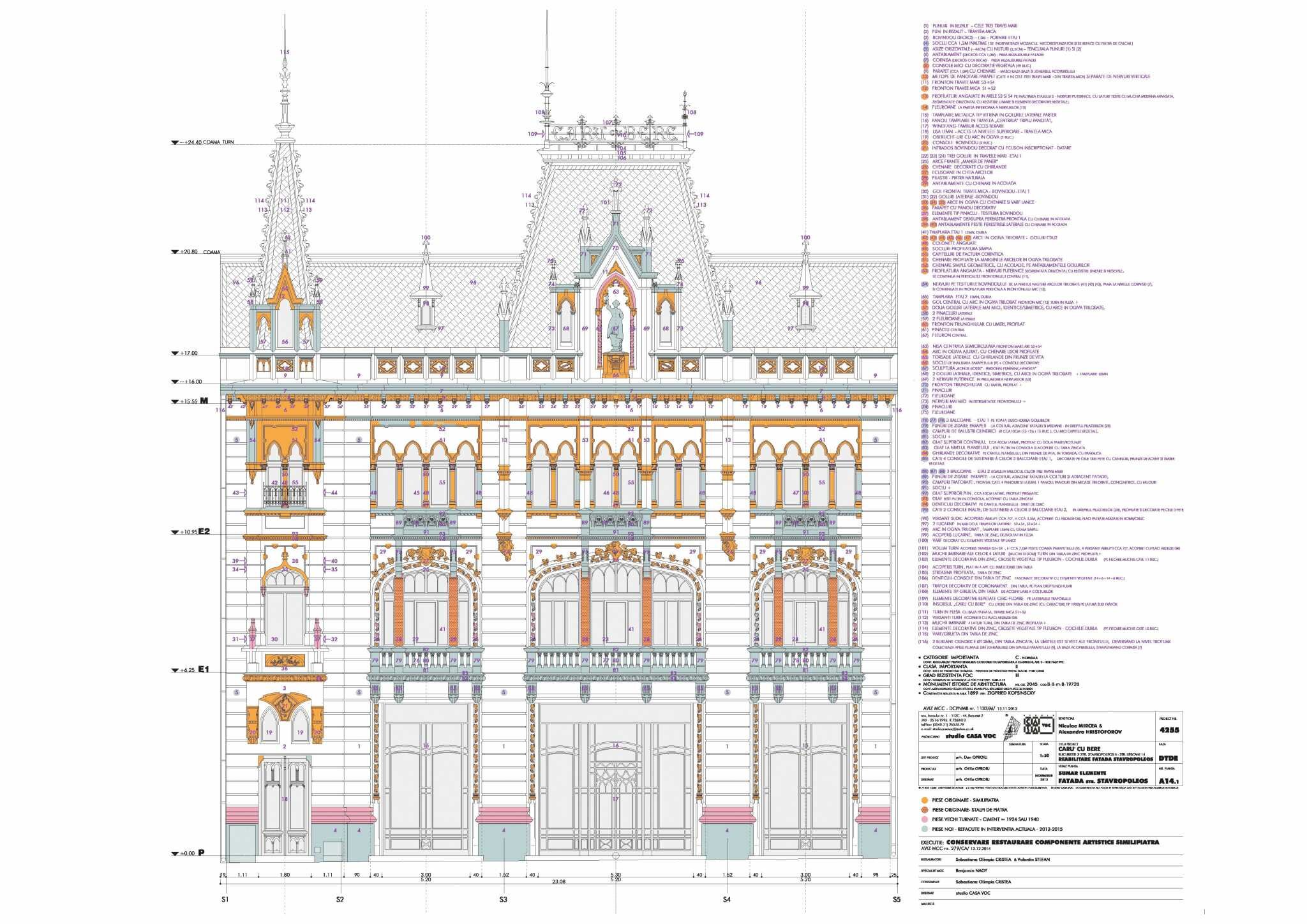
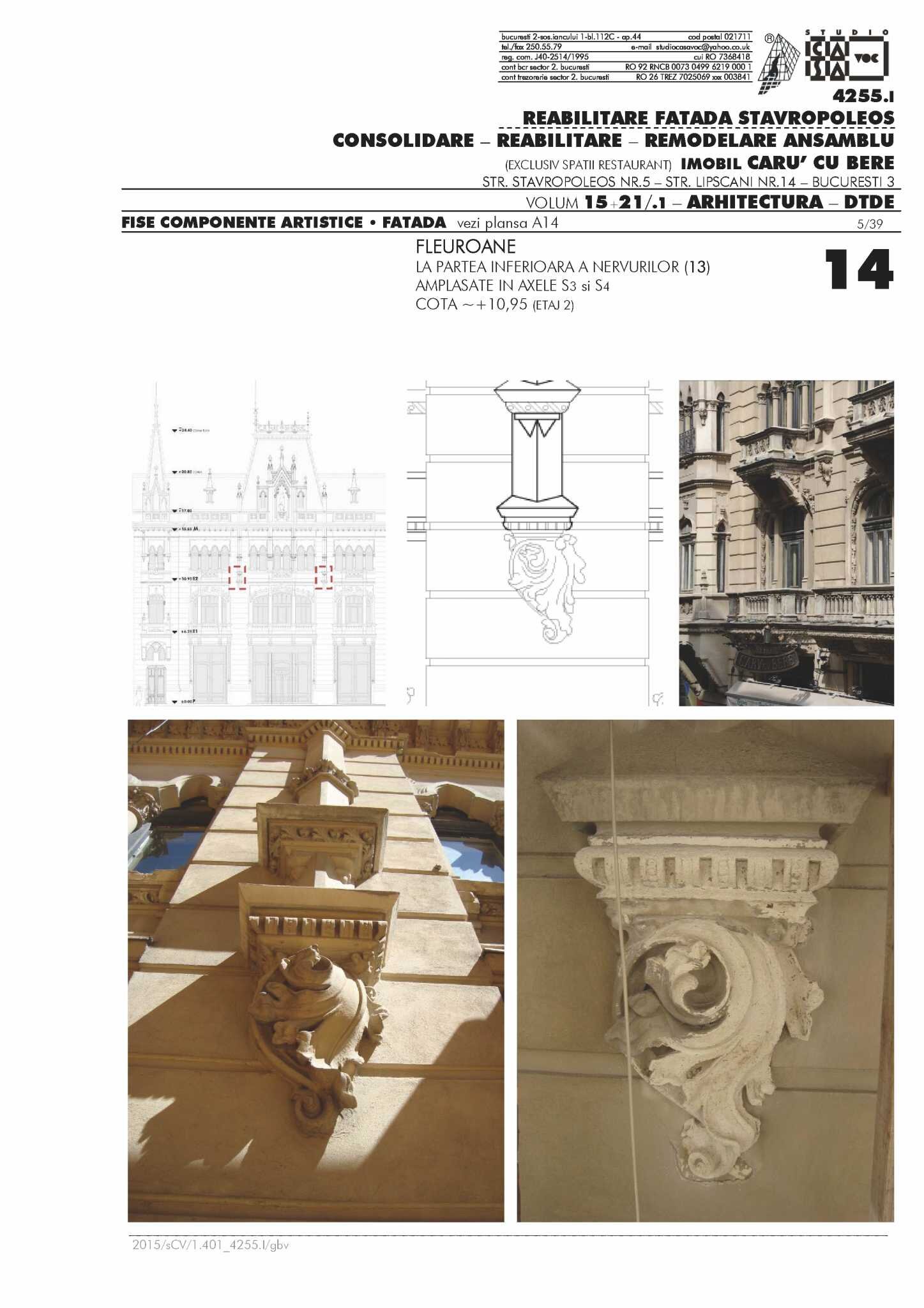
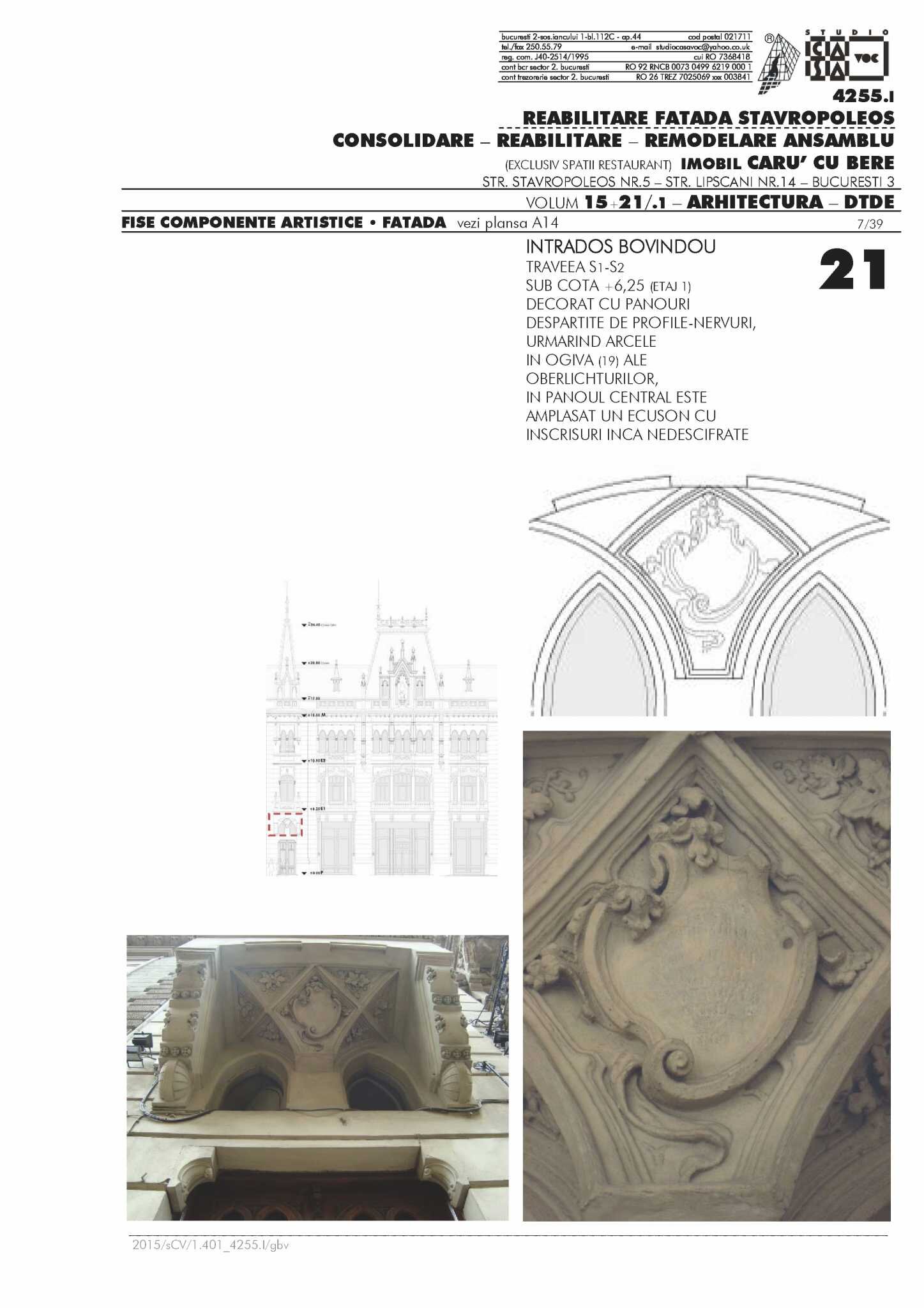
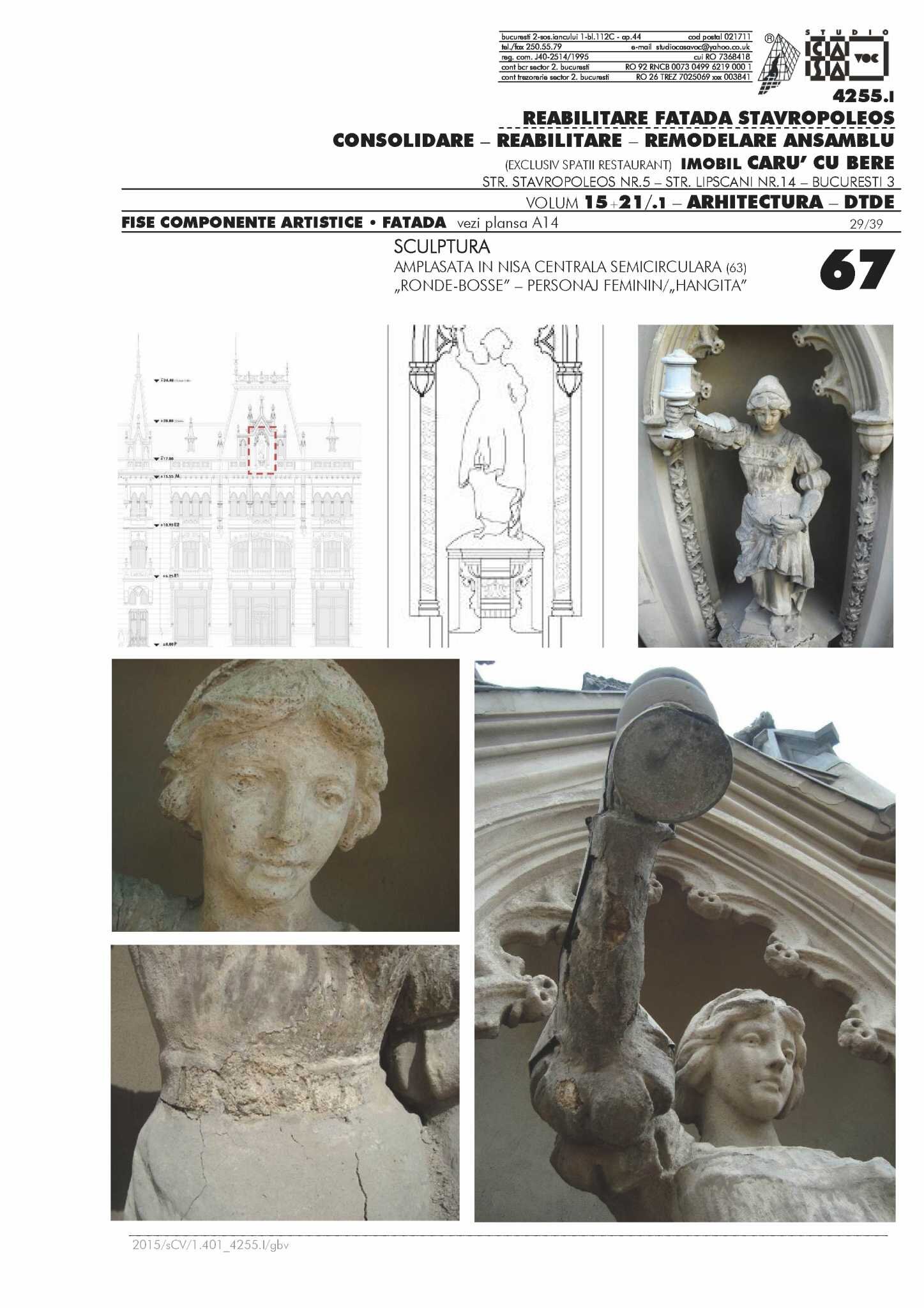
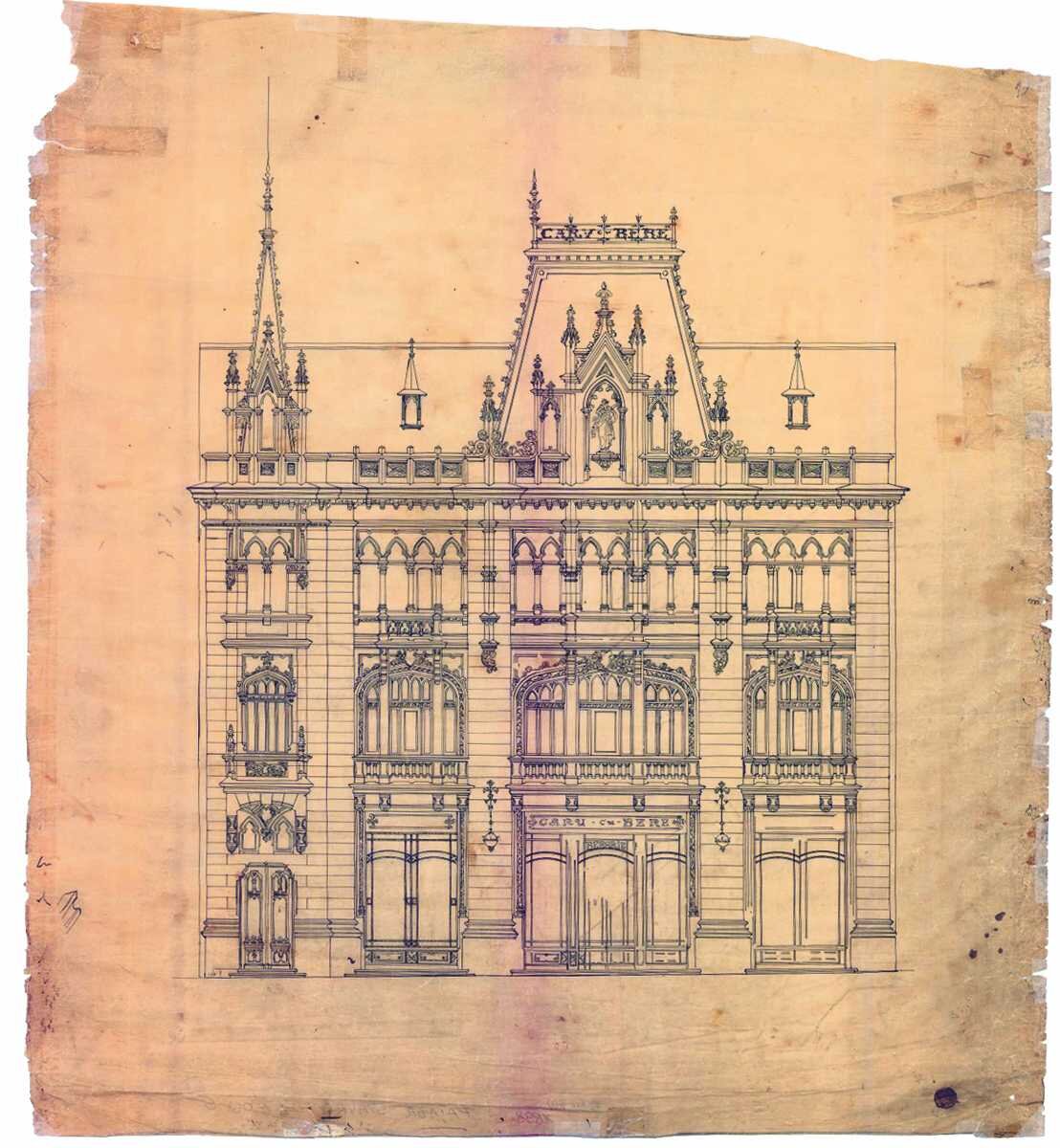
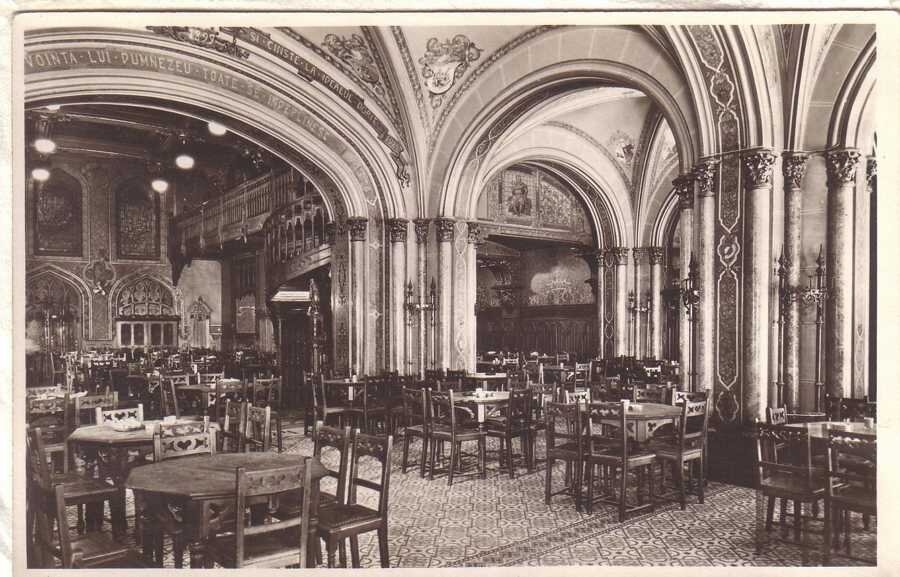
Construction. In 1897, Nicolae Mircea purchased the landplot at no. 5, Stavropoleos street, secured the building permit in March 1898 and opened the restaurant in June 18991. The architectural design was conceived by architects Ziegfried Kofszynski2 (1858-1932) and Alois Pesch. Kofszynski also conceived a number of elements pertaining to the indoor decoration - furniture, wooden panelling, wall paintings - executed by master painters Conrad Vollrath (Veleanu) and Wilhelm & Friederich Hugo. The building stood out in the central commercial city area, in the early years of the last century, thanks to its eclectic-style façade of German Romantic inspiration, with Neoclassical and Neogothic elements.
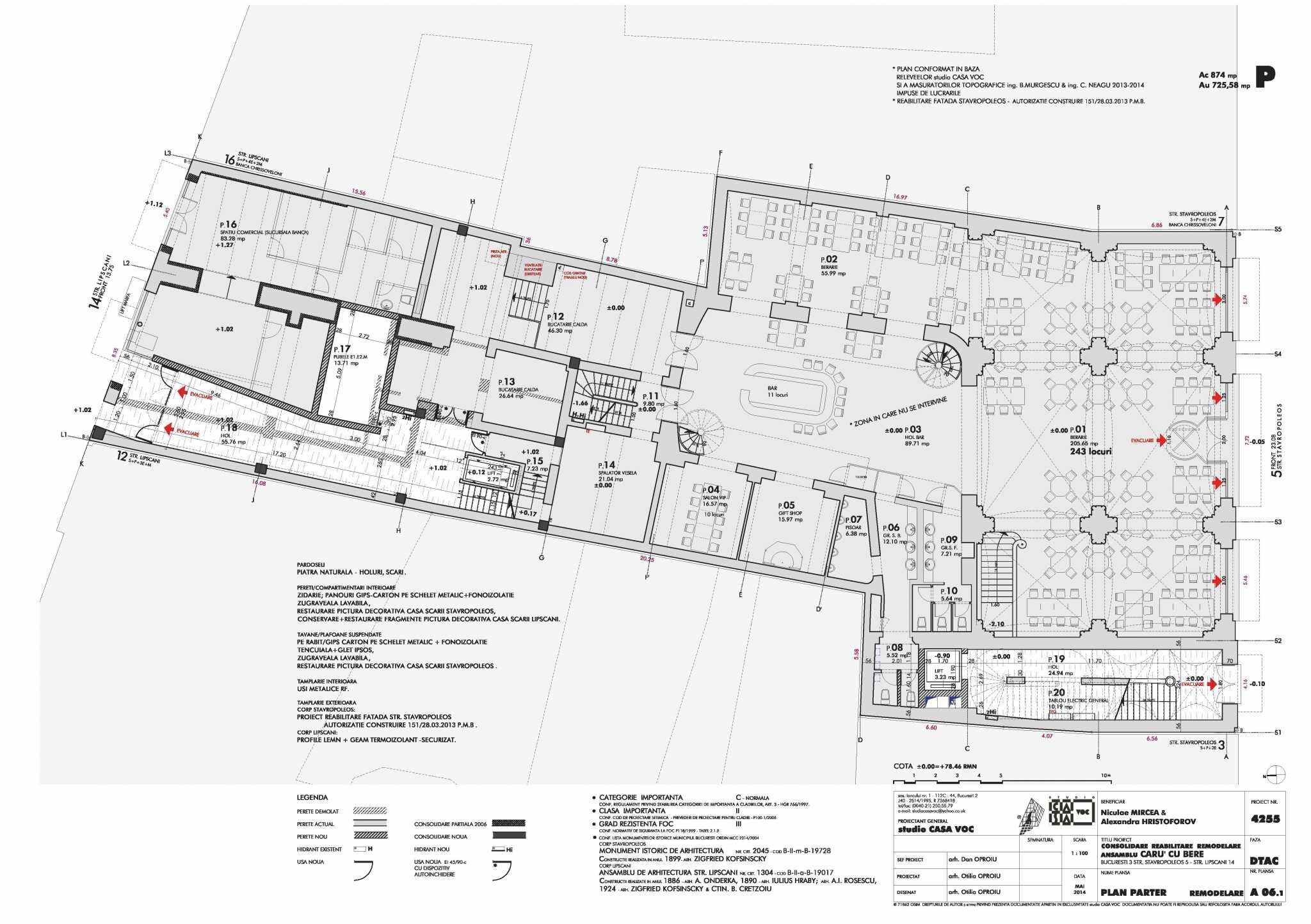
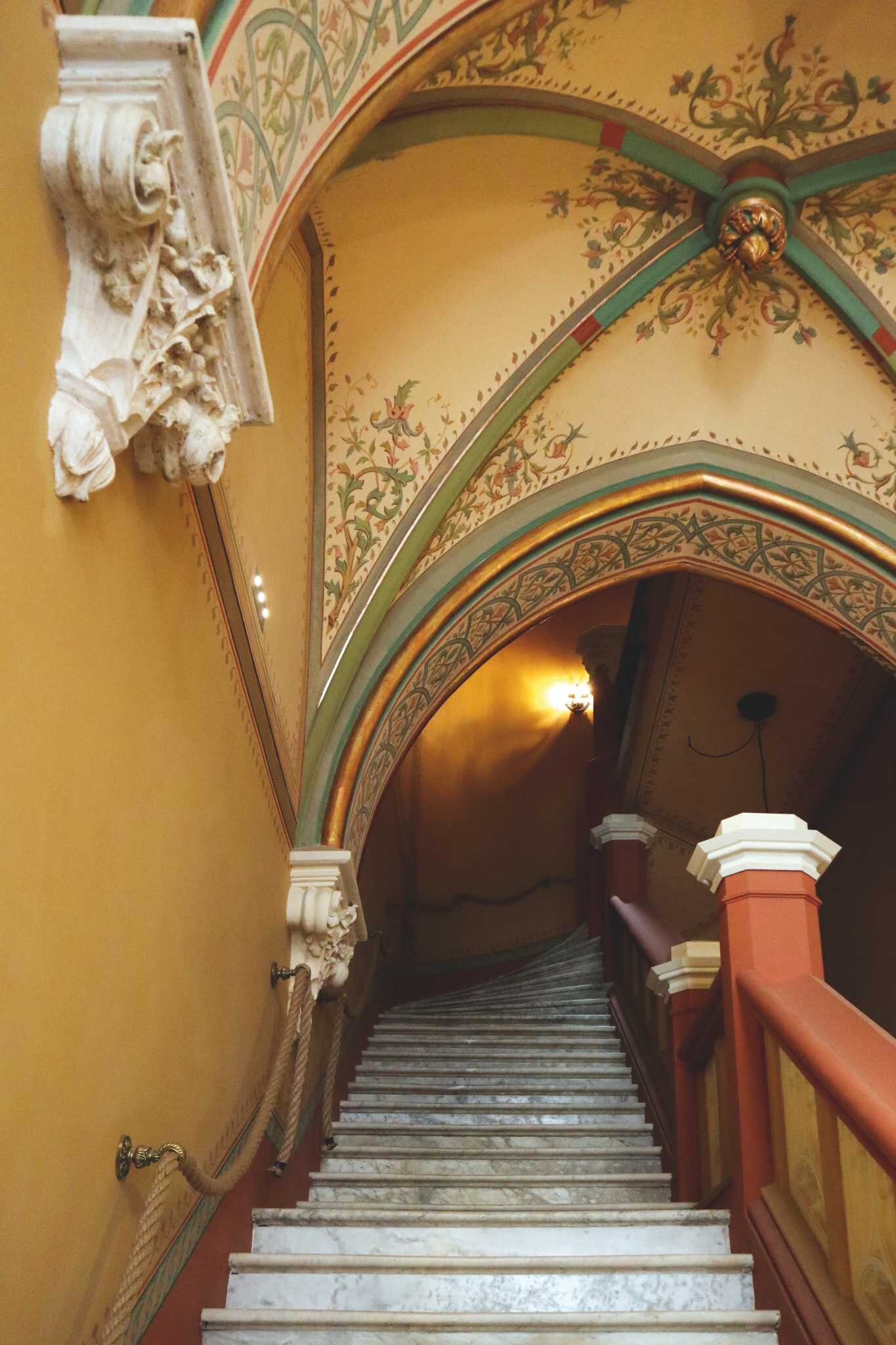
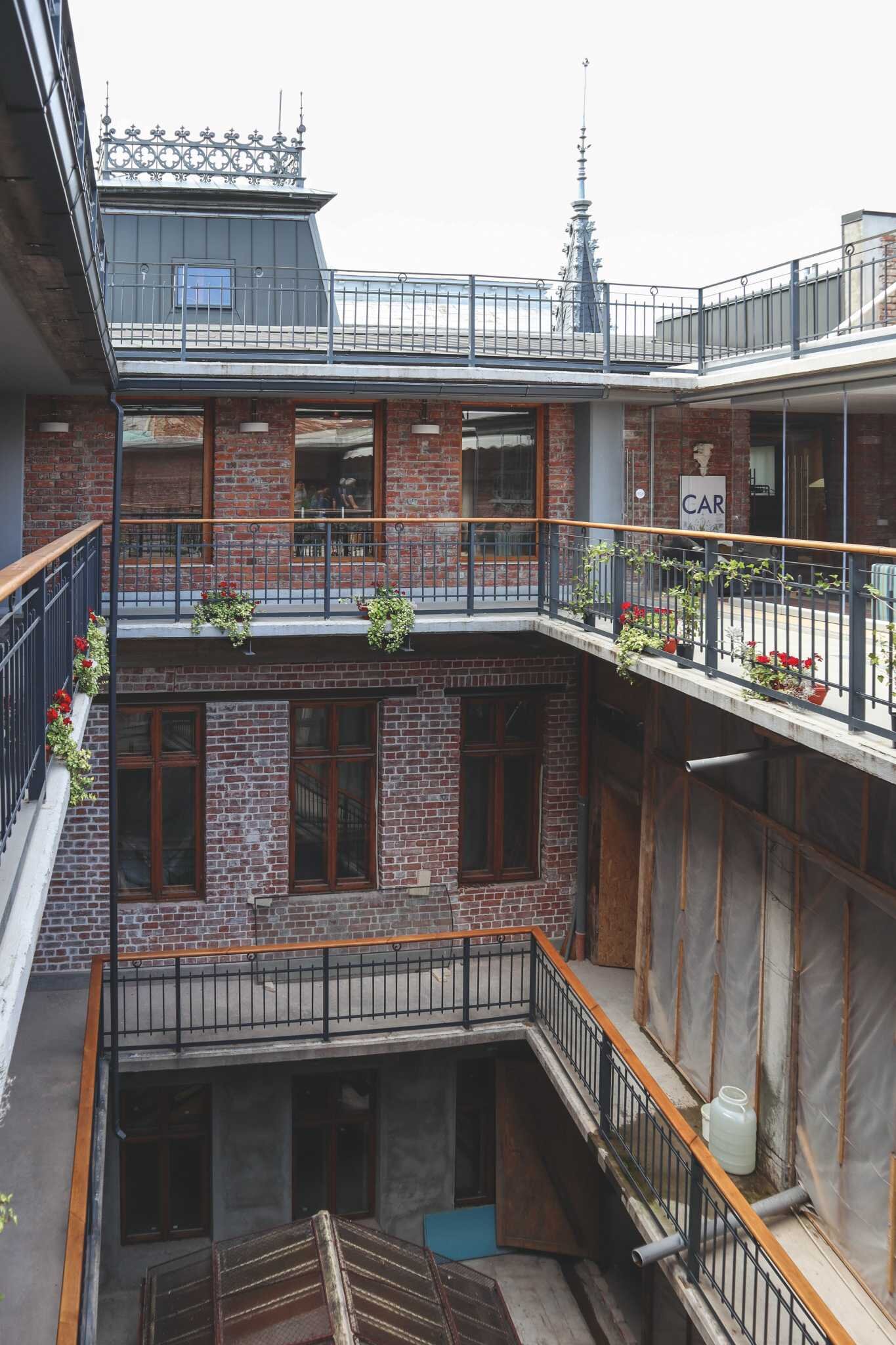
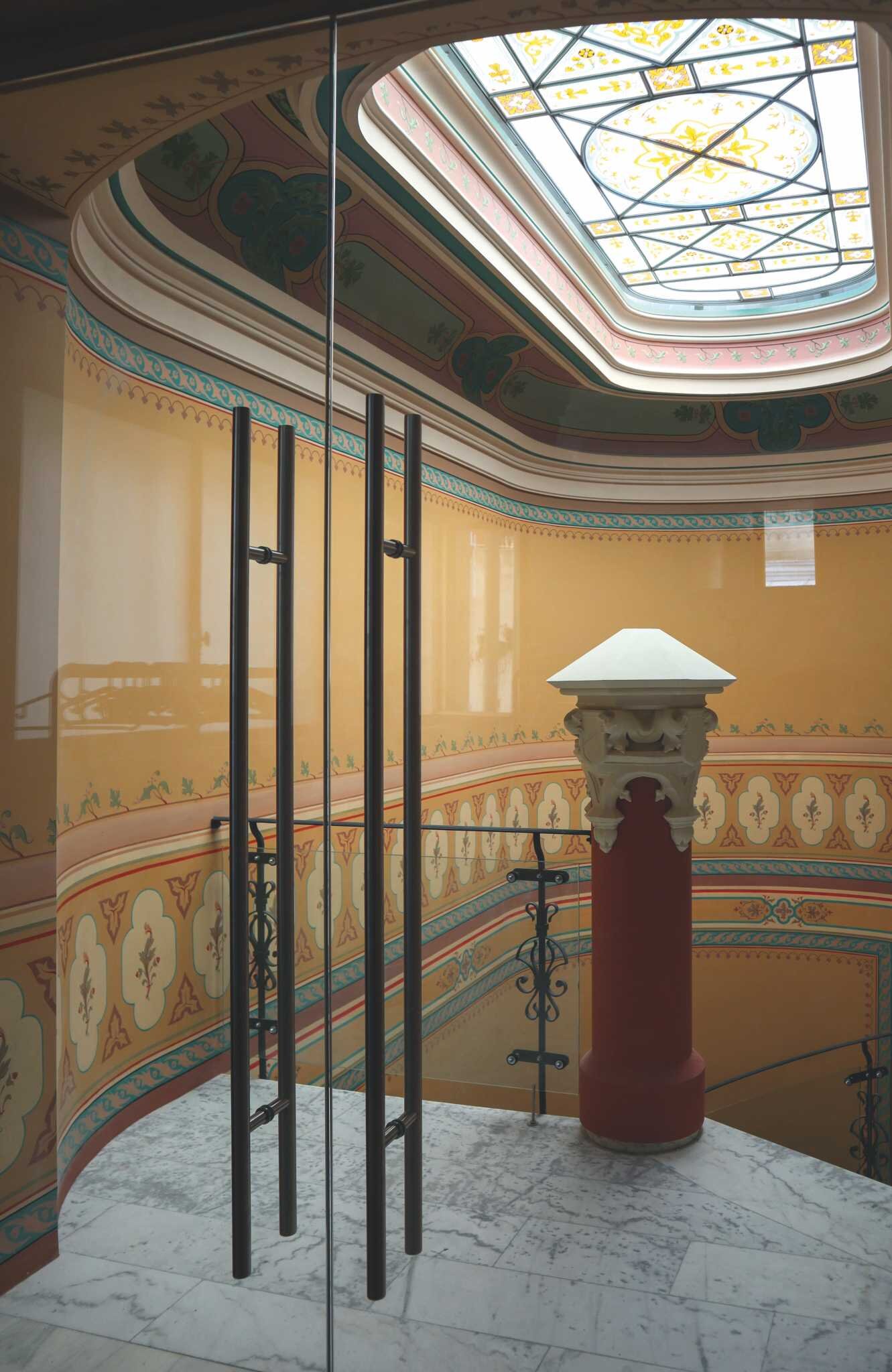
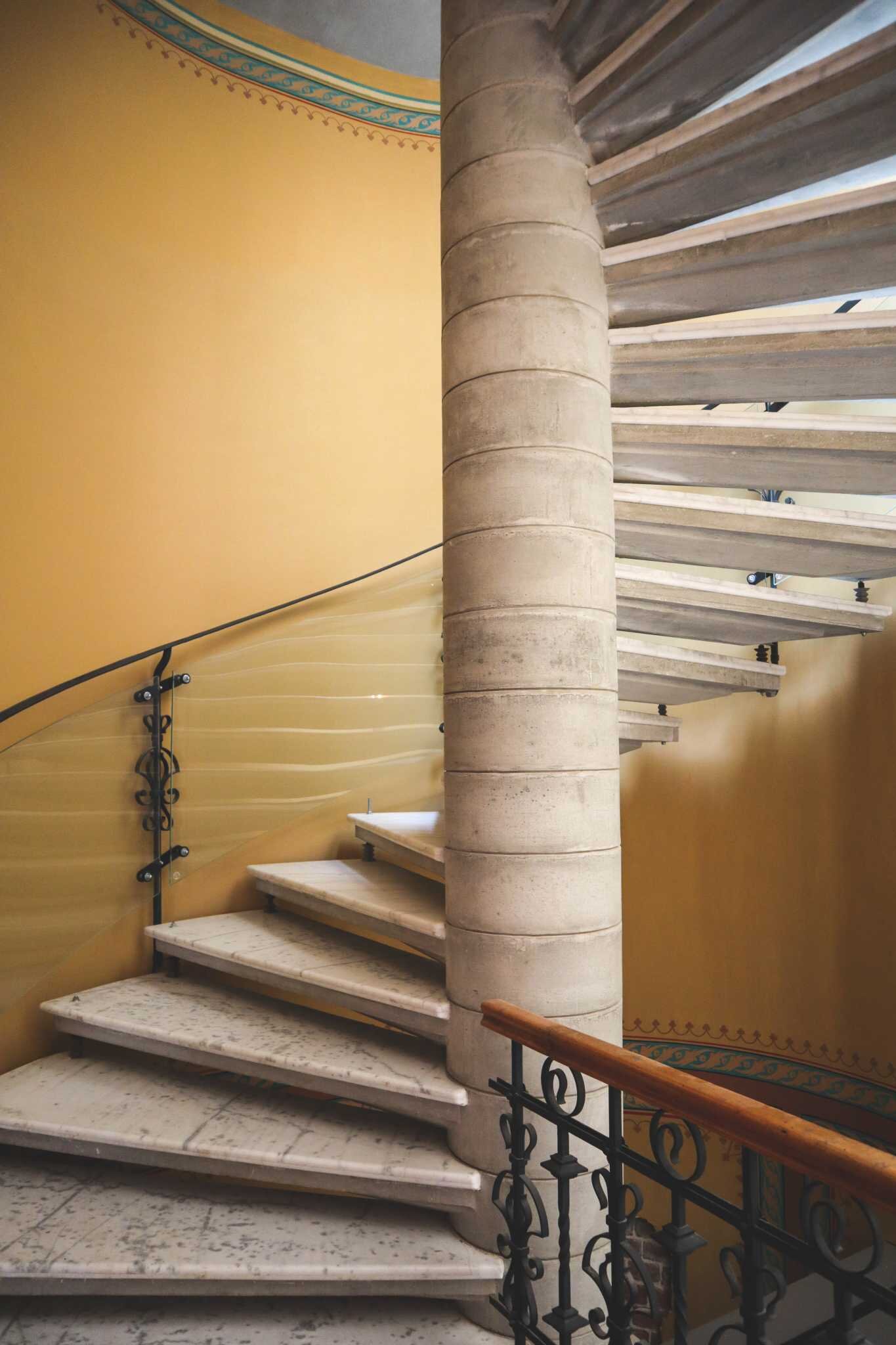
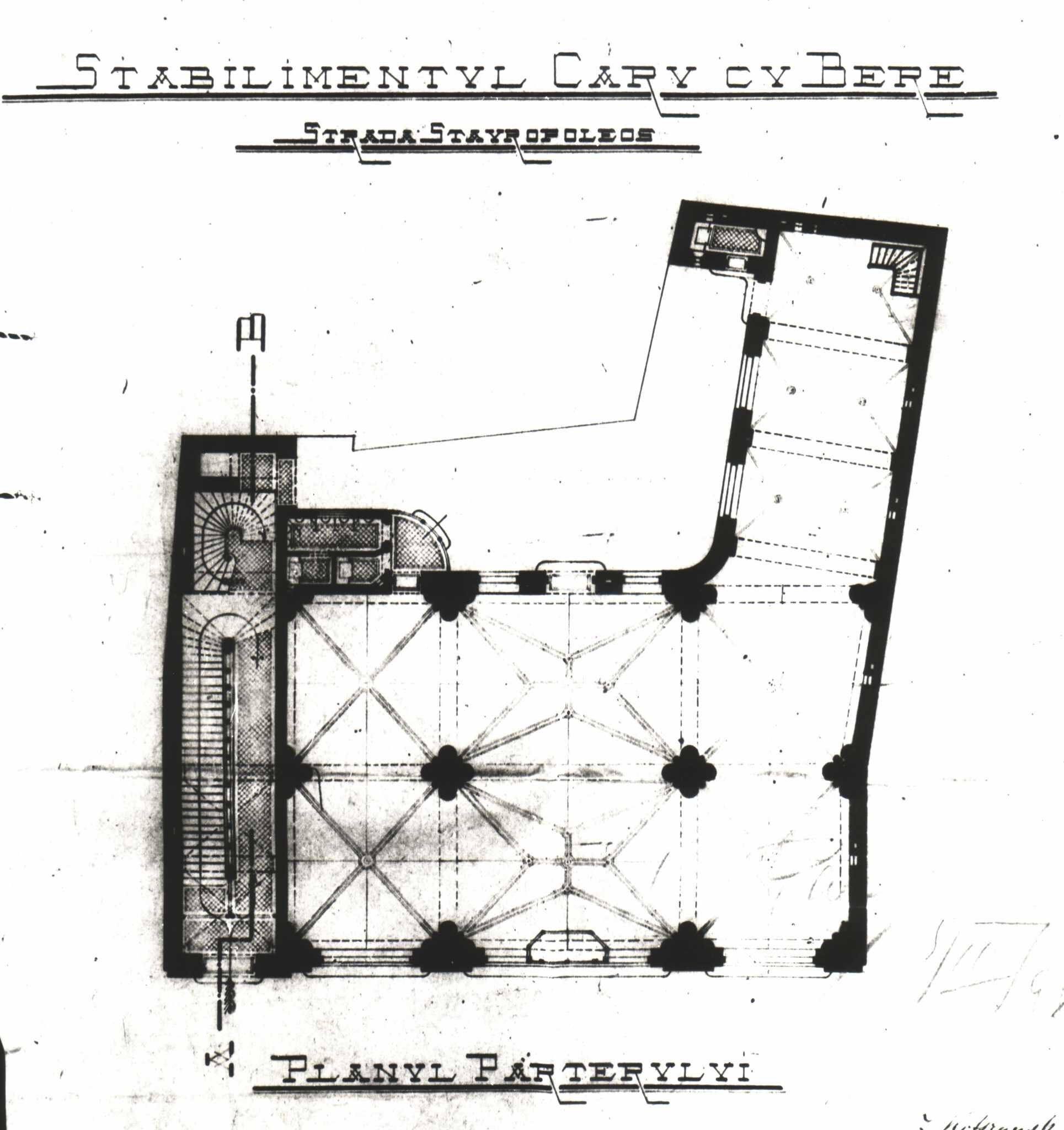
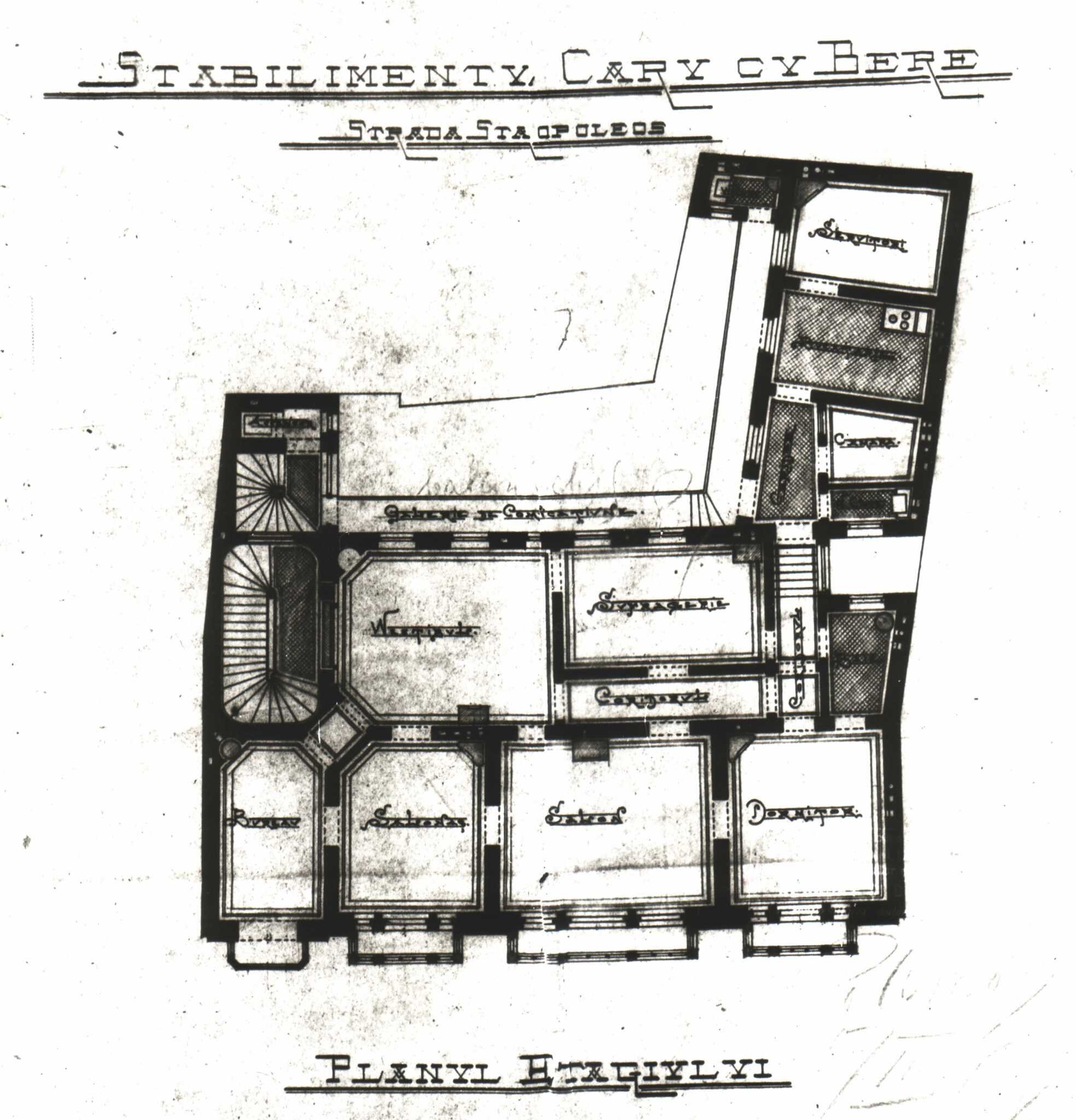
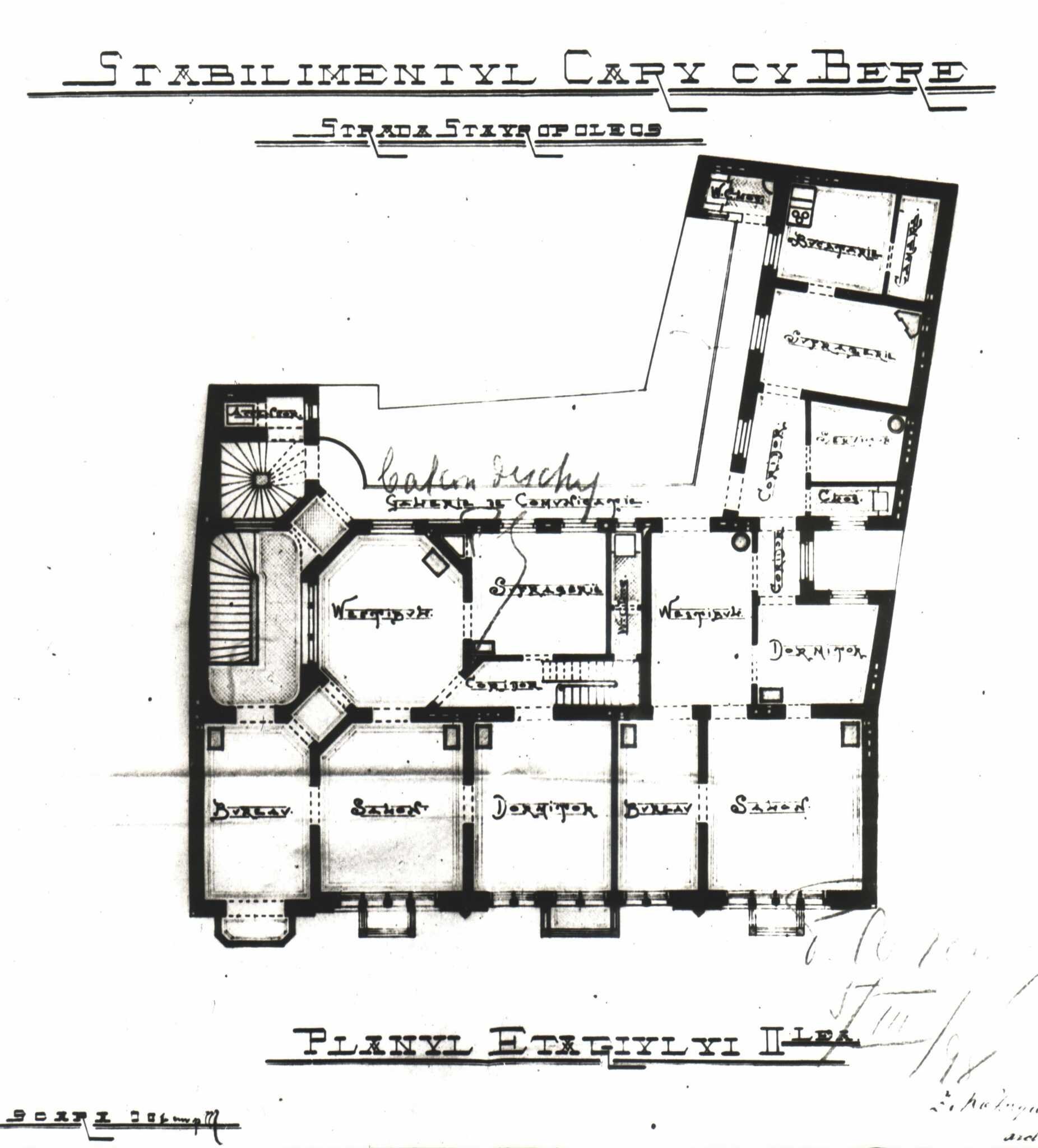
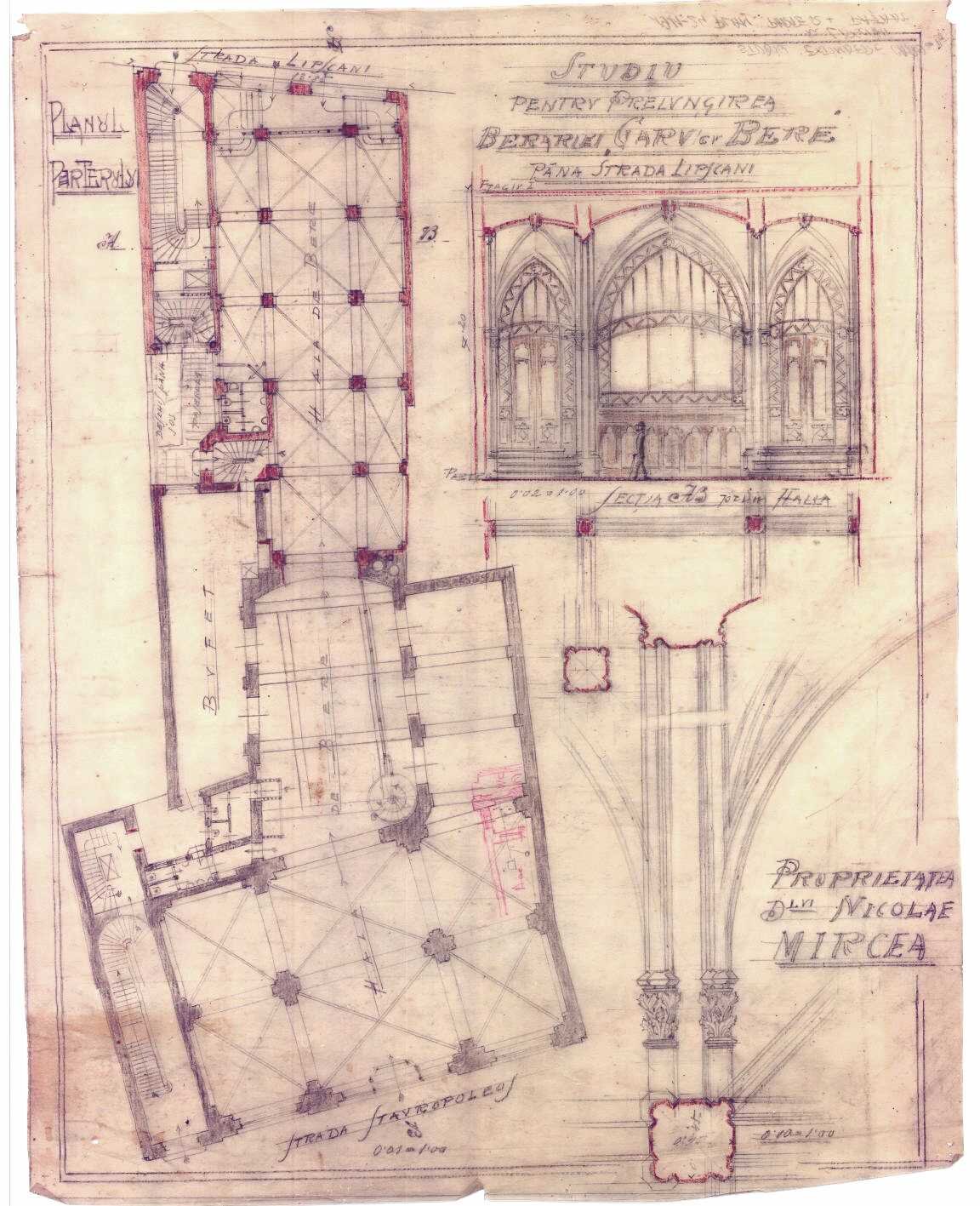
The restaurant took up the ground floor and consisted of one main large hall, symmetrically laid out in relation to the axis of the main entrance, and a small-size hall positioned perpendicularly, with direct access to the cellars where the wine barrels were stored. Both halls were provided with direct access paths to the inner courtyard hosting the outbuildings. Next to the restaurant were the houses of the family and of the restaurant employees, spread out on several floors - entre-sol (mezzanine, only along the area taken up on the ground floor by the small restaurant room), two storeys and a loft. Access to the first and second floors was made from Stavropoleos street, via an elegant staircase crowned by a skylight. A second staircase, adjacent to the main one, which could be accessed from the lobby as well as from the inner courtyard, ensured secondary access to all the building floors (entre-sol, 1st and 2nd floors and loft) and was provided on two sides with a shared suspended corridor affording access to all the building annexes.
The 1st floor was taken up by only one apartment, with an office, 2 living rooms and a bedroom towards the main façade; the dining room, the kitchen and the annexes were oriented towards the inner courtyard.
The 2nd floor housed two apartments, both consisting of an office, a living room, a bedroom and a dining room.
The loft housed the rooms for the restaurant employees and for servants, as well as the annexes (the laundry room).
The building took up the entire portion by the side of Stavropoleos street. The vertical and horizontal lines of the façade accurately reflected its interior layout. Its vertical section unfolded on a large scale, corresponding indoors to the restaurant and the apartments, and it also boasted a narrower section represented by the main staircase for access to the floors. Both sections are symmetrically positioned in respect of the entrance axis and are marked by vertical touches at roof level. Horizontally, four sections can be identified, corresponding to each building floor - ground floor, 1st and 2nd floor and loft, each treated differently in terms of the full-void ratio and the type of decoration.
 Expansion. Between 1909 and 1922, Nicolae Mircea successively bought the landplots in Lipscani street no. 4-6, adjacent to the plot at 5, Stavropoleos street, wishing to expand the original restaurant and building.
The first expansion, carried out in 1910 and before 1924, after the purchase of one part of the plot at 6, Lipscani street, brought the most significant additions to the restaurant and has been largely kept until today. A new room was built on the ground floor, to complement the existing large hall, and was covered with a skylight. Along the longer sides of the new room additional spaces were provided for the restaurant, balconies accessible via helical wooden staircases which took up the entre-sol. A wine cellar was constructed in the basement. The indoor decoration included frescoes made by painter Al. Brătescu-Voinești and stained glass windows executed by R. Zigeler.
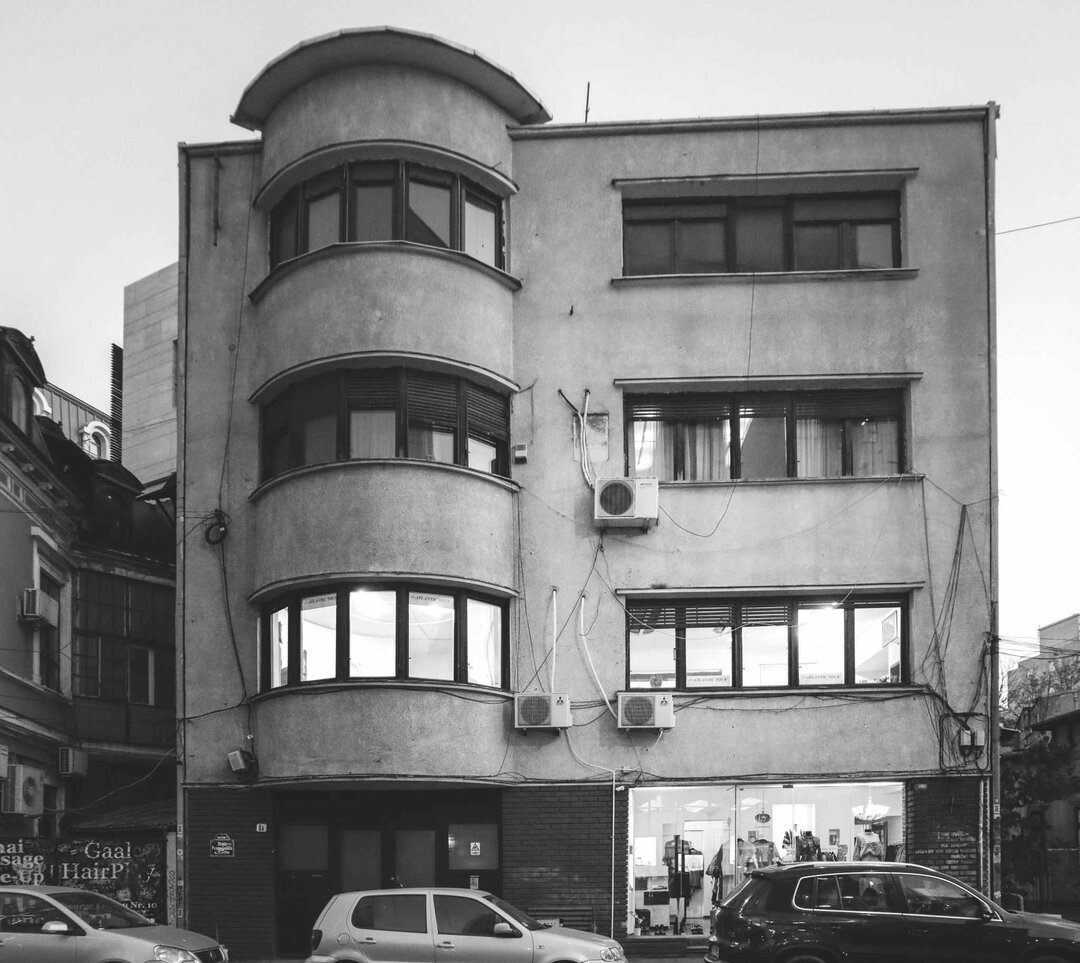
After 1922, Nicolae Mircea fully owned the two buildings with commercial ground floor at no. 4-6 Lipscani Street. The building at no. 4, „the Steiner Houses”, had been built in 1890 (architect Iulius Hraby), and that at no. 6, Mărcuș Brothers’ Shop, had been designed by two architects, A. Onderka (1886) and A. I. Rosescu (1890)3. In 1924, architect Ziegfried Kofszynski designed for Nicolae Mircea a new building that was to replace the two buildings on Lipscani Street. The building was designed to have a ground floor and four floors and stood in a partial relation with the building on Stavropoleos Street. On the ground floor, the existing restaurant was to be expanded with a new room, going all the way to Lipscani street, on the 1st and 2nd floors commercial or office spaces were to be fitted in order to be let and the 3rd and 4rd floors were to house an apartment each, with all necessary annexes. This design made by Kofszynski was not carried through, but several development works were indeed carried out at the existing buildings, in order to make them operate like one single ensemble, next to the building on Stavropoleos Street.
Nationalisation and restitution. The Mircea Family owned the abovementioned buildings up until 1948, when they were nationalised. The restaurant continued to operate, retaining its name and, at first, even its older employees, always trying to preserve the specificity and ambiance cherished by the Bucharest dwellers. A restoration project targeting the restaurant was carried out between 1983 and 1986. On that occasion, the restaurant interior was renovated according to the design of architect Ion Barabas, and several of the interior decorations - the frescoes, wooden panelling and stained glass windows - created by painters Gheorghe Nicolae-Jack, Ștefan Câlția, Sorin Ilfoveanu, Mihai Buculei and Ioan Cadar, were restored.
The building was to be returned to the Mircea family in full ownership and administration after as late as half a century. Once it was restituted to the family, the restaurant was subjected to several renovation and restoration works, which were completed in 2006. The commercial spaces towards Lipscani Street had also served various uses during this time (food store, stockings store etc.) and continue to be rented for such purpose. However, the rest of the building underwent considerable alterations and degradations. The type of property management administered to it during the last half of a century has primarily led to an improper division and use of the existing residential spaces and to the gradual degradation of the building, in the absence of constant maintenance works.
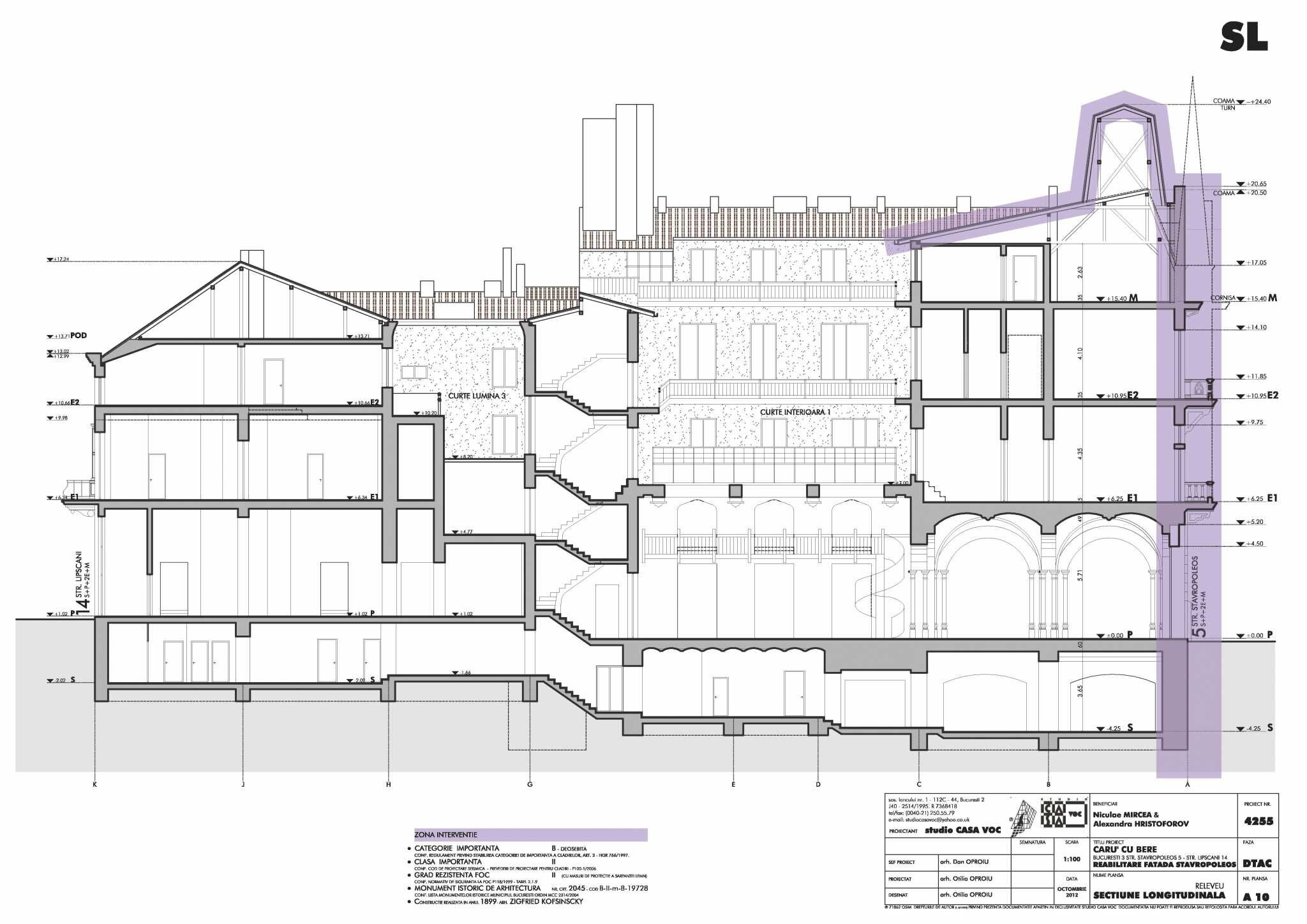
Renovation. At present, the building is free from tenants and is under renovation according to an extensive consolidation, renovation and reconfiguration project prepared by Studio Casa Voc - architects Dan Oproiu and Otilia Oproiu, to be conducted in several stages:
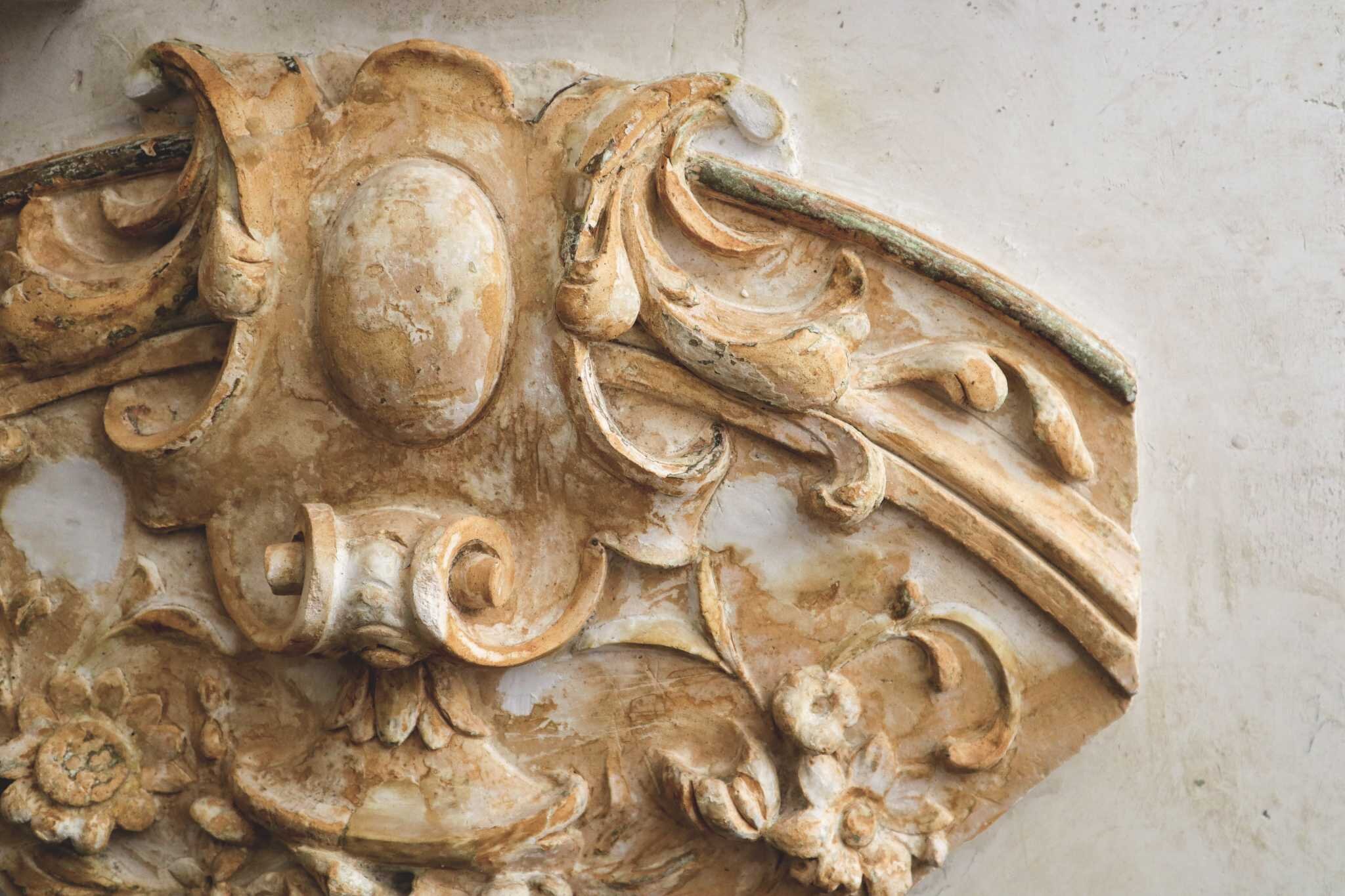
 Stage I - Renovation of the façade of the Stavropoleos building, a project started in 2011 and completed in 2016, included the consolidation, restoration and renovation of the façade, the reconstruction of the wooden roof framework and covering. The renovation works were extremely urgent given the advanced state of decay of the structural and ornamental elements.
 Stage II - Consolidation, renovation and reshaping of the ensemble, a project which started in 2013 and is currently under way. The works are carried out in all the spaces of the building and in both buildings parts, adjoining Stavropoleos Street and Lipscani Street respectively, but leaving out the restaurant space. According to this project, the ground floor will continue to host commercial spaces, while the upper floors are to host a cultural centre to be developed in the future.
An ensemble that has been granted historical monument status
The Stavropoleos group of buildings is classified as historical architectural monument no. 2054 - Cod B-II-m-B-19728 - building constructed in 1899 - architect Ziegfried Kofszynski (according to the List of Historical Monuments of the Bucharest Municipality, MCC Order 2314/2004). It first appeared as an Architectural Monument on the LHM in 1978 - at position 307 (list for internal use) and subsequently in the 1992 Bucharest LHM and the 2004 LHM.
The Lipscani wing is part of the Architectural Ensemble „Lipscani Street” - No. 1304 - Code B-II-a-B-19017 (according to the List of Historical Monuments of the Bucharest Municipality, MCC Order 2314/2004) and first appeared as part of the Lipscani Street Architectural Ensemble on the 2004 List of Historical Monuments.
1. Arhivele Naționale ale României, Serviciul Municipiului București, Dosar nr. 629/1898.
2. Grafia numelui arhitectului de origine poloneză variază în diferite documente, fiind o transpunere fonetică din limba poloneză: Ziegfried Kofsinki, Ziegfried Kofsinscky, Siegfried Kofczinski, Ziegfried Kofszynski. Am optat pentru varianta „Ziegfried Kofszynski” folosită de descendenta sa Diana Cofșinschi în http://www.revistaclipa.com/7432/2012/12/magazin/ziegfried-kofszynski-154-de-ani-de-la-nastere-80-de-ani-de-la-disparitia-sa (n. red.).
3. Cezara Mucenic, București. Un veac de arhitectură civilă, Silex, București, 1997, p. LII-LIII.
Cezara MUCENIC, București. Un veac de arhitectură civilă, Silex, Bucharest, 1997
Frédéric DAMÉ, Bucarest en 1906, Socec & C-ie Editeurs, Bucharest, 1907
Dan Oproiu, Otilia Oproiu, „Caru’ cu bere”, in Buletinul Informativ al Uniunii Arhitecților din România, no. 1/2017, pp. 56-59
National Archives of Romania, Bucharest Municipality Department, File no. 629/1898
Mircea Family Archive
www.carucubere.ro