Architecture Week 2016 – Creative Research

Alexandru Beldiman, President of the UAR (1990-1999)
Speechwritten for the Symposium dedicated to the 125th anniversary of the foundation of the Society of Romanian Architects, Bucharest, Aula BCU, February 26, 2016 (read by Mihaela Criticos, architect)
"Power arises where people band together to act together and disappears where they dissipate."(Hannah Arendt)
Dear colleagues, ladies and gentlemen,
I must begin by apologizing for not honoring this meeting celebrating the 125th anniversary of the founding of the predecessor of the Union of Architects, the Society of Romanian Architects. When the leadership of the UAR, through Professor Nicolae Lascu, an old friend and strong teammate among those who have been in charge of the UAR's destinies during these nine years, asked me to present the activities of our Union between 1990 and 1999, I had already made a commitment for February 26, as I was out of the country between February 21 and 28.
These pages are a selection of what I consider most important to communicate. I would need so many more to cover in extenso the full range of our activities.
I was, by the force of things, present at the centenary celebrations on 26 February 1991, when, among other events, a large and beautiful exhibition entitled Romanian Architecture in the European Context was organized at the Dalles Hall. It was opened by Andrei Pleșu, Minister of Culture and an old friend of the guild. If it were only for the fact that we, the Union of Architects, gave him the opportunity to conceive the most beautiful text on architecture ever written on Romanian soil, we should still be proud. For me, this essay is equal, in the way it sheds light on the essence of this art - Architecture - to the famous chapter Ceci tuera cela, from Notre Dame de Paris, Victor Hugo's novel, considered by Frank Lloyd Wright to be the most beautiful essay on architecture ever written.
The team that was to lead the UAR was elected in October 1990 (Alexandru Beldiman, president; Vasile Mitrea, Peter Derer, Vlad Gaivoronschi, vice-presidents). Among the Council members who have distinguished themselves over the years are Mario Smighelschi, Mariana Celac, Ștefan Lungu, who were to become vice-presidents in the following legislatures. Ever since the interim period in 1990, when Professor Ascanio Damian was President, the UAR has shown its interest in changing the way the organization acts and manifests itself publicly. In the few months since the Architects' Plenary of 18 January 1990, the UAR organized a series of national and international events, carried out with the substantial support of the Ministry of Urban and Regional Planning, headed by our colleague Șerban Popescu Criveanu. As vice-president of the UAR, I was co-initiator and organizer of these events.
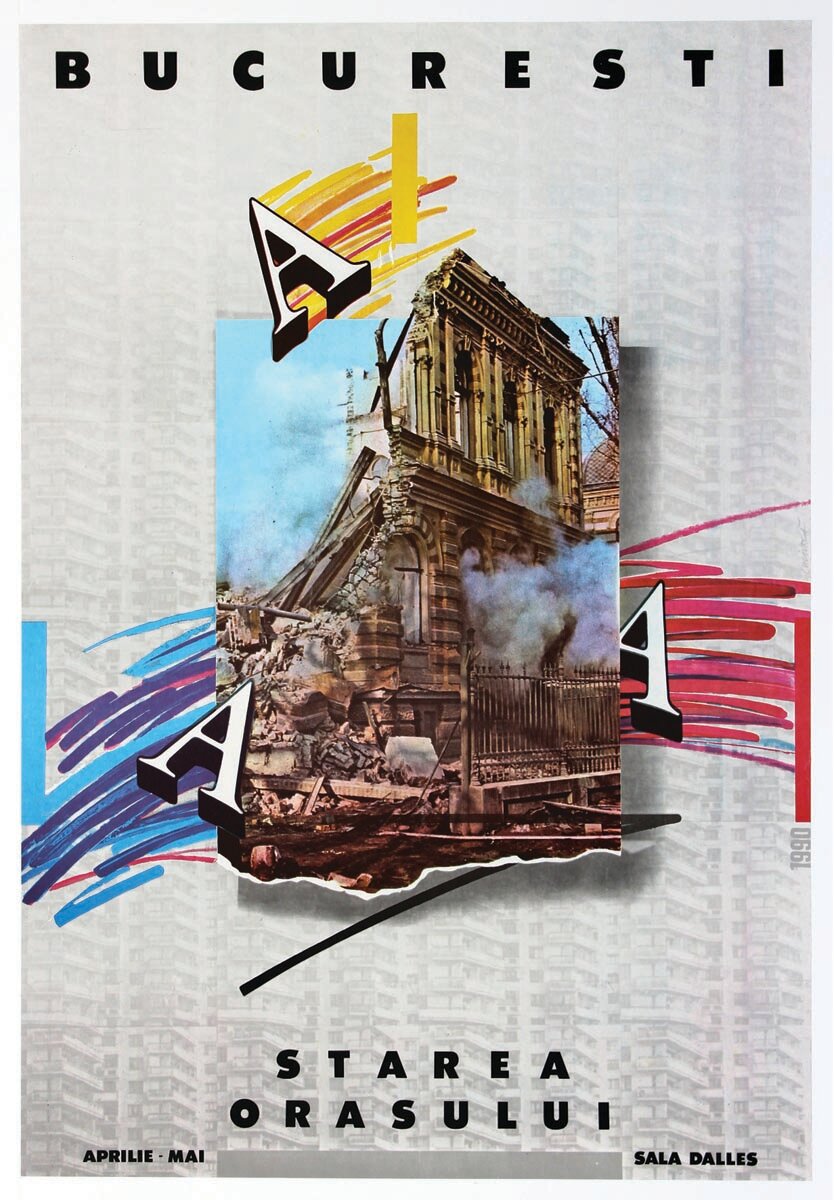
The first major exhibition dedicated to architecture and urbanism, free of ideological barriers, Bucharest, the state of the city (opened on May 4, 1990, at Dalles Hall), was the trigger for a whole cultural-professional policy, in which exhibitions were to represent a major axis.
The exhibition at The Dalles brought together a series of conferences to which a strong team of architects and philosophers from UP 6 La Villette, Paris, contributed. They included, among others, Professors Jean Laberthonnière, Jean-Pierre Le Dantec and Jean-Paul Dollé, who were first invited to visit us in January 1990, at the initiative and with the contribution of Matei Beldiman (architect in France). On this occasion, we inaugurated a first dialog with the guild, but also with the wider public. If I am not mistaken, meetings took place every afternoon in the exhibition hall for two weeks. This type of communication was to be continued in various forms. Thus, in the winter of 1991, if you remember, the exhibition of the Victory Square competition was organized , right on the site, in a large tent that the Ministry of Defense had provided. The Department of Urban Planning of the Institute of Architecture "Ion Mincu", through Professor Rodica Eftenie, organized in that framework a survey on the appropriateness of the investment and the quality of the projects, to which about. 3.000 people.
Returning to Bucharest, the state of the city, according to Mihai Oroveanu, director of the Exhibitions Office and the Dalles Hall, there were over 30,000 visitors, which was unprecedented for a Romanian art or architecture exhibition. Plans, photographs and models were used to present the disaster wreaked on the capital by the construction of the Civic Center, contrasting it with the evolution of Bucharest from the Boroczyn plan (1846-1852) until 1977, the year of the earthquake, when studies for the new center began. Parts of this exhibition were to be presented by the Union of Architects, with the support of the Ministry of Spatial Planning and in collaboration with the Archives d'Architecture Moderne in Brussels and, together with La Caisse des Monuments Historiques, in Paris. The realization of these events was made possible through the unstinting work of a large number of architects of all ages, predominantly young architects of that time - 1990. Many of them had taken photographs in the areas being demolished, risking their freedom. From this first successful attempt was selected, in time, the team which, after the elections in October 1990 - after which I was elected President of the UAR - was to carry the burden of organizing the countless events. Some of them were to become members of the Union Council. I am sorry that I cannot remember them all, but some of their names can be found in the publications that accompanied these events organized at home and abroad. However, I would like to highlight a few names from this team: Dana Harhoiu, Raluca Vlădescu, Stefania Curea, Constantin Enache, Constantin Hariton, Luminița and Florin Machedon, Anca Brătuleanu, Ana Maria Zahariade, Nicolae Lascu, Marius Turcu, Matei Fotiade, Duți Smighelschi, Barbu Vlad, Luminița Panciu, Doina Butică, Moise Mathe, Andreea Orezeanu, Nic Barbu and many others.
I do not know if you still remember the atmosphere of extraordinary enthusiasm around the Union of Architects, during the period of these events, born in the circumstances of that first great exhibition, and I think I am not mistaken if I say that it lasted for the whole nine years. It was a very special time, a time of discovering our sense of freedom and opening ourselves to the world. Groups of students had made their free time available to the UAR to carry out the program we had imposed on ourselves. Andrei and Gheorghe Mulțescu, Cristina Mareș (Alexe), Cristina Woinaroschi, Ileana Rădulescu, Alina Popa, Beatrice Jöger, Cosmin Chirvase, Dan Popovici, Ionuț Beșteliu and many others were practically permanently by our side.
Once the team was in place, after a short period of time necessary to fine-tune the steps - the newcomers were inexperienced in the field of leadership, much less in a liberal society such as the one we had just entered - a program was proposed and voted on, which would develop and evolve as time went by. In the end, three main directions, three goals were set, to be validated at a first meeting of the new UAR Council and then, every two years, at national conferences:
The legislative program;
the architectural and urban planning competitions program;
the cultural-professional program.
What we wished to achieve by carrying out these programs was to bring architecture and urbanism into line with European values. The invitation to Romania of such leading personalities as the architects Șerban Cantacuzino, Kenneth Frampton, Daniel Libeskind, Imre Makovetz, Vassilis Zgoutas, Jean-Marie Fauconnier, Jean Laberthonnière, Jean-Pierre Le Dantec, etc., was part of this.
1. The legislative program included:
a. the law on the practice of the profession of architect which was to set up the Order of Architects (about 7 versions were drafted over the nine years);
b. the architectural stamp law (about 4 variants);
c. the law on architectural and urban planning competitions;
d. statute of the profession;
e. code of ethics;
f. list of minimum fees.
We were also involved in the drafting of the following laws in collaboration with the Ministry of Culture, headed by Ion Caramitru, with whom we always found support, as was the case during the ministry of Andrei Pleșu:
g. copyright law (together with the National Alliance of Creators' Unions);
h. law on historical monuments;
i. law on quality in construction (together with MLPAT).
For the law on the practice of the profession of architect, it must be said that the text drafted by the team of the UIA's Working Group on the Practice of the Profession , led by the American architect James Schiller, was of remarkable help. This text was the basis for the emergence of all the order/chamber organizations in the former communist countries. We were the first to achieve this, the second country was Slovakia, two years after us.
The number of our architects involved in the development and drafting of these laws is large and I apologize again that I cannot name them all. I will mention those who have been more present around the Union office and those who have been involved for a longer time (not to say that all those not mentioned here are less deserving): Milița Sion and Constantin Hariton, who formed the first team that dealt with legislation, Ștefan Lungu, Mariana Celac, Mario Smighelschi, Sorin Pentilescu, Ioan Andreescu, Călin Irimescu, Mircea Voinescu, Marius Turcu, Florin Alexandrescu, Dorin Ștefan, Bogdan Tofan, Matei Lichiardopol, Costandin Rulea and, as I said, many others.
We have been consistently helped along the way by excellent legal professionals: lawyer Alina Balaciu, lawyer Dinu Cunescu; Mr. Eugen Vasiliu, Secretary of State in the Ministry of Culture, then senator, Mrs. Delia Mucica, director in the same ministry; Professor Valeriu Stoica, then Minister of Justice, Professor Flavius Baias, Secretary of State in the same ministry.
2. Program on architectural and urban planning competitions
Convinced that the most democratic and efficient way to obtain quality projects in the field of architecture and urbanism is through competitions, UAR has constantly campaigned together with MLPAT for the promotion of a law on the organization of competitions. Unfortunately, there has been and continues to be opposition in Parliament which has meant that until today we do not have this extremely important law. Without such a law, architectural legislation is lame. But the lack of legislation has not prevented us from organizing important competitions.
I mention the competitions that have been initiated and carried out over the nine years: Victoriei Square (Bucharest, 1990-1991), Bucharest 2000 (1995-1996), Revolution Square (1997), CEC, corporate image (1999). In addition, the UAR was involved, under the aegis of the UIA, in the international competition Architecture for the Eradication of Poverty (1998), judged and presented by the UIA Office in Bucharest, in the halls of the National Theater.
The Union was also present in the 1990s in the organization of smaller competitions, Carol Park, Urban Revitalization of Sf. Gheorghe, Suceava Cathedral, Martyrs' Church in Timișoara, etc.
I would like to mention a type of international competition in which the UAR was involved alongside the Council of Europe, the Ministry of Culture, MLPAT, coordinated by arch. Claudia Constantinescu. I found the target of this competition and the way of organizing it particularly intelligent. It concerned contemporary buildings in rural areas and small towns in Eastern European countries. The authors were asked to propose projects that respect the natural and built environment. The special feature of the competition was that two-thirds of the prize was awarded to the architects and one-third to the client. There were two editions in 1998 and 1999. I think they should be organized again. This type of competition gets the beneficiary interested in achieving architectural quality, which is what we should want!
3. Cultural-professional program
We have organized exhibitions, symposia, round tables, published catalogues and books, and provoked debates. The events organized by the UAR were also addressed to the general public, to politicians and administrators, to people of culture and, last but not least, to architects themselves. What we set out to do with this program was to highlight the history of architecture and urbanism, the problems of contemporary architecture and urbanism, forgotten fields, left aside until 1989 in Romania, to Romanian society (unfortunately ignorant in this field, from the vlaude to the opinca).
Let me pause for a moment to consider the significance of the round tables. On several occasions those debates between architects and invited guests from the Union, specialists in related fields, have, over time (for things have remained in the pipeline), led to long-awaited quality gestures by the city's leaders. Such was the insertion in Bucharest of several public monuments of remarkable value, thanks to a generation of exceptional sculptors, at that time in full creative vigor. These were the Bust of George Călinescu, by Constantin Popovici (located in a square in the Dorobanți area), the Statue of Cuza, by Paul Vasilescu (on Patriarchiei Hill), the Monument to Bălcescu, by Mircea Spătaru (on Carol I Boulevard), Traian, by Vasile Gorduz (at the National Museum of Romanian History). The necessity of the location of these monuments was declared and supported for the first time at the round table "Architecture and Fine Arts", organized by UAR on November 4, 1992. The participants were, among others: the art historian Mihai Oroveanu, then director of the Exhibitions Office; the visual artists François Pamfil, Horia Bernea; the architects Pompiliu Macovei, Traian Stănescu, Anghel Marcu, Constantin Hariton, chief architect of the Capital and others.
Exhibition policy
In the exhibitions that UAR has organized, plans, sections, facades, perspectives, photographs, etc. were obtained, most of the time, as a result of passionate archival research undertaken by the architects involved in this activity, with remarkable energy and enthusiasm and without being materially rewarded. The research took the form of catalogues and explanatory texts. We have grouped these events into three categories:
- Exhibitions on the evolution of architecture and urbanism in Romania;
- Contemporary architecture exhibitions;
- Exhibitions abroad.
Exhibitions on the evolution of architecture and urbanism in Romania
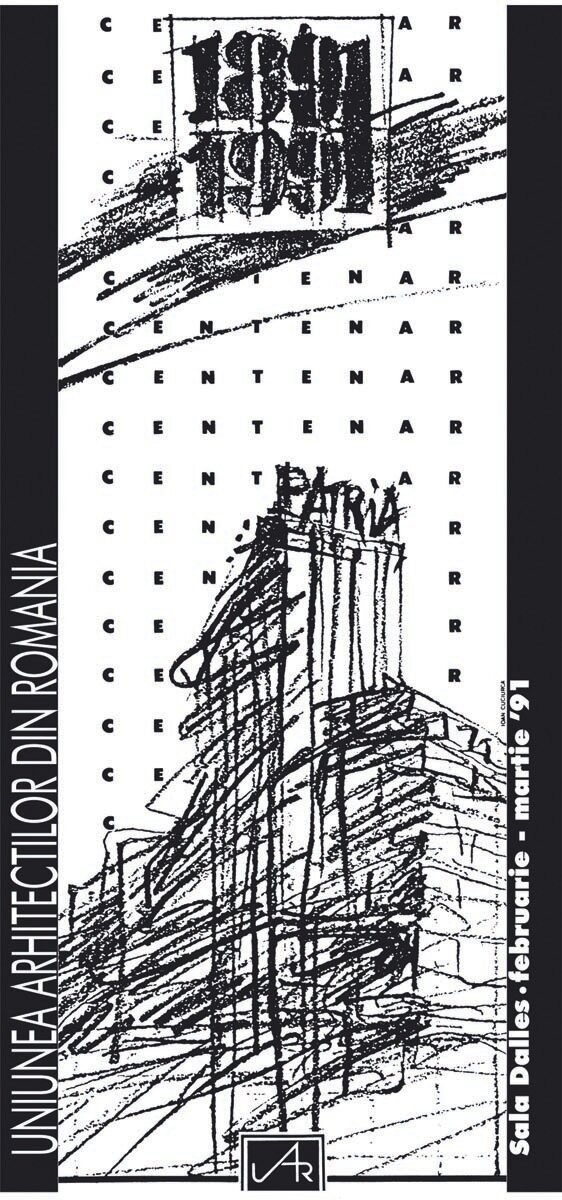
After the exhibition Bucharest, the state of the city, to celebrate the centenary of the founding of the SAR, in February 1991 we organized the exhibition Romanian Architecture in the European Context, already mentioned, the one opened by Andrei Pleșu at Sala Dalles, which presented the evolution of architecture and urbanism from the mid-19th century to the present day. The exhibition was divided chronologically into three sections: the first, dedicated to the period from 1860 to the First World War; the second, the inter-war period; and the third, the period after the Second World War until 1989. The third section was subdivided into two chapters, architecture and urbanism in Romania and the architecture of the diaspora (the latter was an absolute premiere). The aim of the exhibition was to emphasize, where appropriate, the consonance of what had been done in our country with the best in Europe.
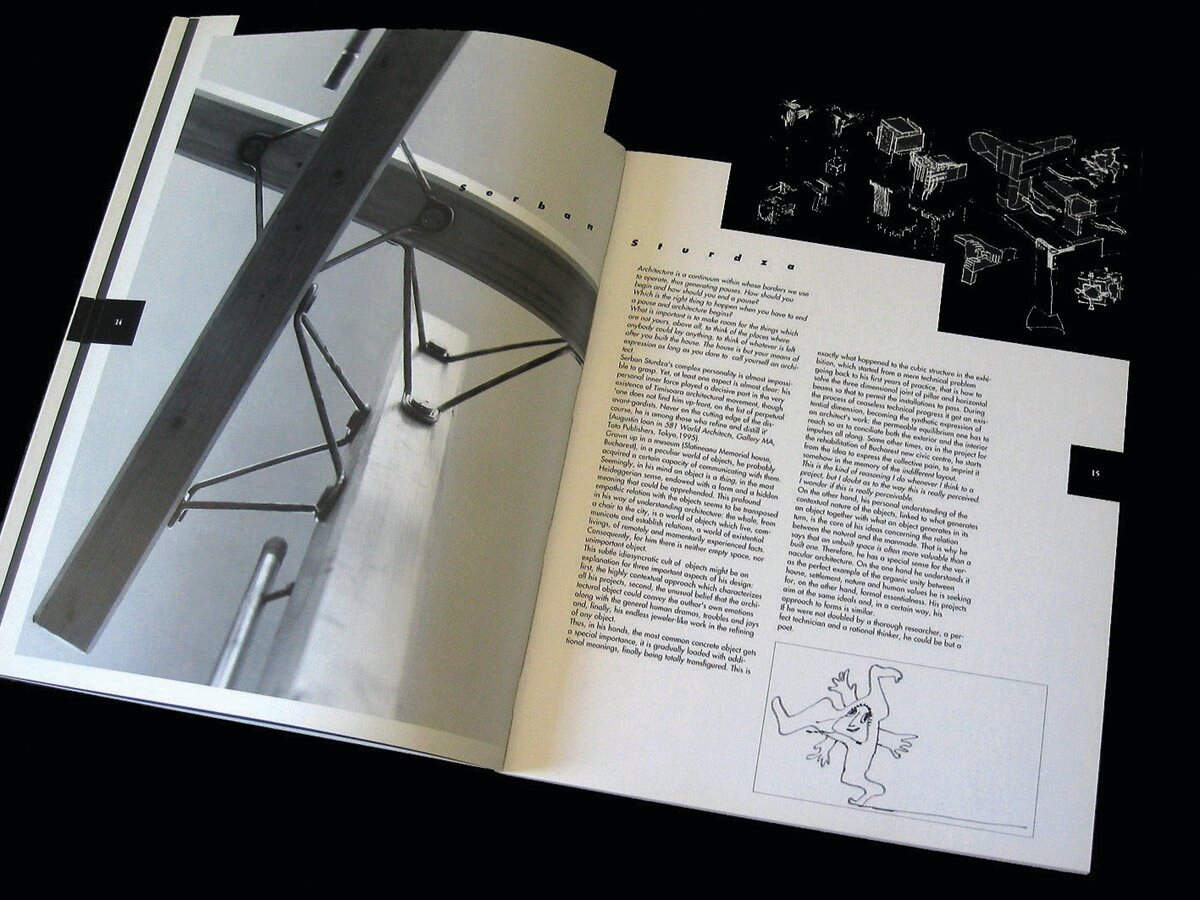
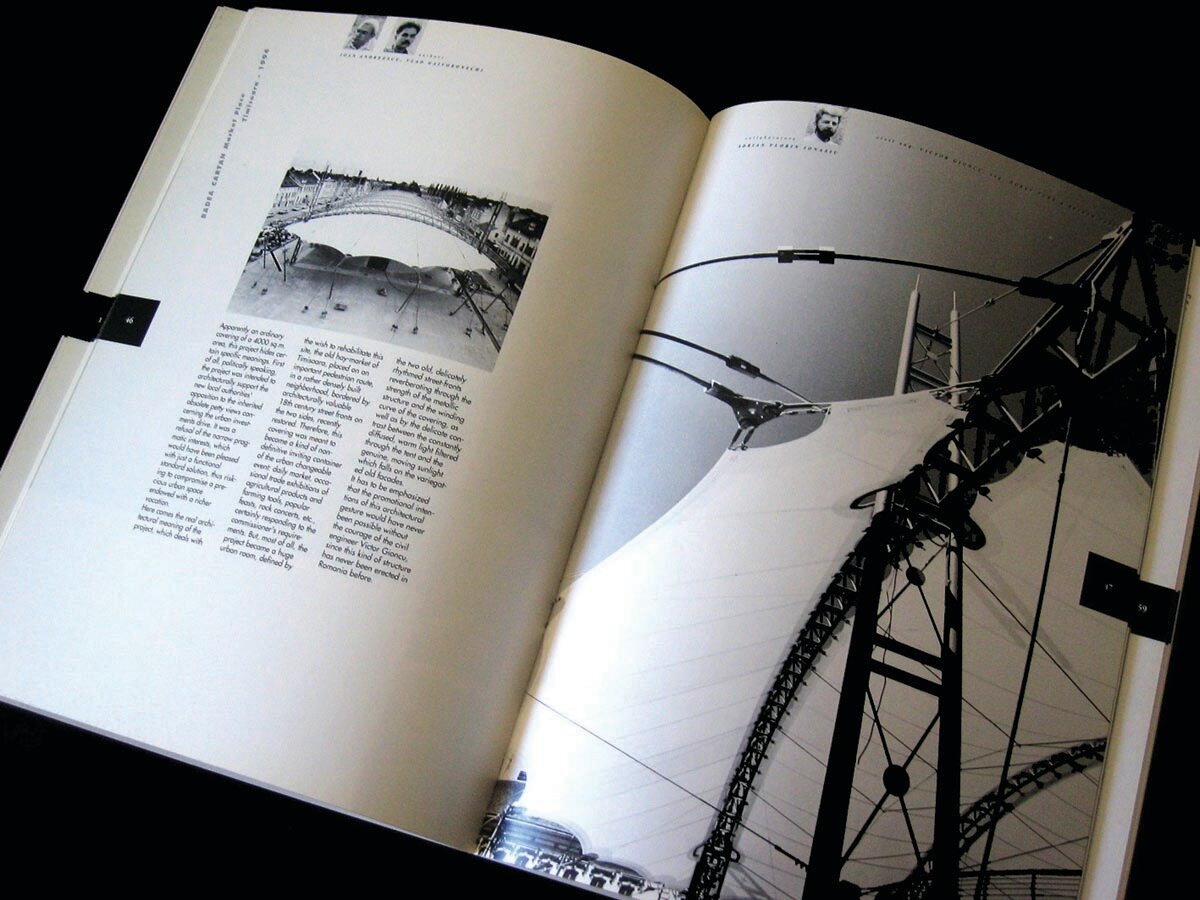
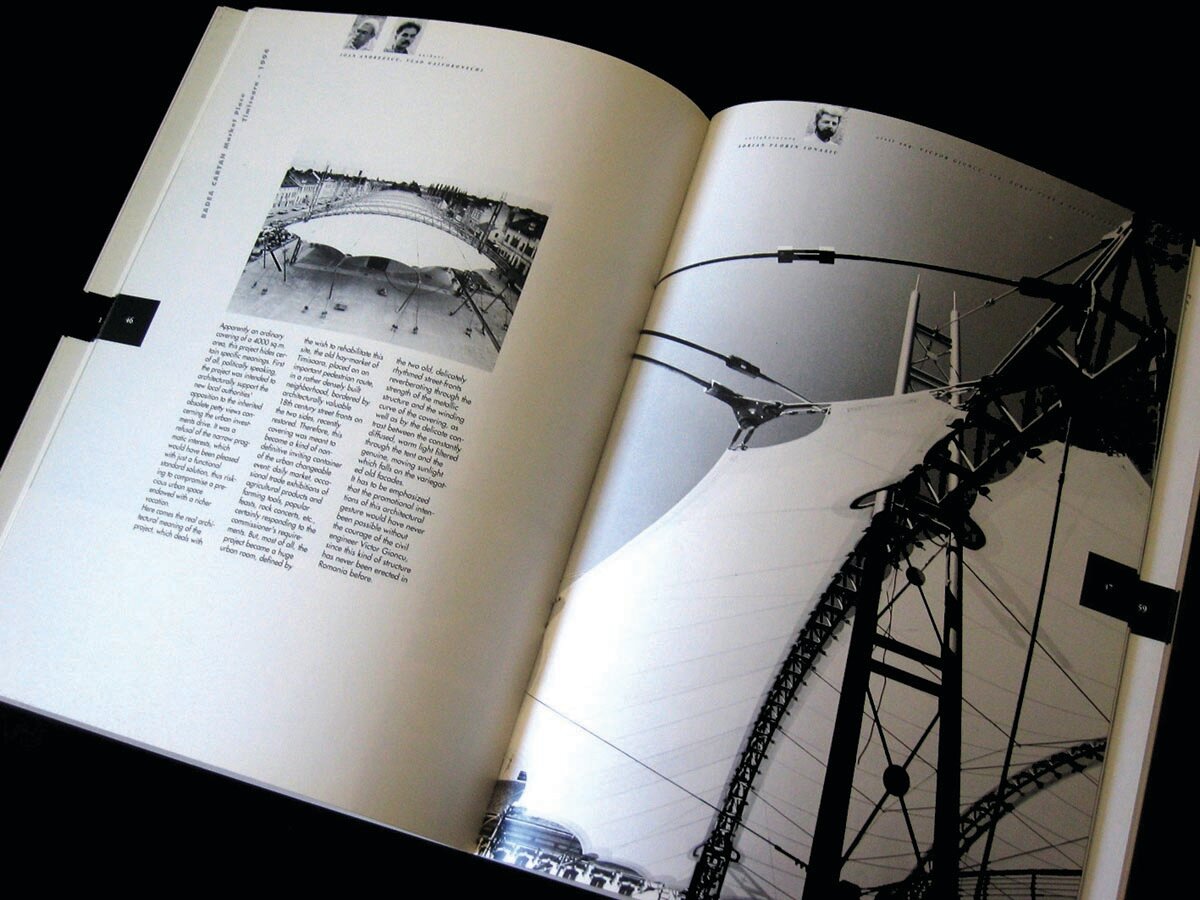
Exhibition catalog Forgotten balance 1991 - Timișoara - 1996, Romanian Pavilion, Venice Architecture Biennale, Bucharest: Editura Simetria, UAR, 1996
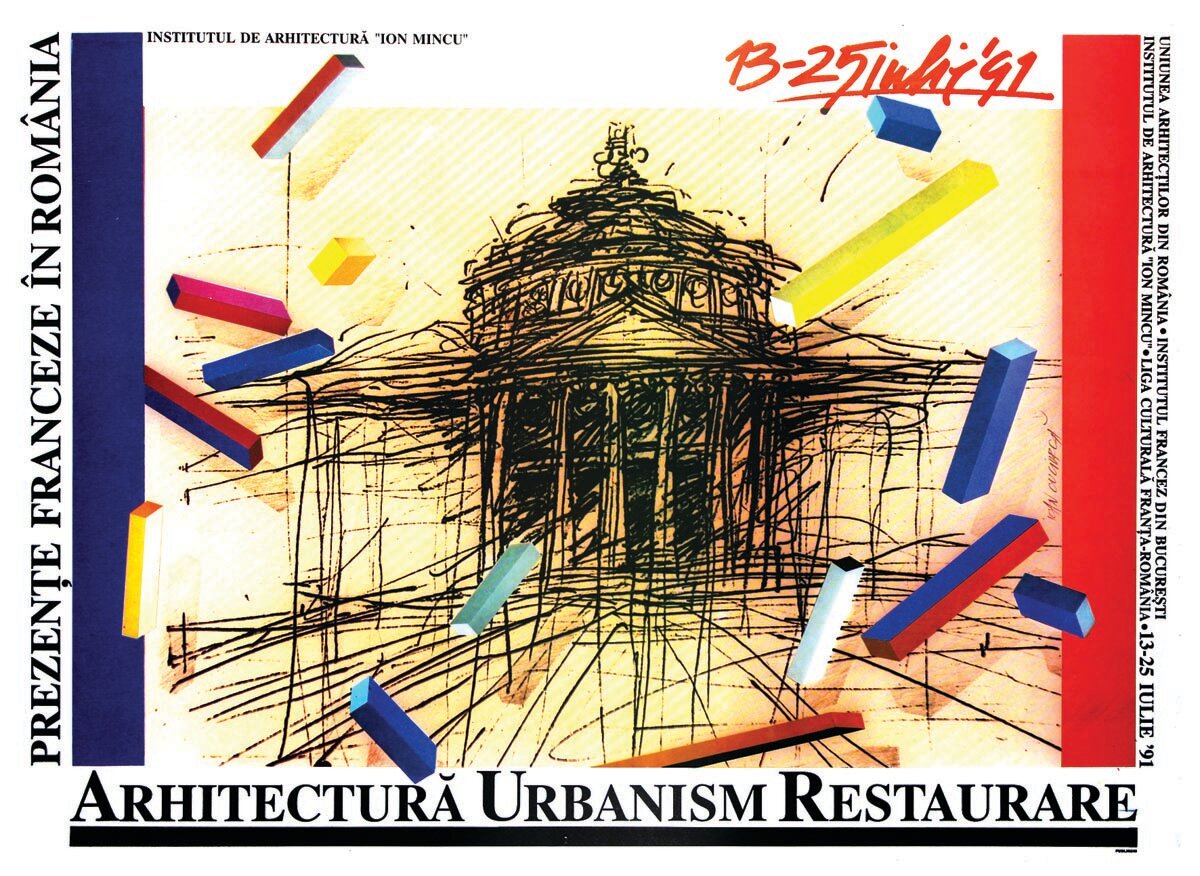
At that time, our plan for the future was to develop each of the sections of the exhibition into stand-alone presentations. A first realization in this sense, in July 1991, was the exhibition Arhitectură, restaurare, urbanism. French Presences in Romania, organized by the UAR in collaboration with the Institute of Architecture "Ion Mincu", the French Institute and the Cultural-Scientific League Romania-France.
(Coordinator, Alexandru Beldiman; author of the study in the catalog and scientific advisor of the exhibition, Prof. univ. Nicolae Lascu; organizers: Moise Mathe, Andreea Orezeanu, Doina Butică, Răzvan Hristescu, Florin Machedon; catalogue: Matei Fotiade; poster: Ioan Cuciurcă)
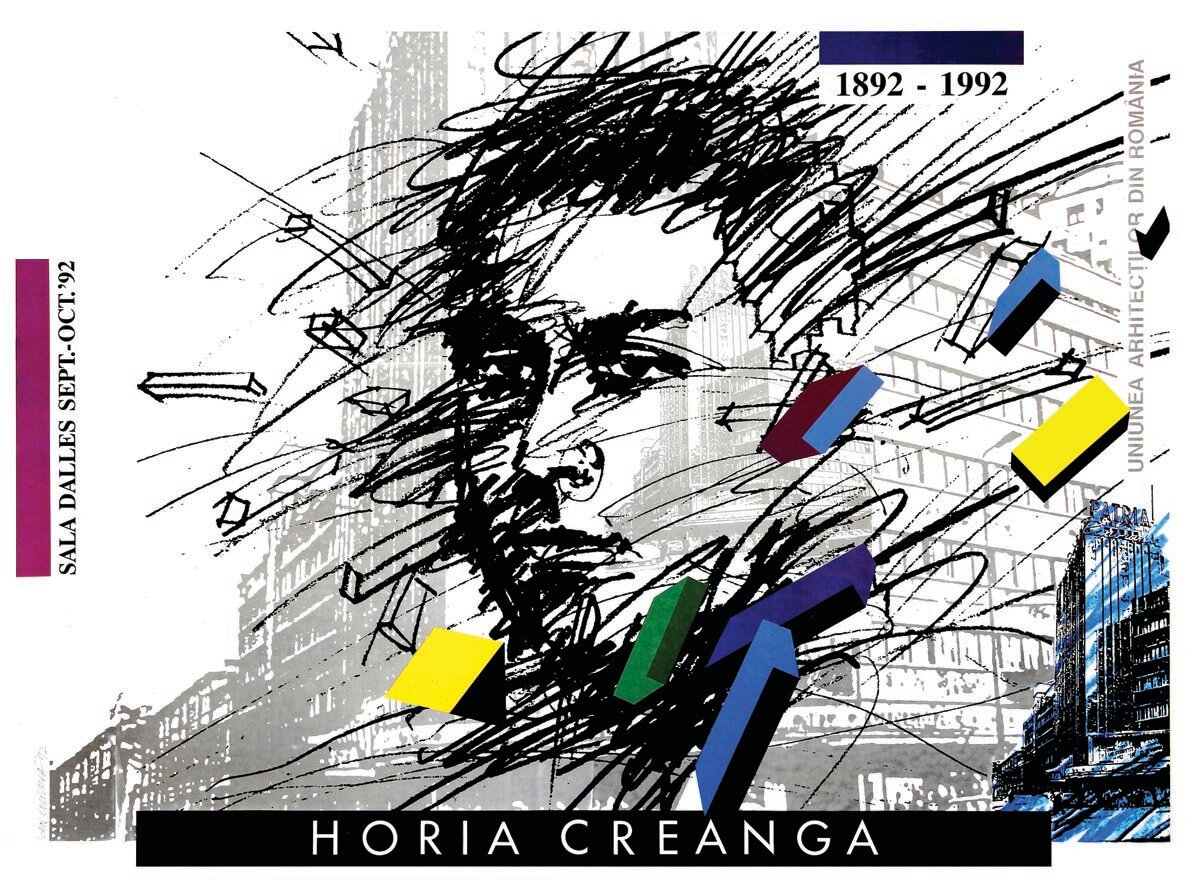
The 1992 exhibition, celebrating the centenary of the birth of Horia Creangă, was the first monographic exhibition in our country dedicated to a major personality of Romanian architecture and culture. The curator of the exhibition was Professor Nicolae Lascu, author of the catalog together with Professor Ana Maria Zahariade and art historian Anca Iliescu (Bocăneț). The exhibition was itinerated to Paris, at the Faculty of Architecture UP 10 Belville, where it was opened by the eminent art critic Dan Hăulică, honorary president of the International Society of Art Critics; it was then itinerated to Rome, at the Accademia di Romania.
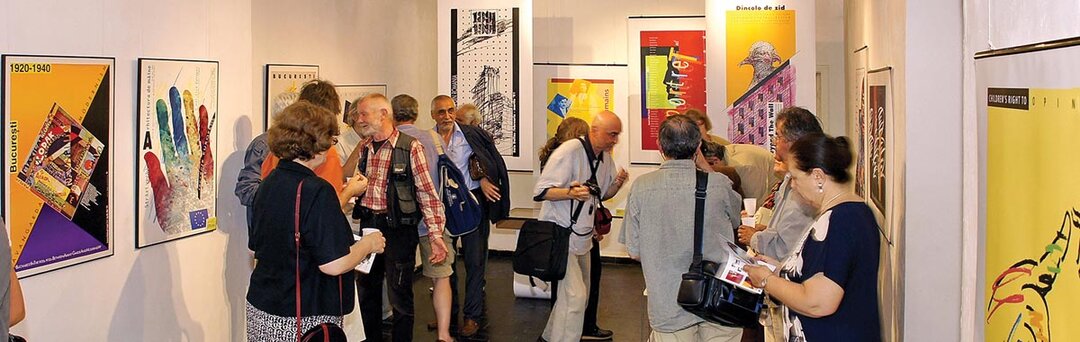
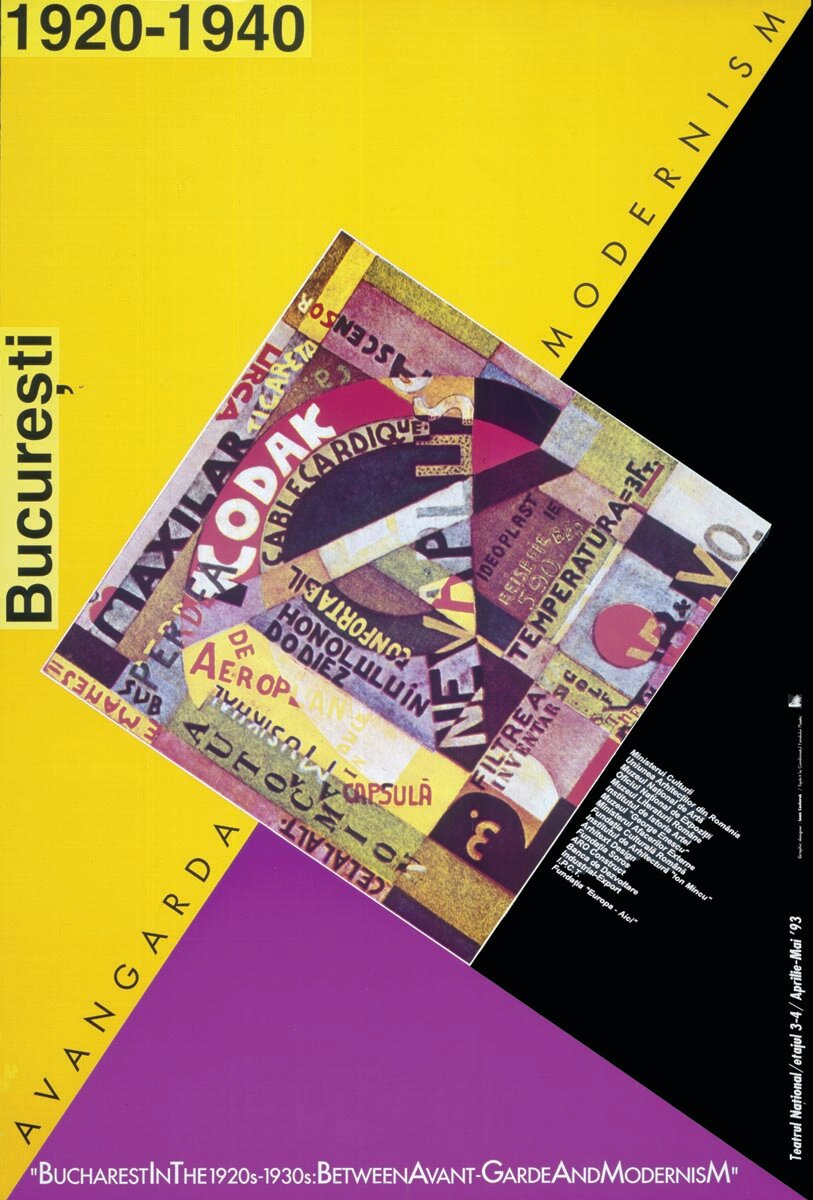
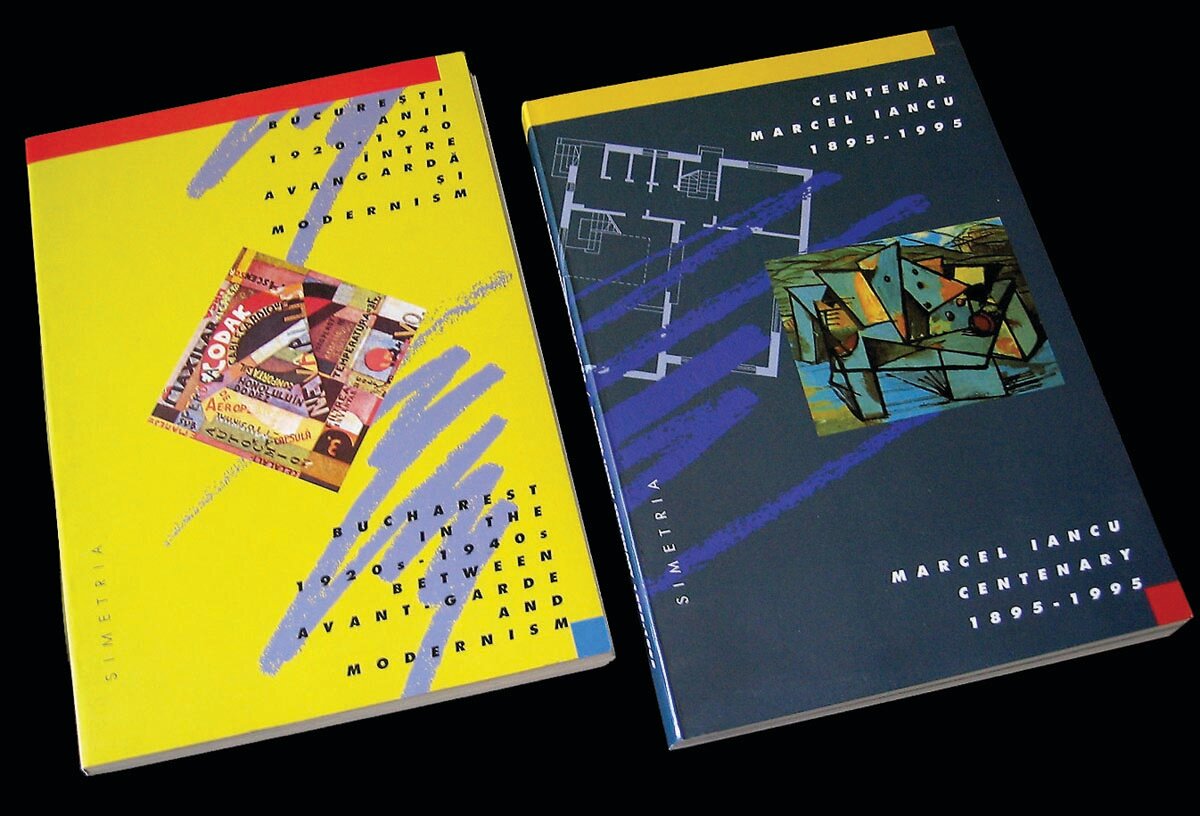
The Horia Creangă event was followed a year later (in 1993) by a major exhibition entitled Bucharest, 1920-1940: between avant-garde and modernism. Opened in the halls on floors 3-4 of the National Theatre, with the important support of the Ministry of Culture, the exhibition captured one of the most important moments of the updating of Romanian culture, that of synchronization with Western Europe. Not only architecture and urbanism were presented, but these fields were put in the more general context of the arts: plastic and decorative arts, interior architecture, design, music, literature, literature, theater, cinema. The curators of the exhibition were Magda Cârneci, Alexandru Beldiman, Mihai Oroveanu (the first two were also the editors of the catalog). Horia Reit and Codrin Trițescu, architects, were responsible for the exhibition scenography. Poster and graphic presentation of the catalog - graphic designer Ioan Cuciurcă.
The exhibition and the catalog benefited from the contribution of leading specialists in the above-mentioned fields, their number exceeding 60 people. Their names can be found in the catalog.
On 5 June 1994, the exhibition Bucharest - the historic city, the destroyed city, the city in the making, organized by the UAR with the support of the National Art Museum of Romania (MNAR), opened at the National Art Museum of Romania. In addition to a historical analysis of Bucharest's architecture and urban planning, the exhibition presented plans, photographs and texts, as well as drawer projects for the Civic Center complex.
Two years later, in 1996, we celebrated (a year late) the centenary of Marcel Iancu's birth by organizing with MNAR a remarkable exhibition of paintings, graphics and architecture.
(The organizers of the exhibition and authors of the catalogue were: for architecture - Anca Iliescu Bocăneț, Nicolae Lascu, Ana Maria Zahariade; for fine arts, Dana Herbay, Mariana Vida, Rodica Matei; Geo Șerban (author of the essay "Place and Stature"); we also owe Ioan Cuciurcă the design for the architecture exhibition and the poster for the event.
Contemporary architecture exhibitions
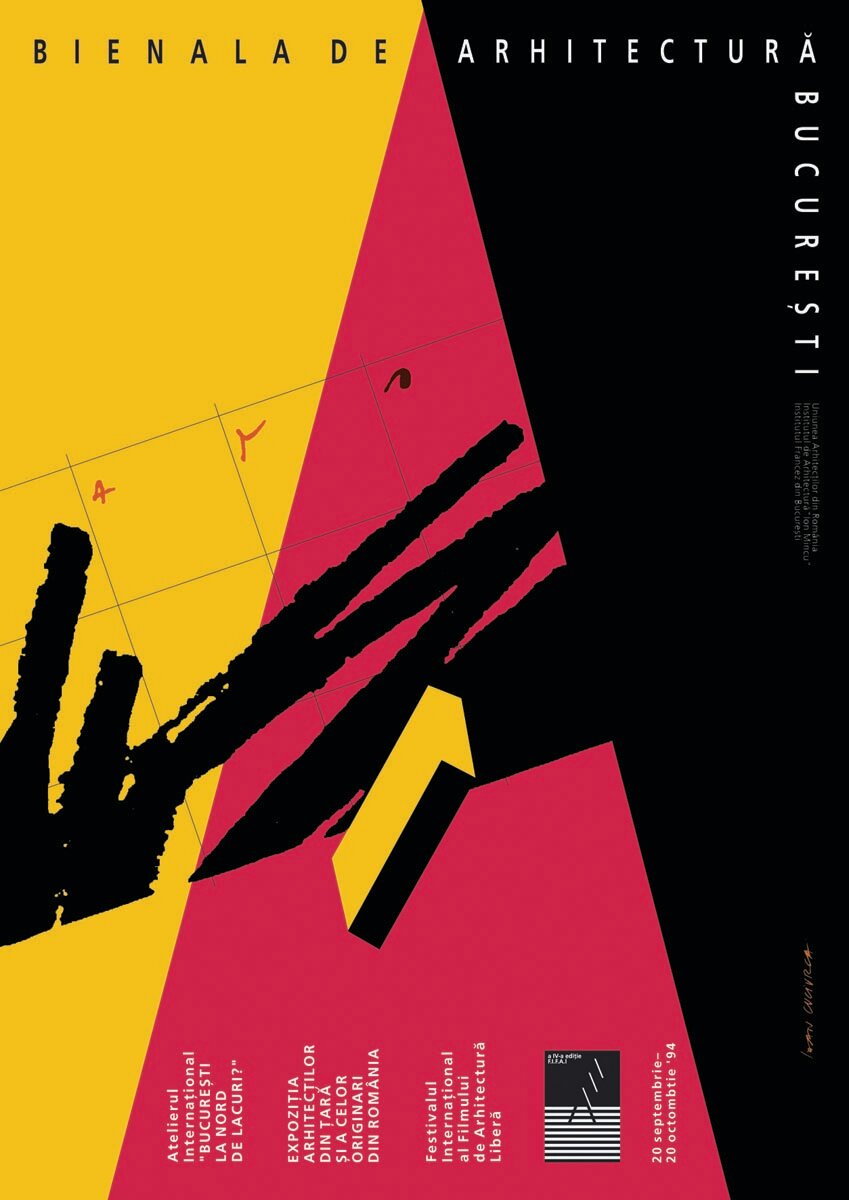
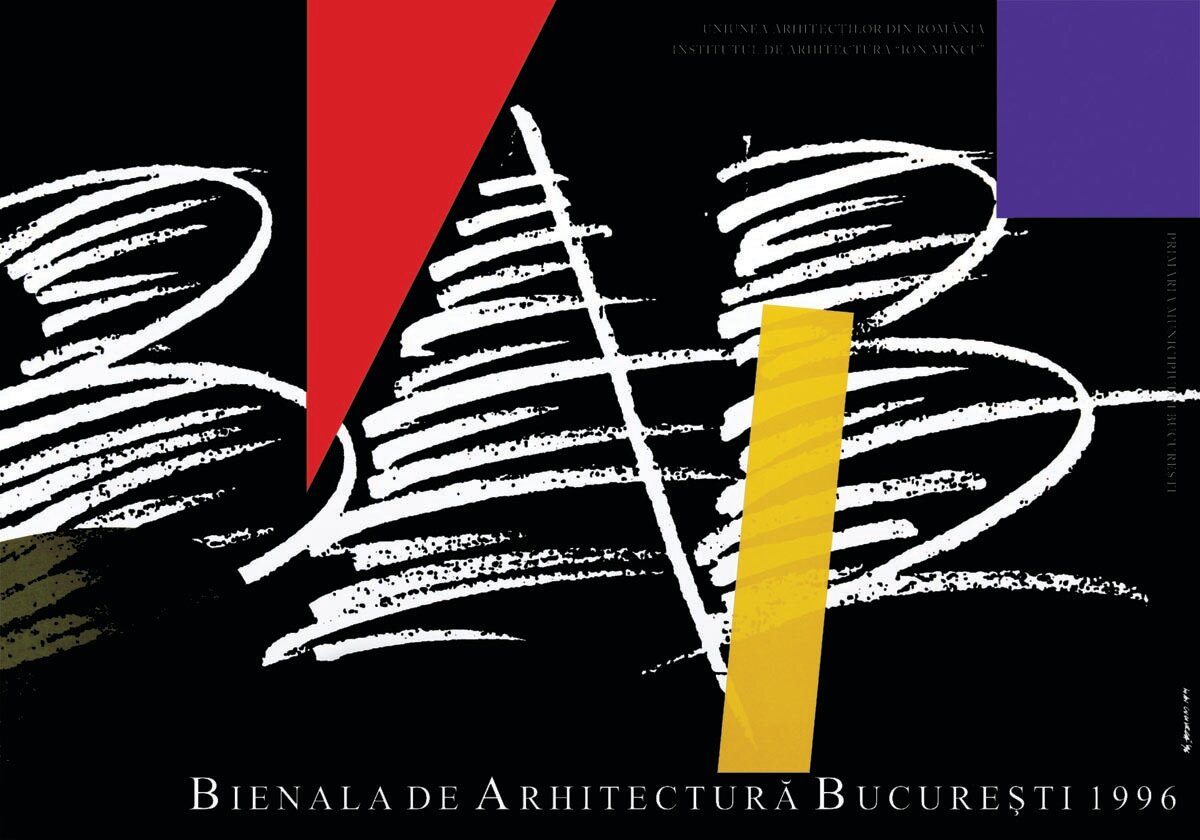
In UAR's policy, this direction was concretized in the organization of the Bucharest Architecture Biennale/ BAB (recently the acronym changed to BNA/ Bienala Națională de Arhitectură). Three editions took place during the period we are presenting: the inaugural edition in 1994, 1996 and 1998. Works by Romanian architects from the country and abroad were presented in five categories: architecture, urban planning, restoration, interior architecture and design, and publications. Round tables and debates were organized during the biennials. The biennale has become a landmark in the life of the profession.
Exhibitions organized after competitions
- The first, in January 1991, was the Telecommunications Center on Calea Victoriei. The competition concerned the new headquarters of the Palace of Telephones, on the site of the former National Theater on Calea Victoriei, where the Novotel Hotel is today;
- Victoriei Square (competition and exhibition mentioned above);
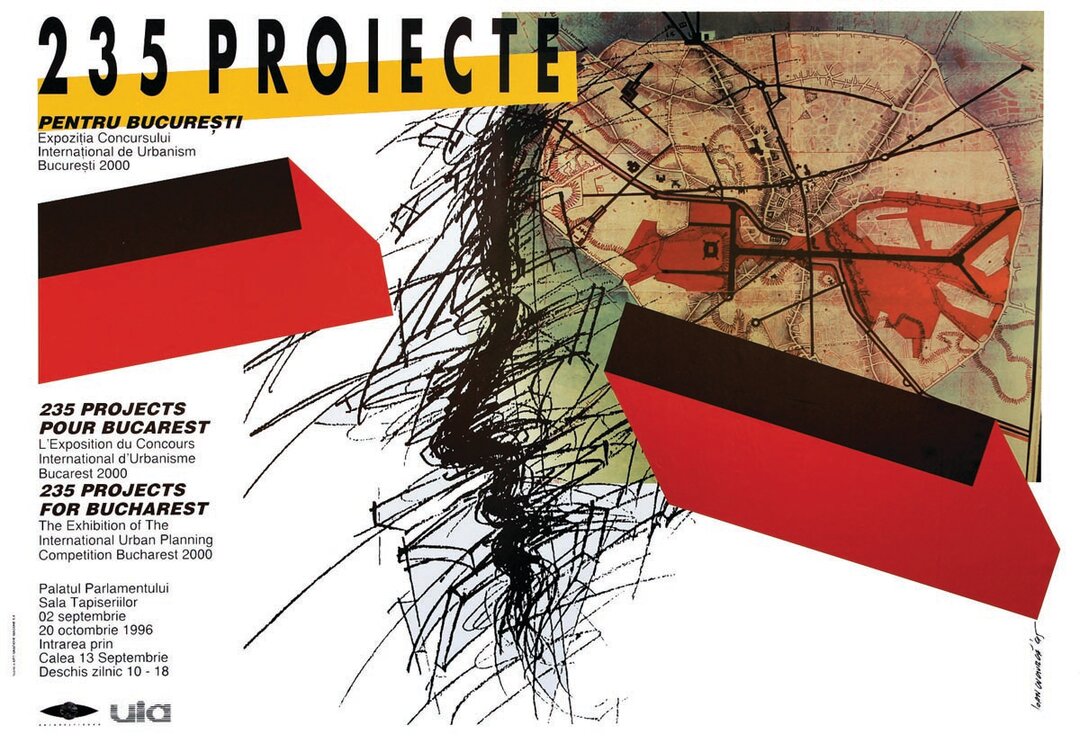
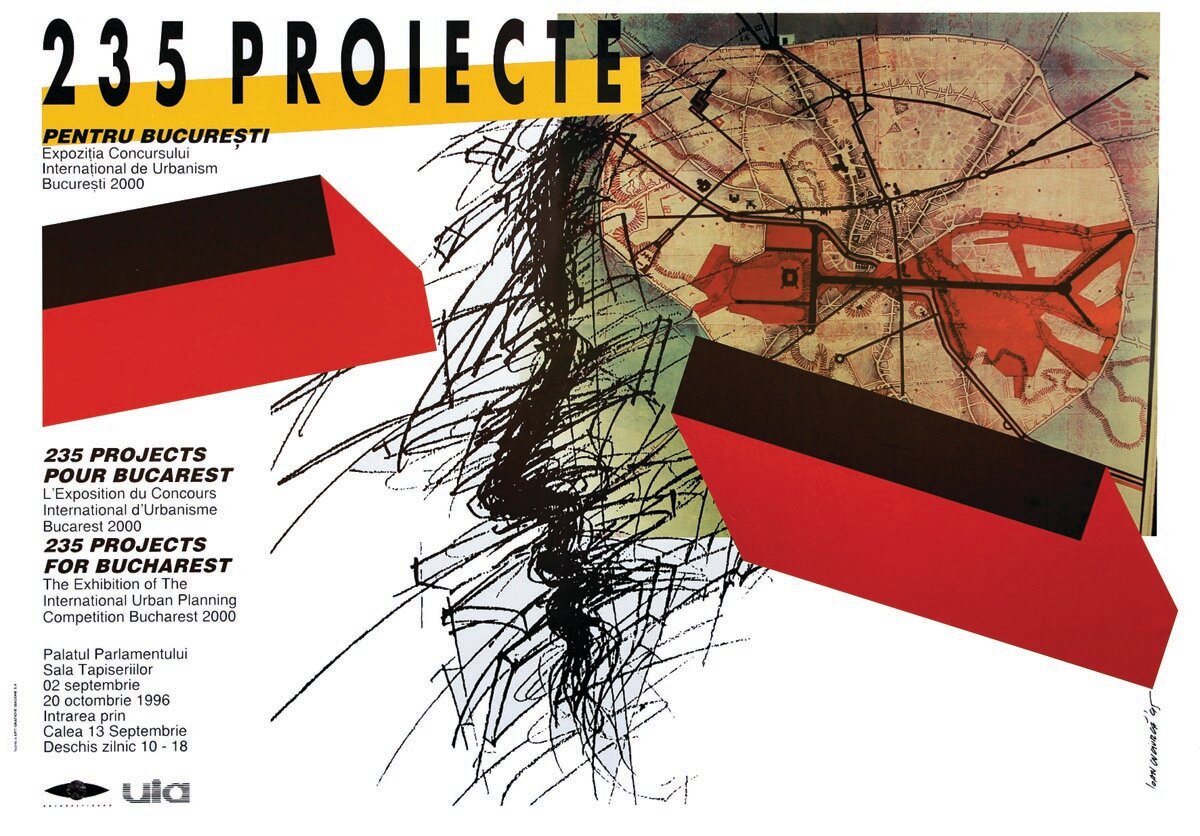
- Bucharest 2000 was the most notorious exhibition. Produced in 1996 at the Casa Poporului, for the Bucharest 2000 international competition (1995-1996), it showcased the 235 projects that entered the jury.
(Exhibition scenography: Marius Marcu-Lapadat. The editors of the catalog were Ileana Tureanu, Rodica Ianăși, Marius Marcu-Lapadat, Cristina Iliaș)
- Revolution Square, 1997. Very interesting competition, 50 projects, with exhibition in the halls of the University of Architecture and Urbanism "Ion Mincu". The results of the competition were published in the magazine "Arhitectura", no. 1-2/ 1998.
- A debate took place on the occasion of the exhibition CEC, corporate image, 1999. Although less well attended, this competition was of remarkable quality. The exhibition, also remarkable, was organized by professors Ștefan Lungu and Marius Marcu-Lapadat.
In addition to the exhibitions listed above, there were also exhibitions organized by the national branches of the UAR - Iași, Cluj, Timișoara, Bacău, Suceava, etc. I am sorry that I do not remember them all and I ask my colleagues who organized them to forgive me! These exhibitions have helped to enliven cultural life in the places where they were held and I would like to believe that they have contributed and will continue to contribute to the development of an interest in the problems raised by architecture and urbanism in our society.
Throughout this period, there have been numerous meetings of the UAR team in Bucharest with colleagues from the branches in the country. Even if we were sometimes in divergence and the tone was sometimes peremptory on both sides, we found a way of working together in the desire to achieve together the program outlined above. The proof is that most of the proposed goals have been achieved. And for what was not accomplished by 1999, the team led by Șerban Sturdza took over and completed, among other things, the law that created the Order of Architects. For the Architectural Stamp Law, started in 1994, things came to an end under the presidency of Professor Peter Derer.
International exhibitions
I mention them separately because, due to insurance and transportation problems, they have a special format, even when deducted from exhibitions made in the country.
Among them, one category is those with a historical theme, such as:
- Patrimoine roumain, histoire et actualité, July 1990, Paris, La Caisse des Monuments Historiques.
(Curators: Alexandru Beldiman, Radu Boruzescu, Mihai Oroveanu. Architects: Dana Harhoiu, Raluca Vlădescu, Constantin Hariton, Florin Machedon, Iulian Pădure and others participated in the realization of the exhibition).
- Bucharest, History and Renaissance/ București, istorie și renaștere, o sută de ani de arhitectură în Capitala României, July 1998, New York. The exhibition presented a selection of the most interesting projects from the Bucharest 2000 competition, together with a section on the history of the city's development. Romanian President Emil Constantinescu attended the opening. The same exhibition also traveled to Brussels, to the Flemish Ministry of Public Works (August 1998).
(Curators: Alexandru Beldiman, Mariana Celac. Exhibition scenography: Marius Marcu-Lapadat)
- Bucharest Modernity, 1997, London, organized at RIBA, prestigious venue. Curator, Mariana Celac. Serban Cantacuzino spoke at the opening, many visitors at the opening and afterwards. A revised version by Luminița Machedon, who was in charge of the Modern Architecture section of the exhibition dedicated to the Avant-garde, was taken to Zurich the same year.
Exhibitions at UIA Congresses
The re-registration of the Union of Romanian Architects within the UIA took place in 1990, in Montreal (where the UIA Congress was held), at the request of colleagues Ileana Tureanu, Sorin Gabrea and others, and with the substantial contribution of Dan Sergiu Hanganu, the eminent internationally recognized architect. Thereafter, at each UIA Congress, UAR presented an exhibition:
- 1993, Chicago. The site of the future Bucharest 2000 competition was exhibited for the first time , with a presentation of this site in the context of the urban structure of Bucharest;
- 1996, Barcelona;
- 1999, Beijing: Architectural education in Romania/ school projects.
Venice International Architecture Biennale
- 1991. The exhibition was entitled Architecture at the Crossroads. Curator: Stefan Lungu. Exhibition architect: Marius Marcu-Lapadat. In 1993, at the request of colleagues in Budapest, the exhibition was presented in the Hungarian capital;
- 1996, Forgotten balance 1991 - Timișoara - 1996, a beautiful exhibition presenting the Timișoara School. Back from Venice, the exhibition was opened in Timișoara.
(Curator: Alexandru Beldiman. Deputy curator and catalog author: Ana Maria Zahariade. Exhibition design: Șerban Sturdza)
Publications
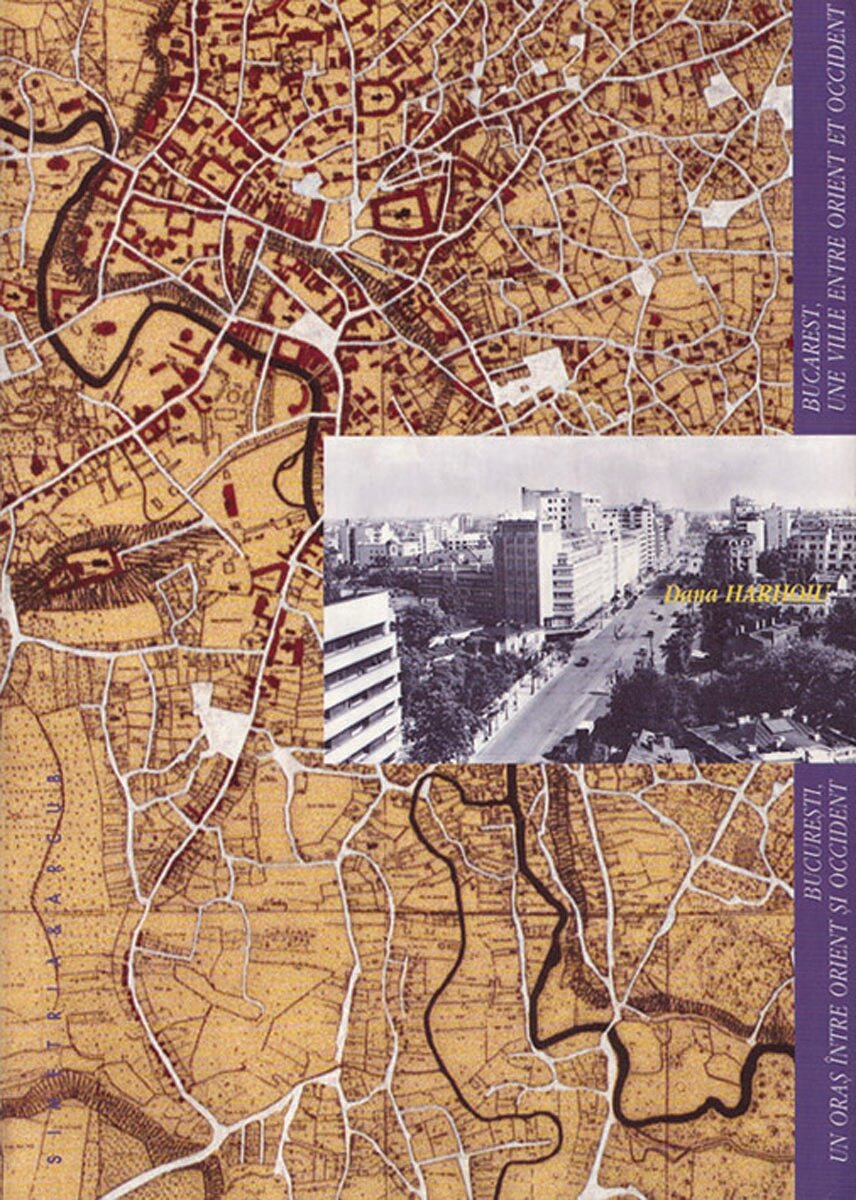
I would like to point out that, in addition to the exhibition catalogues, recognized today as instruments of study in the field1, a series of volumes was published by Simetria Publishing House during the period we are talking about, most of them resulting from research carried out by fellow architects. I remember: Dana Harhoiu, București, un oraș entre Orient și Occident (in bilingual editions: Romanian-French, 1997; Romanian-English, 2001); Anca Brătuleanu, Curți domnești și boierești în România (Romanian-English edition, 1997); Teodor Octavian Gheorghiu, Cetățile orașelor. Defense in Central and Eastern Europe in the Middle Ages (Romanian-English edition, 2000).
International symposia
We felt that the effectiveness of the exhibitions could be enhanced by twinning them with international symposia, occasions for the exchange of ideas, which we needed and still need.
- The symposium Bucharest, the state of the city, held over three days at the Dalles Hall, was remarkably well attended: in addition to the professors from UP 6 La Villette, Paris, J. Laberthonnière, J.-P. Le Dantec and J.-P. Dollé, already mentioned, Anne Marie Cousin, director in the Ministry of Culture, Wanda Diebold, director in the Ministry of Public Works, from France; from Hungary: Imre Makovecz; from Romania: Anca Brătuleanu, Ana Maria Zahariade and others.
I learned a lot from this memorable meeting about how to organize such an event. What I learned served both our work teams and myself throughout the period that followed.
- In 1993, a symposium on the same theme was organized in conjunction with the exhibition Bucharest, 1920-1940: between avant-garde and modernism. Like the exhibition, the symposium aimed to highlight artistic movements in the fields of architecture, the arts, etc. On this occasion, a series of previously unseen sequences of the phenomenon were presented. Foreign guests: England - Peter Barefoot; Germany - Barbara Schmidt-Kirchberg; France - Serge Fauchereau. From Romania: Ioana Vlasiu, Magda Cârneci, Ana Maria Zahariade, Ruxandra Demetrescu, Andrei Oișteanu, Clemansa Firca, Marica Grigorescu, Ileana Pintilie, Ioan Andreescu, Ion Bogdan Lefter.
- Seminar Beyond the wall, World Trade Center, Bucharest, 1995. Organized by UAR, British Council, Soros Foundation, Romanian Cultural Foundation. Mariana Celac, together with Neil Leach, organized the event, which had a remarkable line-up of foreign speakers, led by Daniel Libeskind, Greg Lynn, Neil Leach, Andrew Benjamin, Ron Kenley; on the Romanian side: Ioan Andreescu, Doina Petrescu, Vlad Petcu, Alexandru Beldiman, etc. Ileana Tureanu gave us more than substantial support, providing simultaneous translation, the conference room, and accommodation for the guests at the World Trade Center.
- In 1996, in parallel with the Marcel Iancu exhibition, an international symposium was held with the participation, among others, of Dadi Ianco, Marcel Iancu's daughter from Tel Aviv; the architect Moshe Zarhy (Tel Aviv), author of the Ianco Museum, friend of the Ianco Museum; Anca Iliescu Bocăneț (Amsterdam); Magda Cârneci; Nicolae Lascu; Ion Pop and others.
And this type of event - exhibition with a catalog combined with a symposium - should be continued.
- The Genius Loci symposium, organized by the UAR together with the art historian Carmen Popescu from France, took place in two meetings: in 1999, at the Muzeul Țăranului, and in 2000, at the University of Architecture and Urbanism "Ion Mincu". The participants were architectural historians from 13 countries: England - Tricia Cousack, Rod Hackney, Jeremy Howard, Patricia A. Morton; Bulgaria - Constantin Boiagiev, Peter Iokimov, Ljubinka Stoilova; France - Vincent Bouvet, Fabienne Chevalier, Daniel Le Couédic, Marie-Laure Crosnier Leconte, Marie-Laure Crosnier, Françoise Hamon, Claude Laroche, Mihai Moldoveanu, Pierre Pinon, Carmen Popescu, Jean-Claude Vigato; Germany - Andreas Gottlieb Hempel; Greece - Vassilis Colonas, Helen Fessas Emmanouil; Italy - Ezio Godoli, Guido Zucconi; Lithuania - Linas Tuleikis; Poland - Tomasz Taczewski; Romania - Vlad Gaivoronschi, Mihaela Gavriș, Nicolae Lascu, Ileana Pintilie, Dorin Ștefan, Gabriela Tabacu, Ana Maria Zahariade) Serbia - Igor Marić, Dijana Milašinović Marić; Slovakia - Martin Drahovski; Sweden - Anders Aman; USA - Isabelle Gournay; Turkey - Afife Batur.
Although this chapter - cultural-professional program - would have much more to be written, I will stop here, but not before mentioning the weekly activity led with skill and grace by Françoise Pamfil, at the Architect Constantin Joja House, for 4 years (1990-1994). At the suggestion of the architects Ioan Goga and Anghel Marcu, regulars of the meetings at 4 Ion Slătineanu Street, the family of architect Joja, the architects Ioana and Radu Mănăilă put at the Union's disposal Constantin Joja's apartment together with a series of projects and models that furnished and decorated the space. The guests at these afternoons were people of culture, artists invited to present a theme in their field. Among many others, I mention Horia Bernea, Ștefan Câlția, Ștefan Niculescu, Andrei Pleșu. I remember the extremely interesting dialog that developed between the composer Ștefan Niculescu and the architect professor Alexandru Sandu, on themes of compositional-urbanistic consonances.
However, it is also worth mentioning the shortcomings. Undoubtedly the most important is the failure to implement the winning project of the Bucharest 2000 Competition, the political events of the moment that followed the announcement of the results - the change of power - having the greatest impact on this development. Also, the loss of the Joja House, so lovingly designed by Ioana and Radu Mănăilă, the daughter and son-in-law of the architect Constantin Joja.
Finally, the failure to organize the FIFAL (International Festival of Free Architecture Film Festival) founded in Switzerland by our colleague Gheorghe Vizdei. In 1994, the UAR organized the fourth edition in Bucharest, in at least honorable conditions. The jury was composed of: Liviu Ciulei, president; the director Stere Gulea; the film critics Manuela Cernat and Eugenia Vodă; prof. dr. dr. arh. Paul Bortnovschi; prof. dr. arh. Alexandru Sandu, rector of IAIM; scenographic architect Nicolae Drăgan; Prof. Edith Bianchi, graphic designer (Zürich); Christian Zehnder (Council of Europe); Anca Vizdei, daughter and heiress of FIFAL, director of the Bucharest edition; Mariela Agostinho, general secretary of the festival; Françoise Pamfil, press director of the edition.
The Grand Prize was awarded ex aequo to the films: Architecture and Power, director Nicolae Mărgineanu, scriptwriter arh. Augustin Ioan, and Bruxelles-Requiem, author André Dartevelle, Belgium. Awards sponsor: Ion Ghica Foundation
Special Jury Prize and Duiliu Marcu Prize of the Bucharest City Council - Background, authors Jurgen Persijn and Ana Torfs, Belgium.
UAR Prize - Nature of space, author Frank Scheffer, Netherlands
Press Award - Bruxelles-Requiem, author André Dartevelle, Belgium
Ministry of Public Works Award - 2020 Vision, by Steve Bracker, USA
UCIN Award - Neobișnuitul oaspete, authors Sorin Ilieșiu, director and arch. Mariana Celac, scriptwriter
5 mentions were also awarded.
Thanks
I would like to thank all those who have dedicated themselves to the Union's activities during this period, both those I have mentioned and the many others who have not heard their names, but without whose involvement what I have told you here would not have happened.
I am happy to recall the friendly help of our Romanian fellow architects, then settled abroad. I remember: Șerban Cantacuzino (London); Dan Sergiu Hanganu (Montréal), to whom we owe, among other things, the presence in the jury of the Bucharest 2000 competition , the architects: Fumihiko Maki, Kenneth Frampton, Vittorio Gregotti, Claude Vasconi; Ion Berindei (Boston), for all that he has done in Romania after 1990; Călin Manoilescu (Paris), for his constant friendship and help; Gabriel Nicolescu (Chicago) who ensured the participation of the entire Romanian delegation to the UIA Congress, Chicago, 1993. Also to be mentioned here are Vlad Arsene, Anca Borgovan, Victor and Viorica Belcic, Marilena and Radu Șerban (all in New York), who supported this participation. Radu Șerban gave us the opportunity, in 1998, in New York, to meet John Hejduk, an eminent personality in architecture and architectural education; also, to organize the exhibition Bucharest, History and Renaissance at the famous Cooper Union School of Architecture; Matei Beldiman (Paris), the first in chronological order to support the Union.
Among our fellow foreign architects, Jean Laberthonnière (Paris), who, in the early 1990s, helped us substantially in the activities related to and derived from the exhibition Bucharest, the State of the City; Vassilis Sgoutas (Greece), Secretary General, then President of the UIA, for his constant friendship and support; Jean-Marie Fauconnier (Belgium), President of the Architectural Council of Europe (ACE/ CAE), who supported us with devotion and warmth.
I would like, at the end of this presentation, to express my thanks to the institutions and their leaders and to some of the staff who, over the nine years, have been willing to support pro bono the work of the Union of Architects:
- The Institute, respectively the University of Architecture and Urbanism "Ion Mincu", first and foremost to Professor Alexandru Sandu, at that time rector of the institution, and Professor Mario Smighelschi, dean also then, who have enthusiastically supported the UAR program. They made the ground floor rooms available for many of the exhibitions mentioned earlier; the Frescelor Hall for conferences, symposia, round tables, UIA meetings; the Council Hall for the monthly UAR Council meetings and conferences. I have always felt from their Lordships a convinced solidarity, expressed with the utmost discretion, an association which means elegance to me.
- To the Ministry of Public Works, under its various designations, to the architect Șerban Popescu Criveanu, Minister, whose role was essential in organizing the events surrounding the exhibition The State of the City, opened in Bucharest and Brussels, then in Paris, at the Caisse des Monuments Historiques, entitled Patrimoine roumain, histoire et actualité (summer 1990).
The architect Crișan Popescu, Secretary of State in the same ministry, but at a different time, without whose constant and loyal support it would not have been possible to organize the Bucharest 2000 International Competition in ideal conditions. Fumihiko Maki, a prominent member of the jury, wrote in a short text that he sent us after the event that it was the best organized competition of the many (very many) he had the opportunity to judge.
- The Ministry of Culture, during the periods when it was headed by Andrei Pleșu and Ion Caramitru. I must give special thanks to Mr. Gheorghe Vida, the Ministry's interface with the Union, and to Mrs. Maria Berza, Secretary of State, who have constantly been at our side, supporting us both financially and by "opening doors". To Mr. Caramitru personally we owe, among many other things, the Timbrul de Arhitectură.
- To the Romanian Cultural Institute in Berlin, Professor Ruxandra Demetrescu, director, for the support she gave in organizing Romania's participation in the UIA Congress in Berlin: exhibitions, symposia, accommodation of participants.
- The Romanian Cultural Institute in Rome, the Accademia di Romania in Rome, the House of Iorga in Venice, especially Mr. Dan Pineta, director of the two institutions at different times. Without his strong support, the participation and the success we enjoyed would not have been possible.
- To the French Cultural Institute, headed by Norbert Dodille, to Mr. Paul Laffont for his support in the organization of events and the publication of books.
- Institut Proiect Bucharest during the directorship of Mihai Nicolescu. The Institute has supported our work on several occasions, first by arguing the UAR's policy, then by providing us with the enormous scale model of the Civic Center, always in good condition, by transporting and repairing it after each exhibition and by helping us financially.
With Șerban Popescu Criveanu, Crișan Popescu, Mihai Nicolescu, Radu Șerban I was classmate and friend in the class of 1967. Our colleague and friend, very active in the UAR in the first years after the Revolution, but died prematurely, was Șerban M. Nădejde, an excellent urban planner, a cultivated architect, very present in the Union's activities, especially in urban planning issues.
I thank all the presidents of the Union of Architects who succeeded after my mandate: Șerban Sturdza, Ștefan Lungu, Peter Derer, Viorica Curea, all of them continuing the policies started after the Revolution.
I would like to mention, as a separate issue, the purchase of the land in Dem. Dobrescu, for the construction of the Union's headquarters, where later, under the leadership of Șerban Sturdza, the first UAR premises after 1989 were realized. I would like to make a clarification about the problem of this headquarters: the Carol Foundation (in the immediate vicinity) was taken as a model, which had proposed from the beginning, by its theme, that the ground floor should house commercial functions, possibly bringing a minimum of income for times of hardship. Personally, unlike many of our colleagues, I appreciate the work carried out by the architects Zeno Bogdănescu and Dan Marin, as having a very good architectural quality. Without a doubt, if we had also obtained the adjacent land that was initially promised to us, the project would have been a winner. I can say that of the many foreign architects I have accompanied through Bucharest, a significant majority considered this project to be of very high quality. In choosing the site and obtaining the contract for the purchase of the ruin, we were essentially supported by our colleague Crișan Popescu, Secretary of State at MLPAT, and by Andrei Pleșu, then Minister of Culture.
team
Finally, during this nine-year period, I worked side by side with a remarkable team: Mariana Celac, Ștefan Lungu, Mario Smigheschi, Vasile Mitrea, Vlad Gaivoronschi, vice-presidents at various times, who were totally involved in the work of the UAR. Ileana Rădulescu and Răzvan Hristescu, secretaries of the UAR, made it impossible for the institution to function in extremely difficult financial conditions.
I would also like to express my thanks to the staff who have devotedly supported the actions of the management team: Gabriela Teodorescu, Petruța Pleșa, Iulian Țepure, Ionica Pleșu. I have a special affection for the last two, whom I hired personally. Their longevity in the service of the guild and, in the case of Iulian, their professional successes have confirmed my choice.
In conclusion, I would like to say that I thoroughly enjoyed doing what I did and thank you very much for giving me this opportunity, and to the young people, thank you for listening to me!
NOTES:
1 București, starea orașului, 1990; Arhitectură, restaurare, urbanism, prezențe franceze în România, 1991; Centenar Horia Creangă, 1991; București anii 1920-1940. Between avant-garde and modernism, 1994; Marcel Iancu Centenary, 1996; Forgotten Balance, Venice Biennale, 1996.