Architecture Week 2016 – Creative Research

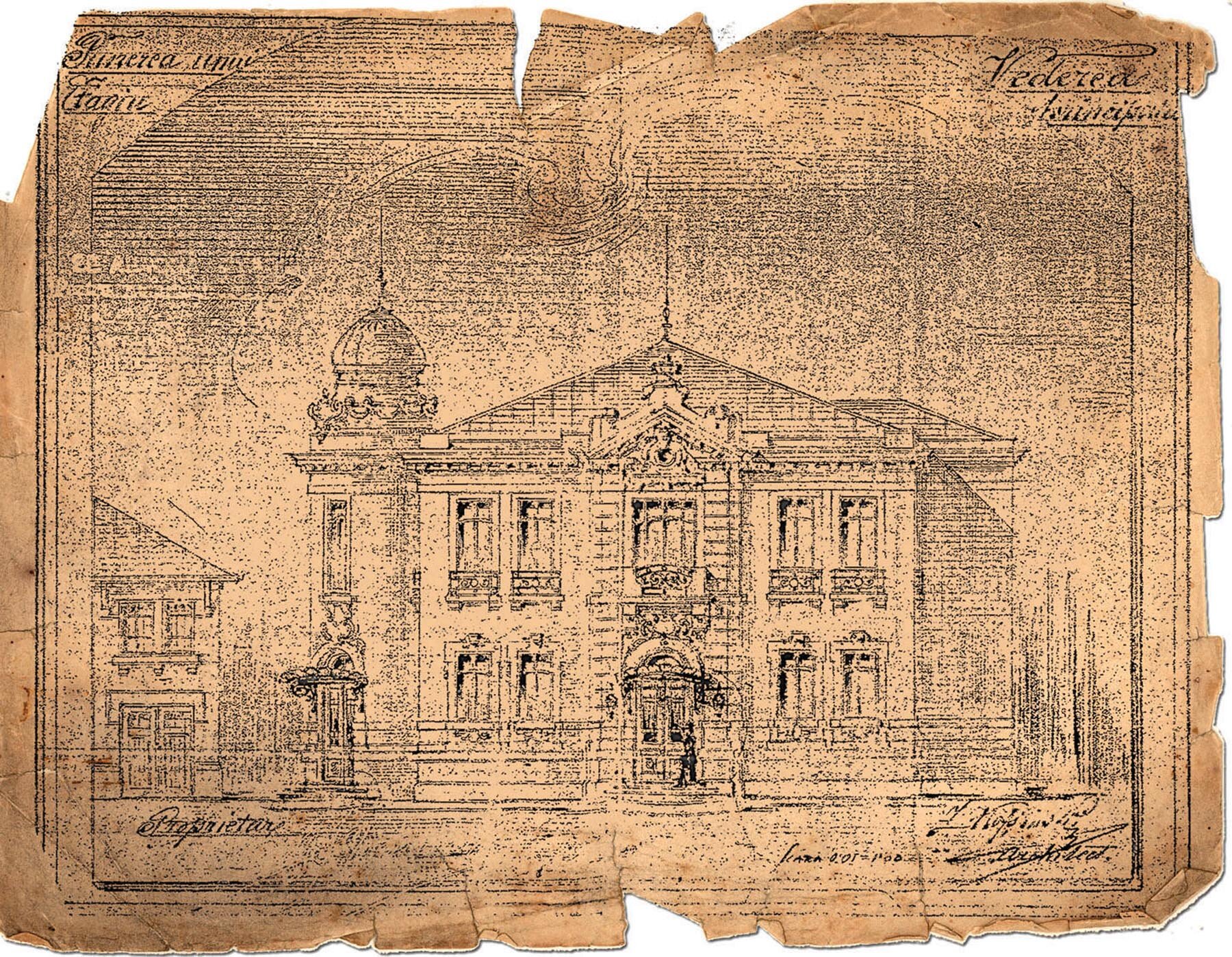
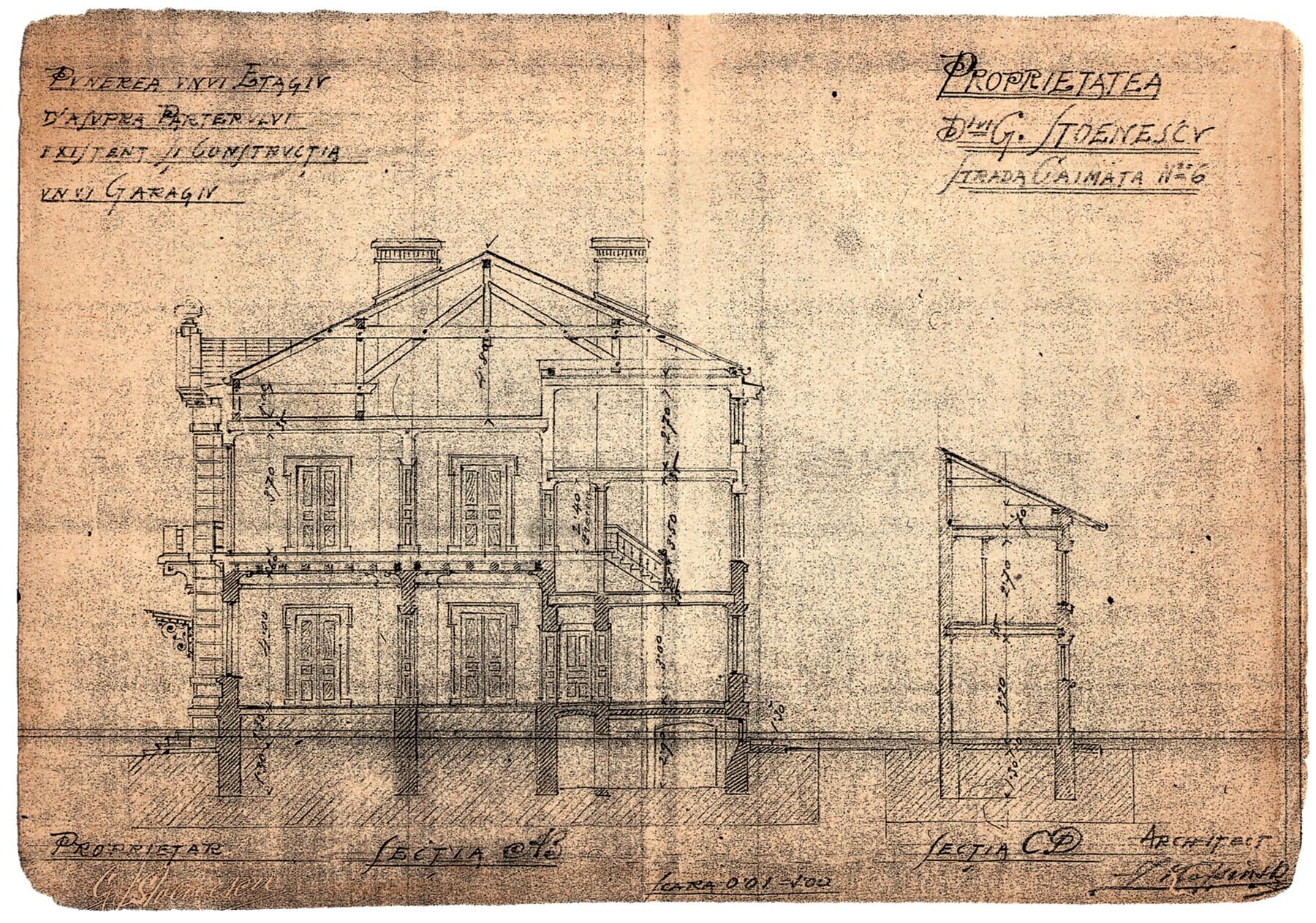
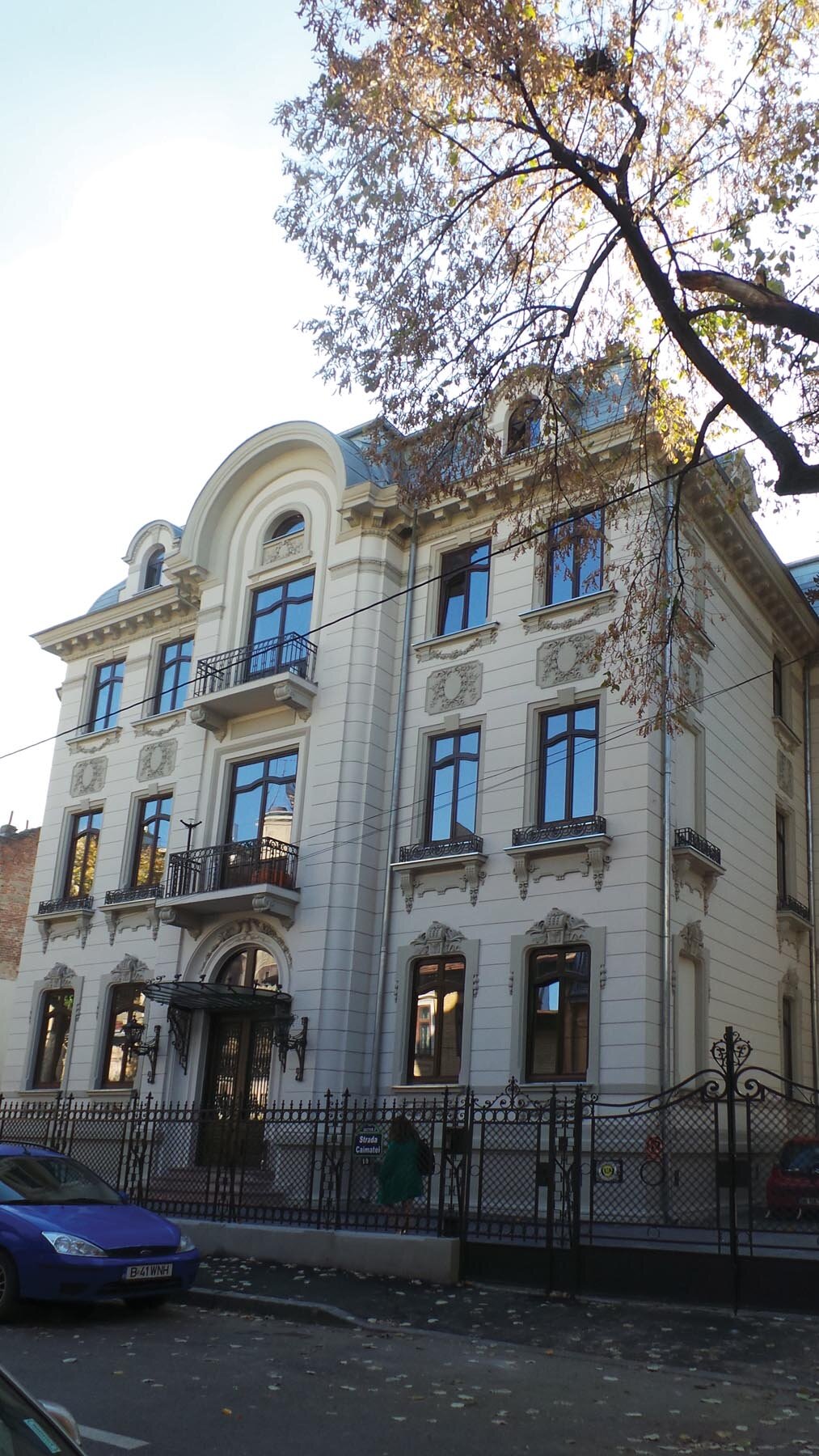
The building that was the subject of our project is located in the very center of Bucharest, behind Rosetti Market, on Caimatei street, at number 10, in sector 2, in an architecturally and urbanistically valuable area of the city. Although located in the heart of the city center, both Caimatei and the neighboring streets have a special atmosphere. It is a place where the noise of the city does not seem to reach so violently, but where every square centimetre is intensely alive with a life of its own, interwoven with the lives of others, with the hurried lives of accidental passers-by. Every building and every tree has a story and has certainly been and is the silent, everyday witness of our history.
Not by chance, in the immediate vicinity is the coffee shop "Delicatese la Florescu", owned by the famous "coffee maker" who gave his name to the street, where you can buy a good coffee and/or enjoy it during interesting conversations... Over the years, the street has never changed its name; the number of the building has changed as follows: in the 19th century it was number 6, between 1900-1922 it was also number 6, and from 1948 to today it is number 10.
Brief history of the urban setting and stages of the building's construction
According to the study made by Cezara Mucenic, art historian, it emerges that in the period 1730-1732, in the north-eastern part of the city at that time, the Church of the Caimatei wall or "Church of the Lautars" was built, whose founder was Nicolae Bozianu, the bailiff of the bailiffs, and his wife Stanca. The church plot was surrounded by a street network that was meant to enhance the place of worship. The name of the church derives from the name of the slum Caimata - the nickname of the Bucharest slum, which was full of rubbish. Seriously damaged by earthquakes in the 19th century, the church was demolished in 1891 to allow the construction of Carol Boulevard.
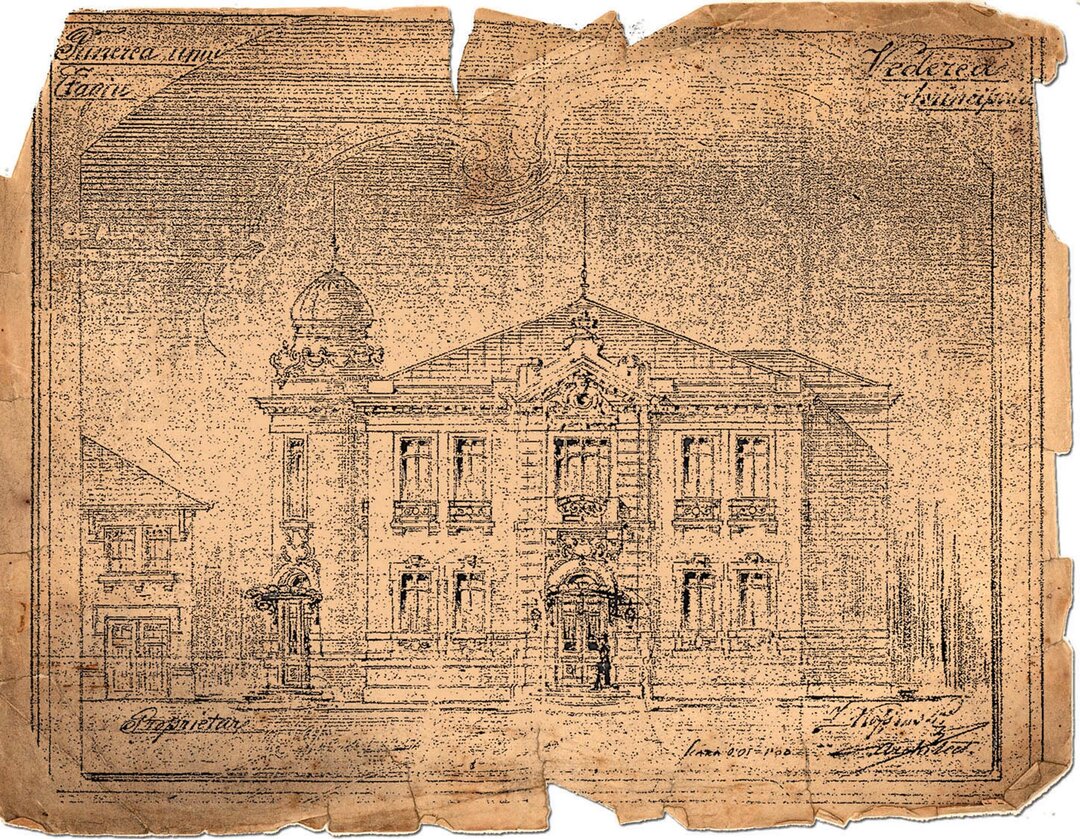
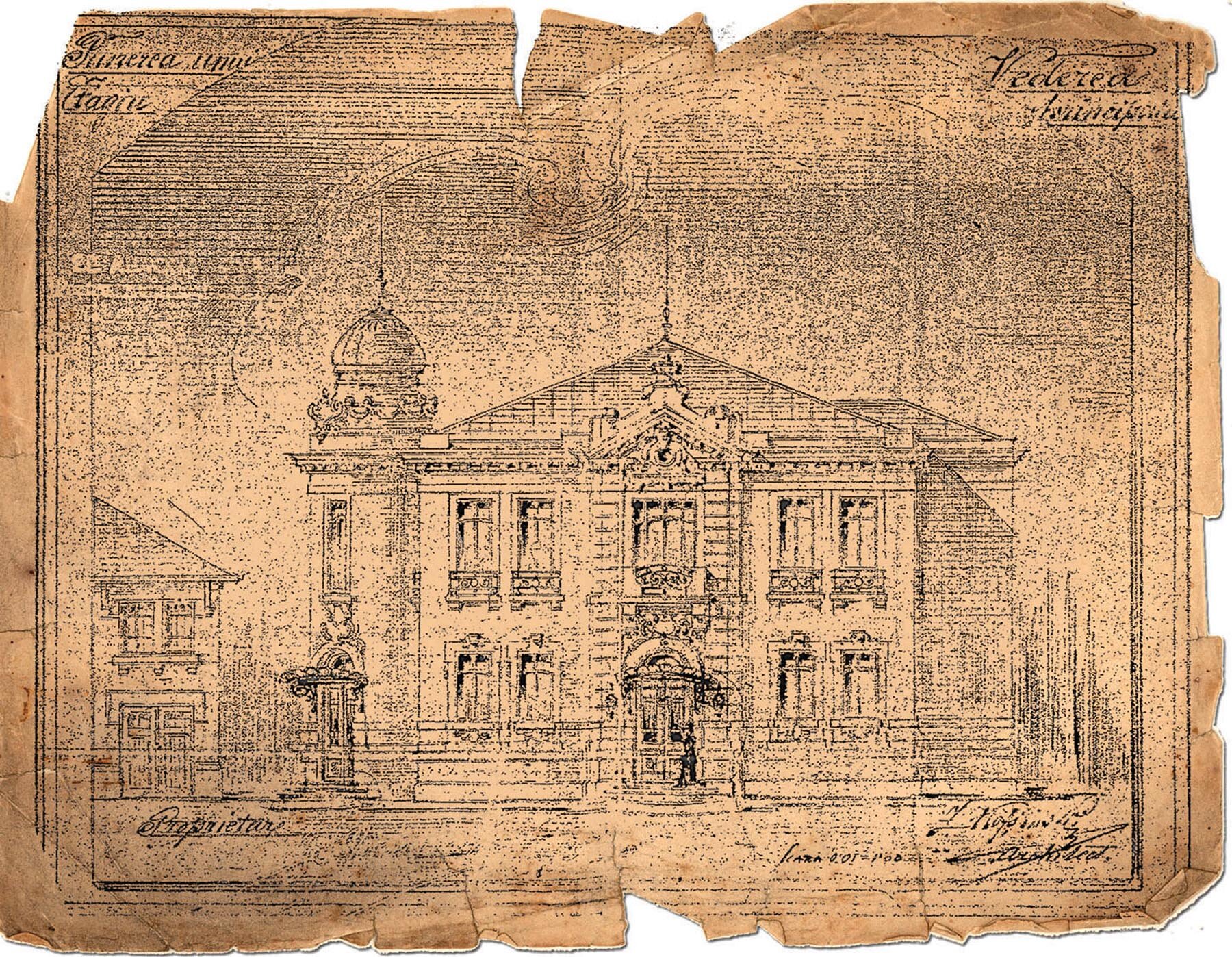
Between 1892 and 1895, a dwelling and warehouses were built on the plot owned by Maria Gorjan, but they did not comply with the alignment plan approved by the town hall. In 1907, the property was sold to a merchant, Stănescu, who in April 1908 applied for a Building Permit for a residential building with a ground floor, first floor and attic - the ground floor was the representative residential area, while the rear area housed the spaces for the servants. The project was realized by the architect Henri Frager, according to the Building Permit no. 225/ 1908. In 1922, the same merchant Stănescu applied for another Building Permit, by which the building was raised by one storey and two round towers were proposed on the west side of the building. The intervention did not destroy what had been realized up to that moment, the architectural approach continued, ensuring a stylistic unity and a good proportion of the building. The rear garage was also built on this occasion. This time, the Polish architect Ziegfried Kofsinski carried out the alterations.
Around 1935 the building was raised by another storey and the round towers became rectangular. It is only now that the arched arch marking the entrance to the building appears, when the way of marking the entrance from 1922 is also changed.
During all this time, the most valuable space is the ground floor, built in 1908-1909.
At the same time, during all this period, the building's visual and environmental value was not altered, but, on the contrary, solutions were found to preserve the stylistic unity of the building and emphasize its character.
Description of the technical solution
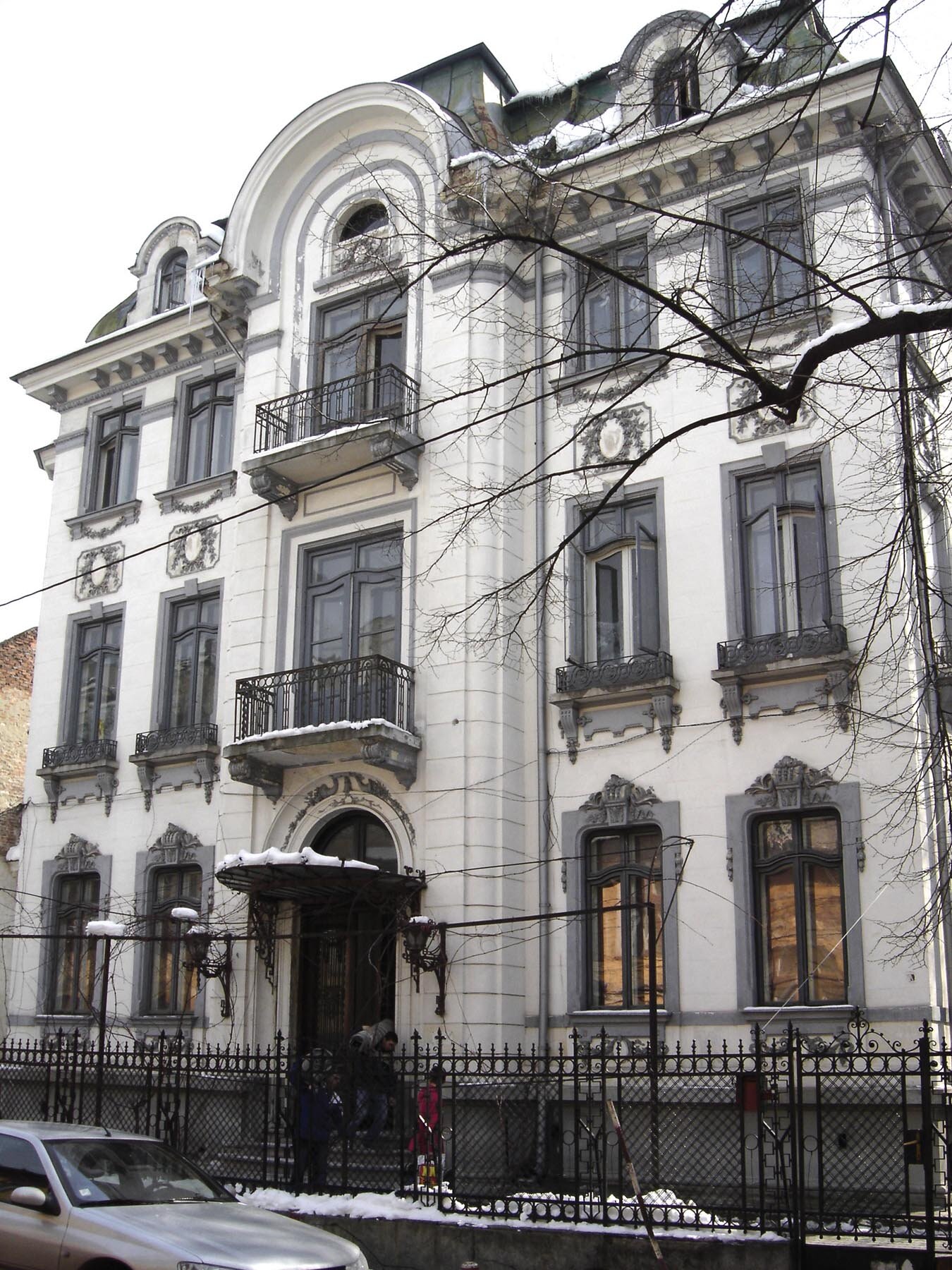
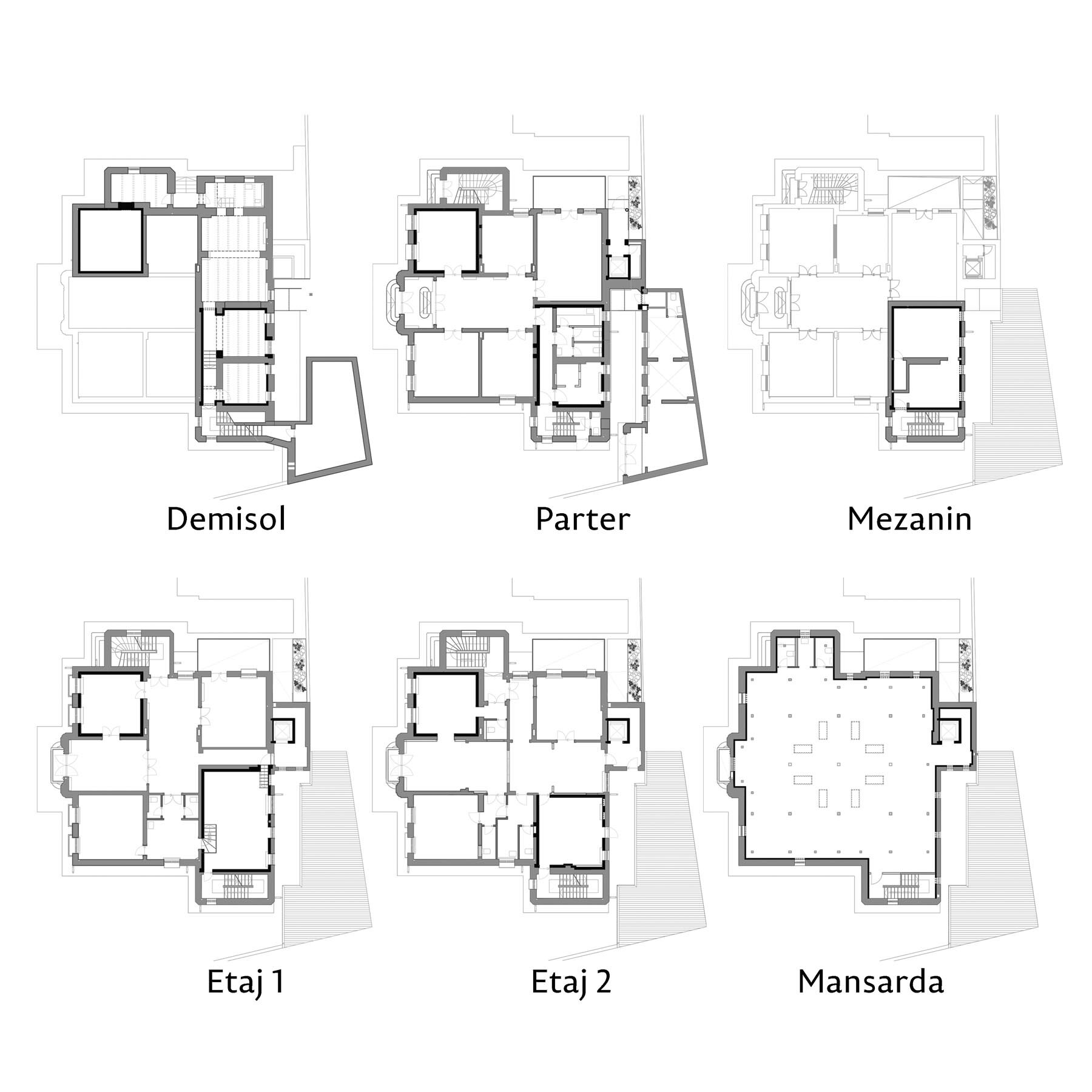
The building consists of a 870.88 sq.m plot of land and buildings, i.e. 4 buildings with a total usable area of 1,109.13 sq.m, approx. 1,330.00 sq.m of developed area and 417.44 sq.m of built floor area. Of these, the most representative is the main body of the building, A. It has a basement, ground floor, 2 floors, mezzanine and attic, has a useful surface area of 955.33 sq.m and a total floor area of 1,065.75 sq.m.
The consolidation, restoration and functional reconversion project for the building at 10 Caimatei Street actually started in 2005. After obtaining the Building Authorization, construction works started on the B building, as well as some insignificant works on the main building, i.e. the A building.
In 2013-2014, we resumed the project, following a survey carried out at the end of 2012 by Miro Grup, through engineer Adrian Stănescu. With the technical changes resulting from the conclusions of the expertise, the architectural theme was also modified.
The building is inscribed on the List of Historic Monuments LMI 2010, position 545, code B-II-m-B-18269.
Originally, the function of the building was residential. According to the project from 2005-2006, the function of the building was transformed into an office building from the basement to the attic level.
The proposed situation
The current project still envisaged offices, but in a different concept of functional organization, consolidation and restoration of the building body A, as well as the rear garage.
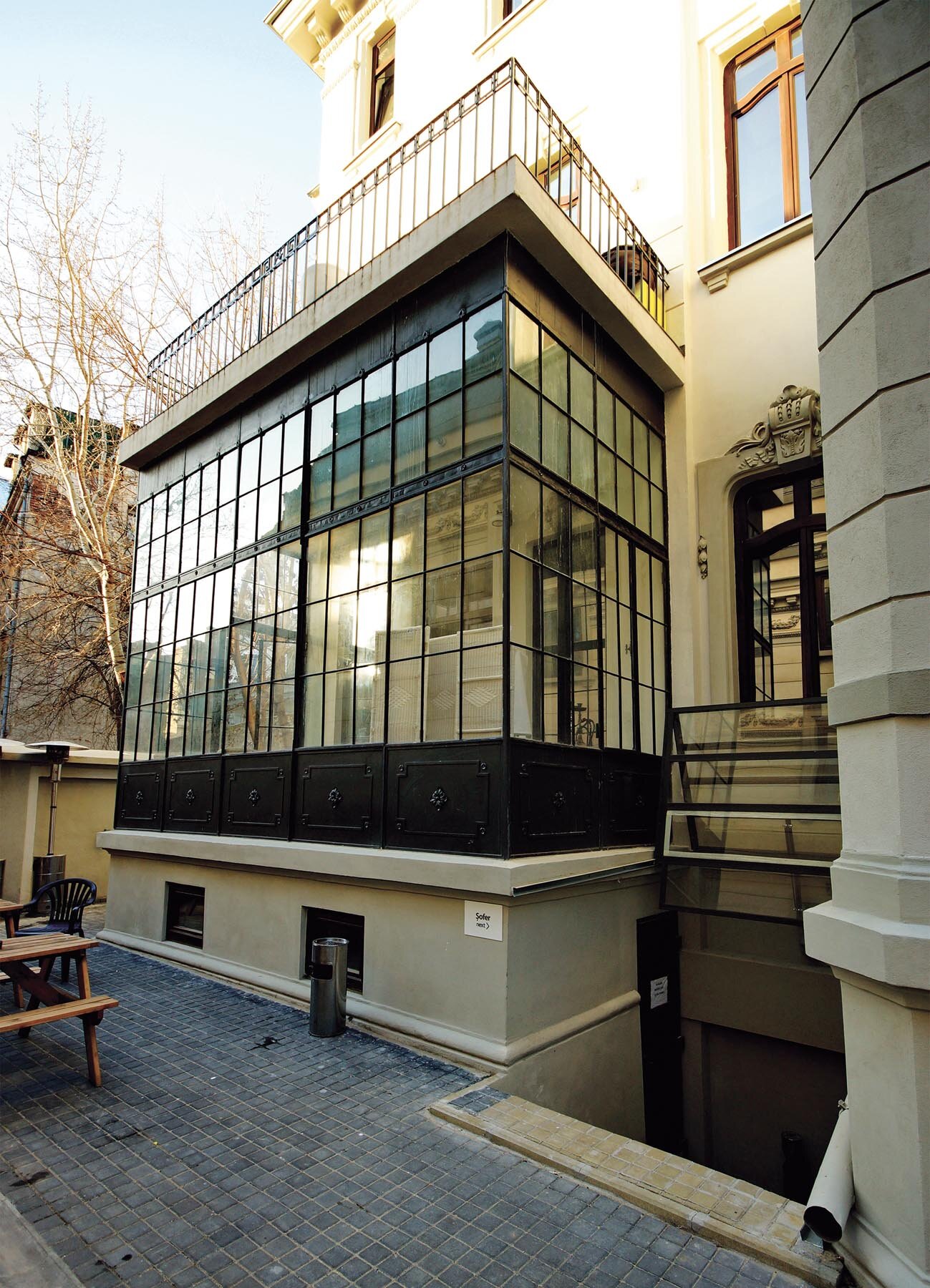
In order to ensure smooth access from ground level to the first and second floors as well as to the attic level, it was proposed to replace a hard-to-access service staircase with a double opening elevator connecting ground level, first floor, second floor and attic. A glass awning was proposed to protect this new entrance and not detract from the image of the existing building.
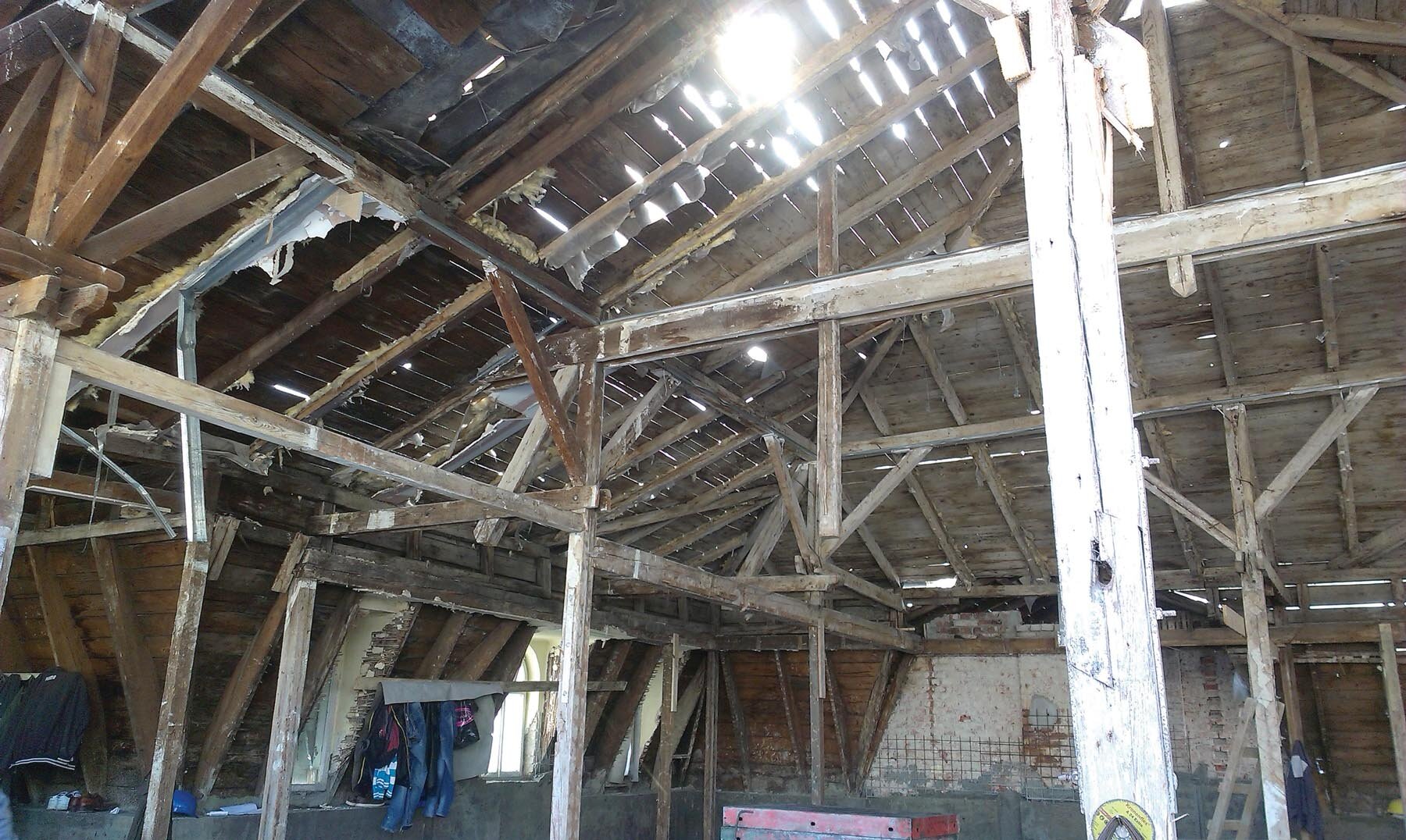
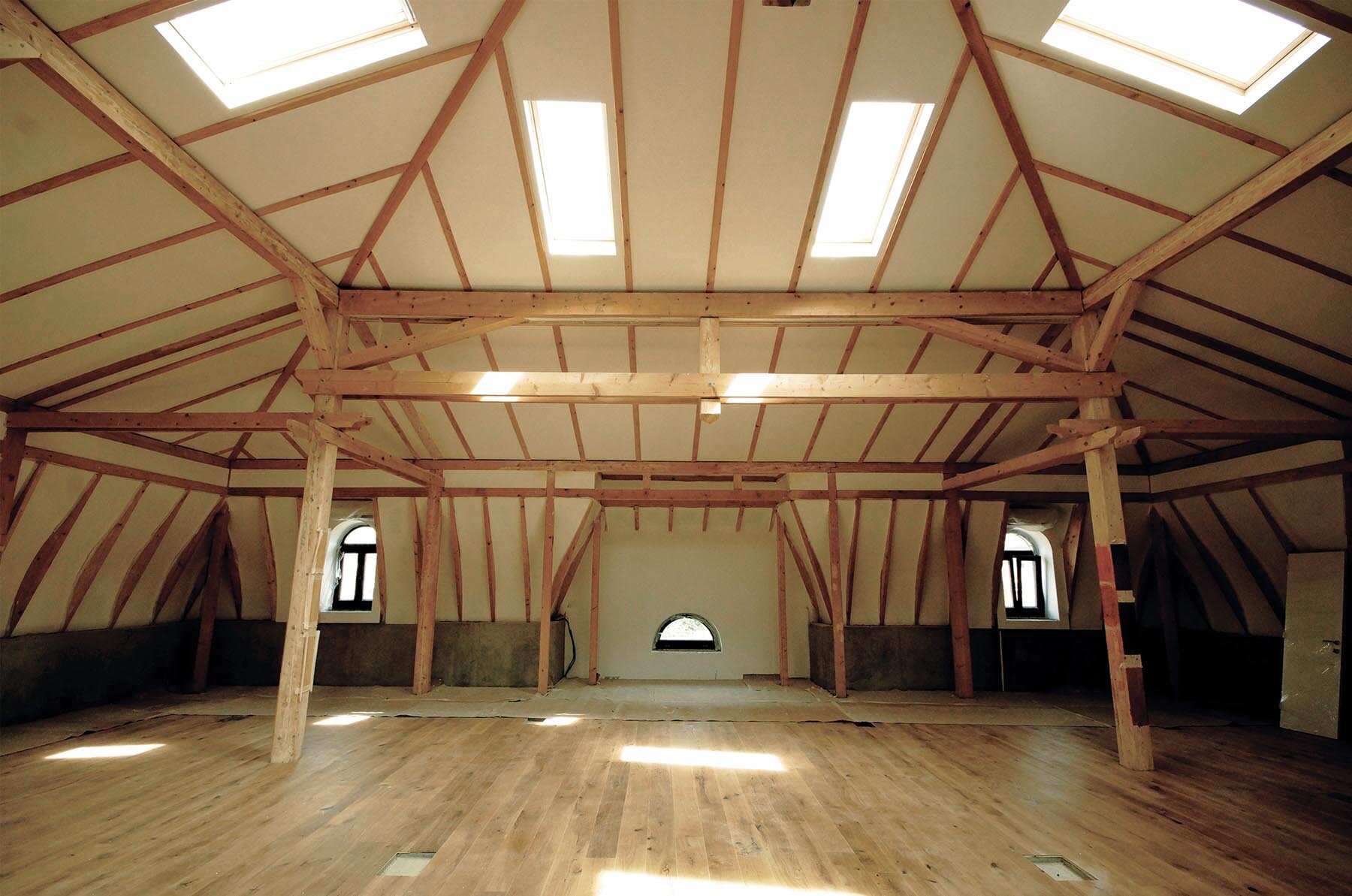
The roof was repaired, the damaged timber structure and damaged elements were replaced with top quality oak. The damaged wooden astere was replaced and the damaged galvanized sheet metal roof sheathing was entirely replaced with Blaugrau galvanized sheet metal.
In the attic area, the wooden elements of the roof were improperly anchored to the building structure, the piers had longitudinal cracks and sometimes consisted of smaller elements, which were not properly joined. They often even deviated from the vertical.
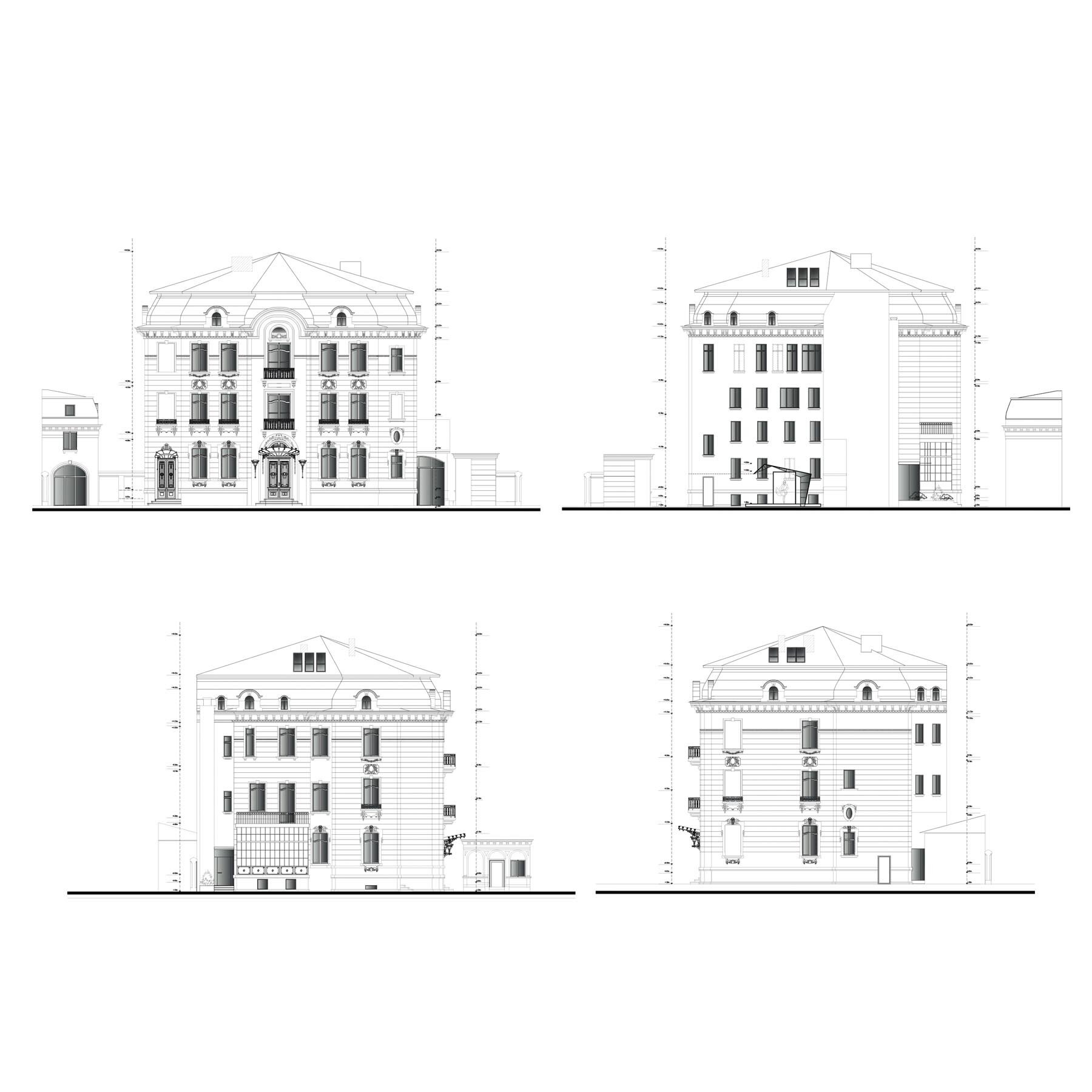
In these conditions, the only solution was to rigorously preserve the shape and height of the roof, the color of the roof covering, with careful restoration of all the sheet metal details. The entire interior structure had to be changed. We took advantage of this and created a structure with large openings, which allowed for a generous attic space. We brought in eight Velux windows in the vicinity of the chimneys, towards the central intersection of the slopes, arranged in the plane of the slopes in the central area, so that the space received generous zenithal light without suffering in appearance.
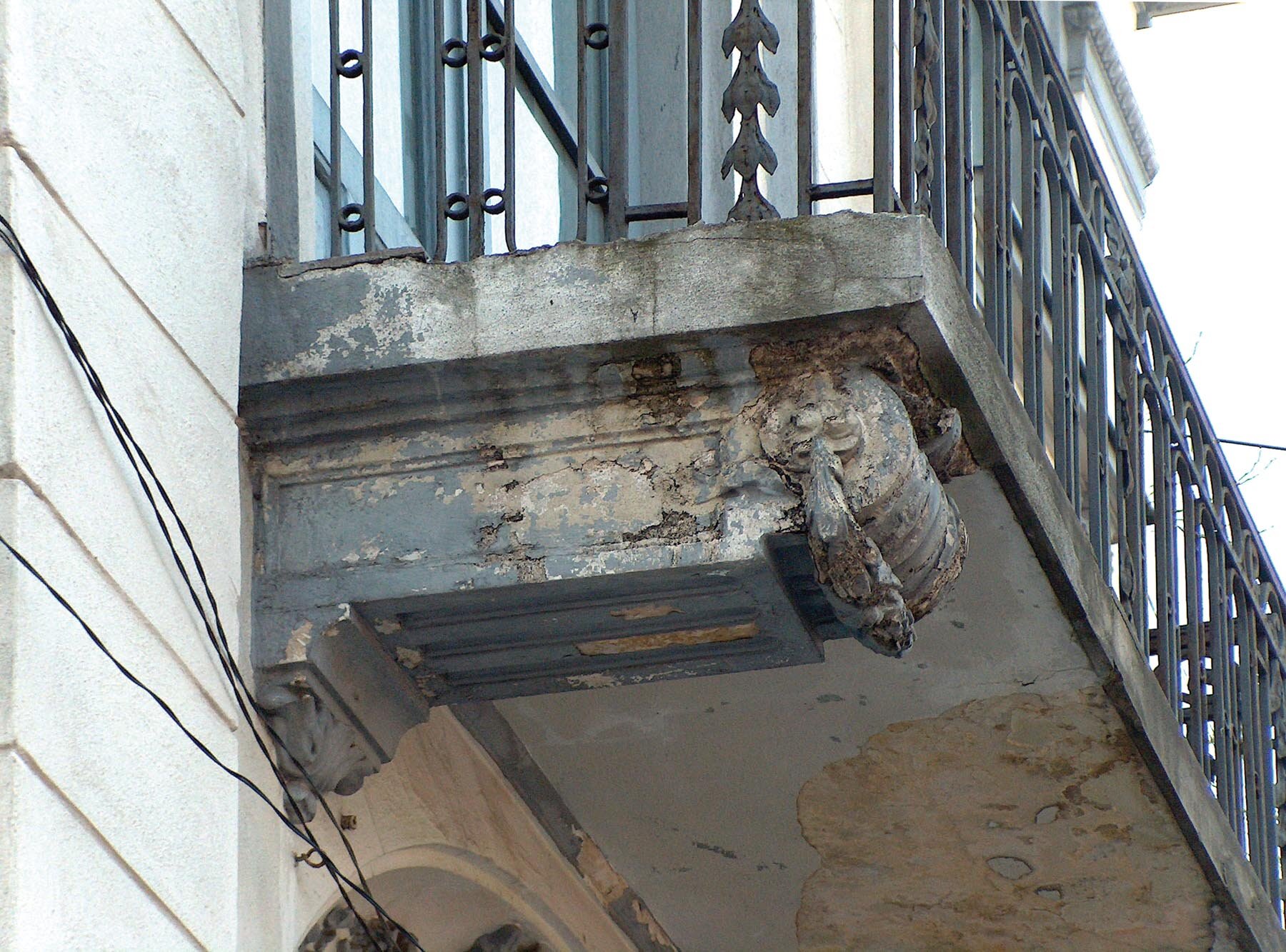
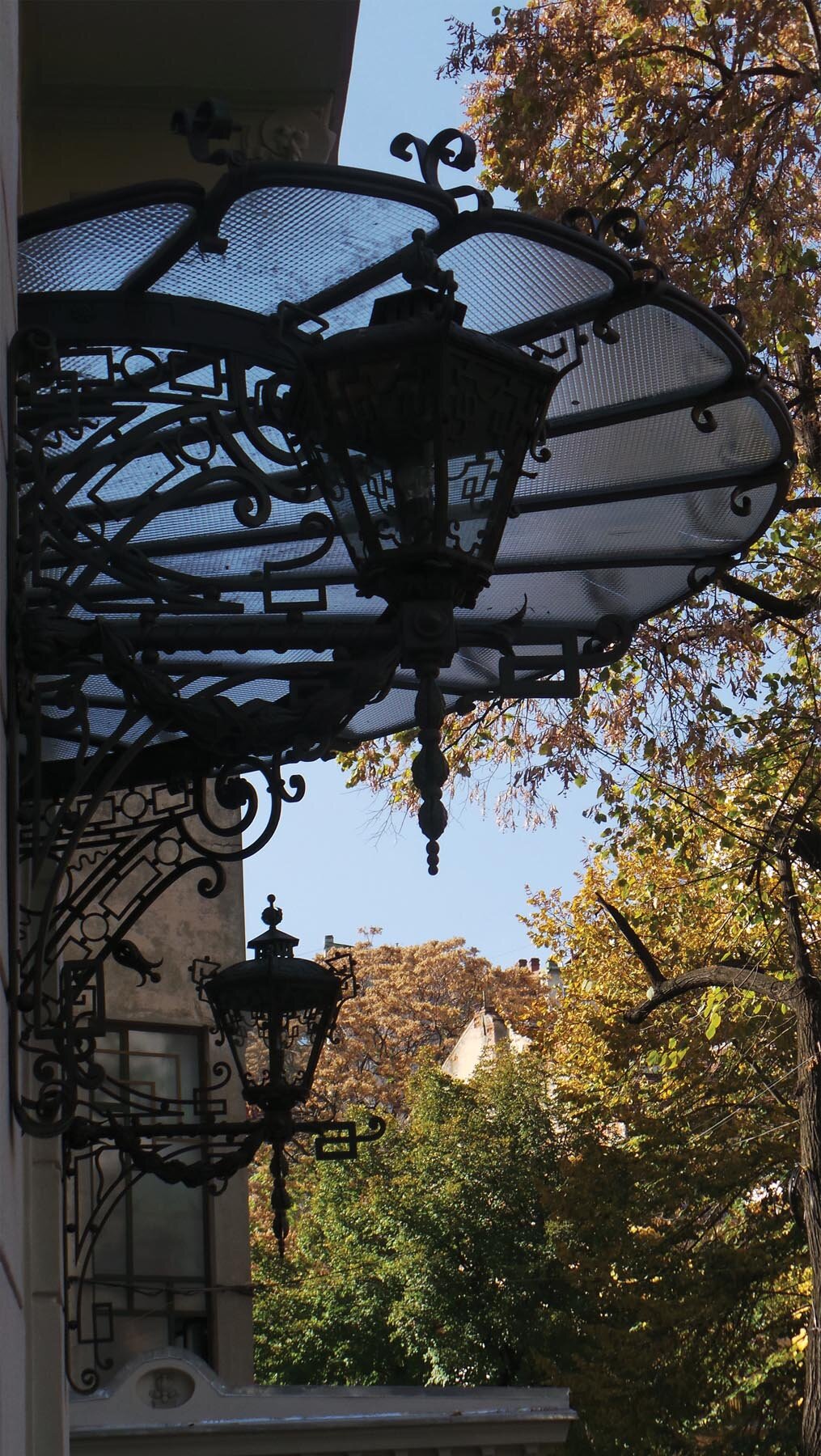
Over the years, the building has undergone a series of earthquakes centered in the Vrancei area: 1940, 1977, 1986 and 1990. Following a technical survey carried out in 2012, a number of structural problems were discovered, such as cracks in the parapets and exterior parapets and jambs of the ground and first floor windows and balconies with degraded plaster on the lower part or areas with rust-eaten metal elements. The metal enclosure (both vertical and roof) of the marquee was severely damaged. In the basement area there was dampness on the walls, and the metal joists were rusted and we did not know how deeply they were affected by rust. Otherwise, the conforming of the basement was very nice and interesting, and it is possible that this space, after restoration, could become functional.
The perimeter waterproofing of the building was done to protect the building and the basement. In order to restore the basement to possible functions, a non-functional staircase was dismantled, with access from the outside, with steps of approx. 25 cm high, and current access is now from the service staircase on the east side façade. A brick wall which had been built at an unknown stage, without the masonry being bonded to the existing masonry, and which blocked an arched void, has been loosened.
The structural intervention works consisted of injection works, local filling and filling of the existing cracks in the masonry structural walls of the basement, ground floor, upper floors and attic, checking and restoring the structure of the balconies of the building, checking and restoring the waterproofing system of the building, systematization of the land around the building. The wooden elements of the attic were fireproofed and treated against fungi and mites. The thermal insulation required for good functionality has been provided and the sheathing replaced. Velux windows were placed in the plane of the roofing between the rafters, so that the lighting is appropriate for the function and the roof volume remains unchanged.
The consolidation works consisted of interventions on the vertical elements: lining with 12 cm thick reinforced concrete, with its own foundations, over the entire vertical of the building, of two enclosures; the realization of a 6 cm thick over-concrete over the second floor; the realization of concrete belts over the attic footings; checking and replacement of the damaged wooden structural elements.
Other consolidation works were carried out on the foundations, as well as in the area of the awning - on the metal structure closing the awning, and checking and repairing the plate over the awning.
The work required to achieve the functional transformations (refunctionalization) desired by the beneficiary consisted of recompartmentalization with lightweight materials such as "rigips" (reversible operations), closing existing voids and creating new ones by connecting or edging with reinforced concrete elements, in the service areas of the building and the replacement of the secondary, service staircase, which was partly made of wood, partly of concrete, with a new staircase entirely made of concrete, providing access to all levels of the building, and the creation of local concrete floors in the new bathrooms (services).
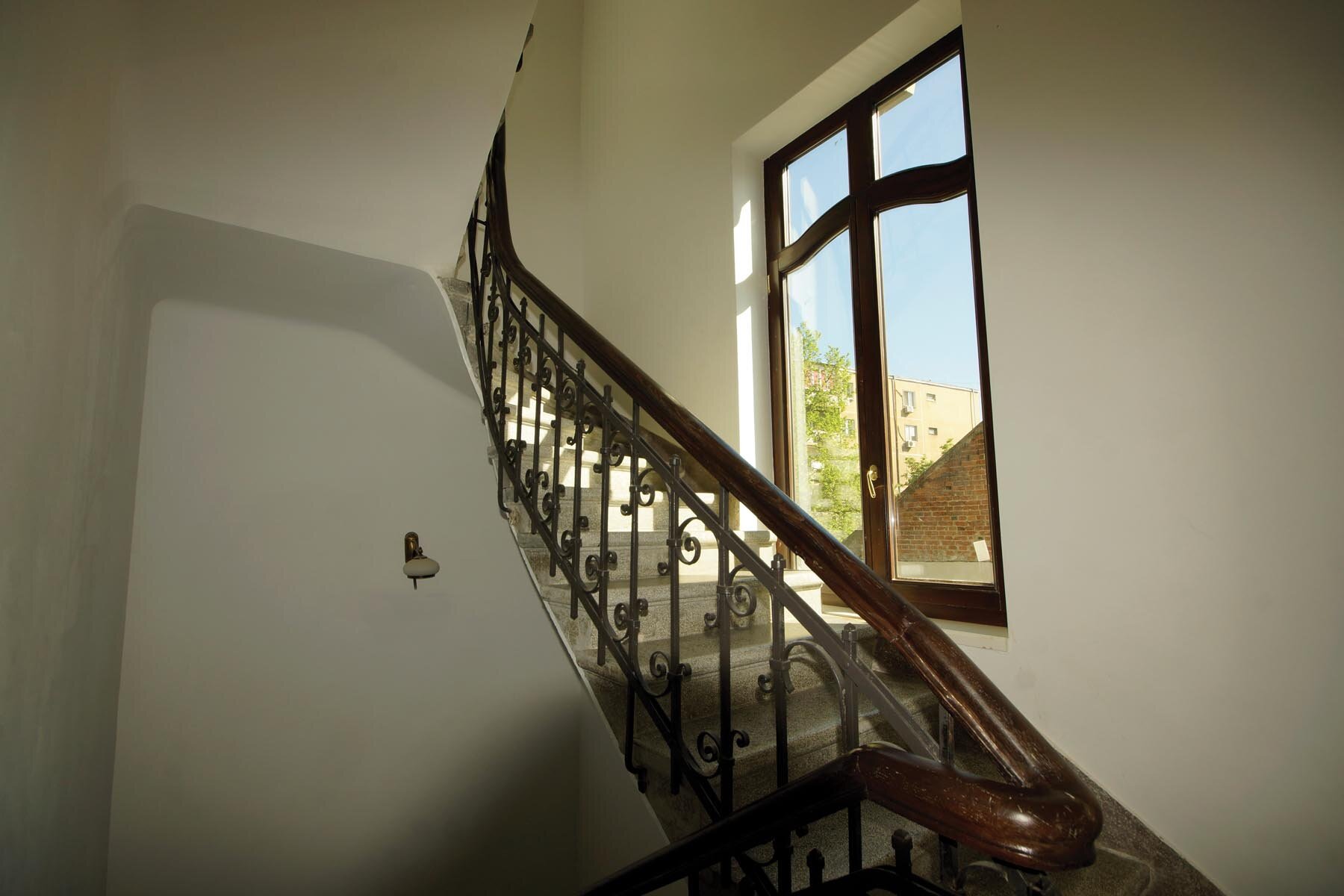
The staircases are structural elements added in successive stages to the building, which is why they have had different treatments. The main staircase on the west side has remained as it was configured, i.e. with access from ground level to floors 1 and 2. This stair does not reach the basement. The service stair located to the right (west side) has access to the basement, ground level, ground floor, partial mezzanine, 1st and 2nd floors. The staircase was reconfigured in the same space and made with a concrete structure to have access to all levels, including the attic. The steps were finished with wood.
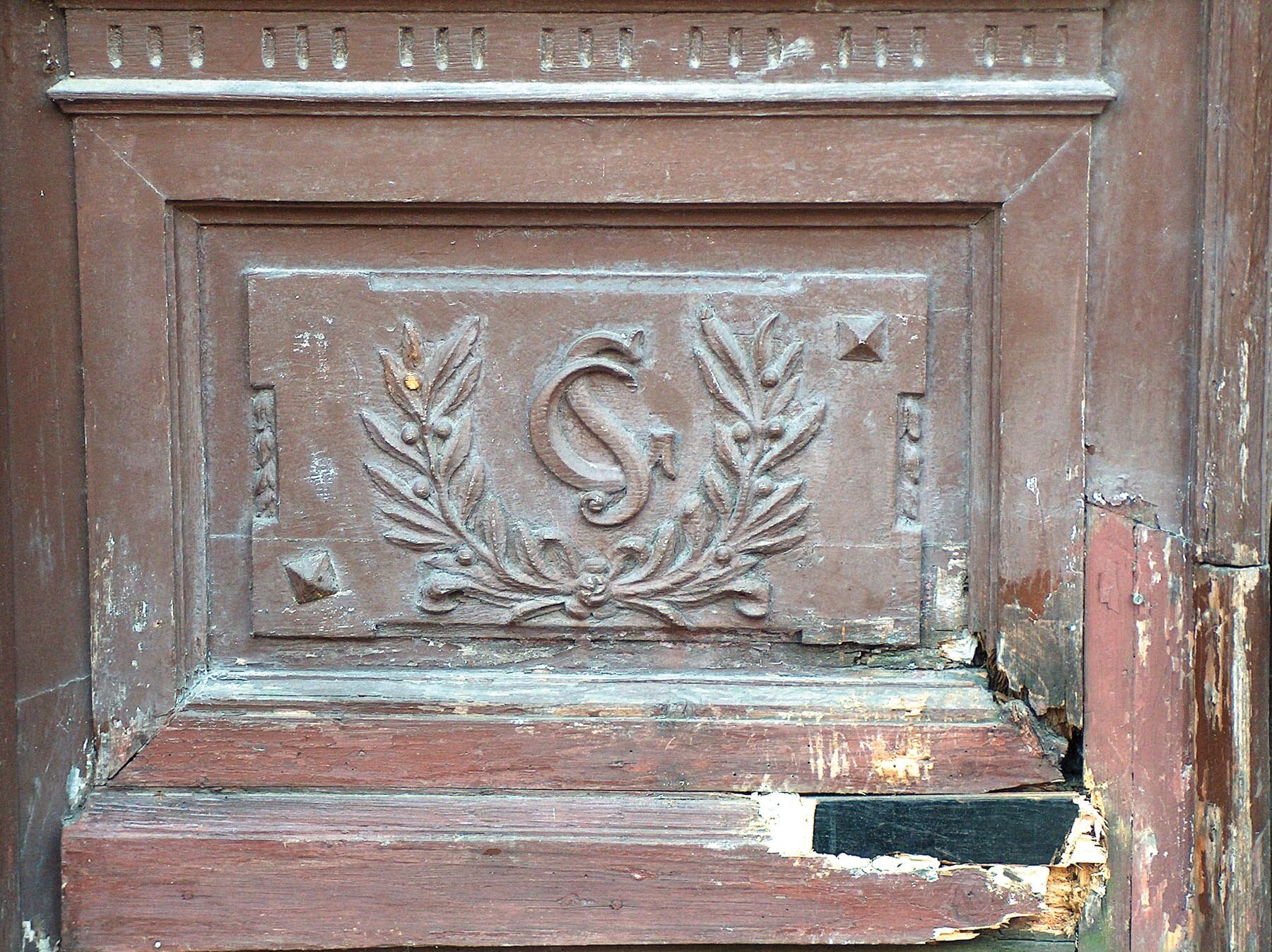
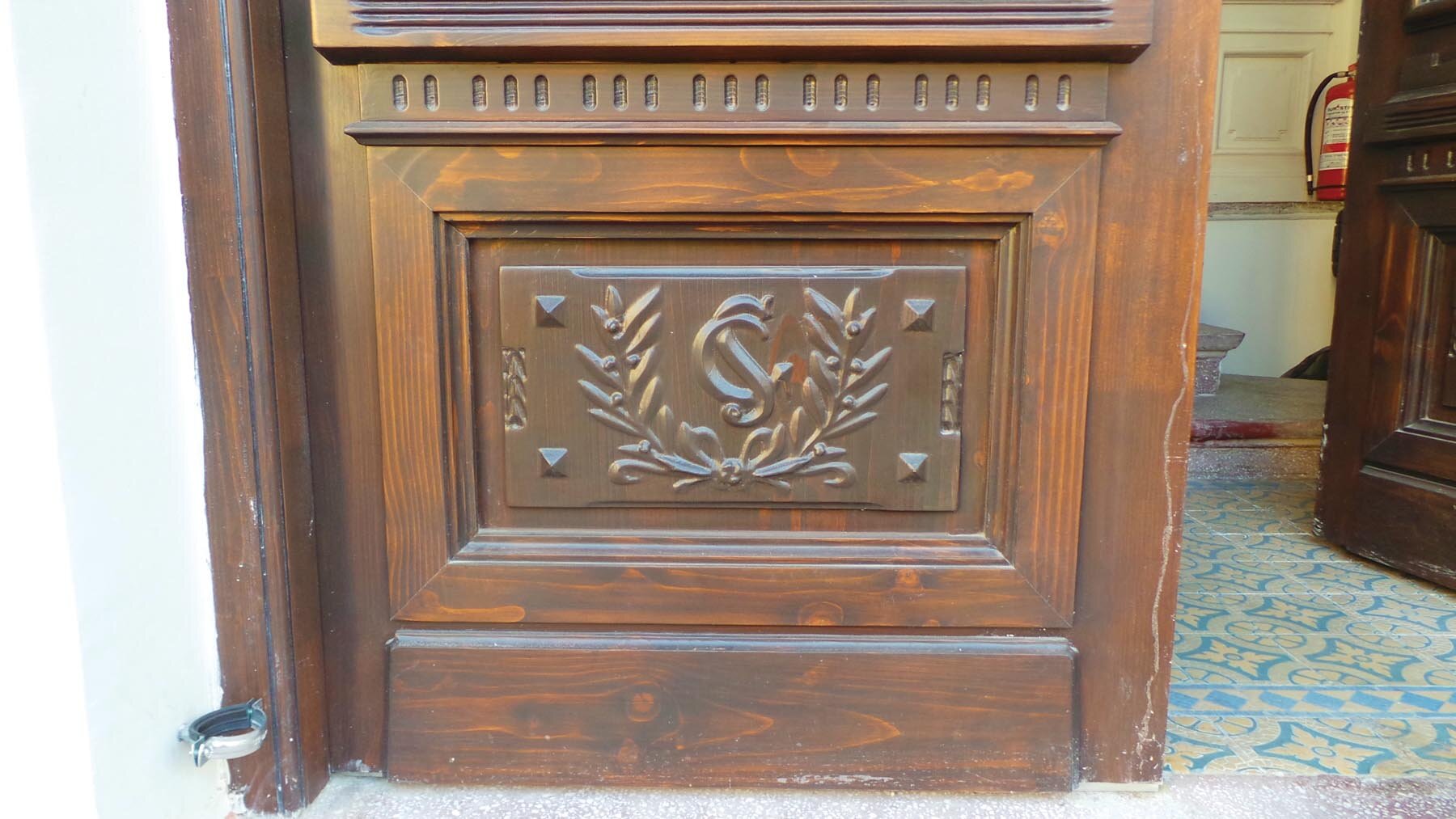
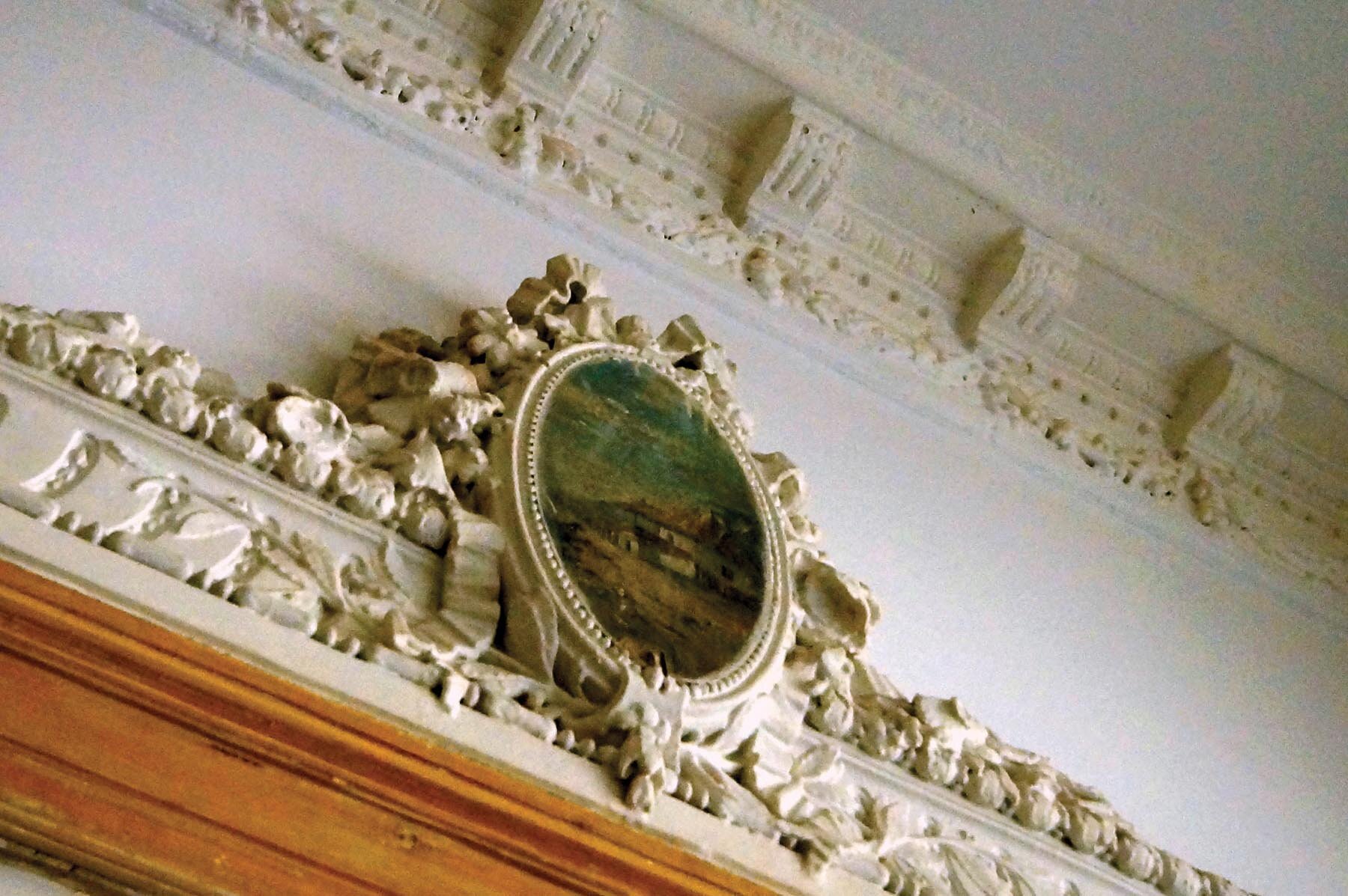
The restoration works were carried out after the consolidation works. In the areas where 12 cm concrete diaphragms were provided, prior to their pouring, where valuable ceiling ornaments were present, these were extracted and, where possible, restored. Because of the resulting dimensional differences in the rooms where the diaphragms were made, the existing decoration was adapted to the new geometry. The same operations were to be applied to the decorative elements of the door pediments, which include medallions with landscape paintings.
In the rooms where there were Meissen stoves or other valuable stoves, and where the expert's report provided for consolidation work, they were dismantled and reassembled after the consolidation work had been completed. These stoves are no longer functional. They are merely decorative elements in the rooms in which they are located.
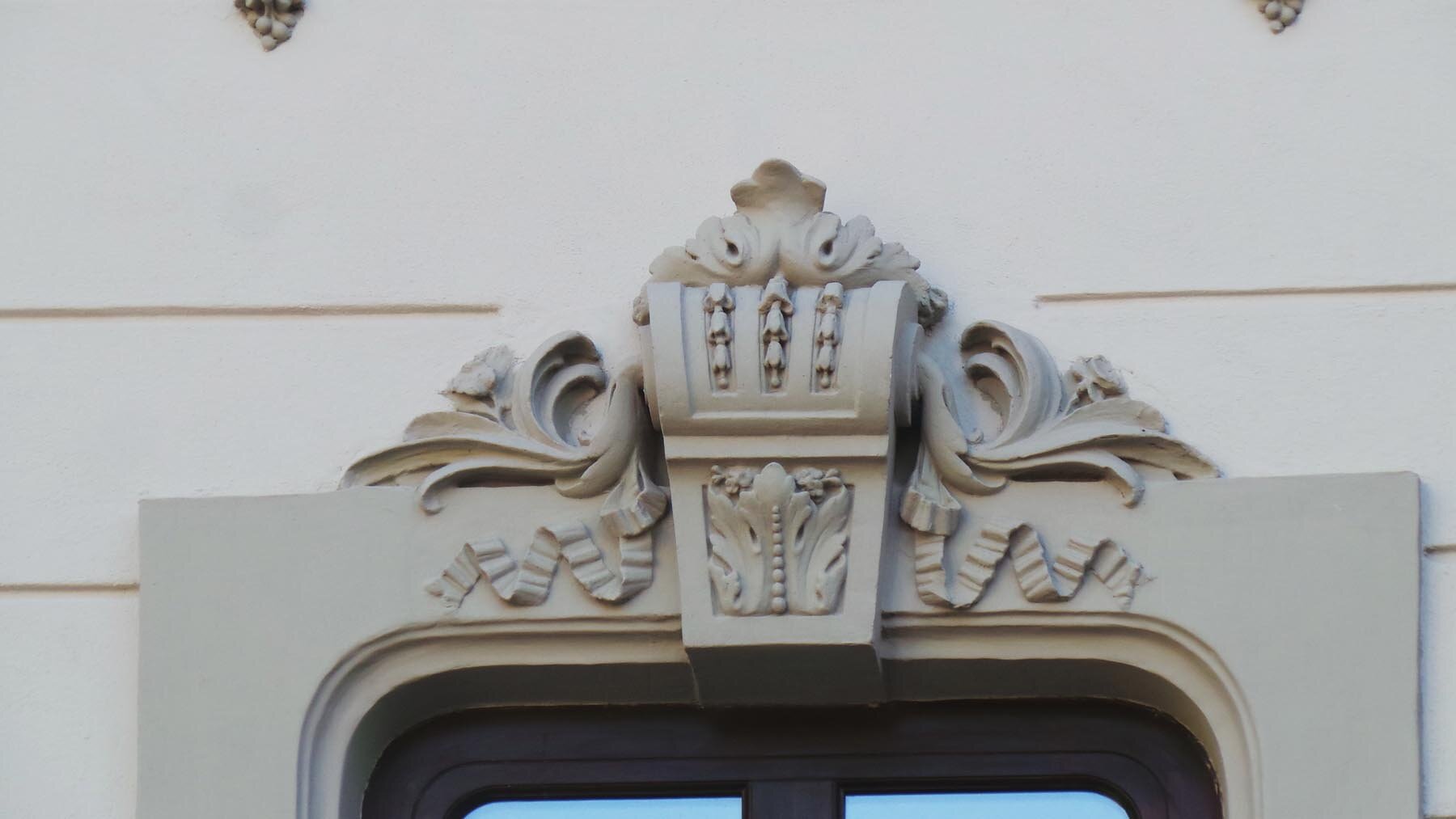
The restoration of the facades was also carried out in the second phase, with the restoration of all existing decorative elements. Where there were gaps, decorative elements or additions were realized according to the original details. Plastering and painting were of the type used for restoration, which allow the facade to be self-cleaning in bad weather, but at the same time allow the masonry and plaster to be ventilated, ensuring the durability of the interventions over time.
This project, like all projects for the restoration/conversion of representative buildings, architectural monuments, was a great challenge. It was a project that we carried out with pleasure, with care and with a lot of heart. At the same time, I have remained consistent in the position I have taken on these wonderful buildings, which is that they must be returned to the natural circuit of life, while preserving their identity and authenticity, so that they too can live and meet the functional and technological demands of at least the generation that comes after us. In this way, the memory and identity of the place can be preserved and will live on naturally.
Design team: general designer - SC CAPITEL AVANGARDE SRL, project manager - arh. Georgeta Gabrea
Architecture: arh. Georgeta Gabrea, arh. Ioana Popovici, arh. Claudiu Vârlan, arh. Venera Trișnevschi
Historical study: art historian Cezara Mucenic
Structure: SC MIRO GRUP SRL - eng. Adrian Stănescu, eng. Daniel Purdea
General installations: SC ADDICT INVEST SRL - eng. Alin Ungureanu, eng. Ovidiu Ganea, eng. Bogdan Chirasnel
General contractor: S.C. CABRO CONSTRUCT SRL - eng. Paul Belu
Restoration of facade decorations and interior ornaments: plastic artist Ștefan Neacșu
Restoration of metal confections, gratings, awnings, lanterns, etc.: SC BTM PROCONSTRUCT SRL
Attic wooden structure and titanium-zinc cladding: SC VALCON ROOFS SRL
Site manager: eng. Dan Lăcătuș
Photographer: Alexandru Dinu-Șerban