Architecture Week 2016 – Creative Research

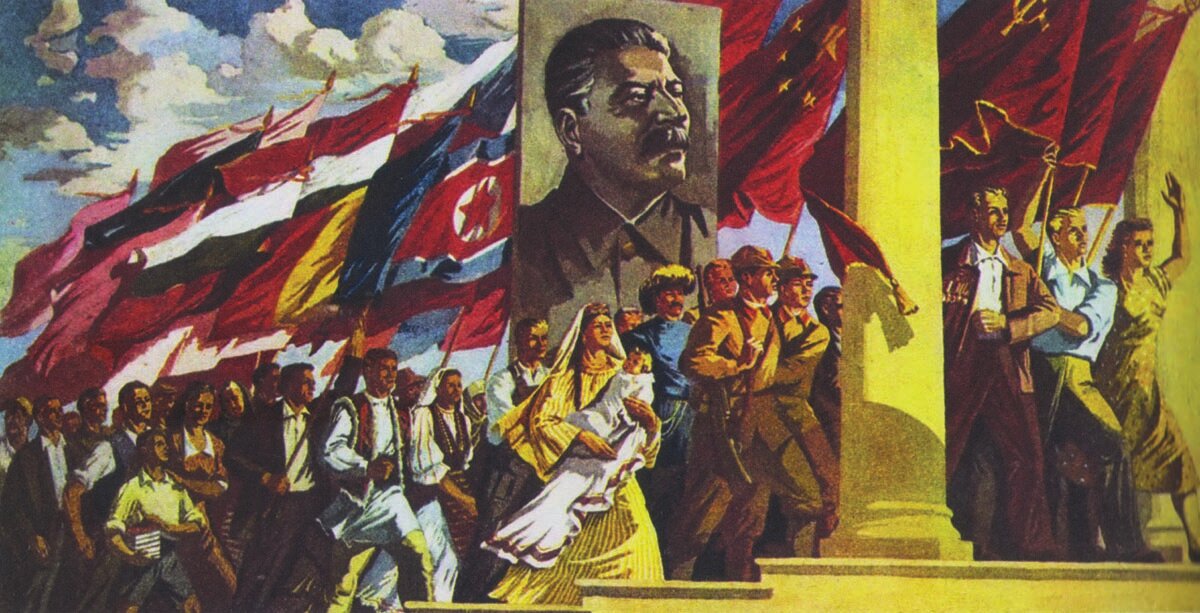
After the establishment of the totalitarian communist state, along with the process of etatization and centralized management of the economy1, a profound transformation of architectural and urban planning activities began. Following the Soviet model, they will be subordinated to the political and economic aims of the new power, which will materialize in a complex series of actions applied with brutality and consistency, consisting broadly of:
- the ideologization of creation and architectural education through the imposition of socialist realism;
- abolishing the status of architects as self-employed professionals and enrolling them in the major design institutes, thus losing the independence of the architectural profession, for which, in a first stage, the Romanian Society of Architects and the College of Architects were disbanded
- The establishment of a strictly centralized framework for organizing and directing the practice of architecture and urban planning;
- the imposition of increasingly rigid directives and standards, which would tend to be the single themes for building design, reflecting exclusively the economic and social priorities of the communist state.
The policy of the communist state in the field of architecture and urban planning, the definition of which began in earnest from 1948-1949, would be enshrined in the adoption on November 13, 1952 of three decisions of the CC of the PMR and the Council of Ministers2, concerning:
1 - The construction and reconstruction of cities and the organization of architectural activity;
2 - General Plan for the Socialist Reconstruction of Bucharest3;
3 - Construction of the Bucharest subway4.
Even if they also had an important political component, with an obvious propagandistic purpose, especially the first decision, applied as HCM no. 2447 of November 13, 1952, contained decisions that had long-term consequences in the practice of architecture and urban planning in Romania.
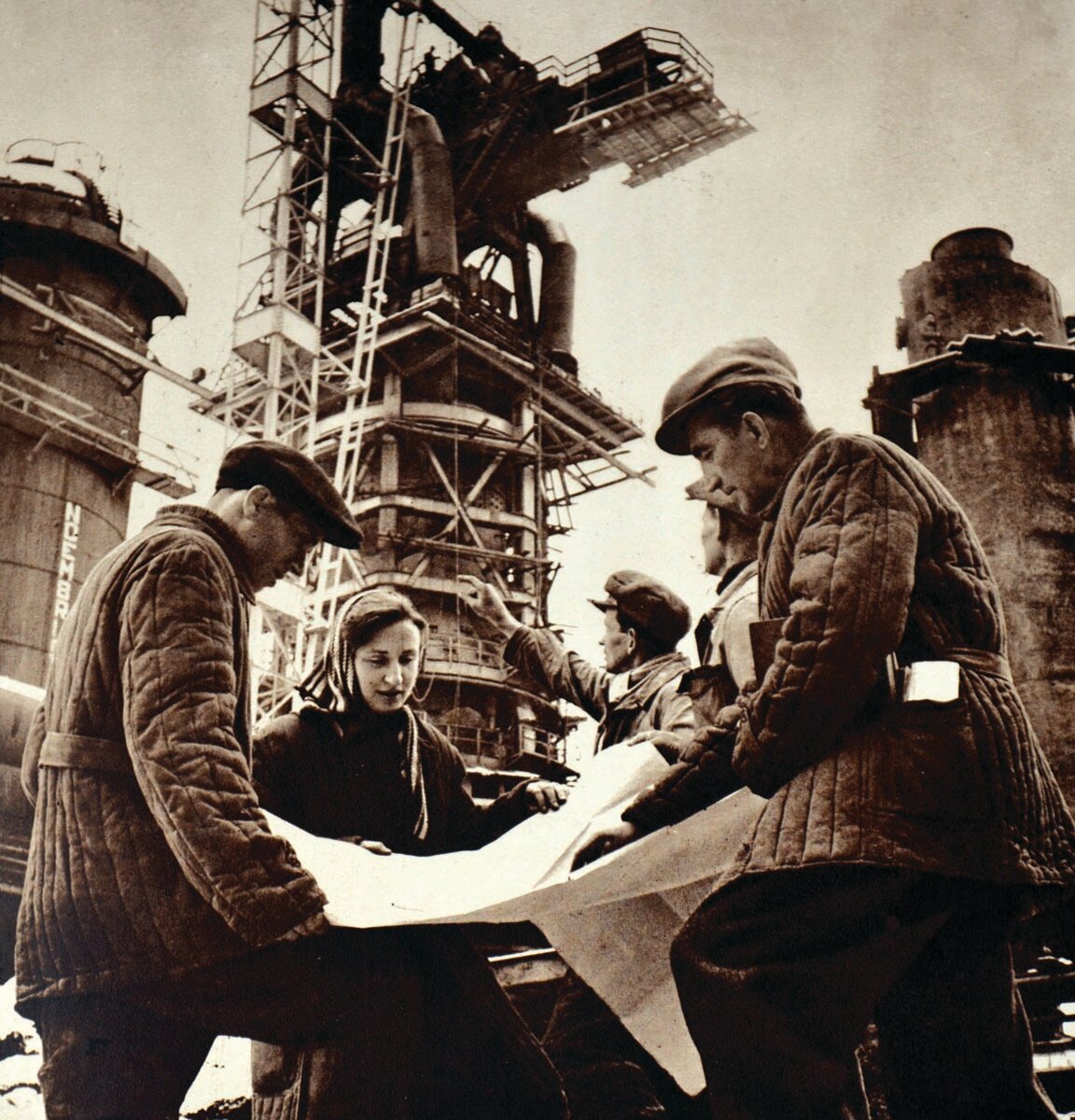
The main institutional measure established in November 1952 was that of setting up a ministry of architecture - the State Committee for Architecture and Construction - CSAC5 (from 1959, the State Committee for Construction, Architecture and Systematization - CSCAS)6. Formed through the reorganization of the State Building Committee established after 1948, the CSAC was directly subordinated to the Council of Ministers and its chairman had the rank of Minister. With its extremely broad remit, the CSAC was to ensure "... the control and direction by the State of the activity of various organizations and institutions, regardless of their departmental subordination, in the field of architecture, the design and construction of cities and other buildings...", i.e. the direction in a strictly centralized form of all architectural creation, including higher and intermediate specialized education.
The CSAC was responsible for approving "...all projects for the systematization, construction and reconstruction of cities, as well as projects and estimates for public, communal and residential buildings...". At the same time, the CSAC was responsible for the elaboration and application of standard projects, norms, prescriptions and technical standards in the field of architecture, town planning, construction and building materials, including the rules of design pricing and those concerning the preparation of construction estimates, and ensured the registration, use and allocation of specialized staff in the field of architecture. The new body was also responsible for the protection and restoration of historical and architectural monuments7.
The CSAC was also to organize specialized competitions, exhibitions and architectural museums, in addition to providing technical documentation in the field of architecture, urban planning and construction. The Documentation Centre for Construction, Architecture and Systematization - CDCAS - played an important role in this direction. Although it was also a means of controlling information in the field, especially in the 1960s, the CDCAS, through its large collection of books and, in particular, foreign journals, made it easier for specialists to learn about international trends in architecture.
The November 1952 decision also established, among other things:
- The establishment of the position of chief architect8 and the creation of sections (directorate, in the case of Bucharest) of architecture and systematization within the local administration, professionally coordinated by the CSAC;
- the establishment of the Bucharest Project Institute - IPB (subordinated to the local city administration9) and the Institute for the Design of Cities and Public and Housing Constructions - ISPROR (reorganized on several occasions under the names of ICSOR, ISCAS, ISART or ISLGC), directly subordinated to the CSAC, after 1973 under the CPCP, with an important role in directing architectural design and, especially, the systematization of localities;
- the transformation of the Faculty of Architecture into the Institute of Architecture, which was detached from the Bucharest Institute of Constructions;
- the establishment, within the RPR Academy, of the Scientific Institute of Architecture (despite the insistence of the RPR's AU, the Academy tacitly opposed this initiative, which was eventually abandoned).
Decisions with important consequences for architects and the architectural profession, some with effects to this day, albeit in profoundly restructured forms, were those in Article VII of the first decision (HCM 2447/1953) establishing the Union of Architects of the Romanian People's Republic - UA of the RPR10, with "...the support and control of the State..." exercised in particular through the CSAC, as well as the publication by the UA of the RPR of the magazine "Arhitectura RPR", including the organization of the Architecture Fund and the House of the Architect in support of the UA members.
Although they affirmed the importance of architecture and architects, giving the illusion of recognizing their decisive position in the design and realization of buildings, the decisions of November 1952 broadly concluded the institutional process, begun in 1948, of ensuring state control, implicitly that of the Communist Party, over all architectural activity and liquidating the professional independence of architects. Many of the provisions of the 1952 decisions were based on Soviet models, such as, first and foremost, the establishment of a central body to direct the field of construction and architecture or the Union of Architects, with an organization and, above all, objectives totally different from those of the Society of Romanian Architects which had operated in the pre-war period. The state monopoly in the practice of architecture, imposed in 1948 and reinforced by the decisions of 1952, will remain unchanged until 1990, even if, over time, it will be exercised in other institutional forms, sometimes more subtle and more coercive and with legislative provisions always readapted to the moment, but keeping the same political substratum.
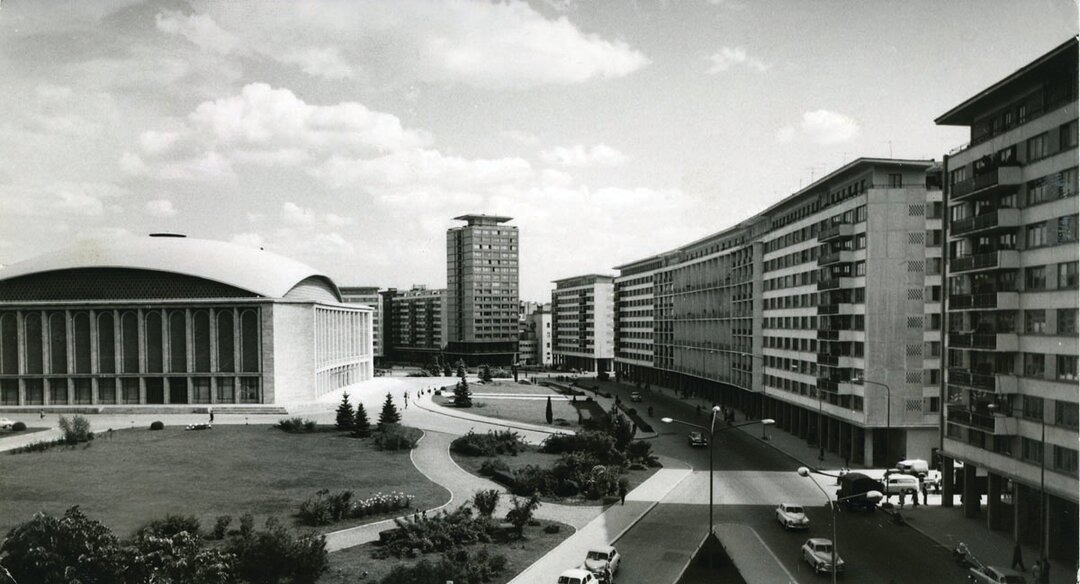
The apparent de-Stalinization and cultural relaxation that characterized the seventh decade, without fundamentally changing the institutional framework established at the beginning of the 1950s, nevertheless allowed, after 1960, the creation of architecture and urban planning to develop in certain ways that can be seen as synchronous with the international trends of the time.
From the 1970s onwards, the whole activity of designing and building would be negatively influenced by the increasingly absurd character of the communist dictatorship, as evidenced by the anti-cultural manifestations and bad taste generated, first and foremost, by the cult of personality of the supreme leader of the party, which went far beyond that of the beginning of the regime. This was reflected in the architecture and systematization of localities through the arbitrary ways in which the legislation in the field was applied, adopted in the middle of the eighth decade11, marked by the increasingly gross interference of the power factors, first and foremost Nicolae Ceausescu, and with consequences that are difficult to assess, especially in Bucharest.
A first step towards the subordination of architectural creation by the state was taken as early as November 1947, when the Society of Romanian Architects - SAR was incorporated into the General Association of Romanian Engineers - AGIR, and the College of Architects was subordinated to the Ministry of Construction until 1949, when it was disbanded12. This was followed by a sophisticated process whereby the AGIR was transformed, in July 1949, into the Scientific Association of Technicians - AST, reorganized in May 1951 as the Scientific Association of Engineers and Technicians of the RPR - ASIT, with the architects being included in the Section of Architecture. Subsequently, they were professionally incorporated into the Union of Architects of the RPR, which was established, following the Soviet model, on December 20-21, 1952; like the other creative unions, it was strictly directed and controlled by the communist regime13.
Another important component of the programme of strict organization of architectural production and its subordination to the politico-economic objectives of the communist regime was the registration of architects in large state-owned design institutes and the closure of private architectural offices after 1948, a measure which meant that the practice of the architectural profession lost its liberal character, an inevitable consequence of the nationalization of the entire industry and the suppression of private initiative in the field of investment. Until 1948, the design of buildings was entrusted to architects, who were considered as individual and independent entities, but after 1948 it was entrusted exclusively to design institutes, in which architects also worked, but as employees.
The first major design units, the Institute for Industrial Design - IPI and the Institute for Construction Design - IPC14, were set up in January and February 1949 respectively, followed in 1950 by the Institute for Construction Research - ICC. It was considered that, under the conditions of the first State Plan for 1949, construction design became an exclusive state matter, and private design "...scattered, anarchic and difficult to organize, can no longer ensure the pace required by large-scale execution...", so that "...the establishment of the IPC is an important moment for the development of our architecture, the private design sector, specific to the chaos of capitalist society, receiving a decisive blow by creating the foundations of a strong socialist sector in design"15.
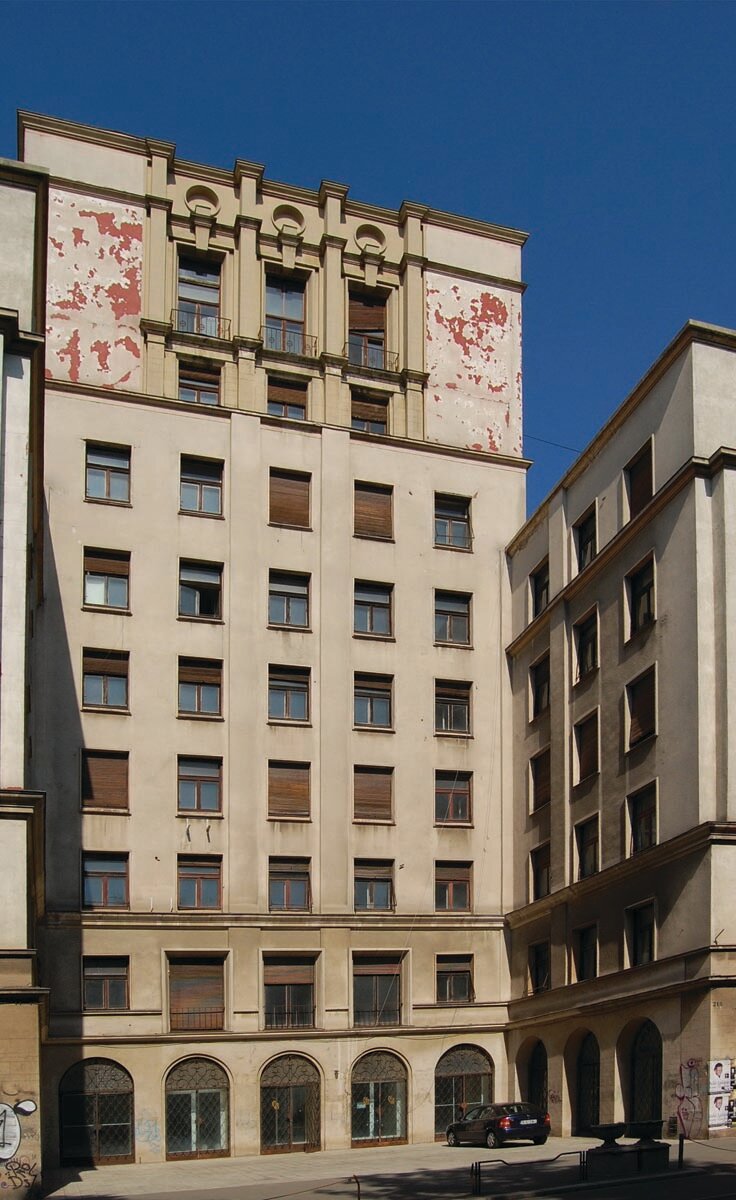
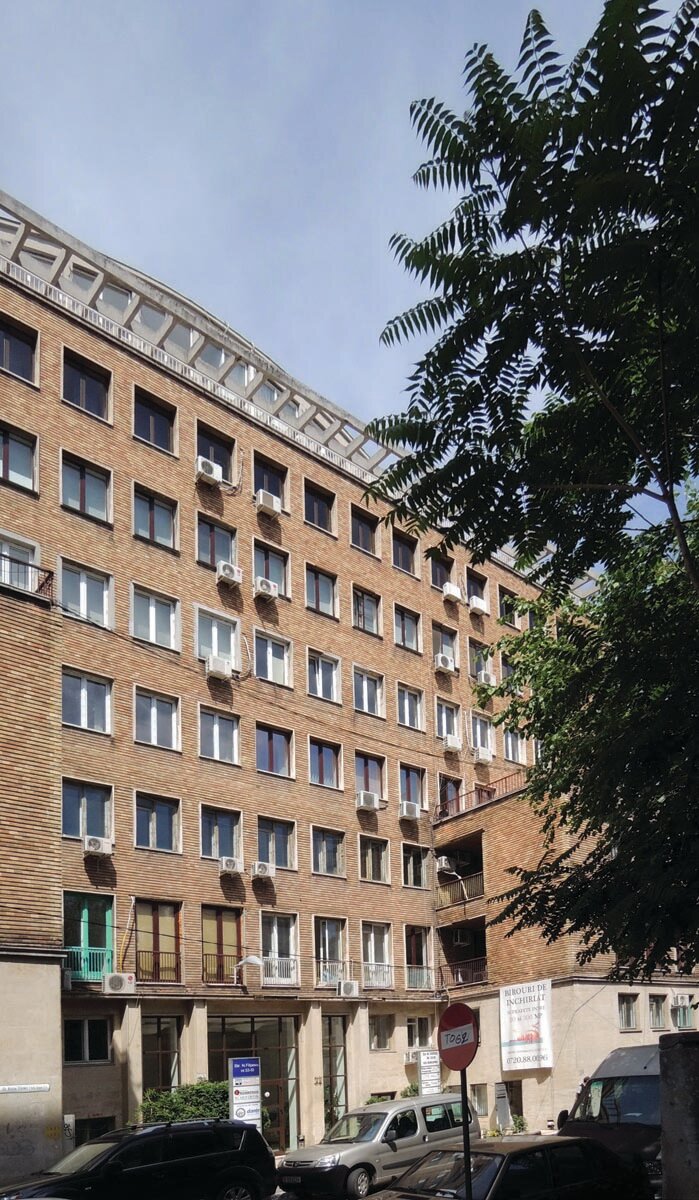
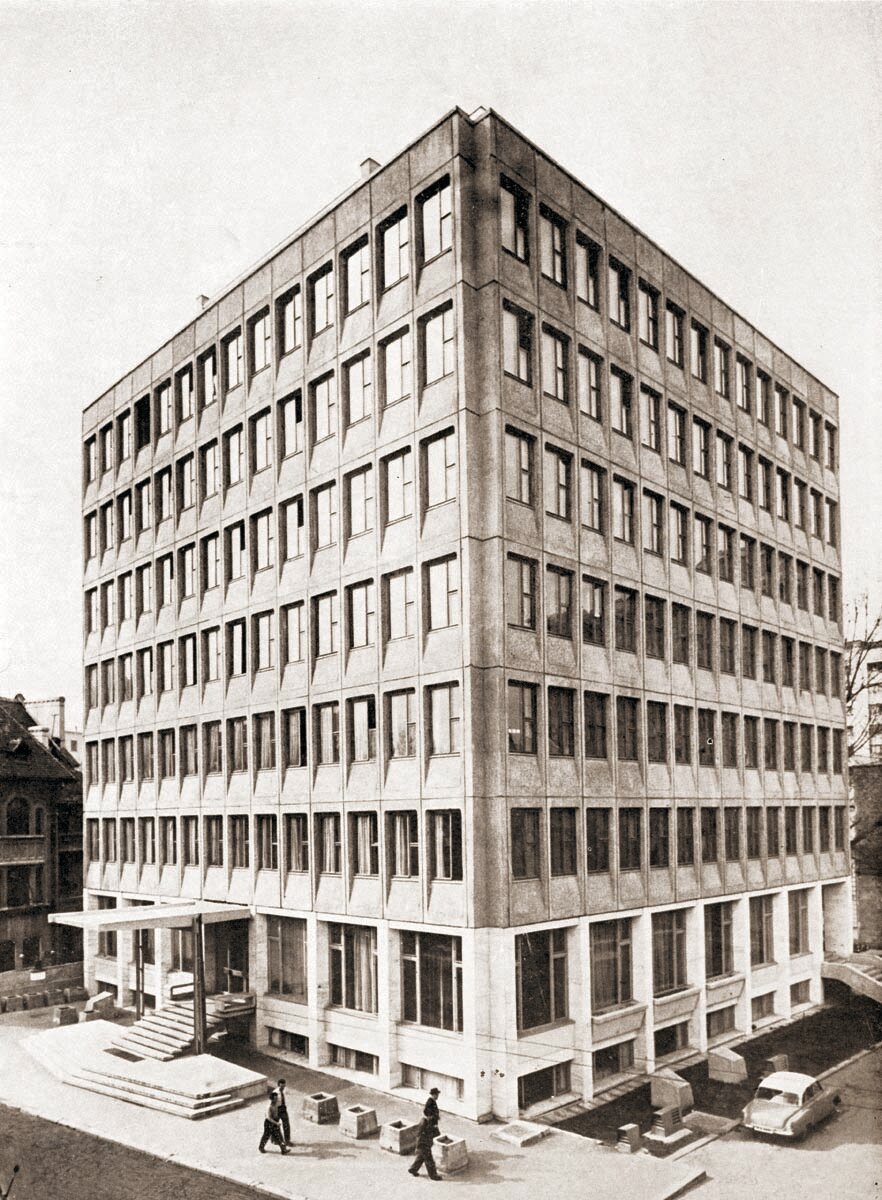
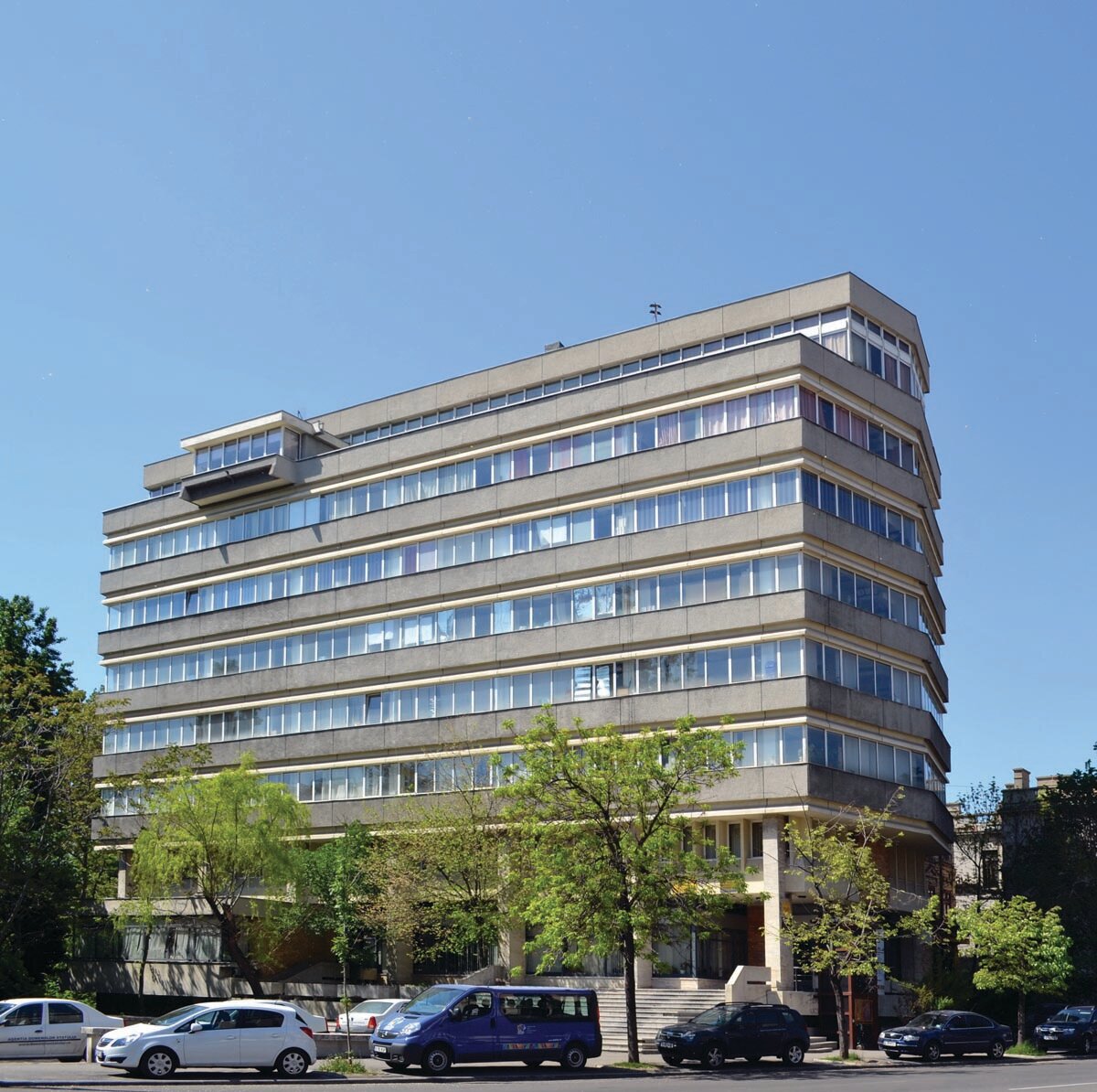
The IPI and the IPC became the organizational models and the main nuclei of the design institutes subordinated to economic ministries, large economic units or central or local government16 which, in various forms and at different times, were to constitute the exclusive framework for design until after 1990, including in the field of architecture17.
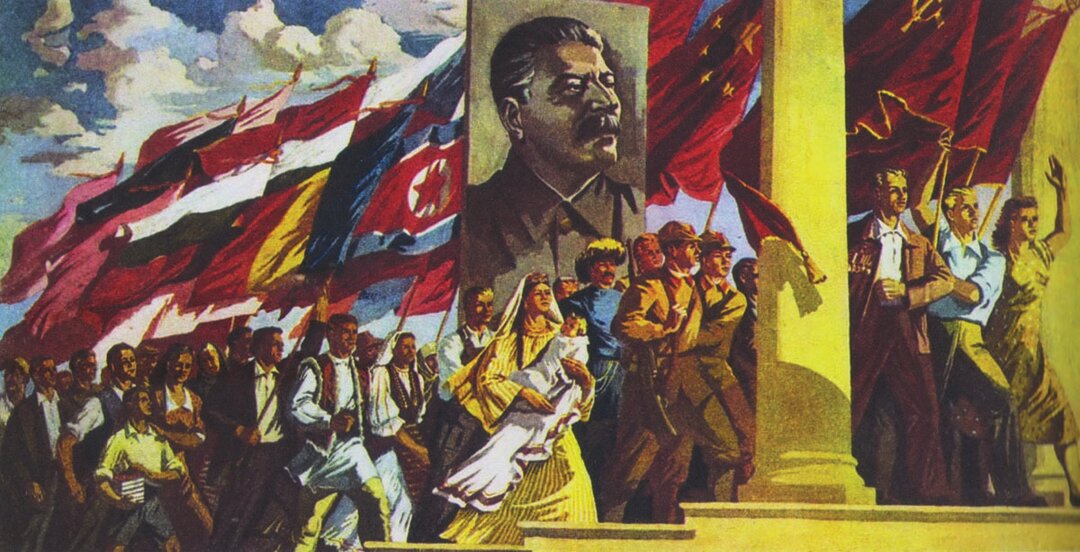
At the same time as architects were enrolled in design institutes, after 1948, there was a campaign to impose on Romanian architecture the Stalinist type of pseudo-monumental formalism, expressed by the so-called socialist-realist style, which was only one part of the complex process of subordinating Romania to the interests of the Soviet occupiers and which was disrupting the whole of Romanian society.
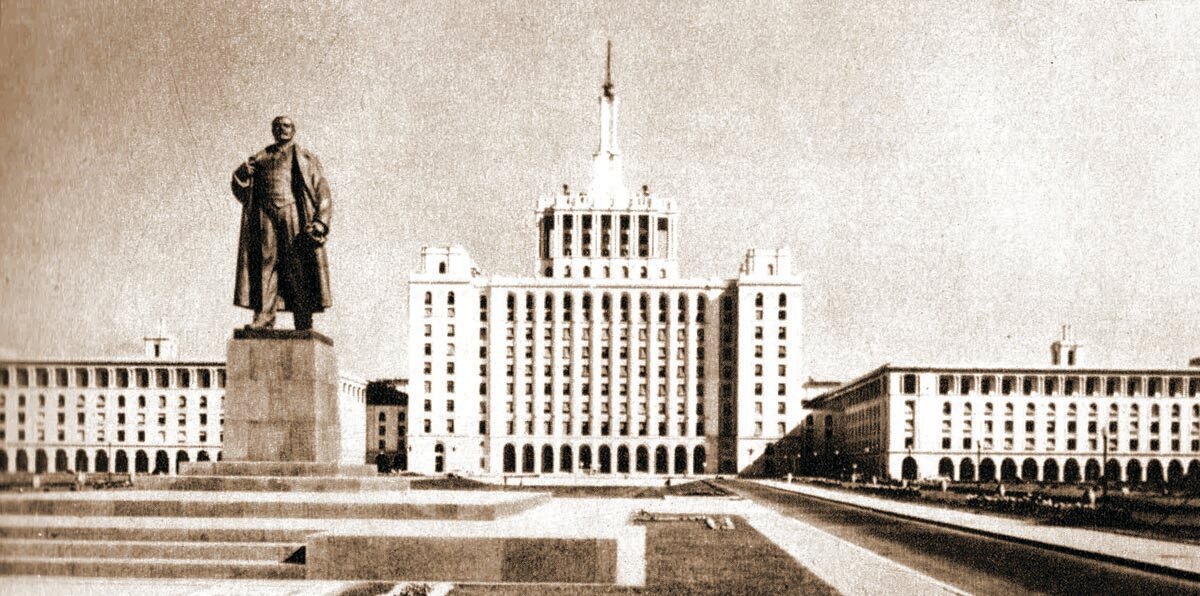
The main signal of the ideologization of architecture in the Stalinist sense was, in 1949, the modification in the manner of socialist realism of the project for the Casa Scânteii, originally conceived in a modern form. After consultations in Moscow, the architects Horia Maicu and Nicolae Bădescu, who were principally responsible for the work, returned to Bucharest not so much with a new project as with the conviction that in architecture too "light comes from the East"18. Until then, they and the other colleagues in the design team of the Scânteii House, despite their left-wing political views, practiced modern architecture without ideological dilemmas. "As a result of the discussions of principle and the clarifications received from the Soviet architects, a turning point in the work [...] of the team of architects of the House of Sparkle came about. [...] Clarification of the basic positions of socialist culture and art in opposition to the art and culture of the decaying bourgeois society allowed the architects of this representative building to penetrate deeper and deeper into the bright path traced by Soviet architecture."19
Bespoke architecture, with an imposed stylistic expression, had been realized in Romania even before the communist era, usually in some public buildings or at the express request of private beneficiaries. Many architects of the inter-war period showed great stylistic versatility, managing to design monumental buildings in the neoclassical or Romanian national style as well as Art Deco or modern architecture with the same professionalism. Perhaps this ease of approaching architecture in a diverse repertoire favored the adaptation to the formal requirements of socialist realism of some architects who began their careers before the war. Unlike previous experiences, however, under the totalitarian communist regime until the mid-1950s, the application of the dogmas of socialist realism in Romanian architectural creation became, in practice, an order to be obeyed and not to be discussed, any other form of expression being forbidden. Especially since 1948, in a general gloomy atmosphere dominated by the fear of brutal political repression, characterized by countless sentences to long prison terms, including many architects20, the Romanian intelligentsia was practically paralyzed.
Stalinist architecture
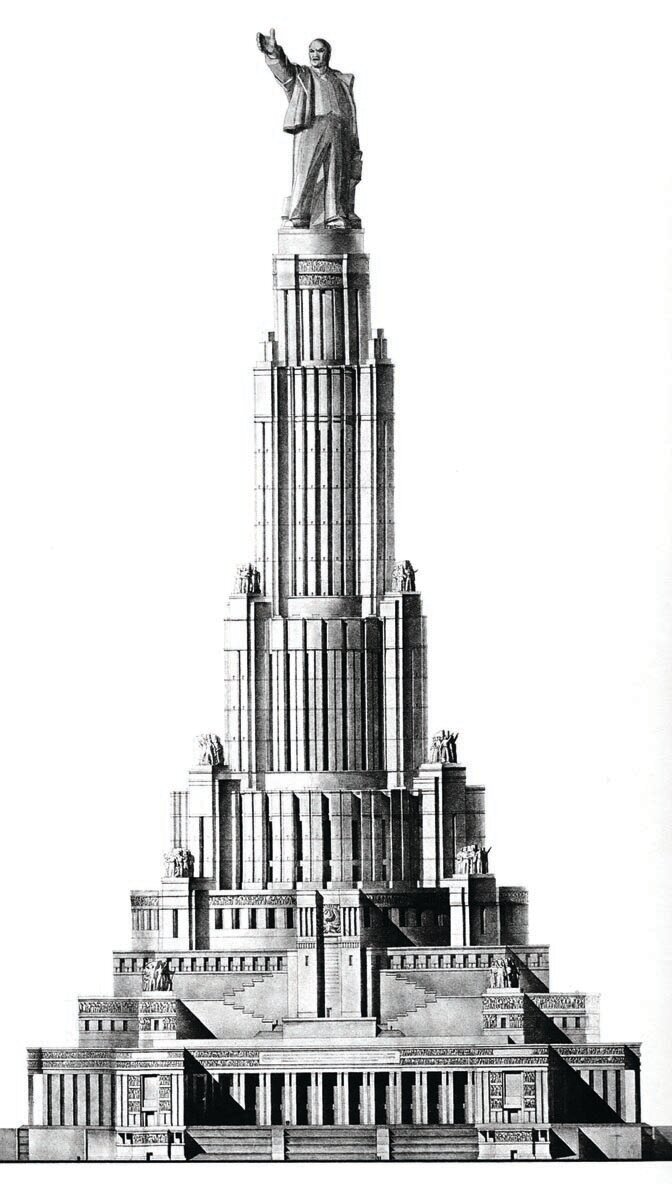
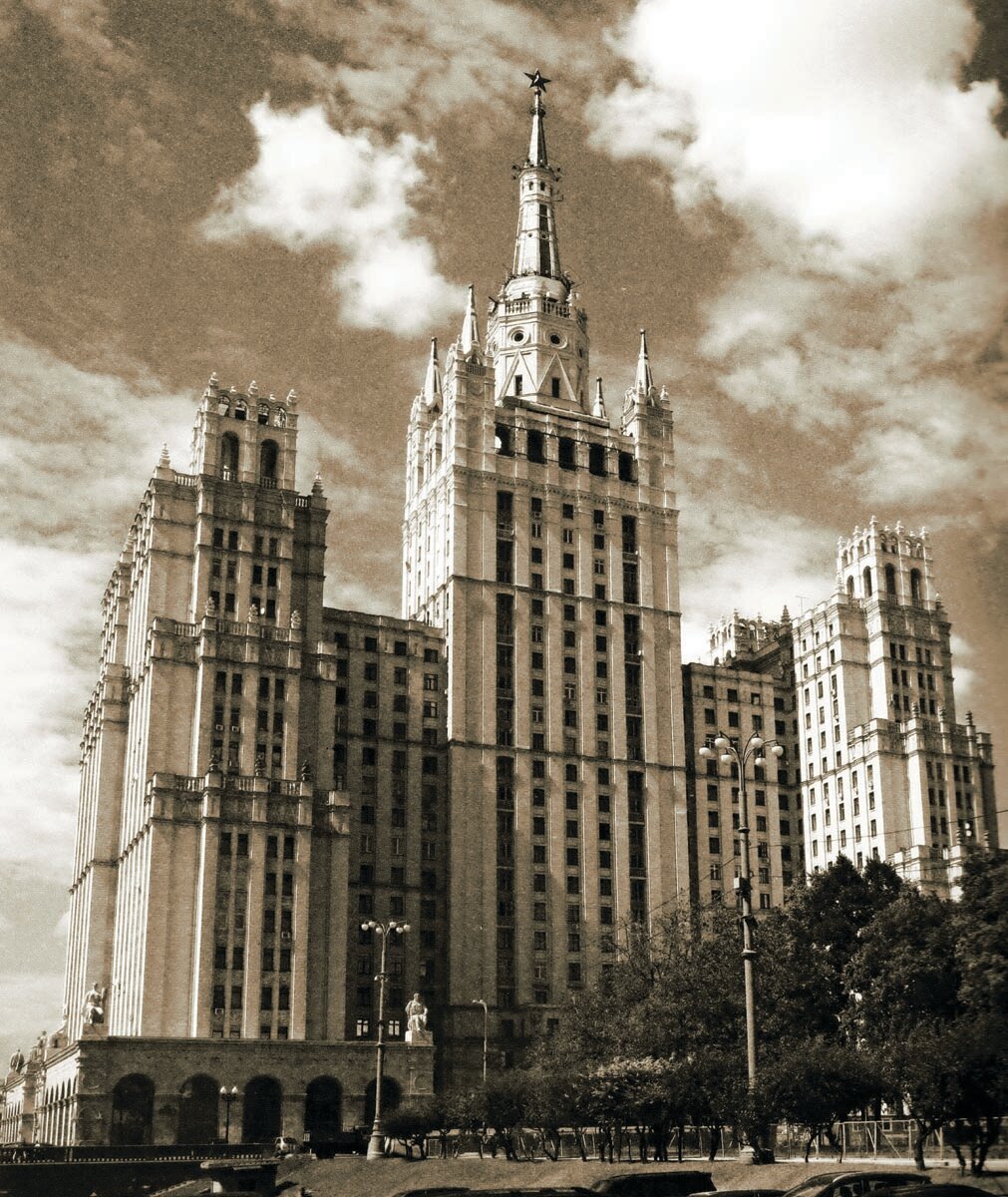
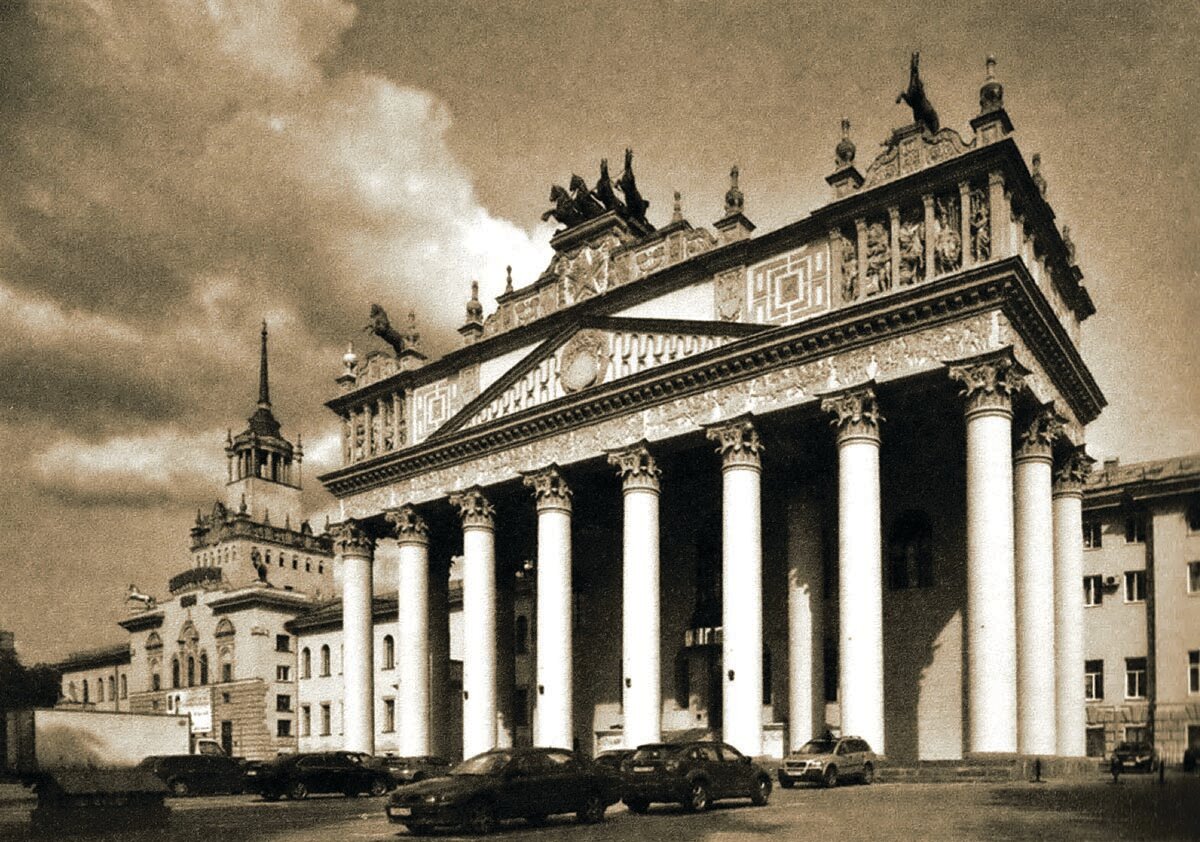
Corresponding to the Soviet models of Stalinist architecture21, the obligatory recipes also imposed on Romanian architecture in the early 1950s consisted in the creation of strictly symmetrical volumes, abundantly dressed with decorations inspired by classical Greek, Italian Renaissance and/or Russian neoclassical and baroque architecture, combined in forms that usually generated a hallucinatory eclecticism bordering on kitsch. They were seen as the only solutions that could give buildings, whatever their function, a triumphalist monumentality, which was seen as indispensable to reflect the successes in the construction of socialism, including the 'dignified and happy life' of the workers in a 'society without exploiting classes' or, as the case may be, even the struggle for peace. The application of socialist realism in Romanian architecture also included the pigmentation of decoration with elements taken from traditional architecture, in order to illustrate the slogan of the need to realize a "socialist architecture in content and national in form". After 1948, with the total suppression of freedom of expression, any real debate on the subject was excluded. The modern experiments promoted in the architecture of the inter-war period, in particular functionalist-rationalist or constructivist architecture, were unapologetically decreed as "formalist, decadent and cosmopolitan, representing expressions of bourgeois society and imperialism", and the neo-Romanesque style was considered archaizing.
In addition to the architects Horia Maicu and Nicolae Bădescu, mentioned above, Pompiliu Macovei, Gustav Gusti, Ladislau Adler, Marcel Locar and others also stood out for their zeal in promoting socialist realism in architecture. They were joined, more or less sincerely, by other architects already established in the inter-war period, such as Octav Doicescu22, Richard Bordenache23 and even Duiliu Marcu, the first president of the Union of Architects of the RPR, which was to be founded in 1952. In order to avoid deviations from the Soviet model and the dogma of socialist realism, in the early 1950s, architectural and urban planning work was supervised by a Soviet adviser.
Out of prudence, necessity and fear, many other important names of Romanian architecture established in the inter-war period aligned themselves with the new requirements, without becoming propagandists of the new dogmas. Among them were architects such as Tiberiu Niga or Nicolae Nedelescu, Constantin Moșinschi, Titu Evolceanu, Ion Ghica-Budești, but not only. At the same time, many young architects will successfully assert themselves under the sign of socialist realism, such as Cezar Lăzărescu, Nicolae Porumbescu, Alexandru Iotzu, Victor Aslan, Anton Dâmboianu, Bujor Gheorghiu, Mircea Dima, Sofia Ungureanu, George Filipeanu, Traian Stănescu etc. After 1958, when the return to a rational-functionalist architecture, they will have different evolutions, some of them asserting themselves as important personalities of Romanian architecture.
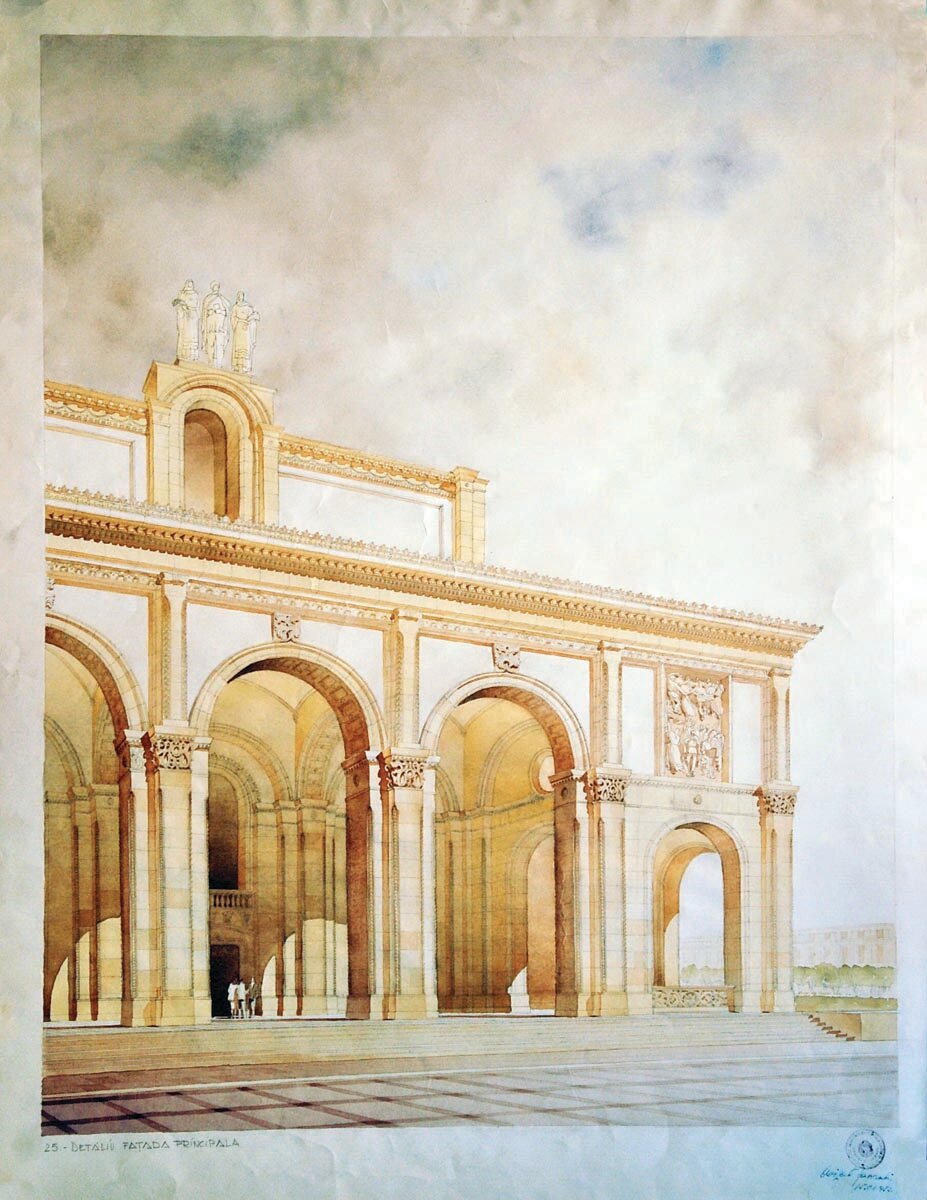
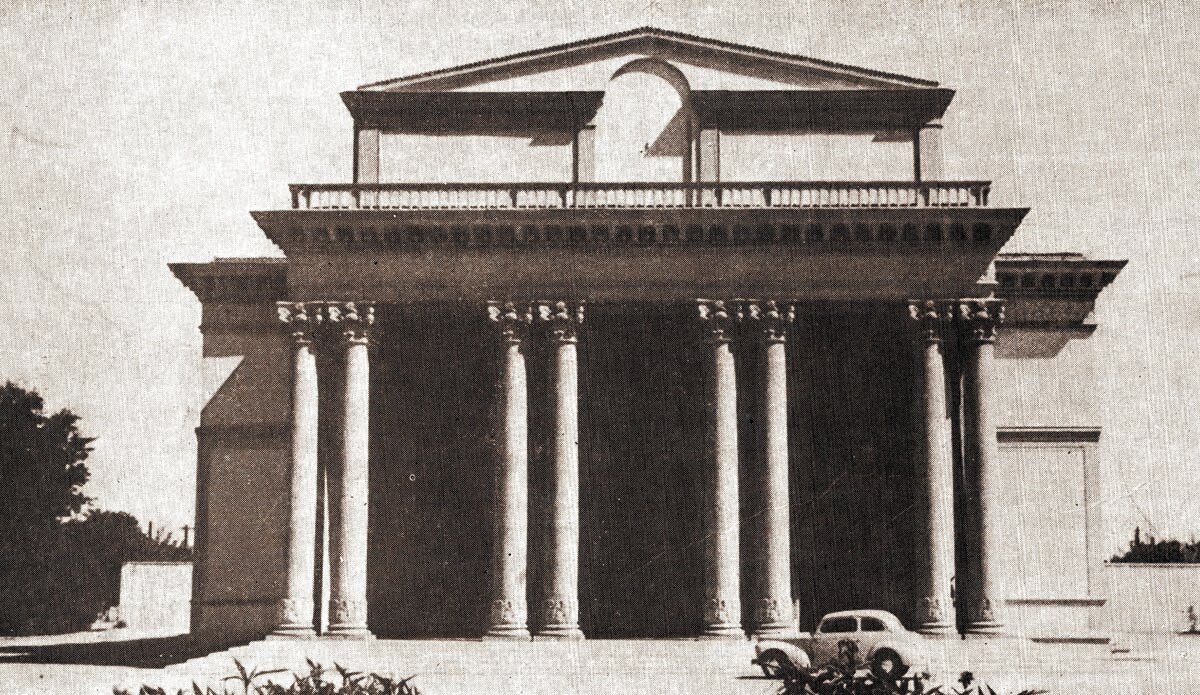
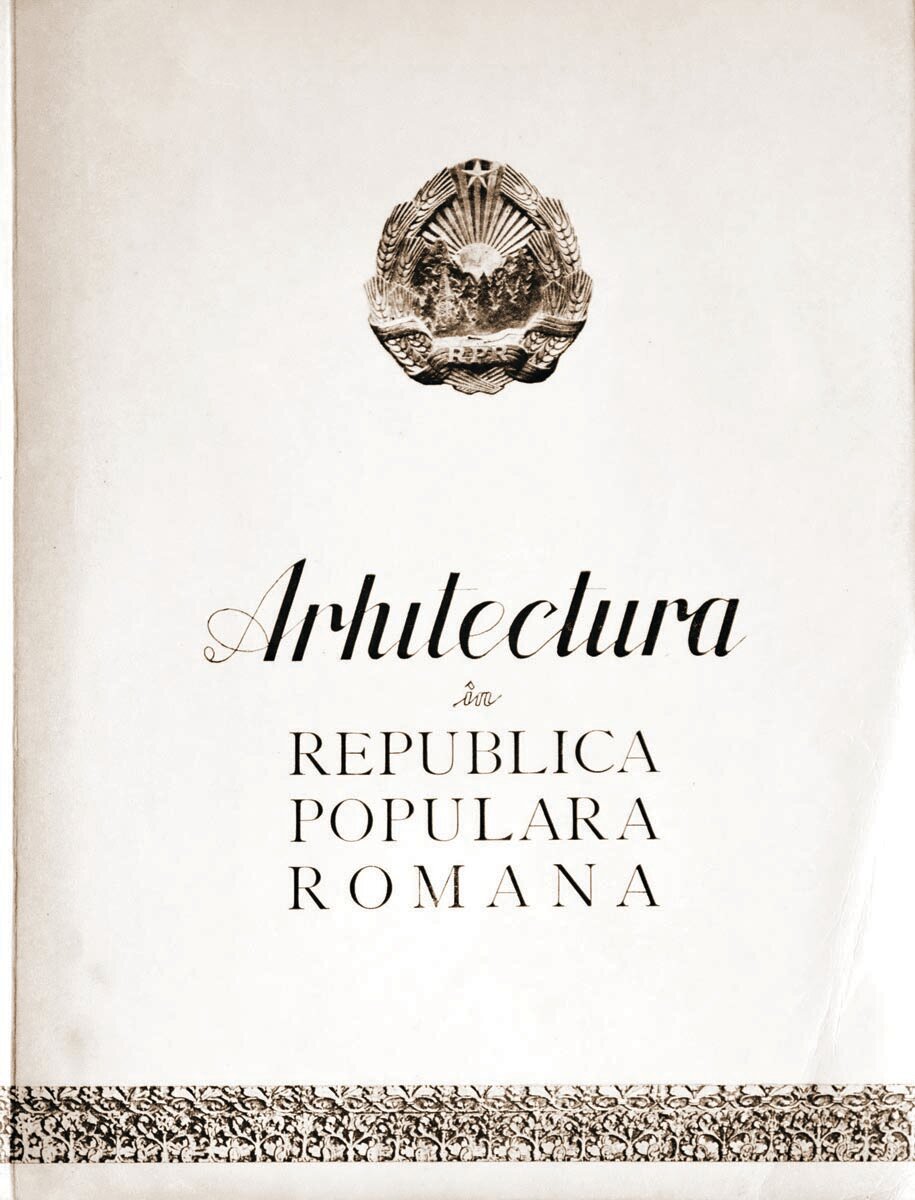
If, in 1949-1950, architectural production did not immediately reflect the new realist-socialist dogmas of Soviet origin, an aggressive indoctrination of architects was launched with the aim of imposing them. Numerous conferences vigorously demanded the exclusive application of the models of Soviet Socialist Socialist Realism, rejecting the experience of inter-war architecture, especially modern architecture. Using the language of communist propaganda, arch. Nicolae Bădescu held conferences on topics such as "Against cosmopolitanism and bourgeois-imperialist architecture"24 or "The national form in socialist architecture", the first presented in 1950 and the second in 1951 at the ASIT Congress, texts which, for a while, became a reference in Romanian architecture. Arh. Pompiliu Macovei even attempted, in 1952, a schematic rewriting of the history of Romanian architecture in his article "Probleme de creație în arhitectura RPR"25. Selectively, those monuments are presented which are considered to be a source of inspiration for architects in the design of traditional components, compatible with the "new", realist-socialist architecture. The earlier studies on the history of architecture are considered to have been prepared "...from an unscientific and cosmopolitan position...", but above all they sin because their authors "...concealed or minimized the strong and continuous ties that our people had throughout the historical past with the neighboring Slavic peoples, especially with the Russian people...". The album Arhitectura in the RPR, published in 1952, also under the direction of Pompiliu Macovei and also translated into Russian, English and French, excludes all the modern architectural achievements of the inter-war period. These are not the only examples, but they are part of an intense propaganda campaign, which apparently became less aggressive after 1955, when the political context began to change26. Certainly, most of these attempts to ideologize or reinterpret Romanian architecture did not have a real echo among well-trained architects in the interwar period, even if it changed their careers, but they were certainly confusing and more than harmful for young architects and architecture students, especially since among the main propagandists of socialist realism were also teachers.
However, in Romanian architecture, the episode of socialist realism in its harsh, Stalinist form was short-lived in the second half of the 1950s, due to political reorientations, and its slogans were gradually abandoned. From around 1960, the liberalization, albeit relative, of cultural life will mark another stage in the evolution of post-war Romanian architecture, made in a modern sense.
Architectural education27 also underwent a process of politicization and sovietization, especially since at the end of the 1940s it was considered decadent and it was considered that the faculty of architecture was "...accessible only to elements from the bourgeoisie of the landed or business bourgeoisie [...] the professors were also recruited from the bourgeoisie of the landed or business bourgeoisie [...] the education was abstract and cut off from reality"28.
From 1950 to 1961, strict social discrimination measures were applied to admission to university education, including architecture, in a bid to pseudo-democratize it. Thus, the majority of places for admission to university, as a rule 80%, were reserved for candidates from "healthy" social backgrounds, from working-class families or peasant cooperators, to the detriment of those from "petit bourgeois" families, intellectuals, former officials of the pre-1945 regimes or wealthy peasants ("chiaburi"). As a rule, young people with parents whose property had been nationalized ("enfants de burjui"), children of the pre-war political elite, children of priests or children of political prisoners had no chance of passing the entrance exam. These arbitrary criteria led to the alteration of the cultural level of university education, a process that was also fostered by the important role played in the direction and control of student life by the UTM (the PMR's youth organization), including the allocation of jobs at the end of studies.
The politicization of higher architectural education was also reflected in the curriculum. Some workshop themes aberrantly appreciated to have aimed "...either to satisfy the tastes and needs of the parasitic classes (luxury villas, night clubs etc.), or to obtain maximum profit on the basis of exploitation (buildings between the blocks, speculative blocks, "cheap housing") - all expressing the class ideology of the reactionary bourgeois- landlordism - [were eliminated and] new themes emerged, housing for working people, cultural hostels, libraries, sports complexes, pioneer camps, themes of city construction, industrial and agricultural architecture, all bearing the stamp of socialist concern for man"29. The students' projects, until after the mid-1950s, were oriented towards Soviet models, characterized by strictly symmetrical volumetry, exaggerated monumentality and dressed in a classicizing decoration, usually inspired by ancient Greco-Roman architecture and/or the Italian Renaissance (considered by Marx and Engels as a progressive artistic current) or taking elements from traditional Romanian architecture, officially considered as valuable. Theoretical courses were also reoriented to reflect mainly the Soviet experience, to which were added the teaching of social sciences (dialectical materialism, political economy, Marxism-Leninism or scientific socialism, compulsory subjects until 1989) and Russian (in the 1950s, the only foreign language studied).
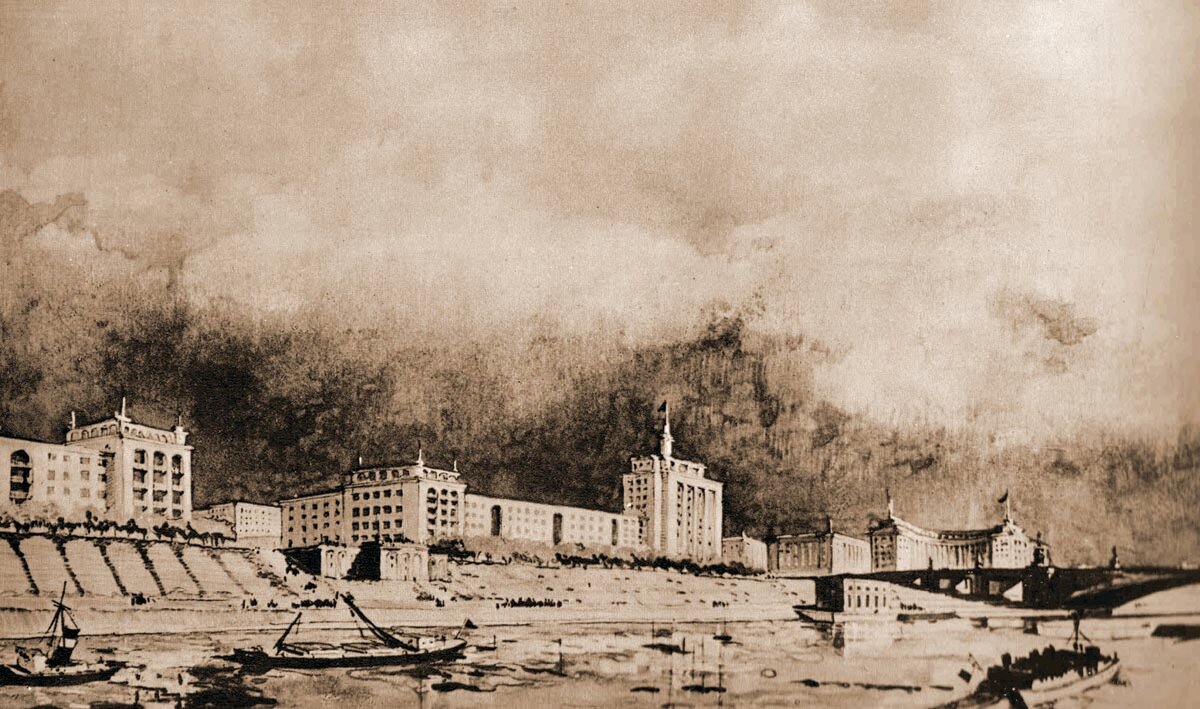
At the beginning of 1952, arch. Pompiliu Macovei, using the wooden language typical of the propaganda of the time, stated regarding architectural education "...formalism and cosmopolitanism, manifestations of reactionary and hostile elements, have been largely liquidated, they are manifesting themselves less and less, [....] they are exposed and vigorously combated by the teaching staff and the students, [...] the ideological orientation of the teaching staff is more just and unified; an important role is played by the dissemination of Soviet material and the study circles initiated by the PMR organization in the Faculty..."30.
However, compared to the humanist education at the Faculties of Philosophy, History or Philology, the political pressure and the process of ideologization of the School of Architecture were less aggressive, tacitly mitigated by many teachers, architects of high professional standing, trained in the interwar period, who often managed to avoid excesses. Many students of the 1950-1970 classes were positively influenced by the outstanding conduct of such professors as the architects Ascanio Damian (rector of IAIM between 1959-1971), Gheorghe Simotta, Grigore Ionescu, Valentin Iorga, Adrian Gheorghiu, Gheorghe Petrașcu, Richard Bordenache, Octav Doicescu, Mircea Alifanti, etc., or the mathematician Gabriel Sudan.
Definitivized by the Decision of the CC of the PMR of November 13, 1952, the radical changes in the way of practicing the profession of architect and its status, generated by the profound political-economic transformations, brutally carried out since the late 1940s and early 1950s, had the gravity of a fracture that was difficult to heal, which affected all the determining components of the activity of architects, which would be radically changed in comparison to the pre-war period. The following is a very brief description of some aspects, which are considered to be essential and which reflect the serious deterioration of the professional position of architects during the communist period, with negative repercussions on the quality of architectural production.
Thus, from 1950 to 1989, the labour market, including the practice of architecture, was strictly regulated by the state, which and state-controlled organizations, such as the cooperative ones, were the only providers of jobs, including for architects. At the end of their studies, young graduates were given 'production jobs' through compulsory assignments, at least for the duration of their training. The order of distribution was based on graduation averages, but also taking into account involvement in political activities (students who excelled in this area received a bonus of half a point on their overall graduation average). At the same time, during the communist period, the professional mobility of all categories of employees, including architects, was restricted by the obligation to change jobs only by "transfer in the interest of the service". Those who left an institution by 'transfer on request' or resignation lost all their seniority rights and were re-employed at a starting salary, regardless of their professional experience.
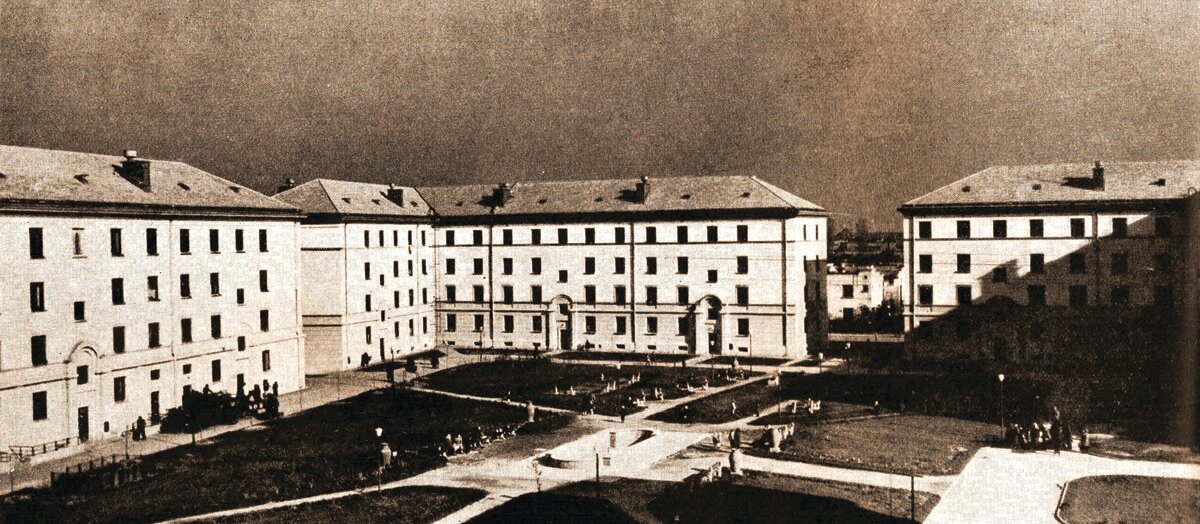
The professional position of architects also deteriorated with the loss of the right to freely negotiate their fees in relation to the value of the work designed. Since 1949, having become mere employees, architects were paid a salary, the level of which depended primarily on their seniority in the profession, but also on the category of importance of the design institute and/or the branch of the economy in which they were employed. Without exception, the salary did not reflect either the professional capacity of the architect or the importance and scale of the buildings designed. Since the end of the 1960s, the application of the so-called "globally agreed" system of pay in the design sector allowed, over the next few years, the accidental possibility of salary increases of 50% or even higher, but after 1975 these were capped, usually limited to 10-20%. In fact, architects, like all intellectuals, were included in the general process of social leveling promoted by the communist regime, which deeply affected the creative character of the profession, including its prestige31.
In the pre-war period, with the existence of private architectural offices, it was natural that only the architect who owned the office, thus assuming full responsibility for the works designed, was the author of the projects. Since 1949, when architects became salaried employees in state design institutes, architectural creative activity has been directed by a dense hierarchical structure. It was made up of directors, department and studio heads, project verifiers and members of approval committees, not always architects by profession, to which were added the functions of complex and specialized project managers, the latter usually also assimilated with the quality of project author, a situation which was true to a greater or lesser extent. In these circumstances, almost without exception, the authorship of works becomes collective. Particularly in the case of buildings that were considered to be the successes of the moment and were presented to the public, the real authors were sometimes lost in a long list of names that included those who had only had a circumstantial, more administrative involvement in the project. It should also be recalled that throughout the communist period, emigrating architects were no longer mentioned as having had any merit in the design of a work. Until 1971, in the official lists of UA prizes published in the journal "Arhitectura", even if in some cases there are omissions, an attempt was made to distinguish between authors and co-authors. From 1972 the author/co-author mentions disappear, and from 1979 they are replaced without exception by the formula "...for the contribution to the realization...". In the absence of alternative sources of information from the period, apart from oral histories, with their inevitable degree of subjectivity, the attribution of authorship of works from the period 1950-1989 is today marked by imprecision.
Until 1989, the creation of architecture was also affected by the more than precarious level of documentation, which was generally limited to magazines and books. In the 1950s a vast, exclusively Soviet professional bibliography appeared. Translations or adaptations of Soviet works were published, such as treatises on the theory and history of architecture, the architect's manual, or, above all, books on building technology, etc. From the early 1960s onwards, however, documentary materials, especially journals, gradually began to come mainly from the West, until the mid-1970s in relatively large numbers, and then gradually declined in number. Especially from the second half of the 1960s onwards, original books on architecture, some of real interest, have been published in small numbers. The works published have dealt with a wide range of subjects relating to the history of Romanian and universal architecture, problems of architectural theory, urban planning, biographies of some illustrious architects, bilingual dictionaries of architecture and construction, etc., to which should be added translations of reference books by foreign authors. A professional source of information with a significant impact was the magazine "Arhitectura", which during the communist period was the only Romanian publication in the field of architecture and urbanism, published since 1953 by UA.
In contrast to the situation in the pre-war period, when studies and documentation trips abroad, especially to France and/or Italy, were a matter of course for the practice and professional prestige of architects, throughout the communist period, their horizon of knowledge narrowed drastically, being limited to the domestic professional environment. Direct contact with foreign experiences was the stuff of unfulfilled dreams, let alone the possibility of studying or training abroad. The few exceptions, much envied, were the few cases of those who, in the 1950s, were scholarship holders in the USSR or were subsequently able to specialize in the West. The rare and short documentation trips organized by the UA, especially in the 1960s and 1970s, usually to socialist countries, as well as trips for work purposes or the occasional trips on their own, subject to obtaining a visa to leave the country, were until 1989 the exceptional occasions when architects could see first-hand something of the professional reality abroad, especially in the West. This explains the success at the AU of architectural presentations accompanied by slides made by those returning from a trip to Western Europe or other parts of the world.
Finally, without exhausting the analysis of the multitude of consequences of the measures taken at the beginning of the communist period, including the decisions of 1952, it can be concluded that the harsh application of the Stalinist architectural corset, coupled with the radical change in the framework for the architectural profession, in the context of the general degradation of the cultural environment, will leave traces in architectural practice that will be difficult to erase throughout the communist period and beyond. As the arch. Mariana Celac, in the first years of the communist regime, in a short period of time it was possible to "...control with authority not only the associative rights of architects or their professional product, but also the technical language and studio arrangements. Despite the latent and tenacious inertia that has always governed the development of architecture, an act of force - or a series of acts of force - imposed such a radical change in the professional mentality that the mutations in the genetic code of the professional still conceal their effects to this day..."32.
NOTES:
1 Materialized, first of all, by the nationalization of industry, legislated by Law no. 119 of 11 June 1948, as well as, among others, by the adoption of the annual plans of 1949 and 1950, then by the five-year plans, which would provide for the strictly centralized development of the Romanian economy until 1989. These, among other things, strictly established investment priorities in all areas, including housing and socio-cultural construction.
2 For the full text of these see the magazine "Architecture and Urbanism" no. 11/ 1952.
3 The Decision on the General Plan for the Socialist Reconstruction of Bucharest (HCM no. 2448/1952), a framework regulation, aimed to create a capital of utopian monumentality, many of its provisions being clearly inspired by those of the Moscow General Plan drawn up in the mid-1930s, but tacitly associated with some rational proposals of the 1935 Master Plan for Systematization, without taking into account the more than precarious economic conditions of the time. Even if in 1952 it was intended to finalize the Bucharest Master Plan in one year, until 1990, the urban development of Bucharest, including the other towns of the country, would be based only on very general urban planning documents, at the level of systemization sketches (form officially adopted in November 1959).
4 In 1954, due to economic and technical difficulties, this attempt to build a metro network was abandoned. Construction of the Bucharest metro was resumed in a different form two decades later, with the first section being operational for the public from November 16, 1979.
5 Around 1960, the headquarters of the CSAC/ CSCAS was located at 8 Radu Calomfirescu Street.
6 From the end of the 1960s, part of the CSCAS's tasks, mainly restricted to the systematization of localities, was taken over by the State Committee for Local Economy and Administration - CSEAL, then by the Committee for the Problems of People's Councils - CPCP, established in 1973.
7 In 1959, in order to protect and restore historical monuments, the Directorate of Historical Monuments was set up, which functioned until December 1977, when it was abusively abolished.
8 During the communist period, the chief architects of Bucharest were arh. Pompiliu Macovei (1953-1958), arh. Horia Maicu (1958-1969), arh. Tiberiu Ricci (1969-1974), arh. Mircea Dima (1974-1977), arh. Alexandru Budișteanu (1977-1983) and arh. Paul Focșa (1983-1989).
9 The People's Council of the Capital, between 1968-1989, called the People's Council of Bucharest - CPMB.
10 As a result of the Decision of the CC of the PMR and the HCM no. 2447 of November 13, 1952, the Conference for the constitution of the UA of the RPR was convened on December 20-21, 1952 (for details see the magazine "Arhitectura RPR" no. 1/ 1953, as well as the article "Short history of..." published in this issue).
11 The new political direction of urban and architectural concepts, first of all those related to housing estates and spatial planning in general, which was applied practically since the beginning of the 1970s, was to be regulated by the much more restrictive legislative framework on the systematization of localities and the realization of constructions, adopted in 1973-1975, with the additions made after the 1977 earthquake. It was formed in particular by Law 4/1973 (amended in 1980) on the development of housing construction, the sale of dwellings from the state fund and the construction of privately-owned rest homes, Law 5/1973 on the administration of the housing fund and the regulation of relations between owners and tenants, Law No 58/1974 on the systematization of urban and rural territory and settlements, Law No 59/1974 on land management, Law No 29/1975 on the systematization of industrial zones, Law No 37/1975 on the systematization, design and construction of traffic arteries in settlements (the Street Law). After 1977 Law 9/1977 on Building Safety and Law 8/1980 on Investments were added.
12 The evolution of the professional organization of architects in Romania is presented in the article "Short history of..." in this issue.
13 In order to control all forms of artistic creation, the Writers' Union and the Composers' Union were set up in 1949, and in 1950 the Union of Visual Artists, which, like the Union of Architects, replaced the existing associations in the respective fields until 1948.
14 The IPC was initially subordinated to the Ministry of Construction and its main activity was the design of civil constructions, systematization studies, including the elaboration of norms for the conformity of mass housing and model projects. In the early 1950s, the directors of IPC were arh. Horia Maicu and arh. Marcel Locar. Following the decisions of the CC of the PMR of 13 November 1952, a part of the IPC was subordinated to the CSCA, under the name of ISPROR, with the main fields of activity being standardized design, territorial planning, urban (except Bucharest) and rural systematization, communal household, architectural design of some works in the provinces, accidentally and abroad, etc. Also at the end of 1952, the collective that would form the nucleus of the Bucharest Project Institute - IPB, was to be spun off from the IPC.
15 Arch. Marcel Locar, "On the road of a new architecture in the RPR", in the magazine "Arhitectură și Urbanism" nr. 1-2/ 1952, p. 5.
16 In the 1950s the main design institutes were set up, most of them specialized in industrial profile. We mention only a few: IPCT for standardized building design, IPROMET for the metallurgical industry, IPCM for the machine-building industry, IPROLAM for rolling mill design, IPROCHIM for the chemical industry, ICEMIN for the mining industry, IPIU for light industry, IPIA for the food industry, ISPE for energy studies and design, IPCA (later ISPA) for agro-technical construction design, IPCF for railway design, IPTTc for transportation and telecommunications design, ISPCH for hydro-energy studies and design, IPCMC (IPIMC) for research and design in the field of construction materials, etc.a. Over time, the names of some institutes will change according to the reorganization of the ministry (department) to which they were attached, without changing the field in which they were active, keeping the same organizational conditions, sometimes cosmeticized according to the political conjuncture. Important design centres were also organized within the Ministries of the Interior and the Army or within the Ministries of Education, Health or Internal Trade (IPROCOM), but especially within the economic sector of the PMR/ PCR - the Party Household, later called the "Carpathian" Economic Office, which also included the "Carpathian" Design Institute. In general, for the headquarters of the design institutes, especially those in Bucharest, nationalized buildings, former hotels or buildings of companies that disappeared in 1948 (through nationalization) were used, sometimes long after 1990. Especially in the mid-60s it was possible to build a few buildings for design institutes, both in Bucharest and in the county capitals, initiatives that were stopped in the second half of the 70s.
17 Since 1990, architects have once again been able to work as self-employed professionals, under various forms of organization, more or less appropriate to the profession, as authorized individuals or small businesses. Since 1991 it has been possible to set up limited liability companies (limited liability companies) with architectural design as their main activity. Following the adoption of Law 184/2001 on the organization and practice of the profession of architect, with the introduction of the right of signature for architects, individual architectural offices could also be established. After 1991, the large design institutes were privatized as joint-stock companies, underwent numerous transformations and reorganizations, greatly restricting their activity and, as a result, no longer have a dominant position in the architectural design market.
18 The expression belongs to Mihail Sadoveanu, who coined it in a lecture at ARLUS in 1945, later published in a booklet and widely distributed. It praised the Soviet regime and, in particular, the Stalinist constitution.
19 Arch. Horia Maicu, "Despre folosirea moștenirii moștenirii trecutului în arhitecturai Casei Scânteii", in the magazine "Arhitectură și Urbanism" no. 4-5/ 1952, p. 9.
20 For the dimensions of communist repression among architects see Vlad Mitric-Ciupe, Arhitecții români și detenția politică 1944-1964. Entre destin concentraționar și vocație profesională, Bucharest: Editura Institutului Național pentru o Studiul Totalitarismului, 2013. This study details the cases of 75 architects who were former political prisoners, but from the research carried out by arh. Vlad Mitric-Ciupe, it would appear that by 1964 at least 150 architects had been subjected to the rigors of political imprisonment, a very significant number considering that at the beginning of 1959 there were 1,002 members of the UA in the RPR, and the total number of architects in Romania could not have been much higher.
21 For Soviet architecture in the Stalinist period, see Sorin Vasilescu, Arhitectura Rusiei staliniste, Bucharest: Editura Fundației Arhitext Design, 2014.
22 Author of the project for the Musical Theater / Opera and Ballet Theater of Bucharest, today the National Opera, inaugurated in a first stage in 1953/ 1954.
23 Director of the Bucharest Project Institute between 1952-1957, in the 1960s director of the Historical Monuments Directorate. In parallel, arh. R. Bordenache had a notable teaching career as a professor of the universal history of architecture.
24 Also published in the journal "Arhitectura" no. 1/ 1950.
25 Published in the journal "Architecture and Urbanism" no. 9-10/ 1952, pp. 30-58, reprinting a lecture given in Moscow on June 4, 1952.
26 After the death of I. V. Stalin (March 5, 1953), the signal for change would also come from the USSR, in December 1954, when Nikita Khrushchev criticized the decorative excesses of Soviet architecture, but above all on February 25, 1956, when the USSR leader, in a historic speech delivered at the 20th Congress of the CPSU, would also set in motion the process of destalinization, which was also imposed in Romania, but applied at first in hesitant forms, avoiding any fundamental change of this type in the regime.
27 Since its foundation, higher architectural education has had the following forms of organization: initially as a private school of the Society of Romanian Architects (1892-1897), then the National School of Architecture (1897-1904), first functioning as a section within the School of Fine Arts, which in 1904 became independent and was called the Higher School of Architecture. From 1931 it was transformed into the Academy of Architecture, with a four-year course. In 1938 it became the Faculty of Architecture, included in the Polytechnic until 1948. In the academic year 1948-1949 it functioned as an independent institute. From 1949 higher education in architecture was incorporated as a faculty in the newly founded Institute of Construction, with a duration of studies of five years. On November 13, 1952, the Faculty of Architecture became independent again as the Institute of Architecture, with a duration of study of five years, extended from 1954 to six years. In 1953, the Institute of Architecture was named after the architect Ion Mincu (according to arch. Grigore Ionescu, "Scurt istoric al învățământului arhitecturii în România", in the magazine "Arhitectura RPR" nr. 9/ 1956, p. 19-22).
28 Testimonies contained in the article Arh. Eugenia Greceanu, "Sovietization of architectural education" in the volume Arhitecți în timpul dictaturii - Amintiri, București: Editura Simetria, 2005, p. 123.
29 See the article arh. Cleopatra Alifanti and arh. Mihail Caffé, "Some Aspects of the Activity of the Architectural Workshops of the "Ion Mincu" Institute of Architecture", in the magazine "Arhitectura RPR" no. 6-7/ 1954, p. 59.
30 See the article arh. Pompiliu Macovei, "Proiectele studenții de la Facultatea de Arhitectură", in the journal "Arhitectură și Urbanism", no. 1-2/ 1952, p. 46.
31 Frequently, during the communist period, in order to supplement their income, some architects - especially young ones - in their spare time executed and then commercialized small decorative objects or furniture, icons, paintings, graphics, clothing, trinkets or greeting cards, while others tutored candidates for the entrance examination to the Faculty of Architecture. These small businesses on their own sometimes gave architects greater professional satisfaction than working in design institutes, especially if they were industrial.
32 Mariana Celac, "The Time of Fracture", after the book G. M. Cantacuzino. Despre o estetică a reconstrucției, Bucharest: Editura Paideia, 2010, p. 109.