Architecture Week 2016 – Creative Research

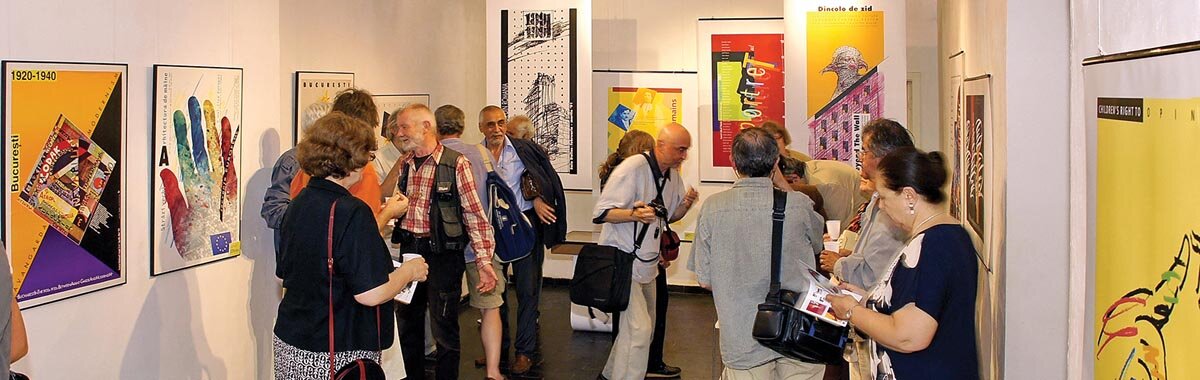
When referring to the recent history of architecture in Romania, the references would not be complete without mentioning Ioan Cuciurcă, graphic designer, and his work. This is because we are talking about the period of the 1990s, the period of change, of a new beginning that was not only transposed into much desired manifestations, but also represented visually in a way that no one had ever managed (or dared) to do. And this in turn was a sign of change.
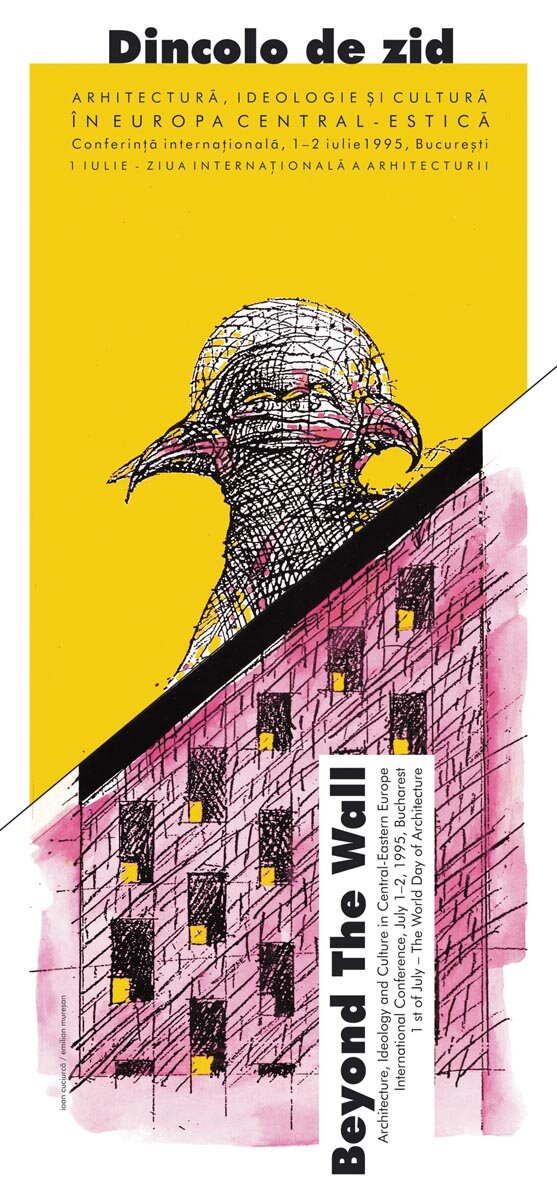
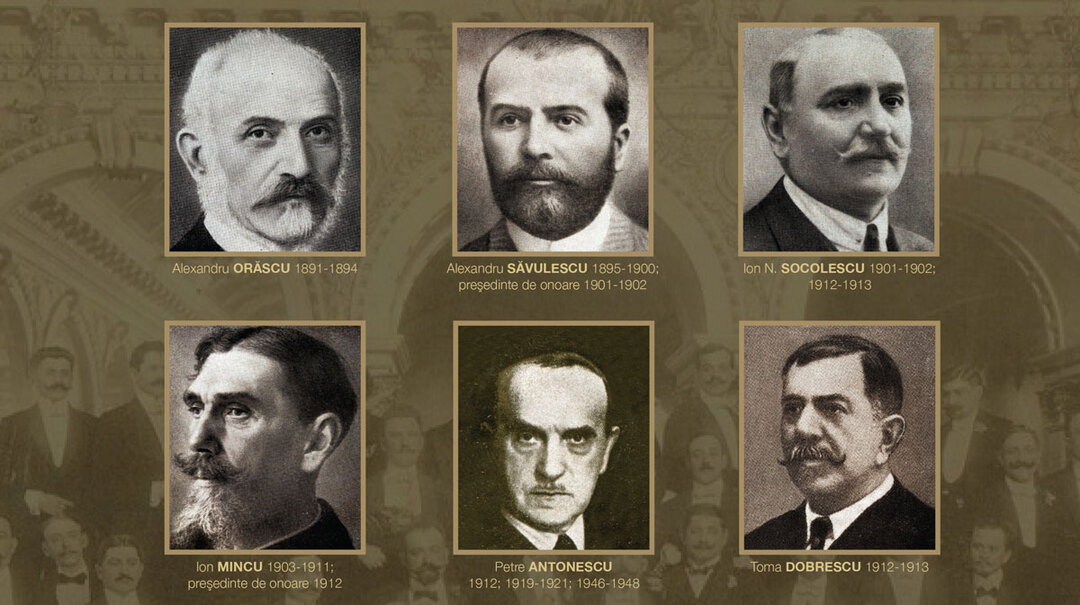
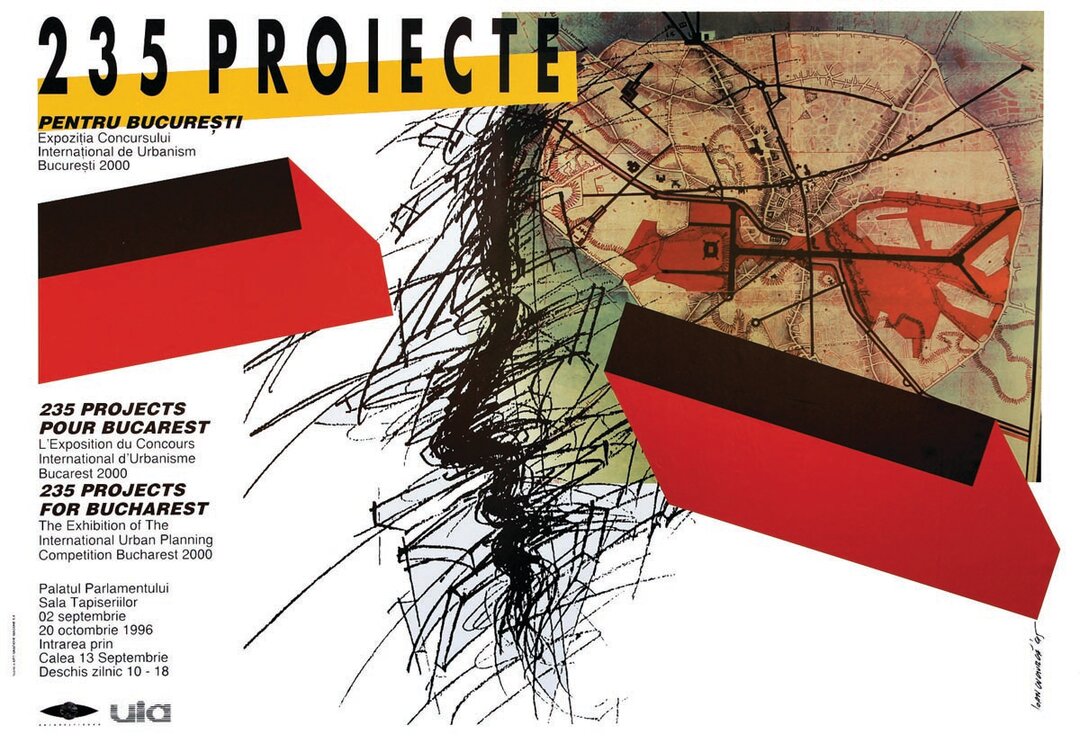
Who does not remember the visual signals of the first architectural events after 1990? The exhibition-manifest "Bucharest. The State of the City"? Or the series of centenary celebrations "Centenary UAR 1891-1991", "Centenary Horia Creangă" and "Centenary Marcel Iancu"? Or the long-awaited exhibition "Bucharest in the 1920s-1940s. Between avant-garde and modernism" and the engaging and complex event "Bucharest 2000"? These are some of the most important moments that marked this period, made memorable also because of the graphics that announced them, images impressive by the power of visual expression, by the vital force of line and color, by the unexpected graphic treatment of words. These are images that have enlivened the local atmosphere, gray, frozen and numb with expectation, transposed onto various supports and materials: posters and flags, catalogs and leaflets.
Of course, this new beginning benefited from the support and vision of a "client" open to the new - Alexandru Beldiman, president of the Romanian Union of Architects - a patron who sensed the need for change and knew what to ask for. He is one of those examples of serendipity, when the right people meet at the right time.
If the events mentioned above mark a new chapter in the history of architecture in Romania, Ioan Cuciurcă's post-1990 work is also history, being itself a page in the 25-year history of Romanian graphic design. The architectural themes were an extraordinary opportunity to go through stages that Romanian graphic design had not yet crossed. This is why her work should be seen and understood in two ways. On the one hand, as a synchronization with the Western culture, in line with the graphic design trends of the end of the century, and on the other hand, as an absorption of new techniques of computerized writing and the use of new tools (the computer). Looking at Ioan Cuciurcă's portfolio, three phases can be distinguished, chronologically configured as follows: recovery, synchronization, synthesis.
Covering the first half of the '90s, the first is a recuperatory phase, in which elements of postmodern aesthetics (the use of visual collage, the fragment, juxtapositions of geometric shapes and photographic images) used with skill and courage are inserted into "classic" compositions, developed axially, where broad and bold hatching is an unmistakable signature of the experienced graphic artist. The posters of this period are joined by the first catalogs - an exercise in editorial design that would evolve into a distinct area of interest. The visual of the exhibition "Bucharest in the 20s and 30s. Between avant-garde and modernism" heralds the change already now, with pluriaxial compositions becoming the preferred compositions.
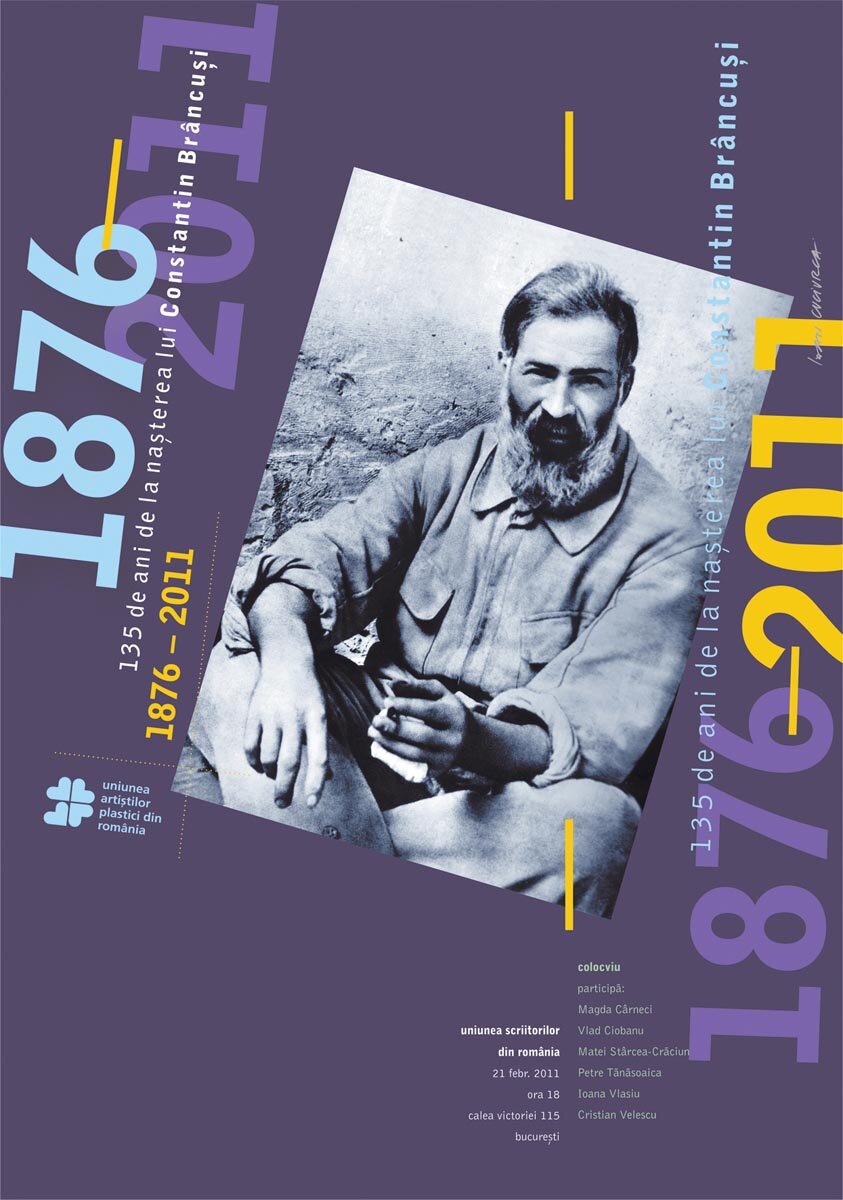
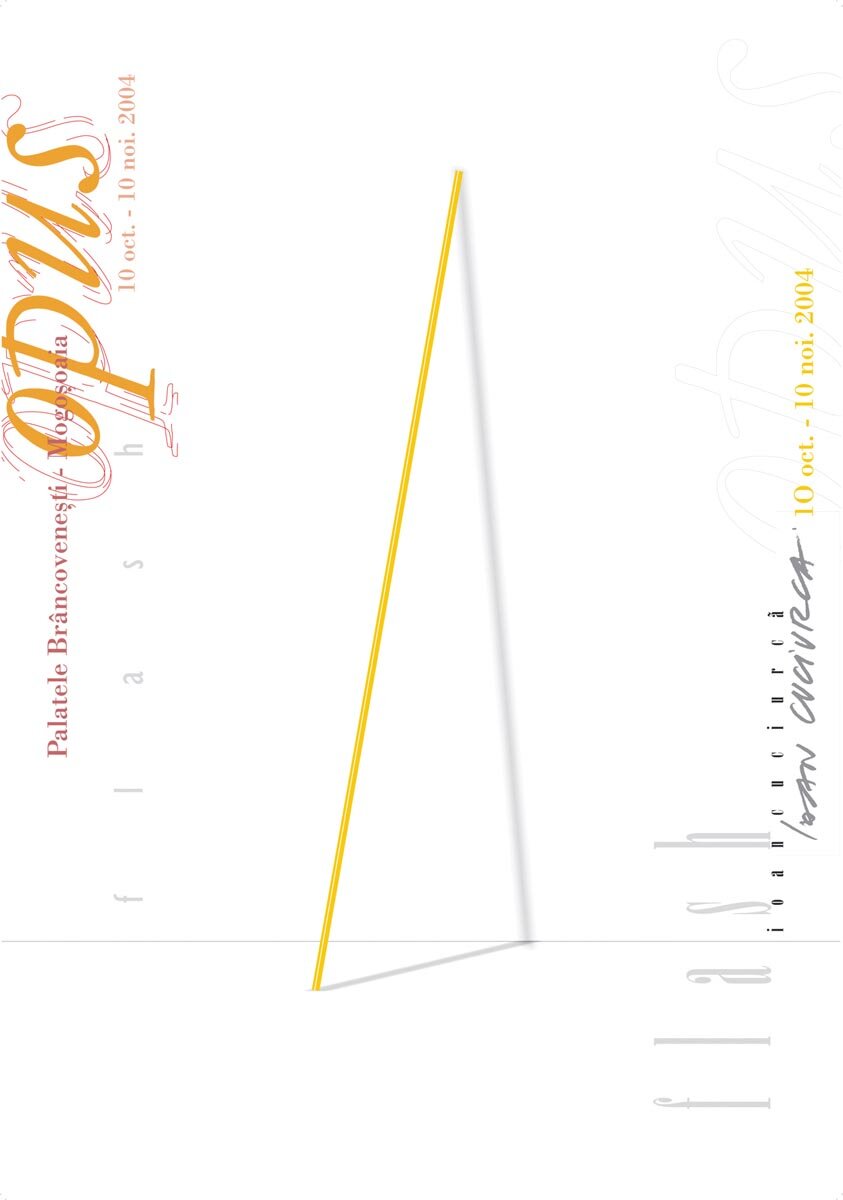
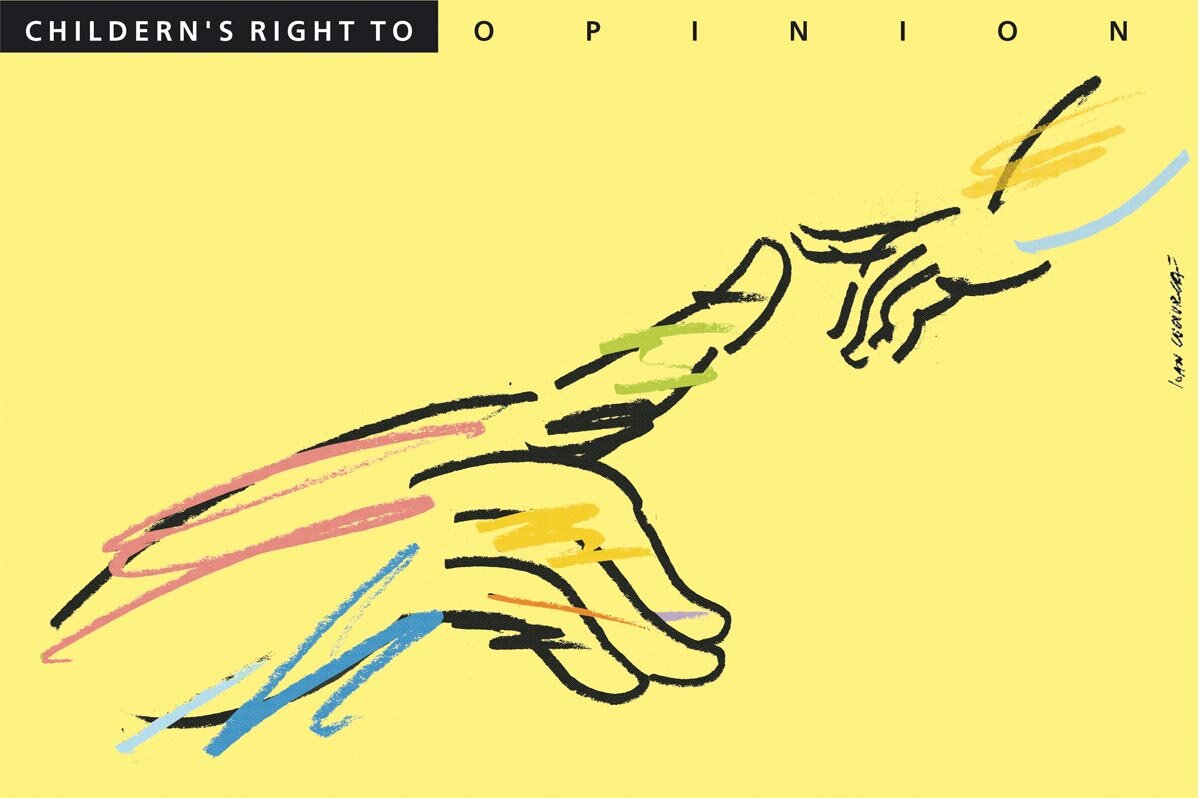
The use of graphic programs gives it a new vision, and the image previously built on emotion is replaced by a rational, calculated one. The deconstructivism practiced by Ioan Cuciurcă in the late 1990s is carefully elaborated and invites the viewer to participate, to select his visual path, to choose. The image is now unstructured, "decomposed" into its component elements (words, lines, contours, transparencies) and gains in refinement and detail. Posters for his own exhibitions (Vienna and Bucharest in 2004 and Rome in 2007) and posters for events organized at the Mogoșoaia Palace are just a few examples. This new graphic treatment has a consistent and defining influence on editorial design productions.
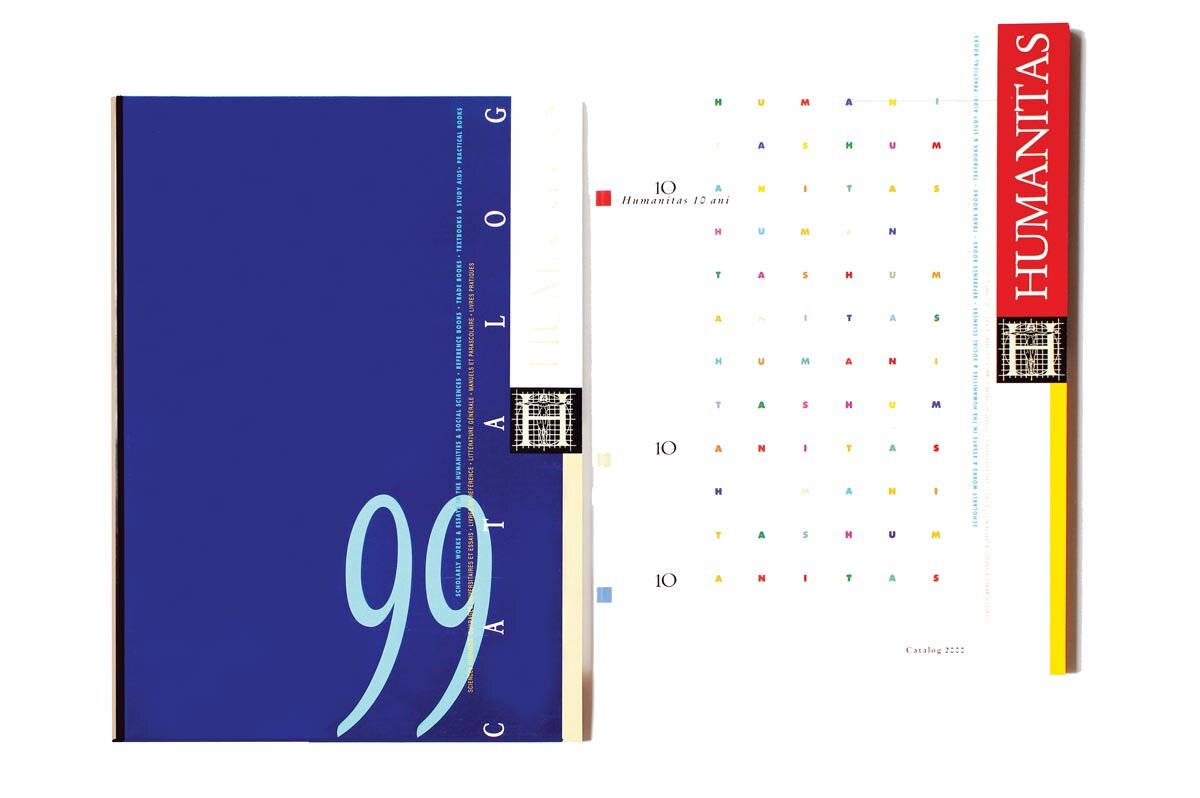
His collaboration with Humanitas publishing house in the late 1990's led to his first book projects in which he applied deconstructivist principles (in the Humanitas Practic series). In the atmosphere of this decade, when publications had barely shed the yellowed paper through which the text printed on the back of the book was transpiring, Ioan Cuciurcă brought not only the joy of reading but also the pleasure of holding a book in one's hands. The book becomes both a useful and delightful object in all its simplicity. The page is now uncluttered, accented and invites the reader to a supple, flexible reading.
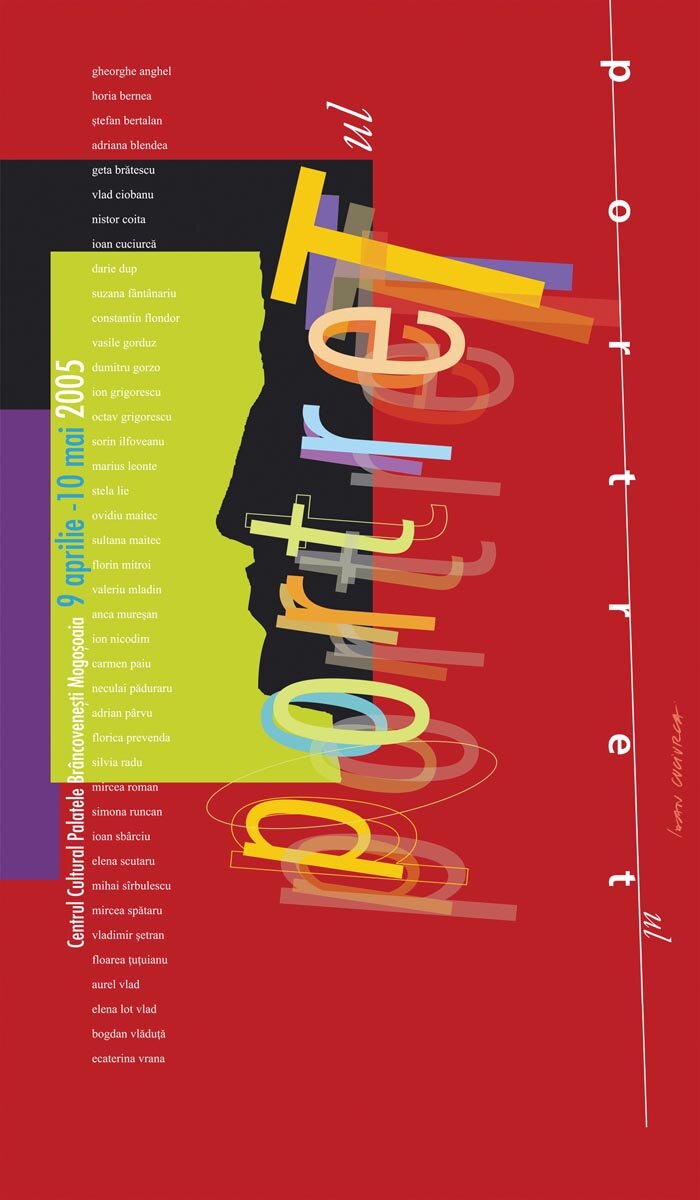
Ioan Cuciurcă developed the layered reading, following his own interests, in the following years. The multilayered compositions become a stylistic key, a signature of the author. Whether it is a catalog cover or a poster, the visuals are sophisticated, complex through the range of interventions and elements contained. Like the new wave designers, Cuciurcă is prone to a play of contrasts (legible-legible, transparent-opaque, top-bottom, line-spot, positive-negative and so on), to the intellectual game of putting the viewer (and the reader) to work. They are compositions that bring a kind of chromatic sonority, a reverberation produced by the repetition of elements. The poster for the Portrait exhibition or the series of catalogs published by the Brâncovenești Palaces Cultural Center are just a few examples that I mention here.
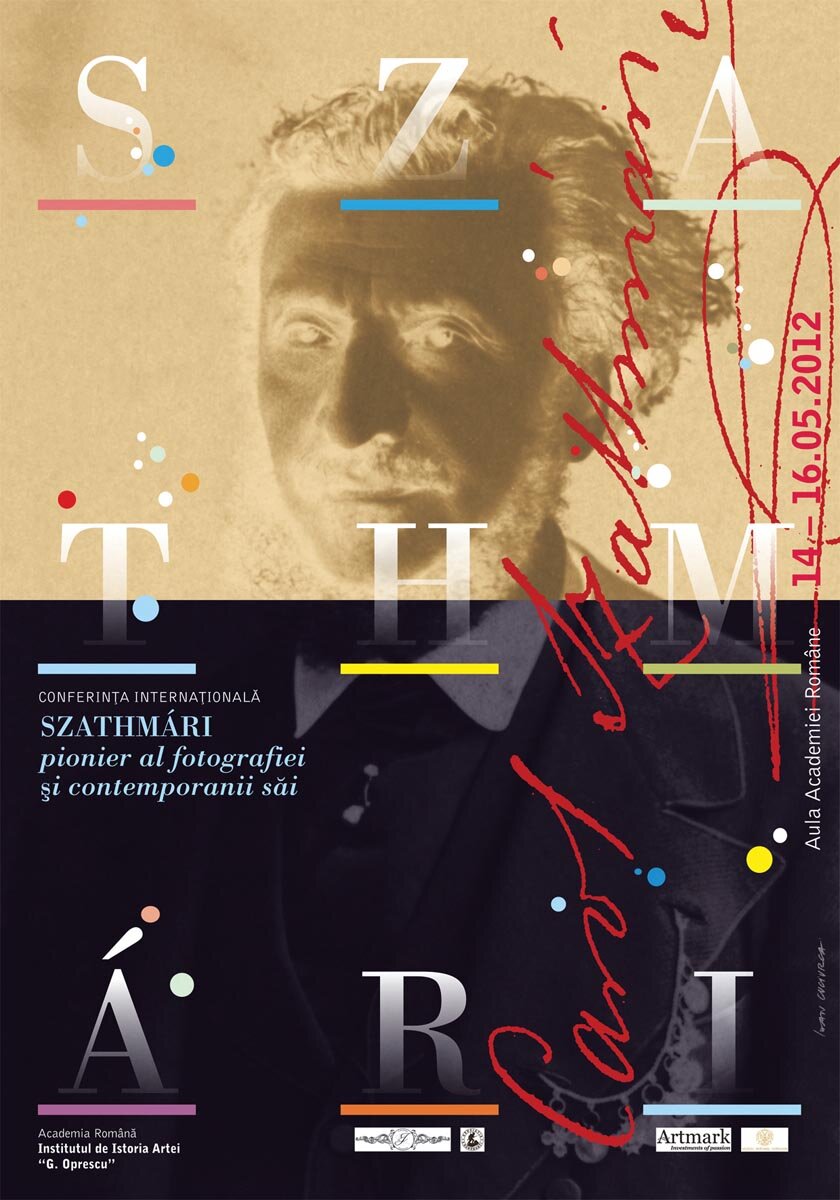
The third stage, which began at the end of the first decade of the 21st century, is characterized by a preference for letter treatments. Incorporating images into the body of the letter is a favorite intervention. Words decomposed into letters become the visual heroes of this period. Large letters, with generous surfaces, displaying their construction and the details that characterize them, fill compositions such as the series of posters for ceramics exhibitions ("Randez-vous ceramic"), the thematic exhibitions at the Mogoșoaia Palace ("Szathmári, pioneer of photography, and his contemporaries") or the events organized by the Institute of Art History ("Theodor Aman and his era").
Ioan Cuciurcă is not just a graphic designer. A graphic artist by education, a graduate of the Institute of Fine Arts "Ion Andreescu" in Cluj, he remains attached to the guild to which he belongs and dedicates part of his time and concerns to it, organizing with skill and determination (determination) annually, since 2011, an ambitious event: Romanian Graphic Art. It is perhaps also the effect of the events in which he is a constant participant, of the international poster biennials, such as the one in Mexico City, where he made it possible to see and hear about Romanian graphic design.
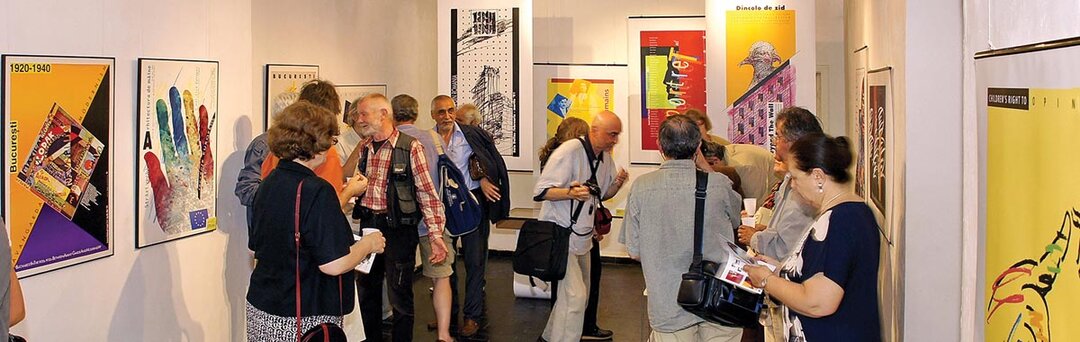
Ioan Cuciurcă has always wanted to leave "traces". Whether it has been posters - a design object to which he (re)gives its deserved, valuable place as an aesthetic entity - or editorial design, his creation goes beyond the limited framework of singular, occasional projects. It is like a red thread worthy to be followed for the understanding and the historical journey of the Romanian graphic design, but, at the same time, it is a landmark in the evolution and maturation of this field. The poster exhibition titled "Afiș +" - a solo exhibition, with two editions, in Bucharest in 2013 and in Ploiești in 2015 - is a testimony to her journey and her credo as a designer.