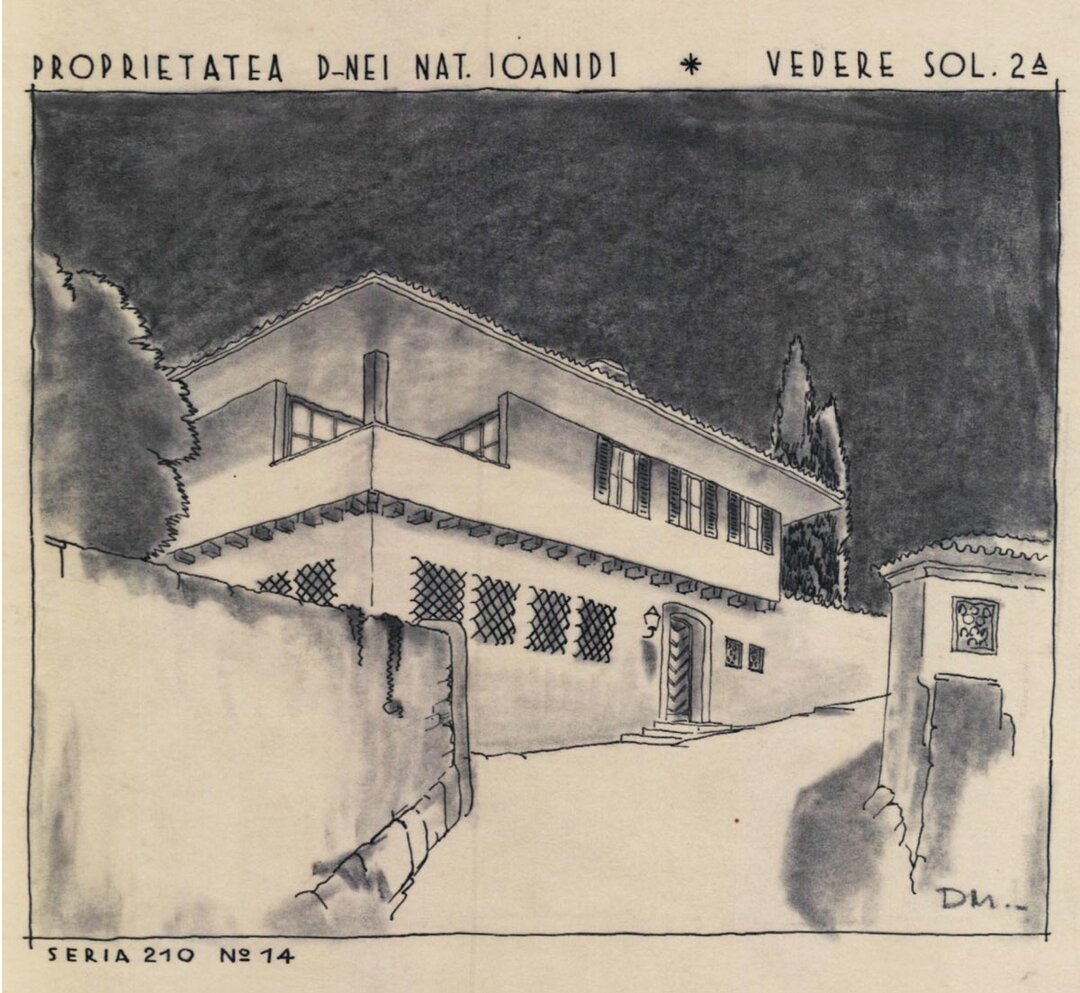
The man, the architect, the professor Duiliu Marcu

Who is to blame for the state of the countryside?
The current disastrous situation in rural construction can easily be explained by what happened after 1989 in urban areas. Rural society, whether traditional or not, has constantly tried to assimilate, adapting to local needs building models from the city. However, in the current situation, in which urban architecture itself is undergoing a serious identity crisis, and hence a crisis in the quality of the built environment, the urban model can only confuse a rural society undergoing a twofold transition: firstly, to make up for the shortcomings in terms of living comfort in terms of utilities and the lack of certain functions, and secondly, to adapt Romania to European housing standards. Traditional houses are beginning to be transformed following the example of the "villas" in the city, the ultimate architectural program in the eyes of any villager. One neighbor imitates the other, and if they don't have the money to keep up with the transformations and alterations, they borrow from the bank to keep up. This social cohesion and coherence, an order in disorder, is perhaps the greatest asset for saving Romania's villages, but this will only become apparent when the preservation of a house becomes a general trend and an element of local pride. A first sign is already being felt in the field of ethnographic and intangible heritage. Hundreds of localities have set up museums, each village now has a folklore ensemble or group, villagers take old clothes out of the crate and put them on for holidays or a notable event, and town halls are competing in local gastronomy festivals. I was surprised to see the girls in Breb how carefully they kept their old trunks inherited from their grandparents, which they rarely sold to anyone else. Prices were exorbitant, the more moth holes they had, the more expensive they were. Here is an example where a certain side of heritage is valued by the young people of the village, without any education or outside influence. I noticed similar things in my wanderings through the Olt Country, trying to acquire old costumes for their own museum. Out of local pride, but also for fear of the gossip of the village, women and girls would not sell costumes they no longer wore. It's an unwritten rule to keep your old clothes.
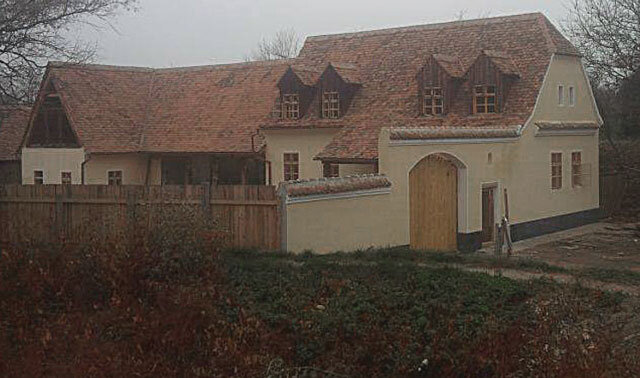
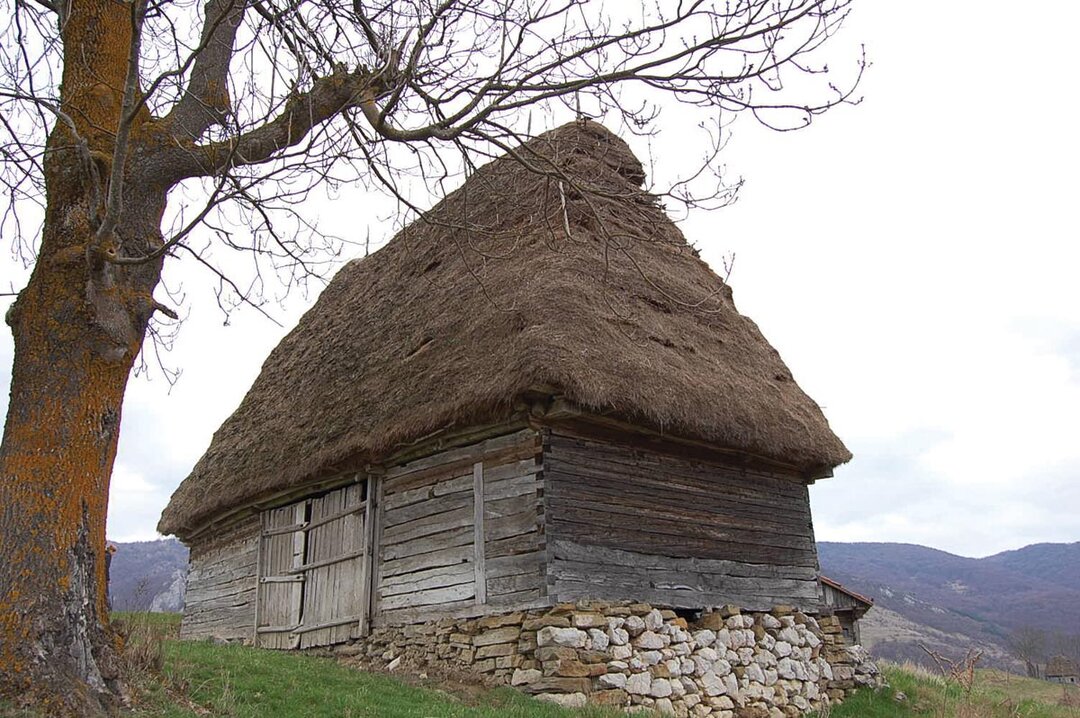
But what about old houses, which no 'sane' homeowner can resonate with? They are equated with the poverty in which their (fore)fathers lived, and so the owners want to get rid of anything that reminds them of it as quickly as possible. Should it be a problem that adapting a traditional house to modern standards of comfort requires a lot of money, or that once an old house has been renovated, you will have to live in it for a lifetime? The experience of discussions with over 10,000 owners of traditional houses leads me to believe that there is something else at play. Romanian rural society is, paradoxically, still traditional to its very core, only the means of expression has changed. The social status represented by residential buildings or certain objects is still a reality in Romanian villages. It was no different in the past either: in Oaș, for example, the height of the bell was a sign of social status. Nowadays, the bell has taken the form of "thermopane" windows, wrought-iron gates or balconies with balusters. This desire for representation is understandable up to a certain point, but incomprehensible is the attitude of the architect who feeds utopian visions with a decontextualized and poor quality design. This practice is, with few exceptions, widespread in the countryside, and is considered by many to be the dustbin of architecture, a realm where no one sees what the other has designed. There are not a few cases where the same project that has been implemented in series in the city receives, for a little extra money, another stamp of approval to be implemented in the village. In other cases, due to lack of funds, the owners take projects from the internet and execute them without a building permit, knowing that they will only get off with a small fine at worst.
Industrial materials play a big part in altering the local character. They are generally of dubious quality and are poorly implemented by the owners. Any new industrial material that is used to build a house in the city is quickly assimilated by rural dwellers, taken home and given pride of place in the construction of the house as a standard of social status, even if the logic of the material's use is denied.
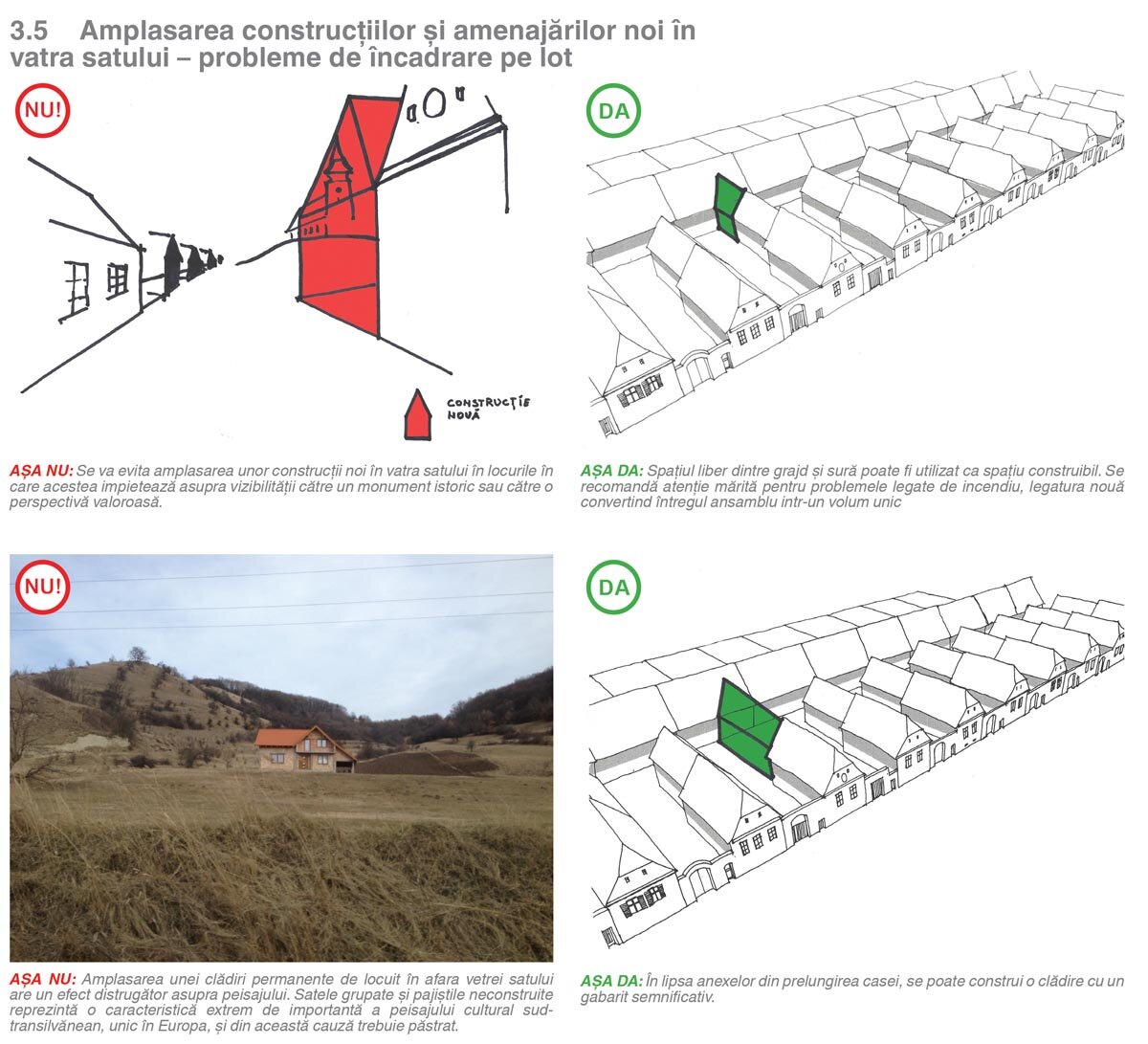
Buying building materials from industrial producers neglects another important aspect for the economic growth of the community: the internal use of financial and human resources. There are countless cases in which young people from the countryside working abroad have returned with a significant amount of money that they have invested in building a house, preferring to purchase industrial materials from multinational manufacturers instead of buying from local producers such as tilers, carpenters, blacksmiths, etc. In this situation, an important opportunity to contribute to the economic growth of the community through the internal circulation of funds has been lost. Seen from a pessimistic perspective, the problem seems to be without solution, often thinking that these people should be left to build their utopian dwellings, quenching their thirst to live apparently like those in urban areas, to experience first hand the inefficiency and discomfort of industrial buildings and to return convinced to traditional housing based on cultural, ecological, but above all practical principles.
That is why the community has such an important role to play in this whole process of preserving the cultural landscape of the countryside. The restoration of the existing built heritage involves a whole social and economic support mechanism from the second line, through the development of crafts, the market in traditional materials, tourism, etc. It is true that tourism is one of the few pillars of support for a community, through the income it generates, but unfortunately it also produces quite visible undesirable changes and mutations in the area of intangible heritage: the craftsman and the owner change their behavior, the object becomes handicraft.
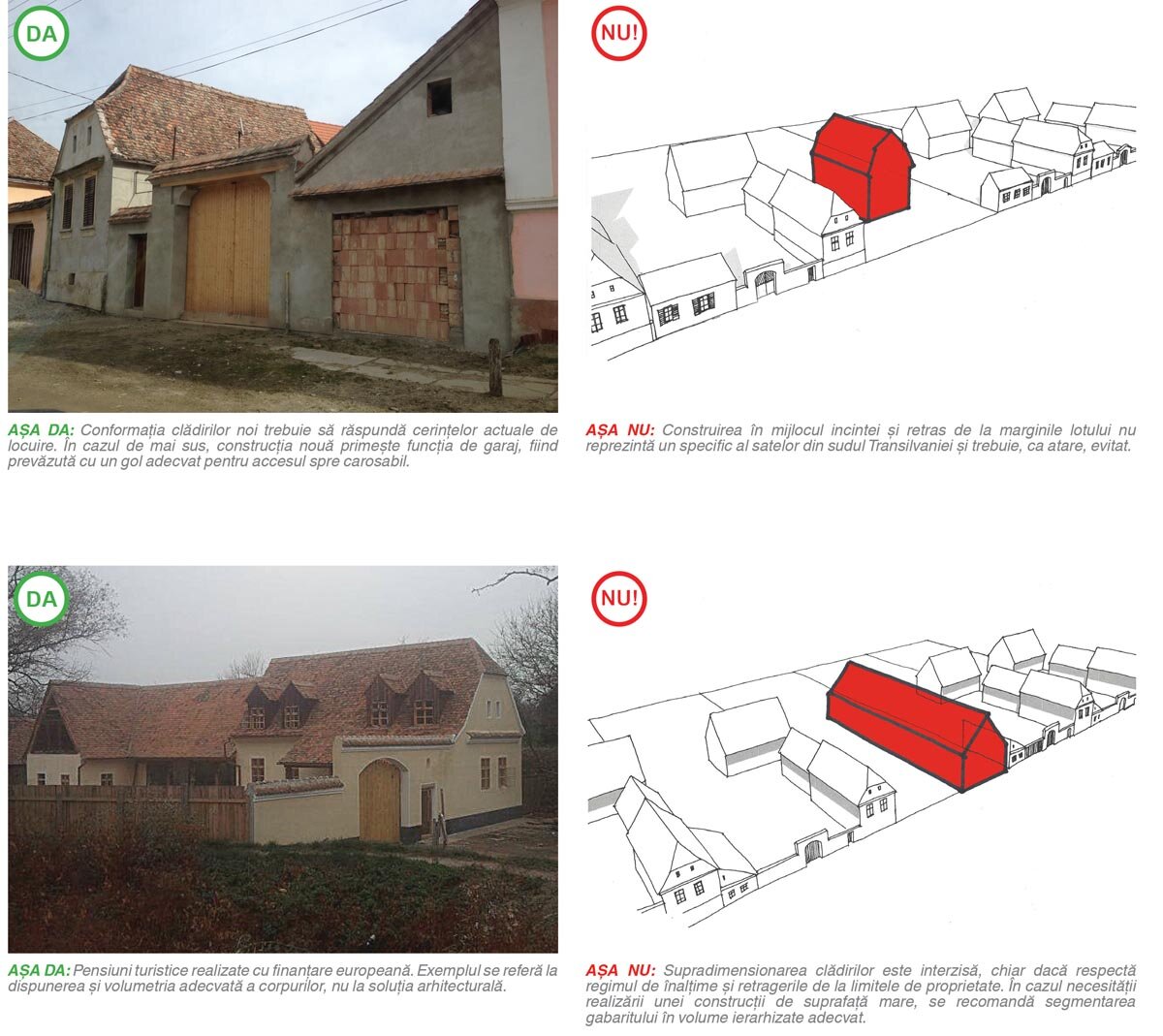
What is to be done?
The story of the năframa in Breb proves to me once again how conservative man is deep down, to the point of considering that the destruction to which the traditional village is subjected, whether through inappropriate interventions on buildings or the insertion of new decontextualized constructions, is merely an accident that he blames on the lack of a model of intervention accessible to the owners. Let us just recall the demolition of a historic neighborhood in Bucharest to make way for a traffic artery. What is a rural owner or mayor to understand? That this is the practice! Over the last 25 years, monitoring of the built environment in rural areas and education in the spirit of preserving local values have been totally lacking. From public authorities, to architects, to non-governmental organizations, to peasants' grandchildren, we are all guilty of leaving these people to fumble through the meanders of "built art" to find their own way. We should not be surprised at their distrust of any decision from above. So far, it hasn't helped them. In practice, in rural areas, the Ministry of Culture is now called the Ministry of Agriculture, in part because of the projects it funds through the PNDR, which have a big impact on local cultural life. However, this ministry has neither the specialists nor the knowledge to manage such projects, and the involvement of the Ministry of Culture has been virtually non-existent until now. Also from within the problem there seems to be an impetus: the Local Action Groups (LAGs), mostly made up of local administrations and local economic and cultural actors, have started to show some concern for the local built heritage by trying to fund educational and practical projects on responsible architecture through their strategies. But this, like other local initiatives, is not enough, and there is a need for material support from the state in subsidizing interventions on the traditional built heritage. "If the state obliges us to preserve our houses then it should help us!" - is the answer of every owner we spoke to. Help from the state will not immediately change people's view of heritage, but it will counterbalance the methods of coercion and control, even if they are weak for now, and will bring about those models of restoration and conversion which, once widespread among the inhabitants, will become a fashion quickly assimilated on the basis of high social cohesion. As a long-term strategy, local opinion-formers in rural communities, young people with a secondary education well grounded in their realities, should be identified and programs, even schools, should be set up to educate them in the management of the communities' cultural resources. This practice is reminiscent of the agricultural schools for peasants set up by King Charles I, to which one or even two young people from the communities were sent to study for a few years, with the aim of disseminating the best practice methods learned in the management of a traditional household after their return from their studies.
The driving force for concrete action in the field of heritage preservation should come from within, from those who own the heritage, but without concrete measures from the state, civil society pressure on those who own the heritage will play an important role in saving it in the future.