The man, the architect, the professor Duiliu Marcu

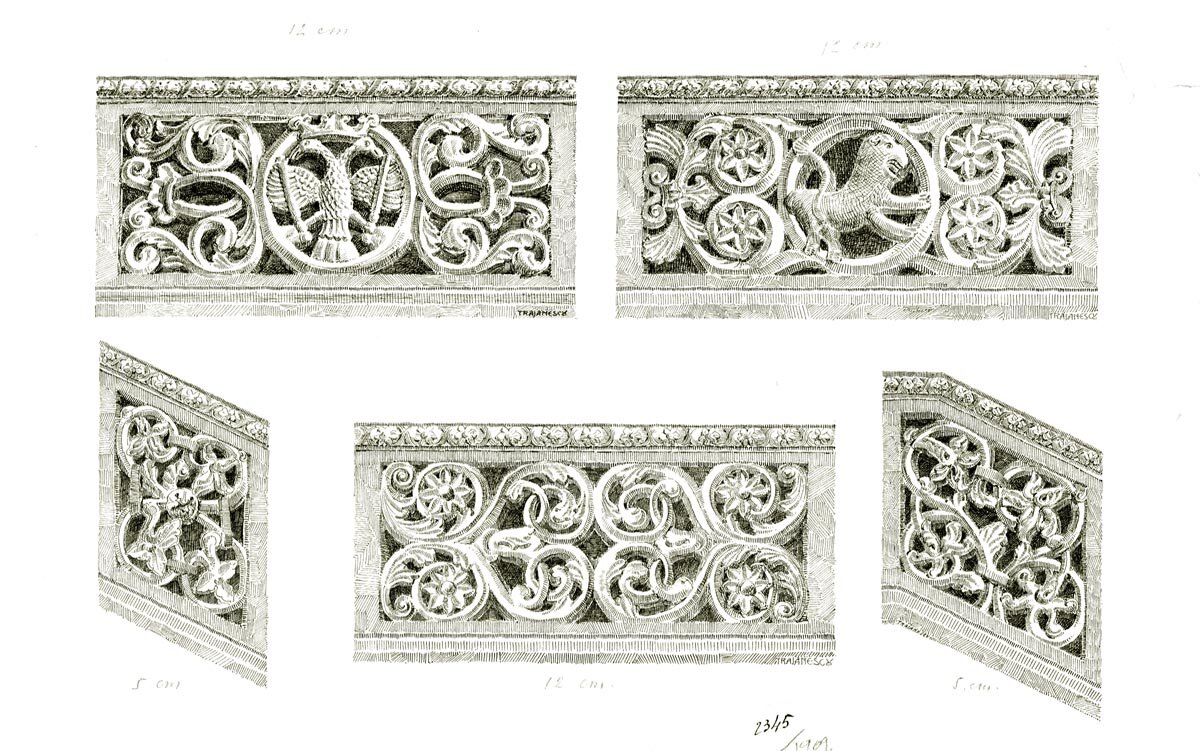
"Now, after our nation has settled on its old historical foundations, the duty of our professional and Romanian conscience calls us to the narrow circle of the mission we have taken upon ourselves, to carry on the thread of tradition in everyday art, seeking to reconcile the 'needs of the times' with those of Romanian architecture."
(Ion D. Trajanescu, "Arhitectura noastră de azi", magazine "Artele frumoase", 12/1922)
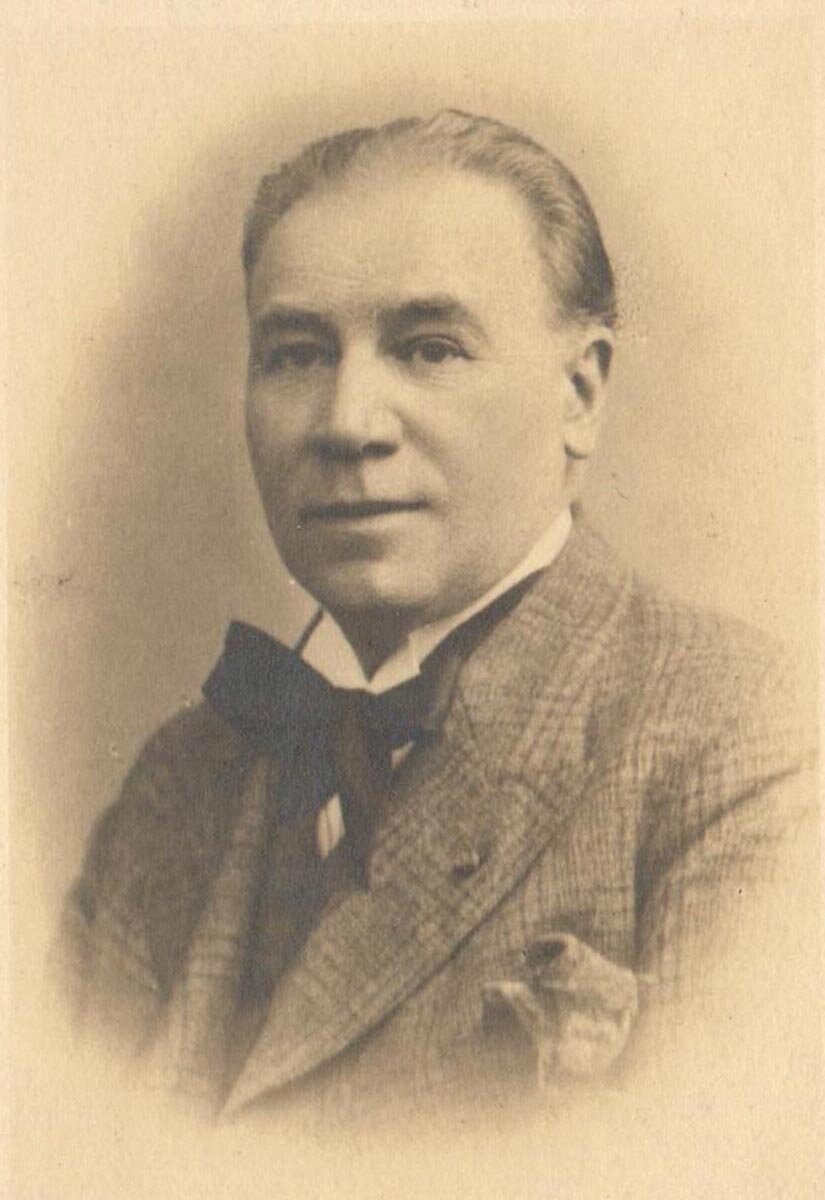
Ioan Traianescu, who would sign his name as architect Ion D. Trajanescu, was born in Bucharest on May 30, 1875. Between 1892 and 1897, he attended the newly founded School of Architecture of the Society of Romanian Architects, where he obtained the diploma of "works conductor". From 1897, for five years, he continued his studies at the Higher School of Architecture, established that year as a section of the School of Fine Arts in Bucharest. He finalized his studies in 1902, obtaining his architect diploma in 1903, being one of the first graduates of the Romanian architectural education. His teacher was Ion Mincu, who spoke to his students about the Romanian style in architecture and about the "rebirth of Romanian architecture"1, having a major influence on the professional activity of the future architect. Trajanescu would always call Mincu "my master", dedicating many of his works to him, with "deep admiration and gratitude, to the one who, by researching ancestral monuments, revived the art of the past, calling it to new life"2.
At the beginning of his career, between 1904-1907, he collaborated with the sculptor Dumitru Pavelescu-Dimo on the realization of the Trajan's Monument in Brăila and the Independence Monument in Pitesti. Following his projects, two monumental churches were erected in Bacău County between 1905 and 1913: "St. Emperors" in Agăș and "St. Voievozi" in Scorțeni, which prefigure the Romanian style with Byzantine influence of the future churches realized by the architect. He was part of the group of architects working on the realization of the jubilee exhibition dedicated to King Carol I in 1906.
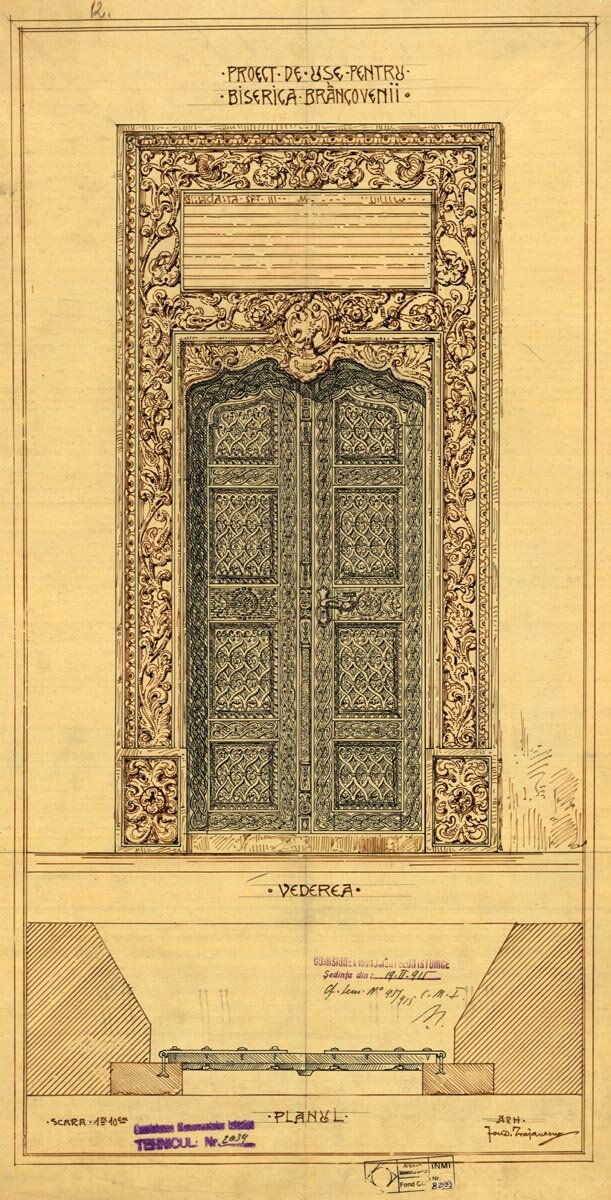
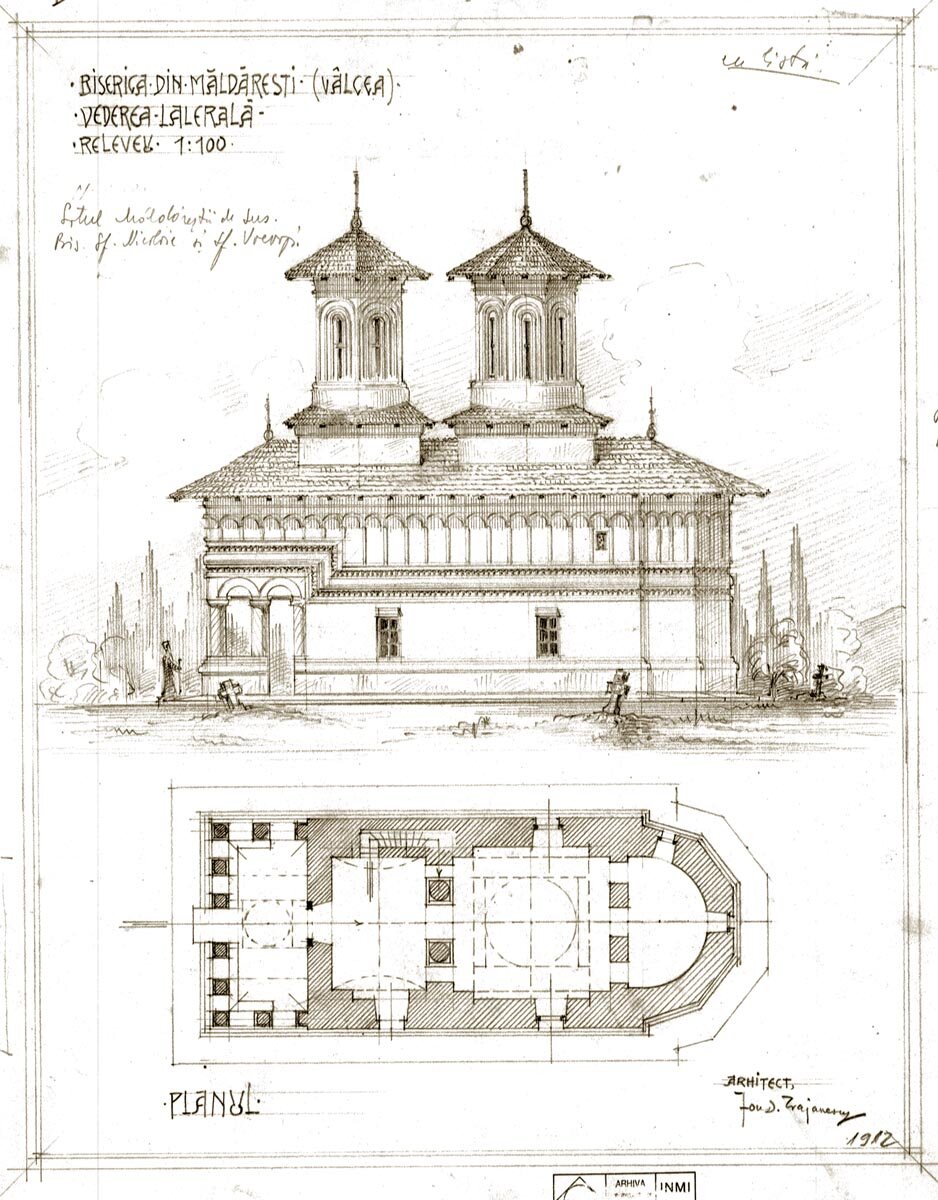
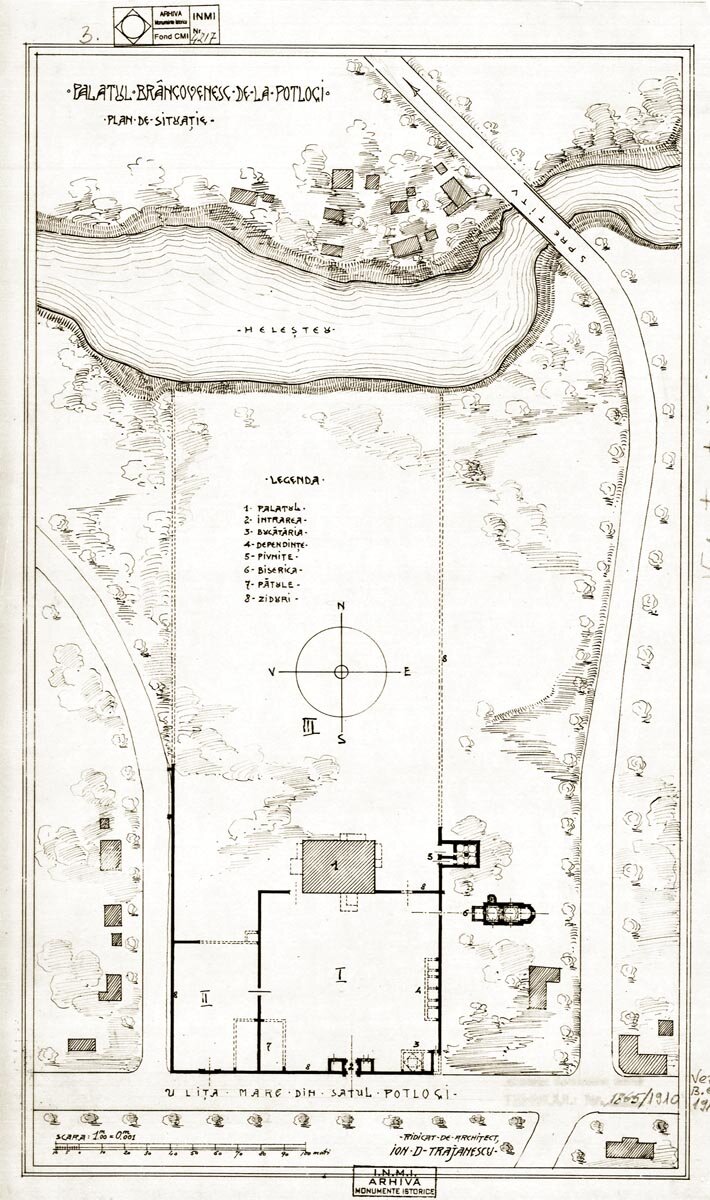
From 1907, he was co-opted into the newly established Technical Service of the Historical Monuments Commission, headed by the architect Nicolae Ghika-Budești. He worked there until 1923, preparing historical-architectural studies, in situ researches, surveys, specialized memoranda, preliminary measurements and estimates, execution details for conservation and restoration interventions of historical monuments. His work was carried out in Bucharest and counties of Muntenia, Oltenia, Moldova. Among his works are interventions at the great medieval ensembles of Hurezi, Govora, Bistrița, Dintr-un Lemn, Brâncoveni, Potlogi, Măldărești, Sărăcinești (Valcea county), Mamu, Todireni-Burdujeni, the Metropolitan Church of Bucharest, the churches of Corbii Mari, Stănești (Vâlcea county), Popești (former Vlașca county), Golești, the Episcopal church of Huși, the paraclis of the bishopric of Râmnicu Vâlcea.
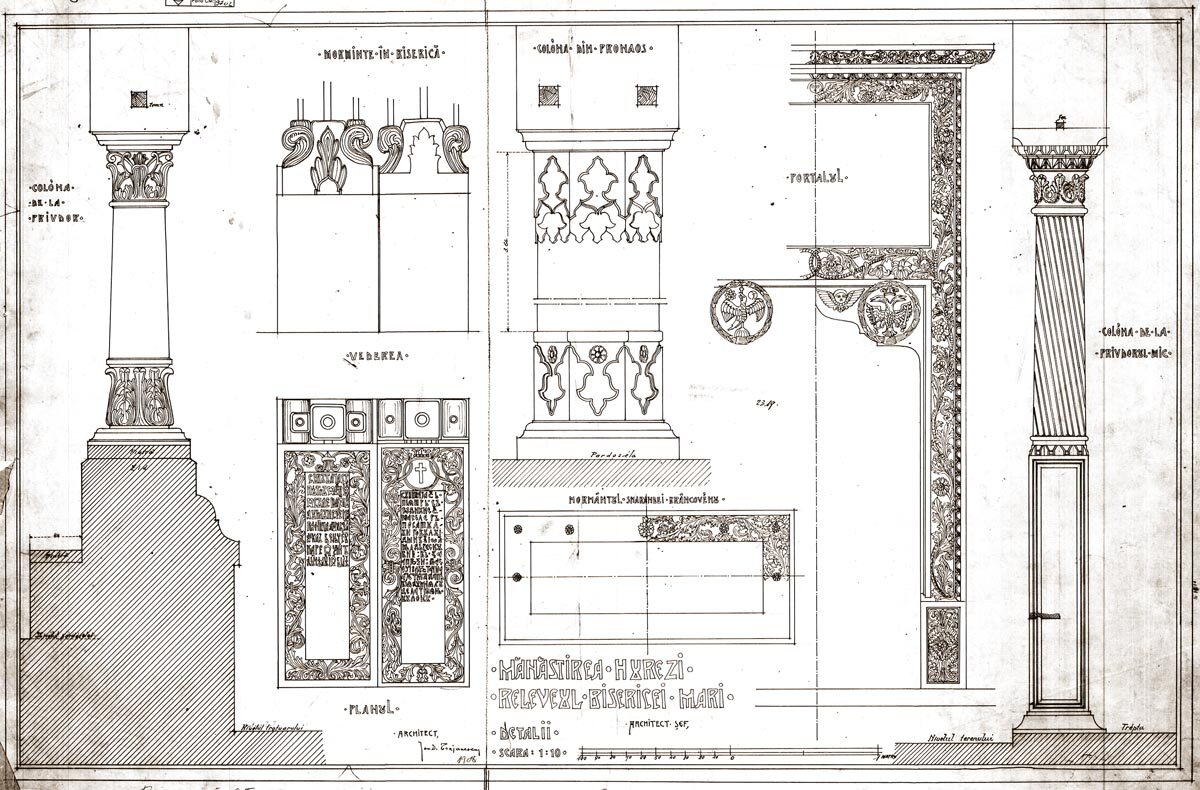
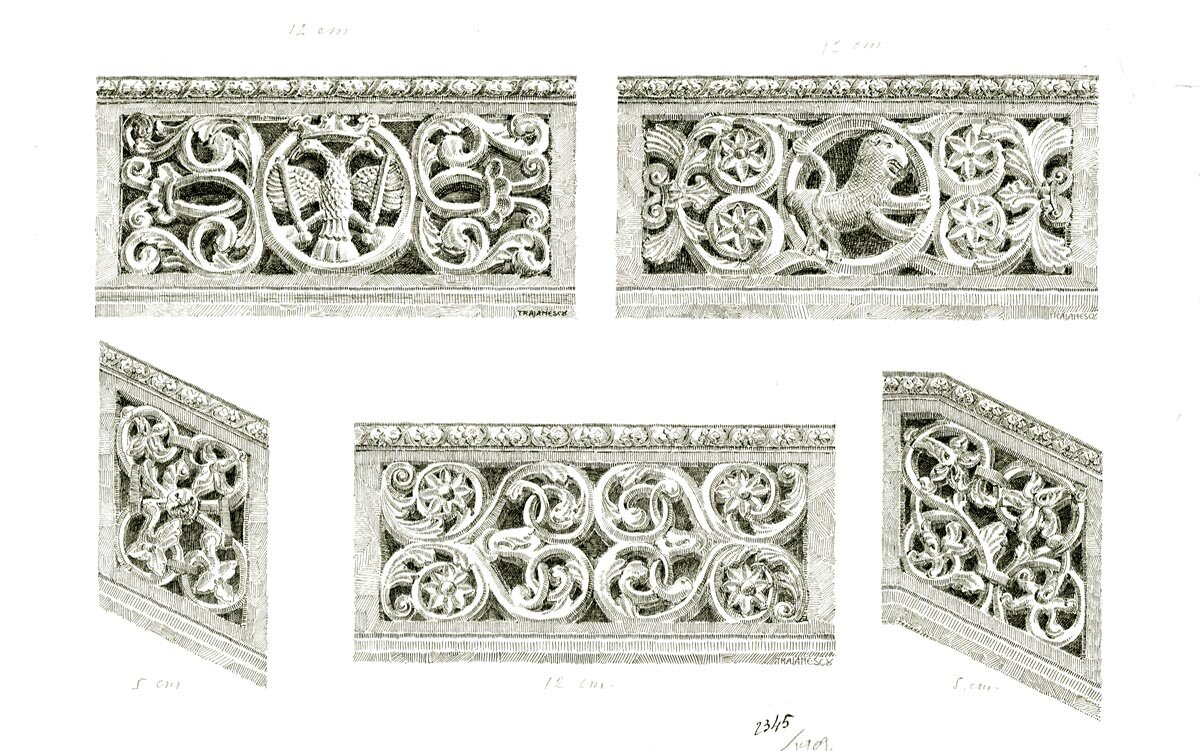
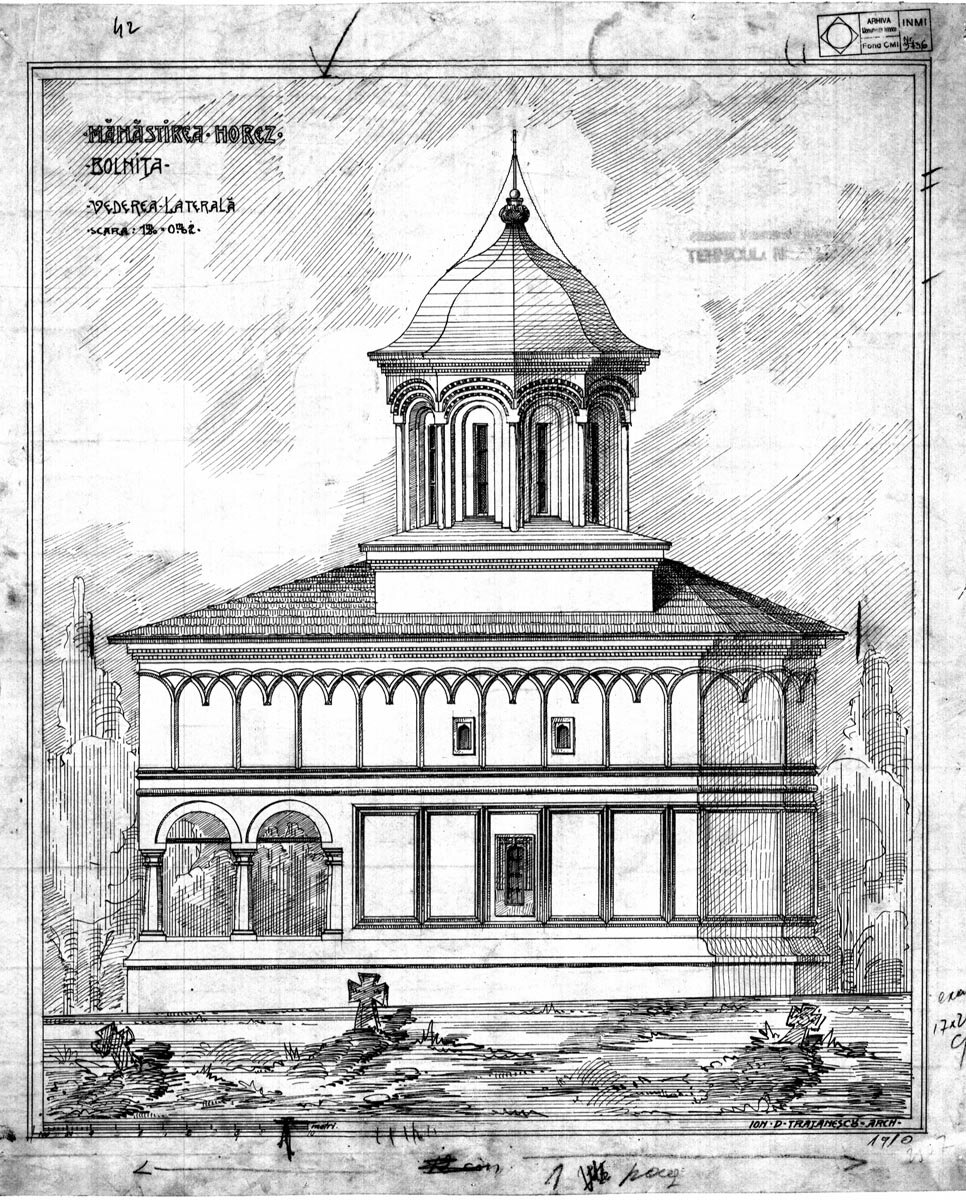
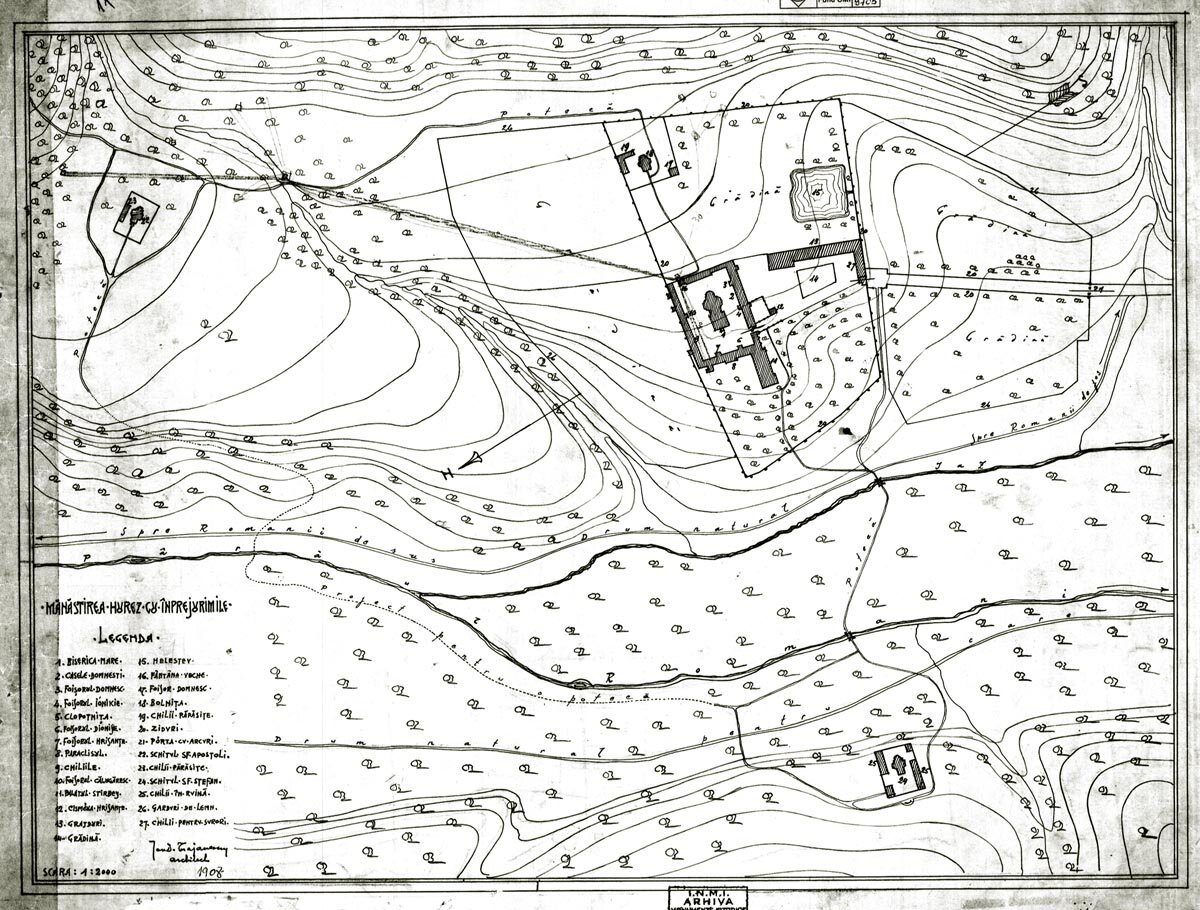
Since 1908, restoration works will be carried out on the Hurezi Monastery. Important interventions are being carried out on the monastery's cellar enclosure. The architect Trajanescu removes the modifications in classicist style realized in the first half of the 19th century. He intervenes on the priory, the houses of the abbots, the trapeza: He restores the access tower in the enclosure to its original form, dismantling the additional floor that had been added to it and, reconstituting the decoration of the facades and the shape of the roof, dismantles the Hrisant's classicalist-style gazebo, which had been erected symmetrically to the gazebo of Dionysius, modifies the shape and materials of the roofing, frees the voids at the base of the gazebos, restores and rebuilds stone columns and anchorings, dismantles some parasitic compartments. Trajanescu is also responsible for the surveys of the monastery precincts, the large church, the abbey and the hermitages.
Between 1909-1916, he published specialized studies in the Bulletin of the Historical Monuments Commission: reports and memoirs on restoration works, historical-architectural studies, descriptions and surveys. Extensive materials are dedicated to the Hurezi Monastery and the Bucharest Metropolitan Church.
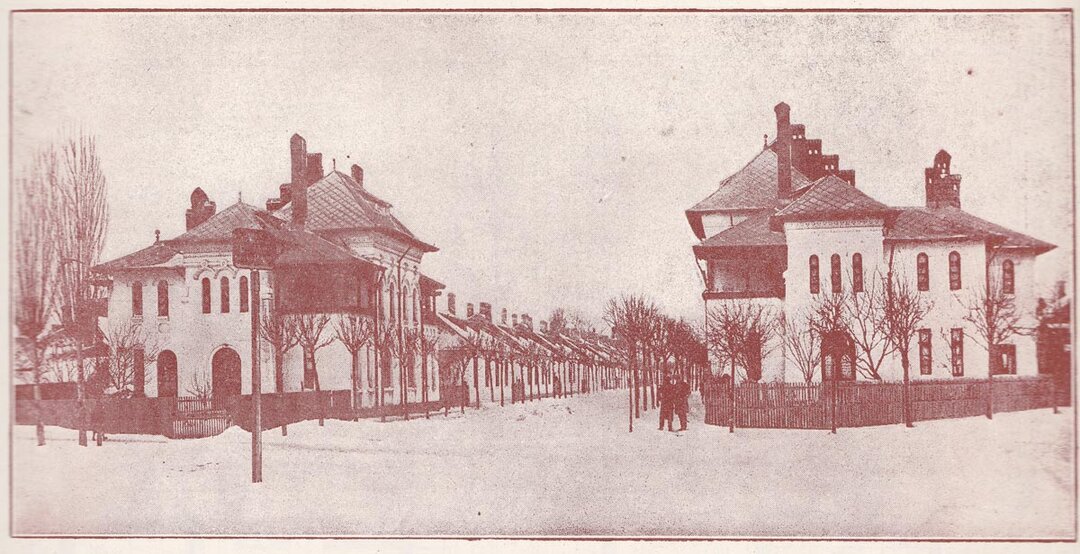
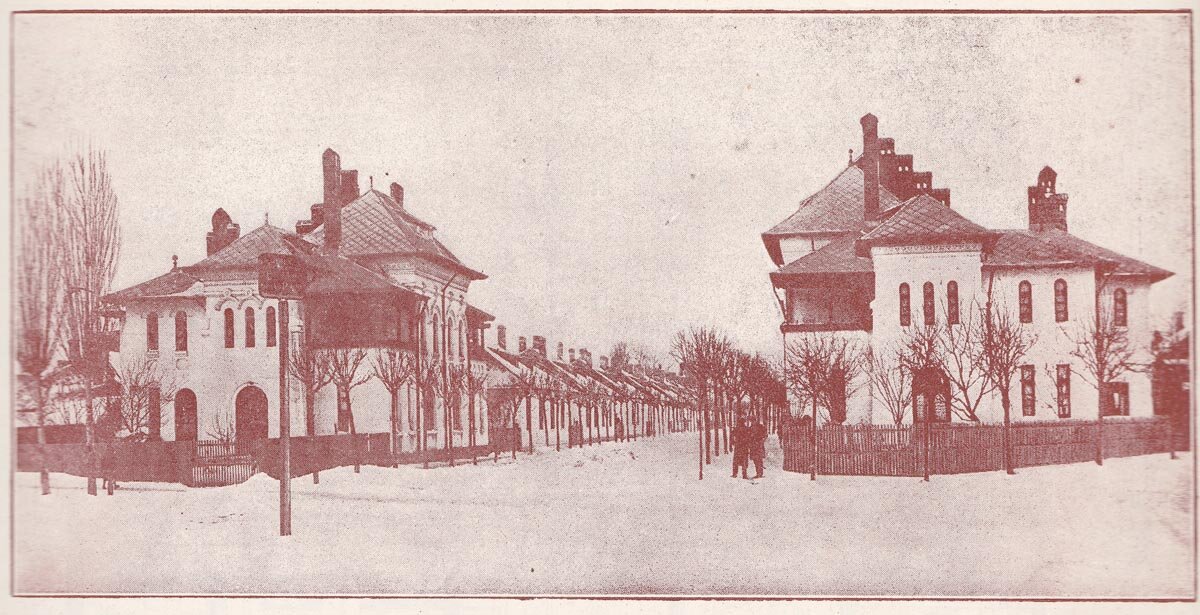
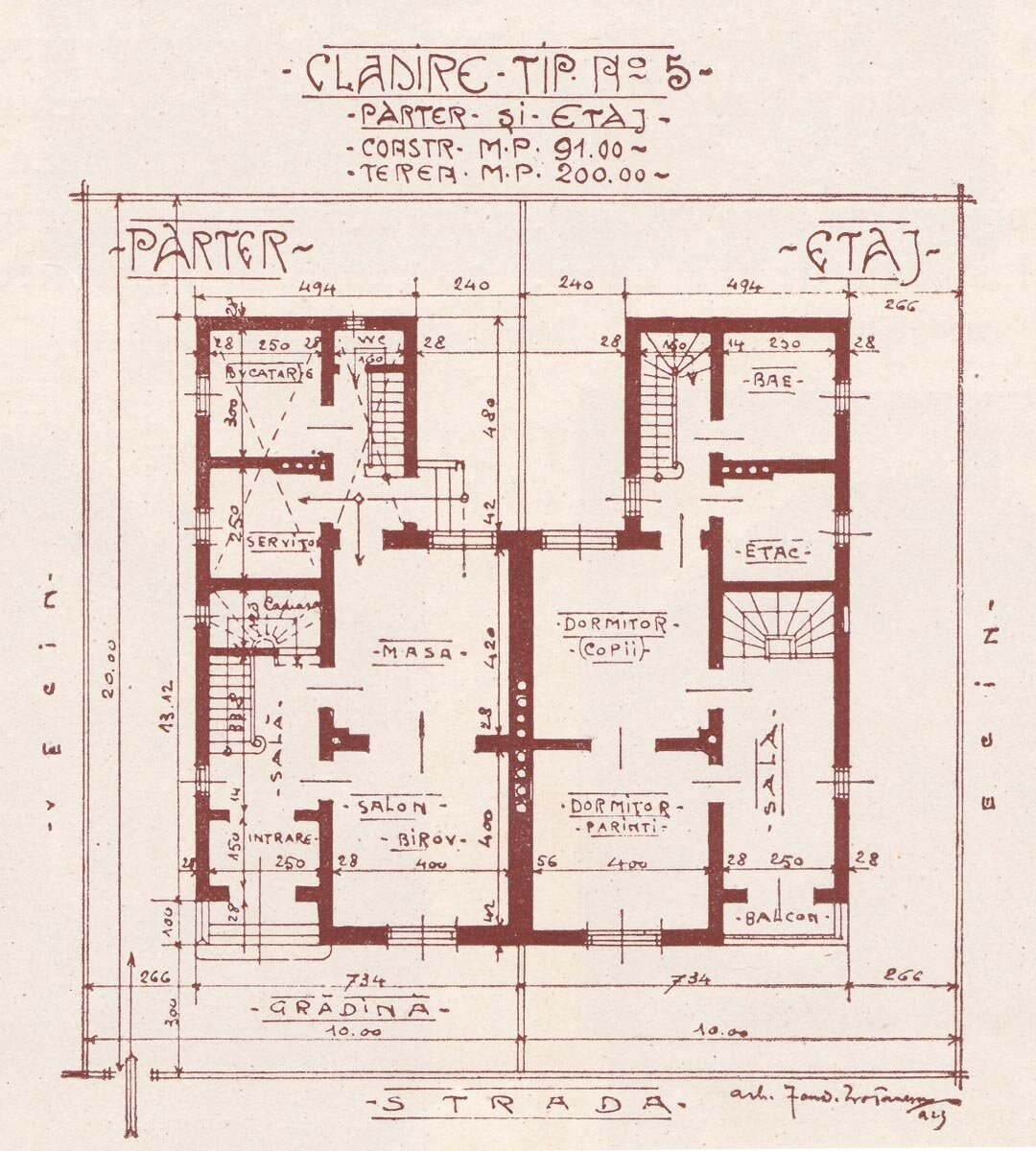
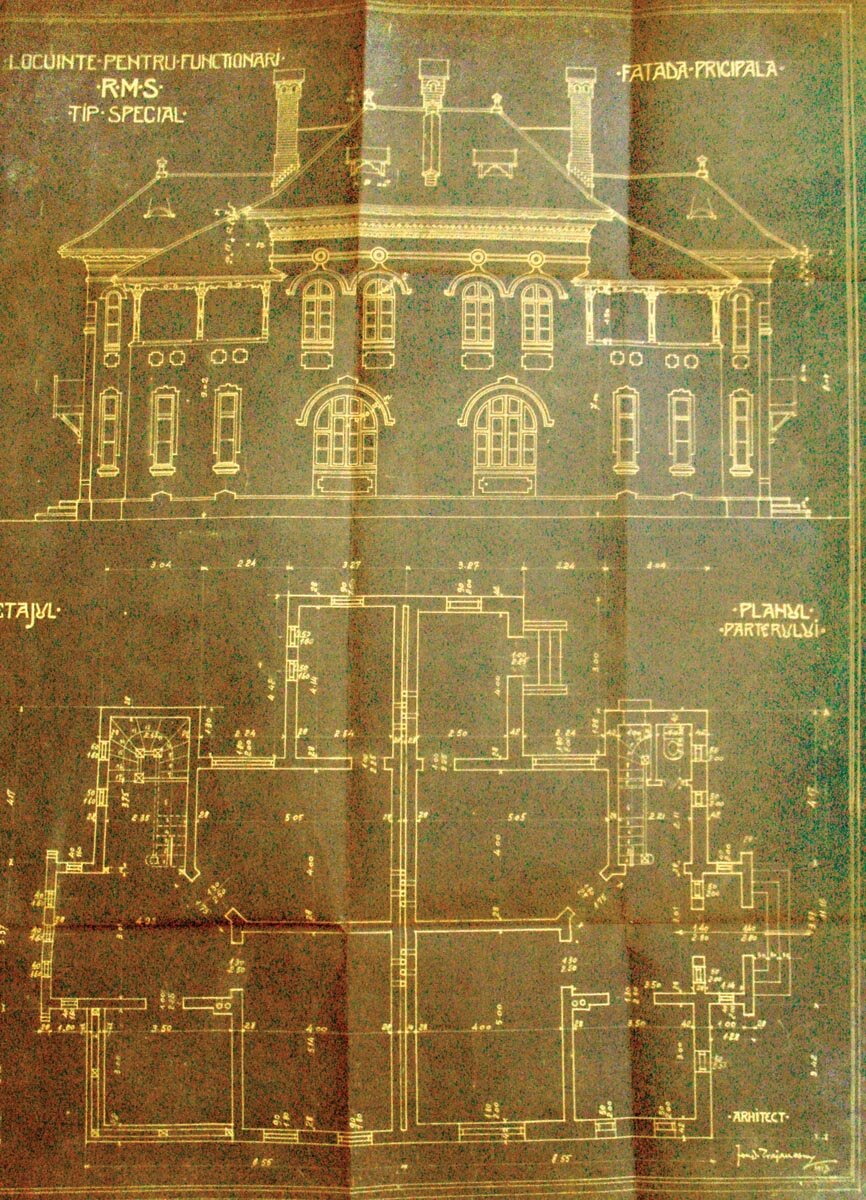
In 1909 he took part in the competition for the design of social housing for workers and civil servants organized by the City Hall of Bucharest. From 1910, in parallel with his work in the Technical Service of the Historical Monuments Commission, he became the architect of the Municipal Society for Inexpensive Housing, building plots of "individual dwellings in the popular Romanian style"3 - as he himself characterizes them - in the Clucerului, Tei, Mihail Cornea, Drumul Sării, Belvedere - C.A.M., Floreasca, Ana Davila, Steaua Română - C.F.R., Cazarmei - Uranus, some of the parcels being realized by institutions such as: Belvedere Tobacco Factory, Filaret Match Factory, Ministry of Finance, Ministry of War, Romanian Railways. The single-family dwellings, with ground floor or ground floor and first floor, located on plots of about 200 square meters, consisted of 2, 3 or 4 living rooms, kitchen, bathroom, toilet, service room, service room, cellar, and were equipped with water supply and sewage.
From 1912, Trajanescu became a member of the Committee of the Society of Romanian Architects, serving as secretary (1912-1915), cashier (1916-1918), librarian (1919-1921), vice-president (1922-1926). He was a member of several commissions of the Committee of Romanian Architects "charged with the study of urgent questions and problems of interest to the body of architects"4: the Commission for Public Competitions, the Commission for the Law on the Organization of the Architects' Body, the Commission for the study of architectural nomenclature, the Commission for the Sees. In May 1933 he became a member of the Corps of Architects, which had been founded a year earlier.
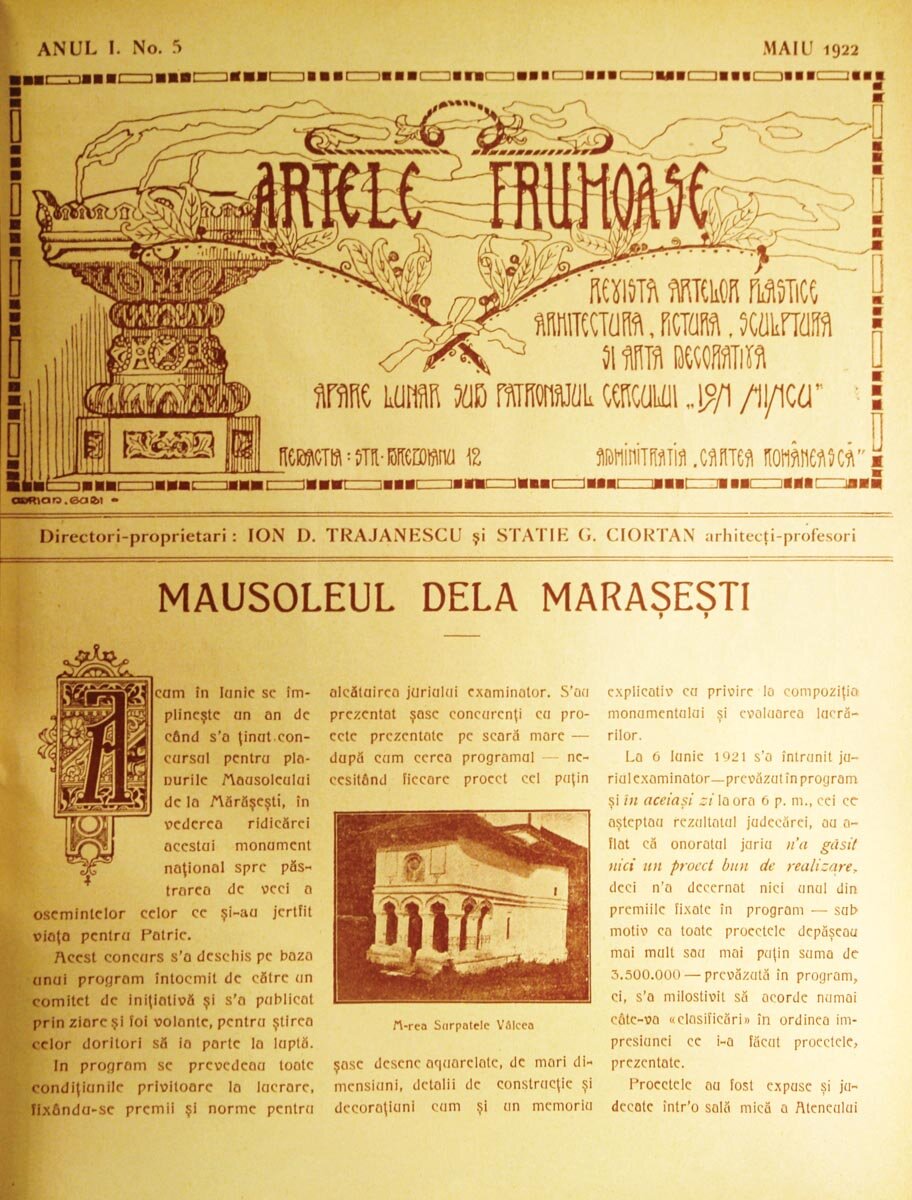
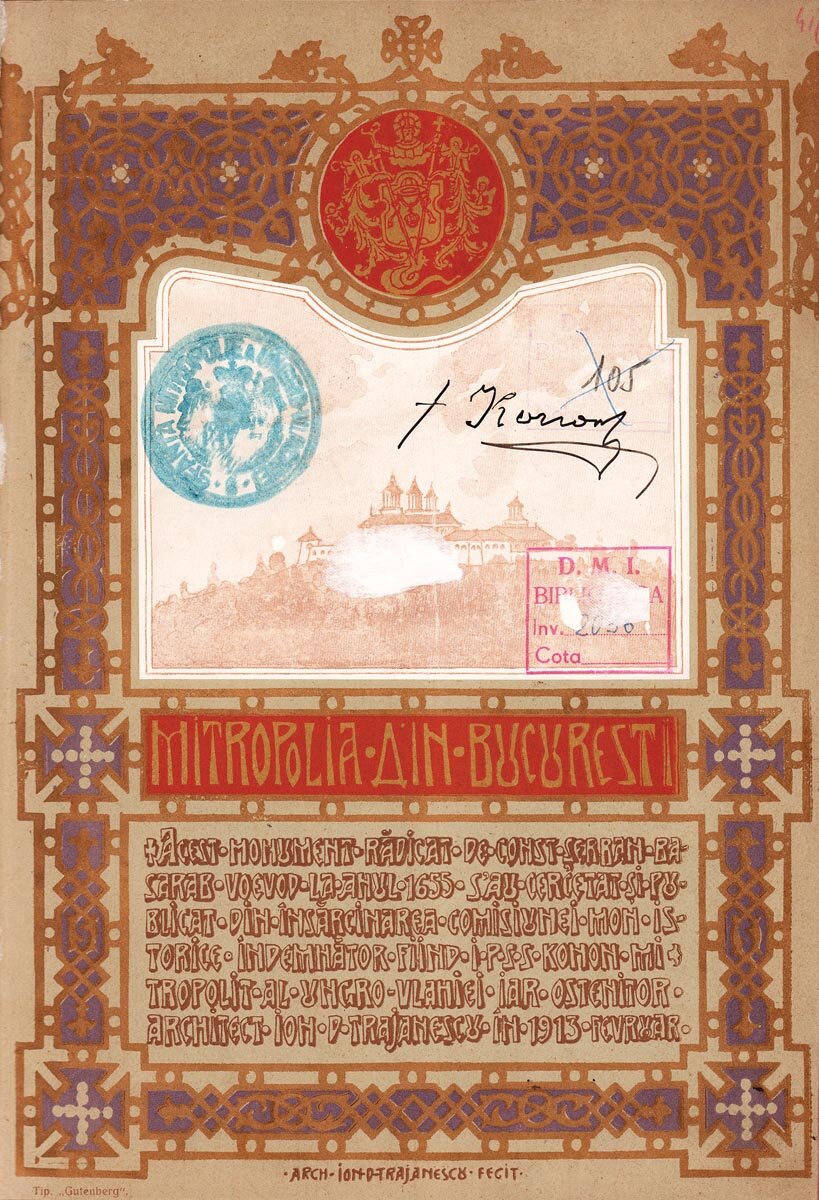
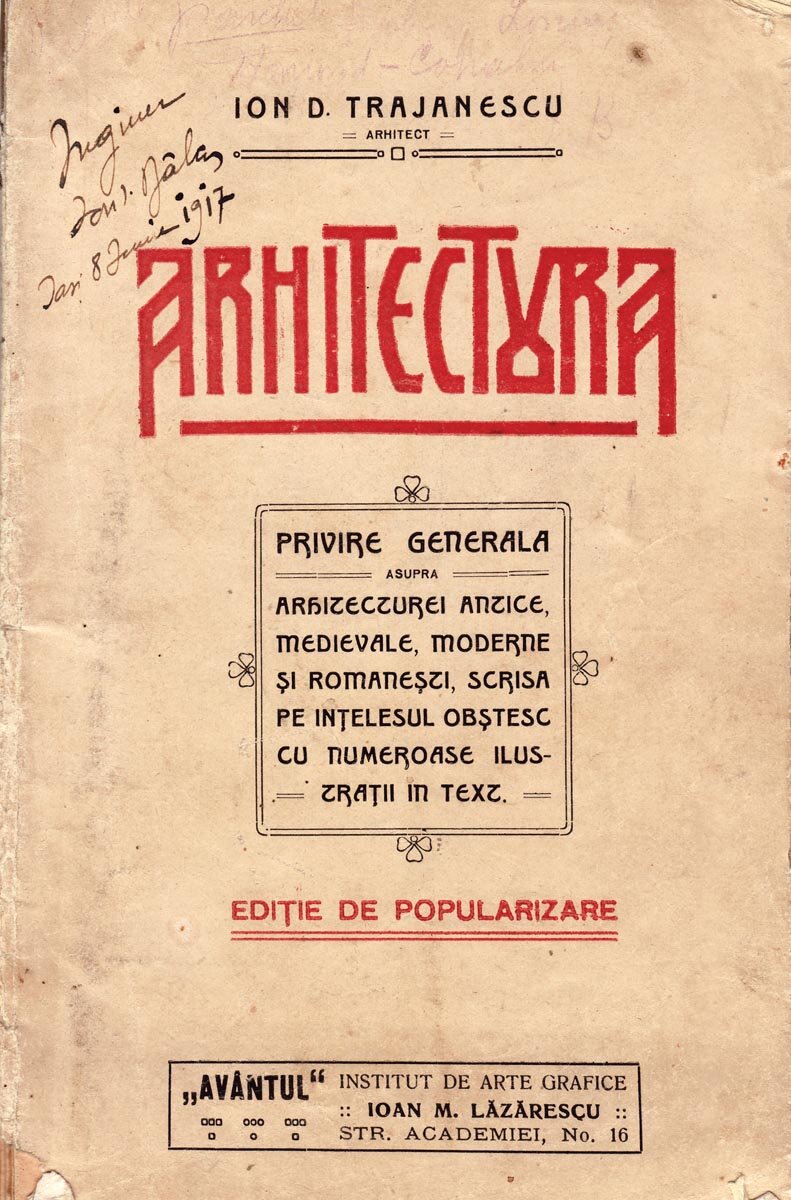
He is a founding member and member of the editorial board of the magazine 'Arhitectura', where he publishes from 1916 to 1941. He also published in 'Urbanismul', 'Gazeta Municipală' and 'Universul'. In 1922, together with the architect Statie Ciortan, he founded, under the patronage of the 'Ion Mincu' Circle, the magazine 'Artele frumoase', which appeared monthly from 1922 to 1923. He is the author of the volumes: Mitropolia din București, 1913, and Arhitectura. Privire generală asupra arhitecturei antice, medievale, moderne și românești, 1916. A large part of his studies and articles promote the national style in architecture, which he calls "Romanian style", the author remaining consistent with the doctrine he inherited from his teacher and master, the architect Ion Mincu, during his student days: RomanianStyle5, Our ArchitectureToday6, Romanian Architecture in the Face of ModernistCurrents7, Promotion of RomanianArchitecture8, National Architecture versus ModernStyle9, Romanian Specifics inArchitecture10.
He began teaching in 1913. Until 1920 he worked as an honorary professor, then, between 1924-1940, as a university professor at the Faculty of Architecture in Bucharest, holder of the Department of Construction and Perspective. He is the author of the textbook Perspectiva liniară. Practical method for the use of plastic arts.
A promoter of monumental architecture in a neo-Romanesque style with Byzantine influence, Ion D. Trajanescu had a rich activity as an architect and designer, which lasted for almost six decades, from 1905, when he designed his first church in Agăș, Bacău County, until 1962, when he completed the construction of the "St. George" Cathedral in Tecuci, his last work. During the interwar period, he realized projects in his own architectural office, "Planșeta". After the war, between 1950-1953, although at a very advanced age, he was an architect at the Institute for the Design of Cities, Public Constructions and Housing - ISPROR.
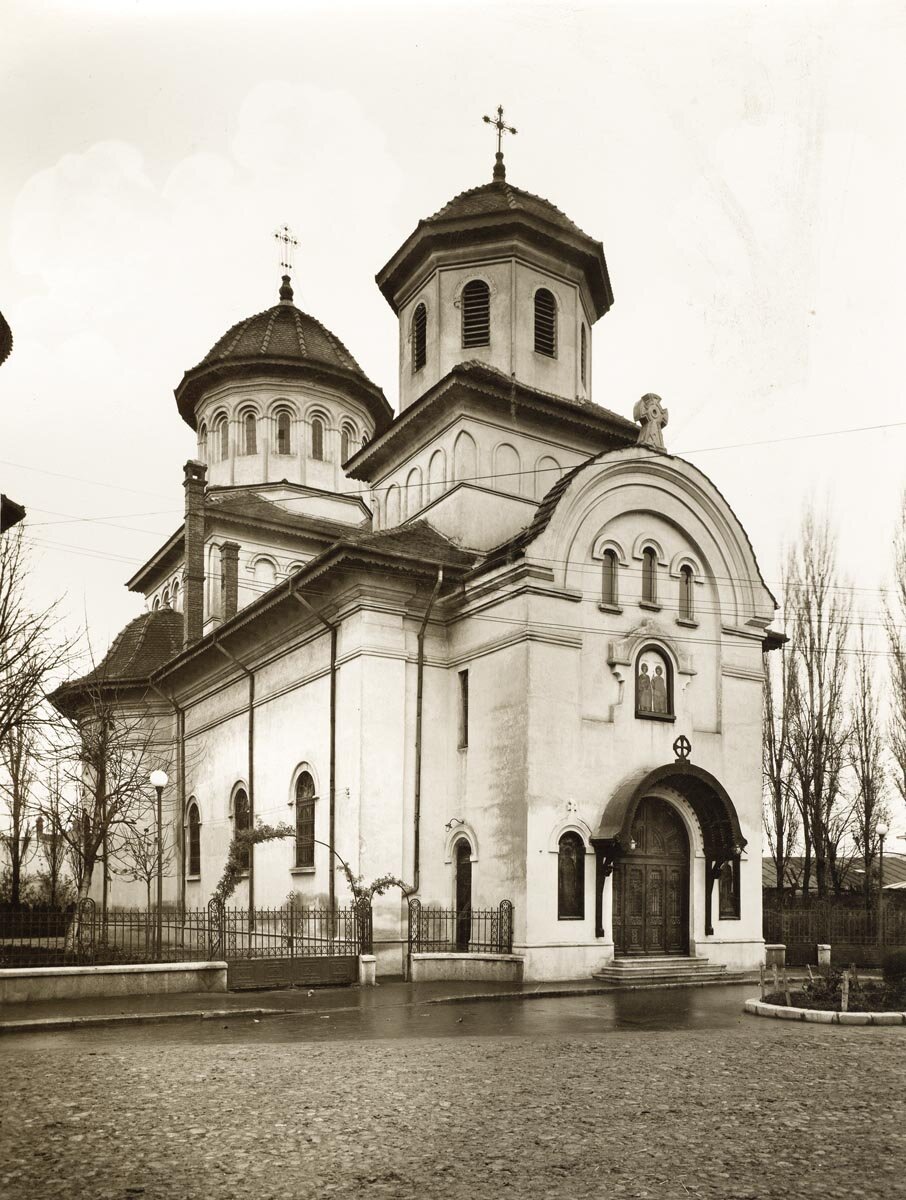
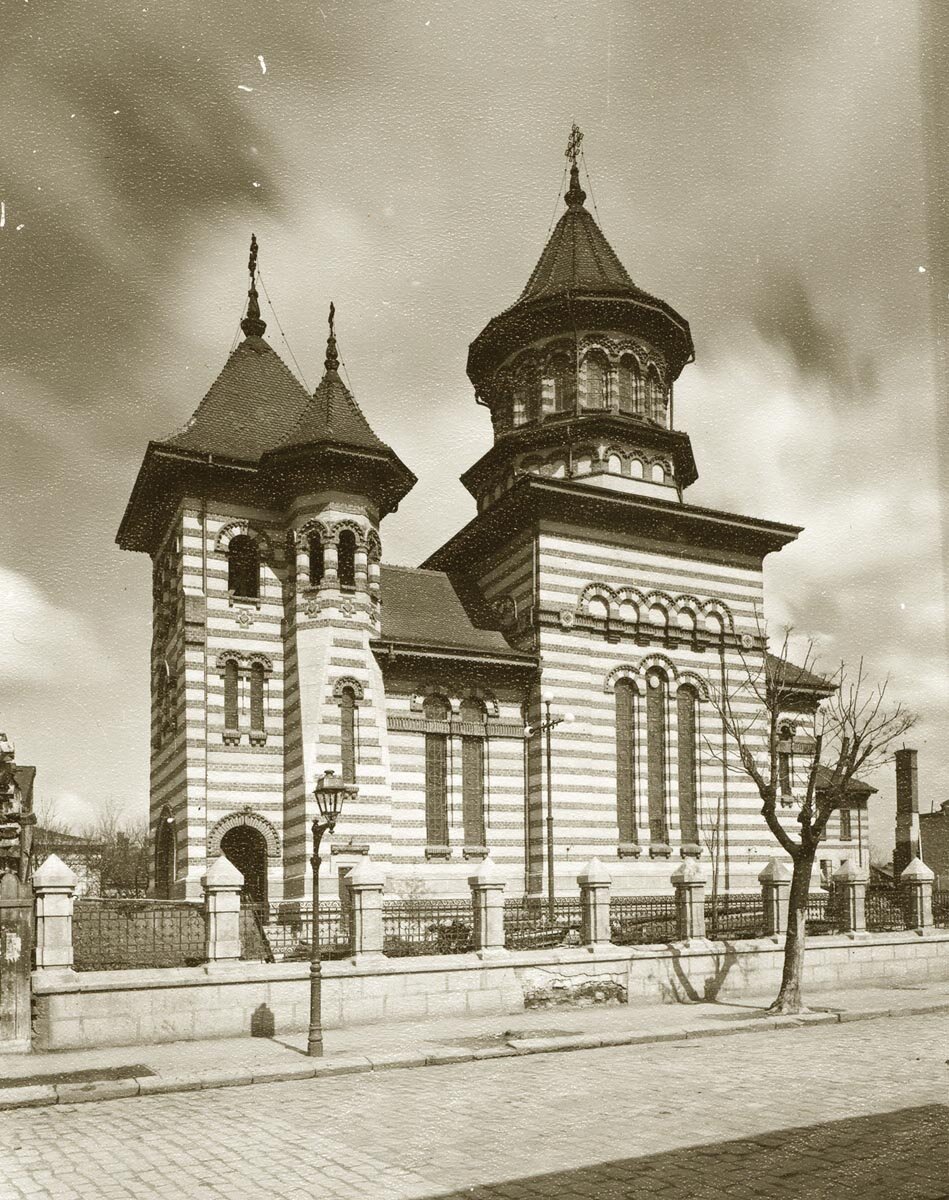
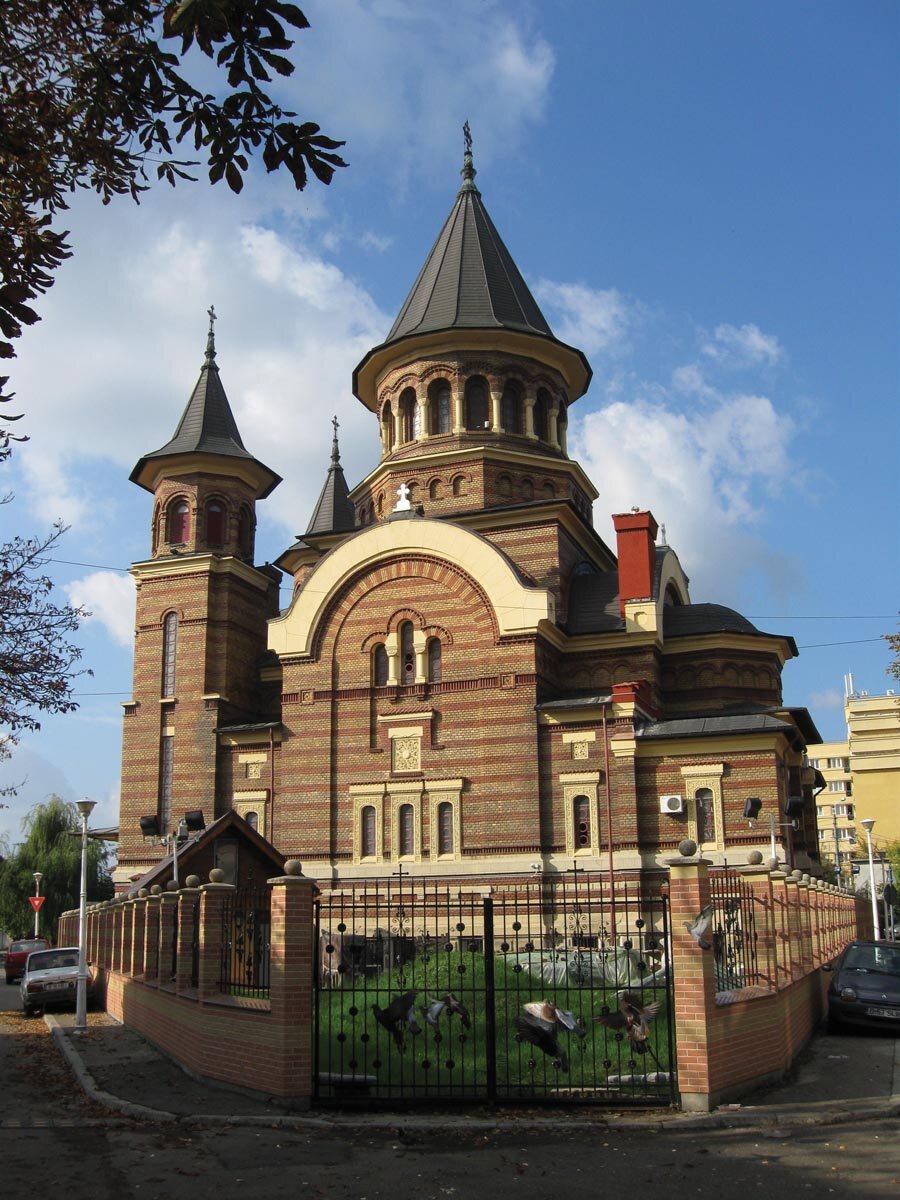
Between 1922-1924, Trajanescu collaborates with the architect Duiliu Marcu in the realization of the project of the new Church "Sf. Trifon" - Cărămidarii de Jos, a royal family foundation. The old church was destroyed by fire in 1922. At the same time, starting in 1922, the new Church of St. Spiridon - Old Spirea was built according to his plans in the Uranus district, on the site of the old church dating from the 18th century. The church will be demolished in April 1984.
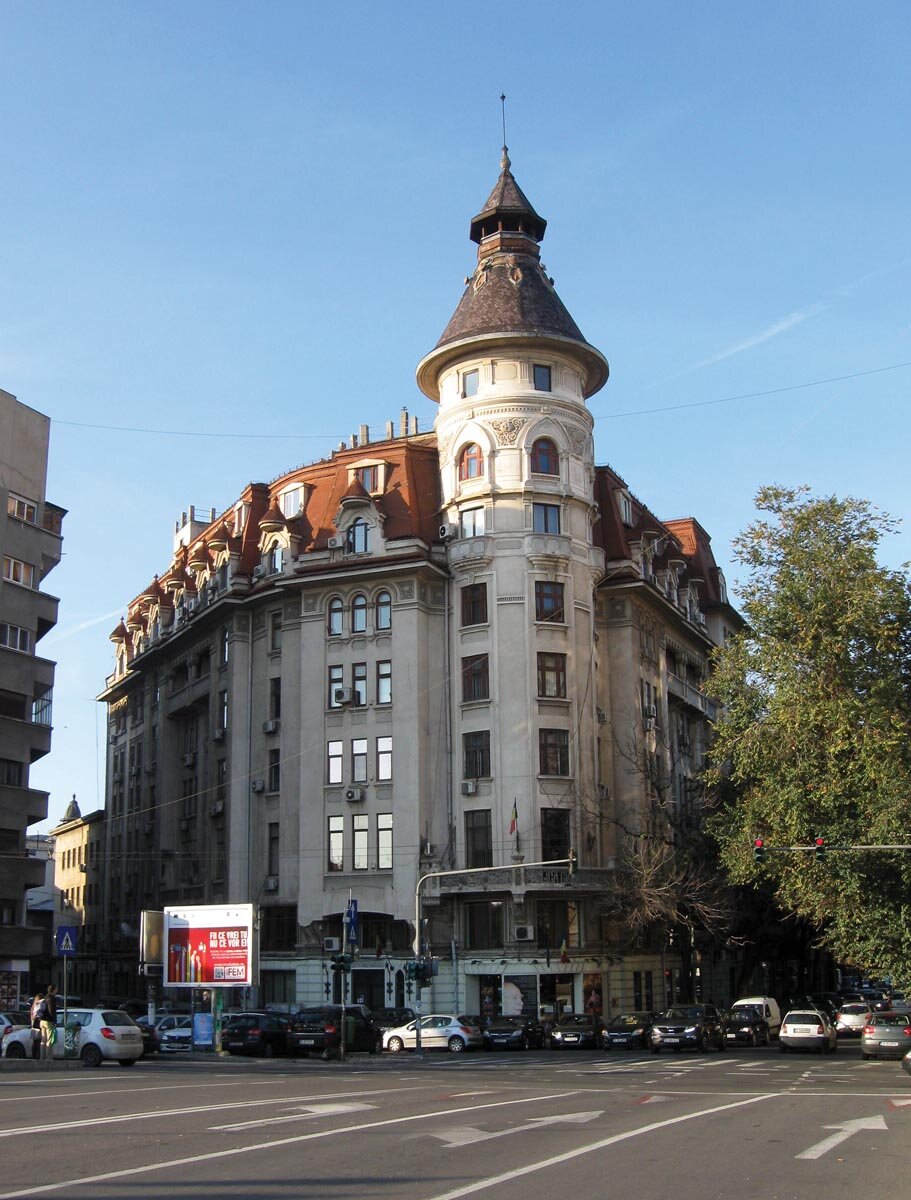
After his projects are realized: the Church "Sf. Dumitru" - Colentina (1924-1934), the Palace of the Romanian Cultural League (1926-1929), the Church "Sf. Mare Mucenic Gheorghe" in Călărași (1930-1943), the park, the columbarium and the decoration of the chapel of the Human Crematorium "Cenușa" (1931-1934, 1938-1941), the Church "Sf. Ioan Botezătorul" Church - Ferentari (1933-1935), "Sf. Mare Mucenic Gheorghe" Church in Ivești, Galați County (1942-1943), villas in Bucharest, Bușteni, Ruginoasa, Râmnicu Vâlcea.
The name of Ion D. Trajanescu is also linked to the construction of the Grant-Belvedere neighborhood. During the campaigns started in 1912-1914, the Communal Society for Inexpensive Housing realized the Grant subdivision according to the architect's plans for the State Monopolies Regia - R.M.S. In the fourth decade of the 20th century, the production complex of the R.M.S., which became the Autonomous House of Monopolies - C.A.M. in 1929, was expanded and modernized. It was during this period that Trajanescu realized the decorations of the directorate offices, the electric plant and the workshops of the "Belvedere" Tobacco Factory. Between 1934-1940, in the parcels, the Church "St. Apostles Peter and Paul" Belvedere - C.A.M. is built by public subscription, architect Ion D. Trajanescu.
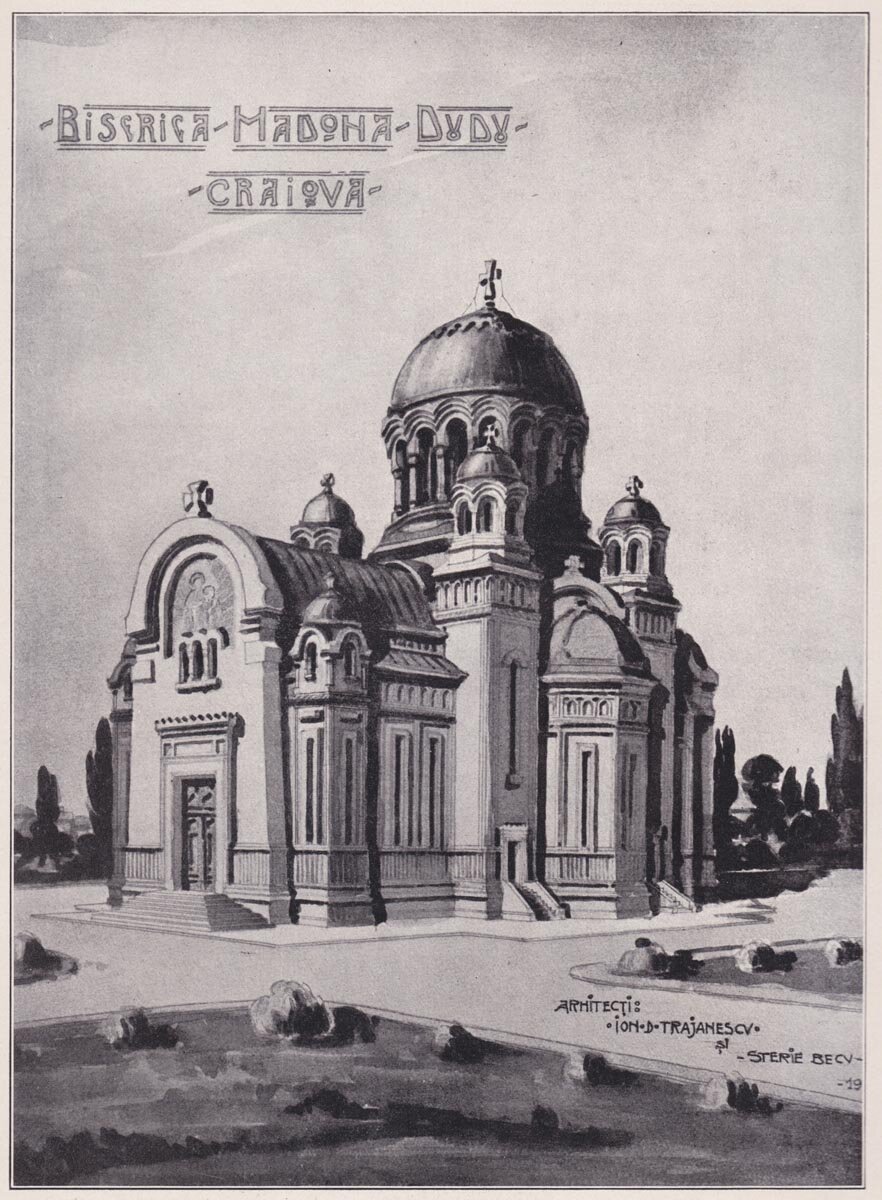
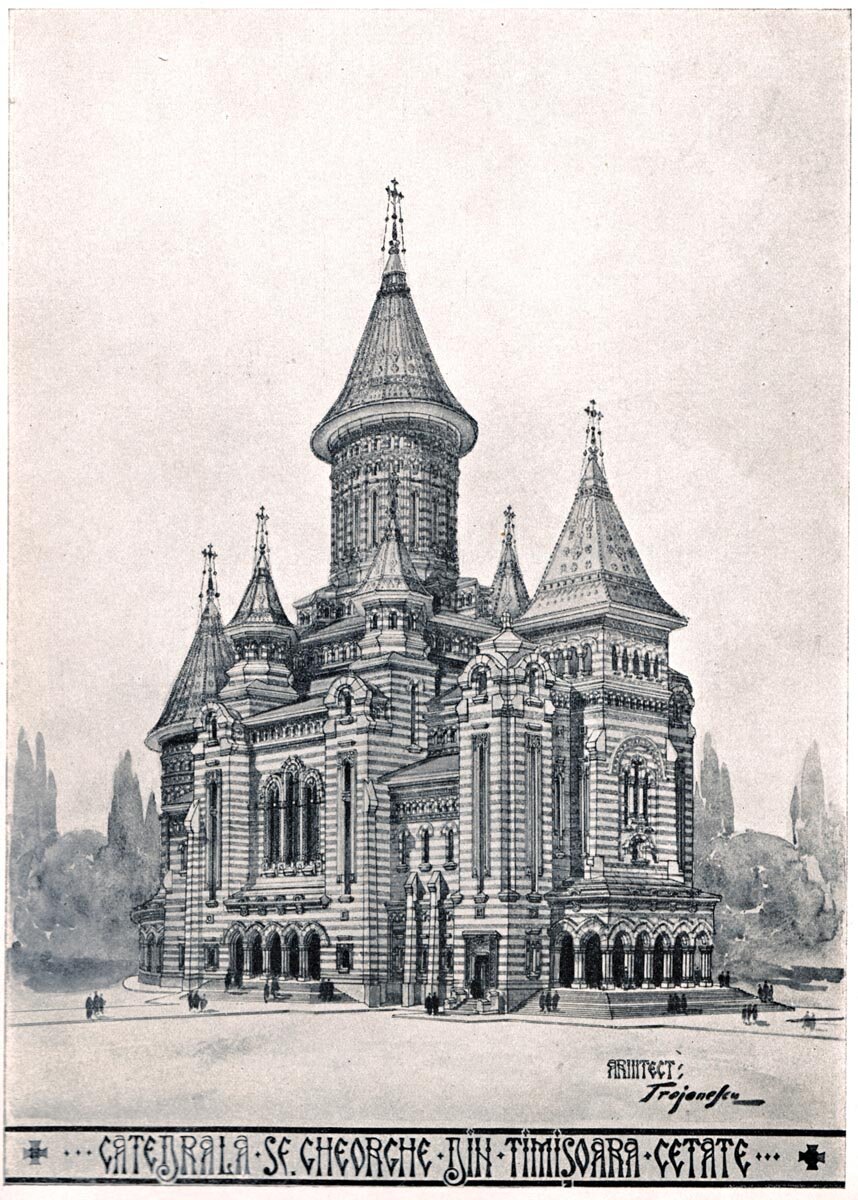
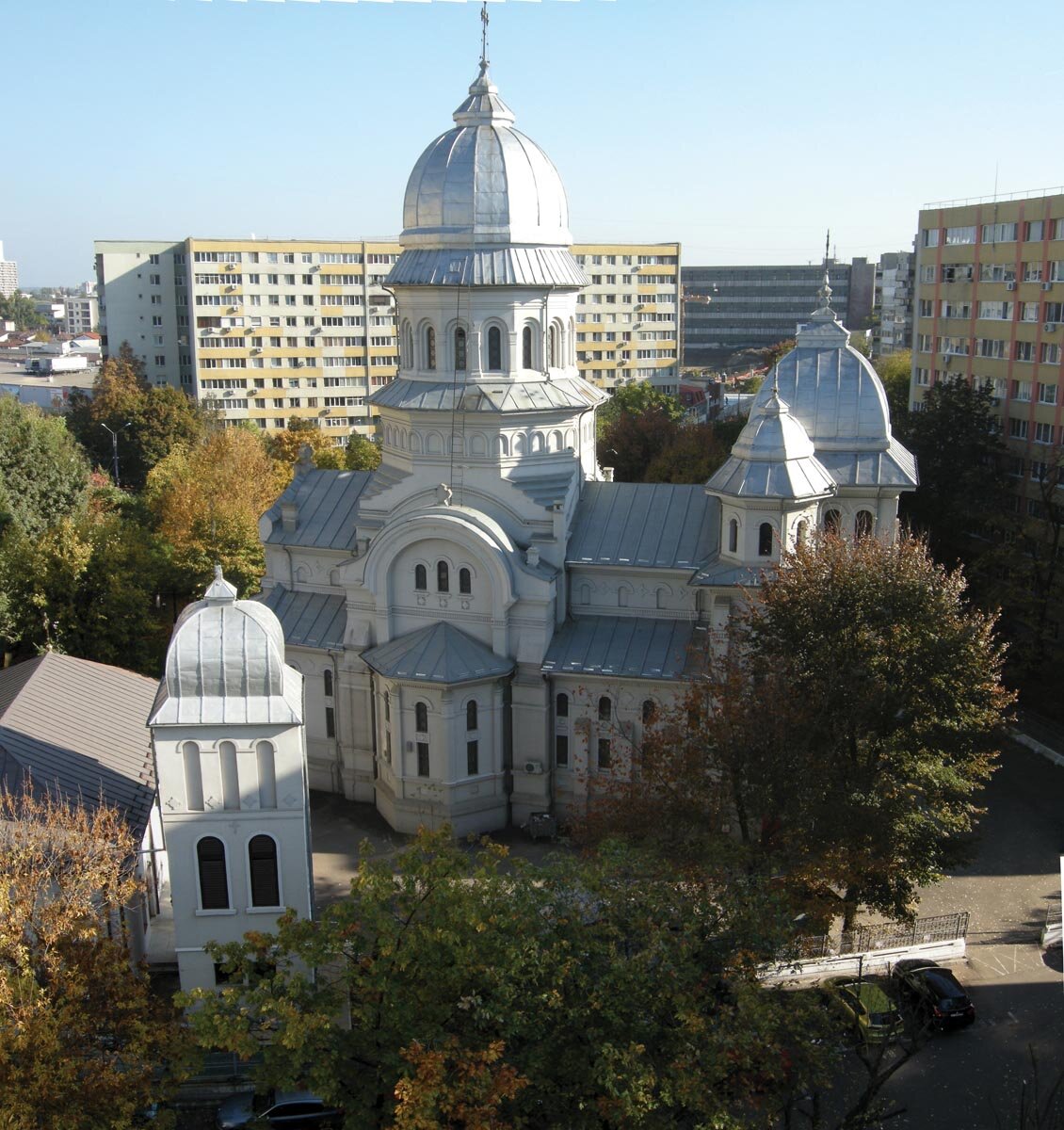
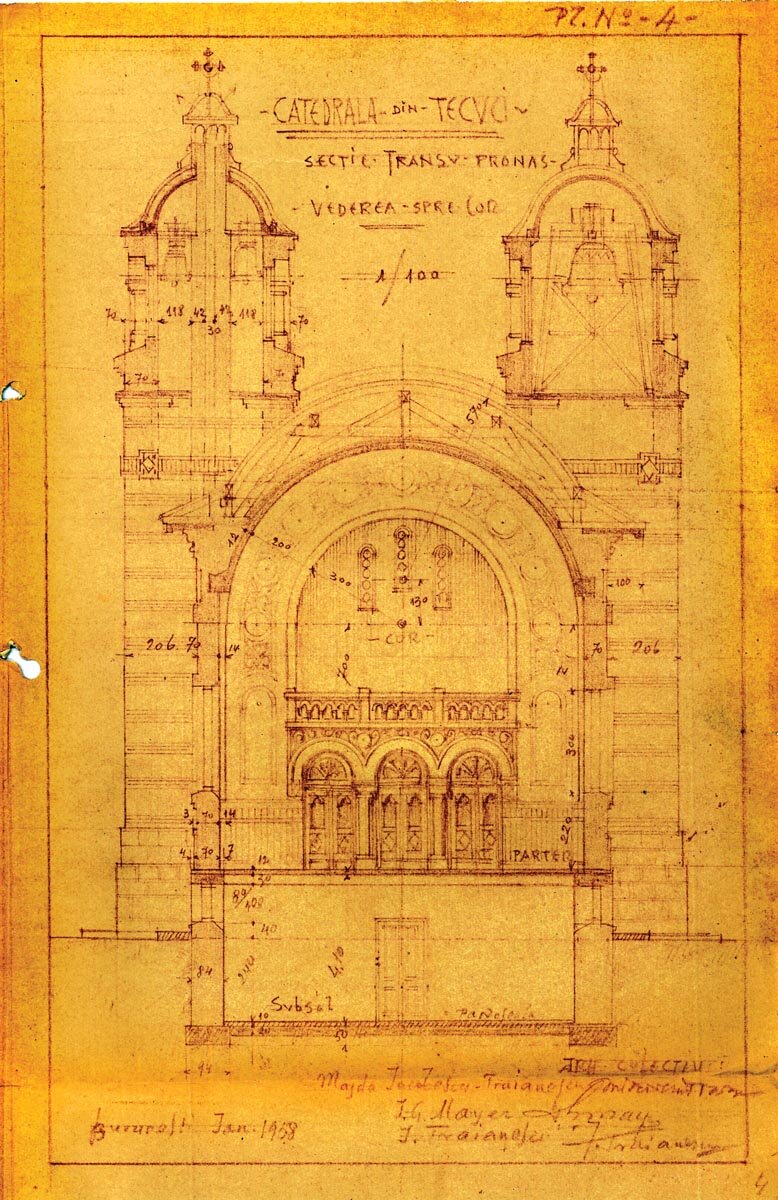
Some of his most important works of monumental religious architecture are realized after winning public contests: the Orthodox Cathedral "St.. Mihail and Gavril Orthodox Cathedral in Turda (1926-1935), "Madona - Dudu" Church in Craiova (1928-1938) - co-author architect Sterie Becu, Romanian Orthodox Metropolitan Cathedral in Timișoara (1936-1946), "St. Gheorghe" Cathedral in Tecuci (1938-1962) - co-authors architects Magda Iacobescu-Trajanescu and I. G. Mayer. He also participated with projects in architectural competitions for the Orthodox Cathedral in Brăila, the Mausoleum of Mărășești, the Odessa Cathedral, the Royal Palace Square - unrealized projects.
Ion D. Trajanescu died in 1964 in Bucharest.
In 2015, through a cultural project dedicated to the architect Ion D. Trajanescu, the National Heritage Institute continued the cycle of projects entitled "Romanian Restorers", financed by the Union of Romanian Architects from the "Timbrul Arhitecturii" Fund, aimed at evoking, bringing to the present and valorizing the work of the Romanian restoration school's predecessors, representatives of the Romanian school of restoration, who worked within the Historical Monuments Commission and the Directorate of Historical Monuments. By researching and indexing the architect's achievements and unrealized projects, his publicistic activity, by inventorying and digitizing his restoration projects and specialized studies in the archives and library of the National Heritage Institute, the "Ion D. Trajanescu" digital archive fund was created, accessible on the website: www.trajanescu.ro.
NOTES:
1 Ion D. Trajanescu, "Fresca of our predecessors", in the magazine "Arhitectura", no. 1/1941.
2 Ion D. Trajanescu, Mitropolia din București. Studiu, București: Tipografia "Gutenberg", 1913, dedication.
3 Ion D. Trajanescu, Memoriu de activitate, typescript, U.A.R. archive.
4 "Informațiuni", magazine "Arhitectura", no. 1-2/1920.
5 In 'Arhitectura', no. 2/1916 and 'Artele frumoase', no. 6/1922.
6 In 'Fine Arts', No 12/1922.
7 In 'Arhitectura', 1931-1933.
8 In 'Arhitectura', no. 2/1940.
9 In "Urbanismul", 5-6/1932.
10 In the Bulletin of the Romanian Architects' College, 1942.