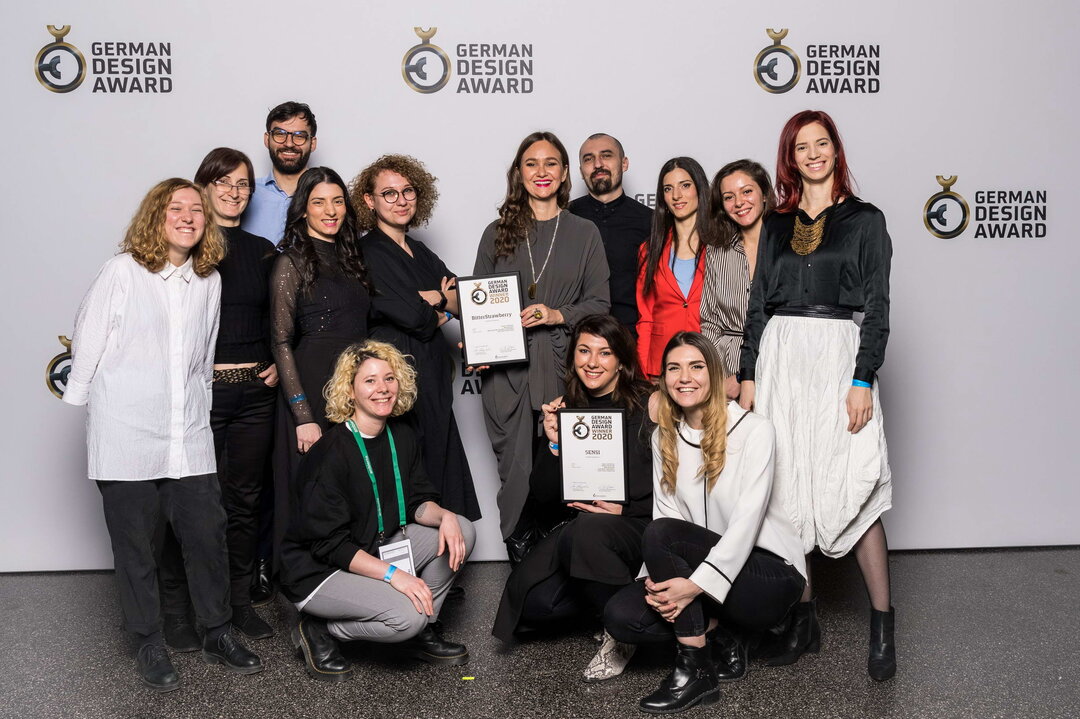
AMA DESIGN won two awards at the German Design Awards 2020

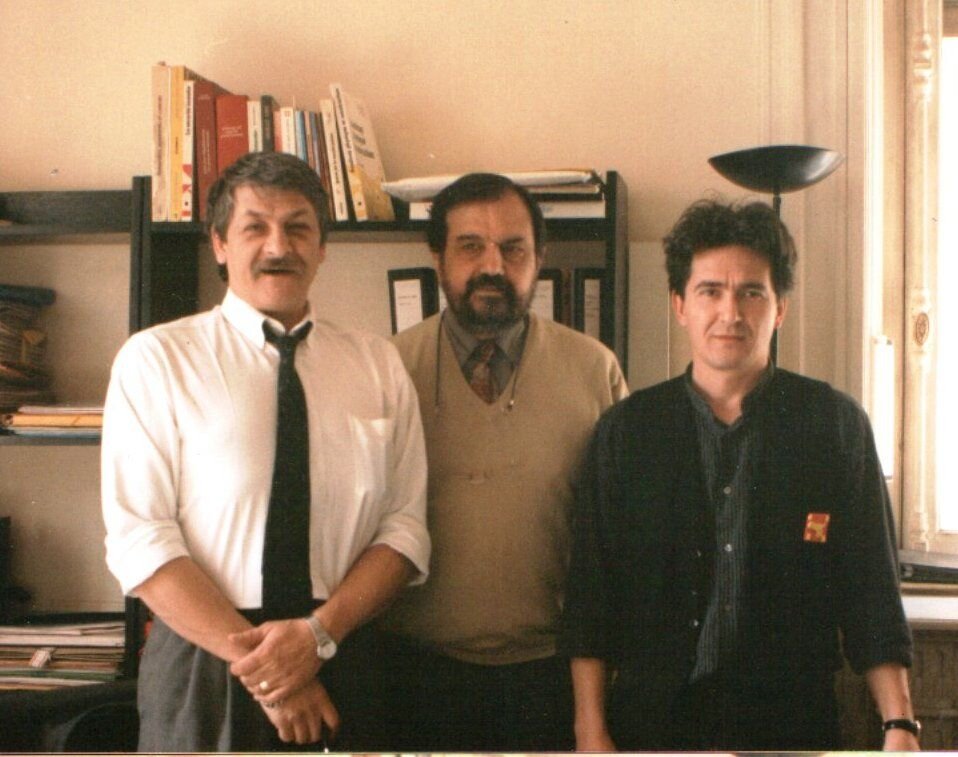
text: Adrian MAHU
"Search for your own personality, if you think you have one, but don't forget that you are Romanian architects".
Henrieta Delavrancea

The idea of producing a catalog on "Romanian Architects Abroad" came up in the meeting of the UAR's board of directors on February 25, 1992; then, I was appointed to produce the catalog for the exhibition "Romanian Architecture Diaspora" at the Dalles Hall, opening on September 14 of the same year. There followed a period of 3-4 months with dozens of letters and dozens of phone calls to architects who I hoped would participate with their works in the September event.
On August 5 we presented half of the catalog texts and photographs to the UAR, and between August 31 and September 14, together with the graphic designer Ioan Cuciurcă, we finalized the material for the "good for printing". The catalog "Romanian Architects Abroad", presenting 36 architects, appeared on Monday, November 2; in the meantime, the exhibition at Sala Dalles was extended until November 8, 1992.
A conversation with the architect Anghel Marcu, a friend of the engineer Gheorghe Ursu, "Barbu" as his close friends called him, who was murdered in prison for daring to keep a diary about the life of Romanians under the totalitarian regime, lifted the fog from my mind. The distinguished architect said to me: 'The idea here that those in the diaspora are happy, that they are the ones who have realized themselves, is not correct! There were great heartbreaks here, the drama of Romanian exile after 1945 is a tragedy that is hard to imagine for those who remained in the country".
After the dialog with the architect Anghel Marcu, I reflected on how I could redo the 1992 catalog, developing the theme of exile; this is how the idea of publishing a book in which I would present the experiences of architects who left Romania came up; I decided to renew my contacts with them and inform them of my intention. Not everyone believed in my honesty. Many times, I received the same questions: why do I intend to write the book, what am I aiming at, who is behind me? I accepted their suspicions. I understood that for many the memories were painful, the wounds still unhealed; some were convinced that their lives no longer interested anyone in Romania.
I will never know the exact number of architects who left the country. Those who left were no longer in the UAR's records and the indications were that they were forgotten, that their names would no longer appear on the buildings they had designed, that their merits would be completely ignored.
According to my estimates, more than 3,500 architects graduated from the Ion Mincu Institute of Architecture between 1945 and 1990, and more than 1,300 of them left Romania. According to Radu Mănăilă, an architect based in Switzerland, their number is close to 2,000, but I was unable to verify this. I eventually managed to collect documentation for 68 architects. I was later criticized that, compared to the number of architects who had left, the number of those present in the book is too small...
Exile is a complex phenomenon, with heartbreaks that are difficult to put into words. Paul Blackbeard, director of the French television series "Architecture and Sacred Geography", said that studies show that the percentage of those whose nervous system is destroyed is five times higher among those who emigrate than among those who stay at home.
At the symposium held by Romanian exiles in Paris in May 1994, he said: "If I had known in 1964, when I left, that I would not be back until 1994, I would never have left, at the risk of going to prison. Exile made us sick, and the health we had always longed for was in the country".
Another exile, the well-known writer Norman Manea, noted that: "For many, leaving was not only too long delayed and risky, but also painful. Everyone left at a different age and for different reasons. Exile is a hard ordeal...".
A young architect in 1989, Dragoș Trică, "who left Romania after June 13-14, 1990, wrote a book entitled "The Stateless", in which he recounts his experience; those who went into exile wondered, like him: "What can you take with you when you leave your home, your country, your memories for good?". He continues: "What can you pack into a Dacia 1310 Lux, knowing that where you end up you will have no home, no friends, not even a little place of your own? All to yourself? The bare necessities? What is strictly necessary when you leave - forever - one life to start another life?".
For those who have arrived in the West, he tells us: "At first everything was new, foreign and idealized. Then came disillusionment. The West was not nearly as promising as they had imagined.
In a telephone conversation with Boston-based architect Ion Berindei (1947-2009) in 2006, he told me: "In the communist design institutes, architects imagined that they could do anything in the West, which was not true at all. Most of the time, architects were happy to find something to do to survive. Fortunately, most were able to do their job. Many do not recognize how hard it was for them to adapt."
Not everyone coped with the shock of adjusting to a new life. Not all of them were able, in the first years of exile, to do menial labor in order to survive... Many of those who endured exile did as Ruxandra Urechia did, writing: "When you see that all the doors are closed in front of you, you open yourself to yourself, you seek to know yourself better".
Sanda Stolojan, a well-known representative of Romanian exile, once said: "It is by breaking your roots that your roots are revealed".
There were several waves of Romanian exile: a first wave after 1945 until 1948; a second wave between 1948-1965; a third wave after 1971, when Ceausescu triggered the mini-cultural revolution; and a fourth wave after 1980.
Perhaps an exile's only dowry is the memories he takes with him and the accent that he never gets rid of as long as he lives! I find very dramatic the case of the architects who, after fleeing their country, lived in the camps of Dreikirchen near Vienna and Latina near Rome, alongside hundreds of strangers, in shared dormitories without comfort, forced to take part in interrogations, tortured by doubts and fears of all kinds, in a totally unknown world.
For architects born after 1965, it is impossible to imagine the atmosphere in the design institutes of the communist era. The first institutes were set up in 1949-1950 in Bucharest, following the model of those in the USSR. From 1957, in the centers of the 16 regions, D.S.A.P.C.-uri (S.S.A.P.C. - Directorates of Systematization, Architecture, Construction Design) were set up. All architects in Romania were no longer allowed to practice independently and were forced to work for the state, without copyright and prestige in society, supervised by the staff services of the institutes (the staff services established the professional hierarchy, the criteria for promotion and salaries). The totalitarian state became the sole beneficiary as well as the leader of the design process. Standardized designs became obligatory, architectural competitions and the activity of architectural theory and criticism were discontinued, and the possibilities of documenting achievements in the architecture of Western countries were restricted to the maximum.
What the totalitarian power did not realize was that architects would always claim the right to think and dream freely.
 In such a hopeless environment, without the possibility to travel, to inform themselves and to keep up with the evolution of international architecture, the exodus of architects from Romania naturally arose.
Former university colleague Gheorghe Focșeneanu (b. 1940), who has been living in Switzerland since 1981, when asked about his experience of exile, adopted the most serious tone, telling me: "During all these years I lived in Switzerland with only my body. My soul stayed in the country and I can say, after 27 years of experience, success and smooth living, that one of the most painful things that can happen to us in life is 'getting weaned'! There is only one compensation: the distancing gives respite to realize the true face of the country and your relationship with the country. This is very important because you love it differently, but more anyway!".
To the same question, architect Teodor Georgesco replied: "I arrived in France in 1978, in Paris. As I was not a political refugee waiting for naturalization, I had no right to work, only to starve to death. After a year and a half of research I obtained naturalization and was able to find work, engraver of printed circuit boards, architectural models and architectural draughtsman. As an architect I was not able to work until four or five years later, when I was able to exchange my diploma from Romania with the Order of Architects of France".
I found the text by architect Matei Paladi, who settled in Switzerland in 1981, very interesting for the Romanian exile's state, a text entitled "About Exile":
"Exile is an illness. More precisely the result, the expression of a disease... Garcia Marquez says that you are from nowhere as long as you have no dead under you. Once you have them, you become local. Man is essentially tied to place... The normality of belonging together with the abnormality of alienation creates an insoluble rift in the displaced man. These issues being fundamental, nothing can balance or repair them. If the man who is left behind in a context of life yearns for the gesture he did not dare, the man who dared to move yearns for what was and is no longer his place. If the man left behind withers in the place of his dead, and the one moved flourishes on new soil, then it is certain that the former suffers, but not that the latter has escaped all pain...
So it is that there comes a time, somewhere in the middle of the distance, when he realizes, with or without the dead underneath, that he is still nowhere! In the end the wanderer turns out to be some kind of hybrid. The one left behind (in the country) doesn't know this".
When, in November 1993, I met the architect Christian Tanascaux (Cristian Tanascaux, born in 1946), who has lived in France since 1974, in Paris, he handed me a somewhat emotional and mysterious envelope when we parted, and asked me not to open it until I arrived in Romania.
Caught up in the whirlwind of everyday problems, I put the envelope in a drawer. A few years later I found his envelope and read with great emotion: "In reality, the vast majority of our "works", in my opinion, are not so much of architectural value as of symbolic value, of courage, persistence and perseverance, mixed with a great deal of luck and personal sympathy on the part of those who commissioned us to realize these works. I am not capable of describing what I am really saying translated into a building, but... For the rest, these buildings have helped us and our families to live. The real spring of a Romanian architect, to claim an authentic achievement, is still in Romania. In my opinion, all other experiences are more or less successful exercises. For a Romanian architect who only wants to earn a paycheck, everything I have said is of no importance or value. And finally... of course I would like to build at least one house in Romania...".


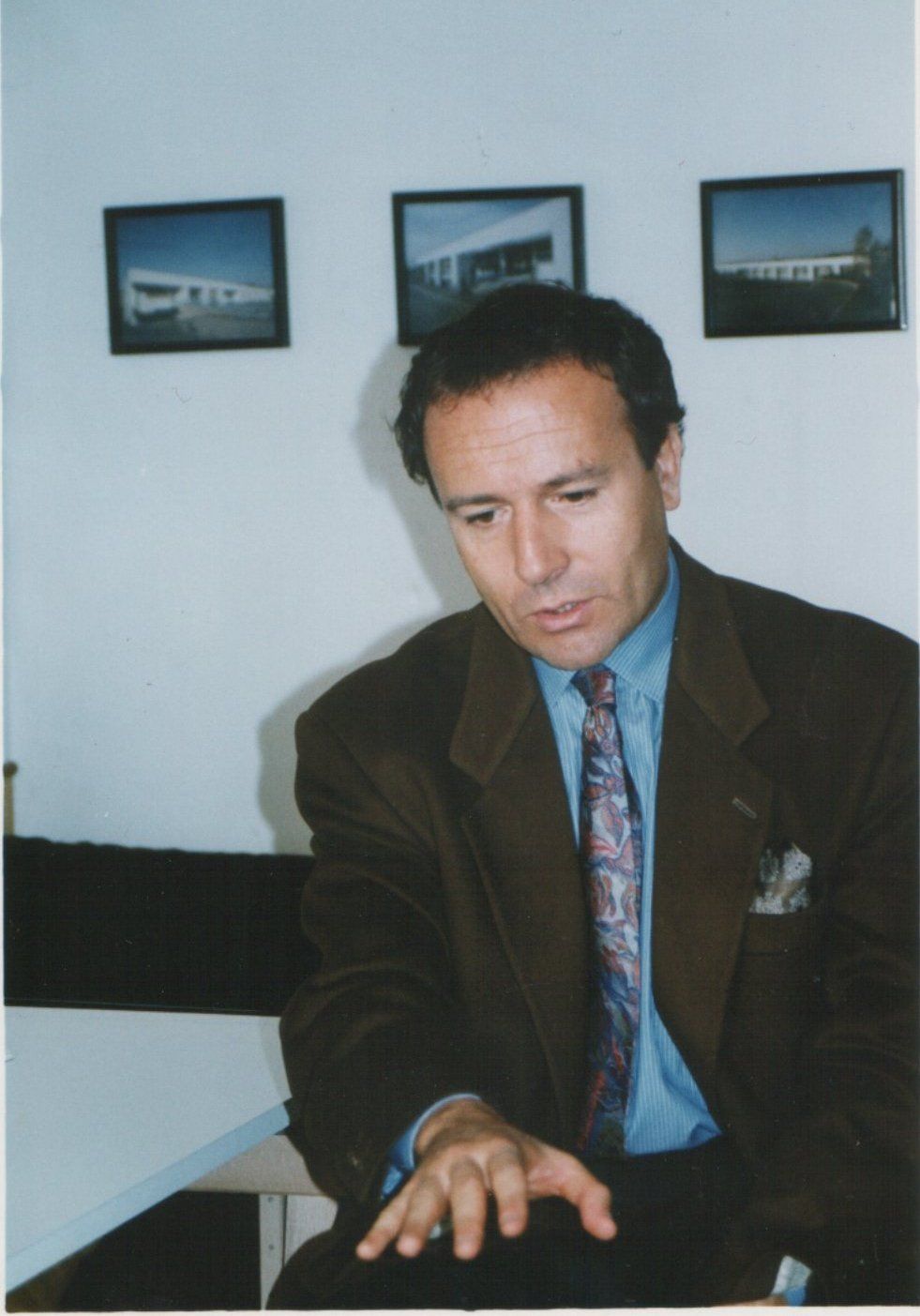
In the envelope there was a poem entitled "Aerial Revenge", which Christian Tanascaux felt the need to write when the airplane was taking him back to his homeland in November 1990. High above the Carpathian Mountains he was breathless with emotion and found himself composing the poem that ended with the lines:
"The old longing / The longing for you / It wanders, it passes
And looks / At the same corner of the street / And the same corner of me".
Each of the architects featured in the book has his or her own life experience, and had to compete for commissions with architects from their adopted country. In the Paris area alone, in 1993, there were some 45,000 architects... The fact that some of the Romanian architects managed to design buildings in Paris demonstrates both their talent and the level of architectural education in Romania, when the teachers were Octav Doicescu, Grigore Ionescu, Gheorghe Simotta, Adrian Gheorghiu, Mircea Alifanti, Ascanio Damian, Cezar Lăzărescu...
and their most important ones:
Dan Sergiu Hanganu (1939-2017), who won more than 50 major awards, was a member of more than 30 architectural juries and a visiting professor at 27 universities in Argentina, Canada, Chile, Chile, Colombia, France, Italy, Mexico and the USA;
The Dan Munteanu, Ștefan Perianu, Mihai Munteanu, Teodor Georgesco, Christian Tanascaux and Teodor Tufan collective, which in 1983-1984 won the First Prize (ex aequo) at the Bastille Square Opera Competition; the Dan Munteanu, Ștefan Perianu, Mihai Munteanu collective has realized numerous hospital, educational and sports buildings, administrative headquarters in France;
Alain Manoilesco (Cătălin Manoilescu), who realized many projects for high schools and colleges in Paris and in France, was awarded First Prize at the International Competition for the "Lycée Français Anna de Noylles", Bucharest, and Mention at the International Competition for the Extension of the Government Palace in Victoriei Square;
Teodor Georgesco and Christian Tanascaux (Cristian Tănăsescu), specialized in hospital construction, realized with their firm A.A.R.D Hôpital de Vaugirard in Paris, and later with A.A.R.D (Teodor Georgesco) and A.A.T.C (Christian Tanascaux) Centre Hospitalier du Hâut Bugey-Oyonnax - event in the field of hospital construction in 2007;
George Carvunis (b. 1952) with the firm DTACC, which included the group of Romanian architects: Traian Ionescu, Carmen Lăzărescu, Mugur Midan, Liviu Stănescu, Alexandru Rosetti and Tony Cristea, has realized important works in Paris: Siège Social de Suez, Siège de Groupama, Siège Social de Poste Montparnasse, Marriot Hotel, Siège à Rossini Laffitte, Siège du Figaro.
Literary critic Dan C. Mihăilescu, the producer of the Pro TV program "Omul care aduce cartea" (The Man Who Brings the Book), asked the question: "What will the architects here say when the ones featured in the book want to design in Romania?".
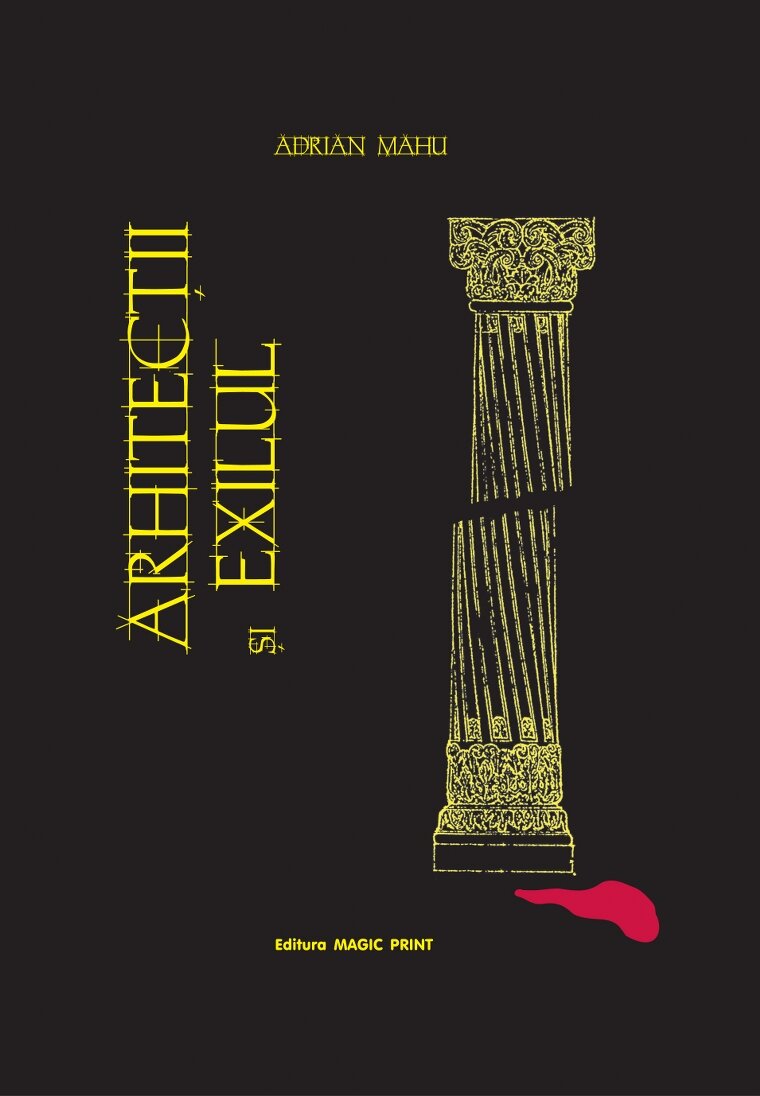
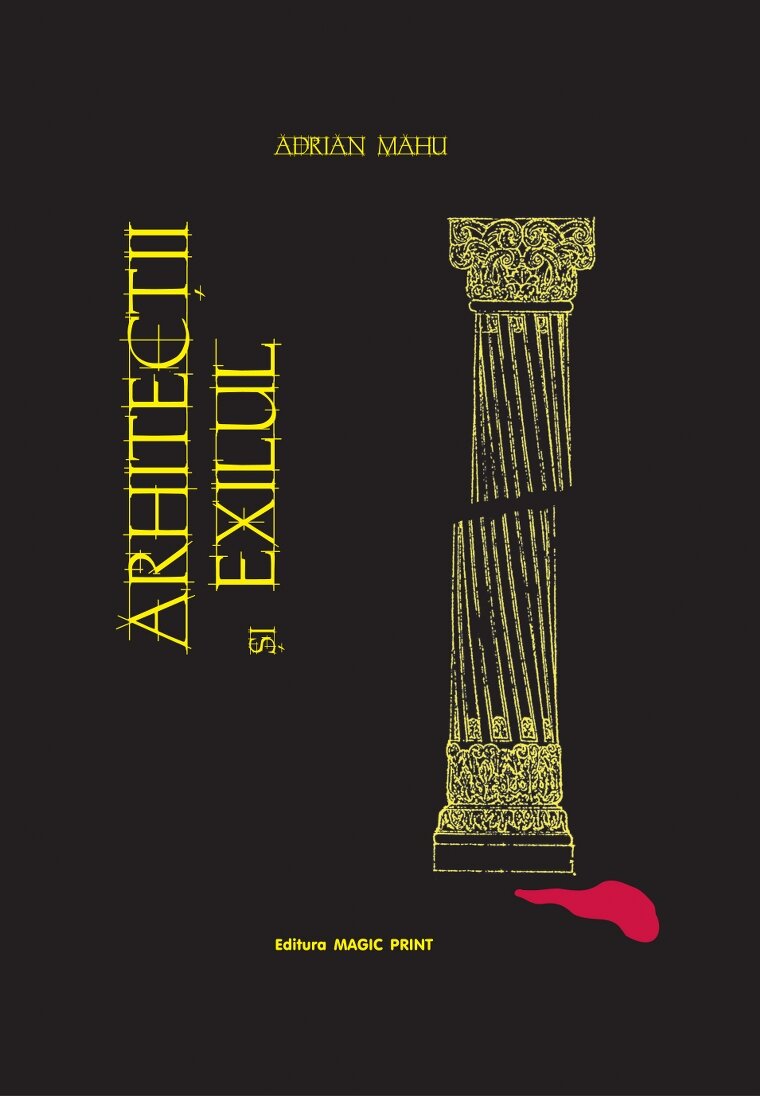
"Architects and Exile" is a documentary book about the recent past and presents a singular phenomenon in international architecture between 1945-1990.