
Living today
Project details
Amstel C1
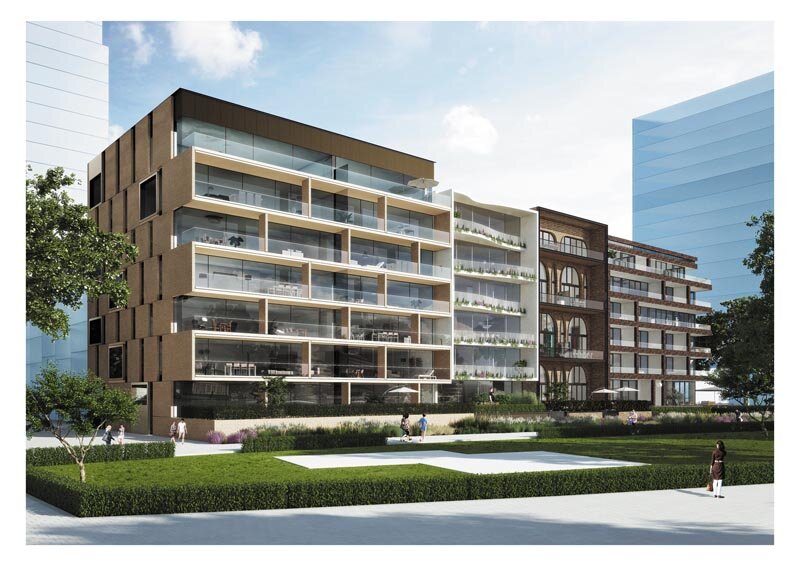
Project name: Amstel C1
Project type: 8-storey apartment block
Location: Amstelkwartier, Amsterdam
Years: 2013-2015
Status: Execution phase
Client: Samenwerkers Amstel C1- Self-formed collective:
Chairman: Mart van Santen
Architect: OLAF GIPSER ARCHITECTS, Amsterdam
Team: Olaf Gipser, Jesse Zweers, Gertjan Laan, Alexey Boev, Simona Puglisi, Vigleik Skogerbø
Risk management, contractor: HEUTINK GROEP BV, Genemuiden
Engineering: SIDstudio, Leiderdorp
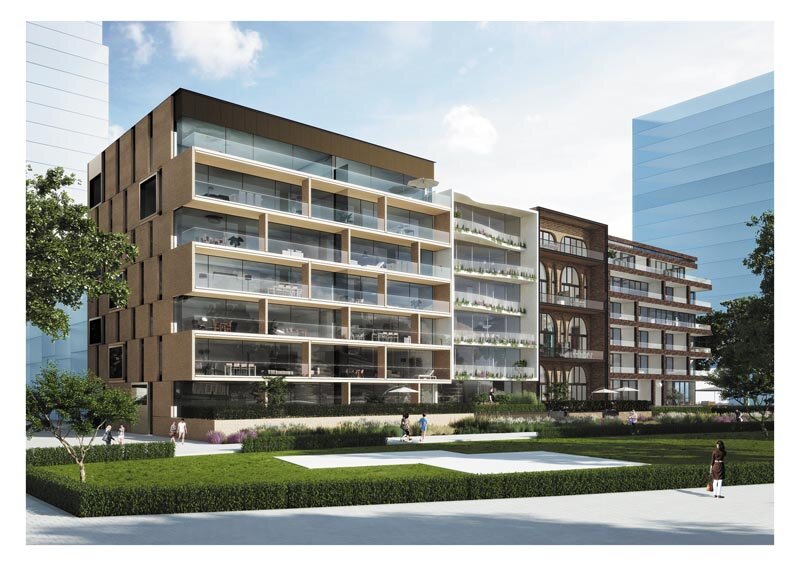
OLAF GIPSER ARCHITECTS initiated, co-developed and designed "Amstel C1", an 8-storey apartment building in Amsterdam.
Partly due to the consequences of the financial crisis of the Dutch housing market and partly due to a political agenda of the city council, the City of Amsterdam has recently started to encourage self-managed housing initiatives in its territory. This is a new measure in a country where housing construction has traditionally been a business of professional institutions and large-scale interventions. Now, the municipality is taking a proactive role in choosing the land (or out-of-use buildings) and offering it to private institutions by distinguishing between an individual or collective self-managed developer. The selection procedures for institutional developers differ depending on the site.
In 2012, the City of Amsterdam opened the selection procedure for a self-managed development (privately funded) of four plots, located on the banks of the Amstel river, close to Amstel station, within the ring marked by the city's highway. The plots are part of the Amstelkwartie development project , a site on the Zuidergasfabriek area, occupied until a few decades ago by the city's two fuel companies. The development comprises various forms of housing including individual or collective self-managed projects.
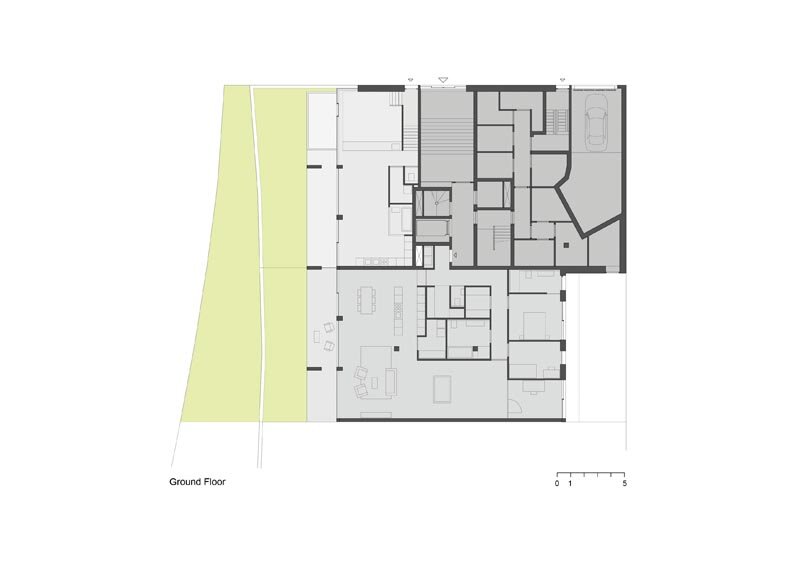
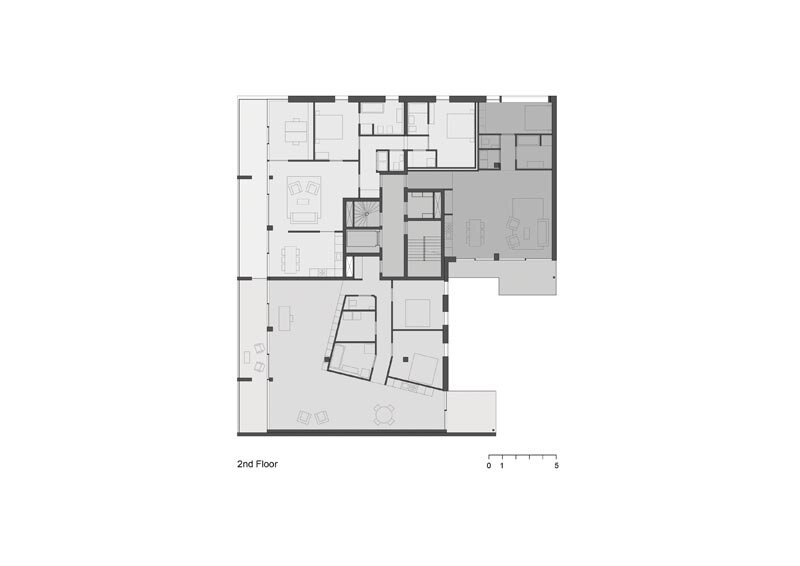
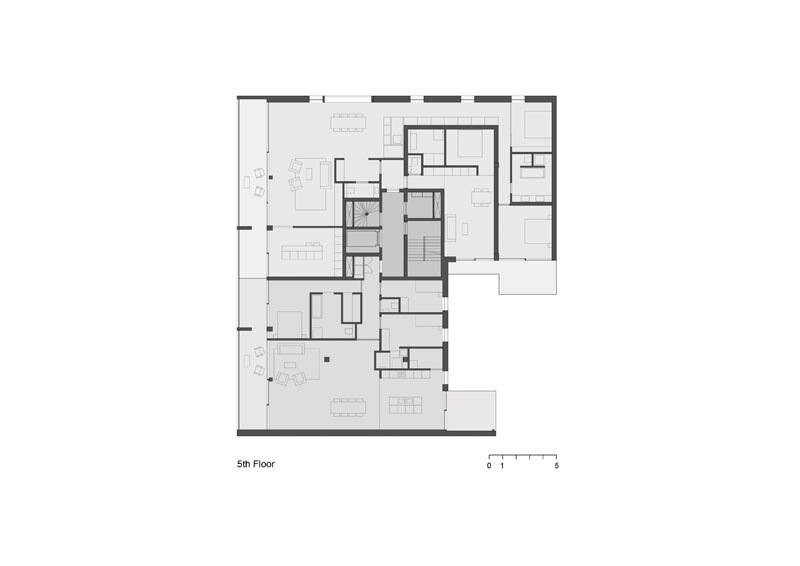
The firm OLAF GIPSER ARCHITECTS took the initiative to set up a self-managed collective by teaming up with mid-sized developer and contractor HEUTINK GROEP BV, as a back-up solution and financial back-up during the potential unstable phase of the decision-making assembly of the self-managed collective. After being selected by the municipality - based on a complex approach covering aspects of financial programming and risk management, sustainability, legal agreements and participatory grounding of the collective - the architectural design was developed within one year. During this time, the collective grew from the initial group to fourteen parties. Formally an association, the self-managed collective was extremely active and participatory, taking advantage of the individual expertise, personality and life experience of each member. At the end of the year that marked the completion of the architectural design process, closely monitored by various municipal institutions, the final land concession right ('erfpacht') was issued by the municipality.Amstel C1 consists of 3,500 sq.m. of unfolded floor area, spread over 8 levels (including basement parking). The building has seventeen apartments organized around a central hub. There are four types of apartments whose total surface area varies between 74 and 213 square meters.
The concept of the fixtures and fittings in the plan allows for a loose overall arrangement of the individual apartments, resulting in seventeen apartments that have been developed and configured in close collaboration with the individual participants.
The garage is combined with the parking area of three other collective housing buildings in a self-managed system and becomes a common unit. It raises the challenges of certain modifications (legal and constructional) between the four self-managed collectives, each of them working with its own contractor.
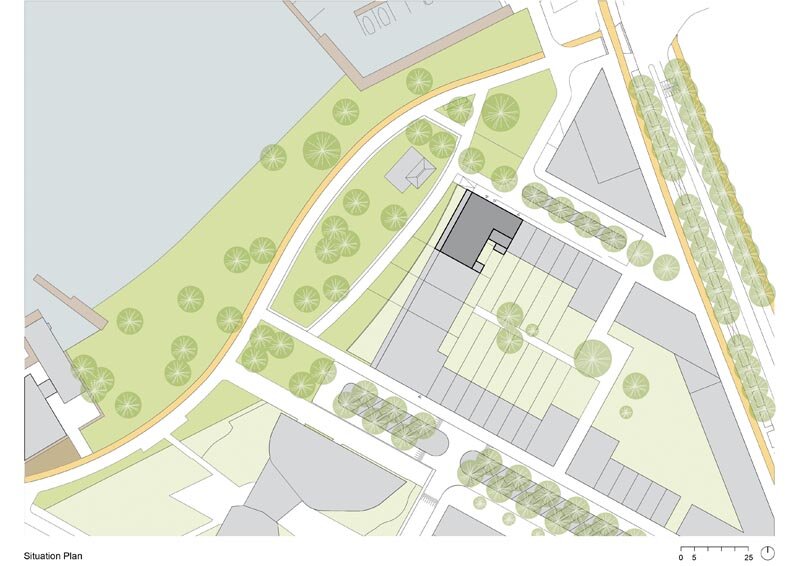
The building is located in the northwest corner of the Amstelkwartier. The architectural identity responds to and contributes to the changing scale of its urban context. Emphasis has been placed on expressing the idea of a dynamic collective as opposed to downplaying individuality, bearing in mind that the entire ensemble of which it is a part consists of self-managed architectures that were largely unknown at the time of the project's development.
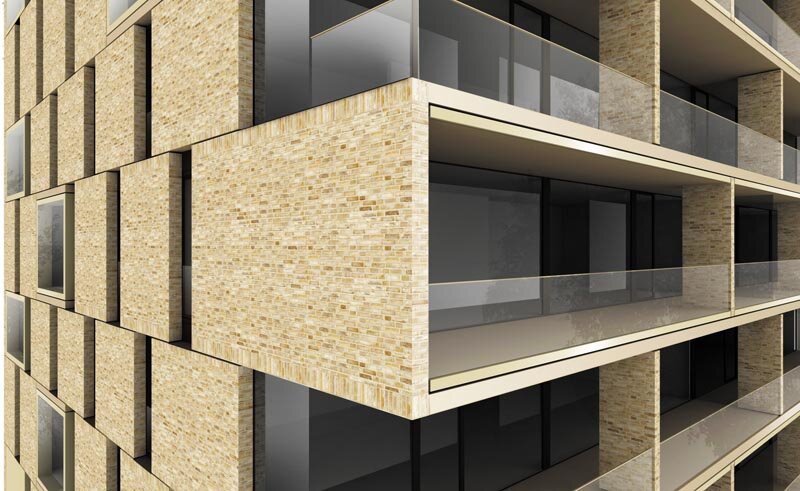
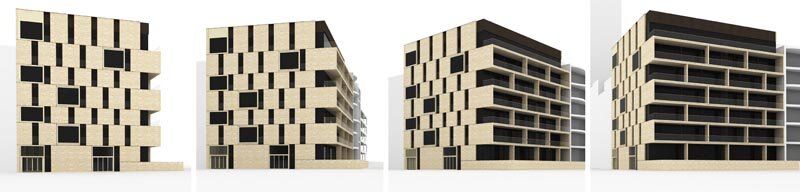
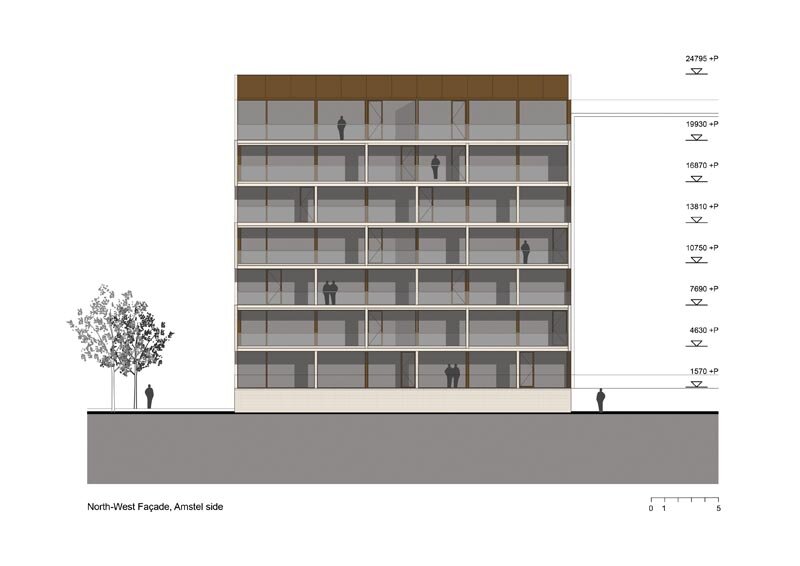
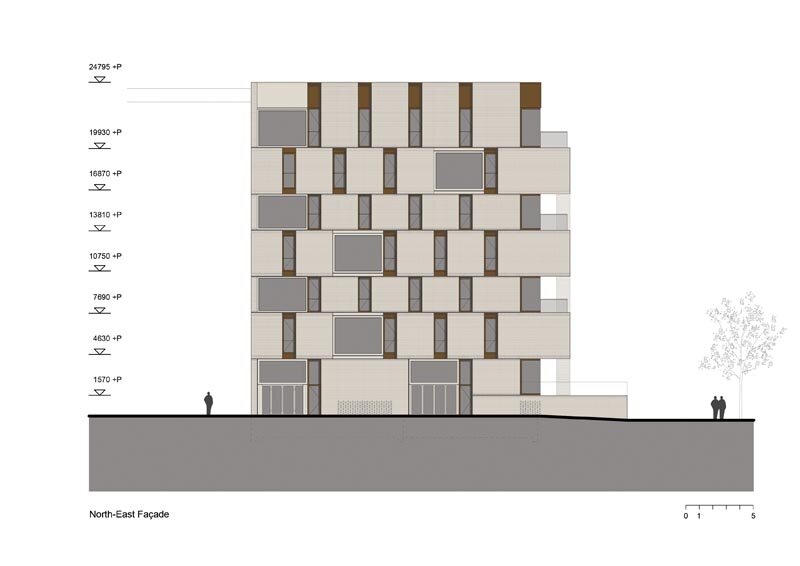
The main facade opens onto a stunning panorama along the Amstel River, stringing the continuous balconies of the eight levels into three wider frames corresponding to the extended urban scale. In its proper spatial context, the depth of this facade is achieved by the superimposition and alternation of brick-height panels of planking that are perpedicular to a glazed plane set back by 2.2 meters. By contrast, in the side façade, the tectonic expression of alternating panels is developed consistently with an inverted relationship between open and closed, transparent and opaque and a loss of depth. Here, the consequence of the balconies to the Amstel, joined in frames, is an alternating A-B rhythm in terms of the articulation of the height of the floor and brick panels. The articulation of a brick facade as an animated play between brick panels was motivated by the attribution of this architectural theme to the notorious problems of technical expansions in masonry construction. Additional attention was paid to the detailing of stereotomies, in order to achieve a monochromatic appearance in a small spectrum of different building materials.
In accordance with the high sustainability requirements of the Amsterdam City Council for new construction (carbon dioxide emission neutrality) the building is designed in the highly insulated class (average Rc=8m2 K/W), operating together with a collective system of air intakes in heat pumps for heating and cooling. The apartments have individual heating pump systems for hot water heating and an idividual balanced ventilation system in the apartment combined with a heating system for hot water production. In addition, approx. 120 solar panels produce electricity for the building.
"The Giardini 'rest stop
Fundamentals Biennale di Venezia 2014

Piranesi Prix de Rome 2014
Green Paradises or Ash Ghettoes
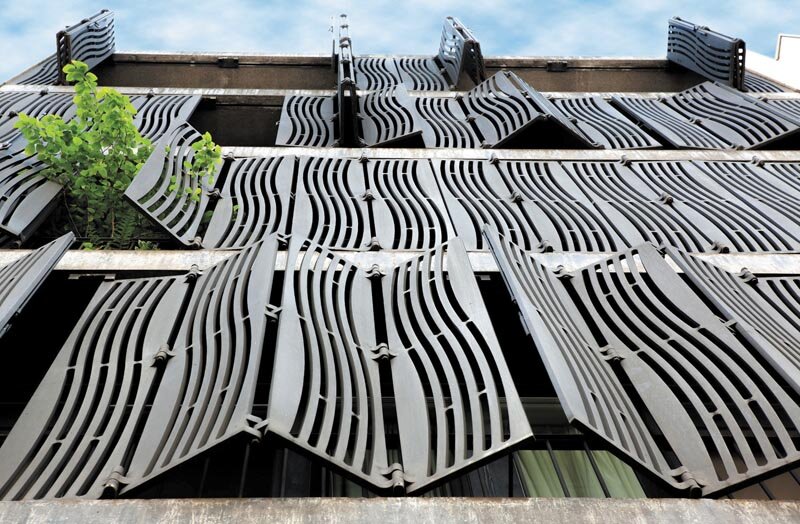
Research, examples, trends in current collective housing design
Individual or collective housing?
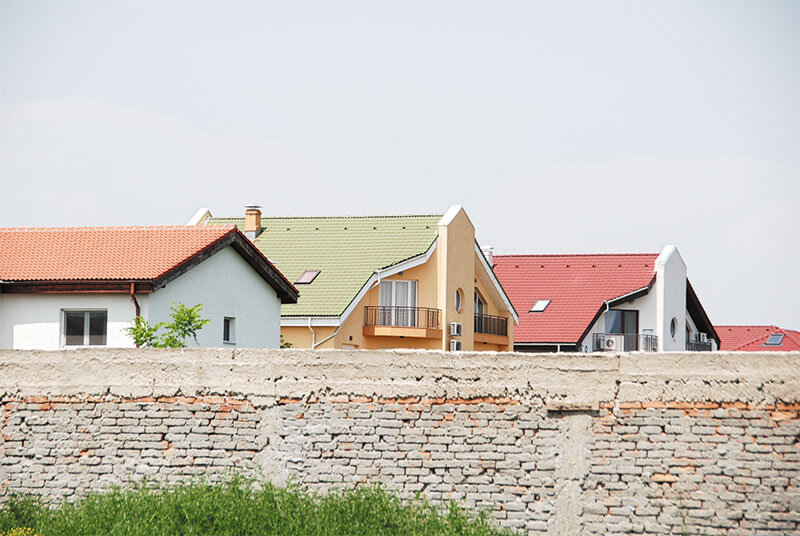
Peripheralization of Bucharest from the perspective of differentiated urban dynamics
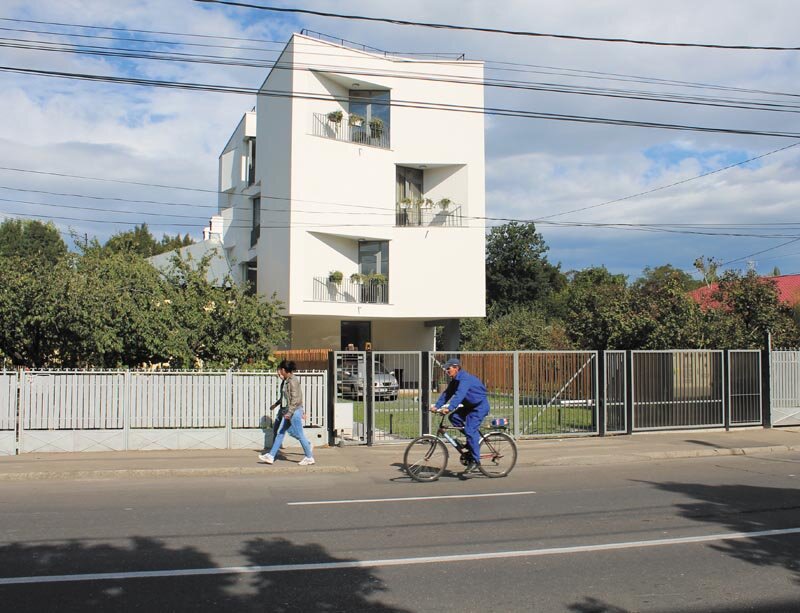
6 courtyards
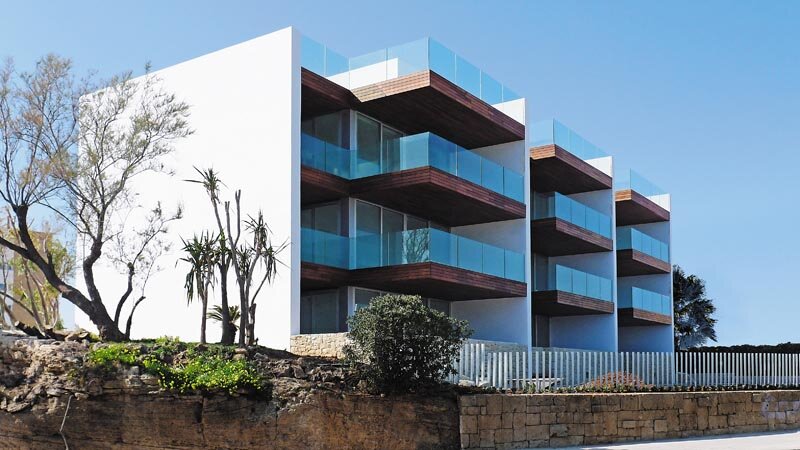
Apartment building in Jávea, Valencia, Spain
Amstel C1
Architects, architecture and cities. About the profession of architect and how to build in recent Romania