
Living today
Thematic dossier
Individual or collective housing?
Theoretical perspectives on housing in Bucharest in the first half of the 20th century
In what follows, we aim to outline a brief historical overview of the theoretical principles that guided the development of the Capital in the first half of the 20th century, analyzed through the prism of a theme with an impact on the configuration of the urban fabric. Without claiming to be exhaustive, the position that Romanian theorists assumed in relation to the optimal type of housing in Bucharest - single-family or multi-family - will be discussed below, with reference to a series of relevant texts from the public literature of this period.
The beginnings of urban planning theory can be placed at the end of the first decade of the twentieth century, a moment that naturally follows the beginning of the concerns for a directed development of the city as a whole. While for most of the 19th century, peripheral residential areas - and thus mass housing - were ignored by the authorities, they began to make their way into the concerns of the city's planners from the last decade of the century, and in the inter-war period the housing issue came to the forefront of both urban theory and legislation.
Reflections on housing in Bucharest can be found in theoretical texts since the pre-war period. Still modest in terms of size and the complexity of the subjects addressed, they nevertheless had the role of setting out clearly a vision of the city's development that characterized all theory and practice in the first half of the 20th century: the expression of a clear preference for single-family housing and support for small properties. Until the third decade of the 20th century, no collective dwellings with owner-occupied apartments were built in Bucharest1, multi-family buildings being automatically included in the category of "report buildings". Thus, the plea for single-family housing was, at the same time, a plea for private ownership at the expense of rented housing, the two specific discourses being inseparable.
Such principles were stated as early as 1910, when the journalist N. Baboeanu asserted his firm position in the texts included in a pamphlet discussing the state of hygiene in the capital and the various measures of the municipal administration in relation to the city's housing, aesthetics, finances, etc. The author stated emphatically that owner-occupied housing was to be encouraged at the expense of rented housing, because "all Romanians - from the largest to the smallest, and we could say especially the smallest - have this desire to become owners", for the fulfillment of which "they sacrifice everything, sacrifice what they need for food and clothing". This inclination of Romanian society was considered by the author to be "very useful from an economic and hygienic point of view", without, however, giving the reasons behind this statement2.
This attitude was echoed by more prominent names. Thus, in 1912, the engineer Andrei G. Ioachimescu, director of the Municipal Society for Eftine Housing, considered small owners to be "elements of order, so much needed in large centers"3. The model to be followed in the case of the capital was based on the construction of single-family dwellings, collective housing blocks not being specific to Romanian society. In addition, Ioachimescu argued the European experiences, referring to the International Congress on Cheap Housing (Vienna, 1910), whose conclusions supported the construction of individual housing, collective housing being accepted only as an exceptional solution, in case the first option could not be implemented4.
Taking into account the situation in the capital, where there were significant reserves of urban land, the author pointed out that investments in collective housing were no more profitable than those aimed at the realization of single-family housing districts. According to his published calculations, the cost of building 100 apartments grouped in a collective block was similar (even slightly higher) to the cost of building an equivalent number of small individual houses, due to the low price of land5.
In this context, Ioachimescu considered that the construction of collective housing would have been "a big mistake", as such an attitude was not required either by the land configuration or by the tradition of building in Bucharest. Moreover, the author pointed out the harmful implications that the construction of collective housing for the poor could have, as it risked generating "permanent outbreaks of infection and contagious diseases", which had been largely avoided in the past precisely because of the low density of housing, despite poor building and sanitation development6.
Read the full text in issue 3 / 2014 of Arhitectura magazine
NOTES:
1 In Bucharest, the first block of collective housing (with apartments given in ownership, not real estate) was built in 1922 by the Societatea Construcția Modernă, on Calea Victoriei, no. 50-56, at the intersection with Frumoasă str., such initiatives being accepted and gradually assimilated by the Bucharest society. See Nicolae Șt. Noica, Entre istorie și actualitate. Politici de locuire în România, Editura Mașina de Scris, Bucharest, 2003, p. 85-86.
2 N. Baboeanu, Dedesubturi... Cronici de literatură socială și de politica comunală. Insemnările unui ziarist, Tipografia Cooperativă "Poporul", Bucharest, 1910, p. 154.
3 Andrei G. Ioachimescu, "Locuințele eftine" in Buletinul Societății Politehnice, anul XXVIII, 1912, Bucharest, p. 51.
4 Ibid.
5 Ibid, pp. 58, 52.
6 Ibid, p. 51.
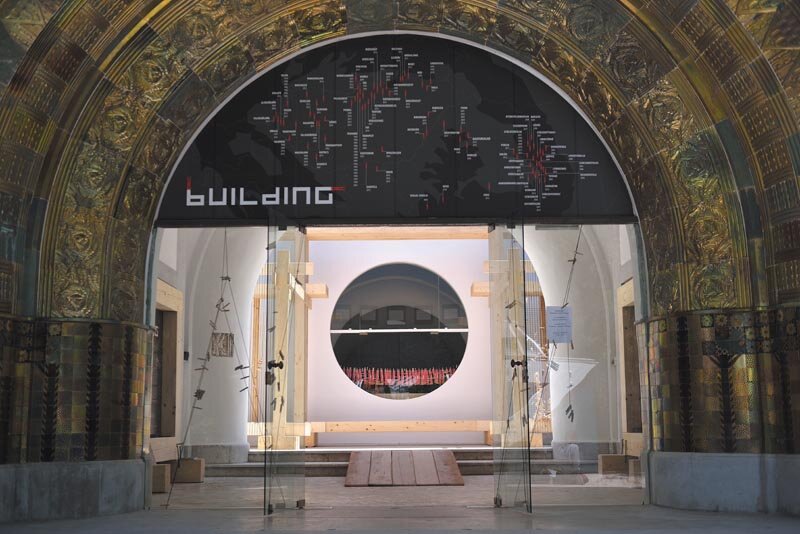
"The Giardini 'rest stop

Fundamentals Biennale di Venezia 2014

Piranesi Prix de Rome 2014
Green Paradises or Ash Ghettoes
Research, examples, trends in current collective housing design
Individual or collective housing?
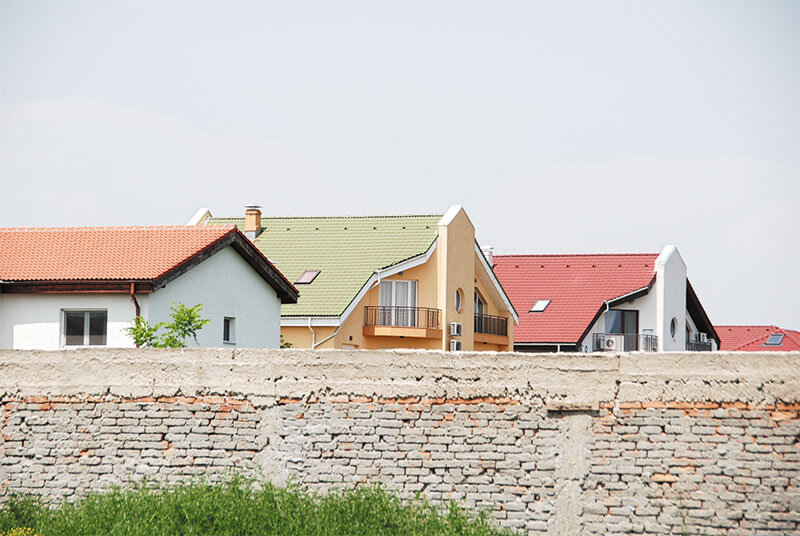
Peripheralization of Bucharest from the perspective of differentiated urban dynamics
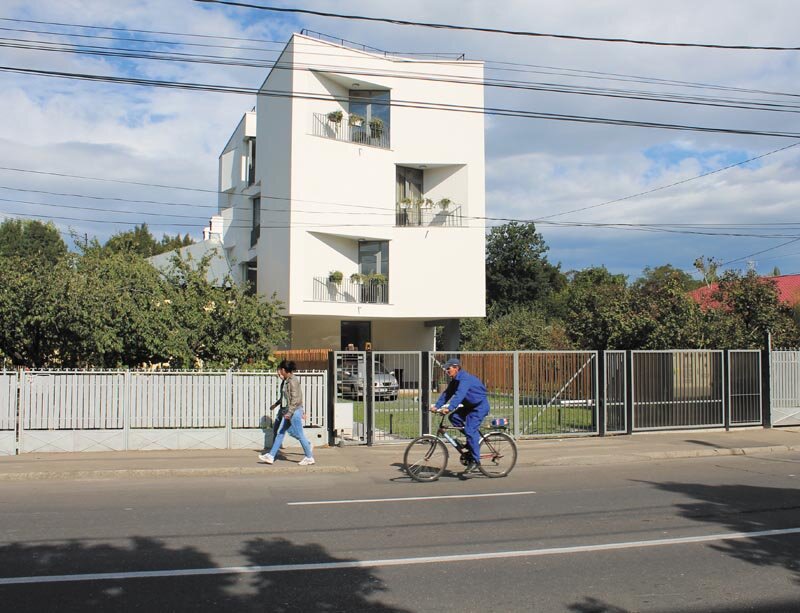
6 courtyards
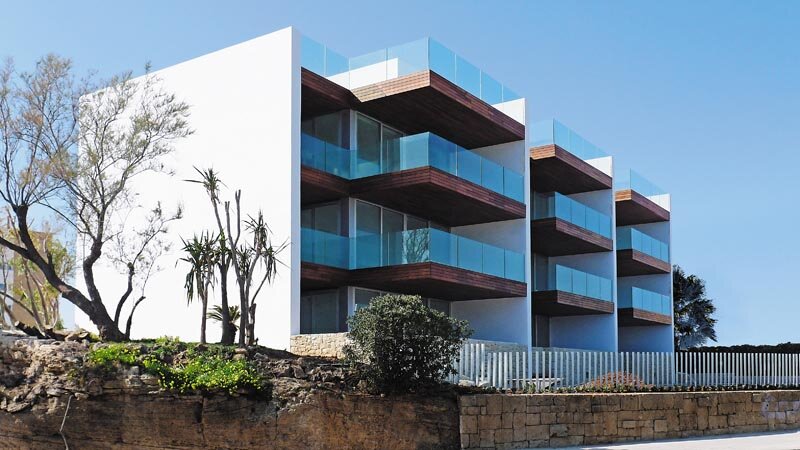
Apartment building in Jávea, Valencia, Spain
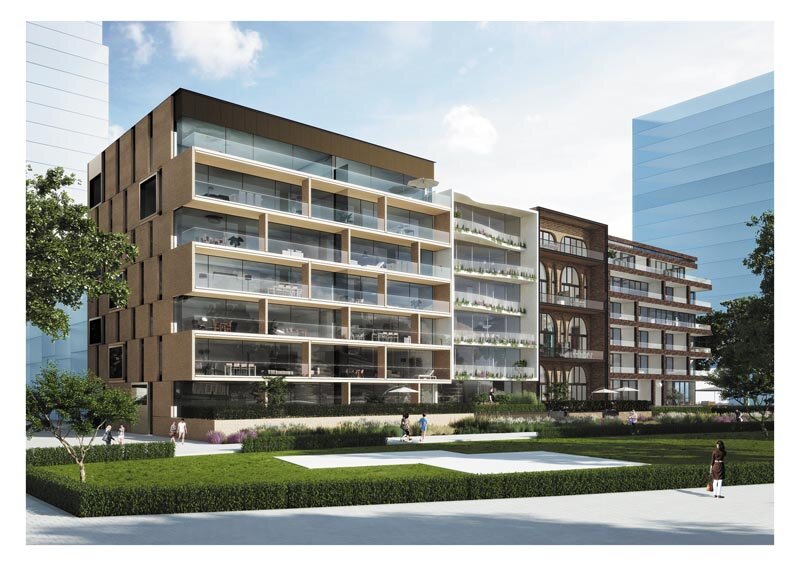
Amstel C1
Architects, architecture and cities. About the profession of architect and how to build in recent Romania