
Living today
Thematic Dossier
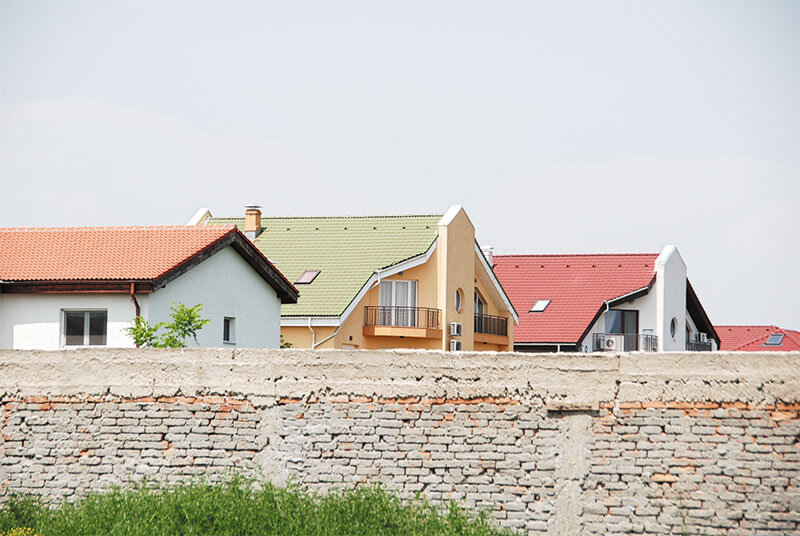
Peripheralization of Bucharest from the perspective of differentiated urban dynamics
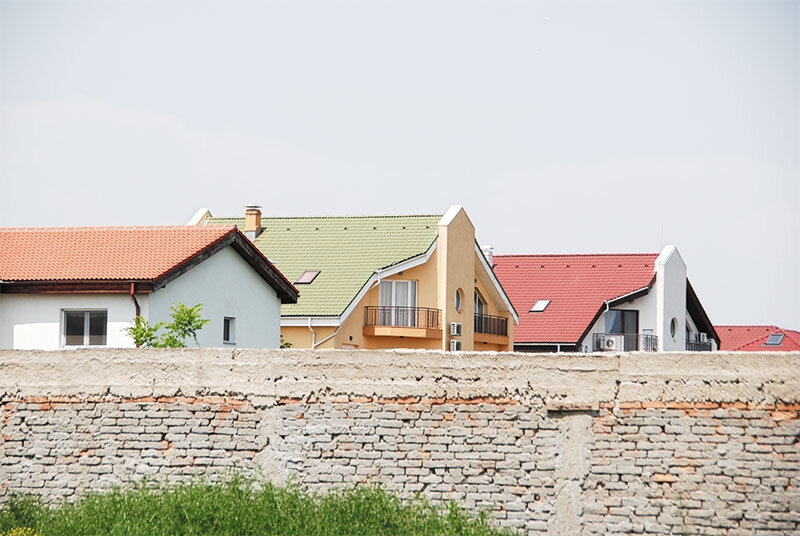
The morphology of cities in the last 50 years has demonstrated a common tendency of expansion by transferring territorial boundaries outwards, as a process more or less controlled by urban development strategies and policies. Suburbanization/peri-urbanization1 is an ongoing phenomenon, also present in the case of Bucharest, as an effect of the internal imbalances accumulated in urban structures throughout the evolutionary stages of cities. The urban development of Bucharest can be compared with cities of a similar size that have undergone abrupt developments and periods of rapid transition in terms of spatial structure (Brussels, Los Angeles, Chicago), social structure (London, Chicago) and socio-economic situation (Berlin, Chicago, Madrid). The expansion of areas with differentiated urban dynamics, located outside the traditional structures of cities, are the result of territorial conjunctures, the explanation for which should be sought in the relationship between social, human, political and environmental factors. The problem of the phenomenon is the depopulation/abandonment of parts of the traditional city and the fundamental change in the dynamics of the components of the urban structure. The spontaneous emergence of new poles of random urban growth was made possible by the destructuring and disruption of the natural evolutionary process of cities, the emergence of cleavage zones from one urban model to another, the re-establishment of a new center-periphery relationship, incoherent functional and territorial modulations, which will jeopardize the development of cities.
The consequences of uncontrolled urban sprawl include: spatial dispersion, social segregation of the city's population, dysfunctional urban fringe areas in relation to central-urban areas, disaggregation of the urban territory through the difficulty of accessibility and connectivity of newly-formed areas, the emergence of residential formulas atypical of existing residential typologies (the emergence of gated communities on the outskirts of cities), the development of new housing practices in terms of new urban culture, and the loss of local and global urban identity. Urban sprawl is also common in cities in South-Eastern Europe, which have shifted from the paradigm of progressive urbanism to neo-liberal forms of urbanism. David Harvey2, a proponent of the postmodern critique, explains the process of liberalization of cities as a consequence of capitalist policies translated into urban economies encroaching on their traditional structures by accumulating and reinvesting surplus capital, as the urbanization of cities is guided by the spread of surplus production to new centres of development based on resource consumption, monopoly and the search for other markets. The dilution of the previous urban structure by the emergence of new ephemeral urban polarities is felt at the level of the general functionality of cities, through multidimensional transformations (technical, economic, political, social, cultural) that generate a new spatial logic. The formulation of policies to counteract uncontrolled urban sprawl and the proliferation of urban sprawl have led to a re-qualification of urban planning actions through the development of alternative instruments, under the aegis of the New Urbanism, which aim to achieve smart growth3 in cities. A well-known example in the literature is the case of Portland, Oregon, which applied the principles of smart growth in a large-scale urban project between 2000 and 2004 with a view to homogenizing the urbanization process and creating a compact city by linking economic and demographic conditions with the housing market, regulating land use and promoting cooperation policies between the city and its metropolitan area. Many of Romania's major cities, especially Bucharest, have found themselves in the process of urban sprawl, on a much smaller scale, however, compared to North American cities, where the phenomenon is generalized. Residential development in the high-density metropolitan area outside the urban (metropolitan) area, low-density linear development along the major access arteries into the urban area, and scattered developments around the city in the form of small nuclei, have generated a differentiated urban dynamism, the amplitude of which has been mitigated by the global economic crisis of recent years. A vector of urban dynamics specific to Bucharest has materialized in the scale of housing construction on the periphery and outside its periphery, housing being a factor in the metamorphosis of the city's physiognomy, triggering a phenomenon that has brought about a change in the vocation of housing in contemporary Romanian society. In the new paradigm of inhabitation, the city is changing both in its physical dimension and in the dimension of its meanings.
Read the full text in issue 3 / 2014 of Arhitectura Magazine
NOTES:
1 Terms with the same meaning, but expressed differently in specialized literature (French or Anglo-Saxon).
2 David Harvey, Le Capitalisme contre la droit a la ville. Neoliberalisme, urbanisation, resistence, Ed. Amsterdam, Paris, 2011.
3 Smart growth - intelligent growth of cities, a principle adopted by the United Nations in 1992 through the United Nation Conference on Environment and Development.
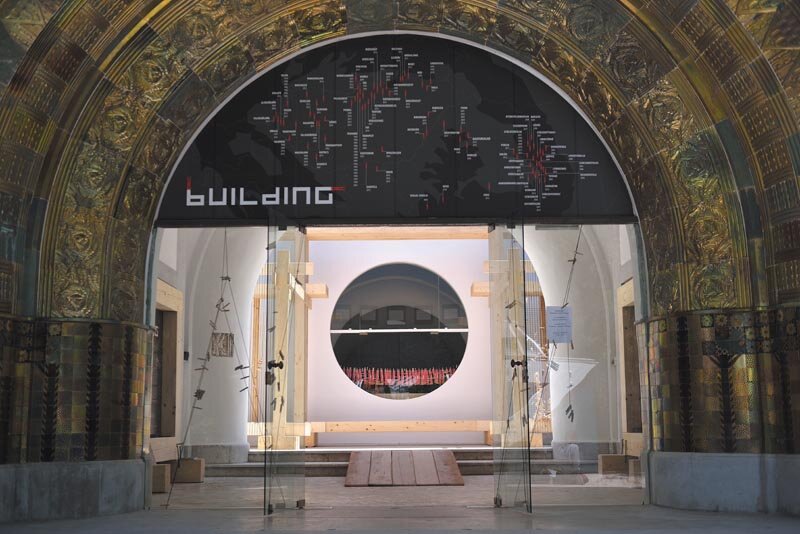
"The Giardini 'rest stop

Fundamentals Biennale di Venezia 2014

Piranesi Prix de Rome 2014
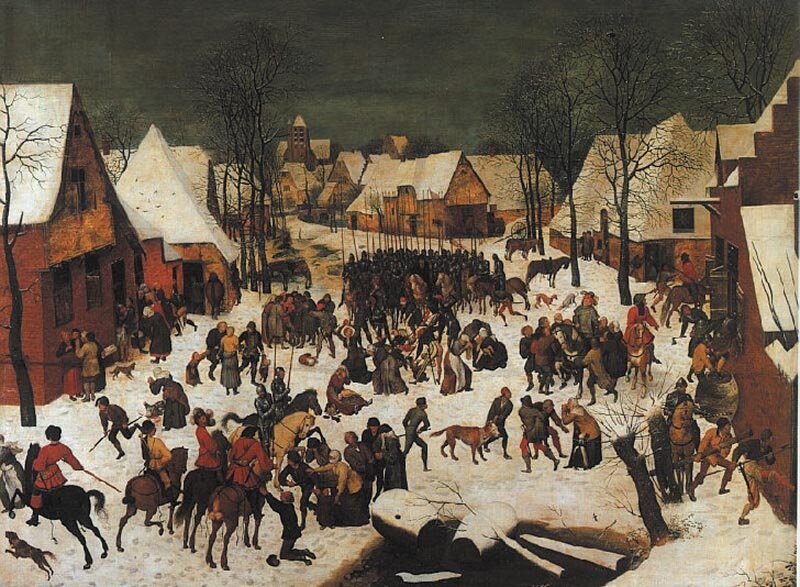
Green Paradises or Ash Ghettoes
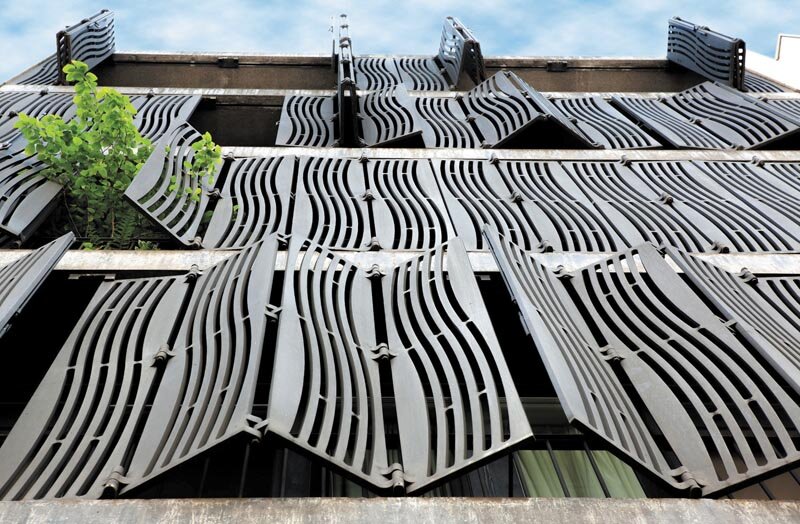
Research, examples, trends in current collective housing design
Individual or collective housing?
Peripheralization of Bucharest from the perspective of differentiated urban dynamics
6 courtyards
Apartment building in Jávea, Valencia, Spain
Amstel C1

Architects, architecture and cities. About the profession of architect and how to build in recent Romania