A decade of space planning in Romania

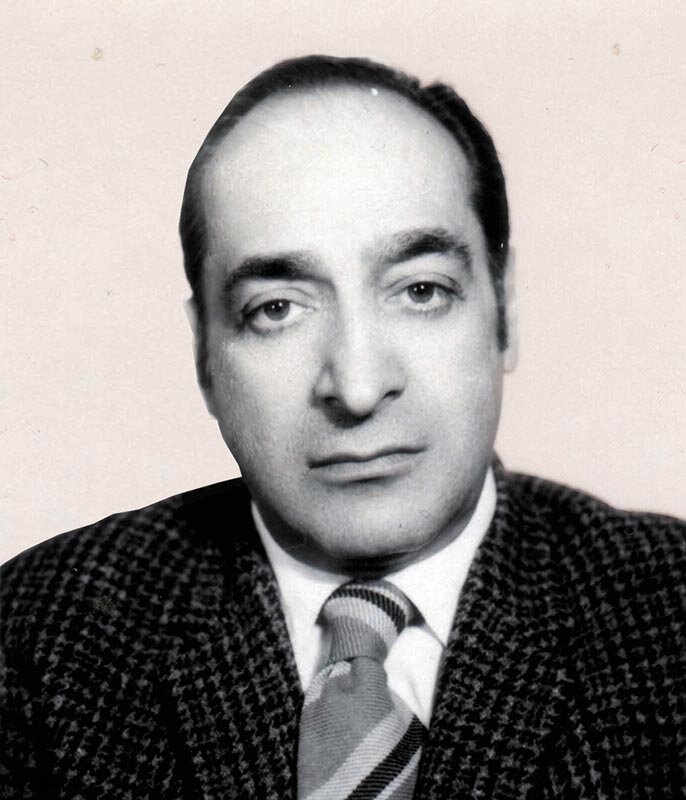
In 1988, the year in which Radu Patrulius died, his friend, the architect Ion Mircea Enescu (who has also passed away), concluded his obituary in the magazine Arhitectura1 with the following words: "And if all this can be forgotten, disappearing with the witnesses of his life, one cannot, however, forget what he accomplished with diligence and patience, leaving behind him precious milestones for tomorrow's diligent researcher".
I did not know Radu Patrulius. I am not one of the 'witnesses of his life', nor of the period in which he lived and worked. However, putting together all the information I have about him from people who knew him or with whom he worked, as well as the way in which he describes himself, directly or indirectly, send me back to the same conclusion: Radu Patrulius belongs to the gallery of those architects who have not enjoyed the public recognition they deserve. If, during his lifetime, this was an assumed choice, the same cannot be said of his posthumous neglect. The present evocation aims to be a reply and a continuation of what Ion Mircea Enescu has said, bringing to the fore some aspects of Radu Patrulius' life and creation, many of which were concealed in 1988, seen from the perspective of their contemporary relevance. The 25-year time gap, the freedom given by the totally different political context, and the recoil generated by the absence of a "common history" with the person evoked are the major differences in the position in relation to the author of the obituary, which makes the portrait sketched here complementary to the one in 19882. A parallel reading of the two "projections" could perhaps best reconstruct a "three-dimensional" effigy.
Radu Patrulius was born on October 19, 1919 into a bourgeois intellectual family. His "unhealthy background" and the political involvement of some of his close relatives were a ballast that often hindered his professional rise and affirmation, a fact of which he was fully aware throughout his life. Thus, his father, Radu Patrulius, a liberal lawyer and journalist, member of the PNL, was arrested after the Communist regime was installed and sent to the Canal, where he died in 1953, and his cousin Dionisie Germani (son of the engineer D. Germani, an academician and dean of the Faculty of Mechanics at the Polytechnic), an important legionary leader, was in exile in Berlin from 1942 ("gone to study", Radu Patrulius elliptically said in an autobiography written to fill a university post3).
He graduated from the "Spiru Haret" High School in 1938, was admitted to the Faculty of Architecture in 1940 and, after a brief spell at the front in 19444, graduated in 1947. From this period, we note the episode recounted (elsewhere, after 1989) also by Ion Mircea Enescu, in which, in 1945, he was elected president of the student association in a tense assembly, despite temporary arrest and opposition from the "communist group"5.
He studied in the studio of Professor Constantin Iotzu, then of Haralamb Georgescu, who had just been accepted as a teacher in a faculty that had only recently begun to accept modernism, belatedly and à contrecœur. The meeting with "Bubi" Georgescu, in whose office he also worked during his studies, seems to have been decisive in the formation of the architect Patrulius6. In both his professional and academic life, he would prove to be an unreserved advocate of modern architecture, to which he dedicated much of his later publicity.
After graduating, Radu Patrulius carried out a substantial design activity7, in which the sometimes monotonous rigour of his "basic function" was doubled by more stimulating activities from an artistic and intellectual point of view - participation in domestic and international architectural competitions, organizing exhibitions, designing cultural spaces, etc. Of these latter categories, we would mention the design of the library of the "George Enescu" Philharmonic (1956), the "George Enescu" Museum and the Museum of Literature in Bucharest (both in 1958).
Among the important competitions in which he took part we mention, selectively, those for workers' housing in Ferentari (1946, mention), the systemization of the Bălcescu Square (1956), the National Theatre in Craiova (1958), the City Hall in Toronto (1958), the Monument to the CFR Heroes (1959, second prize), the National Theatre in Bucharest (1961) and the systemization of the city centre of Timișoara (1962, mention). All of these show the diversity of the architect's preoccupations, in an attempt to maintain a high level of professional openness and professionalism and to avoid getting bogged down in the more or less banal themes of everyday professional life.
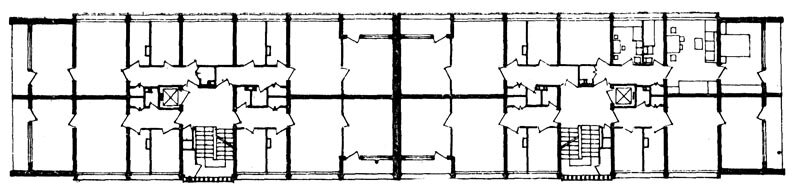
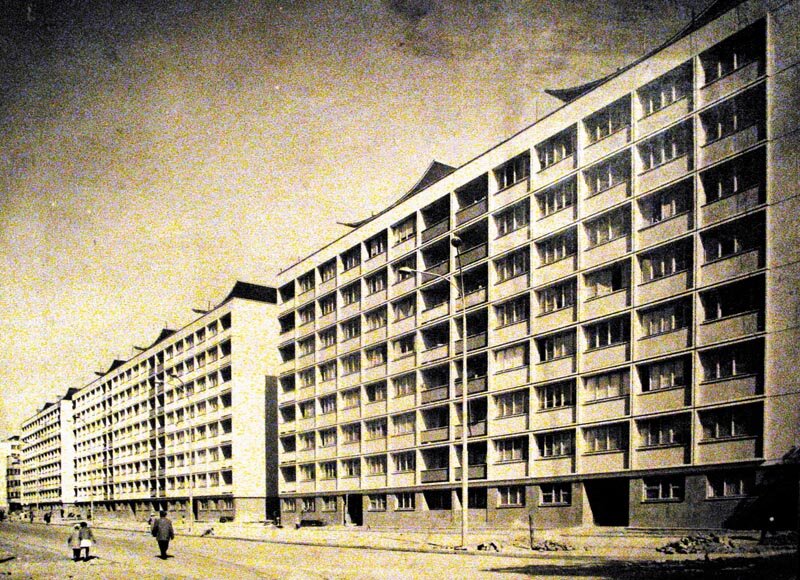
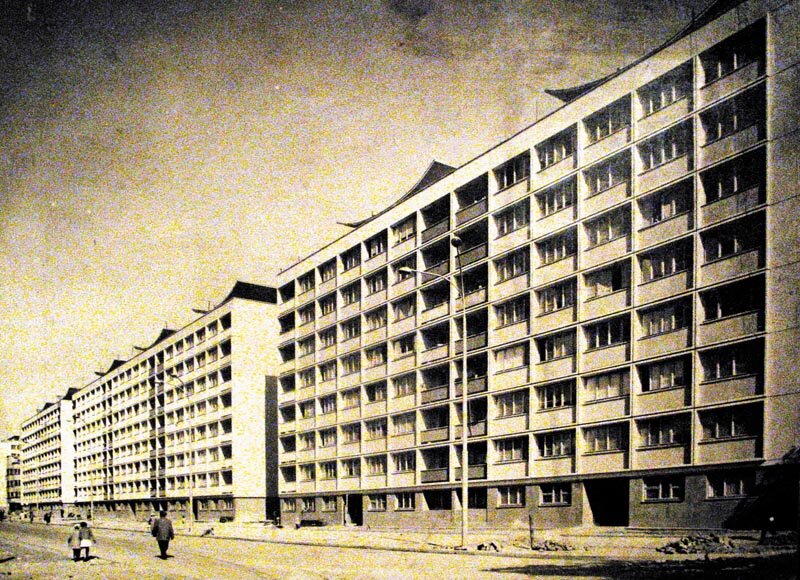
The projects coordinated or elaborated by Radu Patrulius within public institutions and design institutes8 are not, by their very nature, exceptional achievements. The themes dealt with are those specific to the time (industrial architecture, collective housing, administrative buildings, schools and school complexes, systematization studies and pre-provincial squares, etc.), giving relatively little freedom of movement and expression. However, his contribution to the Pieptănari-Șincai-Mărășești-Unirii ("Magistrala Nord-Sud", 1960-19639) complex, where he was the main architect, is still remarkable, 4 Gf + 7 "narrow bar" blocks on the Mărășești-Șincai section (1960), 6 Gf + 8 blocks on the Mărășești-Unirii section (1962), as well as the "Mărășești" restaurant (later "Budapest") and several commercial premises (1962-1963). These projects are of a clear functionalist-modernist nature, at a time when the detachment from the rigors of socialist realism was still in its infancy, and are among the best quality projects realized in Bucharest in those years.
Probably out of a desire to get out of an increasingly closed and oppressive professional environment, in which evolution did not offer the prospect of an intellectual opening, in the second half of the 1960s, Radu Patrulius began to approach the university and academic environment. In 1966 he enrolled for a doctorate under the supervision of Professor Ascanio Damian, rector of the "Ion Mincu" Institute of Architecture at the time. Their small age difference (only 5 years), their distance from the excesses of the political regime and their shared affinity for the themes and language of modern architecture brought the two men closer, consolidating a long-lasting friendly and professional relationship. After a year's trial and error, working as an assistant in one of Professor Damian's design studios, Radu Patrulius decided to devote himself exclusively to architectural education, abandoning his career as an architect-designer. In purely pragmatic terms, for a professional of his age and experience (50 years old, with more than 20 years of activity), the transition to the status of university supervisor could be seen as a step backwards. As I. M. Enescu also attests, Radu Patrulius was aware of this and took the step in full knowledge of the facts, preferring the challenges and intellectual openness of teaching to the very likely comfortable and premature fossilization in the IPIMPC workshops. In all likelihood, he also sensed that his cadre record would hang heavy and make any further promotion difficult.
Immediately after his appointment, he moved to the Chair of Architectural Theory, where he assisted Professor Gheorghe Petrașcu, the respected holder of the theoretical subjects. After his retirement in 1972, following a conflict with the new rector Cezar Lăzărescu, his classes were taken over by a group of (younger) professors: Mihail Caffé, Mircea Lupu and Radu Patrulius10. Radu Patrulius, who had just received his doctorate in architecture, after defending his thesis entitled "Collective housing in perspective", begun in 1966, took over as official lecturer the second-year subject "Architectural Programs", for which he had already written lecture notes in 1971. After only one year, however, his course was taken away from him and he was moved to the studio, under the pretext that "the teaching of theoretical subjects could only be entrusted to a party member"11.
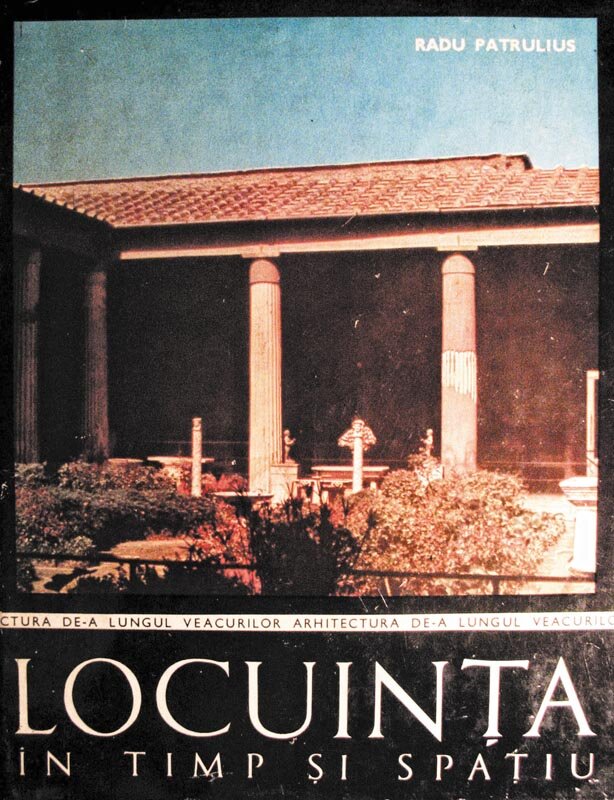
It was, however, a fertile period in the scientific career of Radu Patrulius, who gave a multi-year series of public lectures at the People's University, at the Radio and other institutions and, at the same time, began his consistent publicistic activity with a series of articles in the journal Arhitectura, initially in connection with his doctoral study12 , then on the dominant figures of Romanian modernism, a theme that would constitute the main vein of his later research and whose evolution will be described in detail below. In 1975, he also published his first book - "Housing in Time and Space"13, an extended version of his doctoral research, a volume awarded the Union of Architects Prize.
A tense relationship with Cezar Lăzărescu and with the Institute's administrative management continued to mark Radu Patrulius' academic career, however, as he was eliminated in 1975 from the competition for a lecturer's post (an attempt he would never take again) and almost excluded from teaching a year later, on the grounds that "the education he received from his parents was not suitable for a teacher in socialist Romania"14. The support of Ascanio Damian, in whose studio he worked as head of the department, combined with his willingness to conceal certain aspects of Radu Patrulius' recent past (a failed attempt to leave the country), helped to keep him in the School, but the doors to academic advancement had been closed to him for good.
In 1980, nearing retirement, he was nevertheless appointed titular of a design workshop of the early years15. Probably freed from the pressure coming from the higher echelons, for whom he was no longer a stake16, Radu Patrulius finally created a "niche" in which he could exercise his teaching vocation, based on his solid architectural culture. Without "magisterial" excesses, he knew, despite the great difference in age, how to bring his students together, many of whom still have warm memories of him today. He retired in 1986, continuing, in the few years he had left, to offer help and support to students and young architects who asked for it.
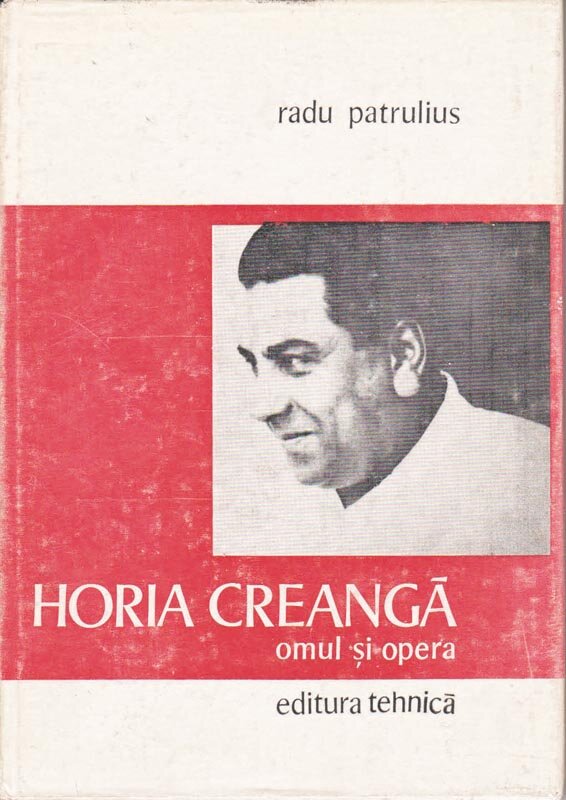
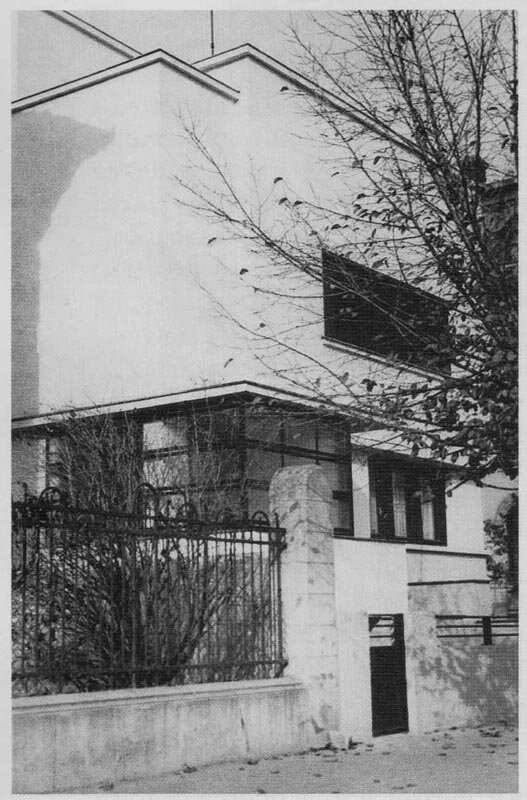
The present evocation cannot end without putting into context perhaps the most enduring aspect of his work: his publicist work on the issue of interwar Romanian modernism. At a time when this period was most often ignored or dismissed by specialized historiography (or even regarded with hostility, from the Marxist positions of materialism and class struggle17), Radu Patrulius is among the first to seriously and without prejudice look at the modern architecture of the 3-4 decades. Two would be the defining elements of the research method adopted: placing Romanian modernism in a doctrinal and international context and, respectively, studying it through the prism of individual professional destinies. In the first direction, we recall some articles published in the early 1970s018 1, and for the second, the evocations in the journal Arhitectura19 and, in particular, the monographic book dedicated to the life and creation of Horia Creangă20. These contributions can be considered an important part of the foundation on which the explosive research interest in interwar modernism was built after 1990. The Horia Creangă monograph together with part of his studio archive, which came into the possession of Radu Patrulius through Neculai Mândrășescu, were the starting point of several exhibitions and more extensive research dedicated to this architect in the last two decades21.
The professional and academic destiny of Radu Patrulius can be considered emblematic for a larger group of architects of his generation. Brought up in the bourgeois culture and intellectual milieu of the inter-war period, they were the first to face, on entering active professional life, the harsh regime change and a world in which they did not find themselves. Many found refuge in the anonymizing and levelling environment of the design institutes, channelling their creative energies into small professional "escapes". After two such decades, Radu Patrulius took the decisive step out of this world, turning to academic and university life, where his vast culture and his teaching vocation could be fulfilled. He carried with him, however, in an assumed and conscious manner, the stains of an inadequate staff record, which limited his rise and strained his administrative relations. What remains today, 25 years after his death, are the respect and fond memories of those who were his students, collaborators and friends, and the results of his research on subjects outside the templates of the time, carried out with accuracy and method, and which still retains its validity and scientific value.
NOTES:
1 Ion Mircea Enescu, "Dr. arh. Radu R. Patrulius, October 19, 1919-January 7, 1988", Arhitectura (6/1988): 59-61.
2 Thanks to Mrs. arh. Irina Patrulius for her generosity and solicitude in providing me with some information, otherwise difficult to access, about the life and work of Radu Patrulius.
3 [arch. Radu Patrulrulius, competition, chief of works] (Bucharest: Institute of Architecture "Ion Mincu", 1969), ms.
4 Immediately after August 23, he was involved in successive clashes with German troops in the Prahova Valley and later with Soviet troops near Ploiești. In the latter battle, all 10 soldiers in his group were killed (according to Radu Mihai Dimăncescu, http://viaradalicella.blogspot.ro/2009/07/intamplari-dramatice.html, accessed 13.02.2014).
5 Ion Mircea Enescu, Architect under Communism (Bucharest: Paideia Publishing House, 2006), 25.
6 Upon Haralamb Georgescu's death, Radu Patrulius published an obituary in which he conveyed his sincere respect and affection for his teacher (Radu Patrulius, "Arhitectul Haralamb Georgescu", Arhitectura (5-6/1978): 80-85).
7 An updated and (hopefully) complete list of Radu Patrulius' works is appended at the end of the article.
8 The Provisional Committee of the City of Bucharest, the Sovromurilor Design Institute (later IPROCIN / IPCI / IPCT), the Institute of Design for the Building Materials and Prefabricated Constructions Industry (IPIMPC / ICPMC).
9 For details, see B. Cotaru, "Noi blocuri de locuințe pe Magistrala Nord-Sud", Arhitectura R.P.R. (5/1960): 10-11; B. Cotaru, "2.500 de apartamente pe Magistrala Nord-Sud", Arhitectura R.P.R. (3/1961): 39-47; B. Cotaru, "5.000 de noi apartamente pe Magistrala Nord-Sud. Străpungerea Piața Mărășești-Piața Unirii", Arhitectura R.P.R. (2/1965): 18-23; Radu Patrulius, "Magazine pe magistrala Nord-Sud", Arhitectura R.P.R. (2/1965): 24-29.
10 Florinel Radu, În căutarea unei școală (de arhitectură) pierdute, doctoral thesis, ms. (Bucharest: "Ion Mincu" University of Architecture and Urbanism, 2000), 211.
11 Enescu, Architect under Communism, 216.
12 "The Concept of Dwelling in Perspective", Arhitectura (3-4/1972).
13 Radu Patrulius, Locuința în timp și spațiu (Bucharest: Ed. Tehnică, 1975).
14 Enescu, Architect under Communism, 216-217.
15 In the last years before his retirement, his assistant was the architect Tomnița Florescu, whom I thank for the objective data and personal opinions she gave me on this period. I also thank Mrs. arh. Ana Maria Zahariade for her help in contextualizing the theoretical work of Radu Patrulius.
16 During the same period, Cezar Lăzărescu himself falls out of the system's good graces, losing his position as rector (in favor of arch. Cornel Dumitrescu), as well as gradually losing his influence at the top of the profession.
17 Gheorghe Curinschi-Vorona, The History of Architecture in Romania (Bucharest: Ed. Tehnică, 1981), 297-307.
18 'Contribuții românești în arhitectura anilor '30', Arhitectura (6/1973; 1/1974).
19 "George Matei Cantacuzino, 1899-1960", Arhitectura (4/1975; 5/1975); "Arh. Al. Zamfiropol", Arhitectura (6/1977); "Arhitectul Haralamb Georgescu", Arhitectura (5-6/1978); "Marcel Iancu - the architect", Arhitectura (1/1981); "Roger Bolomey", Arhitectura (1/1982); "The O. Doicescu - Mac Constantinescu Exhibition in Ploiești", Arhitectura (2/1984); "On the parting with Henrieta Delavrancea-Gibory", Arhitectura (1/1988) etc.
20 Horia Creangă - omul și opera (Bucharest: Editura Tehnică, 1980), volume awarded the Union of Architects Prize. On the problems and obstacles that the author encountered in the publication of this book on the part of influential figures (the architect Ladislau Adler), as well as on the support he received from Professor Grigore Ionescu, in Enescu, Arhitect sub comunism, 215-216.
21 "1892-1992. Centenar Horia Creangă" (exhibition and catalog, coord. Nicolae Lascu, UAR, 1992) and "Horia Creangă, crezul simplității (exhibition and catalog, coord. Militza Sion, Simetria Publishing House, 2012).
Annex:
Design andresearch activityof arh. Radu Patrulius
The present list starts from the one elaborated by arh. Ion Mircea Enescu in his obituary published in Arhitectura magazine. It has been reorganized, revised and completed for the publication of the present article, based on new sources used in the research undertaken by me during the project "Professors of the School of Architecture" (coord. prof. dr. arh. Nicolae Lascu, 2012). Where not stated otherwise, the status in the project is that of sole or principal author.
Design activity
Architecture
1 Civil constructions
Housing
1948: P+1 flats, with 2 flats on the staircase; Single-family detached houses, coupled (Bariera Vergului). 1950: P+2 apartment blocks, with 2 flats on the staircase (Mediaș); 1951: P+2 apartment block, with 3 flats on the staircase (Giurgiu); 1952: P+3 apartment blocks, with 2-3 flats on the staircase (Bacău); P+3 blocks for non-family dwellings (Bacău). 1953: One-family dwellings P+1, semi-detached, villa type (Bacău). 1954: One-family dwelling of 2 rooms, model project for CSAC. 1957: Apartment blocks for the Central Committee (B. Văcărescu str.) - collaborator. 1960: Study of G+4 and G+7 sections for apartment blocks (Pieptănari) - collaborator; 4 G+7 "narrow bar" blocks (Mărășești-Șincai complex). 1962: 6 G+8 blocks (Mărășești-Unirii complex). 1963: 20 apartments, 9-10 fl., over-storey (Mărășești-Unirii complex). 1966: Dormitory for 340 students (Roman).
Schools
1949: Costeasca School: auditorium, covered hall, classrooms P+1 (Bucureștii Noi). 1953 MFA School Complex (Mamaia). 1959: Extension of 2 schools and 2 dormitories (Bucharest reg.). 1967: Vocational school for 750 pupils (Iași). 1967: Vocational school for 600 pupils (Craiova).
Hospitals
1953: Interior fittings at the Maternity Ward of the Brâncovenesc Hospital (Bucharest). 1954: Veterinary Hospital of Tg. Mures. 1955: Hematology Institute (Bucharest).
Offices
1951: IRE headquarters (Constanța). 1952: IRE administrative building (Mamaia). 1953: Marine Command Headquarters (overall project) - Constanța; MFA pavilion complex (Calea Griviței). 1966: Trust 1 administrative pavilion (Militari).
Rest Houses
1952: C.O. for Trust 1 (Bușteni). 1953: C.O. for Sovromonstrucție (V. Roaită / Eforie Sud). 1957: C.O. for I.S. Decorativa (Bușteni) - collaborator. 1958: C.O. for I.S. Decorativa (V. Roaită / Eforie Sud) - collaborator. 1964: Hunting lodge for the Ministry of Forestry Industry (project). 1966: Creative complex for the Turkish press: weekend cottages and single-family houses (project).
Commerce, catering
1949: Bachus food market; Rahova Halls (execution project). 1950: Detailing of basement and ground floor of Obor Halls (collaborator). 1961: Shops in the Pieptănari complex. 1962: Canteen-restaurant for 2,500 portions (Militari). 1962-1963: "Mărășești" - "Budapest" restaurant-brasserie (Mărășești-Unirii complex); 10 shops - total 3,000 sq.m - 2 x bl. 11 + 8 x bl. 2 (Mărășești-Unirii complex).
2 Industrial constructions
1953: Social group (Petrila); Social group and offices (Lonea). 1954: Pre-use market with administrative social group (Roman); 1955: Extension and reconstruction of the brewery facade (Dârste); Locomotive sheds project; Progresul complex hall (Giurgiului road). 1956: Pre-use complex (Roman); Rahova brewery workshops; Sugar factory warehouses (Roman); CIL complex (Brăila) - comparative study; co-author. 1964: Militari CET social group. 1965: TUG 2 social group. 1966: CSA industrial complex (Cățelu) - project. 1968: Militari construction base industrial complex; IDEB Bucharest headquarters; Administrative pavilion, changing rooms, armaments workshop (Hunedoara). 1969: MIC Oradea-Vest units complex.
3 Various improvements
1948: General plan and details "Snagov Month". 1953: Museum "Technical House of the Ministry of Transportation" (collaborator); Temporary Pavilion of the Economic Exhibition (collaborator). 1956: Music Library of the "George Enescu" Philharmonic; Red Cross Exhibition, Bonn (collaborator). 1957: Storage of icons, cliques, textiles, sculptures, paintings for the R. R. Museum.S.S.R.; "Stephen the Great" Exhibition (Museum of the R.S.S.R.); Vietnam Exhibition (Dalles); Agricultural Exhibition (Obor); U.T.M. Exhibition (Zagreb). 1958: Museum of Literature (Writers' House); "George Enescu" Museum (Cantacuzino House); Delavrancea Exhibition. 1959: Stands for the Chamber of Commerce at the Thessaloniki and Brussels Fairs. 1962: Furniture for the Military Canteen. 1964: Graphics for the Constructions Pavilion, Economic Exhibition. 1966: Polyvalence of the National Economy Pavilion (collaborator). 1969: Composers' Union Vault.
Systematization
1951: Subdivision of 1,000 workers' flats (Bacău). 1954: Systematization for groups of state-owned agricultural households (Agnita region). 1959: 20 systematizations for collective agricultural households (Bucharest region). 1960-1962: Systematization of Pieptănari, Mărășești-Șincai, Mărășești-Unirii (collective). 1962: Systematization of the MIC Militari preuzinal ensemble. 1964: Systematization detail for 1,000 apartments (Hațeg). 1968: Systematization of the "9 Mai" Bucharest factories.
Competitions
1 Prizes obtained
1946: Workers' housing in Ferentari (mention) - collective. 1954: Typical school (mention); Single-family housing (two first prizes, two second prizes). 1959: CFR Heroes' Monument (second prize) - collective. 1960: Cultural Centre (mention). 1962: Timișoara city centre (third prize) - collective. 1964: Housing (two mentions) - collective. 1970: Bucovina village housing (mention) - collective.
2 Other competitions
1952: "V.I. Lenin" hydroelectric power station, Bicaz (collective entry). 1954: Birth house, dispensary, club, canteen, canteen, bathroom, shops. 1956: Bălcescu Square (collectively); RPR - Brussels 1958 (invited competition, collectively). 1957: Model housing (invited competition, collectively); Mamaia area (collectively). 1958: National Theatre, Craiova; City Hall, Toronto (UIA competition, collectively). 1959: Unirii Square, Bucharest; Pantheon of working class heroes. 1961: National Theater. 1963: Industrial Halls (invited competition). 1964: Unirii Square, Iasi (collective). Model schools. 1965: Red Bridge Square, Iasi. 1967: Rural universal shop (collective). 1972: Leisure center in Tangier (UIA competition).
Publishing activity
and research
Books published:
Locuința în timp și spațiu (Bucharest: Editura Tehnică, 1975) - Union of Architects Award. Horia Creangă - the man and his work (Bucharest: Editura Tehnică, 1980) - Union of Architects Award.
Published articles and projects
"Creative discussion on projects of individual housing type / single-family dwelling, coupled dwelling", Arhitectura R.P.R. 6 (1955), "Competition of single-family dwellings in the city", Arhitectura R.P.P.R. 3 (1956) 'Institute for Construction Design (I.P.C.) / bus, hall, warehouse, silo complex, factory' (in collective), Arhitectura R.P.R. 7 (1956) 'Competition for single-family housing for. an industrial town of 50,000-200,000 inhabitants / collective housing', Arhitectura R.P.R. 4 (1957), 'Discussions on the competition for cultural hostels', Arhitectura R.P.R. 6 (1960), '2.500 de apartamente pe magistrala Nord-Sud - București" (in collective), Arhitectura R.P.R. 3 (1961). "Concursul pt. sistematizarea sistemtizarea centrului cultural-administrativ al orașului Timișoara" (in collective), Arhitectura R.P.R. 4 (1962). "Concurs de idee pentru locuința de perspectivă" (in collective), Arhitectura R.P.R. 3 (1964), "5.000 de noi apartamente pe magistrala Nord-Sud - București. The Mărășești Square - Unirii Square road" (in collective), Arhitectura R.P.R. 2 (1965); "Shops on the North-South main line" (in collective), Arhitectura R.P.R. (2/1965); "Frank Lloyd Wright - 100 years since his birth", Arhitectura (5/1969). "Trei concursuri pentru locuințe aldetești" (in collective), Arhitectura 2 (1970); ""Delta" sau urbanismul omului disponibil" (with A. Borgovan), Arhitectura 2 (1972). "The concept of dwelling in perspective", Arhitectura (3-4/1972). "New functions in an old building: 'Tehnic Club Pitești'", Arhitectura (6/1972); "Romanian Contributions in the Architecture of the 1930's", Arhitectura (6/1973, 1/1974). "George Matei Cantacuzino, 1899-1960", Arhitectura (4/1975, 5/1975). "Modern Architecture, by M. Melicson, 1975", review, Arhitectura (6/1975); "Architect Pascal Georgescu (1905-1975)", Arhitectura (1/1976). "Arch. Al. Zamfiropol", Arhitectura (6/1977); "Architect Haralamb Georgescu", Arhitectura (5-6/1978); "English architecture - innovative permanence", Secolul XX (10-11-12/1978); "Palladian connections", Arhitectura (6/1980). "The architect Maria Cotescu (1896-1980)", Arhitectura (1/1981); "Marcel Iancu - the architect", Arhitectura (1/1981); "Roger Bolomey", Arhitectura (1/1982). "Lecturer architect Victor Teodor Aslan (1919-1982)", Arhitectura (5/1982). Design of facades made of prefabricated elements, by M. Smighelschi, S. Miclescu, A. Stan, I. Găleșeanu", review, Arhitectura (5/1983) "O. Doicescu - Mac Constantinescu exhibition in Ploiești", Arhitectura (2/1984) "Octav Doicescu: Despre arhitectură - scrieri, cuvîntări", review, Arhitectura 4 (1984)."Casa da vendere. Ready houses", review, Arhitectura (6/1984). "Adrian Gheorghiu, 1909-1981", Arhitectura (1/1985). "Finnish magazine DATUTOP nr. 6", review, Arhitectura (4/1985). "Professor architect Ion Ressu, 1916-1984", Arhitectura 2 (1986). "Architect Mircea Săndulescu, 1920-1985", Arhitectura 5 (1986). "Despre arhitectură, de O. Doicescu, edition edited by Peter Derer", review, Arhitectura (1/1987). "Clubul Diplomaților - dialog pe marginea unui proiect de diploma" (with M. Fotiade), Arhitectura 5 (1987). "La despărțirea de Henrieta Delavrancea-Gibory", Arhitectura (1/1988). "O expoziție mult așteptată de arhitectură", Arhitectura (1/1988); various articles in Contemporanul magazine.
Between 1969 and 1974 Radu Patrulius presented more than 30 public lectures (at the Union of Architects, at the People's University "Dalles", at the Radio Broadcasting, etc.).
Manuscript works
Architecture programs, university lecture notes, ms. (Bucharest: IAIM, 1971).
Locuința colectivă în perspectivă, PhD thesis, ms. (Bucharest: IAIM, 1972; coord.: prof. dr. dr. arh. Ascanio Damian).