A decade of space planning in Romania

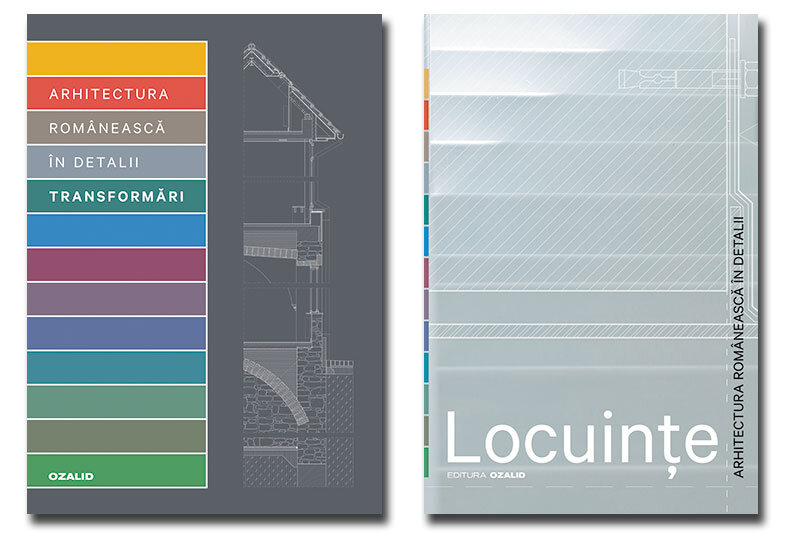
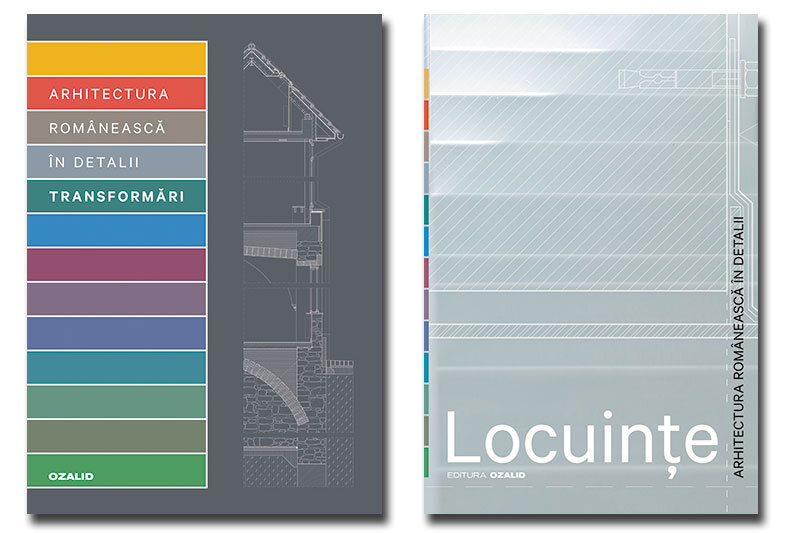
The Romanian Architecture in Details series of the Ozalid Publishing House is organized in several thematic volumes, presenting architectural projects in Romania, together with technical information and details of realization. Each volume, opened by a theoretical introductory text, is completed by a chapter where, through the contribution of several authors - architects and engineers - relevant topics to the chosen theme are treated. In addition to projects realized by professionals, the volumes include the presentation of a student project. The books have been published with the financial support of A.F.C.N. and the POSDRU program Entrepreneur for the Future.
By intending to discuss architectural detailing based on exemplary works of contemporary Romanian architecture, the series proposed by the editors of this work is situated in an intermediate zone between compendiums of technical solutions and architectural criticism. On the one hand, they present buildings whose architectural excellence, by definition complex, is unquestionable. On the other hand, the analysis of the different registers of architectural expression, an inseparable part of the success of a project, is accompanied by a careful evaluation of the quality of architectural details which are usually either ignored by the critics or taken for granted. This brings out the organic link - which initially arose in the "architect's belly" - between the aesthetic desire, the concept, the program, the functions, the building materials, the equipment..., that is to say, the components from whose inseparable blend the building is the result, after the difficult mediation of putting it into operation.Kázmér Kovács,
Architecture through details (Argument at the opening of the series, published in the first volume)
Locuințe is the first volume of the series, launched in December 2012, presenting 15 individual housing projects realized in the last 10 years in Romania. The projects are spread over a wide geographical area, with authors working in Bucharest, Cluj, Iași and Timișoara. The featured student project is the Prispa House.
The second volume of the Romanian Architecture in Detail series, Transformations, focuses on interventions on existing buildings. The projects selected are examples whose architectural value, at least at the time the project was started, meant that the architects' approach was not limited by constraints linked to the preservation of certain valuable heritage elements. The volume covers various types of interventions, both in terms of the characteristics of the original construction and the approach to the project. Examples range from the reuse and adaptation of old buildings to interventions on contemporary structures abandoned before completion. The issues specific to interventions on existing buildings dealt with in this volume (formal and functional adaptation, structural and plumbing adaptation, restoration) are different from the case of a new building, but also from the specific legislative and doctrinal requirements of restoration.
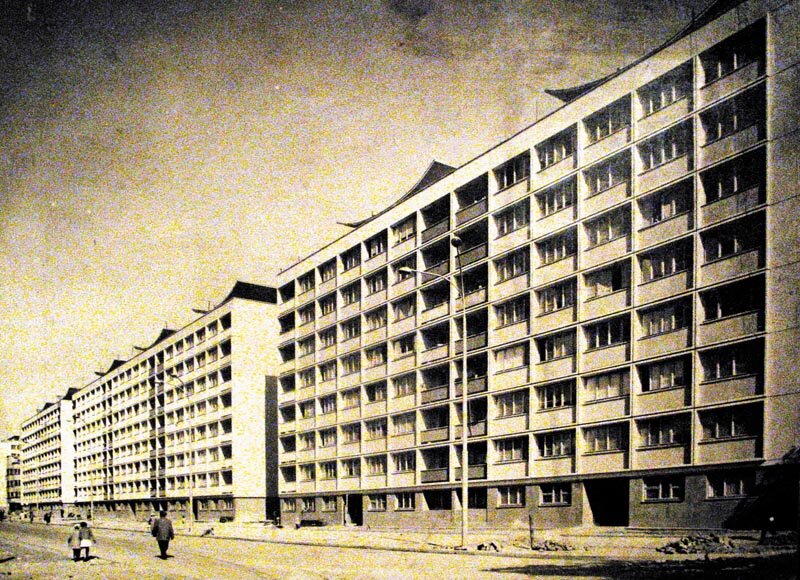
The technical articles help to understand the problems and complexities of interventions on existing buildings in terms of the stability of the resistance structures. Together with the student project, the UpTIM team presents the idea that will be the basis of the project with which it will apply for the 2014 edition of the Solar Decathlon Europe international competition, through which students will try to improve the living conditions in an apartment block built during the communist period.
Transforming existing buildings is the theme of the second volume in the series proposed by Ozalid Publishing House, Romanian Architecture in Details. Even if any intervention aimed at improving living conditions transforms the environment, architecture does not, of course, become synonymous with transformation. But if we think of architecture in terms of trans-formation and break the word down into its two components, we notice that it evokes a movement beyond (a preliminary stage of intervention) and the configuration of materials (which thus take on a different form). Transforming earlier structures is a kind of reforming: it involves reuse, rehabilitation, recycling. It is not a question of reusing, rehabilitating or recycling an advertising slogan or a propaganda slogan from another age. Rather, it is the reiteration of a principle that is valid in every age, applicable to architecture and any other field of human existence: the principle of taking over older artifacts. [...]
Theoretical discourse and practice in architecture and urbanism have tended - for more than a century already, and not only in Romania - to be polarized on two apparently irreconcilable fields: the construction of the new and the conservation of built heritage. These two fields benefit from a specialized public space, have skilled and dedicated theorists and practitioners who often, if they do not ignore each other, do not take each other into account except to reproach either an unhealthy preservative, inhibiting any architectural invention or daring, or a barbaric inclination towards destruction, which makes old architecture disappear and, with it, the memory of places. [...]
This volume is not specifically addressed to either of the two complementary fields of contemporary building, but to the intermediate field, very present in architectural practice, but much less frequently addressed in specialized theoretical discourse: interventions on the ordinary built environment. The works described here cover the whole spectrum of interventions on existing structures, from the actual restoration of buildings of architectural and historical value to the conversion of unfinished building sites of buildings of no architectural or historical interest.
Kázmér Kovács,
Architecture in Continuity or The Importance of the Unordinary