A decade of space planning in Romania

Intuitive research
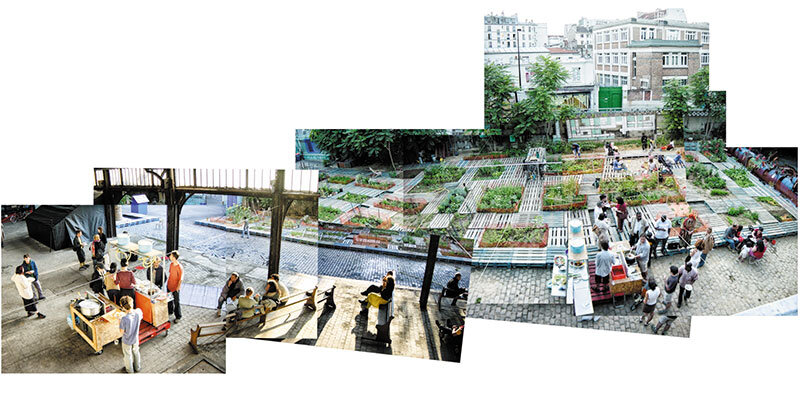
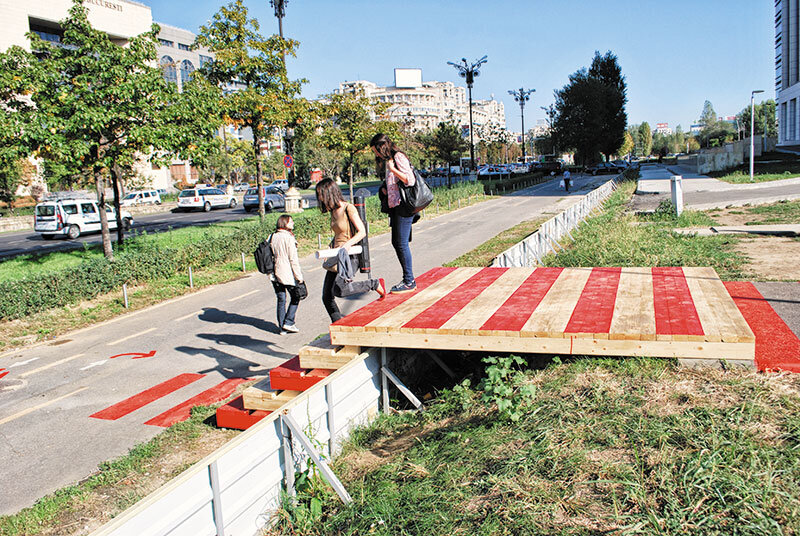
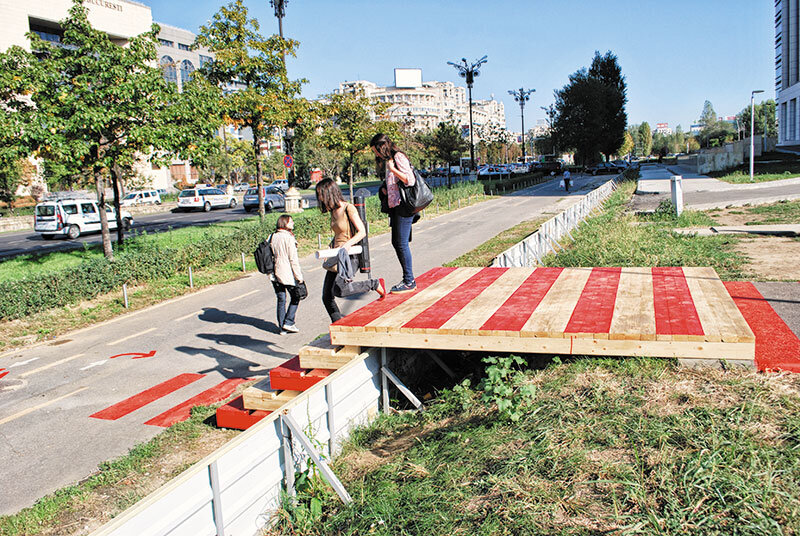
| In a recent interview, François Englert talked about creativity and new ideas based on "what we rather banally call 'intuition'". François Englert and Peter W. Higgs were awarded the Nobel Prize in Physics in 2013 for their theoretical discovery that was confirmed 50 years later with the construction of the particle accelerator at CERN. Starting from Englert's observation, we can open the discussion on the role of intuitive practice as a method of knowing reality through direct observation in architectural research and its tools. But what does research actually mean for us? Or how did we become circumstantial researchers? If we appropriated the term "research", it was at first as a way to find an answer to the questions related to some of the studio's projects: "what are they? architecture, urbanism, art?". With the accumulation of projects that did not fit into the categories of "architecture with a capital A" or "scientific urbanism", which emphasize more the study of the supporting framework and pay attention to the end result and less to the relationships within it, or the processes leading there, the terms multiplied and became nuanced in various borrowed or constructed formulas. We have thus attempted to describe somewhat more precisely the nature of our studies and actions, referred to as criticalworks, researchbased design or public spacepraxis. Regardless of these labels, research without bibliography or footnotes, defined more by a search - search vs. research - has been an ongoing process that has structured our relationship with public space and, implicitly, the kind of praxis associated with it. But where does interest in public space come from? Functioning as a barometer, the public space has recorded in a condensed form the upheavals that Romanian society has gone through in the last 24 years, during which our professional life has also partly unfolded. Through public space we had direct, constant and direct access to the manifestations of these transformations, where permanent crisis and self-formulated responses, cracks or incomplete and elastic solutions took shape. Fresh out of architecture school as specialists in the built environment, we realized that we didn't have enough tools to better understand what was happening in the city around us. The "classical" tools of the professionals gradually disengaged from the people and the life of the city seen from eye level and became over-specialized, dealing more with spatial aspects, systems or flows, no longer able to fully translate and understand the urban phenomenon. However, we have found observation, documentation or direct recording of the rhythms of everyday life practiced more outside our specialization, in literature, cinema or contemporary art, urban anthropology or sociological studies completing an ever-growing list of "what architecture and urbanism no longer deal with". If art implies subjectivism, then the research method by which we work in the public space comes through the art channel. Due to the nature of the object of study - the manifestations of the everyday - subjectivity is necessary as a tool for observation and analysis. Without developing a strategy for approaching the everyday, we rather applied tactics of step-by-step adaptation to the environment, and Bucharest was our laboratory and playground at first. Although not necessarily unique among other cities, Bucharest's contemporary condition makes it an ideal case study. Over time, research as a way of adapting to context has given way to other forms of intuitive inquiry. First, research in the present tense, i.e. documenting and formulating the paradigm of how the contemporary city functions, and second, detecting the potential arising from this condition. By practicing in the public space, Bucharest has transformed from an object of study into a subject, and research has transformed from an instrument of observation into a means of concrete transformation of the public space. Thus, the study of Bucharest has generated observation techniques, adaptation methods and intervention tools that can be applied to other urban contexts. |
| Read the full text in issue 2 / 2014 of Arhitectura Magazine |
| In a recent interview, François Englert spoke about creativity and new ideas as being based on "what we call in a rather banal way "intuition"". François Englert and Peter W. Higgs were awarded the Physics Nobel Prize in 2013 for their theoretical discovery validated 50 years later, by the creation of the CERN particle accelerator. With Englert's remark as starting point, we can launch the debate on the role of intuitive practice as a direct observation method used not only to apprehend reality in architectural research but also to gauge its toolkit. But what does research exactly means to us? Or how did we come to be researchers of circumstance? When we first took on the term "research", we did it merely as a way to answer questions arising from some of the studio's projects: "which one am I? architecture, urbanism or art?". Then, as we moved forward through an ever increasing number of projects that fit neither the "architecture with a capital A" category, nor the "scientific urbanism" one - the two focusing more on the study of the support-framework and on the final result and less on the relationships within or the processes leading there - the terms became legion just as the nuances themselves kept multiplying through a variety of formulas, either adopted or created as such. We went on trying to describe more accurately the nature of our analysis and undertakings, be they called critical works, research based design or public space praxis. No matter the name, this research with no bibliography or footnotes, defined more by its search component - search vs. research - has been a continuous process, structuring our relationship with the public space and, implicitly, the type of practice associated to it. Where does our interest for the public space come from? Given its function as a barometer, the public space is the condensed repository of the entire Romanian society's turmoil over the last 24 years, which partly coincide with our professional life. The public space has offered us a direct, constant and unmitigated access to the manifestations of this turmoil which helped shape a space of permanent crisis and ready-made answers, fractures or incomplete and accommodating solutions. As specialists in the built environment just fresh out of architecture school, we realized we hadn't enough tools to better understand that which was going on in the city around us. The professionals' "classical" tools had quickly disengaged from people and the city's life as seen with the naked eye, specializing excessively, dealing more with aspects related to space, systems or fluxes, incapable of translating and fully understanding the urban phenomenon. Notwithstanding, we have found that, outside our discipline, literature, cinema or contemporary art were examining, documenting or directly recording the rhythms of day-to-day existence; urban anthropology or sociology kept adding new entries to the list of items "architecture and urbanism have not to do with". If art implies subjectivity, than the research method we use on the public space comes from its ranks. Given the nature of the studied object - the manifestations of everyday life - subjectivity is necessary as an examination and assessment tool. Without going so far as to develop a strategy to approach daily life, we have rather devised tactics used for a gradual adaptation to the environment and it was Bucharest which, in the beginning, was both our laboratory and playground. Although, unlike other cities, it hasn't got an unique expression, its current state makes it an ideal case study. As time went by, this research, envisaged as a means of adapting to context, gave way to other forms of intuitive research. We have thus moved on to research in the present tense, undertaking to document and formulate the contemporary's city operating paradigm, followed by the identification of the potential resulting from this aspect. It was public space praxis that turned Bucharest from a studied object into a subject and research, besides an observation tool, into a means of concrete transformation of the public space. Bucharest's analysis has thus generated observation techniques, adaptation methods and intervention instruments applicable to other urban contexts as well. |
| Read the full text in the print magazine. |