A decade of space planning in Romania

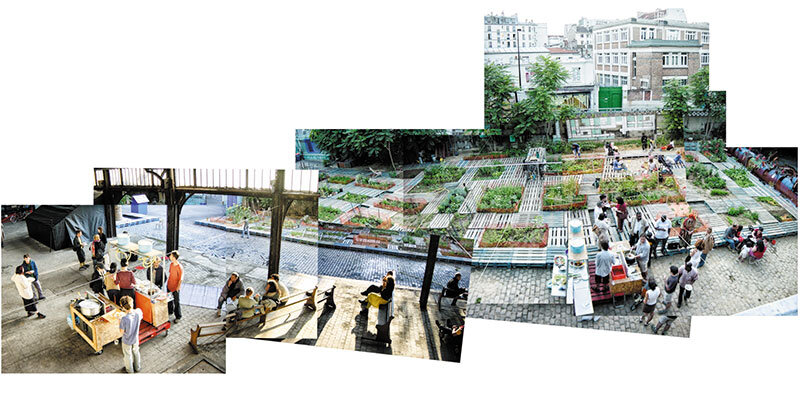
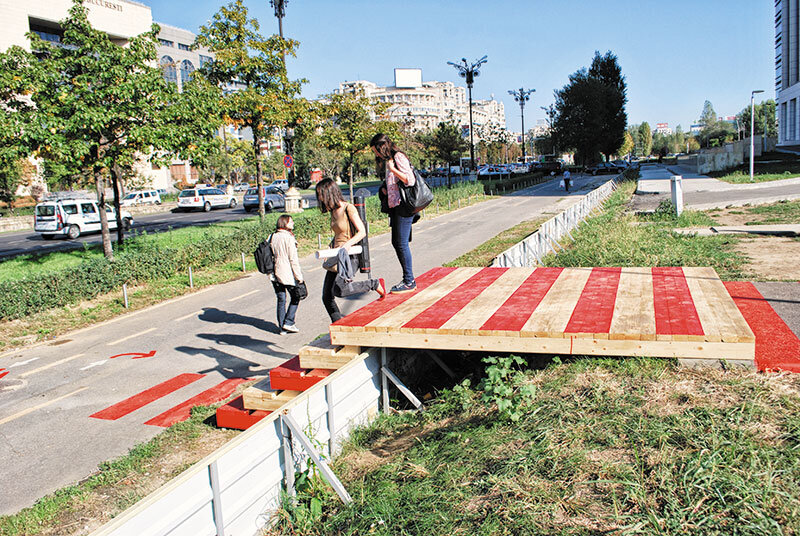
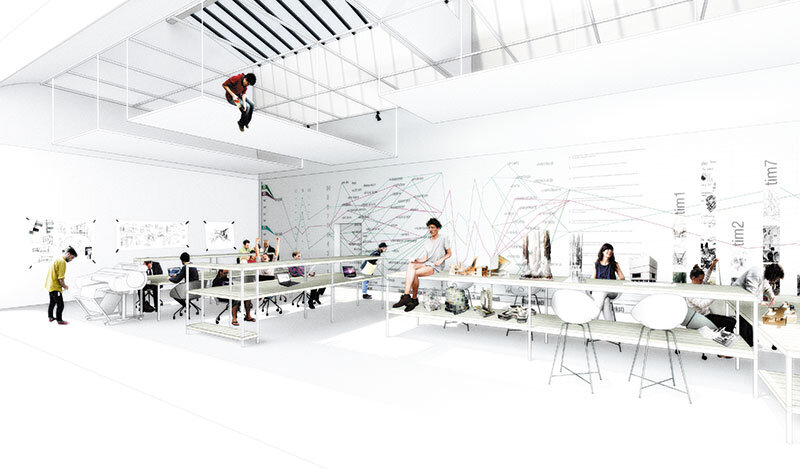
| There is a question that sometimes arises in relation to research work in architecture, much of it with no obvious connection to current architectural practice: what are they for after all, do they make our built, real, built environment better? The question is natural. But it is not innocent: it also implies the suspicion that much of this output would be irrelevant to what we currently think of as 'architecture'.Indeed, more and more research papers are being published, and to claim a purpose for them in the profession is perfectly legitimate. But put in this way, in relation to their usefulness in current practice, the question still betrays a mistaken expectation. If there is enough irrelevance in what is published, it is because the forms of publication have limited filtering power; after all, even built architecture is far from being selected and purged. But the criterion for differentiating between quality and insignificance is by no means whether or not the research serves architects immediately in everyday design, but whether or not it brings something new and interesting to the broadening of knowledge in the field. Its role in architecture, intriguing as this may be, is not to increase the quality of practice. The role of research is to increase the quality of knowledge. Knowledge will serve practice indirectly and not necessarily predictably, but it is important that any research is done with maximum freedom from the limitations of explicit applicability. Knowledge is an important value in itself. If we did not value in itself the fact of finding out and understanding some distant and intangible realities, but only what can be touched directly, then, for example, we would know nothing about the Universe. Architecture is in its own way a Universe to be explored. The real problem lies, as always, in the rivalries between human interests; in this case between the academic and the professional category of people in the field. Jeremy Till observed in the RIBA memorandum on research in 20051 (presented and explained at length in Ana Maria Zahariade's article, also mentioned by Mariann Simon) that architectural research is carried out in two clearly separate contexts: academia and professional practice. These environments, he observes, show an unnecessary antipathy to each other, for although they remain profoundly different and have different research methods and outcomes, the discipline of architecture necessarily needs both equally. Till's memorandum is rightly a landmark for understanding what architectural research is facing today. In turn, Till refers to a classic definition of design research by Bruce Archer: "research is the systematic investigation for the purpose of communicable knowledge"2. Archer has developed the theme in the field of design as a professor-engineer in a graduate school of art, and his perspective is perfectly valid for architecture. He calls the kind of research specific to practical fields 'Action Research' and notes that all the normal rules of research apply to it. There are only two notable differences with 'scientific' research: 'action research' cannot become 100% objective and is moreover dependent on the situation, the concrete context; for these two reasons, its results are more difficult to generalize2. Archer classifies design research into three categories: it can be about, for or by doing2. In the first two cases, the research is secondary to the project: it either comes after it (historical studies, for example, or post-occupation studies) or it serves the project in progress (and elite architects have always relied on research, that is, working at the creative edge of knowledge; Jacques Herzog said, for example, that his firm always tries to take the research to the project, so that the project is drawn directly from it3; and UN Studio works according to a rigorously defined research method, as Mariann Simon points out in her article). But the most problematic research situation is the third, where the project itself is used as a method. In this case, the project becomes secondary to the research; its aim is no longer the designed object, but the broadening of knowledge in the field of architecture. Researchthrough design (researchthrough design or research by design), although the most controversial, is also the one that best legitimizes architecture as a specific research discipline. Indeed, research through practice, action or design is the key theme and, in one way or another, is touched by all the articles in this issue of Architecture. Both Till and Archer argue for a somewhat balanced position of research, the former between academia and the profession, the latter between research as it is commonly understood in scientific disciplines on the one hand, and research by action in project-based disciplines on the other. But these balances do not really hold in reality. First of all, however, research is much more linked in principle to academia than to the professional world. Even if in some cases the professional environment may even take precedence over academia (for example, at a certain point in digital research, as Neil Leach argues in his interview), the current professional environment can, strictly speaking, live without research. It's not high-performing and meritorious in that; but the fact is perfectly admissible. (And Till observes that a building can be very good indeed, without necessarily being original and significant, and therefore without leading to new forms of knowledge in the field of architecture1.) For academia, however, research is obligatory by definition. It is research that makes the field of architecture function as a discipline - that is, systematically disciplined knowledge, as it is cultivated in universities. Secondly, the specific 'projectual' way of research is not so easily recognized as a fully-fledged academic methodology either, as Hilde Heynen observes in a report on research for the Association of European Schools of Architecture (EAAE/AEEA)4. She identified this as the main reason why the position of schools of architecture in universities remains difficult. Heynen gave as an example the case of the School of Architecture at Cambridge University, which the University of Cambridge simply tried to close in 2004 because it was dragging down its overall research performance. Universities are ranked by research activity as measured in internationally highly rated publications; the Cambridge School of Architecture found itself as the only department in this elite academic institution that scored below the excellent level of other departments. The School was eventually saved by student protests and a campaign led by famous architects (i.e. the elite of the profession), but the example remains revealing of the difficult position of the discipline of architecture in the research-led university4. The field of architecture indeed has a particular disciplinary problem. The consequence of the need to adapt to academic demands has been the recent development and expansion of doctoral programs in architecture in Europe, Heynen also notes4. Moreover, the general reform of the European higher education system over the last decade has also significantly affected the framework for architectural research. Moreover, the profession itself is in a state of flux; most of the articles in this issue refer, explicitly or not, to a period of transformation in the understanding of the profession. All of this, of course, affects both the framework within which architectural research is conducted and its relevance. In a changing world, the role of research is increasing. Till cites an earlier moment of change in the 1960s, a moment that introduced architecture programs into universities in the UK and other European countries. Something similar is happening now. In France, for example, the field has only very recently been confronted with doctorates in architecture schools (a fact presented in Ioana Iosa's article). Although France was in the vanguard of the movements in the late 1960s, architectural training there was, on the other hand, reluctant to be disciplined by the university; now it is disciplining itself. It is true, however, that with the recent multiplication of doctoral programs in architecture, the doctorate itself has also adapted, as Heynen observes. In addition to the usual academic one, based on written discourse and scientific codification, the "hybrid" doctorate has emerged, based on a combination of writing and project-based research4 - a problematic notion, but nevertheless something other than an "ostrich", as A. M. Zahariade observes. The stronger linking of the field of architecture to the university through the expansion of doctoral programs is not marginal and will have long-term consequences for the profession, precisely in that the field of architecture will function much more strongly as a discipline. European university reform also directly concerns the transformation of the profession. What I think is also not sufficiently recognized is the extent to which this recent major European university transformation is a copy of the American system. The transformations that have taken place since the 2000s - the initiation of the Bologna process of making the education system more flexible by dividing it into three cycles (basic training, master's and doctorate) - are a faithful copy of the American university model. Change involves research, because that is what differentiates the cycles. As Neil Leach points out here, research starts to become part of the training as early as the master's degree and becomes everything in the doctorate. For research, the American system simply seems ideal. This is also clear from Phoebe Crisman's article. It is a system in which everything can be linked through the research project: pedagogical act, theoretical discourse, related disciplines, public policy and the profession. There is no more important lesson to be learned through the practice of rigorously networked research than understanding the architect's real place in society, alongside others; it is the lesson of modesty that working in a disciplined and responsible manner demands. Ph. Crisman's students learn social responsibility through participation in live projects , where the distance between academic research and professional practice is erased. Involvement in concrete situations, "live" and "in real time" (as StudioBASAR put it), working with, not just about reality is the key to "action research" as defined by Archer. Doina Petrescu and aaa (atelier d'architecture autogérée ) have been doing this for many years now, long before the current crisis increased interest in this kind of action. She explains what 'participatory research' means, where knowledge is produced not just for, but together with those it serves. Networking is key. The long-term success of aaa projects is ensured through small search tactics rather than large research strategies - as StudioBASAR, the first architecture firm in Romania to practice this kind of action research since the mid-2000s, also states. They call their method "intuitive" (I would call it, in too many words of course, open to the situation), but "intuition" is a direct assumption of the artistic dimension. Indeed, an important observation may be that "action research" in architecture today brings it closer to artistic practice. (And Heynen observes of the 'hybrid' doctoral programs already established in architecture that they seem to prefer project-based research closer to art than to professional architectural practice.4) At the limit, architecture can even be understood as performance and staged event, as Radivoje Dinulović argues in his article. He argues for "rethinking, re-evaluating and representing" architecture through the prism of performing art and for applying theater methods to architecture, which would put it in perfect accord with our existential space as a performance space. Because it touches at the creative limits of knowledge, research by its very nature presents a divergent tendency in its topics of interest and opens up a multitude of unexpected, unprecedented directions in the field of architecture. It is also the intention of this issue of Arhitectura to emphasize, at least in part, this centrifugal diversity in the universe of architectural research. Research is to be found at the margins rather than at the stable center of the profession's field - that of the design of the built, real, objective space. But there is a recurring theme in architecture that brings research back to the center: technology. In the good modernist tradition of progress and valorization of the new, interest in the technological avant-garde today occupies a privileged place in the field. Avant-garde means both the programmed, tenacious and lucid change of the world and the hypnotic seduction of the new. Research into computer technology in architecture is part of today's "pragmatic turn" in theory that Mariann Simon speaks of, but it also betrays the fascination of a new generation of architects with tools through which "theory itself becomes construction". In the sphere of digital technology, architecture merges with research. Dana Tănase and Ionuț Anton illustrate this trend through their practice. Research is in fact the very process of architecture's continuous transformation. Neil Leach, one of the most engaged and compelling theorists of digital design, explains how "advanced" (another word for avant-garde) computer research in architecture is consumed relatively quickly by its own progress. He notes the sequence of phases (and phrases) through which this has escalated in recent history, from the 1990s onwards: "virtual reality", "digital tectonics" and today "computation"; and in a few years' time, no one will speak of the latter, not because it will disappear, but on the contrary, because it will become ubiquitous. Computer technology is a field that is always on the cutting edge of knowledge, and is therefore a field of research par excellence. In the end, perhaps this is also the best criterion for evaluating research, in architecture and in general: the extent to which the knowledge it produces brings us a little closer to the future. |
| NOTES: 1 Jeremy Till / RIBA Reasearch Committee, "What is architectural research? Ar chitectural Research: Three Myths And One Model", RIBA Memorandum 2005, available at: http://www.architec-ture.com/Files/RIBAProfessionalServices/Research And Development/What is Architectural Research.pdf (accessed December 2013). 2 Bruce Archer, 'The Nature of Research', in: Codesign - interdisciplinary journal of design, January 1995, pp. 6-13. 3 Jacques Herzog, round table at the opening of the Venice Biennale, September 2006 4 Hilde Heynen, "Research in Architecture: a Contested Domain", in: EAAE News Sheet no. 76/2006, p. 47-54. |
| A question is sometimes raised about research papers in the field of architecture, many of which in no obvious relation to current architectural practice: what is their use eventually, do they make our built environment better? The question is natural. Not innocent though, for it implies that a considerable part of this production might be irrelevant for what we currently understand by "architecture".Indeed, more and more research articles are published, and demanding them to make some sense for the profession is a perfectly legitimate request. If there is indeed enough irrelevance in what is being published, it is because the forms of publication have a limited filtration capacity. Actually, built architecture too is far from being selected and purified. But the difference between quality and insignificance in published "research" is by no means if it is useful or not to architects in their daily design work, but if it brings about, or not, something new and interesting to the knowledge in the field. Its purpose, as much as this fact might irritate, is not raising the quality of architectural practice. The role of research is to raise the quality of architectural knowledge. Knowledge would then maybe serve indirectly and unpredictably to practice, but it is important that research is pursued with maximum freedom from the limitations of explicit applicability. Knowledge is an important value in itself. If we wouldn't value in itself the fact of finding out and understanding realities that are far and impalpable, but only what might be directly touched, then, for instance, we would have known nothing about the Universe. The field of architecture is in its way such a Universe to be explored. The true problem lies, as ever, in the rivalry between human interests; in this case, between academics and professionals belonging to the field. Jeremy Till remarked in the RIBA memorandum on research in 20051 (extensively presented here and explained by Ana Maria Zahariade, also mentioned by Mariann Simon) that research in architecture is made in two clearly separated contexts: academy and practice. These are showing each other a senseless antipathy; even if radically different and with different methods and results of research, they are equally needed in the discipline of architecture. In its turn, Till refers to a classic definition of research in design, stated by Bruce Archer: "research is the systematic inquiry whose goal is communicable knowledge"2. Archer developed the subject in the field of design, as an engineer-professor in a school of arts, and his perspective is perfectly appropriate for architecture too. He calls "Action Research" the kind of research specific to fields based on practice and remarks that all norms of research apply to it too. There are only two notable differences from "scientific" research: "action research" cannot be 100% objective, and it is situation-dependent; for these two reasons, its results may be generalized with more difficulty2. Archer sees three categories of research in design: about, for and through practice2. In the first two cases, research is secondary to the project: it either comes after it (like historic or post-occupancy studies), or serves the project in the making (and best architects have always relied on research, that is, the work at the creative limit of knowledge; Jacques Herzog held, for instance, that his firm always tries to bring research deep into the project, so that the project is drawn directly from it3; UN Studio too relies on a rigorous research method, as Mariann Simon develops in her article). But the most interesting situation for research is the third, in which the project itself is used as method. The project becomes in this case secondary to research; its goal is not a designed object, but enlarging knowledge in the field of architecture. Although the most controversial, research through design or research by design is also the one that best legitimates architecture as a specific field of research. Indeed, research through practice, project or action is the key issue and is, in one way or another, addressed by all the articles in this issue of Arhitectura. Both Till and Archer claimed a somehow balanced position of research: the former between academia and practice, the latter between research as it is usually understood in science, on the one hand, and action research in the fields of design on the other. But these equilibriums are not totally confirmed by reality. First, research is in principle more related to academia than to practice. Even if sometimes professional practice takes the lead (like for instance in a certain phase of digital design, as Neil Leach holds in his interview), practice can actually do without research; it is not worthy for that, but the fact is perfectly admissible. (Till also remarked that a building may be very good, without being necessarily original and significant, so without leading to new knowledge in the field of architecture1.) For academia though research is compulsory by definition. Research is what makes the field of architecture perform as a discipline - that is, a systematically disciplined field, as it is cultivated in universities. Secondly, nor is the "designerly" mode of research fully recognized as an academic methodology, as Hilde Heynen remarked, in a report made for the European Association for Architectural Education (EAAE/AEEA)4. She identified particularly this reason for the difficult position of architecture schools within universities. Heynen mentions the case of the architecture school in the University of Cambridge, which risked to be effectively closed in 2004, for its relatively meagre research performance. Universities are ranked according to the internationally relevant research publications; the school of architecture was the only department of this elite university that scored less than the excellent level attained by the others. The school was eventually saved by student protests and a campaign led by famous architects (that is, by the professional elite), but the case remains revealing for the difficult position of the discipline of architecture in the research-based university4. The field of architecture really has a disciplining problem. The consequence of the pressure of academic requirements was the recent development of doctoral programs in architecture all over Europe, Heynen also observes 4. Also, the reform of the European higher education system in the last decade has significantly affected the frame of architectural research too. Moreover, the profession itself is changing; almost all articles in this issue refer, more or less explicitly, to a period of transformation in the understanding of the profession. All these affect both the condition in which research is made and its relevance. Till mentions a previous moment of change in the 1960s, which brought the architecture programs into universities in Great Britain and other European countries. Something similar is happening now too. In France, for instance, the schools of architecture have been very recently confronted with the doctorate (a topic developed here by Ioana Iosa's article). France was in the avant-garde of the late 1960s movements, yet there the architect formation has been reticent to academic discipline; now it too has to comply. It is also the case that, as Heynen remarks, by the development of doctoral programs in architecture, the doctorate itself had to adapt. Besides the common academic PhD, based on written discourse and scientific codification, the "hybrid" doctorate emerged, based on a combination of writing and project4 - a problematic notion, but however something different than a struțocămilă (cross-breed between an ostrich and a camel), as A.M. Zahariade remarks. Linking the field of architecture more strongly to the university by the amplification of doctoral programs is not a marginal occurrence and it will have consequences on the profession in the long run, as the field of architecture will behave like a discipline more. The European university reform directly concerns the transformation of the architectural profession. What is not enough admitted, perhaps, is the extent to which these recent European academic transformations replicate the American system. The reform of the 2000s - the Bologna process of flexibilizing the university system by adopting the 3 cycles (basic formation, master and doctorate) aims at an exact copy of the American university. The change concerns research, because it is precisely research that differentiates between the cycles. As Neil Leach mentions here, research begins to be already part of the master formation and becomes everything in the doctorate. In which research is concerned, the American university appears to be purely and simply ideal. This comes out from Phoebe Crisman's article too. It is a system in which everything can be connected by the research project: pedagogy, theoretical discourse, other disciplines, public policy or practice. There is no better lesson to be learned from the rigorous practice of networked research than the understanding of the architect's place in society, among others; it is the modesty lesson induced by the responsible and thoroughly disciplined work. Social responsibility is acquired by Ph. Crisman's students by participation into "live projects", where the distance between academic research and professional practice is abolished. The involvement into "live" and "real time" situations (as the StudioBASAR architects write), in order to work with, not just about reality, is the key of "action research" in Archer's terms. Doina Petrescu and aaa (atelier d'architecture autogérée) have been doing this for a long time now, long before the present crisis has raised the interest for this kind of actions. She explains here the "participatory research", in which knowledge is produced not only for, but also together with the ones it serves. The creation of agencies is essential. The long term success of aaa projects is assured by small tactics of "search" rather than big strategies of "research" - as StudioBASAR also states. StudioBASAR has been the first architecture firm in Romania which practiced, since the mid-2000s, this kind of action-search. They call their method "intuitive" (I would rather rather call it, by too many words for sure, a stirring open to situation). "Intuition" means the acknowledgement of the artistic dimension of this approach. Indeed, an important observation may be the fact that "action research" in the field of architecture brings it closer to art practice today. (Heynen too remarked about the already instated "hybrid" doctoral programs in architecture that they seem to prefer a design research closer to art than architecture professional practice4.) At the limit, architecture may be understood as performance or part of a staged event, as Radivoje Dinulović writes in his article. He pleads for "re-thinking, re-evaluating and re-presenting" architecture through scene-design and applying the methods of theater in architecture, which would put it perfectly in tune with the "space of our existence" as "the space of spectacle". Because it stirs at the creative limits of knowledge, research naturally develops a tendency to diverge in its subjects of interest and to open a variety of unexpected new directions in the field of architecture. It is the aim of this issue of Arhitectura to highlight at least in part this centrifugal diversity of the universe of architectural research. Research is thus found rather at the margins than in the center of the professional domain - that is, the design of built, real, objectual space. However, there is a recurrent subject in architecture that brings research back to the center: technology. In the good old modernist tradition, of progress and positive valuation of the new, the interest for the technological avant-garde enjoys a privileged place in the field today. Avant-garde means both the tenacious changing of the world by program, and the hypnotic seduction of the new. Information technology research in architecture is maybe part of the "pragmatic turn" of theory which Mariann Simon speaks about in her article, but it also betrays the fascination of the new generation of architects for the instruments by which "theory itself becomes building". In the realm of digital technology, architecture becomes one with its research. Dana Tănase and Ionuț Anton illustrate this by their practice. Research is in fact the very process of the continuous transformation of architecture. Neil Leach, one of the most engaged and compelling theorists of digital avant-garde, explains the way in which this "advanced" (another word for avant-garde) research is relatively fast consumed by its own progress. He remarks the successive "phases" (and phrases) by which it has devoured itself in the years since the 1990s: "virtual reality", "digital tectonics" and now "computation"; and in a few years, nobody will use this last word anymore, to be sure; not because its reality will disappear, but on the contrary, because it will become ubiquitous. Digital technology is always at the limit of knowledge renewal, and by this it is a field of research par excellence. In the end, maybe this is also the best criterion for measuring the value of research, in architecture and in general: in what way the knowledge it produces brings us a little closer to the future. |
| NOTES: 1 Jeremy Till / RIBA Research Committee, "What is architectural research? Architectural Research: Three Myths And One Model", RIBA Memorandum 2005, available at: http://www.architecture.com/Files/RIBA Professional Services/Research And Development/Whatis Architectural Research.pdf (accessed December 2013). 2 Bruce Archer, "The Nature of Research", in: Codesign - interdisciplinary journal of design, January 1995, pp. 6-13. 3 Jacques Herzog, roundtable at the opening of the Venice Biennale in September 2006. 4 Hilde Heynen, "Research in Architecture: a Contested Domain", in: EAAE News Sheet nr. 76/2006, p. 47-54. |