A decade of space planning in Romania

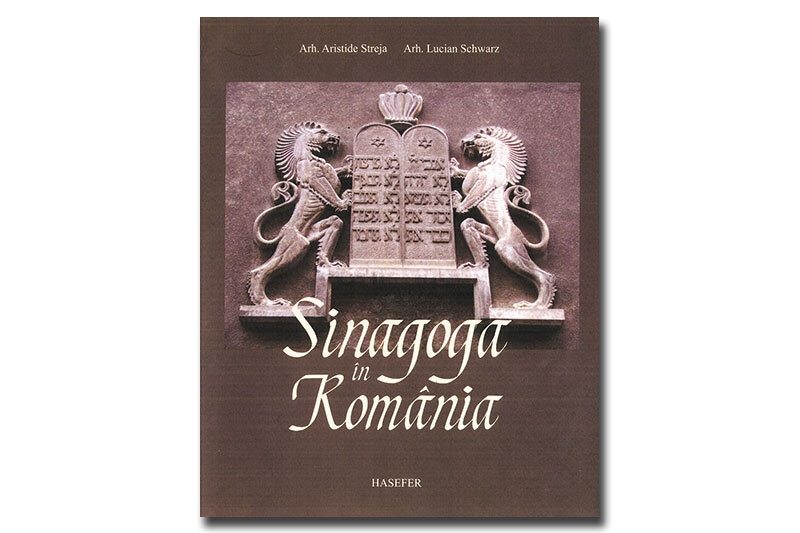
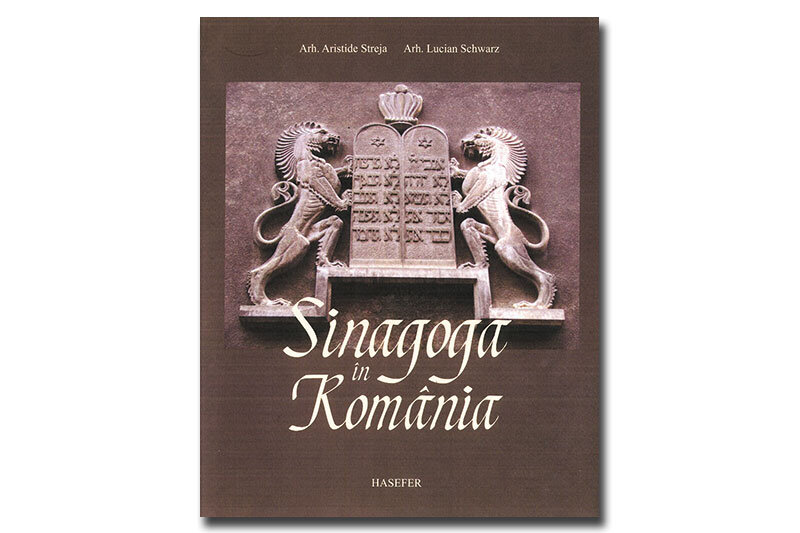
In 2012, the Hasefer Publishing House, coordinated by the Federation of Jewish Communities in Romania (FCER), published a new version of the impressive volume Synagogues in Romania. Written by the architects Aristide Streja and Lucian Schwarz and comprising 276 large-format pages with numerous illustrations, it was originally published in 2009 in Romanian and English. The 2012 Romanian edition, although it appears unchanged (number of pages, layout), has in addition 4 unnumbered pages inserted between pages 8 and 9. They contain two short texts, one of which is signed by FCER President Aurel Vainer. It briefly describes the current situation of synagogues in Romania: there are 87 synagogues, of which 33 are in Moldova, 32 in Transylvania, 12 in Muntenia, 6 in Banat, 2 in Oltenia and 2 in Dobrogea. They were built over a period of 300 years, noting that no synagogue was built after 1930. Their condition "is strongly marked by the years of their life, some of them being even in a very critical state in terms of resistance", such as the synagogues in Buzău and Constanța.
The most substantial part of the work is the presentation of the synagogues. Each synagogue is accompanied by a text and at least one image, often several (photographs, sometimes also plans). The texts give some information about the history of the building, sometimes also about the history of the community, but are mainly descriptive. An additional source of information is the list of synagogues presented (p. 271-274). It is a multi-column table containing the name of the synagogue (if it exists), the address, the date of foundation, whether it is a historical monument, information about its use or disappearance, and finally the page where the building is presented. The penultimate column contains information on "Disappearance/Utilization". For this, the authors use a code which marks synagogues in use (with F), those in another use (AF or AU) or those which have disappeared (D). According to the list, there are 37 synagogues marked with F, i.e. in use as places of worship. Of the others, museums have been set up in three synagogues: in Șimleu Silvaniei a Holocaust Museum, in Bucharest at the "Temple of the Holy Union" a Museum of the History of the Jewish Community and at the Great Synagogue a memorial.
A unique case is the synagogue in Bistrița, where the synagogue's name is simply "Comodat". Wikipedia has an article on this synagogue, from which it emerges that there is a 20-year commodatum contract, on the basis of which the synagogue was restored and is now used for artistic events. According to the final list, 6 synagogues have a different use, without specifying what. The text is not much more explicit, but in two cases it mentions the degradation of the building. Thus, the synagogue in Târgoviște is described as "deteriorated" (p. 107), and the synagogue in Vama (Satu Mare county) as "currently ruined" (p. 184). In this case it seems that the AF marking should be replaced by D in the final list.
The synagogues in Bucharest are listed at the end of the list, and one of them, the old Beth Hamidraș Synagogue, is mentioned as having a different use. From the corresponding text we learn that it "functioned as a synagogue until 1978, after which it was used as a warehouse" (p. 95). It seems that in some cases the AF (or AU) marking signals a depreciatory use (warehouse). However, there is (at least) one more fortunate case, that of the Șas Hevra synagogue in Cluj-Napoca; in the work it is marked AF, without any other indication, but it became the seat of the Library of Jewish Studies.
In the list of synagogues, the symbol D for disappearance appears only three times, under Tecuci, Târgu-Lăpuș and București. However, there are also synagogues that have disappeared without this mark. In some cases, the disappearance is mentioned only in the text (Nazna); in others, it is not mentioned at all and synagogues are mentioned in the present time, although they no longer exist (Marghita, Sfântu Gheorghe, probably others). It follows that the work not only presents the existing synagogues, but also some synagogues that have already disappeared. This would also explain the fact that 100 buildings are presented, whereas, according to the president of the FCER, only 87 synagogues still exist.
Since the fate of the synagogues depends to a large extent on the presence of Jews, it is worth mentioning a table showing the estimated number of Jewish inhabitants in the present-day borders of Romania in the 19th and 20th centuries (p. 260). It can be seen that the greatest decrease in the Jewish population in the present-day territory of Romania occurred after 1948. While in 1948 there were 428,000 Jews in Romania, in 1956 there were only 146,000. The only explanation for such a drastic reduction in peacetime is the emigration to Israel, which came into being in 1948. Since then the number of Jews in Romania has steadily decreased. The table stops at 1992, but in the meantime two more censuses have been carried out, in 2002 and 2011. Presenting the 2002 results (about 6,000 Jews, most of them elderly), the authors note: "Existing synagogues turn out to be far more numerous and more comprehensive than the quantitative needs now and likely in the future" (p. 249). As expected, the 2011 census recorded an even lower figure of 3,271 Jews.
Under these circumstances, a legitimate question would be what to do with the now unused synagogue buildings, specifically whether alternative uses cannot be found. One of the most appropriate options, because it would respect the building's past to some extent, would be for them to host cultural events. I would give two examples from Sibiu county: recently, the synagogue in Sibiu has hosted several concerts every year as part of the International Theatre Festival (FITS); Yiddish-language films have been screened in the synagogue in Mediaș as part of the Central European Film Festival (MECEFF).