A decade of space planning in Romania

Agencies and Tactics of Transgressive Practice
| atelier d'architecture autogérée (aaa) is a collective office founded by Constantin Petcou and Doina Petrescu, bringing together architects, artists, urban planners, landscape architects, sociologists, students and people living in Paris1. Our office promotes the reuse and reinvention of collective space in the city through everyday activities (gardening, cooking, conversation, DIY activities, readings, debates, etc.), understood as creative urban practices. The aim is to create a network of self-managed locations, and to this end residents are encouraged to regain access to their own neighborhoods, to appropriate and transform temporarily available spaces that are underused. |
| An initial version of this article was published in Architectural Design magazine , issue profile The Architecture of Transgression, 226/ 2013, Wiley (London). |
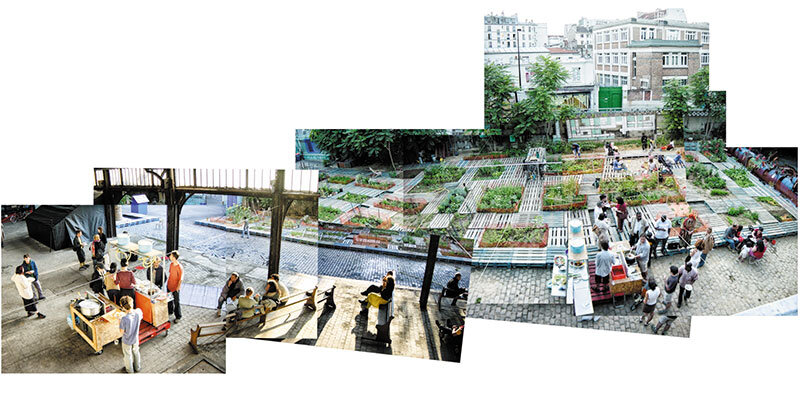
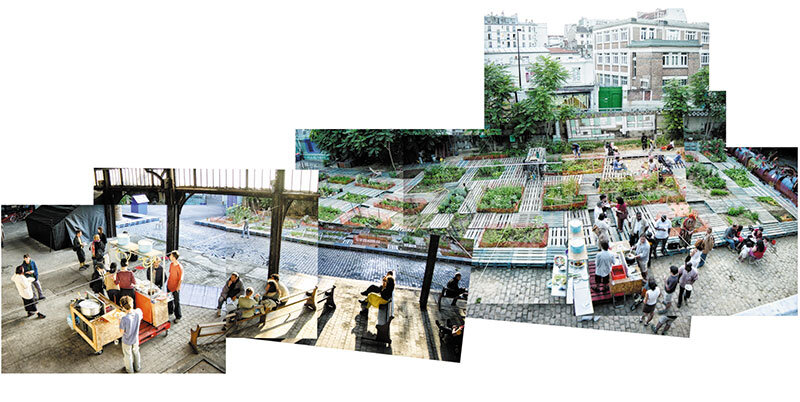
| ECObox The starting point was the construction of a temporary garden in 2001 out of recycled materials on an abandoned site in the La Chapelle area of northern Paris, where we lived. This garden, which we named ECObox, was also equipped with other mobile facilities (kitchen, library, media lab, DIY workshop) and gradually evolved into a platform for urban creativity that acted as a catalyst for activities in the whole neighborhood. The platform was moved around the area several times, using the same principles but taking different forms in different locations and involving new users2. This approach was continued in the Passage 56 project, which started in 2006 on a 200m2 vacant 200m2 plot on rue St. Blaise in a densely populated residential area in the 20th arrondissement of Paris. This former passageway was deemed unbuildable and as such abandoned for several years. aaa has designed and initiated a range of uses for the space, developing green practices with the participation of residents. Passage 56 is the prototype of an 'open source' architecture that experiments with collectively produced forms of space and promotes novel partnerships between institutions, professionals, local organizations and residents that challenge current stereotypical models of urban management. The project is socially and ecologically sustainable and is currently managed by local residents. In our projects, we understand spatial production as a collective process that empowers architects and users alike. More than spaces as such, we are interested in the processes they generate, how they function and the people who are involved in their development and use. We design not so much buildings as actions. The sociologist Antony Giddens says that action is first and foremost "the capacity to act differently"3. In architectural terms, this implies that the architect, and perhaps other agents (i.e. users, clients, practitioners) need to engage differently, acting 'with intention and purpose' to create critical difference and take social responsibility4. |
| Read the full text in issue 2 / 2014 of Arhitectura Magazine |
| NOTES: 1 atelier d'architecture autogérée / studio of self-managed architecture (aaa) conducts research and collective action on urban mutations, emerging cultural, social and political practices in the contemporary city(www.urbantactics.com). 2 For more information see Petrescu D., "Losing Control, Keeping Desire", in P.B. Jones, Doina Petrescu, Jeremy Till, Architecture and Participation, Routledge, (London), 2005, p 43-64. 3 Anthony Giddens, Social Theory and Modern Sociology Polity (Cambridge), 1987, p 216. 4 Nishat Awan, Tatjana Schneider and Jeremy Till develop this argument further in lro Spatial Agency, Routledge (London) 2011. |
| atelier d'architecture autogérée (aaa) is a collective practice initiated by Constantin Petcou and Doina Petrescu, including architects, artists, urban planners, landscape designers, sociologists, students and residents living in Paris1. Our practice promotes the re-appropriation and reinvention of collective space in the city through everyday life activities (gardening, cooking, chatting, DIY making, reading, debating etc.), understood as creative urban practices. The aim is to create a network of self-managed places by encouraging residents to gain access to their neighborhood and to appropriate and transform temporarily available and underused spaces. |
| An initial version of this article has been published in the Architectural Design profile issue The Architecture of Transgression, 226/ 2013, Wiley (London). |
| ECObox The starting point was the realization in 2001 of a temporary garden, made out of reclaimed materials on a derelict site located in La Chapelle area in the North of Paris, where we were living. This garden, called ECObox, has been supplemented with other mobile facilities (kitchen, library, media lab, DIYworkshop) and has progressively extended into a platform for urban creativity that catalyzed activities in the whole neighborhood. The platform has moved several times in the area, using the same principles but taking different forms in different locations and involving new users2. This approach continued in the Passage 56 project, which started in 2006 on a 200m2 empty plot located on St. Blaise street, in a high-density residential area in the20th arrondissement in Paris. This former passageway was considered non-constructible and therefore abandoned for many years. aaa designed and initiated uses for this space and developed ecological practices with the participation of residents. Passage 56 is a prototype of 'open source' architecture which experiments with forms of collectively produced space and pioneers unusual partnerships between institutions, professionals, local organizations and residents, that challenge the current stereotypical models of urban management. The project is socially and ecologically sustainable, being currently self-managed by residents of the area. In our projects, we understand spatial production as a collective process which empowers architects and users alike. More than the spaces themselves, we are interested in the processes they generate, in how they work and who they involve in their making and using. Rather than buildings, we design agencies. Sociologist Antony Giddens states that first and foremost agency 'presumes the capability of acting otherwise'3. In terms of architecture, this might involve that the architect and perhaps all other agents (ie. users, clients, practitioners) have to engage otherwise, acting 'with intent and purpose' to create critical difference and take social responsibility4. |
| Read the full text in the print magazine. |
| NOTES: 1 atelier d'architecture autogérée / studio of self-managed architecture (aaa) conducts collective actions and research concerning urban mutations and cultural, social and political emerging practices in the contemporary city(www.urbantactics.com). 2 For more details see Petrescu D., 'Losing Control, Keeping Desire' in P.B Jones, Doina Petrescu, Jeremy Till, Architecture and Participation, Routledge, (London), 2005, p. 43-64. 3 Anthony Giddens, Social Theory and Modern Sociology Polity (Cambridge), 1987, p. 216. 4 Nishat Awan, Tatjana Schneider and Jeremy Till further develop this argument in their book Spatial Agency, Routledge (London) 2011. |