School architecture


In a 1969 article, architect Giancarlo De Carlo wrote that "the least suitable place for educational activity is the school building". In his vehement plea against the traditional school model, he said that the solution with corridors, classrooms, desks and desks, where the lady talks to the blackboard and pours knowledge into the children's minds, "produces passive thinking and paraplegic brains". In 1967, the medical psychologist Edward de Bono said, more elegantly and scientifically, that the desk is a place for communicative, not creative, knowledge. In other words, knowledge that may be useful but is not concerned with progress. I understand that this interpretation was part of the society-centered educational current, as opposed to other currents that are child-centered, urban neighborhood-centered, and others.
Of course De Carlo encountered all kinds of reactions at the time. A friend of mine would have said to him, "You die!". But that's not nice. So, on behalf of 150 offended generations, he must have been more politely asked how he understands the evolution of humanity to have taken place through paraplegic minds. And inhumanly educated - because the article bore the title "How to Keep the Architecture of School Architecture Humane, or Creative Anti-Institutionalist Architecture". De Carlo, a poor belated anarchist, had only given a symbolic signal for a new necessary reform, but the signal was of a radicalism not seen since the days of the young Marinetti, and certainly not in a respectable architect with achievements. The man was then in his 50s.
The truth is that since the Enlightenment, school architecture has sought to keep pace with the social reform proposed by Jean Jacques Rousseau through contract. His view that an educated society required education in schools was expressed in "Emile, ou de l'éducation". And the opinion became generalized. Educated generations were to carry forward social reform under the banner of progress.
School education had to take place in appropriate spaces. It must have been around around this time that the belief must have started to spread that the physical environment, i.e. architecture, also shapes the vulnerable minds of children. A contribution to improving the backward situation in architecture was made by the hygienist movement of the second half of the 19th century, which could not have overlooked the subject of school buildings. It drew attention to the need for obligatory physical conditions in educational premises, all the more necessary during the period of children's growth, when their intellectual and characterological development also takes place: ventilation, heating, lighting, ergonomic furniture, orientation of rooms, toilets, etc. The number of sports halls, laboratories, and even clubs was increased. But the solitary confinement remained.
In the 1870s, Sherlock Holmes exclaimed of the new flagship schools built after an educational reform: "They are beacons of the future! Bright seed pods from which the better society of the future will spring!". Because, yes, on the school as the seedbed of future free citizens, people have always projected their hopes and ideals. So, like it or not, school is ideologically charged.
In the 19th century, education had remained mostly backward-looking. All the brighter appear the figures of personalities who were striving to implement nuanced teaching methods. The most influential promoters of modern ideas in education were Johann Heinrich Pestalozzi, the first great reformer, and Johann Friedrich Herbart, a philosopher who founded pedagogy as a science. Both were younger contemporaries of Rousseau and continued his ideas.
Essentially, they drew attention to the need to empathize with the child, to protect his sensitivity, to transform school from a casteist institution into a friendly place, to alternate the study of the classics with information on recent research, to shift the emphasis from mechanical memorization to understanding phenomena. Towards the end of the century and the beginning of the 20th century, Rudolf Steiner, John Dewey, Maria Montessori, Jean Piaget and others campaigned for the liberation of children's personalities from dogmatic and punitive education, for the development of their innate abilities and the stimulation of critical thinking.
As for education in Romania, the post-1848 authorities were trying to introduce the progressive side of the Western mentality. Large and small schools were built, as they saw fit and where possible with the support of the Habsburg authorities. But of course in the provinces things were delayed. Ion Creangă, with a rebellious temperament and disobedient to conventional discipline, rebelled against the teaching methods based on learning from outside and strict reproduction, practiced at the school of catihetes in Fălticeni - "the factory of popes", as he called it1:
"And then books were taught there, no joke! Some sang the psaltichie, colea, with ifos:
Ison, oligon, petasti, / two chendime, homili, till they roared like donkeys; others, in a breath, told with closed eyes the seven mysteries of the great catihisul. Gâtlan also quarreled in his sleep... with the dative and accusative conjunctive pronouns: Mi-ți-i-i, ni-vi-li, me-te-îl-o, ne-ve-i-le; me-te-îl-o, ne-ve-i-le, mi-ți-i, ni-vi-li. What's that, go into the wilderness!
Some were rocking like madmen, till they were dizzy; others went on only in a roar, reading till their eyesight failed; some had their lips as if they were in punishment; most of them walked about in a stupor... And I never saw such a rage of head and such a tongue as these unhappy teachers; what a terrible trick of stupidity, God forbid!
…De-a mai mare dragul să fi privit pe Davidică… A murit, sărmanul, înainte de vreme, înecat cu pronumele conjunctive, pieritu-le-ar fi numele să le piară!”
For the sake of fairness, we must also remember the hundreds of modest country or fair teachers, like the beloved "Mr. Trandafir", who, regardless of the system, had their own personal and alternative teaching methods, with profound effects on children. Sadoveanu tells us how the gentle and imaginative Domnu´ taught them history in a captivating way and cultivated their love of nature.
In Europe, historicist architecture was fashionable, and it enthusiastically penetrated school architecture. The authoritarian education system and historicist architecture encouraged each other throughout the century, in line with long unrevised traditions. The recurring plan types were: the compact central corridor plan, the central hall plan with a skylight and the old central plan with an inner courtyard. The buildings, Gothic, Classicist or a homogeneous mixture, were generally massive, with sober and monotonous facades. They were, however, dominant, both to express the importance of education and with the intention of imprinting it on the community consciousness. Today, with the patina of history, the severity of those high school buildings has mellowed and warmed; they awaken us with awe and respect. Perhaps also because they are linked to the childhood of many famous (to us "old people") authors.
The generally quasi-closed horizons of school architecture in the 19th century also had its moments of openness. The most brilliant example was the Bauakademie in Berlin, designed by Friedrich Schinkel and built in 1832. But its accuracy of plan, with clear, elegant lines in facade and massing, its functionality, its poise, yet at the same time the condescension of its elegance, were not a model for contemporaries. The familiar clichés continued to proliferate and it was only belatedly that Schinkel's university was reconsidered as a shining precedent for modern buildings.
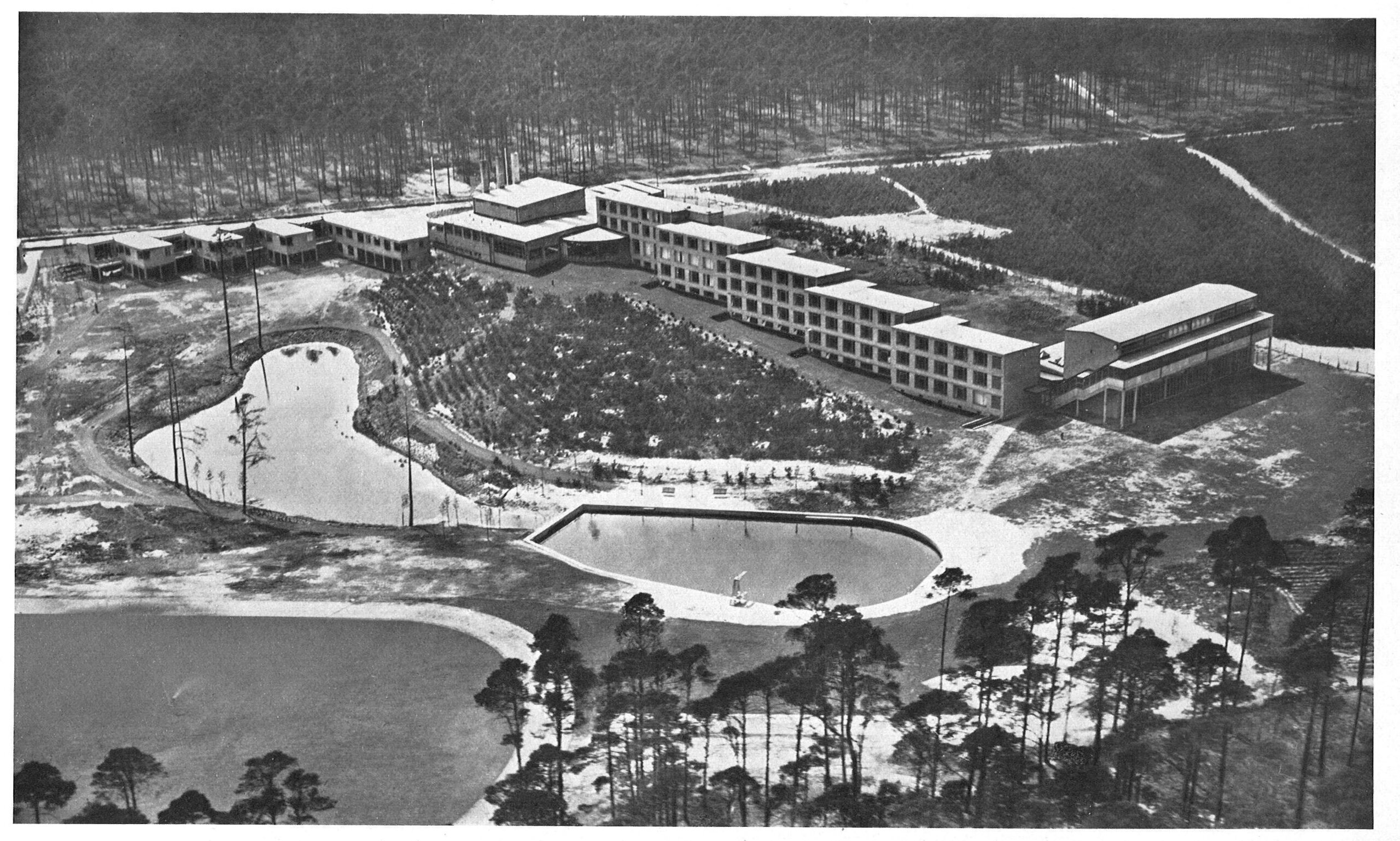
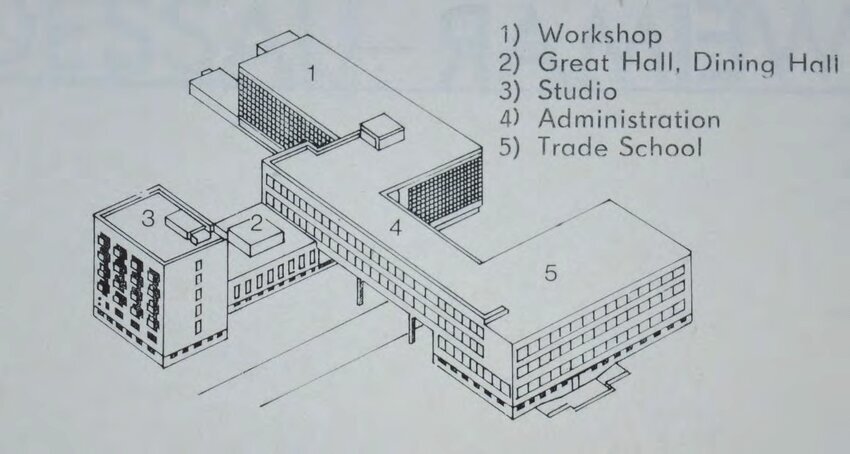
That physicians and philosophers did not preach in the wilderness, however, was not apparent until 1925 in Dessau. This year we are celebrating the centenary of the world's most revolutionary educational building, built by Gropius, the descendant of Nietzsche. The first modern gesture was to explode the enclosed planes by tentacularly spreading the wings around a central joint. It was a great, truly liberating gesture. It was an opening towards volumetric and environmental diversity. The new volumes adapted more easily to the terrain, could orient their spaces in relation to the cardinal points, were perhaps more agreeable. But they were more costly, required more land and a new technique. Gropius' building was permissive, transparent, without walls, without corridors. The new "style" combined technology with modern, anhistoric, abstract art. It opened a new way, which has not yet closed.
Shortly after Dessau, revolutionary Modernism took hold and militant architects felt compelled to take war on all the experiences of the past, which were considered failures. Gropius was the exception. An innovative mind tempered by reason, he denied nothing and vituperated no one. He simply marked by deeds the heroic moment of architecture as a reformer in education. And he set the tone of the emblems.
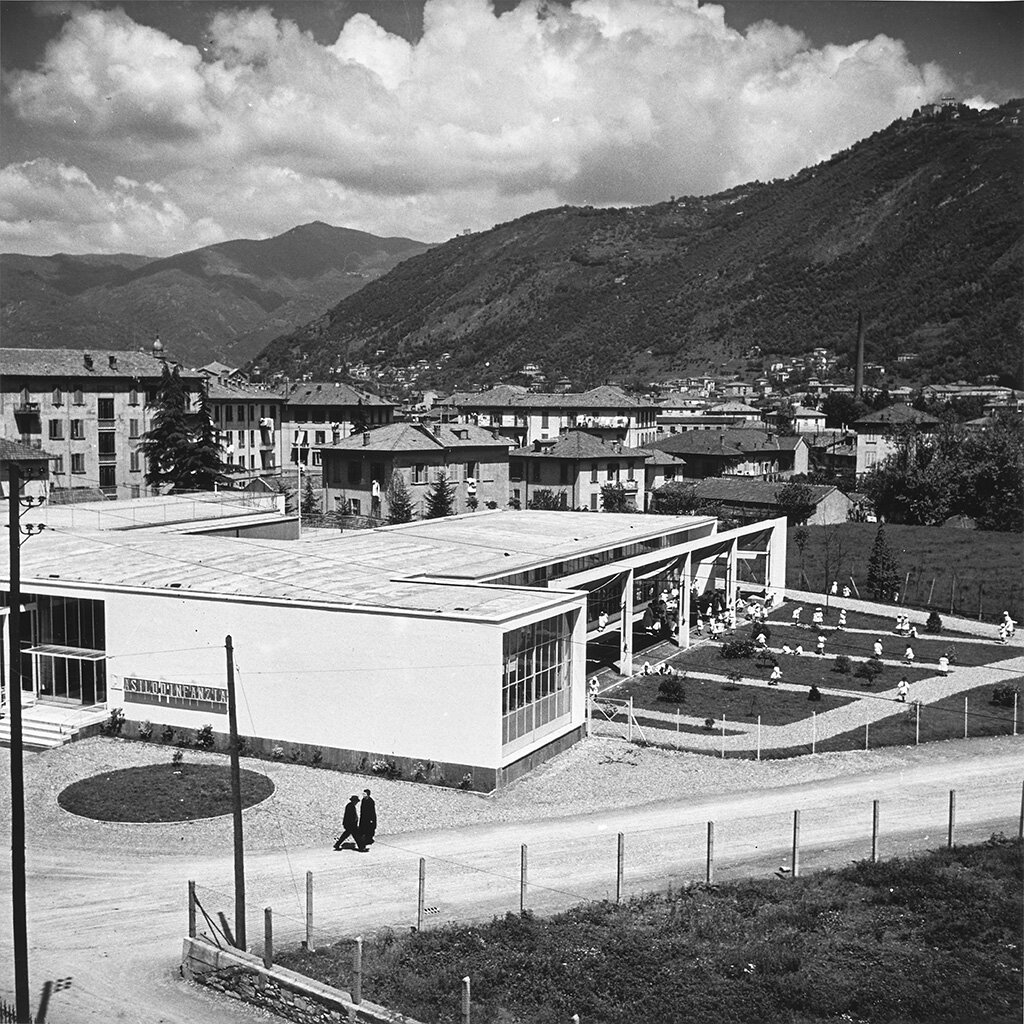
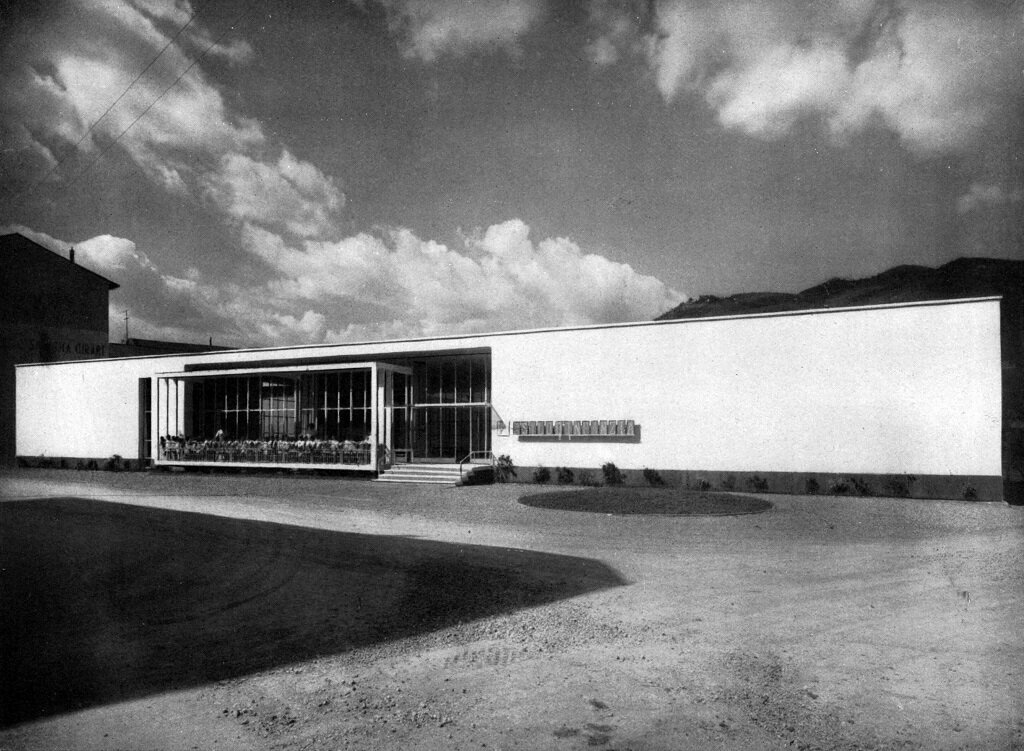
Let me mention just two: Hannes Meyer's Bernau trade school in 1928 and Terragni's Sant'Elia nursery school in 1936. Together with the Bauhaus Dessau, the three buildings are different in many ways: in theme, scale, siting, and the artistic temperament of the architect. But they are also alike: firstly in their planimetric-symbolic attitude - they all spread their wings liberatingly. Then they all speak in modernist language, one frustrated, one elegant, the third well tempered. (Any guess which is which!) What's more, all built between 1925 and 1936, they show that interwar architects and educational currents were partners and anchored in modern reality. Even if it was not yet very clear what that meant.
After the Second World War, under the imperative of reconstruction driven by state initiative, all this intellectual turmoil was pretty much forgotten and the European field cleared of ruins was sown with model schools, usually of prefabricated buildings. Sterile, neutral constructions, without identity, cheap, good to place anywhere and quickly built. We know this well, because they were most successful in the countries in the socialist race. We still have them today, repainted in brighter colors and with more attractive toilets. (In the West, by the way, toilets are also conceived as active components of the whole educational space.)
How was Giancarlo De Carlo not to shout, in this post-war context of quantity, in which the thin criteria of quality were ignored? In fact, he merely raised the tone over an already created context. He shouted along with others, only louder, like an italiano vero raised in the land of futurism. The fashionable Swiss, for example, had started the "School as an Open House" program in the 1950s, integrating education with leisure time. In other words, schools included large, lively and active recreational areas, because in the Swiss tradition, the role of education is also reflected in the way we spend our leisure time.
Two were, and still are, the partners of architecture that are constantly digging like beavers at the foundations of the traditional school model: pedagogical theories and technological innovation. The latter seems even more erosive, but I leave the subject to the initiated, along with the prospects opened up in the virtual world by digital technologies.
Innovative architectural ideas have once again won the day, if only partially, nuanced and punctually. No wonder because, this time too, the revolutionary "anti-system" architecture was backed by the philosophy of education, accompanied by a range of humanities, with their branches and sub-branches of philosophical and extra-philosophical essence, diversified in currents of thought and theoretical-methodological orientations. Nor was so much effort needed to attract the architects to the side of reform, given their propensity for innovation and experimentation. All the production of systematic reviews, psycho-pedagogico-political and philosophical psycho-pedagogical and philosophical analyses and meta-analyses interfered with the key parameters of architecture - proportions, scale, space, light, materials, context, etc. Thus a vast multidisciplinary pedagogical-architectural field was opened up, which is still producing ideas and experiments. Moreover, from here, as Cezar Radu once said, many also eat a loaf of bread.
Architecture was first assailed against the hegemony of the classroom as a "place of indoctrination". We have seen how classroom teaching is considered by progressives to be a tranquilizer of the student's mind, forcing him to repeat rather than reflect and process information delivered as "truths." In our day we took possession of our knowledge, unconsciously archived it, and activated it when needed. But, looking at us, you can see it wasn't good.
Then, after Foucault, a file was opened on the entire building built on the central planimetric model. It's suspected to be similar to the panopticon type, the one used in prisons, with the intention of control. The child or young person thus ends up feeling oppressed. I myself have not read too much oppression in the quads at Oxford, nor at the Sapienza, nor at the Girls' School. But we have to accept that the school is not just ideologically charged, but politically charged.
All this - pardon the expression - speculation continues to activate interest in learning processes outside the classroom and even outside the school. We have examples of schooling in nature, on rivers, on roads, in forests. For years, schools have been built with open classrooms and team teaching, without interior walls, without corridors. Sometimes even the perimeter walls and doors are missing, replaced by recesses and cut-outs made of recessed panels, possibly glazed. Architecturally they are interesting, semantically they are manifestos for the free development of creative thought. Some are brilliant and have been true beacons - to quote Sherlock Holmes. Such are the Montessori school in Delft (1960-1966, before De Carlo screamed De Carlo) and Herman Hertzberger's Apollo schools (1980-1983). Others are monkeys. Hertzberger recounted in a little book about the school he attended as a child during the war. It was in an old mansion with floors, attic, alcoves, mezzanines and nooks. A children's delight. That experience influenced his design work on the schools he designed in his life as an architect.
An à vol d'oiseau look at new attitudes in design presents us with a kaleidoscopic explosion of schools, from traditional to specific, child-oriented landscape. There are imposing office buildings as well as discreet volumes, exemplified, for example, by the Scandinavians' concern for pastoral integration; from educational, research and experimental campuses to rural schools near the Amazon jungle and on the Norwegian shore; there are dignified urban colleges, new or resurrected, but also schools built as relief in impoverished regions or as schools of refuge in calamitous or invaded areas. From visionary architecture to post-truth improvisations.
There remains the question of appropriateness.
In all this time of unheard of renovations, much of education operates in old, maintained buildings, and not badly. No one complains and they don't produce rejects. It would seem that books can still be made in classrooms with walls, with blackboard teaching, listening and grading. No one complained in the past either, and if Schiller was so unhappy at the Karlsschule - a military school in Stuttgart, it was because of the Cossack regime and not the building.
On the one hand the old buildings are carefully preserved as heritage values, repositories of the memories of many generations. Through their architectural merits enhanced by their locations, they are also landmarks in the neighborhood or locality. On the other hand, even new state schools, built in old-fashioned patterns, are not all bad. It's true that they happen where the authorities have understood how to invest responsibly, with free architects and builders kept in check, where competent teachers, themselves graduates of good schools, do their job.
What, said the respectful guardians of perennial values at the time, if new trends were also seen in relation to history? Nor do I know of any polemic between conservative theories opposed to progressive antitheses, but only about a dialectic of tolerance and diversity - as in ideal politics. The emblematic examples of buildings from the past remind us of some stable paradigms of education, without which current educational concepts might lose their essence.
For example, however criticized and self-criticized for their conservatism, the English still produce the elite at Eton, Oxford and Cambridge, and they continue to be landmarks even while operating within some of the oldest walls. New wings have been built in recent decades, extensions with contemporary looks and technology. And they seem to go well together.
I don't even want to think how sad it would be if "Mihai Viteazul" or "Cantemir" or "Șincai" High School were to disappear in Bucharest, if "Honterus" were to disappear in Brasov, "Brukenthal" in Sibiu or if "Eudoxiu Hurmuzachi"2 were to disappear in Rădăuți.
In the past, such high schools were part of the great public architecture. Their imposing architecture gave identity to the place. For their institutional prestige, out of respect for their moral stature, but also as an architectural-urbanistic expression, they stood next to the town hall, church, court, municipal theater...
It was to the credit of the national authorities, who recognized the importance of state education, cared about the prestige of the city and of themselves.
The architecture of private schools saves the general situation. They are doing well. They are free from "manipulative" authorities (or that obsession), from the modest minds of bureaucrats... you don't say how and especially from ascetic funding from public money. They are legitimized to pursue alternative pedagogical policies and to experiment with new spatial formulas such as home schooling, schools in private mansions or in groves. Private education is allowed to truly promote creativity and critical thinking in an environment of excellence, only - as the name implies - for private gain.
But the first duty of education derives from its public vocation par excellence. I should start with Plato, who believed that educating children should be the responsibility of the state. He was also the first philosopher to advocate public kindergartens and all-day schools.
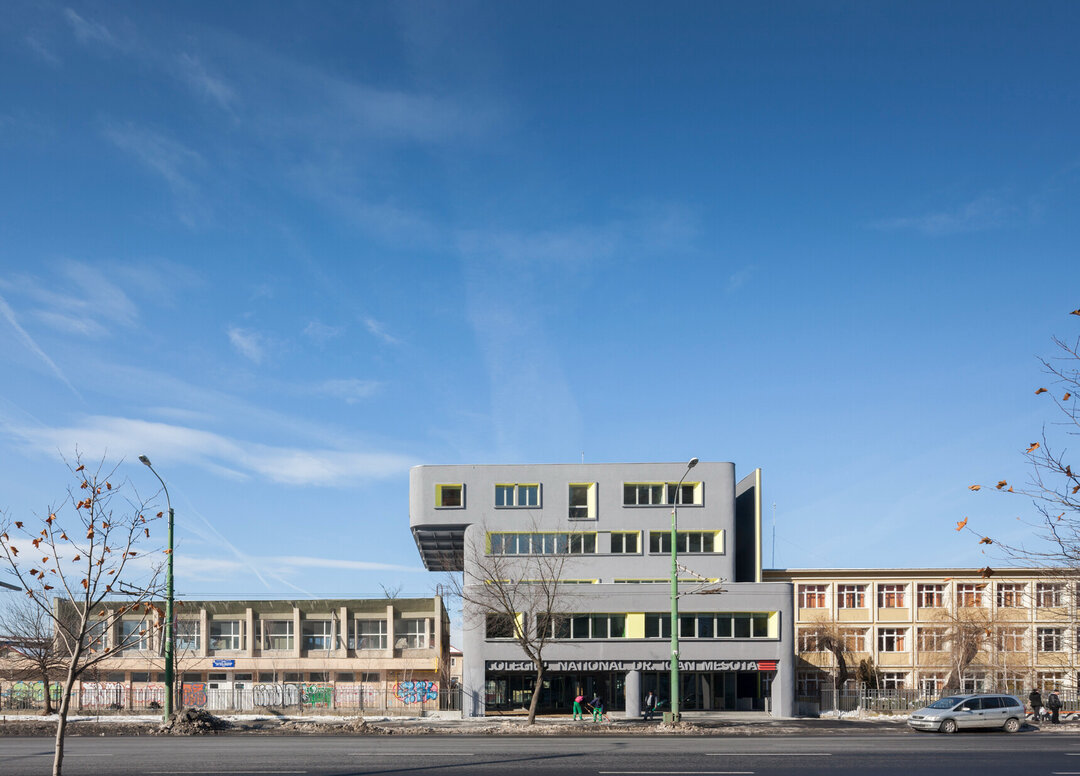
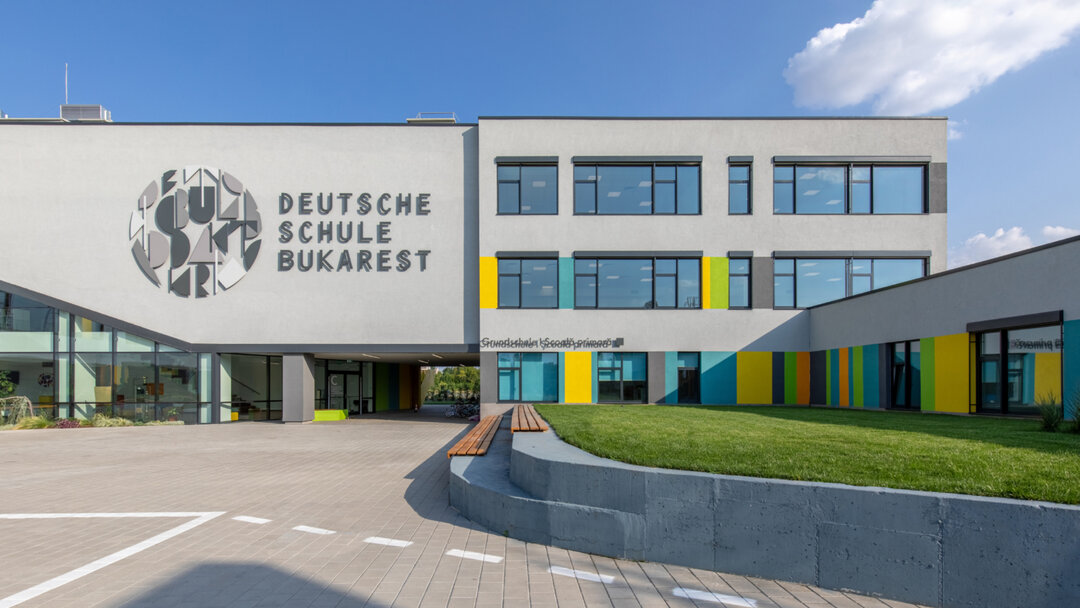
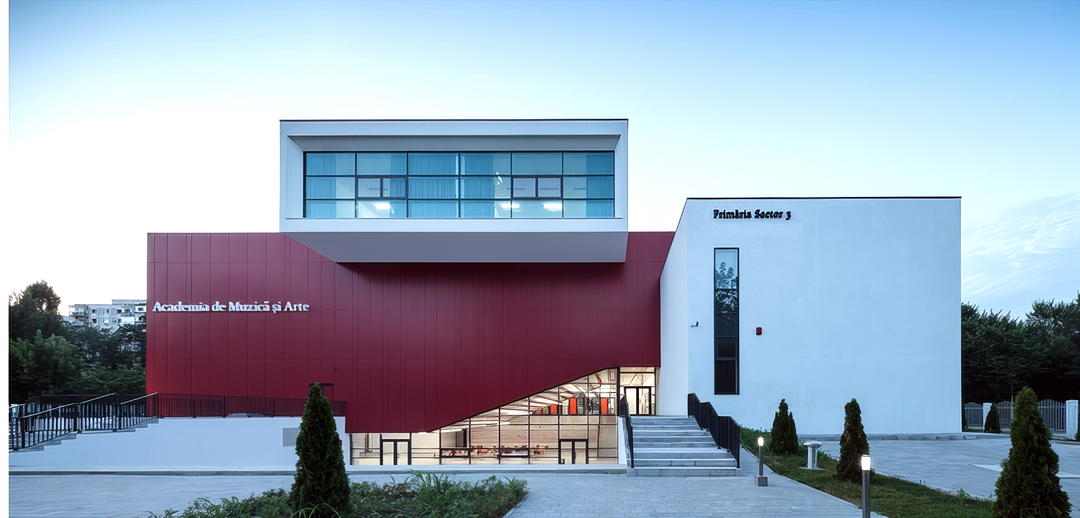
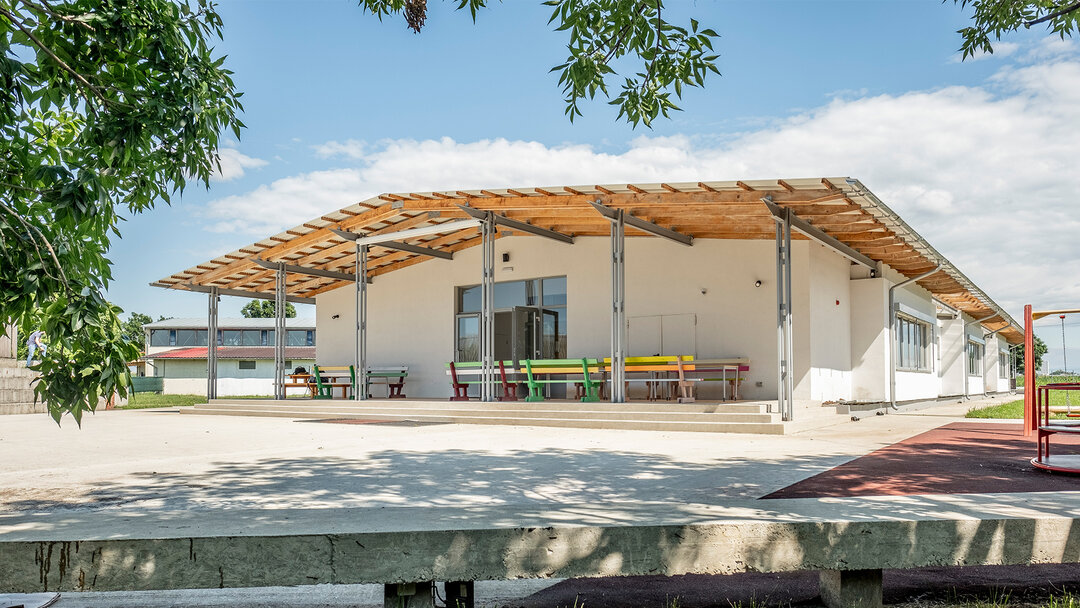
A country that respects itself, that wants to count in today's world and the world of the future, must have good public education, in a quality architecture. A country in which you don't have to stay at home or study in the wilderness to be free from political maneuvering, mediocrity, aesthetic, ethical and functional bitterness. What characters are formed in ugliness, poverty, bad taste? Is state architecture not also capable of creating places where all the children of the country can form critical thinking, character and morals? Let's not talk about culture, it's obsolete. But we can talk about a sense of humor and creativity. The neighborhood school I vote for has hallway walls lined with colorful, patterned ceramics in tooth-gnashing combinations. Is this how children's good taste is taught? There are few new state schools in our country that stand out for their architectural quality. What if they are? Then what can we expect from future adults?
If there is no polemic, we have instead a dichotomy between the position of architects and the state-built reality.
I think that we have to accept that the architecture of state schools does not follow the latest fashion in pedagogy. Even a structure derived from established patterns could be interpreted appropriately, friendly, contemporary. But so far the main enemy of the state educational environment has been the state itself, through the anachronism, repetition, platitudinousness, poor quality and lack of identity of the school buildings it has promoted to the point of exhaustion.
The authorities continue to build buildings only in the old style, as they know how, ignoring the architects and listening only to accountants. Contracts are put out to tender and won by contractors, who both design and build. The state should understand that the educational environment should not be based on market logic; cheapness is not the criterion. It must also accept that a high standard can only be achieved by the architectural offices that win the projects through competition. Only architects know how to shape the whole educational environment, of which the school building is only one component. The state is not called upon to express its architectural opinions, let alone impose them. But the state must be aware that the educational environment is also part of the urban environment and mediating the relationship involves many people. The state's job is simply to initiate smart policies that involve an educated population willing to support professionalism. I don't know where we're getting this one, but without attracting more stakeholders, it's no wonder the community's only concern stops at traffic lanes and parking lots. And the architects alone are clearly not standing up to the majority's beliefs. In the meantime, the school is being built by the clerks with the foremen and the headmistress.
Some time ago, Norway proposed to the beneficiary population a public contribution to the state funds in order to raise the standard of the building in which their children will go to school. Something similar happened here, but for the cathedral of the nation.
And, as, damn it, people in "educated Romania" can't find the best way between the ridiculousness of the Falticeni's rabble-rousers and "education as entertainment" - a means of stupidity too, if it is not properly understood.
When Ioana, our editor-in-chief, called me about this article, she told me: "our grandmothers learned house management and good manners at boarding school, our mothers learned general culture, we learned what a good Communist Party is, our children and grandchildren are experimenting with it every time a minister changes3. I know that times change, but isn't the human being the same as in the Greek gymnasium, where mens sana in corpore sano was the way of evolution, and in the peripatetic walks through the agora, and in the halls like a stable in Stratford-upon-Avon where Shakespeare learned, and in the colleges with their inner gardens...? Does the human being mutate with every generation or change of government? Perhaps you can explain it in an article."
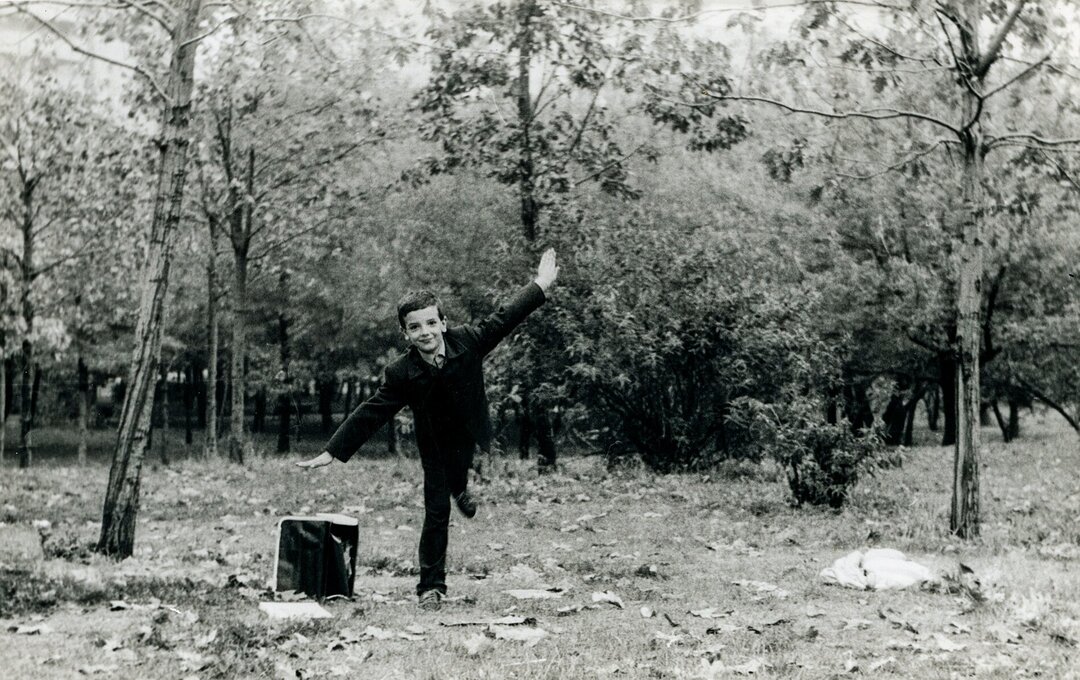
I don't know. But Heidegger, who knew all about the hypostases of being, said that before designing the dwelling, the architect must remember the ontic hypostases of dwelling. The same goes for education. It's a strange feeling, after spending many years in the pews, to move to the other side, to the professoriate. Or, as an architect, to embrace both, and that's in a broad context: the educational space inside, the space outside the school, the chestnut tree next to the gym, the neighborhoods, the city. And then maybe it's good for the state to leave the architect alone to recall his schoolboy hypostases and then design. Like Hertzberger.
1 In order to be enrolled at the school for caitiffs, where he had no right, not being the son of a church daughter, his uncle changed his name by an artifice and bribed the caitiff "two kernels of barley and two of oats".
2...where my father went to school. In 1872 it was Realgymnasium, in 1881 it was Obergymnasium, and since 1919, Eudoxiu Hurmuzachi Lyceum. Ernst Rudolf Neubauer, the first director and a great personality, Heinrich Klauser or Gabriel von Mor, guilty for not being Romanians, are not remembered. All due respect to Baron de Hurmuzaki, a luminous figure, but who had nothing to do with this school. The story does, however, have something to do with a centuries-old xenophobically educated population.
3 See Nicolae Manolescu's article "Cumplit meșteșug de tâmpenie", in România literară no. 36/2022, on the interpretations of European recommendations by Romanian textbook producers. It is an example, and there are many others, which, as Titu Maiorescu said, "determine to a large extent the good or bad direction of public education in a state".
--17829-xl.jpg)
--17830-xl.jpg)
--17832-xl.jpg)

.tiff--17836-xl.jpg)
--17838-xl.jpg)

%20parter--17840-xl.jpg)

%20parter--17842-xl.jpg)
.TIF--17914-m.jpg)

--18036-m.jpg)