The Secret Life of Ruins

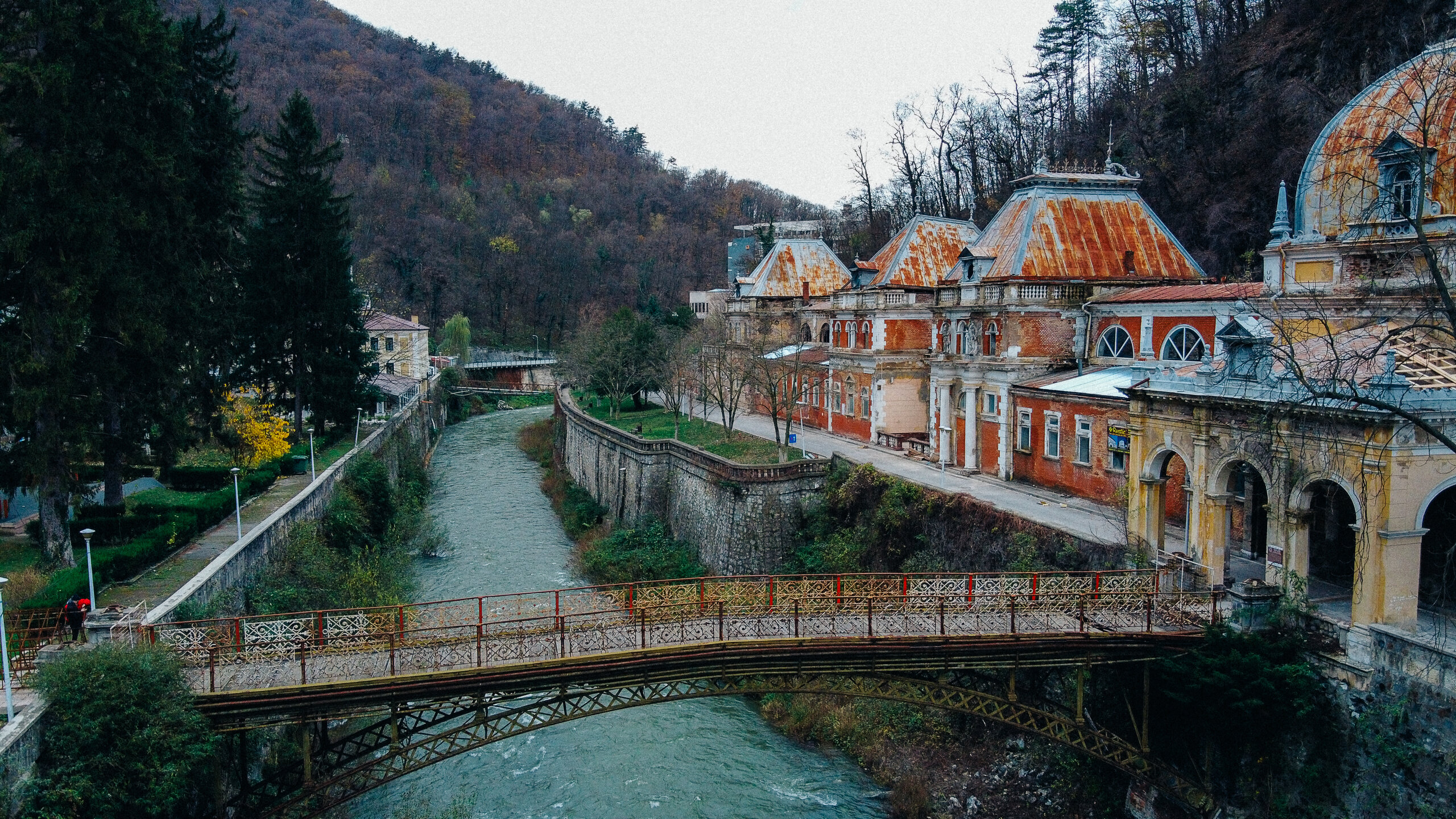
© @Martin Neagoe
She had never known a time when the ruined place was not there. Her earliest memories were visions of arches and columns standing defiant against the blue expanse. Sharp edged shadows falling upon a jumbled heap of massive stone shapes. It was always unclear to her whether the ruined place was happy to be standing against all odds; against all of the whims of weather and man. Or if it was tired and lonely and secretly wishing to let go of the burden of gravity and fall without care to the ground embracing, at last, what was left of its former glory.
She had read about the history of the ancient people. The ones who were responsible. She knew that it took an inordinate amount of ingenuity, calculations, power, natural forces and sheer determination to erect this once larger than life monument, this lasting testament of man's ability to bend the will of nature to his desire of immortality. The diligent craftsmen chipping, carving and stacking heavy stones one on top of the other into ever dizzying heights. Afterwards, pontificating statesmen, voices and footsteps echoing into the distance, for it was a vast space judging by its footprint. Mere mortals inhabited the stone vessel as if it was a foregone conclusion. As if it had always been there. As if it were a beast, given to man by the gods and its burden was to exist in stoic silence. Never speaking of the things it witnessed. Only echoing words and footsteps as a consequence of humanity. But places have memories too. In that time, the ruined place harboured life and purpose and it had no thought of decay.
She felt the presence of the past as strongly as she had felt her own when she was in the ruined place. But she could only live in her own history, her own lifetime, the life of the here and now. She couldn’t understand why it had been forsaken by its makers. What painfully executed effort, now dashed. How could they have let it be mutilated and why didn’t they care enough to repair it? She cared more than they did. She had traced her hands along every seam, climbed as high as possible to view the land from every angle, laid down flat against the earth and let the columns and arches dominate her view, obscuring the sun, reshaping the sky. She sought the cool touch of stone shrouded in deep shade and felt the many surfaces through the tips of her fingers tracing the textures and shapes, some soft, some like worn sandpaper. Everything; subdued by time.
When she was little the ruined place was a fantastic playground. As she grew older it served as many functions as she needed it to. She would run away to let the stone cradle her and lay comforted, under a blanket of stars. It was the perfect place for parties with her friends during school and held a ritualistic dominance whenever they got together to reminisce about those long nights around the campfire. It was everything she needed it to be and it became a place of refuge in her mind when things got tough and she was too far away to escape there in person. Because she had always felt, in her bones, like it belonged to her.
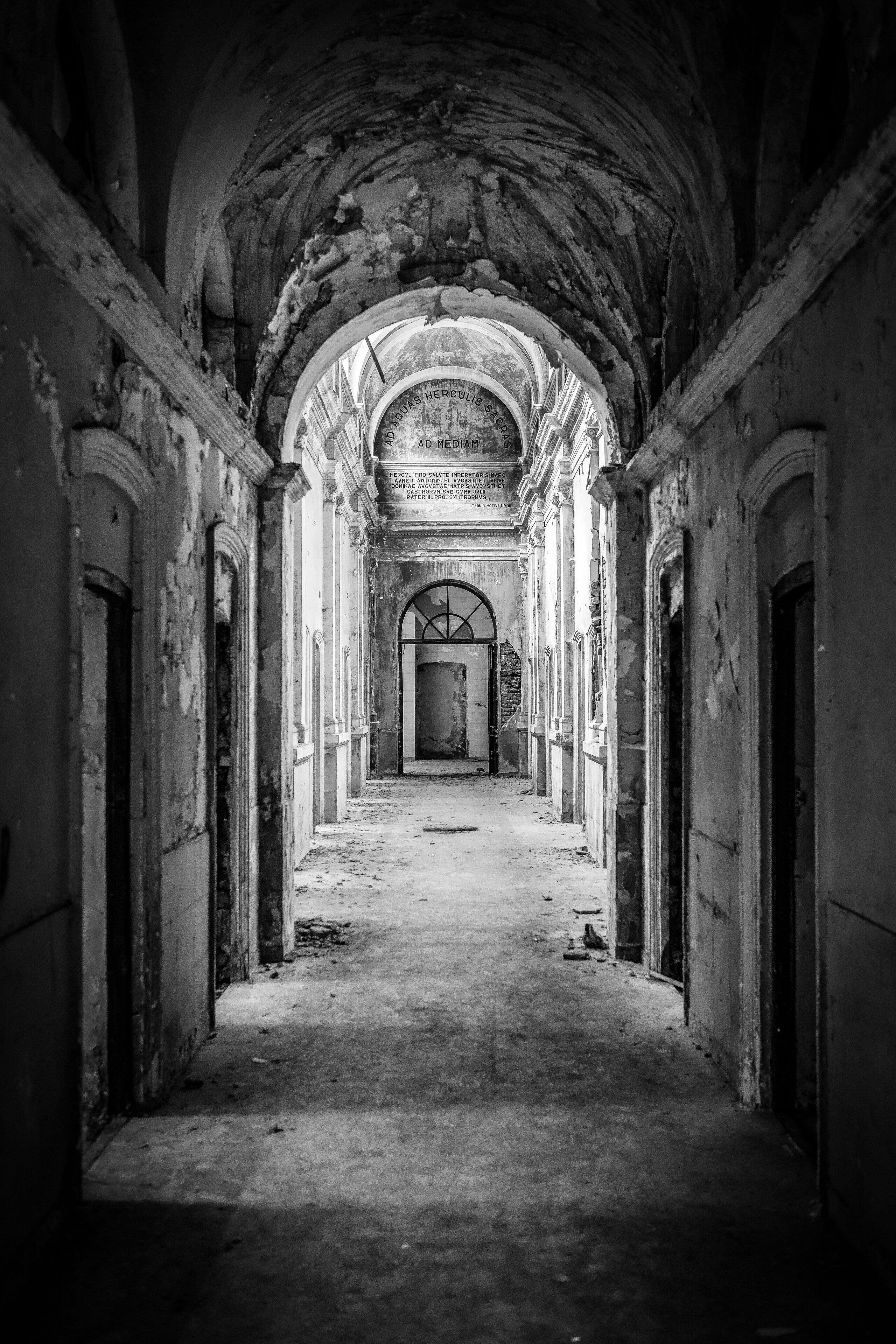
The ruined place had a name. It was designed and built by important men of a certain era. It had an original purpose and that purpose was to heal the masses. It was a sanctuary for the sick and it served without end, until it didn’t. But it wasn’t because it stopped being a sanctuary. It was because the people stopped coming with the desire to be healed within its graciously ample space, smooth marble and luxurious pools. Instead they came with the desire to take what they wanted. So they took what they wanted until there was no longer a reason to return. It was as if the cure that man had created became the symptom of another disease.
After the people left, the ruined place was embraced by nature. As the years passed, vines reached out of the earth like veins holding together the fractured bones with their intricate designs. Trees grew taller and taller in order to shade and cool the marble. Animals delighted in playing hide-and-seek with their prey in the light and shadow cast by the strangely shaped rocks and bolt upright trees with no branches. When enough time passed, days and nights, sun and moon, ebb and flow wore down the memory of the place in the peoples’ minds. In its quiet way, the ruined place kept hold of time, memories and truth for its duty was to serve. Inevitably people began to come back. They found solace in the quiet space, part nature and part monument. They rested on the cool marble while watching their flocks of sheep and goats find sustenance and navigate with curiosity the jumbled terrain. They existed in harmony fulfilling each other's needs, to see and to be seen, to want and to satisfy.
She always thought it strange that the desire of people who build sanctuaries and monuments was to live forever, yet even sanctuaries and monuments have a life line. Her ruined place was built for healing but not in the way that the designers and makers intended. When they created this vessel they had forgotten that its creation came with a soul. Her ruined place heals with its whole self and its broken self. It is a translation device between nature and man in the way it stoically embraces its slow and inevitable engulfment back to its origins. She thinks, one day I, too, will return to my origins. The ruined place plays with her imagination, teaches her to be inventive and curious and shows her how to remember and in diverting her thoughts to absorb her senses, she feels herself again. Her mind and body as one. She feels the ruined place and is altered by it. The ruined place shows her that life is precious like the fine details of the carved leaves which adorn the ionic pillars. It is strong like the fat vines that wrap themselves around and through cracks of walls, floors and arches keeping everything together. Keeping everything from falling apart. It is a place of silence and a place of deep thought. It is a place of healing. It is her sanctuary.
A church bell rings out in the distance, low and quiet. A much more pleasant sound when heard from the countryside. It tells her that it is time to go. That it is past time to go. She felt an overwhelming relief coupled with a deep satisfaction as she stepped back to inspect her work. This part of the process was her favourite, not because it was finished but because it always reminded her of the first time she painted this very scene. When she first started drawing and painting the ruin it was to become better acquainted with it, to build a deeper relationship with the stones that were always there for her. Over the years she became so familiar with its shapes, lines, colours and atmospheres that she had begun to play with the elements creating new forms and perspectives. She could even create versions of the ruins in various states of decay from memory but she preferred painting in plain air. Always returning to the same spot, at the same time of day. When the sun, triumphant and pale yellow, rises from its horizon and at the end of the day, swollen and deep orange, begins its descent, are the best times to paint. The shadows are long and sharp. The pale purple grey of the morning deepens into an ultramarine blue hue of late afternoon. The contrast of light and dark; a matter of complementary colours against a cerulean sky.
As she tucked the last of her brushes neatly into her rucksack and slid the still wet wooden panel into its specially made case, she turned to survey the horizon toward town. Of all the early mornings and late evenings she has spent in the same position looking at the same view, this day was different. It carried the weight of a new beginning. In a few weeks' time, when the last of a series of studies were varnished and dried, they would be put up for auction to help raise money for the newly established preservation society. Its first order of business was to create a tourist attraction of the ruined place. In all honesty, she was not completely convinced that it was the best course of action. More for her own sake than that of the ruin. She had a strong desire to witness it ebb as far as it could go within her own lifetime. She thought that the ruin wanted this too. However, unless it began to serve some kind of function in the firmly commercialistic society she lived in, it would be demolished. As it was, there would have to be some cosmetic and structural improvements to make it safe for the average tourist. It was this that she didn’t like. In the end, it was the lesser evil of the two options, and so she threw herself into the business of helping preserve the ruined place so that others might feel the same connection to the past, the same awe inspiring realisation of the feats of man, the same safe space to indulge in creative musings and above all to have a sympathetic place to go where one can contemplate life and all of its many twists and turns.
Tonight she will be giving the keynote speech to the ruin preservation committee. This speech was a surprisingly difficult one to write. When she was asked to write it, the committee insisted on the tiny caveat of impressing upon the public a strong argument for the need to keep ruins in our midst and also to try to satisfy the insatiable appetite for progress against all that is past. No matter how hard she tried, she could not think of a suitable way to start this endeavour. Every sentence she tried didn't fit. Every combination of words seemed colourless. She thought for a while that she could analyse a few paintings of the ruins she so dearly loved that had won considerable praise some centuries before by artists of serious renown. After all, ruins were a topic much discussed in academic circles. The notion of a cyclical pattern of wildness yielding to pastoral bliss, giving way to progress, then decadence and consequently destruction with a final result of ruin was a favourite and ever revisited topic of artists and art historians alike. This theme worked for a time but inevitably came to a halt because it just didn’t feel right. It just wouldn’t do. This speech was for a mixed audience. She must think of something that could engage everyone. And so, it became clear to her that she would have to go to the one that could reveal to her the correct path. Dutifully she went to the ruined place at every opportunity and soon she began to write with meaning, compassion and excitement. The ruin was like a tonic to her mind. A way to quiet the doubt and discover the truth of what she really wanted to say. Her topic was something that was both evocative of a time long ago and immediately pressing like the imminent setting of the sun she had been keeping her eye on ever since she began walking toward the distant urgent bells of the church, easel and brushes tucked under her arm, where she would give her speech.
Like all things born into this life, she started by writing about what it was like at the beginning. It occurred to her that humans have always altered nature to suit their needs. As we evolve we become more refined in our manipulation of natural materials to better serve our changing perspectives. We gain insight from trial and error, persistently manipulating an often hostile natural world to suit our purpose. All of this altering throughout time has left behind scraps of what no longer makes sense to keep. We abandon places that no longer serve our needs; we leave behind what can not be carried. We imprint traces of life on the earth as we migrate, expand and multiply. Survival of the fittest works to crystallise the vision we have of our role in the world. Nomads become stationary. Life begins to expand in situ. And the permanence of our footprint deepens, widens and rises until we have conquered the wildness of nature and found a kind of aesthetic and practical comfort that lets us exist with more ease than before.
Throughout this process of evolution and enlightenment we hurtle through centuries developing vast civilisations, and in everything that has been, we have, out of necessity, largely chosen to replace or destroy our past, the historical evidence steeped in the zeitgeist of our times. The practicality of our instincts for survival have led us to look at the imprint of the act of living like a scavenger who surveys the land for immediate need and not long term potential.
A ruin has not always carried the same meaning as it does today. Romantic longing for what is lost in the past, and a realisation of what is truly at stake if erased without forethought usurped the practical consumption of architectural feats, each stone laboriously laid and subsequently repurposed into lime wash. There was a time when cannibalism was the standard practice of the disused, misplaced, obtrusive, out of fashion or simply heretical building. That was before the enlightened acts of a few brave and creative hearts intervening and preserving ruins for antiquity and knowledge. Studying the structural integrity of the past and finding that there was much to be learned. There is still much to be learned. Perhaps it is not so much about applied knowledge but more about what can be gained through the senses and particularly through the imagination. This is what she would end on. The ruined place and indeed all ruins have something to offer. They are present when seen and they feed to us the mana of inspiration and dreams. They are silent witnesses to our mortal story and they carry us without complaint to a past that can no longer be. They inspire our future in ways that are quiet and intuitive. They are the spine to our novel.
A gentle rustling of leaves dancing on a cool evening breeze and the sound of her footfall changing from the dry quiet crunch of grass to the raspy staccato rhythms of a gravel track and she was nearly there.
If she closed her eyes and turned towards the midday sun, she could feel the warmth on her face. A red-orange glow prevailed behind her eyelids but if she focused her gaze inward, she could see it, clear as day, as it was then. It had been many years since her return to the ruined place. Life takes many paths, some of which are chosen. The thought occurred to her that the ruined place did not choose its paths, instead it dutifully became the choices that were made for it. A convergence of choices made by man and by nature shifted the look of the stone, influenced its purpose in life and even altered the landscape that surrounded it. The popularity of the ruined place was a double-edged sword and she had been instrumental in forging it. Still, she didn’t think that she could have actually let it be devoured by the forces of nature or man, even though in many ways it was the right thing to do. In preserving the stones she chose to deny the will of nature, to fight back. She knew that fighting back was a kind of self-imposed responsibility, an attempt to control what little she could. She admired the patience, grace and stoicism of her ruin throughout it all and tried to use those virtues as a kind of guide in her own life.
She knew that the ruined place carried her decision like the maker's marks in the floor stones that were still visible after all this time. Each stone laid featured a different mason's signature pattern, a fingerprint unique to its owner. In the end this was the thought that stayed with her even after years of absence, and when she was no longer of this earth, her own kind of maker's mark would linger in the ruined place. Her ruined place. She was forever part of its fate. It made her feel both satisfied and exhausted. When she opened her eyes it took a few seconds for the world to come into focus. A sun soaked barley field to her left, ready to be harvested; a clear blue sky above, unblemished by clouds; a young couple, heads together whispering behind the tallest pillar to her right; children’s laughter behind her, bouncing between the stones like ripples of water on a still, smooth liquid surface; and finally, herself, standing at the altar, hands spread out in front, resting on the cool stone surface.



--18343-m.jpg)