Drawing in architectural design

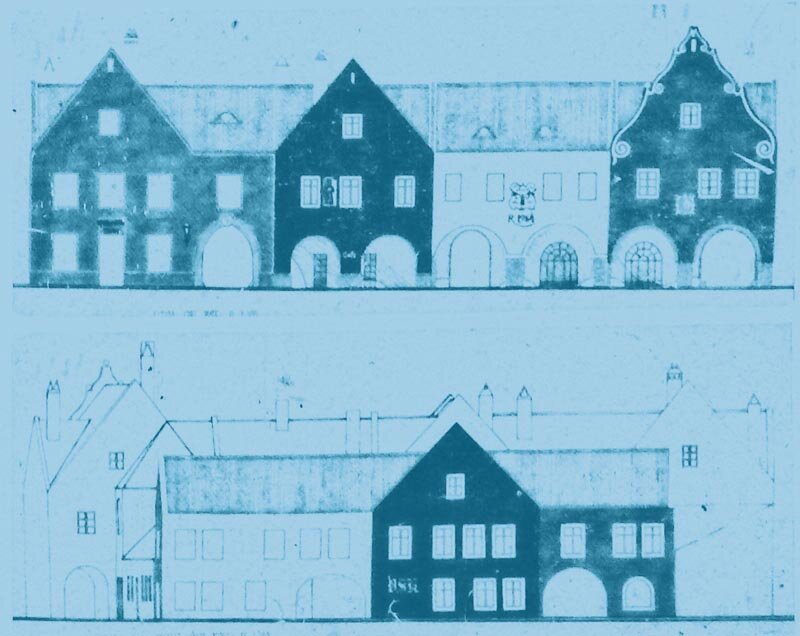
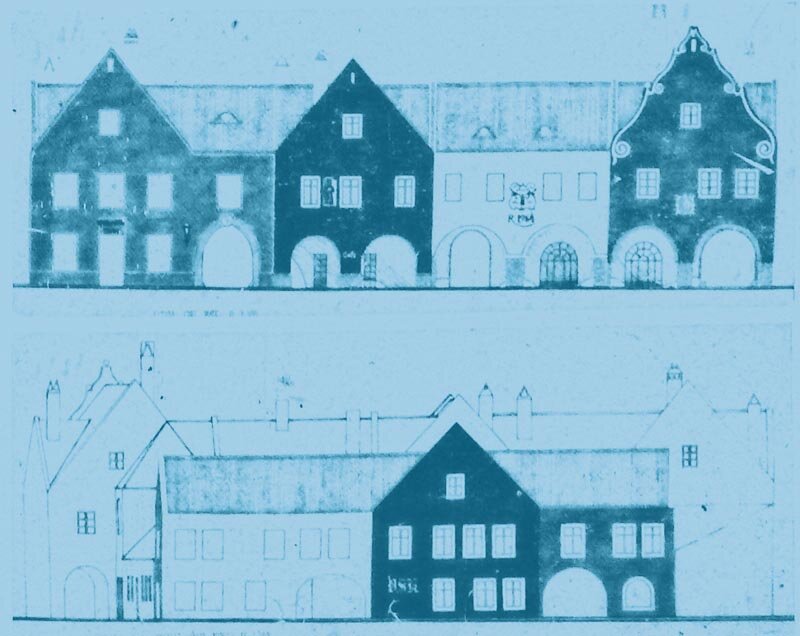
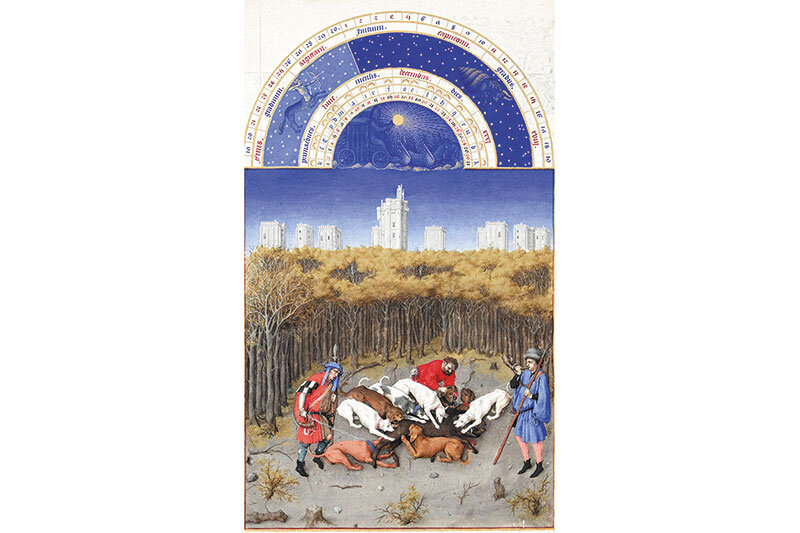
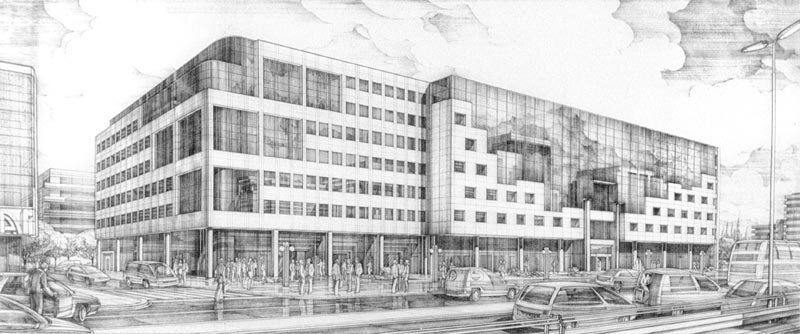
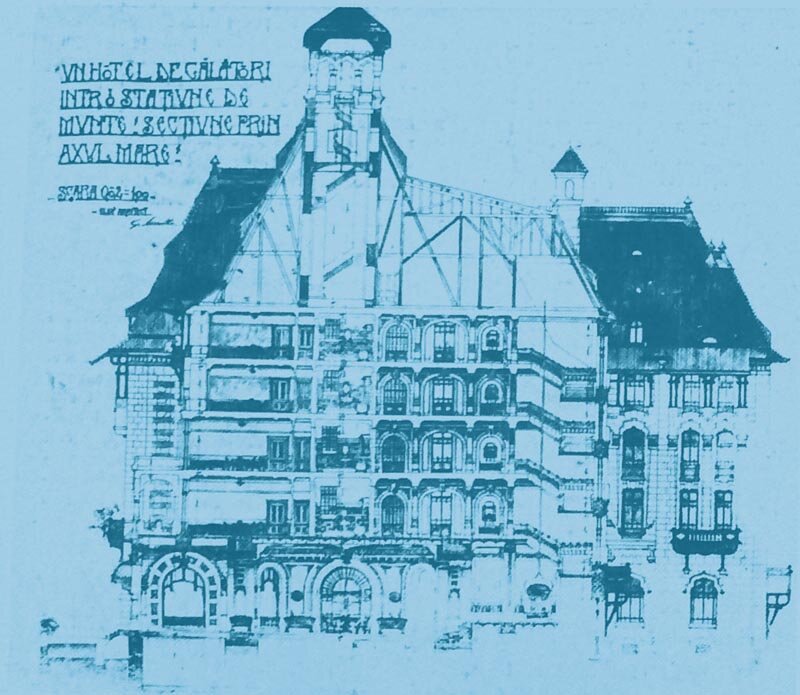
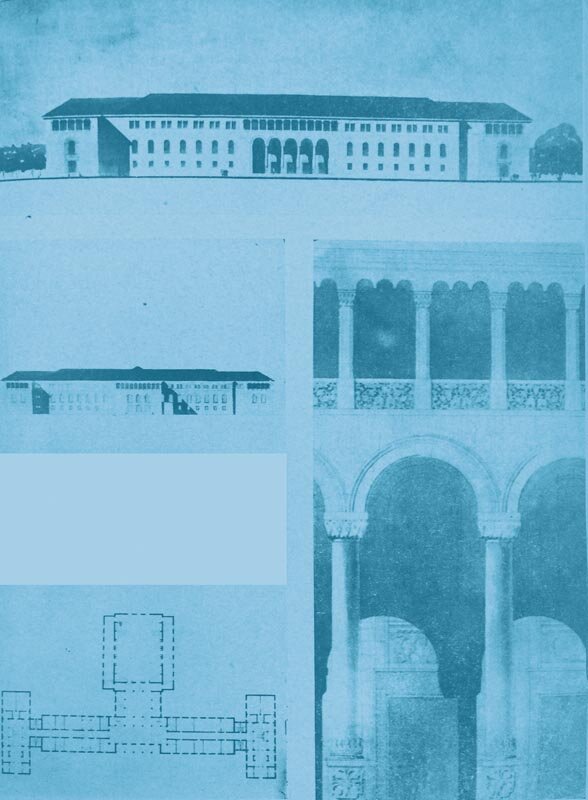
Until 1944, architectural drawing in the School was inevitably marked by the French beaux-arts-ist manner in illustrating large, often monumental, urban programs, according to the fields of interest of the period. The diplomas, in particular, were impressively drawn, meticulously detailed and with realistic treatment of facades or finishing elements. The drawing was rich, exuberant, albeit in a realistic but expressive manner. Sometimes, the font of the project titles was archaic Romanian (Cyrillic in origin), used in old Romanian script. Their use was probably intended to suggest some kind of traditional autochthonous image, superimposed on the national architectural details used1.
The beaux-arts-istvein of architectural drawing in the School was also visible in some theoretical courses, not only in the workshop: in the History of Romanian and Universal Architecture, the titular professor Petre Antonescu drew a whole table of details, which impressed by the "mastery" of the line2.
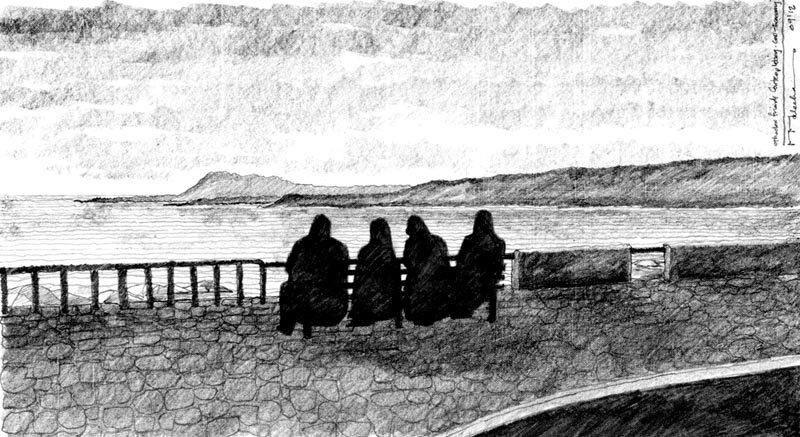
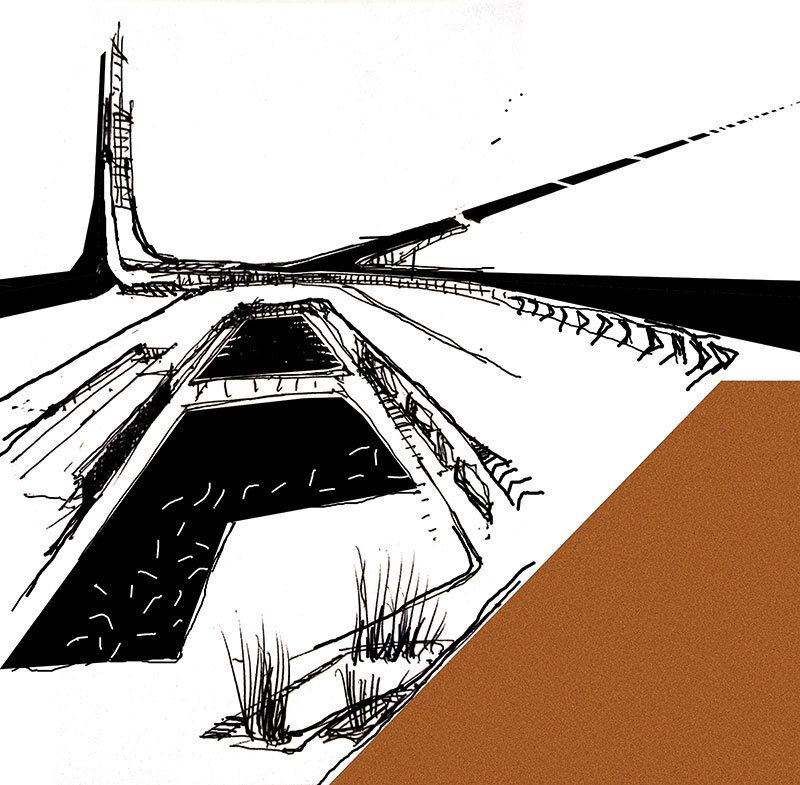
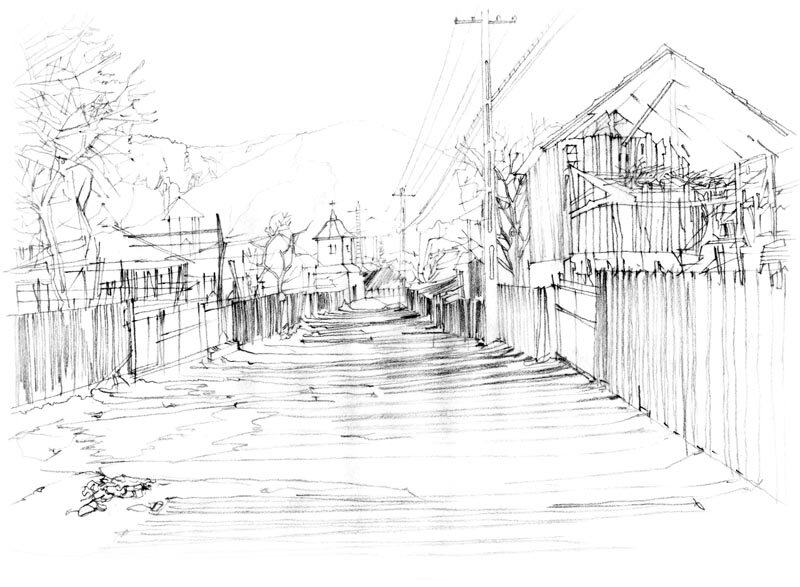
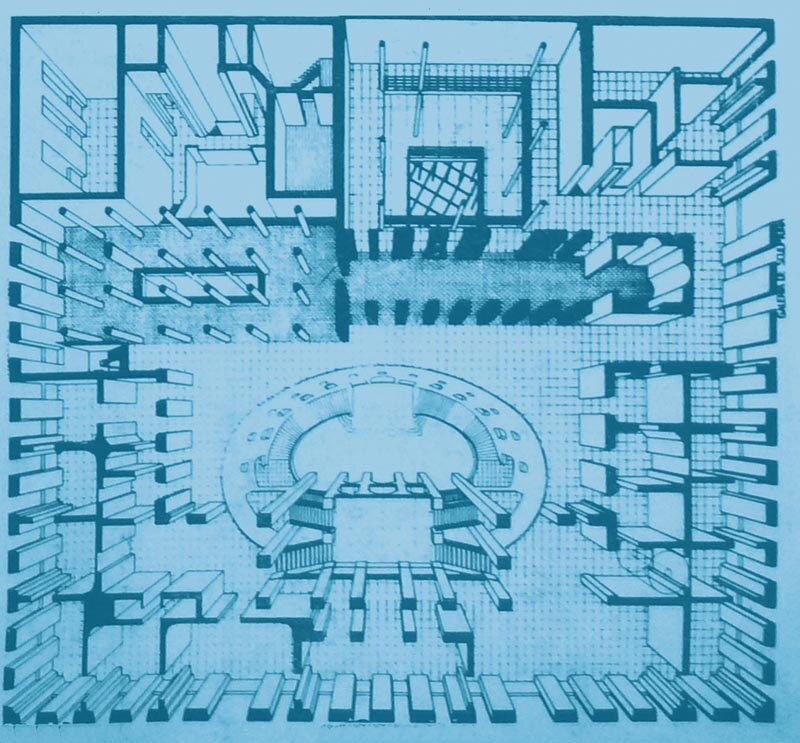
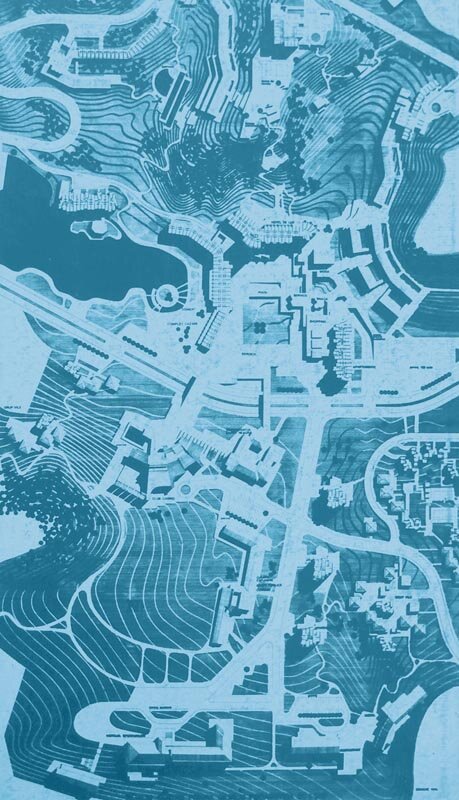
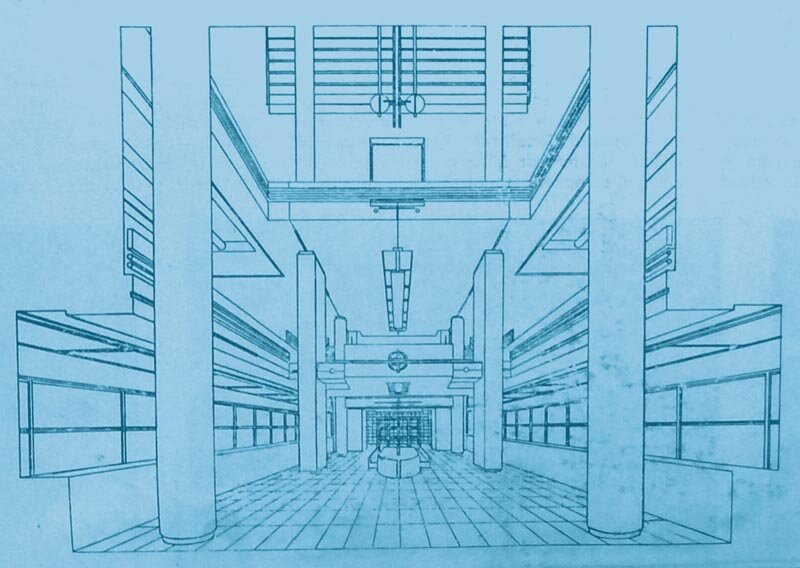
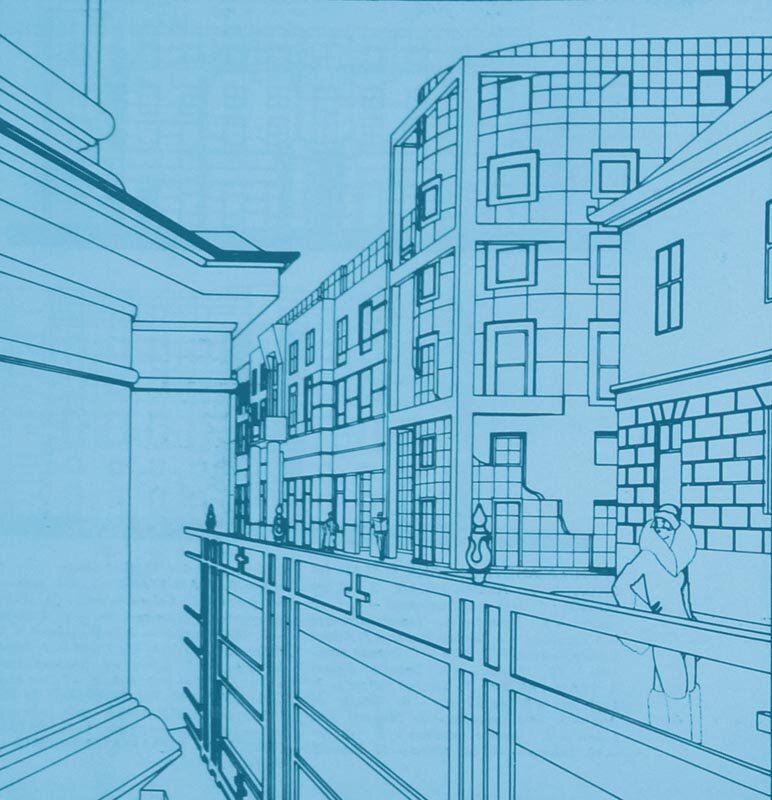
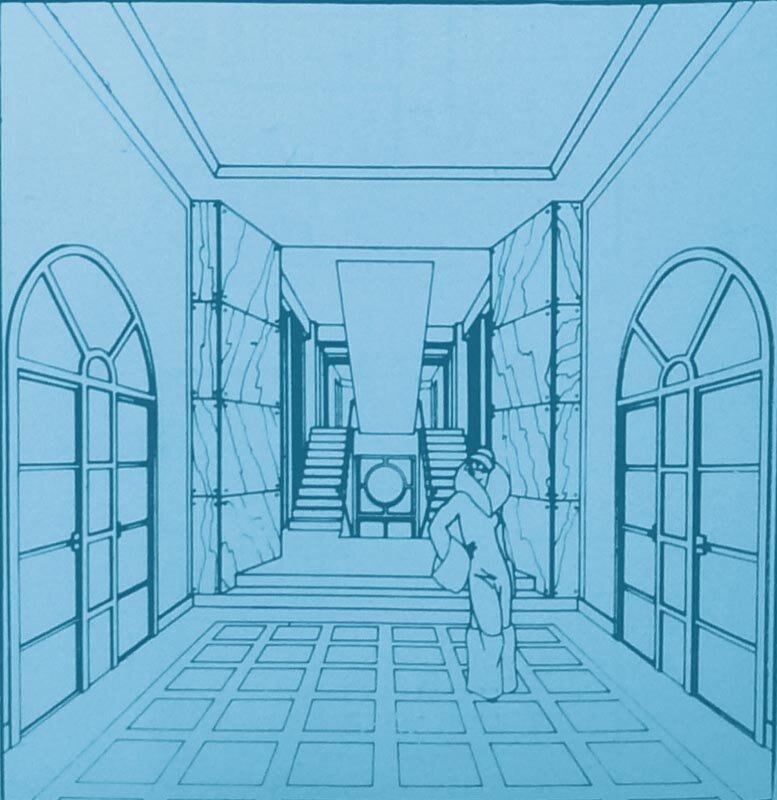
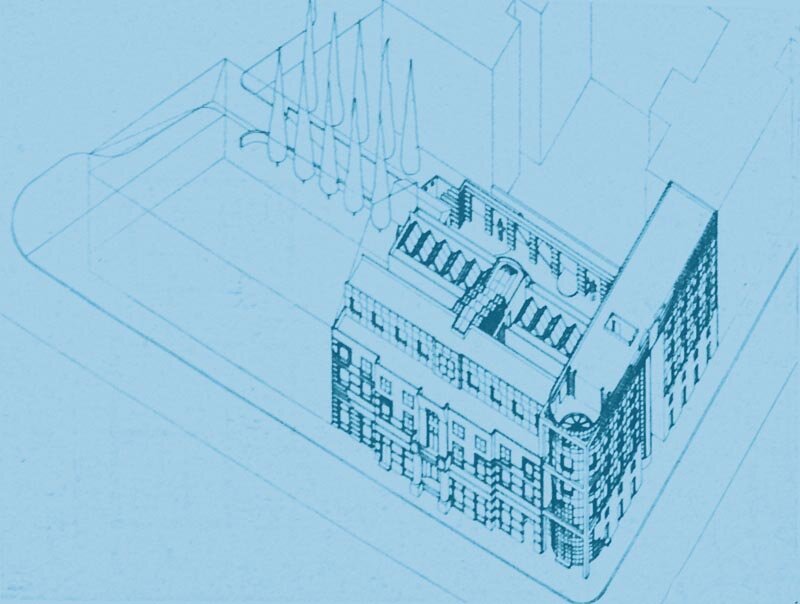
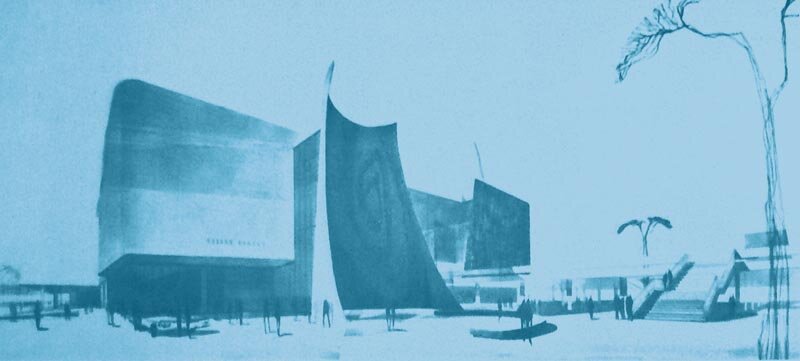
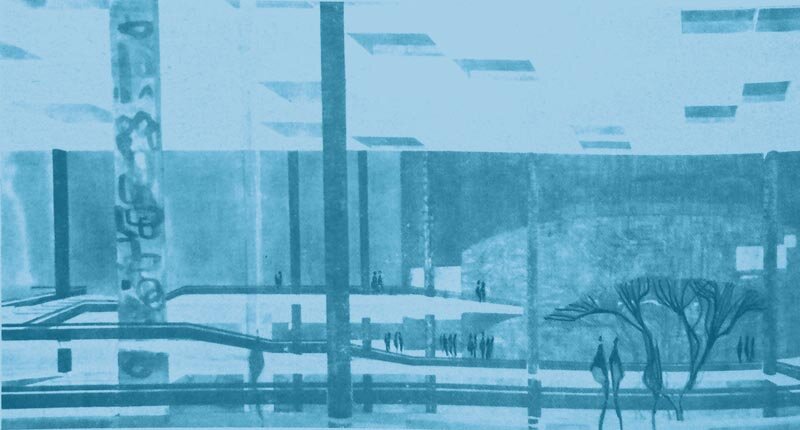
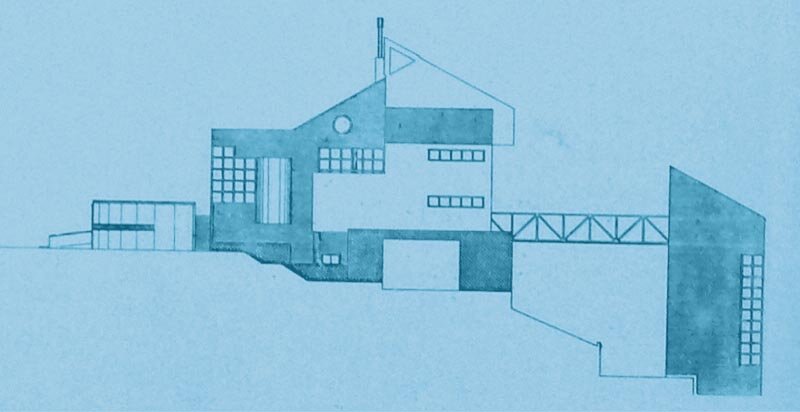
The school's projects in the late 1940s oscillated between so-called neo-Romanesque academicism and the modernist avant-garde. In turn, the teachers were partisans of one of the tendencies - most of the traditionalists were intransigent and opaque to change. Degree juries, for example, were often conflictual for this reason. Since 1944, however, there were progressive resources in the School, which - at least until 1948, were able to manifest themselves and influence the academic life of those years. As a consequence, the representation of projects evolved from the French academism of renderings and elaborate, artistic drawing, with the use of shadows and volume to suggest perspective and relief, to a monochrome and sober line drawing, adopted through the modernist vein. The sketches remained, however, still exercises in free artistic drawing, and in the conception of their themes they were also linked to the French mentality at the turn of the century3. An interesting example is also to be found in the manner in which projects were worked on in the actual practice: between October 1949 and October 1950, Mrs. Arch. Henrietta Delavrancea se ocupa cu proiecte de spitale noi, în diferite orașe ale țării, iar studenții care lucrau la biroul dânsei erau obligați să deseneze pe calc numai cu creioane 2B și „la sfârșitul zilei, erau ca niște mineri pe față și pe mâini”4.
At the time of the emergence of modernism, as with any avant-garde movement, the School had contradictory reactions, conservative and innovative, from the conflict of which significant cultural progress was born. From 1944 onwards, however, a new line of opposition was superimposed: socialist realism, apparently identifiable with the conservatives' quest for a "specific nationality"; the new stylistic opposition was very different in its underlying ideologies. The imperative of this new imposition, forced and radical, manifested itself in the design of a monumental, socialist-Stalinist architecture that characterized the School in the following 50s.
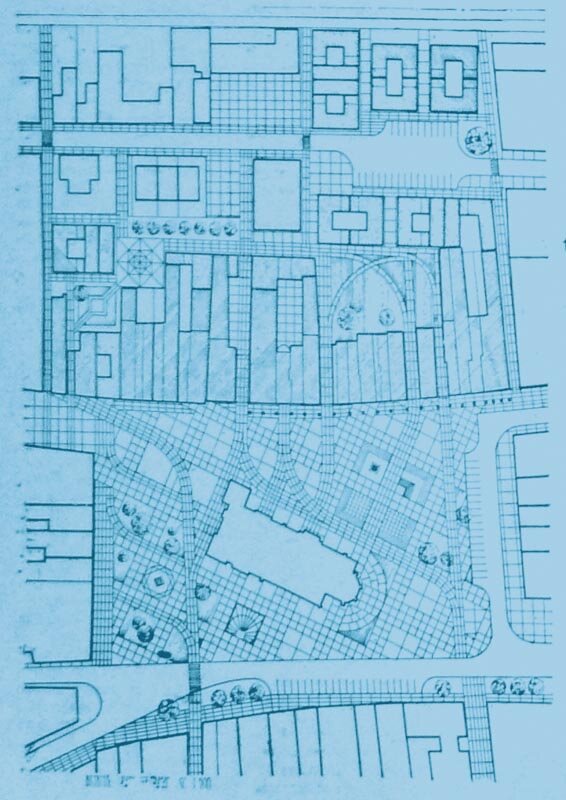
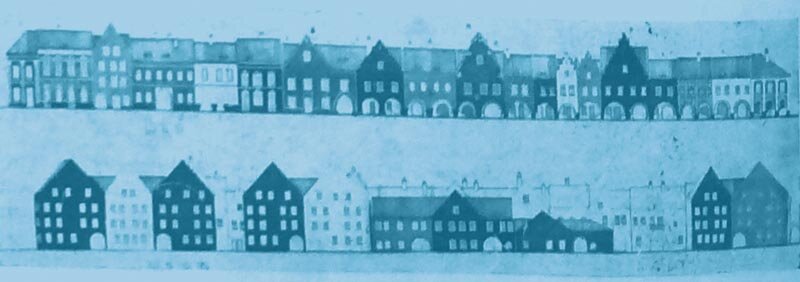
A Report on the State Examination of the February 1955session5 shows that there was "a minor preoccupation with the graphic presentation, often done in a formalistic spirit" of the diploma projects evaluated in that session. It is not very clear whether this indication was an evaluation criterion or just a detail in the assessment of the projects. Furthermore, the formalist graphics referred to seem to refer to a particular artistic style(beaux-arts-ist, modern, etc.), which had a negative influence and which attracted a pejorative image. "Formalist" could have been, in the context, any traditional rendering or purist technique of representation, adopted in the modernist vein, which has persisted, perhaps since the 40s. On the other hand, preoccupations with representational graphics were seen as pointless, decadent exercises that detached themselves from the "realism" illustrated by the projects themselves. Therefore, the plates were rendered photographically, with clear, strong shadows to emphasize classicist details or certain volumetric silhouettes. The environments were minimal, without human scale (the monumentality and gigantism of the buildings used precluded a reference to human scale). The plans tended towards technical representation, being treated in the same way as the working parts, with emphasis on construction details rather than textures of material or color. For facades or perspectives, watercolor was used as a flat tint, with clear outlines and no other "artistic effects", charcoal or Contépencils6. (...) (...)
Read the full text in issue 1/2014 of Arhitectura magazine
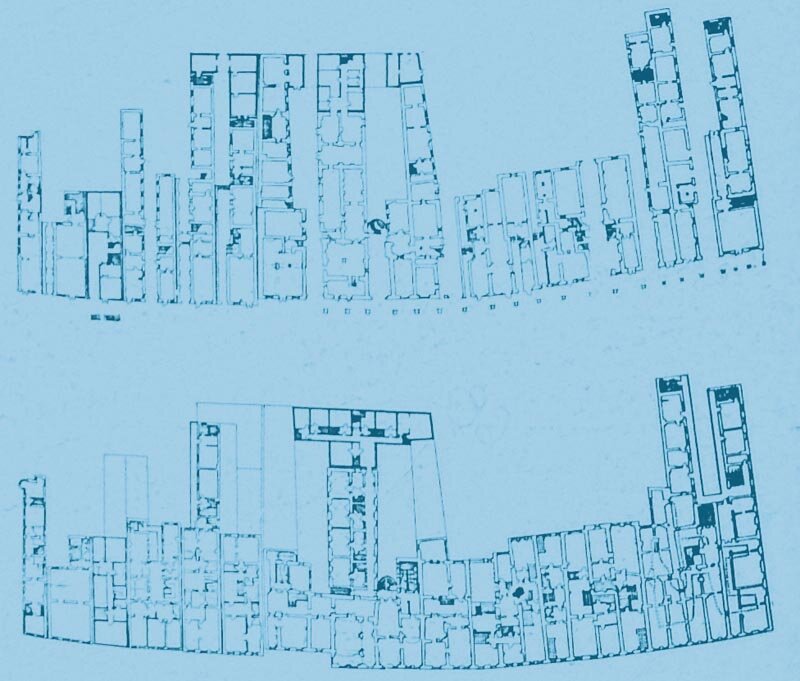
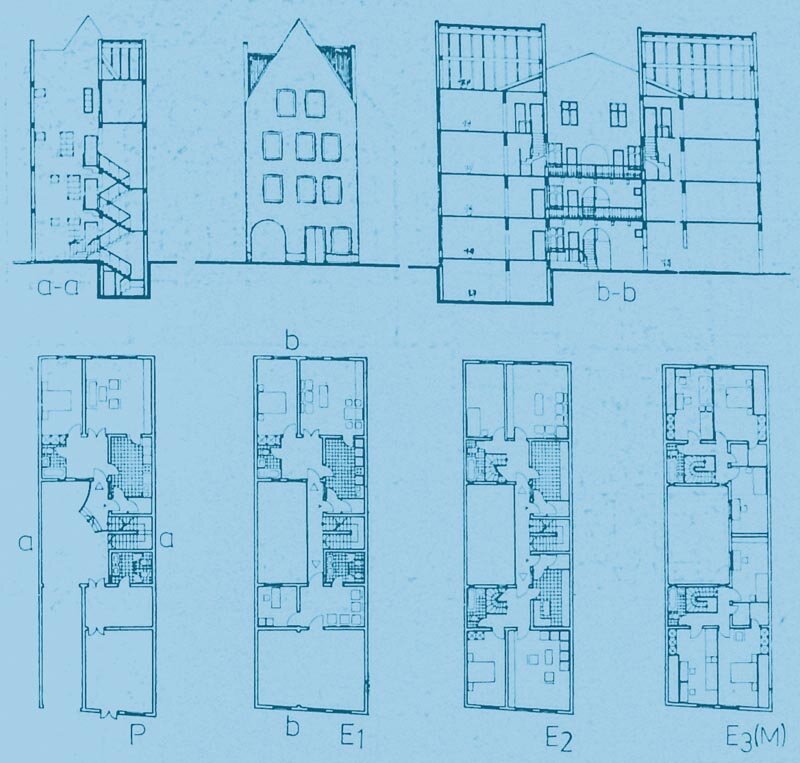
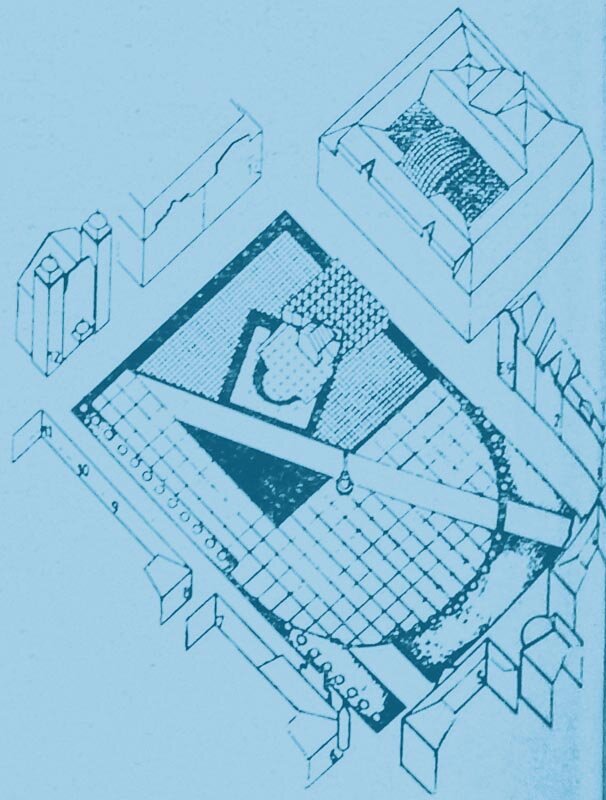
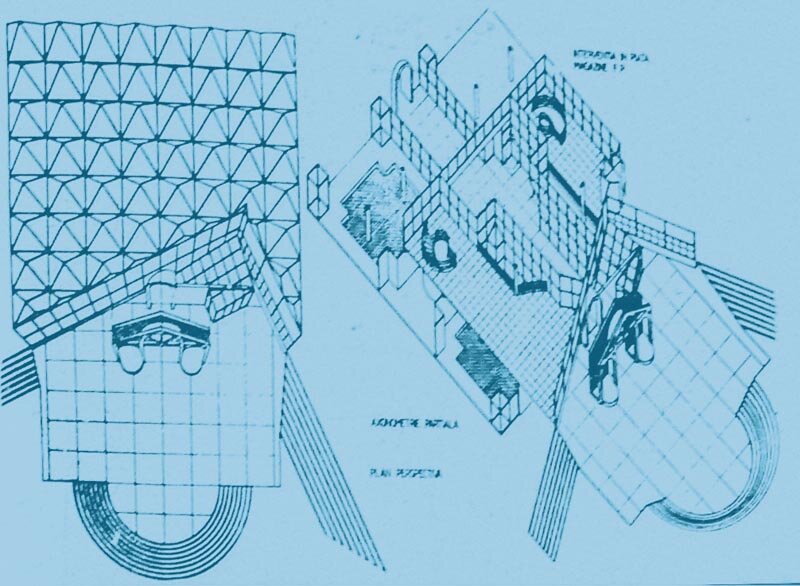
NOTES:
1 As is the case of the diploma project of the student-arch. Gh. Simotta, A hotel in a mountainresort (1916) Gh. Simotta later worked in the School as a teacher of Drawing - first year, being one of the youngest tutors of that period. At the beginning of the 1940s, "in the faculty ,studies of facades, registers, moldings, decorative elements were encouraged , prepared from the first year at the ornamental drawing workshop of prof. arh. Gheorghe Simotta. The representations were, as a rule , pictorial, with thick lines , reliefs and skillful shadows . Those gifted or captured by the pictorial presentations developed in this sense, became stars, the so-called "lăboși", courted for their rendering in colors, close-ups of real scenes with rich characters and vegetation , which gave scale to the volume, but also cleverly masked the purity of facade or perspective. Not once, the projects had presentations of scenes by Jeronimus Bosch, veritable tableaux. It was only a little later, with the call of younger professors and assistants to the professorship, that the projects-epura with black and white shadows and purified foregrounds multiplied. And, of course, also through the study of projects by Mies van der Rohe, Le Corbusier and the Bauhaus." [...] Constantin Iotzu, dean in the 1940s, was a studio teacher who "encouraged the 'lăboșii' and, towards 43-44, he was a little annoyed when he saw in some people a tendency towards a project drawing with thin lines, more streamlined, without crossing lines at the corners". Quoted by ENESCU, Ion Mircea, Architect under Communism, (2006), Bucharest, Paideia, p. 138.
2 "I cannot fail to emphasize the beauty of the History of Universal and Romanian Architecture course... It is a great loss that the blackboard sketches that accompanied this course could not be preserved and perpetuated. It would have been for all generations an example of high craftsmanship", quoted by Gh. Simotta, in BATALI, Luminița, "Catalogul și expoziția Gheorghe Simotta", in Observator cultural nr. 162/April 2003.
3 ENESCU, I. M., op. cit, p. 186.
4 COSMATU, Eugeniu, in Arhitecți în timpul dictaturii (2005), CUREA, Viorica, coord., București, Simetria, p. 13.
5 "Raport asupra Examenului de Stat din sesiunea februarie 1955", nr. 850/09.02.1955, in Examen de Stat 1955 (February-June), UAUIM archive, vol. 4, p. 273.
6 "In most of the projects, abstract, schematic and conventional formalist manners of presentation persist, with the search for brutal, graphic, decorative effects on paper. There is not enough emphasis on a rendering that is inspired by reality, that represents the interplay of volumes and materials in order to be understood by those who see the project. The graduates showed serious shortcomings in the mastery of drawing and watercolor techniques". MACOVEI, P., "Sesiunea Examului de Stat din Februarie 1952, la Facultatea de Arhitectură și Urbanism", in Arhitectura nr. 1-2/1952, p. 42.