Drawing in architectural design

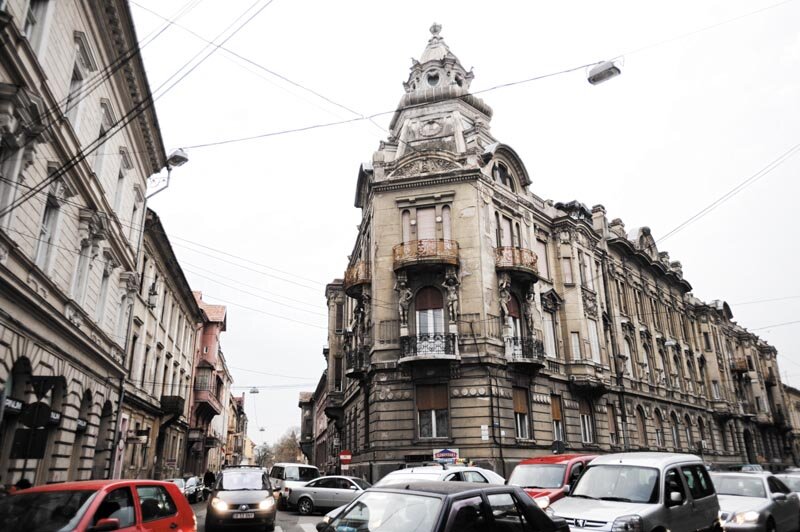
Promoter of a monumental architecture, imposing, sober, elegantly proportioned, reminiscent of imperial grandeur, with unexpected interior presences, where no refinement was foreign to him, Lajos Szántay1 is one of the famous architects of Arad of yesteryear.
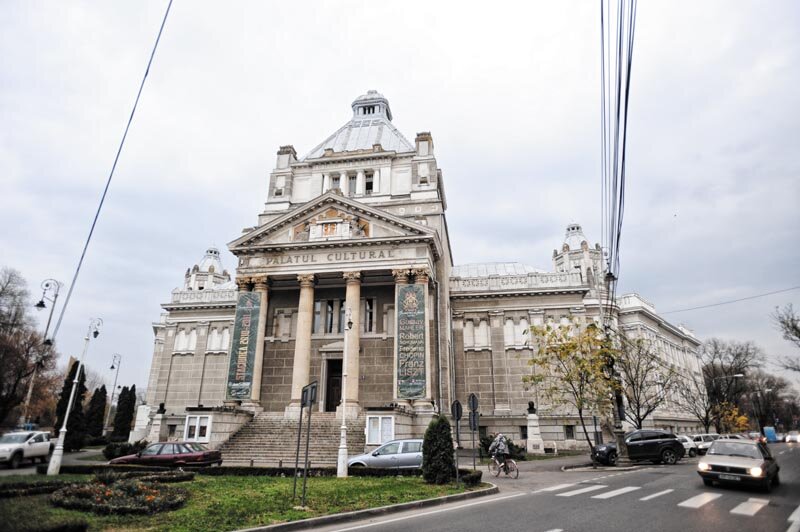
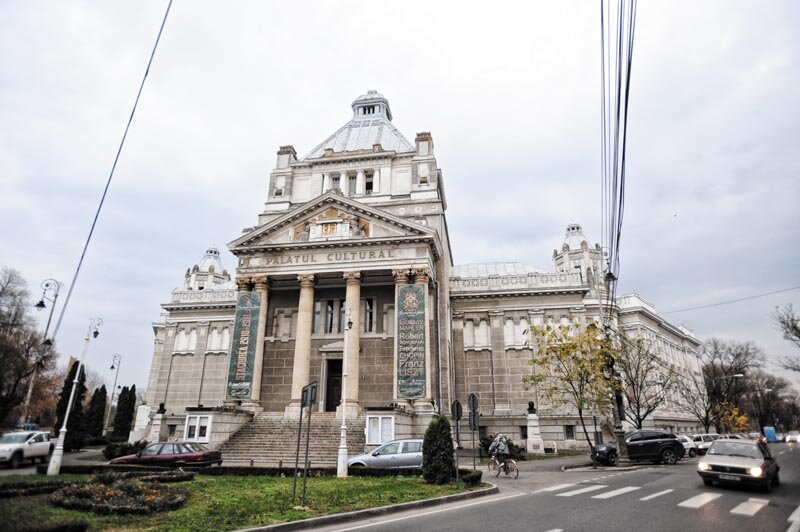
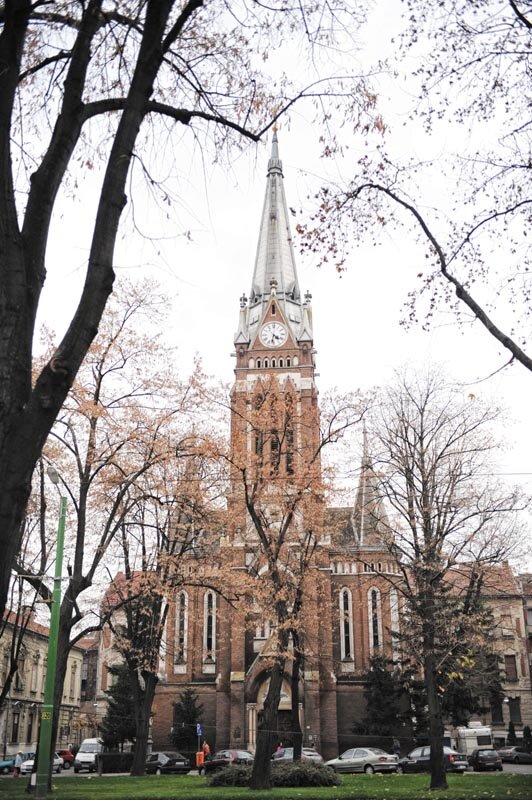
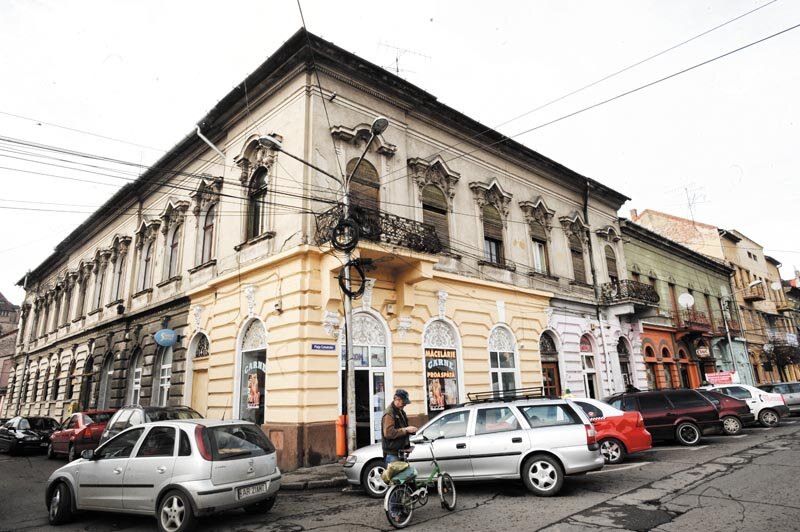
The Cultural Palace, the Lutheran Church, the Railway Station, the Cenad Palace, the Szántay, Bohuș, Kohn and Lloyd buildings are among the most famous buildings in Arad. Lajos Szántay achieved his greatest professional successes in the first two decades of the 20th century. Although his string of large public commissions was definitively interrupted by the First World War, he subsequently turned to industrial and residential architecture.
62522. Thus, in a memo3 written on July 29, 1957, Lajos Szántay wrote: "I was born on February 20, 1872, in Arad. From October 1, 1890 until March 16, 1895, when I obtained the title of architect, I attended the Faculty of Architecture at the Zürich Polytechnic. After finishing my studies, I served my military service in Arad from October 1, 1895 to October 1, 1896. Then, according to the documents in my possession, I worked for the master conductor GézaMajorossy in Budapest from April 1, 1897 to May 20, 1900, and in the design office of the architect professor Anton Hofhauser in Budapest from June 1, 1900 to November 1, 1901.
Following the death of my mother on November 2, 1902, I moved permanently to Arad, where I opened a design and construction office and took an active part in the development and beautification of my home town until July 26, 1914, when World War I broke out.
As a reservist belonging to the last contingent, I did my military service in Arad, during the war and the first part of the revolution, according to the demobilization order, until January 16, 1919, order given on the basis of the telegram of the War Commissioner Bohm.
As a member of Arad's building commission, both before and after the war, for many years, I took a disinterested part in examining the projects presented to the city and in the field researches related to them. The then director of the School of Arts and Crafts in Arad, A. Nesznera, decided to set up a construction course for 20 construction workers after the war during the winter months, in order to improve and enrich their specialized technical knowledge. The director asked me to teach the technical part of the course and to direct the drawings. I gladly and selflessly accepted this task.
I come from a family of craftsmen. My father, who was a carpenter, supported his family with his two hands. Both my father and I, as is well known, grew up and lived in a purely democratic spirit, and our outlook was always the same. As for myself, I must add that I am 85 years of age, with no wealth and no income, in poor physical condition and evensickly4 because of my age, and my wife is 75 years of age. We have been living together for 50years5.
My activity, which has extended to the city of Arad and its surroundings, I have sought to make it appropriate exclusively through my personal efforts and with the help of some of my disciples.
I was registered in the Romanian Architects'Corps6 under no. 92152, on July 7, 1933, appearing in the register as a recognized architect and receiving the card with the number 3.
The detailed description of my 13 years of design-build-competition activity, as well as that of 27 years after the war, is mentioned separately. For the documentation of my activity, I first list the larger projects and constructionsbelow7:
1. Bohus Palace (1912-1913)8;
2. The block located at the intersection of November 7 and Horia Streets Nos. 3-59;
3. Cultural Palace (1911-1913)10;
4. Lutheran or Red Church (1904-1906)11;
5. Textile Factory of Arad, UTA (1923-1924)12;
6. Grain and Commodities Warehouse (1925)13;
7. The Ferrous Materials Warehouse (1930) formerly Andrenyi;
8. Dermato-venereal hospital in Dobrogeanu Gherea Street14;
9. Former headquarters of the Chamber of Labor (1922);
10. Arad-Gai-Ciala pig farm (1926)15;
11. Block in Bd. Republicii nr. 8716;
12. Block in Bd. Republicii nr. 8017;
13. Health Bath, formerly Simay18;
14. Block of the former Arad Cenad Bank (1909)19;
15. The former Hunyadi block, 4 Liszt str., corner with Romanian str;
16. Diecezana, 18 Eminescu Street (1908)20;
17. Arad Gai Elementary School21;
18. Reformed Church, Calvin Street (1926)22;
19. Large block of the Lutheran Diocese, Luther Square (1904 -1906);
20. Cinema-theater, Bd. Republicii and Crișan23;
21. Block in Bd. Republicii nr. 9024;
22. Feher Block, Bd. Lenin, opposite the Palace of the Tribunal;
23. Villa Zoltan Szabo Baracka, Podgoria, Arad;
24. B. Lengyel's wife's villa, 23, Tudor Vladimirescu str. 23;
25-29 Funerary monuments of the families Petre Kornett, Ludovic Papay, Nicolae Doka, Francisca Sugar Faludi, in the Eternitatea cemetery in Arad, and of the Seidner family, in the Jewish cemetery in Arad.
Two-storey buildings25: Roth - Cloșca street, Fiedler - Aviator Georgescu street, Karel - Eminescu street, Soor - Alexandru street, Bing - Bd. Republicii, dr. Sârbu - Gh. Lazăr.
One-storey buildings26: Sebesy - Anatole France Street, Nemeș - Bd. Republicii, Brasch - Crișan street, Brunner - Ceaikovsky street, Dr. Kopf - November 7 street, Frank - Eminescu street, Stoll - Alexandrescu street, Breda - Bd. Armata Poporului street, Romanian Orthodox Parish - November 7 street, Romanian Orthodox Parish - Simion Barițiu street, Reiner - Soarelui street, Haasz - Bd. Dragalina, Deutsch - Bd. Armata Poporului, Seidner - I. Chendi street, Bleicziffer - I Chendi street, Karmiol - Nemet street, Polcean - Șincai street, Gabor - Bd. Armata Poporului.
Ground floor houses27: Szechenyi - Potier Street, Kontz - Dobrogeanu Gherea Street, Schoor - I. Chendi, Foldes - Soap Factory, Micălaca Nouă, Aradul Nou Town Hall, Lengyel Oil Factory - Calea Pecica, Butchers' Union - Terezia Ocsko Street.
In addition to the above, between 1900-1950 we designed and executed 41 one and two-storey buildings in Arad and 14 buildings in the region.28
Lajos Szántay together with Milan Tabacovici, with whom he was in a real "competition", together with Josef Steiner, Lajos Kövér, Joszef Szabo, László Dömötör, Sándor Reisinger, Tibor Köver and Zsigmond Fodor, finalized the architectural stylistic vocabulary of Arad in the first half of the 20th century.
NOTES:
1 Born Lajos Szántay (1872-1961), son of Lajos and Terezia Szántay, he changed his name to Ludovic Szántay after receiving Romanian citizenship.
2 Gheorghe Lanevschi, Arhitectul Szántay Lajos, monograph-album, Ed. Eured Association, Arad, 2012.
3 Archives of the Romanian Union of Architects, Merit Pensions fund, file architect Lajos Szántay Lajos. In July 1957, in order to qualify for the U.A.R. pension, the architect wrote a short autobiography to which he attached a list of his projects and 23 photographs. Between May and August 1960 a second file was drawn up, this time for the award of a merit pension, containing: the same brief autobiography of 1957 reproduced in this text, a list of projects to which he had made some additions, period photographs and sketches.
4 Ibidem, from the fall of 1957 he received a monthly pension which varied between 395 and 500 lei per month, but which did not always arrive on time. On November 26, 1960, the Council of Ministers of the R.P.R. decided to grant a merit pension of 2,000 lei per month, as the architect fell under the provisions of Decree 292/1959. Lajos Szántay died in the spring of 1961 without receiving this right.
5 Ibidem, in 1907 Lajos Szántay married Barbara Vilma Rozalia Csank, born in 1883. Details about the Szántay family on http://www.miscarea-aradeana.ro
6 Law, Regulation and Constitution of the Romanian Architects' Corps. Tabloul arhitecților înscriși până la 1 decembrie 1933, Tipografia Voința, Bucharest, 1933, p. 86.
7 Archives of the Union of Romanian Architects, Fonds Pensii de Merit, file architect Lajos Szántay, both in the Documentation for the activity carried out, drafted on July 29, 1957, and in the Documentation for the activity carried out, drafted on August 20, 1960, the following are not mentioned: Arad Railway Station (1910), Kohn Palace (1906), Benoid factory (1909).
8 Palace of Ludovic Bohuș - historical monument, Bd. Revoluției, 1-3 Vasile Goldiș Street and 1 Romanaului Street.
9 The architect preferred to write only the address of the Szántay Palace (1905-1912), not the name of the monumental building located at the intersection of Horea 3-5 and Episcopiei 2.
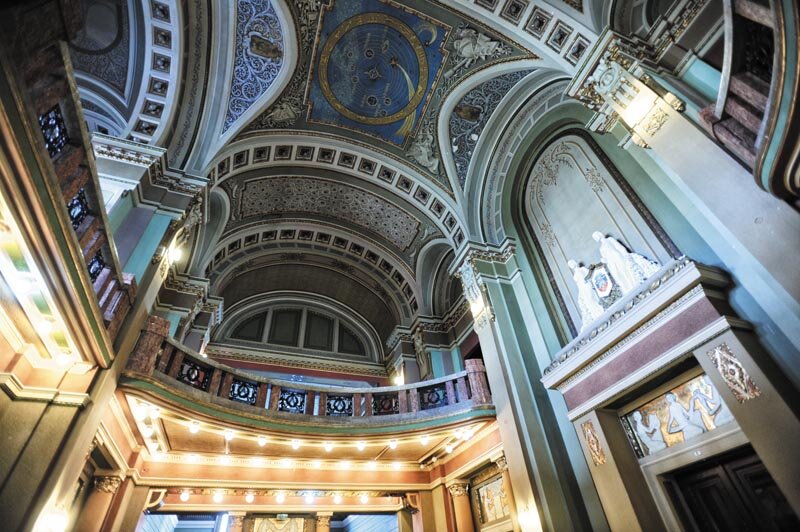
10 Lajos Szántay drew up the entire design of the Cultural Palace, the interiors, the furnishings, all the detail drawings and supervised the construction works. He also landscaped the park of the Cultural Palace and the terrace of the promenade on the banks of the Mures.
11 In 1904, Szántay's design won the international competition for the Lutheran Church in Arad, and he subsequently supervised the works.
12 For the Arad Textile Factories he designed the spinning mill, the printing press, the weaving mill, the machine house, the bleach-house, in total "3,000 square meters of reinforced concrete skeleton". In 1931 he also designed the workers' housing for UTA and 3 material warehouses.
13 The 7-story Grain and Commodity Warehouse at the Railway Station had a capacity of 1,000 wagons, machine plant, water tower, elevator and offices.
14 Dermato-venereal hospital had: a separate ground floor building, separate kitchen and separate staff building, garage.
15 The pig farm had a capacity of 2,500 head (paddocks, baths and sewage, engine house, feed store, mill, water tower and 3 separate buildings - 1 for offices and 2 for workers' housing).
16 Lloyd Palace (1910 -1911), Bd. Revoluției 87, former headquarters of the City Party Committee.
17 Bd. Revoluției 80.
18 Simay public bath, equipped with steam bath, hydrotherapy, swimming pool and heliotherapy.
19 Current headquarters of the National Bank, Bd. Revoluției, 72, historical monument.
20 The building of the Orthodox Diocese's shop, it also had a printing house in the courtyard.
21 The school in Arad-Gai had 3 ground floor buildings.
22 Conversion and extension of the building.
23 Movie theater with a capacity of 1,000 people, not realized because of the outbreak of the First World War.
24 Bd. Revoluției 90.
25 The list of buildings is reproduced exactly from the Archives of the Romanian Union of Architects, Merit Pensions Fund, Lajos Szántay file, Documentation for the work carried out, July 29, 1957 and Documentation for the work carried out of August 20, 1960, without updating the street names and postal numbers in 1957 or 1960, as the exact addresses are not specified.
26 Ibid.
27 Ibid.
28 Archives of the Romanian Union of Architects, file no. 1102, dated October 22, 1954.