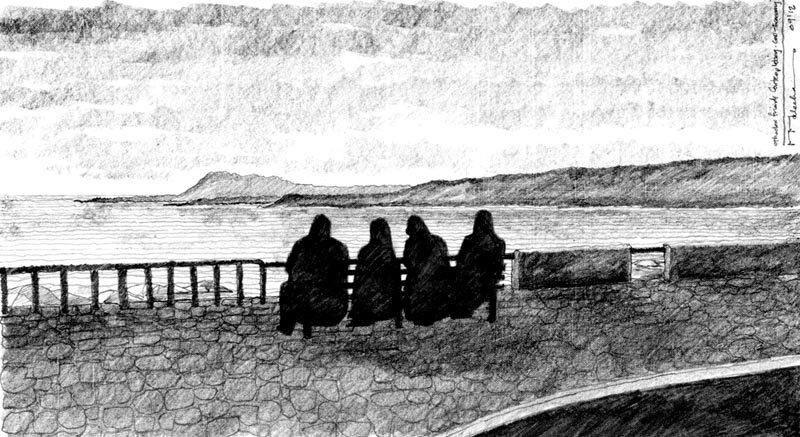
Drawing in architectural design

I have made it a habit that every time I am given a homework assignment, the first thing I do is open the Explanatory Dictionary of the Romanian Language and read the definition of the word or words that make up the assignment. This is what I did this time. I quote:
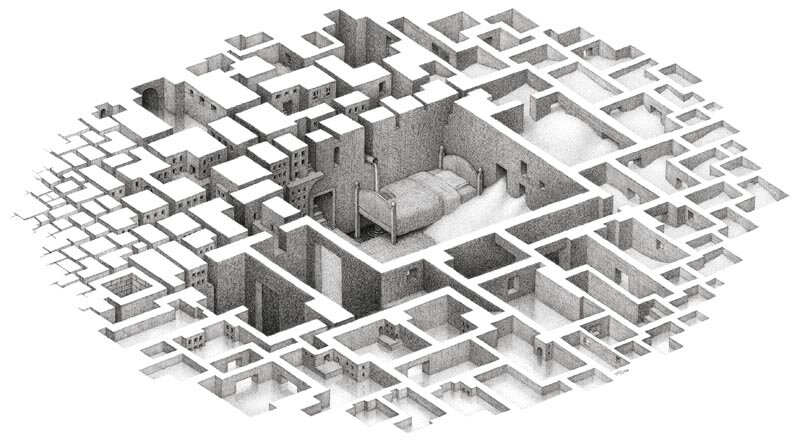
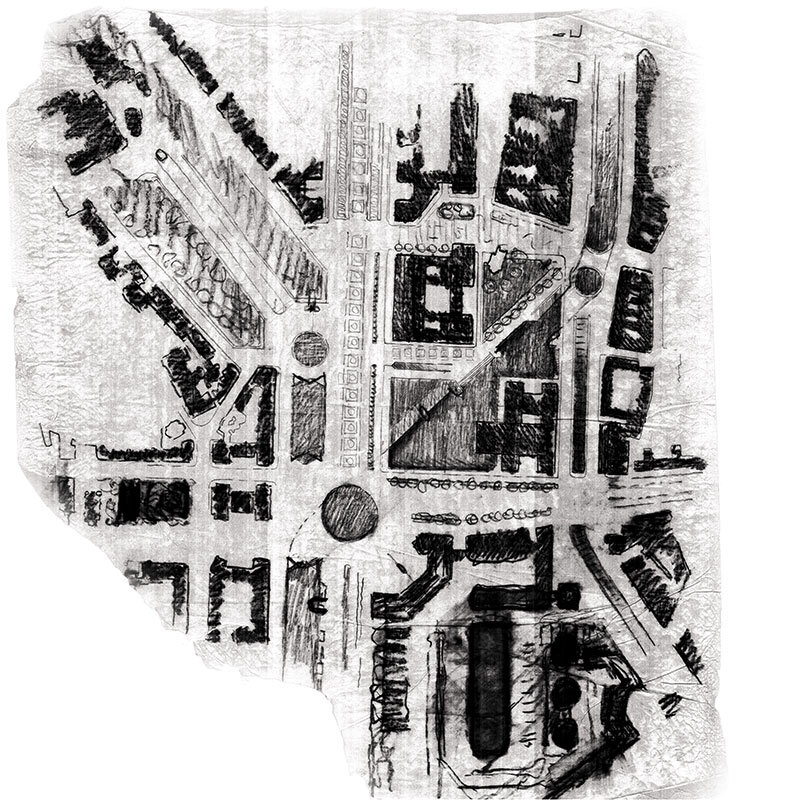
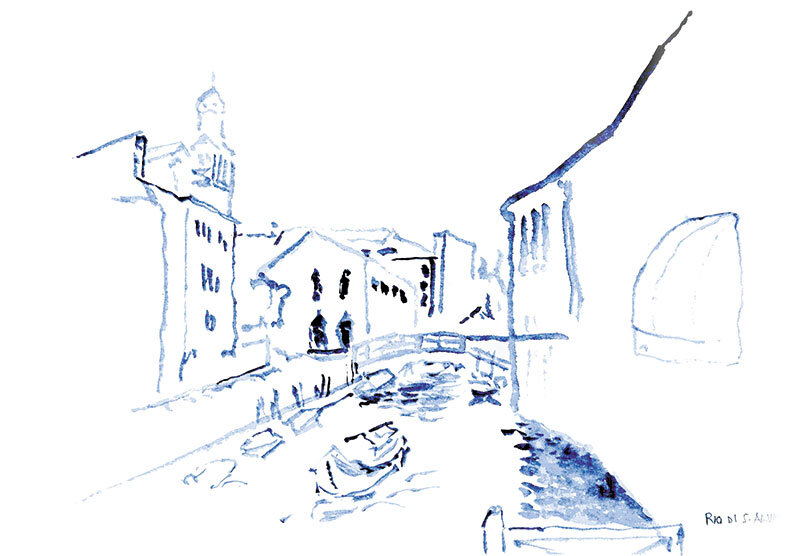
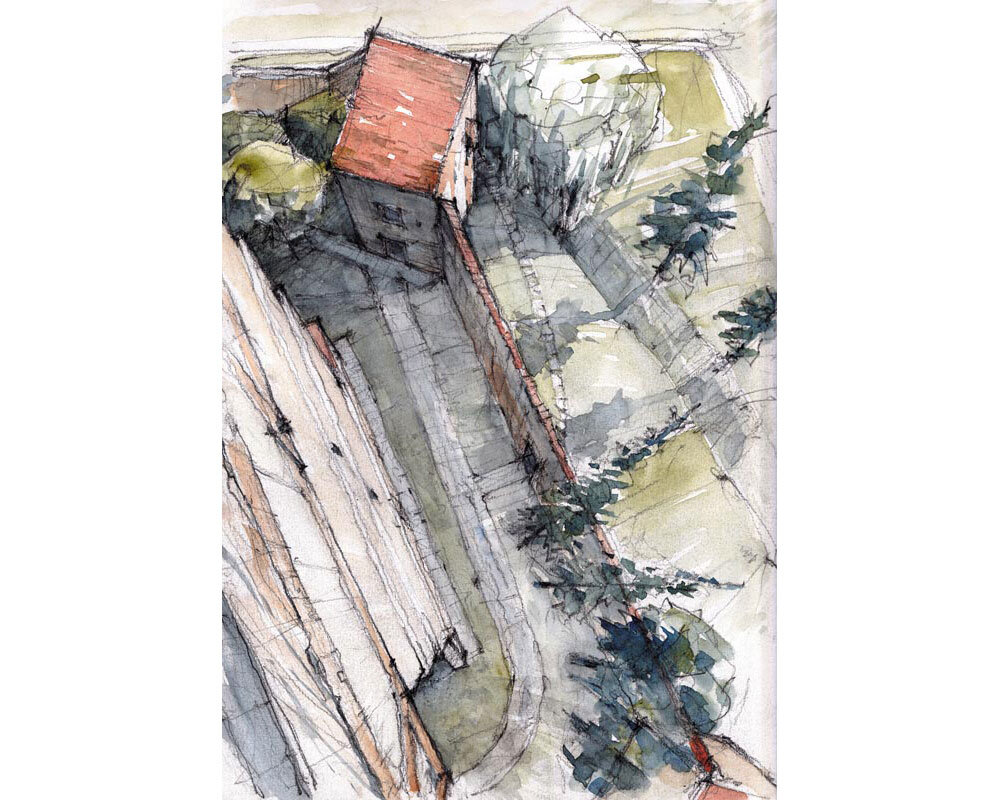
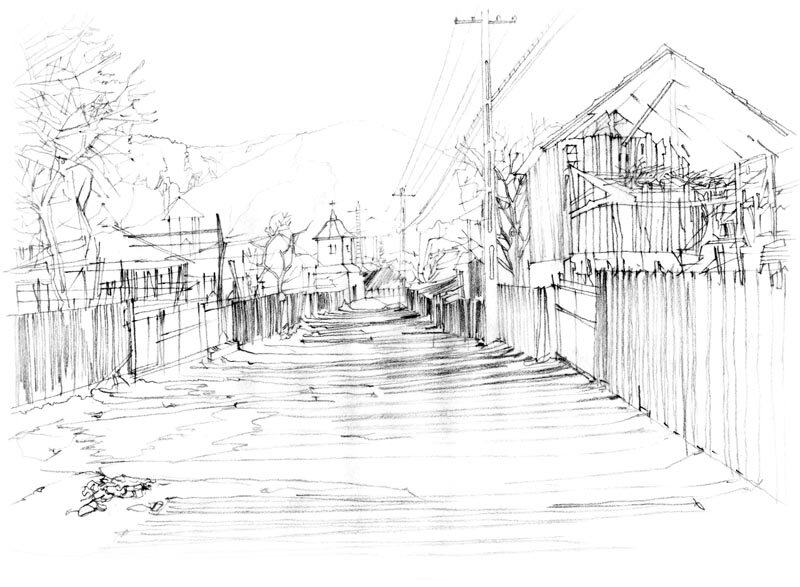
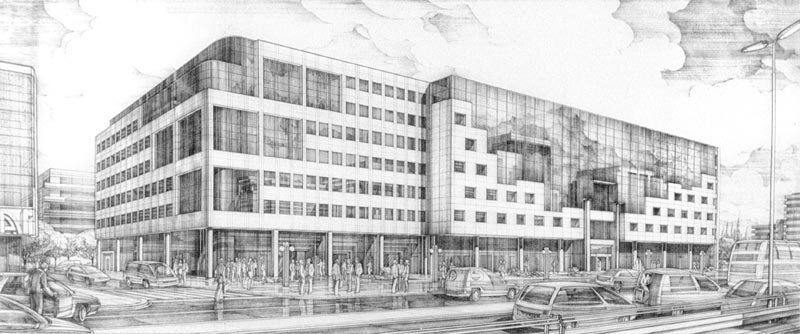
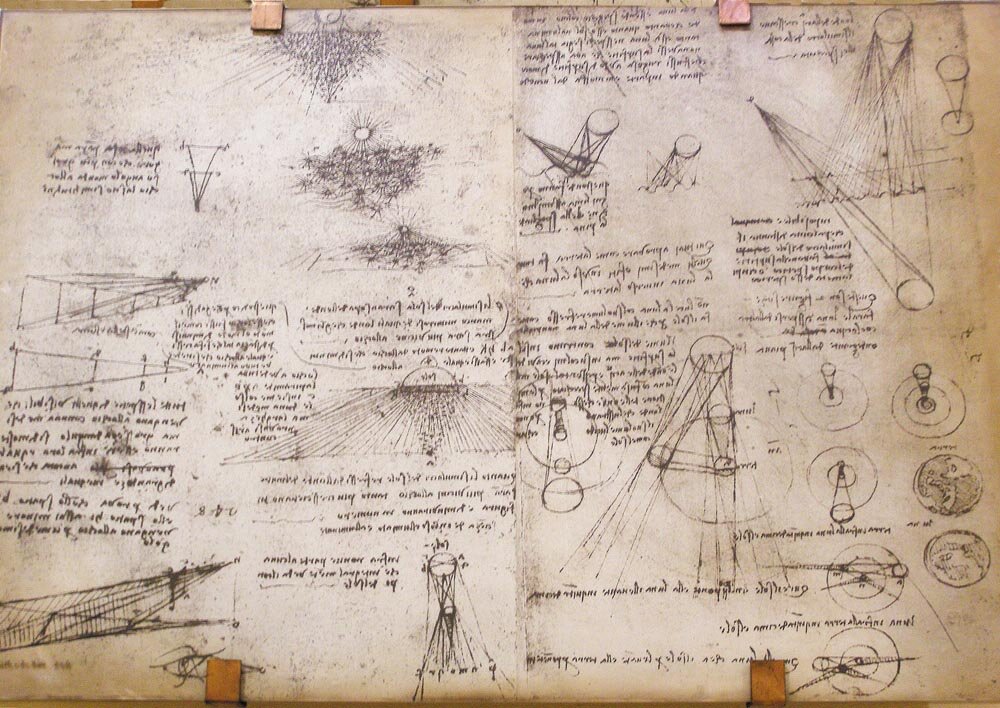
"DESÉN, dessins, n. 1. A graphic representation of an object, figure, landscape, or being on a flat or curved surface, by means of lines, dots, dots, spots, symbols, etc. 2. The art or technique of drawing. ♦ Technical (or line) drawing = the representation of technical objects (parts, machine parts, etc.) by drawing (1) for the purpose of manufacture. 3. Plan of a construction. 4. The ornamentation of a seam. [Pl. and: drawings - Var.: desémn s. n.] - From fr. dessin."
This definition gave me a starting point - LINE.
The line, in plastic creation, is the fundamental ordering principle, it is the principal means of communication. All the others - value, color, materiality, composition, rhythm - are subordinate to it. A line is truly remarkable when it springs from creative intuition and erudition. The joy it gives is its tension, poetry and artistic expressiveness.
Each of the great creators, whether we think of painters, architects, designers or any other visual artists, have made their mark with a particular, unique, original line, even when they have subjected it to the fashion of the times, if they were not themselves the fashion setters of their time.
God the creator is the most loved, desired, feared, discussed and adulated "plastic artist".
Man has only deciphered the mysteries and applied them in his creations.
Nature grows according to the laws of the string expressed by Fibonacci and includes the relationships of the golden numbers - considered divine. Man, in turn, contains these laws within himself. The human body, beautifully built of balanced volumes, with expressive relief and spatial structures, has a composition which tantalizes the senses. It thus thrills the soul and uplifts the spirit, regardless of the evolution of aesthetic landmarks in time and space.
However, harmony, clarity, vitality, boldness and aspiration towards an ideal are aesthetic criteria that have triumphed and stood the test of time. The creative vibrations of the human artist, who has thus become a maker of lines, dots and shapes, shrouded in light and shadow, offer countless aesthetic and profound joys. But when a creator falls into mannerism, he deprives us of the pleasures of plasticity, spatiality and sensitivity. At the same time, he is a prisoner of his own barrier and closes every door to his works. From the universe of spatial forms, the artist selects those that harmonize with himself, that are ordered by particular laws, with their own technical procedures and language, those that express the astral moments of his thought.
Man is the measure of all things! All his creations are made, evidently, with himself as their yardstick and standard. But Creation - nature, the universe - is not created after man. Man is part of creation. What, then, is the measure of creation itself, of nature and of the universe, in which man experiments with all sorts of measures, often coming to the conclusion that it is he himself who is most worthy of consideration? And what is man's measure when he succeeds in overcoming his condition, when he comes to see beyond the pre-stabilities of the social? When man remembers himself, the true man, he realizes that God is the measure of things. Then he creates masterpieces. The golden number has been and is the benchmark of the most beautiful pyramids, temples, cathedrals, castles, fortresses, sculptures, paintings, engravings, tapestries, tapestries, jewelry, ironwork, installations, buildings, photographs, film frames, book illustrations, gardens, vestments, and the examples could go on. Even newer arrivals in the consumer market promotional media - such as banners, flyers, PowerPoint presentations and the like - to catch the eye of potential buyers, at least consider a gold section. Either unwittingly or as a result of a thorough knowledge of plastic analysis, successful artwork, from architecture to web design, is subject to the golden number rule.
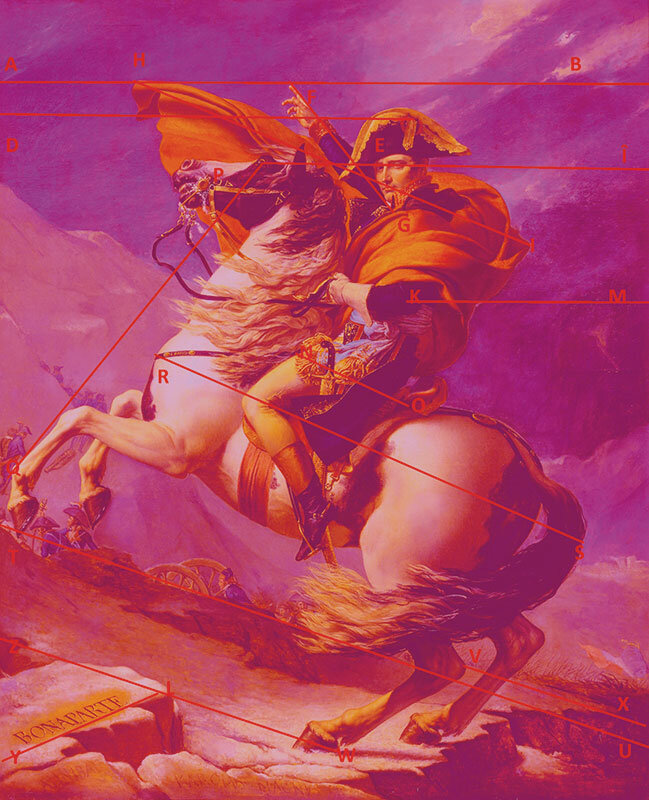
For those who don't know, the golden number is 1.618033... and the decimals continue to infinity, hence the association with divinity. It is the most important mathematical and artistic concept. Its origin is unknown, the earliest evidence for it comes from the pyramids of the Egyptians, but the Greeks gave it a name - 'fi' - after the architect of the Parthenon, Phidias. "The golden ratio is regarded as particularly satisfying because of the way it combines unity with dynamic variety. The whole and the parts are perfectly proportioned, so that the whole predominates without being threatened by a split, while at the same time the parts retain a certain autonomy"1.(...) (...)
Read the full text in issue 1 / 2014 of Arhitectura magazine
NOTE
1 Rudolf Arnheim - "Art and Visual Perception", Polirom Publishing House, Art Collection, 2011.