
Let's talk about architecture schools
Thematic articles
Good practices for saving and reusing old wooden churches Boz, Târnăvița, Cervicești
TEAM OF VOLUNTEERS:IOANA BĂNICĂ, MIHAI -BUCUR, DAN CIOCLU, TUDOR ELIAN, RALUCA -HERMAN, ANDREEA -DANIELA MACHIDON, -RĂZVAN MOLDOVEANU, DANA NINULESCU, MARIA DARIA OANCEA, ALINA -PANAIT, RALUCA -PEȘTIȘANU, SERGIU POPA, SIMINA ANA-MARIA -PURCARU, MATEI EUGEN STOEAN, IOANA TILICEA, MARA VASILE
PHOTOS:TEAM OF VOLUNTEERS
THE 60 WOODEN CHURCHES PROJECT, INITIATED IN 2009 BY THE ARCHITECT ȘERBAN STURDZA, THE THEN PRESIDENT OF THE O.A.R., SUPPORTED BY THE DALA AND PROPATRIMONIO FOUNDATIONS AND THE MUSEUM OF THE ROMANIAN PEASANT, UNARTE AND UAUIM, AIMS TO IMPLEMENT URGENT PROTECTION AND RESCUE MEASURES, THROUGH ESSENTIAL INTERVENTIONS ON PLACES OF WORSHIP IN SOUTHERN TRANSYLVANIA AND NORTHERN OLTENIA IN ADVANCED STAGES OF DETERIORATION
Thus, it is proposed to carry out immediate, punctual, "SMURD-type" interventions to ensure the constructive integrity of the churches for a while and, above all, to prepare possible conservation or restoration processes.
This approach came as a natural response to the situation of wooden churches revealed by research carried out from 2007-2009 in the counties of Hunedoara, Sibiu, Gorj and Valcea, when some 60 places of worship were documented, historical monuments in an advanced state of decay - some of them even in a state of collapse. Most of these were built in the 18th and 19th centuries. However, despite their undeniable sacred, symbolic, artistic and architectural value, only a fifth of these churches continue to be used for worship.
The wooden church in Pojogeni was relocated 15 kilometers from its original site within the same community. Also, the collapse of the altar of the church in Urși led to the initiation of a large-scale restoration project of the architecture and the exterior and interior frescoes of the church, through a multidisciplinary collaboration between the team coordinated by conf. dr. dr. arh. Ștefan Bâlici and the team of restoration painters led by Prof. Dr. Dan Mohanu.
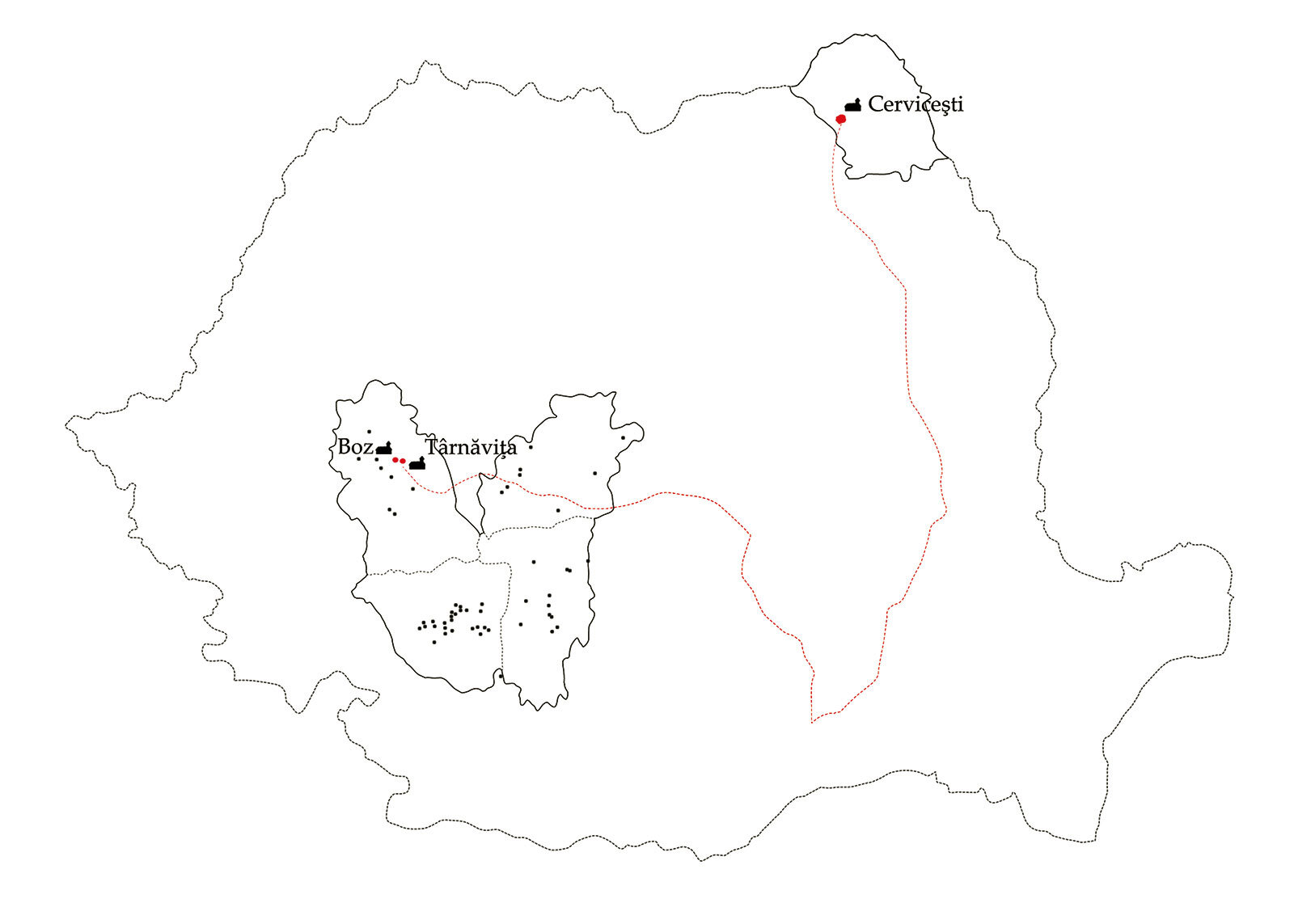
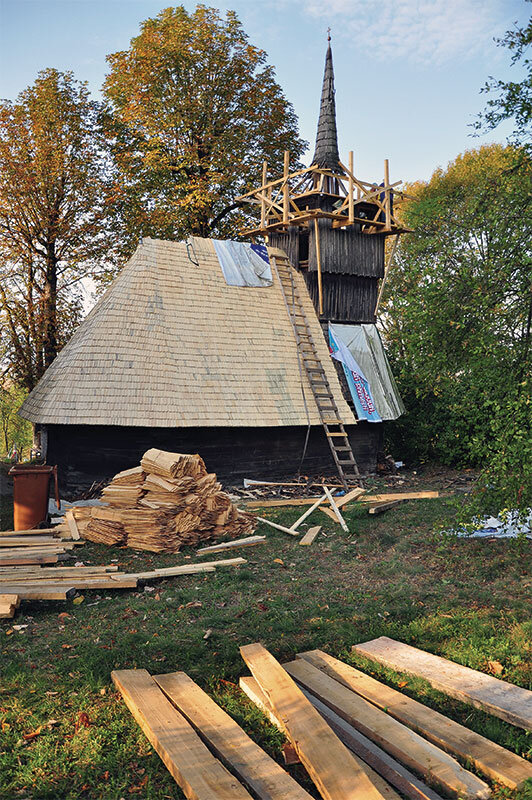
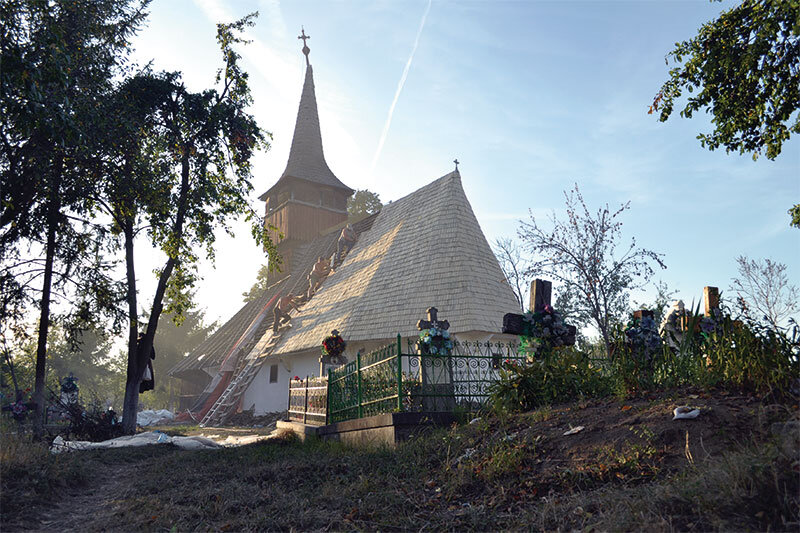
This long-term project was continued with the opening of a new series of building sites at several places of worship in an advanced state of disrepair and no longer in use, especially after the new walled churches in the villages were erected. These include the wooden churches in the villages of Boz and Târnăvița, Hunedoara county, and Cervicești, Botoșani county, where emergency work was carried out to replace the wooden roofing. The work started in the three villages also made it possible for teams of volunteer architects to be present in the villages. They set out on the road to document and supervise the building sites, and undertook on-the-spot actions aimed at reintegrating the wooden churches into the life of the communities in which they are located.
US AND THE VILLAGE - OR WHY MORE THAN SITE SUPERVISION?
At the initiative of ProPatrimonio, in August 2012, I was part of a group of young people with diverse backgrounds (students, architects, artists, geographers) but with similar goals, to answer a concrete question: what does it mean and what does it entail to form a team of volunteers in a very short time to go and supervise the sites of changing the coverings of the three wooden churches, to document the state they are in and to deepen the rural context around them?
Alongside this question, we were also concerned with the human side that led to the current situation of the churches, the causes of their abandonment by the community, raising new questions: what response can we offer to these problems, how can we act to improve them and how can we restore the worship function of the wooden churches, which have become uninhabitable? These themes were accompanied by a continuous internal debate about our role in the villages and our right to intervene within a community to which we did not belong.
We arrived in the villages in September and October, when the construction sites started, and from the very beginning we were in contact with both the craftsmen and the community members, who came to support the work. The research undertaken and the contacts established with villagers on the spot provided us with otherwise hard-to-acquire data on churches, villages and their surroundings.
We were then able to observe that the main problem leading to the physical deterioration of the churches was lack of use, and that the intervention to replace the reeds only partially improved their condition. In the absence of a constant maintenance concern, the recurrent deterioration process would lead to the return of the original problems in the near future. Community reinstatement of churches is therefore at least as important as ensuring their physical integrity, but this is much more delicate and difficult to put into practice.
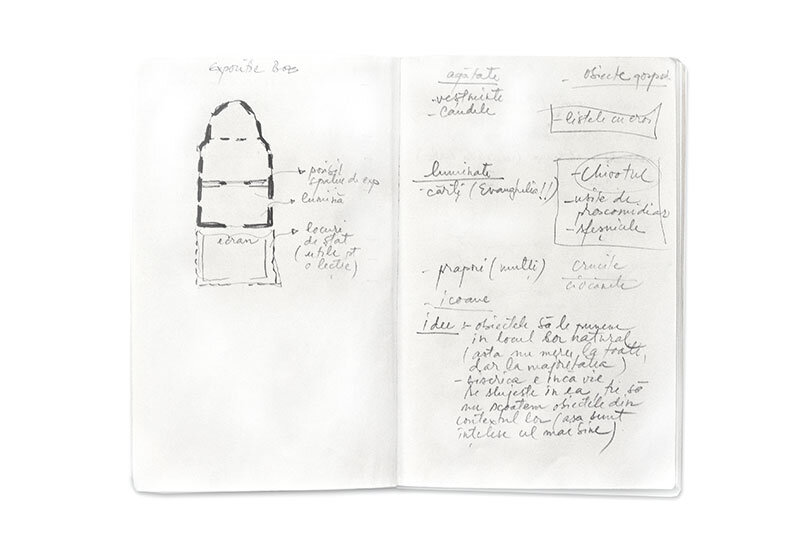
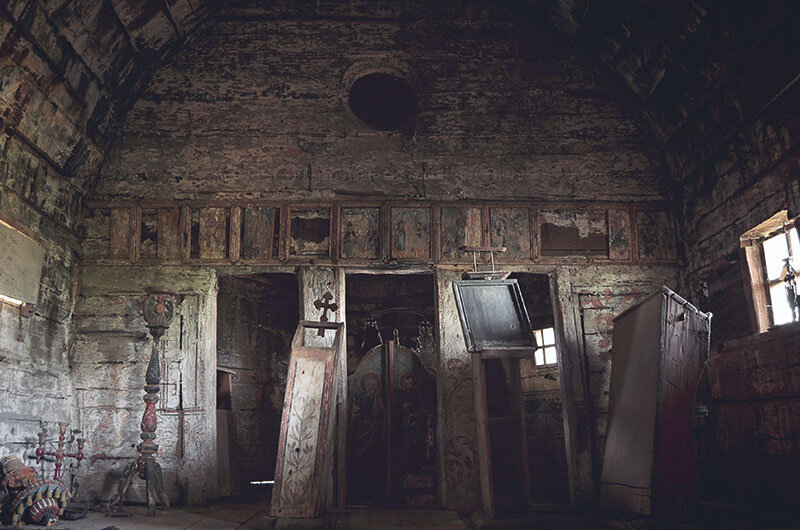
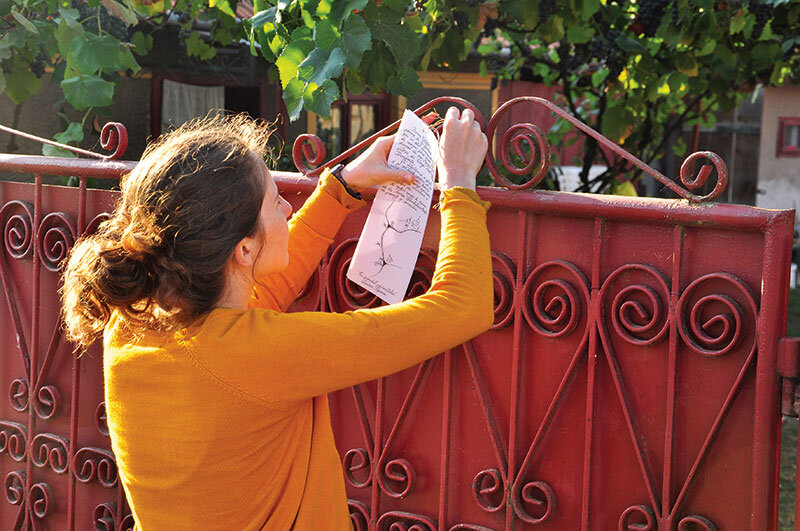
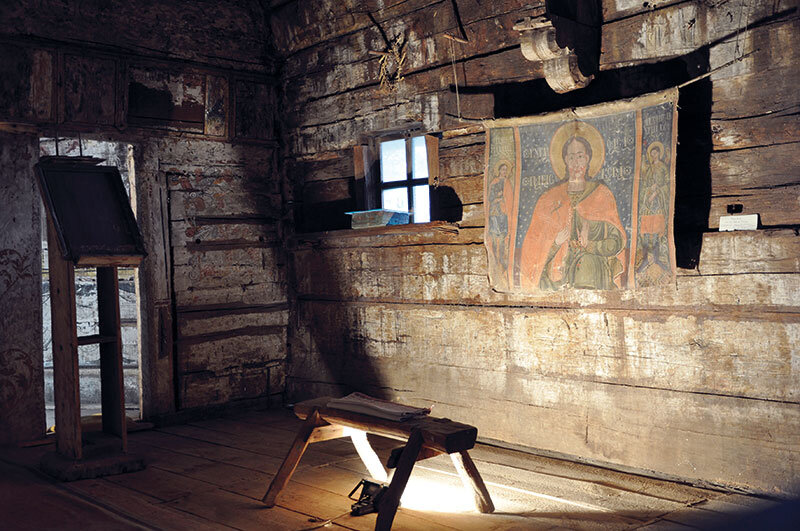
From the outset, the emergency site was presented to us as an immediate need of the churches, but also as a means of our presence in the village, as an important process that needed to be supervised, but also required a greater involvement of us alongside the churches, in the community. Our work was therefore also oriented in parallel towards finding as many opportunities as possible to be among the villagers and talk to them directly or through our projects there. Among these, the most important were precisely those of meeting the people: we organized exhibitions of religious objects from the heritage of the wooden churches, visits to village schools and we managed to work with children - things that allowed us to make our presence felt, to befriend the villagers and to convince some of them to get involved in the project.
CONTINUING THE PROJECT IN BUCURESTI
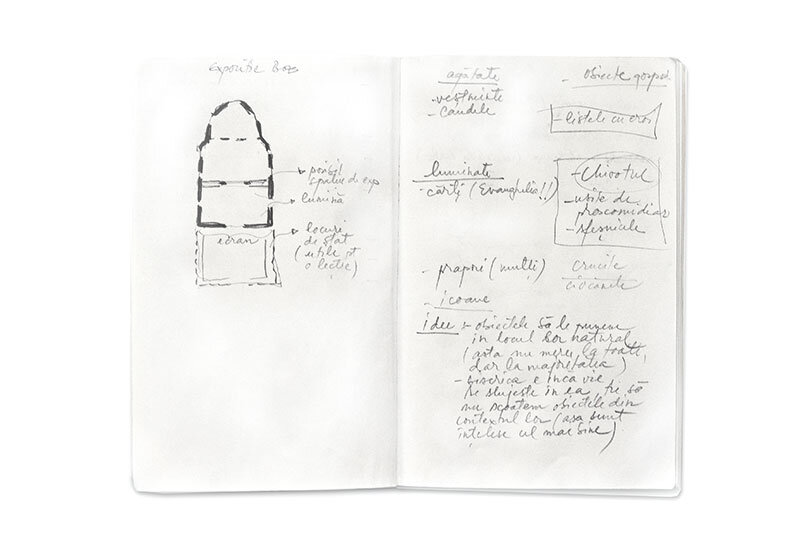
As a natural follow-up to the actions undertaken in the three villages, the exhibition "Wooden Churches. Re-establishing in Community. Boz, Târnăvița, Cervicești" was hosted from December 2012 until the end of February 2013 at the Frederic and Cecilia-Cuțescu Storck Art Museum. Conceived as an environment for action and debate, during the three months, activities were carried out on several levels, alongside the exhibition itself: thematic conferences with guests representing various specialties, carol evenings, Romanian film evenings and the carpentry workshop - all of which allowed for the active participation of specialists in the field, but especially the public, on the basis of the proposed topics, formulating useful conclusions for drawing some directions for future interventions.
Thus, both the exhibition and the related events had from the very beginning the aim of continuing in Bucharest the projects started in Boz, Târnăvița and Cervicești, as well as finding the most complete answers. Thus, both the exhibits and the objects constructed during the three months at the carpentry workshop will return to the three villages, where, in the first instance, they will draw attention to the need to continue this project and, above all, to involve the communities throughout its course.
DEVELOPING A STRATEGY
In addition to concrete projects, our approach has also involved looking for a way of working in the villages, based on the hope that an emergency intervention, coupled with community revitalization actions, could lead to the recovery of the role of old wooden churches in the community, the involvement of local craftsmen in restoration activities, and the economic revitalization of rural areas. With the emergence of newer and more spacious places of worship, it is becoming increasingly clear that abandoned wooden churches will not find a meaning in the village without regaining an effective use in the community. The reuse of old buildings is thus becoming a sustainable development issue: in addition to their spiritual significance, abandoned churches could prove to be cultural as well as economic resources that could empower the villages in which they are located - not only through the development of rural tourism, but also by rediscovering and restoring the usefulness of forgotten local crafts, teaching people to care for their churches.
Finding intuitive tools to interact with people has been a defining quest in our search. We chose to use different pretexts (activities and objects we produced) to get to know the villagers, to understand them, but also to make them discover, to be curious, to realize the value of things they start to forget (the churches themselves, their paintings, customs, traditions, etc.), although they might still be relevant to them.
In this context, we have developed over time an open-ended strategy, based on targeted actions oriented towards these goals and developed on three levels: preparation, information, involvement. By taking care of the interior of the churches and preparing them for visitors, as well as our prior documentation and field research, we were able to understand the context for announcing our arrival in the village and starting a dialog with the villagers.
Thus, we began to call them back to the old churches and arouse their curiosity - first for the newcomers and then for our message. In the end, both our presence and our activities on the ground were due to the involvement of several villagers who became important actors and intermediaries between us and the villages: working with the church (parish priests) and the local school (children and teachers) were beneficial and easy ways to get information about the villages and to start dialog with the locals.
The exhibitions organized in the villages, but also in Bucharest, the objects, the small projects, the visits organized in the schools and the discussions with the villagers were all tools organized on these three levels. In this way, we have achieved punctual actions that are specific to the place, unrepeatable, the results of common principles that can be extrapolated. Opting for an open-ended strategy, without a precise finality, but following a clear vision, gave us great freedom to act, but also the unity of the various interventions by respecting clear principles:
1. local people and values are at the heart of the project; any intervention must speak to them in a respectful way about our intentions, starting from a desire to discover together what their real needs are;
2. the interventions involve an exchange in which all the people and institutions involved should benefit (culturally, materially, etc.);
3. each project is a pretext for being present in the village and a means to fulfill our purpose;
4. each project becomes the context for the next action, independent of it, but building on the success and foundations laid by the previous project (information gathered from the field, relationships established with villagers, building materials acquired, etc.); in this context, any activity or production that succeeds in moving things forward should be seen as a potential project within the strategy - including actions that do not produce concrete objects;
5. "rural intervention" follows similar rules as in the city, but in a totally different context: the natural gestures of the village should be understood and speculated; each element in the rural collective space has its own specific utility and symbolism. By understanding this, the project offers itself to the village as a gift and allows the designers to learn from its successes and failures;
6. being both gift and pretext, rural installations have an ambivalent status: they are both valuable and worthless - valuable primarily for the immediate but also symbolic purpose they embody; together with limited financial resources, this makes the act of design all the more responsible, calling for low-budget solutions, the reuse of recovered materials and the most rational use of those materials.
CONTINUATION OF THE PROJECT. CONCRETE GOALS
The main aim of the project remains the conservation of wooden churches in a critical state through emergency interventions, with a view to restoring them as soon as possible. However, it is becoming increasingly clear that if abandoned churches are not maintained through utilization, they will only repeat their path to extinction. The long-term involvement of local actors (public authorities, priests, sponsors and villagers alike) as heritage managers seems to be the only chance at the moment of saving the churches, but also a chance of saving the villages in which they are located, by developing the countryside independently of the city, through local values and tourism.
In continuation of the activities carried out this fall and winter, the projects started in the three villages and the actions carried out in Bucharest will be continued in the summer of 2013 by multidisciplinary teams of architects, sociologists and ethnologists, who will return to the villages for in-depth documentation of the three churches and the villages on which they depend, in order to carry out long-term projects.
The first steps have already been taken, by initiating the dialog in the village, but it requires further implementation and refinement of the tools and methodology already used in Boz, Târnăvița and Cervicești and elsewhere, while assuming that it is not a finished process and will require long-term involvement, as any community project.


Bucharest. In search of visual identity
Patrimoniophobia: the false dilemma of the conflict between development and heritage conservation
95%

Architecture, the car and the modernist interior
Pruitt Igoe Now - Natural Reclaim
Converting Christian sacred spaces
Great Expectations
Good practices for saving and reusing old wooden churches Boz, Târnăvița, Cervicești
Bunești School. Protostructuralism
One yellow kitchen, millions of gray kitchens

Cinematic architecture
Some notes on traditions and tradition
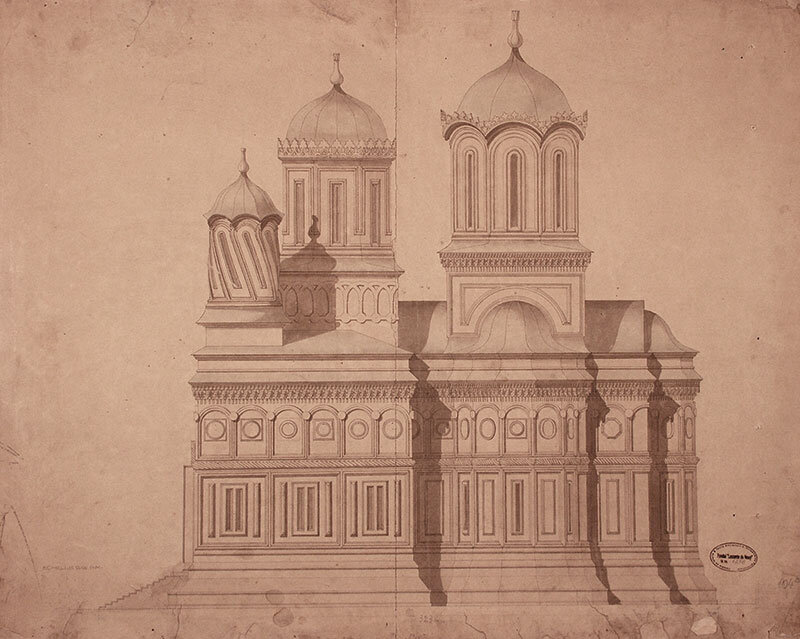
The Church of the Monastery of Arges - Re(in)stauration, musealization and national myth
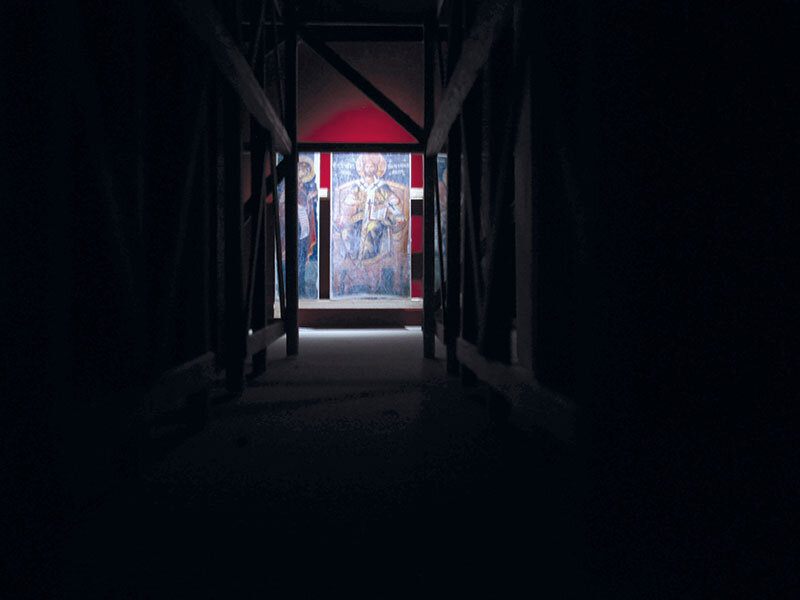
Savings. For an exhibition of frescoes from Arges
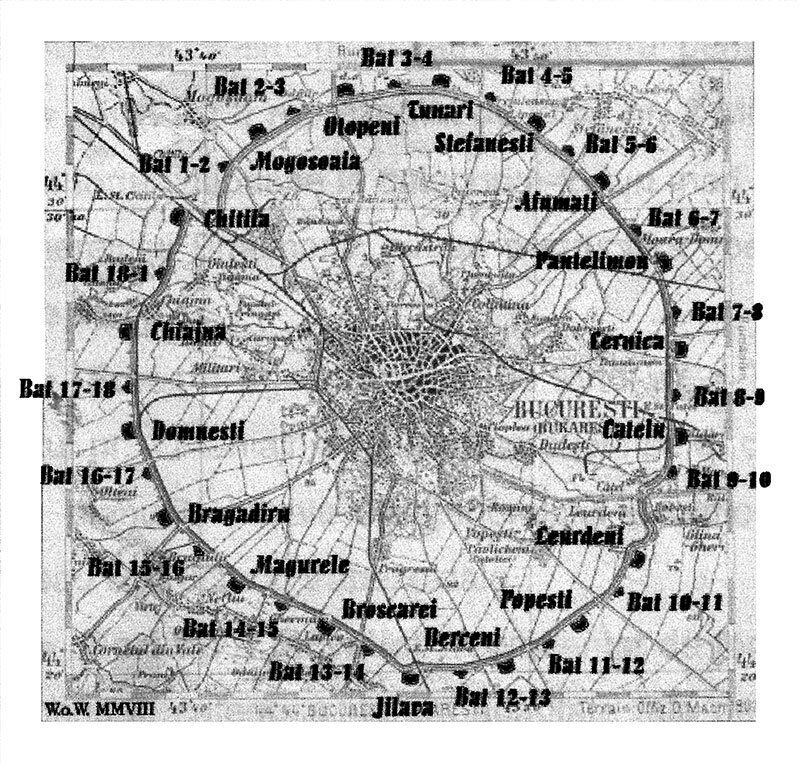
Fort 13