
Let's talk about architecture schools
Project details
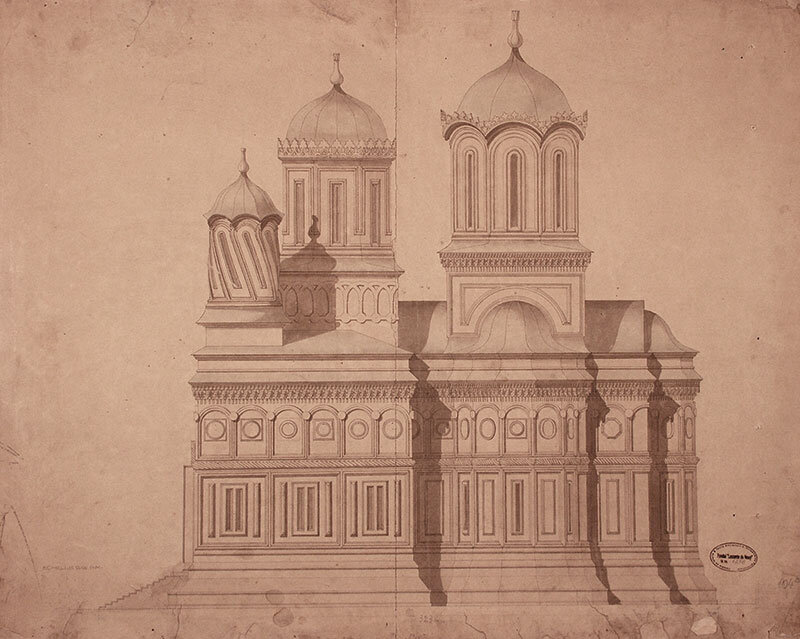
The Church of the Monastery of Arges - Re(in)stauration, musealization and national myth
MĂRTURII. ARGEȘULUI MONASTERY FRESCOES, DECEMBER 7, 2012 - MAY 26, 2013, NATIONAL ART MUSEUM OF ROMANIA
ENSEMBLE AND FRAGMENT
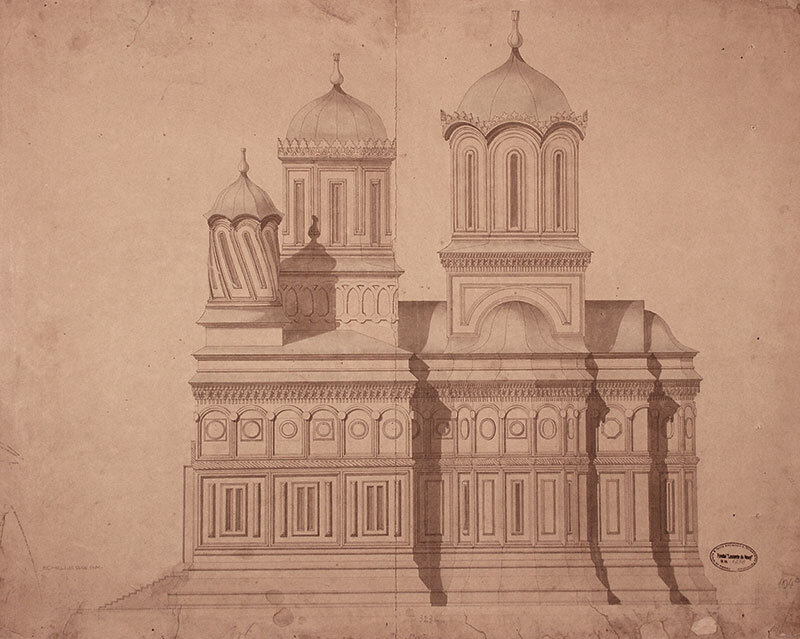
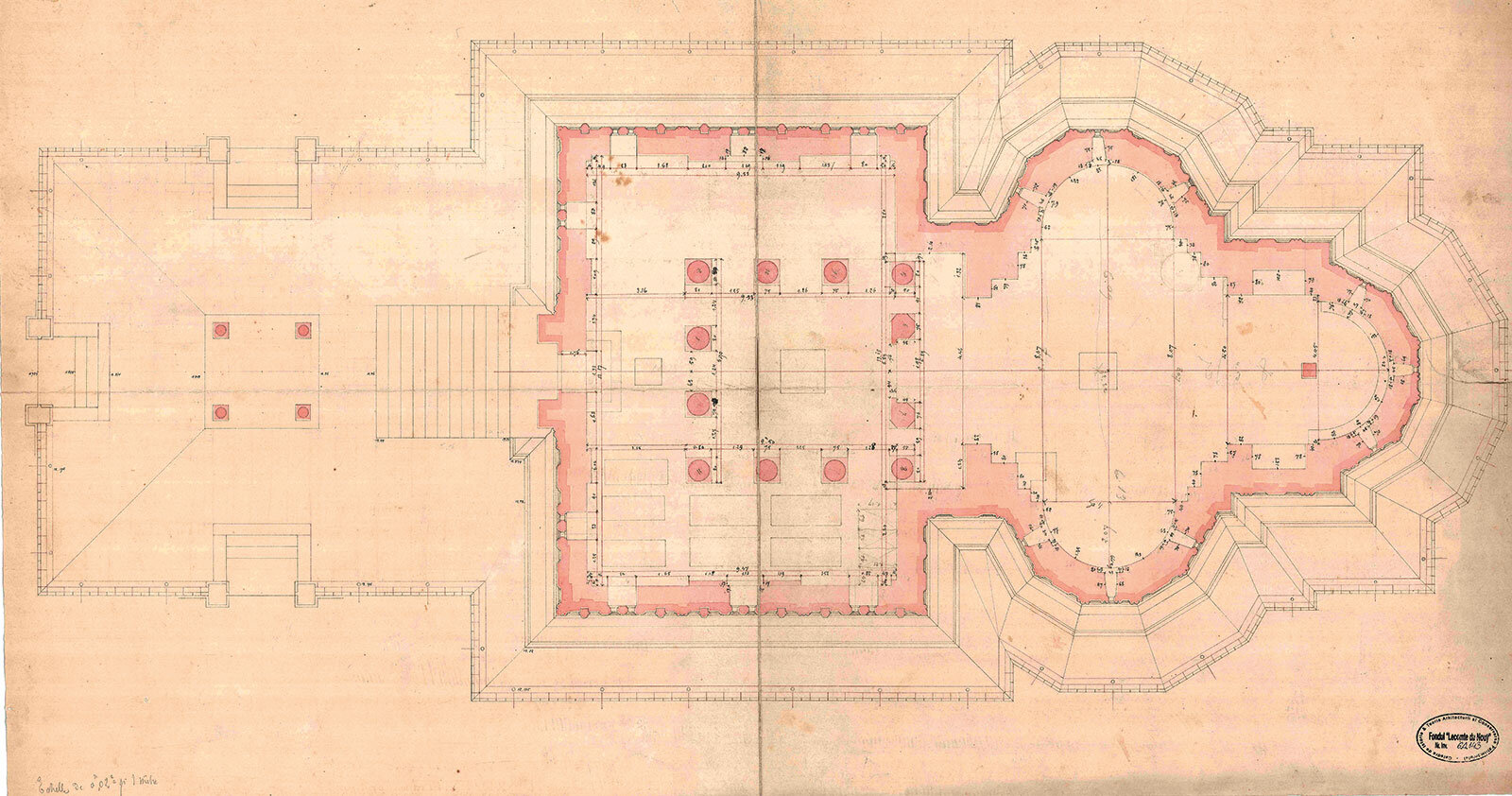
Only 35 fragments remain from the mural painting of the church of the Monastery of Argesului Monastery, stored at the National Art Museum of Romania (29), the National Museum of Romanian History (2) and the Archdiocese of Argesului and Muscel (4), respectively. Extracted during the restoration work carried out towards the end of the 19th century, these few fragments, amounting to less than a tenth of the original fresco, have survived to testify to the scale of the church, the exceptional quality of the painting, but above all to the stratification (and impact) of history.
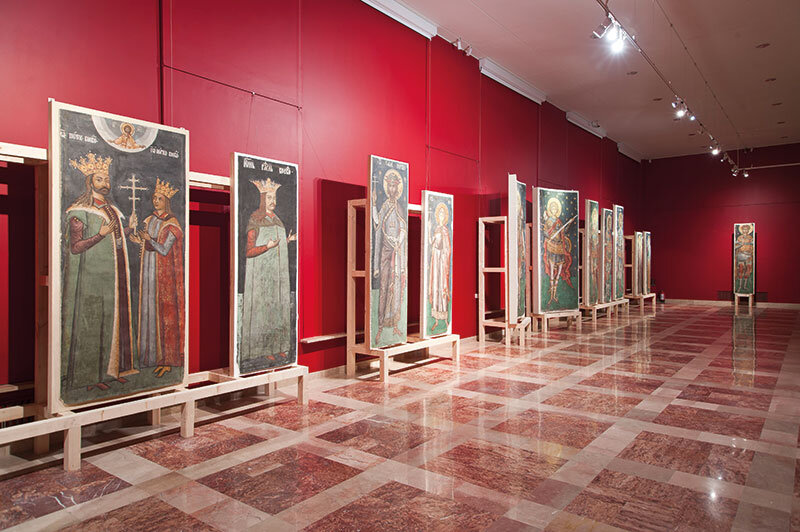
Almost a decade elapsed between the building and the painting of the church in Arges. In December 1526, the craftsman Dobromir from Târgoviște was taking the scaffolding apart, revealing an iconographic program that today we can only approximate. For the most part, the preserved vestiges come from the lower register of the pronaos (votive and family portraits) and the nave (military saints), the southern apse(Deisis), as well as from a few disparate intradoses(Assumption, angels, etc.).
The circumstances surrounding the dismantling of the interior decoration have not been fully clarified: it is difficult to determine the state of decay in 1880, to what extent the removal of significant parts would have been avoidable, and how the unity of the ensemble could have been saved. Although legitimate, such an investigation is irrelevant today, inasmuch as approaching it with today's tools, habits and requirements is simply wrong. The practices and methods accepted at the time, in the pioneering era of modern restoration, were - to use recent terminology - primarily concerned with the aesthetic instance of a monument or a work of art, and less with the historical instance. Dismantling was usually only one stage before (re)creation, in a process which not infrequently resulted in a 'counterfeit' - albeit apparently authentic1- object.
Recovering a few privileged areas of a fresco that was doomed to destruction can do nothing to compensate for the failure to save it. We are not, of course, considering dramatic circumstances such as those in which the church of the Văcărești Monastery was sacrificed (in which case the act of recovery takes on a heroic dimension), but the situation where the choice is deliberate - between laborious restoration and (relatively) faithful reconstruction. In 1881, the French architect André Lecomte du Noüy chose to remove Dobromir's painting in favour of a questionable Byzantine Byzantine decoration, excessively polished, with fanciful quilts and fanciful veils2. Obviously, we do not know whether the lost painting surfaces could really have been saved. Perhaps, at least in part - if we consider the state of preservation of the remaining fragments. In the case of the church of the Monastery of Argeșului, the defining factor remains, after all, the relationship of this period to the problematics, metabolism and ethics of restoration.
Certainly, the remains of Curtea de Arges were extracted with the aim of preserving them in optimal conditions, the only remaining purpose being, therefore, testimonial3. In other words, keeping them 'alive' makes sense insofar as they are put in relation to their symbolic 'death', to the destruction of the original unity. However rigorously arranged, the 'aseptic' place in which they are installed - warehouse or museum space - is, however, alien to the original determinations and meaning/meanings. Detached from the masonry of the building with which they once shared a common body, cut up (more or less) at random, the images conceived as an indissoluble whole are transformed into 'icons' or 'paintings'4. Even the conditions of visibility are altered, and now, through the rigor of modern museology, we look at them at a comfortable height and distance, but at a fundamentally different distance from our initial perception.
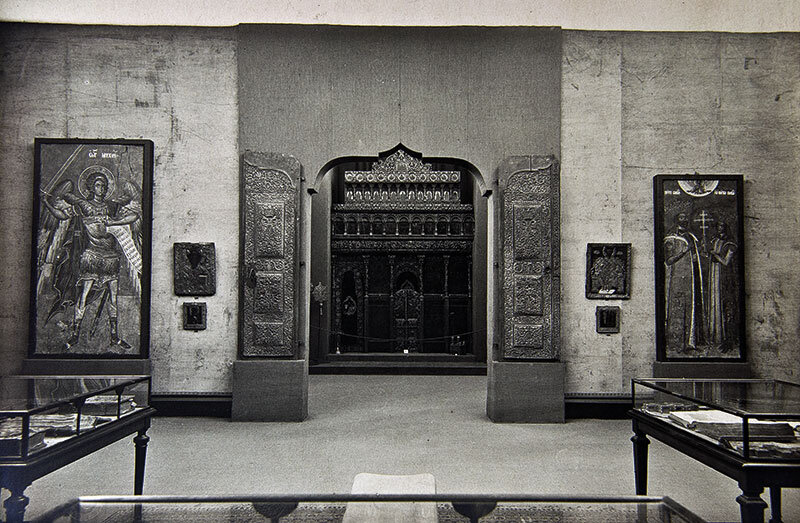
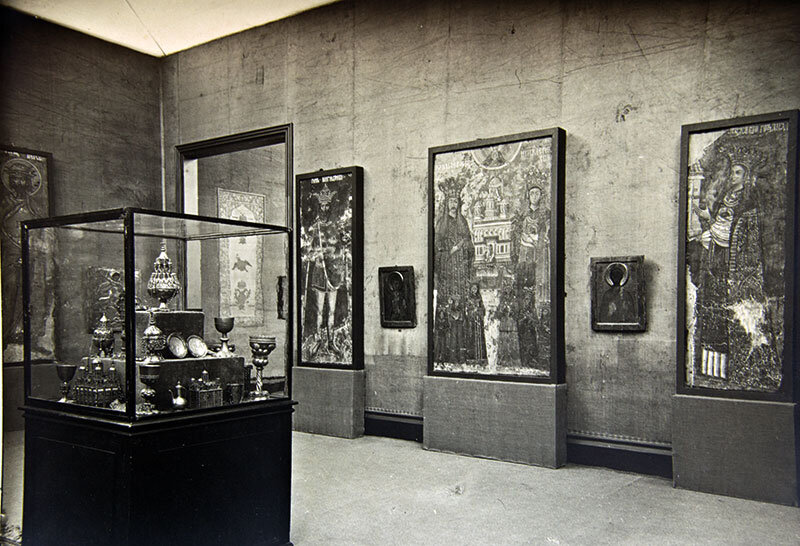
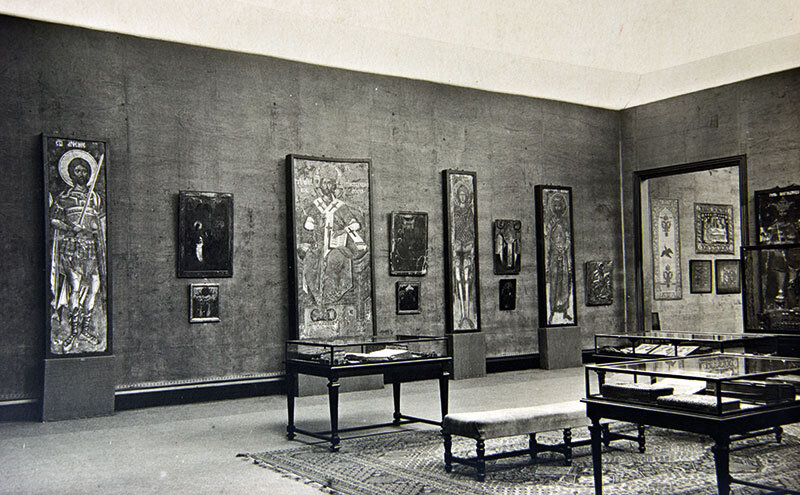
Once the original whole has disintegrated, the preserved fragments enter into a free and unlimited play of possible associations - with each other, but also with the space/spaces in which they are relocated. A photograph taken at the beginning of the last century, for example, shows an exhibition hall (National Museum of Antiquities?) in which the image of Christ as the Great Emperor and Archbishop (the central image in the iconographic theme Deisis) is flanked by representations of two military saints (Artem Artemios and Nestor). The original meaning is thus annulled and the visual configuration has a purely aesthetic role.
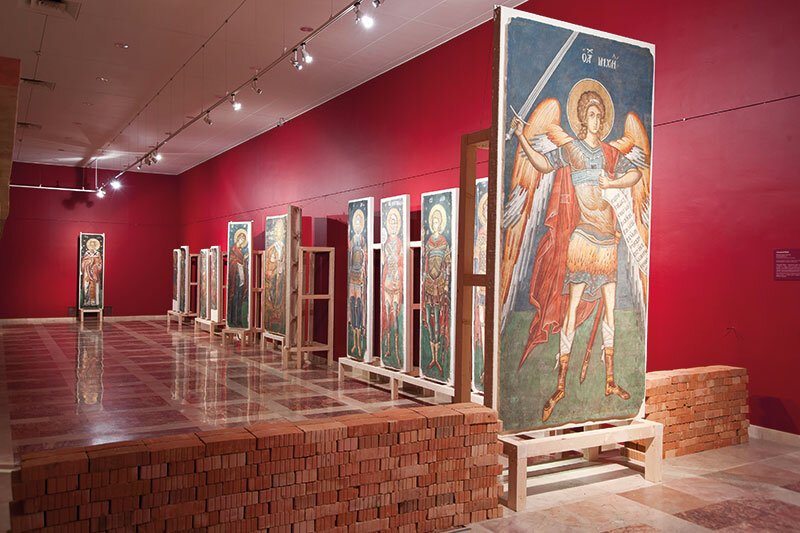
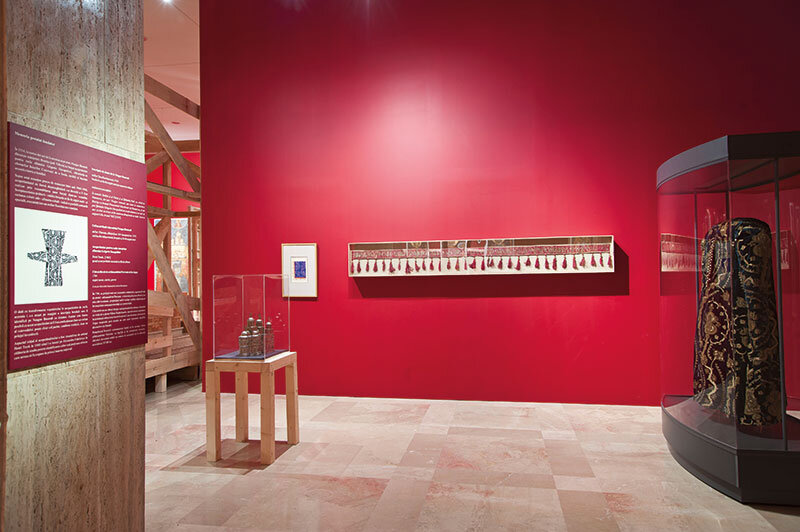
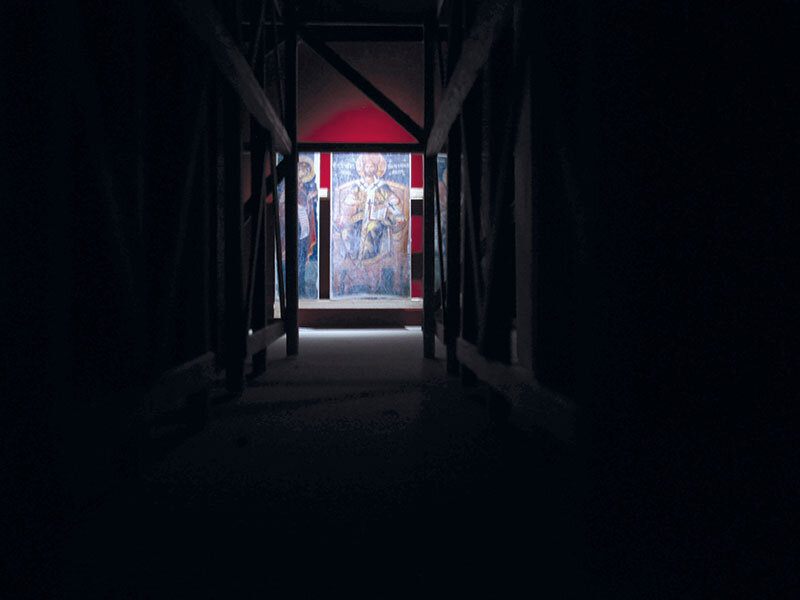
In such circumstances, the challenge of re-establishing the most evocative context possible within the confines of the museum space is a formidable one. This type of challenge is currently facing the exhibition at the National Art Museum of Romania. Almost completely5, the Argeșean corpus is displayed in a large but neutral space that is relatively difficult to energize, complicated by the presence of five pairs of pillars. The solution chosen by the curators of the exhibition is unexpectedly simple and effective: the pillars are embedded in a framework of beams and planks. How was the curatorial discourse constructed? What exactly does this 'box' represent? And, more importantly, how does it function in the exhibition?
Read the full text in issue 2/2013 of Arhitectura magazine
Notes:
1. Obviously, the stakes of restoration have been radically rethought in the meantime: 'Restoration must aim at restoring the potential unity of the work of art, as far as this is possible, without committing an artistic or historical forgery and without removing the traces of the passage of the work of art through time. Cesare BRANDI, Theory of Restoration, Meridiane, Bucharest, 1996, p. 39.
2. The interior decoration was restored between 1883 and 1885 by Charles Paul Renouard and Emile Frédéric Nicolle. Later, in 1896, the portraits of Her Majesties Charles I and Elisabeth were inserted, based on the cartoons of Jean-Jules-Antoine Lecomte du Nouÿ, the brother of the architect who restored the interior. See Emanuela Cernea and Lucreția Pătrășcanu, "Destine artistice", in Mărturii. Frescoes of the Argeșului Monastery, National Art Museum of Romania, 2012, p. 13.
3. In the documentation of 1882 one can read the following indication: 'the careful erection of the main figures to be deposited in the museum'. See Idem, p. 10.
4. When deposited at the National Museum of Antiquities, the fresco fragments were actually framed, both for conservation reasons and for exhibition purposes. Under these circumstances, the likely impact of the fresco-"paintings" on Olga Greceanu's artistic choices should be mentioned as one of the minute collateral benefits of this historical case.
5. Despite an initial agreement, the four fragments from the Collection of the Archbishopric of Argeș and Muscel were never included in the exhibition.
Bucharest. In search of visual identity
Patrimoniophobia: the false dilemma of the conflict between development and heritage conservation
95%
Architecture, the car and the modernist interior
Pruitt Igoe Now - Natural Reclaim
Converting Christian sacred spaces
Great Expectations
Good practices for saving and reusing old wooden churches Boz, Târnăvița, Cervicești
Bunești School. Protostructuralism
One yellow kitchen, millions of gray kitchens
Cinematic architecture
Some notes on traditions and tradition
The Church of the Monastery of Arges - Re(in)stauration, musealization and national myth
Savings. For an exhibition of frescoes from Arges
Fort 13