The photography archive of Romanian Union of Architects. Online and Offline

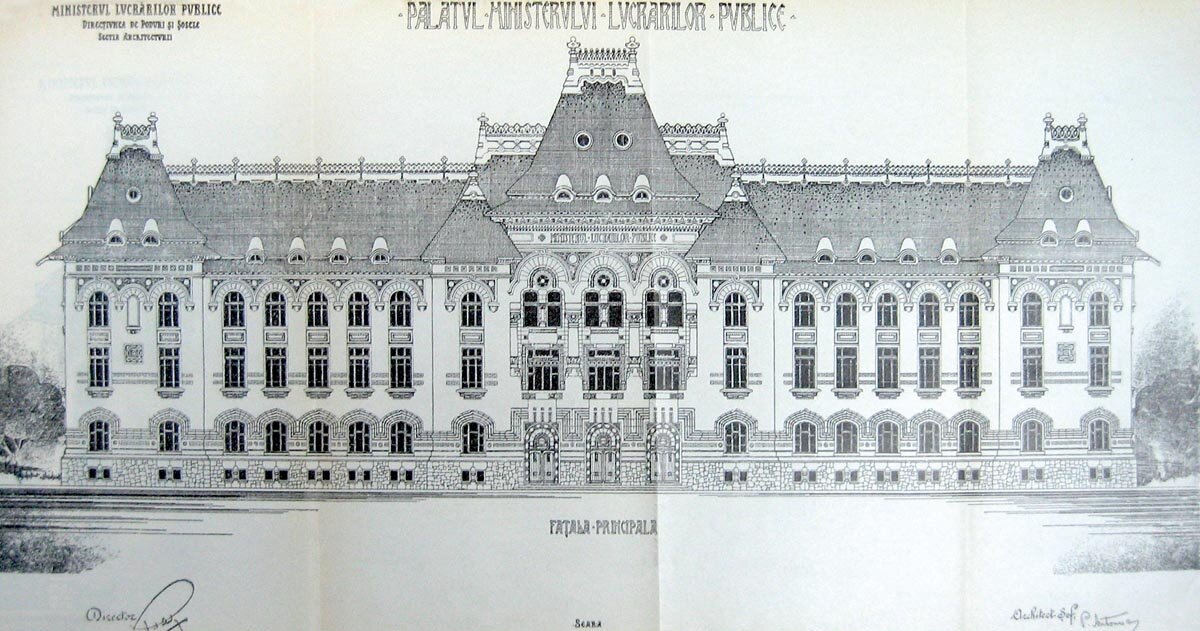
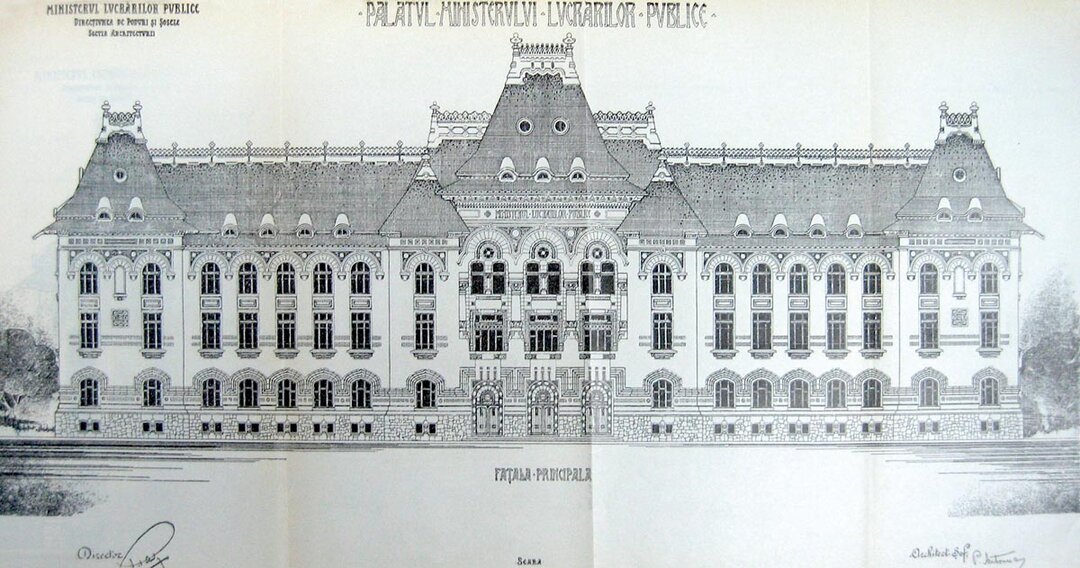
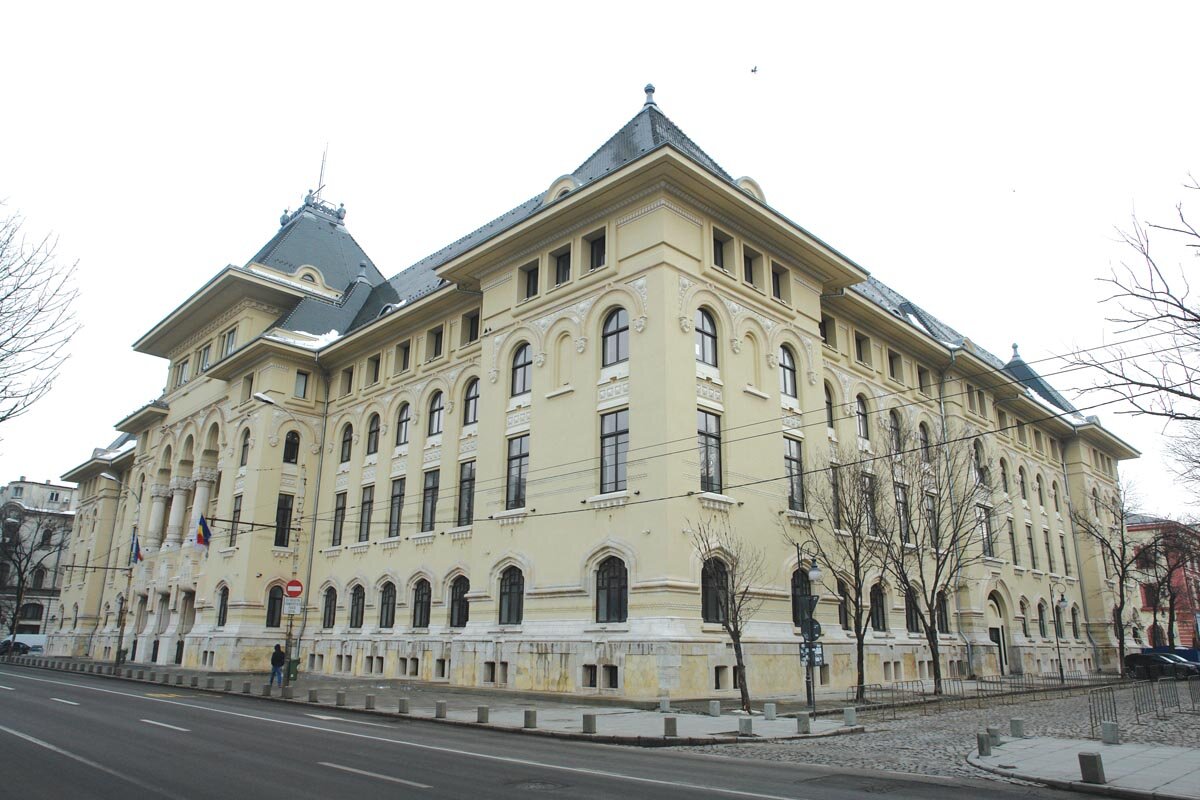
The undoubted cultural significance of the building designed by Petre Antonescu, a significance manifest from the urban scale (its location on a not unimportant thoroughfare such as Bulevardul Regina Elisabeta) to the scale of architectural detail, is so great that it cannot be contained in just a few pages. Therefore, the following will only refer to a small part of the decisions relevant to the past, present and future of this building1.
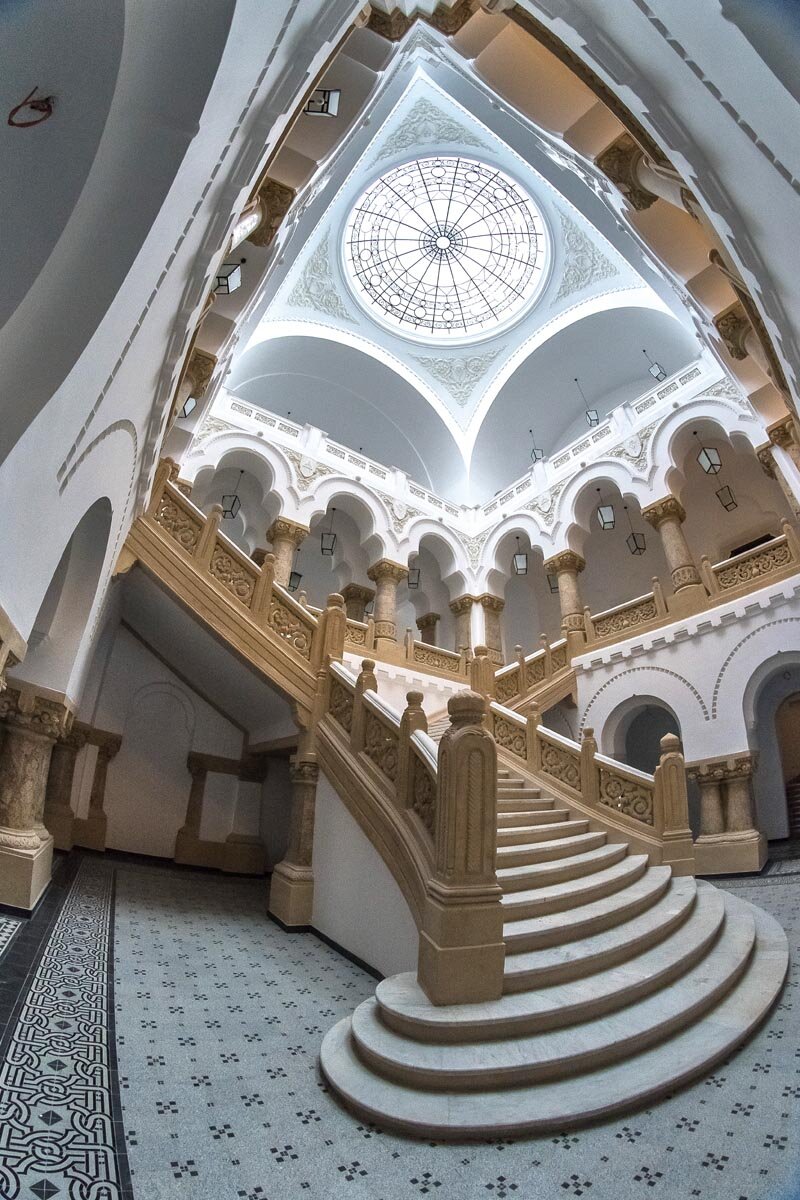
Thus, for example, the project submitted in 1906 for the building permit2 was not followed exactly. According to later documents, but dating from before the time of completion3, a number of changes were made during the course of the works, some successful, others less favorable. With regard to the former, the ladder of honor is the first to attract attention. Originally proposed in the form of three parallel ramps (fig. 1), it took on an added monumentality as soon as its wings were extended (fig. 2), the ramps between the podest and piano nobile being perpendicular to the first. On the other hand, in contrast to the built reality, in the project, the main room on the first floor was provided with the wainscoting required by its status, which, if it was executed4, has disappeared without a trace. In any case, the junction between the corridors of the three wings of the building was originally more elegantly resolved, even if by partially sacrificing two rooms at each intersection.
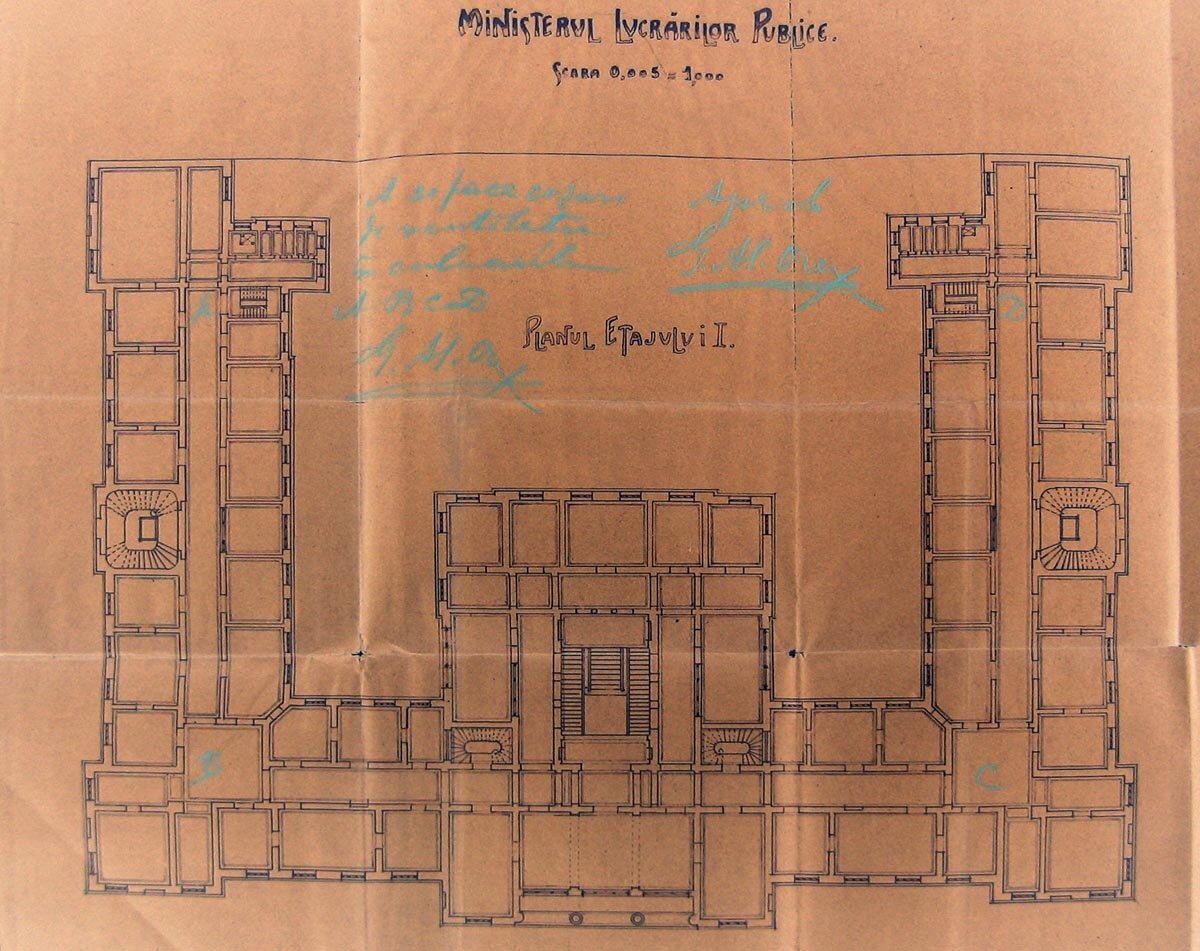

Decades later, the building suffered from the bombing of 1944, losing the southern end of the east wing, developed along what is now Anghel Saligny Street. As a result, the owner decided in 1949 to rebuild that part of the building in virtually the same way5, a gesture confirmed by the presence of a building on the ground floor. However, the project drawn up in the same year, under the direction of Petre Antonescu himself, to repair the roof and eaves and to restore the plasterwork destroyed by the same bombardments throughout the building, did not materialize6.
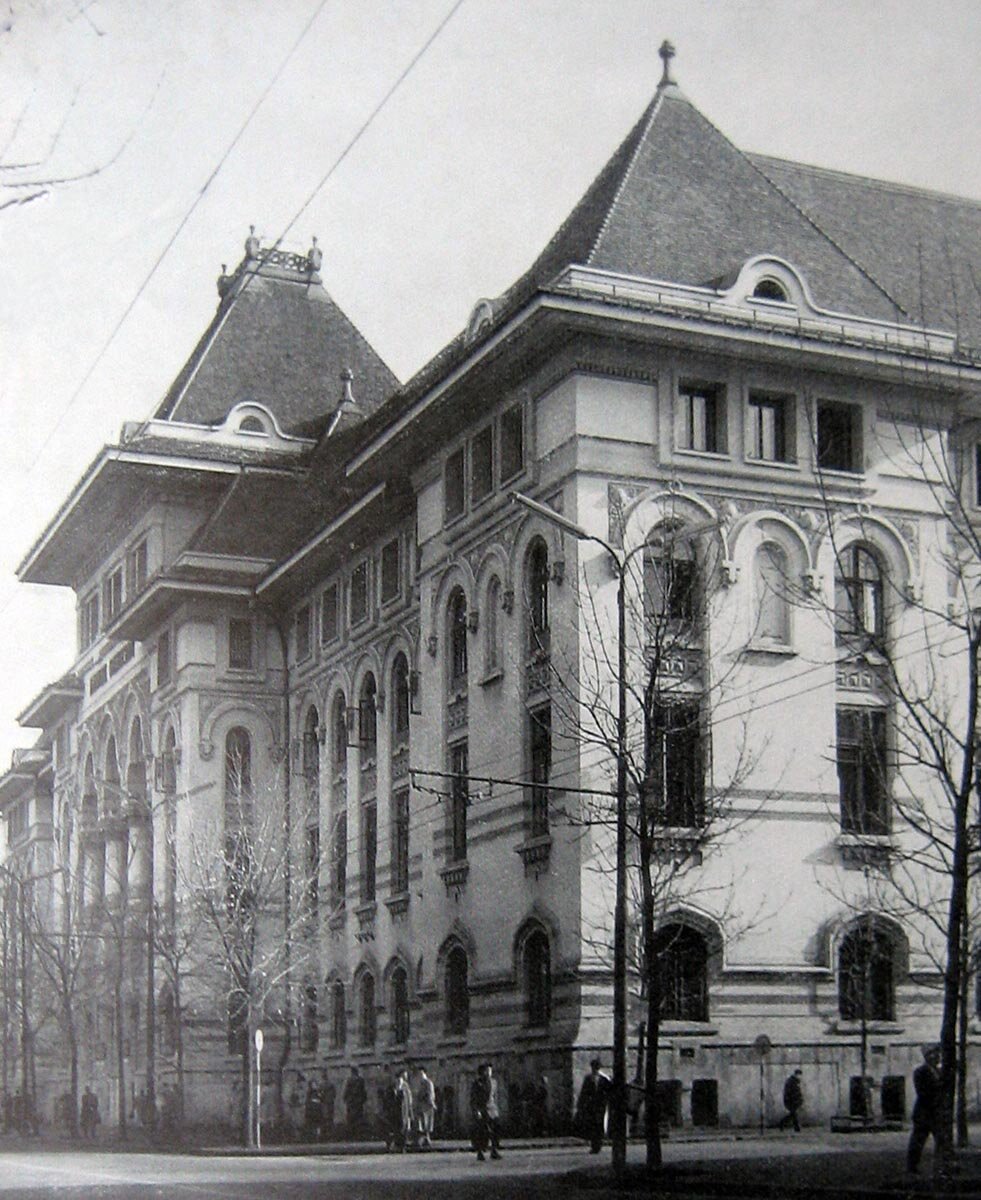
One possible reason why these latter interventions were not put into practice was the need to increase the usable floor area - the best evidence of this being the current third floor, which inevitably altered not only the proportions of the silhouette and volumetry, but also the architecture of the external envelope (images 3 and 4). Certainly non-existent in 1949 (the documents explicitly state that the building had only two floors at that time7) and already built in 1952 (proof of this is the project for the installation of a loft in the attic space dated that year)8, this third floor was taken on by Petre Antonescu9 - despite the fact that the corresponding anchorings, much more massive than the architectural and decorative lexicon of the lower levels, unnaturally hinder the composition of the elevations at the top. Then, over the facades facing the courtyard, the continuous wooden dormers required for the attic designed in 1952 were (indeed) added, a gesture that was only likely to solve the problems of lack of space.
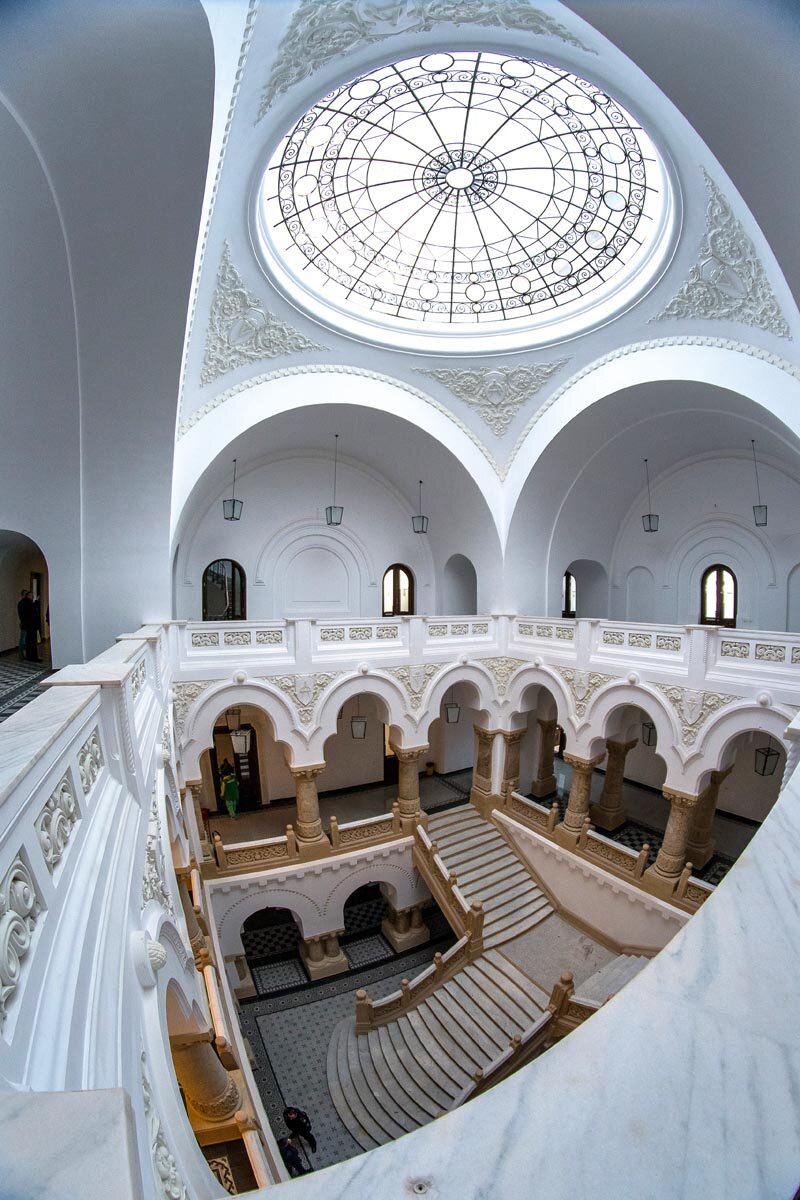
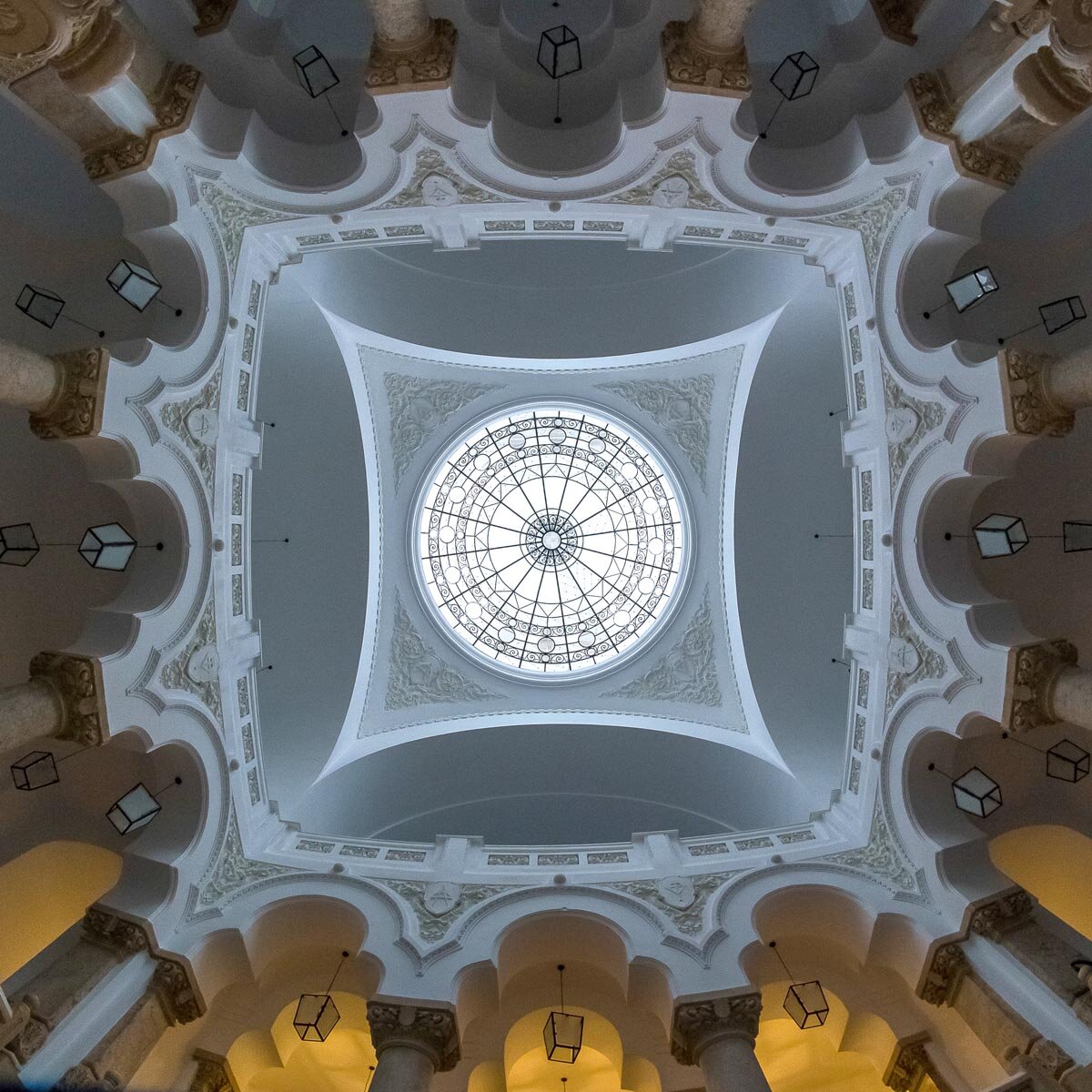
Faced with these past decisions and, more importantly, with their results and effects, the cultural assessment study drawn up for the intervention project currently being finalized (at the end of 2016) on the (exclusively) above-ground part of the building had (of course) to inform the present decisions. Part of these were simple to make. From this point of view, the area of maximum representation stood out (again), its conservation raising only detailed problems concerning interventions on the artistic components, and it was just as easy to enhance it further by integrating the dome that provides natural lighting for the staircase of honor into the design of the corresponding space in the roof (images 5 and 6). Equally unproblematic was the resumption, in a contemporary interpretation, of the sober splendor specific to the wainscoting in the main room on the piano nobile, which was also emphasized by the possibility (adopted) of proposing this type of finish for the corridors. Of course, since Petre Antonescu himself decided in the end that he preferred a less elegant solution for the junction between the horizontal circulations linking the three wings, in favor of the rooms (otherwise partly sacrificed), a return to the original project was not proposed, but the additional spaces still resulting from the early 20th century execution were used for the arrangement of the 21st century cables. In the same sense, the present has welcomed the reconstitution of the potential unity of the cultural resource through the restoration - realized in the past - of the southern end of the Anghel Saligny Street wing. Even if, today, such a gesture could also be seen as filling a gap in accordance with the historical document constituted by the building itself, given the vehemence of the debate on the reconstruction of historical monuments10, a decision - today - would have been much more difficult to take. The abandonment of the continuous wooden dormer windows that served the attic after the Second World War did not pose any problems. These could be replaced without loss of cultural value with more suitable ones in every respect. The difficulty, which proved insurmountable in the end, was the third floor. Situated in an obvious and not necessarily positive contrast with the rest of the façade architecture and (not only) therefore difficult to attribute to a decision freely taken by Petre Antonescu, the 3rd floor was the subject of a decision that the present delegates to the future, with the possibility that the latter may have more information and/or other criteria for evaluation. The postponement of the decision was happily combined with the impossibility for the beneficiary to replace the post-war roof, common and even modest in terms of materials and execution techniques, with one that was not only more resistant but also more efficient in terms of the use of space, which the study was able to allow without reservation.
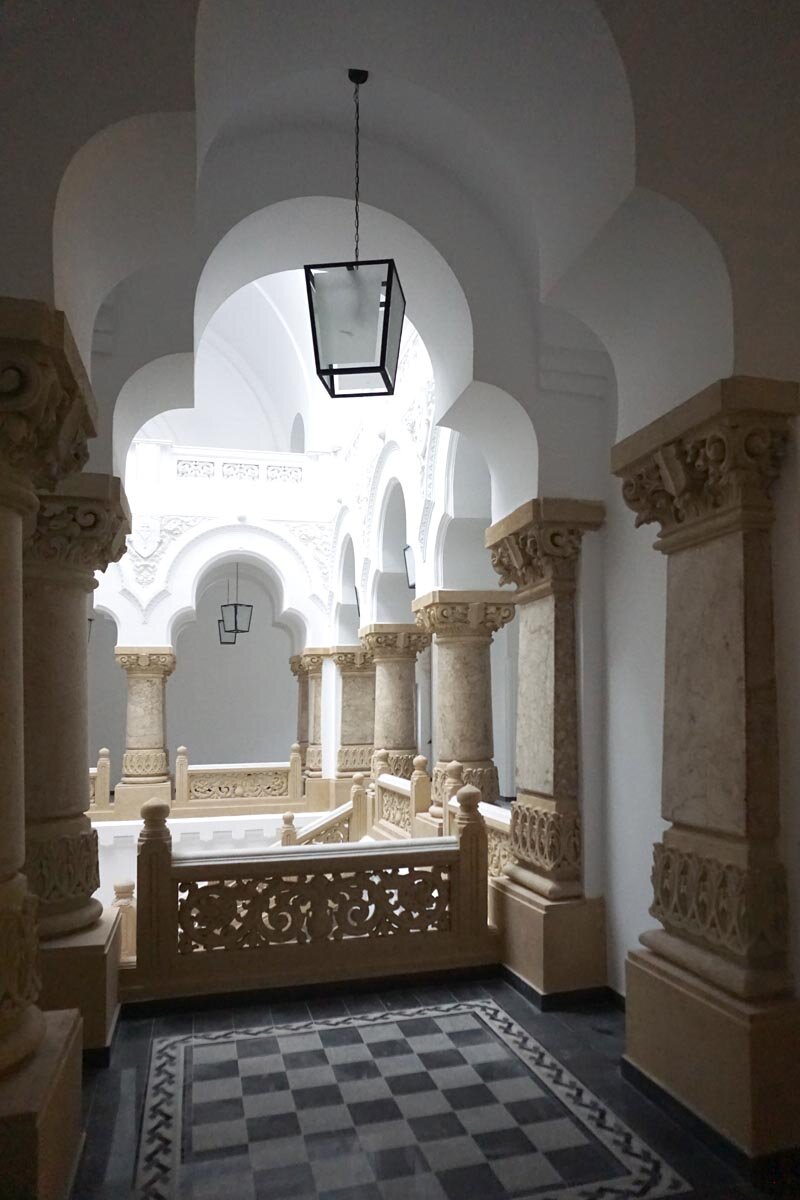
The architectural project for the building has been drawn up, both in terms of conservation and restoration and in terms of refunctionalization interventions, with strict regard for the regulations formulated by the historical study. The areas of cultural value identified by the study have been explicitly marked in the project, specifying the permitted modes of intervention and the prohibition of damage by consolidation interventions. All existing artistic components in these spaces (stucco, stained glass, metalwork, stonework, floors and interior carpentry that have been identified as historic carpentry with heritage value have been the subject of special restoration projects of artistic components (images 7 and 8).
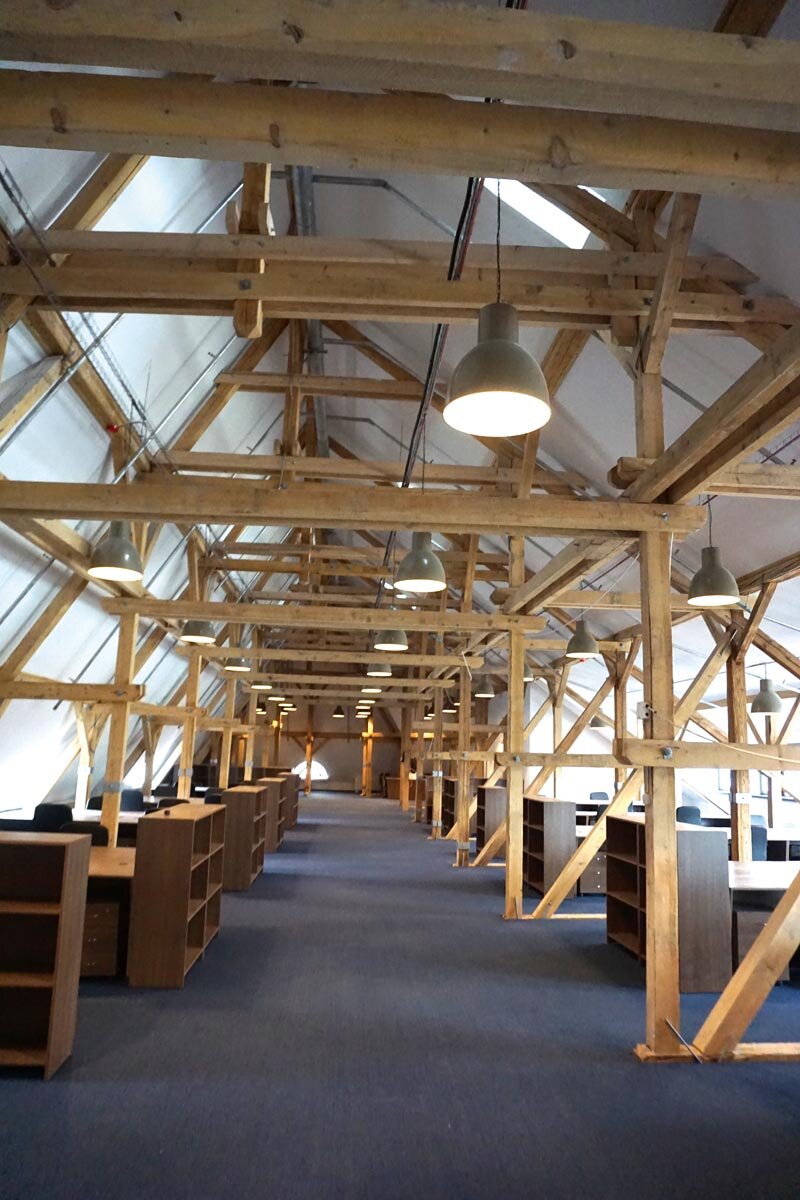
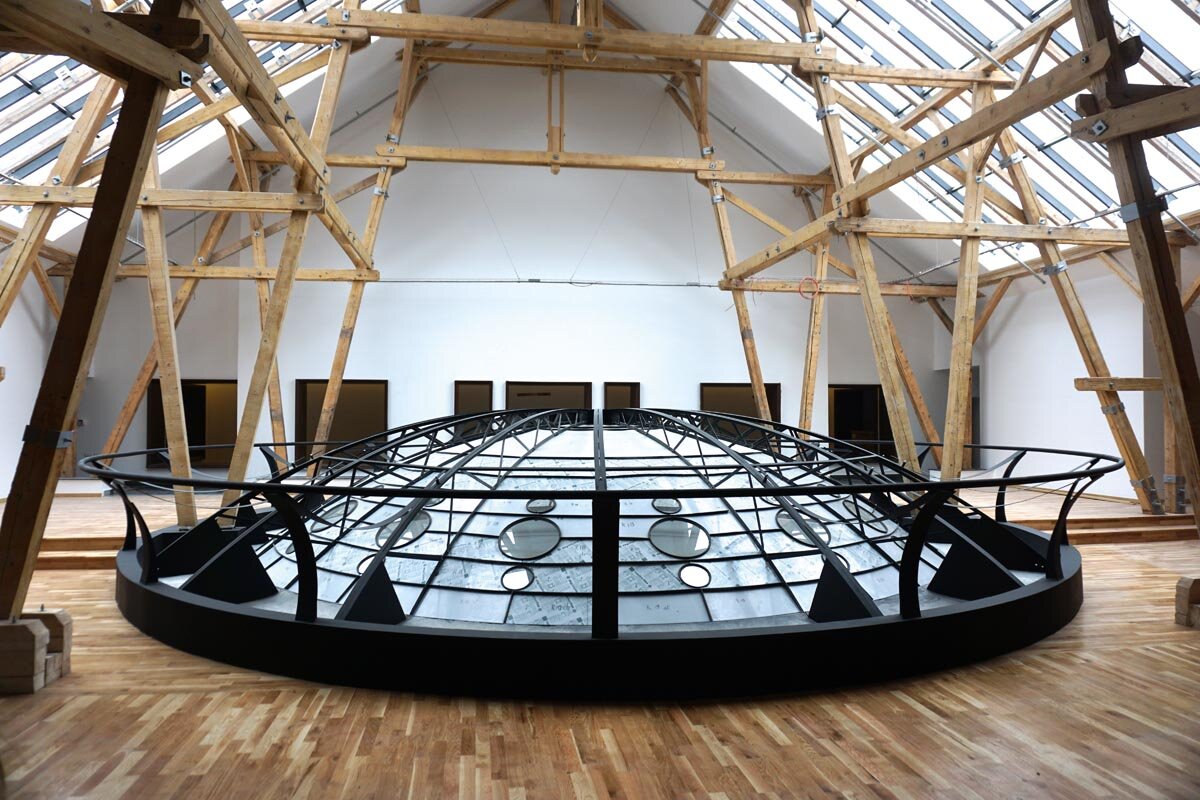
Outside the areas of cultural value, an attempt was made to return to the original compartmentalization by identifying and removing walls and other parasitic elements made during the last 50 years of the building's operation. In the same way, the regular geometry of the openings in the original partitioning masonry was returned to, while at the same time trying to unify the dimensions of the door openings, both those facing the longitudinal public circulation corridors and those between the offices. At the attic level, most of the existing compartmentalization has been removed, in order to create a large, open space, unobstructed in the longitudinal perspective of the three wings of the building (fig. 9). In addition, spaces of the roofs without original use (simple circulatory bridges) were introduced into the functional circuit. A special spatial and architectural character was achieved by opening the attic above the central hall of the building, a space which, as a result, benefits from the extrados of the glazed dome, which was thus emphasized by a new, novel perspective on the architectural object (fig. 10). The existing, albeit post-war, roof structure was maintained throughout the building. After the technical and biological expertise, it was locally restored, with solutions to consolidate or replace the damaged elements, while the others were cleaned by sandblasting, treated for insect-fungicide protection and fire resistance, without affecting the finish of the wooden or metal parts.
The natural lighting of the attic has been preserved in the previous formula, by maintaining - in a strictly geometrical sense - the longitudinal roof dormers open in the roof towards the inner courtyard. The newly adopted solution is, however, fundamentally different, both in terms of architectural plasticity and functionality. The designed solution provides for the total removal of the existing dormer, culturally assessed as a noxious presence, and the introduction of a continuous window register, with a unitary and radically contemporary interior and exterior image, providing much better lighting than the previous situation, with wooden windows segmented by intersecting plinths. Although the geometry of the dormers is preserved in their original form, the materials of the new ones, both inside and out, are radically different. The cladding, made of striated Rheinzink sheeting, was chosen to emphasize, together with the glazed vertical register, the modern intervention in contrast to the post-war cladding. Last but not least, mention should be made of the solution adopted to supplement natural lighting by inserting skylights with modern thermo-technical qualities in the roof plane, in the areas where the glass tiles were originally laid.
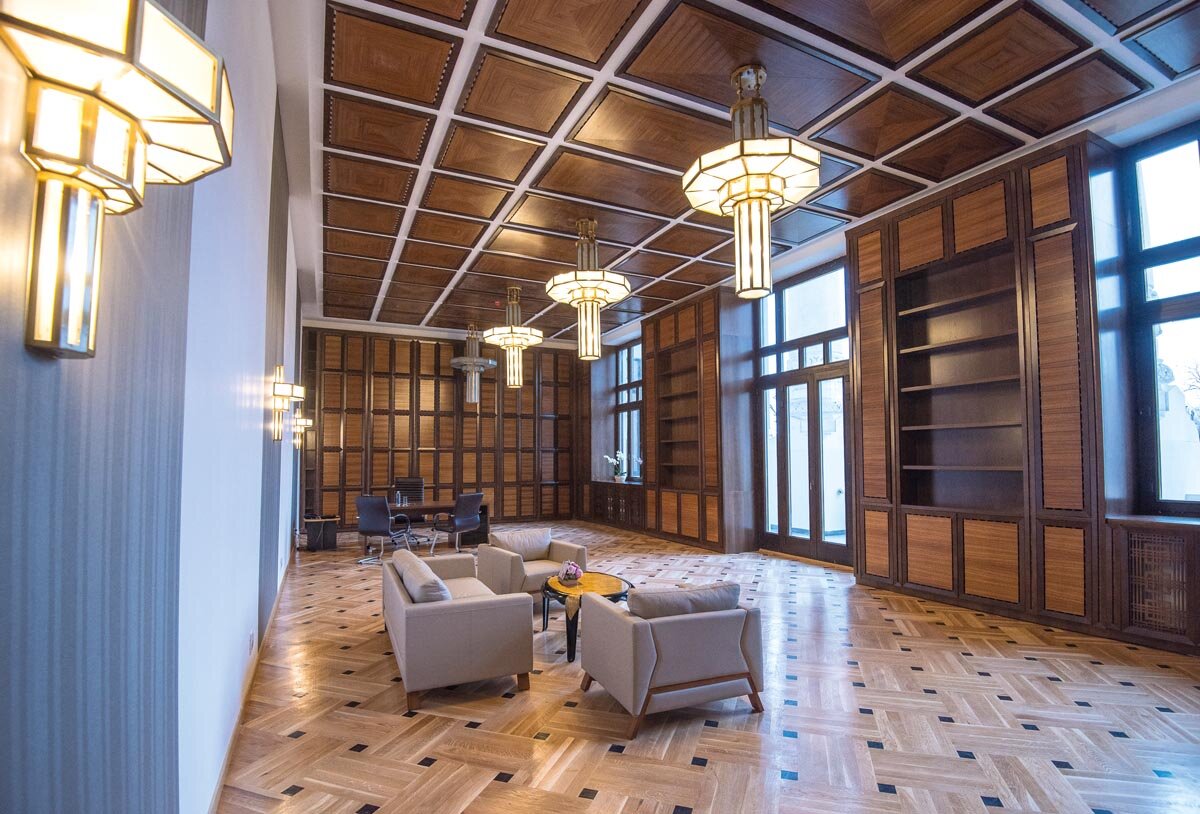
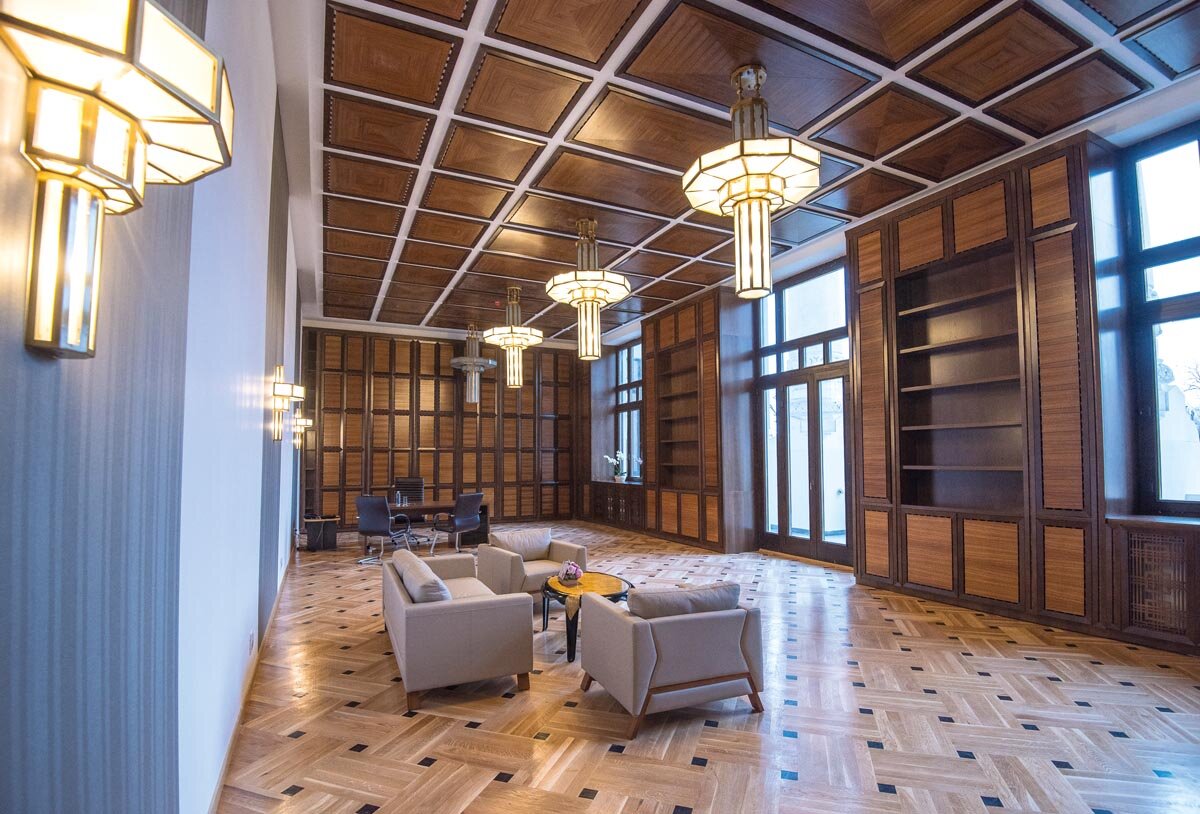
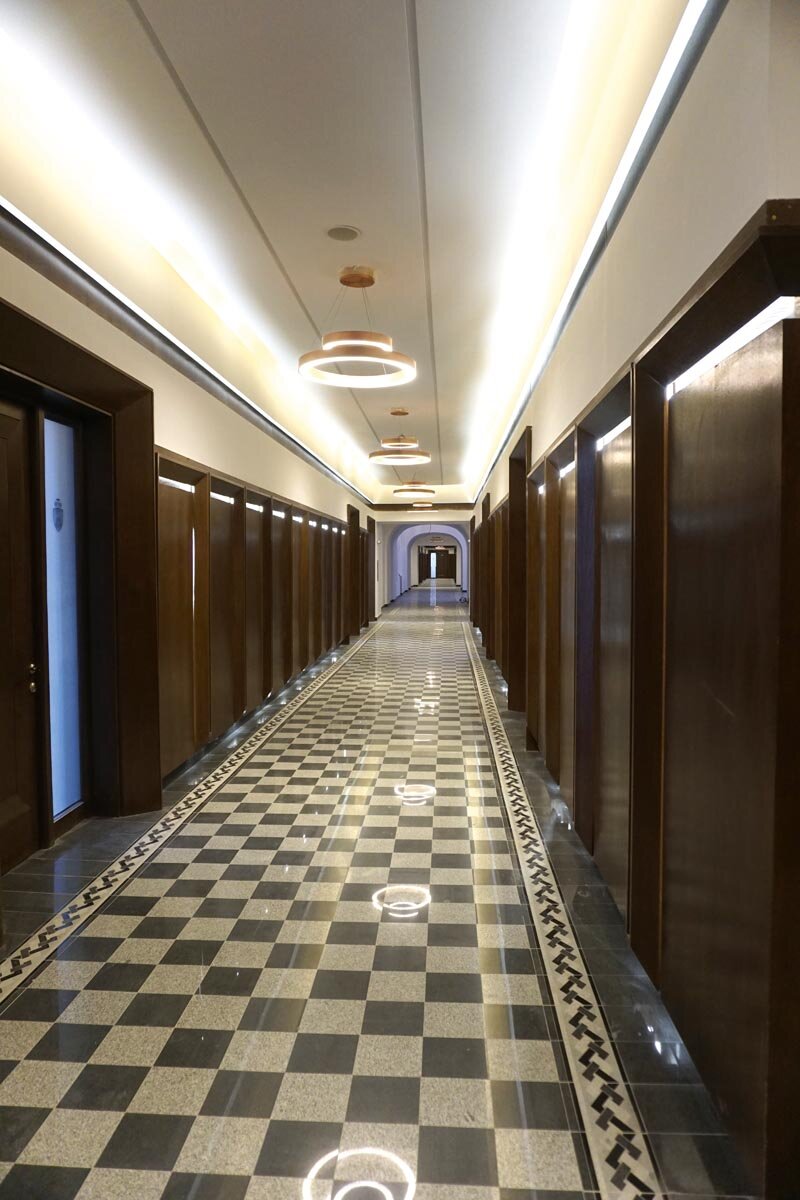
Natural stone (granite) has been chosen as the finish for the new floors of the common floors in the circulation areas, in compositional arrangements that ennoble the interior architecture. The color scheme is black-white-grey, with different textures and roughness of processing, so as to represent the contemporary indications of the intervention. The floors of the office spaces have been finished with solid oak parquet flooring, while in the rooms with the highest degree of representation, decorative parquet has been used (fig. 11). The wall finishes, for all the horizontal circulation areas that are not part of the areas of cultural value, have been treated by cladding with accentuated volumetric panelling, rhythmed by panels framed by frame-profiles, mouldings and light boxes. The architectural plasticity of the wainscoting was differentiated by floor, in line with the historical stages of the building's construction, with the ground floor, the first and second floors representing the first stage (fig. 12), being treated separately from the third floor, which was only realized after the Second World War. The way in which the door joinery on the corridor doors has been realized with the interposition of glazed surfaces, joinery integrated with the perimeter panelling, has brought a beneficial increase in natural light into the otherwise blocked circulation.
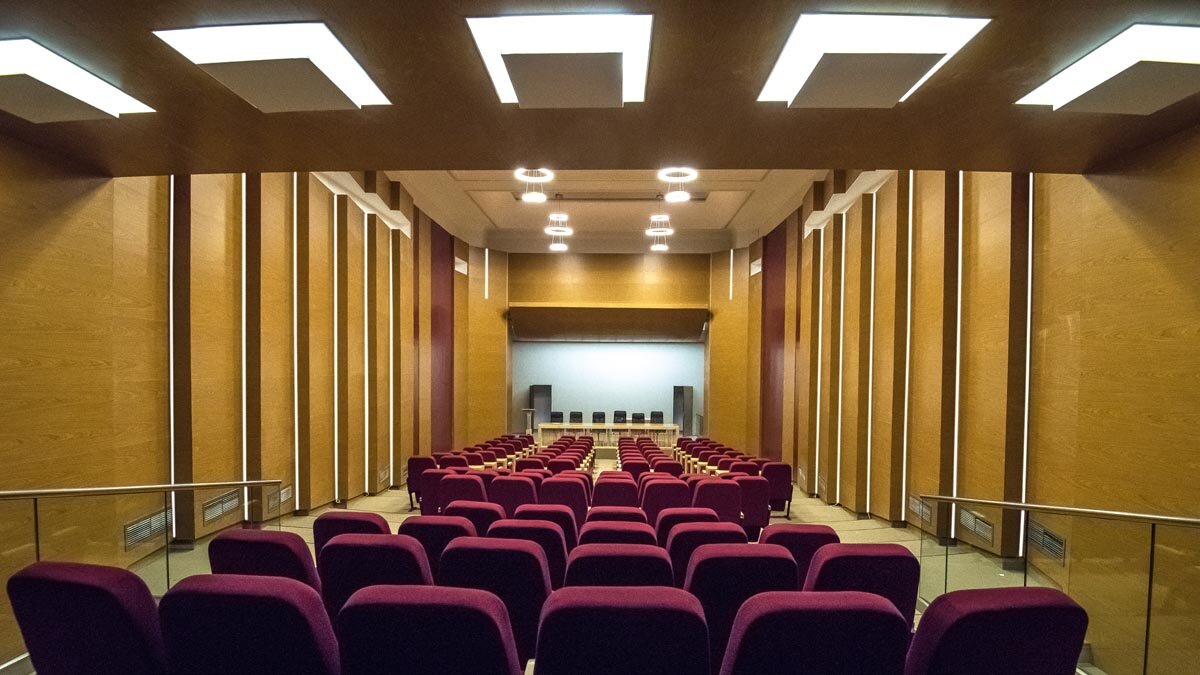
The layout and geometric reconfiguration of the boardroom on the third floor of the central building (fig. 13) has created a new representation space with a flexible functional use, both for meetings of the administrative staff and as a conference and performance hall. By restoring the floors in ascending steps, the geometry of the visibility curve was created, the special wall finishes being the result of the acoustics project realized for this room. It should be noted that the refurbishment intervention reopened the three original (in relation to the second historical time stage) ceiling light recesses at ceiling level, which were emphasized by the geometry and current ceiling lighting of the boardroom.
Following the requirement of the Contracting Authority, the building was designed to be extended at the infrastructure level with a 3-level underground parking garage to accommodate 100 staff parking spaces. The parking has been arranged in the inner courtyard area of the building, the perimeter of this intervention being within the perimeter determined by the southern property boundary and the alignments of the building's internal facades, with a perimeter setback of about 2 m. Access to the parking lot is via the two existing gangways in the old building, at the southern end of the side bodies on Anghel Saligny and Elie Radu streets. Simultaneously with this intervention, the exterior surface of the upper floor of the parking lot was also landscaped, the resulting inner courtyard creating an exterior space intended to visually participate in the quality of public use of the space.
All the architectural interventions on the facades of the building foreseen in the project were exclusively restoration works carried out according to the specifications of the related artistic components project. In line with this, the cleaning and waterproofing of the decorative elements of natural stone and exposed brick, as well as the cleaning, repair and refinishing of the plaster and profiles of imitation stone were carried out. The aim was to integrate, by means of chromatic retouching, the repair interventions carried out on the facades at the level of the ornamental ornamentation, as well as to differentiate them from the field areas (fig. 14), in accordance with the initial concept described by Petre Antonescu11, the general aim being, then and now, to create a visually unitary and harmonious whole.
NOTES:
1 These decisions have been addressed, along with others like them, in the study Hanna Derer, Radu Nicolae, Simina Stan, Imobilul din bulevardul Regina Elisabeta numărul 47, București. Bucharest City Hall, initially Ministry of Public Works. Identification of the cultural resource through the prism of the essential elements of its historical evolution. Studiu de fundamentare pentru intervenții viitoare, București, tiposcript, 2013-2014.
2 Arhivele Naționale ale României, Direcția Municipiului București, fond Primăria Municipiului București, dosar 248/ 1906, file 1-22: "Construcțiunea Palatului Ministerul Lucrărilor Publice în bulev. Elisabeta".
3 "The Palace of the Ministry of Public Works" in "Buletinul Societății Politechnice", year XXVI, no. 4, April 1910, pp. 163-164, respectively National Archives of Romania, Ministry of Public Works - Higher Technical Council, file 7/ 1904-1931, files 7/ 1904-1931, files 1-8 - a survey made for the finalization of the wall finishes and the floor plans.
4 Arhitect PETRE ANTONESCU, Clădiri, construcții, proiecte și studii, București: Ed. Tehnică, 1963, p. 43 - given that the author lists all the major types of furniture as having been realized, in the absence of any traces in situ and of any evidence (such as, for example, a period photograph) it is still possible that some of the furnishings may not have been executed.
5 Bucharest City Hall Archives, III Albastru, file 2/ 1948: "Proprietatea Ministerul Lucrărilor Publice. Str. Anghel Saligny nr. 3" - the application for building authorization dates from May 9, 1949: the only differences between what had been designed and executed at the turn of the century and this reconstruction are the position of the sanitary units and, on the other hand, the transformation of the access from Durchgang into a window opening.
6 Bucharest City Hall Archives, Blue III, file 43/1949: "Radical Repairs. Ministry of Constructions. Bdul. 6 Martie No. 27".
7 Ibid.
8 Bucharest City Hall Archives, SAS, file 822/1955: "Ministeru [sic] Construcților [sic] și al Ind. Materialelor. Bdul. 6 Martie nr. 27. reparați [sic] radicali".
9 Architect PETRE ANTONESCU, op. cit., p. 44.
10 Hanna Derer, „Re-Construct, Re-Generate, Su(pe)r-Vive(re)/ Re-construcție, re-generare, supra-viețuire” în „Transsylvania Nostra”, nr. 4, 2016, p. 16-24, p. 16-20.
11 Architect PETRE ANTONESCU, op.cit., p. 43.
PROJECT REALIZATION COLLECTIVE
GENERAL CONTRACTOR: ROTARY CONSTRUCTII S.R.L.
GENERAL DESIGNER: DESIGN UNIT S.R.L.
Specialist consultant M.C., project co-author: dr. habil. arh. Hanna Derer
Head of complex project, project co-author: arch. Gabriel Cârstea
Project manager specialized architecture, co-author: arch. Diana Cârstea
Architectural designer: arch. Aurora Ciucuraș
Historical study: dr. habil. habil. arh. Hanna Derer, arh. Radu Nicolae, Hist. Simina Stan
Artistic restoration projects: rest. specialist Marian Dăbuleanu, rest. exp. Laurențiu Dragomir, rest. Traian Postelnicu, rest. exp. Georgiana Mureșan
Head of resistance project: eng. exp. prof. dr. Constantin Pavel
Expert M.C. resistance: eng. exp. eng. Emil Sabo
Resistance designer: eng. Oliviu Popa
Installations project manager: eng. Gica Pistalu
Acoustics study and design: dr. arh. Radu Pană
Project management: eng. Dragoș Mocanu