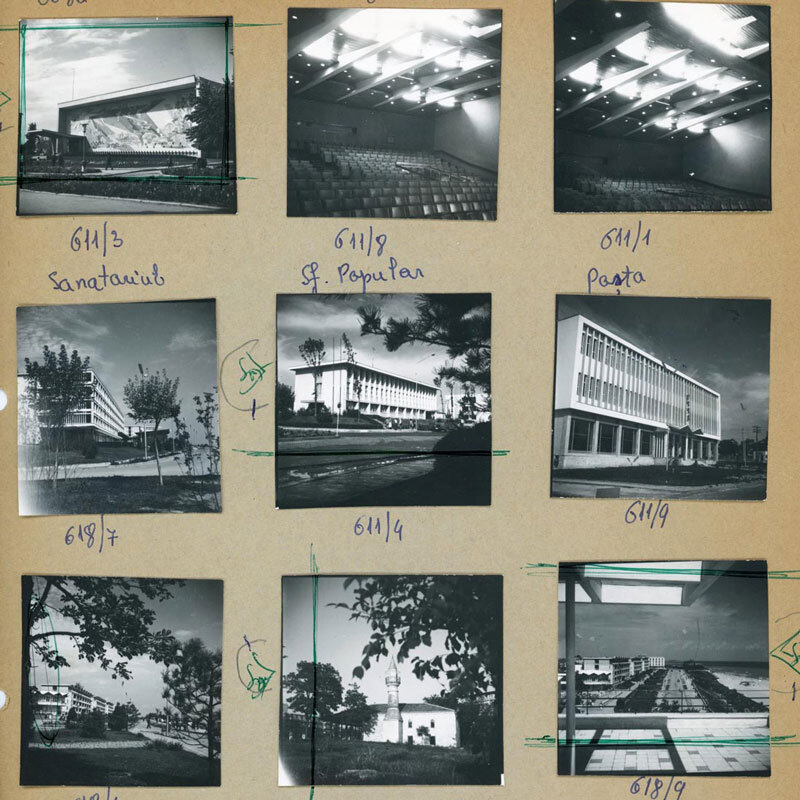
The photography archive of Romanian Union of Architects. Online and Offline

As chance would have it, shortly before I was invited to write for the "Architecture 110" dossier, I watched the documentary Videograms of a Revolution (1992, Harun Farocki and Andrei Ujică). I decided then that the most appropriate moment to comment on in the magazine's history was the 1989 revolution. The chaos of the December days was followed by the effort and confusion of rebuilding the whole country. While the above-mentioned movie is limited to documenting five days during the revolution, the 5-6/1989 issue of "Arhitectura" goes even further - it notes the turmoil, the confusion, but also the incipient thoughts on how the reconstruction of a profession directly affected by the relationship with the regime can and should be approached, it raises the question of shared guilt, but also of possible ways out of guilt.
A Chronicle of Professional Reinvention |
| The article proposes a re-reading of the last issue of the Arhitectura magazine from 1989 which was published, as it was generally the case in the late 1980s - with a delay, after the Revolution. The double issue, 5-6/1989, contains a thematic dossier, "Under the Breath of Liberty," dedicated to the commemoration of the victims of the Revolution as well as opinions on the various ways in which the architectural profession should reform itself. The relevance of the issue is asserted by comparing it to another chronicle of the events of 1989, the documentary Videograms of a Revolution (Harun Farocki and Andrei Ujică, 1992). The seventeen pages dedicated to the newly found freedom are distributed into different themes, ranging from articles expressing hope for the future and trust in future generations to those that acknowledge the less than enviable stance of architects as collaborationists of the regime. The article lists these various positions, referencing them to other public reactions of the time. Through commentary and quotations from the original, the author traces the initial steps of the reformation of the profession, from its publicly announced dissolution, to the reinstatement of the Union of Architects. A necessary period of introspection followed by a public acknowledgement of guilt is suggested by some architects, while others advocate for the normalization of architecture as a liberal profession. Sadly, the self-evaluation of the profession was cut short in the 5-6 issue of Arhitectura, thus projecting an unfinished professional reinvention, easily observed 28 years later. |
Videograms of a Revolution is a surprising collection of footage of the days of the revolution, from alternative sources to the official ones, accompanied by commentaries aimed at clarifying the chronology of events and creating a theoretical context of a revolution broadcast on television. Watching the movie reminded me of the emotions of those days (associated in my memory with the naivety of my age) and amplified by the experiences of those around me and the ubiquitous television, but it also changed my understanding of the revolution, which this time seemed to be broadcast on television. The documentary creates a narrative with multiple points of view, with each camera becoming a character asserting its position on the events - from the awkward presence in a hospital room interviewing an injured woman, or the furtive peek from behind a student dorm curtain, to the "mobile" camera in a Dacia among the demonstrators, and finally the camera of a television professional concerned with what is happening in the institution where he works. All this is put in parallel with the official broadcasts, initially subject to the rigors of representing the political regime and then to the interests of the new poles of power that are rapidly emerging. The huge surprise of this viewing is the realization of the relativity that underlies even facts whose authenticity we should not doubt - such as a live broadcast. The rehearsals before going live, the role-playing ("Mircea, I'll introduce you and you write, you show, you look like you're working on a call!"1), self-censorship, all these things undermine the idea of events as authentic and observable, and turn them into a performance, plunging them into Debord's society of the spectacle.
With this possible bracketing of the authenticity of the representation of the events of 1989, caused by the fragmentation of multiple perspectives, in mind, I re-read the 1989 issue of "Arhitectura", number 5-6.
Seldom does an architecture magazine leave the impression of spontaneous and emotional "on-the-ground" journalism as this issue does. That is why, when I set out to write about it as a historical document (which it has become in the meantime), the emotions contained in the various texts gave me a cinematic impression of its constitution, and the parallel with Videograms was self-evident.
By the end of the 1980s it had become customary that the appearance of "Arhitectura" was delayed. Only once, perhaps, did this bode well: when the delay meant that the last two issues of the 1989 magazine appeared together after the Revolution. To an eye unfamiliar with these details, the delay puts the journal in a paradoxical situation: instead of ending the year on time, the appearance of the dossier "Under the Breath of Freedom" symbolically steals the kickoff and links the beginnings of the profession's restructuring to 1989, not 1990 (and a resumption of the numbering of the journal's issues).
In an early editorial devoted to the change, a bitter parenthesis speaks of the frustration of deprivation, but also of the opportunity to produce an issue that warmly reflects the profession's reaction to political events: "With haphazard printing schedules that always took it out of the flow of priorities (given to other publications and - of course - to homage opuses), 'Arhitectura', in the daunting slown of its slow going off the press, was caught by the unexpected rush of the Youth Revolution of December 1989, in its issues 5 and 6 (now pictured merged) and with undisguised confidence in the new direction of its most viable and timely future roster"2.
A few details are worth noting before commenting on the texts in this issue. Perhaps the most significant is the cover. With paper quality steadily declining since 1980, the cover is only slightly thicker than the square pages inside. The illustration by the architect Ștefan Radu Ionescu (one of the main figures in the production of this issue, as issue editor, layout designer, general secretary of the reaction, cover designer and author of some of the texts) is a simple reproduction of the tricolor with the cut-out coat of arms, the symbol of the revolution. The title is also simple: "Romania. December 22, 1989". The flag is, rather, sketched in patches of color and seems to capture the movement. A cursory glance at the symbol, but a closer look reveals that the flag is upside down. It could, of course, be an error (in zincography, where photographs are transferred onto zinc plates), betraying haste and emotion.
A diagonal reading of the table of contents reveals the dual nature of the volume, with some columns and texts obviously preserved from a pre-revolutionary version of the magazine (generally, it is the professional and technical material), and others written specifically to celebrate the freedom and reform of the profession. Of the double issue's 160 pages, only about 17 are devoted to the revolution. But they are undoubtedly the most significant, and I will comment on them below.
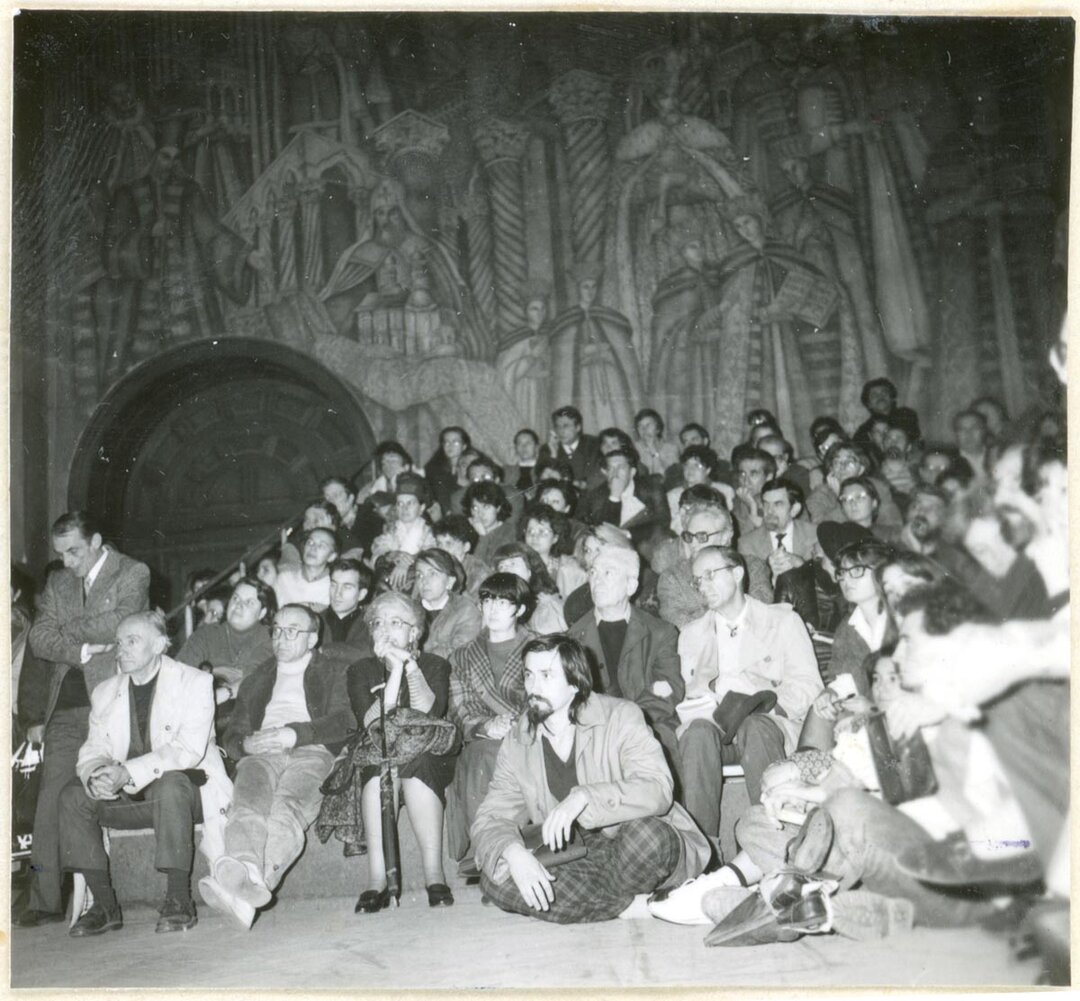
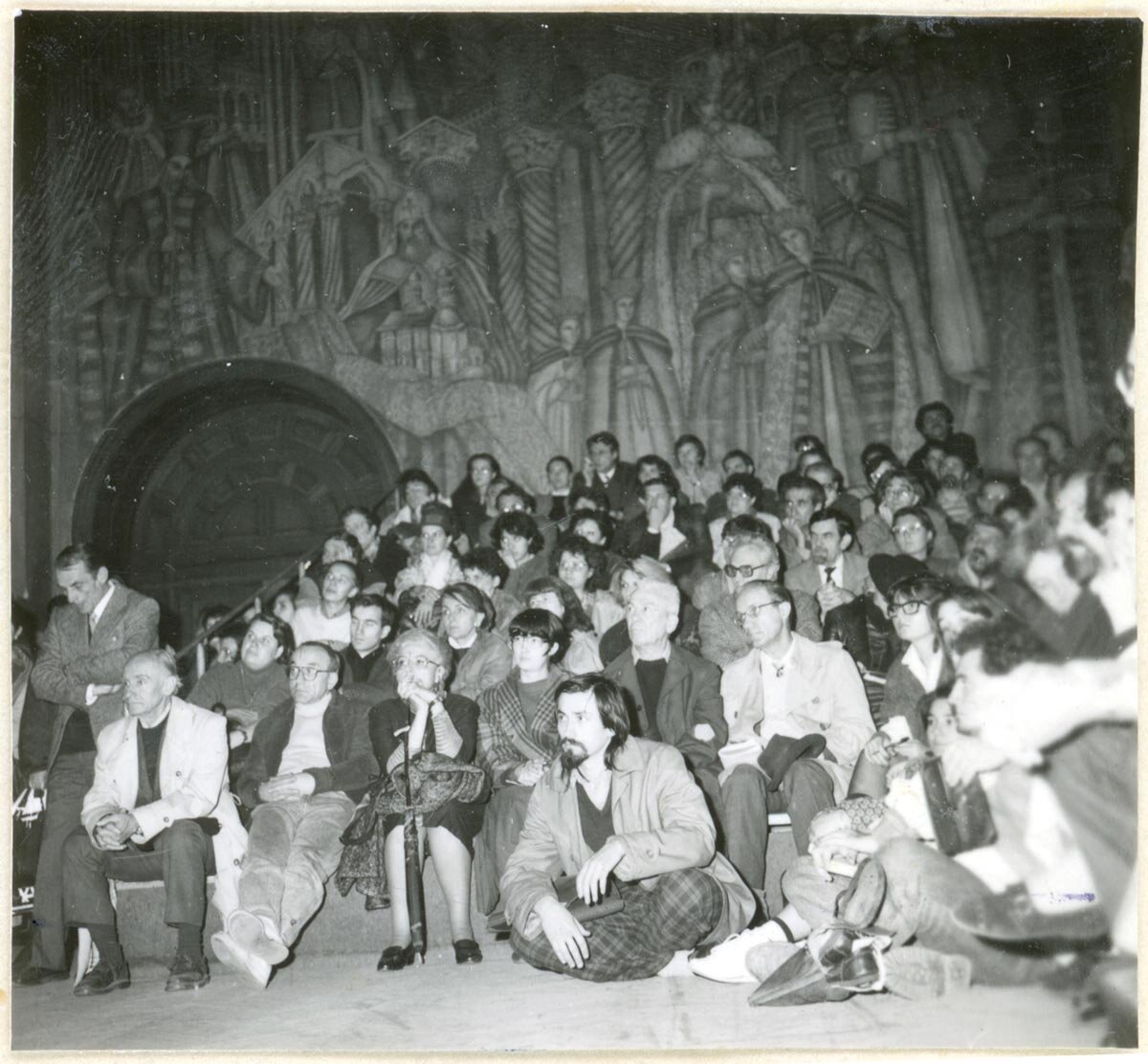
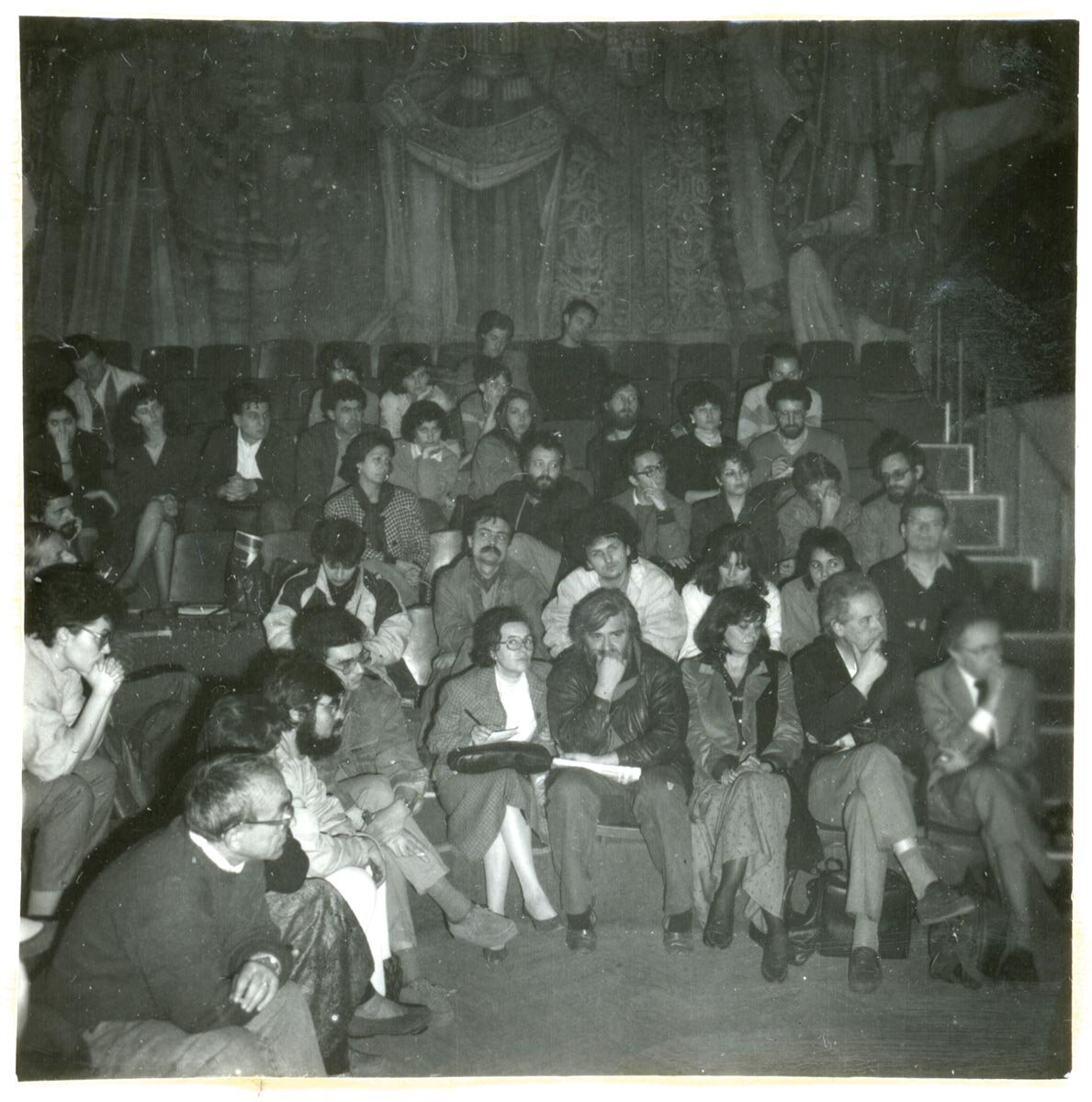
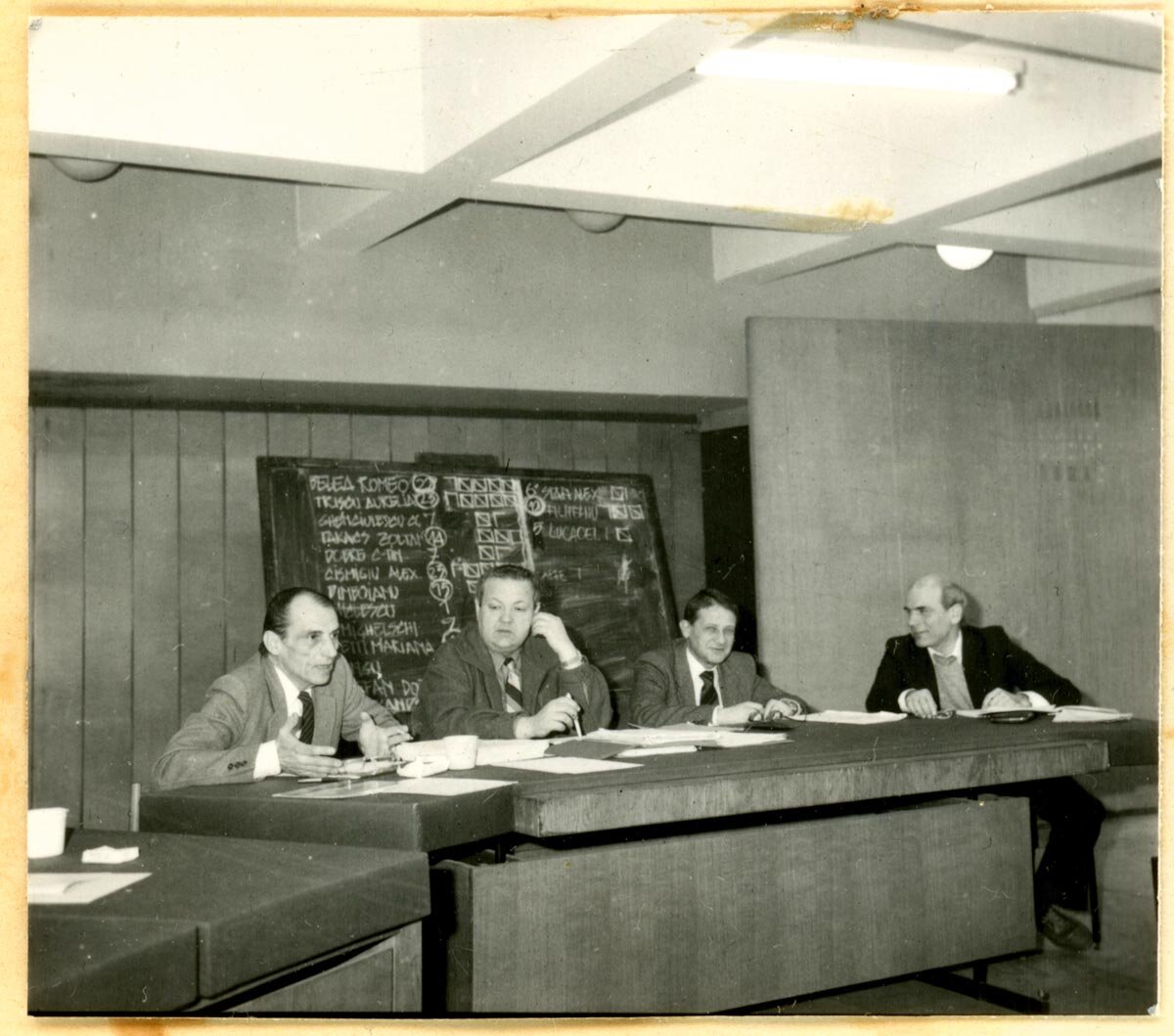
Like the issue as a whole, the narrow-format pages3 juxtapose texts with no reference to political events with the important review of the Union of Architects' restructuring activity, "Organizational Tatonări and UAR Perspectives." The focal point of the brief review of the Union's feverish activity is the announcement of its interim management committee, with Prof. Ascanio Damian as its president. One detail might almost escape attention - the comment on the public announcement of the dissolution of the Union in the first days after the revolution: "A singular measure, which we do not know of any other professional association having taken in haste"4 and which seems to have caused confusion at the time. Clearly, the re-establishment of the Union in an attempt to resume the pre-war continuity is a sign of the basis on which the profession wants to rebuild itself. The article is accompanied by photos from UAR meetings, in the Frescelor Hall or workshops. To the unfamiliar, it might send a mixed message - the architects in the images are dressed as if to go, but seated, attentive to some presentation or engaged in dialog - but they finally appear, as they have for years, chilled in the lack of heat in their workspaces. Here we also learn that the UAR is reintroducing the system of membership based on contributions, which also justifies the announcement on cover 2, in which Romanian architects abroad are invited to become members in order to form "the best professional connections"5.
Surprising is the short chronicle "Tezaur de civilizație bucureșteșteană", dedicated to an exhibition that was abusively closed shortly after its opening (which took place in June 1989), because its subject offended the sensibilities of the political leadership. The exhibition at Casa Armatei, which illustrated life in 18th-19th century Bucharest, "provoked so much anger and 'principled' anger at the ruling levels, which were too subject to dictatorial inculties, that the consequences could not fail to be felt, to the disappointment of the spirited organizers (harshly 'criticized', replaced from their posts, harshly warned, etc.), as well as of those who never got to visit it"6.
Moving on to the dossier "Under the Breath of Freedom", we have a series of texts illustrating the architects' concerns about political change and the long-awaited professional reform. The spectrum is broad and thus relevant. The headlines announce urgency and pathos: some articles call for swift action ("Imperatives of the moment in the architecture of the capital"), others look to the future with hope ("New meanings and hopes", "Starting point", "Letter to young colleagues or future colleagues, architects", "Looking towards value: fragmentary options"), some summarize the past in harsh words ("The nightmare is over"). Following the wave of a return to faith felt throughout society in those days, the imperative of signifying the trauma that had just taken place is noteworthy: "Worship", "Trophies", "Raise the trophies!".
The dossier's editorial, signed by the magazine's entire team, is a kind of laying down of arms about what had previously happened in architecture and in the magazine's publication, but also a clumsy homage to the victims of the revolution. The wooden language, the only one that seems to be at hand, is called upon to express sentiments contrary to the ideologized, hitherto ideologized ones, and the result is, again, paradoxical: "May the example of their supreme sacrifice, from which emanates the radiance of our hopes for a clean and dignified future, also shed its light on the most suitable ways of optimizing the restructuring of our pages, of moving on to new and certainly extended levels of editorial work, with the assumption of the widest possible openings towards the higher levels of architectural creation and in permanent agreement with the preferences and demands of our readers!"7. The inability to change the register of the language is also evident in one of the opening scenes of Videograms, in which a garment factory worker, Rodica Marcău, wounded in the Timisoara shootings, becomes the spokesperson of the revolutionaries and transmits a program full of pathos to the whole nation.
Radu Drăgan poses the question of reforming the profession from a position of general assumed guilt, which calls for radical restructuring, the principles of which he briefly lists: "We architects, all of us, will have to make a severe examination of conscience. All this would not have been possible without an abdication - the exceptions are insignificant - of too many of us from the moral principles that govern and make civilization possible. There has also been throughout all this time a resistance, sometimes veiled, sometimes more overt, whose most significant product might be called "subversive architecture". [...] Two years ago, an exhibition of real architecture by a group of four architects proved that it can be done. That moral defection is not obligatory, that not all professional knowledge is perverted. This is where we will have to start from, at this crossroads, when the profession itself will probably reorganize itself and finally return to normal. [...] The big institutes will have to be abolished, the whole design mechanism decentralized, architecture will have to be restored to the status of an art and the architect to free initiative, together with a less flexible backbone"8.
It seems that not many architects share his views, but Adrian Mahu does, raising the question of professional ethics: "To shirk the moment of reflection on our degree of culpability would be to perpetuate our cowardice indefinitely..."9. Interesting positions coming from architects who do not become part of the interim leadership of the Union!
However, there is a call for the identification of architects whose moral stature cannot be questioned, in order to take over the completion of the works in Bucharest: "... we propose to halt all construction, including the residential blocks in the above-mentioned areas, and to set up urgently a group of honest specialists (architects, engineers, people of culture), with proven professional and moral qualities, who have not been substantially involved in the above-mentioned works and have had no decision-making or control power"10.
A less trenchant and much more emotionally balanced position is that of Anca Sandu Tomașevschi, editor of the magazine. Her article, although it has the harshest title, "The nightmare is over", assumes a familiar tone - which saves it from wooden language, but betrays a kind of general sadness about the profession and a balanced dose of confidence in the future: "Now the nightmare is over. We debate a little more, we organize a little more, we advocate a little more (because it's wearing and it's time), we gossip a little more (because we are human), we read newspapers cover to cover and watch TV (and that lasts). But, in the meantime, we get the tape recorder ready and set the calculator on the board (those who have one, as some people go out of their way to find it). And call the controls.11.
The end of the dossier contains some nostalgic texts and illustrations: a commentary on a "premonitory" exhibition by Militza Sion, or a reprint of the article "Troițe" (Troiques) by Professor Florea Stănculescu, published in 1942 and used as an introduction to the course "Rural Architecture" at the Faculty of Architecture. The arc over the communist period is significant, it once again aims to retain continuity with a time when the profession had an appreciable status.
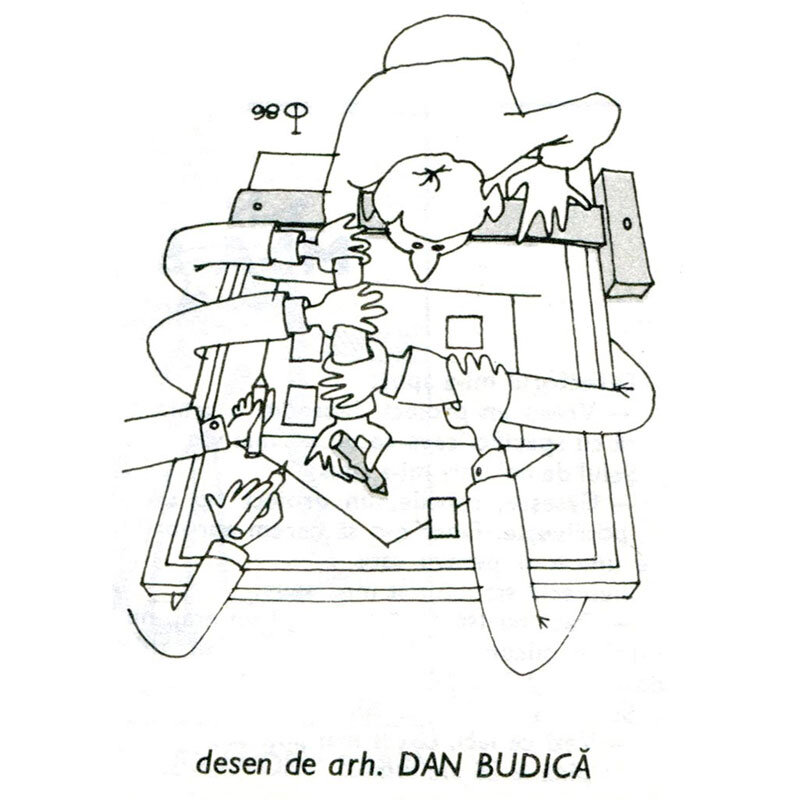
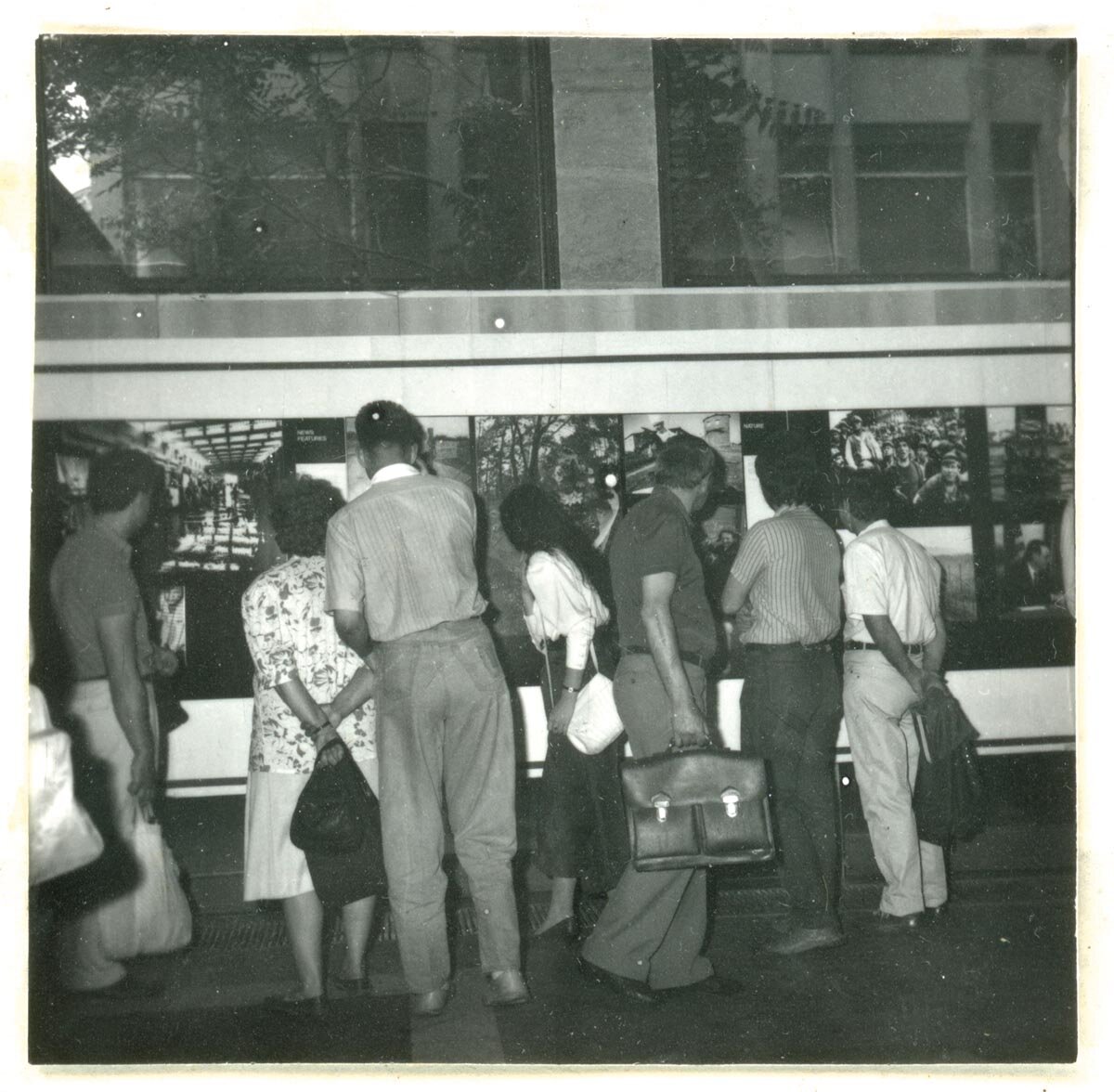
To conclude, a series of photographs by Paul Stănescu and commented by Anca Sandu Tomașevschi propose a "short photographic journey - Through the Bucharest of the Unforgotten". It is, perhaps, worth noting that the series of photographs stops at two page columns, leaving the professional articles to flow on (starting with Rodica Eftenie's "Argumentare obiectiv-urbanistică a studiului de amplasament"). It is, obviously, a disappointing ending, which hinders the conclusions and leaves the reader wondering what the editorial meetings for the production of this issue must have looked like? What secrets would a video of these meetings reveal? What would have been the tensions, the confrontations, the resignations?
It is perhaps a sad foreshadowing, for in a few pages, issue 5-6 sketches a portrait of post-revolutionary Romanian society: rebellious but also resigned, hopeful but also farting.
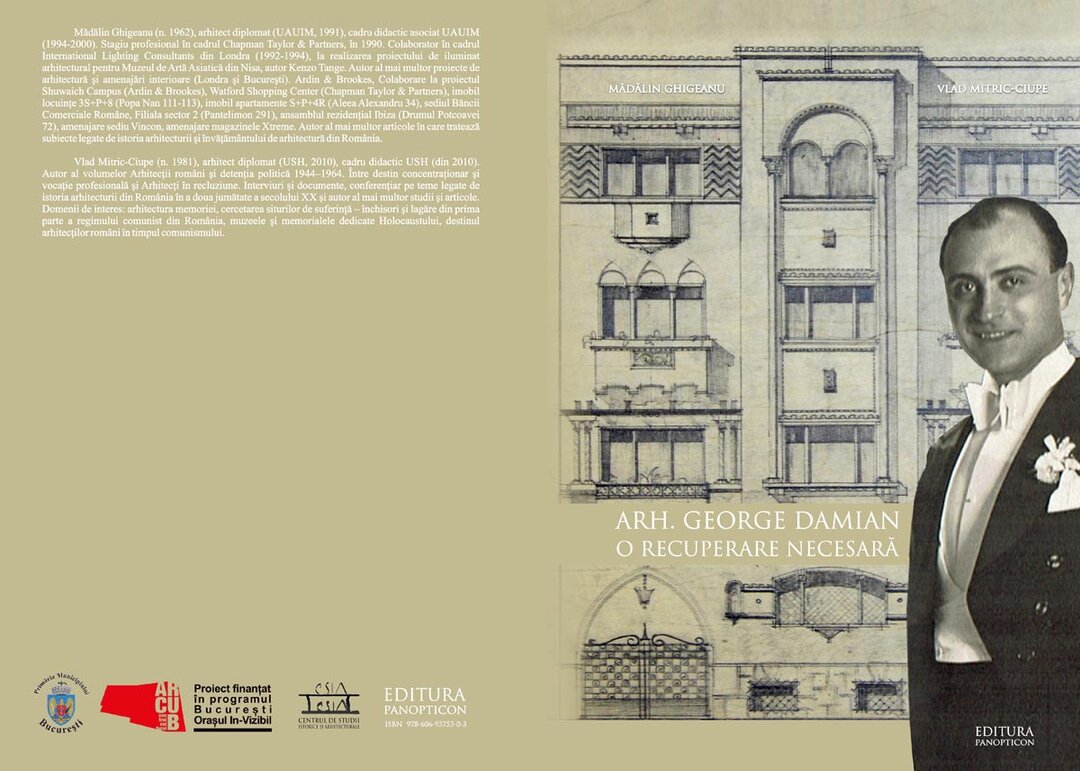
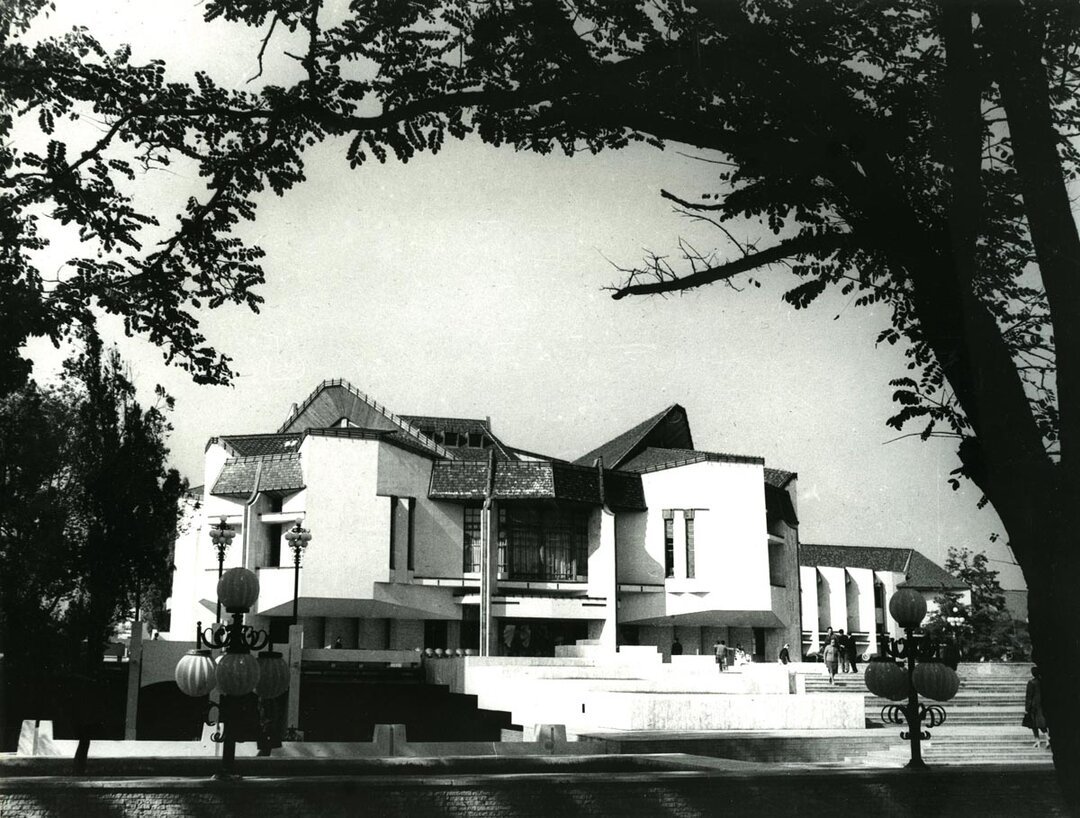
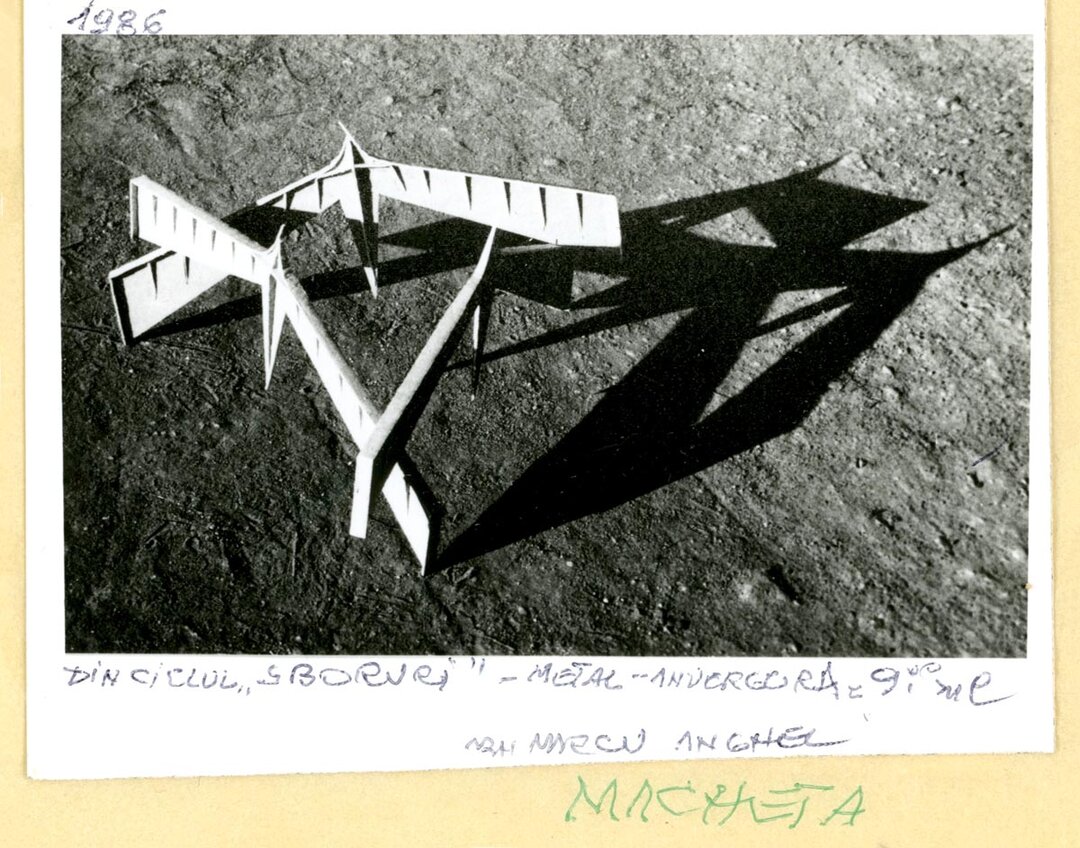
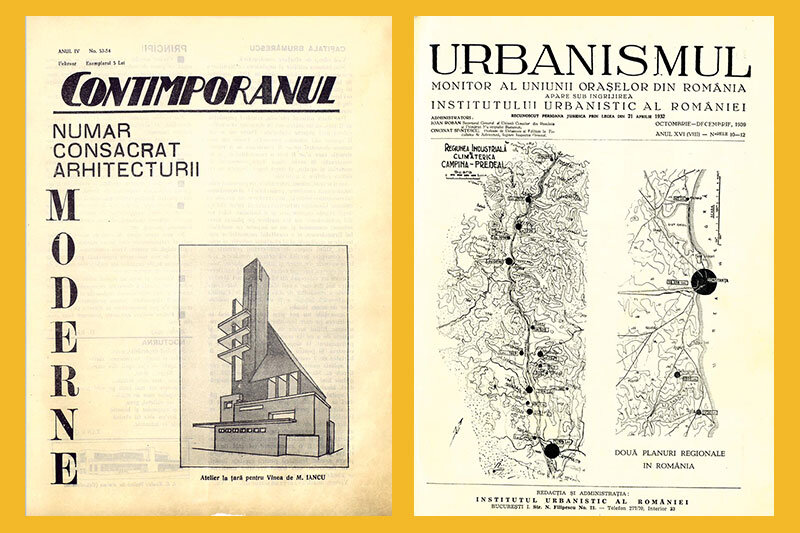
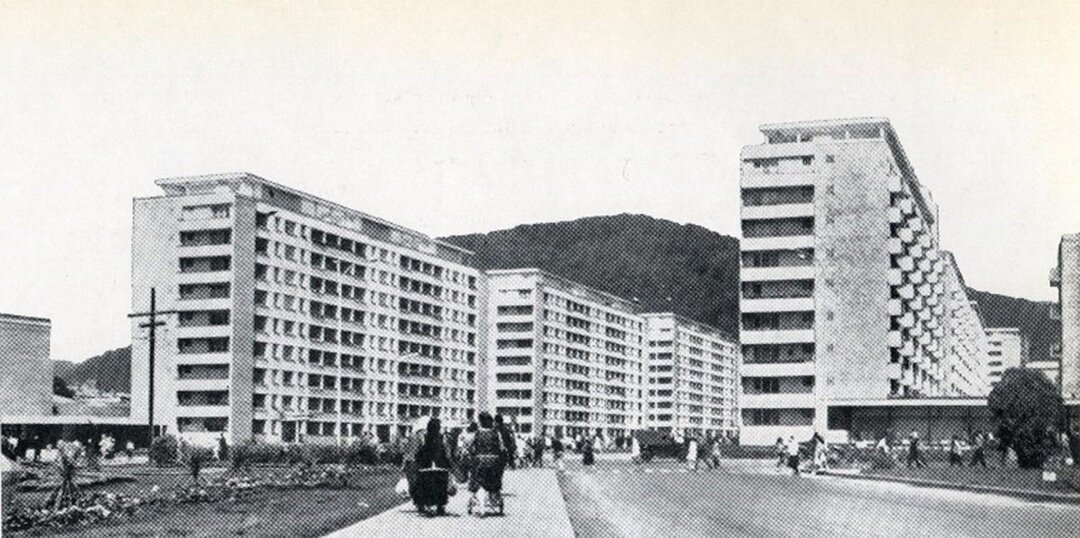
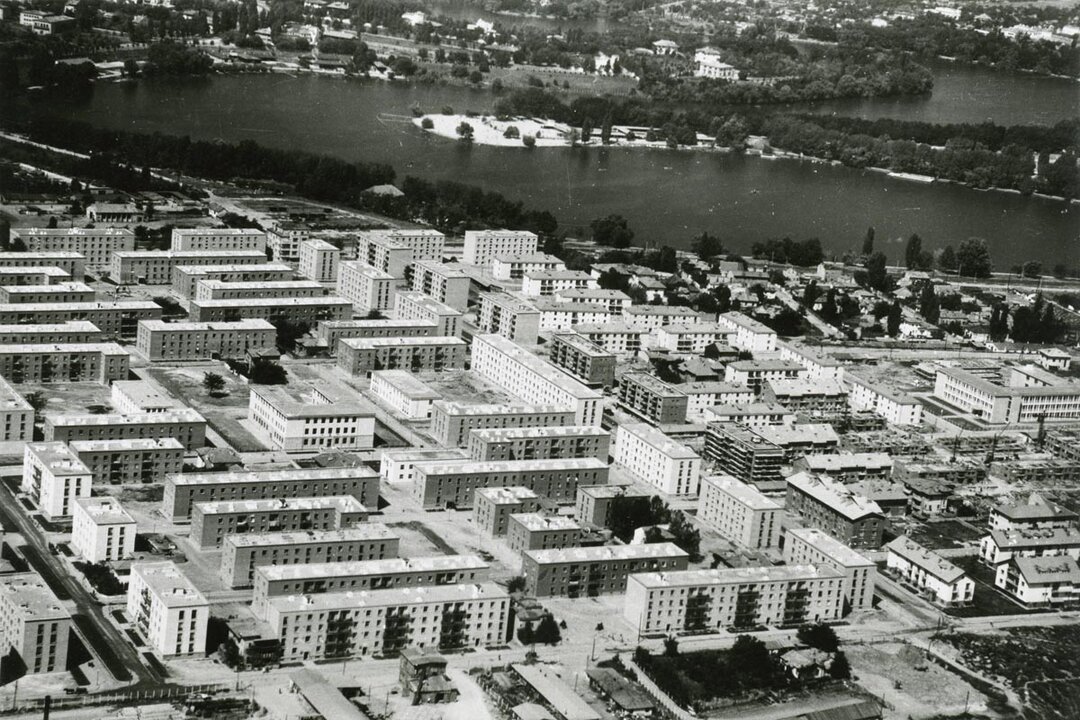
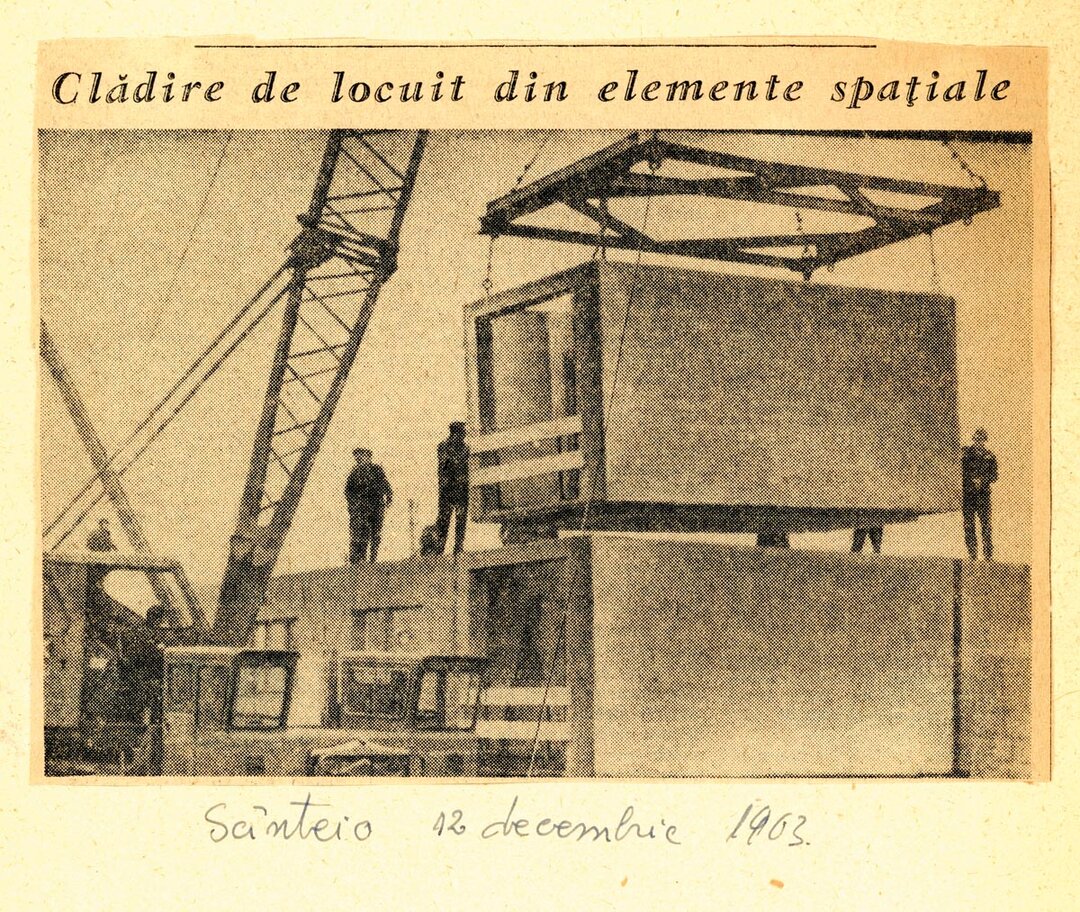
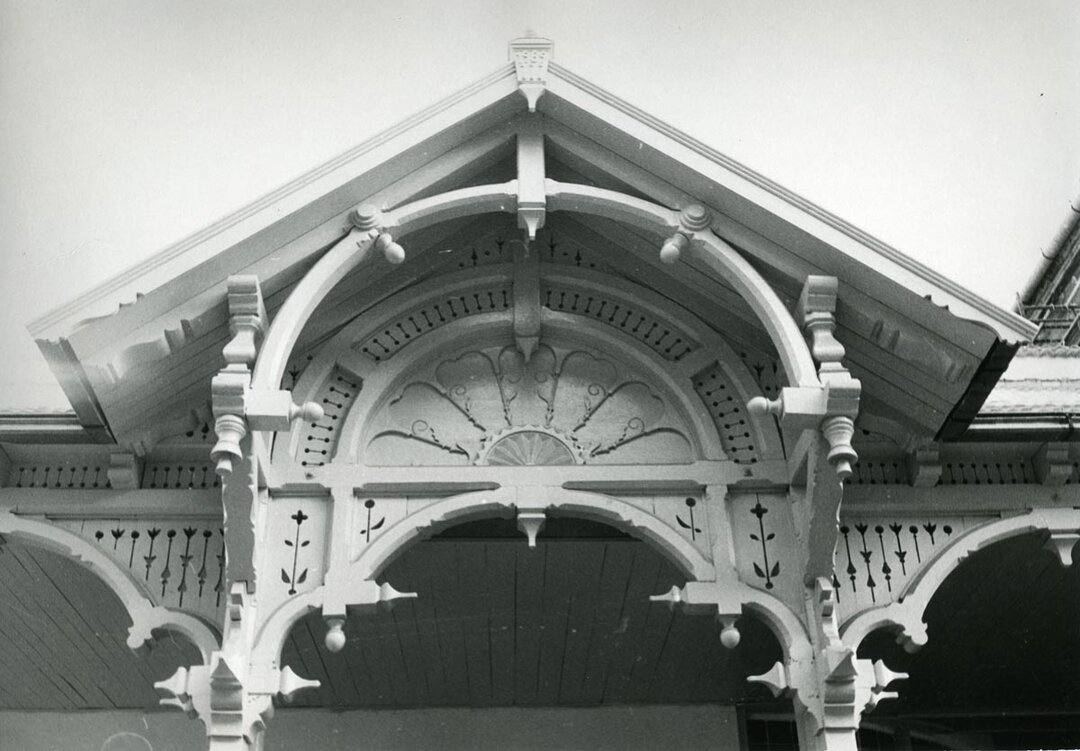
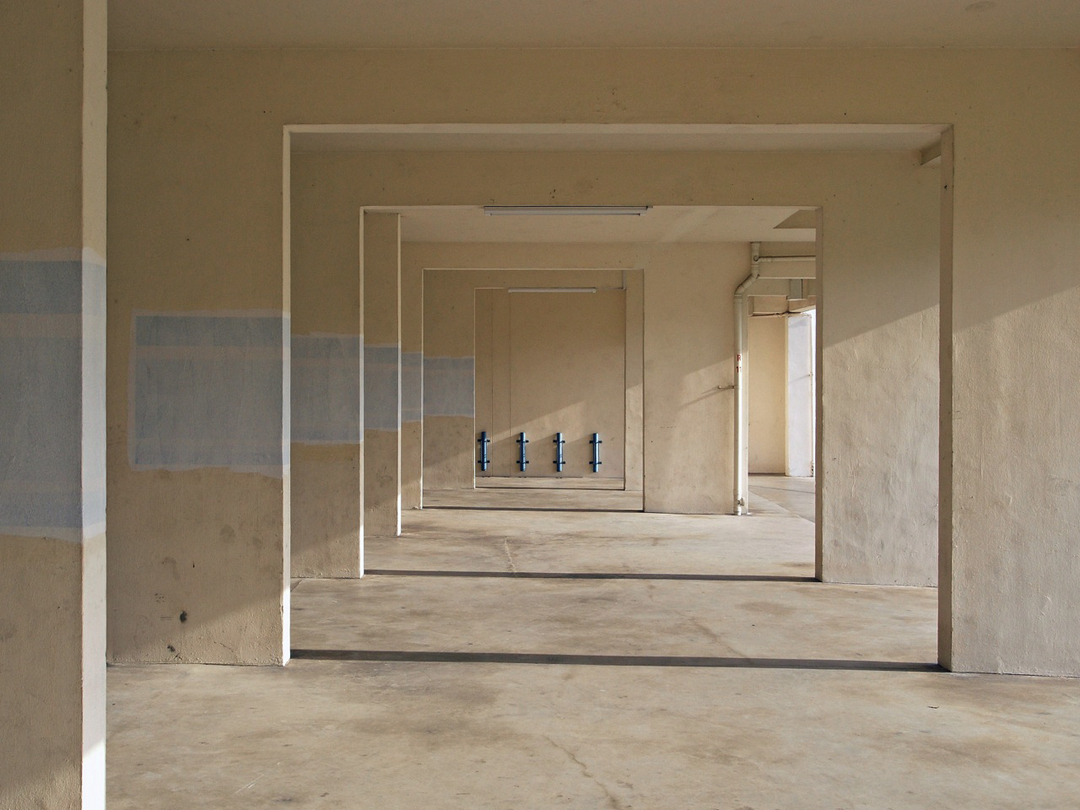
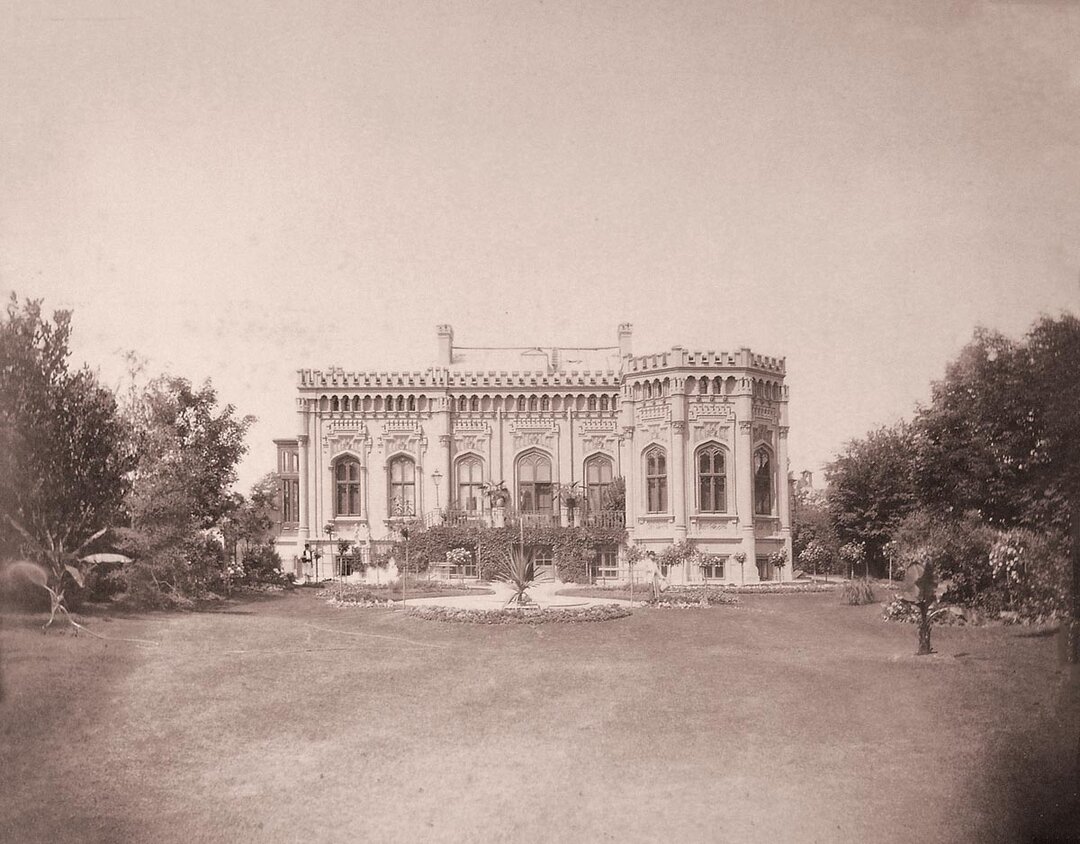
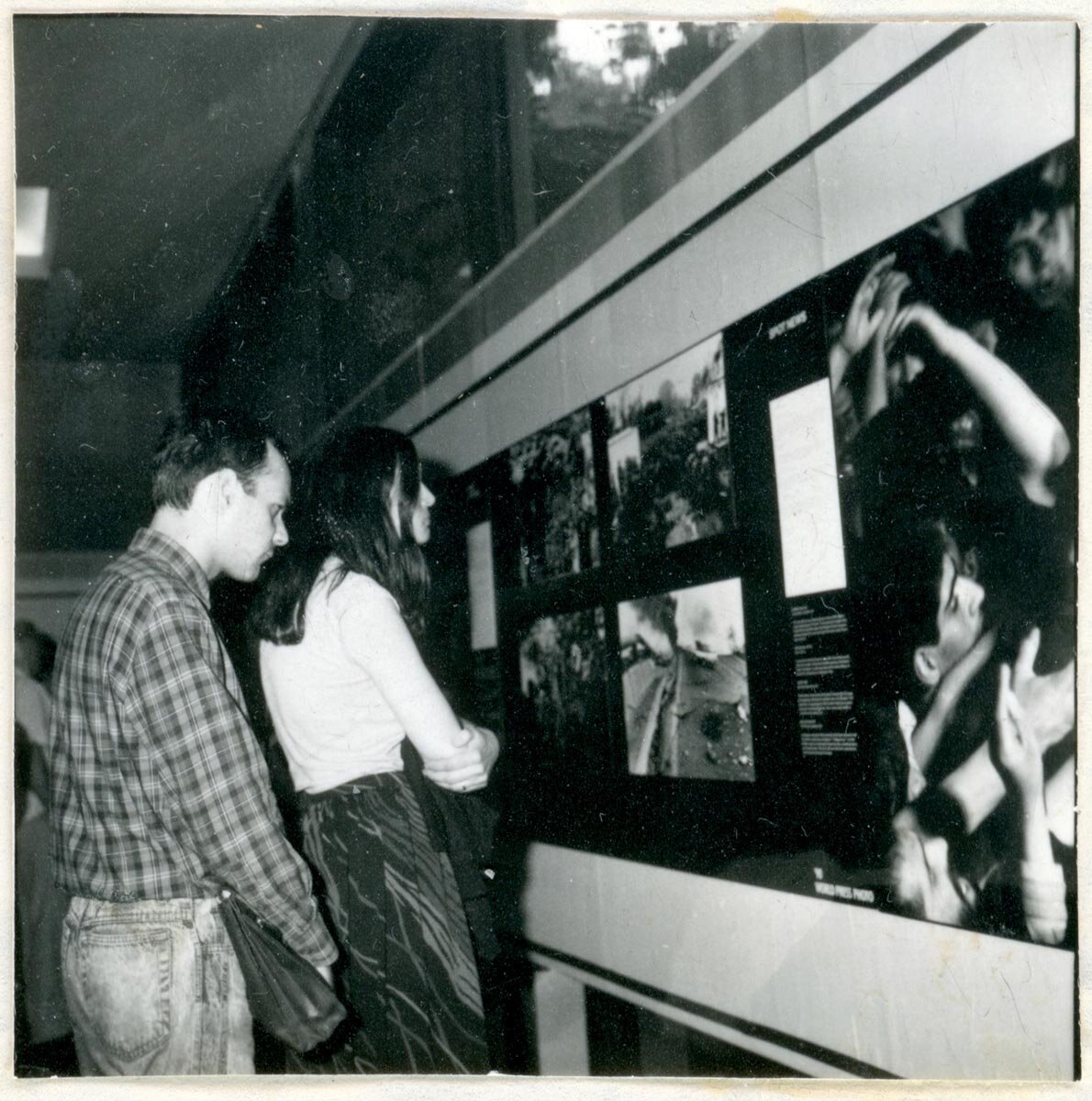
The article is illustrated with images from the UAR photo archive.
NOTES
1 Before entering the live broadcast, in the stream of people in Studio 4 of the television station, Ion Caramitru has this dialog with Mircea Dinescu. In an interview Caramitru gave to Digi24 in March 2014, Caramitru says that the moments before going on air were secretly recorded to function as evidence in case of a failed regime overthrow. The words have remained emblematic of those days.
2 *** "New Meanings and Hopes", in "Arhitectura", 5-6/ 1989, p. 9.
3 They appear from 1968 and are reserved for technical or informative matters. The quality of the paper is poorer than that of the square pages in which the professional articles appear. Observations and comments on the format of the magazine appear in the comprehensive article "Testing the Physiognomy of the Arhitectura Magazine 1952-1989" by Ana Maria Zahariade in Studies in History and Theory of Architecture, Printed in Red. Architectural Writings during Communism, vol. 1/ 2013, pp. 161-183.
4 *** "Tatonări organizatorice și prospettive UAR", in "Arhitectura", 5-6/1989, p. 5.
5 *** "Important announcement", "Arhitectura", Idem, cover 2.
6 Ștefan Radu Ionescu - "Tezaur de civilizație bucureșteșteană", "Arhitectura", Idem, p. 4.
7 *** "New meanings and hopes", "Arhitectura", Idem, p. 9.
8 Radu Drăgan, "Punct de plecare", "Arhitectura", Idem, p. 10.
9 Adrian Mahu, "The axe and the forest", "Arhitectura", Idem, p. 10.
10 Peter Derer et al, "Imperatives of the moment in the architecture of the capital", "Arhitectura", Idem, p. 11.
11 Anca Sandu Tomașevschi, "The nightmare is over", "Arhitectura", Idem, p. 13.