The photography archive of Romanian Union of Architects. Online and Offline

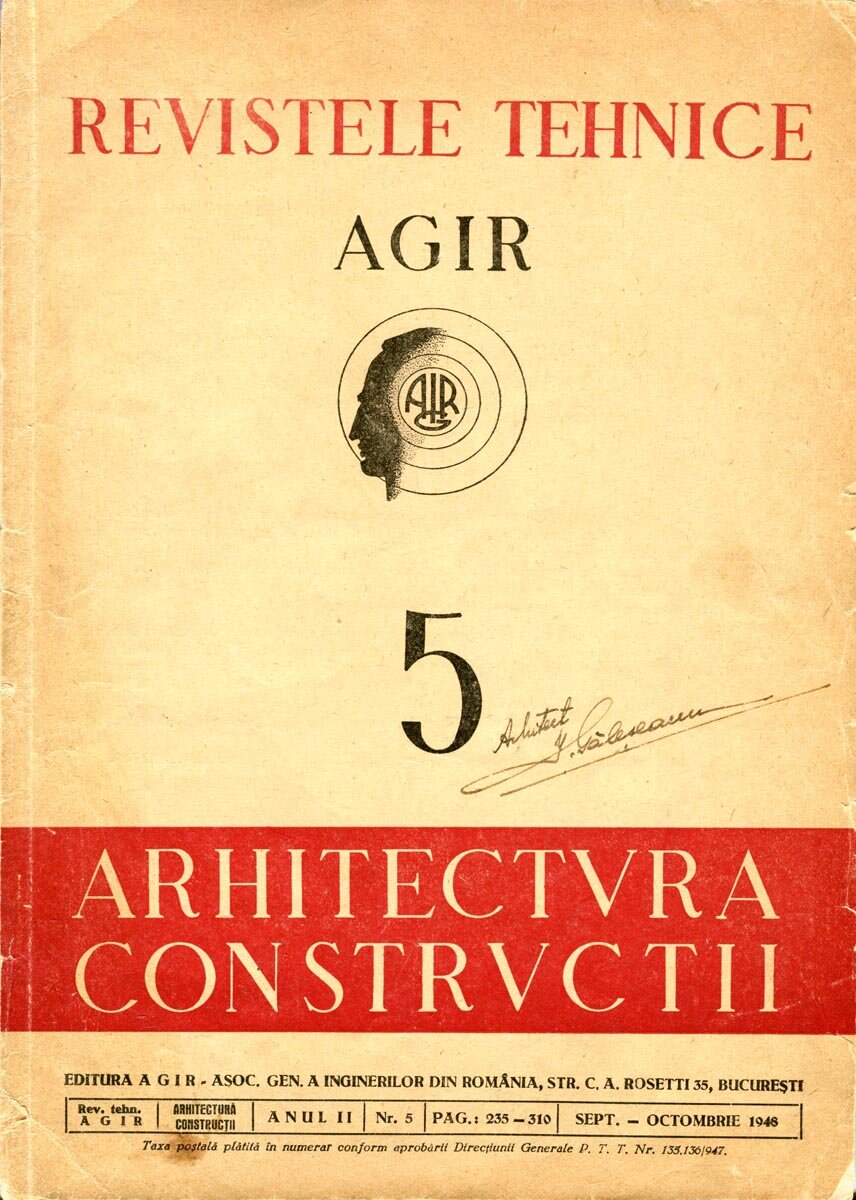
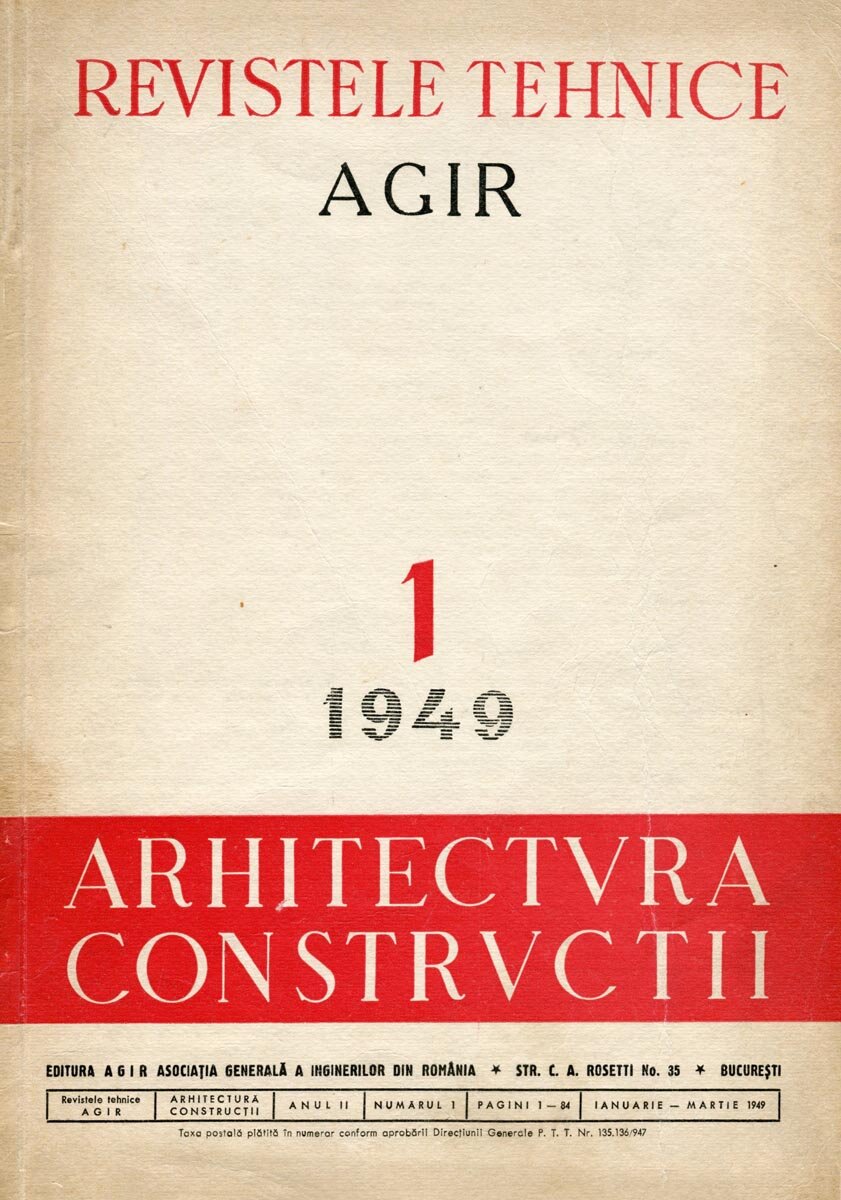
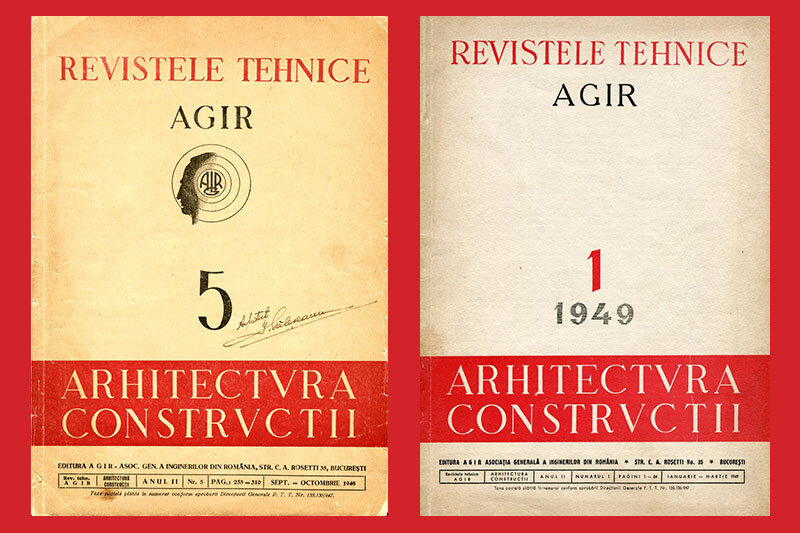
In March 1947, the "Cuvântul înainte" of "Revistele Tehnice AGIR - Construcții" announced the intention of the Board of Directors of the General Association of Engineers in Romania to improve the editorial practice by publishing several periodical bulletins by specialties. Such a measure was necessary because the "AGIR bulletin in its old form" was rather a collection of scientific texts intended for all technical disciplines, and most of the time the publication was of a general and rather vague character. By changing the editorial formula and creating an "AGIR Technical Review" for each technical discipline, the Engineers' Association sought to respond to the distinct professional requirements of specialists in each field; the new publications were intended to provide practitioners with state-of-the-art scientific information1. The "AGIR Technical Journals - Constructions" were addressed to both construction engineers and architects, so the new editorial formula was finalized when the journal "Arhitectura" had not appeared since 1945 and architects were asked to regroup around AGIR.
Post-war reconstruction in the Technical Revues of the AGIR - (Architecture and) Buildings (1947-1949)This article analyzes the review Revistele Tehnical Revistele AGIR - Architecture and Constructions, published by the Romanian Association of Engineers between 1947 and 1949. The review was designed to meet the professional requirements of both construction engineers and architects, which was an important fact given that the Arhitectura magazine ceased its publication in 1945, and the architects were required to regroup around AGIR. The researcher can read these articles from at least three perspectives. First, by analysing how the constructive process was influenced by bureaucratic centralization and state control over financial resources. Second, by assessing the ways in which designers reconsidered their professional values in a complicated political context. Third, by highlighting the growing influence of the Soviet Union within the Romanian society. Although important because they contribute to a nuanced understanding of the period, such approaches fail, however, to outline reconstruction by counting the real needs of society, nor enhances the specificity of the Romanian case in relation to similar projects conducted in other European contexts. In this article, the author aims to highlight the meanings of recovery in the immediate post-war period by looking at a body of principles central to the architectural practice of the time, and thus to assess to what extent there was a correlation between these conceptual reinterpretations and the public visibility of the magazine. The author argues that the magazine highlights both different degrees of public and decisional visibility of the planners - a situation fuelled by the ambiguous status of the Society of Romanian Architects (SAR) - and the mechanisms by which the architectural discourse was dealt with in terms of the availability and source of the financial resources. |
Of course, beyond strictly practical considerations, the changes in editorial policy also illustrate a complicated political context. The effort to rebuild the country after the Second World War did not have the expected results, so AGIR's motto - "Through technology to progress" - expressed not only a professional wish but also the aspirations of a society still insufficiently modernized. At the time, in political and professional circles alike, a growing number of voices were calling for centralized decision-making, consolidation of the bureaucratic apparatus, technological progress and greater involvement of specialists in the process of reconstruction as the easiest way to develop the country and to reposition it on the principles of rationality and efficiency. In fact, one of the ideas frequently reiterated at the time was to improve the social optimum through a modern approach to work, and the development of infrastructure and the efficiency of housing construction were one of the central pillars2. It was probably precisely the concern for solving the social aspects of reconstruction that made the "AGIR Technical Journals - Construction" the first in a series of publications. Between March 1947 and August 1949, 15 issues were published; the pages of the magazine contained numerous articles on the field of construction and architecture, both in the form of original texts by Romanian specialists and translations from foreign publications. Throughout this period, the contents of the journal remained relatively unchanged: a grouping of specialized articles, somewhat larger in size; a few shorter "Notes" on technical issues; an "Information" section on organizational issues of relevance to specialists; and two sections on "Reviews" and "Journal of Journals", which included mentions of the latest publications from the country and abroad. The change of name to "Architecture and Constructions" from issue 5 (September-October 1948) onwards did not radically alter the format of the journal; however, after September 1948, the number of large articles increased at the expense of the other sections.
Today's researcher can read these texts from at least three perspectives. The first concerns the way in which the construction process was influenced by bureaucratic centralization or state control over financial resources. The second takes into account the ways in which designers reconsidered their professional values in a complicated political context; to a greater extent than in the previous period, immediately after 1945 we witness numerous situations where different ideas, taken up by Romanian practitioners through Western or Soviet channels, were (re)interpreted through different ideological grids. A third perspective may highlight the growing Soviet influence; the increasing number of texts translated from Russian and republished in the "AGIR Technical Journals" is suggestive of Romania's gradual integration into the Soviet sphere of influence. Although important because they help to understand the period, such approaches fail, however, to outline the reconstruction from the perspective of the real needs of the society, nor do they enhance the specificity of the Romanian case in relation to approaches to reconstruction in the context of similar projects carried out in other European contexts. In what follows, starting from the contents of the "AGIR Technical Journals - (Architecture and) Constructions", as well as by reviewing the names of the architects co-opted in the realization of the issues, we will highlight the meanings of reconstruction in the immediate post-war period, as a result of the political-ideological nuances of a body of defining principles for the architectural practice of the time, and, implicitly, we will question a possible correlation between these conceptual reinterpretations and the public visibility of the journal. Such an approach may contribute to a better understanding of the remaking. The publication edited by the Engineers' Association was not a singular appearance in the publishing landscape of post-war Romania. On the contrary, between 1945 and 1948, "Simetria", "Revista Fundațiilor Regale" or "Buletinul Societății Arhitecților Români", as well as periodicals such as "Rampa", "Timpul" or "Contemporanul" were just a few public platforms where designers, architects or sociologists could express different ideological perspectives on the constructive aspects of refurbishment. What particularizes it in the post-war Romanian editorial landscape, however, is the way in which the "AGIR - Constructions Technical Magazines" highlights both the different degrees of public and decisional visibility of designers, as a result of the statutory ambiguities of the Romanian Architects Society (SAR), and the mechanisms through which the constructive message of a particular type was instrumented according to the availability and source of financial resources.
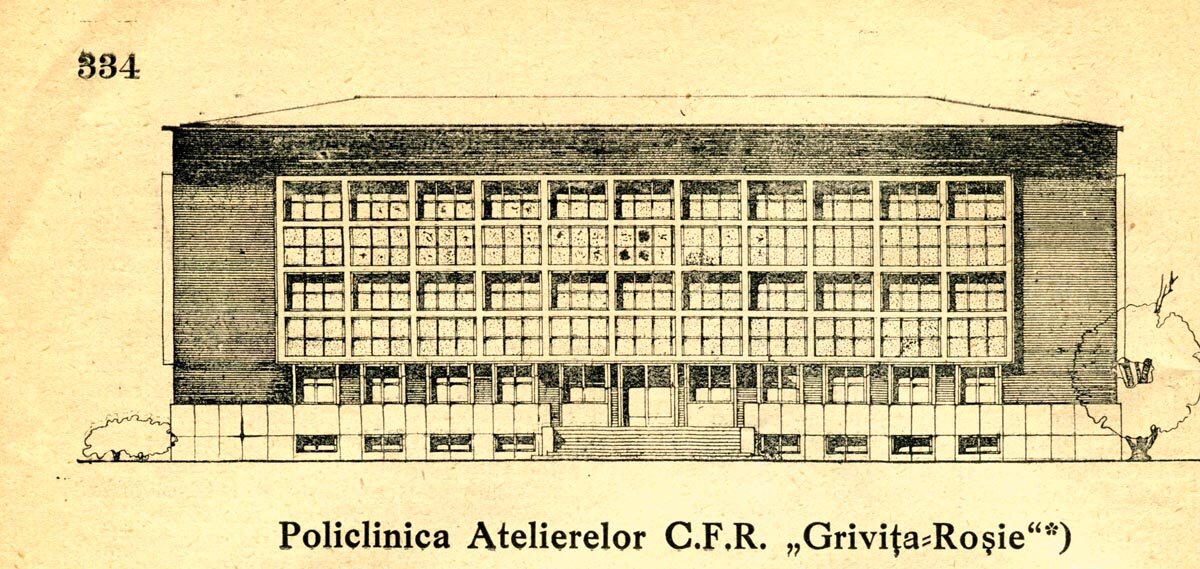
Between March 1947 and September 1948, the publications "Revistele Tehnice AGIR - Construcții" appeared under the care of an editorial staff composed mainly of specialists with an engineering background, such as A. Beleș, Em. Blitz, M. Hangan, Cr. Mateescu, Cr. Niculescu, N. Profiri, P. Theodorescu and P. Vernescu; only two architects, I. Davidescu and Duiliu Marcu, were co-opted into the editorial team. From September 1948, after the name change to "Revistele Tehnice AGIR - Arhitectură și Construcții", the team was joined by several architects, such as T. Evolceanu, I. Ghika-Budești, G. Gusti, M. Silianu and D. Vernescu. Some of the latter had previously published in other magazines such as "Simetria", "Buletinul Societății Arhitecților Români" or "Revista Fundațiilor Regale". They were representatives of the younger generation, most of them born at the beginning of the 20th century, and they reached professional maturity precisely in the post-war period; moreover, the preference for left-wing ideas of many of them enjoyed a favorable context3.
After the disbanding of the SAR Committee in 1945 and the discontinuation of the magazine 'Arhitectura', designers were left without an official and dedicated editorial platform. Since March 1947, "AGIR Technical Magazines - Constructions" could have made up for this lack by providing editorial space for architects. But by September 1948, only six articles by Romanian architects appeared4, the rest of the references to architecture being included either in translations from foreign literature or in texts by engineers. The non-involvement of architects in the AGIR editorial project had more complex meanings, since, as later events were to prove, the "Technical Journals" were not just a mere editorial platform, but the pillar around which the representatives of the communist leaders sought to articulate an alternative discourse by attracting like-minded specialists and by creating an institutional scheme to manage government funding for editorial projects. After a period of doctrinal ambiguity and professional collaborations on several levels, in October 1947, the SAR responded to AGIR's request to join the other associations of technicians in the country. Absorption, however, was a lengthy process; although the new affiliation was officially assumed in January 1948, a Congress of Romanian Architects was not scheduled until September. Throughout this interval, the "Technical Journals" were rather the space where the coordinators of the study circles of the SAR presented their main ideas on planning, urbanism, reconstruction, housing in towns and villages, or building materials and methods5.
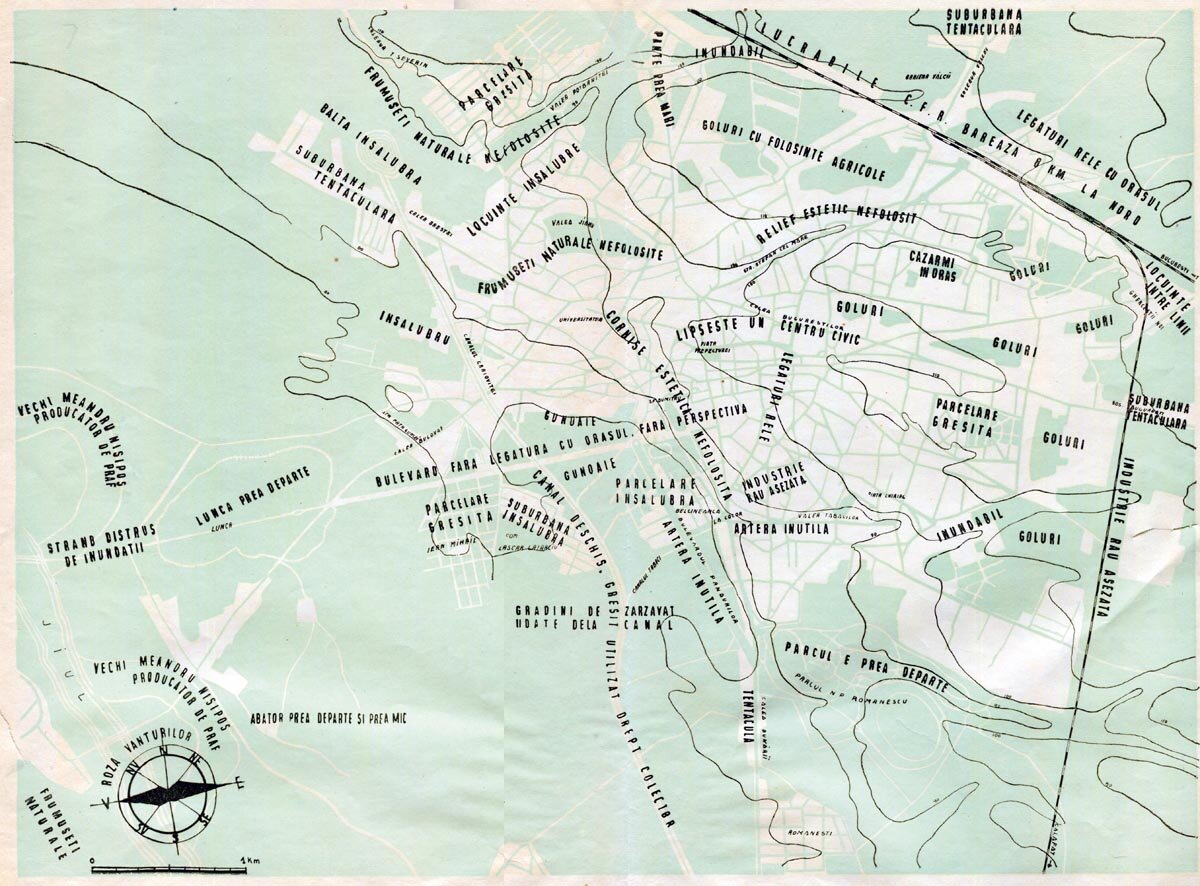
The themes addressed in the issues that appeared between March 1947 and September 1948 were built around the idea that a 'cheap' technique would provide a first step towards a better approach to rebuilding. The articles in the magazine problematized development issues, the publication representing a construct with strong ideological overtones that found its first direction of expression in the expansion of infrastructure. For example, several issues devote quite a lot of space to issues such as the water supply of Bucharest, the realization of the Bumbești-Jiu or Ilva Mica-Vatra Dornei railway lines. However, such references must be read beyond mere infrastructure projects, as an expression of attempts to reconfigure a national project and, implicitly, of the affiliation of the ideas and their ideological valences6. Of course, between March 1947 and September 1948, in the pages of "RT AGIR - Constructions" a significant number of articles were taken from Soviet literature. Whether we are talking about construction techniques or specific analyses on the reduction of construction prices, the texts bring to the forefront issues related to the organization of construction sites and resource planning. A reading of these materials, however, illustrates how the comparisons with the USSR do not necessarily place the Romanian state in an inferior position, but rather articulate a comparative framework. The magazine also published texts taken from Western literature. The editorial board devoted ample space to engineering works - roads, railways, bridges, viaducts - and mass housing, and the links with professional practices in Western countries such as the United States, France, Great Britain and Italy suggest the existence of transnational networks of exchanges between specialists, crystallized beyond the fixed frameworks of national policy. The Romanian publication's interest in professional experience from beyond its borders points to the fact that reconstruction raised similar issues everywhere: how to approach the modernization of infrastructure and living space in the context of reconstruction with minimal expenditure.
From September 1948, immediately after the full integration of the SAR into AGIR, the name of the publication was changed to "AGIR Technical Journals - Architecture and Construction". The five issues published under the new title included texts by architects such as Gustav Gusti, Cezar Lăzărescu, Gh. Trifu, A. Moisescu or D. Hardt. Young and fresh out of the university, many of them facilitated their editorial debut; in the years that followed, these designers were involved in the realization of large-scale social projects: Bucharest, the Jiului Valley, Hunedoara or Reșița. The "Cuvântul înainte" of issue 5/1948, signed by the Society of Romanian Architects, stated that "architecture and urbanism are conditioned by the political, social and economic development of society"7. The interpretation of technique as a given of the succession of historical stages emerged as a central element in the articulation of a new type of discourse, built on the role of architecture in defining class identities. Taking up a model already well-established in the Soviet Union, the journal made several changes from the previous period. First of all, there are more references to the USSR; architecture and construction, however, have a strong ideological dimension, with technical progress being approached in Marxist terms and with strict reference to the context of a socialist political regime. Secondly, the texts include many more references to issues related to the status of architects, the unionization of the profession or their increased visibility in the state decision-making process. In fact, it was not until September 1948 that the issue of institutional organization became a major topic of discussion. It is also important to note that, as the Romanian architects participating in the International Congress of Architecture in Lausanne expressed it, the fall in the price of housing construction was closely linked to the institutionalization and centralization of architectural practice under the authority of the Communist Party8. Of course, the conceptual reinterpretation of refashioning on ideological principles, through the broader discussion of the link between labor and the built space of localities, is well illustrated in the pages of "AGIR Technical Journals - (Architecture and) Construction".
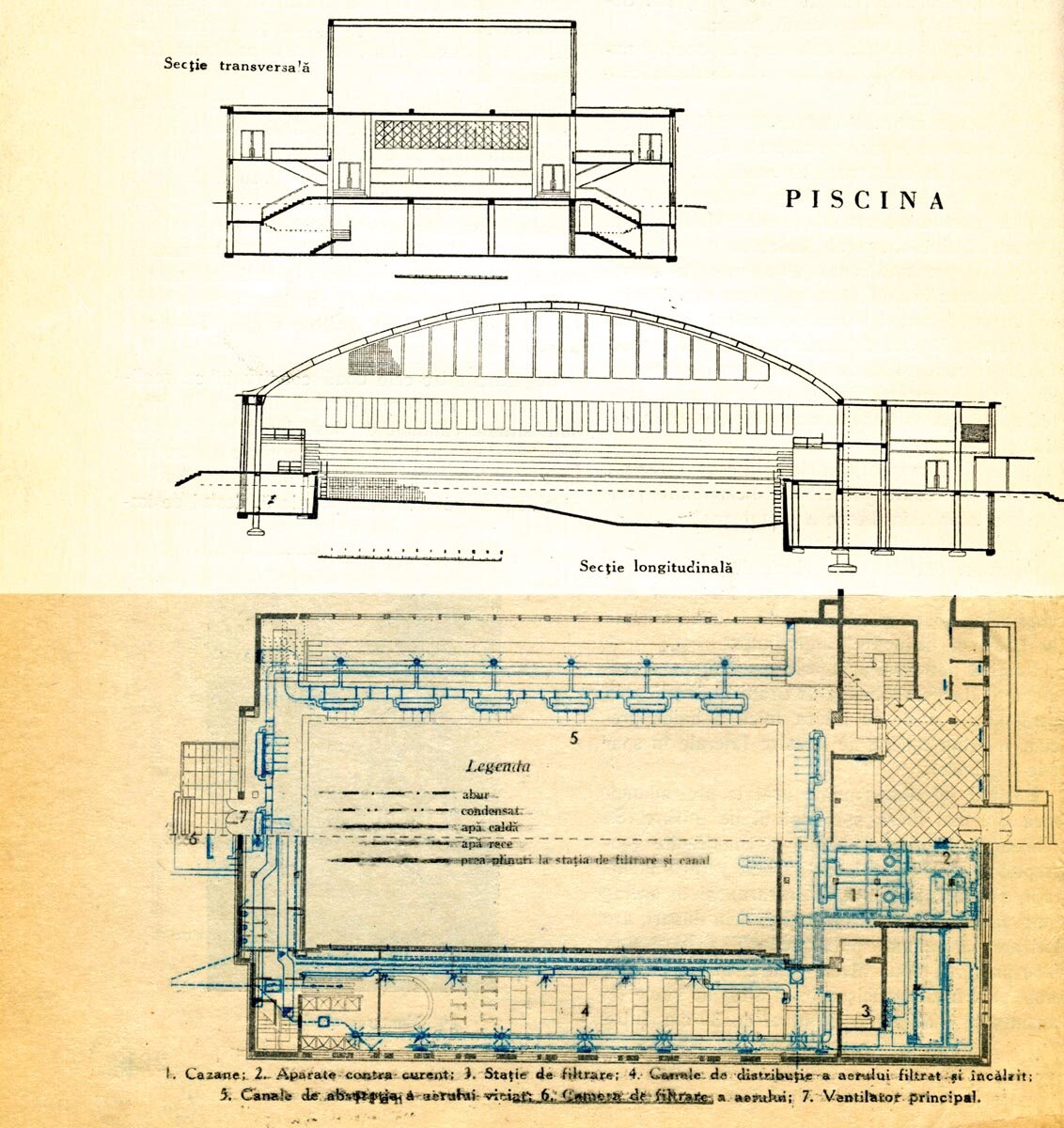
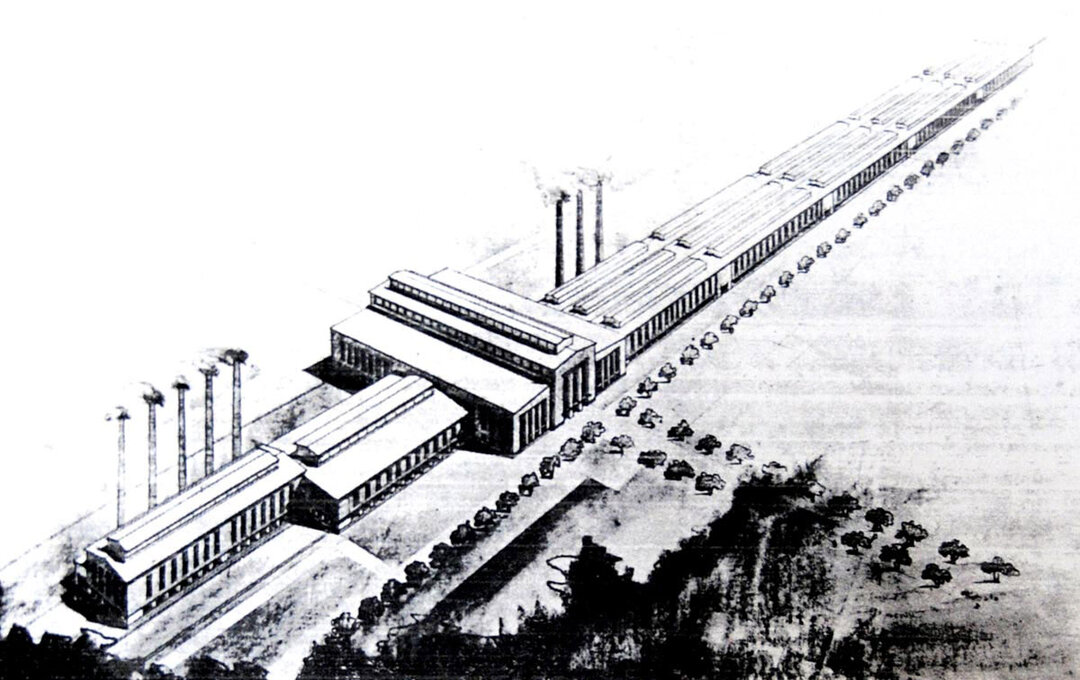
The social dimension of the journal's new agenda is expressed from the very first issue of the new format. Gustav Gusti's text on the working-class town of Hunedoara, written between 1947 and 1949, is a real starting point for the application of principles concerning industrialization, the standard of living and the iron problem. For the first time in the pages of the magazine, Gusti writes an article that adapts the theme of the First AGIR Congress - the organization of work - to an architectural agenda. The integrated approach to the urban city also involved corroborating labor efficiency, housing typology and the structure of urban amenities9. Subsequently, these themes were taken up several times, but a reading of the texts published during 1948 and 1949 reveals a high degree of conceptual ambiguity regarding the construction typology promoted by the "AGIR Technical Journals - Architecture and Constructions". For example, several texts approach the issue of workforce housing in a similar key to urban projects specific to garden cities: single or semi-detached dwellings, with no more than two levels, concern for zoning and circulation development, separation of functions or emphasis on local specificity and the extension of green areas. These modernist themes, with their filiations in the European tradition of social housing projects in urban industrial environments, were also discussed through examples taken from Soviet literature. As a result, the content of the magazine rather illustrates the alignment with the Moscow model in several phases. The assimilation of the written language happened much faster than the appropriation of professional models, so that "AGIR Technical Journals - Architecture and Constructions" served the common purpose of all Romanian print media, which was to constitute a means of discursive propagation of the new political regime's options.
NOTES:
1 Board of Directors of the General Association of Engineers - AGIR, "Cuvânt înainte," in "Revistele Tehniche AGIR - Construcții," no. 1/ 1947, p. 1.
2 Mara Mărginean, Windows to the Red Furnace. Urbanism and everyday life in Hunedoara and Călan, 1945-1968, Iași: Polirom, 2015, p. 54-68.
3 Ana Maria Zahariade, Arhitectura în proiectul comunist. România 1944-1989, București: Simetria, 2011, pp. 15-17.
4 M. Silianu, "Cadrul actual al probleme de urbanism și arhitectură", in "Revistele Tehnice AGIR - Construcții", no. 1/ 1947, p. 10-13; V. Perciac, "Problemele proiectării locuințelor în URSS", in "Revistele Tehnice AGIR - Construcții", no. 2/ 1947, pp. 22-26; I. Davidescu, "Urbanism and Architecture in the USSR", in "Revistele Tehniche AGIR - Construcții", nr. 5/ 1947, p. 4-14; H. Stern, "O locuință cu galerie de arte", in "Revistele Tehnice AGIR - Construcții", no. 6/ 1947, pp. 6-10; Grigore Ionescu, "Orașe românești de ieri și de azi", in "Revistele Tehnice AGIR - Construcții", no. 2/ 1948, pp. 66-72; Pompiliu Macovei, "Palatul Sovietelor", in "Revistele Tehnice AGIR - Construcții", no. 3/1948, pp. 123-132.
5 See "Bulletin of the Society of Romanian Architects", numbers October 10/ October 1947 - July 13/ July 1948. The issue is also discussed by Mariana Celac, Al. Panaitescu, "Scurt istoric al organizării organizării profesiei de arhitectiei în România de la "Regulamentul" lui Al. I. Cuza and M. Kogălniceanu until today", in "Arhitectura" nr. 3-4/ 2016. Available online http://arhitectura-1906.ro/2016/12/scurt-istoric-al-organizarii-profesiei-de-arhitect-in-romania-de-la-regulamentulu-lui-a-i-cuza-si-m-kogalniceanu-pana-in-prezent/.
6 Amedeu Georgescu, "Distructions and restorations of tunnels and railroads", in "Revistele Tehnice AGIR - Construcții", 1/ 1947, p. 2-10; P. Teodorescu, "Transversala de la vest (Craiova-Tg. Jiu-Simeria-Brad-Brad-Oradea)", in "Revistele Tehnice AGIR - Construcții", No. 3/ 1947, pp. 1-6; P. Teodorescu, "Refacerea liniei Ilva Mică-Vatra Dornei", in "Revistele Tehnice AGIR - Construcții", No. 2/ 1948, pp. 37-66.
7 * * * * "Foreword" in "Revistele Tehnice AGIR - Arhitectură și Construcții", no. 5/ 1948, p. 237.
8 N. Bădescu, "Congresul UIA de la Lausanne", in "Revistele Tehnice AGIR - Arhitectură și Construcții", nr. 5/ 1948, p. 275-278.
9 Gustav Gusti, "Un oraș muncitoresc la Hunedoara", in "Revistele Tehnice AGIR - Arhitectură și Construcții", no. 5/ 1948, p. 266-267.