The photography archive of Romanian Union of Architects. Online and Offline

Studio Est started as an idea in Shanghai, was born in Bucharest in 2015 and operates as a collaborative network of four permanent architects - Alex Muntean, Alexandrina Remescu-Șimo, Călin Lambrache and Valeriu Nicolaides - plus collaborators from various fields.
Attracted by "East" - we trained in Romania, lived and worked in China, traveled through East and Southeast Asia - the name was easy to choose and reflects both our curiosity and interest in the emerging architecture of the Far East and our belonging to the Eastern European area, where we decided to return and practice.
As I mentioned earlier, three of us worked in China for a period of several years, and Călin Lambrache was also involved in projects in the Asian context. This experience opened our eyes to local architecture, both traditional and new, not studied in Bucharest and which quickly won us over. We are not necessarily talking here about the form that local Asian architecture takes, but more about the conceptual principles specific to the area: pavilion complexes with circulation open to nature, large open but covered spaces, lush gardens in small, inward-oriented spaces, integration of vegetation and water into the architecture, interior courtyards and natural ventilation.
We try to apply the above principles wherever context and situation allow. In fact, we believe that this is part of the specificity of Studio East. We are of the opinion that our architecture does not belong to any particular trend or style, but rather combines diverse ideas inspired by the specific project we are working on. We propose an architecture that is honest, clean and attentive to fundamental aspects such as: light, material, proportions of spaces, volume and the relationship with nature and the site; an architecture of detail, inclined towards ingenious and efficient technical solutions, always passed through our filter of sensitivity.
Below, we present four very different projects that reflect our way of working:
Aerzen Romania headquarters
team: Alex Muntean, David Stancu
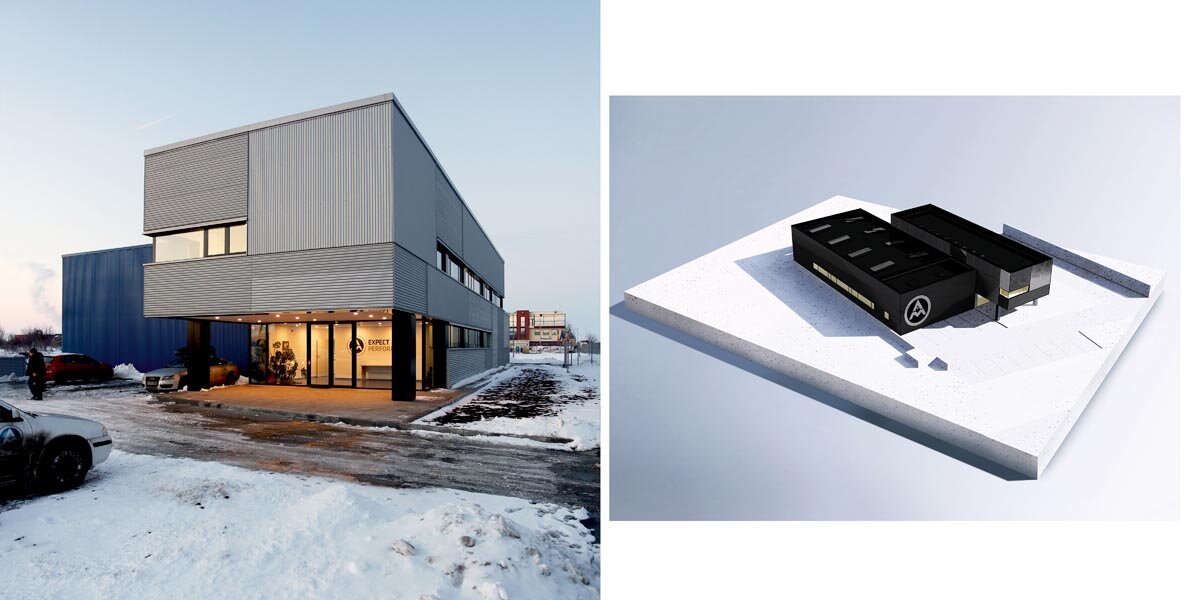
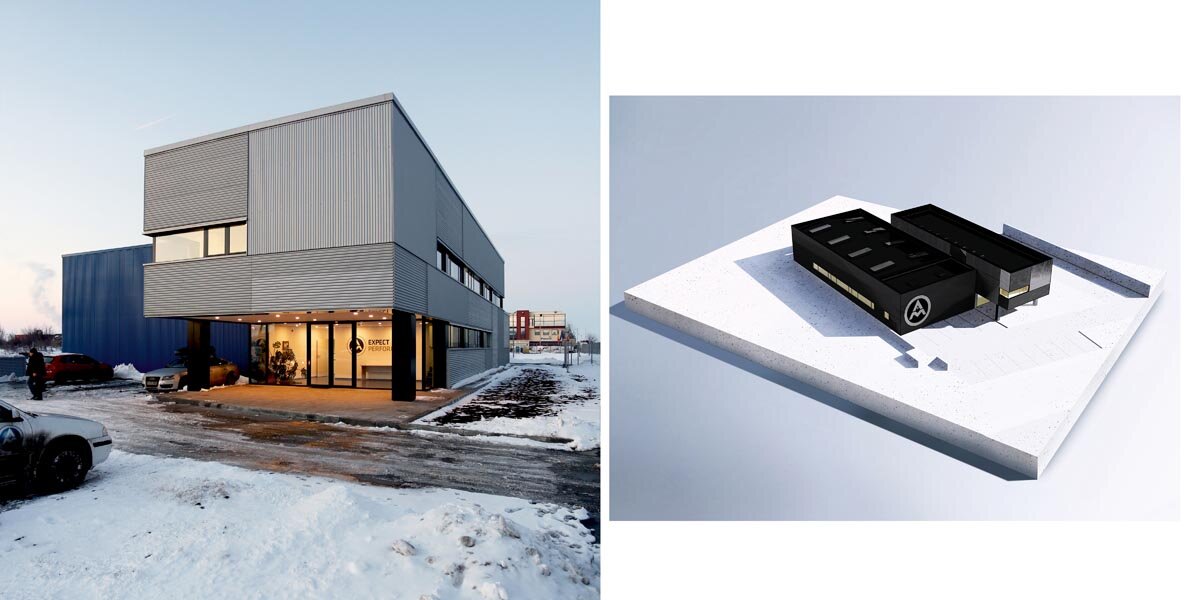
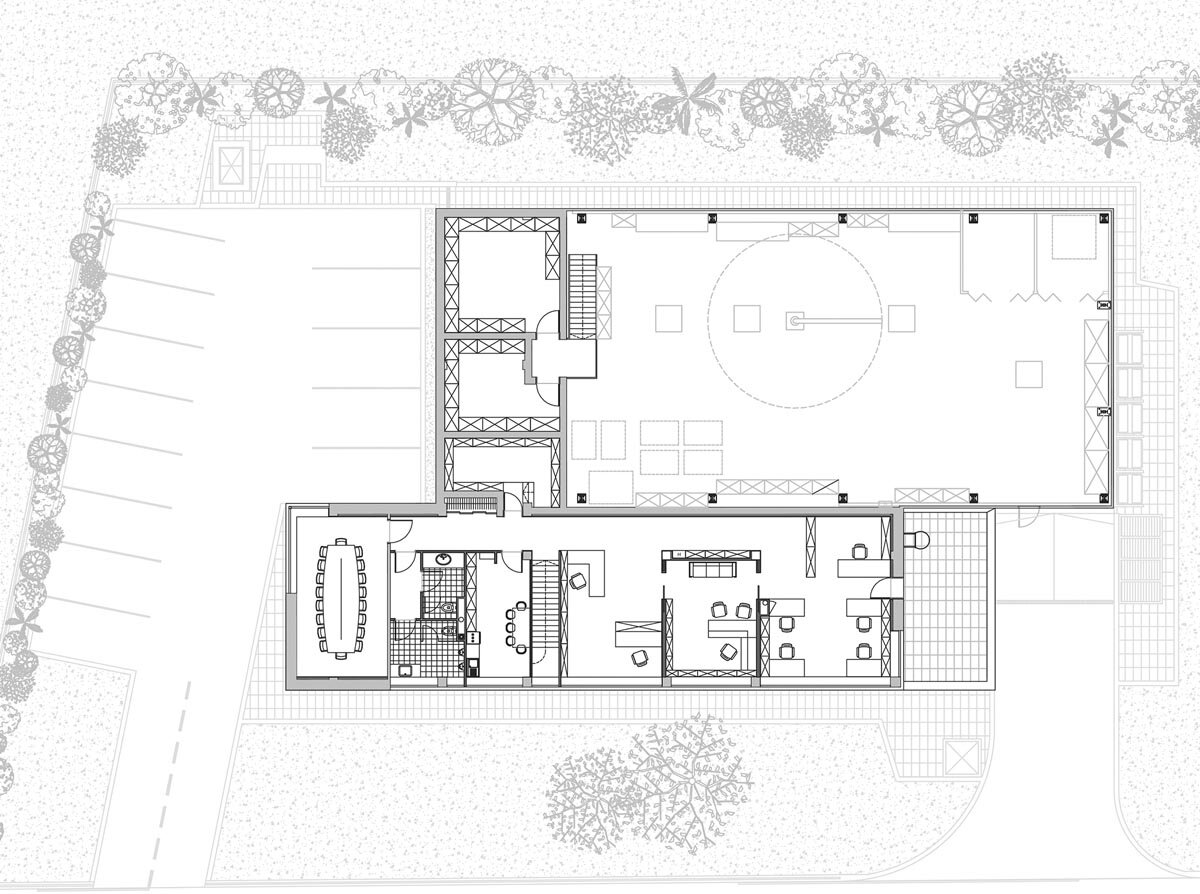
Located in the Tunari area, the Aerzen headquarters in Romania operates as a sales and public relations office and as a service for industrial compressors.
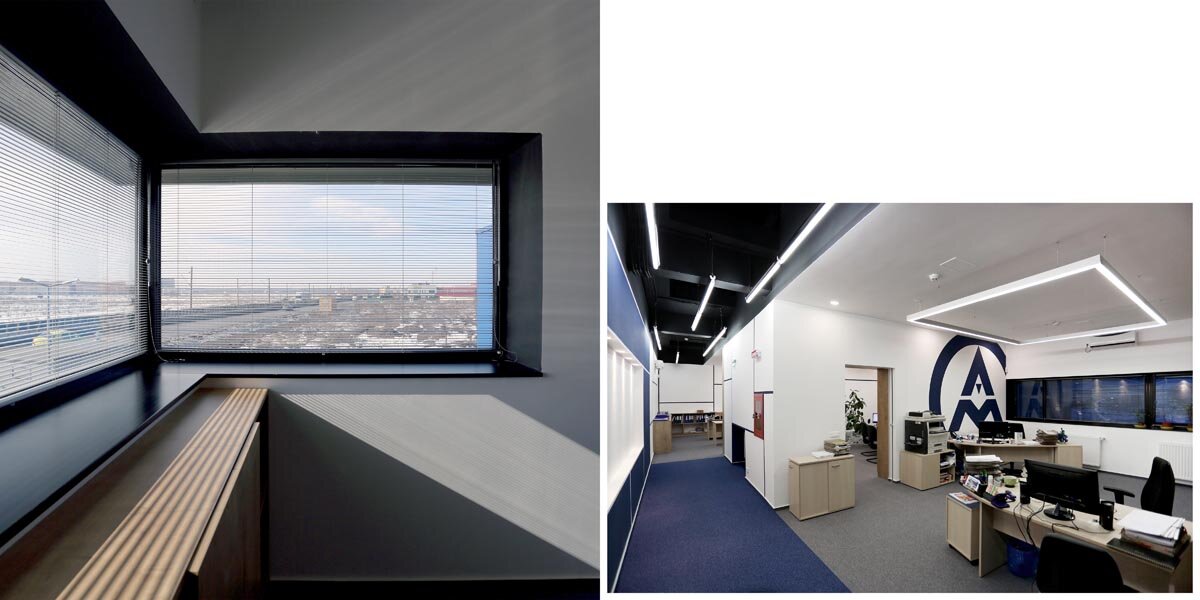
The building is divided in two in terms of function, type of structure and facade treatment: the office part - made of reinforced concrete with a gray ventilated facade - and the industrial part - with a metal structure and blue facade panels. The two parts take the form of distinct, attached volumes that can be easily read at street level. We set out to avoid the clichés usually associated with an industrial building and to design more than a 'hall', starting with the volumetry and continuing with the use of corrugated sheeting mounted vertically and horizontally. In this way, we achieved an industrial facade, but sensitive to changes in ambient light, which draws attention to the movement of the sun in the sky and changes color according to the time of day.
Rural Pension Tâncăbești
team: Alex Muntean, Alexandrina Remescu-Șimo, Călin Lambrache, Valeriu Nicolaides
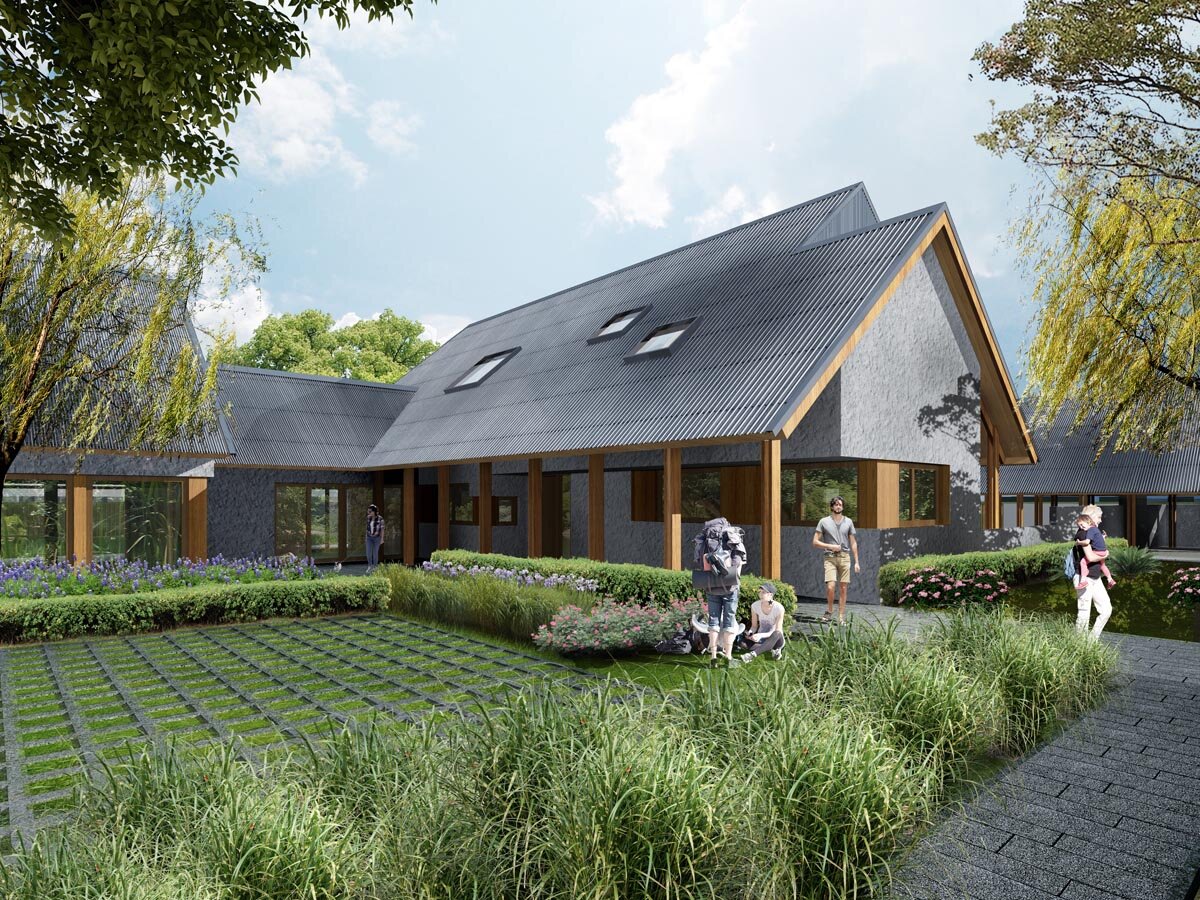
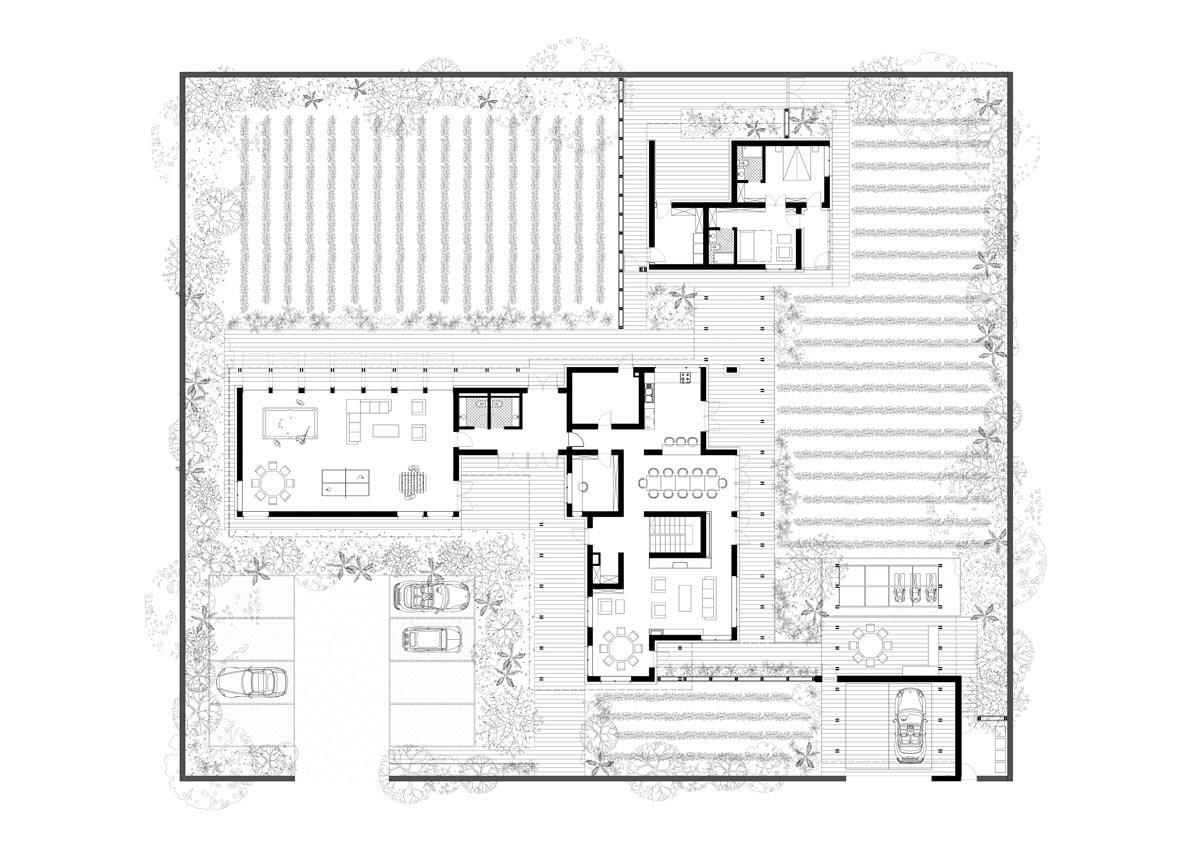
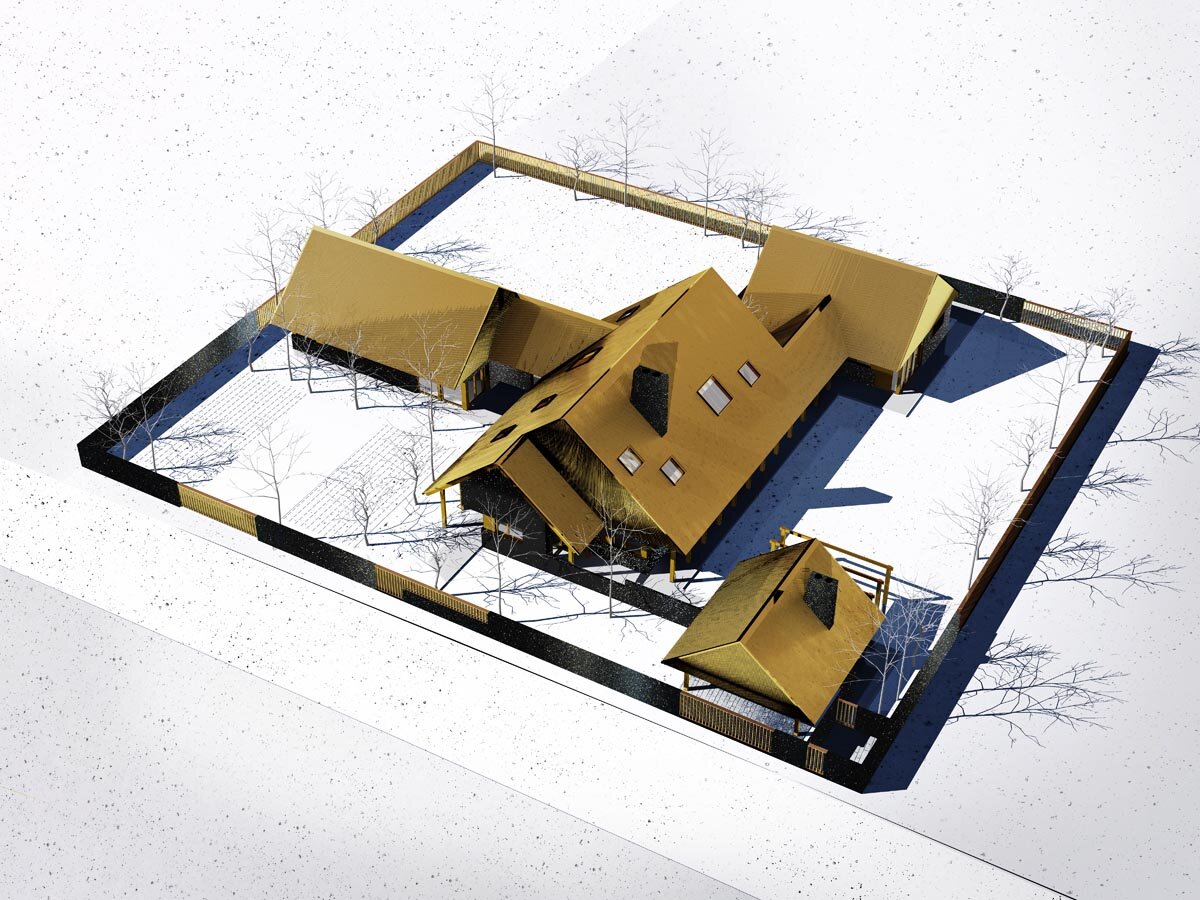
Our proposal is located near Lake Tâncăbești, surrounded by apple orchards and cultivated fields. Here the beneficiary wanted a rural guesthouse realized with modest means, so our solution emphasizes the relationship between the building and the garden, while the architectural language is restrained.
The building has a pavilion-like configuration inspired by local Southeast Asian architecture, in which deep eaves bodies are linked by covered but open passages to the landscape. This type of spatial organization fits in with the idea of cottages and informal outdoor spaces, which give the specificity and charm of a country guesthouse in Romania. Being a guesthouse that will operate mostly in summer, the focus is on the outdoor space: covered entrances, passageways, pavilions, porches and less on the interior space which is designed to the minimum necessary.
Collective housing - Block D
team: Alex Muntean, Alexandrina Remescu-Șimo, Călin Lambrache, Valeriu Nicolaides
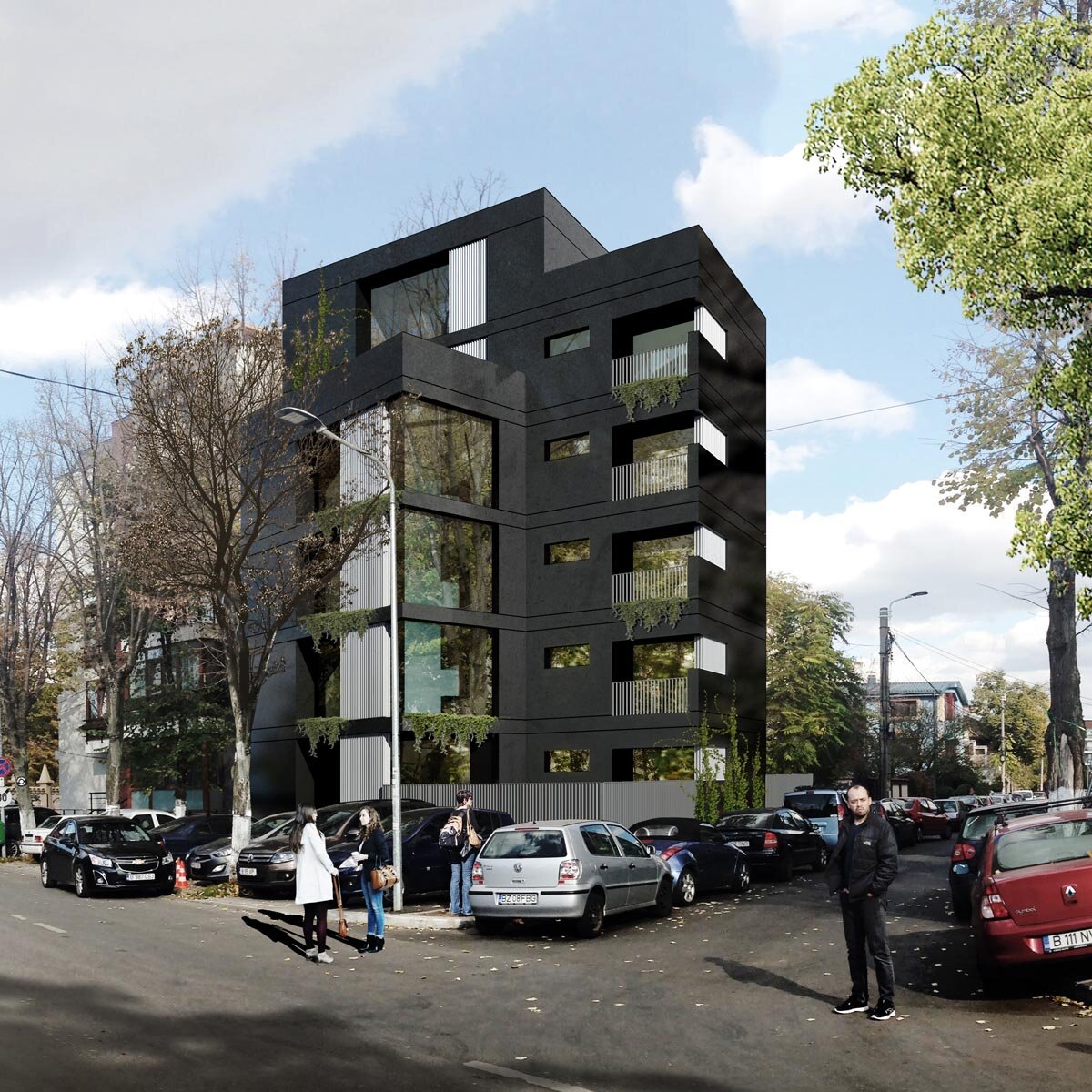
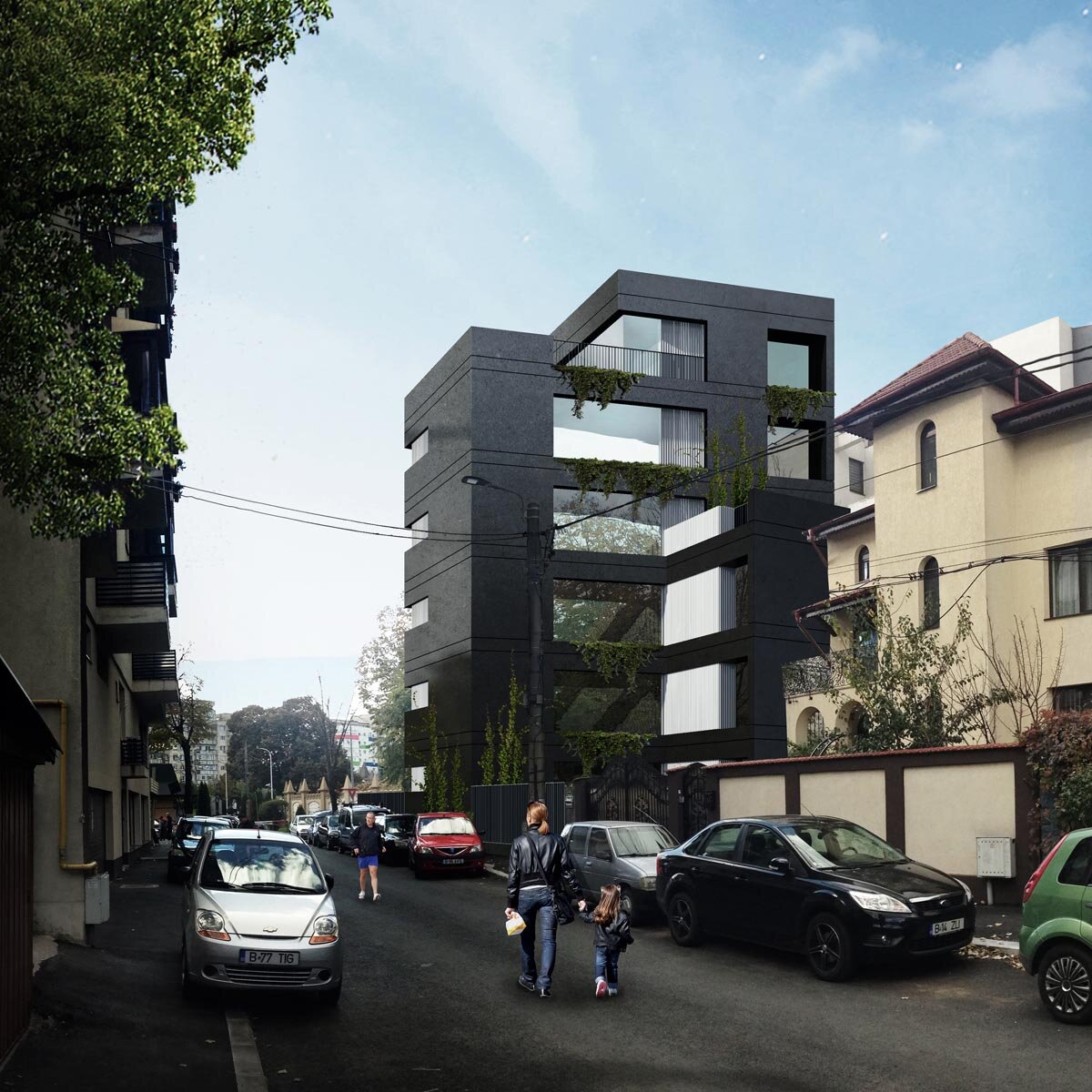
Block D is a proposal for a collective housing building for a small lot (250 sq.m) located in Bucharest, between a park and a neighborhood of houses built in the 90s. The fact that the lot is located on a corner and has two footings, one with a P + 4E + 5 block set back and another with a P + 2E house makes the new insertion a very difficult but extremely interesting topic.
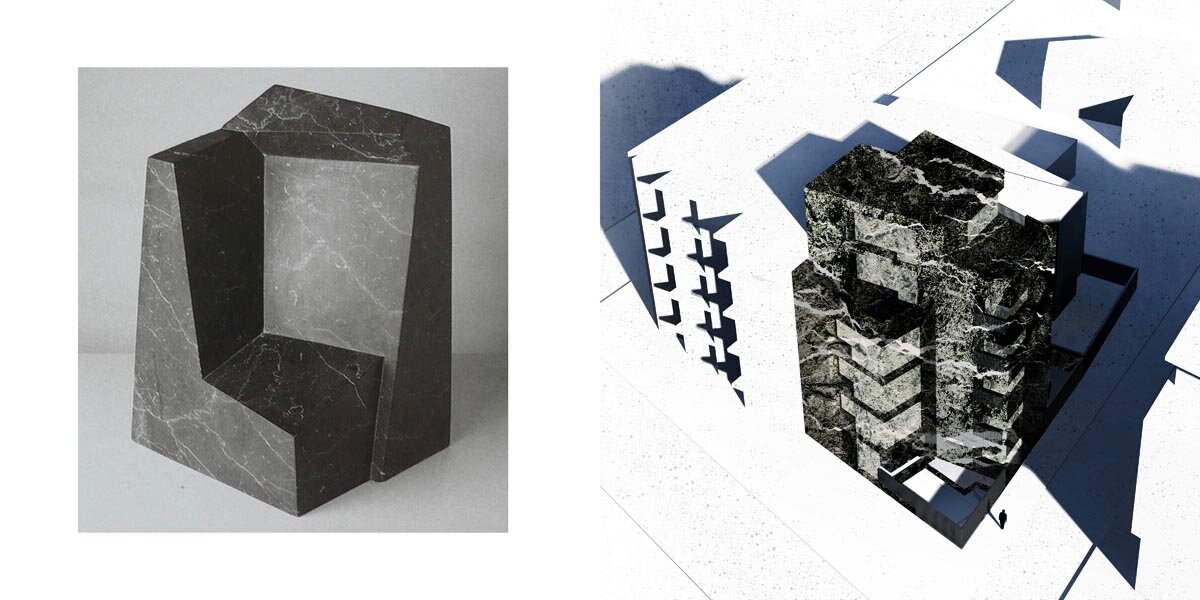
The situation presented brought to mind from the start Jorge Oteiza's sculpture "Las Meninas", a reinterpretation of Diego Velázquez's famous painting of the same name from 1656, except that in our case the "stone block" was to be sculpted by the directions and conditions of the context. From a maximum volume, taking into account the mandatory setbacks, the heights of the adjacent buildings and street frontages, the shape of the site and the ideal orientation of the building in relation to the cardinal points and the park, we began a process of subtraction. Piece by piece the parts that contradicted the proposed scenario were removed. The resulting form thus defined our future building's volumetry, a dark, tempered monolith, overgrown with overhanging vegetation, visible in the street front and at the same time camouflaged.

"The New MNIR" - 3rd place in the International Solutions Competition
team: Alex Muntean, Adriana Caraza, David Stancu
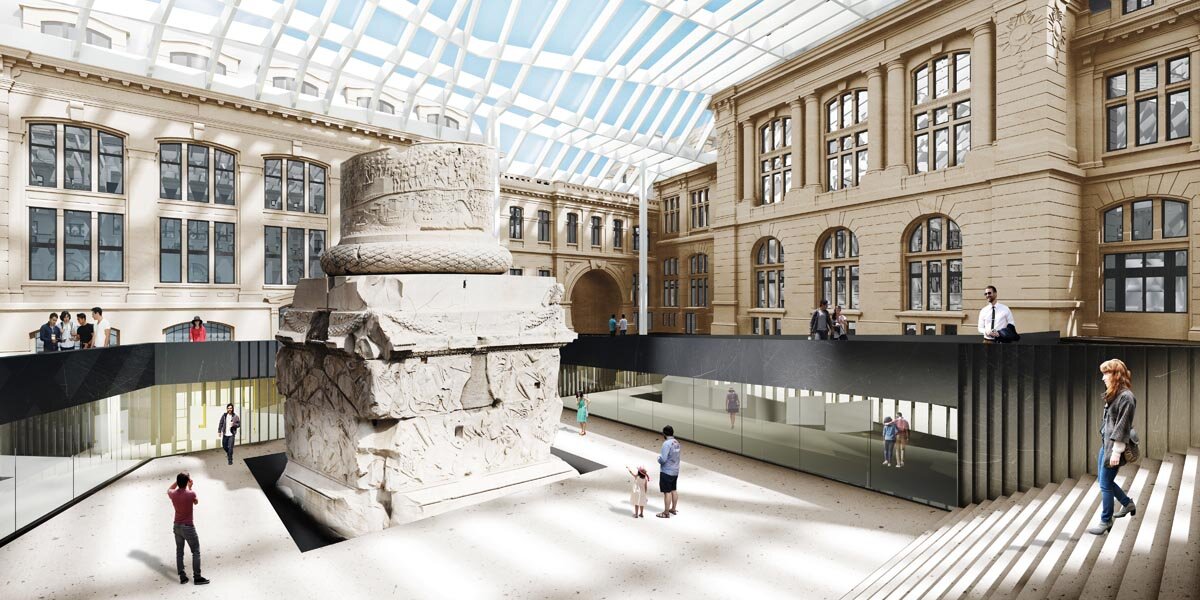
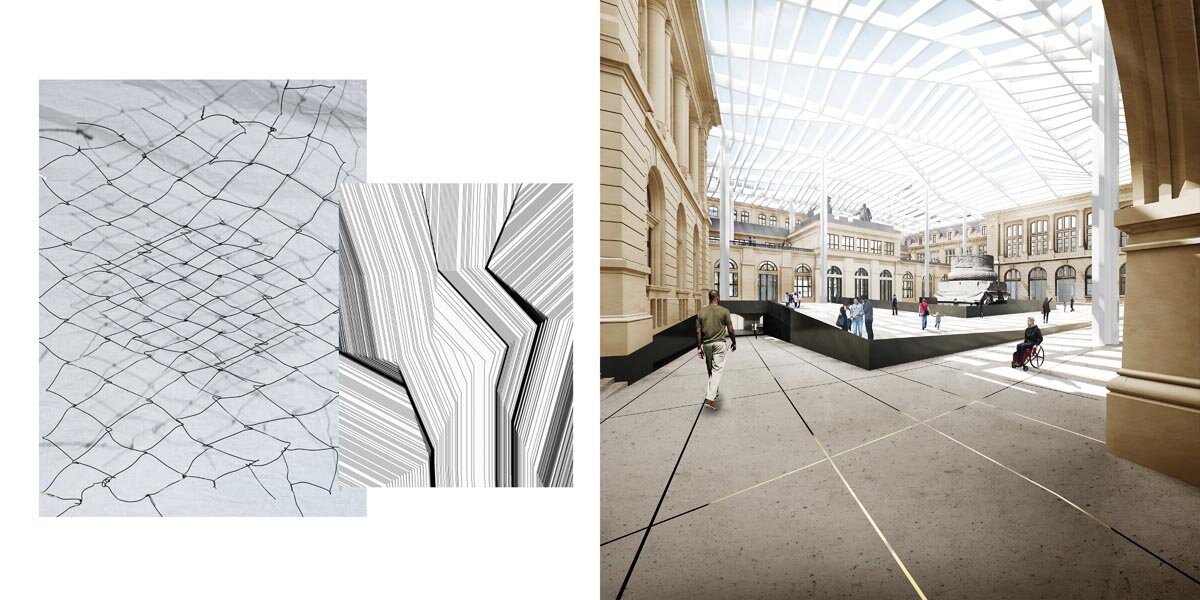
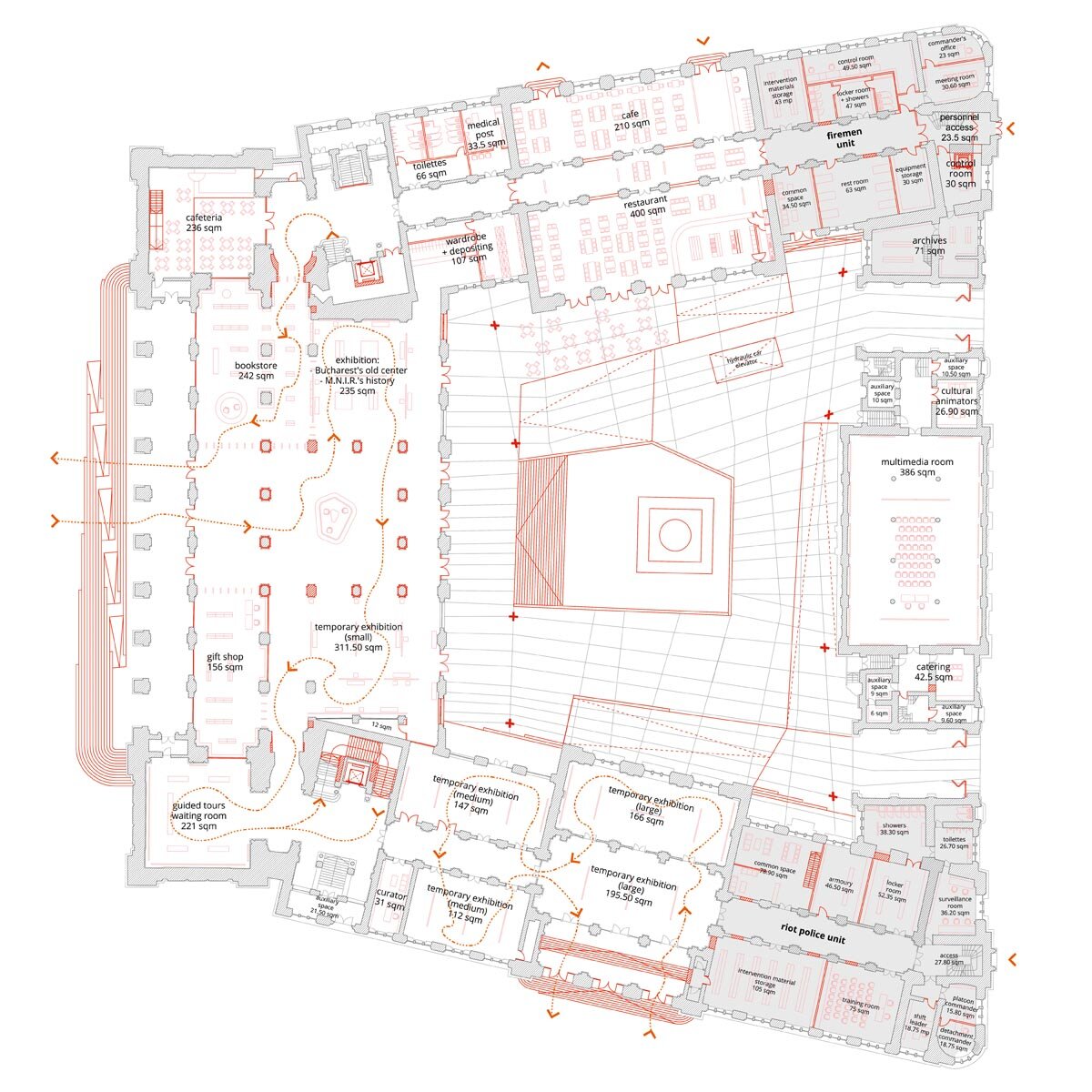
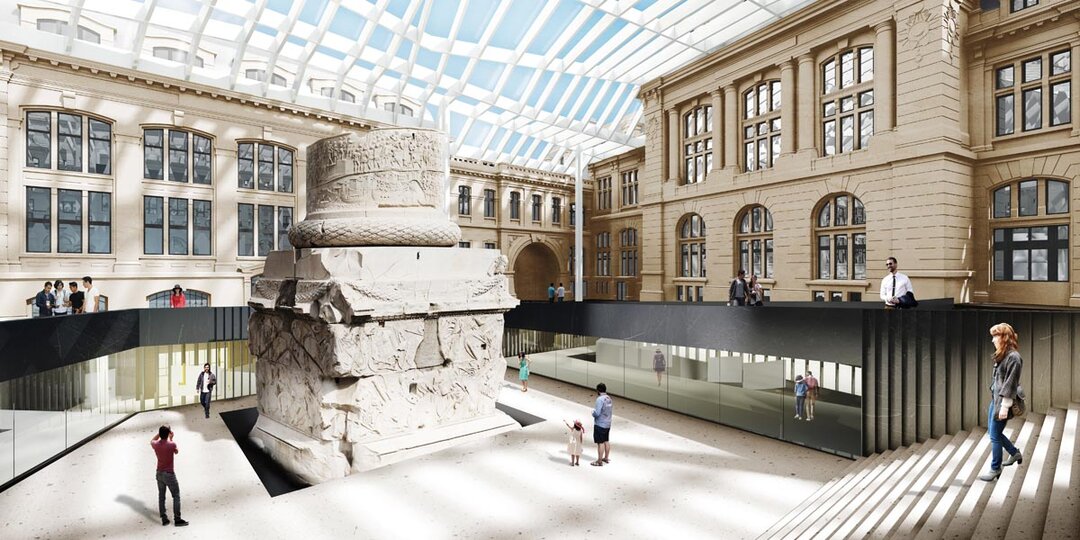
Our proposal is aimed at opening the old historical building to the city and permeabilizing it at ground floor level through minimally invasive architectural interventions that aim to restore and highlight the original clarity of the building while bringing a subtle contemporary approach to its spaces.
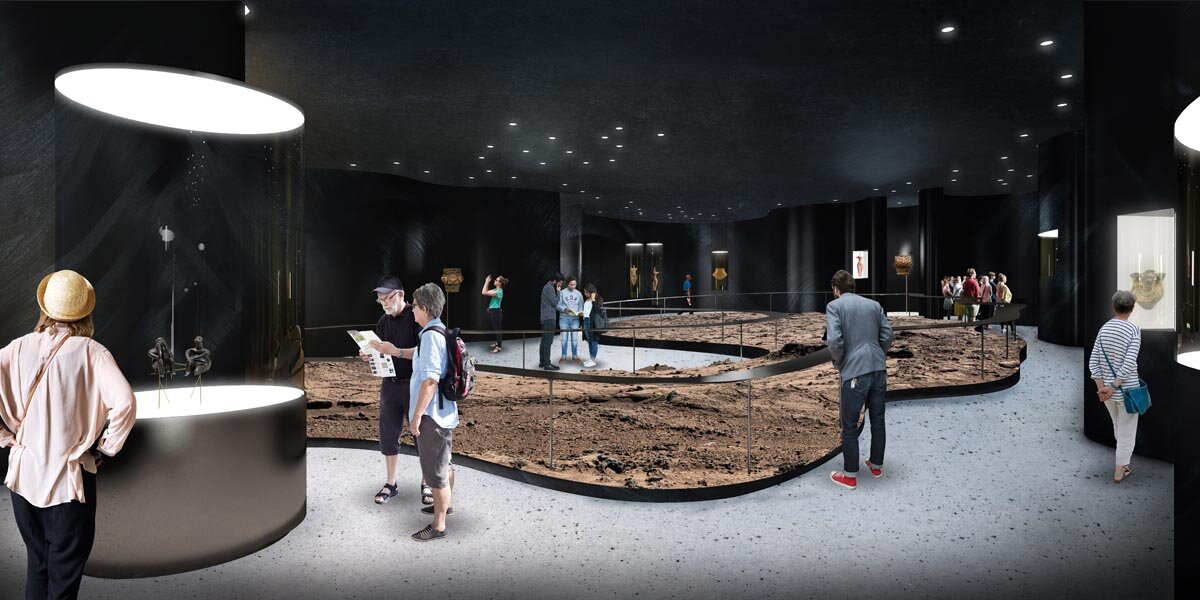
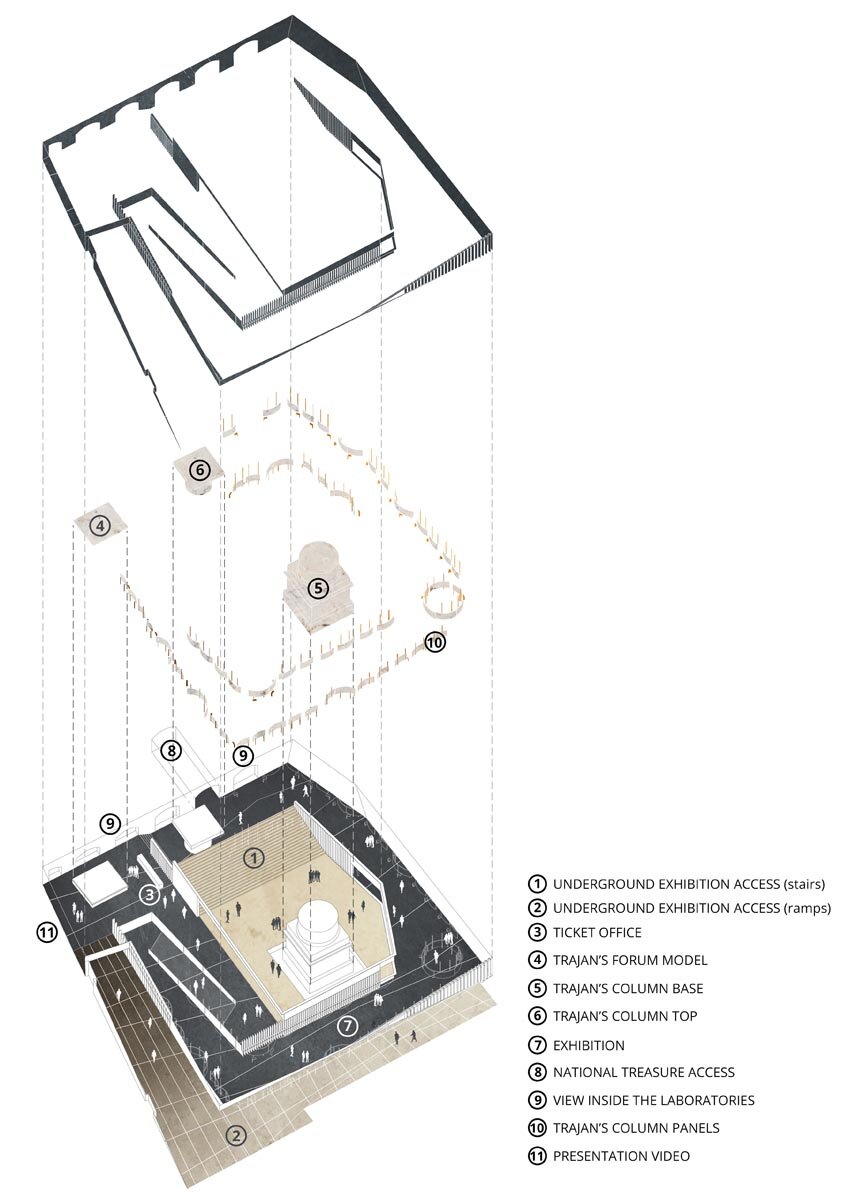
Our first instinct was to clear the current plans of any interventions that over the years have altered the original spaciousness and to carefully inventory the available spaces. It then became obvious to insert new functions into the vacant inner courtyard. We proposed to cover it with a transparent ETFE membrane supported by a metal structure through which the rhythm of the old beams is taken up and negotiated in a three-dimensional conformation. In the plan of the level of the stepping level, we completely changed the current configuration of the courtyard starting from the natural slope of the land and proposing some essential cuts to highlight the centerpiece of the atrium - the base of the Column of Trajan - and to ensure a continuity of the square below the ground floor level, where the exhibition of the column unfolds and connects with the basement of the old building. Surrounding this new public basement are the conservation laboratories open to public view. The result is an interior plaza that can serve as a stage for large curatorial events and projects that bring the museum institution to life, a multi-purpose space whose purpose remains open-ended.