The photography archive of Romanian Union of Architects. Online and Offline

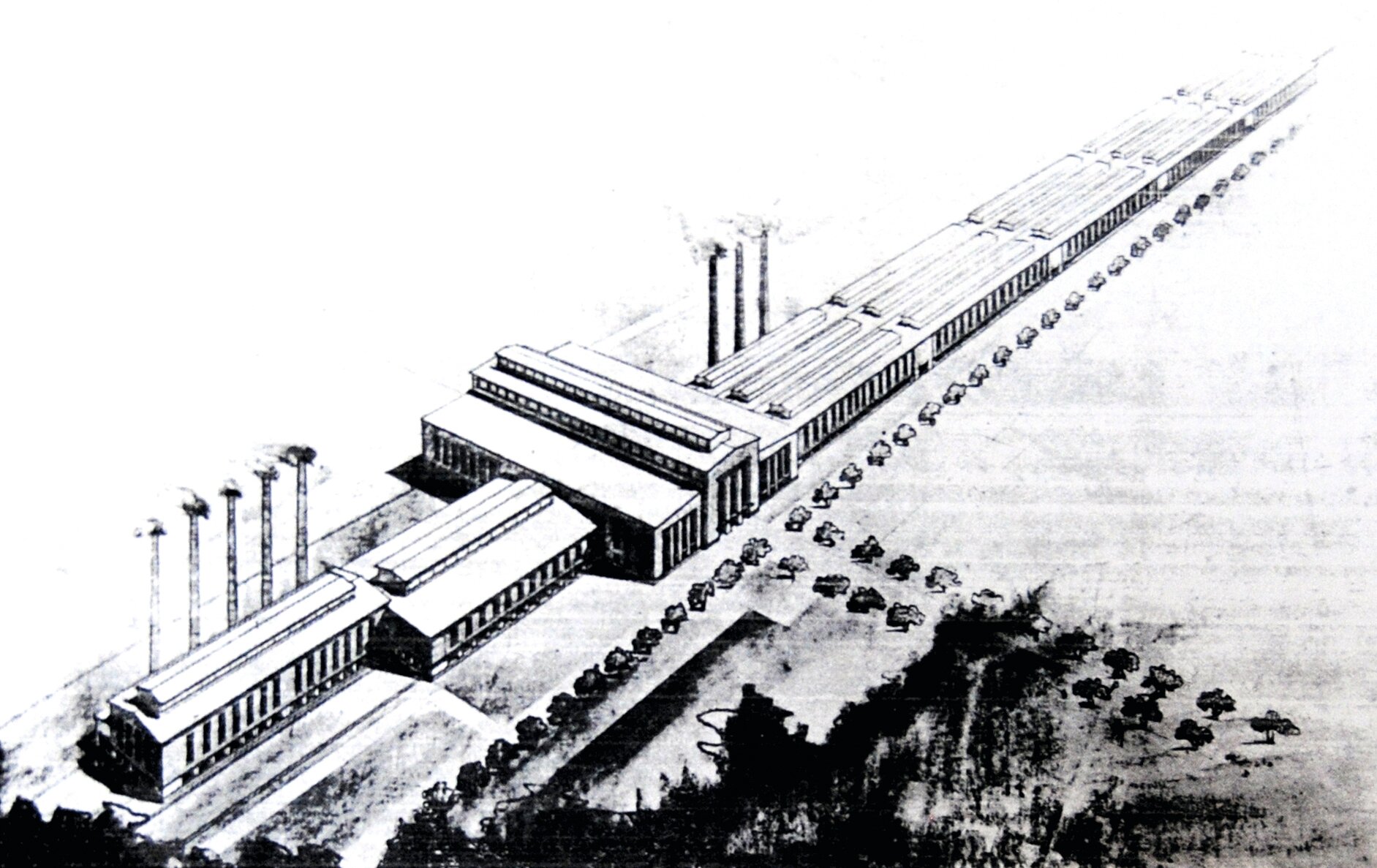
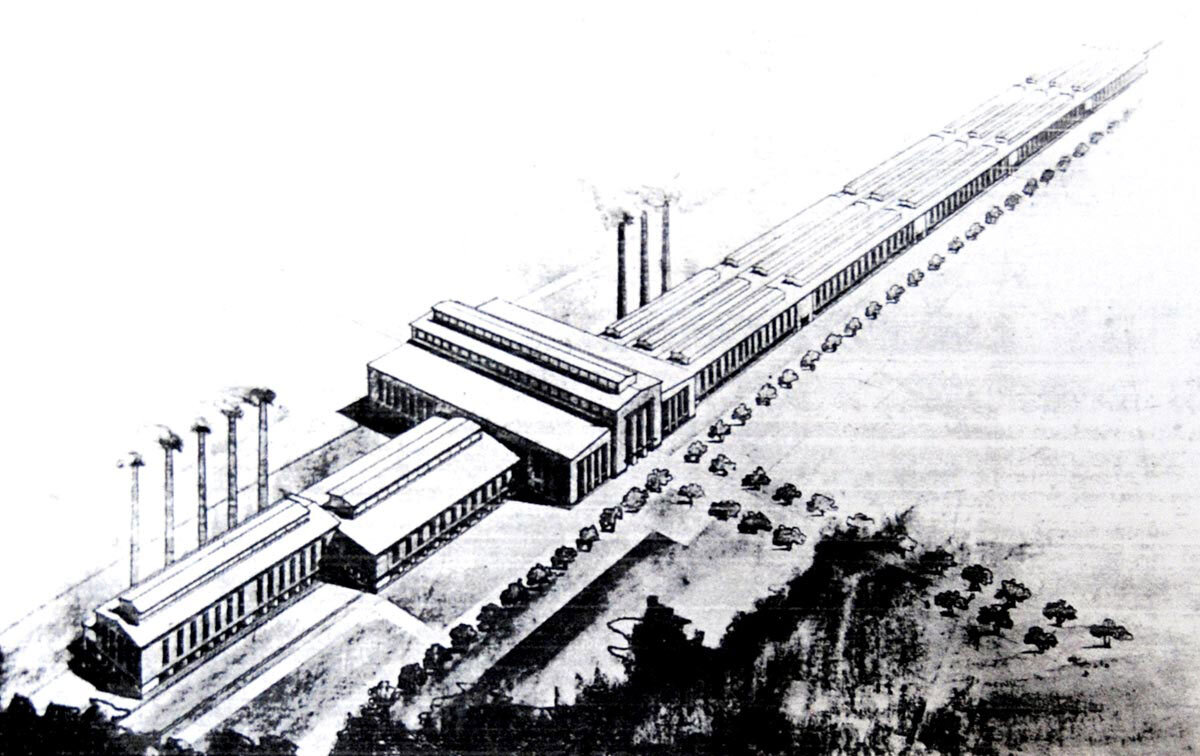
Industrialization in the years 1945-1989 was a useful instrument for the consolidation of the socialist system and the development of the planned economy, as well as for the systematization and transformation of the national territory. Moreover, the process of industrialization, in all its aspects, became one of the themes of the political ideology used in shaping society on the principles of socialism. The phenomenon of forced industrialization was present not only in Romania, but was a distinctive feature of the entire Soviet bloc, where it was initiated almost simultaneously with the end of the Second World War. Based on the model of Soviet industrialization in the period 1920-19301, the process of industrialization received specific approaches and manifestations, depending on the national context and, above all, on the industrial tradition existing in each individual country.
Lecture notes on projects of industrial architecture in the post-war period |
| Industrial architecture represented a true 'leitmotiv' of the planning practice during the socialist years in Romania (1945-1989), when significant territorial transformations were triggered by forced industrialization/ urbanization processes. During those years, the industry was a priority state investment with impact on territorial, urban and architectural planning. In fact, architects of the period often engaged in matters of industrial architecture and contributed with numerous articles dedicated to this theme in Arhitectura magazine. The continuity with which the industrial architecture was covered, together with the diversity of the approached aspects, contributed in transforming the magazine in a primary documentation source for the research on the recent past industrialization. At a cursory reading level, the magazine covers complex and diverse issues concerning the industrial planning in reference to its territorial systematization, architectural features, architect's role in the planning process, and even to the constructions industrialisation through standardization, type-design and prefabrication. All these aspects are illustrated through a number of case studies spread all over the national territory, all representative of a variety of industrial branches. However, a more detailed analysis of the articles on industrial theme will reveal how valuable pieces of information are missing in order to define a thorough narrative of the 1945-1989 industrialization from an architectural perspective. This article will bring an interpretative lecture of the missing, or possibly intentionally omitted, aspects from the industrial projects presentation, in order to widen the research perspective and perception of this architectural theme. Articles published throughout the 1950-1989 were confronted with the wider specialist bibliography, archival materials, and in situ observations. Missing elements such as the territorial context, pre-1945 industrial references, authors, and even construction details are analyzed in the overall presentation of the articles, in order to reveal to the reader an interpretative key of the, sometimes considered, obscure propagandistic texts. In this analysis, the industrial architecture photography is considered among the primary information sources, revealing a rather qualitative interpretation of the architectural reading. |
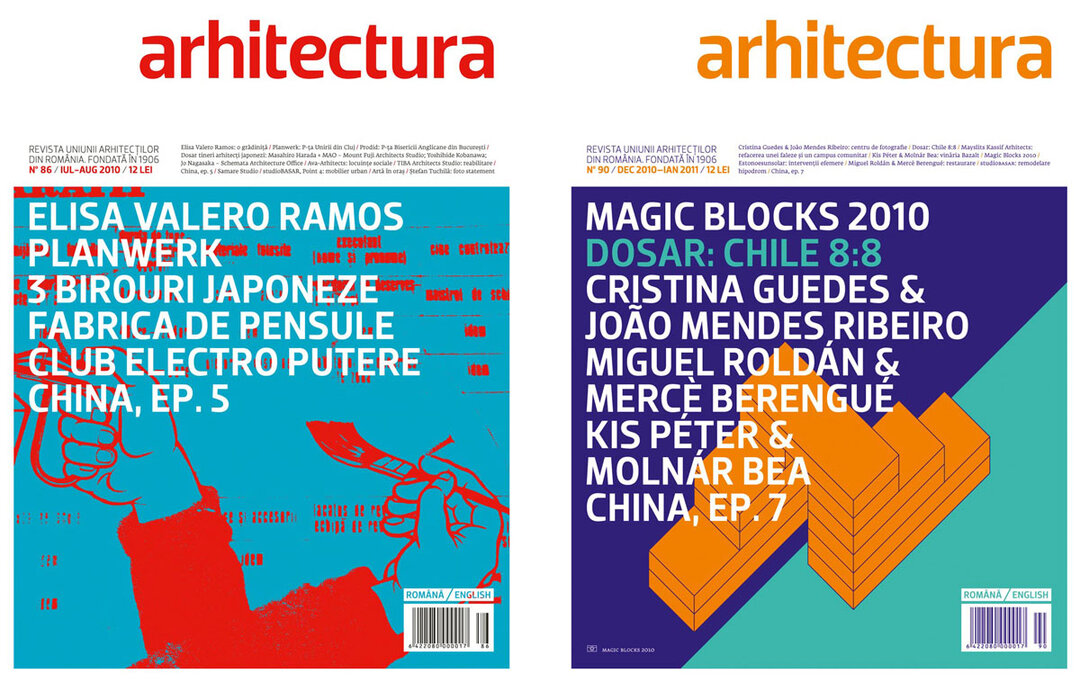
In the Romanian context, from the perspective of professional practice, the industrial theme has been a real leitmotiv approached from a series of perspectives concerning territorial, urban and architectural design. Industry as an investment priority of the socialist state is also apparent from the pages of the magazine "Arhitectura", where, in addition to regular issues devoted entirely to architecture or industrial construction, each issue presented at least one industrial project2. Alongside the theme of residential housing, the industrial theme was one of the most popular topics in the magazine throughout the period of the communist regime, capturing the different phases of approach, evolution and transformation of architectural practice. It is precisely this character of continuity that makes the journal a primary source of documentation and an extremely useful tool in the analysis of the socialist industrialization process.
At a first glance, the articles published in "Arhitectura" seem to integrate the architectural context related to industrial design in the post-war period, giving the impression of an exhaustive approach to the subject. This perception is radically influenced by the photography of industrial architecture intended to create benchmarks and even reference models. To a more detailed and contextualized analysis of the history of industrialization from a political, economic and socio-cultural perspective and, above all, to an analysis of the territorial reality, the magazine "Arhitectura" offers a key to reading the industrial phenomenon through the reading of the absence, the lack, the unspecifiedness of certain data and details.
The absence of certain aspects and details of the industrial project, whether premeditated or not, can become a transversal key to reading the theme, not without room for further interpretation and criticism.
First of all, in the issues published between 1950-19893, references to industrial architecture already existing on Romanian territory are absent. Indirectly, this architectural theme is presented and illustrated with an innovative character in the post-war context, in some cases even as an "invention" of the socialist system in architectural practice. This absence of pre-1945 Romanian industrial landmarks is compensated, especially in the years 1950-1952, by the Soviet reality and experience of industrialization carried out during the period of the first economic plans and presented from the perspective of typification, modulation and standardization4. At the same time, it emphasized the role of steel at the basis of the new planned economy, contributing to the definition of a real "steel cult" maintained throughout the period of the communist regime. Soviet examples to follow were the Mariupol and Magnitogorsk steelworks, and in the field of machine-building, the Stalingrad tractor factory and the Nizhny Tagil locomotive factory. The contribution of foreign architects, such as the American architect Albert Kahn (Stalingrad Factory)5 or the German architect Ernst May (Magnitogorsk) from 1929-19336, was also omitted from the presentation of these examples.
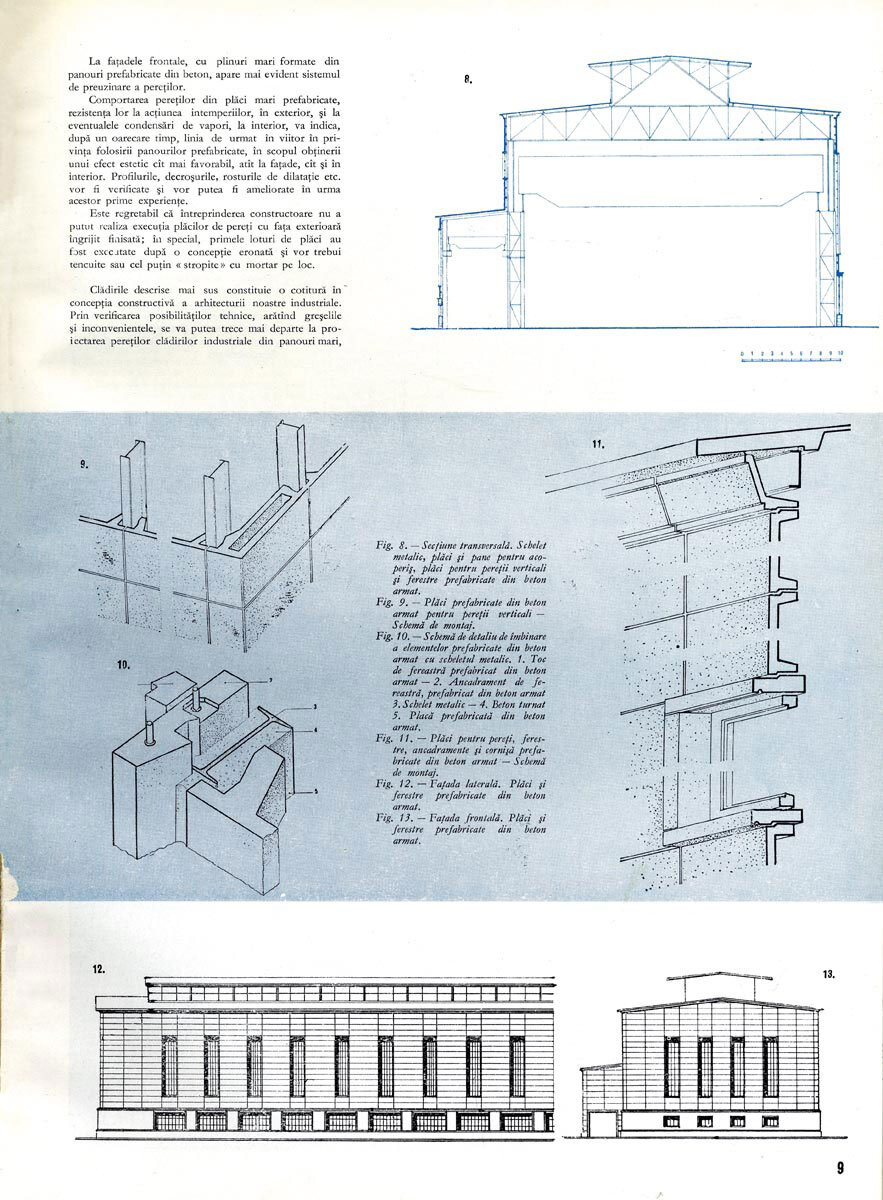
Starting with the publication of the magazine "Arhitectura RPR" in 1953, this innovative aspect is presented in direct connection with the architect's involvement in the "complex process of industrial design", justifying the need to acquire a central position in relation to the other specialties involved. The illustration of invention and industrial innovation remains ideologically supported also in the specialized bibliography of the time, which not infrequently provides a complete and detailed presentation of the themes previously dealt with in the pages of the journal7.
In a retrospective reading, this repetition of the innovation of the socialist industrial theme can create an erroneous panorama, contributing to the false impression that Romanian industry was built exclusively in the period 1945-1989.
At the end of the Second World War, Romania was a predominantly agrarian country, with an economy based on agricultural activity and over 70% of the population living in rural areas. In addition, Romania was one of the least urbanized countries in the context of the newly-formed Soviet bloc, with major territorial discrepancies between its different historical areas in terms of urbanization and industrialization. However, Romanian industry was not invented during the socialist period. On the contrary, this period brought continuity and diversity in its development, albeit on a much larger territorial scale. When the process of economic reconstruction began8, most of the industrial nuclei were to be found in the Banat and Transylvania areas (predominantly heavy industry, represented by the extractive, steel and machine-building industries), in the south (the oil industry) and in Bucharest, especially from the inter-war period in the 1930s9. It was precisely these already existing industries that became the target of the first investments: the Reșița and Hunedoara iron and steel sites, together with the Valea Jiului mining basin, became points of interest in the development of heavy industry, the metallurgical industry in Bucharest became the target of post-war "reconstruction" projects (23 August/Repubblica factories), and projects initiated in the late 1930s were taken over and integrated into the new economic strategy, as in the case of the Ucea chemical factory (Victoria). These contextual details are omitted in the approach to the industrial theme both in the articles and in the specialized bibliography dedicated to industry.

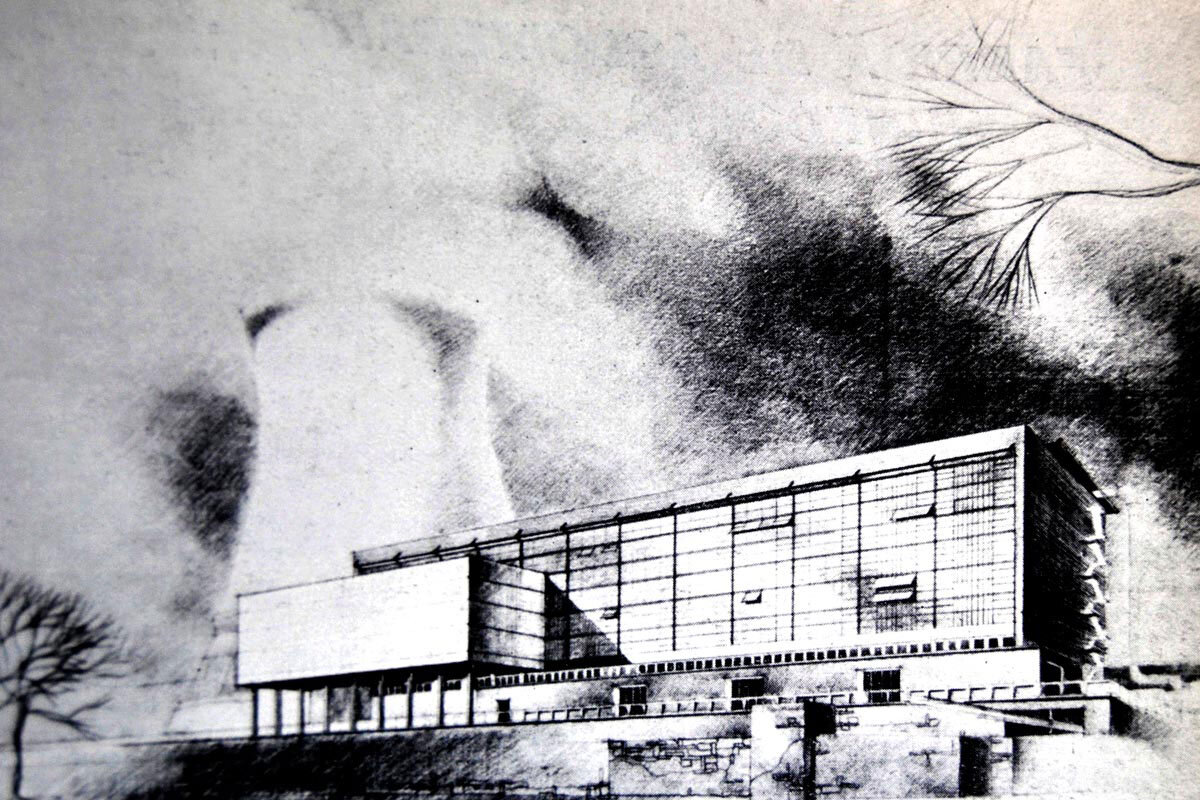
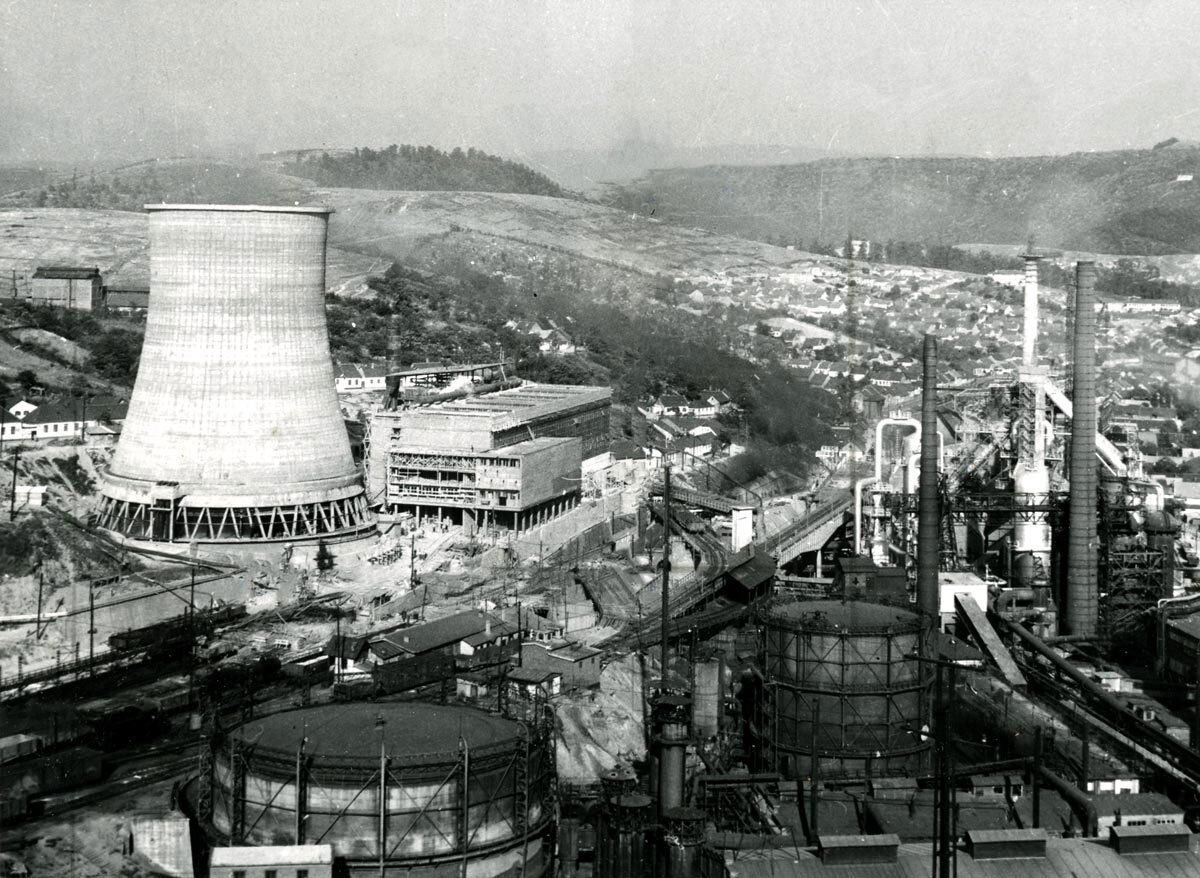
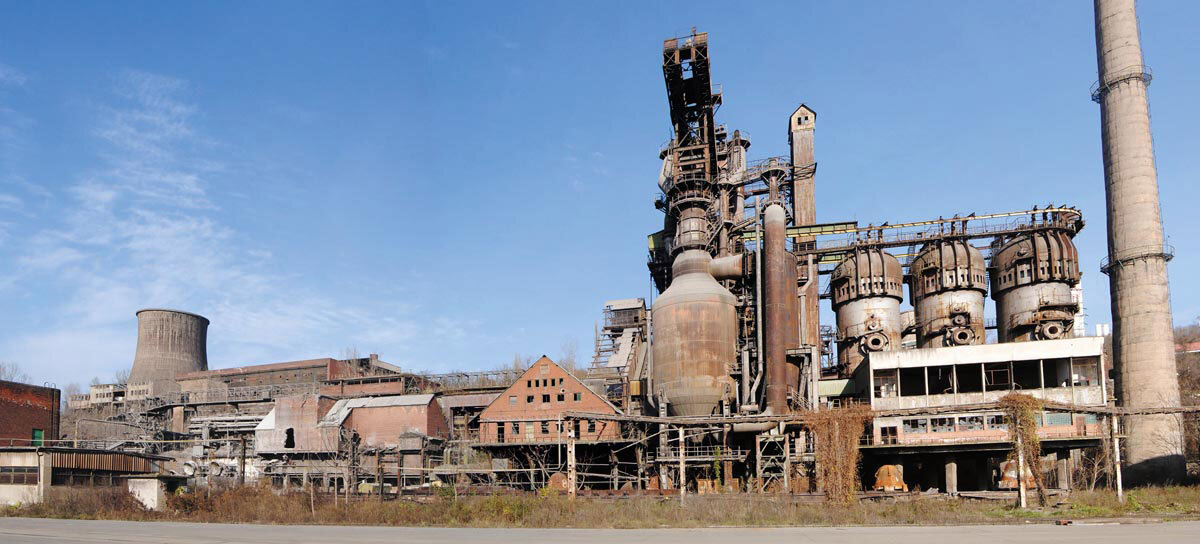
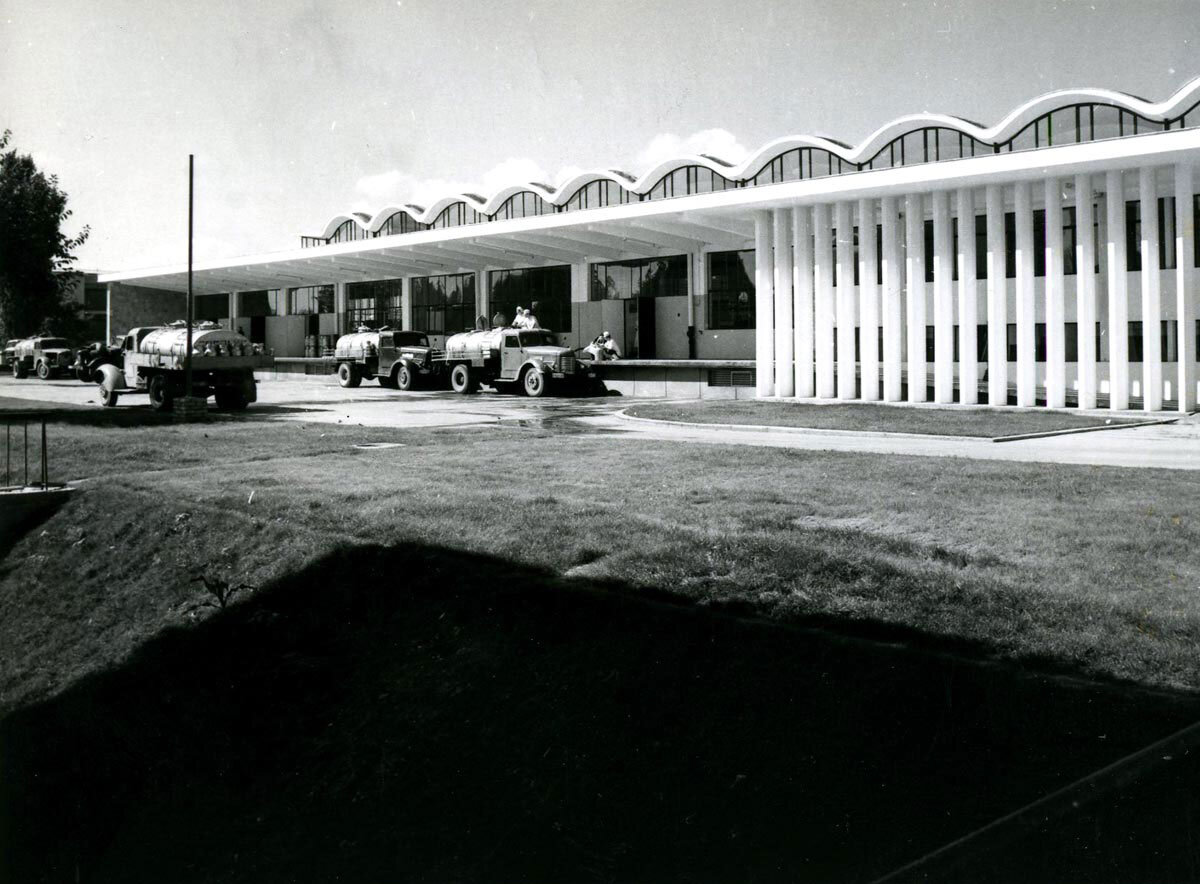
The anonymous context in which industrial architecture appears designed and built remains a dominant feature of the specialized texts. Not only the general context remains anonymous, but also the site itself, particularly in articles published in the 1950s, and not infrequently even the authors of the industrial design remain anonymous.
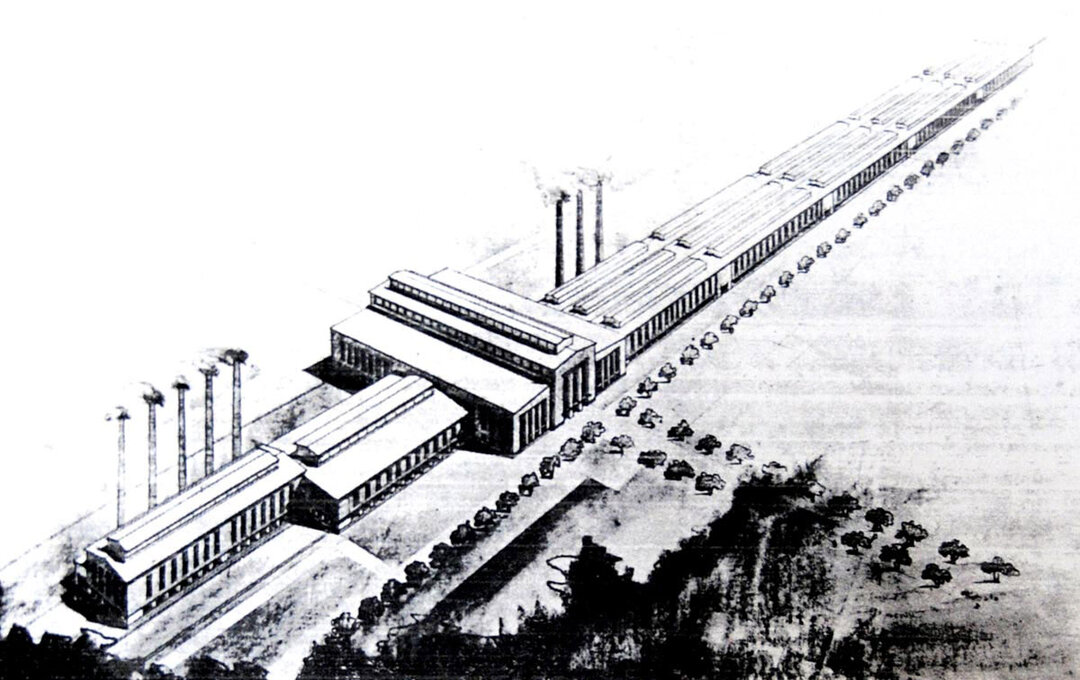
"A complex iron and steel workshop", published in issue 10 of 195510, is one of these numerous anonymous examples. The project is signed by an interdisciplinary team from the Institute of Design and Engineering for the Metallurgical Industry (IPROMET), coordinated by the architect Iulian Deșcu and dated 1953. The project is described from a purely technical perspective with reference to the "complexity" of the steelmaking technological process, which in turn implied a "complex" architectural solution. Constructive details of the same project are illustrated in successive issues published in 1956 and dedicated to the theme of prefabrication of structural elements, maintaining the anonymity of the site11. Both articles suggest that the project was one of the first socialist approaches in the industrial field within IPROMET, bringing innovative solutions in the field of structural element patternization and prefabrication of reinforced concrete closure elements. What is omitted is the fact that the project represents the first line of rolling mills built at the Hunedoara Iron and Steel Works after the end of the war, when it became the main steelmaking objective in the investments of the socialist state. It is also omitted the fact that Hunedoara's steel industry has existed since 1884, and that the process of prefabrication of the closure elements in the industrial halls had already been experimented in 1938-194112.
Starting with the first issue published in 1959, which is also a thematic issue dedicated to "Industrial Constructions", the examples begin to be geographically defined by clearly specifying the location. The issue also brings to the fore a change in the diversity of industrial branches covered. Whereas up to that time most of the examples illustrated had concentrated on heavy industry, from 1959 onwards industrial projects from the chemical, textile and food industries were published. The period 1958-1959 is considered in the specialized literature as the beginning of a new wave of industrialization, oriented towards a diversification of the branches of production and their uniform location at territorial level. This industrial diversity is also reflected in the organization of design activity. In 1963, more than ten specialized design institutes were specified according to different branches of industry and, even more, according to different production flows or sectors within the same industry13. The presence of these design institutes begins to be felt in the thematic issues published in the 1960s, where each industrial branch presented presents its achievements from the perspective of the corresponding institute14.
In 1965, the pre-socialist industrial context is mentioned for the first time, considered to be the main constraint on industrial architectural design in the first post-1945 interventions. "The 'chaotic development of the past' was proposed to be 'rectified' by defining a mono-functional industrial zone developed in parallel with the city, presenting a unified approach from an architectural point of view15. The notion of "industrial platform" is thus introduced as a distinct functional area within the territorial systematization process. "Industrial platform" is first mentioned by the architect Ladislau Adler in the editorial of the first issue in 1959. "Platforma" could define either a mono-functional area with a diversity of productive flows, as in the case of the Palas-Constanța industrial area or the Militari-Bucuresti industrial complex, or, moreover, it could define a combined area made up of several sectors - component parts of the same industry - as in the case of the steelworks in Reșița, Hunedoara and Galați or the petrochemical plant in Borzești-Săvinești (Onești).
Although the transition to a more detailed territorial contextualization of the industrial projects is made, there are rare cases in which the architectural object is presented in direct connection with the industrial platform, the two types of projects being presented separately. Even rarer, if not non-existent, are the cases where industrial projects are presented in the urban context that was defined in direct relation to them.
With this shift of attention from the architectural object to industrial areas and territories, the central position of the architect in the process of designing and systematizing industries is once again justified and supported.
Most of the articles devoted to the position of the architect in industrial design emphasize the architect's competences in coordinating the entire process, going beyond the status of designing the 'shell' (facade) of the building. The architect's role was thus to be "central, categorical, decisive and not overshadowed by the presence and decision of the technologist", and the notion of "industrial architect"16 was also promoted. This promotion of the figure of the architect in the field of industry became a recurrent theme in the editorials and thematic articles by the architect Ladislau Adler, the main author of the specialized bibliography in the industrial field during the socialist period17. Not infrequently, he argues the architect's ability to respond to the industrial design theme, supporting his contribution also in substantive issues directly related to the industrialization process in construction. In his articles, the qualitative assessment of industrial projects is made through the notions of "complex", "monumental" and "economic efficiency". The lack of a broad architectural discourse that would push towards a discussion of patterns of influence or the aesthetics of architectural composition is in keeping with the trend of the whole period in which achievements in the field of construction became transformed into figures, tipping the balance towards a quantitative rather than a qualitative description. With this quantitative approach, framed in the principle of "economic efficiency", the success of the socialist system was directly and unambiguously emphasized. Moreover, it adopted a cautious expression supported by the technical-economic detailing of the investment, avoiding any kind of ideological approach with the potential for subjective interpretation of the architectural solution.
In spite of this numerical and uniform description of industrial projects from a technological perspective, the pages of 'Arhitectura' published a wide range of models, illustrated either by means of project drawings or architectural photographs. Although some projects respond to the same design theme (e.g. rolling mills, foundries, weaving mills, bread factories, etc.), in some cases even signed by the same design team, they present different architectural solutions not only in terms of composition, but also in terms of materials and construction techniques. Thus, precisely that official discourse with a qualitative appraisal of industrial architecture absent from the published text is illustrated through architectural photography.
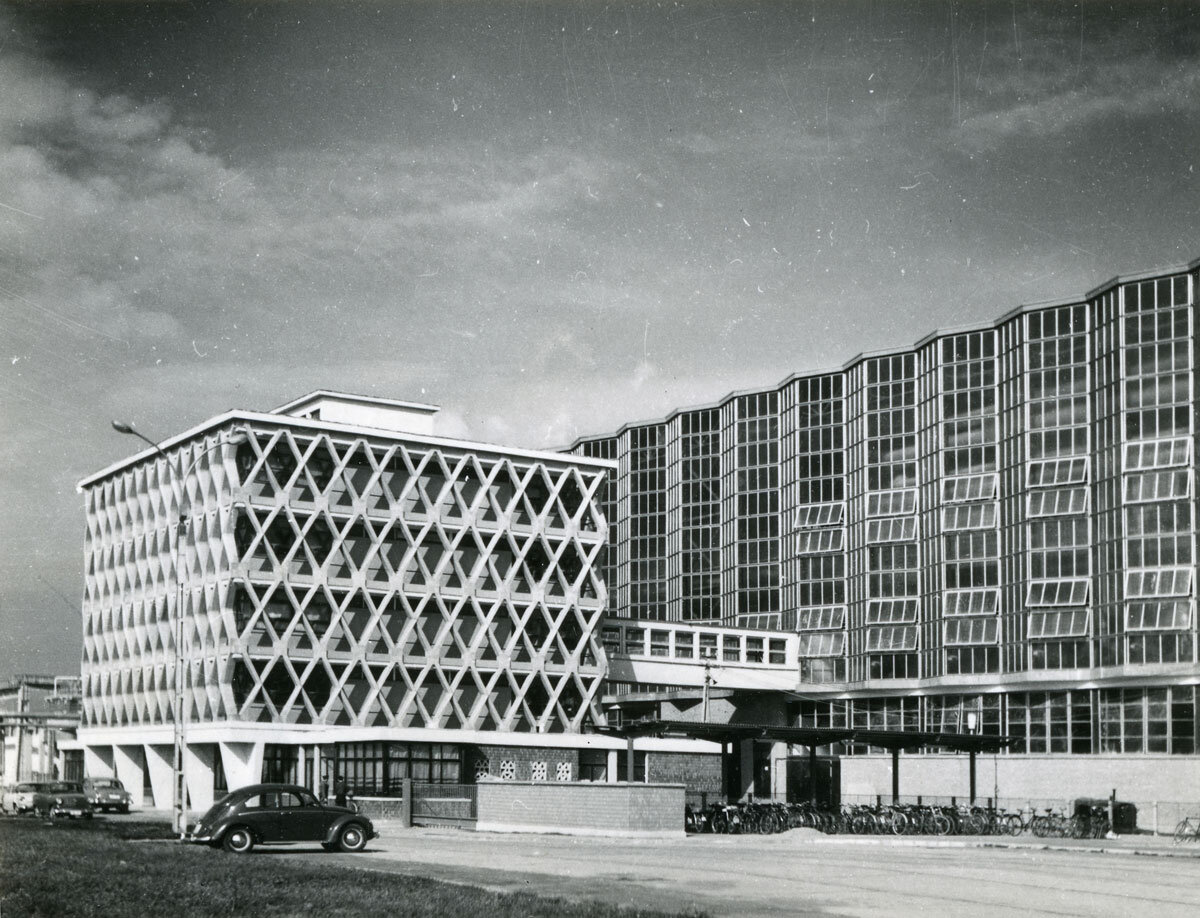
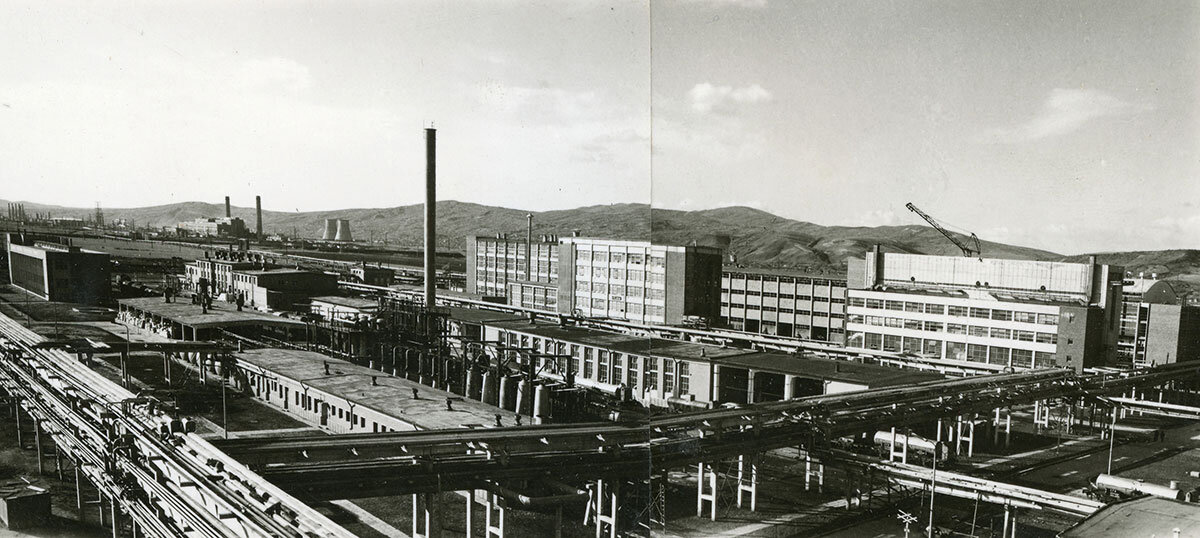
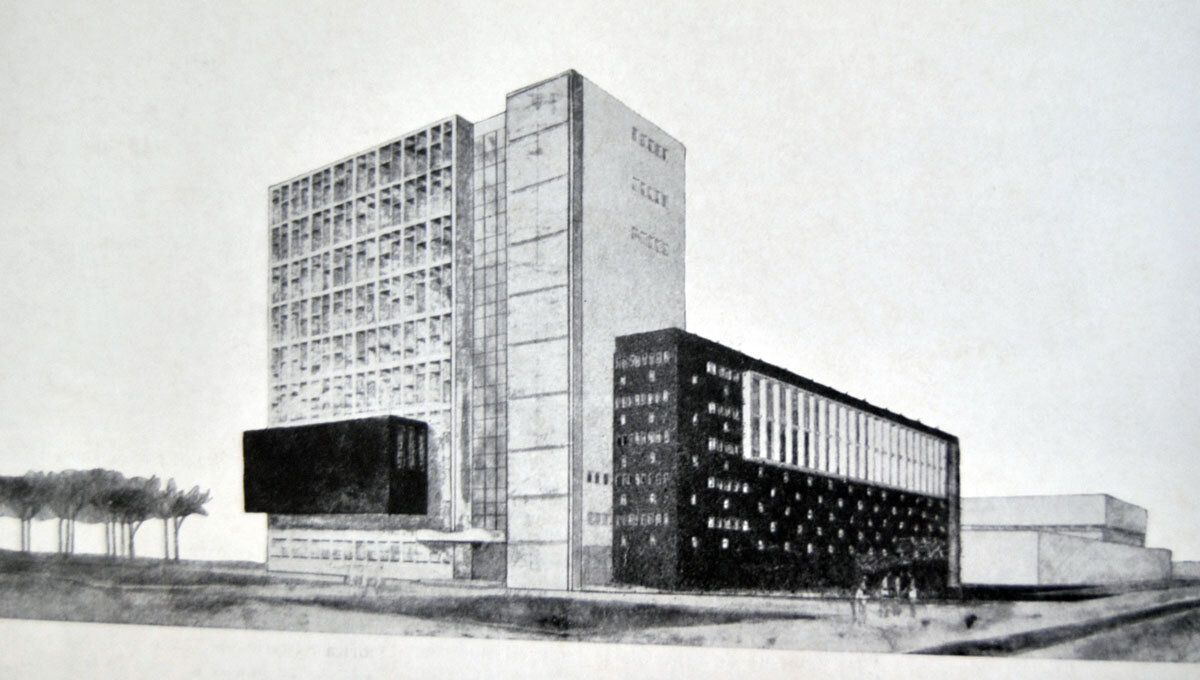
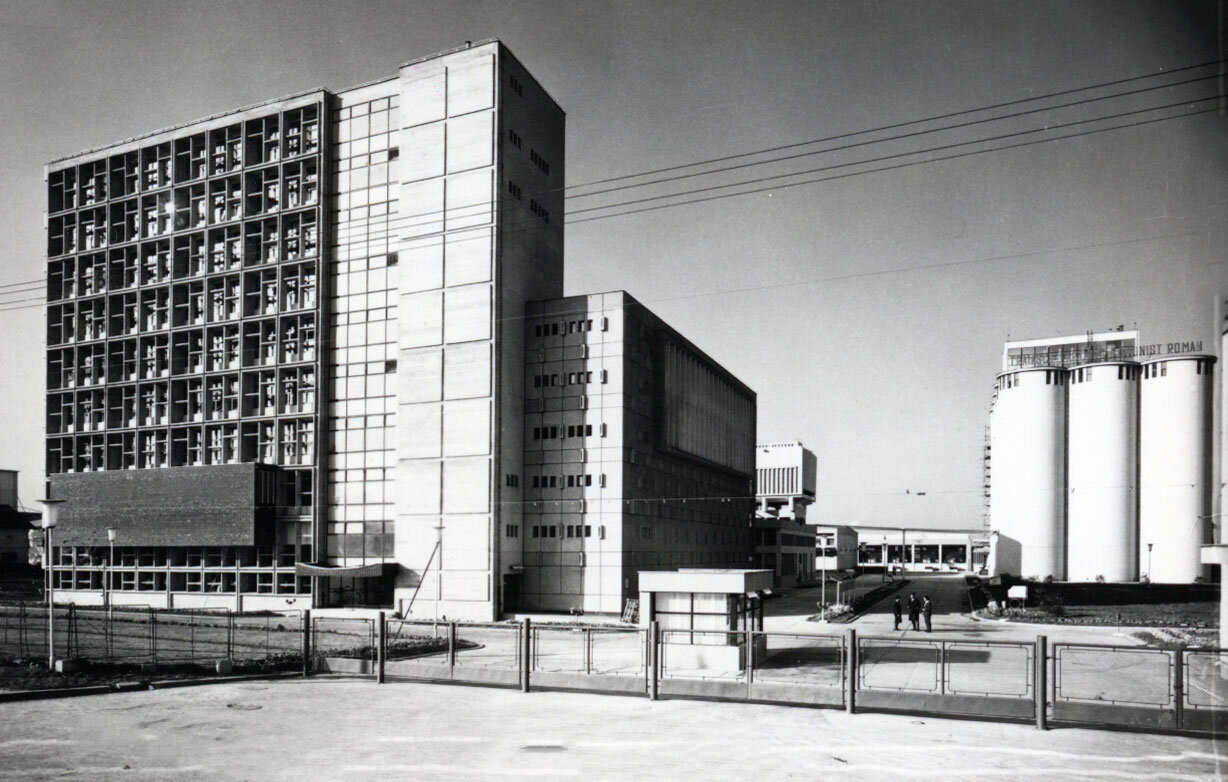
The journal captures in its pages the exchange of perceptions in the representation of architecture through photography, propagandistically used to illustrate the "order and future perspective" offered by the system. The historian Juliana Maxim associates this shift towards a photographic representation of architecture with the formal adoption of the modernist style in the late 195018. The photography of industrial architecture published in the magazine captures a great diversity of themes and an equally great diversity of architectural models.
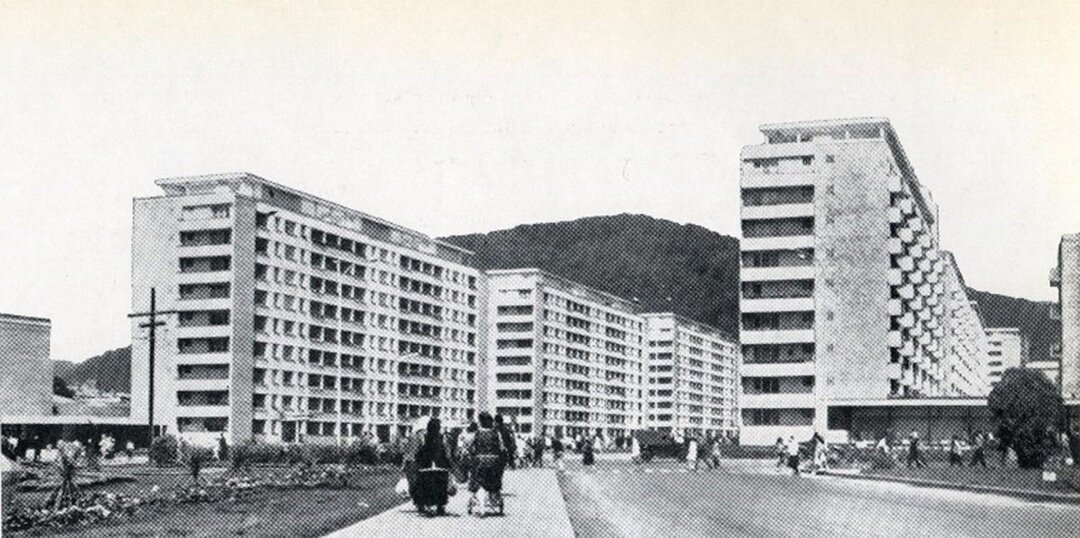
In the photography, as in the text, the compositional emphasis is on the architectural object or building element in a central, decontextualized setting, be it industrial platforms, factory squares, production halls, cooling towers, water towers, open-air installations or infrastructural elements, enhancing the order effect that was supported and stimulated by socialist propaganda. The author (photographer) and the date on which the photograph was taken are missing from all the photographic illustrations. And the information accompanying the photographs refers rather to the typology of industrial production and, as such, to the branch of industry represented, the design institute and the design collective, although not always completely. The photograph published between 1959-1989 provides an interpretative reading of industrial architecture positioned in parallel with the official text, offering clues to that aspect of "modernist manifestation in its most radical forms", as the architect Ion Mircea Enescu stated in 200019. But it is precisely the official text published in 'Arhitectura' that supports this modernist interpretation of industrial architecture by assiduously repeating the themes that were at the basis of the modern movement at the beginning of the 20th century: seriality, technological innovation and the industrialization of construction as a way of responding architecturally to the basic needs of society.
Also missing from the pages of the magazine are the sovromromes, which represented a well-defined period in the history of the Cold War, the official visits to the "industrial construction sites of the homeland", the utopian projects that were triggered in the mid-1970s and, although mentioned occasionally, the international context of industrial architecture in direct reference to Romanian projects is missing. These absences support the need for a continuous confrontation of the journal with the variety of alternative sources of information and documentation, in order to obtain a more complete picture of post-war industrialization and its impact on the built environment. However, the absences only enrich the reading of "Arhitectura", which remains a repertory of industrial architecture and, as such, a first reference in the research of the recent past.
NOTES
1 The end of the 1920s, in the context of the Soviet Union, coincided with the beginning of the first centralized economic plans, based on the intensive development of heavy industry consisting of mining, metallurgy, iron and steel and machine-building. During this period the foundations were laid for a centralized and nationalized system, which was subsequently applied throughout the Soviet bloc from the post-war period onwards.
2 Thematic issues devoted to industrial architecture began to be published with issue 7/ 1956, entitled "Industrial Architecture". Later issues of the journal devoted to the design and construction of industries appear published under the generic title of "Industrial Constructions" or "Industrial Architecture" in "RPR Architecture," no. 7/ 1956; "RPR Architecture," no. 5/ 1957; "Arhitectura RPR", no. 1/ 1959; "Arhitectura RPR", no. 3/ 1962; "Arhitectura RPR", no. 4/ 1965; "Arhitectura RPR", no. 5/ 1967; "Arhitectura", no. 3/ 1970; "Arhitectura", no. 1/1976.
3 As regards the evolution of the magazine from a publishing perspective during the communist period, see A. M. Zahariade, "Testing the Physiognomy of the Arhitectura Magazine 1952-1989" in sITA. Printed in Red. Architectural Writings during Communism, no. 1/ 2013, , pp. 161-183.
4 See the series of articles signed by the architects Ladislau Adler and Zalman Solomon and published between 1950-1952 in the magazine "Arhitectura" and later in "Architecture and Urbanism".
5 George Nelson, Industrial Architecture of Albert Kahn Inc., New York: Architectural Book Publishing Company, 1939; Richard Anderson, 'USA/USSR: Architecture and War', in Grey Room, No. 34/ 2009, pp. 80-103.
6 S. Kotkin, Magnetic Mountain. Stalinism as a Civilization, Berkeley: Univ. of California Press, 1997.
7 With particular reference to the monographs published by Ladislau Adler: L. Adler, Proiectarea clădirilor și ansamblurilor industriali, București: Ed. Tehnică, 1955, and L. Adler, Z. Solomon, M. Popovici, Arhitectura industrială în RPR, București: Ed. Tehnică, 1964.
8 Reference is made to the late 1940s, when the nationalization law was passed (1948), followed by the elaboration of the first economic plan (1949).
9 Liviu Chelcea, Bucureștiul postindustrial. Memorie, dezindustrializare și regenerare urbană, București: Editura Polirom, 2008.
10 G. Bleyer, "Despre proiectarea halelor de fabricație pentru industrie metalurgică și constructoare de mașini", in "Arhitectura RPR", nr. 10/ 1955, p. 25-36.
11 P. Horjescu, A. Tenenhauser, "Industrial halls made of prefabricated elements", in "Arhitectura RPR", no. 9/ 1956, pp. 7-11.
12 O. Țiganea, Industrial Architecture in Communist Romania. Hunedoara: The Construction and Destiny of a Major Steel Plant, 1947-1999, PhD thesis, 2013, coordinators: prof. Carolina Di Biase (PoliMilano) and prof. Nicolae Lascu (UAUIM București).
13 See H.C.M. 191/1963 on the organization and profiling of design activity, which clarifies the organization of the following industrial design institutes: IPCM, ICPE, ISPH, IPROCHIM, IPRAN, IPETTG, IPCT, IPROMET, IPL (IPROLAM), IPA, ICTCM (http://legislatie.just.ro/Public/DetaliiDocument/22701).
14 See "Arhitectura RPR", No. 3/ 1962; "Arhitectura", No. 4/ 1965; "Arhitectura", No. 5/ 1967; "Arhitectura", No. 3/ 1970.
15 Z. Solomon, "Industrial Zones of Metallurgy", in "Arhitectura", no. 4/ 1965, pp. 33-35.
16 See the articles by arh. Ladislau Adler between 1956 and 1976, as follows: "Arhitectura RPR", no. 7/ 1956; "Arhitectura RPR", no. 1/ 1959; "Arhitectura RPR", no. 3/ 1962; "Arhitectura RPR", no. 4/ 1964; "Arhitectura", no. 4/ 1965; "Arhitectura", no. 3/ 1970; "Arhitectura", no. 2/ 1975; "Arhitectura", no. 1/ 1976.
17 The architect Ladislau Adler attended the Brno Polytechnic and the Institute of Architecture in Florence, graduating in 1935. His professional activity in Romania was mainly in the field of teaching and theory, publishing most of the monographs dedicated to industrial architecture between 1949-1989, but also in the administrative field of the profession, holding the position of vice-president of the CSAC/ CSCAS since 1953. As far as his design activity is concerned, only the crèche and kindergarten of the Malaxa factories (Bucharest), designed between 1947-1948 in collaboration with the architect Richard Bordenache, are mentioned. See A. Panaitescu, De la Casa Scânteii la Casa Poporului. Four decades of architecture in Bucharest. 1945-1989, București: Editura Simetria, 2012. His texts, published in the journal "Arhitectura" between 1950-1989, capture the entire period of socialist industrialization from an architectural perspective.
18 J. Maxim, The New, The Old, The Modern: Architecture and Its Representation in Socialist Romania 1955-1965, PhD Thesis, MIT, 2006.
19 C. Goagea, "Civilians and industrialists after the Second World War" (interview with the architect Ion Mircea Enescu), in "Arhitectura", no. 1/ 2000, pp. 15-18.