The photography archive of Romanian Union of Architects. Online and Offline

The long period of publication of the magazine "Arhitectura" is, in itself, a remarkable fact, which makes it one of the longest-lived magazines in Europe. At the same time, however, its existence cannot be separated from the context of which it was part, that of our architecture in the 20th century and the beginning of this century.
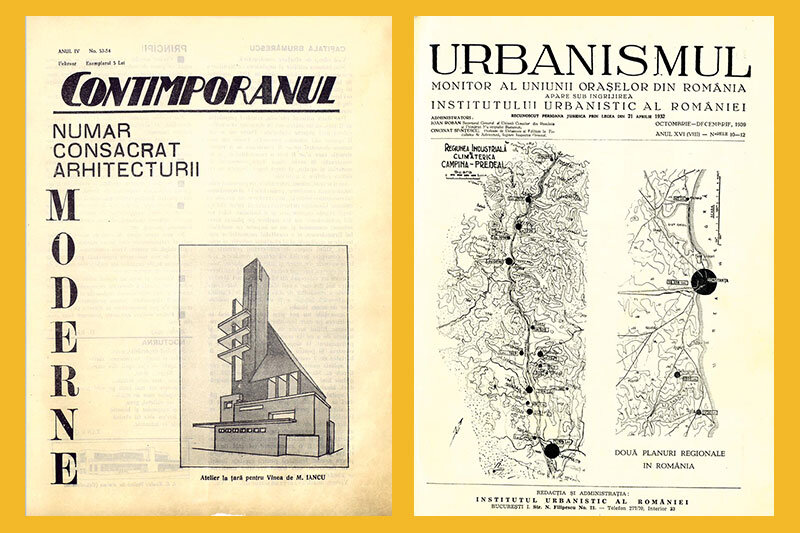
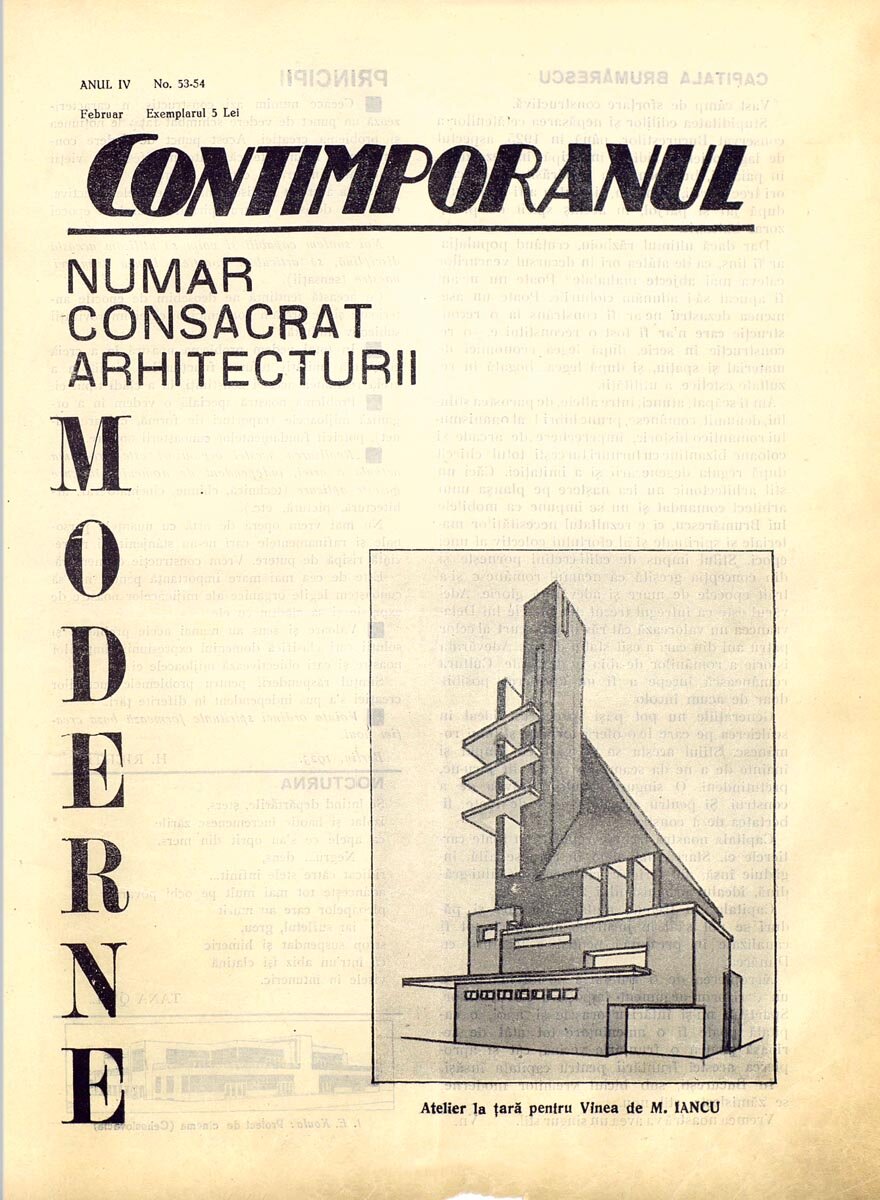
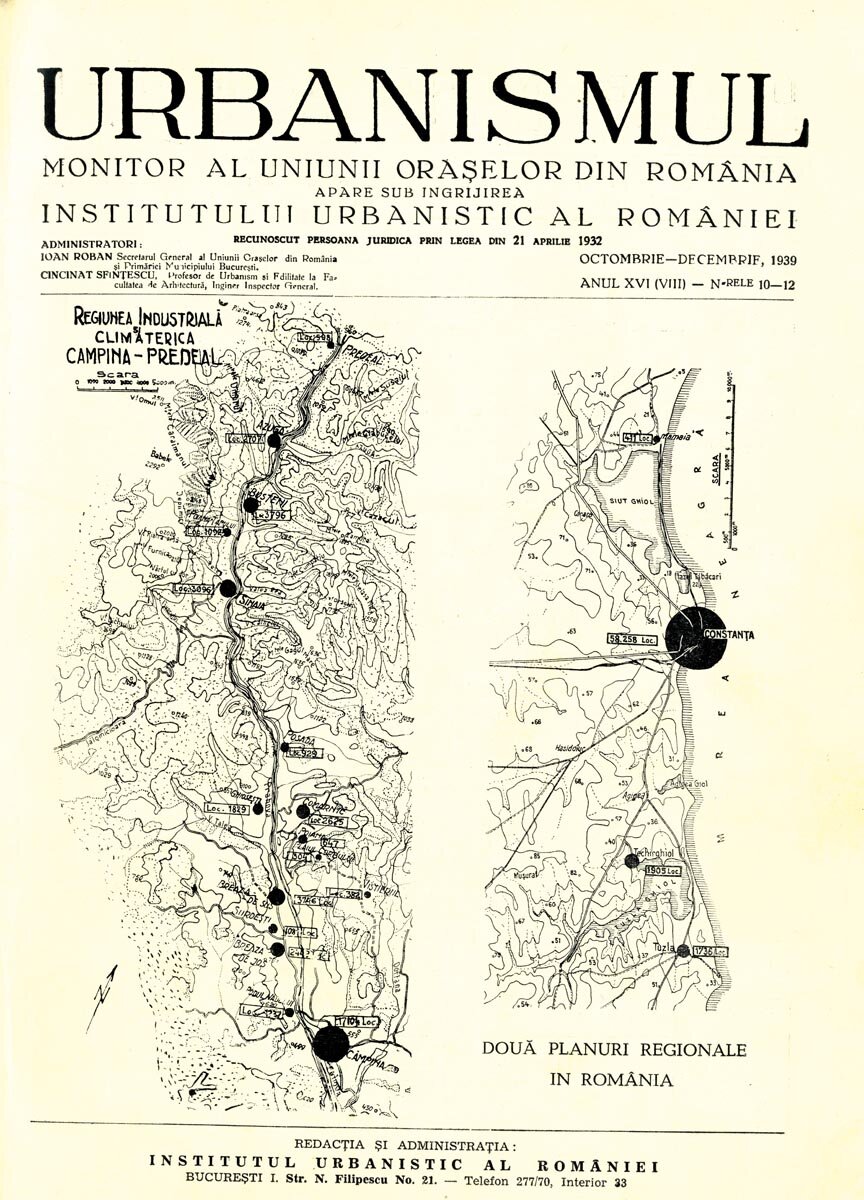
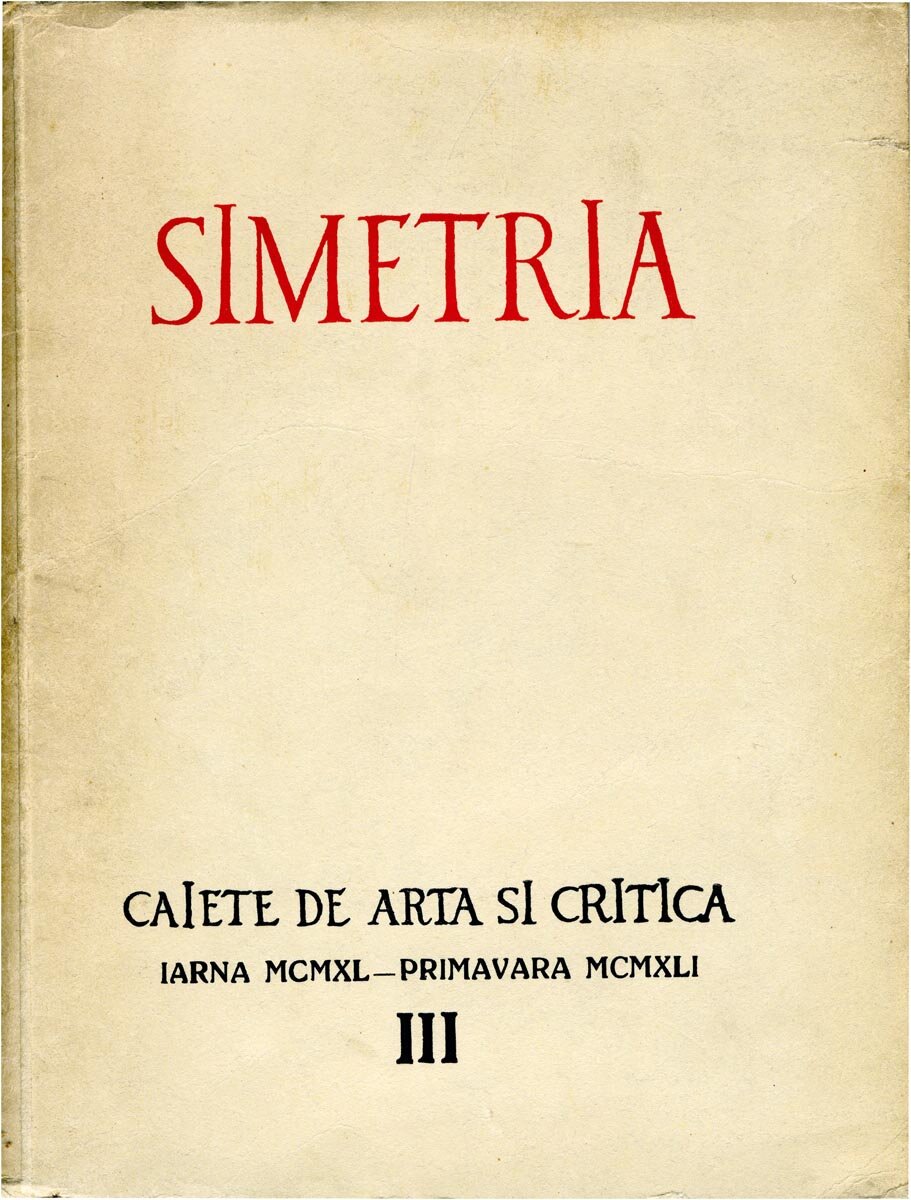
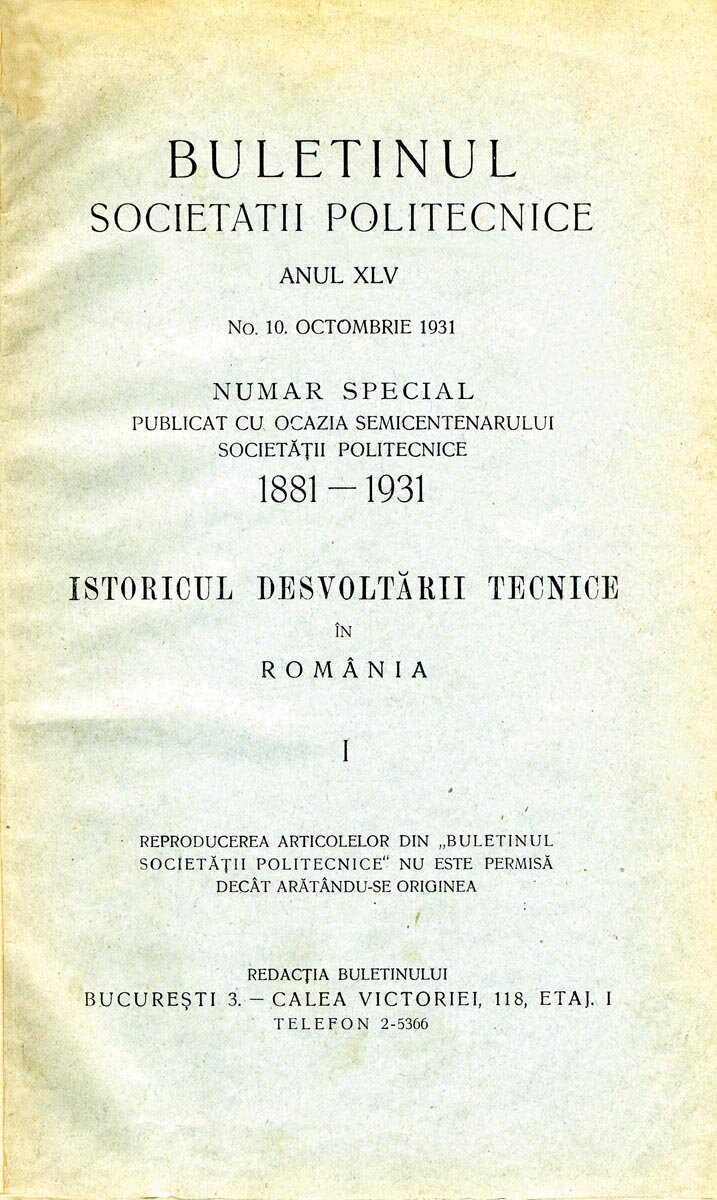
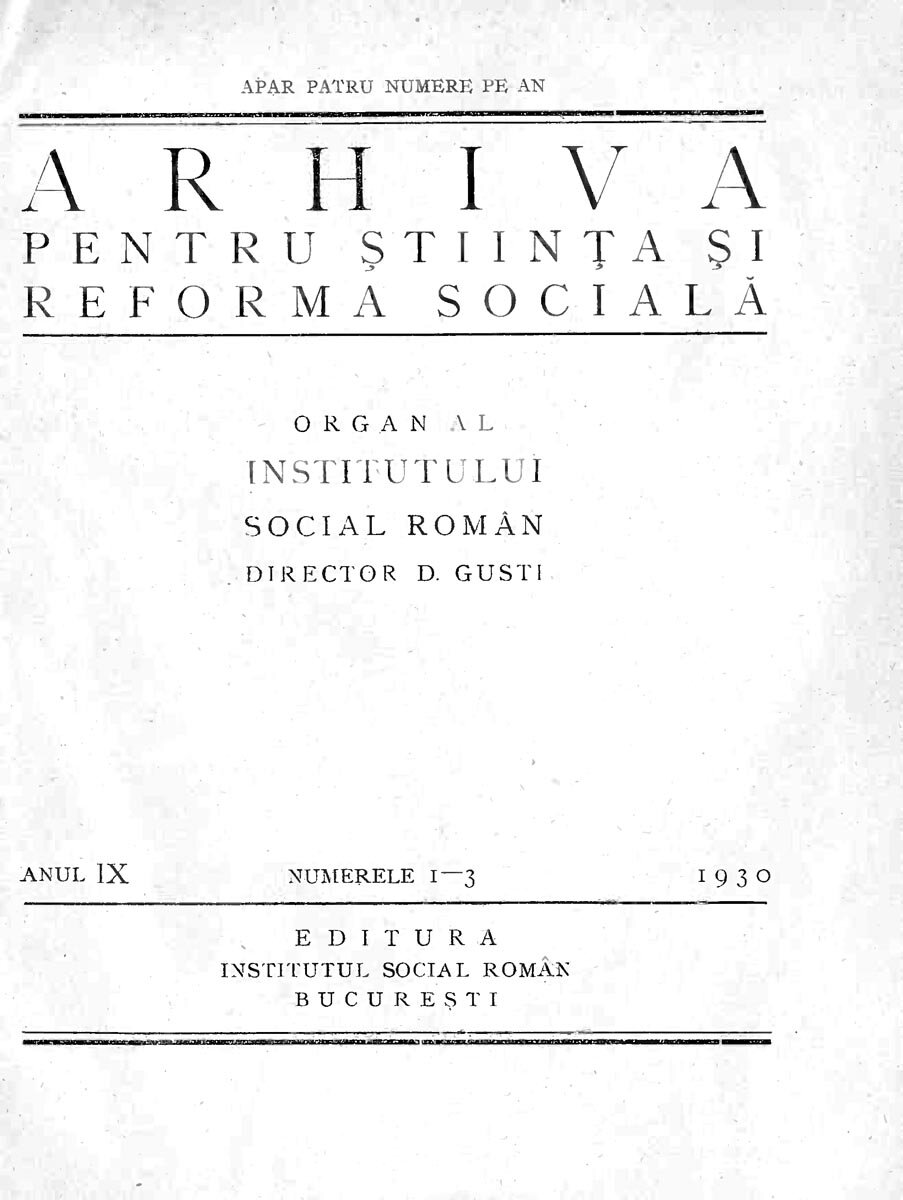
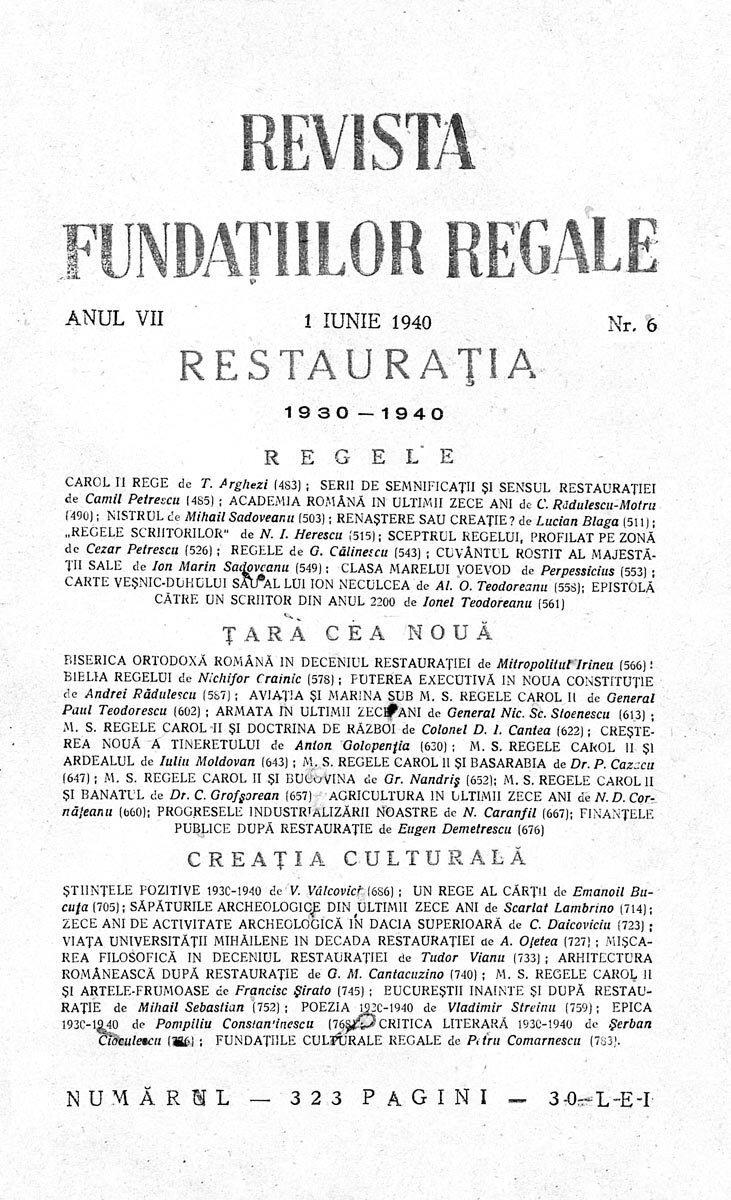
Arhitectura magazine and the interwar architectural cultureThe real significance Arhitectura magazine had during inter-war period cannot be emphasized outside the context it belonged to. The determining factor of the entire sphere of the architecture and urbanism was the assimilation of the spirit of modernity, expressed in diverse ways: from stating the essential social role of the architecture to the seldom renewal of the functional organization to the existence of a pluralism of formal expressions: besides Neo Romanian style and the classical style, the modernist movement, late Secession (in Transylvania and Banat) coexisted. The concurrent presence, more and more consistent, of the debates of ideas along professional practice stimulated and accentuated the diversity of specialists' directions of activity. Furthermore, this aspect represents a complete departure from the anterior period within Romanian architectural context, significantly contributing to the maturity of the professional culture. The first category were the journals/ magazines with a pronounced professional character in the field of architecture: Buletinul Comisiunii Monumentelor Istorice, Urbanismul, Simetria. The important avant-garde review Contimporanul, led by Marcel Iancu, was the main promoter of modern architecture. Besides them, there were couple of the most remarkable periodicals with scientific and professional character of the period: Buletinul Societății Politecnice, Buletinul AGIR, Arhiva pentru Știința și Reformă Socială, Sociologie românească, etc., as well as periodicals of broad cultural coverage as: România literară, Gândirea, Adevărul literar și artistic, Convorbiri literare, Viața Românească, Revista Fundațiilor Regale, etc. Looking through the prism of this larger context of the debates of ideas formulated in a considerable number of publications, Arhitectura magazine has a better defined place. Certainly, it was the main review dedicated exclusively to the architecture through the light of the position of SAR in relation to the architecture, searching/ trying to gradually encompass the entire directions of manifestation of the architecture. |
Significant in this respect is the magazine's location in the decades between the two world wars. After the end of the world conflagration and after the Great Union, major changes took place in practically all areas of political, social, economic and cultural life, through efforts to modernize the whole of society in keeping with the spirit of the times. Architecture and urban planning were part of the great changes which were at the heart of the new state. For the profession, the inter-war period was, in many ways, a time of repositioning of values and a new perspective on the built environment as a whole. The scope of the profession broadened considerably and gradually strengthened its role in society. The roles taken on by the Romanian Society of Architects and, after its foundation in 1932, the Romanian Architects' Corps, are essential in this respect.
The assimilation of the spirit of modernity was the determining factor for the whole sphere of our architecture. The consequences have been extremely varied, including in the direction of the already established neo-Romanesque architecture, which, through its modernizing impulses, has opened new ways of recovering the vein of national tradition.
The full recognition by professionals, in addition to aesthetic concerns, of the social and economic role of architecture, a direction which is gaining considerable emphasis. The attention paid to the new needs of society in general and of clients in general (whether industrial, public or residential buildings) led to the gradual modernization of functional organization, sometimes giving rise to new architectural typologies adapted to new ways of living or working, with the increasingly widespread use of new building materials and technologies. Areas which, until the First World War, had been on the back burner, such as social housing (low-cost housing), industrial and rural housing, are becoming of great interest. As a result, architects gradually began to specialize in various fields (systematization, restoration of monuments, architecture and rural planning), complementing the older specializations - also partial - of architects working in various ministries.
Finally, it is worth highlighting the increased interest, including the legislative one, in the controlled development of localities, especially cities, the emphasis on urban planning through systematization plans, and the formulation of Cincinat Sfințescu's first theory of extending territorial planning to the national level.
On the other hand, the pluralism of stylistic expressions is another important characteristic of the period and, in fact, a novelty compared to the pre-war period, not so much in terms of the expressive quests themselves, but in their diversity and number. From the already established neo-Romanesque architecture, which underwent numerous and significant changes of formal orientation during the 3rd and 4th decades, to the diversity of architectures based on classicizing research (from late eclecticism to modern classicism of the second half of the 1930s), from the persistence of late expressions of Transylvanian Sezession to the attempts to assimilate the architecture of modernism through Art Deco and modern architecture. It is a variety that undeniably reflects a society with different cultures (and cultural levels) seeking its own representation in the modern era.
This effervescence and accentuated diversification of the professional's directions of activity has been stimulated and accentuated by the simultaneous and increasingly consistent presence of the debate of ideas that accompanies professional practice.
This is an aspect which, for the Romanian architectural landscape, represents an absolute novelty compared to the previous period, and it has contributed considerably to the maturation of professional culture. It is also a novelty in relation to other forms of culture (philosophy and literature, first and foremost, but also in relation to engineering culture, the plastic arts or music), for which theoretical and critical discourse has existed for several decades; architecture is thus tending towards the recovery of an obvious gap in the affirmation of its own cultural identity. There is no doubt that architecture has always (and everywhere) been a profession linked to the (practical) drawing-board, and therefore its presence in culture has been through its own technical and artistic means. But beyond this fact, which is quite obvious, any significant architectural culture has been built up gradually, with the support of critical and theoretical reflection and, in general, through the debate of ideas, while at the same time being open to all social problems that require urban and architectural solutions.
This significant cultural opening was made possible through the contributions of real quality of a number of architects belonging to different generations: from the generation that reached professional maturity, such as Petre Antonescu, Spiridon Cegănescu, Duiliu Marcu, Nicolae Ghika-Budești, Ion D. Enescu, Florea Stănculescu, Ion. D. Trajanescu, Marcel Iancu, Toma T. Socolescu, or those at the meritorious beginning of their professional career who obtained their architect's diploma (at the school in Bucharest or abroad) during the 1920s or 1930s: G. M. Cantacuzino, Octav Doicescu, Al. Zamphiropol, Grigore Ionescu, P. E. Miclescu, Titu Evolceanu, Victor Smigelschi, Victor Asquini and others, to name only those who were constantly present in the theoretical debates through public lectures, some of them held at the Romanian Radio Broadcasting, articles, studies or volumes. On the other hand, the interest of intellectuals and people of culture in architecture, expressing the broader interest of society, was also much greater than before the First World War. Architects were therefore joined by personalities from fields close to architecture, such as engineers or sociologists (the urban planner Cincinat Sfințescu, Emil Prager, etc.), as well as aestheticians and philosophers (Matila Ghika, Petru Comarnescu, Tudor Vianu or Marin Simionescu-Râmniceanu), art historians (Alexandru Busuioceanu) or journalists - chroniclers of the artistic phenomenon (H. Blazian, Ion Zurescu), among many others.
Professional and group or broader cultural interest, specialization in one or another field of architecture and urbanism, adherence to certain ideologies and artistic (architectural) orientations, apprehension among them were among the causes that sometimes - without this being an absolute rule - led to the coalescence around ideas of an organization (such as the Romanian Architects' Society, the Commission of Historical Monuments or the Romanian Urban Institute) or of periodicals, sometimes founded precisely by such groups ("Simetria"). At the same time, many of the aforementioned personalities had occasional or long-term collaborations with various such publications.
From this point of view of the diversity of publications, some of the most important ones with a pronounced professional character in the field of architecture can be considered first of all.
"Bulletin of the Historical Monuments Commission" (1908-1945) was a periodical published shortly after the first issue of "Architecture" (1906). The quarterly publication of the Historical Monuments Commission was a periodical of great scientific rigour, specialized in the publication of studies, research and fundamental articles on the archaeology and history of our architecture, through the various monuments analyzed, as well as restoration projects. Among its collaborating architects were Nicolae Ghika-Budești, the chief architect of the CMI, Petre Antonescu, Ștefan Balș, Ion Trajanescu, Horia Teodoru, etc.1.
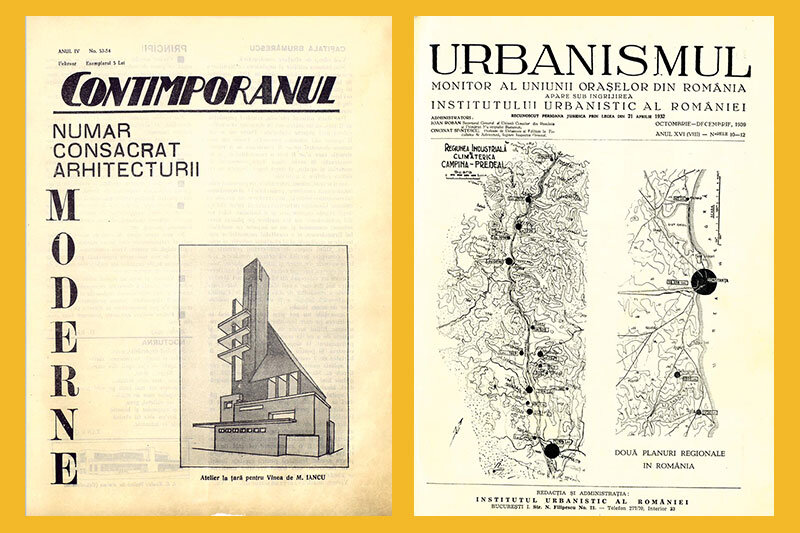
The second magazine, in the order of appearance, was "Urbanismul" (1932-1942), a publication of the Urban Institute, established in 1931 within the Union of Romanian Cities. It is, in fact, the successor of the "Monitorului Uniunii Orașelor din România", which has been published regularly since 1924, being one of the most prestigious specialized journals in Europe and one of the most prestigious Romanian scientific journals of the period. The publication covered all aspects of Romanian urban planning, ranging from traffic, hygiene and urban development to the history, aesthetics and design of cities, and there were also constant and consistent references to contemporary European and American practice and theory. Cincinat Sfințescu, our most important urban planner until the Second World War, is linked to the existence of the magazine.
Finally, the magazine "Simetria, caiete de critică și artă" (1939-1947) was one of the most prestigious magazines of the cultural life of the period. Founded by the architects G. M. Cantacuzino, Octav Doicescu, Paul Emil Miclescu and the aesthetician Matila Ghika, it later co-opted Tudor Vianu, Horia Creangă, Titu Evolceanu, etc. to the editorial staff. As far as architecture was concerned, the journal was oriented towards the debate of fundamental theoretical and aesthetic issues in architecture, from the perspective of a subtle classical spirit, understood as the perfect form of balance in thought. The journal also published studies, essays and articles on history and literary and art criticism.
Alongside these main journals of the period, others, such as "Revista de Arhitectură și Construcții" (1919) and "Căminul" (1928-1929), with a shorter period of existence, completed and defined, to a large extent, the varied professional spectrum of our architecture, for shorter periods or for the entire period up to the Second World War2.
The magazine "Contimporanul" (1922-1932) occupies a special place. It was certainly not an architectural magazine, but probably the main magazine of the artistic avant-garde in Romania. The presence, alongside Ion Vinea, of Marcel Iancu, an architect and renowned visual artist, as founder of the magazine made it the main promoter of modern architecture in Romania. From 1924 onwards, Marcel Iancu published his own articles propagating modern ideas and principles, translations of important architects of the Modern Movement - Le Corbusier, Theo van Doesburg - published photographs of modern buildings all over Europe, as well as his own achievements, etc., and several issues of the magazine were entirely devoted to architectural issues.
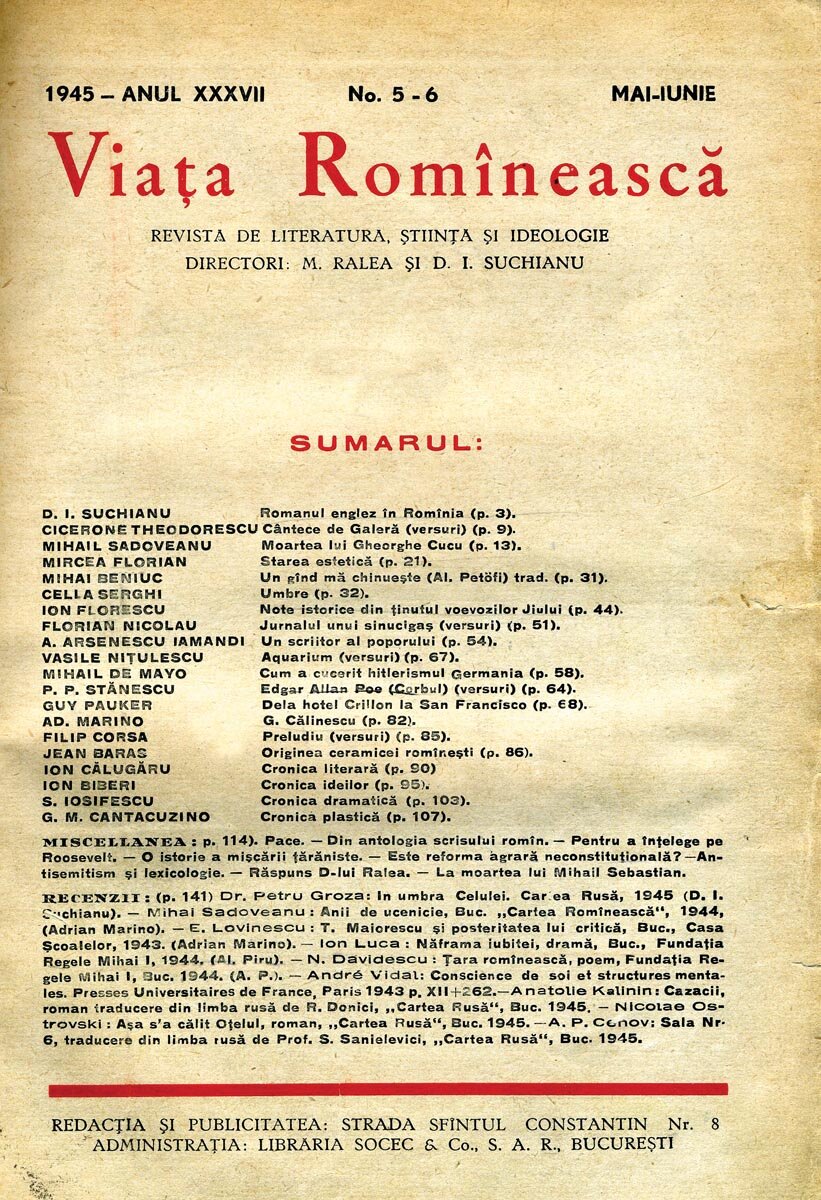
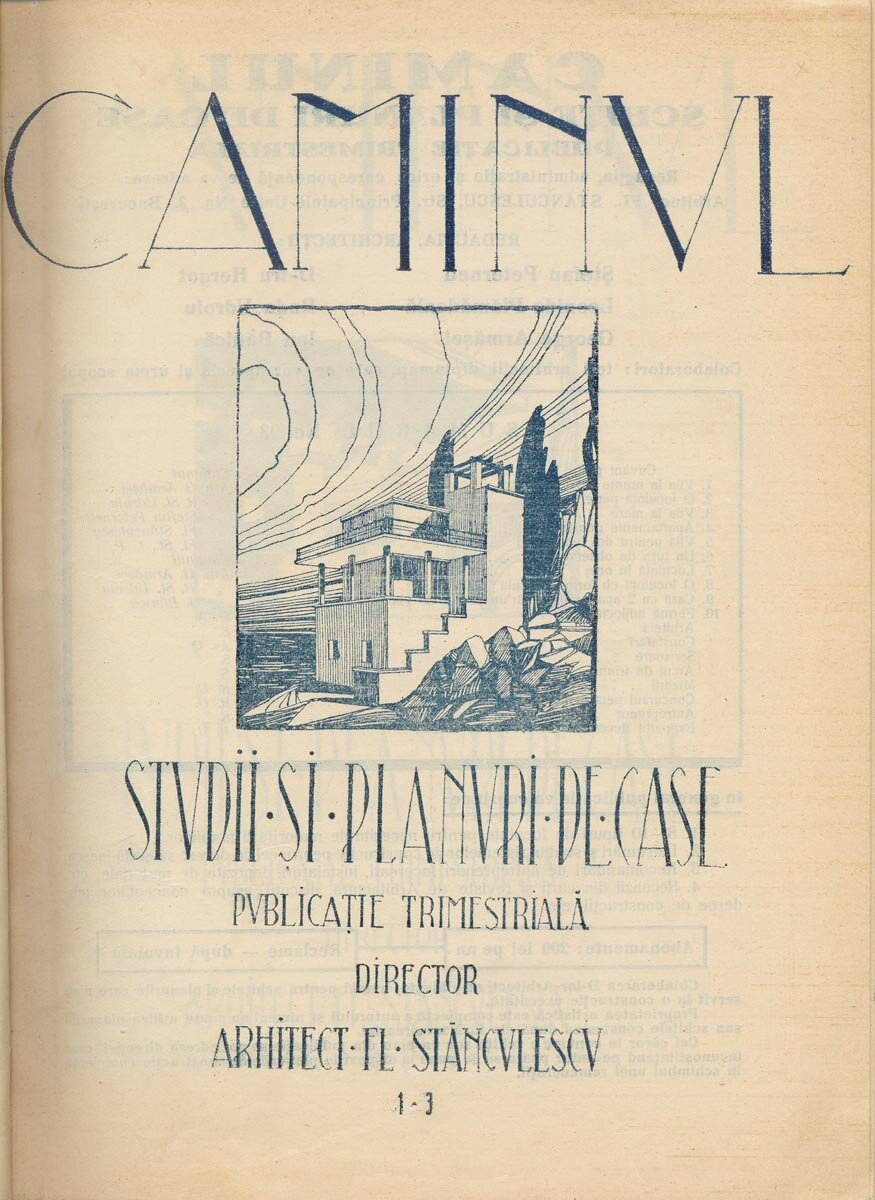
These journals, each with a sufficiently well-defined orientation, reflect the considerable opening of the spectrum of professional interests of architects.
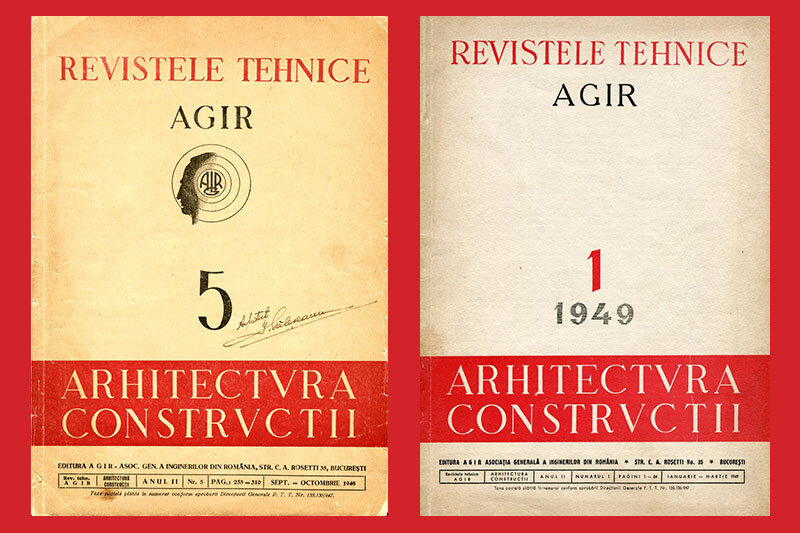
In the wider sphere of interest in architecture and urbanism, through issues related to the specificity and scientific orientation of the journal in question, some of the most remarkable professional and scientific publications of the period are included: "Buletinul Societății Politecnice", "Buletinul AGIR", "Arhiva pentru Știința și Reformă Socială", "Sociologie românească", "Revista de Igienă Socială", etc.
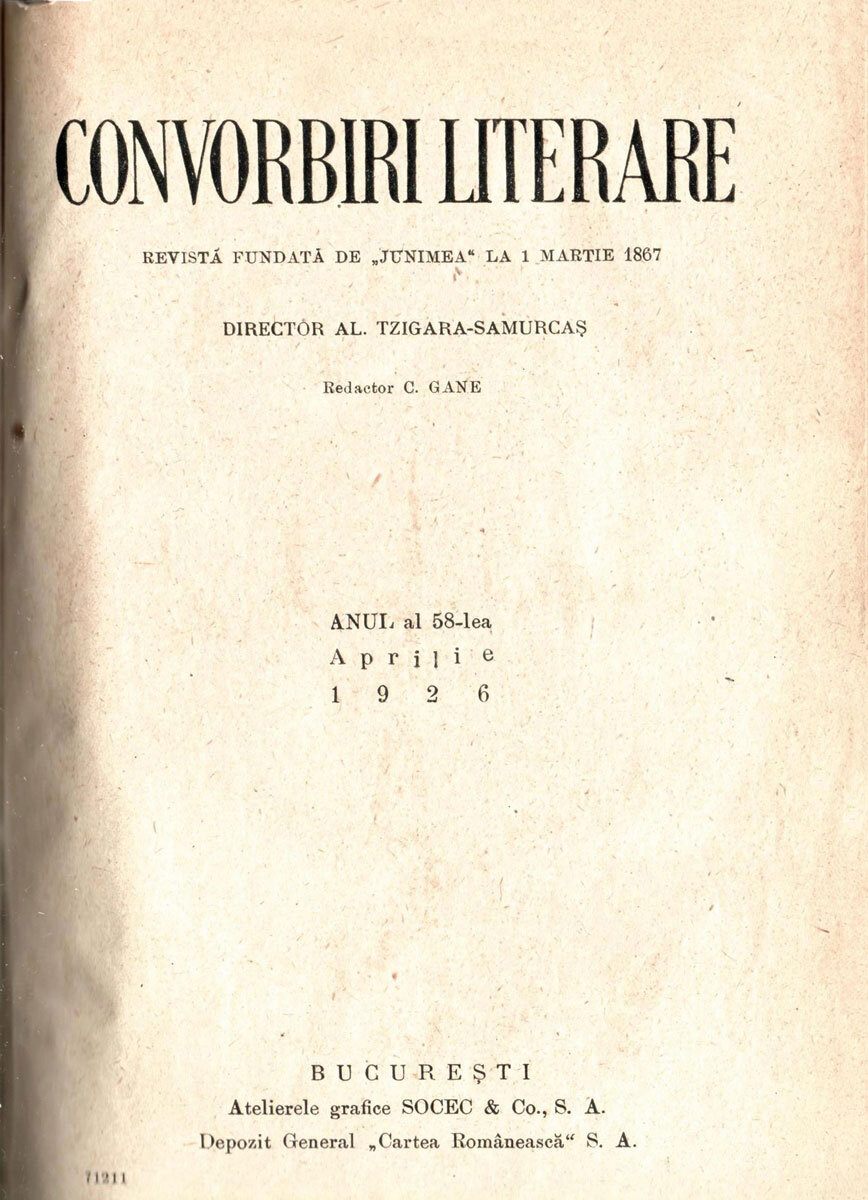
Finally, another important aspect of the period cannot be ignored, which can be considered to be that of the opening towards what we might call today the "public cultural space", through the presence of the problems of architecture and, in general, of the city in publications with a broad cultural breath, such as "România literară" (of which Liviu Rebreanu was, for a period, the director), "Gândirea", "Luceafărul", "Arta și Orașul", "Epoca", "Orașul", "Adevărul literar și artistic", "Convorbiri literare", "Viața Românească", "Revista Fundațiilor Regale"3 etc., dailies or periodicals specifically oriented, in particular, towards urban planning issues in cities, such as "Gazeta Municipală"4 in Bucharest in the 1930s.
Without going into an analysis of the varied and numerous references to architecture - which is absolutely necessary in order to come closer to an understanding of the entire architectural culture of the period - we can only "inventory" their categories: from simple signposts - with or without commentary, to careful descriptions or more or less elaborate critical commentaries, from generalizations of the problems of architecture and urbanism related to political, social or economic needs or desires, to aesthetic considerations (whether argued or not) or rigorous developments of modern constructive techniques, from the advancement of well-founded critical ideas to formulations with strikingly theoretical nuances. There is often no lack of references, signaling or comments on European achievements, each of which found their place and justification in the epoch, in the innovative definition of our architecture, in the debates of the time (traditionalism-modernism is the most well-known of those that were manifested in the whole Romanian culture) and, without doubt, found their place in relation to their real value. Beyond this fact, however, we must emphasize, once again, the role and importance of Cincinat Sfințescu's5 global theoretical "construction" for urbanism on the one hand, and G. M. Cantacuzino6 on architecture.
Seen in this broader context of the debate of ideas formulated in a considerable number of publications, as part of an architectural culture in an obvious process of maturation, the position of the journal "Arhitectura" can be better defined. Inevitably, each of these publications had a different perspective often on the same issue, event or achievement, opened up ways of understanding architecture according to the orientation and profile of the journal. They have contributed considerably to pointing out the relationships between architecture and other fields that broaden its meaning and significance: from economic development to its complex relationship with society, from technical aspects to the fundamental cultural debates of the time, etc. Together they give us a mosaic image, with multiple perspectives, of an architecture that was asserting its role and significance in modern inter-war society. Considered to be, until the middle of the fourth decade, the (exclusive) promoter of the traditionalist direction of our architecture, representing the position of the Romanian Architects' Society, the journal "Arhitectura"7 is, in reality, the only specialized publication of the period with relatively regular publication between the two World Wars. It is the only journal that has consistently reflected most of the directions in which architecture, its transformations and the profession as a whole, has been moving.
NOTES:
1 The general presentation of the publication, accompanied by Bibliographical Indices, was made by Radu Sc. Greceanu, Buletinul Comisiunii Monumentelor Istorici 1908-1945. Yearbook of the Historical Monuments Commission 1914-1915, 1942-1943. Indici bibliografici, in "Buletinul Comisiei Monumentelor Istorice", I/ 1990, nr. 3-4, p. 45-148 and II/ 1991, nr. 1, p. 149-184.
2 Gabriela Tabacu, Essential Monographs with Indexes. Architecture and Construction Review (1919). The Hearth. Studii și planuri de case (1928-1929), București: Editura Universitară "Ion Mincu", 2012.
3 In these last three magazines, G. M. Cantacuzino published a significant number of essays and articles; some of which were later collected in the volumes Introducere la studiu arhitecturii (1926, articles in "Convorbiri literare") and Despre o estetică a reconstrucției (1947, articles in "Revista Fundațiilor Regale").
4 For the mention of modern architecture in the publications of the period, see Nicolae Lascu, Modernist Architecture and Period Journalism, in Arts & Architecture 1920-1940, Between Avant-garde and Modernism, Proceedings of the International Symposium, Bucharest, April 22-24, 1993, pp. 12-27.
5 Andreea Udrea, Toader Popescu, Irina Calotă, Cincinat Sfințescu. Începuturile urbanismului românesc, Bucharest: Ed. Universitară Ion Mincu, 2015, Chronological list of works on pp. 20-25.
6 The most recent bibliography of G. M. Cantacuzino belongs to Dan Teodorovici in George Matei Cantacuzino. Modernismul hibrid (English translation of the volume published in 2014 by Wasmuth Verlag, Tubingen-Berlin), București: Ed. Simetria, 2016, pp. 239-242.
7 See the journal's solid monograph, Gabriela Tabacu, Revista Arhitectura. Studiu monografic e indici, 1906-1944, 2nd revised and added edition, București: Editura Humanitas, 2008.