The photography archive of Romanian Union of Architects. Online and Offline

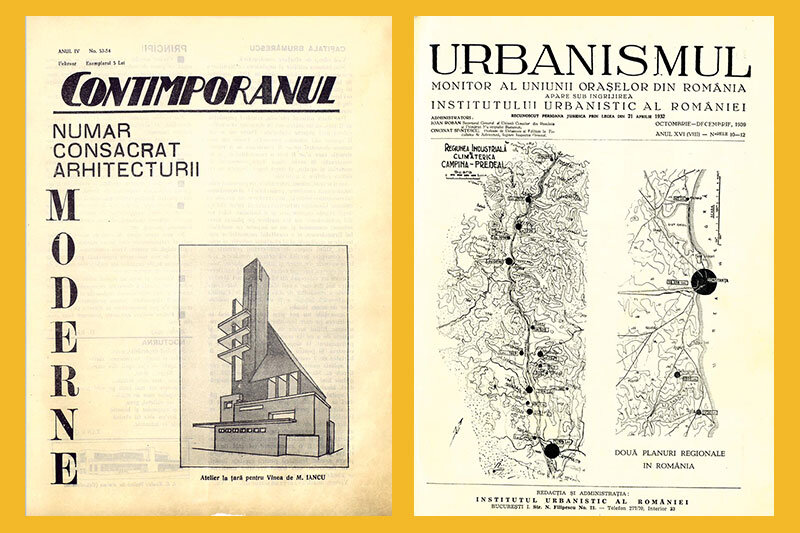
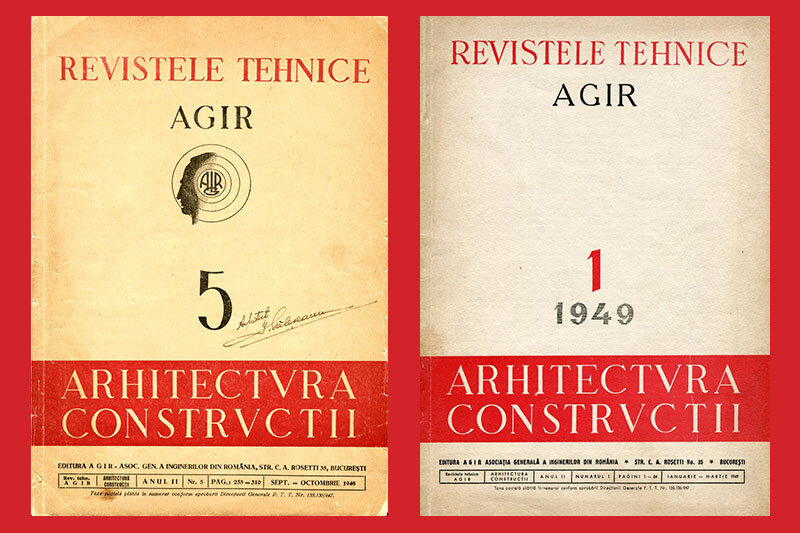
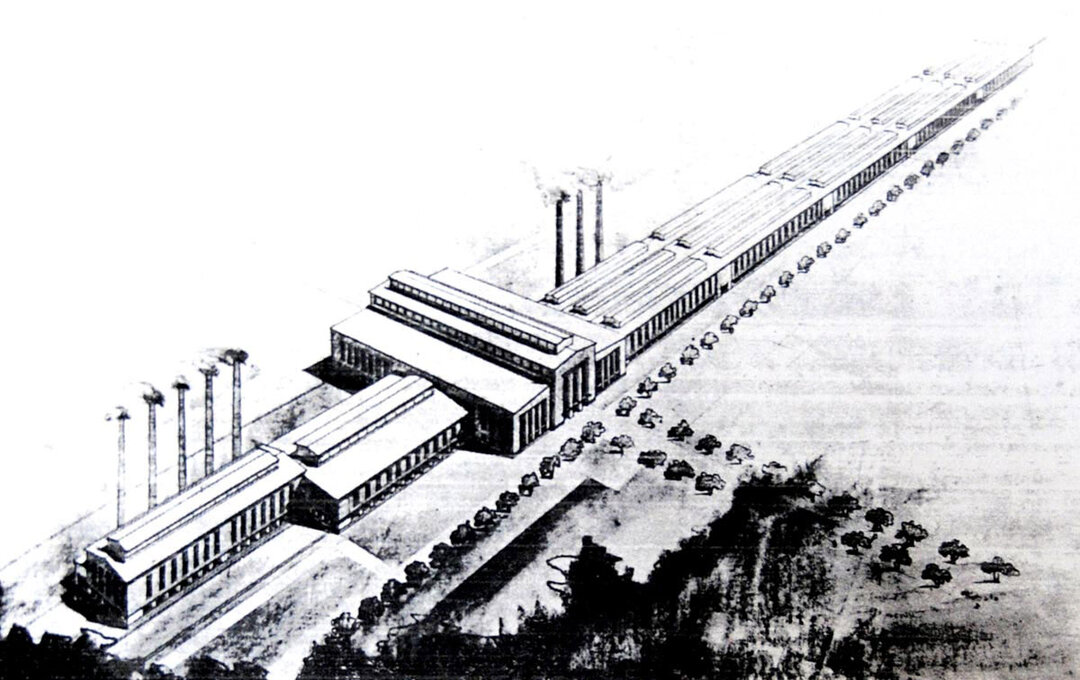
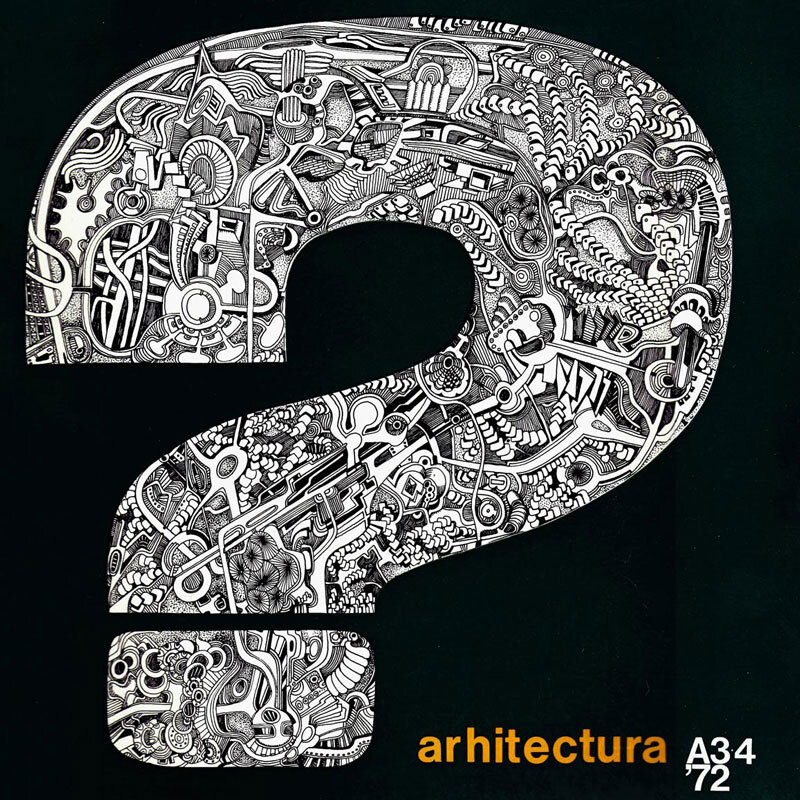
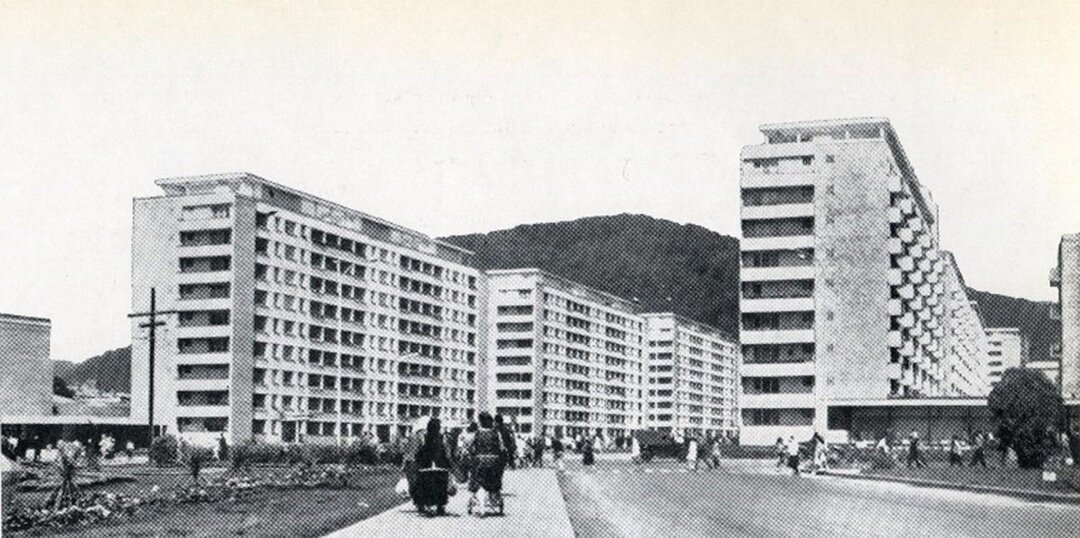
| In the previous issue, the thematic dossier of "Arhitectura" focused on the 125th anniversary of the founding of the Society of Romanian Architects and, not unexpectedly, the magazine dedicates the thematic dossier of the current issue to the 110th anniversary of the publication of its first issue. It is not the first time that such an anniversary has provided an opportunity to look back and revisit our own accumulations. What else could be new about an "old magazine", bearing in mind that the centenary gave the editors the idea of a series to outline the different stages that "Arhitectura" has gone through?1 Some of the authors of the articles from that period are also present in this thematic dossier, and the basic intention is to bring fragments of the magazine's history back into the spotlight. What is new is precisely the grouping of the authors like a palimpsest on which different generations write and rewrite, from personal or "academically objective" perspectives, fragments of the past. The authors of the articles play several roles, dwarves on the shoulders of giants, main or secondary actors in the history of the magazine. The sequence of the articles takes account of these different perspectives, of the chronological chaining (relative, however) and of the shift from the broad context to the detailed view. Some of the articles focus on broader periods, delimited by historical context and the list of the journal's main editors, others look in detail at very specific moments: a particular issue or a particular column. And, more than a motivation, this text is intended to be a key to the reading of the thematic dossier and of the articles in this issue, which are related to it. It was natural that, after its long history, the journal "Arhitectura" should become a source and subject of research. The first two groupings of articles reflect precisely the perspective of the researcher, who looks with the objectivity that distancing himself from the subject over time gives him. The pair of articles signed by Gabriela Tabacu and Nicolae Lascu focus the attention on the first period through which the journal went through when it first appeared. It is seen in this context, through the prism of its content and its epidermis, as a witness of the transition from traditional to modern discourse and at the same time of the cultural opening of the interwar period. One of the general ideas conveyed by Nicolae Lascu's text is thus worth noting, namely that, from a period in which the magazine held a 'monopoly' on debate within the profession, it became part of the much broader interwar cultural phenomenon, which tended to create profound links between architecture and other fields. It is a well-known fact that after the cultural turmoil of the inter-war period, with the end of the Second World War, there followed a period of more than five years of silence for the magazine 'Arhitectura'. The publication which appeared in 1950 under the name "Arhitectura" was associated with AST and not directly with the guild of architects. Towards the end of 1951, the name was changed to "Arhitectură și Urbanism" and it was published by ASIT. Clearly, this illustrates the difficulties that the guild of architects, as well as other professional organizations, went through in the first years after the war. And yet, until the reappearance of "Architecture" in 1950, between 1947 and 1949, another publication replaced it. It had an equally fluctuating name ("Constructions"; "Architecture and Constructions" and so on) and was run by an editorial board composed, at the beginning, mostly of engineers (being part of the AGIR Technical Journals) and with a considerable technical component2. The subject of this journal, which filled the gap left by the absence of the guild's official journal, is developed in this thematic dossier in the article by Marei Marginean. The resumption of the magazine as the mouthpiece of architects did not take place until 1953, with the publication of two issues, as a consequence of the establishment in 1952 of the single organization of architects. Both issues are an indisputable landmark for the orientation of architecture in the early 1950s. The subjects covered in the two issues were collective apartment blocks, social-cultural buildings and industrial architecture. In the first issue, a special space was devoted to the project for the Cultural Palace in Reșița (architect Tiberiu Niga), a project that was not very well seen according to the new principles that Romanian architecture had to follow; the second issue, however, had as a special subject, detailed and presented in color plates, the project for the interiors of the Casa Scânteii Polygraphic Printing Plant, seen here as a positive example3. In the first issue of 1953, an article written on the occasion of the centenary of Ion Mincu, whose personality was undoubtedly being used as an ideological shield at the time, had a special place. "Arhitectura RPR" from 1953 illustrates the punctual relationship between certain issues of the magazine and turning points in the evolution of Romanian architecture. In addition to some issues devoted a priori to anniversary moments, whose content is focused on the essential events in the life of the guild, there are others which, even without a clearly defined intention, crystallize moments in the professional history4. This is why the thematic dossier proposes a detailed look at two issues of "Architecture". The first article (Alexandru Răuță), referring to the first issue of the magazine in 1966, captures the moment of the beginning of major interventions in the centres of small towns, artificially enlarged by the industrialization process. The second article (Miruna Stroe) draws attention to the last issue of the magazine in 1989 and sheds light on the complicated period that the guild went through in the early 1990s. And perhaps it is not at all accidental, but on the contrary absolutely necessary, to revisit those years now, after the formation and maturation of a new generation. These issues are certainly not the only ones that deserve much more detailed attention, and in this regard we may mention the publication of the magazine in which the study on the delimitation of the historic area of Bucharest was published, in the same year 1977 in which the earthquake brought with it the pretext for some regrettable interventions in the city center. The post-war "Arhitectura" became and still is a source of research, and one of the first works that, soon after 1990, proposed a revisiting of the magazine's path was the unpublished study Privire generale asupra evoluției revistei Arhitectura, signed by Nicolae Lascu, Ana Maria Zahariade and Augustin Ioan. From that time until today, numerous other works (doctoral theses or published books) refer directly to post-war "Arhitectura". This is no coincidence, as the journal was, until 1990, the only publication solely oriented towards the profession. In issue 1 of 2000 ("Arhitectură/Industrie"), Augustin Ioan, then editor-in-chief of the magazine, announced in his argument that writing about industrial architecture was, at that time, on the one hand, an opportunity to reflect on a phenomenon that had come to an end and, on the other, to show another side of this architecture that had been rather obscured until then. The process of forced industrialization during the communist period was followed by a process of de-industrialization, if not forced, then dramatically accelerated. It is from such a perspective, of a phenomenon that is not only over, but whose traces are beginning to disappear as a material legacy, that Oana Țiganea's article looks at industrial architecture - which was abundantly present, at one time, in the pages of the magazine "Arhitectura". Although having different voices and varying in scope, topics or details of some of the thematic dossier articles have common cores; in some cases, the detail articles can be seen as footnotes or clarifying parentheses to the texts that speak about the major periods of the magazine. The history of the column "Our predecessors", inaugurated in issue no. 3-4 of 19725 with an article by Șerban Popescu-Criveanu, is the subject of one of the texts in the thematic dossier (Toader Popescu); now, it is not so much the idea of the appearance of a historical column that is important in this context, but the fact that it speaks of a particular vision imprinted on the magazine and of a period in which the generation then in full creative power was imposing its own working tools6. Probably one of the most assumed and at the same time one of the most fertile periods of the post-war magazine was the 1970s, when Nicolas Mircea Lupu was editor-in-chief. The magazine, as he himself confirms in the text in this issue, had two strong cores: urban and historical research. It is extremely interesting to note that the text by those who have taken over the editorship of 'Arhitectura' since 2001 refers to the same column 'Our Forebears' and the attempt to revive it in a completely new form. In two of the cases, the thematic dossier is organized in such a way as to propose a "dialog" between different generations of authors. One of the "dialogues" is illustrated by the text signed by Alexandru Beldiman, originally planned to be a review of Miruna Stroe's book, published by Simetria Publishing House in 2015. A second "dialog" is offered by a grouping of texts that goes beyond the thematic dossier. It consists, on the one hand, of the voice of an actor of the period, Gheorghe Săsărman, who talks about his own experience as a publicist during the communist period and, on the other hand, of the review of the book Nemaipomenitele aventuri ale Anton Retegan și ale dossier său (2011, Gheorghe Săsărman). Ex-libris, the Ex-libris column in this issue of the magazine, exceptionally, proposes a double review that goes beyond the role of a publication and brings together the empathetic and very attentive perspective of Mariana Celac and the distant and reserved historian Alexandru-Murad Mironov. Another idea that emerges from these articles is that a fertile research could illustrate the landscape of publications with a general or cultural openness that offered space for architects to be exposed, despite the hegemony of "Architecture" as the official mouthpiece. While the first part of the thematic dossier brings together rather distant observers of the phenomenon, the second part is devoted to the texts signed by the actors of the period, thus tracing the history of the magazine over a period of almost 50 years. In addition to those mentioned above, this section includes texts by Vasile Mitrea and Teodor Octavian Gheorghiu. These shed light on the difficult new decade before the fall of communism. The closing of the dossier is given to the voices of some of the magazine's last editors-in-chief. Among these texts, perhaps the most dynamic is the dialog between two former editors-in-chief of the magazine: Anca Sandu Tomaszewski and Françoise Pamfil. All the more so, this spontaneous conversation seems to be a good argument for a long-awaited archive of "personal testimonies" to fill the gaps left by official documents and texts. At the same time, this last idea is one of the reasons for tipping the balance of the thematic dossier towards the post-war history of the magazine. |
| NOTES: 1 This is the series of articles that accompanied each of the ten issues of "Arhitectura" magazine in 2006: Constantin Goagea, "How it feels to have a 100-year-old magazine", in no. 1(41); Gabriela Tabacu, "The world of architects 100 years ago", in no. 1(41); Gabriela Tabacu, "National style, traditionalism and modernism in the magazine "Arhitectura" up to the Second World War", in no. 2(42); Ana Maria Zahariade, Irina Tulbure, "Going through the 1950s", in no. 3(43); Ștefan Ghenciulescu, "Transformare și coabitare. 1956-1960: de la stalinism la (neo)modernism", in nr. 4(44); Miruna Stroe, "Iluzia libertății în "Arhitectura": anii '60", in nr. 5(45); Nicolae Lascu, "Anii '70 ai revistatei "Arhitectura""", in nr. 6(46); Mihai Duțescu, Ștefan Ghenciulescu, "Anii '70, parte a 2-a", in nr. 7(47); Anca Sandu Tomașevschi, "Unde ne-au fost securiștii", in nr. 8(48); Anca Sandu Tomașevschi, Mariana Celac, Augustin Ioan, "Arhitectura 100 de ani. Episodul 9 - anii '90", in nr. 9(46); Cosmina Goagea, Constantin Goagea, Ștefan Ghenciulescu, "1999.....................o discuție", in nr. 10(50). 2 The publication that remained strictly in the care of the architects was "Buletinul Societății Arhitecților Români", published in a reduced format, without illustrations. 3 The Combinatul Poligrafic Casa Scânteii had appeared in several articles (architecture, structure, installations), occupying almost the entire first issue of the magazine in 1951. 4 Among which: Issue 1 of 1941 - which was dedicated to the 50th anniversary of the founding of SAR; Issue 5 of 1972 which celebrated 75 years of Romanian education; Issues 4-5 of 1981 which saluted the 75th anniversary of "Arhitectura" with a comprehensive article on the history of the magazine, signed by Mircea (Nicolas) Lupu; Issue 3-4 of 1991 which celebrated 100 years since the founding of SAR and included a series of articles that tried, at the same time, to put post-war architecture in new coordinates; Issues 1-10 of the magazine in 2006 (previously mentioned). 5 Also this turning point in the history of the journal can easily be the subject of a detailed research. 6 This is the generation formed mainly by graduates of the Faculty of Architecture in Bucharest between 1960-1970; The "almost permanent nucleus" of the magazine, mentioned by Mircea (Nicolas) Lupu in his text, was made up of Alexandru Sandu (graduate 1962), Adrian Panaitescu (graduate 1962), Dimitrie Sbiera (graduate 1962), Tudor Dumitrașcu (graduate 1960), Sanda Voiculescu (graduate 1962), Peter Derer (graduate 1963), Doina Cristea (graduate 1961), Șerban Popescu-Criveanu (graduate 1967). |
| The previous issue of "Arhitectura" magazine focused on the anniversary of 125 years since the establishment of the Association of Romanian Architects and, quite predictably, the main theme of the current issue is dedicated to the anniversary of 110 years since the first issue of "Arhitectura" magazine. This is one of those occasions when we have the opportunity to look back and take stock of some of our achievements. What new facts could possibly be said about an "old magazine", especially when the centenary of the magazine inspired its editors to come up with a serial outlining the various stages in its life?1 What is new is how we brought together the authors, like a palimpsest on which members of various generations write and re-write, from personal or academic perspectives, objective pieces from the magazine's history. In this issue, the authors of the articles play several parts: dwarves standing on the shoulders of giants, main or secondary actors in the life of the magazine. The articles in this thematic file encompass these various perspectives, following a (relatively) chronological order, and move from the larger context towards a more focused look. Some of the articles focus on larger periods of time, defined by their historical setting and by the succession of the editors-in-chief of the magazine; others examine in detail very specific moments, like a specific issue or column. In fact, this text itself aims to be not so much a justification, as a reading key of the main theme and of the articles featured in this issue which deal with it. It was natural that, after such a long history, "Arhitectura" magazine itself would become a source and subject of research. The first groups of articles of this thematic file reflect precisely the perspective of the researcher, who manages to have an objective perspective, thanks to the passage of time. The pair of articles by Gabriela Tabacu and Nicolae Lascu focus on the first period of existence of the magazine since its emergence. The magazine is seen in this context through its content and appearance, as a witness of the shift from the traditional to the modern discourse and also of the cultural opening in the interwar period. We must note in this respect one of the general ideas conveyed by Nicolae Lascu's text, namely that, in a period when the magazine held the monopoly of the debate within the profession it became part of the much larger interwar cultural phenomenon which aimed to create solid links between architecture and other fields of study. It is well-known that after the cultural effervescence of the interwar period, once the World War II ended, "Arhitectura" magazine experienced more than five years of silence. However, the magazine published in 1950 which bore the name "Arhitectura" was associated with AST and not directly with the architects' guild. Towards the end of 1951 the name of the magazine became "Arhitectură și Urbanism" [Architecture and Urbanism], and was edited by ASIT. This clearly illustrates the difficulties endured by the architects' guild, as well as by other organizations of the profession in the first years after the war. Still, until "Arhitectura" re-emerged in 1950, another publication acted as a substitute, starting from 1947. It had an equally fluctuating name ("Constructions" - "Architecture and Constructions"...), and was run, at first, by an editorial board mainly consisting of engineers (because it was a member of the Technical Magazines associations AGIR) and boasted a considerable technical component.2 The topic of this latter magazine, which filled the gap left by the disappearance of the official magazine of the profession, is tackled in the present issue in Mara Mărginean's article. The magazine re-emerged as the official voice of the architects' profession as late as 1953, and debuted with two issues, right after the establishment of the unique organization of architects in 1952. Both issues are an undeniable landmark for the direction taken by architecture in the early 1950s. The two issues dealt with the housing estates in collective apartment blocks, the social-cultural edifices and industrial architecture. In the first issue, special magazine space had been allotted to a commentary on the project of a Cultural Palace in Reșița (by architect Tiberiu Niga), which was not very well received considering its non-compliance with the new principles Romanian architecture was supposed to follow. The special topic of the second issue, which was tackled in detail and accompanied by color boards, was the indoor design of "Casa Scânteii" Printing House, seen, this time, as a positive example.3 A special part was played, in the first 1953 issue, by an article written to Ion Mincu's centenary, whose personality was, undoubtedly, used as an ideological shield. "Arhitectura RPR" in 1953 illustrated the strict relationship between several issues of the magazine and the turning points in the evolution of Romanian architecture. Apart from several issues of the magazine a priori dedicated to certain anniversary moments, whose content outlined the essential moments in the life of the guild, there are others which capture a moment in its professional history, without a conscious intention to do so.4 For this reason, the main theme proposes a detailed overview of two issues of "Arhitectura" magazine. The first article (Alexandru Răuță), concerning the first 1966 issue of the magazine, captures the moment of initiation of the ample interventions in the centres of the small towns artificially born as a result of industrialization. The second article (Miruna Stroe) discusses the last 1989 issue of the magazine and casts light on the complicated period witnessed by the guild in the early 1990s. Maybe such an examination is not accidental at all; on the contrary, maybe it is absolutely necessary to revisit those years, after a new generation has formed/grown. These issues are surely not the only ones worthy of special attention; we should also note the study setting the boundaries of the historical center of Bucharest, dating back to 1977, when the earthquake was a pretext for a number of highly regrettable interventions in the city center. The post-war issues of "Arhitectura" continue to be a source of research, and one of the first papers to propose a review of the magazine's past issues is the unpublished study entitled Privire generală asupra evoluției revistei Arhitectura [Overview of the Evolution of Arhitectura Magazine], authored by Nicolae Lascu, Ana Maria Zahariade and Augustin Ioan. From then until today, numerous other papers (doctoral dissertations or published volumes) make direct reference to the post-war magazine issues, which is no accident, since until 1990 such was the only publication of the profession. In the 1st issue of the year 2000 ("Arhitectură/Industrie" [Architecture/Industry]), Augustin Ioan, the then editor-in-chief, in his leading article, declared that writing about industrial architecture at that moment in time was an opportunity to both reflect on a phenomenon that had come to an end and to present another side to this architecture, which had been rather overshadowed until then. The forced industrialization from the communist era was followed by one of de-industrialization which, albeit not forced, was at least dramatically accelerated. Oana Țiganea, in her article, examines industrial architecture - which had also been featured abundantly in "Arhitectura" magazine - from this perspective exactly: a phenomenon which not only ended, but whose traces in terms of tangible legacy are also beginning to vanish. With different voices and variable lengths, several articles in the thematic file possess a common core; in certain cases, the detailed articles can be seen as footnotes or clarifying brackets to the texts discussing the major periods of the magazine. The history of the column "Our Forerunners", inaugurated in issue 3-4 of 197225 in the article of Șerban Popescu-Criveanu, is tackled by one of the texts in the thematic file (Toader Popescu); what is important here is not so much the idea of having a historical column, as the fact that it talks about a special vision embraced by the magazine and about a period when the generation then in full creative potential imposed its own working tools.6 One of the most directly assumed and fertile periods in the life of this post-war magazine was, most likely in the seventies, when Nicolas Mircea Lupu was editor-in. What is extremely interesting is that the text written by those who took charge of the "Arhitectura" editorial team starting from 2001, makes reference to the same column, "Our Forerunners", and to the same attempt to revive it in a completely new formula. The thematic file proposes, in two of the cases, a "dialog" between the various generations of authors. One of the "dialogues" is illustrated by the text signed by Alexandru Beldiman, intended first to be a review of Miruna Stroe's book, published at Simetria in 2015. A second "dialog" is given by a group of texts that transcends the limit of the thematic file. On the one hand, there is the text written by Gheorghe Săsărman, a real witness of that era, referring to his own publishing experience in the communist period, on the other hand, and there is the review of the book Nemaipomenitele aventuri ale Anton Retegan și ale dosarului său (The Extraordinary Adventures of Anton Retegan and of His File, 2011, Gheorghe Săsărman). As an exception, the column "ex-libris" is proposing a double review that goes beyond its role and establishes a dialog the empathetic and considerate perspective of Mariana Celac and the distant, cautious perspective of Alexandru-Murad Mironov. These three articles give another fruitful idea, that of a research into the publications with general or cultural profile which allotted publication space for architects, despite the hegemony of "Arhitectura" magazine as the official loudspeaker. While the first part of the thematic file rather groups distant observers of the phenomenon, the second part is dedicated to the texts signed by actors from that era, thus providing an overview of the magazine's history throughout almost 50 years. Here are included, in addition to the texts mentioned above, texts such as those of Vasile Mitrea or Teodor Octavian Gheorghiu. They clarify the context of the difficult ninth decade, before the fall of communism. The file is closed by some of the last editors-in-chief of the magazine. Among the closing text of the file, the dialog between two of the last redactors of "Arhitectura" (Anca Sandu Tomaszewski and Françoise Pamfil) is one of the most vivid documents on the recent history of the review. This seems like a good argument for a much expected archive of "personal testimonies", which would fill in the blanks left by the official documents and texts. Also, this last idea is one of the reasons for preferring the post-war history of the magazine, when compiling the thematic file. |
| NOTES: 1 We are referring to a series of articles which accompanied each of the ten issues of Arhitectura in 2006: Constantin Goagea, "How It Feels to Have a 100-year Old Magazine" in no. 1(41); Gabriela Tabacu, "The World of Architects 100 years ago" in no. 1(41); Gabriela Tabacu, " Stil național, tradiționalism și modernism în revista "Arhitectura" de până a cel de doilea război mondial" [National Style, Traditionalism and Modernism in "Arhitectura" Magazine Until the Second World War] in no. 2(42); Ana Maria Zahariade, Irina Tulbure, " Parcurgând anii 1950" [Revisiting the 1950s] in no. 3(43); Ștefan Ghenciulescu, "Transformation and Cohabitation. 1956-1960: from Stalinism to (Neo)modernism" [Transformation and Cohabitation. 1956-1960: from Stalinism to (Neo)modernism] in no. 4(44); Miruna Stroe, " The Illusion of Freedom in "Arhitectura": the 1960s" [Iluzia libertății în "Arhitectura": anii 60] in no. 5(45); Nicolae Lascu, "anii '70 ai revistatei Arhitectura" [Arhitectura Magazine in the 1970s] in no. 6(46); Mihai Duțescu, Ștefan Ghenciulescu, "Anii '70, parte a 2-a" [The 1970s: part II] in no. 7(47); Anca Sandu Tomașevschi, "Unde ne ne-au fost securiștii" [Where Were Our Securitate Officers] in no. 8(48); Anca Sandu Tomașevschi, Mariana Celac, Augustin Ioan, "Arhitectura 100 de ani. Episodul 9 - anii '90" [Arhitectura 100 years. Episode 9 - the 1990s] in no. 9(46); Cosmina Goagea, Constantin Goagea, Ștefan Ghenciulescu, "1999.....................o discuție" [1999.....................a discussion] in no. 10(50). 2 The publication run exclusively by the architects was "Buletinul Societății Arhitecților Români" [The Bulletin of the Association of Romanian Architects], published in a reduced format and without illustrations. 3 "Casa Scânteii" Printing House had been featured in several articles (discussing its architecture, structure and installations), and had taken up almost the entire first issue of the magazine in 1951. 4 Among among which: issue 1 of 1941 - dedicated to the fulfillment of 50 years since the establishment of SAR; issue no. 5 of 1972 which celebrated 75 years of Romanian education; issue 4-5 of 1981 which saluted the 75 years of "Arhitectura" magazine in a comprehensive article which reviewed the history of the magazine, signed by Mircea (Nicolas) Lupu; issue 3-4 of 1991 which celebrated 100 years since the establishment of SAR and contained a number of articles which concurrently attempted to place post-war architecture on new coordinates; issues 1-10 of the magazine, from 2006 (referred to above). 5 This turning point in the history of the magazine can also form the subject of detailed research. 6 This is the generation mainly consisting of graduates of the Bucharest School of Architecture between 1960 and 1970; the "almost permanent nucleus" of the magazine, mentioned by Nicolas Mircea Lupu in his text, consisted of Alexandru Sandu (graduated in 1962), Adrian Panaitescu (graduated in 1962), Dimitrie Sbiera (graduated in 1962), Tudor Dumitrașcu (graduated in 1960), Sanda Voiculescu (graduated in 1962), Peter Derer (graduated in 1963), Doina Cristea (graduated in 1961), Șerban Popescu-Criveanu (graduated in 1967). |