70-300

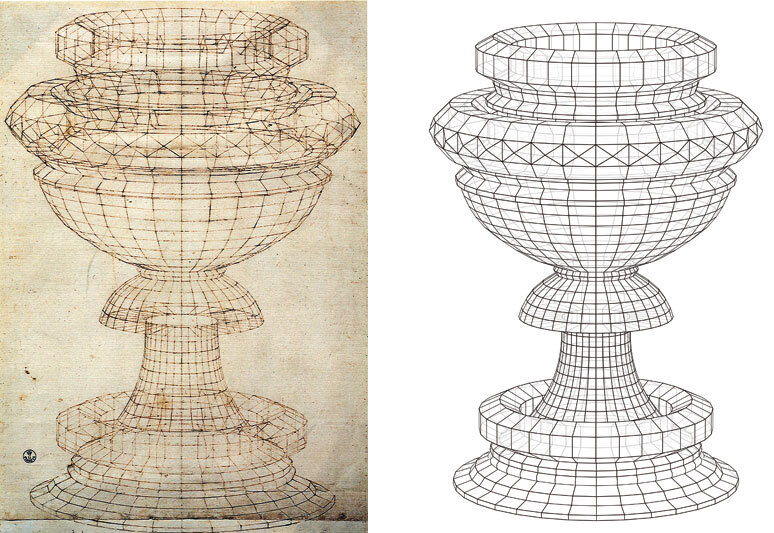
Paolo Uccello (1397-1475) was an Italian painter and mathematician. He has remained in the history of art and architecture as a pioneer in the study of perspective, and in the history of mathematics for polyhedral geometry. A descendant of the Di DONO family, he chose the artistic pseudonym UCCELLO in 14141, when he signed his first paintings and studies of objects in perspective.
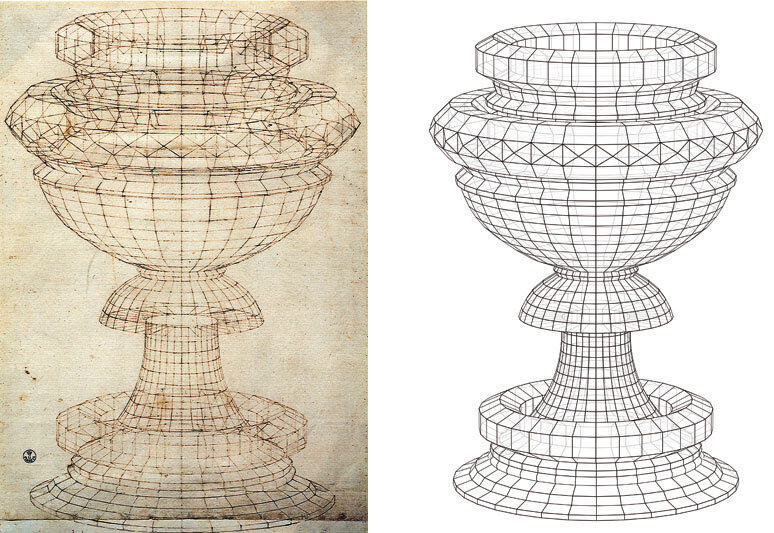
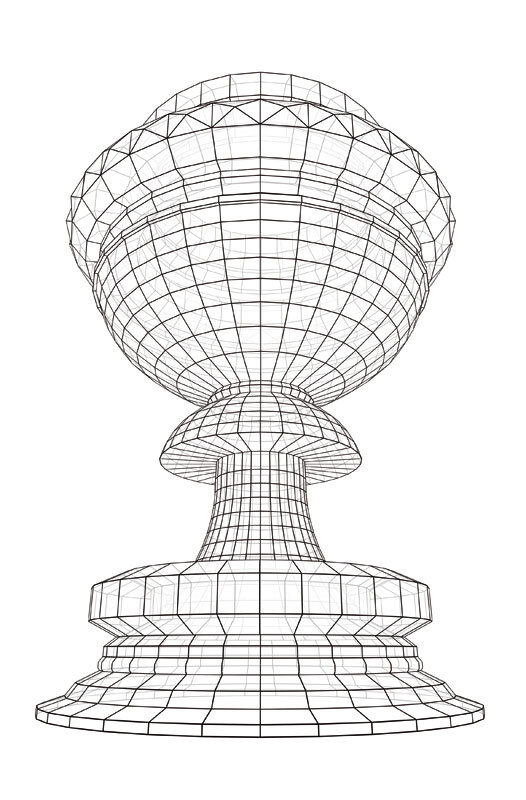
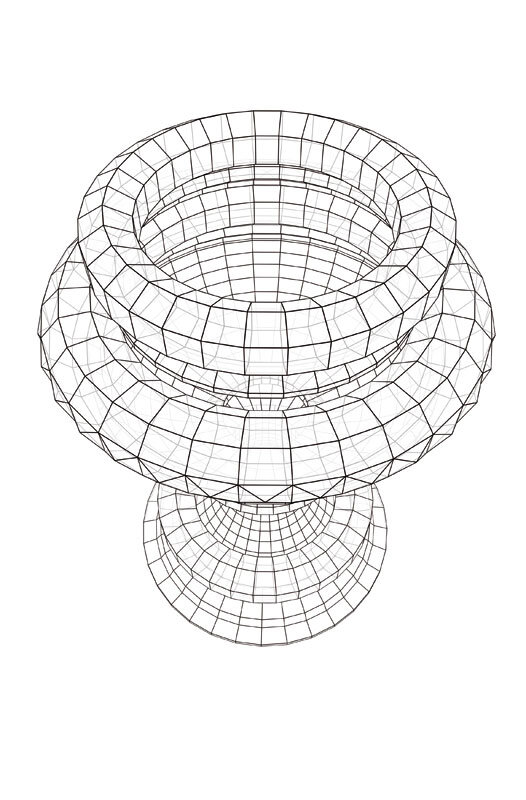
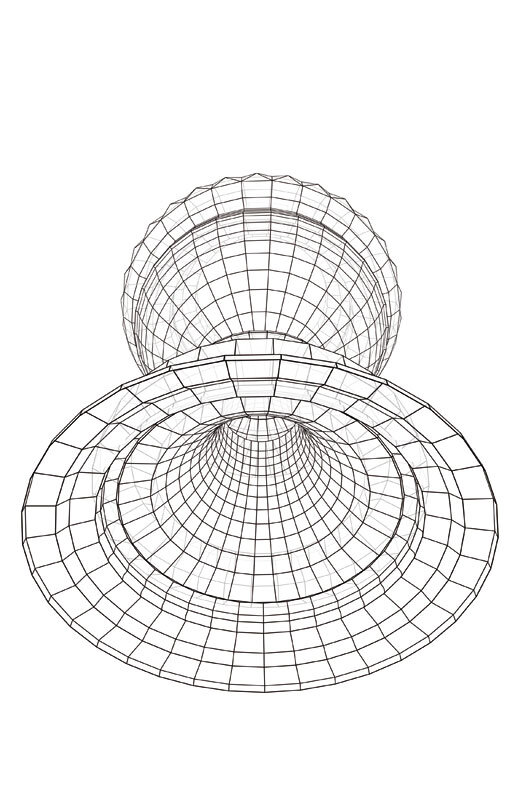
We present here (in the image above) an identical replica of the study of a vase in perspective - a work by Paolo Uccello in 1412, preserved in the Uffizi Gallery's Prints Cabinet. To the right and below are images taken 600 years later. Our colleague, architect George BRATU, has elegantly taken up the challenge of modeling the Uccello's vessel exclusively by computer - in 3D software. The three images, the result of digital modeling, are intended to emphasize how much an object's image can change through perspective. In fact, the shape of the object remains unchanged, but it is the change in the position and direction of our gaze that generates different images. This change is the source of the breadth of our gaze, and we all have it.
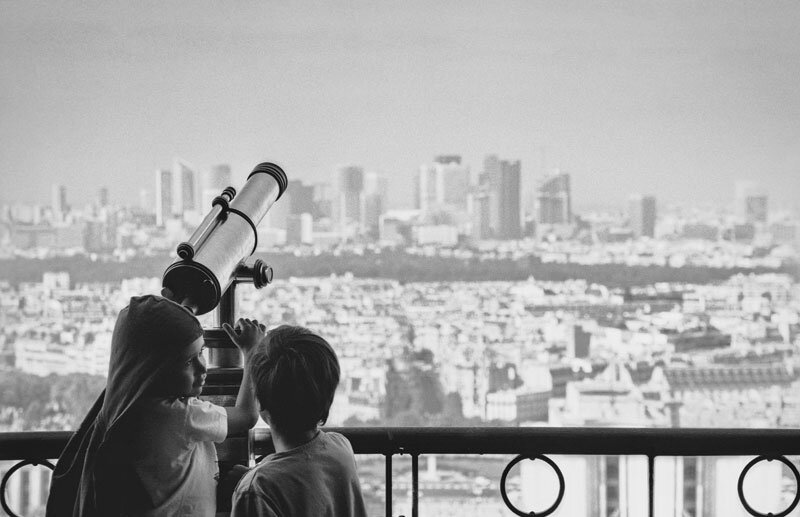
It is possible that Uccello's preference for the idea of looking at space differently, of finding the rules of construction in perspective, resonates perfectly with the idea of the breadth of the gaze. And that is precisely why - painting all kinds of winged creatures with great affection - he was nicknamed "bird"2. We like to think that the artist's name has something to do with the look. Because birds have such different points of gaze in their flight and in their stopovers from those of humans, in fact, they are much wider.
Uccello's preoccupation with finding the right vanishing point, his constant interest in observing and rendering the scaled divisions of the depth of space3, and his first steps in the science of perspective are recorded almost a century later in a work of great value in the history of art. The Renaissance painter and architect Giorgio Vasari - famous for his biographies of Renaissance artists - mentions in his Lives of the Most Eminent Painters, Sculptors and Architects4, written in 1567, that Uccello was passionate about perspective. He spent days and nights discovering visual convergences. It is evident that Uccello benefited from and studied the Italian translation of De aspectibus or Perspectiva5, published in 1021, which revolutionized the understanding of perspective by explaining that light reflects conically on the human eye.
Uccello's contribution, like that of his predecessors concerned with the way we see, lies in adding a constructed, rigorously mathematical and perfectly graphically explicable dimension to the function of sight, long considered exclusively hedonistic.
NOTES
1. The year in which the artist - at the age of 17 - was accepted into the painters' guild called Compagnia di San Luca.
2. In Italian uccello.
3. See the work Miracolo dell ostia profanata, Perdella - commissioned by Corpus Domini in Udine 1465-1468.
4. In the original "LE VITAE DE PIU ECCELENTI PITTITORI, SCULTORI, E ARCHITETTORI Scritte DA M. Girorgio VASARI PITTORE ET ARCHITETTO ARETINO, Di Nuovo del Medesimo Rissifle et Ampliare CON I RITRATTI LORO, Et con l'aggiunta dell Vite de'viui, & de morti, Dall'anno 1550 infino al 1567. Prima, e Seconda Parte".
5. A period translation of the OPTICAL LETTER, in the original Kitab al-manazir, written by Alhazen (al-Hasan Ibn al-Haytham, d. ca. 1041 AD)