70-300

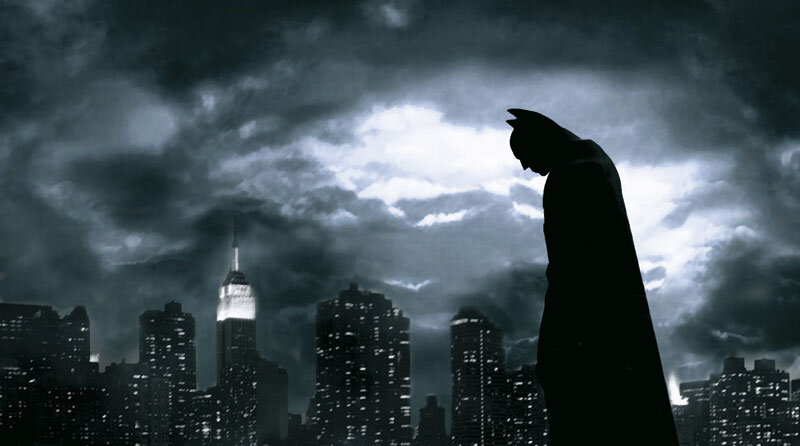
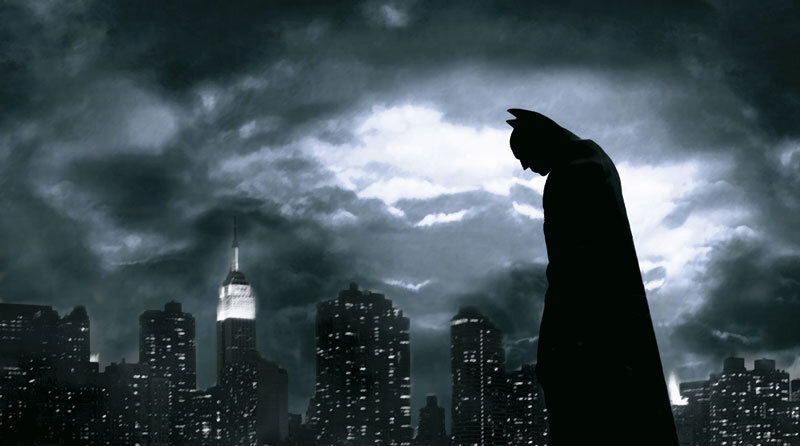
In one of this summer's iconic pop-culture images, and here you'll have to take my word for it, we are presented with a birdseye perspective of Manhattan, against which we make out the dark silhouette of one of the most recognizable superheroes. Those of you who follow the comics or graphic novel scene even marginally already know that our attention will be drawn to Gotham's Dark Knight. The proposed image shows us the superhero as dramatically as possible, from behind, looking down on the city he protects from the height of the gothic spires of a generic, North American skyscraper. The black cloak completely conceals the human dimension of this vigilante without supernatural powers, giving him the stature of a demigod among men. The assumed mission of this atypical superhero, haunted by innumerable inner demons, has turned protecting the utopian megalopolis of Gotham from the complex gallery of villains that populates it (ranging from common thugs to anarchists, terrorists and corrupt politicians) into an almost personal vendetta with the chaotic and uncontrollable forces of the city. When he descends from the heights of his vantage points, the hero does so only to restore some order to things, and in the few moments when he truly lands in the real world of the street, the hero sheds his cape to assume his true identity with regret and melancholy.
Let's try, in the graphic tradition of comic strips, to accompany the above image with a text box: "Observing Manhattan from the 110th floor of the World Trade Center... Beneath the windswept haze, the urban island; a sea in the middle of a sea, raises its skyscrapers over Wall Street. (...) A wave of the vertical. (...) A gigantic mass immobilized by the gaze is transformed into a texture of coinciding extremes, extremes of ambition and degradation, brutal oppositions of styles, races, contrasts between the abandoned past like an empty container and the bright and ostentatious present"1. De Certeau's melancholic reverie could well fit into the subtext of our anti-hero who loves and hates his city in equal measure. Like him, the French philosopher starts his argument on the panoptic perspective of the city from the height of New York's once highest point. "The panoramic city is a visual and theoretical simulacrum, in short a mere image, whose possible existence is doomed to failure, a misunderstanding of praxis. The voyeur-god created by this fiction (...) knows only corpses, because he has to rid himself of the encumbrance of human interactions, of daily routine, he has to make himself a stranger to them."2 But who is this voyeur-god? He is the creation of perspective. He is the creation of the Renaissance vedutas who, abandoning the Byzantine tradition of interiorization, presented the medieval man for the first time with the city from top to bottom, from the perspective of the celestial eye. This moment practically marks the emergence of the conceptual city, of utopia. Referring to Focault, De Certeau observes our tendency to rationalize, to functionalize, to order and label, to cure the environment and life of the unpredictable forces of chaos and chance through an aerial, super-analytical gaze.
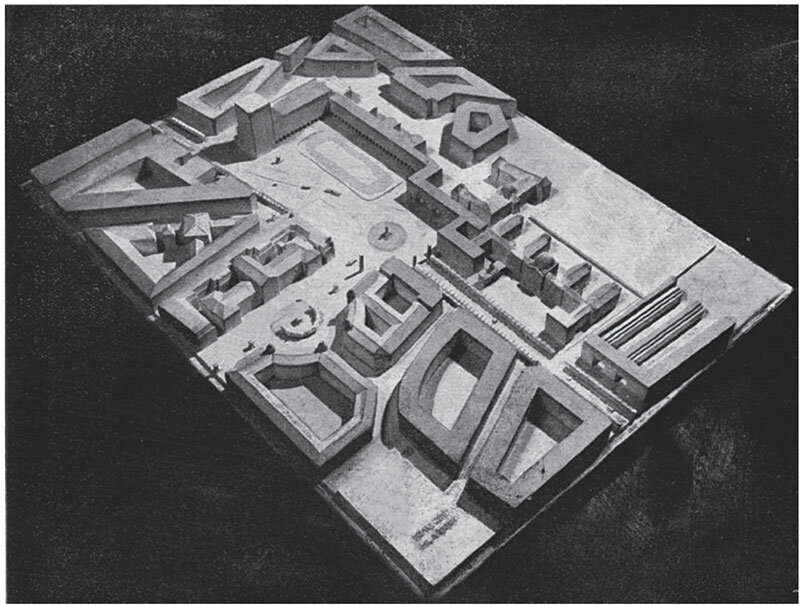
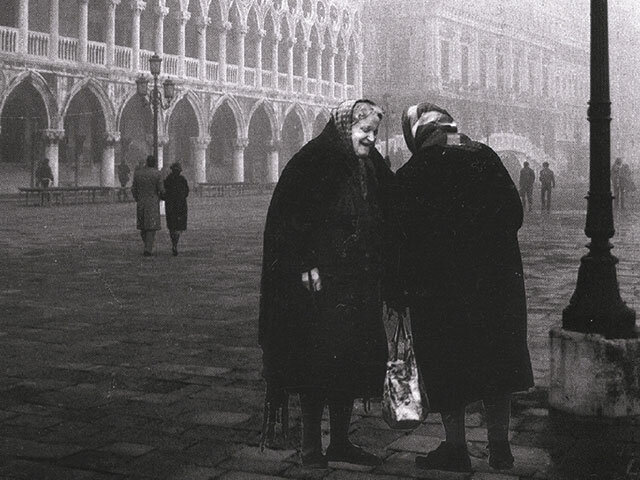
The real practitioners, the non-heroes of urbanity, however, live below, at street level, beyond the threshold where this gaze begins. They make use of spaces that cannot be seen and read/use the city like a hypertext with multiple meanings. At this level there are neither authors nor spectators, only actors liberated from the visual totalitarianism of the gaze. The praxis of the city, its experience, is foreign to geometric, geographic or theoretical constructions. De Certeau's examples come from the fields of architecture and urbanism and emphasize precisely the failure of top-bottom strategies . We are presented with vast, carefully organized architectural ensembles or strategically planned urban areas that are used completely differently from the conceptual and functional intentions of their promoters. It is a time when, not infrequently, in apologetic defense, architects blame either the users or the administrators. It is they who do not understand, who do not share the superhero ideals. I think we can agree that, at least for the Romanian space, superheroic behavior and panoptic vision have lately become a characteristic of both politicians and urban administrators.
We need only recall the last election campaign and its rhetoric. But does this superhero still make sense in a participatory approach, in a process of generating strategies and tactics of spatial occupation on a bottom-up inverted vector? In the absence of a strong reaction from the horizontal forces, we can only expect solutions from such heroes, be they good or bad.
But, as I have already said, the hero is flawed from the outset precisely by his human dimension, he lacks superpowers. Through the mission he undertakes on his own behalf he tries to find a balance in the world, not infrequently pursuing a weltanschauung that is just as much his own and personal. When seen in the first person, at a single point of flight, top-down, the real world in which this character intervenes becomes Manichean, divided between good and evil. In the narrative canon of these fictions, the hero solves the city's problems only episodically, never in the long term. His actions always have a downside, either backfiring against him in time or escalating in directions unforeseen by him, turning utopia into dystopia. The complexity of the character, his frown and sometimes even his intransigence, is precisely due to his inability to really control these forces of the city from the height of his vantage points. "Why so serious?", our hero's most imminent nemesis would say. Are the architects/urban planners the serious superheroes of our times, hidden behind a cool uniform, watching over the contemporary city? What is their agenda and from what height do they look down when analyzing their "victim"? How many of us have not taken command from the position of the savior, the one who puts things in order? How many of us should drop the cloak and look at the city from street level?
De Certeau sees, at one point in his walk on the observation platform of the New York skyscraper, a billboard advertising a sphinx with a subtext/hypertext which, for the sake of the many English subtexts, I prefer not to translate: 'It's hard to be down when you're up'.
NOTES:
1. Michel de Certeau, The Practice of Everyday Life, Univeristy of California Press, Berkley, 1984, translation: author 2. Op. cit.