70-300

Contemporary Art Gallery, Brukenthal National Museum, Sibiu
From July 27 to August 24, 2012, at the Contemporary Art Gallery of the Brukenthal National Museum, within the Young Curators' Section, you can visit the exhibition organized by the curator Cătălina Bolozan, Curing Nostalgia, Remedies for a Historical Emotion.
The Young Curators' Section was launched in 2007, based on the rationale that in uncertain social and economic times, the stability and art history background that the museum offers provides a framework for young curators. This innovative and intense context teaches them the functions of the museum and gallery and helps them to think differently about their curatorial programs.
Inspired by current debates provoked by the problematics of nostalgia in the artistic field, the exhibition brings together works in photography, painting, ceramics and collage that problematize the relationship between nostalgia and progress, the narrative connections between personal and collective history, challenging the limitations and mental constraints imposed by the concept of time.
The artists selected by Cătălina Bolozan - Julie Cockburn, Alexandra March, Kazuya Tsuji, Luke Twigger, from the UK - attempt to analyze the impact of nostalgia on the contemporary collective consciousness and how this process affects the contemporary artistic product.
The "disease of the century", nostalgia, defines not only the attachment to a known, loved, familiar place, but also the longing for a past time, sometimes only imagined, always idealized and impossible to recover. Nostalgia is not only retrospective, it can also be prospective. Unlike melancholy, which is limited to the personal consciousness, nostalgia concerns the relationship between individual biography and the biography of groups, between personal and collective memory. It has a utopian dimension, except that it is no longer directed towards the future. Sometimes it can go in both directions simultaneously. Nostalgic people want to revisit time as well as space, refusing to accept its irreversibility and feeling suffocated by the conventional limits of the two concepts.
In the end, nostalgia is "rebellion against the modern idea of time, of historical time that presupposes progress", according to Svetlana Boym, a theorist of the concept.
This new kind of universal and collective "affection", characteristic especially of the younger generation, is visible in the enthusiasm for vintage culture, the predilection for retro experiences and products - ways of ex-pri-ma-matizing the attachment to the past and attempts to recover it. But despite its seductive aspect, nostalgia discourages evolution, innovation, experimentation, and makes it easy to return and constantly refer to the past.
In this context, the contemporary artistic product - inundated with references to the past - seems incapable of reinventing itself, and is labeled an eternal pastiche. The resorts behind this attachment, the motivations behind it, but also the ways in which the past can be transformed into novelty are some of the ideas that this project seeks to question.
Making use of the mechanisms of a retrograde psychic process (nostalgia), the artists invited to participate in this project create innovative, highly aestheticized objects that speak about the contradictory relations between past and future, sentimentality, individuality, originality and progress.
Their relationship with the past is a traditional one: at the same time, each of them pays homage to it, challenges, ironizes and deconstructs it, and they manage to distinguish themselves as innovators, if not of a new artistic language, then of a new kind of sensibility. This unique way of relating to the past - with respect and irony at the same time - is what makes them relevant and capable of accurately capturing the spirit of the times and creating an artistic language of the present.
Cătălina Bolozan is a freelance journalist and cultural manager based in Bucharest; she lives in London. She is interested in initiating research-based curatorial projects and supporting participatory artistic initiatives that investigate personal histories and how they can become collective, the formation and propagation of cultural trends and the links that emerge between these concepts.
She studied Cultural Management at London Metropolitan University in London and collaborates with various artistic spaces in the UK and Romania.
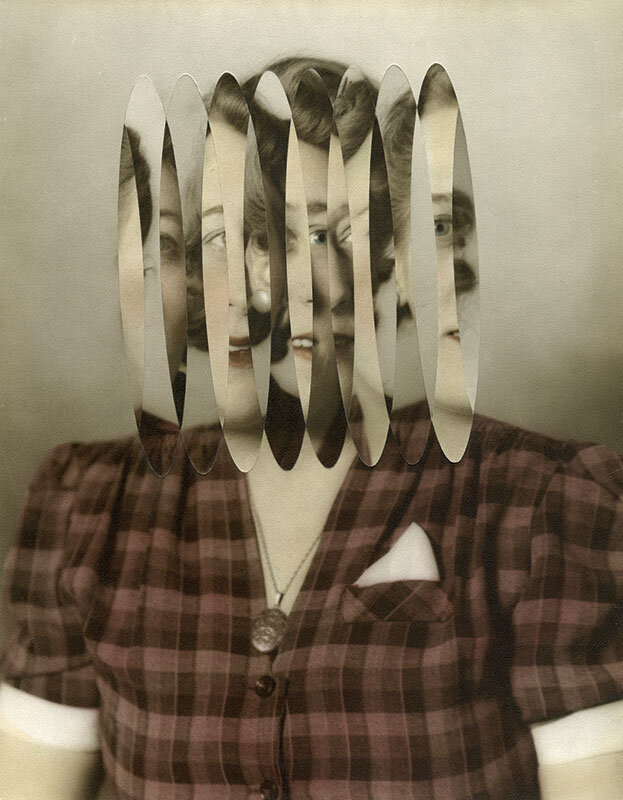
Julie Cockburn is a London-based artist working with vintage photographs and paintings to produce images that interpret the past in a new and unexpected visual language. Using embroidery and collage, she breaks down the original image to recompose it in distortions that invoke a keen sense of the moment. Cockburn adds a new layer to the story already existing in the image creating conditions for new narrative interpretations and visual meanings, thus prolonging the life of a dying image.
Julie Cockburn studied at Central Saint Martins College of Art and Design and Chelsea College of Art and has exhibited in museums and galleries in Europe and America.
Alexandra March is an emerging artist nominated in Caitlin Guide 2012, the guide to the 40 most promising art school graduates in the UK. Her work explores family ties and the process of identification as methods in identity formation.
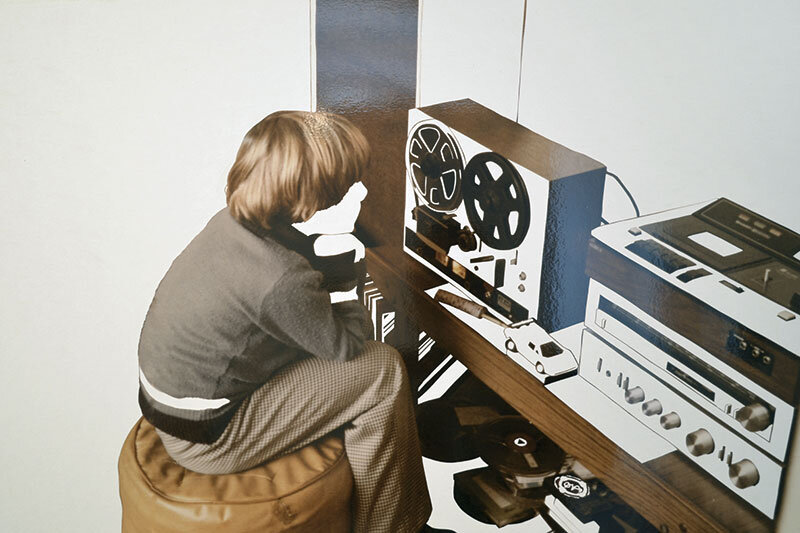
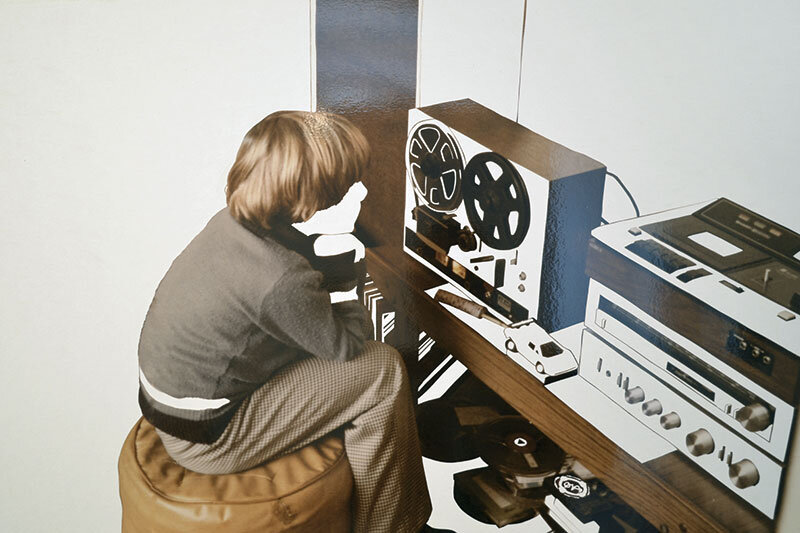
In this exhibition, the artist will present three new works from her Seventies Romance Portraits series that investigate the sentimental connections between nostalgia and kitsch through both symbolism and execution. Alexandra March graduated from Wimbledon College of Art in 2011.
Kazuya Tsuji is a Japanese artist living and working in London. His work tries to revive the attraction to the banal, repetitive images that surround us every day: fashion magazines, second-hand books or old photographs.
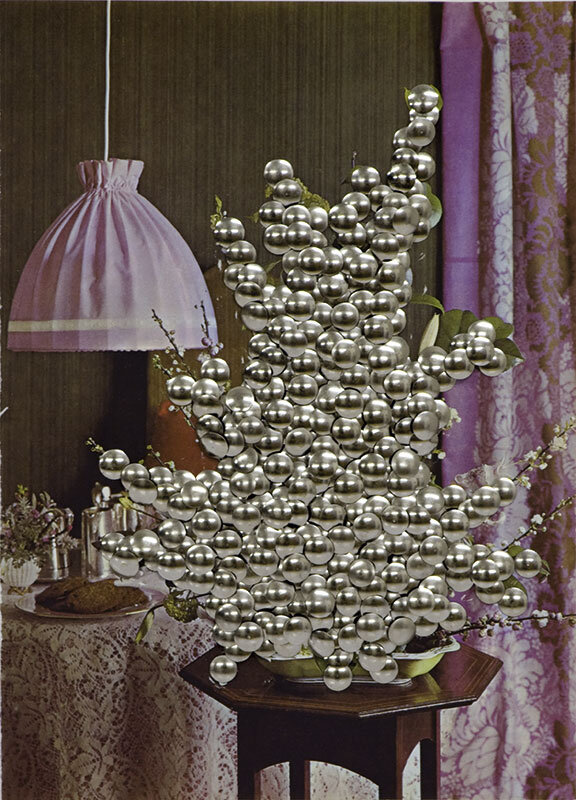
Most of the time, his art appears totally accidental and involves altering images with prosaic objects, such as piecing or pris-mes, but the final effect is completely unexpected, surprising and poetic. Kazuya Tsuji graduated from Chelsea College of Art in 2010.
Luke Twigger is a British artist whose practice disconcerts and challenges common preconceptions and limitations associated with the idea of kitsch. The objects he creates are projections of an artificial, intentionalized reality, reflecting on ideals, aspirations, vernacular preferences and concepts of class and taste. Luke Twigger is a student at the Royal College of Art in London and was nominated for the Debut Contem- porary Art School Art Awards 2012.
Excerpted from the curatorial text by Catalina Bolozan and provided by the Contemporary Art Gallery of the Brukenthal National Museum, Sibiu.