70-300

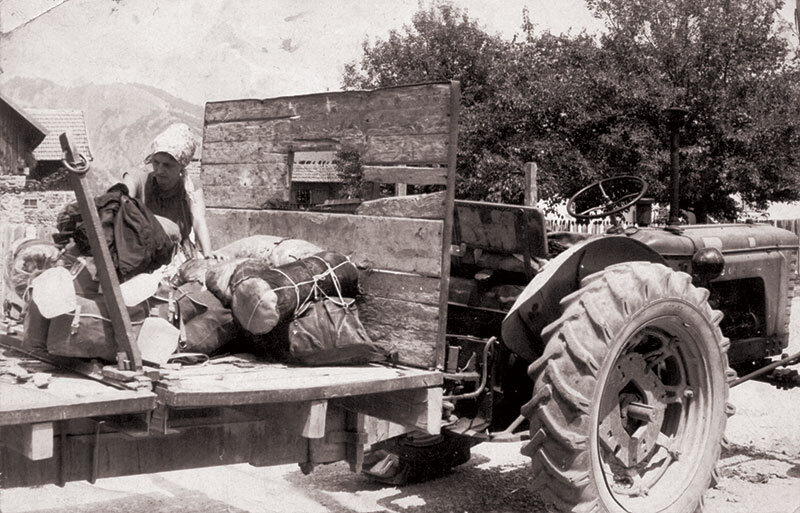
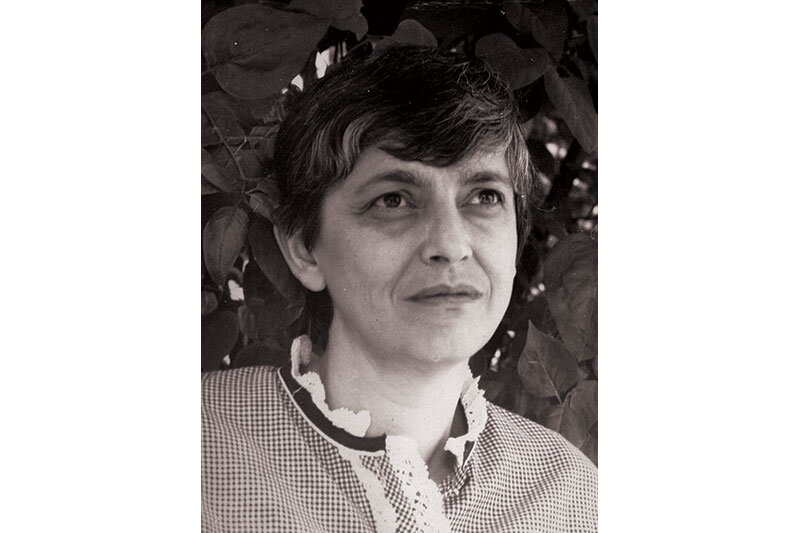
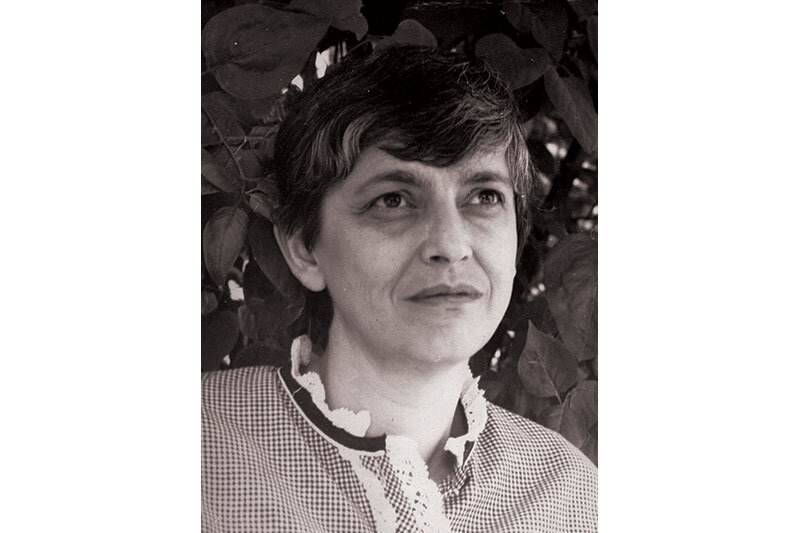
From this year, the Department of History & Theory of Architecture and Heritage Conservation of the UAUIM has added the name of Sanda Voiculescu to its title, in homage, ten years after her disappearance. In fact, after the changes that took place at the end of 1989, the (then) revival of the Department of History and Theory of Architecture is almost exclusively due, without exaggeration, to Sanda Voiculescu.
Apart from the reconfirmation of Sanda Voiculescu's role on this occasion, a fact that is much harder to record in concrete terms is that she will probably remain for a long time one of the most beloved professors of the Faculty of Architecture in Bucharest. With an irresistible charismatic presence, with an aura seemingly built to shatter any inhibitions and loosen any words, she can be said to have mentored several generations of architecture students.
Born in Craiova in 1940, Ana Maria Sanda Voiculescu spent the rest of her life in Bucharest from 1945. She attended the Clemența Primary School and then high school at the Central School for Girls, and in 1956 she was admitted to the "Ion Mincu" Institute of Architecture, which she attended, finishing her studies in 1962 with a diploma thesis on the theme "Valorization of monuments in the historic center of Iasi", under the guidance of the Department of History of Architecture. Her teaching activity, spread over forty years, also began in 1962, when, with the official pretext of obtaining the highest grade in her diploma thesis, Sanda Voiculescu was retained in the history department; this happened in the context in which the interest in architectural history in general and antiquity in particular was visibly decreasing in architectural education, and the number of courses inthe field wasreduced1. Until 1972, Sanda Voiculescu was a preparator and assistant, gaining experience under the guidance of professors Grigore Ionescu, Richard Bordenache and Marcel Locar. In addition to her professional training in the nucleus of the well-known local authorities in the field, Sanda Voiculescu also completed her professional knowledge by graduating, in 1965, from the specialized courses of the International Centre for Architectural Studies "Andrea Palladio" in Vicenza. In 1972, Sanda Voiculescu obtained her doctorate, after submitting her thesis "The Architecture of the Romanian Lands in the 13th-16th centuries in the South-East European context", under the guidance of Grigore Ionescu.
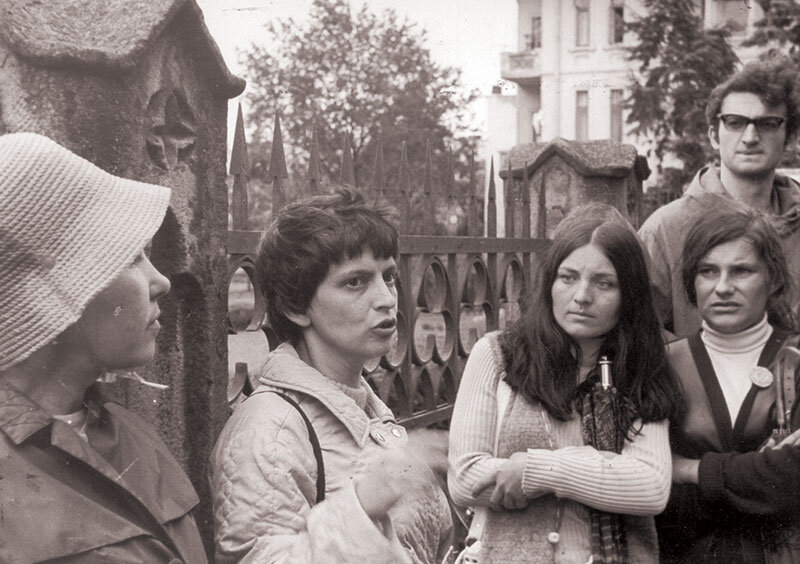
Starting in 1972, Sanda Voiculescu taught the History of Art course, dedicated to 5th year students, and with her appointment as lecturer in 1973, she added to this the courses Introduction to the History of Universal and Romanian Architecture (Antiquity and the Middle Ages), Synthesis of the Arts with Architecture (optional course, 5th year) and, partially, the History of Furniture (4th year). These were the premises of the architect's consecration in her teaching career. Between 1981 and 1989, the name of Sanda Voiculescu is linked to the two courses dedicated to the first and second years, History of Universal Architecture: Antiquity and the Middle Ages and History of Art, which, after 1989, at her suggestion, were merged into one. Apart from the undeniable charm that filled the lecture halls for years, Sanda Voiculescu left behind perhaps the most well-defined complementary notes to the courses at "Ion Mincu"; conceived in a clear overall vision and in a contemporary approach to the moment. Within the postgraduate training, the development of the restoration programs is due to Sanda Voiculescu through the establishment, in 1992, of the postgraduate program of Restoration of Monuments, Assemblages and Historic Sites.
The beginning of the architect's academic and professional career coincided somewhat with the establishment, in 1959, of the Directorate of Historical Monuments, a body that took over in a new form the work of the old Historical Monuments Commission, abolished in 1948. It was Grigore Ionescu who headed the DMI for a while. 2 In 1964, in the last two issues of the magazine Arhitectura, a short article was published, reporting the presence of Romanian specialists at the Venice Restoration Congress and the translation of the text of the VeniceCharter3, and at the same time a series of restoration works began on some of the historical monuments. No matter how questionable the Romanian restoration practice of those years may be considered today, it nevertheless represented a moment of real and sincere concern, being to a good extent connected to international specialized principles. In this context, between 1964-1968, Sanda Voiculescu continued her professional career as an employee of DMI, where she was the author or co-author of restoration projects, such as the execution project for the restoration of the "Radu Voda" Church in Bucharest. The experience of those years and the cultivation of detailed research was probably a prerequisite for the architect's post-1990 activity in historical studies.
However, it can be said that the theme to which Sanda Voiculescu was certainly attached is that of Bucharest. She used the Capital as a subject of personal research and exploration, as a case study and a pretext for devising research methodologies or as a field of work offered for exploitation to those she tutored as students. Naturally, it should be mentioned that Sanda Voiculescu's preoccupation with what is meant by the organism of the city of Bucharest developed in a particular conjuncture, that of the early 1970s, when the Romanian and international architectural profession and architectural education were directed towards a re-evaluation of the city. And that, from this conjuncture, a whole generation of Romanian researchers (not only architects) of real value emerged. Unfortunately, however, the political changes in Romania at the end of the same decade imposed a period of stagnation, which was dramatic for the profession. It was largely to the credit of Sanda Voiculescu, after 1990, that she restarted the course of research on the city by strengthening the professional core of the Department of Architectural History, but also by her work as a member of the National Commission of Monuments and Historic Sites, which was re-established in 1990.
While there is no doubt that the entire series of studies on the city, starting with those on the delimitation of the historic area of Bucharest in the mid-1970s4 and continuing with the revival of the theme in the 1990s5, are not the fruit of a single author, it can nevertheless be said that there is a specific imprint of Sanda Voiculescu. The particularity of the architect's approach to Bucharest as a research theme lies in the fact that her approach covers a multitude of stages of investigation, from historical, objective research to the most unusual and subjective methods. However, the flexibility of this type of research has, in his studies, been balanced by the attempt to outline a methodology in itself and a concrete mechanism of application.
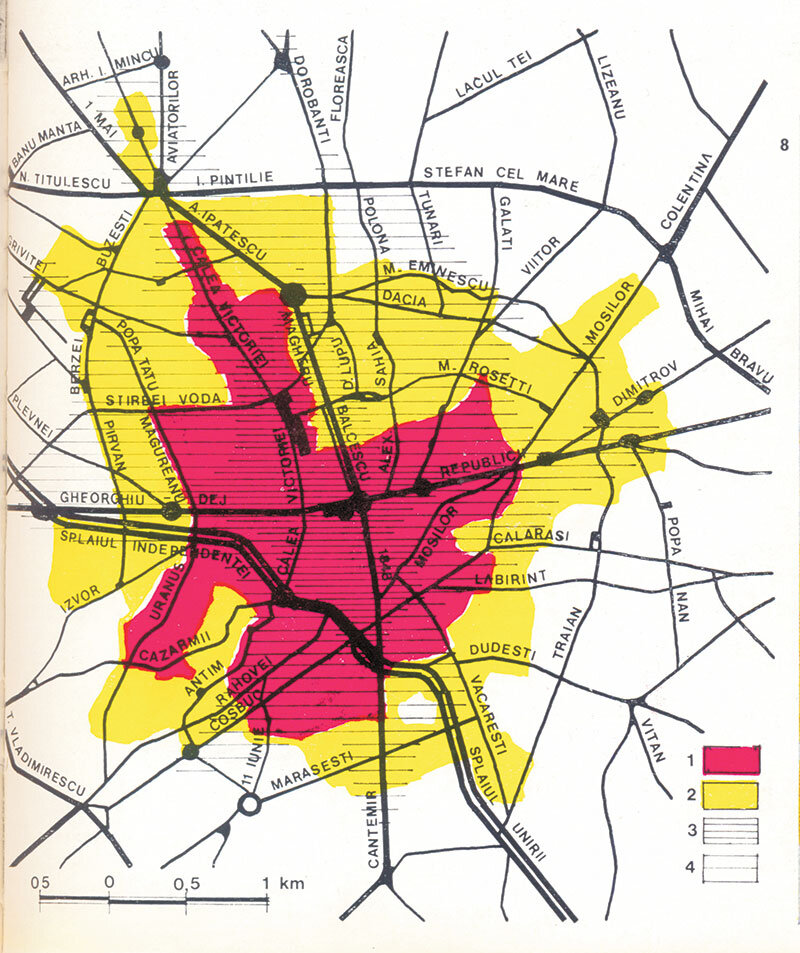
One of the first articles on Bucharest signed by Sanda Voiculescu is the one entitled Inima Tima Târgului (The Heart of the Fair) , published in one of the issues of Arhitectura magazine dedicated to the city and intervention in historical centers6. As mentioned by the author, the article balances the "vision of the people of the past" on the city center and the "criteria that defined it at that time", supported by small text fragments taken from authors such as Nicolae Iorga or Frédéric Damé, with the survey of the surface area of the central area based on period documents.
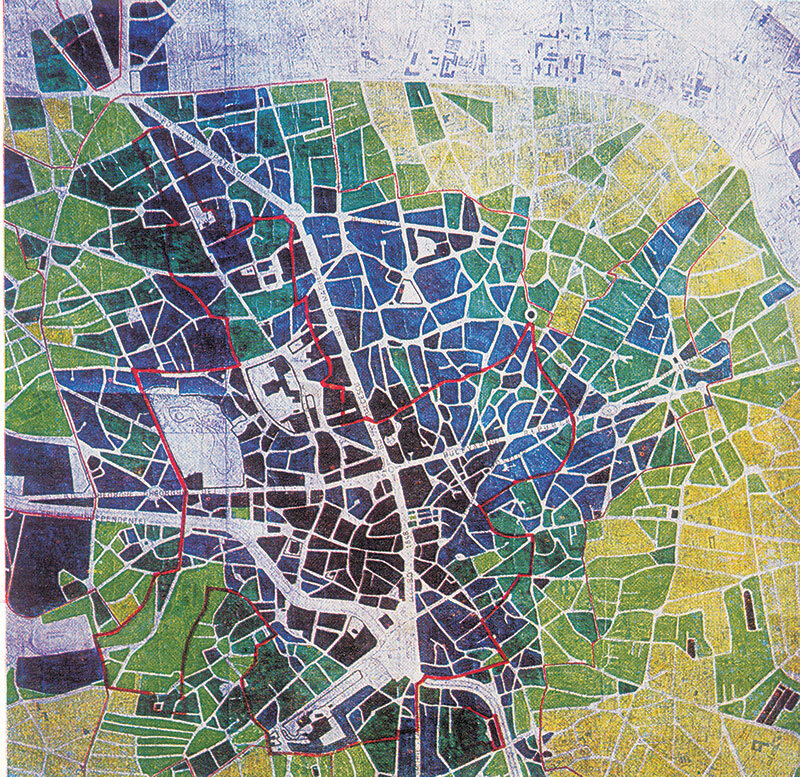
The delimitation study of the Historical Center of Bucharest, completed in 1976, co-authored by Sanda Voiculescu, attempted to define the city center as a complex organism, the result of a "large-scale urban social phenomenon" - one of the statements that formed the core of the research being that "the social phenomenon of the centrality of human settlements determines the urban phenomenon of the center of these settlements, a center that exists through a specific content and physical form"7. This statement should be understood in the context in which, in the opening word of the monograph on architectural education at "Ion Mincu" (1973), Octav Doicescu wrote: "The problems that are more acutely put to the school are the problems of the city as an expression of the existence of the collectivity"8, the text further revealing the crossroads at which the profession seemed to find itself in the early 70s. The method proposed by the study of the delimitation of the historical center of Bucharest was based on two complementary approaches: on the one hand, the definition of an area with a major cultural identity (as derived from sociological surveys) and, on the other hand, the identification of the central area of the city, as derived from specialized research (the latter using as a method the sampling by criteria and types of distinct values)9. This type of research structure, which corroborates distinct categories of approaches (translated into criteria and values), is the established methodology of studies of urban evolution and the protection of cultural identity contained in urban fragments. After 1990, the medium for the propagation of the method was, to a large extent (apart from liberal practice), university education, through projects and courses and postgraduate education, in which, as already mentioned, the contribution of Sanda Voiculescu was decisive.
However, her presence also extended beyond the confines of her professional training, through lectures on the history of architecture given at institutions in Bucharest such as the Scientific Cultural University, the Institute of Constructions, the History Museum of Bucharest or the Conservatory, and also through a series of presentations of Romanian architectural monuments on various Radio broadcasts.
To summarize Sanda Voiculescu's vision, the final fragment of the article published in the cultural publication Secolul 20, dedicated to Bucharest, is more telling than any kind of conclusion: "Thinking about another Bucharest that would recreate not its image, which is out of date, but the urban 'model' that defined it, raises questions whose answers can be sought in a recovered history. Is it possible to consider a future development of the city by returning, in a contemporary conception, to this polycentric system, with the parish as a reference point? An answer cannot result from a simple idea, even if it is supported by a historical approach. Can one ignore the almost axiomatic need of the people of Bucharest to find their identity in an urban space that belongs to them? The relevance of such a path cannot be asserted in the absence of urban studies, sociological analysis and consultation with the population. However, it should not be ignored that such a policy, in addition to being part of the natural course of the city's development, can help to recreate a sense of belonging to a community and the resulting behavior, replacing the isolation felt in large cities"10.
The article was based on written sources belonging to DITACP, studies and brochures published by IAIM/UAUIM, articles published by Sanda Voiculescu in the collection Arhitectura, Revista Monumentelor Historice, Arhitext, etc., as well as studies signed as author or co-author. The rich activity after 1990 is selectively recorded in Arhitext design, nr. 2, 2002, p. 6, and in the volume published by DITACP, Cercetare 1990-2007, Editura Universitară "Ion Mincu", Bucharest , 2007. The photographs belong to the family archive and were obtained through the kind permission of Irina Popescu-Criveanu.
NOTES:
1. The study of ancient architecture was eliminated from the syllabus of the first year starting in 1961, and the courses dedicated to the history of architecture were eventually compressed into a single optional course (from antiquity to 1850), corresponding to the first year (Grigore IONESCU, 75 de ani de învățământ superior de arhitectură, studiu monografic, Institutul de Arhitectură "Ion Mincu", 1973, p. 65).
2. In 1959, some of those who had formed the CMI before 1948, such as Horia Teodoru, Ștefan Balș, Virgil Moisescu, Grigore Ionescu, returned to the DMI (Ioan OPRIȘ, Comisiunea Monumentelor Istorical, Editura Enciclopedică, Bucharest, 1994, p. 163).
3. Grigore IONESCU, "Al II-lea congres al arhitecților și tehnicienilor, specialiști în restaurarea monumentelor istorice" in Arhitectura RPR, nr. 5, 1964, p. 56-57, and Carta internazionale privind conservarea și restaurarea monumentelor, in Arhitectura RPR, nr. 6, 1964, p. 58-59.
4. According to Arhitectura in 1977, the study on the delimitation of the historical area of Bucharest was elaborated under the coordination of Gheorghe CURINSCHI VORONA, with the following authors: Doina CRISTEA, Șerban POPESCU CRIVEANU, Sanda VOICULESCU, Mira DORDEA, Anton MOISESCU, Marioara NICORESCU ("Historical centers and areas", in Arhitectura, nr. 6, 1977, p. 38).
5. Sanda Voiculescu was the coordinator and author of many of the restoration-rehabilitation studies of the architectural heritage in Bucharest, co-authors and collaborators: Nicolae LASCU, Anca BRĂTULEANU, Sanda IGNAT, Cezara MUCENIC, Marina ILIESCU, Sergiu NISTOR, Valeriu DRĂGAN, Hanna DERER and others.
6. Sanda VOICULESCU, ""The Heart of the Fair", Some aspects of the evolution of the center of Bucharest", in Arhitectura, nr. 4, 1973, p. 81-83.
7. Șeban POESCU CRIVEANU, Sanda VOICULESCU, Liviu DAMIAN, "Some methodological, historical and social-psychological aspects related to the study of the center of Bucharest", in Arhitectura, nr. 4, 1976, p. 19.
8. Octav DOICESCU, "Tradiție și inovație în învățământul de arhitectură", in Grigore IONESCU, 75 de ani de învățământ..., p. 9.
9. See comment on the study in Hanna DERER, "Spațiul Identității" (Cap. Specialiștii și Bucureștiul, p. 388-390), in Lost in space, Augustin IOAN coord. volume published by New Europe College, Bucharest, 2003, as part of the RELINK program.
10. Sanda VOICULESCU, "Parohia - spațiu de agregare religioasă, socială și urbanistică", in Secolul XX, Bucureștiul, nr. 4-6, 1997, p. 146-253.