70-300

Credit, scientific support:the Postdoctoral grant Contemporary Modes of Spatial Envelopment, CNCSIS code PD-73,is funded by the National Council for Scientific Research.
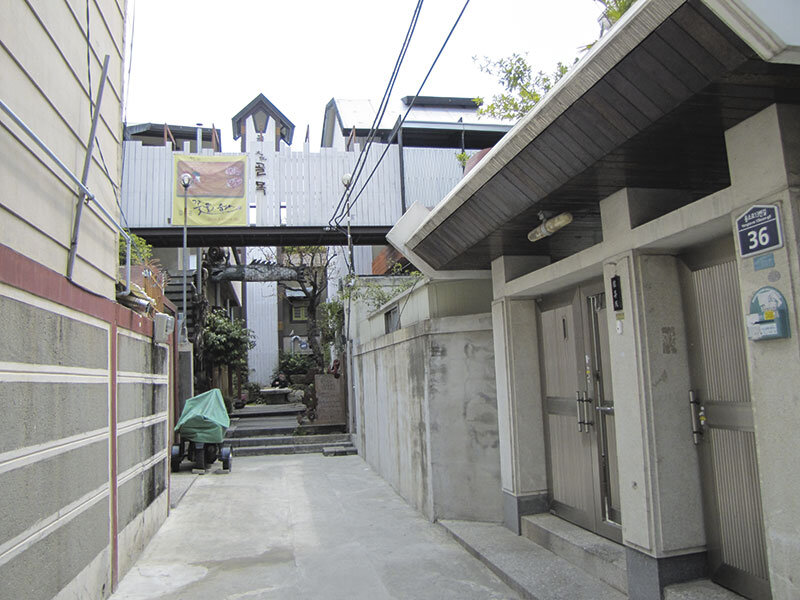
Gol mok is the name of the work designed by architect Choi Yoon Sik in Busan (52-4, Daeyeon 3dong, Namgu), South Korea. Gol mok, in a conceptual understanding, means cultural composition with alleyways, and the ensemble brings the following functions: art gallery, cafe/wine bar, jazz bar, brewery with live music, restaurant, a music area, an artist/architect's dwelling and even a guest house.
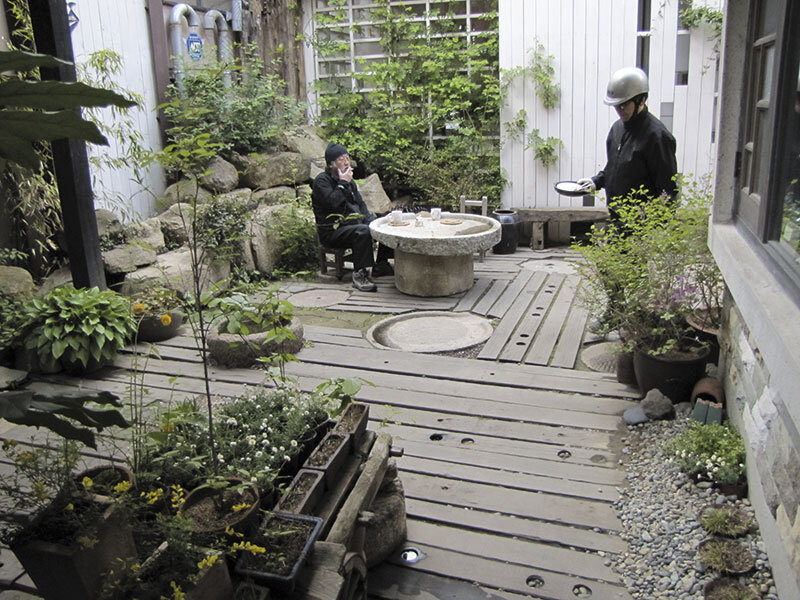
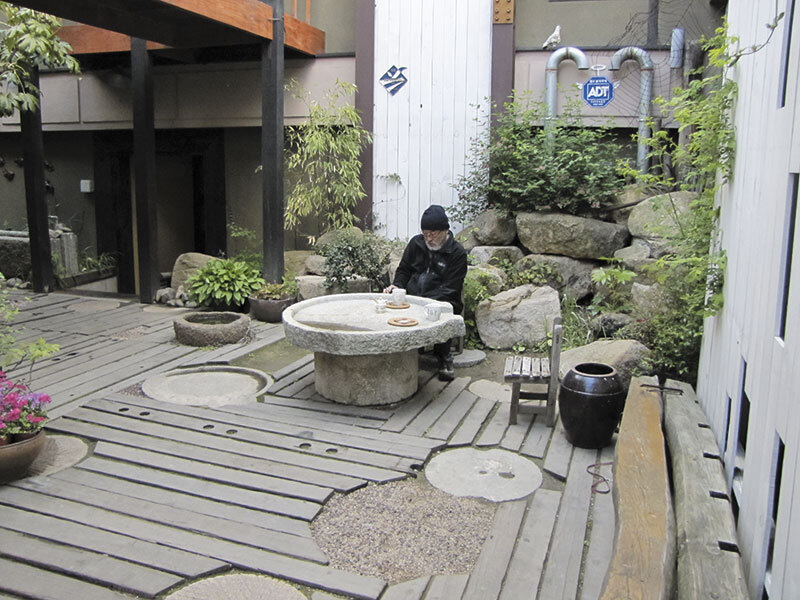
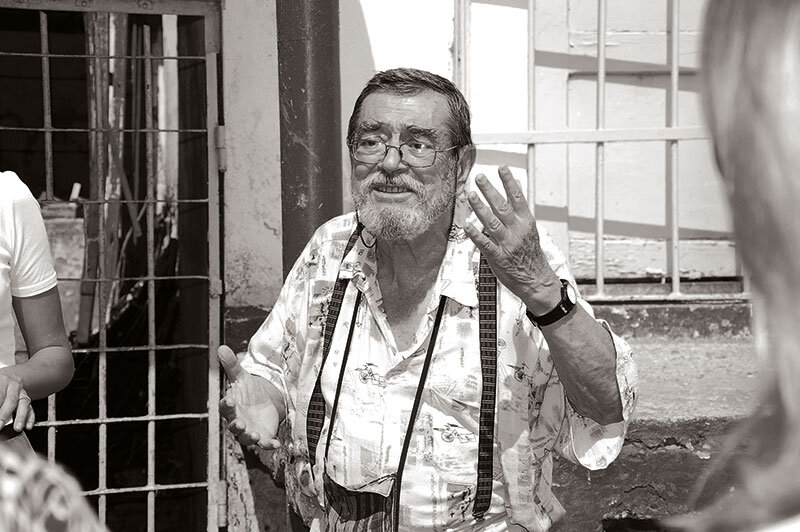
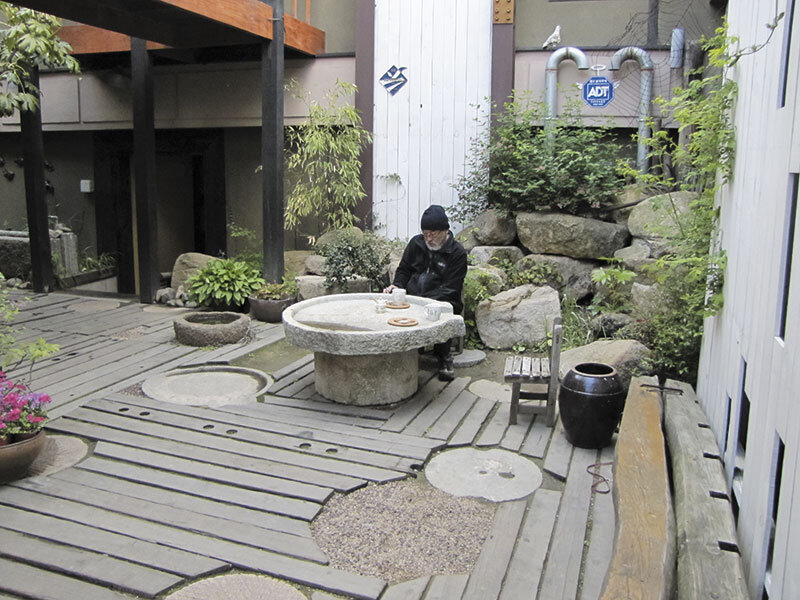
I came here on the recommendation of a terminal year Architecture student at INJE University, Moo Joon, and in researching the project I was assisted by another student, Yun Ji Yeom, who researched other works by this architect. The research will continue, but it was no small surprise when I discovered, along with the student, that the extremely picturesque figure in most of the courtyard pictures was the architect Choi Yoon Sik himself. The sovereign disregard for the tourist who takes pictures to fill his or her memory bag seems thus justified by the sense of professional achievement and the tranquility of the space created specifically for relaxation and escape from the everyday.
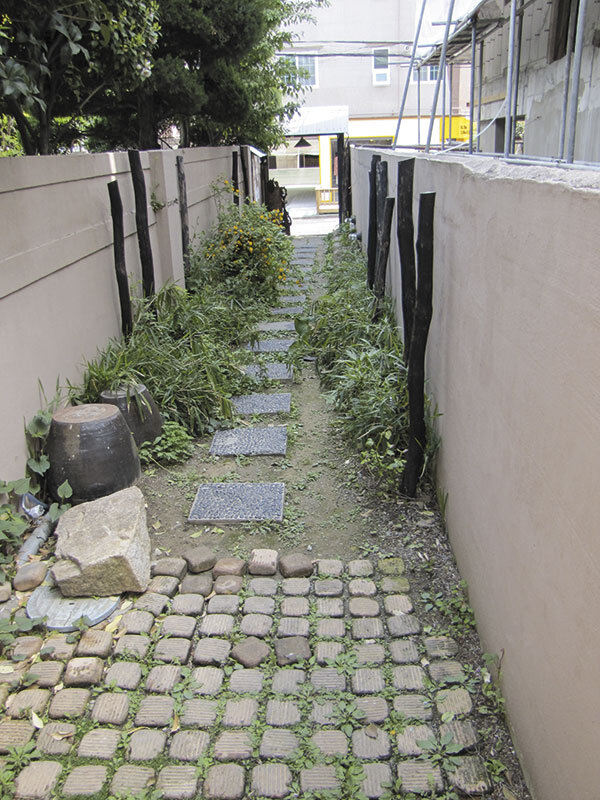
Urbanism seems here to reach its limits by combining, on a pedestrian axis, fragments of public and private space. The rectangular urban grid is articulated with alleys, in the idea of accessibility to all the objectives proposed by the composition.
Declaratively, a pedestrian axis connects some public space, usually with another public space, the only difference is that cars can only pass through it with special authorization. In this case, car access is impossible due to the narrowness of the alleys.
The link between the three streets, created by joining four houses located in rather random positions in relation to each other, without being located on the street, is made by crossing private spaces. The crossing seems impossible until the possibility is discovered after exploring the whole ensemble.
The spatial diversity present in Asia, whether in gardens, public or private spaces, makes possible a highly complex contemporary approach based on the culture of detail.
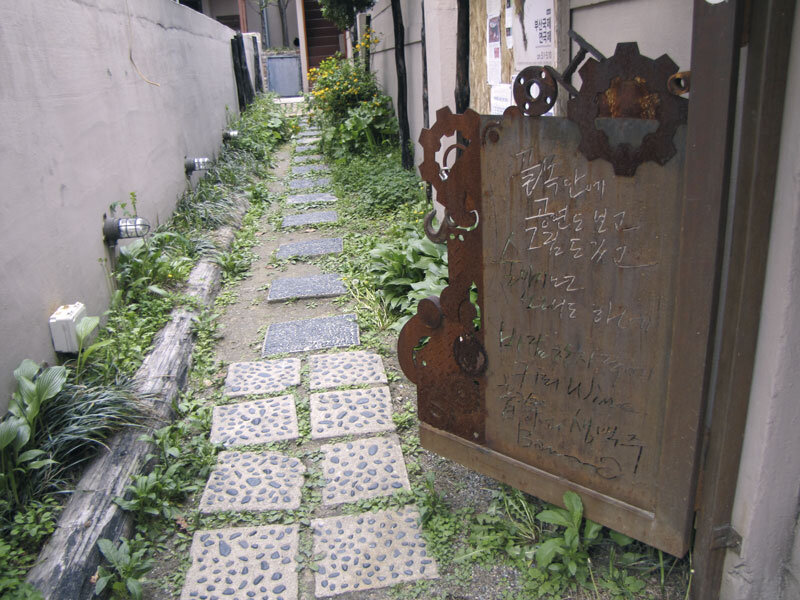
A gate for the three entrances marks the entrance to the compositionally controlled spaces. This is not a separating element here, but a landmark element that remains closed but leaves the entrance free, being much smaller than the width of the entrance space.
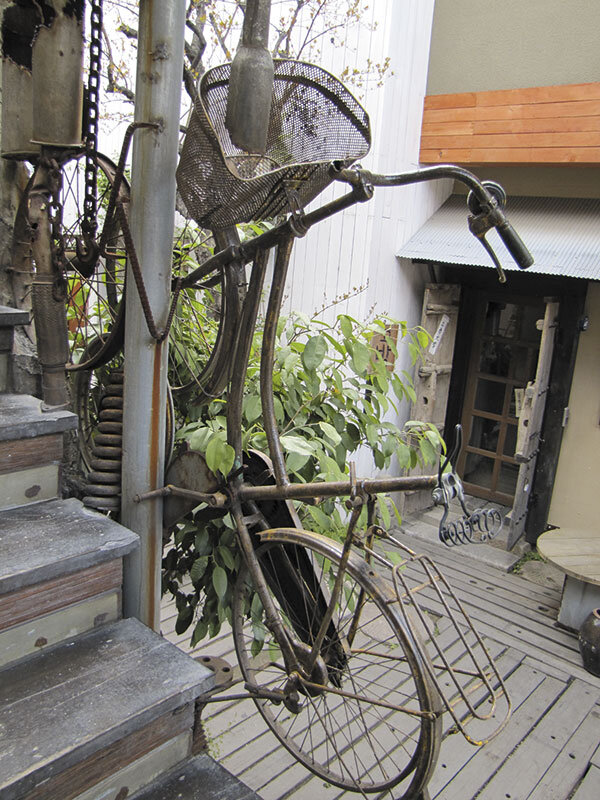
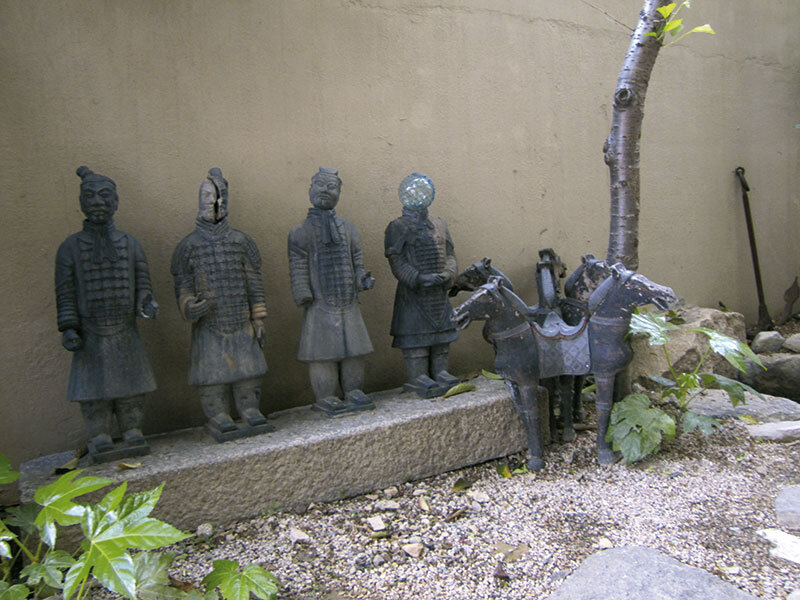
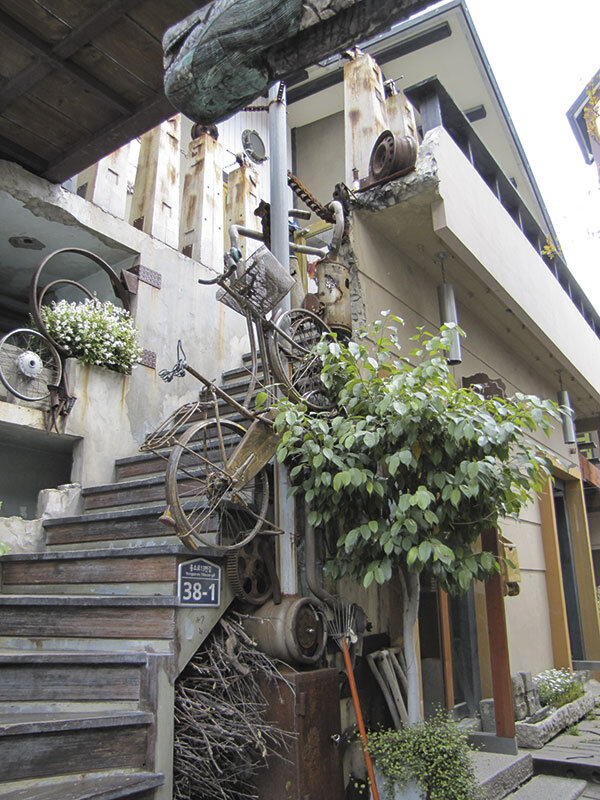
Abstract traditional symbolism for the European world combines jokes that we enjoy, such as the plaster cat on the roof, with a fixed, specifically chosen position, or pigeons made of the same material that maintain a visible place. The fake spider's web of oversized black string and the wooden fish hanging above the entrance are not distracting exaggerations in the context of the diversity where a bicycle becomes a railing and some hand-clamps are displayed on concrete posts like precious busts.
The traditional garden with stones through which the vegetation emerges forms a backdrop and also a post from which the tower that centers the entire composition soars into the sky without subordinating the whole.
The volumetry situated in a fairly dense context, between two streets, with dwellings and small commercial locations centered on food, is based on the negative of the existing configuration. Open space, this time, is the important one, a reversal of hierarchy is surprising.
The residual space is treated as a main element in this project, and the interval space is dominant.
Although from the main entrance, quite set back from the street, a tower/cloister is visible that seems to center the composition through the campanile effect, in reality the spaces have an organicity that is quite difficult to synthesize in words. The functional amalgam specifically designed to give life to the ensemble at all times of the day complements the architecture in a cultural gesture that seems to have been carried to its logical conclusion. The small shop next to the restaurant is coupled on one side of the courtyard, and the bar, which is more lively at night, is clipped/articulated on the right side with a small art gallery.
The main entrance is under a walkway, enclosed to the street like a colonialist plank fortress, under which a wooden fish hangs, like a company suspended by chains.
The floors and walkway allow for temporary exhibitions, but at the same time enclose spaces for artistic creation and living. The boundaries here are specifically treated loosely so that the spaces do not firmly enclose, but allow both viewing and access to all areas of the house.
The connection to two streets is made through the volume that contains the creative workshops for artists.
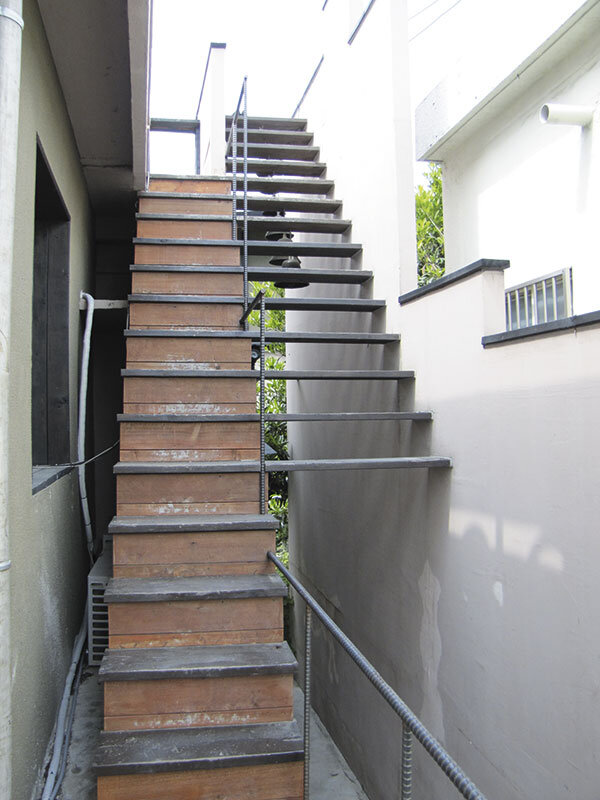
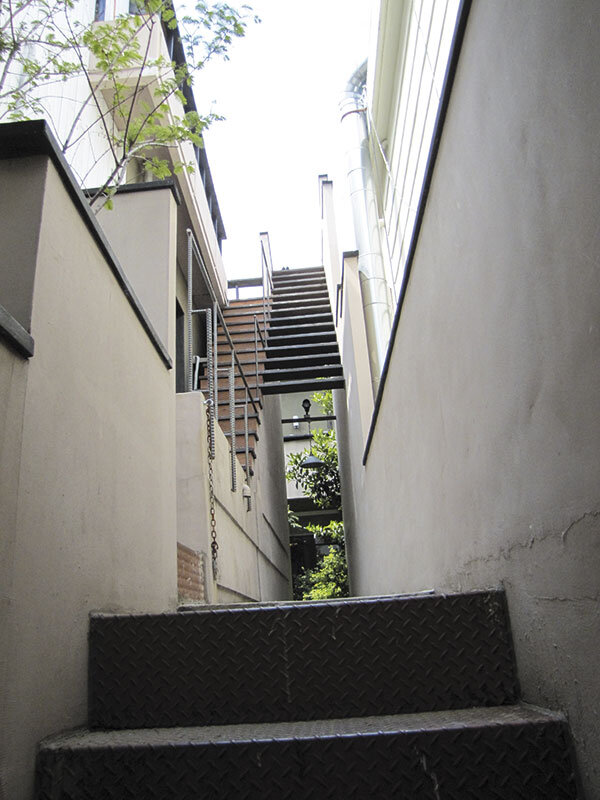
The access from the second street is very narrow, and the architect has created an ascending route that leads to the upper terrace.
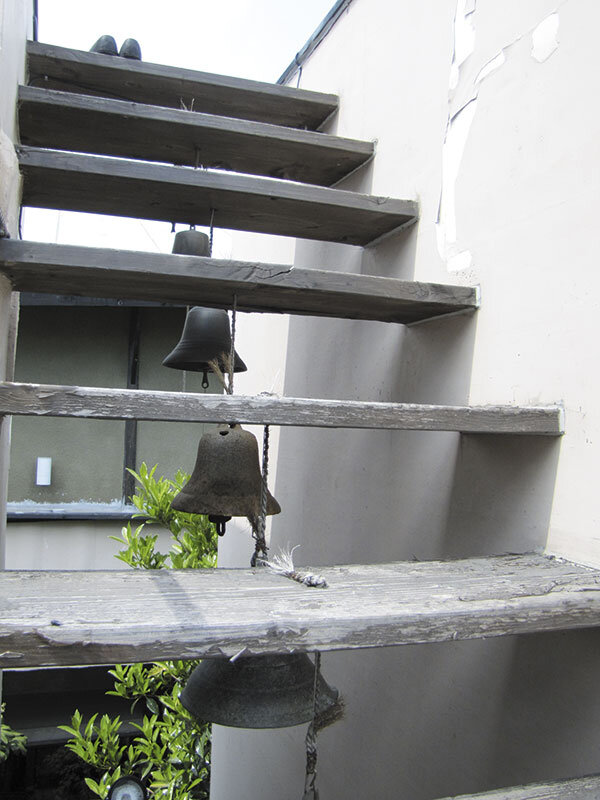
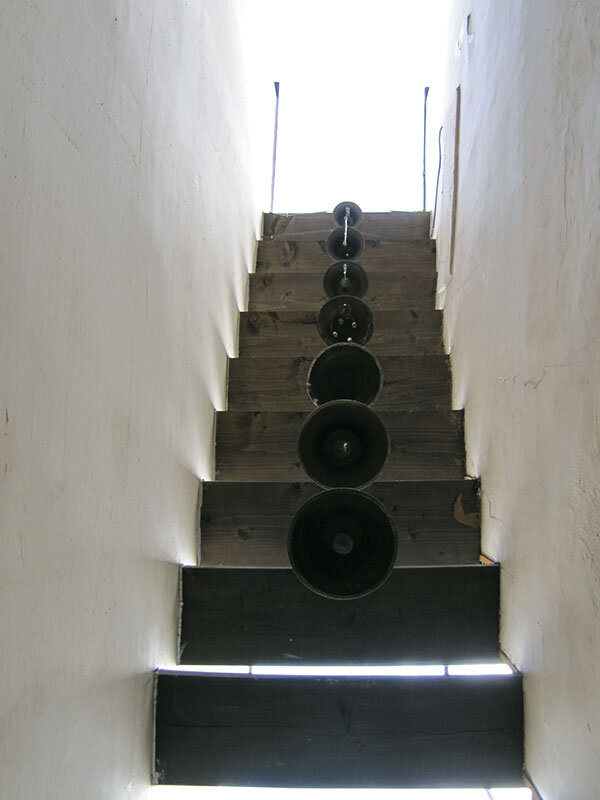
There, the dominant tower of the composition is seen at a different scale. The ascending route is fractured for operational safety by the fact that, after a one-level climb up a staircase up a railed ramp, the route is interrupted at the bridge, has a pause through which to enter, and then continues freely up unsafe wooden steps, the railed route sliding along the width of the ramp.
The staircase provides the intrados of the interior space, which is why the last wooden steps become decorative and are given a new dimension by the sound of the wooden steps in the wind or when stepping on them.
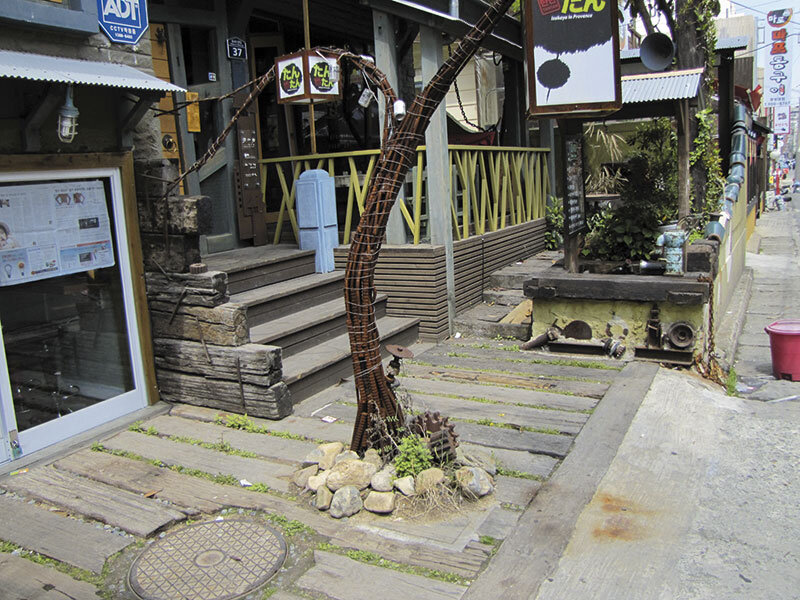
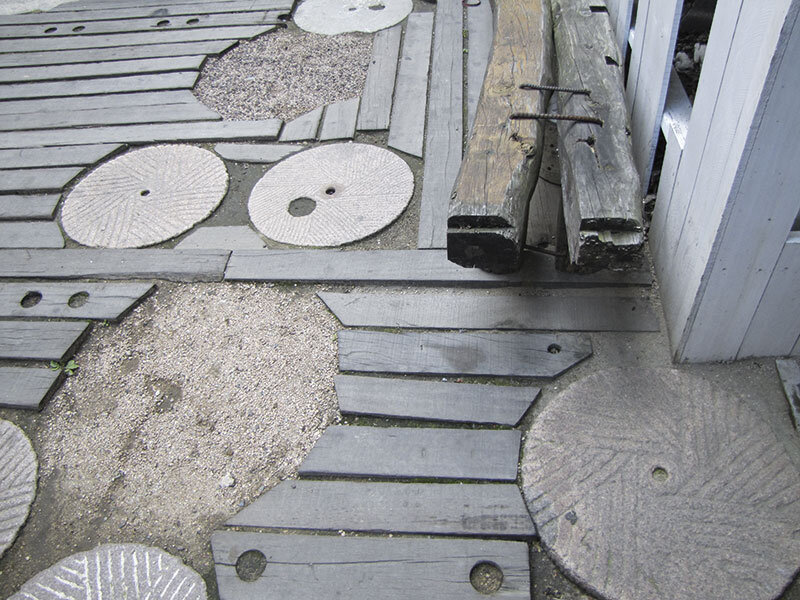
Recycled materials unify the whole composition. Wooden railway sleepers used for flooring and more, or metal elements found at scrap yards and artfully assembled together with stone elements are the large textures that are used.
The cylindrical millstones set into the floor form a rhythm that seems inspired by the public context from which the composition originally started.
The lines dictated by the wooden sleeper floor are interrupted by the existing channels.
This disadvantage dictated by the discontinuity of the materials has been utilized and reinterpreted in the wider field through a seductive composition.
The floor satisfies the tactile role of treading by the choice of wood. The continuity or discontinuity of the flooring makes you, when stepping on it, pay more attention to it. The interplay of materials with different textures in an apparent disorder that is well structured compositionally, after a complex arrangement, gives the visitor the opportunity to experience the architectural spectacle in the primary mode of spatial exploration.
The reused metal is carefully chosen and constitutes a signal as early as the street, where a tree is created from the iron reinforcement bound together with metal wire. The patina of rust gives color to the ensemble and a certain elegance in the artistic chromatic context designed specifically for compositional diversity.
The art gallery is unconventional through the natural light provided by the curtain wall on a wooden structure.
As an accident here, a tree branch penetrates through the wall structure and pierces the ceiling.
The wealth of functions specifically chosen to set the ambience of the cultural alleys complemented by the architectural or artistic details seem to live naturally with nature, which uses every small opening to manifest its presence.