70-300

Representational vs ontological:
about a solution-less dilemma
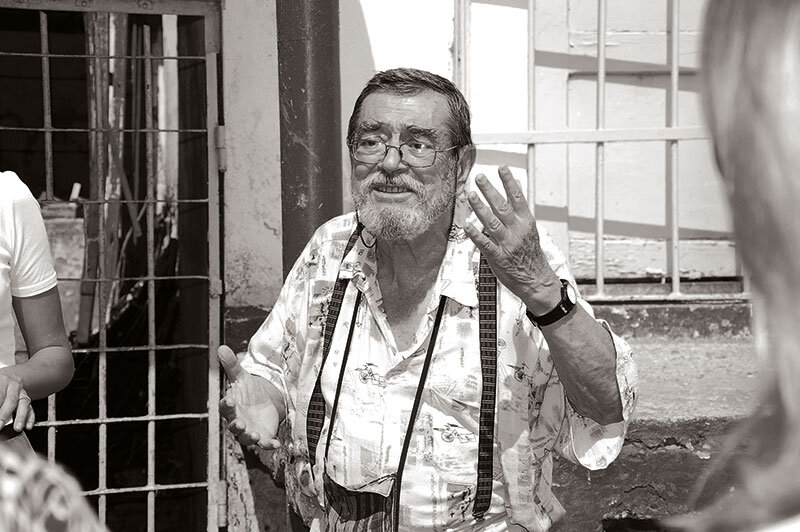
| Professor John E. Hancock, from the University of Cincinnati, Ohio, was my advisor in the MSArch program I completed in 1993-'94. This time (2012), he took me as a partner in the 5th year design workshop (terminal year in the MA in Architecture: degrees, that is).I have been left with several interesting ideas from my professor over the eighteen years we have known and collaborated. But this time, I was shocked by his refusal to even look at the students: - The pupils lie. You need them in technical projects, of course, but they're troublesome in the design process. Help yourself, when designing the space and the object that contains and articulates it, with working models, sections, virtual perspectives and, if possible, even animation. But not elevations! |
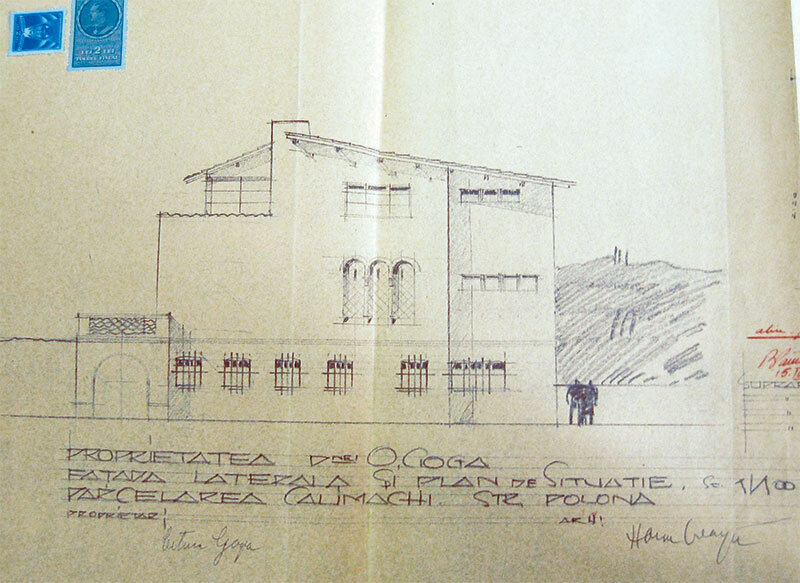
| In order to explain Professor Hancock's clear refusal to even look at the elevations brought about by his diplomats, we need to go back a little and look very carefully at the consequences of a concept that comes to us from philosophy but has also made a career in the arts, especially in architecture: the concept of representation, which is secondary to the even more important concept of presence.I remembered that we only learned in school about the decomposition of the three-dimensional box, as Bruno Zevi called this projection process (but I only found out about the name when I published the translation of the book in the collection Spații Imaginate, published by Paideia). In other words, we were taught not to think objects and spaces in their concatenation, but to draw elegant representations of them on the walls of imaginary orthogonal projection planes. What we were correcting, what we were projecting, were representations, not a hypothetical presence, virtual for the moment, of an architectural object. We were discussing the elegance of the composition of orthogonal plans and facades, confident that if they were perfect, how else could the object whose representations they would be be? At the same time, however, we looked puzzled at the plans of some masterpieces, which were not only balanced and well-composed plans; or how was it possible, we wondered - not all of us - that a masterpiece could not have projections, perfect representations? In the workshop, Alvar Aalto would have failed the project with some of the plans of his buildings. From the deconstructed buildings onwards, from the Hong Kong Peak Competition winning project (Zaha Hadid) to Peter Eisenman's numbered houses, there was, however, nothing to understand for our poor teachers, not even for the students that we were. We still found some comfort in the classicizing plans of postmodernist buildings whose symmetry we understood, but whose superior irony, based on cultural references, escaped us, even though we knew from our aesthetics teacher, Cezar Radu, about opera aperta and "the quote with an aesthetic function", since he was the Romanian translator of Umberto Eco's Treatise on Semiotics. As for the regulatory paths of Professor A. Gheorghiu, whom I did not catch in life as a student, I have always suspected them of idealism and some exaggeration: the same Eco tells, through the mouth of a character in Foucault's Pendulum, how an exceptional Egyptologist, Piazzy Smith, was caught grinding the corner of a pyramid stone, in order to fit the measurements into such a flattering proportion... But we need not have gone that far, the questions were floating in the air among us: 'Did Constantin Brâncoveanu's craftsmen know the secrets of the pyramids?"asked Radu Drăgan in the magazine Arhitectura. I knew them from the history of architecture and from the volutes of the Nike Apteros temple, which I designed in my first year, as a multiplication of a module with a human reference. I knew, from Vitruvius, that I could represent the entire temple (this - pars pro toto - was an image of the world) if I could "extract the symmetries" of the human body (as the Romanian translation, still unfortunately unrivaled, of Cantacuzino and Gr. Ionescu). But I also knew that Richard Meier's projects, which I saw at the American Library, were born from these geometrical relations, because we were keen to understand how a project was put together and the teachers I had in the workshop could not articulate a coherent explanation, or did not feel like it. |
| Read the full text in Arhitectura 4/2012. |
| Bibliography and suggestions for further reading Alexander, Christopher HOUSES GENERATED BY PATTERNS (with Sanford Hirshen, Sara Ishikawa, Christie Coffin and Shlomo Angel), Center for Environmental Structure, Berkeley, California, 1969. A PATTERN LANGUAGE WHICH GENERATES MULTI-SERVICE CENTERS (with Sara Ishikawa and Murray Silverstein), Center for Environmental Structure, Berkeley, California, 1968. Burton, James "Notes from Volume Zero: Luis Kahn and the Language of God" in Perspecta I, New Haven: Yale University Press, 1986, pp. 69-90. Markus, Thomas A and Cameron, Deborah The Words Between the Spaces: Buildings and Language, London/NY: Routledge, 2002. Eckler, James Language of Space and Form: Generative terms for architecture, Hoboken, NJ: John Wiley and Sons, 2012. Kausel, Lewis C. Design&Intuition: Structures, interiors&the mind, Ashurst Lodge, Ashurst, Southhampton, UK: WIT Press, 2012. Ockman, Joan (Ed.) The Pragmatist Imagination: Thinking about "things in the making", NY: Princeton Architectural Press, 2000. Markus, Thomas A. and Cameron, Deborah The words Between the Spaces: Buildings and Language, London/NY: Routledge, 2002. Mateo, Josep Lluis et alii Iconoclastia: News from a post-iconic world, Architectural Press IV Series, Barcelona: ACTAR, 2009. Pressman, Andrew Desiging Architecture: The elements of process, London, NY: Routledge, 2012. Temple, Nicholas, and Bandyopadhyay, Soumyen (Eds) Thinking Practice: Reflections on architectural research and building work, Black Dog Publishing, 2008. |
| Professor John E. Hancock from Cincinnati University, Ohio, was my tutor during the MS Arch. program that I completed in 1993-'94. For eighteen years that we know each other work and collaborate I retained a lot of interesting ideas from my teacher. But, this time, I was shocked by his rejection to even look at elevations: - Elevations are lying. You need them in the technical projects, obviously, but there are misleading in the architectural design process. Whilst you shape the space and the object that contains and articulate it rely and use working models, sections, virtual perspectives and if possible even animations. But not elevations! |
| To explain professor's Hancock's rejection to even look at elevations brought by his diploma's students we must turn back a little and look carefully at a concept originating from philosophy but that made carrier in the fine arts, mostly in architecture: the concept of representation, that is secondary in relation with the even more important one: that of presence. I remembered that we only learned in school about the three-dimensional box unfolding, as Bruno Zevi named this method (but I found out about the name only when I published the book's translation in the Imagined Spaces collection of PaideiaPrintingHouse). In other words we were taught not to think objects and spaces in their chaining, but to draw elegant representations of these over the walls of imagined plans belonging to an orthogonal projection. What we were presenting at reviews were representations, no question of hypothetic presence, for that time being a virtual one, of an architectural object. We were discussing on the elegance of plans and elevations composition in orthogonal, being reassured that - if these are well mastered the architectural object would have been alike its representations.Still, in the same time, we looked confused at the plans of some masterpieces that had no equilibrated plans nor well composed; how was it possible, we asked ourselves - not all of us - that a masterpiece has no flawless projections and representations? In the studio, Alvar Aalto would have failed the project with one of the plans of his buildings. From prior deconstructivism buildings, from winning design in Hong Kong Peak Competition (Zaha Hadid) to the numbered houses of Peter Eisenman, for our poor professors there was nothing left to be understood, neither for us students that we were. Little comfort was to be found in the classic plans of some post-modern buildings, whose symmetry we perceived; but whose superior irony, based on cultural references, we were losing, although we knew, from our esthetic professor, Cezar Radu, about opera aperta and the "quotation with esthetic function", because he was the Romanian translator of the Semiotics Treatise of Umberto Eco. As for the reglementing traces of professor A. Gheorghiu, that being student I did not catch alive, I always suspected them of idealism and a bit of exaggeration: the same Eco tells, through the voice of a Foucault Pendulum character, that an extraordinary Egyptologist, Piazzy Smith, would have been caught filling a pyramid stone, to conform measurement in such flattering proportion. But we should not have been getting that far, the questions were floating in the air even among us: "were Constantin Brâncoveanu kraftmen knew the secrets of the pyramids?" was asking Radu Dragan in an Arhitectura issue. They were coming back, we knew from architecture's history and from the capitel spirals of Nike Apteros temple, which we drew in the1st year, as multiplication of a human reference module. We were aware, from Vitruvius, that could represent the entire temple (this - pars pro toto - was a world's image) if they can "extract the symmetries" of human body (as very beautiful says the Romanian translation, yet unfortunately un evened, by Cantacuzino and Gr. Ionescu). But, in the same time, we knew that these geometrical relations were borne from Richard Meier's projects, which we've seen in the American Library, because we wanted stubbornly to understand how a project is negotiated and the professors that we had at studio either could not articulate a coherent explanation or were not in the mood to. |
| Read the full text in the print magazine. |
| Bibliography and suggestions for further readings Alexander, Christopher HOUSES GENERATED BY PATTERNS (with Sanford Hirshen, Sara Ishikawa, Christie Coffin and Shlomo Angel), Center for Environmental Structure, Berkeley, California, 1969. A PATTERN LANGUAGE WHICH GENERATES MULTI-SERVICE CENTERS (with Sara Ishikawa and Murray Silverstein), Center for Environmental Structure, Berkeley, California, 1968. Burton, James "Notes from Volume Zero: Luis Kahn and the Language of God" in Perspecta I, New Haven: Yale University Press, 1986, pp. 69-90. Markus, Thomas A and Cameron, Deborah The words Between the Spaces: Buildings and Language, London/NY: Routledge, 2002. Eckler, James Language of Space and Form: Generative terms for architecture, Hoboken, NJ: John Wiley and Sons, 2012. Kausel, Lewis C. Design & Intuition: Structures, interios & the mind, Ashurst Lodge, Ashurst, Southhampton, UK: WIT Press, 2012. Ockman, Joan (Ed.) The Pragmatist Imagination: Thinking about "things in the making", NY: Princeton Architectural Press, 2000. Markus, Thomas A. and Cameron, Deborah The words Between the Spaces: Buildings and Language, London/NY: Routledge, 2002. Mateo, Josep Lluis and others Iconoclastia: News from a post-iconic world, Architectural Press IV Series, Barcelona: ACTAR, 2009. Pressman, Andrew Designing Architecture: The elements of process, London, NY: Routledge, 2012. Temple, Nicholas, and Bandyopadhyay, Soumyen (Eds) Thinking Practice: Reflections on architectural research and building work, Black Dog Publishing, 2008. |