70-300

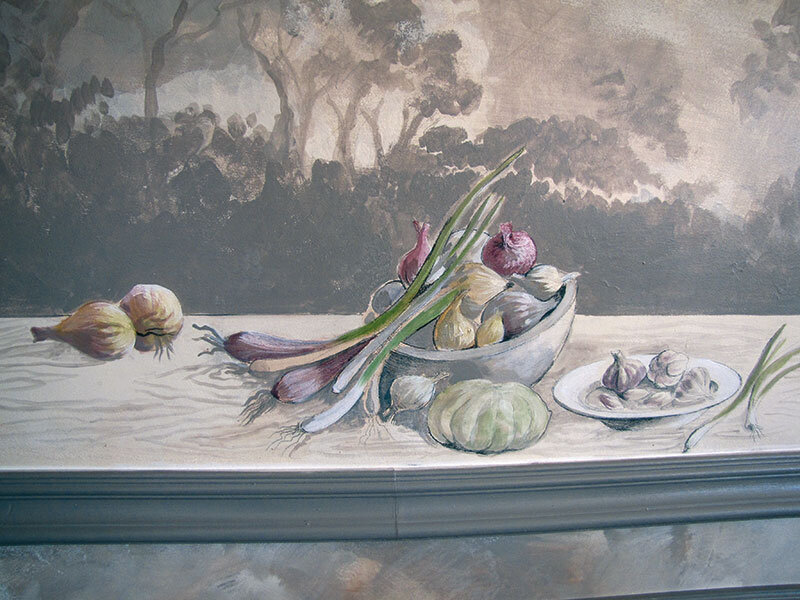
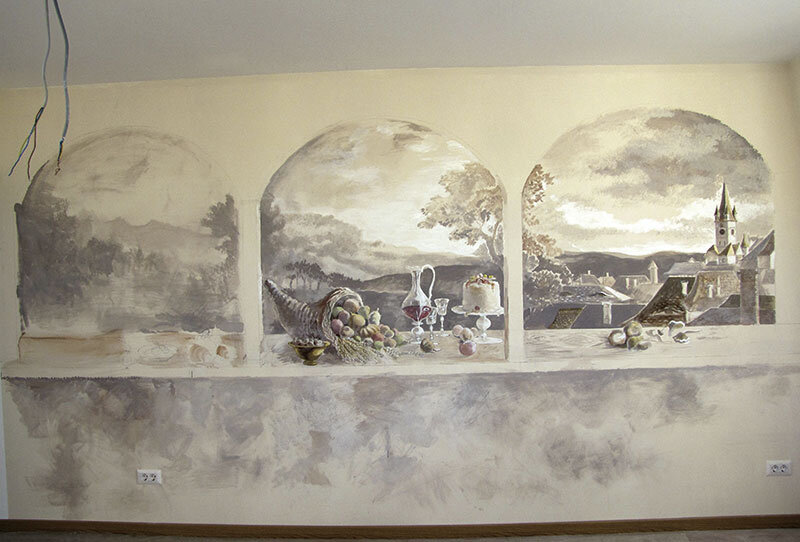
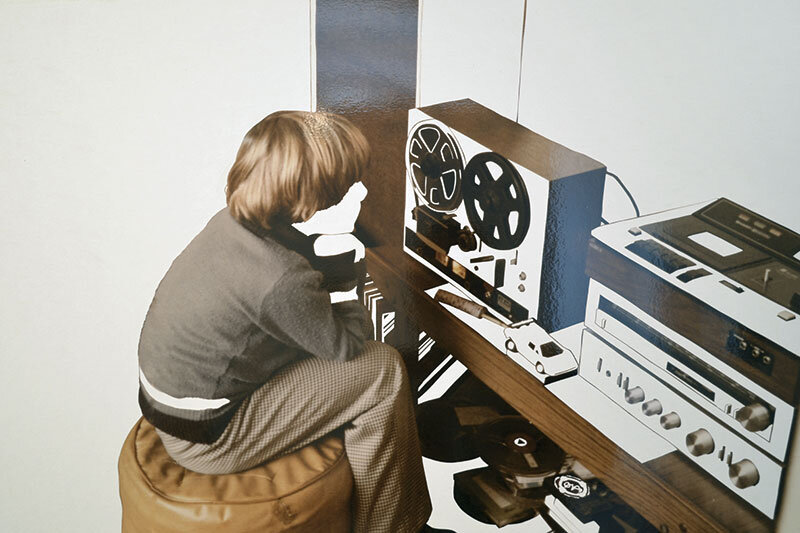
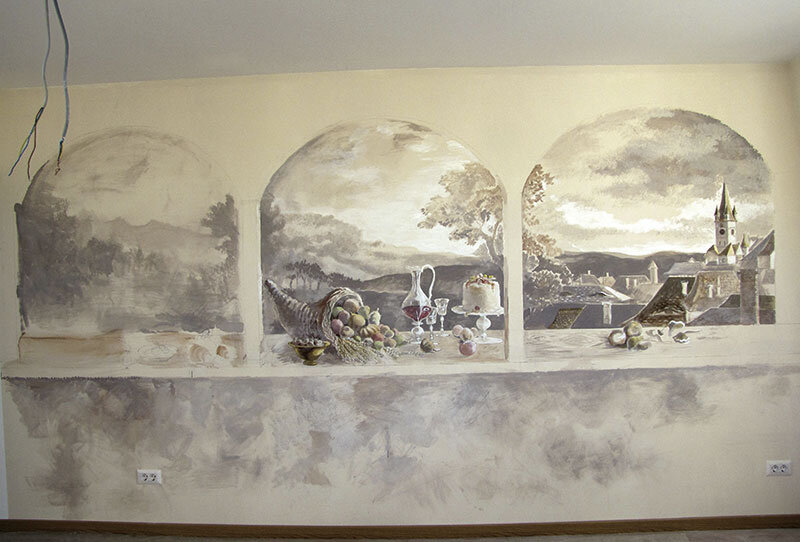
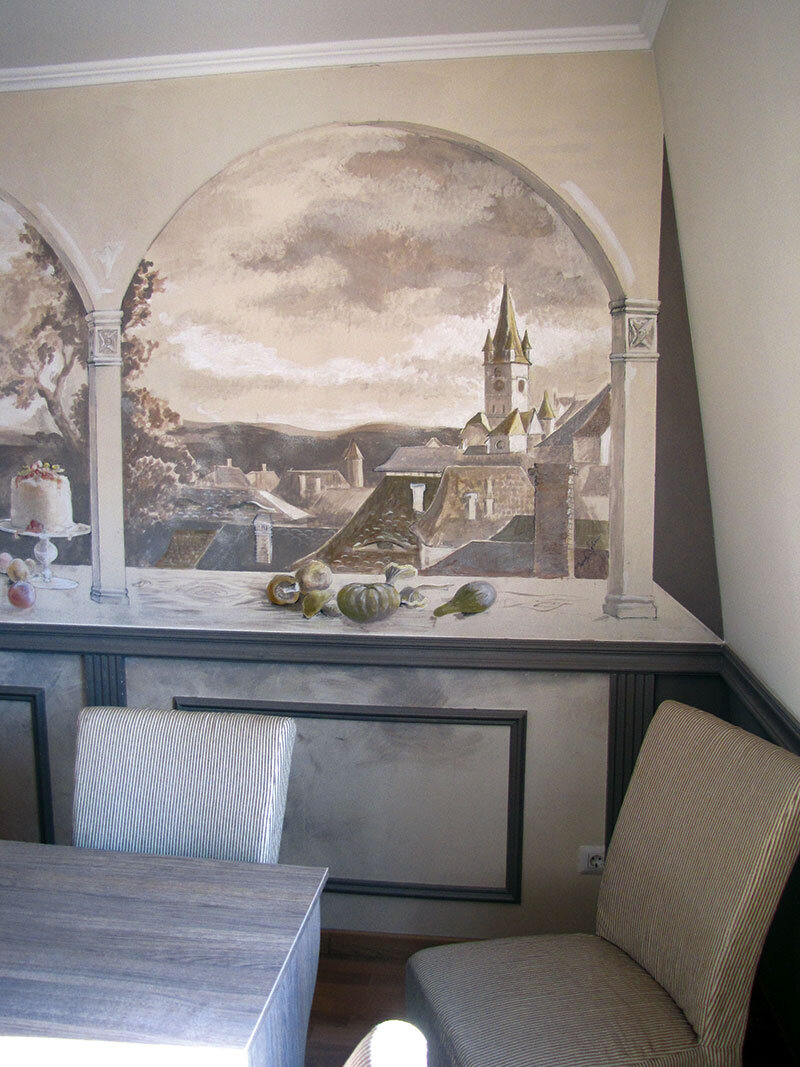
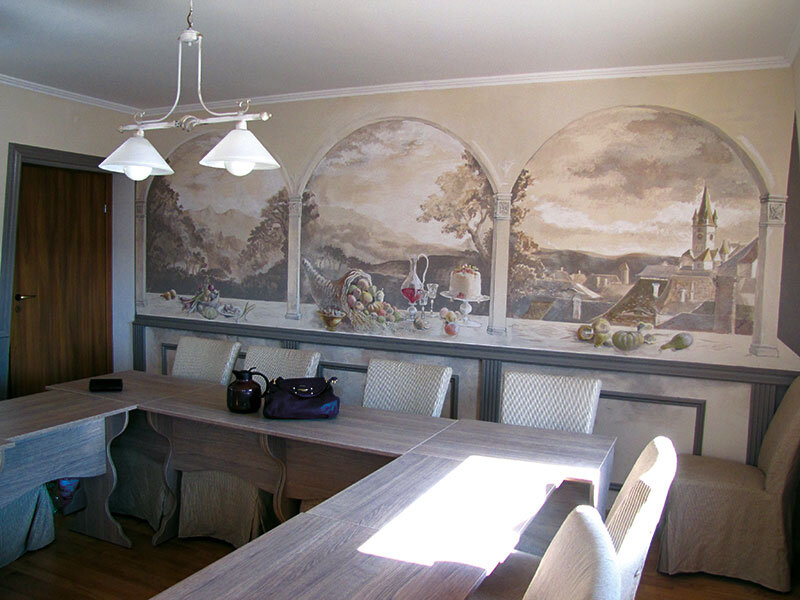
In the adjacent images we present an interior decoration project. It is a room for the shareholders of a Romanian corporation. This rectangular shaped space had a long wall. Its whiteness was almost boring for the meetings to be held next to it. The neighborhood - annoyingly neutral to the dominant activity - was not at all contaminating. It didn't fit. Something was wrong. That's why the patron, with an obvious aesthetic perception, decided to intervene. He called in an artist. He commissioned a work.
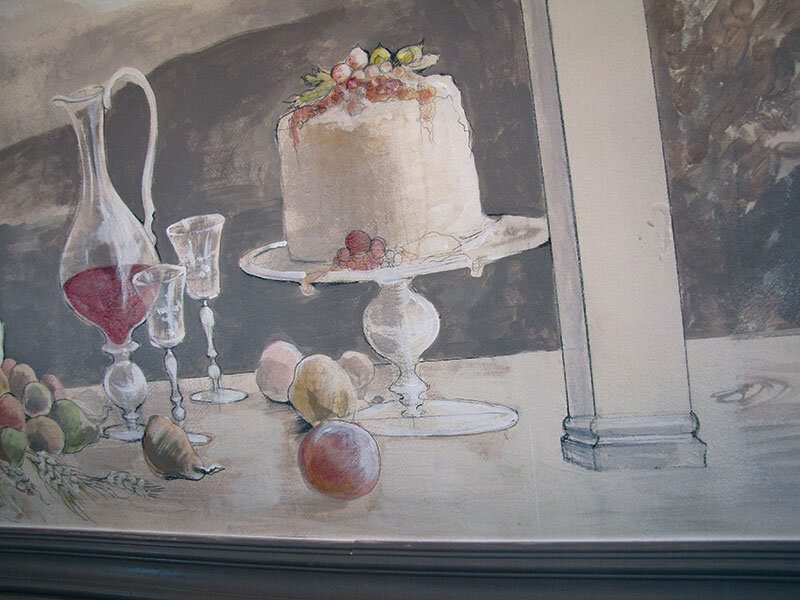
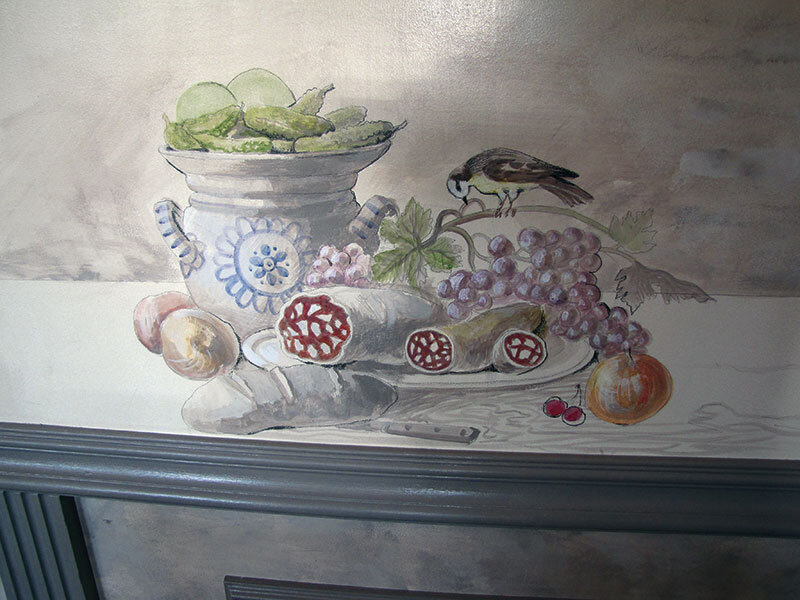
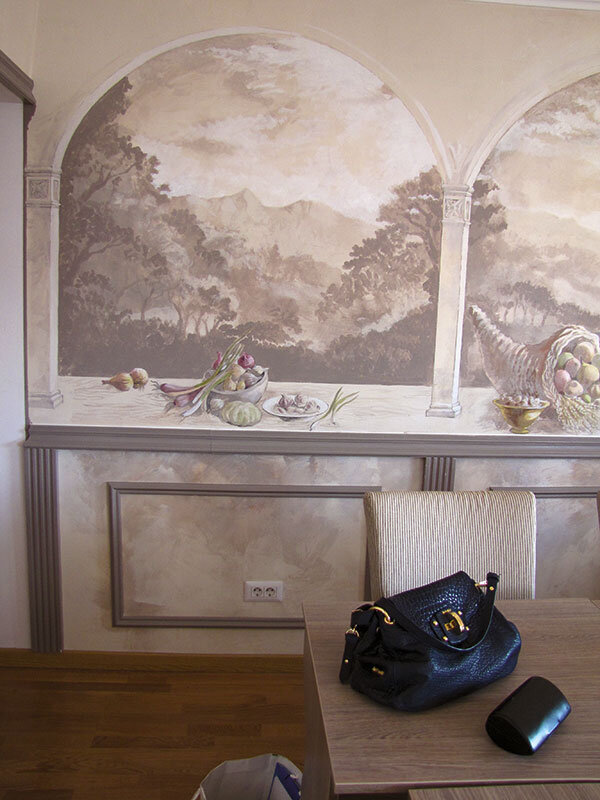
The artist Irina Solomon, a set designer and decorative painter, had a Renaissance reaction: she proposed opening the wall towards a landscape. Without breaking the wall, the artwork opened up the image of the wall creating another reality - a painted one. The author used three planes. The first - a virtual parietal, built of brush, filtered by three arches in the middle of the arch. The second, the substance of which is precisely the thickness of the newly opened wall, on whose solbangles stand - full of color and texture - still lifes. The far background is a landscape delicately reminiscent - in tones of Sienna and Umbria - of the hills of the Margin. He correctly cites a few towers of medieval origin and thus opens up the appearance of the rendered image into the recognizable.
This pretext for artistic intervention invites us to understand the composition of the proposed image through the following key to the reading that I invite you to explore as an afterword.
Perspective mediates between reality and appearance.
It can be strictly defined as the appearance of objects to the eye according to their distance and their relative positions in relation to the human eye.
Thus an opaque wall may appear to the eye, through perspective, to be open. A real magic. How is it done?
From renaissance palaces, baroque ceilings, art deco interiors or even cartoon sequences, the real image can be rendered in a different guise. Perspective1 can be used to open up the view, as we also understand the term etymologically.
The technique of rendering an image in perspective is also calledtrompe l'oeil2. The name is by no means pejorative. On the contrary, the purpose of this clever and artistic way of "deceiving the eye" is to prolong the image.
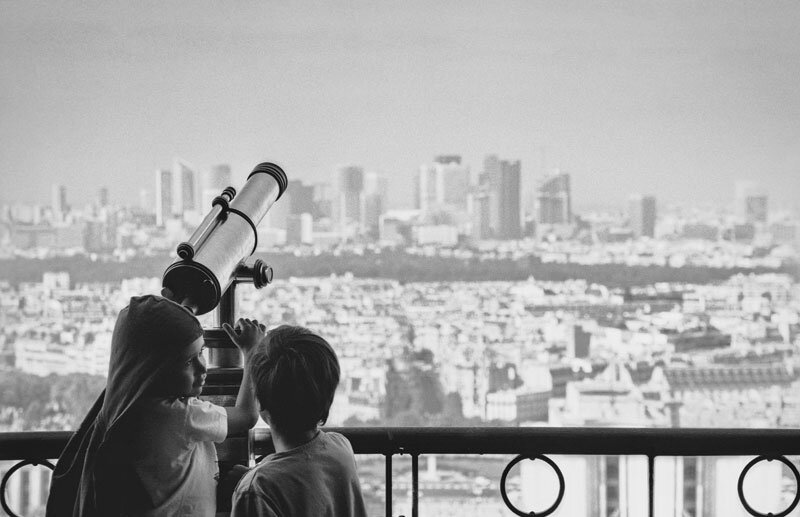
Through perspective there is a magic, a conjuring of space. It extends. The effect is wonder. The method is the construction and reconstruction of the image. The sensitive dimension is depth, and the instrument used is the emphasizing of spatial relations.
Thus, by means of well-constructed images in perspective it is possible to extend a given environment to an additional world. It can be the same or different from the starting source.
A gallery of a palace can be extended - thanks to a cleverly constructed perspective image - by a few beams towards a non-existent door. A room can open onto a painted landscape. Likewise, a ceiling decorated in perspective can emphasize, or even recreate, the shape of a cylindrical or spherical vault. The same ceiling can be punctuated - moving away from the flatness - by two-dimensional moldings and profiles, which mimic relief and are made exclusively of brush.
The common element of these painted vertical or ceiling realities is openness.
In other words, the wall ceases to be an opaque barrier - revealing in depth perspective, and the vaulted ceiling refuses to be a mere hemispherical lid breaking the physical boundaries of space through the painted image.
Constructed perspective has and does a myriad of conventions: the man is called the observer, the height of his eyes - a dimension of the coventional trihedral - multiplied horizontally is called the horizon line.
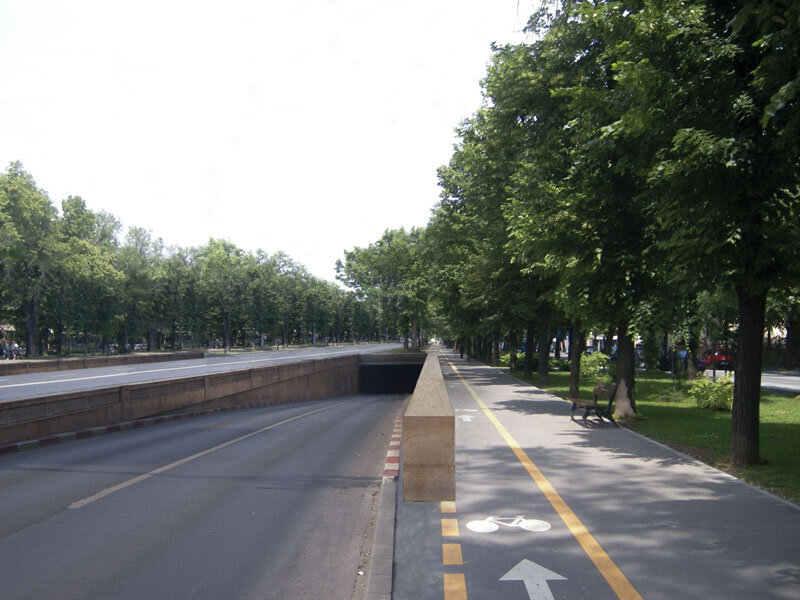
Perspective is based on convergence. The meeting of converging points is called the vanishing point.
Depending on the points of convergence, perspective exists at one, two or three vanishing points.
Horizontal and parallel lines in reality always converge in perspective.
Vertical lines are - depending on the type of perspective - parallel or converging. Oblique and parallel lines in reality are convergent in the perspective image, and those at 45 degrees to the position of the vertical panel become vanishing points. A principal point, always denoted 'P', is the projection of the observer on the vertical plane of perspective. This vertical plane is called the picture. In a picture, the P is existing or constructed. The image is, in turn, existing or proposed - thus, constructed, at a given moment.
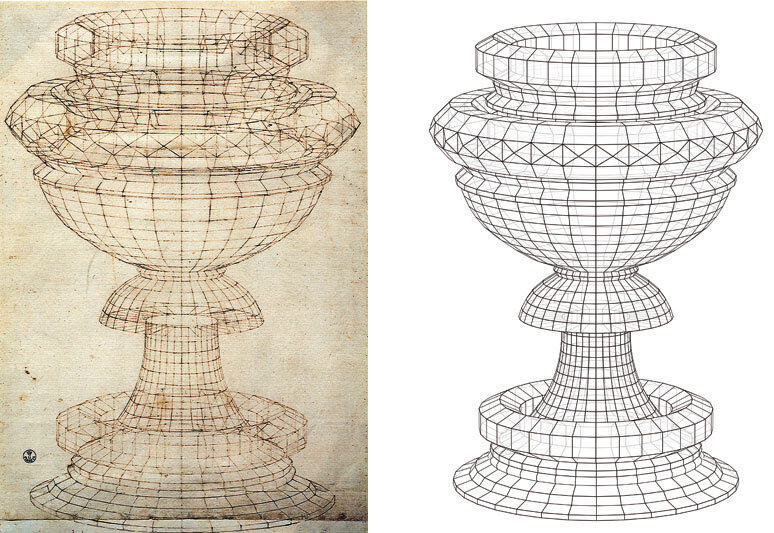
These data denote that constructed perspective also has an inverse process which is called perspective restitution. It is a post-image method. It can explain, through orthogonal projection and appropriate scaling, the actual size and position of objects in space. Thus, the beauty of perspective - as a method of three-dimensional representation - also lies in the fact that, over convection, it is a reversible process.
The concerns for the field of perspective are hardly rigorously datable. For the simple reason that its area of intervention and operation is the image, more precisely the appearance and perception of the image. However, the earliest occupations of homo sapiens, notable by contemplation, were those of signifying - rupestrian or otherwise - the immediate universe with images and signs. Thus perspective emerged. Questioning the image is an ancient procupation.
As far back as the ancient period, the 5th century BC to be precise, there have been treatises and writings dealing with eyes and things. In other words, the way we look. Aristotle's Poetics introduces into "skenography" elements of optical illusionism associated with theatrical scenery to give depth to the scene. Anaxagoras and Democritus developed treatises on descriptive geometry that address perspective in scenography. The first systematic treatise on optics and perspective for which there is evidence is Euclid's Optics.
Here is how - from a time when harmony between man, the universe and things was the main subject of both research and understanding of the world - perspective has played a significant role.
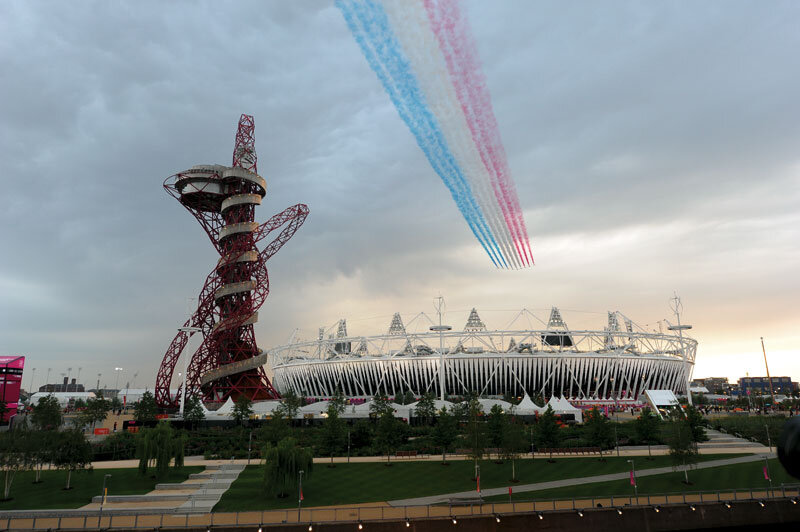
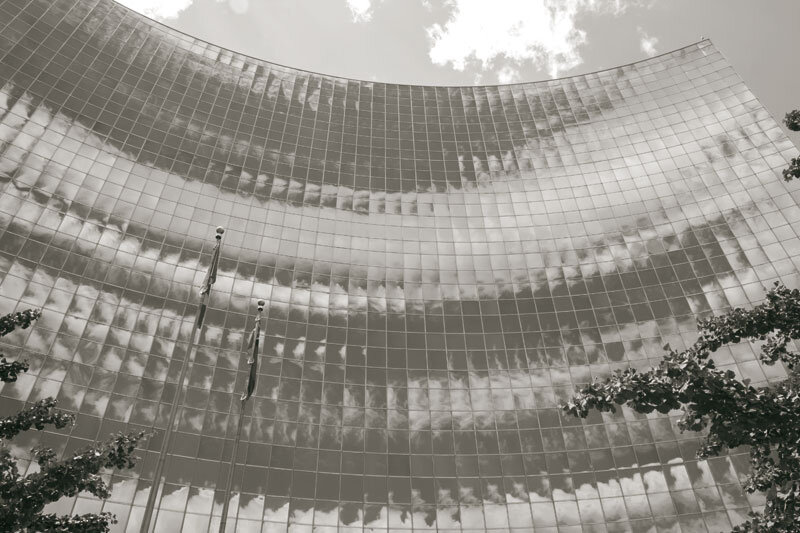
The constructed framework that is frequently based on Cartesian asam-blages evidently displays in perspective the convergence of (in reality parallel) lines. Therefore whether we are looking at a railroad, a road, a building, a square or a table, the converging lines are perceptible.
The natural setting contains only the parallelism of tree trunks in the register of the perspective image. Parallel lines are literally missing from the landscape. That is why the natural setting is rendered through atmo-spherical perspective. This method of evoking depth is based in painting on color and in graphics, engraving or drawing on the accentuation of line. In the first instance, warm tones reside in the near plane, neutral tones in the middle, and the far plane is rendered in cool tones. In monochrome images, it is the texture, density and clarity of definition of the object which, through variations and sometimes shadows, render the depth of perspective.
In conclusion, perspective is both the three-dimensional representation and thetechnique3 of rendering - on a flat or curved surface - an image. That is to say, its area of competence is the expression of a spatial relationship between objects as they appear to the eye, as close as possible to the real image. Thus, if for a long time mankind's concern has been to question the order in the universe, it is not for nothing that perspective has been a relevant tool. Perspective is both the representation in drawing and painting4 of lines converging in such a way as to create the illusion of depth and distance, and the image that gives the illusion of depth and distance. I think we have seen quite convincingly how perspective can open a wall.
Notes
1. The origin of the word is Latin. Perspicere means to look through from per = through and specere = to look. Perspectus is the past participle of the verb perspicere. The variations perspectium and perspectivus denote adjectives pertaining to sight or optic.
2. Or deceiving the eye (orig. fr.)
3. We would call it simultaneously science and art
4. We would also add in 3D modeling software