70-300

"Unfortunately, today everything is literature because it is hard to really describe the misery, the hunger, the cold and all the humiliations endured."
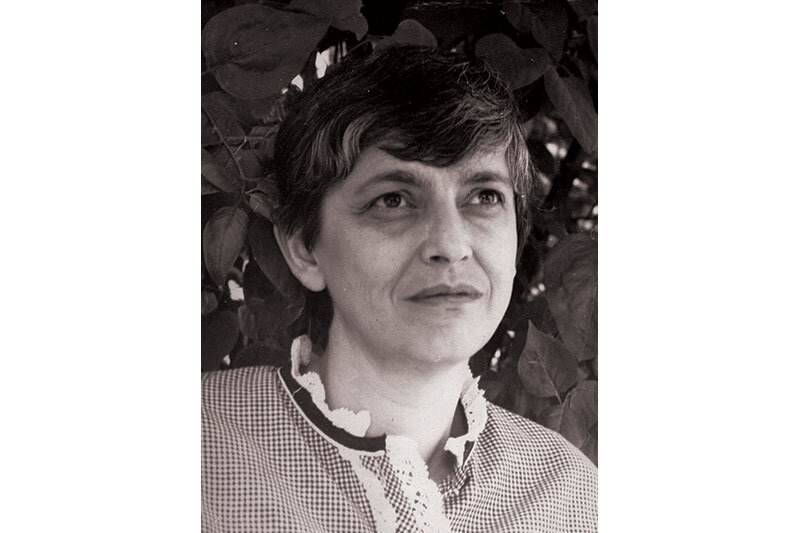
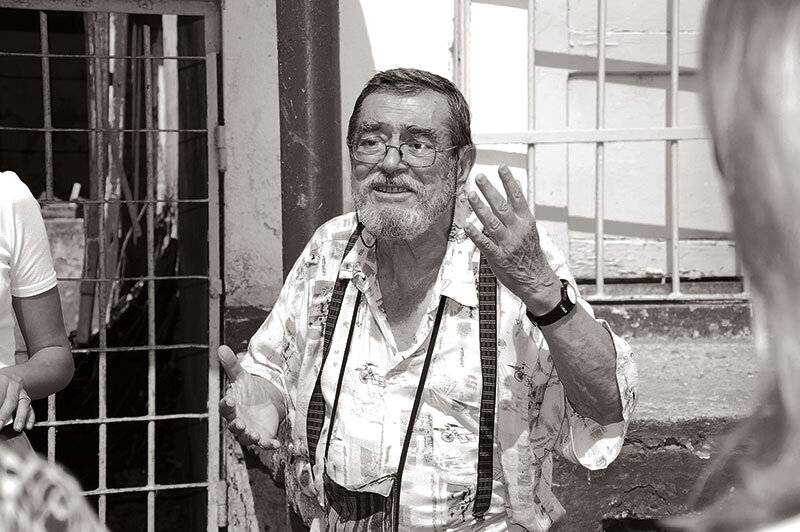
The architect Emanoil Mihăilescu was born on December 16, 1935, in Bucharest, into a family of small craftsmen. A graduate of the Titu Maiorescu High School, he attended the Faculty of Architecture from 1953-1958. He was arrested on 18 September 1958 as a member of the "Burning Bush" organization. For five years he was held in political detention in Jilava, Periprava, Salcia, Stoenești and Gherla.
In 1963 he started working as a designer at the Bucharest Project Institute, and three years later he was allowed to resume his studies at the Faculty of Architecture, graduating in 1968.
In the same year he is assigned to IPCM, where he participates in the elaboration of studies and offers for Iran, Egypt and USSR and realizes projects of industrial halls and auxiliary technical-administrative constructions, such as: the Mechanical Enterprise Bistrița, the Aggregate Machines Enterprise Iasi, the Unirea Enterprise Cluj, the Goldsmith's Enterprise Arad, the Aggregate Machines Enterprise Sf. Gheorghe, the Red Star Enterprise Bucharest, the Bearings Enterprise Barlad. In 1987 he was seconded to the Carpathian Institute, for the realization of the Republic House project. Chief architect of the 4th district of Bucharest in 1992, he worked from 1993 until his retirement for the State Building Inspectorate of the Ministry of Public Works. From 2000 to the present, he is the secretary of the Association of Former Political Prisoners of Romania - Bucharest Branch.
Mr. Vlad Mitric-Ciupe: Mr. architect, you were a student when youwere in political prison between 1958 and 1963. First of all, tell us about that period from the perspective of your childhood.
Emanoil Mihăilescu: All my childhood was characterized by competitions. Football, backgammon, chess, ping-pong, athletics. I used to write numbers on pieces of rag and do sprints, cross-country, sprints. I used to go to the stadium for Romania's international competitions - it was a completely different world. We took Jianu Road, then it was called Aviatorilor. Well, on Jianu, every weekend there were bicycle and motorcycle competitions. Then, on the boulevard leading to the Arc de Triomphe, there were car races, I knew the famous Jean Calcianu.
V.M-C.: I know that you went to "Titu Maiorescu" High School...
E.M.: There I had an amazing history teacher, to whom I owe my passion, Professor Iordănescu from the "Titu Maiorescu" High School, a pedagogical high school. I remember the students in their senior years who were gentlemen, with ties, in suits, walking around the school yard, talking, they were extraordinary. Older than me were Matei Călinescu, Ion Vianu and Miron Chiraleu1, the one who committed suicide in prison, he didn't want to accept the re-education in Aiud. By the sixth grade of high school, children of nomenclaturgists began to appear in our high school, the school was cleaned out and many teachers were dismissed. We went on strike, sir, us kids. We wrote on the blackboards: "We want Professor Iordănescu". These things were going on in 1947-48. Then I did something crazy. We were forced to go to demonstrations on August 23, November 7 and so on, and all this made the hatred in us grow. There were portraits of "great teachers" on the wall. They were made of paper on a wooden frame, and I used to pretend to hold myself up and put my finger in the holes in front of my eyes. They held meetings, the headmaster came, they didn't know who the "asshole" was, but they held a meeting to celebrate the hooliganism. I couldn't stand Russian, Marxism, that sort of thing. I was very bad at Russian, I didn't want to learn a damn thing. Everything was terrible. In history I studied according to Roller - an academician made on points, luckily I had Giurescu at home, and I also had the works of Xenopol from my father, I only studied according to them, I didn't even look at that bastard Roller2.
V.M-C.: During high school, were any of your classmates arrested, did anyone have problems with the regime?
E.M.: Radu Miclescu, Dimi Lecca and Marion Cantacuzino - Bâzu Cantacuzino's daughter - were arrested. Then I spent time in prison with Vladimir Boutmy de Katzmann, who was about two years older than me. Originally French, ennobled in Tsarist Russia, with estates in Bessarabia. He was arrested because, with a few others, he tried to blow up an official stand at a demonstration. He was sentenced to life imprisonment until 1964. I knew him in prison, and when I found out that he had also been in "Titu Maiorescu", this friendship was born. I didn't see Radu Miclescu after his release because he went to where they had their estate... the great Miclescu boyars. You see, we were left without boyars, we were left without elites, in the hands of these crypto-communists.
V.M-C.: What can you tell us about the Faculty of Architecture in the 1950s?
E.M.: The faculty was an oasis of tranquility and friendship in the grayness of those times. My professors at the faculty were leftists, and I had my occasional bouts of tension, but for the most part they were gentlemen. Horia Maicu was left-wing, but he was a gentleman. Dressed to the nines, white shirt, nothing like what we see today. Not to mention the Ornamental Chair, Professor Simotta. There were a few assholes, but they were well known. One was Leca - with one "c", there was Paiu, there were a few who were with the party. We had wonderful colleagues, and today we see each other again with a crazy pleasure, I didn't find a single snitch in the security file, neither from high school nor from college. After the arrest, there were those smear sessions, and they said that we had gone into the mountains with some kings and guns... some nonsense, misinformation from the Securitate. There were always such meetings, some of the propagandist activists took the floor and demanded solidarity with the party's decision. For people of good faith, this is also a concession and a fall, to be forced to praise and applaud things like this. There was also Bădescu, he had been ambassador to Italy, minister, he also held his chair, because he probably liked it. He was president of a higher institution, I can't remember exactly which one. Bordenache was a super gentleman too. The atmosphere was one of esteem and respect for the professors, and the Department of Drawing and Modeling was the bohemian of the faculty. The cohesion between us was very strong, a friendship that has never faded, it has remained alive to this day. In my day, it was an honor to be asked by Bob Moraru, for example, to be his freshman. Well, those students of the big years, the cowards Cristea and Leahu, you looked at them with fantastic respect. When they'd ask you to help on a project, you were honored. Taking money? I couldn't imagine. I was flabbergasted when I came back to school after prison and saw that students were being hounded for not handing in their projects on time or others were doing them for money, it was a whole trade. You could do anything if you had money, it didn't matter. It was a different atmosphere, a different atmosphere, young people blowing their noses in the studio. Things like that never happened before. Everything was distorted and hijacked.
V.M-C.: Tell me, please, what did you know during your college years about political detention?
E.M.: I knew about the arrests that were made at night, which were frightening. For example, a cousin of mine was arrested as a liberal and taken to the Canal. Others went to prison for many years. People were talking. On Grivița, in front of a shop, an individual was found with a bullet in the back of his head, but it wasn't an isolated case, they kept turning up from time to time. They were supposed to be robbers, but in fact, they were murdered, this story was created that they were rogues, that they wanted to rob the shop. They were left there on the sidewalk for people to see, to scare people. I lived through all this misery, the fight against the butchers, the class struggle, it was generalized madness. They indoctrinated us, they tried to indoctrinate us, we did Marxism - my God, they tormented us with Marxism and Russian for four years at university. The atmosphere was dull with meanness, fear, suspicion, don't talk, don't tell, we were on the offensive against "class enemies", you can't imagine. All this in a world that was atheist - it was a fantastic offensive against faith too - people were afraid to go to church!
V.M-C.: You were arrested in 1958. In 1956, did you find out that something was going on in the university world in Bucharest - and not only there?
E.M.: Of course. I even spoke recently with Alin Tătaru3, my faculty colleague who was arrested in '56, and I expressed my concerns. I don't understand why they didn't arrest us at the time, as there were many more of us on parade. He believes that the Securitate concentrated then on the organizers, and he was among them. There was also Dan Stoica4, who served several years in prison, and Marius Lebădă, who was only investigated. I saw in front of the Faculty of Architecture trucks with tarpaulins and inside there were soldiers with rifles - they were sitting on benches, ready. I went around the University, around the square, saw what it was all about and realized that things had been uncovered. In my personal opinion, I have the impression that they were provoked by the Securitate to arrest them, to frighten the students, to keep them quiet.
V.M-C.: When and for what exactly were you arrested?
E.M.: During my fourth year vacation, I received an invitation from my colleague George Vasâi5 to go to Slatina Monastery in Moldova. I went with him and our colleague Nicolae Rădulescu6 and we stayed in one of the cells. George had many acquaintances among the clergy, his parents had attended monasteries since he was a child, and George had become a practicing Orthodox. I must have stayed there for two weeks, attending all the Masses, eating in the trapeza with all the monks, and the rest of the day reading or sunbathing in the surrounding meadows. That's where we met Fr. Arsenios Pope, who became our confessor. Fr. Arsenios was a character who impressed you with his penetrating gaze that emanated an extraordinary will and faith.
From the Slatina Monastery we went to the Rarău Hermitage, where we met the abbot - Fr. Daniil, Alexandru Teodorescu in civilian life, and the student Șerban Mironescu, a friend of George for a long time. The period spent there was for us an initiation into the mysteries of Orthodoxy. Every day, we spent the morning hours listening to Fr. Daniil, who talked to us about concentration exercises, the technique of preparation for entering the meditative state, the prayer of the heart and so on. But the discussions were not limited only to theology, they were extremely diverse and interesting subjects, all the more so for us who "benefited" only from what the communists and Russian counselors allowed. Several times we met with Father Mironescu in the house of the university professor Mironescu, meetings attended by older people - among them the doctor and poet Vasile Voiculescu. Various guests would read to us from their literary productions, and then critical comments were made. We were very interested in these people, as well as in the literary and religious cenacle atmosphere. This in comparison with the dull atmosphere around us, fearful, in the absence of magazines and books.
On September 18, 1958 I was arrested. The trial was a farce from beginning to end. All they were interested in was to put a number of extraordinary priests in prison, to shut them up, priests who also had the blood of fighters. Well, take Arsenios Boca, for example. Is the Synod struggling to declare him a saint? The Securitate invented the lot and the organization "Burning Bush"7, claiming it was a mystical and legionary organization. For their revolutionary vigilance, the Securitate were given higher ranks and positions. At the end of the trial, I was sentenced to 5 years hard labor. There were 8 monk priests in the group, the head of the group was Father Daniil. The others included Fr. Sofian, Archimandrite Benedict Ghiuș, Andrei Făgețeanu, Felix Dubneac, Dumitru Stăniloaie, Arsenie Papacioc. All the priests in the batch received sentences of over 15 years, and Father Daniil died in Aiud prison in 1962. Among the laymen in the batch were Professor Mironescu, Dr. Dabija, the poet Dr. V. V. Voiculescu and 5 young students. After the trial, the whole lot was loaded into a van bound for Jilava, where we were shorn, stripped of our civilian clothes, dressed in prison effects and each taken to another cell.
V.M-C.: How did you receive your sentence?
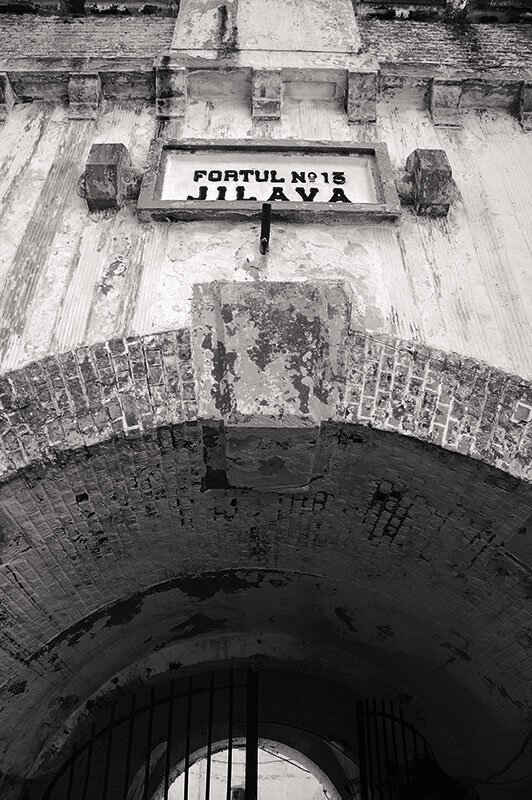
E.M.: The sentence came to me when I was imprisoned in Jilava, they put a procès-verbal under my nose to sign. When we arrived at Fort 13, they cut our hair, took our clothes and gave us the CR - counter-revolutionary - zeghea on the back of our cloak. I took the clothes in my arms and went to cell 20, on the 2nd Section of Jilava. I had a shock when I saw the people's faces, it was before five in the morning, that's when they woke up. That was the first shock. I said: "My God, you've put me in Gorky's night asylum". I'd never seen anything like it. There were a lot of beds, three levels, two rows of beds. I was crazy, frightened by the whole gloomy atmosphere. There were people who had been in prison for years, others were waiting for their punishment. When they came and announced me - five years - I was stuck because I thought it was unfair. I considered myself a victim, absolutely baseless. I can remember complaining to my cheek that I got five years, and the others congratulated me: "well done, sir, what a small punishment". You can imagine, those poor people, they got eight years for a joke, ten years, twelve years. I didn't even mention under five. If you didn't do anything, they gave you five years. You were guilty because you were convicted, not because you did something.
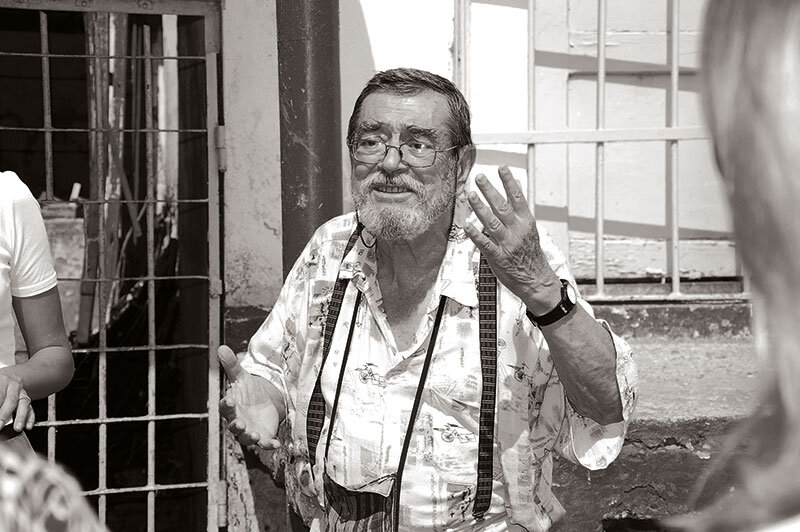
Photos: Vlad Mitric-Ciupe
V.M-C.: I would like you to give some examples of the moments when you had the hardest time in detention, and if there were - and I'm sure there were - moments of peace, happiness, spiritual imprisonment.
E.M.: I have to confess that the months I spent in Jilava were the hardest period, which I consider a prison hell. Why I say that: indescribable misery, brutality, very bad food, but that was not the main thing. The day started at 5 o'clock and then there was the cry to order in the closet - you weren't allowed to do anything except morning and evening. There were two huts in the room, one for feces and one for... Three-story three-story three-room, the room about five by seven feet, with a corridor down the center between the rows of beds. You weren't allowed to stay in bed, you weren't allowed to sleep during the day, just walk around or sit on the edge of the bed.
From a medical point of view, you were absolutely at the mercy of chance. I always thought very carefully about my teeth, and on the other hand, my worry was that I didn't have any thick winter things, I had just a simple tracksuit top, what I went in with, that's what I stayed with. Obviously, I also had the effects from prison, but topping them up with family was out of the question. He would take you for a walk, we'd walk in a circle in the prison yard, supervised from above by the "caraliul" who sat in the prison yard. There were several of these areas, we walked in a circle, hands behind our backs, we were not allowed to talk to the one in front or the one behind, eyes on the ground, we walked one after the other, like animals. That's where I discovered - in Jilava - these beauties that people don't even notice when they have them. What a clear sky, a sparrow, a dandelion flower, a blade of grass. That yellow of the dandelion in spring was magnificent. The sun, the sky, a swallow had nested where our window was. It was all so overwhelming.
Let me tell you something about the behavior of the guards. I, for example, had a needle made ad hoc in prison from a broom wire I got from someone else. There were some great artists, people were inventive. Needle and thread were forbidden by regulation. I took the thread out of my floss and I used this makeshift needle to sew something. A colleague of mine asked me to let him sew something. The guard saw it, I recognized that the needle was mine and I took the beating. He took me out of the room, took me to an empty cell and there the beating started. He only hit me with the edge of his palm and kept trying to hit me in the carotid artery, in the neck. I was defending myself, he was attacking, luckily I had some effects that had been from people fatter than me and the boots that were aimed at my butt stopped in the lap of my very baggy pants so the impact was lessened. I did solitary confinement in a room at Jilava, a former sanitary unit. There I stayed, along with a few others in the room, in the terrible February cold.
The winters were very harsh, especially in the Bălțile Brăilei, I went to Salcia8 and Stoenești - forced labor colonies. When there were downpours, they didn't bring us back from work unless it was a long fall rain, otherwise, if it was a cheerful summer rain, for half an hour, our clothes would dry on us. It was also a big problem to dry your clothes, because in the colony we slept in bunk beds, there was no heat in the barracks, only from the breath of the souls who were there. Where to dry your clothes? Because of this, I suffered at one point, which had repercussions later on, and today my spine is very weak. I had pain in one leg or the other. You couldn't even think of staying in the colony, of not going out to work, if you didn't have a temperature above 38 degrees Celsius, you risked being beaten to make you not want to stay. Outside, I went to the doctors and they said it was a sciatic nerve cold. Unfortunately it wasn't that, it was much more serious, ankylosing spondylitis. That was the great suffering. Also, the cold was overwhelming, overwhelming, there was no escape. The filth was the same - they didn't wash us for months. And drinking water was a problem - Danube water. You can imagine, people died of dysentery, especially in Periprava. We used to throw the frog's silk out of the sanitary and drink from there. It's hard to imagine, but it happened. But I also discovered the sunsets and sunrises there, which in Periprava were fantastic, indescribable.
At that time, hunger was permanent. I don't think there's anyone who's been in prison who wasn't hungry. We ate barely sprouted corn, when they took us out to roast, for example, all kinds of herbs, dandelion, willow gentian... it was all about not letting this stuff drag you down. It was a pathetic picture. After the food had been shared out, there were those hags who had something left and there was always a team of pansies throwing themselves around and scrabbling with spoons to grab something. A fantastic decadence. This was happening at Salcia, where the brigades were working on dykes, and later I worked on the construction of the drainage ditches - extermination work. When the captain came to control us, the sergeants became very active, and in the evening, on their return, those who didn't fulfill their duty were stopped at the gate for a beating. Unfortunately it's all literature today because it's hard to really describe the misery, the hunger, the cold and all the humiliation. Communist imprisonment was a means of extermination, the aim of the regime was to purge society of the bourgeois elements, the so-called enemy and above all dangerous.
V.M-C.: After liberation?
E.M.: It was quite an adventure to find a job because my file was very heavy. I was eventually hired as a designer at the Project Institute in Bucharest, in the workshop of Marcel Hornstein, a Jew for whose memory I have great respect, a man who deserved all respect. I applied to the faculty for re-enrollment in the fifth year, but the school's most political major, Professor Rebedeu, put a resolution that, because I had proved that I did not understand how to recognize my mistakes, I needed to work to rehabilitate myself. In fact, in the prison, in the last period, 1963-1964, a campaign of re-education-rehabilitation of political prisoners had begun. Re-education consisted in receiving from time to time an ideologically appropriate newspaper to be read or we were taken to the main hall to see a propaganda movie. I went back to college after another three years, and my entire post-college career has been under the nefarious sign of the cadre file. Every year I had to fill out an autobiography - it was already a ritual. I didn't get any further than a third-grade design architect, and the cadre file was like a cannonball hanging by its hands and feet. No management positions, no delegations abroad, never, but I regarded all this as normal and it didn't affect my relations with colleagues, my humor, my love of life and above all my hope.
V.M-C.: In conclusion...
E.M.: Even today our society is haunted by reminiscences of fear. Under communism, the party apparatus devours the state and its institutions, and any means of protest against the abuses of power are eliminated. Those 5 years were a long "Odyssey" from which I consider that I emerged victorious, loving the people, my colleagues at university and at work, although my hopes for normality in the 22 years after the collapse of the communist regime have been dashed one by one. The 22 years wasted in the transition failed to mature us, no one at least tried to educate a people to whom totalitarianism, and especially its terror and brutality, only inoculated obedience and fear of thinking and expressing themselves. I hope that history will put those who managed this situation in their proper place.
NOTES:
1. Born in Bucharest in 1933, sentenced in 1956 to 6 years in prison for writing and disseminating banned manifestos, he committed suicide in Aiud prison on January 28, 1962, following pressure from those who had initiated the "Reeducation". See Andronescu Demostene, Reeducarea de la Aiud. Peisaj lăuntric. Memorii și versuri din închisoare, Editura Christiana, Bucharest, 2009.
2. Former deputy head of the Propaganda and Agitation Section, in 1948-1949 he published a history of the Romanian People's Republic that glorified the "traditional brotherly ties" between Romania and Russia. See Report of the Presidential Commission for the Analysis of the Communist Dictatorship in Romania, www.presidency.ro/static/ordine/RAPORT_FINAL_CPADCR.pdf.
3. Architect, born in Bucharest on March 29, 1935, sentenced to 2 years of political imprisonment in 1957 for public agitation, in fact for organizing and participating in anti-communist student demonstrations in Bucharest following the events in Hungary in 1956.
4. Architect, born in Bucharest on December 16, 1936, sentenced to 5 years of political imprisonment in the same trial as Alin Tătaru.
5. Architect, born in Bucharest on 23 June 1935, sentenced to 8 years of political imprisonment in 1958, as a member of the "Burning Bush organization". He was a fourth-year student at the Faculty of Architecture.
6. Architect, born in Bucharest on 3 February 1935, sentenced to 7 years of political imprisonment in 1958, as a member of the "Burning Bush Organization". He was a fourth-year student at the Faculty of Architecture.
7. See Rugul Aprins, Plămădeală Antonie, Editura Arhiepiscopiei Sibiului, Sibiu, 2002; Timpul Rugului Aprins, Andrei Scrima, Editura Humanitas, Bucharest, 2010, or Ieroschimonahul Daniil - Sandu Tudor and the Burning Bush. De la Mănăstirea Antim la Mănăstirea Rarău, Bălan-Mihailovici Aurelia (coord.), Charisma Publishing House, Deva, 2010.
8.Salcia - a death camp,Alexandru Mihalcea, Ex Ponto Publishing House, Constanța, 2009.