Seaside. A published chronology

It all started around Christmas. It was a mixture of the smell of fir trees, tinsel twinkles, colored baubles and friendly warmth coming from a stove, for me - a 5-year-old - a terracotta puzzle of seemingly abstract shapes that inspired all sorts of images of dragons and other winged beings. I was playing with little lead soldiers, watching the fickle yellow light on the floor through the cast-iron stove door, left ajar. It's a neural trail hard to erase from my memory, that fragment of time when the whispering song of the fire in the stove mingled with the blizzard outside, resting in the windows with large flakes, like crystallized flowers, that died amorphously, melted by the warmth of the window and then frozen by the frost into tears frozen for a moment. It was a time when there were no Code Reds and lead soldiers were not toxic. It was a time when man was preparing to set foot on the moon, and winters didn't liquefy in the grip of global warming.
I went to the window to look out at the snow drifts in the yard. I should have enjoyed watching them, for the wooden sleigh was waiting for me in the hallway, but the malaise and fever that had taken hold of me thwarted any shred of happiness. I was sick for I don't know how many times, a pultaceous tonsillitis that haunted me every winter, only to be cured by the pain of penicillin injections. I had gone with my mother to the hospital and had heard the whole conversation between her and the pediatrician, which I watched with tears streaming down my cheeks after that stainless steel spatula had been shoved down my tongue, all the way down my throat, to the point of imminent vomiting. My tonsils were as big as walnuts and full of pus bags, it was already chronic, and the doctor advised my mother to take me to the seaside every year in summer. Aerosols, sun and seawater gargle. Lest there be any confusion, it must be said that in those years the Black Sea was clean, still untouched by weekend vacationers and E. coli.
train station
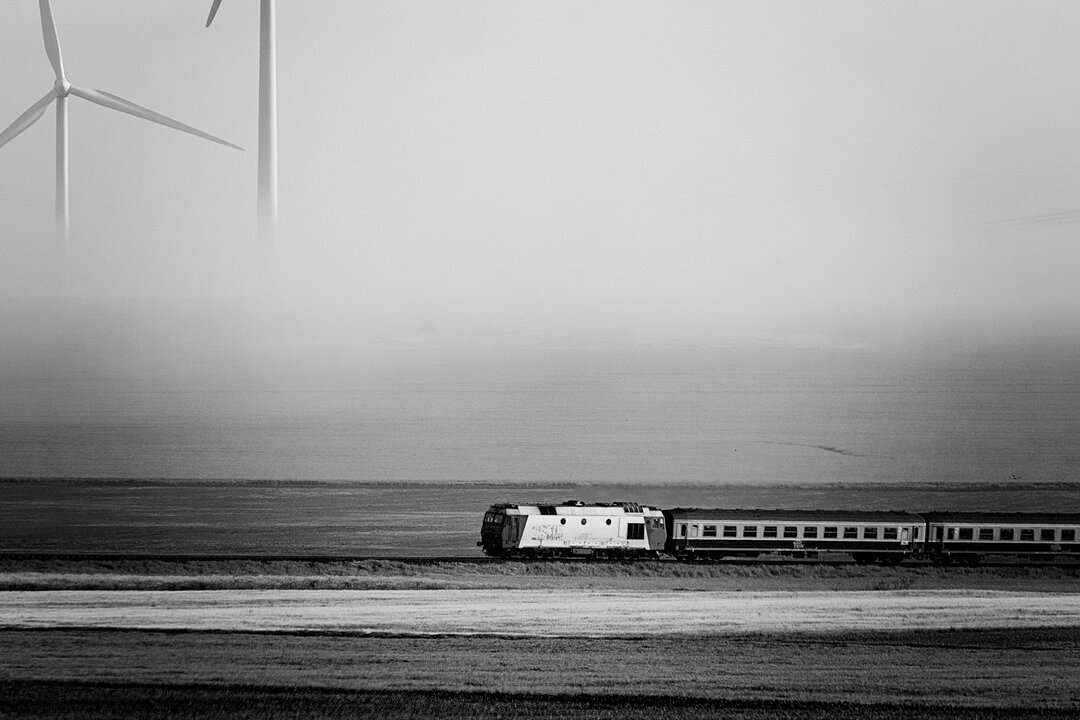
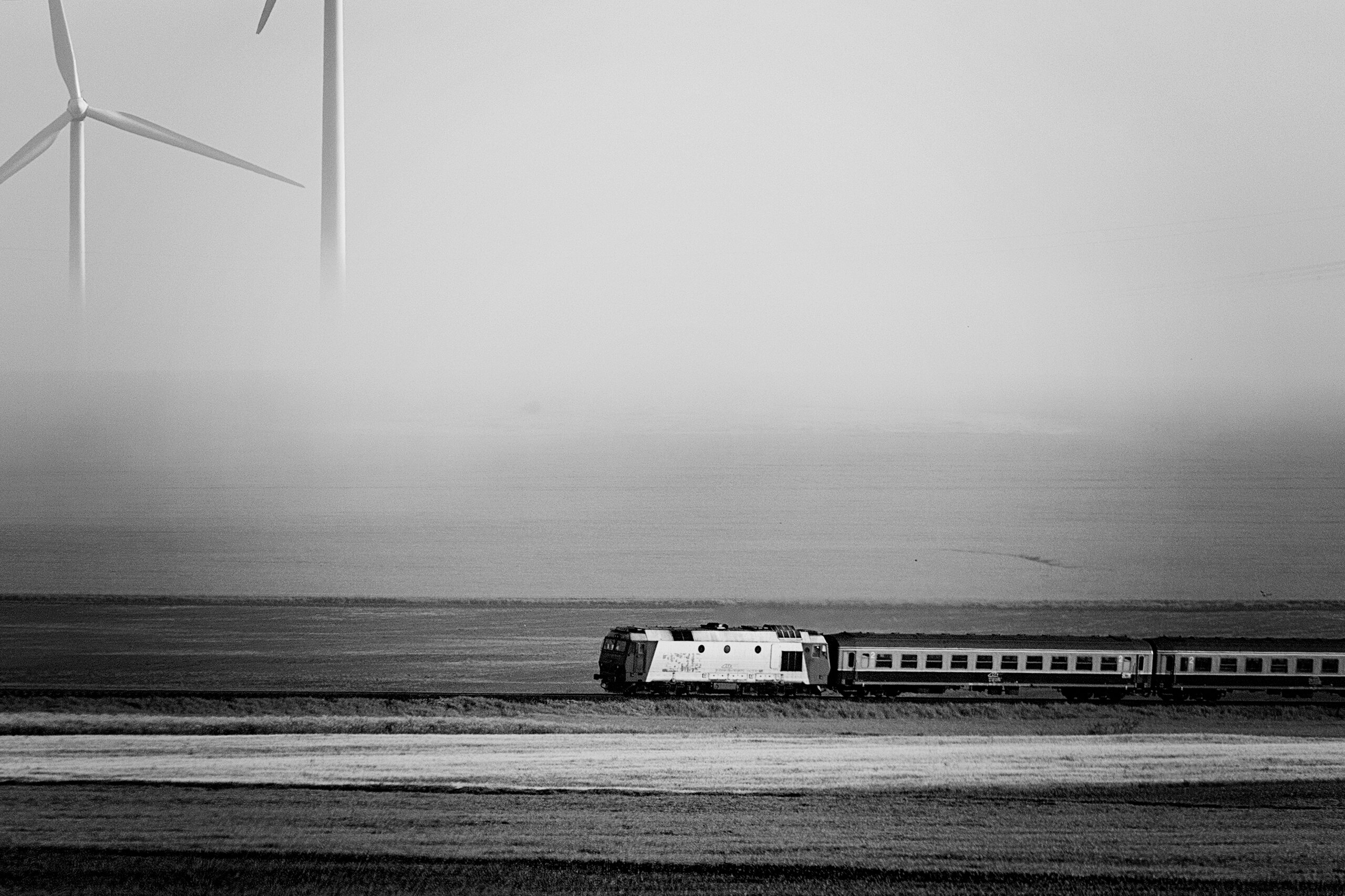
It was another year before the sea vacation was scheduled. I was starting school, there was no highway, cars were scarce, and my parents weren't among those who could boast a Moskvich or a Trabant. A trip to the seaside by train was in itself like a journey to the ends of the earth, or at least it seemed that way to me. A journey like an intense expectation that, after the end-of-school-year party, happened. We got off at Costinești, a tiny station, harboring dozens of noisy swallows' nests in its eaves, a neat building with a Mediterranean-looking tile roof and limestone walls. The building seemed familiar from the start, perhaps because it looked somewhat like the train station that Santa Claus had brought me with the rails and electric trains the winter before.
There was the whistle of the Diesel locomotive, then a victory of popular technology against capitalism, and then the shrill whistle of the train driver's whistle as he climbed the ladder of a carriage. As a last gesture, a lone stationmaster raised his flag with dignity. With a colony of swallows chirping, the train chugged on its heavy wheels towards the next station on the coast. I realized then that I had landed on an island in an ocean of corn and wheat, the Black Sea still hidden by the curvature of the earth and the corncobs. There were fields dotted with the red blotches of corn, there was the fragrant air of sun-warmed chlorophyll and salt wandering through the sky, scattered by the zigzag flight of locusts. Yes, and then there were the larks that sang on and on, hovering over these unknown and mysterious spaces. I imagined myself as an explorer on an Indian trail through the Amazon jungle, even expecting a giant anaconda to emerge from the wheat spikes, just as I had seen on Saturday night on Teleencyclopedia. I set off with my parents on the road lined with tall corn, there were several of us who came down to Costinești, we were like long-distance runners, a whole platoon in which we were in the back of the queue, I was in the small stride. Somewhere ahead, a few teenagers, excited by this sunny start to their vacation, had already escaped from the pack, hurrying ahead with the thought of feathery waves and grains of sand clinging sensually to the damp hair of the girls lying on the sheets, sunbathing. Halfway through this journey, when the new arrivals in the village - for it was a village then, not a resort - were still wandering along a dusty road, with tractor tire tracks carved in the now dry clay by the rain, I caught sight of the sea. The overwhelming Black Sea, a huge space such as I had never seen before, a sea not black at all, rather a wine-colored and telluric liquid that faded into the horizon's pale horizon, to melt uncertainly in the washed clear sky.
Aunt Leana
I don't know how far I walked, maybe a kilometer that seemed like ten. What is certain is that we reached the outskirts of the village of Costinești. Low fences, with a stone base painted lime-white, courtyards shaded by willow trees, neat houses with metal gates. On the left side, at the crossroads, where I was later to learn that this was the road to Cherhana, I spotted a large cross, on which was crucified the statue of a Catholic Jesus, probably left over from the German founders of the village at the end of the 20th century. Fresh flowers and a lighted candle were a sign that the Dobrogen locals who followed the departure of the Saxons nevertheless resonated with the symbol of the divine protection of the community, in contrast to the proletarian times of the time, when religion was labeled as the opium of the people. After a slight curve to the right, the road entered the village straight, beaten. A green village, with huge willow trees through the courtyards where the villagers had brought sand from the beach to cover the weaten earth. This detail would permeate the whole image of Costinești of those years, sandy courtyards shaded by centuries-old acacia trees, sand mixed here and there with leaves, a cool and friendly sand.
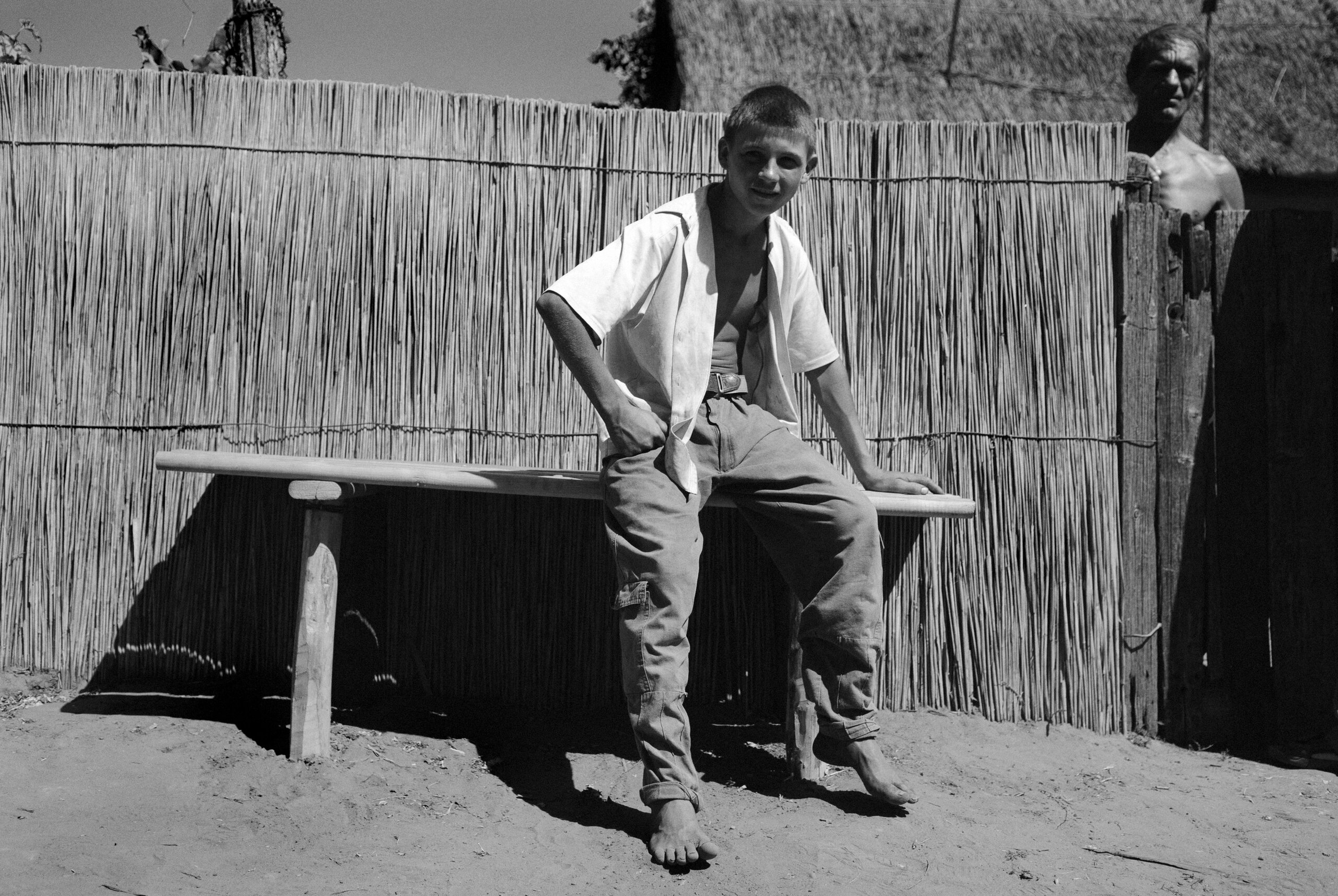
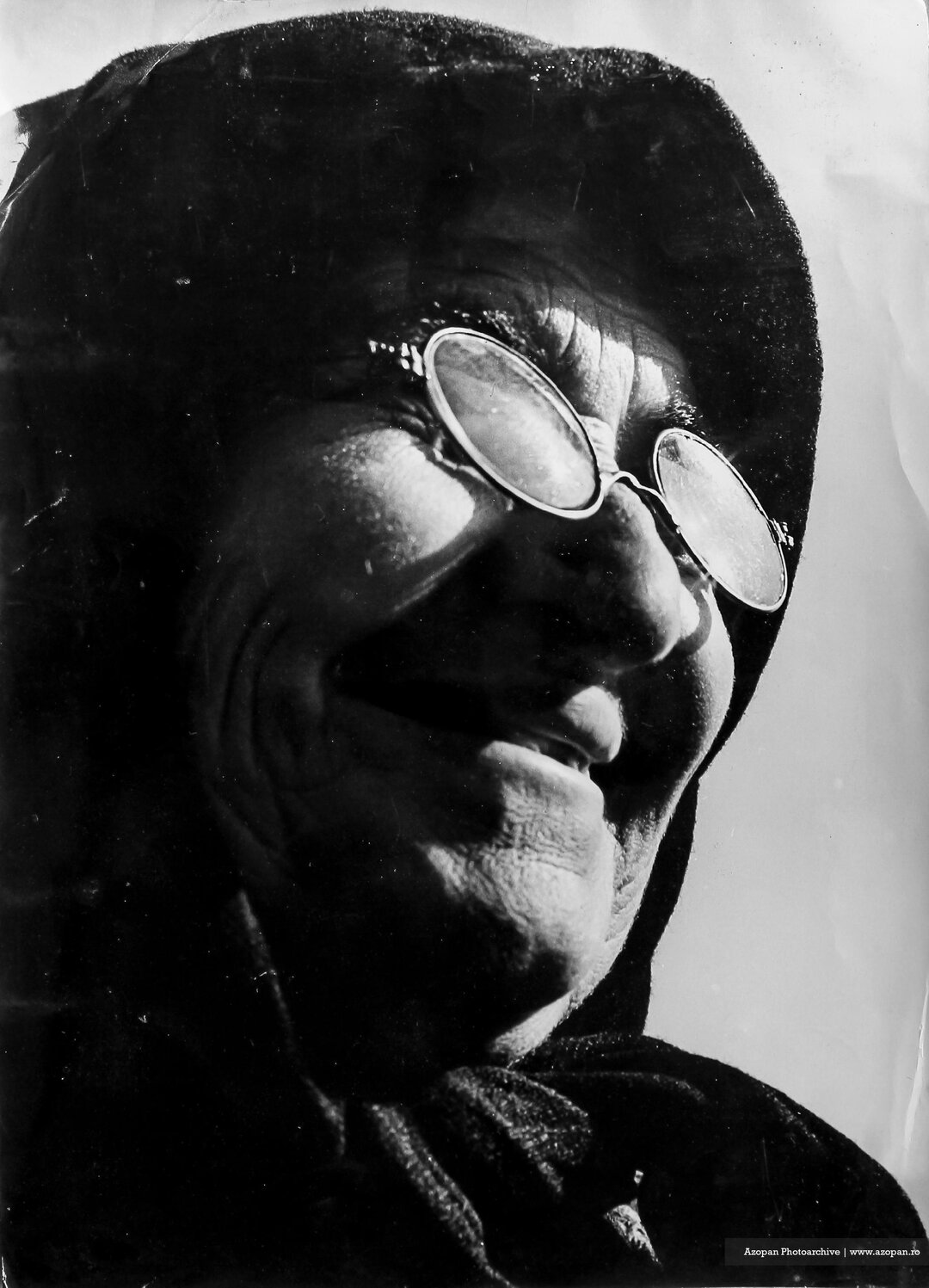
We entered the green iron-gated courtyard and my parents asked for Leana. We had arrived at the Dima family, a family of Dobrogen householders, with a neat, airy courtyard and a tall house with a corrugated asbestos roof, like most houses here. I found Leana - a spirited woman of small stature, always with a kind smile on her lips, the soul of the household - in the small garden where tomatoes as big as a bour's heart were beginning to burst. After her blessing and words of recommendation, she took us to the room where we were to stay, a clean room with a faint smell of dry earth coming from the carefully painted adobe-lined walls. It was almost noon, so in the summer kitchen at the far end of the courtyard, hanois and starelles sizzled in the hot oil of the frying pan. It was there, in the kitchen, that my parents met Mr. Gheorghe, the head of the family, a stout, thin mustached, jovial, fast-talking man. In the courtyard there was the great coana, nea Gheorghe's mother, a Dobrogean woman about 80 years old, who still had most of her teeth in her mouth and who boasted to anyone who would listen that she had never brushed her teeth in her life. Across the fence, our neighbor, Gheorghe's brother, Viorel, also gave us a helping hand, and I tell you this detail because we will meet Viorel again at the end of this reminiscing. Somewhere, in a shed at the back of the house (with fishing nets and rows of hooks meticulously strung on the walls), I met Nelu, the host's son, three years older than me, who immediately took me in to show me his pillbox - a concrete tube big enough to house two or three rifles - and over which a rubberized tarpaulin was stretched. I don't think I need to tell you how hard it was for my parents to get me out of there to go to the beach by the sea.
The sea
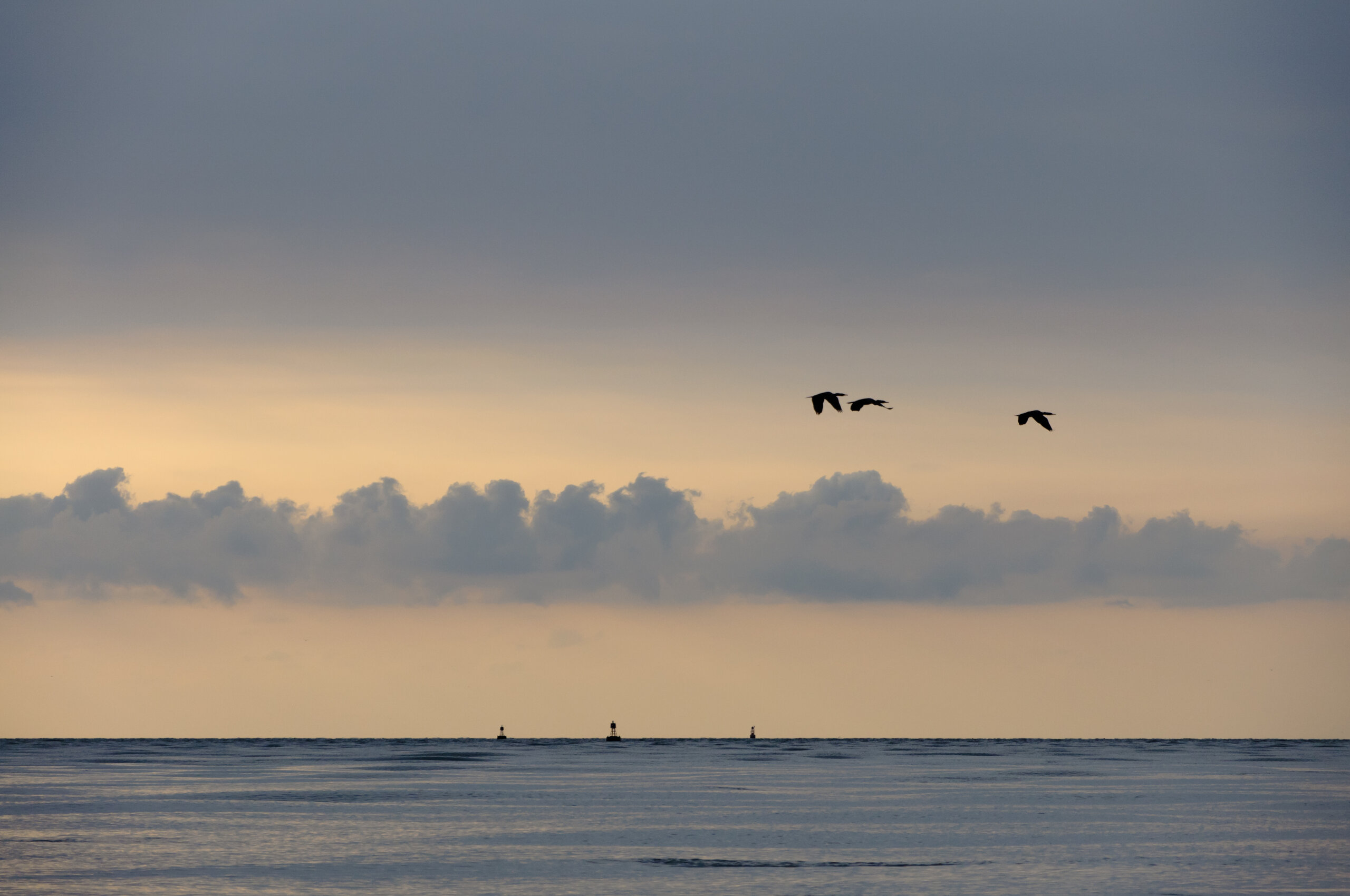
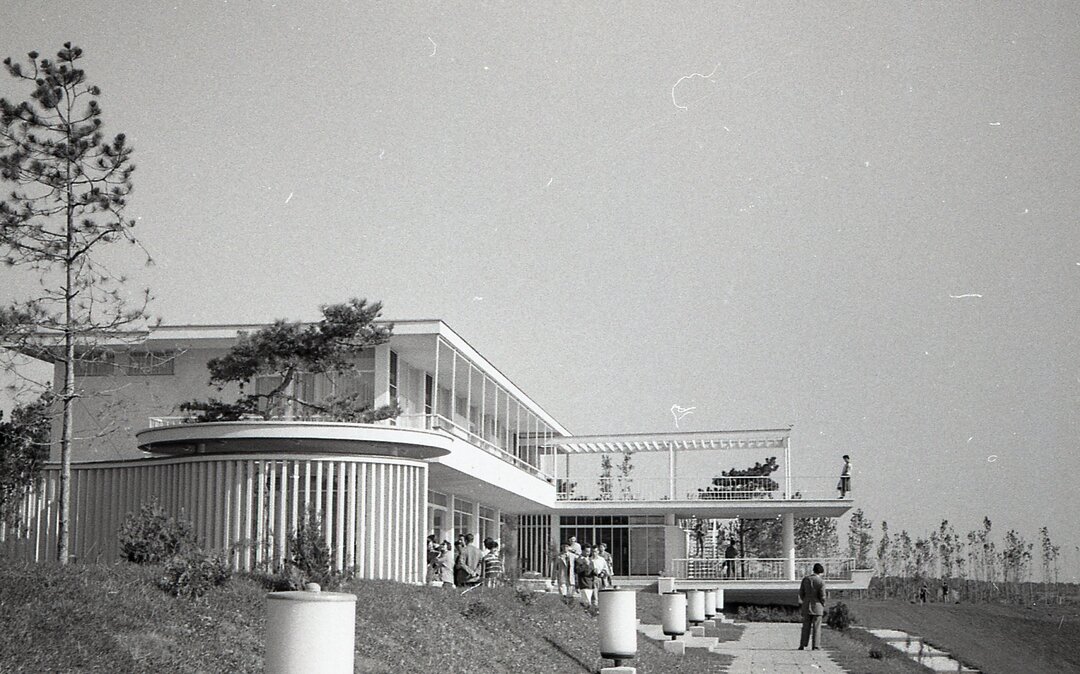
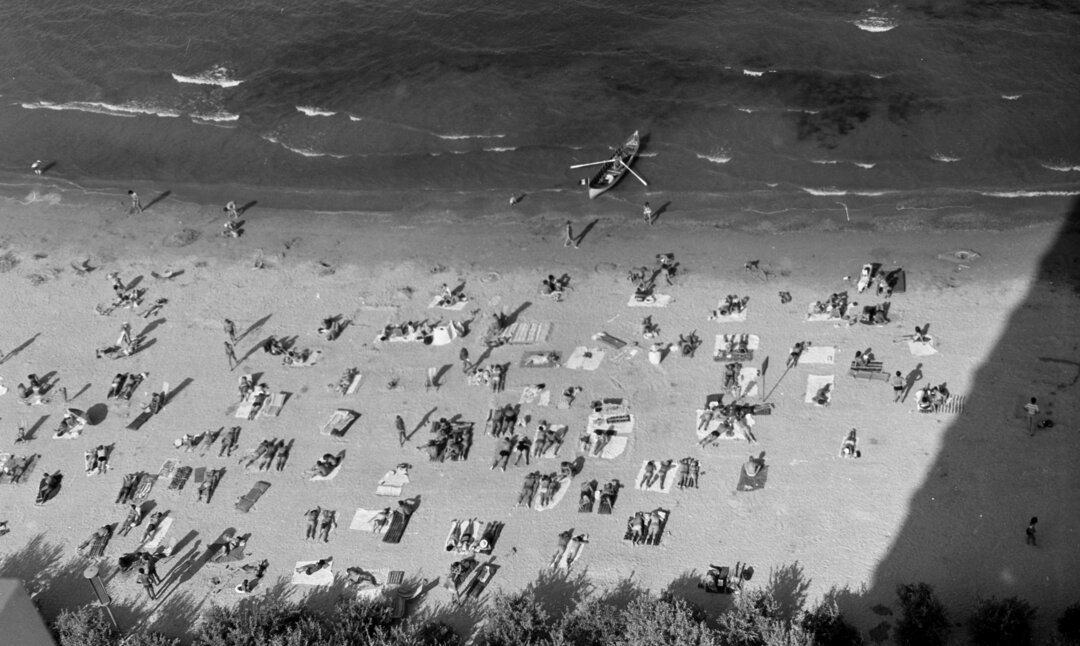
It was a five-minute walk from the courtyard to the beach, a road paved with cubic stone, and not by chance, because close to the beach, hidden by trees and tuia bushes, was the Mediterranean-style villa of Bârlădeanu, the communist centaur, and where the gossip of Costinești told that Margareta Pâslaru, the star of light music of those years, could be seen quite often in summer. But that was not what worried me at the time, but the vague roar of the waves and the sea shimmering at the end of the road through a real shadowy tunnel lined with huge poplars. This road would be my vacation dream for the next 21 summers, because I came to Dima from Costinești year after year. It was a road that, when I first knew it, had only two major landmarks just before the beach: the mysterious villa of Bârlădeanu and the Perla Mării restaurant. The beach was somewhere further down, down through tuia bushes caressed by the breeze, after which your soles were embraced by the warmth of the sand. Paradise followed, with all that it meant to me then - the roar of the waves, the sun, the sandcastles and donuts brought by the locals in wicker baskets among the sheets spread out on the sand. I'll never forget that sing-song shout, scraping the background noise of the beach with "Come on, donuts! Hot donuts!" And then there were the shells of seashells that I picked as if they were nuggets of gold, there were the lone steamers glued to the horizon line, and the seagulls that were the horizon's aidoma, never touching them, though a good part of the day I was busy doing that. But most importantly, that year was the first year that Christmas caught me tonsillitis-free, out in the snow on a sleigh. The sea had done its duty. And so it remains to this day.
The beach
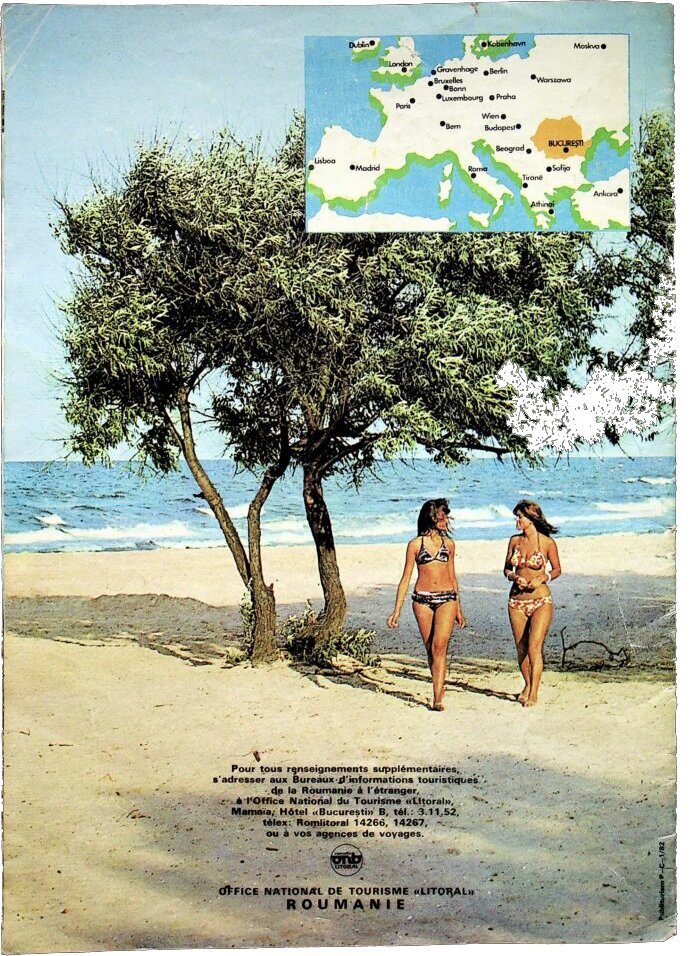
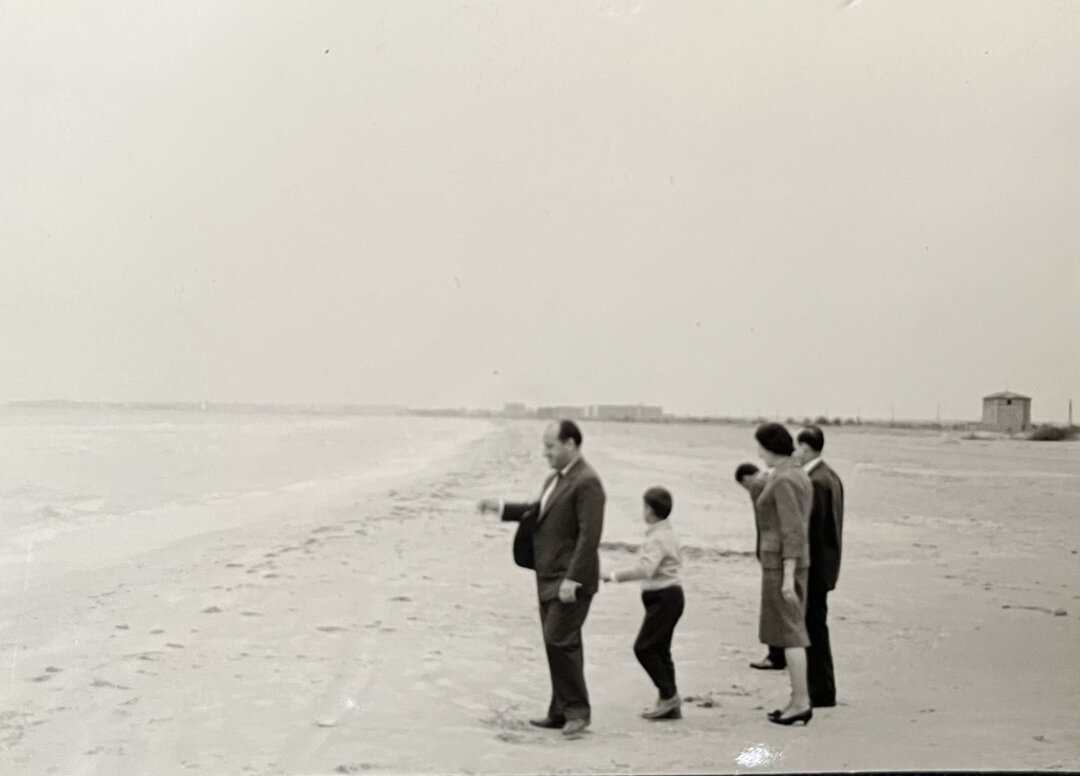
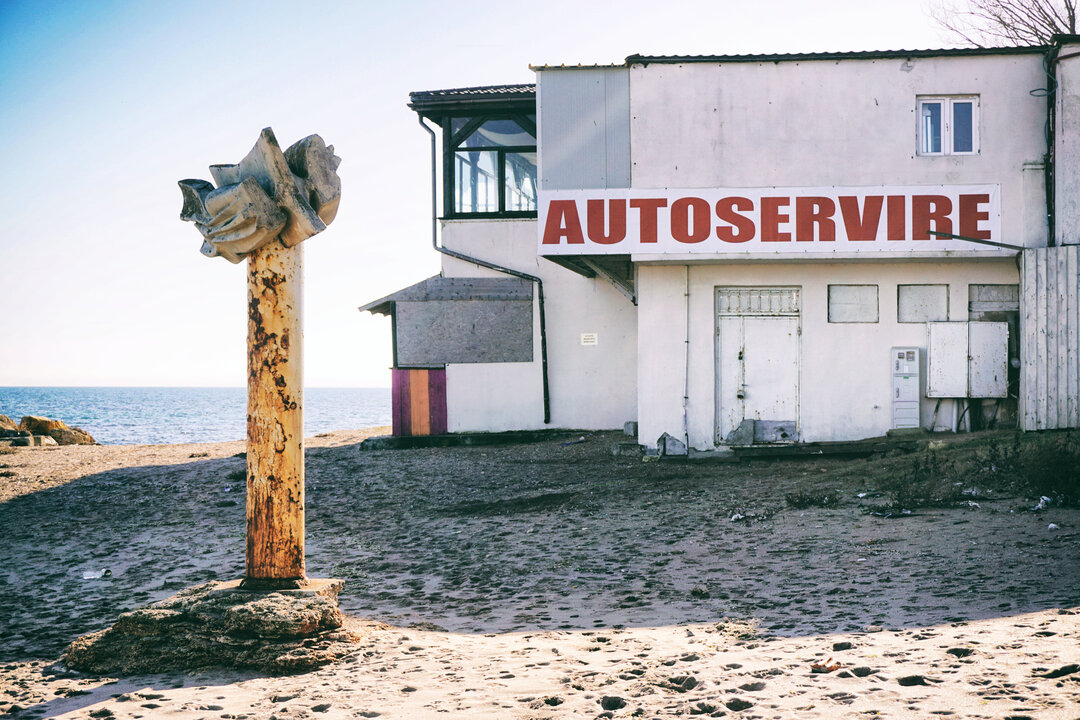
The immensity of the Black Sea, dotted with white, fickle waves and the linearity of the beach described the place where space and time dislodged me in Costinești. To the left was the fence separating the nudists' area from the "underpants" area, then the running lines backed onto the high cliff, dotted ever more vaguely with German concrete pillboxes crumbling in the waves, evidence of a war still fresh then, if today's eyes were to look at it. All this linearity ended in the Evanghelia, the beached ship near the shore, then with fresh paint on the stacks and no rust on the hull. And then there was a centuries-old oak tree, crumpled beside the sea, with a great cliff-ledge. It had fallen to its feet, was alive and full of chlorophyll, and looked surrealistically green between the high, reddish cliff and the sea of au vin. I shouldn't forget here, either, the watchtower, which loomed up devoid of detail, far, far outside my world. To the right, the beach seemed to me to have nothing more interesting to offer, the picture resting on distant cranes that would build what was to be "Camp". More interesting, however, was a small complex on that part of the beach that had a volleyball court, which was always busy. There was also a self-service terrace and a few small souvenir shops, including a kiosk selling beach accessories, diving goggles, snorkeling tubes and inflatable "Czech" mattresses. It was the promised land for me, and I don't think I wanted anything more in the world than to ride one of these mattresses on the waves, not to mention dreaming of diving to chase fish as they approached the shore. By the next year, I had it all, and the bucket, shovel and sandcastles were obsolete. I had become a real sea wolf, albeit only in waist-deep water.
The Gospel
The story of the Gospel was to be told at the table under Dima's acacia trees, because we were eating outside in the courtyard. Among the baskets of zărgani, barbuni, stavrizi and hanoși roasted in cornmeal, in addition to the broth of turbot, strachina with mujdei and tomato salad from the garden, there was also room for conversation. We ate with the hosts, my father helped in the kitchen, my mother helped to prepare the meal, it was probably what can be defined as a utopian agro-tourism. Nea Gheorghe was sitting at the head of the table, slightly red in the face after a glass of brandy, eager to talk. My parents asked him if he knew what happened to the Gospel that ended up embedded in the rocks of Costinești. The story, told in nea Gheorghe's quick-witted words, was simple: the boat belonged to Onasis, old and just ready to collect the insurance premium. They ran it aground in the winter, on purpose, the villagers found out immediately and went out into the rough sea to rescue the crew. The next day, the whole village was on the ship and everyone took what they could. There was also Mr. Gheorghe, who took a beautiful brass lantern (it was in the fishing net shed), a porthole with a copper frame, a toilet seat (a "luxury" one, according to him) and a massive brass latch, which was put in the garden box, inside, obviously. That's about all he got, the rest had already been taken by the neighbors. The gospel became in time a favorite place for expeditions of the brave, either swimming or paddling. Many would climb the metal ladder, left over the gunwale by the very crew who had disembarked from the ship, explore the hold, the cabins, then, as a gesture of supreme bravery, jump into the water from above, into the mix of sea and large jellyfish, because there - for some reason - there were always herds of jellyfish. I don't know any daredevil thrill-seekers who died like that.
People who loved Costinești
My father was an actor and his colleagues used to come and stay with this family for years. It was a place untouched by tourism, just right for a bohemian artist's vacation, and the year I saw the sea for the first time I think it was on the beach of Costinești - with small exceptions - the entire cast of the play " Nota zero la purtare", my father's colleagues from the "Ion Creangă" Theater, a good part of this cast was hosted by nea Dima. The seaside village had a tranquillity and relaxation that is hard to imagine nowadays. Imagine a mixture of farming, raisin pruning, Beatles-playing guitar and even ad hoc poetry recitations. Actors from several Bucharest theaters would come there, on the beach, and enjoy the charming simplicity of the place. Some time later, after reading Mihail Sebastian's The Vacation Game, Costinești was hard for me to separate from the world of this book. The plunge into the setting of the book was disturbingly real when I was walking across the fields to the cherhana on quiet afternoons. It was the custom then for people to take a nap after sunbathing and a meal. I was not sleepy, and I would leave the sleepy, willow-shaded courtyard and escape to the end of the village, where, in the full sun, there was the cross like a heron's guard between the last white village fence and the golden field. The road was a dusty country road leading straight to the sea, then - at the end, where the mainland abruptly ended at the edge of the high cliff - the road ran at right angles to the cherhana. Butterflies, macaws, larks and beetles were my companions all the way to the edge of the cliff, which I was long afraid to approach, even though I had a burning curiosity to see the forbidden planet - the nudist beach - from above. But I soon forgot about the nudists because the sight of the wrecked ship, seen from above, with the boundless sea behind her, was overwhelming, an image I inevitably associate with the dry hum of locusts and the song of nightingales hovering over the wheat fields.
The village
You may wonder what Costinești was like in those days. Well, a grocery store, a brasserie, a self-service restaurant, a post office, a cinema (yes, there was a cinema in the village) and the cherhanaua, where if you went there at six in the morning, you could buy fresh fish straight from the sea straight from the huge boat returning from the talian. A main road, airy, clean courtyards, beautiful trees, shady lanes. To today's vacationers nothing of interest, but it meant everything to those who loved Costinești as it was. At least for a week or two, as long as the vacation lasted. The Student Camp was just a project at the time, and the world's corolla of wonders had not yet been destroyed.
Evenings were time for walks with the parents along the waterfront, where all sorts of artists and balding youngsters played Phoenix and Beatles tunes on guitars under the star-filled sky. When "Hey, Tram" would get lost in the roar of the waves, "Lady Madonna" would start to play from somewhere else, even with the words in Romanian. Others were painting, I don't know how or what, in the semi-darkness of the beach, others watched silently, lying on the sand, in the black night, from which only the white, phosphorescent foam of the waves washes ashore, shining into the moonlight. I was too young to understand the meaning and the sweetness of all this, anxious for the next day to come, because the beach, the sand with its castles, the sea and the waves were waiting for me in a perpetuum mobile vacation that seemed eternal. Not to mention the donkey-drawn sled adventures across the field beyond the railroad.
Nelu
Nelu Dima, the son of the host at Costinești, was a good boy who, every year when we arrived at the seaside, would show me his latest discovery in terms of fun. After the concrete tube casemate, it was the donkey cart. In the merry-go-round of years, there followed silly fishing off the rocks, an adventure that left him missing a front tooth, shattered by one of the leads in the net. Then there were the German girls in the bungalows, by which time Nelu had become a young lifeguard, a hope of the local community. These were the things he would show me with the joy of the annual reunion, which lasted no more than a short week's vacation, ending with the drive to the station, the requisite hugs, the train setting off on its journey and Nelu left behind in tears. Nelu, I promise, I'll never forget this.
I was growing up and there was no room for the sadness of goodbyes or for melancholy, so I don't want to go over the episode with the sarette, without which - for me - Costinești would no longer be Costinești. That was the year when the donkey and the Dima family's cart were, paradoxically, for me the ultimate Black Sea sensation. After returning with my parents from the beach, after a meal rich in stavrid and mullet, sitting in the shade of the trees in the courtyard, Nelu would discreetly beckon me to go to the garden behind the houses, where the bored donkey, hanging from a gray rope from the fence, would sporadically paddle. And now I remember, as if it were yesterday... In the courtyard, we could hear Radio Vacanța, it was a chant on the "transistor", the portable radio that my father never left on vacation and on which, in the evening, he listened to Free Europe on mute, on Unde Scurte and quite ritualistically, much to the exasperation of my mother, who was afraid that some security guard, who was also on vacation nearby, would hear us.
Sea gulls
Back to the previous picture. I was at the table, I had finished eating and Doina Badea was playing Doina Badea's "Cânta un matelot la proră" on the "transistor". I was barefoot, with my feet in the cool sand of the courtyard, watching the wilted and overdue flowers of acacia as they landed in the strachina with mujdei, shaken by the breeze with the salty odor of seaweed and anemones. I myself was a wandering element of the sea, with sea salt all over my hair, my face, my hands, all over my sun-browned body, because I refused the cold, salty tap water shower. We'd say, "Here's your hand for lunch" and we'd go after Nelu, because we knew the afternoon adventure was coming. We'd get in our saddles and set off western style for the field across the railroad tracks. We usually had a target, a specific place that Nelu had discovered, and one such place was "At the pits", where a motor pump and many aluminum irrigation pipes were lying in the field. In the middle of the scientific and rudimentarily technologized agriculture there were several rectangular pits, more than a meter deep, where the overflow from the motorpumps was probably dumped. There was still some water left there with a faint smell of diesel oil, and Nelu helped me to descend with him into such an oasis lost in the Dobrogean colbul, which also had its wonders. In the pit, between our feet, tiny fish swarmed, most of them surviving ghiborti, survivors of the motor-pump mechanism that took Danube water from irrigation canals hidden in the mysteries of the horizon. We were like astronauts discovering life on Mars and I really don't remember what we did with the few ghiborti that we caught by hand in the muddy water. I do remember, however, that after a couple of days of Martian adventures we found the pits dried up and the fish dried up, fossilized, in the cracked mud. But that wasn't an ecological disaster because there were also the irrigation pipes scattered across the field, where the gophers hid when we approached them, so the atavistic fisherman's drives continued with hunter's reflexes. I would chase the gopher who had no time to retreat into the burrow and would take refuge in the pipe. I was lifting the barrel, Nelu waited at the other end for the gopher to come down the slide. There were no casualties on either side, the animals were released. More difficult was to catch the donkey lost in the cornfield, searching for the tender cobs, with the kernels in the milk, which gave him addiction, withdrawal, deviant behavior with roosters and a total refusal of the term "animal traction".
Nothing is lost, everything is transformed
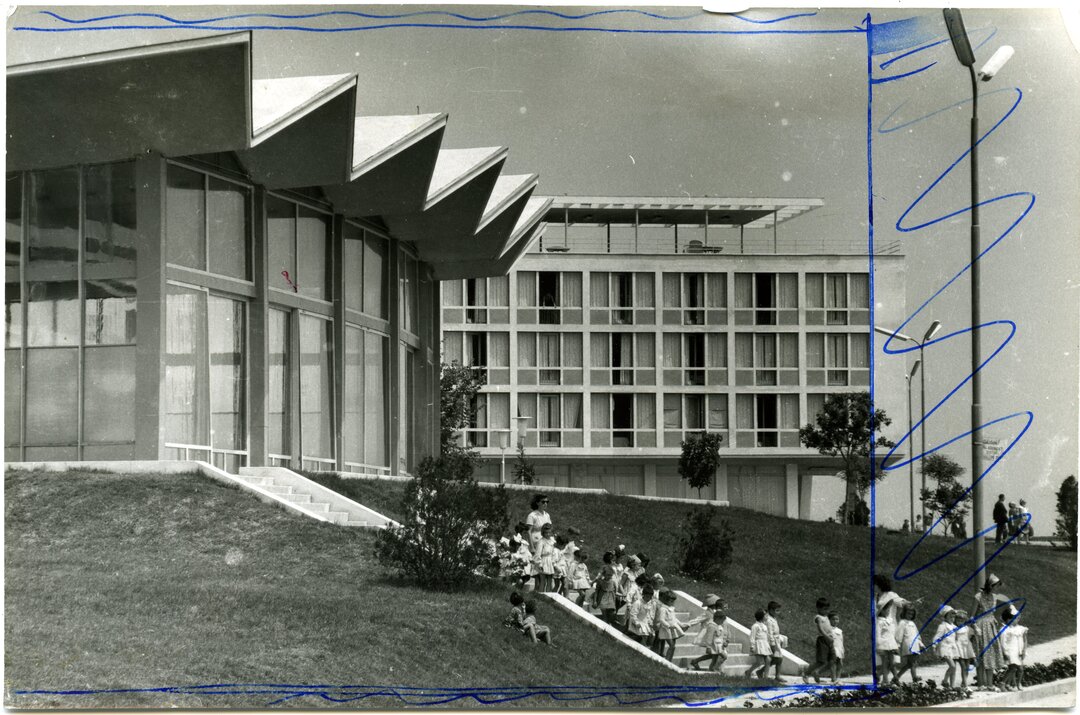
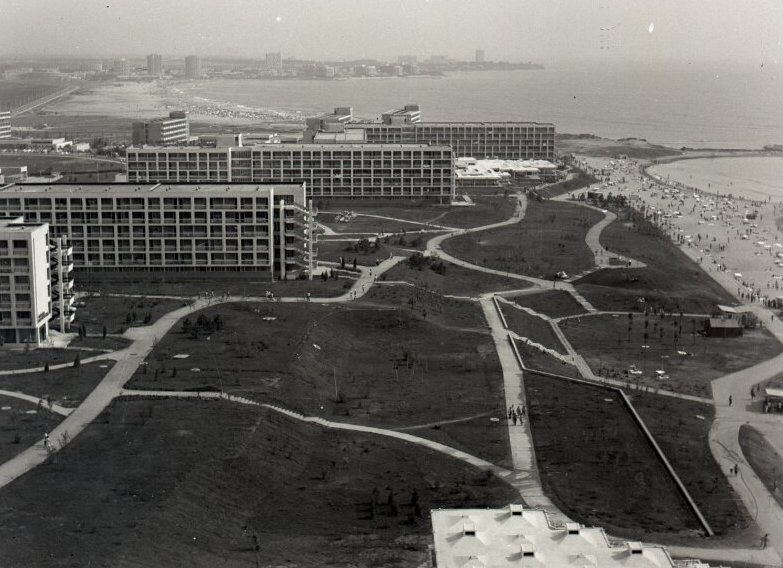
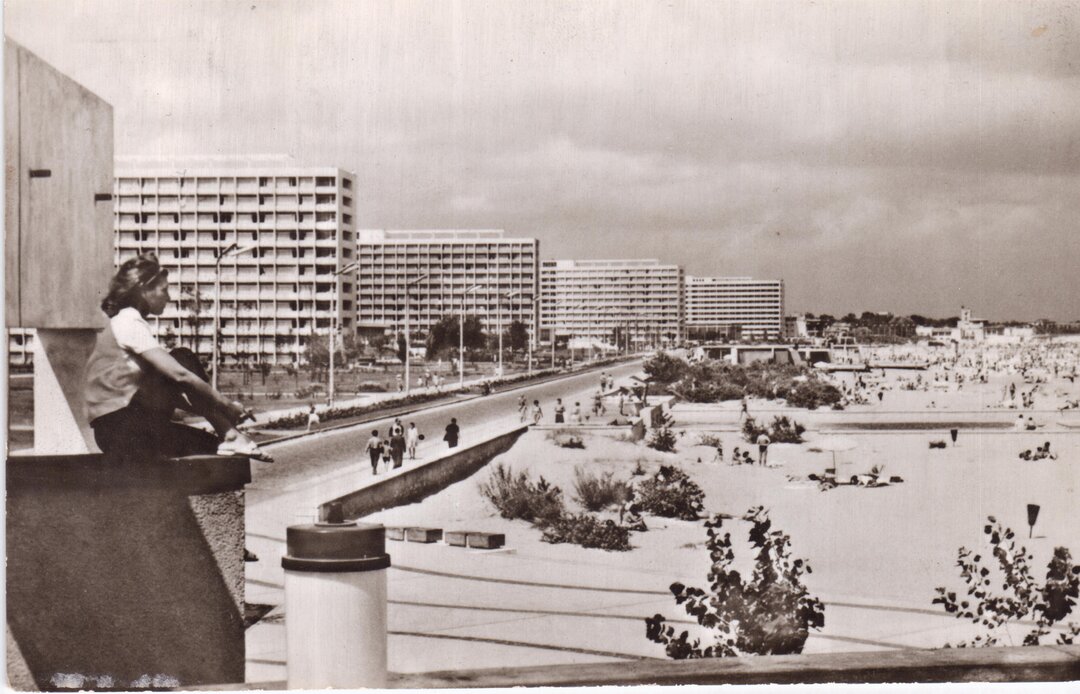
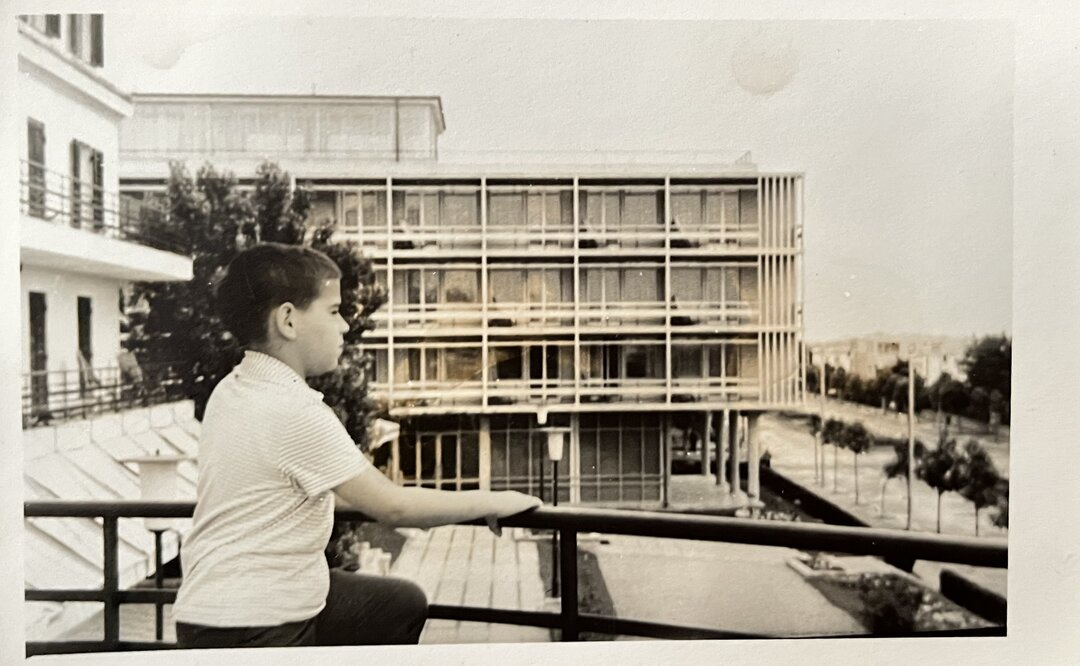
Costinești was changing, even if apparently the Gospel was still there, the secular oak still stood seeded at the base of the high cliff that made the abrupt transition between the cord of the wave-rubbed coastline and the fields of thistles, glassworts, larks, red poppies and wheat or corn, year after year. The Obelisk, the Student Camp and the buoys had already appeared, strung out about as far as the Braseriei Tineretului. There was, however, no boundary between the holiday village and the Youth Resort, these were two worlds that had not yet blended, and this was especially apparent on the beach. The students, many with a provincial air, were all towards the Obelisk, they had a program, a canteen, a disco, classmates, colleagues, shows. A rather orderly and closed universe. On the other side - strung out along the continuation of the beach, all the way to the wreck - were the villagers who had arrived here in search of pure agritourism, more family-oriented, their children, then the rebellious young, artists, hippies. In deep Costinești, however, change was inevitable because both the emergence of the student camp, unique in the European landscape, and the construction of bungalows for foreign tourists offered seasonal jobs for the locals, work card earnings that added to the transformation of the households into proto-pensions with room and board for summer tourists. I could say that, after the mid-1970s, Costinești began to emancipate itself to make the transition from village to resort. It was beginning to be a mix of organized programmed student, foreign tourists, homegrown hippies, disco and rock scenes. The Costa Ricans were no longer peasants, but rather tourism entrepreneurs. The typology of those who came to Costinești in search of a host was also changing, the familiars were turning slightly, slightly towards Eforie, Neptun, Saturn. The average age of the tourists was dropping steeply from year to year, even if the village's cozy village aspect was still preserved. Some of those who were born to the archetypal Costinești with the air of "The vacation game" remained faithful to it, like my parents, and I went with them every year, there, with the Dima family, hosts whom I already considered as a kind of relatives. Costinești had entered our calendar, like Easter or Christmas.
Nea Gheorghe
I had grown up, but not so much that I was no longer mesmerized by the flight of black ants through the warm sandy valleys of the beach, by the monk crabs I would pick from the sea and bring them to the beach, with water in my diving goggles, to show my parents. I had already been fishing for guvys with a rubber dinghy right next to the wreck, I had already passed through the forbidden planet of the nudists. In retrospect, they all seem to me like stages in a computer game that you have to go through by collecting something from each one, a sword, a key, a diamond with special powers, with which you can go through the next stages until the end of the game. The next stage was the cherhanaua, and the key to go through it was nea Gheorghe.
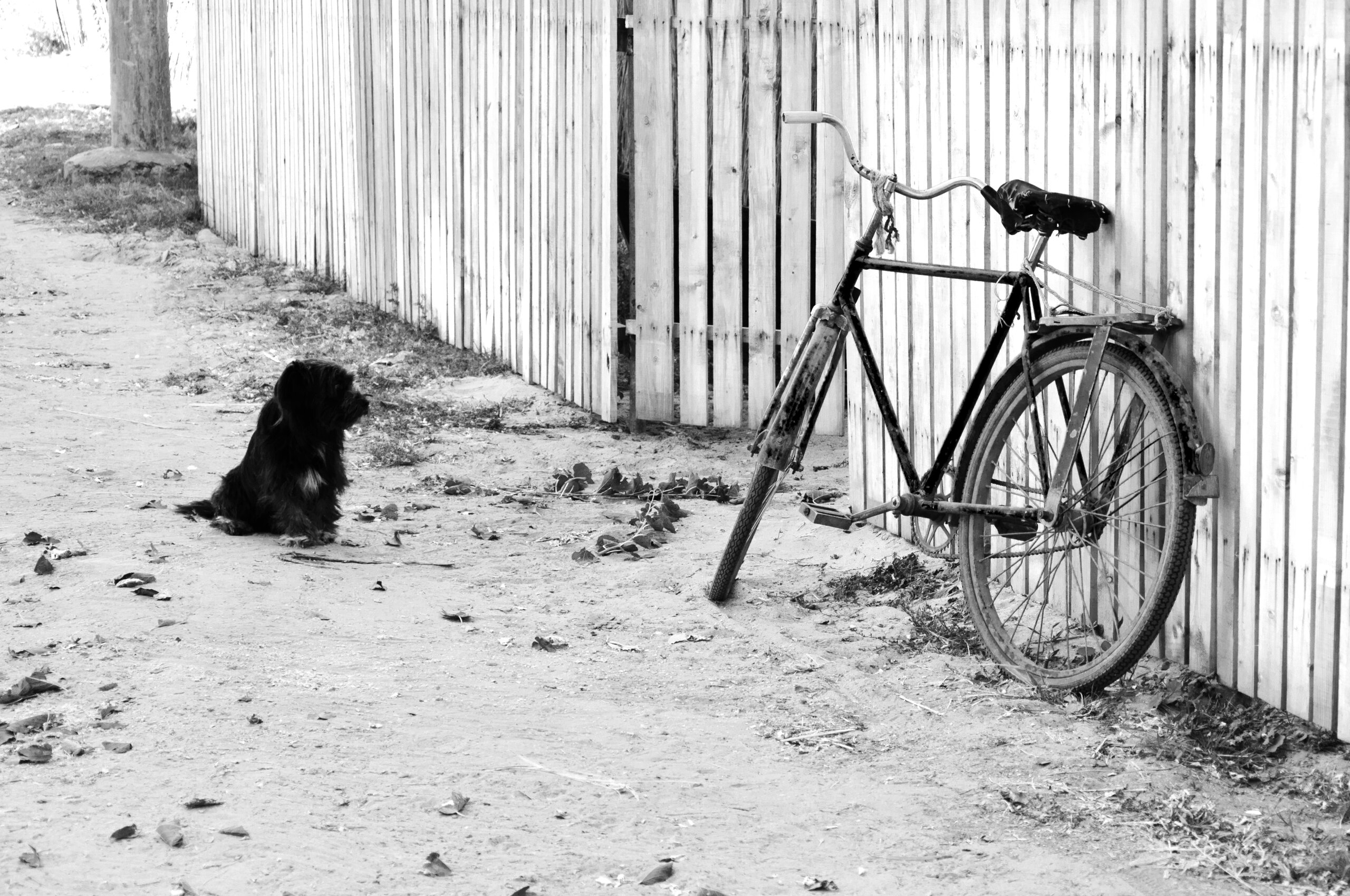
Gheorghe Dima was, in the '70s and '80s, a respectable head of the Costinești cherhanale and had a brigade of fishermen under him who obeyed him with devotion. He was part of a sort of popular nomenclature of the village, he was massive, quite tall, had a fast, fast-talking, hard to understand for the uninitiated and, by chance or not, he was our host. His life looked extremely monotonous - at 4 o'clock in the morning he would come out of the courtyard gate, coquettish, with freshly shaven, lavender-scented bryantine in his hair. He'd take his bicycle and ride across the field to the little oak grove just to the right of the Gospel. There, together with the fishing brigade, he let the mahuna (a large boat with six oars) into the water via a slope cut into the high cliff. Tethered to a winch and gliding over wooden guides, the boat would slowly reach the sea, then be rowed out to sea, to the talian. The fish would be unloaded into the underground glacier, a glass of brandy would be drunk, then everyone would go home. Each fisherman had a tain of fish with which he went home, all equally, including nea Gheorghe, some kilograms of mullet, barbel, turbot, dogfish, mullet, guvizi, zărgani, sevrizi, anchovies and turbot. All this fish, about enough to feed 6-8 people, fit into a bulky, bulgy, black briefcase. When he got home, Mr. Gheorghe would empty the fish into a basin, Aunt Leana would wash and clean it and start cooking it. On the table, in addition to the fish soup and the fried fish, there would be the inevitable bowl of garlic and tomato salad from the garden. What fascinated me, however, was not the culinary part of those summers, but going out to sea with Gheorghe and his fishermen.
To the talian
When Gheorghe thought I was old enough to be eligible for an adventure on the talian, he told my mother to wake me up at 4 in the morning. I was about 14 and it was obvious that I was already ripe for going out to sea. My mother gave her assent and woke me up the next day at 4 a.m., and not long after that, Mr. Gheorghe knocked discreetly on the door of the room where we were staying. We stepped out into the freshness of the morning, it was a perfect July, a windless day, a calm sea. Nea Gheorghe put me on the bicycle frame and we set off for the cherhana. When we got there, the mahuna was already waiting at the edge of the beach, I went down the cliff and boarded. Nea Gheorghe was at the helm, me next to him, I was introduced to the six paddlers as "the doctor lady's son", then the paddling started to get out of the current of the waves on the shore and it took a while until the shore became a line without much detail. I don't think I was seasick, but I was clinging with my eyes to the gospel left behind, toward the shore, and to the white-walled, whitewashed, whitewashed cherchana, the only familiar landmarks of the mainland we had broken away from in the sunlight that had risen over the horizon. I was doing this because I had heard that you have to look at a stable point outside the boat to keep from getting dizzy from the inevitable rocking of the boat. Now, for those of you who don't know what the talian means, well, think of it as a system of nets in shallow water, a sort of maze in the path of fish, which the fish can't get out of. It's put in scientifically, depending on the currents and the daily migration of the fish.
Once they reached the talian, nea Gheorghe noticed a dolphin had entered it, so it took almost half an hour before they somehow managed to pilot the gorgeous animal back out into the freedom of the sea. It was my first encounter with a cetacean at such close quarters and it amazed me how the dolphin, not at all frightened, empathized with the fishermen and understood their exhortations and guidance through the maze. Then followed the hauling of the nets, and before long I had before me a whole treatise on ichthyology that was rapidly gathering in the boat. From cormorants, to terns, terns, turbot, gurnards, anchovies, anchovy, aterine, barbel, groupers, gannets, gannets, grebes, mullets, wrasses, wrasses, wrasse, wolffish, wolff, wolff, zander, sea dragons. Before long, the mahuna was so filled that we were all, as we sat seated on the benches, knee-deep in a convulsive silver mass of fish. The rustle of these fishes was so loud that I couldn't understand what Mr. George was saying. And he was saying something because he saw that I had begun to rummage through the crowd of fish with my hands. In all that rustle and flutter of fish I found a sea trout, I showed it to the fisherman in front of me, who picked it up and released it into the sea, after which he picked up a strange thing from the pile of fish and said to me: 'Pike, sturgeon'. He threw that one over the side, back into the sea. Then I felt Mr. Gheorghe's hand on my shoulder, and he leaned towards me and shouted in my ear: "Take your hand away!". I listened in puzzlement and watched as, with a short-tailed shovel, he began to search among the fish next to me for something, until he found what he was looking for - a huge, scary, poisonous sea shrew. He scooped up the scorpionfish and threw it overboard saying: "I promised the lady doctor I'd bring you home in one piece." Over the years, Mr. Gheorghe took me to the Thalian a few more times, and each time the Black Sea amazed me with its creatures of the deep, always different. And each time he took me home in one piece.
Bipolar Constantia
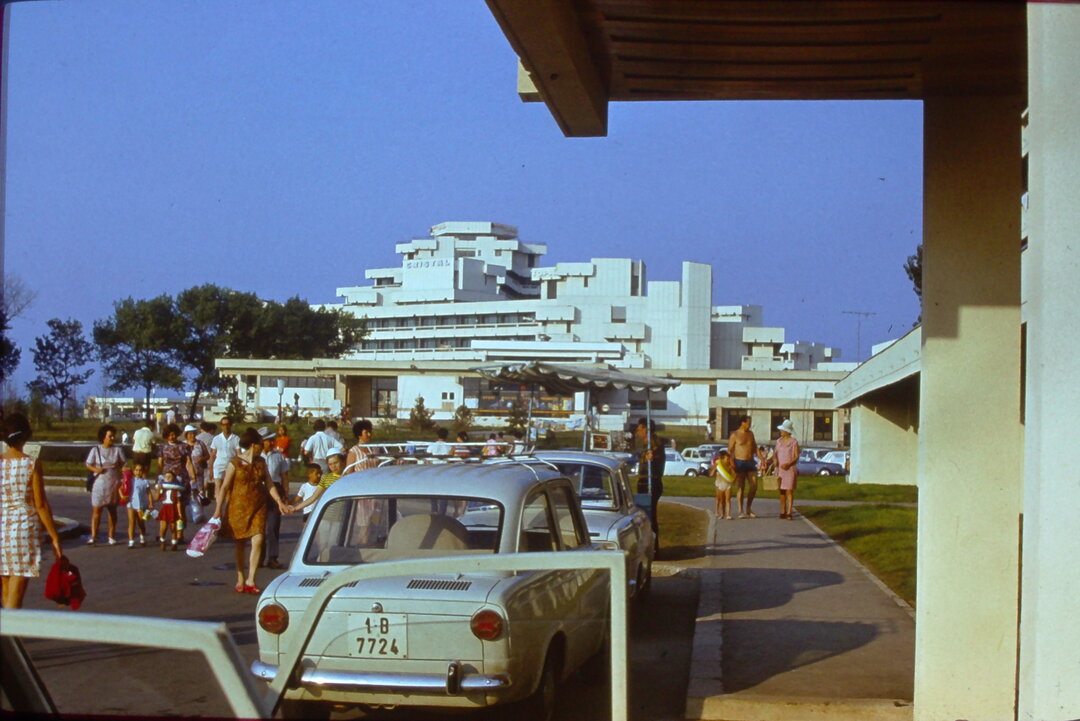
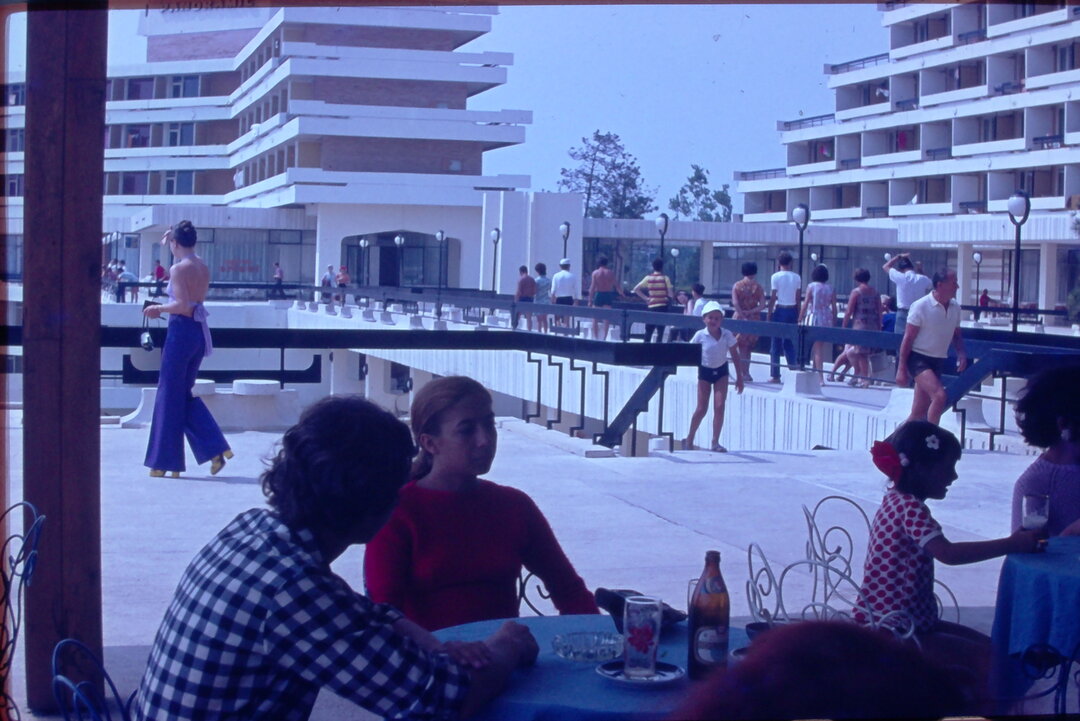
There came a time when it was obvious to everyone that the village of Costinești was somehow becoming an annex of the Student Camp. Two discos were already famous here - the Ring, at the time the biggest open-air disco in Europe, and the more upscale Vox Maris. The Forum Hotel and the summer theater had appeared, and the beach had the only sound system on the coast, from the Obelisk to the Braseriei Tineretului, where the local cable radio station Radio Vacanța Costinești was broadcasting all day. The voice of presenter Andrei Partoș was to become a central element in the soundscape of Costinești in those years, and the gospel was beginning to rust. There were still foreign tourists filling the resort and alongside them many plainclothes policemen monitoring the links that were developing between young Romanians and young German, Austrian, Polish or Austrian girls. I don't know why, maybe it's subjective, but I didn't see many male tourism representatives from these countries in Costinești.
Beyond this youthful Brownian movement, Costinești was surviving, even so modernized, in step with the times. Rock was dominating the stages beyond the Obelisk, Semnal M and Compact were playing at the Braseria Tineretului, and Iris was playing at the Perla restaurant. Many rockers came to Costinești with just a sleeping bag, a few lei in their pockets and stayed for a week. They slept cheap at the hosts' houses in the attics, collected empty beer bottles from the beach and took them to the brewery to get the guarantee on them, because the guarantee for two empty bottles could buy a beer. To eat, they ate at the brewery, still with the money from the empty bottles, with whatever money they had from home. In more fortunate cases, the balding boys befriended the girls in the kitchen, who - already seduced by the evening's journey - would sneak the leftover food through the back door. It was a game of freedom and nonconformism, many of the youngsters being from families who had enough money to spend their vacations at the seaside. This was Costinești rock, a kind of summer school of life, by day with echoes on Partoș's playlist on Radio Vacanța Costinești and by night on the dance floors of the bands that played every night. For example, "Fata din rêve", the hit by the band Compact, was launched in Costinești, at Braseria Tineretului.
There were two worlds, one disco, one rock. One world lodged in the camp, the other in the village, one world of the system sunbathing towards the Obelisk, the other rebellious towards the Gospel. Between these two worlds, a photographer with a megaphone strolled along the beach with a Praktica camera around his neck, a monkey on his shoulder and an inflatable giraffe under his arm for those who wanted visual souvenirs for eternity. "Colorata, tomorrow it's ready!" and other rhyming nursery rhymes completed the sound universe of the Costinești beach, with the waves and the voice of Andrei Partoș in the background. But beyond all these sensory details, Costinești was the perfect place to fall in love suddenly, at least for a week.
Post-communist vacation game
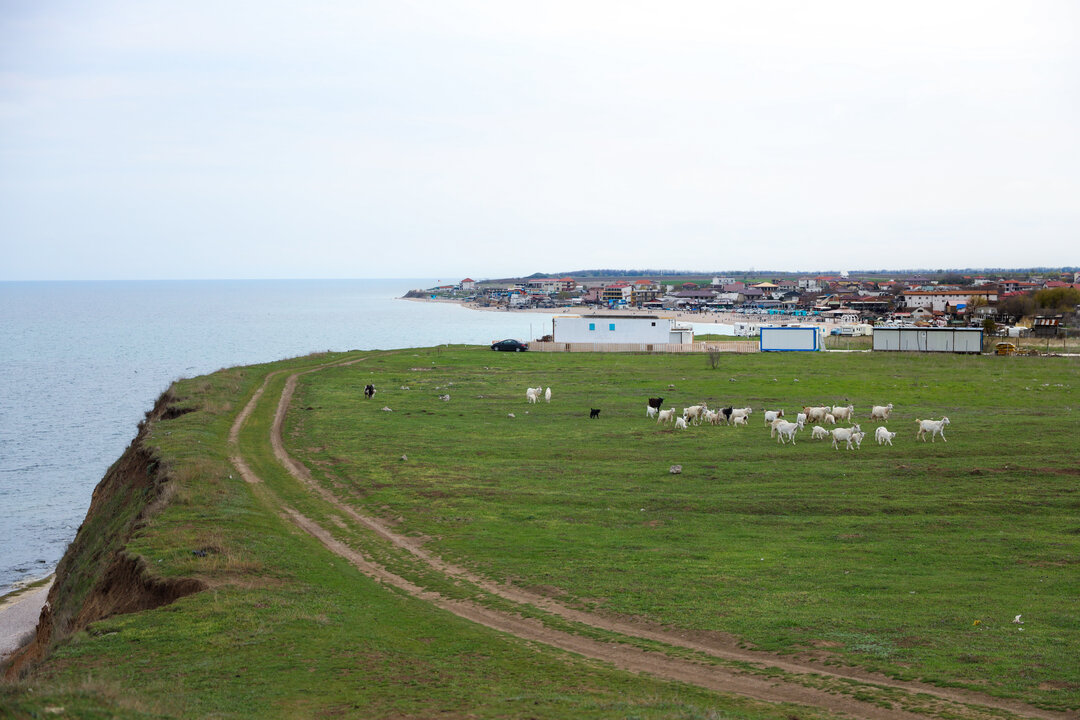
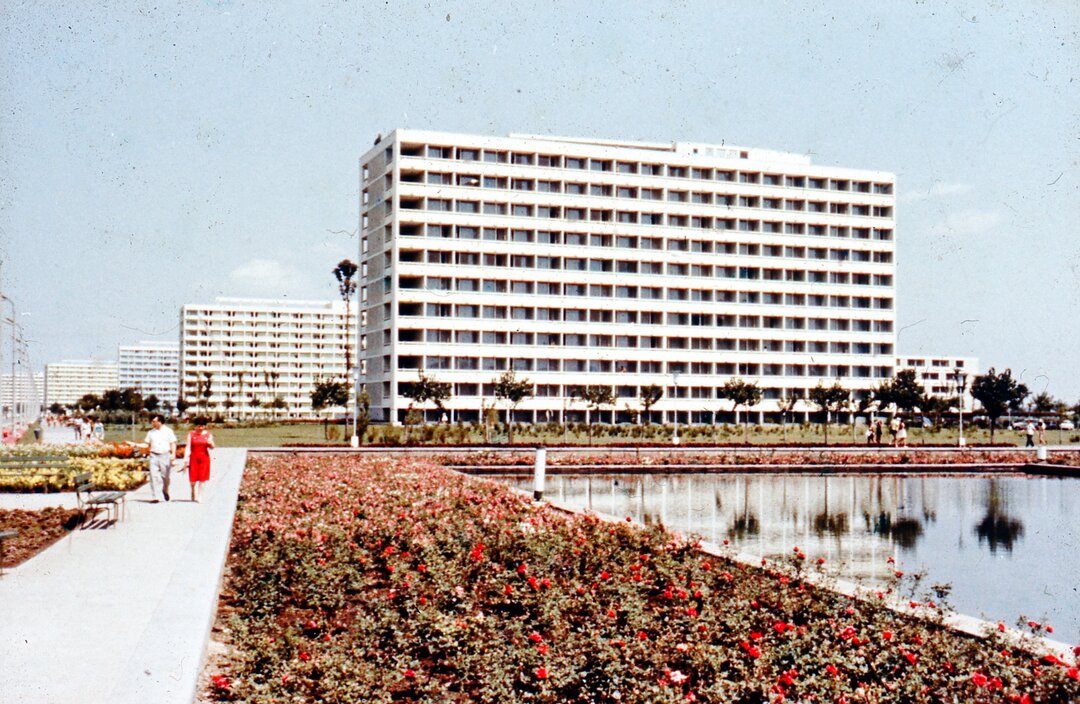
The '90s were coming like a whirlwind. Freedom was taking the village by storm as young people emerged from communism. To welcome rural capitalism, every local started building, doubling the number of rooms to increase profits. The courtyards disappeared, the centuries-old acacia trees were cut down, the courtyards - in fact, what was left of them - were concreted over. In a few years, poetry disappeared, agritourism was mannequinized, and the place of artists and hairy dreamers was taken by a motley, first-generation seaside vacationing fauna, a human typology that thrives in the hustle and bustle. Terraces with stages and rock bands have been demolished for tents in the name of fancy, house-music clubs. The Mamaia-style management of Mazăre's Mamaia has swept over Costinești, but the obsession with luxury, with thousands of euros' worth of champagne carried by wheelbarrow and dust kicked up by the interlopers, has not lasted long. Costinești still inherited the title of Youth Resort, that is to say, more on poverty, but not a bohemian poverty, but a neighborhood poverty, which aggressively desires the wealth it will never reach. As the young dreamers migrated to Vama Veche, their place was taken by budding bombers, girls in search of trustees and mioritic youth from hilly and mountainous areas. In the field next to the wreckage, wheat, maize and scaieti have been replaced by the real estate development mafia, the ultimate raison d'etre of the mayors. Villas have sprung up on top of the heap and the sewage has leaked thievishly into the sea, pretty much like everywhere else on the coast. At the beginning of the new millennium, half the beach of Costinești was lined with souvenir stalls from India and China, while the other half was sunbathing flower-seed lovers and other addicts of the all-you-can-eat shaorma. At one point, one of Costinești's temporary mayors cut down all the poplars in the village to get rid of the thousands of crows that were sheltering in them, and the one who followed him removed the cubic stone, beautifully faceted granite, to pave the road leading to the former vacation home of Bârlădeanu, the Bolshevik nomenclaturist. He laid asphalt with potholes, and sold the cubic stone through Germany, privately.
End of play,end of vacation
On one summer evening, Mr. Gheorghe laid his head on the summer kitchen table, the only one left from the days when the willows shaded the courtyard. They found him like that in the morning, as if he had been asleep because Nea Gheorghe had already climbed into the mahuna and gone to the talian afterward, from heaven, leaving behind a village without a cherhana. The oak tree next to the wreck had been cut down by a private individual in a cold winter to be set on fire, and the wreck became even more of a wreck. All that will remain of the symbol of Costinești in a decade or so will be nothing more than a pile of rusting beasts, and it will do so naturally, following the destiny of the resort. I searched for Costinești for the next 20 years through the islands of Greece and I think I found it through Samotraki, although there too the Myoritic seed-splitters are arriving more and more often, who can no longer find free rooms in Costinești, which are much more expensive than the Greeks anyway. Then, one year, I had some business in Costinești and stopped by the Dima family. I saw Auntie Leana at the gate, unchanged, looking along the street, as if waiting for someone who was no longer coming. I went to her and hugged her. She started to cry, and I admit I started to cry too. I was crying thinking of my parents who are no longer there, of the vacations of those years, of my childhood, of the lost Costinești. She stopped crying, looked at me with troubled eyes and said in a muffled voice: "Nelu died...". He had died recently, a brain aneurysm had taken his life far too soon. From then on, every day she went out to the gate and waited, waited in a gesture like a blank reaction for Nelu to come home.
I left her like that, waiting at the gate for Aunt Leana and went to see what was left of the cherhana. I wandered through the eastern part of the neighborhood in the fields, reached the beach and eventually came across a mahuna that had just come ashore. Many people had gathered, eager for fresh fish, and in this crowd around the boat I recognized Viorel, Viorel Dima, the younger brother of nea Gheorghe. He was the head of the ghostly "cherhanale" in Costinești. He recognized me after so many years, I exchanged a few words with him and then I asked him how things were going at the talian. He showed me the empty boat, a few pounds of small mullet lying on the bottom.
Is that all?
There's no fish either... What else?
I turned back towards the main street and discovered the crucifix that had stood at the edge of the village many years ago. Jesus was gazing apathetically from his cross toward the villas crowded among the dozens of parked cars. The candle hadn't burned for a long time and on the body of Jesus a graffiti written in black marker told passers-by "Look at the sky".