Seaside. A published chronology

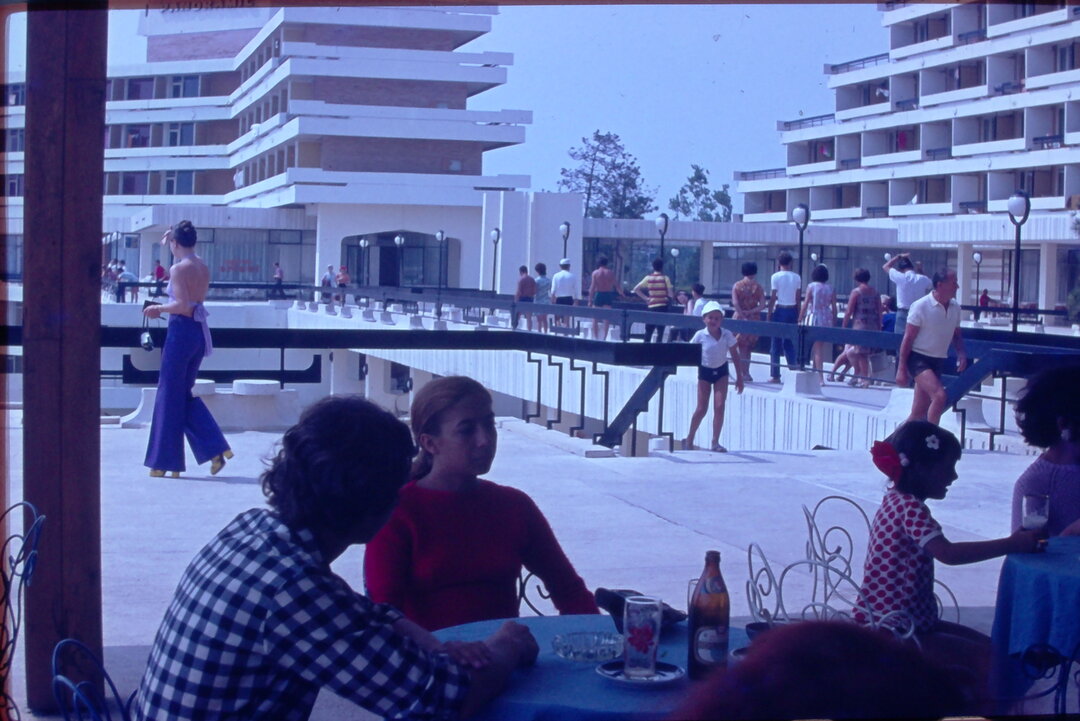
Mamaia influenced the design of the housing districts of the early 1960s, and this fact is also recognized. In the volume Vederiîncântătoare1, dedicated to the history of the socialist project of the Romanian seaside, several of the authors note this fact. Irina Tulbure writes that "Mamaia was the exemplary project that paved the way for the construction of large housing estates on the outskirts of towns throughout Romania"2. Juliana Maxim says of the seaside resorts that they were "important agents in the spread of urban and architectural solutions in urban environments throughout the country"3, and that Mamaia "anticipated the transition to residential complexes conceived as organic and planned units"4.
The role of the Mamaia ensemble as a model - i.e. as an anticipatory illustration for the evolution of architecture in Romania in the years immediately to follow - was, moreover, already recognized at the time. When he was awarded the State Prize for 1962, Mihail Caffé called it "one of the milestones of the new orientation in our architecture" and described it as an "urban planning concept in which one can even glimpse some features of the city micro-region"5.
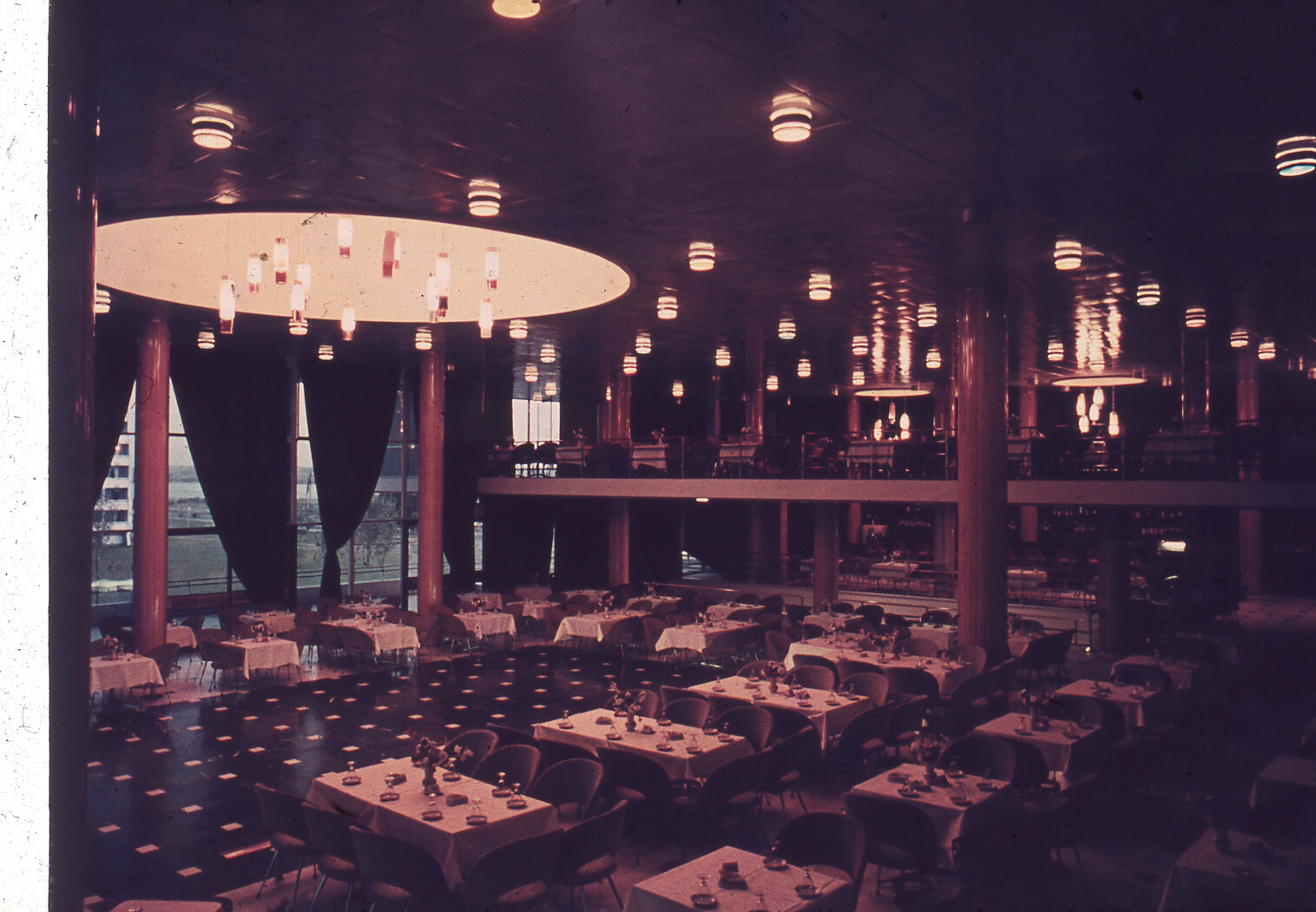
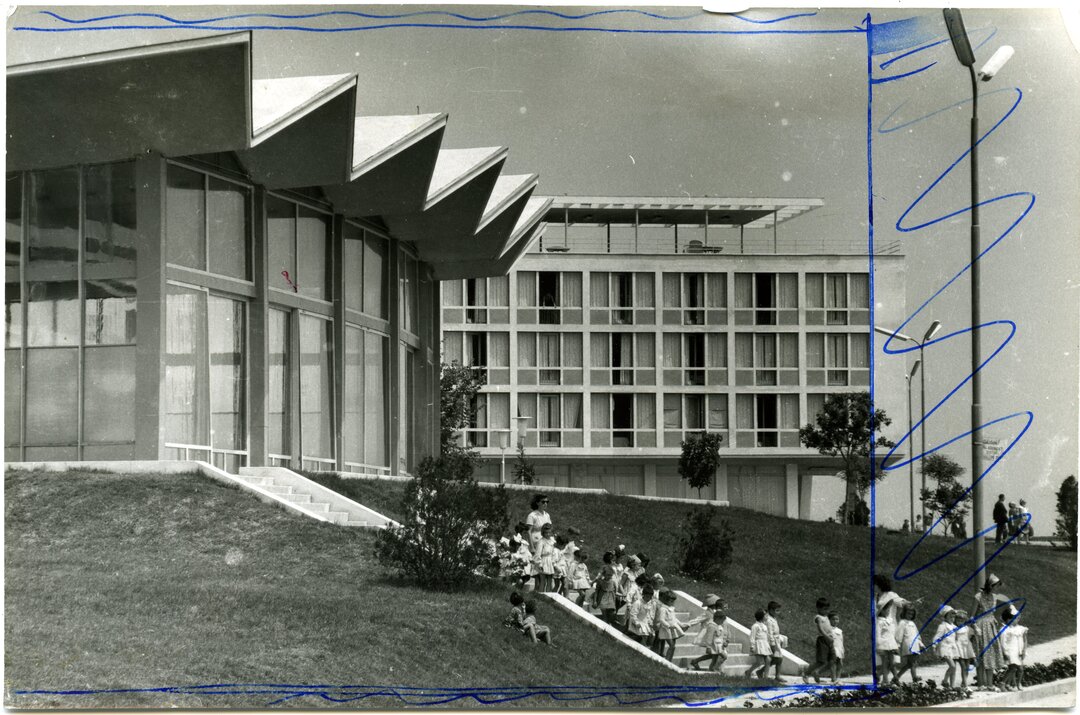
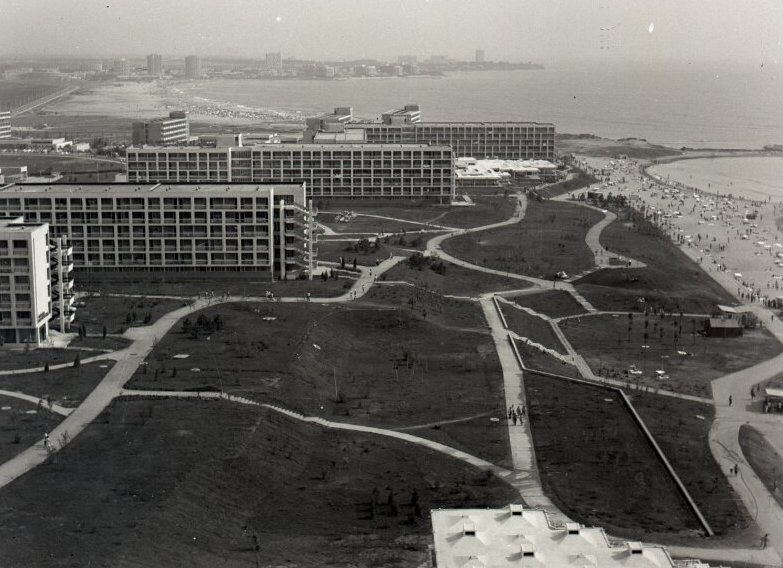
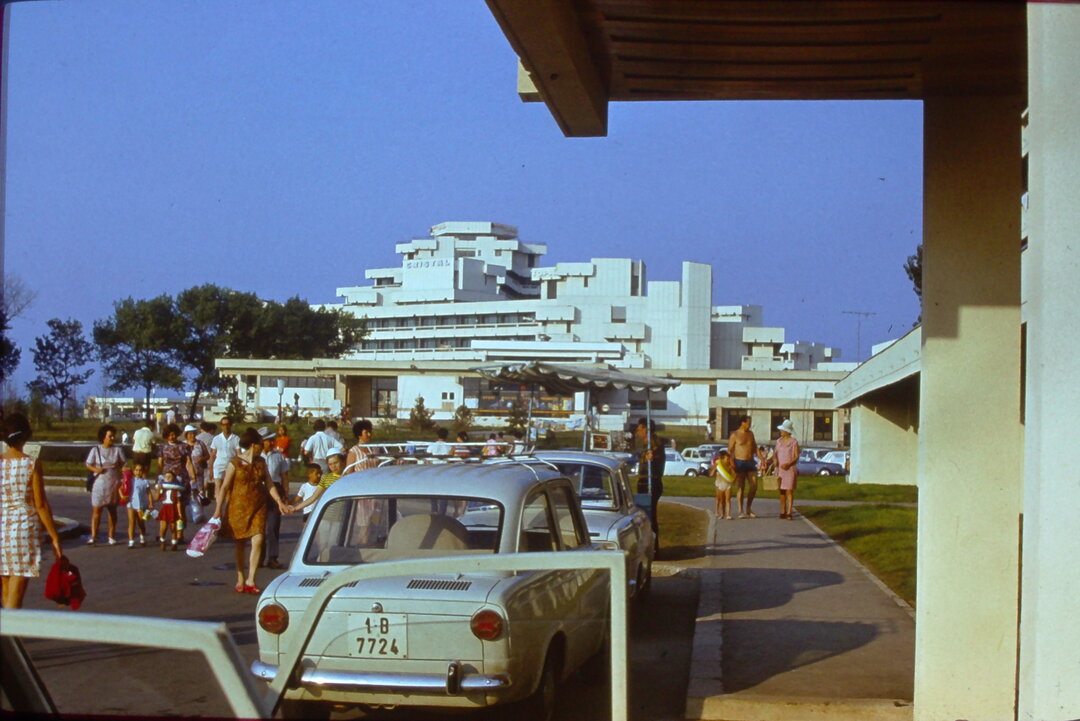
The similarity with the microraion that Mihail Caffé observed at the time was, in fact, constitutive: Mamaia - designed from 1958 onwards and already largely visible on the ground in 1961 - was conceived as an urban residential complex. Its architects wrote of the "10,000-bed" complex that it was "endowed with almost all the facilities of an independent town"6. Microraions, the new urban units of the residential areas, were defined in the 1958 Designers' Manual also in terms of facilities and on roughly the same scale: a microraion "with multi-storey collective buildings" (more than four storeys) had 8,000-10,000 inhabitants7. Mamaia even had the textbook population size of a micro-region. Even the words are the same: also on the occasion of the 1962 premier, Cezar Lăzărescu spoke of Mamaia and Eforie as "large urbanistic complexes"8. And around the same time, in the early 1960s, the new suburban neighborhoods became truly complex "large complexes".
The temporal coincidence is significant. The Mamaia complex is, so to speak, the right model at the right time. It is built at the same time as the first systematization drafts (1959-1960), which were preparing the extensive development of cities all over the country. The significant increase in the number of housing planned at that time brought a real leap in scale in housing projects. Mamaia also marked for the coastal project a leap in scale, from architectural objects to urban planning, as Irina Băncescu observes: it is the first resort to be treated as "a new city appearing in a very short time"9. And the micro-towns were being built almost all at once, and the new neighborhoods were beginning to be mini-cities, with their own facilities and thousands of newly settled inhabitants at about the same time.
Another temporal coincidence concerns the system of territorial diffusion of the new concept of mass-scale housing design. By the time Mamaia appeared, the regional design institutes had only recently been set up (in 1957) and were mainly populated - about 80-90%10 - by young, inexperienced architects, fresh graduates of the only architecture school in the capital. In contrast to Bucharest, where the pole of competence of the profession was concentrated, these institutes, in charge of the expansion of residential districts throughout the country, were characterized by "professional youth"11, as architect Adrian Mahu put it.
The young architects of the regional institutes were confronted with a new way of realizing housing estates, which they had not learned in architecture school, for which there were no precedents and relatively few documentary sources available at the time; the opening brought by the Thaw (and the timid importation of Western documentation) was just beginning in Romania.12 In this paucity of sources of inspiration, it was hard that Mamaia, a truly successful project, could not serve as a model for the dozens of young architects spread throughout the country. All the more so as Mamaia was explicitly cultivated as a model: the seaside was awarded prizes and featured in exhibitions and articles, and the Union of Architects organized frequent fact-finding trips to new seaside resorts.
For this new generation of architects spread throughout the territory, the major change in the way of designing housing was a difficult task, but at the same time a professional opportunity. The then young architects still remember their total commitment to the design of these first modern neighborhoods of the post-Stalinist period. They sincerely believed in their progress of modernity and they do not disavow them even today13. And this confident and even optimistic assumption, characteristic of a young generation at a time when the political regime seemed to be opening up14, explains the diffusion of this promising model of modernity throughout the country in a relatively short time.
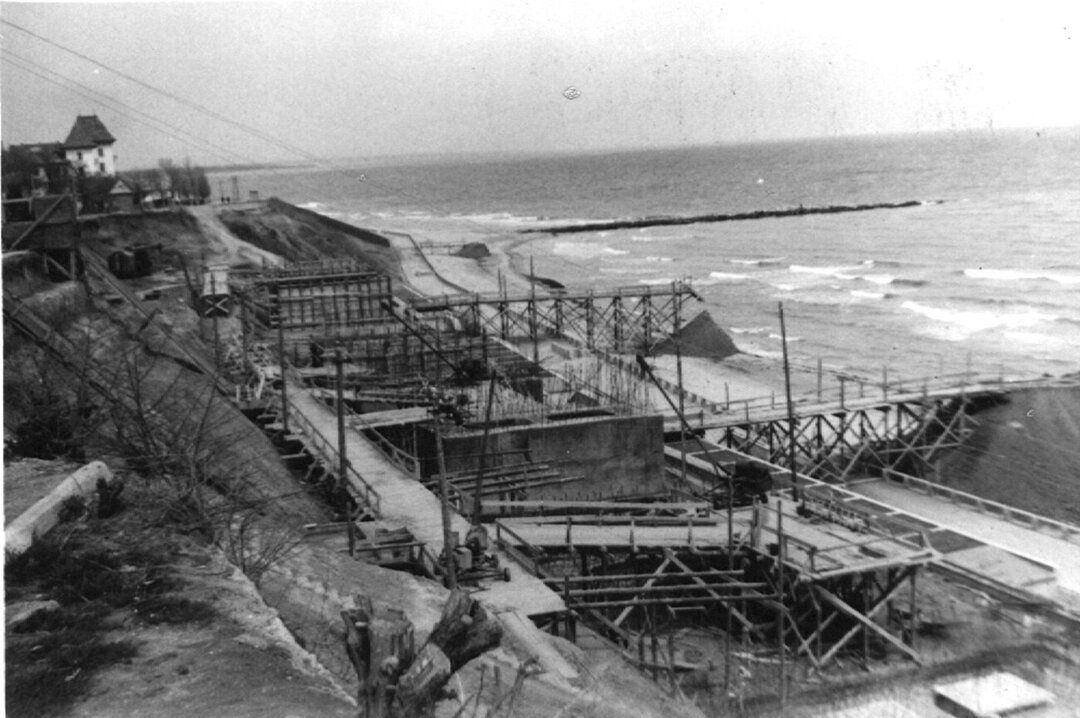
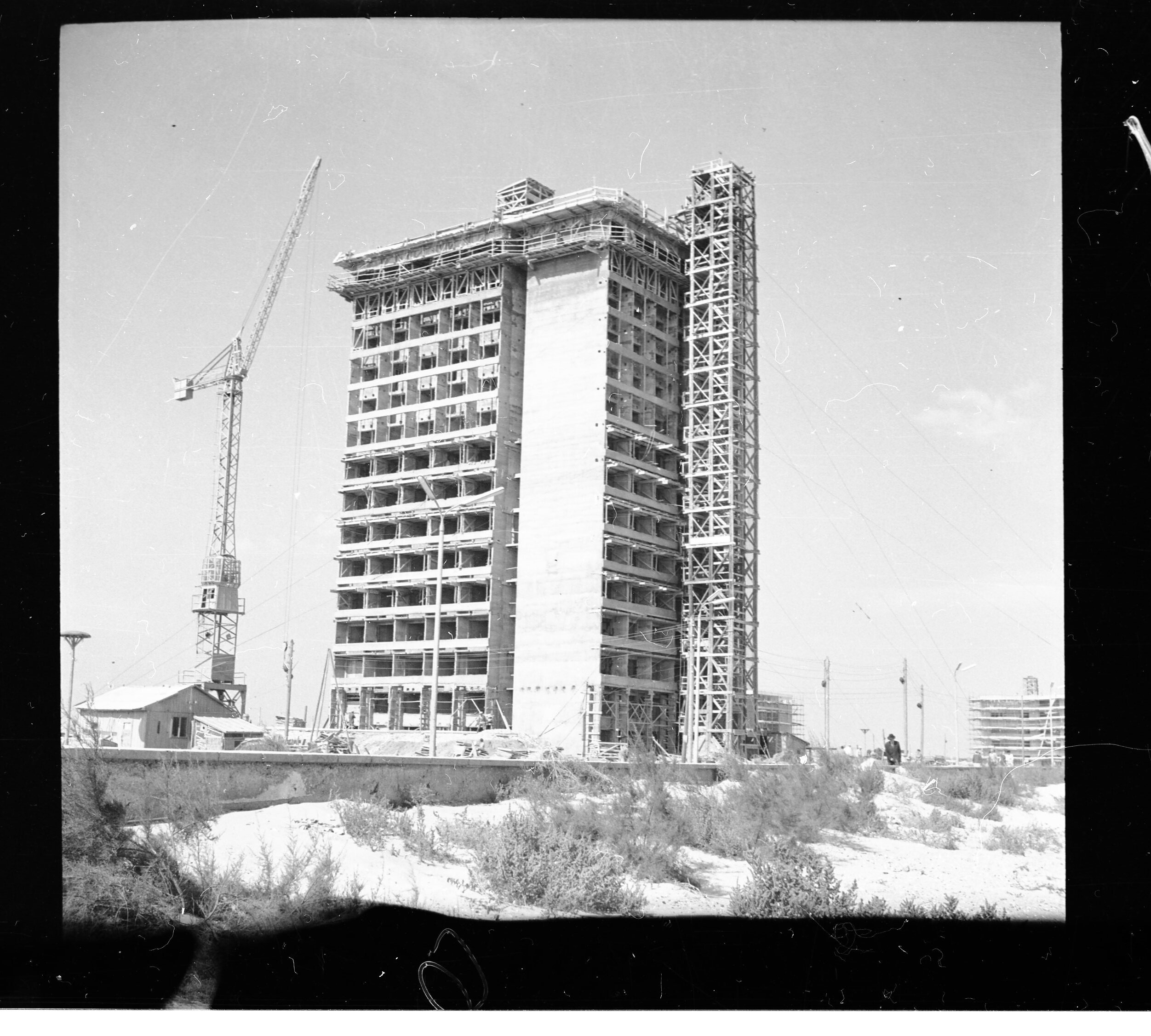
The central problem faced by architects in housing construction was the reduction of the cost price, imposed by the communist leadership after 1958 (the year in which the political discourse in Romania officially took over the discourse of the new 'efficient' trend in mass construction in the post-Stalinist Soviet Union). Even in this respect, the seaside project was presented as an exemplary testing ground15. The hope of cheaper construction was based on technological progress, and Mamaia offered, for the first time in Romania, the experience of a relatively fast construction technique such as sliding formwork. The technique was also taken up by housing construction. The architect Șerban Manolescu, employed at the DSAPC Constanța, admitted that the housing blocks in Constanța immediately followed the experience of the hotels in Mamaia and that he had learned from the resort project "how apartments that were cast in the fixed formwork could be more rationally and economically compartmentalized"16. Sliding formwork, suitable for high-rise buildings, was then used in the "point" blocks (towers) that began to appear in various neighborhoods around the country. Among the first such residential towers were, for example, the 12-storey towers in the Floreasca district of Bucharest, completed in 1963.
Even Richard Neutra, who visited Romania in 1963 - and, inevitably, Mamaia, as the coastline was a must-see for foreign visitors - noted the relative technical sophistication of the seaside constructions. In the Californian magazine Arts & Architecture, Neutra wrote that he admired "the miraculous development of Mamaia", and what he found miraculous was precisely the performance of the construction technique: whereas we in the USA, he wrote, can choose from countless offers of building techniques, in Romania it is admirable "how well architects in the situation of socialized construction find their way through a mass of novelties and untried technologies, and lead their projects to success"17. There is probably enough completeness in this little article, the expression of gratitude for a pleasant trip; but it is significant that the only thing Neutra noted in Mamaia refers to technical management under conditions of reduced resources, something that characterized then, in general, new architecture in Romania.
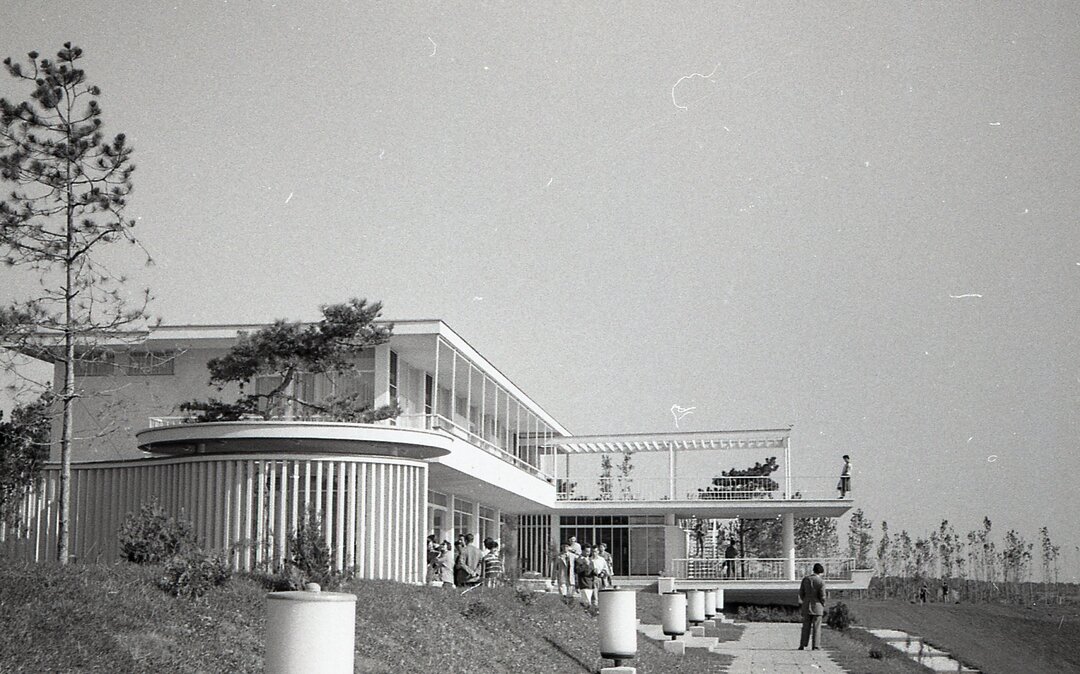
However, the quality of the urban form is what stands out first and foremost as exemplary in Mamaia: a composition of buildings with simple geometry freely arranged in a park. It already became coherently visible on the ground around 1960, i.e. just when new regulations were bringing new freedoms (and constraints) to housing design.
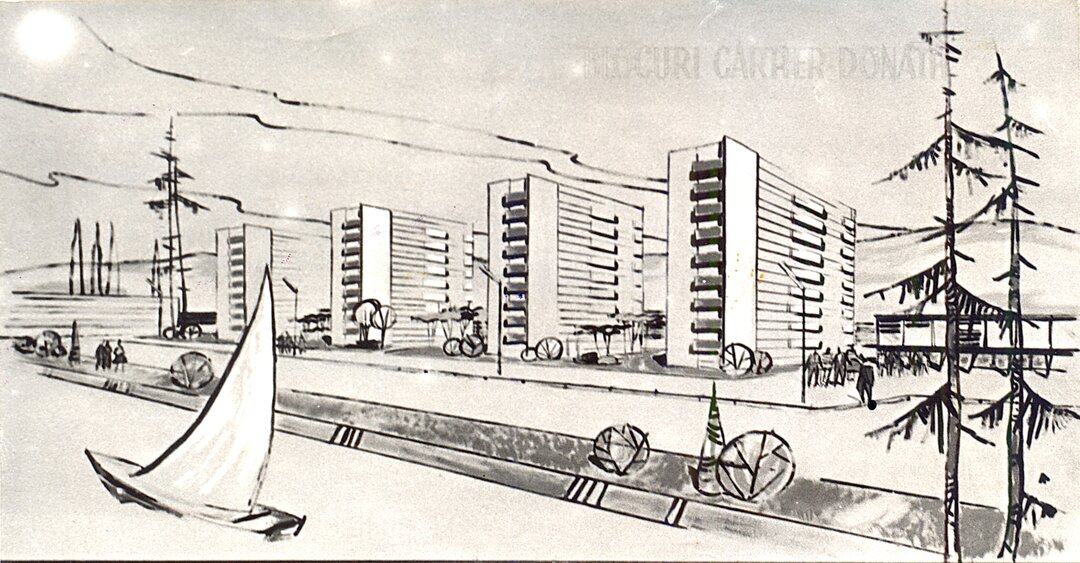
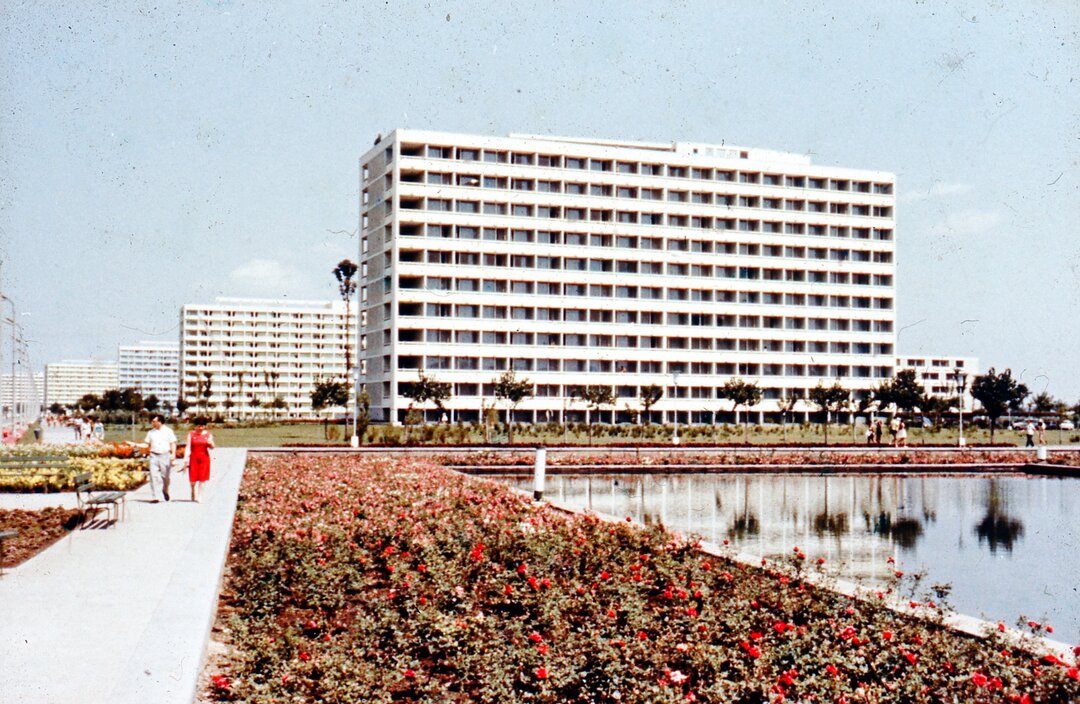
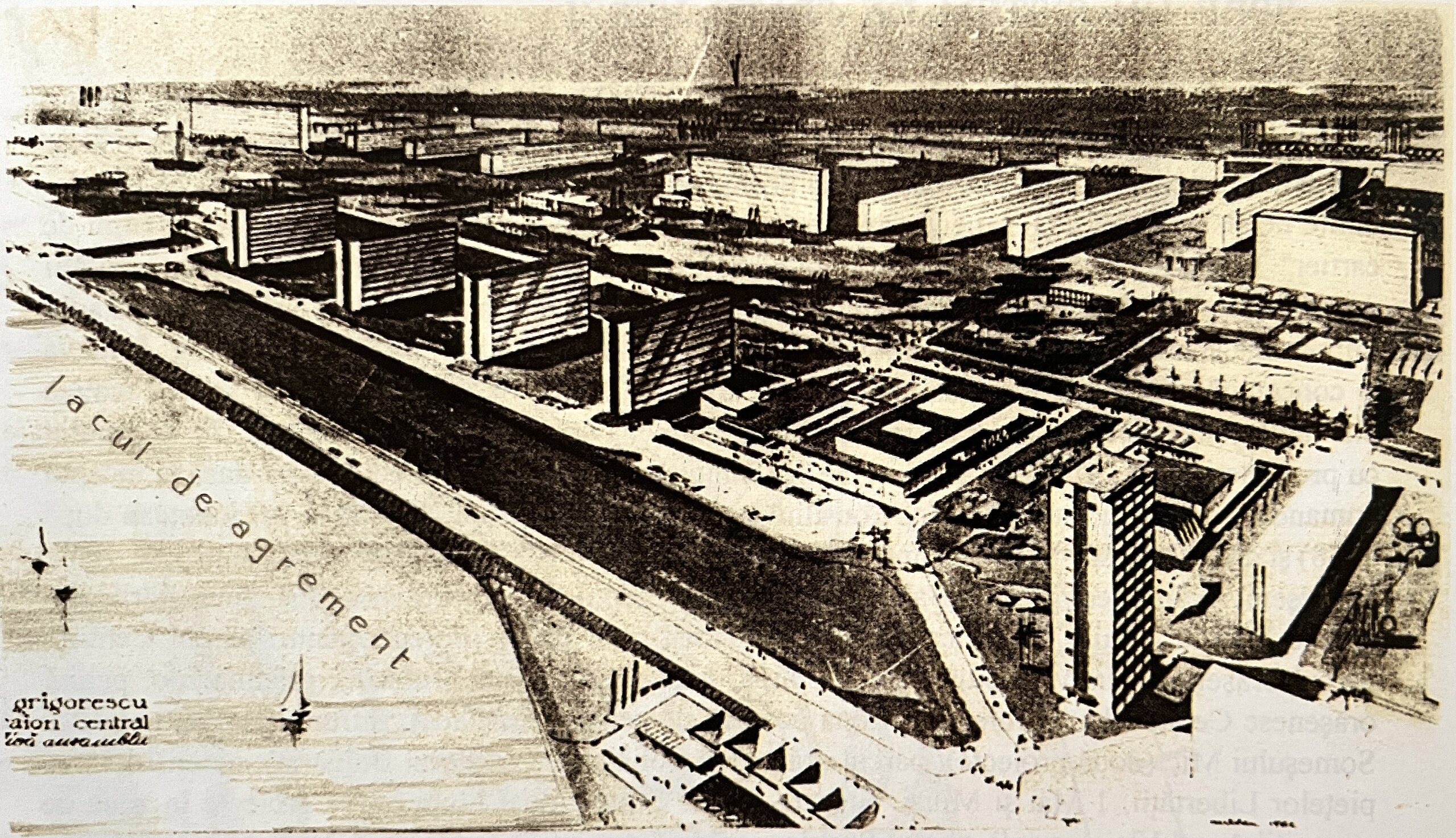
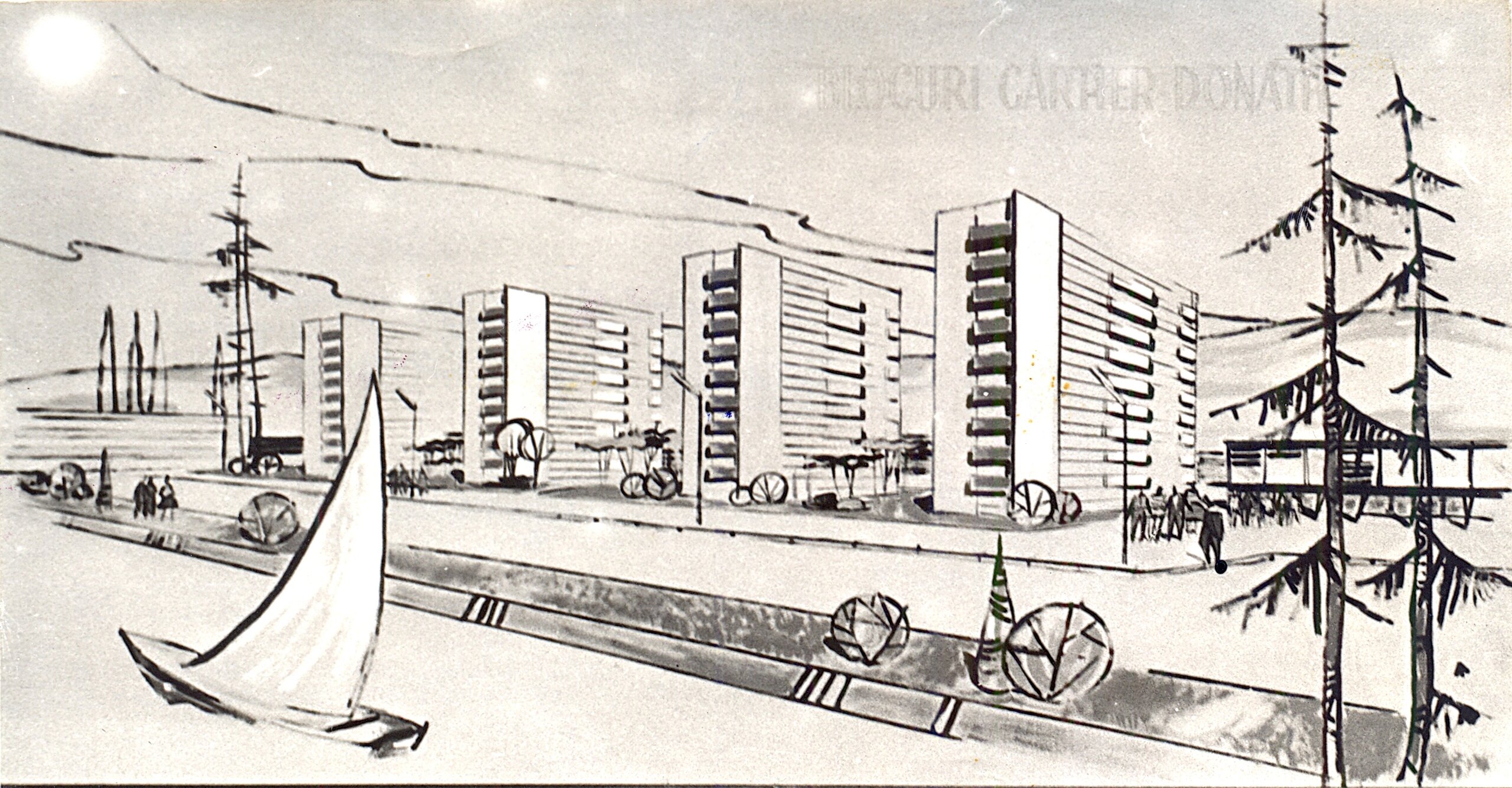
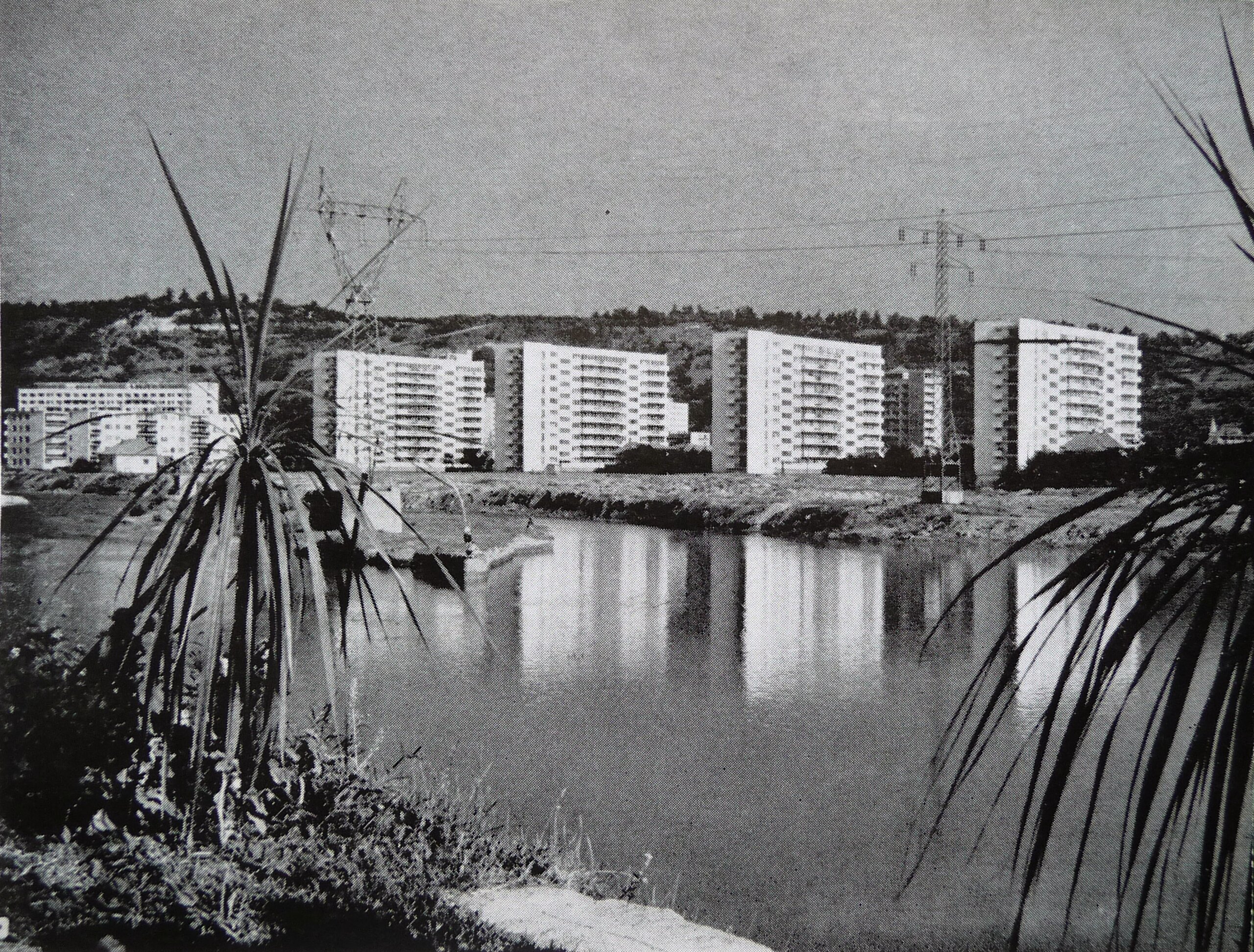
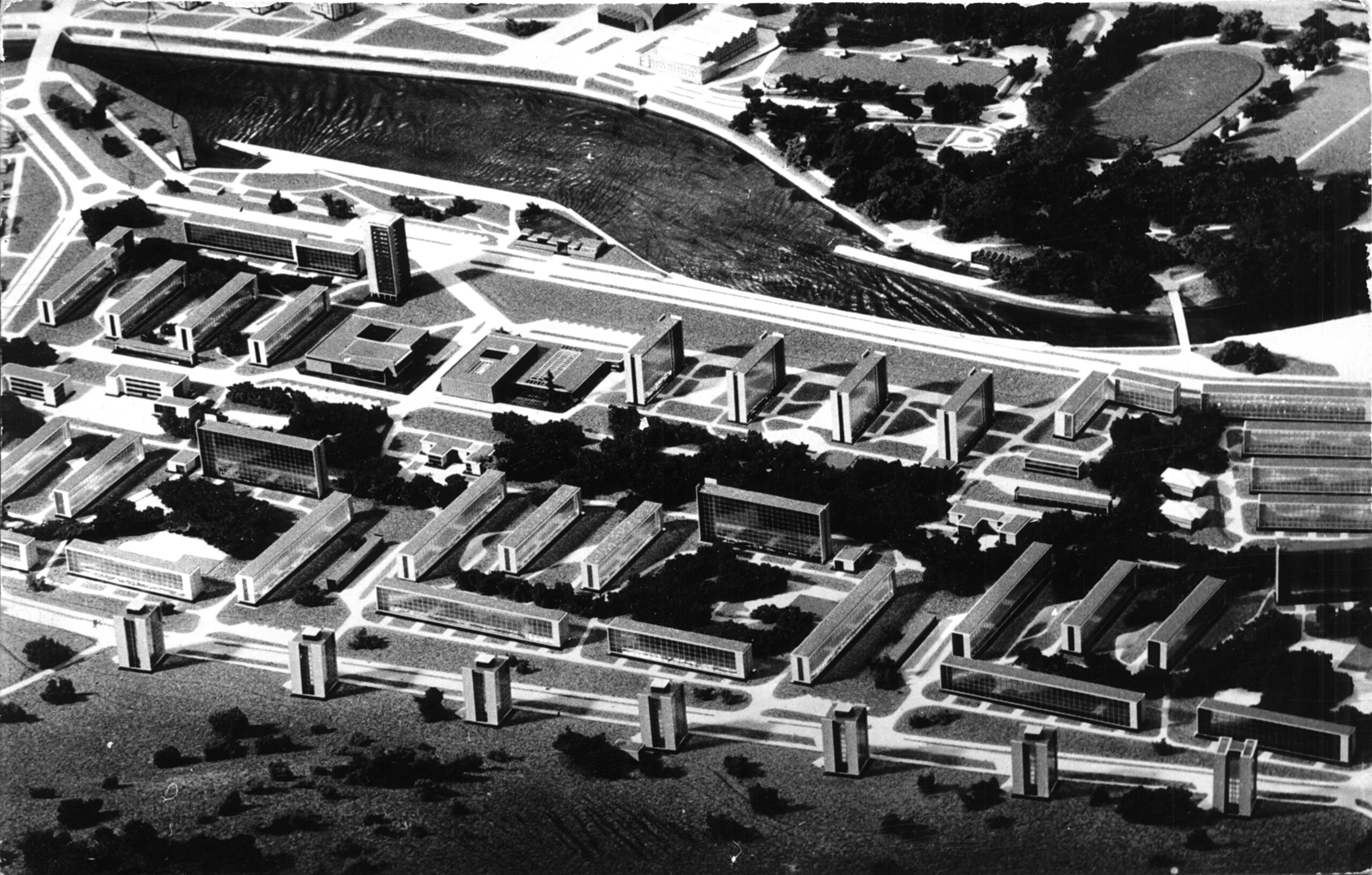
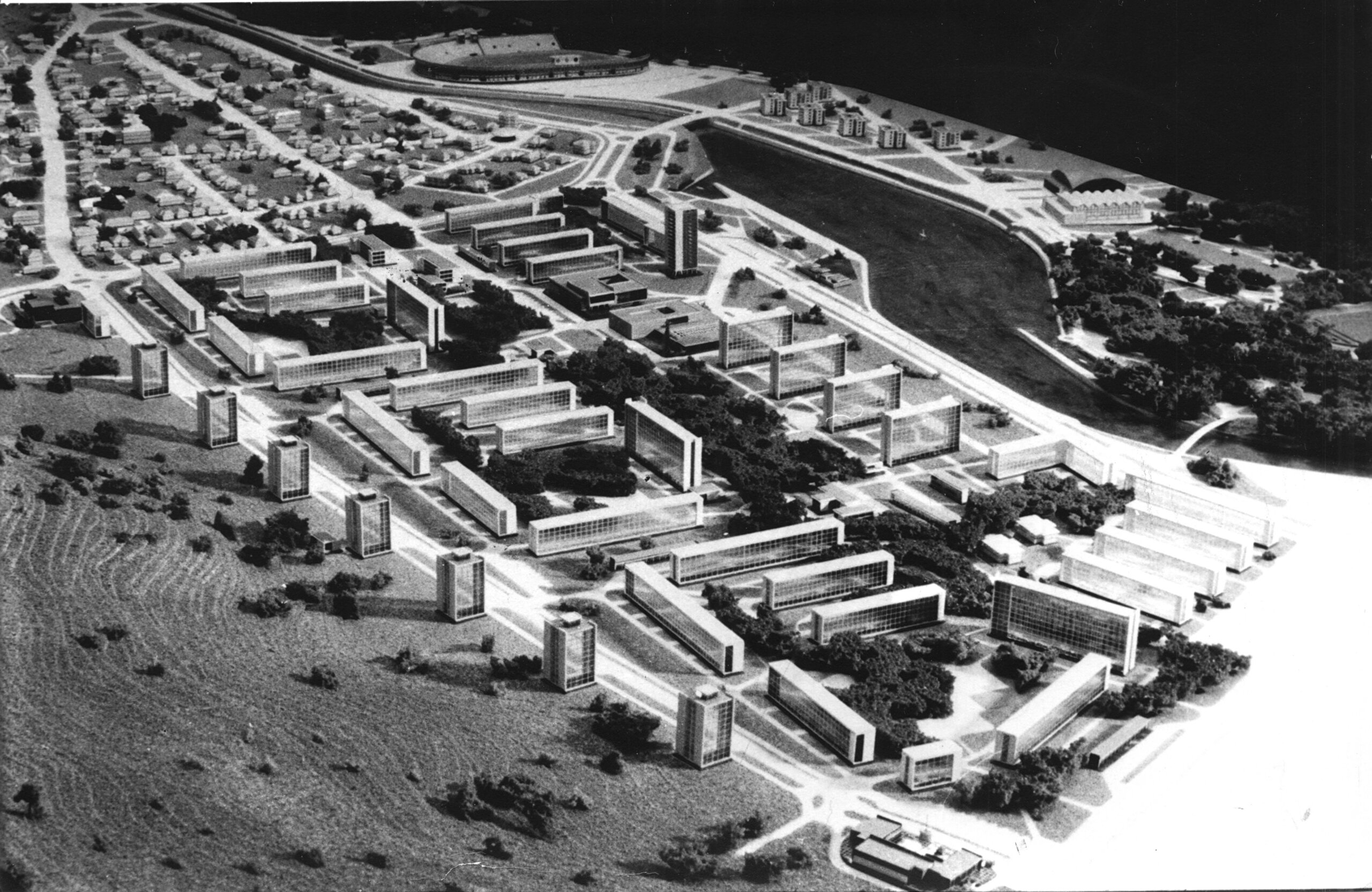
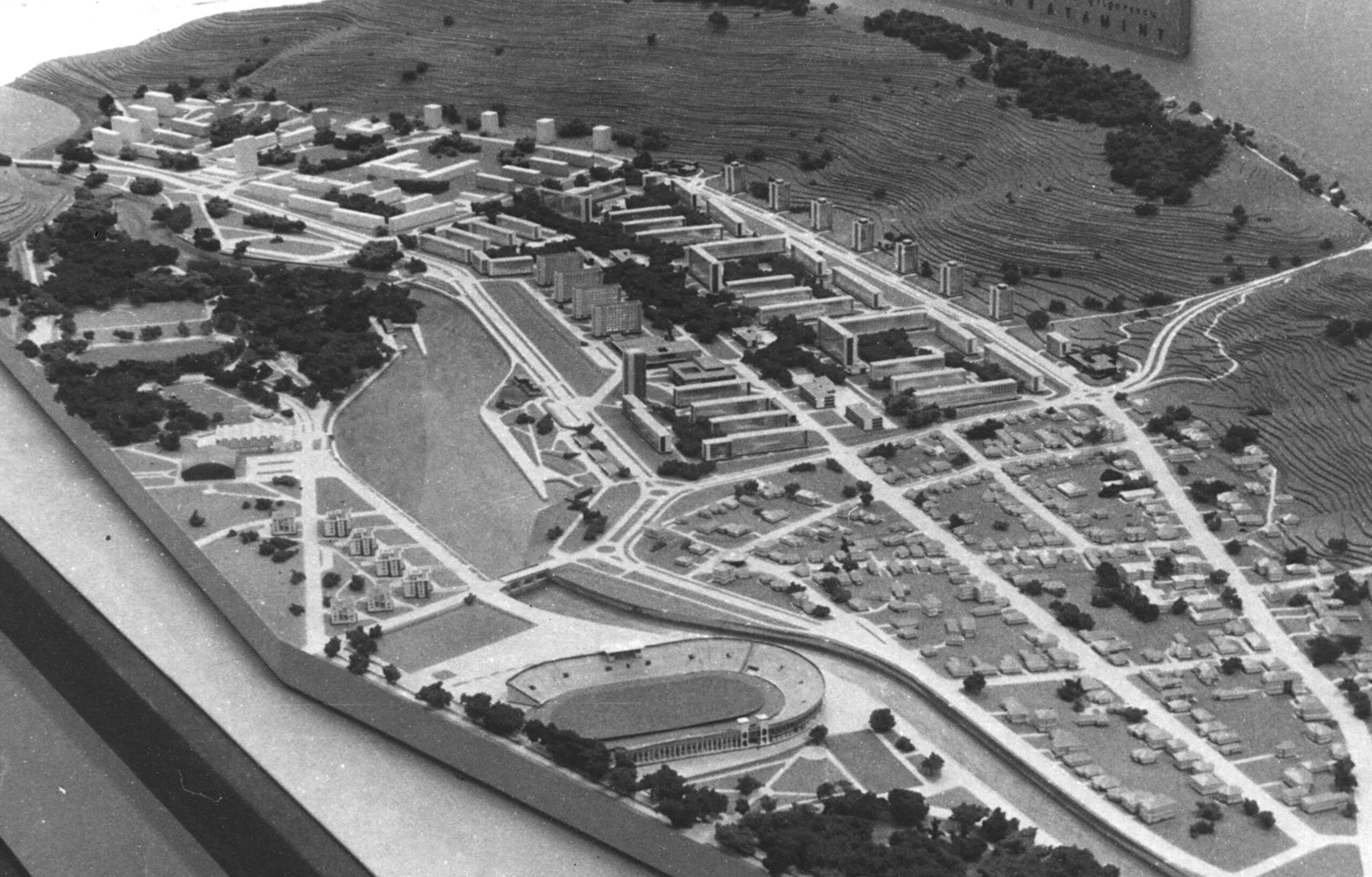
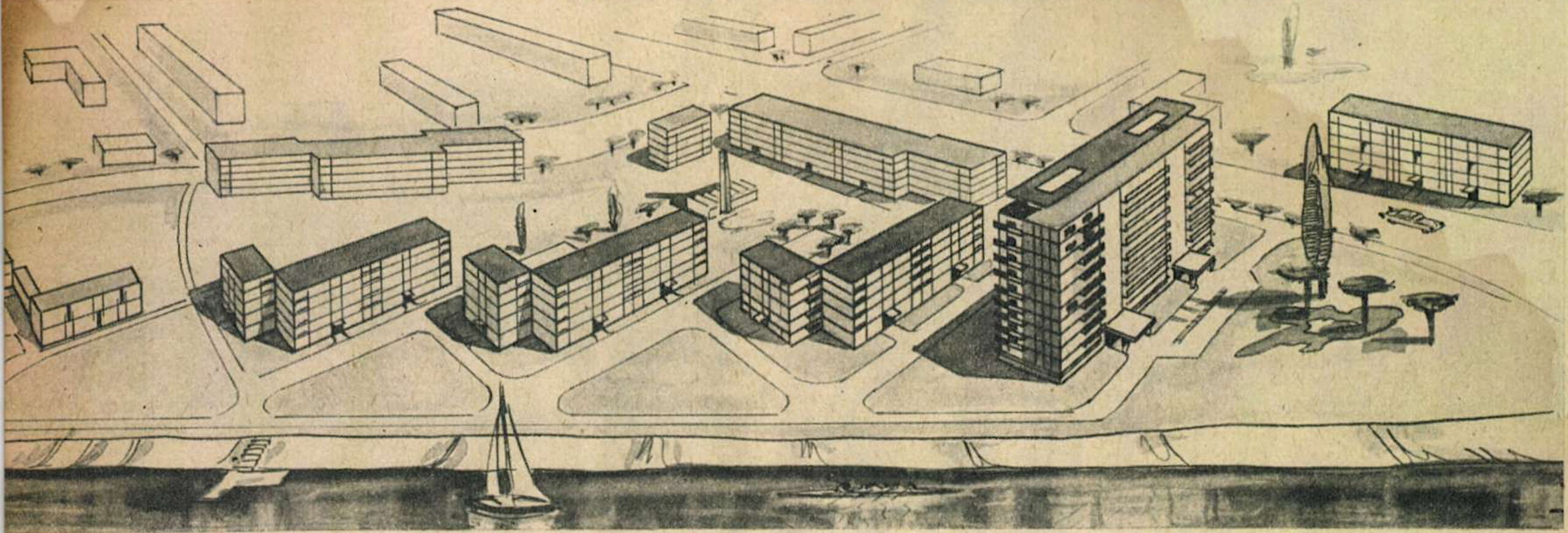
The architect Vasile Mitrea, for example, then a young graduate assigned to the DSAPC Cluj in 1960, recalls how, following these regulations, architects acquired the freedom to intervene compositionally in the spatial organization of housing estates and the permission to use elevators, and thus to build higher than four storeys18. This liberalization led, in Cluj, to the first new neighborhoods, including tower blocks and blades, loosely composed in a generous green space. The first project was the Grigorescu neighborhood, designed by the architects Augustin Presecan and Vasile Mitrea from 1961: a composition of volumes in a large open park. The resemblance between the image of the central micro-region of the Grigorescu district (figs. 1, 2, 3) and Mamaia may seem largely circumstantial: Grigorescu is also located on a kind of 'isthmus', between the green 'sea' of the Hoia hill and the Someș river, which has been transformed into a leisure lake (figs. 4, 5, 6). But the resemblance was also a logical consequence of the same urban concept, illustrated for the first time, in fact, on the seaside.
Mamaia was recognized as a vehicle for the transfer of this concept, since the subsequent criticism of the uniformity of housing districts throughout the country was also made by reference to it. The architect Ligia Dumitrescu, from IPB, already said in 1964: "Visiting several cities, we are surprised by the similarity between the complexes in Suceava, Iași, Baia Mare, and some in Bucharest, and those on the seaside"19. He said it as a criticism of the lack of connection of these ensembles with regional specificities. In other words: it was wrong to build all over the country in the same way as on the seaside. Later, "the fact that Mamaia has spread almost all over the country" would be taken by Cezar Lăzărescu as a merit, not a fault; the explanation for "repeating [it] over and over again" was to be sought in the same laws that determine the economy throughout the country and in "the rationalization and repetition of industrial techniques"20. In other words: it was not copying the same model that led to the uniformity of the country's residential neighborhoods, but the fact of having followed all the same rules, norms and principles, which the Mamaia model had the merit of having followed first.
The success and even the "explosion of enthusiasm"21 with which Mamaia was greeted can be explained by the fact that it was the first post-war project to consistently express the pursuit of the urban planning principles of the modern movement. Mamaia was the manifesto of post-war modernism in Romania. It was a "silent modernist manifesto"22, as Irina Băncescu puts it, because we know only too well that modernism was not a concept in use at the time. The fact that Mamaia was a return to modernity specific to the modernist movement was, however, perfectly understood by the profession; Mamaia was seen de facto as an exponent of modernist aesthetics and as an exemplary model for reinventing neighborhoods in modernist form.
A comparison in terms of aesthetics between the new neighborhoods and Mamaia was made right then, immediately. On the occasion of the premiere in 1962, Mihail Caffé wrote of the housing complex in the center of Galati, which was also awarded a prize at the same time as Mamaia, and chronologically realized just "before the last touches of the seaside", that it "basically reflects the same orientation as the seaside complexes, towards the plasticity of major effects and the abandonment of ostentatious ornamental detail"23.
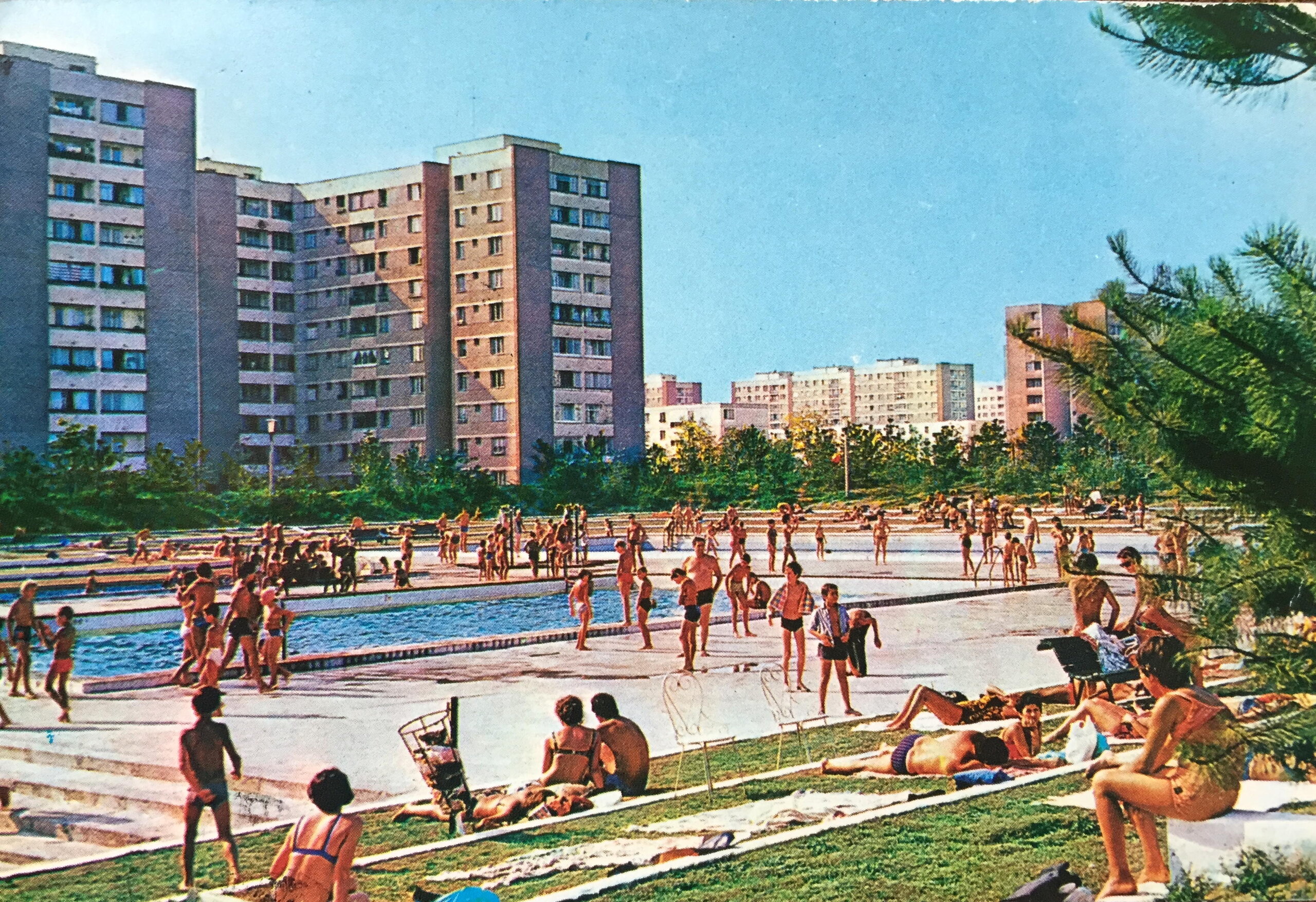
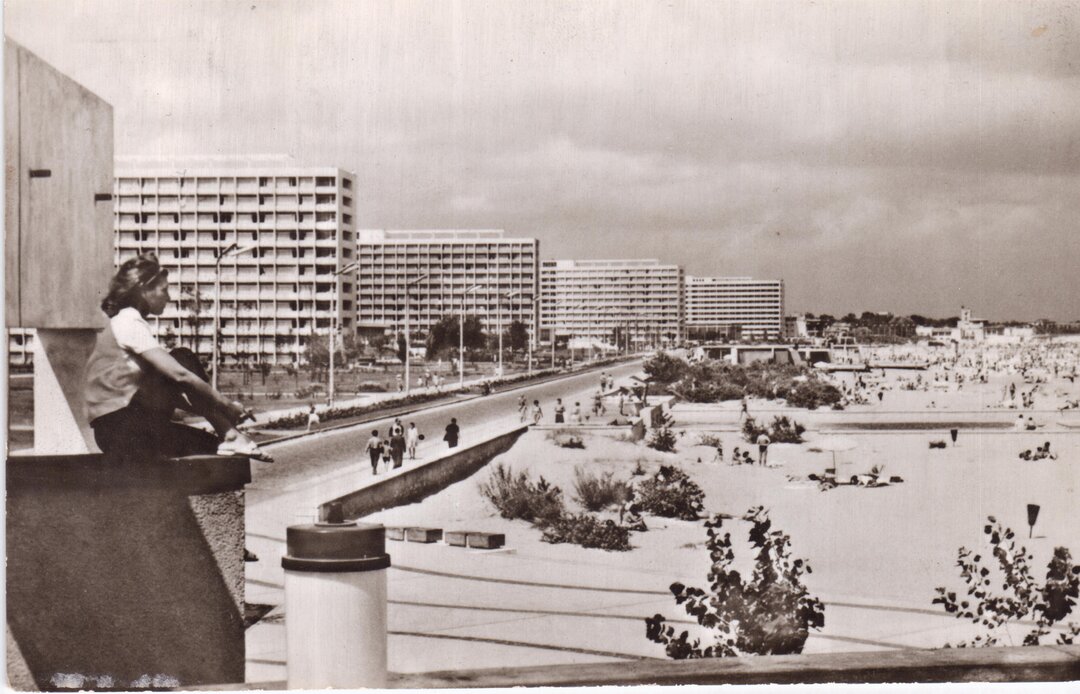
The "effective visual mechanism" of the modernist seaside project described by Carmen Popescu24 also explains the transfer of the aesthetic image from the seaside complexes to the residential neighborhoods in the years immediately following. The visual mechanics at work in the representations of these neighborhoods in drawings and photographs (figs. 1, 2, 3) betray an even explicit reference to the model of seaside modernity. Neighborhoods were represented, for example, in the vicinity of rivers that were supralicited in terms of surface area. In Cluj, the Someș is transformed into a "leisure lake" on which sailboats float (ill. 1, 2); sailboats also float on the Bahlui in Iași (ill. 7), although sails make little sense on such modest rivers, even if they are also widened into mini-lakes. The only logic of such an illustration is to suggest a wide expanse of water to support the explicit analogy with "seaside" leisure.
However, the architects of the first "modernist" neighborhoods did not primarily pursue modernism as an aesthetic, nor did they copy Mamaia as such. However, they could recognize in it an exemplary model of the principles they were pursuing at the time, namely the principles of the Functional City25. It was part of their logic to necessarily provide for leisure functions. The Functional City had been the theme of the fourth CIAM in 1933, and its principles had been formulated in the Athens Charter (translated into Romanian in 1945), where leisure was one of the four fundamental functions of urban planning. Leisure as an extension of housing was the theme of the fifth CIAM in 1937: Housing and Leisure. "Daily leisure" as a "direct function of dwelling" had the task of transforming the "new dwelling" into an "optimistic, human work, bearer of 'essential joys'", as Le Corbusier put it at the congress26. He described his Radiant City as a green city, "made up of 88% parkland", with "swimming pools under the open sky everywhere", where "sport [is] to be found at the feet of the dwellings" and "the essential joys are those of sunshine, greenery and space"27. Putting leisure in direct relation to living was therefore also part of the modernist canon, and this was also the principle pursued in the neighborhood projects of the early 1960s.
The informal park green space was what brought both Mamaia and these neighborhoods closest to the original modernist model. In a 1965 interview about how the city would evolve in the future, Cezar Lăzărescu wondered: why not bring to the city, "in the midst of everyday life", "the beauty of a lake, a forest, a flower"? Housing should be dispersed, he said, "in large areas of parkland", whether small dwellings, villas or apartment blocks28. Through its neighborhood gardens (ill. 1, 4), its proximity to sports recreation areas and to the limits of suburban nature (ill. 6), but above all through its generous green space pure and simple, the housing estate project had already appropriated the relationship between leisure and living when this relationship was debated again at the World Congress of the International Union of Architects in Varna in 1972, on the theme of Architecture and Leisure. Aurelian Trișcu explained then that leisure is of three kinds, everyday, weekend and vacation, and argued that everyday leisure is par excellence the way in which living quarters could move beyond the dormitory function. Cezar Lăzărescu also discussed everyday leisure and the importance of strengthening the relationship between the leisure phenomenon and the everyday living environment29.
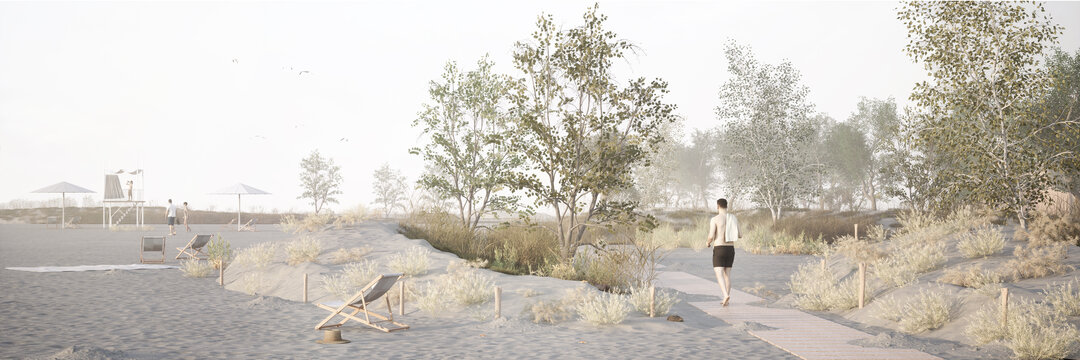
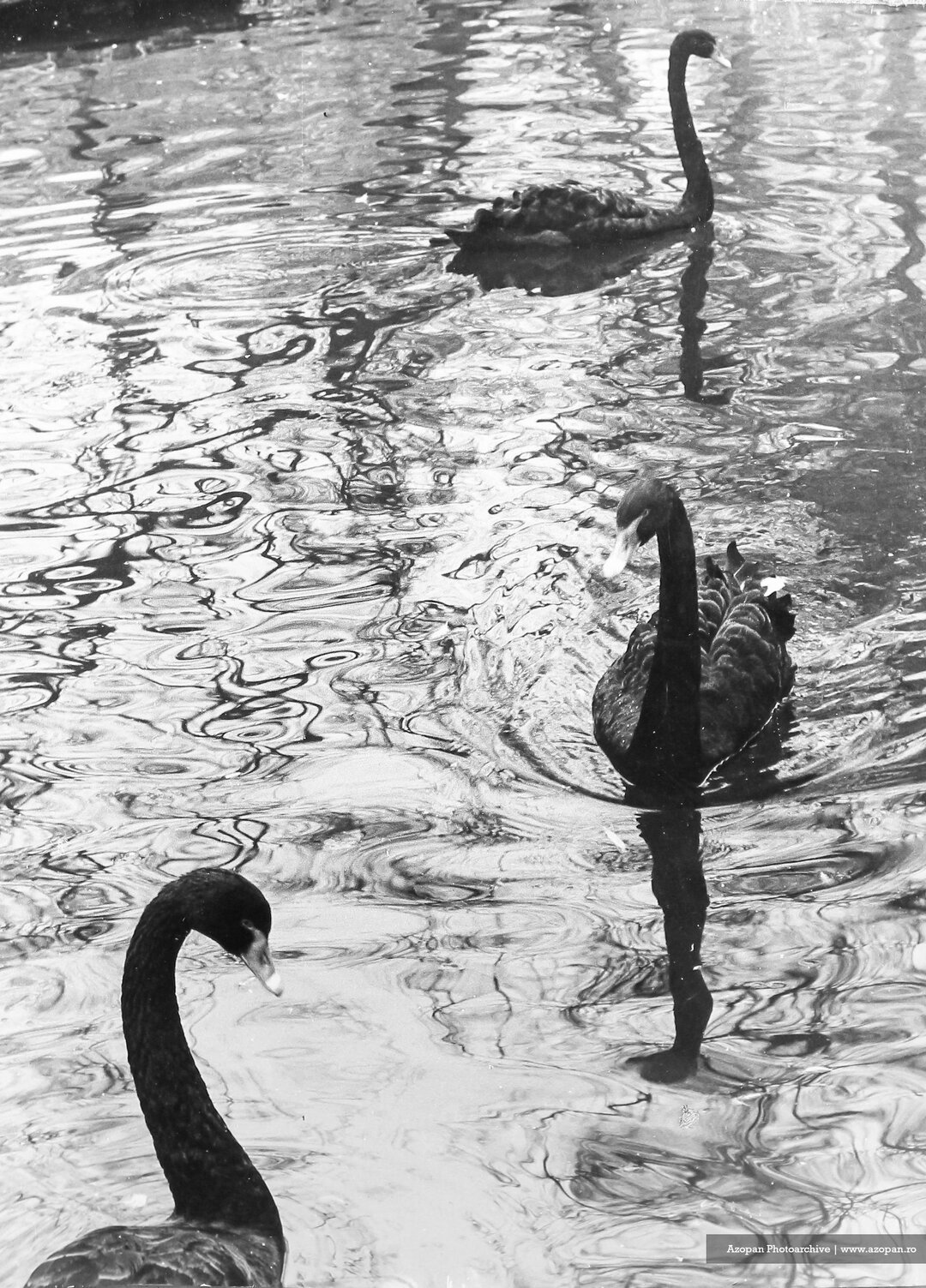
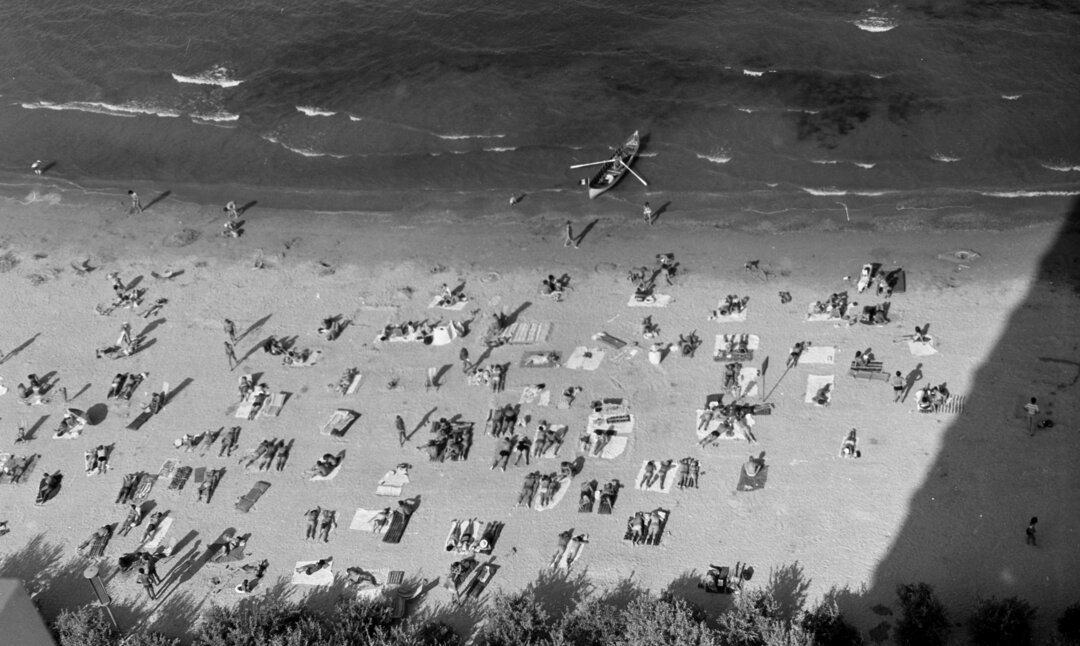
The presence of leisure in neighborhoods would survive even after the free modernist urbanism was abandoned and the quality of living "in the park" was lost. For example, the large Bucharest housing estates of Drumul Taberei and Balta Albă, which will be densified in the following decade (like Grigorescu in Cluj), will nevertheless preserve the leisure space, attached as an explicit park. The fact that the images of the leisure spaces in the neighborhoods - with the emphasis on vegetation, the presence of water, occasionally with boats and bathing (ills. 8, 9) - were disseminated through postcards, as images of vacation, shows the persistence of the imaginary of a model with a mythical aura: "holiday leisure" and "everyday leisure" seem to be confused.
In time, the ideal modernist model of mass living - "radiant", based on "essential joys" and optimism - will be sacrificed in favor of an urbanism of quantity and survival. Neither the neighborhoods of the late communist period nor capitalist residential developments will ever again consider a housing project so generous as to confuse the space between blocks with a park. But as far as it has remained visible on the ground to this day, the type of housing neighborhood of the first half of the 1960s can still stand witness to the very brief period in the history of socialist housing in Romania, in which the housing project tested the recovery of the urban ideal of classical modernism - first perfectly illustrated by the resort of Mamaia.
1. Alina Șerban (ed.), Vederi încântătoare: Urbanism and architecture in Romanian Black Sea tourism in the 1960s and 1970s, Asociația pepluspatru, Bucharest, 2015.
2. Irina Tulbure, "Cezar Lăzărescu. Primii ani de construcțieului litoralului", in: Alina Șerban, op. cit, pp. 92-109 (p. 104).
3. Juliana Maxim, "Vederi încântătoare. Practici ale seducției la începuturile turismului de litoral din România Socialistă", in Alina Șerban, op. cit, pp. 70-91 (p. 79).
4. Ibid. p. 80.
5. Mihail Caffé, "Premiile de Stat ale RPR în arhitectură pe anul 1962", Arhitectura nr. 3/1963, pp. 2-9 (p. 3, 6).
6. Lucian Popovici, "The 10,000-bed hotel complex at Mamaia", Arhitectura no. 4-5/1961, pp. 4-7 (p. 4).
7. Traian Chițulescu (coord.), Manualul arhitectului proiectant Vol. III, Ed. Tehnică, București, 1958, p. 357.
8. Cezar Lăzărescu, [text inserted] in Mihail Caffé, op. cit., p. 5.
9. Irina Băncescu, "The Communist Project of the Romanian Seaside. Architecture between political constraints and mass tourism in the post-war European context", in Alina Șerban, op. cit, pp. 40-69 (p. 52).
10. [editorial] "Let's improve the work of architects in all regions of the country", Arhitectura RPR no. 8-9/1958, pp. 4-5 (p. 4).
11. Adrian Mahu, "Aspecte și tendințe actuale în activitatea de proiectare în județul Argeș", Arhitectura nr. 2/1973, p. 3.
12. Vasile Mitrea, interview with the author, Cluj, January 7, 2023.
13. Vasile Mitrea, ibid; Aurelian Buzuloiu, interview with the author, Cluj, January 10, 2023.
14. Mircea Malița, Dinu C. Giurescu, Zid de pace, toururi de frăție. Deceniul deschiderii: 1962-1972, Ed. Compania, București, 2011.
15. "The main criterion in housing construction - cost price. Plenara Uniunii Arhitecților din RPR", Contemporanul nr. 6 (644)/13 feb. 1959, p. 6.
16. George Mihăescu, "Arhitecții", Dobrogea Nouă, XVI, no. 4772/10 December 10, 1963, pp. 1-2.
17. Richard Neutra, "Sketches from Rumania", Arts & Architecture no. 1/1965, p. 18.
18. Vasile Mitrea, ibid.
19. Ligia Dumitrescu, in "Cuvinte asupra arhitecturii romînești în cei douăzeci de ani de la eliberation", Arhitectura RPR nr. 4/1964, pp. 4-8 (p. 8).
20. Cezar Lăzărescu, Toma George Maiorescu, "Arhitectură și turism (Interviu)", Contemporanul no. 27 (1234)/ July 3, 1970, p. 2.
21. Ibid.
22. Irina Băncescu, op. cit., p. 51.
23. Mihail Caffé, op. cit., p. 6.
24. Carmen Popescu, "O mecanică eficace: Litoralul românesc în anii socialismului", in Alina Șerban, op. cit, pp. 12-39.
25. Vasile Mitrea, ibid.
26. Le Corbusier, "Rapport no.1 / 5. Kongress, Wohnung und Erholung. Solutions de pricipe", in Martin Steinmann (ed.), CIAM. Internationale Kongresse für Neues Bauen. Dokumente 1928-1939, Birkhaüser, Basel, 1979, pp. 182-189 (p. 182).
27. Le Corbusier, La Ville Radieuse, Éditions de l'Architecture d'Aujourd'hui, Paris, 1935, pp. 61, 65, 86.
28. Cezar Lăzărescu, Toma George Maiorescu, "Arhitectura - azi și mâine" (interview), Contemporanul no. 26 (976)/ June 25, 1965, p. 9.
29. Aurelian Trișcu, "Arhitectura și Loisirul. Congresul Mondial U.I.A. - Bulgaria, 1972", Arhitectura nr. 6/1972, pp. 40-42.
--16549-xl.jpg)