Seaside. A published chronology

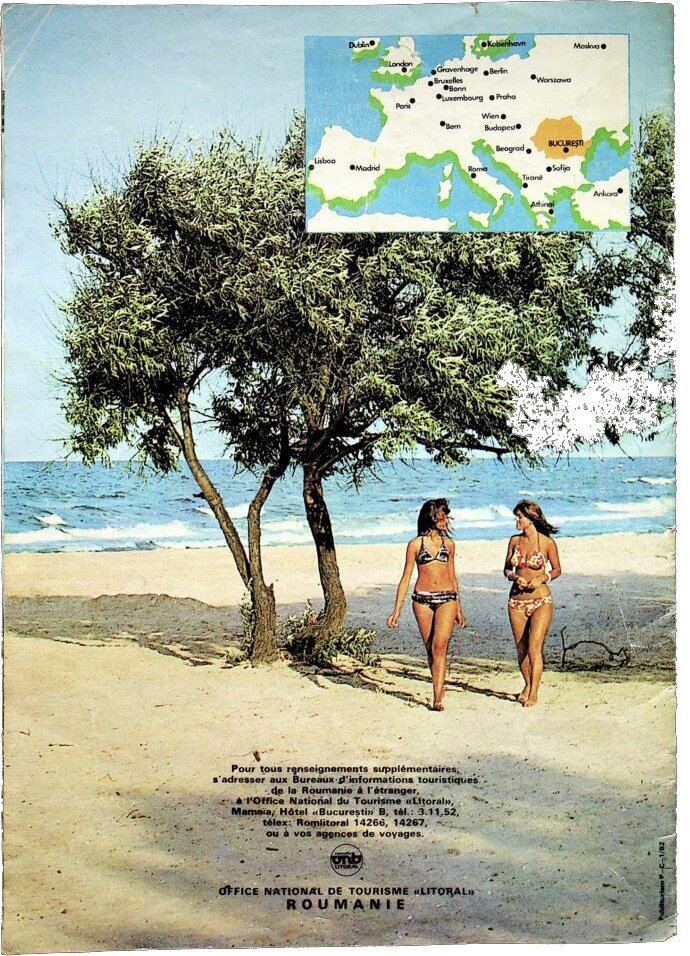
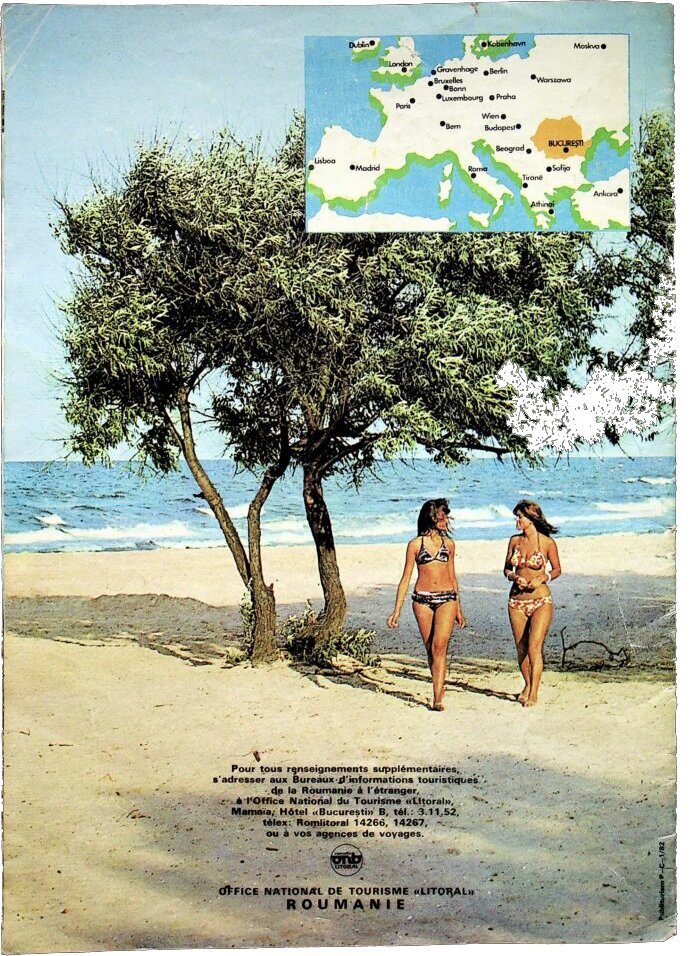
In 1976, "Vacances en Roumanie", a travel magazine aimed at foreign tourists and published in French, English, German and Russian, invited its readers to discover the casinos, jazz music, beauty contests, music concerts and cocktails on the Romanian Black Sea coast. This invitation contradicts the image of a dull tourist destination, with restaurants that close at 10 pm, with which we got used to describing the Romanian coast in the 80s.
Indeed, from the 1960s until the beginning of the 1980s, the Romanian seaside had become a place of interactions where tourists from all over Europe, as well as Romanian tourists, sought fun and rest, while tourism brought considerable revenues to the communist state.
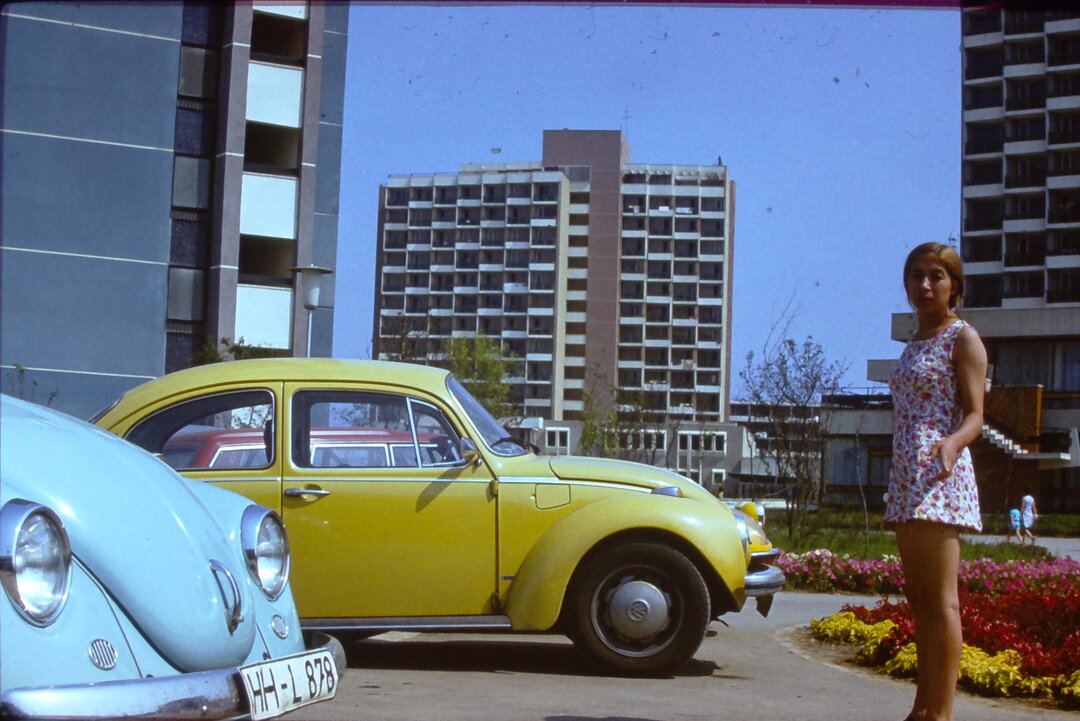
When the Romanian state decided to develop tourism in the mid-1950s, the intention was to focus on bringing tourists from neighboring socialist countries, but also to offer Romanian tourists the possibility to spend their holidays at the seaside. This initiative was part of a broader vision that it shared with other European states, whether in the Socialist Bloc or in the capitalist West, that tourism was good for people's health, but had also become part of the social contract between the post-war state and its citizens. In this sense, paid holidays of at least two weeks, but in some cases even three weeks, became part of national legislation in all European countries. Travel agencies began to promote foreign travel, and the number of tourists to Europe rose from 50.4 million in 1960 to 112.6 million in 1969. However, Eastern Europe's share of European tourism was still small, with only about 6 million Western European tourists visiting the socialist countries in the late 1960s. In 1969, around half a million tourists from the capitalist West came to Romania, most of whom chose to spend their vacations on the Black Sea coast, especially in the resort of Mamaia. This number was considerable for the Romanian coastal area and made the interactions between tourists from the capitalist west, the communist east and sometimes also Romanian tourists who were lucky enough to find accommodation in Mamaia a daily activity.
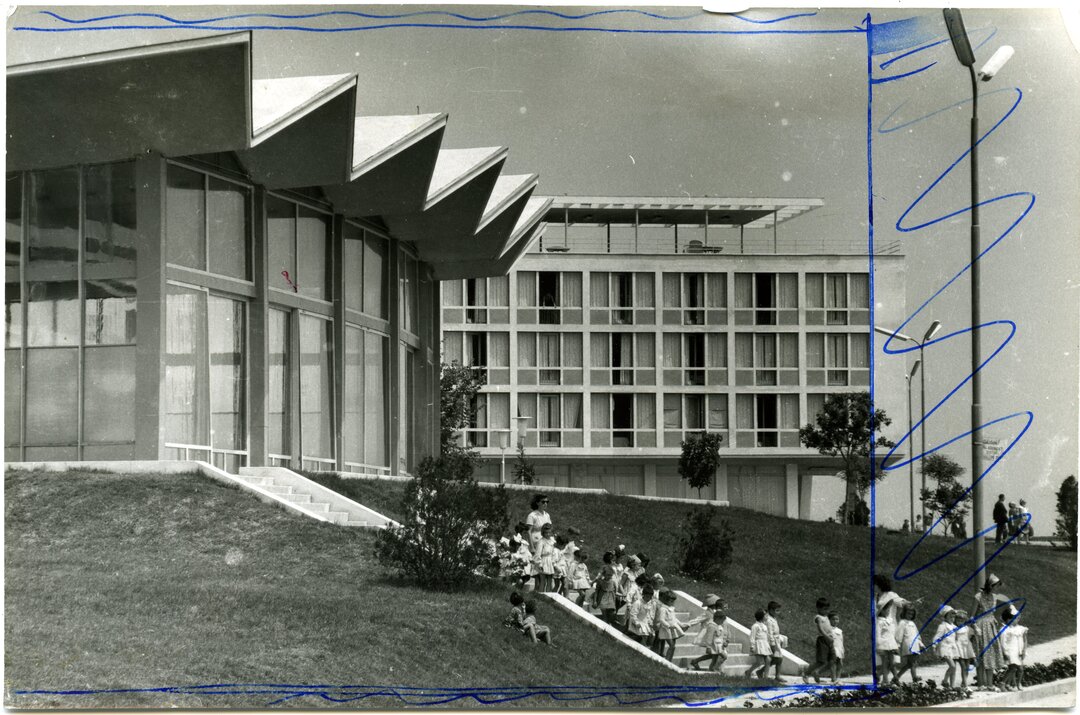
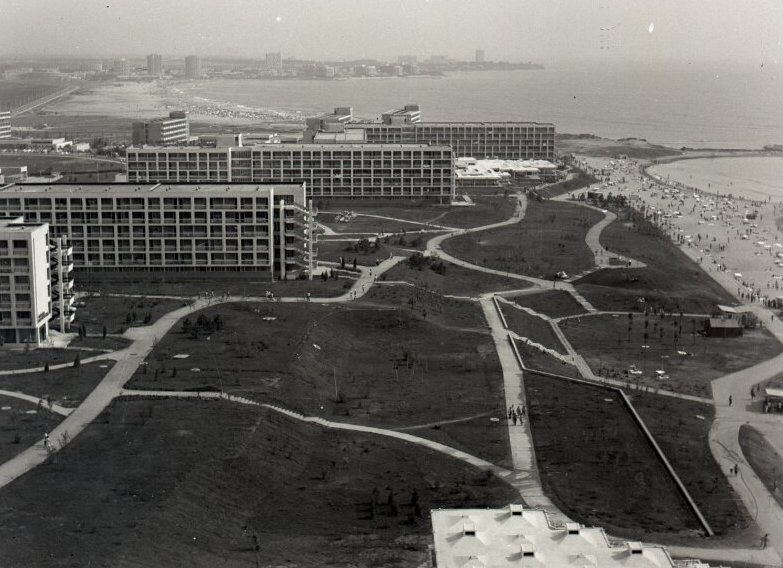
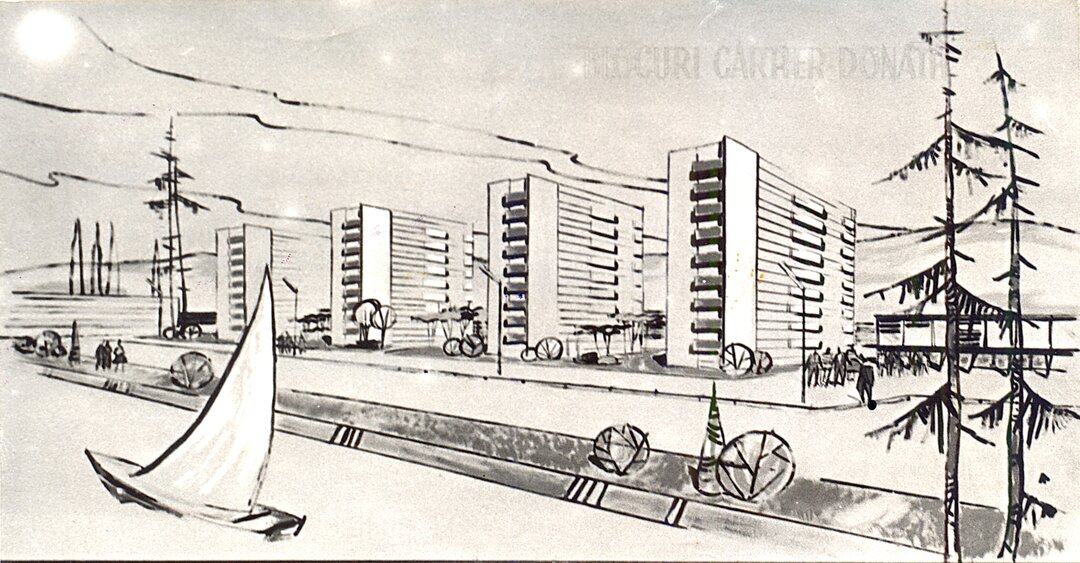
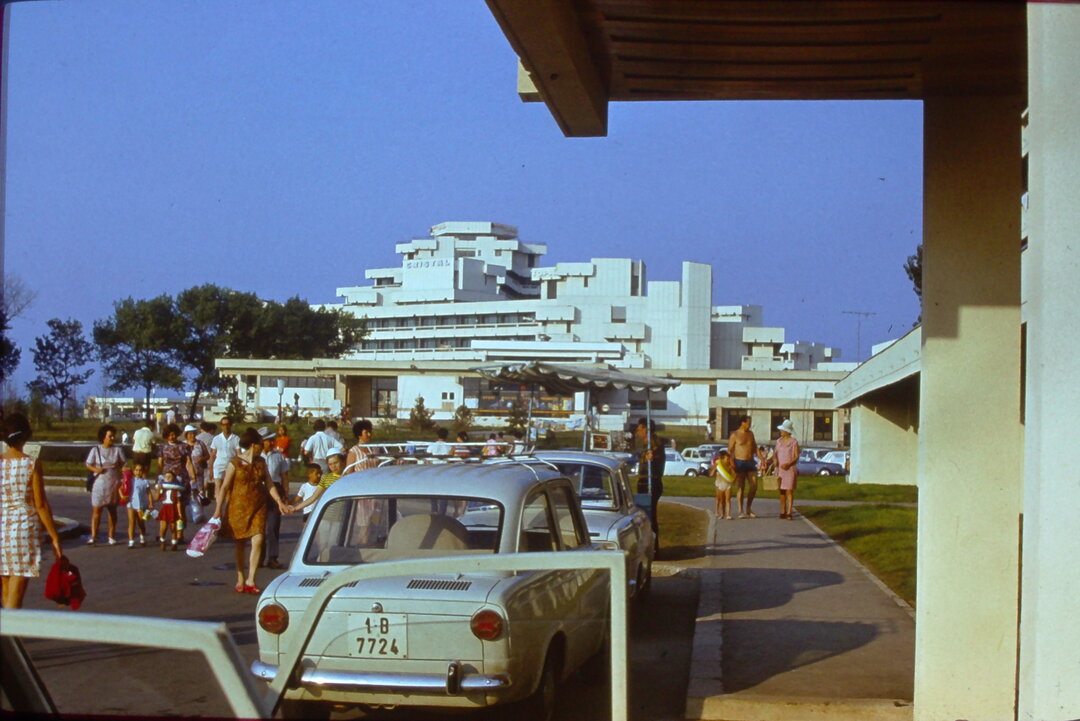
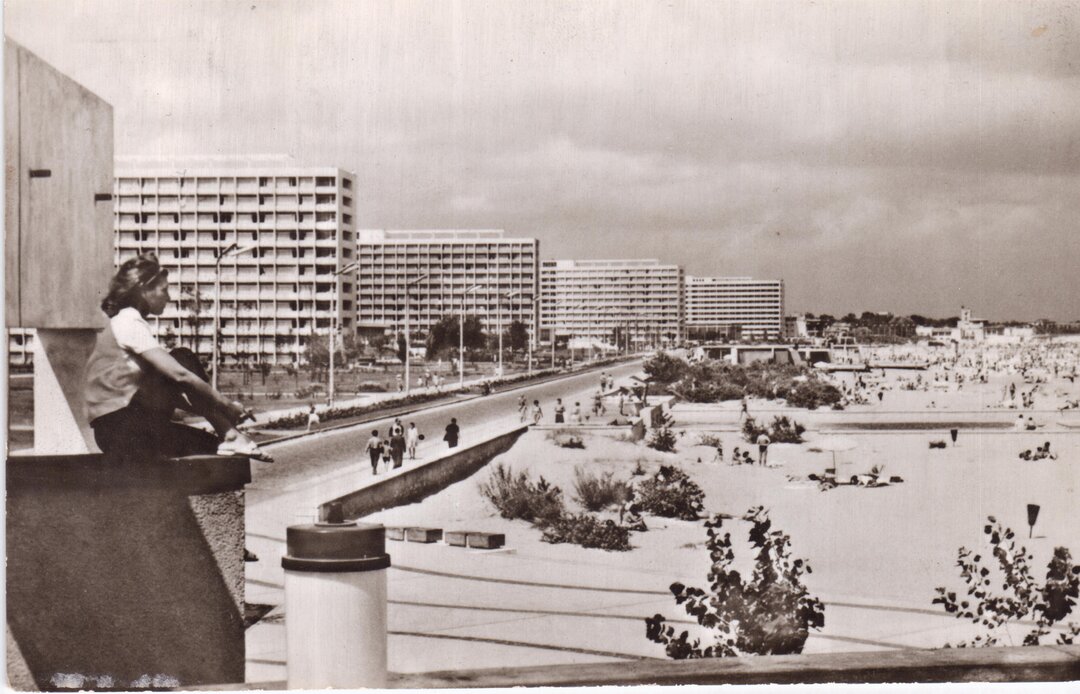
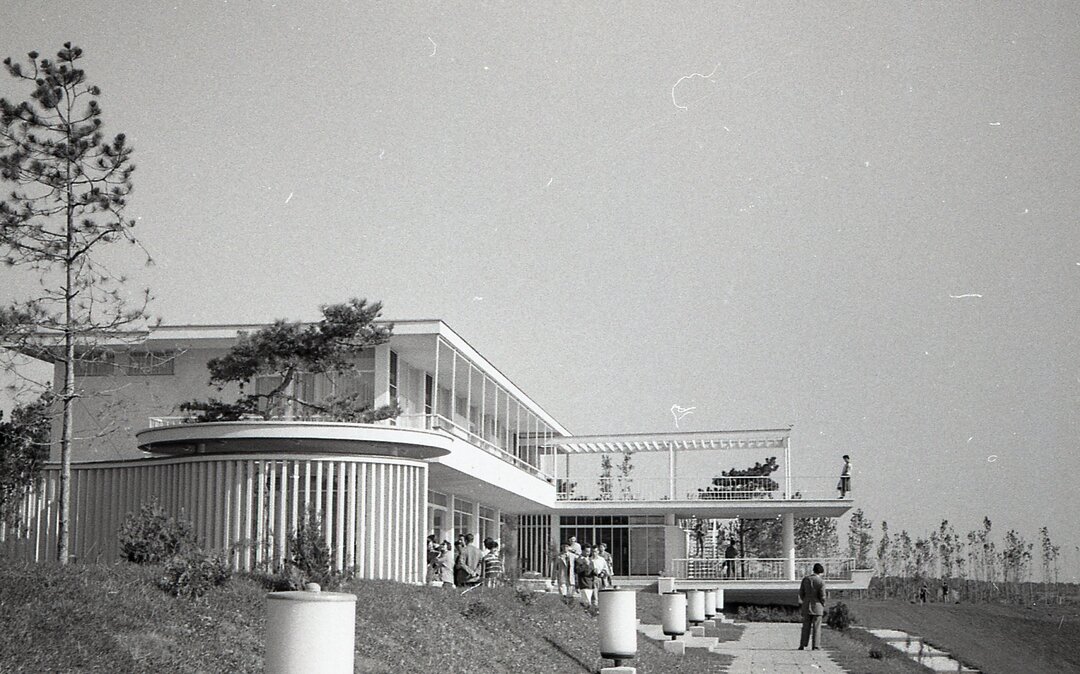
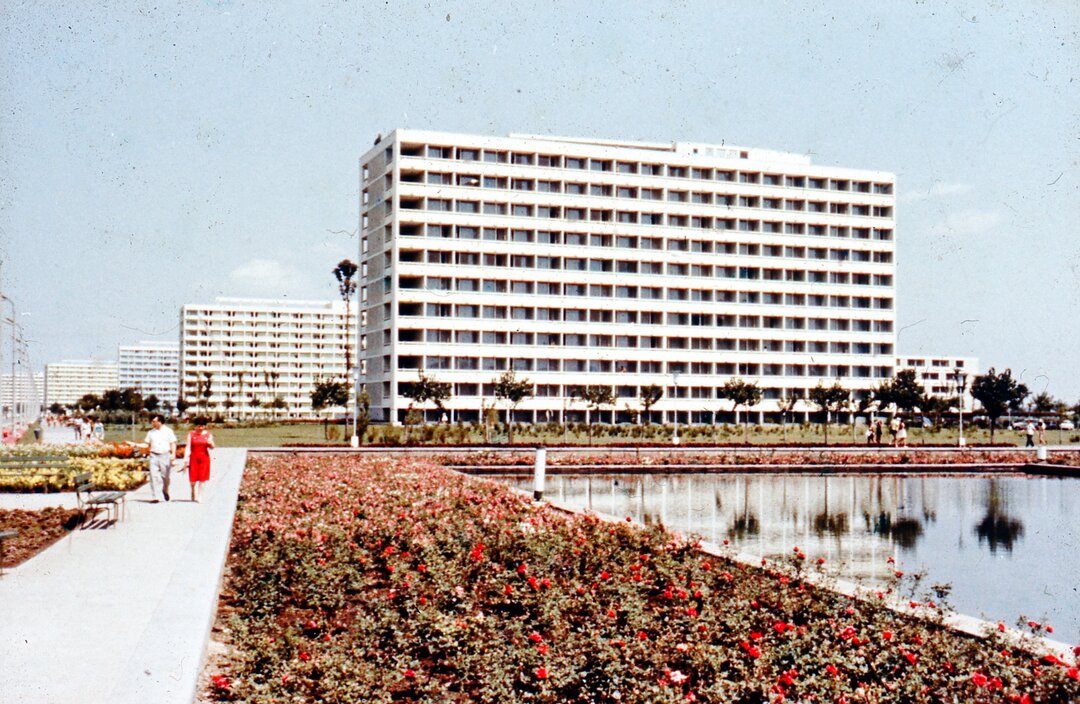
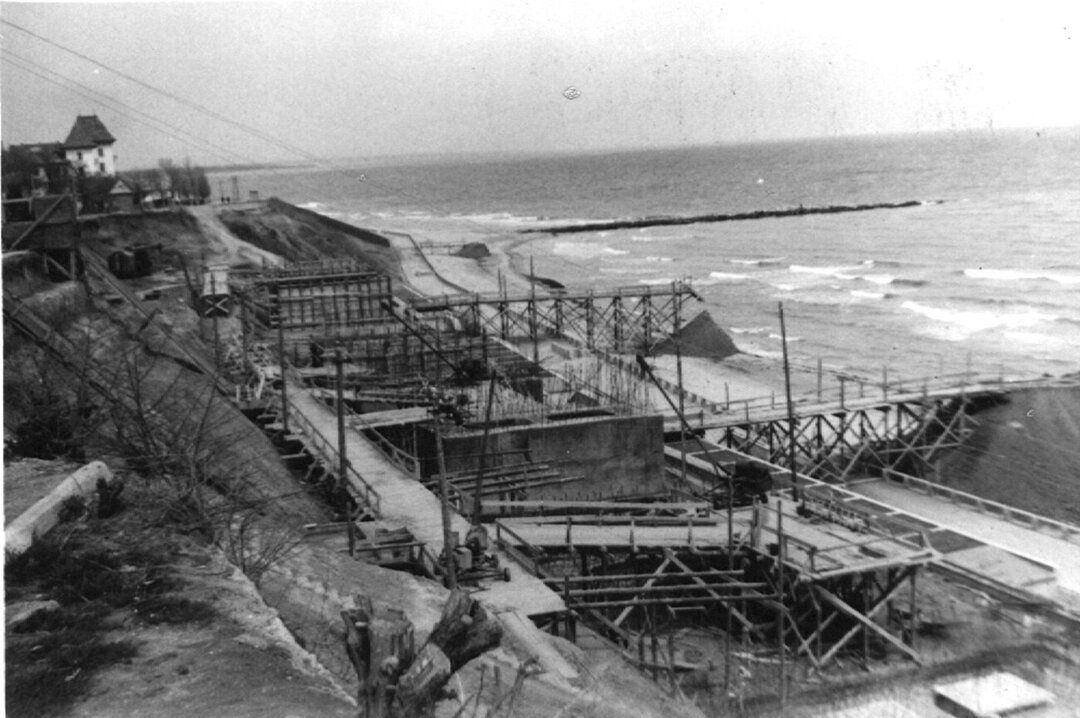
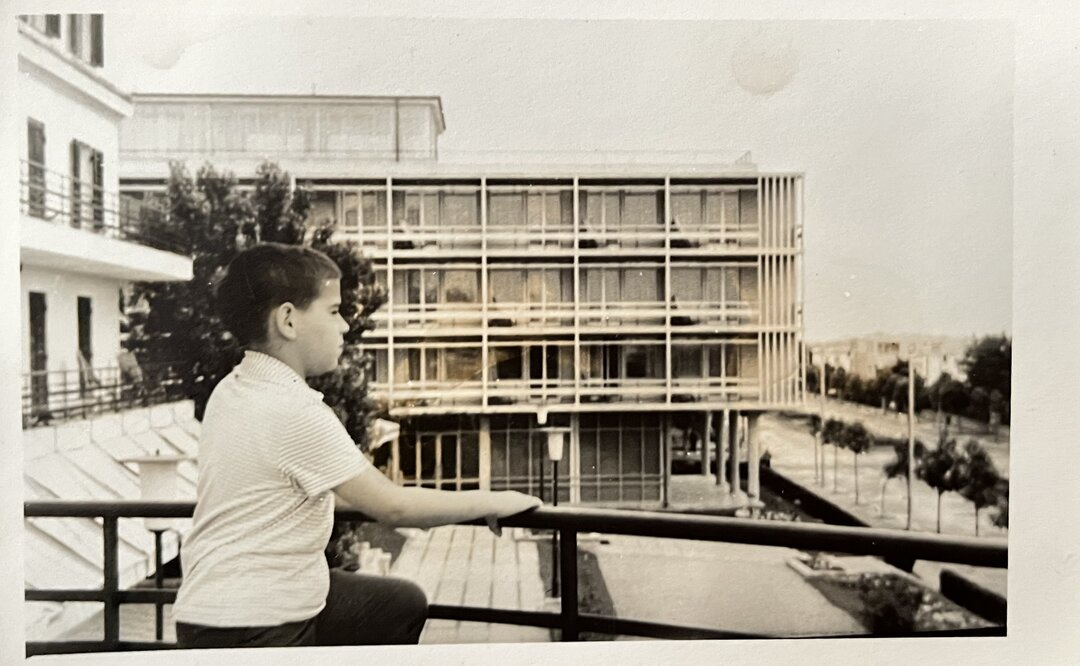
Although Romanians' presence in Mamaia was rather sporadic, Marioara V., an accountant at Electrofar in Bucharest, recalls that she had a relative who worked as a cook at a luxury hotel in Mamaia and who helped her get a room every year where she could spend her vacation with her two daughters. Marioara describes the resort as friendly to tourists arriving by train in Constanța (the station had been modernized in 1960) and the tram, which ran between the station and the end of the resort (opposite the Rex Hotel), helped them get to Mamaia quickly. Her accommodation in Mamaia was usually at the Hotel Parc, a tower hotel built between 1957 and 1961 in the southern part of the resort, which had become the symbol of modernism on the Romanian coast. The hotel was one of a series of hotels that had been designed between the mid-1950s and early 1960s by a team of architects led by Cezar Lăzărescu and built by the Constanta Building and Hydro-technical Construction Trust. On good terms with Gheorghe Gheorghiu-Dej, Lăzărescu had access to resources as well as the freedom to build in a style closer to the modernism of Le Corbusier, the Swiss architect who influenced post-war European architecture.
The construction of the coastline, especially the resort of Mamaia, and Romania's considerable investment in tourism have not gone unnoticed by foreign visitors. After a visit that the Romanian authorities organized for foreign ambassadors to the seaside in August 1959, the head of the British legation in Bucharest noted "the rapid pace at which the Romanians are developing tourism on the coast ... in the next six years a tenfold increase in accommodation capacity is planned, so as to receive 400,000 tourists per season". However, the British Ambassador was not impressed by the appearance of most of the buildings, which "looked like shacks with double rooms and sometimes a restaurant", with only a few hotels, in his opinion, up to the standards required for international tourism. "In recent times architects have had a bit of a free hand and, although the buildings are still very large, they have been erected with more attention to aesthetics and offer better conditions." Thus, he notes the presence of a hotel where the 400 rooms have en suite bathrooms and balconies, and the pastel colors of the facade make it pleasing to the eye. The lack of individual bathrooms with showers and balconies was an issue Nicolae Ceaușescu also raised at a meeting of the Political Bureau of the Central Committee in 1965, where he discussed the future Neptun-Olimp resort. Ceaușescu was saying that it was not acceptable to build as in Mamaia and Eforie, where some category C hotels (the equivalent of two stars) had not provided bathrooms with showers or sufficient outlets.
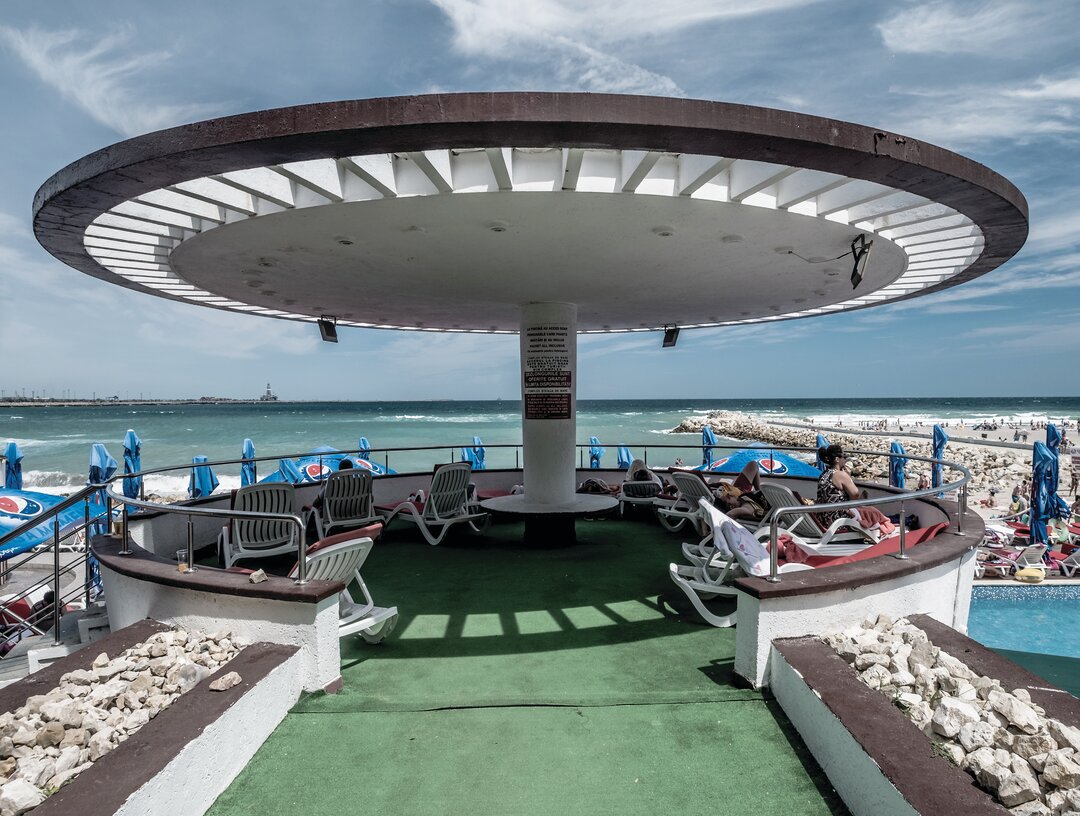
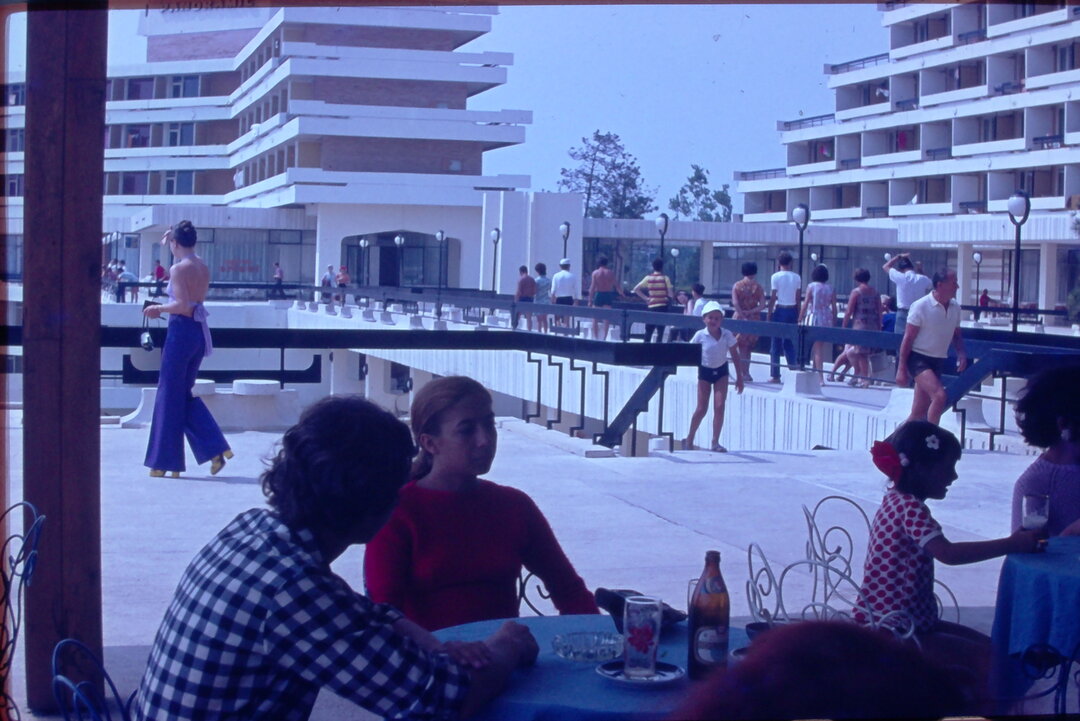
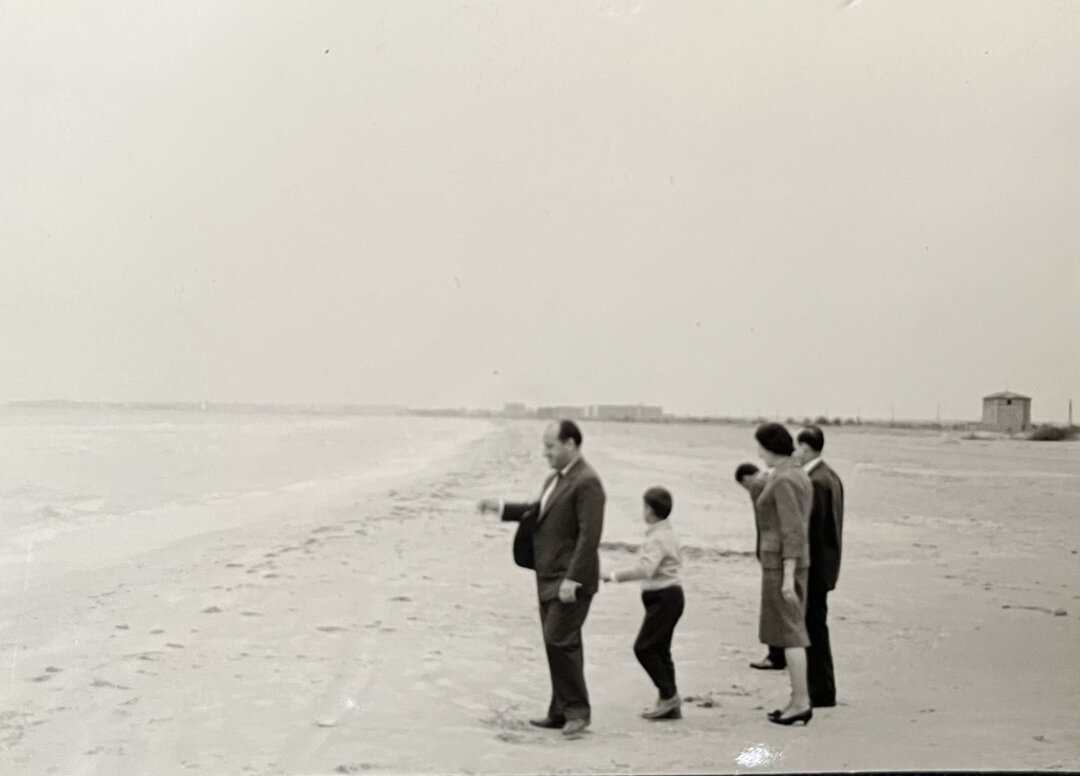
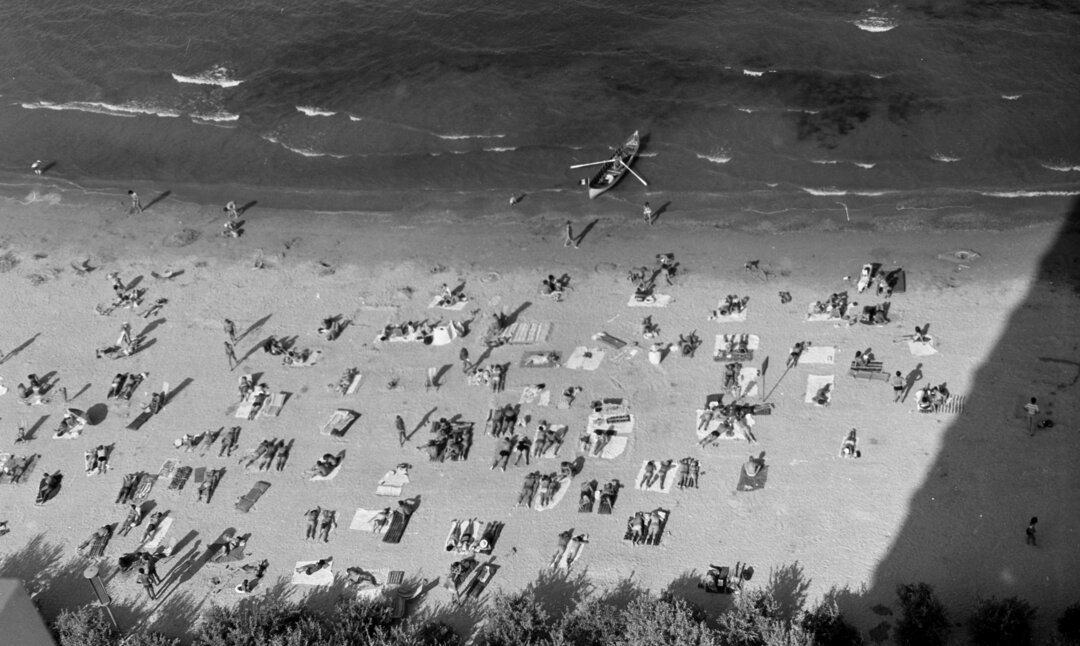
Nevertheless, my interviewee, Marioara V., who had visited the resort of Mamaia in the late 1960s, was pleased with the resort's appearance and the hotel conditions. However, she remembers that there were differences between Romanian and foreign tourists and even between those from socialist countries and those from the capitalist West. One obvious difference was in the food. Thus, the menus served to Romanian tourists were inferior in quality, containing mostly sausage or sausages, while foreign tourists were given the much coveted sirloin steak, and did not contain mineral water or Pepsi-Cola, which were only included in the menus of foreign tourists. However, my interviewee spent her evenings at Bar Melody in Mamaia, which, in her view, offered plenty of entertainment and where she appreciated the elegant attire of the ladies and gentlemen, both Romanian and foreign. "At Bar Melody, the program started at 11:00 and, although I paid an entrance fee that included a cocktail and access to the variety show, there was music and dancing and everyone was having fun. You had to dress up, both women and men, or they wouldn't let you in. The program lasted about two hours." Of the interactions between Romanians and foreigners, she says they mostly took place at the beach, where children played together. She still remembers the frustration she felt when foreign tourists showed up with brightly colored, fluffy towels or cosmetics that smelled intoxicating compared to Romanian ones.
The construction of the resorts in the south of the Romanian coastline intended almost exclusively for foreign tourists and the communist nomenklatura provided even more opportunities for Romanian tourists, but especially for tourism workers to interact with foreign tourists. Doru B., whose family arrived in Neptun-Olimp in the late 1960s when his father worked in construction, grew up with the resort. In the mid-1970s he took a job at the Hotel Doina as a bellboy (porter) and later worked as a waiter in the hotel restaurant or as a receptionist. As access to most discos in the resort was on hard currency, Doru B. had to use his personal connections to listen and dance to the latest hits. "Access to the disco was in dollars, but we, the locals, got in because the guard at the entrance, who was our neighbor, let us in because we grew up together." Personal networks sometimes proved more important on the Romanian coast than the restrictions imposed from above, "from the Party", from Bucharest or Constanța.
The communist state was far from indifferent and did not delay in its attempts to control these interactions and a range of associated illegalities. Security, but also the militia, played an important role in this respect. In 1977, a Home Office report announced that "54 officers of the Foreign Language Section were included in the Foreign Language Corps or used to deal with a number of Security matters. In addition, two surveillance teams, eight officers from the Technical Operations (TO) and 45 officers specializing in economic crime have been deployed to the coast". This concentration of forces suggests that the relaxed atmosphere of the late 1960s, which Marioara V. so much appreciated on the Romanian seaside, was about to give way to a rather tense and suspicious atmosphere.