Seaside. A published chronology

Răzvan Lăzărescu is a Romanian architect settled in France after 1990. Son of the reputed arch. Cezar Lăzărescu and arh. Ileana Lăzărescu. Grandson of Dr. Horia Slobozeanu. Arch. Cezar Lăzărescu, university professor, rector of the Institute of Architecture "Ion Mincu", the one who put his signature on many important buildings in Romania. Răzvan is married to arh. Carmen Lăzărescu, plastic artist. The discussion centered in particular around the work left by arch. Cezar Lăzărescu, but also about the reverberations on the personality of his son, Răzvan.
Mr. Architect Răzvan Lăzărescu, let's talk about Romanian architecture in your cozy apartment in the center of Paris. First of all, what do you remember from your youth in Bucharest?
I was born in 1954, in Bucharest, to two architect parents who were surrounded by architects. Architecture was a kind of air, not only as a necessity, but also as an abundance. As life and abundance. I don't know, if I'd been born of medical parents, if I'd still been an architect. From the beginning, for me, architecture was a certainty, it was a path where, at the end of university, you find open doors: design, furniture, scenography, architecture, urban planning. It was a wonderful life. I used to come as a child to see my father participating in all the carnivals, celebrations or student tea parties with his student groups, so by the time I entered the faculty, I was quite familiar with everything that was going on around. In those years, the Faculty of Architecture was a kind of an island, not against communism, but outside it. It only got involved when you had to make buildings with a little money that would be as good as possible for the people who would live in them. Economic reality hit you later, and sometimes political obligations, but less so during college.
What memories do you have of your father, architect Cezar Lăzărescu, who made a decisive mark on the construction of the Romanian seaside?
In my family, I can describe my father during certain periods. Until I went to high school, especially since it was the period when the seaside was being built, my father was always away. He rarely came home, and I was raised by my grandmother until I went to high school. I had him as a role model, but less as a father. Now, for a 10-year-old child, the fact that someone builds houses, construction, very well or very badly, is vague. The admiration of others, the esteem, the talking about my father was certainly a pleasure for me, but we became not really father and son, but friends a little later, when I entered high school and my grandmother died. From then on I discovered him as a person and the relationship was, until the end of his life, one of friendship rather than father-son. I still regret to this day that I was not mature enough to understand all his troubles, problems and everything that troubled him towards the end of his life, to make his last moments as much as possible easier.
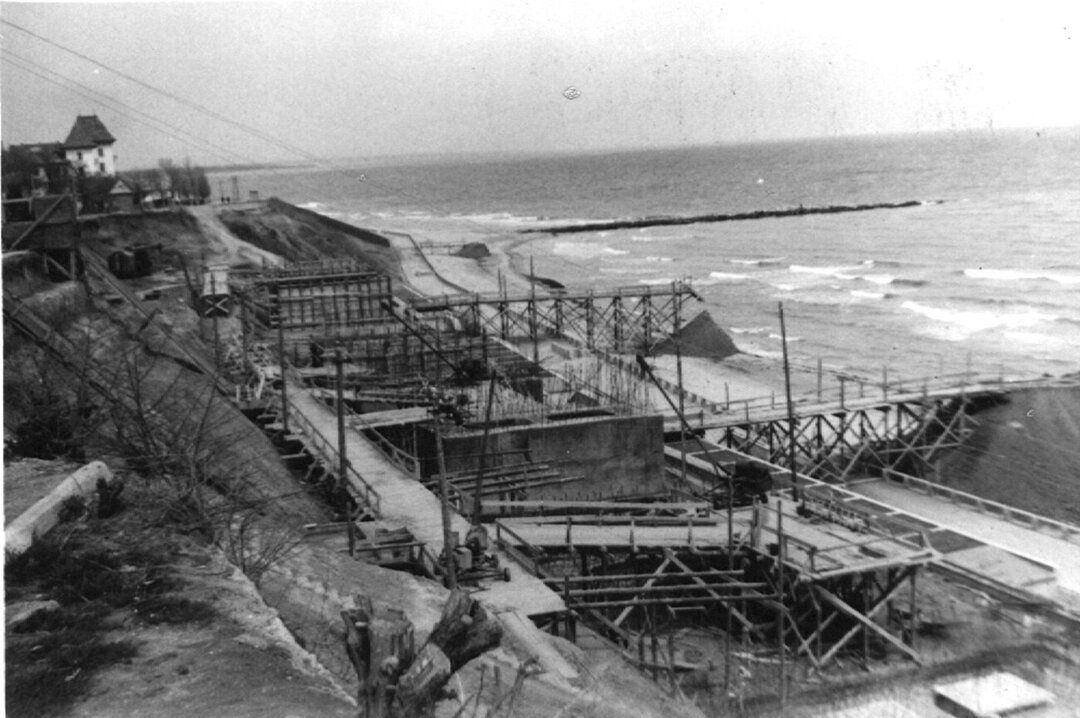
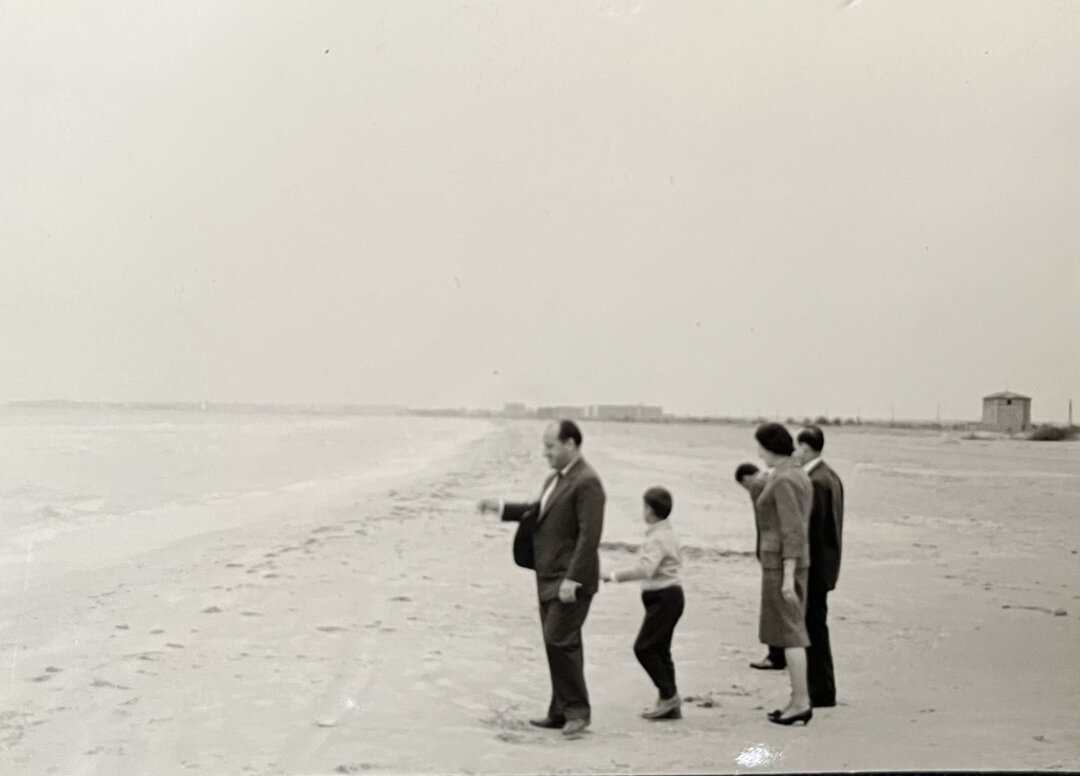
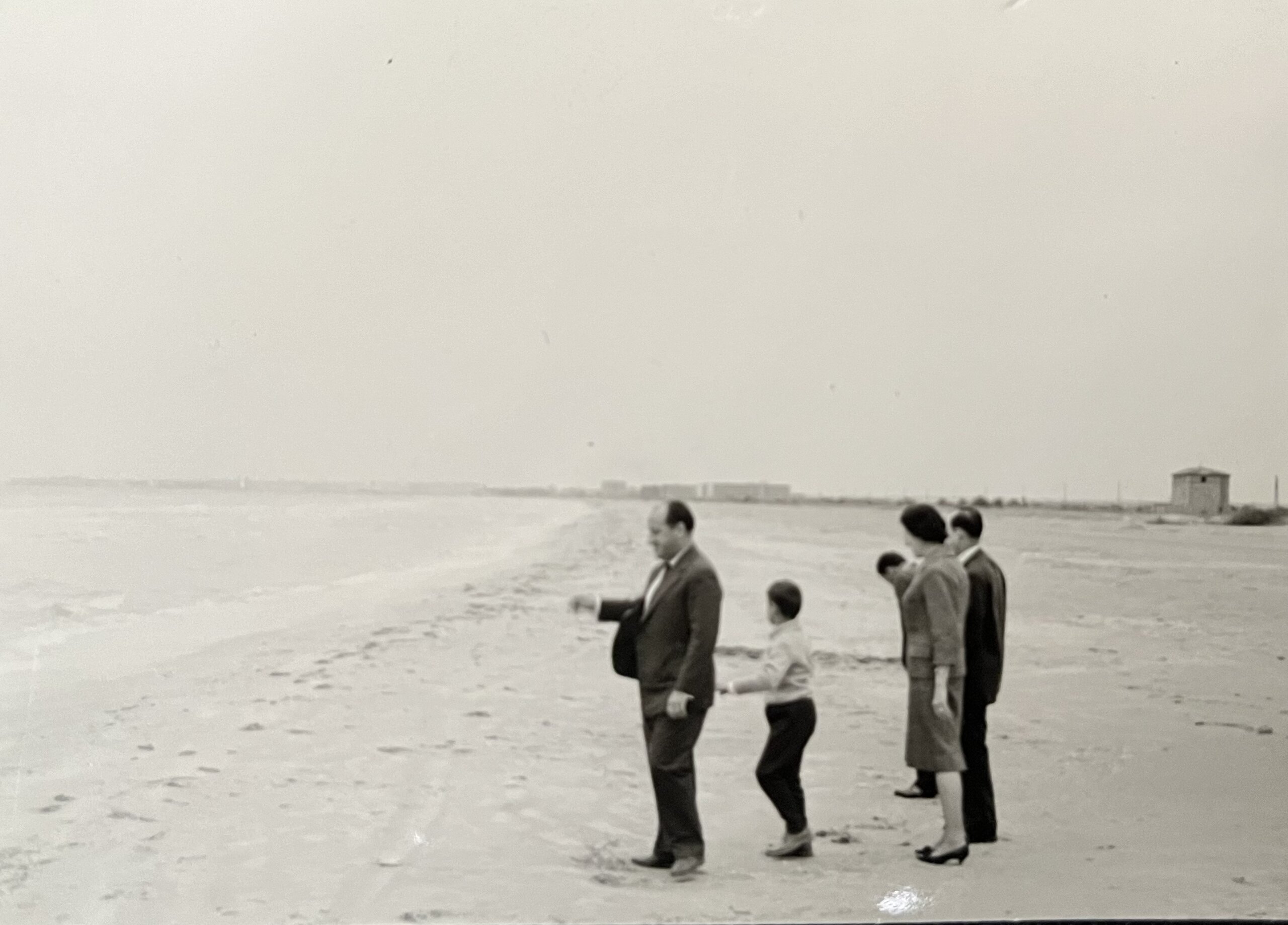
My father took me almost everywhere. Apart from the seaside, when I was too young to understand anything, although there was something spectacular about watching concrete monsters rise. The season was at Eforie, because some of the hotels my father designed were in this resort.
My first memories of the sea were of Eforie Nord, not Mamaia. Mamaia was stormier and with a large building site. After that, I went to the special houses at Lac 1 and Lac 2, where both the construction and the materials that were put in place had a special sparkle and impressed you much more than an ordinary building site. They were, however, houses that had reached a technological performance equal to what was happening in the West and with a Romanian decoration: mosaic and marble walls, with Romanian folk elements, of a rare beauty, with a special sparkle and staging. For a 10-12 year old child it is absolutely thrilling. Perhaps all these are the reasons that draw you to architecture.
My father was in one sense a big kid, in another sense very mature. Because of the family problems during the war, his maturity came very quickly and the obligation to make money, to support the family, to have a career. The conviction that architecture is what he wants and what he likes came spontaneously. We didn't have so many architects in the family and he knew what he wanted from the beginning, he went that way architecturally, less socially and less politically. He was always convinced of architecture and the meaning of his life only in this field. Unfortunately, at a certain level, the work became more a political struggle than a creation of architecture, and from there life became meaningless.
He was 33 when the construction of the seaside started. What were the first building sites?
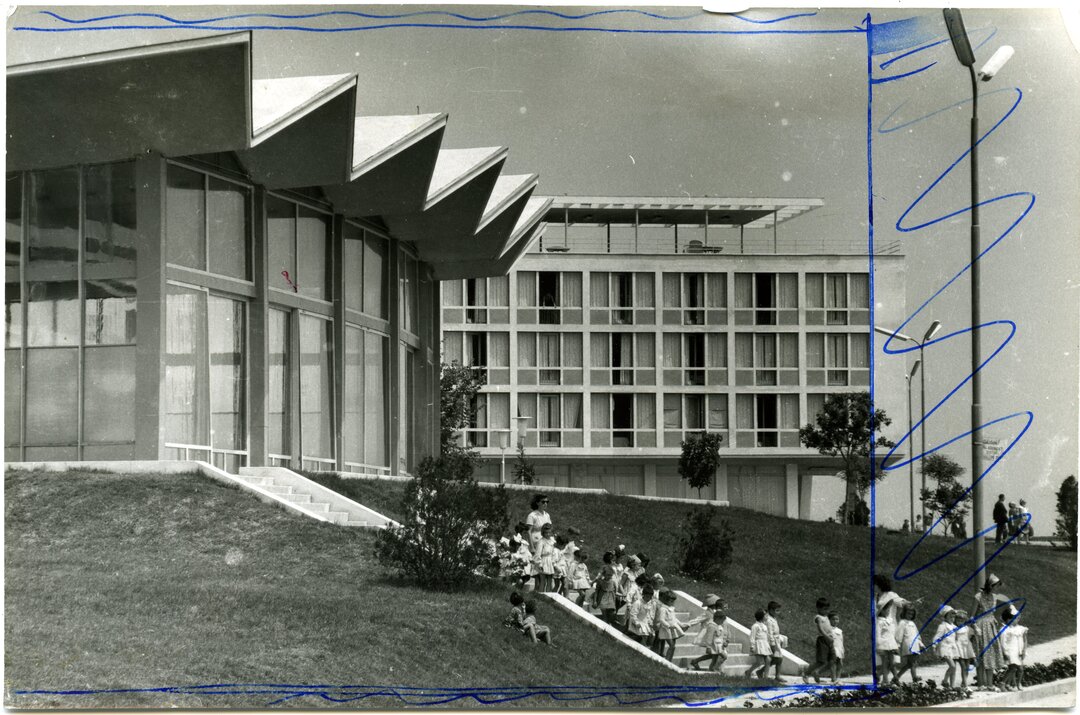
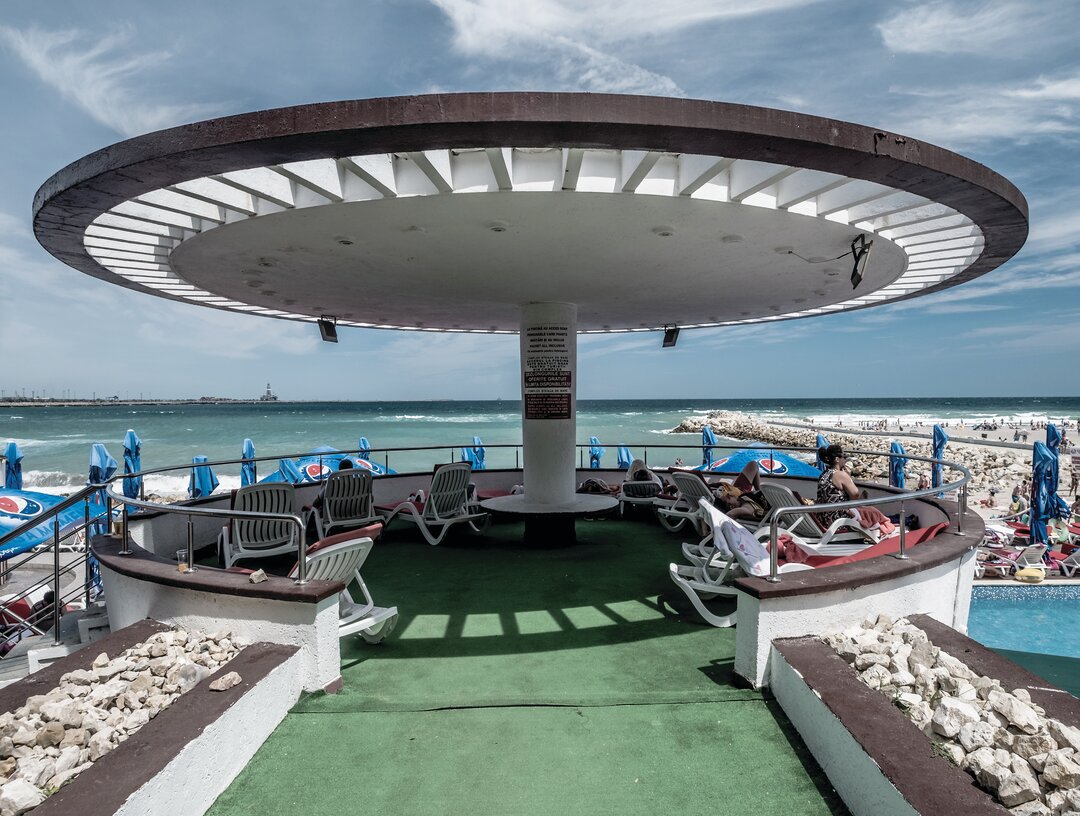
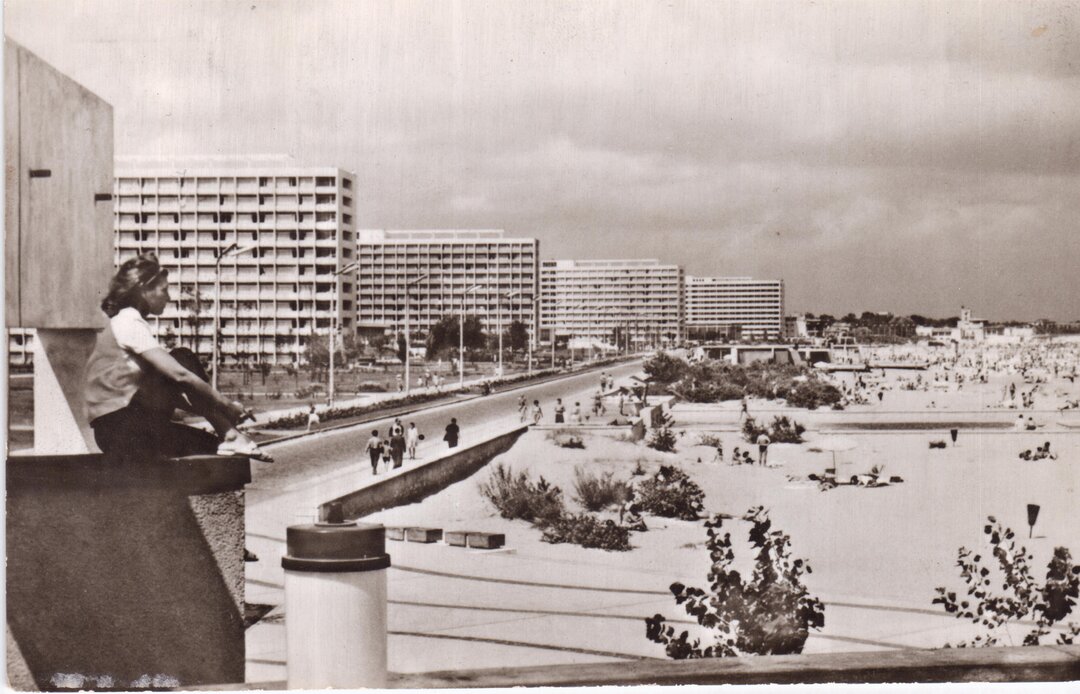
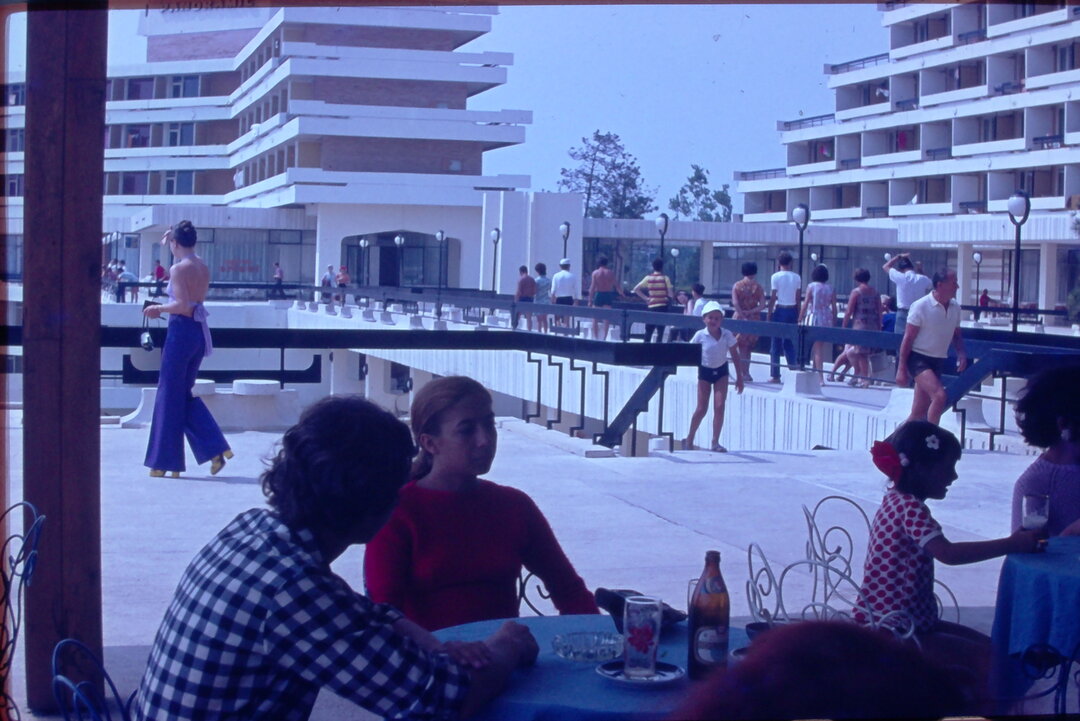
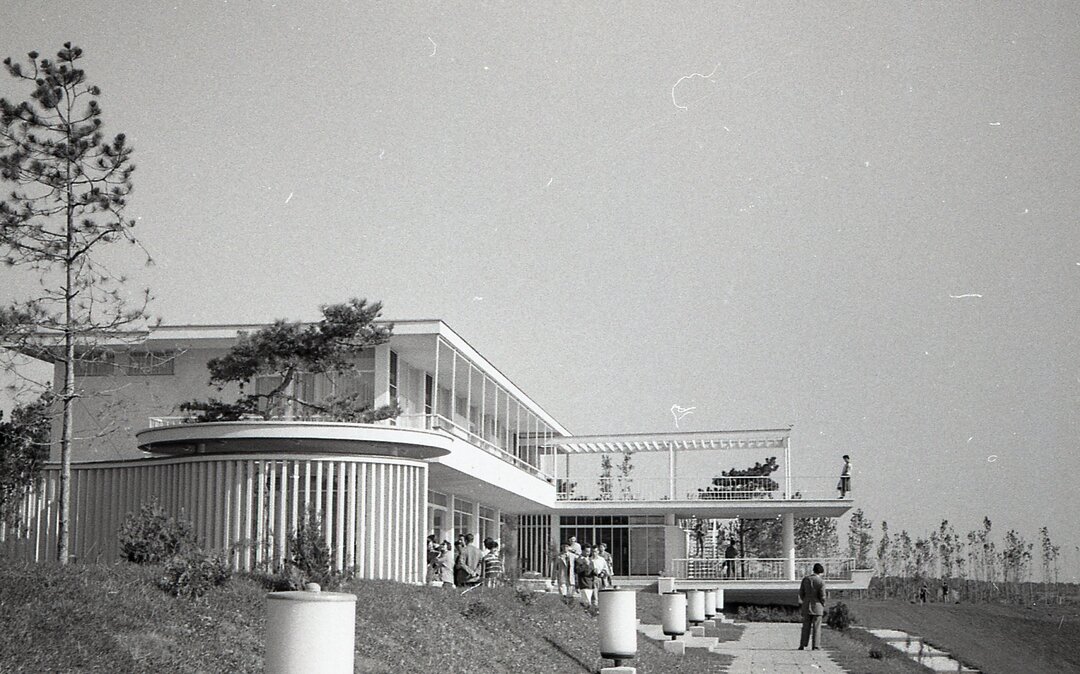
In the beginning, there were some construction sites for the organization of building sites, for the canal site at Năvodari, for the first Danube-Black Sea Canal. The first works were there. On this occasion he got in touch with the politicians and administrators of the coastal area, in Constanța, who at a certain point asked the team to do some construction work in Eforie, for a request of the trade unions that was becoming more and more pressing. The first constructions were the two children's camps in Eforie Nord and Sud and the bathing establishment on Lake Techirghiol, near Eforie Sud, constructions that made extensive use of the Techirghiol shell limestone and harmonized with a local architecture, because the building materials were so present that they brought everything to a common denominator. They could be used in one style.
How would you characterize these pioneering works today?
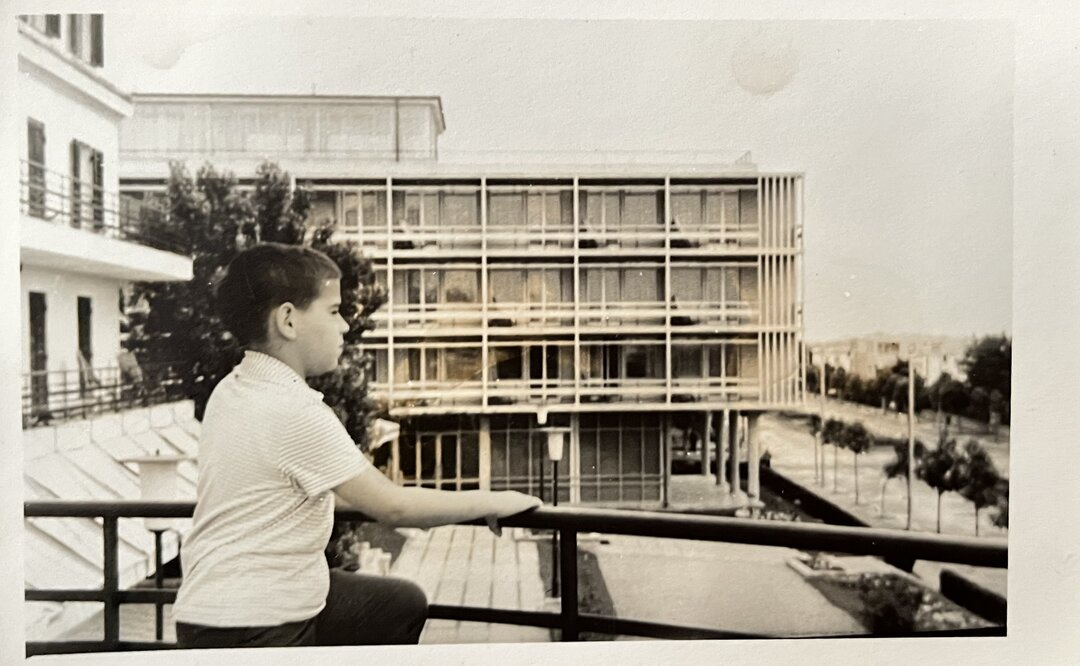
The two camp buildings at Eforie, the Red Tie and the Luminița, had a purity of architecture that in one way or another began to tend towards what came later, not towards the architecture of socialist realism. Immediately after these constructions were finished, my father was asked by the syndicates to design hotels in Eforie, following on from the Bellonei, by rebuilding the cliff which had a few villas and which had to be done cheaply and very quickly, by the following summer. They were done within budget, but some people didn't like them and my father was called by Gheorghiu-Dej.
Whoever got there, in such cases, left with only one verdict: prison, professional disqualification, a punishment in any case.
At the meeting with Dej, he said to my father: I thought you were a bit older. You have broken all the rules and laws for construction, but what you have done I like, it is exactly what we need, it is on time done and within the money allocated, so I will continue. What was astonishing and continues to amaze me is that all the construction at that time, from Eforie to the end of Mamaia, resembled enough what was being done in the West, even though our technology was much weaker. I mean, the efforts not only to design the buildings and all the details, but also the efforts of the people who worked to realize them were absolutely outstanding. And the Perla restaurant in Eforie remains of a purity when so many other things from that period have become obsolete because they have been lost in time.
Are there visible influences from other styles?
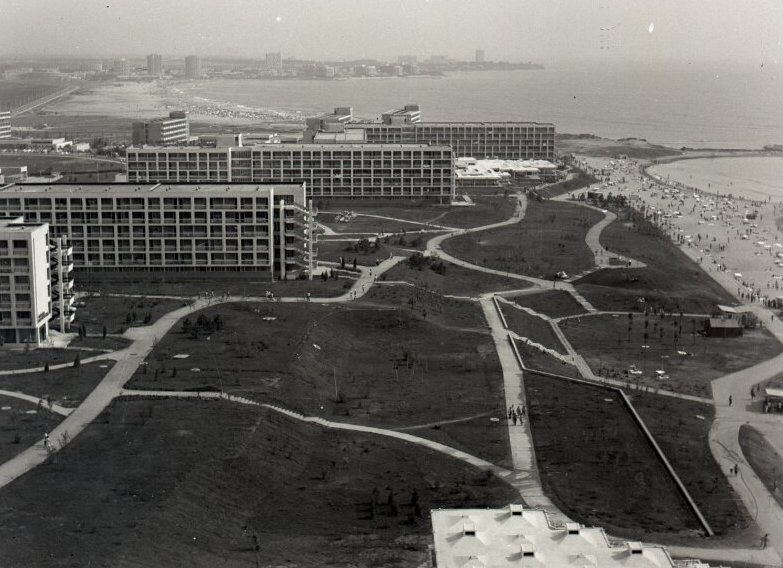
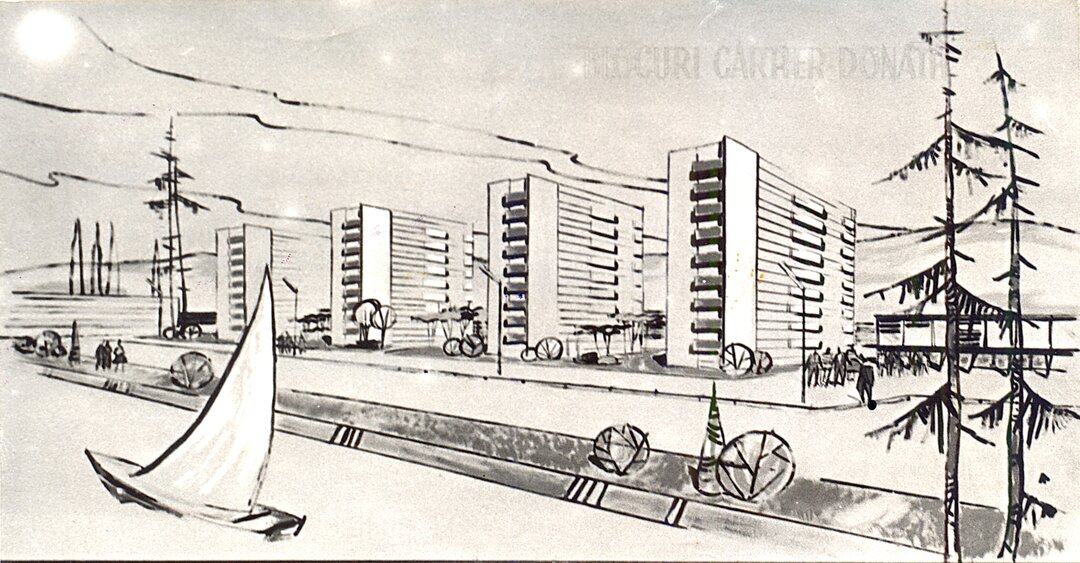
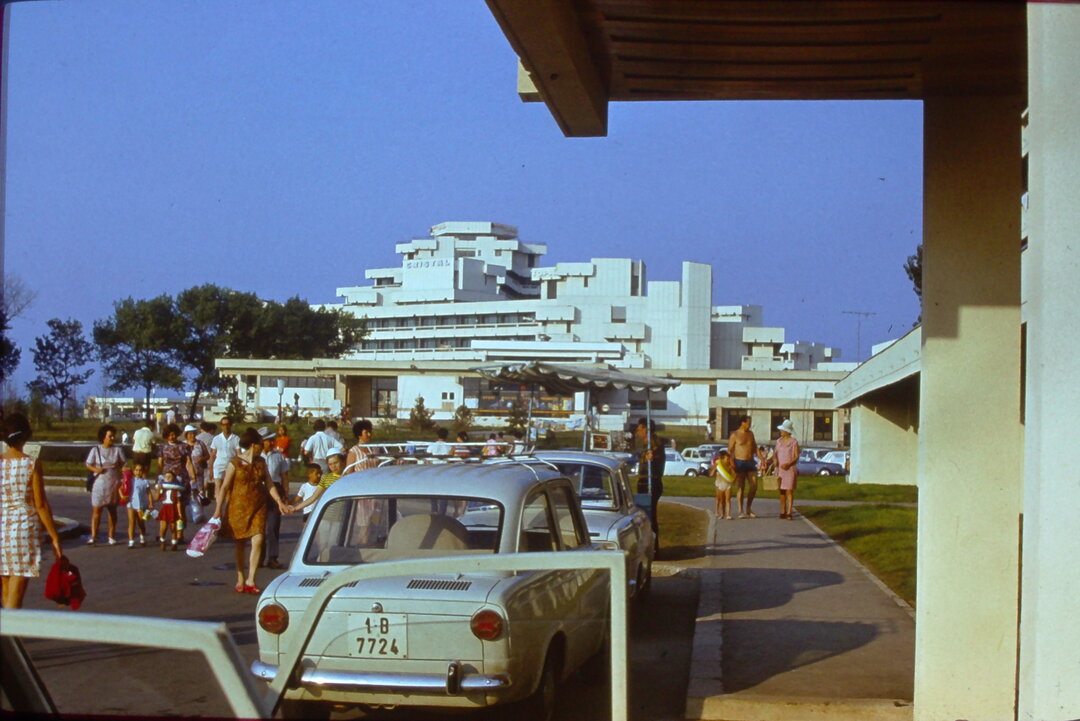
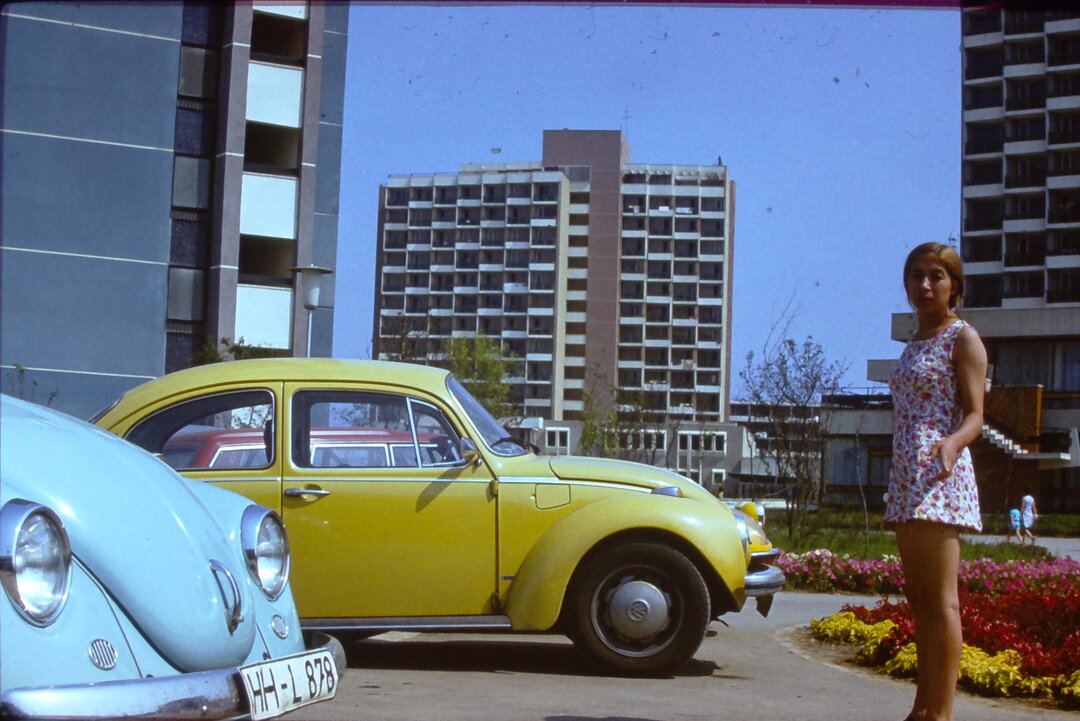
Of course. All the architecture of Eforie, Mangalia and Mamaia had very clear and strong Western influences. This is not an invention, it is not avant-garde architecture. It is only the realization of buildings in a certain spirit, and the joy of realizing them also comes from being able to have them at the price at which you could get them.
Cezar Lăzărescu's relationship with Gheorghiu-Dej was therefore a good omen for the seaside, which had to be built quickly, as a single unit and very cheaply.
It was a very family relationship. I was much too young, but I met Dej on eight or nine occasions, on Sundays when I went to lunch with his grandchildren. I should mention that on Sundays he ate only with his grandchildren. We were invited to New Year's Eve in January 1965. I was 11 years old. That's probably how things evolved. Nobody knew it would be over so soon. So, during that period, I knew him as well as an 11-year-old can.
But you filled in your information as you went along and so you could also talk about Dej in a different way than historians do.
He reached the position he did without his basic desire being political struggle. He didn't have any political tendencies. He was a relatively uneducated person, with nothing but extraordinary common sense, a fairy-tale grandfather, as far as I knew him, because the period was disastrous. What I know is that Dej's policy was to replace the pro-Soviet people in the government with Romanians, with people who had nothing to do with Russia, maybe just a decent connection. This period was marked by many defiances, such as the reopening of the Steagul Roșu factory, the truck factory in Brasov... Dej did not die a natural death and everything that happened afterwards was a cascade which, after twenty-something years of torment, led to the period we are living in today. Ceausescu came because Dej died and because Dej was not a politician. Had he been a politician, Ceaușescu would never have become president. In the sense that Dej didn't expect to die. He had decided to succeed Gheorghe Apostol and Chivu Stoica. Apostol, in fact, gave an interview immediately after the 1989 Revolution in which he recounted the whole thing, precisely because he knew that Ceaușescu had been in charge of youth, army and security policy. So these three forces were in Ceausescu's hands. It was Maurer who put Ceausescu in power. Dej's inability was to have let Ceausescu be so powerful, because he knew how ambitious he was, that he was a danger. The line that Gh. Gheorghiu-Dej in no way resembled what Ceaușescu was doing and then did. On the other hand, Ceaușescu's position at first continued the legacy of Dej; in fact, in 1968, he only affirmed what he was and attracted admiration from the West, which also says that half of it was not his, but Dej's.
My father's relations with Dej were very friendly. He would receive my father in the morning, in his pyjamas, to discuss over tea or coffee what things needed to be done, etc. My father had no political office, he became a party member very late, although he worked for the party all the time. This was also because Dej said, "Leave him alone with this part, we'll do it later, namely to mind his own business, then he'll sit in meetings." Dej, on the other hand, liked everything my father did. It was impressive and generally suited Dej perfectly. Since we've been talking about Mamaia, I don't know if you had the opportunity, I had it only once, and this I regret very much that it was not repeated, to visit a villa which is on the lakeside, next to the Melody bar, which is made of concrete and brick, with an enormous space. It was one of Dej's special villas. It was a house with a really futuristic architecture, not because of the technology, but because of the open spaces, a combination of greenery going down on a brick and concrete, with some wooden planks. It was a house of particular beauty. This seemed to me the most realized. Most people don't even know about this villa.
In Dej's time, building was less economical. And since nobody imagined that Ceausescu would follow, my father refused to build his villa when he was minister, mainly because of his wife Elena. She was known to be very difficult with architects.
What was it like for the arch. Cezar Lăzărescu?
When Dej died, my father was in Corsica. He came to the country, and here he found out that he had to join a commission because "you spent the people's money on luxurious houses instead of making them for working people". The period lasted a year and better, during which time he had no work, until a competition was held for Bucharest Airport. In fact, the first sketch of the airport presented to Ceaușescu was reusing the military hangars at Otopeni, plastering them a bit and presenting them as an international airport, which really annoyed Ceaușescu. US President Nixon was about to come to Bucharest. In this situation, Ceausescu decided to have a competition among architects and to choose the best option. Ceausescu, seeing the list, said: NO! Call Cezar Lazarescu. Each of them came up with two variants. The second one was chosen, which we have in part today in the airport building. Since then the work began. Then, my father became rector of the Bucharest Institute of Architecture through a contest of circumstances.
How can you characterize the relations arh. Cezar Lăzărescu with the new party leadership?
They were always somewhere between recognizing the professional side and displeasure at not being crushed. In many cases - and until the earthquake - cooperation was relatively fruitful. The way in which Ceausescu's desire to cast Bucharest as some kind of wonder of the world evolved was not as evident before the earthquake as it was after. From 1977-1979, decisions were conveyed through collaborators, not directly. In the sense that on any visit to the construction site, Ceaușescu was surrounded by advisers and chiefs of staff who would then come and say what had to be done. However, the lack of any clear discussion meant that it was not clear who made the decision or between what and what was chosen.
Cezar Lăzărescu was, at that time, the rector of the only university in Romania, president of the Union of Architects, and had just finished the Sports Hall in Bucharest. What happened next?
Then came the plans for the systematization of the county capitals: the construction of county party headquarters with an architecture as representative as possible of the party's power. Many cities needed systematization plans. The relationship began to become increasingly strained soon after the 1977 earthquake. It was felt that the headquarters of the Central Committee had been badly damaged and that a new party headquarters should be built, bringing together the youth, the state council and the trade unions. Then my father was asked to draw up a building program to that effect. What the reputed architects did was not to his liking. Ceausescu told them then that they were not capable and entrusted the work to a team of young people led by Anca Petrescu. The others were given different objectives. Dad got to design the National Theater as punishment. That's how he managed to escape from the People's House. From there, relations ended, in the sense that all of Ceausescu's visits to the theater site were made in Dad's absence. That's when I started to work, and I participated in the work on the theater, on the exhibition part upstairs. Many of the details we drew after the models Ceausescu had asked for. Then came the National Library, a project that was dead from the start, I think, because the other Party museums remained a ruin, because Ceausescu didn't want the building as such, he just wanted imposing facades. There were no roads, no underground networks, nothing. It was already very paranoid. My father was slowly and slowly finished. He had four strokes, between them he did absolutely nothing to avoid the next one, he made sure that the last one was important enough not to stay with Ceausescu. I wouldn't say suicide, but rather a kind of lehamite, because, rather than being paralyzed, anyone would rather die.
My father was a fighter. I don't think his actions were those of a political dissident. He was a professional, convinced of what he was doing, convinced that he had to do the right thing in his dealings with the politicians, but I don't think he made gestures that were only demonstratively political. They were the gestures of a professional who knew that he had a great responsibility. There has often been talk of a lack of stance against certain abuses, especially when the demolition of churches began and my father was still president of the Romanian Union of Architects. There were quite a lot of people who felt they had to take a stand. Now, for me, in the job in which I know or have known the political world, the choice was between saying "I don't agree" and the next day there was someone else in your place who agreed, or saying "maybe we'll think about it another day" before demolishing this church. A bridle was more valuable than a resignation. I totally adhere to that principle. I don't believe that if you do something that immediately takes you out of the game, you take responsibility.
What was your relationship with your father when you worked on the site together?
It was very complex, in the sense that here we come back to the question of what it's like to be his son. During college, I had many very good grades, which were not necessarily my merit, or often not at all, and many very bad grades, which were also not my merit, because often the teacher wanted to show my father something. Which meant that throughout college, I, personally, didn't know whether I had any value or not. I got out of that by making leather bags. I was making more and more elaborate hand-sewn bags. One bag was worth an architect's salary and a half. That's how I got my morale up. I was under the impression that anyone who said anything to me said it for my father. I couldn't find room. Dad was the real engine, but that was his spirit. I inherited a lot from my mom. I wasn't handcuffed, though.
How did things work out at the National Library?
My father died in November, 1986. He worked with three young men: Dan Ilie, Cocheci and Dan Postelnicu. We worked inside, in the spirit discussed with my father, and outside, depending on Ceaușescu's visits or those of his advisors. Dan Postelnicu was older than us, he was a sort of team leader, and Rodica Luca. The house was made of two parts, the library and the back part, where the language chancelleries and other facilities in connection with the library were erected. I felt the emptiness of my father's disappearance especially for the lack of decision. In the sense that the project was done, but after the disappearance of the man who was the head of the team... no one is justified to take his place.
It's like The Master of the Man. It took a sacrifice in order to continue.
I think the library was a little dead before. It was a building that didn't represent anyone's petty interest. It was a building like the one in France, they were parade buildings, but the library management didn't have the financial strength to intervene to get their building. The building lived because it was part of the scenery.
The decision to stay in Paris?
I made the decision before coming to Paris. In the sense that I had been on vacation, then on internships in France seven times before. Very pleasant construction internships, with small projects, because it wasn't the architects who came on internships, it was the draughtsmen. I was in my fourth, then fifth year of college. I learned their technologies and it was very useful for me. When the elections were held and the miners came to Bucharest, it seemed more profound to me to stay another year in France and see what would happen in the country. I think the decision to stay in Paris came afterwards. The solution to stay for a year was a foggy solution.
After the fog lifted?
My integration was very extensive. I had a lot of work. The problem was finding work that suited you and having a family policy. Everything I worked on was without any reference to anything other than what I know how to do. That suited me perfectly, in the sense that my projections are not of such important construction as Dad's. The area that appealed to me was interior or detail, not grandiose construction. That's how I was able to do something without further reference to anyone else.
What are you doing in Paris now?
I have a business that covers everything from furniture to lamps to construction, less often building, mostly apartments or shops or offices which covers a lot of the execution in parallel with the project. My view of my profession: more towards a craftsman than an artist. What I enjoy is the contact with the client, which is much more personal than with institutionalized clients. The interior decorations make life more interesting.
Dad, where he's from, is he satisfied?
For very many things I have done, YES! In fact, I think what he wouldn't be pleased for, my grandmother said it before my dad found out, is that his ambition and my ambition were not the same. I'm sure in what I did he's satisfied, but maybe the scale of what I did doesn't satisfy him. I think now I could tell him that my desire is this. I think the priorities in our lives were not the same. He knew and was also fortunate enough to have a period that helped him, to have a profession that ate him 110% and to have his family by his side. Today, in order to have a profession, 90% of you have to give up your family, and for me, my family came before my profession. My role is not to get frustrated, but to get out of this rut.
And mom?
My mother went to school with the nuns, she was very dedicated. It was just the opposite. She did very beautiful drawings and had a joy in creating decorative objects. She didn't have any interest in creating houses and then they worked very well on some projects, at the airport, at the villas and at the seaside, my mother intervened punctually for some decorative areas. Otherwise she worked at ISCAS, then at the town hall. He started an enormous work on the architecture of Bucharest, with hundreds and hundreds of pictures, which disappeared in a fog and was never finished because he was always in the shadow of his father. On the other hand, what she did gave her her moments of glory, but they were very brief compared to everything else. And slowly she began to grow through Dad. When my father was gone, she had no meaning to life. She lived for 10 years in the wind and with unimaginable heartache, which prevented her from living naturally and having any initiatives.
Did Caesar Lazarescu leave a style in Romania's buildings?
I don't think that we can say Lăzărescu's style by trying to draw a conventional line between the buildings he made and to find elements that mark a certain style. I don't even think that was his father's main quality, nor do I think that the commission he responded to could have led to that. Frankly speaking, for me, eminent architects are sculptors of spaces, a field superior to what was realized in Romania at that time. What was done in Romania, by default, was done for those who used them. Not necessarily in terms of aesthetics, but in terms of functionality, reasonable price, etc. And it was not the same architecture. On the other hand, everything that was realized after the war was still an architecture of influence, not an architecture of trailblazers because neither Romania's position, nor its finances, nothing, could claim some unheard of innovations. What seemed to me essential is that, starting from a certain family of architecture or aesthetics, the realizations were very decent, well done, finished within the world they knew, in this spirit they were completed works and I think that the first quality of the father was to lead things to the end and to have a valid result. The villas are, in my opinion, very important artistic achievements, but nobody sees them. There are several villas at Snagov. There was a villa of Dej's at Snagov that looks very much like the Bucovin monasteries, white, with a shingle roof. It was villa 23, with 23 rooms in concrete and wood, very beautiful, on the lakeside. There were many constructions. What I would really like to leave is that my father did architecture with a team, and his team had a lot of valences and a lot of aesthetic points, the result depended on the talent of the team. I don't think there is any construction that I can count as his alone. I can, however, consider that he knew how to collaborate very well and to take from the others the elements that would lead to valuable things. Dinu Gheorghiu, Anca Borgovan and Gabi Cristea were the people with whom I spoke the most. Dinu Gheorghiu went to Greece a very long time ago, Anca Borgovan was in America, now she is back in Romania, Gabi Cristea is dead. Besides them, from the same generation, there were Belea, Puiu Săvescu. There were many people who came and went, and Dinu Gheorghiu had a great talent.
Do you know anything about the Europa Hotel in Eforie Nord?
My father designed it with Dinu Gheorghiu. As far as I remember, they were the first buildings we talked about between Eforie Nord and Eforie Sud. I don't think they made that much of an impression on him. It was a very nice construction, which could have been anywhere, it was no longer part of the seaside thinking, but I think the same construction could have been done in Pitești, Eforie or anywhere. Mamaia is not a construction, but a sum of constructions. The seafront at Eforie, for example, has a construction, Vasile Roaită II, followed by Bellona, then comes a perpendicular axis.
My father was more attracted to Eforie than Mangalia. But Ceausescu preferred Neptune to Eforiei. Aurora is by Dinu Gheorghiu. It's a hotel complex in the shape of an Omega, with a little square by the sea. Olimp, Jupiter were done next. Throughout the period after Mamaia was finished, we used to go on vacation to Mamaia Sat and probably my father got to know Mamaia Sat while he was doing the construction site, and from that point of view it was a rather special development. In fact, 2 Mai and Mamaia Sat were the areas of freedom, nonconformism that you could afford. At Mamaia Sat, which was on a hill, the first time I arrived at the Pirates' Inn, I saw a ruin, inside there was a tin table where they sold you a soft drink. And then it became the Pirate Inn which was a miniature Disney Land. We walked up from the beach quite a long distance, across the railroad tracks. On the street, there were pipe kiosks set in concrete. And you'd sit under the pipe and take a shower. There were no showers back then. Indeed, the only moments of freedom and happiness were vacations in Mamaia and May 2nd. Freedom is a feeling. When you have worries, it's gone.
What kind of house did Cezar Lăzărescu build for his family?
A house I got. It was my grandfather's. He was a printer, then he became a shareholder in SOCEC. He was one of the technical directors of the printing house until he was 92, when he was crushed by a car of drunken Germans that drove up the sidewalk, fatally hitting him. He went to work every day. He was like iron. His great-grandmother was also like iron. They had a house in Bucharest, which they remodeled, on Izvor Street. Immediately after the war, the house was divided among 4 families. We had two rooms in the house. Slowly, my father found solutions to give them other locations. By 1967 the last family left. Then, while he was rector of the college, we had evenings when 2 groups of students and friends would come to our house, reaching 100 people. It was wonderful. That was the joy of his house that he worked hard, with his hands, making bookcases, all kinds of things. In the earthquake, one corner went a little bit. It seemed to me that he cared more for the house than for the family members. The fact that the demolitions were coming and they were targeting us, he retreated. Luckily he knew how to back out because a year later they kicked us out of the house. There were 3 houses left, which had been sitting with blankets in the windows for 4 years. Heavy trucks were passing through the fields. The three houses couldn't see the dust. It was a five-year ordeal. In 1987 we were evicted, we got a flat. The house was still standing for another 6 months. I'm glad he died before seeing his work destroyed. During the revolution, I stayed another month and a half or two in the country, I never heard anything bad about my father, even though he was dead. He knew how to have decent relations with everyone. He was a wise and understanding character. He had the generosity of a child. He was happy to share his things with others.
What memories of the seaside can you pass on to your fellow countrymen?
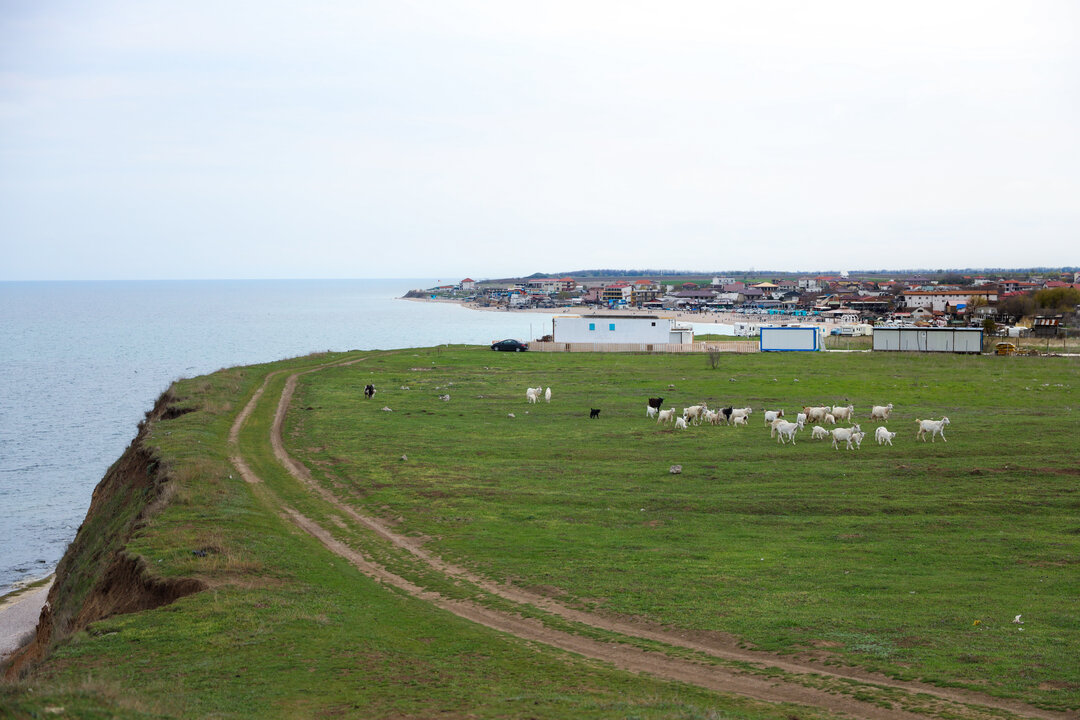
My grandfather, my mother's father, Horia Slobozeanu, was a pediatrician and antique collector. He had a museum in Eforie Sud. Because he was very fond of different stones, which were inscribed with all kinds of inscriptions, and so that no one would steal them, he walled them in the neighbor's wall, in the museum courtyard. I love the seaside because it brings back the most beautiful memories of my youth, of all my loved ones.1
NOTE
1. Interview published in Aurelia Lăpușan, Mărturii la cald. 77 interviews, Nextbook Publishing House, Constanța, 2013.
--16705-xl.jpg)